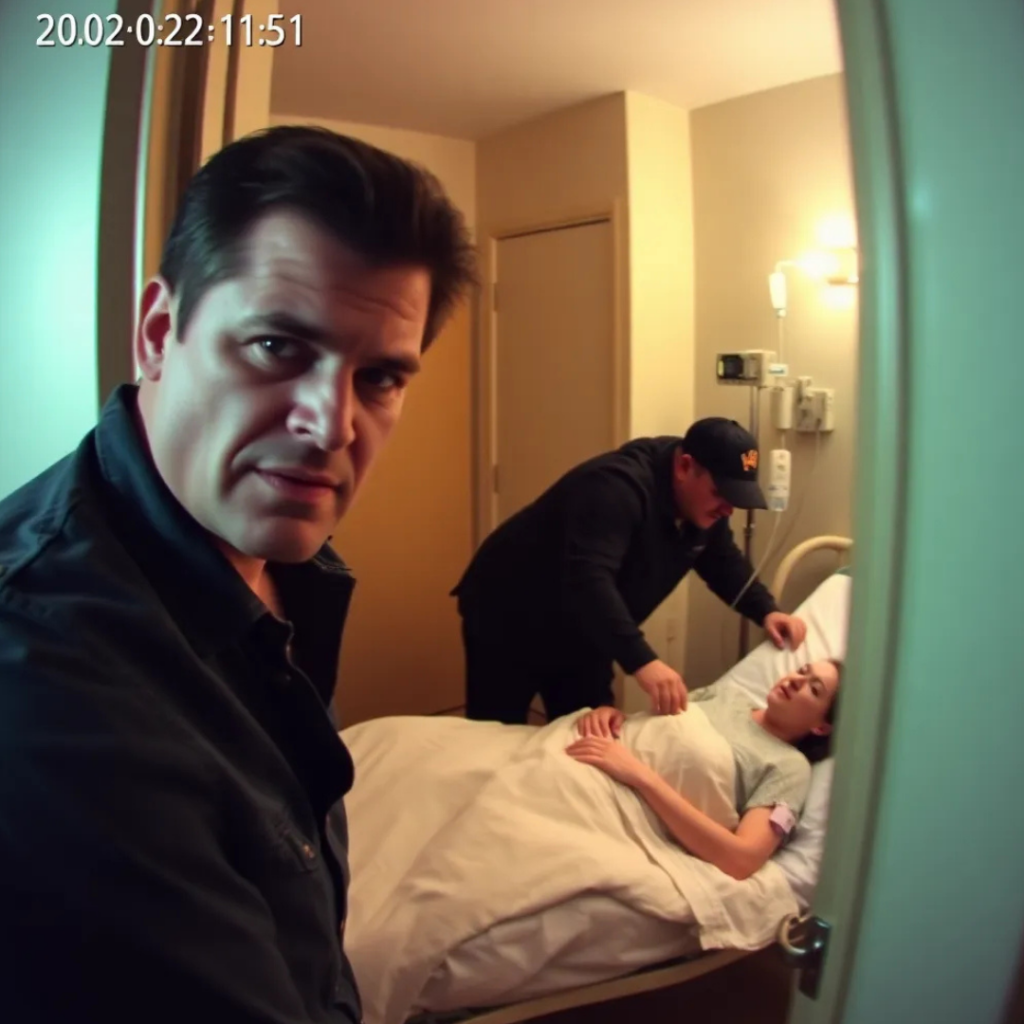
Part 1
At 11:47 p.m., the house always smells like rubbing alcohol and old pine—like a cabin that tried to become a hospital and failed at both.
I learned to live inside that smell.
Six years ago, Bree and I were driving home from a late dinner on Commercial Street, the kind of night where the fog makes the streetlights look soft and forgiving. We argued about something stupid—whether we should move closer to her job, whether I should quit mine, whether we were allowed to want different things at the same time. Then the world snapped. Headlights. A horn that didn’t belong to us. The sickening sideways slide and the crunch that sounded like someone folding a ladder.
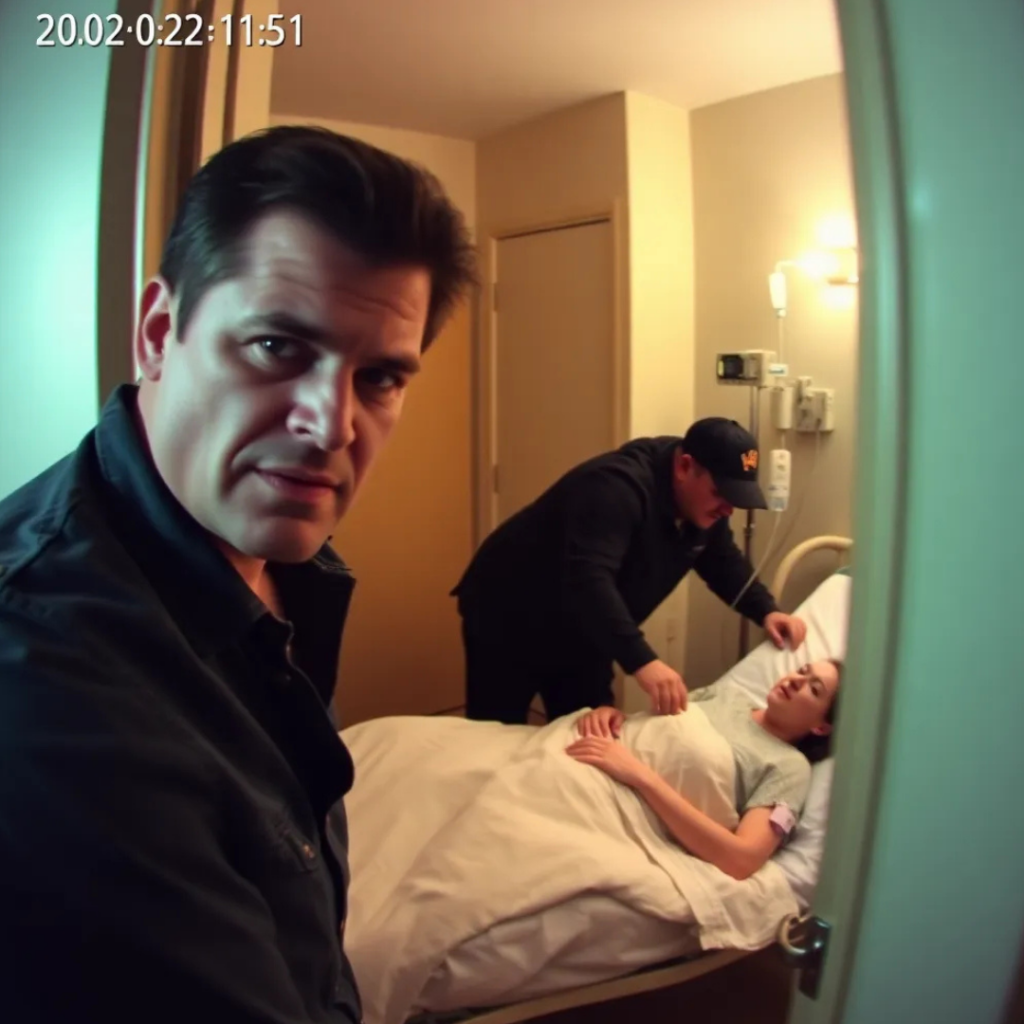
She never opened her eyes in the ambulance.
They called it a coma. A “persistent vegetative state” once, in a hushed voice, like the words were heavier than the truth. The hospital wanted her moved to a long-term facility. “It’s safer,” they said. “It’s appropriate,” they said. As if love had a policy manual.
I brought her home anyway.
In the mornings, I warmed a basin of water and washed her face like I was erasing six years of dust from her skin. I rubbed lotion into her hands until my thumbs ached. I brushed her hair and told myself that the softness meant she was still here. I talked while I worked—ordinary things, because that was how I kept from screaming.
“The neighbor finally fixed that fence,” I’d say. “The one that leans like it’s tired of standing.”
Sometimes, I read to her. Sometimes, I just sat in the armchair by her bed and listened to the oxygen concentrator hum and the faint, irritating click of the feeding pump. That clicking became my metronome. If it stopped, my heart would stop with it.
I kept a routine because routine was the only thing that didn’t argue back.
The day nurse, Mrs. Powell, came from 9 a.m. to 3 p.m. She was sixty-ish, blunt, and smelled faintly of peppermint tea. She charted everything with the seriousness of an air-traffic controller. She’d watch me lift Bree’s arm, guide it through a sleeve, and she’d say, “Matthew, you’re going to ruin your back.”
I’d say, “I’m already ruined,” and we’d both pretend it was a joke.
At night, it was just me.
Or at least, that’s what I believed until three months ago, when small wrong things started stacking up like dishes I hadn’t washed.
The first time, I noticed Bree’s sweater wasn’t the one I put her in. I distinctly remembered choosing the gray one with the tiny pearl buttons because it was cold and the heater in her room always ran a little behind. At midnight, when I went in to check her tube and adjust her blankets, she was wearing the blue cardigan. The one I hated because it snagged on her nails.
I stood there, staring, my fingers hovering above her shoulder.
Maybe I misremembered. I was tired. That was the easiest answer.
But then I saw the gray sweater folded in the hamper, perfectly squared, like someone had taken the time to make it look neat. I don’t fold like that. I shove things. I’m a shover. Bree used to fold like that. Bree used to make order out of everything.
I told myself Mrs. Powell must’ve changed her before she left and forgot to mention it. The next day, I asked.
“I didn’t,” she said, not looking up from her chart. “And I don’t go into that hamper, hon. That’s your territory.”
The second time, it was the scent.
Bree’s perfume—Santal and something smoky—had been sitting untouched on the dresser for years. The bottle was more symbol than object now. I couldn’t bring myself to throw it away, but I also couldn’t bring myself to spray it because it felt like faking her presence.
One night, I stepped into her room and smelled it. Not old perfume clinging to a scarf. Fresh. Like someone had just walked out of a department store.
I leaned over Bree, close enough to feel my own breath bounce back off her cheek, and I tried to find the source. Her hair smelled like her shampoo, nothing else. Her skin smelled like the oatmeal lotion I used.
The perfume was in the air.
My stomach tightened with a stupid, childish fear: a ghost. A presence. Bree’s spirit wandering because I’d trapped her here.
Then I saw the bottle. The cap had been put back on crooked, just slightly, like the hand that did it wasn’t careful.
I tightened it. My fingers shook, and I hated that they did.
The third time, I heard something.
Not a voice, exactly. More like the soft scuff of shoes across the hallway runner at a time when the house should’ve been asleep. I snapped awake in the recliner by Bree’s bed, my neck kinked, the room dim except for the green glow of her monitor.
The sound was gone. The house settled. The old beams made their familiar pops.
I told myself it was the radiator. The wind. My brain trying to fill silence with something it could fight.
But after that night, I started checking doors. I started counting the knives in the block like I was auditioning for paranoia.
And then came the smallest thing that ruined me: Bree’s fingernails.
I trim them every Sunday because if I don’t, they catch on fabric when I move her, and sometimes they scratch her skin. I keep the little clippers in the top drawer of her nightstand. One Sunday, I trimmed them and filed the edges until they were smooth. I remember because I nicked my own thumb and muttered a swear that would’ve made Bree laugh.
On Tuesday night, her nails were shorter. Cleaner. Filed into a gentle curve like they’d been done with patience.
I stared at her hands and felt my mouth go dry.
Someone was touching my wife when I wasn’t there.
The next day, I told Mrs. Powell I had to travel for a two-day training in Boston. It was a lie so clumsy it almost made me blush.
“Boston?” she said, skeptical. “Since when do you do trainings?”
“Since my boss suddenly loves professional development,” I said, forcing a smile.
Mrs. Powell narrowed her eyes, then shrugged. “Your sister said she’d stop by and check on things. Alyssa. She texted me this morning.”
My sister.
Alyssa had always been the loud one in our family. The kind of person who filled a room and didn’t ask permission. She’d been showing up more lately with casseroles I didn’t ask for and advice I didn’t want. She’d stand in Bree’s doorway, arms crossed, and say, “You know, Matt, you can’t keep doing this forever.”
I always answered the same way. “Watch me.”
I packed a suitcase anyway, because lies work better with props. I kissed Bree’s forehead like I always did—her skin cool, her hair smelling like soap and time—and I told her, “I’ll be back Thursday.”
Then I walked out like a normal husband.
I drove two blocks away and parked behind the closed hardware store. I turned off the engine and sat in the dark until my breath fogged the windshield. The town felt too quiet, like it was holding its own breath with me.
At 12:08 a.m., I got out of my car and walked back through the shadows, staying off the streetlights, my heart banging like it wanted to crack my ribs open and climb out. I hated myself for what I was about to do. I hated myself more for needing to.
Our house has a side yard that runs narrow between the clapboard and the neighbor’s fence. The grass there never grows right. I slipped along it, shoes sinking into damp soil, the air smelling like salt and leaves.
Bree’s bedroom window faces that side yard. The curtains are usually half-drawn, enough for privacy, enough for moonlight.
Tonight, the curtains were wider than I left them.
I crouched beneath the sill, my palms pressed into cold dirt, and slowly lifted my head.
At first, I saw only the familiar scene: Bree in her bed, her face turned slightly toward the door, her hair spread on the pillow like dark ink. The monitor beside her blinked green. The little bedside lamp cast a warm circle of light.
Then I saw movement.
Someone stood beside her bed.
My brain tried to reject it. Tried to turn it into a coat on a chair, a shadow, a trick of glass.
But it was a person. Tall. Wearing a hoodie. Hands gloved in pale latex.
They leaned down, close to Bree’s ear, and whispered something I couldn’t hear through the pane.
Then the person straightened, and the lamplight hit their face.
Alyssa.
My sister’s hair was pulled into a messy knot. Her jaw was tight, the way it gets when she’s determined. She looked nothing like someone bringing casseroles.
She reached into Bree’s nightstand drawer—my drawer, the one I kept the medical paperwork in—and pulled out the folder labeled TRUST & BENEFITS in my own handwriting. She flipped it open with quick, practiced motions, like she’d done it before.
My throat tightened so hard it hurt.
Alyssa set the folder down, then took Bree’s right hand in both of hers. Not gently. Like she needed Bree’s hand to do something.
I watched Alyssa lift Bree’s fingers and press them against the bedrail, one by one, like she was tapping out a code.
And then Bree’s lips moved.
It wasn’t a twitch. It wasn’t random. Her mouth formed a shape, slow and deliberate, like she was answering.
Alyssa bent closer again, and even through glass I could see the fierce, excited shine in her eyes.
“Good,” Alyssa whispered, and I felt my blood go cold. “That’s my girl. One more, and we’re done.”
I couldn’t breathe. I couldn’t swallow. My sister’s hands were on my wife, and my wife—my wife—was responding.
What were they doing to her in that room when I wasn’t watching, and why did Bree’s mouth—barely moving—shape what looked like Alyssa’s name?
Part 2
I didn’t burst in. I didn’t throw open the window and tackle my own sister like a movie hero.
I froze.
My body went heavy and useless, like it had been filled with wet sand. Every loud, brave impulse I’d ever imagined having shrank down to a thin thread of survival: Don’t be seen. Learn first. React later.
I backed away from the window so carefully my knees stayed bent, my shoes barely lifting from the grass. I slid along the side yard until the house was behind me, then I sprinted to my car like a teenager fleeing a prank.
Inside the car, I locked the doors even though that was stupid—if someone wanted in, glass is easy. My hands trembled on the steering wheel. I stared at the dark shape of my house and tried to make sense of what I’d just watched.
Alyssa is my sister. Bree is my wife. Bree has been unresponsive for six years.
Those facts did not belong together.
At 2:41 a.m., Alyssa’s silhouette crossed Bree’s window and the curtains closed again. A few minutes later, the porch light flicked on and off—our old motion sensor, triggered by someone leaving.
I waited until almost dawn before I drove back into the driveway, like I’d returned from Boston early. I made noise. I rattled my keys. I let the front door thump shut harder than usual. I even muttered, “Damn traffic,” to no one.
The house smelled the same. Alcohol and pine. The kitchen clock ticked with indifferent regularity.
Bree lay exactly as I’d left her the day before, except… she wasn’t.
Her hair was brushed smoother. The blue cardigan was back on her. Her hands rested on top of the blanket instead of tucked beside her. On her bedside table, the cap of her perfume sat slightly off-center again, like a crooked smile.
I stood over her and looked for proof that I was losing my mind.
The folder in her drawer was not where I kept it. It was shoved deeper, like someone had put it back quickly. The corner was bent.
The anger hit me then—hot, sudden, so sharp it made my eyes sting.
I had been bathing my wife and reading her novels and counting her breaths while someone else was using her like a tool.
My sister.
I sat at the kitchen table and waited for the sun to come up like it could make any of this more reasonable.
At 9 a.m., Mrs. Powell arrived with her tote bag and her peppermint-tea smell. She greeted me with the same brisk nod as always.
“Boston go okay?” she asked, washing her hands at the sink.
I forced my face into something neutral. “Fine.”
She studied me for a beat. Mrs. Powell has the kind of gaze that’s seen too many family lies to be fooled by a fresh one.
“You look pale,” she said. “You sleep?”
“A little.”
She didn’t push. She went into Bree’s room and checked the tube, the skin, the chart. I hovered in the doorway like a guard dog.
After an hour, when she was busy changing Bree’s linens, I said, as casually as I could, “Did Alyssa stop by last night?”
Mrs. Powell’s hands paused mid-tuck. “Your sister? No. Why would she?”
My mouth went dry. “She said she would.”
Mrs. Powell shook her head. “Honey, I leave at three. I don’t know what happens after that. But I haven’t seen her here lately. She calls sometimes, asks questions. That’s all.”
Questions.
I tried not to let my face change, but Mrs. Powell’s eyes narrowed again.
“Is something going on?” she asked quietly.
I wanted to tell her everything. I wanted to dump my fear into someone else’s hands like hot coals.
Instead, I said, “Probably nothing. I’m just… tired.”
She gave me a long look that said she didn’t believe me, then went back to work.
That afternoon, after Mrs. Powell left, I drove to Harbor Tech—the only electronics shop in town that still had dusty shelves and a guy behind the counter who looked like he’d rather be fishing.
I bought two small cameras, the kind people use to watch their dogs. I bought a door sensor. I bought a tiny microphone disguised as a phone charger. My hands shook less when I was doing something practical.
Back home, I installed the cameras with the care of someone building a bomb.
One above Bree’s dresser, hidden behind a framed photo of us at Acadia years ago—Bree squinting in the sun, me pretending not to hate being photographed. One angled toward the bedroom door. One in the hallway.
I told myself I was doing it to protect her.
But a darker part of me knew I was doing it to protect myself from the possibility that what I saw wasn’t real.
That night, I didn’t go to the hardware store. I stayed in the living room with my laptop open, the camera feeds tiled on the screen. I kept the volume low, just enough to catch a whisper.
Every creak of the house made my shoulders tighten. Every time the wind pushed a branch against the siding, my heart jumped.
At 12:13 a.m., the hallway feed flickered slightly—motion detected.
Someone stepped into frame.
Alyssa.
She wore the same hoodie as the night before, hood up. She moved like she knew the layout without thinking. Like she’d walked these floors in the dark enough times to trust her feet.
She didn’t hesitate at the bedroom door. She didn’t knock. She opened it with a key.
My fingers clenched around the edge of the laptop so hard my nails bit into my skin.
Alyssa slipped into Bree’s room and shut the door behind her. The camera above the dresser caught her profile as she approached the bed.
She leaned over Bree and touched her cheek—almost tender, almost sisterly.
Then she pulled a small bag from her pocket. A syringe glinted in the lamplight.
My stomach flipped.
Alyssa didn’t inject Bree’s arm. She reached for the line running into the feeding port and attached the syringe there, pushing the plunger slowly, professionally.
She’d done this before. She wasn’t guessing.
“Shh,” Alyssa whispered, and the mic caught it clear as day. “It’s just to keep you still, okay? He’s too attentive. He notices everything.”
My pulse roared in my ears.
Alyssa’s voice softened, turned coaxing. “We’re so close, Bree. You promised. Two more signatures and the account opens. Then we can finally breathe.”
Two more signatures.
Account.
I stared at Bree’s face on the screen. Her eyes stayed closed. Her expression stayed slack. But her lips moved—barely, like a secret squeezed through stone.
The mic crackled, then caught a sound so faint I almost missed it.
“Matt… no.”
It wasn’t a full sentence. It wasn’t strong. It was the ghost of a voice.
But it was Bree.
I covered my mouth with my hand because a sound came out of me that wasn’t quite a sob and wasn’t quite a laugh—something broken in between.
My wife was in there.
And my sister was drugging her.
Why was Bree warning me, and what did Alyssa mean by “two more signatures” when Bree couldn’t even lift her own hand?
Part 3
By morning, I hadn’t slept at all.
The sky turned from black to slate to that pale Maine winter blue that makes everything look washed out. I made coffee I didn’t drink. I stood in Bree’s doorway and watched her chest rise and fall like it was the only proof the world still worked.
Mrs. Powell arrived at nine, took one look at me, and sighed.
“You look like you got hit by a truck,” she said.
“I need to ask you something,” I replied.
She set her tote bag down slowly. “Okay.”
I shut Bree’s bedroom door behind us and lowered my voice like the walls had ears. “Do you recognize this medication?” I slid my phone across the nightstand. On the screen was a paused frame from the video: Alyssa’s gloved hand holding the syringe. The label on the vial was blurred, but the cap color was distinct—bright orange.
Mrs. Powell frowned, leaned closer. “That looks like midazolam,” she said after a moment. “A benzodiazepine. Sedative. Why?”
My mouth tasted like pennies. “Because someone’s been giving it to her at night.”
Mrs. Powell’s face went still in a way that made her look older. “Who?”
I didn’t say Alyssa. Saying it felt like making it real.
Instead, I asked, “Would it show up in her chart?”
“It should,” she said sharply. “If it’s prescribed.”
“And if it’s not?”
She stared at me, and I could see her mind rearranging the last few months—Alyssa’s “questions,” my fatigue, the subtle changes she must’ve noticed and dismissed.
Mrs. Powell straightened her shoulders. “Matthew, if someone is sedating your wife without a physician’s order, that is criminal.”
I let out a shaky breath. “I have proof. Video.”
For a second, something like relief flickered across her face—relief that I wasn’t imagining it. Then her jaw tightened.
“Call her neurologist,” she said. “Right now.”
Bree’s neurologist is Dr. Ellison, a man with careful hair and careful words. He’s the kind of doctor who always sounds like he’s reading from a brochure.
When his office picked up, I didn’t introduce myself politely. I said, “My wife is being sedated at home without my consent. I need her medication list and refill history.”
There was a pause—paper shuffling, a muffled voice asking who was on the line.
Then Dr. Ellison came on, voice smooth. “Mr. Rourke, it’s unusual to discuss—”
“I’m not discussing,” I snapped. “I’m telling you. Someone is administering midazolam through her feeding line at night. If your office ordered it, I’ll know. If you didn’t, I’m calling the police.”
Silence again. Longer this time.
“Mr. Rourke,” he said finally, and the carefulness in his tone slipped just enough for me to hear strain, “midazolam is not on her current regimen.”
Mrs. Powell, standing beside me, mouthed, Thank God.
“Then how is it getting into my house?” I demanded.
“I… don’t know,” Dr. Ellison said. “But if you suspect misuse, you need to bring her in. Immediately.”
Bring her in. To the hospital. Back into their system. Back into the place where she became a case number.
My hand clenched around my phone. “I’ll bring her in,” I said, “after I understand how my wife’s meds are being altered.”
Dr. Ellison exhaled. “I can print her prescription history. Pick it up today.”
After I hung up, Mrs. Powell looked at Bree, then at me.
“I’m going to stay late,” she said. “I don’t care what my schedule says.”
That should’ve comforted me. Instead, dread pooled in my stomach like cold water.
Because Mrs. Powell could stay late, but she couldn’t stay forever. And Alyssa had a key.
That afternoon, I drove to Dr. Ellison’s office and picked up the printout. The paper felt too light for how much it mattered.
Bree’s medications were listed in neat columns. Feeding formula. Anti-seizure meds. Muscle relaxants. All expected.
Then, in smaller type, there it was: “PRN sedation—midazolam.” Prescribed six months ago. The prescribing physician wasn’t Dr. Ellison.
It was Dr. Kent Marlowe.
The name made my skin prickle because I recognized it the way you recognize a face you’ve seen once in a grocery store aisle.
Dr. Marlowe ran a private “recovery clinic” thirty miles south—one of those glossy places with calming fonts and vague promises. Alyssa’s friend group talked about it sometimes, like it was a miracle factory.
I stared at the paper until the words blurred.
Alyssa hadn’t just decided to drug Bree. She’d gotten a doctor involved. A prescription. A paper trail.
My sister wasn’t improvising. She was executing a plan.
On the drive home, my phone buzzed.
Alyssa: Hey! Just checking in. How was Boston? Want me to swing by tonight?
My hands tightened on the steering wheel so hard my knuckles ached.
I texted back: Sure. Come by around 8.
It was a lie. A trap. I didn’t know which.
That evening, I made spaghetti because I needed something normal to do with my hands. The sauce simmered and smelled like garlic and tomatoes, and for a minute I remembered Bree leaning over the stove, tasting, adding salt like it was a secret ingredient.
At 7:55, Alyssa knocked, bright and casual, carrying a bag of cookies like she was a neighbor, not a thief.
“Look at you,” she said, stepping inside. “You look wiped.”
“Yeah,” I said, forcing a smile that felt like cracked glass. “It’s been a week.”
Alyssa’s eyes flicked toward Bree’s hallway. “How’s she doing?”
“Same.”
She nodded like that was expected, then flashed me a grin. “I brought snickerdoodles. Because you eat like garbage when you’re stressed.”
We ate dinner at the table like siblings who hadn’t been at war for six years. Alyssa talked about her job, her dating life, the new brewery downtown. I listened, answered in short phrases, my mind tracking every movement of her hands.
After dinner, she stood and stretched. “I should say hi to Bree,” she said lightly, like it was a sweet thought.
My pulse jumped. “Sure,” I said. “Go ahead.”
Alyssa walked down the hall without hesitation. Like she owned the place.
I followed a few steps behind, quiet. I watched her pause in Bree’s doorway, her face softening.
“Hey, babe,” Alyssa murmured, stepping in. “It’s me.”
She leaned over Bree’s bed and brushed hair off Bree’s forehead. The gesture was almost convincing.
Then Alyssa’s gaze drifted to the nightstand drawer. The one with the TRUST folder. Her eyes lingered there for half a second too long.
My throat tightened.
Alyssa turned back to Bree, voice low. “You doing okay in there? You being good?”
Bree’s face didn’t change.
Alyssa smiled anyway, then looked over her shoulder at me. “You’re doing an amazing job, Matt. Seriously.”
The words hit like a slap. Amazing job. At being played.
I forced myself to nod. “Thanks.”
Alyssa lingered another moment, then left the room and headed for the front door.
“Text me if you need anything,” she said, slipping on her shoes.
“I will,” I replied, my voice steady despite the earthquake inside me.
After she left, I locked the door. Then I went back to Bree’s room and sat beside her bed, staring at her closed eyes.
“Bree,” I whispered, my voice rough. “Can you hear me?”
Her breathing stayed even. The monitor blinked. The pump clicked.
I pulled a notepad from the drawer and a marker. My hands shook as I wrote the alphabet in big block letters.
“This is going to sound insane,” I murmured, “but if you can… if you can, blink when I get to the right letter.”
I started. A… B… C…
Nothing.
D… E… F…
Nothing.
I swallowed hard, trying to keep my voice steady. “Bree, please.”
G… H… I…
Her eyelid fluttered.
It could’ve been a reflex. It could’ve been a twitch.
But it happened again when I reached L.
My heart slammed against my ribs.
I kept going slowly, my mouth dry, my entire world narrowed to her lashes.
At M, her eyelid fluttered again.
At A, again.
At R—
Her lips moved, and this time there was sound. A breathy scrape of voice against air.
“He… knows.”
My stomach dropped so hard it felt like falling.
Who was “he,” and what did he know about me finding out?
Part 4
That night, I didn’t turn the cameras off.
I sat in the living room with every light in the house on, like brightness could keep danger away. Mrs. Powell had gone home hours earlier, but she’d squeezed my shoulder before she left.
“Call me if you hear a floorboard creak,” she’d said. “I’m serious.”
I almost did call her, right then, just for the sound of a steady voice. But Bree’s whisper kept ringing in my skull like an alarm.
He knows.
I replayed the footage from the last few nights, looking for anything I’d missed. Alyssa’s entry times. Her movements. The moment she injected the sedative. The way she always glanced at Bree’s closet, at the corner where the safe was tucked behind winter coats.
The safe.
I walked down the hall and opened it, my fingers clumsy with adrenaline. Inside were the things I kept because I thought I was being responsible: Bree’s medical papers, our marriage certificate, the life insurance forms I hated, a small velvet box with Bree’s grandmother’s ring.
And a file I hadn’t opened in years: Bree’s work folder.
Bree had been a compliance officer for a real estate development firm called North Harbor Group. It sounded boring when she described it. “I make sure people aren’t being evil,” she’d joked.
I’d believed her. I’d wanted to believe life was that simple.
Inside the folder were printouts of emails, bank statements, notes in Bree’s neat handwriting. None of it made sense at first glance—numbers, names, transfers.
But one name jumped out because it didn’t belong: Alyssa Rourke.
My sister’s name was in Bree’s work folder, circled in red ink.
A cold, slow horror spread through me.
Bree had been investigating something… and it involved my sister.
No wonder Alyssa cared so much about “checking in.”
I stood there, the safe door open, the closet smelling like cedar and dust, and tried to breathe through the tightness in my chest. Part of me wanted to slam the safe shut and pretend I’d never seen it. Pretend Bree’s eyelid flutters were nothing. Pretend Alyssa’s midnight visits were some misunderstood caretaking.
But the other part—the part that had lived on six years of love and stubbornness—wanted the truth like oxygen.
I grabbed the folder, tucked it under my arm, and went to the kitchen table. I spread the papers out under the harsh overhead light.
There were references to shell companies. Fake invoices. Properties bought and sold too quickly. Money moving like it was trying not to be seen.
And a set of initials at the bottom of one transfer note: K.M.
I didn’t know what those initials meant, but my skin prickled anyway. K.M. looked like the start of a name you didn’t want attached to your life.
At 1:19 a.m., the hallway camera pinged. Motion detected.
My breath caught. I clicked to the feed.
The hallway was empty.
A second later, the front door sensor chimed softly—the kind of sound you’d miss if you weren’t listening for it.
Someone was at my door.
I stood so fast the chair scraped the floor. I didn’t grab a bat. I grabbed the biggest kitchen knife because fear makes you stupid.
I crept toward the entryway, my bare feet silent on the wood.
The porch light was off. Outside was a smear of darkness and snowmelt.
I leaned toward the peephole.
Nothing. Just the porch railing and the street beyond.
Then I heard it: a faint metallic click at the lock.
Someone was trying a key.
My pulse went so loud I thought it would give me away. I pressed my eye harder to the peephole, my breath shallow.
The lock turned.
The door eased inward an inch, stopped by the chain I’d latched without thinking.
A face appeared in the narrow gap, half-hidden by the darkness outside. A man’s face. Stubbled. Wet hair plastered to his forehead like he’d been out in the fog.
His eyes flicked up, scanning the interior like he was checking whether the place was empty.
Then he smiled, just slightly, like he’d expected the door to open.
My grip tightened on the knife. I swallowed, forcing my voice to work.
“Who the hell are you?”
The man’s smile didn’t change. His eyes focused on the chain. On the knife in my hand.
“Wrong house,” he said smoothly, voice low and calm—too calm.
He took a step back, hands raised in a mock apology. “My mistake.”
He turned and walked down my steps like he belonged there.
I waited until his footsteps faded, then slammed the door shut and locked it with shaking hands. I turned the deadbolt twice. Then I stood there, listening, my lungs burning.
He had a key.
Not Alyssa’s key. A different one. Someone else had access to my home.
I ran back to the laptop and rewound the exterior camera feed—one I’d forgotten I had, pointed at the driveway.
The screen showed the man stepping out of a dark SUV parked down the street, hood up, collar raised. He didn’t look at the camera once. Like he knew exactly where it was and how to avoid it.
Then I saw something worse.
As he walked away from my porch, he pulled out his phone. The screen lit his face for a second, and on the screen was a text message thread.
At the top of the thread: Alyssa.
My stomach twisted.
My sister hadn’t just been sedating Bree and stealing papers. She’d been coordinating with someone who had keys to my house.
I staggered down the hall to Bree’s room, not thinking, not planning—just needing to see her, like she was the only anchor in a suddenly spinning world.
I pushed her bedroom door open.
The air was warm, heavy with the faint scent of her perfume again. The monitor blinked. The pump clicked.
And Bree’s eyes were open.
Fully open.
They were glassy, unfocused at first, then they shifted—slowly, deliberately—until they landed on me.
For the first time in six years, my wife looked at me.
My knees went weak.
“Bree?” I whispered, my voice breaking. “Bree, can you—”
Her lips moved, dry and trembling. Her voice was barely a thread.
“He’s… here.”
The hairs on my arms rose.
If he was here, where was he hiding, and how long had he been inside my house while I sat watching cameras like an idiot?
Part 5
I don’t remember crossing the hallway. I just remember the cold bite of fear spreading through my chest as if someone had poured ice water into my ribs.
“He’s here,” Bree had whispered.
I turned off Bree’s bedside lamp so the room would be darker, quieter. I didn’t want whoever “he” was to see light under her door and know I was awake.
My hand hovered over Bree’s blanket for a second, uselessly wanting to protect her with fabric.
“Stay with me,” I whispered, then immediately hated myself for the phrase—like she had any choice.
I stepped into the hall, the knife still in my hand, and listened.
The house was too quiet. No footsteps. No doors. Just the old wood settling and the distant rush of wind off the water.
Then—faintly—came the sound of something shifting in the basement. A soft scrape, like a box dragged across concrete.
We don’t go in the basement much. It’s unfinished, damp, full of Bree’s old office boxes and my half-forgotten tools. The door to it sits at the end of the hall, across from the laundry room.
I moved toward it slowly, every sense stretched thin. The air smelled slightly different down here—cooler, with a hint of wet stone.
The basement door was cracked open.
I stared at that thin line of darkness and felt my throat tighten.
I knew I’d shut it earlier. I knew it.
My fingers trembled on the doorknob. I nudged it open.
The basement stairs fell away into shadow. The smell down there was stronger now—diesel, maybe, or some oily tang that didn’t belong.
I took one step down. The wooden stair creaked under my weight.
From below, a voice spoke softly, almost amused.
“Matthew.”
I froze.
The voice wasn’t Alyssa’s. It was male. Smooth. Familiar in the way a bad memory is familiar.
I didn’t go farther. I tightened my grip on the knife and forced words out through clenched teeth.
“Get out of my house.”
A chuckle drifted up from the darkness. “You finally woke up.”
My skin prickled. “Who are you?”
The man sighed, like I was slow.
“Tell your sister she’s sloppy,” he said. “Texting me when she shouldn’t. Letting you see things.”
A shift in the shadows. A footstep. Something heavy moving.
My heart slammed. I backed away from the basement door, ready to sprint back to Bree, to lock her in, to call the police—
And then a hand shot out of the darkness and grabbed my wrist.
The grip was strong, shockingly fast. The knife wobbled. Panic exploded in my chest.
I jerked back, twisting, and the blade sliced air. The hand loosened just enough for me to wrench free and stumble into the hall.
The basement door slammed behind me.
For a half-second, everything went still.
Then the door burst open again and a man stepped into the hall.
Not the wet-haired guy from my porch—this was someone else. Taller. Broader. Wearing a dark jacket that looked expensive even in low light. His face was sharp, clean-shaven, eyes pale and flat.
He looked at the knife in my hand and smiled like it was cute.
“Don’t,” he said. “You’ll just make this messy.”
The urge to lunge was hot and stupid, but I didn’t. I’d been in enough bar fights in my twenties to know when someone actually wanted violence.
“What do you want?” I demanded, voice shaking despite my effort.
He tilted his head, listening, as if Bree’s pump clicking somewhere behind us was music.
“I want what your wife hid,” he said. “And I want you to stop asking questions.”
My mouth went dry. “Bree didn’t hide anything.”
His smile widened. “She hid everything.”
He took a step forward. I took a step back.
“You know what’s funny?” he said conversationally. “People think a coma makes someone useless. But a body is still a body. A name is still a name. A signature is still a signature… if you know how to guide a hand.”
My stomach lurched as the meaning clicked into place—Alyssa tapping Bree’s fingers, pressing them against the rail. Not comfort. Not communication.
Forgery.
“You’re forging her signature,” I whispered, the words tasting like bile.
The man’s eyes flicked with mild approval. “There it is. You’re not dumb. Just… devoted.”
My breath came fast. “Who are you?”
He shrugged. “Call me Kellan.”
Kellan. K.M.
My gaze darted to the kitchen table in my mind—the papers, the initials. The cold dread hardened into something sharper.
“You’re North Harbor,” I said.
Kellan’s smile didn’t reach his eyes. “Bree was a problem. Your sister tried to solve it. Bree tried to get heroic. Then she got unlucky.” He said it like the hit-and-run had been weather.
My hands shook harder. “You hit her.”
Kellan’s expression didn’t change, but something dark flickered behind his eyes. “I don’t drive.”
That was worse, somehow.
Kellan stepped closer, lowering his voice as if he was offering advice. “Here’s what’s going to happen, Matthew. You’re going to stop digging. Alyssa is going to finish what she started. The account opens. The paperwork clears. Bree stays quiet. You get to keep playing husband-of-the-century.”
The rage that surged up was so intense it made my vision blur. “And if I don’t?”
Kellan’s gaze slid past me, down the hall, toward Bree’s room. “Then we stop being careful.”
My blood turned to ice.
He reached into his jacket and pulled out a small device—black, rectangular. A key fob. He clicked it once, casually.
From Bree’s room, the steady clicking of the feeding pump stuttered—paused—then started again, faster.
Panic punched me in the gut.
“What did you do?” I barked, turning toward her room.
Kellan’s voice stayed calm. “Nothing permanent. Yet. But you see how easy it is to change a setting? A dose? A rate? A life?”
I was trembling now, barely holding myself together. “Get out,” I hissed.
Kellan watched me like I was a bug pinned to cardboard. “Tomorrow,” he said. “You’ll find the ledger Bree hid. You’ll give it to Alyssa. And you’ll forget you ever saw my face.”
He stepped back toward the basement door. “Be smart, Matthew. Devotion is cute until it gets you killed.”
Then he disappeared into the basement and the door shut softly behind him, like a polite goodbye.
I stood in the hallway, shaking, listening to my wife’s pump clicking too fast, my heartbeat matching it in awful sync.
I ran into Bree’s room and checked the settings with clumsy hands, adjusting the flow until it steadied. I leaned over Bree, my forehead nearly touching hers.
“Bree,” I whispered, voice ragged. “Where’s the ledger?”
Her eyes flicked once. Left. Toward the wall.
The wall behind her dresser.
My hands moved without thinking. I yanked the dresser away from the wall, the legs scraping the floor. The plaster smelled dusty. My fingers found something—an uneven spot, a faint seam.
A hidden panel.
I pried it open with shaking hands and pulled out a thin black notebook wrapped in plastic.
Ledger.
My throat tightened. “This is what he wants.”
Bree’s lips trembled. A tear slid down her temple, slow and silent.
I stared at her, the notebook heavy in my hands, and felt my world tilt.
Was Bree warning me because she was finally fighting back… or because she needed me to hand over the one thing that could save her and Alyssa?
Before I could decide, my phone buzzed with a text from Alyssa:
He came by, right? Don’t be scared. Bring the ledger to me tonight, or he’ll hurt her.
My stomach dropped as a new fear crashed over me.
How did Alyssa know I’d already found it—and what was she willing to do to make sure I gave it to her?
Part 6
When you live with the constant hum of machines, you start believing you can control everything with the right setting.
Kellan proved how wrong that is.
I sat at the kitchen table with the ledger in front of me, still wrapped in plastic, like it might bite. Bree’s whisper—He knows—echoed in my head. Alyssa’s text glowed on my phone like a threat dressed up as concern.
Mrs. Powell would be here in the morning. The police would ask a thousand questions. Dr. Ellison would talk about protocols and timelines.
None of that helped me tonight.
I went back to Bree’s room and sat close enough to feel her warmth through the blanket. Her eyes were open again, drifting, struggling like she was pushing through thick water.
“I’m not giving it to her,” I whispered. “Not without knowing why.”
Bree’s throat worked. Her voice was a frayed thread. “Alyssa… doesn’t… choose.”
That sentence landed like a punch.
“She’s scared,” I said, angry despite myself. “I’m scared too. That doesn’t mean you drug my wife and steal her signature.”
Bree’s eyes squeezed shut for a second, and when she opened them, they looked wet. A tear slid down her cheek and disappeared into her hairline.
“You…” she rasped. “You… can’t… trust… me.”
The honesty of it shocked me more than any threat. My breath caught.
“Why?” I demanded, voice cracking. “Why didn’t you tell me any of this before? Why is Alyssa’s name in your work folder? Why is Kellan in our lives?”
Bree’s lips trembled. She swallowed hard, like swallowing glass.
“I… started… it.”
The room felt suddenly too small, the air too thick.
“What did you start?” I whispered.
Bree stared at the ceiling, her eyes unfocused with effort. “Money… moved. I… used… your name.”
My stomach turned.
Six years of me wiping her mouth, turning her body to keep her from sores, fighting insurance battles, telling myself love meant staying—while my name was being used like a clean glove to handle dirty things.
I stood up so fast the chair scraped.
“Matt,” Bree croaked, voice pleading now. “I… tried… to stop.”
I stared at her, my hands shaking, fury and grief twisting together until I couldn’t tell which was which.
“You didn’t trust me,” I said, voice low and raw. “You didn’t protect me. You used me.”
Bree’s eyes filled again. “I… loved—”
“Stop,” I snapped, the word sharp enough to cut. “Don’t say it like it fixes anything.”
The truth hit me with brutal clarity: even if Bree had been coerced, even if Alyssa had been threatened, they had still made choices. They had still dragged me into their mess and called it love.
I took the ledger and walked back into the kitchen.
Then I did the one thing I should’ve done months ago: I called Detective Harper.
She’d been the one who occasionally checked in on Bree’s hit-and-run case, her tone always sympathetic, always slightly doubtful—like she’d suspected the story had holes.
When she answered, her voice was groggy but alert. “Harper.”
“This is Matthew Rourke,” I said. “Someone broke into my house tonight. He threatened my wife. I have evidence tied to North Harbor Group. I need you here now.”
There was a pause, then a sharper edge entered her voice. “Are you safe?”
“No,” I said honestly. “But I’m done being quiet.”
I told her about Kellan. About Alyssa. About the sedatives. About the forged signatures. I didn’t soften anything, because softening is what got me here.
Within twenty minutes, blue lights washed across my living room walls. The front yard filled with officers moving fast and quiet. Detective Harper stepped inside, hair pulled back, coat thrown over pajamas like she’d come straight from bed.
Her eyes took in my face, the cameras on my laptop, the ledger on the table.
“You weren’t exaggerating,” she said softly.
“No,” I replied. “And I’m not negotiating.”
We set a plan so quickly it felt unreal: Harper would hold the ledger as evidence, use it to bring in financial crimes, and set a sting for Alyssa and Kellan. If Alyssa showed up tonight expecting the ledger, officers would be ready.
Part of me felt sick at the idea of trapping my own sister. Another part felt like I’d been drowning for years and someone finally threw me a rope.
At 11:58 p.m., my phone buzzed again.
Alyssa: I’m outside. Don’t make this harder.
My throat tightened. Harper glanced at me.
“Let her in,” she murmured.
My legs felt like they belonged to someone else as I walked to the door. I opened it.
Alyssa stood on the porch, hood up, cheeks flushed from the cold. Her eyes darted past me into the house, searching.
“You got it?” she asked, too quickly.
I swallowed. “Yeah.”
Relief flashed across her face—then guilt, then a hard mask she slapped on like she was used to it.
“Give it to me,” she said, stepping inside.
Behind her, the street looked empty. Too empty.
I kept my voice steady. “Why, Alyssa?”
Her jaw tightened. “Because if I don’t, he kills her.”
“And if you do?” I pushed. “What happens to Bree? To me?”
Alyssa’s eyes flicked toward the hallway like she could see Bree through walls. “We survive,” she said, as if that was the only moral that mattered.
Harper was hidden in the back room with two officers. I could feel their presence like pressure in the air.
I held Alyssa’s gaze. “You’ve been drugging my wife.”
Alyssa flinched like I’d slapped her. “Don’t—don’t say it like that.”
“How else do I say it?” My voice rose despite my effort. “You’ve been forging her signature. You’ve been letting some man with a key to my house threaten us.”
Alyssa’s eyes flashed with anger. “You think I wanted this?” she hissed. “You think I woke up one day and decided to ruin your life? Bree started moving money. She dragged me in. Kellan dragged both of us deeper. And you… you just sat here playing martyr, acting like love fixes everything!”
The words hit because they were partly true, and I hated that.
“Where’s the ledger?” Alyssa demanded, stepping closer.
I lifted my chin. “It’s not yours.”
Alyssa’s face hardened. Her hand went into her pocket.
For a split second, I thought she was reaching for her phone.
Then metal flashed.
A small handgun—something she’d probably never held until fear taught her how.
My blood turned to ice.
“Alyssa,” I whispered, barely able to form the sound. “Put it down.”
Her hand shook, but the barrel stayed pointed at my chest.
“I can’t,” she said, voice cracking. “You don’t get it. If I go back without it, I’m dead. If I leave you with it, you tell the cops, and I’m dead anyway.”
Tears pooled in her eyes, and for a heartbeat I saw my little sister again—the kid who used to follow me on my bike, begging me to teach her tricks.
Then her jaw clenched and the mask snapped back into place.
“Give it to me,” she said, voice shaking with desperation. “Right now.”
I didn’t move. I couldn’t.
Behind me, a door creaked softly.
Alyssa’s eyes flicked sideways.
That was all Harper needed.
“Drop it!” Detective Harper shouted, stepping into view with her weapon raised. Two officers followed, guns trained.
Alyssa’s face went white. Her hand trembled harder.
For a second, I thought she’d fire.
Then the gun clattered to the floor. Alyssa collapsed into sobs, her knees buckling as officers moved in and cuffed her gently, like they understood she wasn’t built for this kind of evil.
I stood there shaking, watching my sister get led out of my house in handcuffs, and felt something inside me crack cleanly in two.
Harper’s gaze met mine. “We’ll get Kellan,” she said. “With the ledger, we can move tonight.”
They did. They raided a warehouse tied to North Harbor before dawn. They found falsified documents, burner phones, stacks of cash. They found Kellan.
But none of that fixed what was broken in my kitchen.
Bree was taken to the hospital that morning. Real doctors. Real locked doors. Real accountability. Mrs. Powell cried when she saw the police escort, then hugged me so tight my ribs hurt.
Two weeks later, Bree was more awake. Still weak. Still trapped inside a body that didn’t obey. But her eyes followed me when I entered. Her mouth formed words with painstaking effort.
“I’m… sorry,” she whispered the first time.
I stood at the foot of her hospital bed and felt the old love surge up like muscle memory—then slam into the wall of what I knew.
“I believe you’re sorry,” I said quietly. “But I also believe you’d have let me drown in this if it meant you got out clean.”
Bree’s eyes filled with tears. “I… was… scared.”
“So was I,” I said, voice steady. “And I didn’t use you.”
Her lips trembled. “Please…”
I shook my head once, slow. “No.”
I filed for divorce. I signed papers transferring Bree’s care to a court-appointed guardian. I visited once more, long enough to say goodbye without cruelty.
Alyssa took a plea deal. She’ll be in prison for a while, then on probation long enough to remind her what fear costs. I don’t write her letters. I don’t answer when my mother calls crying. Love that arrives after betrayal feels like trash left on your porch—too late, too rotten to bring inside.
Three months after the arrests, I sold the house. I couldn’t live in a place where my wife’s silence had been used as a weapon.
Now I rent a small apartment overlooking the water. In the mornings, the air smells like salt and coffee instead of antiseptic. There’s no clicking pump, no green monitor glow—just gulls and the distant slap of waves against the pier.
Some nights, I still wake up and listen for footsteps that aren’t there.
But when I open my eyes, I remember: the locks are mine, the keys are mine, and the life ahead of me belongs to no one else—so what does freedom feel like when you stop mistaking endurance for love?
Part 7
The first thing I learned about living alone is how loud a refrigerator can be when there’s no other noise to compete with it.
My new apartment sits above a bait shop near the marina. The floorboards always smell faintly of saltwater and old wood, and if I crack the window, I get the raw, metallic tang of low tide mixed with diesel from the fishing boats. It’s not pretty. It’s honest. I needed honest.
Most mornings I walked to the end of the pier with coffee that tasted like burnt pennies and watched gulls bully each other over scraps. I tried to practice being a person again—one without alarms set for medication schedules, without a hallway that felt like a prison corridor.
Some nights were almost normal. I’d eat cereal for dinner and leave the bowl in the sink because no one was here to be disappointed in me. I’d fall asleep on the couch with the TV murmuring, and for a few precious minutes, my body forgot it had ever lived on adrenaline.
Then the world remembered for me.
It happened on a Wednesday, the kind of late winter day where the sky looks like wet cement and everything smells like thawing mud. I came home to find a thick envelope shoved under my door, the paper stiff and official.
SUBPOENA, stamped in angry black letters.
I stood there in the narrow hallway outside my apartment, the stale smell of someone else’s cooking drifting from downstairs—fried onions, maybe—and felt my hands go cold.
Inside was a court order: I was required to testify in a financial crimes case involving North Harbor Group. My name was printed in the top paragraph like it belonged there.
I read it twice, then a third time, because denial is a reflex.
Under “relevant parties,” there it was: Matthew Rourke.
And beneath that, a phrase that made my stomach drop.
Potential accessory to fraudulent transfer.
For a second, the old urge to run kicked in. Not run like jogging. Run like disappear. Drive until the ocean turned into desert, change my name, sleep in cheap motels that smelled like bleach.
Then I pictured Bree’s eyes—the first time they focused on me after six years—and the way my sister had cried when the cuffs clicked on her wrists. I didn’t have the luxury of disappearing. People had already tried to write my story for me.
I called Detective Harper and left a message that came out sharper than I meant.
“It’s Matt. I got subpoenaed. Call me back.”
She called ten minutes later. “You got it too,” she said, which told me I wasn’t the only one being dragged back in.
“Too?” I asked.
“Federal task force,” she said. “They’re widening the net. North Harbor isn’t just a local mess anymore. Matt… your name is in the ledger.”
My mouth went dry. “How?”
“The transfers,” she said. “Some are authorized under your name. Some are routed through an account opened with your information.”
I stared at the wall above my sink where a crack ran like a tiny lightning bolt. “That’s impossible.”
Harper’s voice softened, just a notch. “It’s not impossible if someone had access to your documents. Your signature. Your routines.”
My vision blurred with sudden anger. Bree’s whisper: I used your name.
“I didn’t sign anything,” I said, but even as I spoke, I heard how weak it sounded in a system that runs on paper, not truth.
“I know,” Harper said. “But knowing and proving aren’t the same thing.”
I sat down hard on the edge of my couch. The cushion sighed under me. Outside, gulls screamed like they were laughing.
“What do I do?” I asked, hating how small my voice sounded.
“You cooperate,” Harper said. “And you don’t talk to anyone else involved. Not Bree. Not Alyssa. Not—”
“I’m not talking to them,” I cut in, heat in my chest. “I’m not—” I stopped, because my throat tightened around the rest of the sentence: I’m not forgiving them.
Harper paused. “Good. Because there’s something else.”
I waited, my pulse ticking in my ears.
“The ledger you handed over,” she said carefully, “it’s missing pages.”
I sat up. “What?”
“Sections were torn out,” Harper continued. “Cleanly. Like someone knew exactly what they wanted removed.”
A cold wave rolled through me. “When?”
“We don’t know,” she admitted. “Could’ve been before you found it. Could’ve been after. We logged it, sealed it, but federal evidence moves through hands. Too many hands.”
For the first time since the arrests, I felt that same old paranoia snap back into place like a collar.
“I need to see it,” I said.
“You can’t,” Harper replied. “Not without the task force. And Matt… there’s another thing missing.”
I waited, bracing.
“Your home security footage from that final night,” she said. “The files are corrupted. The chunk where Alyssa first pulled the gun? Gone.”
My skin prickled. “That’s not possible. I backed them up.”
“Someone accessed your laptop,” Harper said. “Or your cloud. Or both.”
I stared at my coffee mug on the table, the dried ring it left like a bruise. “You’re saying someone is still cleaning up.”
“Yes,” Harper said. “And you need to assume they know where you live now.”
The words sank into me slowly, like a hook catching.
After I hung up, I checked my locks twice. Then I checked my windows. Then I sat at my tiny kitchen table with the subpoena in front of me and tried to breathe like a normal person.
At 2:17 a.m., my phone buzzed.
Unknown number: Don’t testify.
My chest tightened.
Another buzz.
Unknown number: You already gave the cops one book. Don’t make us look for the second.
My fingers went numb around the phone. Second book? I didn’t have a second—
I stood so fast my chair scraped. I crossed the apartment and yanked my door open.
The hallway was empty, lit by a flickering bulb that made everything look sickly. But on the floor, right outside my threshold, lay a small padded mailer.
No postage. No return address.
My name written in block letters.
I picked it up with shaking hands and carried it inside like it was radioactive. The mailer smelled faintly of cologne—sharp, expensive, out of place in my salty little life. I tore it open.
Inside was a single Polaroid photo.
It was me, crouched in my old side yard, looking into Bree’s bedroom window.
The timestamp in the corner read a date from months ago—my first night watching.
On the back, in neat handwriting, were four words:
Bring the book tonight.
My throat tightened as a sick realization crept in—if someone had photographed me that night, what else had they seen, and what “book” did they think I still had?
Part 8
I didn’t sleep. I sat in a chair with the Polaroid on the table like it could confess if I stared at it long enough.
The photo wasn’t taken from the street. The angle was too close, too low. Whoever took it had been in the side yard with me—or behind me—breathing the same cold air, watching my hands shake, watching my life split open.
That meant one thing I didn’t want to say out loud: this started before Kellan ever showed his face.
By eight a.m., I was at the police station, the lobby smelling like burnt coffee and wet wool. Detective Harper met me near the front desk, eyes tired, hair pulled back tight like she hadn’t had a real night of sleep in weeks.
“You got messages?” she asked.
I handed her my phone.
She scrolled, her jaw tightening. “Yeah,” she muttered. “This is them.”
“Them?” I echoed.
Before she could answer, a woman stepped out of an office down the hall. She wore a plain dark blazer, no badge visible, but her posture had that calm authority that made the air around her feel organized.
“Matthew Rourke?” she asked.
Harper nodded toward her. “This is Agent Chen. FBI financial crimes task force.”
Agent Chen shook my hand. Her grip was firm, dry, professional. Her eyes stayed on mine like she was filing me into a category.
“Mr. Rourke,” she said, “thank you for coming in quickly.”
“I didn’t have much choice,” I replied, and my voice sounded harsher than I meant.
Chen didn’t flinch. “No,” she agreed. “You don’t.”
She led us into a small conference room that smelled like cheap air freshener and old paper. A stack of files sat on the table. A laptop. A clear evidence bag with something inside I didn’t recognize at first.
Chen tapped the bag. “This was recovered from Alyssa Rourke’s apartment during the search,” she said.
Inside was a slim black notebook—same size as Bree’s ledger, but different cover. No plastic wrap. No label.
My stomach dropped. “That’s not mine.”
“We know,” Chen said. “But it’s related. It contains partial records of transfers—some overlapping with Bree’s ledger, some not.”
I swallowed. “So there are two ledgers.”
“Minimum,” Chen corrected gently. “In operations like this, there are always copies. Always backups.”
Harper leaned forward. “Tell him about the missing pages.”
Chen opened one of the folders and slid a photocopy toward me. It was a scan of Bree’s ledger, pages numbered in Bree’s handwriting.
The numbering jumped: 41… 42… then 49.
Seven pages missing.
I stared at the gap until my eyes hurt. “Those pages—what was on them?”
Chen’s expression stayed neutral. “We don’t know. But based on surrounding entries, those pages likely covered the period right before Bree’s accident. That window matters.”
My skin prickled. “You think the accident was connected.”
Chen didn’t say yes. She didn’t say no. She just said, “Patterns don’t usually start after a major event. They start before.”
Harper’s gaze flicked to me, almost apologetic.
Chen slid another paper across the table—an account application form. My name. My social security number. My address from the old house.
And my signature at the bottom.
It looked like mine. The curve of the M. The little tail on the R.
I felt bile rise.
“That’s not—” I started.
“I know,” Chen said. “But you need to understand what you’re facing. This document was used to open an account that moved significant funds. The defense will argue you were involved.”
“And I wasn’t,” I snapped, heat flaring. “I was wiping my wife’s mouth while my sister was drugging her.”
Chen’s eyes stayed steady. “Then help us prove that.”
I forced myself to breathe. Goal: clear my name. Conflict: the paper says otherwise.
“What do you need?” I asked, the words coming out like swallowing nails.
Chen nodded once, approving. “We need whatever they’re asking you to bring.”
“The ‘book,’” Harper murmured, glancing at the Polaroid I’d handed over.
“But I don’t have another book,” I said, frustration rising. “Unless—” My mind flashed to Bree’s work folder in my safe. The pages with Alyssa’s name circled. The initials K.M.
Chen leaned in slightly. “Bree had more than one set of records. Work records. Personal notes. A whistleblower packet. Anything that could bring down multiple people. If she hid something else, you’re the most likely person she hid it near.”
I shook my head slowly. “I sold the house.”
Harper’s brows knit. “When did you close?”
“A few weeks ago,” I said. “But the new owners haven’t moved in yet. Renovations.”
Chen’s gaze sharpened. “Then the property may still hold evidence. And someone else may be trying to retrieve it before we do.”
My chest tightened as the threat clicked into place. Those messages weren’t just intimidation. They were instructions. A test. They thought I had something. They were trying to pull it out of hiding by scaring me into handing it over.
Chen pushed a card toward me. “Call me if anything else happens. And Mr. Rourke—don’t go back there alone.”
I almost laughed, sharp and humorless. “Seems like I’m not allowed to do anything alone anymore.”
Harper walked me out. The hallway smelled like disinfectant and wet boots. At the front door, she stopped me with a hand on my arm.
“Matt,” she said quietly, “if this turns out to be bigger than Kellan—if there are more people… promise me you won’t try to play hero.”
I looked at her hand, then up at her face. “I’m not a hero,” I said. “I’m just tired of being someone’s tool.”
Back at my apartment, the bait shop downstairs was open. A bell jingled every time someone came in, and the scent of cut bait drifted up through the floorboards like a warning.
I checked my mailbox out of habit, even though the Polaroid hadn’t been mailed.
Inside was a small brass key taped to a plain white envelope.
No stamp. No address.
Just four words, printed from a label maker:
UNIT 12. DON’T WAIT.
My throat tightened as my hand closed around the cold metal.
If they wanted me at Unit 12, did that mean the “book” was already there—and if so, what would I find first: the truth that clears me, or a trap that buries me?
Part 9
The storage facility sat on the edge of town, tucked behind a discount furniture store and a self-serve car wash that always smelled like lemon soap and damp concrete. The sign out front flickered, one letter buzzing like it was about to give up.
HARBORLOCK STORAGE.
I parked two rows away and sat in my car with both hands on the wheel, breathing through my nose like I could calm my body by sheer force. The brass key lay on the passenger seat, catching weak sunlight.
Agent Chen had told me not to go alone. Harper had told me not to play hero.
But the envelope had shown up at my doorstep without a stamp, without an address. Whoever was moving pieces knew where I lived. If I waited, they wouldn’t.
Goal: find what they want before they take it. Conflict: walking into their hands.
I texted Harper anyway. Just two words: Going now.
No response.
My phone showed one bar of service.
“Perfect,” I muttered, and stepped out into air that smelled like wet pavement and cheap pine cleaner. The wind was sharp, cutting through my jacket. Somewhere nearby, a car wash sprayer hissed like a snake.
Inside the storage office, fluorescent lights buzzed overhead. A small space heater whirred in the corner. A man behind the counter chewed gum and watched a tiny TV mounted near the ceiling, where some talk show host was yelling about celebrity divorces.
He barely glanced at me. “Need a unit?”
“I already have one,” I lied, holding up the key like it belonged to me.
He nodded toward the back without care. “Gate code’s on the sign. Units are numbered.”
No ID check. No paperwork. Just the lazy indifference of a place that relies on people not caring enough to break rules.
I walked through the gate, past rows of metal doors that looked like shut mouths. The smell back here was oil and dust and cold steel.
Unit 12 was near the end of a row, slightly tucked away from the main lane. That felt intentional.
My heartbeat thudded in my ears as I approached. I checked over my shoulder twice. No one. Just wind rattling a loose chain-link fence.
The lock on Unit 12 was newer than the others—shiny, unweathered. I slid the brass key into it.
It turned smoothly.
I paused with my hand on the latch, my breath fogging in front of me. My skin prickled with the sense that I was stepping onto a stage where the audience was hidden.
Then I pulled.
The roll-up door screeched as it lifted, metal protesting. Cold air rushed out from inside, carrying the stale scent of cardboard and old fabric.
The unit was half-full.
There were boxes stacked neatly, labeled in thick black marker: OFFICE, TAX, MEDICAL, PHOTOS.
My name was on some of them.
My stomach tightened.
I stepped inside slowly, my shoes crunching on grit. The concrete floor was cold enough to seep through the soles.
On top of the nearest stack sat a slim black notebook wrapped in plastic—too familiar.
I reached for it, fingers shaking.
Before I touched it, I noticed something else: a small digital recorder placed beside the notebook, like a gift.
My throat went dry.
I picked up the recorder. The plastic felt cold and slightly sticky, like someone’s hand had been sweating when they set it down.
I pressed play.
At first, there was only static and a faint hum. Then a voice came through, low and close to the mic.
Bree.
Not the broken whisper I’d heard in the hospital. This was clearer—still strained, but unmistakably her voice. Like she’d recorded it in the brief window when she could speak more, before whatever sedation or damage stole it again.
“Matt,” the recording said, and my chest tightened at how she said my name—like it hurt.
“If you’re hearing this, it means you found Unit 12. It means they’re pushing you. It means I’m probably not there to explain it.”
My mouth went dry. I glanced around the unit, suddenly hyperaware of every shadow.
Bree continued, voice shaking. “There are two books. The one you gave them was never the whole story. I hid the rest because… because I didn’t trust anyone. Not you. Not Alyssa. Not the cops. Not myself.”
Anger flared in me even as my throat tightened.
“I used your name,” Bree admitted, and the words hit like a bruise pressed too hard. “I told myself it was temporary. I told myself I’d fix it before you ever noticed. Then I got scared. Then I got greedy. Then I got in too deep.”
My fingers clenched around the recorder until my knuckles ached.
“There’s evidence in that unit,” Bree said. “Real evidence. Names. Dates. The kind that burns everything down. But Matt… listen to me. If you open the wrong box first, you’ll think I’m the villain. And maybe I am. But I’m not the only one.”
My breath caught. Red herring or truth? My eyes darted to the boxes labeled TAX, OFFICE.
Bree’s voice softened, almost pleading. “Start with PHOTOS. Please. It’ll make the rest make sense.”
Then the recording clicked off.
Silence rushed in, thick and heavy. The storage unit felt suddenly smaller, like the metal walls were inching closer.
I stared at the PHOTOS box, my heart hammering.
Photos could mean anything. Bree and I smiling on vacations. Bree at her desk. Alyssa at family holidays.
Or photos like the Polaroid—proof someone had been watching. Proof of the accident being staged. Proof of who else was involved.
I reached for the PHOTOS box and peeled back the tape with trembling hands. The cardboard gave off a dusty, papery smell.
Inside were envelopes. Some labeled in Bree’s neat handwriting.
One envelope was marked:
ACCIDENT NIGHT.
My stomach dropped.
I slid the photos out. The first image showed our car at the intersection where Bree was hit—headlights glaring, smoke curling into the fog. But the angle was wrong. This wasn’t from a bystander.
This was from above, like from a building… or a camera mounted high.
The second photo showed Bree on a stretcher, her face pale, her hair matted to her forehead.
And in the background, half-hidden near the ambulance door, was someone I recognized instantly.
Mrs. Powell.
Not in her nurse uniform—she wore a dark coat, her peppermint-tea hair tied back, her face turned toward the camera like she’d sensed it.
My lungs stopped working.
Mrs. Powell had been there the night Bree was hit.
My hands shook so hard the photos rattled.
A sound scraped outside the unit—metal on metal.
The roll-up door shuddered.
I spun toward it, heart slamming, and watched in horror as the door began to slide downward from the outside, closing me in.
Through the narrowing gap, I saw a pair of boots planted on the pavement.
And a familiar, calm voice drifted in, almost amused.
“Found what you needed, Matthew?”
The door dropped another foot, and my blood went cold—because if Kellan was here, how long had he been waiting, and what was he going to do now that I’d seen Mrs. Powell in those photos?
Part 10
The roll-up door didn’t slam. It slid down with slow, deliberate pressure, metal teeth chewing the light away an inch at a time. The boots outside stayed planted like they were part of the pavement.
“Found what you needed, Matthew?” the voice said again, calm as a weather report.
My throat locked up. The storage unit smelled like cardboard and old fabric and that sharp, expensive cologne from the mailer. I could taste adrenaline like copper on my tongue.
I shoved the photos back into the envelope with clumsy hands and stuffed the recorder into my pocket. Goal: keep the door open long enough to get out. Conflict: whoever was outside had weight and leverage and zero intention of letting me leave.
I lunged toward the gap and jammed my shoulder under the door, the metal cold and gritty against my jacket. It bit into my collarbone. I pushed up hard—hard enough that my breath came out in a grunt.
The door rose maybe three inches.
Outside, I heard a soft laugh.
“Careful,” the voice said. “You’ll bruise yourself. And then you’ll say we did it.”
“We?” I hissed, teeth clenched. “Show your face.”
The boots shifted. The door pressed down again, heavier now. I shoved back, my legs shaking, my hands sliding on metal.
“Don’t make a scene,” the voice said, closer. “I hate scenes.”
I tried to wedge my foot under the gap and felt the edge scrape my shoe. Gravel ground under my heel.
“Is this your plan?” I spat. “Trap me in a storage unit? You’re pathetic.”
The voice didn’t change. “I’m efficient.”
Something clicked outside—like a lock turning. The door shuddered and dropped another inch.
Panic hit fast and hot. I stared around the unit, brain searching for options like a frantic animal. There was no back door. No window. Just boxes and metal walls.
My phone sat in my pocket like dead weight. One bar earlier; now it might as well be a brick.
“You want the book,” I said, forcing my voice steady. “Fine. I’ll hand it out. Back up.”
Silence. Then, amused: “You don’t have it.”
My stomach dropped. “I do.”
“No,” the voice said, with the confidence of someone looking at a scoreboard. “You have what Bree wanted you to find. Not what we need.”
Bree. Hearing her name in that tone—casual, possessive—made my skin crawl.
“You’re Kellan,” I said, even though part of me screamed not to confirm anything.
A soft exhale, like a smile. “That’s one of them.”
My shoulders burned from holding the door. My arms shook. I could feel my strength bleeding out in tiny tremors.
“Tell me why my nurse is in those photos,” I blurted, because my mind couldn’t let go of it. “Tell me why Mrs. Powell was at the accident.”
The pause that followed was small but real—like I’d stepped on a nerve.
Then the voice recovered. “Ah. You opened the PHOTOS box. Good boy.”
Rage surged. “Answer me.”
“Would it help you,” Kellan murmured, “if I told you Mrs. Powell isn’t who you think she is?”
My breath hitched. “She’s—”
“Peppermint tea and motherly scolding,” Kellan continued, almost fond. “A perfect costume. Bree always had an eye for casting.”
Bree always had an eye for casting.
The words sank in like a hook.
“You’re lying,” I said, but it came out thin.
“I’m practical,” Kellan corrected. “Mrs. Powell was there that night because she was supposed to be. Everyone was supposed to be where they were.”
The door pressed lower, grinding on my shoe. Pain shot through my toes.
“You’re going to testify,” Kellan went on, voice smooth, “and they’re going to eat you alive. Accessory. Co-conspirator. Loving husband who ‘handled’ the money while his poor wife slept.”
My mouth went dry. “I didn’t.”
“I know,” Kellan said, almost gently. “That’s the beauty of it. You don’t even have to be guilty to be useful.”
Emotion flipped inside me—fear turning into something sharper, colder. Not just panic. Clarity. They weren’t trying to kill me. Not yet. They were trying to steer me.
“What do you want?” I asked.
“A choice,” Kellan said. “You can walk out of here and keep breathing, or you can keep tugging at threads until you hang yourself.”
My arms were starting to fail. The door inched down.
“Walk out,” I rasped. “How?”
There was a faint shuffle outside, then the door lifted—just a little—as if someone had eased their weight off it.
“Hands where I can see them,” Kellan said. “Step out slow.”
I didn’t trust it. But my shoulder screamed, my foot throbbed, and the gap was my only oxygen.
I slid forward, palms open, ducking under the door as it hovered halfway. Cold air hit my face like a slap.
And there, just beyond the threshold, were not one pair of boots.
Two.
One pair was heavy men’s boots—mud on the soles, a scuffed toe.
The other pair was smaller, cleaner, with a worn heel and a faint dusting of salt like someone had walked off a coastal sidewalk.
My eyes snapped up.
I caught only fragments because my brain refused to assemble the picture: a dark SUV idling a few lanes down, headlights off; a figure in a coat standing close to the door; a flash of pale latex at the wrist.
Then the figure leaned slightly into the strip of light spilling out of Unit 12.
A woman.
Older.
Hair tied back.
And even before my eyes fully registered her face, my nose did.
Peppermint.
Not the gentle peppermint of tea. The sharper peppermint of menthol—like something meant to wake you up or clear you out.
My stomach dropped through the floor.
“Mrs. Powell?” I breathed.
Her expression didn’t soften. It didn’t harden either. It was just… resigned. Like someone caught mid-task, not mid-crime.
“Matthew,” she said quietly, using my name the way she always did, like a reprimand.
The man beside her—hood up, face half-shadowed—spoke in that same calm voice.
“See?” he said. “Everyone’s where they’re supposed to be.”
Mrs. Powell’s eyes flicked to the envelope of photos clenched in my fist.
Then she did something that turned my blood to ice: she reached into her coat pocket and lifted a key ring.
On it hung a familiar brass key.
And a second one—my old house key, the one I’d thought only Alyssa had.
My hands started to shake.
If Mrs. Powell had my key, how long had she been inside my life, and how many nights had she stood over Bree’s bed while I slept in that chair thinking I was the only one?
Part 11
I didn’t scream. I didn’t lunge. I just stood there in the cold storage lane, breathing like my lungs were trying to escape my body.
Mrs. Powell held the key ring up for a second longer, then lowered it slowly, like she understood the violence in stillness.
The hooded man beside her shifted his weight, the cologne from the mailer hitting me again—sharp and expensive. He kept his face angled away from the overhead security light, like he’d practiced being unidentifiable.
Goal: get out alive and get the evidence into the right hands. Conflict: the right hands might not exist.
“You’ve got two seconds,” I said, voice shaking, “to tell me what the hell this is.”
Mrs. Powell’s mouth tightened. “This isn’t a conversation to have here.”
“You’ve been in my house,” I spat. “You’ve been touching my wife. You’ve been—”
“Protecting her,” Mrs. Powell cut in, and the sharpness in her voice felt like a slap. “From people like him.”
The hooded man chuckled softly.
“Don’t,” I warned, but it was useless. My control was thin as paper.
Mrs. Powell’s gaze stayed on me, steady. “Matthew, you need to listen to me.”
“I listened for six years,” I said. “I listened to pumps and monitors and your little peppermint-tea advice. I listened while my sister drugged my wife. I listened while everyone lied.”
Her eyes flickered, and for a fraction of a second I saw something human there—regret, maybe, or exhaustion.
“I didn’t know about Alyssa,” she said quietly.
The hooded man made a small sound, like disagreement.
Mrs. Powell ignored him. “I knew Bree was in danger. I knew she had information that could get her killed.”
“And your solution was to play nurse in my house?” I demanded.
“It was the only access point,” she snapped, then immediately softened her tone like she realized she’d shown too much. “Bree went off-grid after she started digging. She asked for help. I gave it.”
My stomach turned. “Bree asked you.”
Mrs. Powell hesitated. That hesitation was loud.
“She did,” she said finally, but it sounded like half a truth.
The hooded man stepped closer, and my body tensed instinctively.
“Enough,” he said smoothly. “We’re not here for your feelings.”
Mrs. Powell’s shoulders lifted like she was bracing herself. “You shouldn’t have come, Matthew. I told Harper not to let you—”
Harper.
My pulse spiked. “You know Harper.”
Mrs. Powell’s jaw tightened. “Of course I do.”
A new cold spread through me. If she knew Harper, if Harper knew her, then what was real? What had been staged? What part of my “help” had been curated?
I glanced down the lane. No cars. No sirens. Just wind rattling chain-link and the distant hiss of the car wash.
“You lured me here,” I said to Mrs. Powell, voice low. “You sent the key.”
Mrs. Powell didn’t deny it. “I had to.”
“Why?” My hands shook around the envelope. “To take the photos? To take the book?”
“To keep you from giving it to the task force,” the hooded man said calmly, and my stomach flipped.
Mrs. Powell shot him a look—warning, furious.
So that was it. Not just intimidation. A tug-of-war over evidence.
“The FBI isn’t clean,” Mrs. Powell said quickly, as if racing the damage he’d done. “Not this case. Not this town. Someone’s been feeding them filtered truth for years.”
My mouth went dry. “Agent Chen?”
Mrs. Powell’s gaze darted—just a flicker, but enough.
The emotional turn hit like a shove: the one person who’d sounded steady in that conference room might be another hand on the puppet strings.
“Get in the SUV,” the hooded man said, voice still calm. “You bring what you found. We’ll decide what happens next.”
I didn’t move. My feet felt bolted to the ground.
Mrs. Powell’s voice softened. “Matthew, please. If you go back to the station with those photos, you’ll be dead before you hit the courthouse steps.”
“Then why not call Harper?” I demanded. “Why not do this the right way?”
Mrs. Powell’s lips pressed together. “Because the right way got Bree hit in the first place.”
The words landed like a punch.
I looked at the ACCIDENT NIGHT envelope in my hands. Bree on a stretcher. Fog. Headlights. Mrs. Powell in the background.
My throat tightened. “Were you there when she got hit?”
Mrs. Powell’s eyes didn’t leave mine. “Yes.”
“Did you—”
“No,” she cut in, sharp. “I did not put her in that road. But I knew she was being followed. I knew she was being squeezed. And I got there too late.”
The hooded man exhaled, impatient. “We’re running out of time.”
Mrs. Powell stepped closer to me, lowering her voice. I could smell peppermint and something else underneath—like antiseptic, like hospitals.
“Matthew,” she whispered, “Bree didn’t record that message for you because she trusted you. She recorded it because she needed a fail-safe. A drop point. And you’re it.”
My stomach twisted. “So she used me.”
Mrs. Powell’s expression softened, just a fraction. “Yes.”
The admission didn’t shock me so much as it confirmed the bruise I’d been pressing for months. I swallowed hard, fighting the urge to either laugh or throw up.
“What do you want from me?” I asked, voice hoarse.
Mrs. Powell reached out and gently touched the envelope in my hands, like she was grounding me. “Give me the photos and the recorder,” she said. “Not him. Me.”
The hooded man shifted, irritated.
“Then what?” I demanded.
Mrs. Powell’s eyes held mine. “Then you walk away.”
“Walk away,” I echoed bitterly. “That’s your big plan?”
“It’s survival,” she said softly. “And you can’t save Bree anymore. Not the way you think.”
The words hurt because they were true.
I stared at Mrs. Powell, trying to decide whether she was an ally, a liar, or both.
Then my phone buzzed in my pocket—one sudden vibration that felt like a heartbeat.
One bar of service had found me.
A text flashed on the screen from Harper:
DON’T MOVE. STAY WHERE YOU ARE.
My blood went cold.
Mrs. Powell’s eyes flicked to my phone, then past me, down the lane.
Her face changed—tightening, calculating.
And she whispered, barely audible, “They followed you.”
I turned my head, and in the distance I saw headlights blooming to life at the end of the storage row—more than one car, coming fast.
If Harper was coming, who else was coming with her, and why did Mrs. Powell look like she’d just realized she miscalculated?
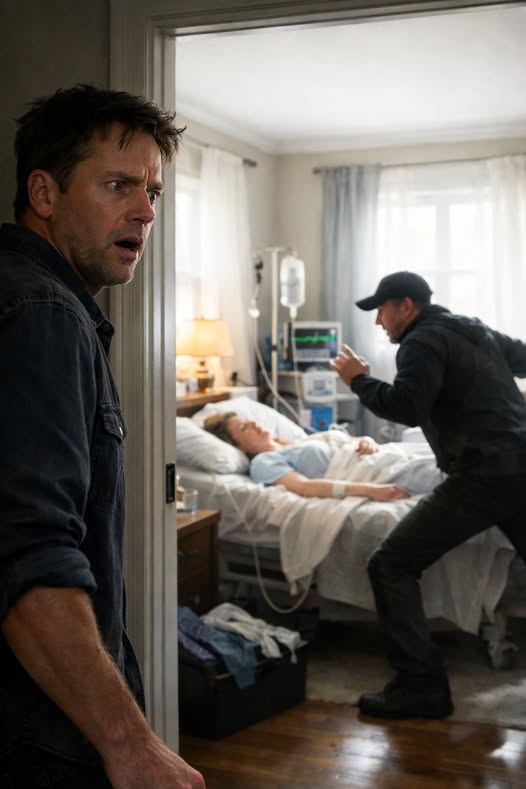
Part 12
The headlights at the end of the lane multiplied—two, then three, then a fourth set swinging into the row like sharks turning toward blood.
The hooded man swore under his breath. Mrs. Powell’s shoulders stiffened. She grabbed my elbow—not hard, but urgent.
“Now,” she hissed. “Move.”
Goal: don’t get caught between two forces that both claim to be saving me. Conflict: every direction felt like walking into a different kind of trap.
“I’m not getting in the SUV,” I snapped, pulling my arm back.
Mrs. Powell didn’t argue. Instead, she did something that confused me more than any confession: she shoved the key ring into my hand.
Cold metal. Too many keys.
“My car,” she said quickly, nodding toward a plain sedan parked one row over, half-hidden by a dumpster. “If you run, you run there.”
The hooded man’s calm cracked into irritation. “You’re not doing this.”
Mrs. Powell’s voice went sharp. “Shut up.”
The shift in her tone made my skin prickle. This wasn’t a nurse scolding a stubborn caretaker. This was someone used to giving orders.
The SUV’s engine rumbled behind us. The hooded man stepped toward me, hand lifting like he meant to take the envelope by force.
I backed up instinctively, chest tight. “Touch me and I scream,” I warned, even though my voice was shaking.
He smiled faintly. “Scream for who?”
The approaching cars were close enough now that I could hear tires on gravel. Doors slamming. Shouts carried on wind—muffled, distorted.
Mrs. Powell’s eyes locked onto mine. “Matthew, listen,” she said, fast and low. “Give Harper the recorder. Not Chen. Harper.”
My stomach dropped. “You’re saying Harper’s clean.”
Mrs. Powell’s mouth tightened. “Cleaner than the task force. Cleaner than him.” Her gaze flicked to the hooded man like he was a stain.
A burst of blue and red flashed at the end of the row—police lights, reflected off metal doors in harsh, jittery patterns. My pulse spiked with a weird, bitter relief. Harper had come.
But relief lasted only a second.
Because behind the flashing lights, a black unmarked SUV rolled in smooth and quiet, no siren, no flashers. Government quiet.
Chen.
I hadn’t seen her face yet, but I knew the shape of that vehicle from the station lot. My throat tightened.
Mrs. Powell’s fingers curled briefly—like she was fighting the urge to grab me and drag me away.
The hooded man leaned toward me, voice low, almost intimate. “You see? You’re valuable. Everyone wants a piece.”
A car door slammed hard. Footsteps pounded closer.
“Matthew!” Harper’s voice rang out, sharp and urgent, cutting through the wind. “Hands where I can see them!”
I lifted my hands automatically, envelope still clenched. My heart hammered so loud I could barely hear.
Harper appeared at the mouth of the row, gun drawn, eyes locked on me—then flicking to Mrs. Powell and the hooded man.
Behind Harper, two uniformed officers fanned out.
And behind them—moving with controlled purpose—Agent Chen stepped into view, her face unreadable, her gaze assessing the scene like she was counting exits.
My breath caught.
Chen’s eyes landed on Mrs. Powell, and something passed between them—too quick to name, but too intimate to be nothing. Recognition. History. A shared secret.
Harper’s voice sharpened. “Mrs. Powell, step away from him!”
Mrs. Powell didn’t move.
Chen spoke, calm as always. “Detective Harper, stand down. This is federal jurisdiction.”
Harper’s head snapped toward Chen. “Like hell it is.”
The hooded man used the tension like a curtain. In the chaos of voices—state versus federal, orders overlapping—he moved. Just a step, then another, drifting backward toward the SUV as if he were part of the shadows.
I saw it and panicked.
“No,” I blurted, and my voice cracked. “He’s—he’s with Kellan.”
Chen’s gaze flicked to me. “Where is Kellan?”
The question was too immediate. Too focused.
Mrs. Powell’s grip tightened on the air between us like she wanted to stop me from answering.
I realized then: every person here wanted information, and none of them were asking the same question for the same reason.
Goal: choose the least deadly option in a room full of loaded motives.
I swallowed hard and made a decision that felt like stepping off a ledge.
I pulled the recorder from my pocket, held it up, and tossed it—not toward Chen, not toward Mrs. Powell.
Toward Harper.
It clacked onto gravel near her boot.
Harper’s eyes flicked down, then back up—understanding sharpening her face. She kicked it behind her heel, out of Chen’s direct line.
Chen’s expression tightened for the first time.
Mrs. Powell exhaled, almost like relief.
The hooded man froze mid-step, recalculating.
Harper’s voice went low and dangerous. “Agent Chen,” she said, “why are you so interested in what’s on that recorder?”
Chen’s jaw tightened. “Because it’s evidence.”
“Or because it’s leverage,” Harper shot back.
For a second, everything hung in the air—wind, flashing lights, the smell of oil and cold metal. My hands shook so hard I could barely hold the envelope.
Then Chen raised her hand slightly—an almost imperceptible gesture.
One of the men with her, wearing a plain jacket, started forward.
Mrs. Powell’s eyes widened. “No,” she whispered, and the fear in her voice sounded real.
Harper’s gun lifted higher. “Stop right there!”
The man didn’t.
A sharp crack cut through the air—too loud, too sudden.
I flinched hard, stumbling backward. Gravel skidded under my shoes.
The world narrowed to sound and light and the taste of panic.
When my eyes refocused, Harper was still standing, gun smoking faintly at the barrel, aimed at the ground in front of the advancing man. A warning shot.
Silence slammed down after the crack, heavy and ringing.
Chen’s face hardened into something colder than professionalism. “Detective,” she said, voice controlled, “you just made this worse.”
Harper didn’t lower her weapon. “Then tell me the truth.”
Chen’s gaze shifted to me, and in that look I felt a promise of consequences.
Mrs. Powell grabbed my arm again, not gentle now. “Matthew,” she hissed, “run.”
And before I could move, the hooded man suddenly bolted—sprinting toward the far end of the row, away from lights, away from voices.
Harper shouted and one officer chased.
Chen didn’t chase him.
Chen stepped toward me.
That was the moment my blood went truly cold—because if Chen wasn’t chasing the hooded man, it meant she already had what she wanted in her sights.
Me.
She held out her hand, palm up, calm as ever. “Mr. Rourke,” she said, “give me the envelope.”
My fingers clenched around the photos until the cardboard edges dug into my skin.
Behind Chen, Mrs. Powell’s voice came out strained and urgent: “Matthew, don’t.”
In front of me, Chen’s eyes stayed steady, patient, predatory in their stillness.
If I handed her the photos, what would disappear next—my evidence, my freedom, or me?
Part 13
My fingers went numb around the envelope, like my body had decided the cardboard was more dangerous than a knife.
Agent Chen kept her hand out, palm up, patient. The police lights strobed off the storage doors so fast it made the whole row look like it was breathing.
“Mr. Rourke,” she said again, calm as a metronome, “give me the envelope.”
Detective Harper didn’t lower her gun. Her eyes cut between Chen and Mrs. Powell like she was trying to read a sentence someone kept smearing ink over.
Mrs. Powell’s voice came out tight behind me. “Matthew, don’t.”
Goal: keep control of what I’d found. Conflict: every authority figure in the lane was pulling in a different direction. New information: Chen and Powell clearly knew each other, and neither wanted Harper to get the photos.
I swallowed hard and forced my voice to work. “Why?”
Chen’s eyebrows lifted slightly, like she’d expected obedience, not questions. “Because it’s evidence,” she said.
Harper snorted. “Then why’d you bring an unmarked convoy?”
Chen’s jaw tightened, just barely. “Because this case has escalated, Detective.”
Harper’s eyes didn’t blink. “And you didn’t trust local law.”
Chen’s gaze slid to me again, and I felt the pressure in it—like a thumb on my windpipe. “Mr. Rourke, you’re not thinking clearly. You’re stressed. You’re being manipulated.”
By who? I almost asked. By my wife? My sister? My nurse? The FBI?
I looked down at the envelope and made a decision that wasn’t brave, just stubborn. “I’ll hand it over,” I said, “after you tell me why my nurse is in those photos.”
Chen’s expression didn’t change, but the air around her did. A tiny shift. A fraction of annoyance.
“That’s irrelevant,” she said.
“Funny,” Harper cut in, “that it’s irrelevant to you and extremely relevant to me.”
Mrs. Powell made a low sound—half warning, half regret. “Harper, stop.”
Harper’s head snapped to her. “You don’t get to say my name like you’re my supervisor.”
I saw it then: Harper’s anger wasn’t just about jurisdiction. It was personal. Like she’d been lied to by someone she’d trusted.
The hooded man—Kellan’s man—hovered a few steps back, watching, waiting for the moment the arguing turned into an opening.
I inhaled sharply and did what I should’ve done the second I found the Polaroid: I pulled my phone out with shaking hands and snapped a picture of the photos inside the envelope. Quick, blurry, but enough. I snapped another, closer to Mrs. Powell’s face in the background. Then another of the timestamp and angle.
Chen’s eyes flicked down, saw the phone.
Her hand moved.
Fast.
She grabbed for it, and for a second my body reacted before my brain did—I twisted away, knocking her fingers aside. My phone nearly flew out of my grip.
“Hey!” Harper barked.
Chen’s calm cracked into something sharper. “Give it to me.”
I took a step back, heart pounding, and hit send on the photo messages to Harper’s number. My thumbs felt like they were made of rubber. The sending bar crawled forward like it was dragging itself through mud.
Mrs. Powell’s voice cut in, urgent. “Matthew, go.”
The word hit like a shove. I looked at her, really looked, and saw the truth in her face: not kindness, not nurse patience—calculation and fear, the kind you get when you’ve been hunted before.
I didn’t know if she was trying to save me or save herself. But I knew staying put would get me stripped of everything.
I turned and ran.
Gravel sprayed under my shoes. The storage lane blurred with flashing light. Behind me, Harper shouted my name, and Chen barked an order I couldn’t make out. Someone’s footsteps pounded after me.
Mrs. Powell’s sedan sat one row over, half-hidden like she’d said. I fumbled with the key ring she’d shoved into my hand. Too many keys, too much metal, my fingers shaking so badly the ring clattered against the door.
A hand grabbed my jacket from behind.
I jerked hard and slipped free, stumbling forward. I slammed into the driver’s door, got it open, and dropped into the seat like I’d been thrown.
The engine didn’t start on the first try. Of course it didn’t.
My breath came out ragged. I turned the key again, hard enough to hurt my wrist.
The engine caught, coughing to life.
I threw it into reverse, tires crunching over gravel, and backed out just as the hooded man lunged into the row, arm extended.
He wasn’t reaching for me.
He was reaching for the envelope still clenched in my hand.
I yanked it toward my chest, swung the sedan around too fast, and the rear end fishtailed. The car bounced over a pothole, and my teeth clacked together.
In the rearview mirror, I saw Harper sprinting toward me, gun down, one hand up like she was trying to signal me to stop, to trust her. Chen stood behind her, still as a statue, watching like she already knew the next move.
Mrs. Powell was nowhere in sight.
Then the unmarked SUV’s headlights snapped on.
It rolled out of the far row, smooth and silent, cutting off the exit lane like a door closing.
My stomach dropped.
I hit the gas anyway.
The sedan shot forward toward the narrow gap between the SUV and a dumpster, metal scraping metal with a shriek that made my skin crawl. The side mirror snapped off and spun away into the dark.
I didn’t stop.
I burst through the gate, out onto the street, the world suddenly wide and cold and full of consequences.
In my rearview mirror, the unmarked SUV turned after me.
And behind it, farther back, another set of headlights followed too—no siren, no flashers.
Two tails.
Two hunters.
I gripped the wheel so hard my hands went white and felt the question throb in my chest like a second heartbeat: if Harper got my photos, why was Chen still chasing me like I was the evidence?
Part 14
The sedan smelled like peppermint and stale fast food, as if Mrs. Powell lived on breath mints and regret.
I kept the headlights off for two blocks and drove by memory, letting the town’s weak streetlights guide me. My pulse thudded in my ears so loud I almost missed the sound of the SUV behind me—tires on wet pavement, steady, confident.
Goal: lose them without wrecking. Conflict: I was driving a stranger’s car with two tails and a brain running on panic. New information: Chen’s people weren’t the only ones after me.
At the first intersection, I cut hard right without signaling. The sedan’s suspension groaned. I turned down a side street lined with bare maples and closed-up summer cottages, the kind with porch swings wrapped in tarp. The air outside was raw and salty, the road damp with thaw.
The SUV’s headlights vanished for a moment.
Relief flared too soon.
Then a second set of lights appeared in my mirror—lower, closer.
The other tail.
I swallowed, my throat dry, and tried to think like someone who wasn’t terrified. I wasn’t going to outrun them on town streets. I needed to vanish.
Up ahead, I saw the marina access road—a narrow lane that dipped toward the water, where fishermen parked at weird hours and no one asked questions. I swung onto it and let the sedan roll downhill, engine idling, tires whispering.
The air changed as I got closer to the water—briny, metallic, with a faint rot of seaweed. Somewhere, a boat’s rigging clinked in the wind.
I killed the engine and coasted behind a stack of lobster traps. The traps smelled like salt and old bait, and the wire looked like rusted spiderwebs.
My hands shook as I sat there in the dark, listening.
The first set of headlights swept past the marina entrance, slow, searching. The SUV didn’t turn in. It kept going, as if whoever was driving didn’t want to risk tight lanes near water.
A minute later, the second tail’s lights appeared, hesitated, then also moved on.
I held my breath until my lungs burned.
When it felt safe enough to breathe, I realized my phone was still in my hand, screen lit with Harper’s last text: DON’T MOVE. STAY WHERE YOU ARE.
I thumbed a reply with trembling fingers: I MOVED. SORRY. I SENT PHOTOS. I’M AT MARINA.
The message sat there, spinning.
Then, finally, it delivered.
A new text came back almost immediately: GO TO LIGHTHOUSE ROAD. NOW. TRUST ME.
Lighthouse Road.
The word made my stomach tighten because Bree’s recording had said it like a code wrapped in a plea.
I started the sedan again and eased out of the marina, keeping to back streets. My eyes kept flicking to the mirror, expecting headlights to bloom again.
On Lighthouse Road, the town thinned out. Houses turned into dark trees. The road narrowed, lined with scrub and winter-bent grasses. The smell of pine and cold ocean slammed into me as the wind picked up.
Half a mile in, a pair of taillights appeared ahead—stopped on the shoulder.
Mrs. Powell’s sedan was already there.
My heart jumped and then dropped. How did she beat me here?
I pulled up behind it, headlights still off, and stepped out. The wind hit my face hard, stinging my eyes.
Mrs. Powell stood by the trunk, coat collar up, hair still tied back. In the harsh moonlight, she didn’t look grandmotherly. She looked like someone who’d learned how to survive by being underestimated.
“You stole my car,” she said, voice flat.
“You gave me the keys,” I snapped.
She didn’t argue. She opened the trunk and pulled out a duffel bag, then tossed it toward me. It hit my chest, heavier than I expected.
“Change of clothes,” she said. “Cash. Burner phone.”
I stared at the bag. “Who are you?”
Mrs. Powell’s mouth tightened. “Not who you met.”
“Great,” I said bitterly. “No one is.”
She stepped closer, and I smelled the peppermint again, sharper now. “My name is Marjorie,” she said quietly. “Powell is borrowed.”
“What are you?” I demanded. “Private security? Fixer? Kellan’s babysitter?”
Her eyes flashed. “I’m not his.”
“Then why do you have my house key?” I pushed. “Why were you at Bree’s accident? Why were you in that photo?”
Marjorie exhaled slowly, like she was choosing which truths wouldn’t kill me. “Bree came to me before the accident,” she said. “Not as your wife. As a compliance officer who realized she’d stepped into something bigger than her company.”
My throat tightened. “She hired you.”
“Yes,” Marjorie admitted. “To watch. To document. To keep her alive long enough to hand proof to the right people.”
“And you failed,” I said, the words coming out like glass.
Marjorie’s gaze didn’t flinch. “Yes.”
The wind gusted, rattling dead branches. The ocean, invisible beyond the trees, sounded like it was breathing.
“Agent Chen,” I said, my voice lower now, “is she one of the ‘right people’?”
Marjorie’s jaw tightened. “She was supposed to be.”
“Was,” I echoed.
Marjorie nodded once, grim. “Chen and I worked adjacent cases years ago. She learned how to look clean while getting paid dirty.”
My stomach rolled. “So she’s with Kellan.”
Marjorie didn’t answer directly. “She wants control of the narrative,” she said. “That means she wants anything that proves she was at the beginning.”
“The beginning,” I repeated, thinking of ACCIDENT NIGHT.
Marjorie’s gaze flicked to the envelope in my hand. “You opened photos first.”
“Bree told me to,” I said.
Marjorie’s face softened for a fraction of a second, then hardened again. “She wanted you to see who was around her. Who was close. Who was convenient.”
My mouth went dry. “Like you.”
Marjorie didn’t deny it. “Like me,” she agreed.
The emotional reversal hit hard: the woman who’d held Bree’s wrist and told me to rest had been acting inside a plan my wife started.
I gripped the envelope tighter. “So Bree wasn’t just a victim.”
Marjorie’s eyes held mine. “No,” she said softly. “She was also a participant who panicked.”
Something in my chest went tight and bitter. “And my sister?”
Marjorie’s expression darkened. “Alyssa was leverage. Kellan didn’t recruit her because she was smart. He recruited her because she was close to you.”
My hands shook. “You said you didn’t know about Alyssa.”
“I didn’t know she’d go that far,” Marjorie said. “I knew she was being pressured. I tried to pull her out. I failed at that, too.”
A low hum rose in the distance—an engine.
Marjorie’s head snapped toward the trees. She grabbed my arm, hard. “Get in my car,” she hissed. “Now.”
I glanced toward the road and saw headlights cresting the hill, slow and deliberate.
Not one set.
Two.
My stomach dropped as Marjorie shoved me toward her sedan like she was launching a lifeboat, and I realized too late that Lighthouse Road wasn’t a safe place—it was a meeting point.
And someone else had arrived to claim it.
Part 15
Marjorie’s sedan smelled like menthol and paper—old files, old secrets. She drove with both hands on the wheel, knuckles pale, eyes fixed on the road as if looking away would invite death.
The headlights behind us didn’t speed up. They didn’t fall back. They matched our pace like a predator matching a limping deer.
Goal: get somewhere with witnesses. Conflict: whoever was tailing us wanted us isolated. New information: Lighthouse Road had been bait, not refuge.
“Who’s behind us?” I asked, voice tight.
Marjorie didn’t glance in the mirror. “Could be Chen,” she said. “Could be Kellan. Could be both. Doesn’t matter. We’re not stopping.”
My heart hammered. “Harper told me to come here.”
Marjorie’s mouth tightened. “Harper might be trying to help you,” she said. “Or Harper might be trying to keep you where she can see you.”
“That’s not an answer,” I snapped.
Marjorie’s voice stayed flat. “It’s the only honest one.”
She turned off onto a narrow gravel lane that cut through trees and ended in a small pull-off near the water. In the distance, the lighthouse beam swept slow and pale through fog, like a giant eye refusing to blink.
Marjorie killed the engine and motioned for me to stay low.
We sat in silence, listening.
The taillights behind us slid past the gravel lane without turning in. Then, minutes later, the second set did the same.
My lungs finally loosened.
Marjorie exhaled, slow. “They’re herding,” she muttered. “Trying to keep you moving until you get tired.”
I swallowed hard. “What now?”
Marjorie reached into her glove box and pulled out a cheap flip phone. “Now we call Harper and see if she answers like a cop or like a player.”
She dialed. I watched her face in the dim dashboard glow—hard, focused, not nurse-soft at all.
Harper picked up on the second ring. “Where the hell are you?” she demanded.
Marjorie spoke first. “Detective, it’s Marjorie.”
A pause. Then Harper’s voice dropped. “I told you to stay away.”
Marjorie’s lips curled, humorless. “You never told me anything directly, Harper. You just kept using my name like it was yours.”
Silence again, sharp with history.
Harper finally said, “Matt, are you with her?”
“Yes,” I said, and my voice sounded strange in the phone, like someone else’s.
Harper’s breath hissed. “Okay. Listen. Chen’s off the rails. She brought her own team, and she’s claiming you’re obstructing. I can’t trust half the people around me.”
“So you texted me to Lighthouse Road,” I said, anger flaring.
“I texted you because I saw Chen watching your location,” Harper snapped. “I needed you moving before she could lock you up.”
Marjorie’s eyes narrowed. “Then why did you pick Lighthouse Road?”
Harper didn’t answer immediately. When she did, her voice was clipped. “Because it’s where Bree’s deposit clue points. And because I needed you somewhere I could reach you fast.”
My stomach turned. “You knew about Bree’s clue.”
“Matt,” Harper said, softer now, “Bree left a lot of breadcrumbs. Some went to you. Some went to me. Some—” She stopped.
“Some went to Marjorie,” I finished bitterly.
Marjorie didn’t flinch.
Harper exhaled. “You have the recorder?”
“No,” I said quickly. “Harper has it.”
“Good,” Harper replied. “Keep it that way. Matt, I need you to do something. There’s a safety deposit box at Harbor Trust. Bree’s name is on it, but your name is authorized too.”
My stomach dropped. “Authorized? How?”
“Paperwork,” Harper said. “Forged or coerced. Doesn’t matter. If Chen gets the box first, she’ll bury whatever’s inside.”
Marjorie’s jaw tightened. “So we grab it.”
Harper’s voice sharpened. “Not alone. You come to the bank at opening. I’ll be there. Quiet. No hero moves.”
I swallowed, the wind outside whispering through trees like someone eavesdropping. “And if Chen’s there?”
Harper paused. “Then we stay calm and we let her show her hand.”
After we hung up, my phone buzzed—my own phone this time. Unknown number.
Alyssa.
My chest tightened with that old, complicated pain: anger with a memory of love folded into it like a blade.
I stared at the screen. For a second, I wanted to let it ring forever.
Then I answered. “What.”
Alyssa’s voice came through thin and shaky, like she was calling from a place with hard walls. “Matt,” she whispered. “Please—just listen.”
“I’m listening,” I said, cold.
Alyssa inhaled sharply, like she was fighting tears. “They… they’re pressuring Mom.”
My stomach lurched. “What are you talking about?”
“They visited her,” Alyssa said. “A woman. Asian. Calm. She said she was ‘federal’ and asked about you. Mom’s scared, Matt. She said they wanted her to sign something.”
My grip tightened on the phone. “Chen.”
Alyssa sobbed once, a sound that was almost a laugh. “I don’t know names. I just know she smiled like it didn’t cost her anything.”
Marjorie’s eyes narrowed. “Your mother?” she mouthed.
I nodded.
Alyssa’s voice dropped. “Matt, I did awful things. I know. I know you hate me. But if you go to the bank… please be careful. They’re going to use Mom to get you to give up whatever you found.”
My throat tightened. “Why are you telling me this?”
Alyssa’s breathing hitched. “Because I’m tired of being someone’s tool,” she whispered, echoing the words I’d said hours earlier like she’d been listening to my life.
The emotional reversal hit hard—pity trying to squeeze in where anger had been living. I shoved it down.
“You made your choices,” I said. “Now I’m making mine.”
Alyssa whispered, “I’m sorry,” and the line went dead.
The wind gusted. The lighthouse beam swept past again, cold and distant.
Marjorie watched me, expression unreadable. “Your mother will be at the bank,” she said, not a question.
My stomach sank. “Yeah.”
Marjorie’s voice softened just slightly. “Then we go in prepared.”
I stared through the windshield at the faint glow of the lighthouse, and I realized the next morning wasn’t about clearing my name anymore.
It was about whether I could refuse a trap even if it was baited with my own mother.
And I didn’t know which would break me first—Chen’s threat, or my mother’s frightened face when I walked into that bank.
Part 16
Harbor Trust Bank smells like carpet shampoo trying to cover up old money.
At 8:57 a.m., I stood across the street with Marjorie, watching people drift in—retirees in puffy coats, a young couple arguing in whispers, a guy in work boots holding an envelope like it was a lifeline.
My breath fogged in the cold. The envelope of photos felt damp in my hands, warmed by my palms, edged by sweat.
Goal: get Bree’s deposit box before Chen can. Conflict: Chen would likely use my mother as leverage. New information: the bank lobby could become a stage.
Harper’s unmarked cruiser rolled in and parked half a block away. She stepped out alone, no uniform, no flash—just that sharp, focused posture. She met my eyes across the street and gave a small nod: I’m here.
Marjorie murmured, “Remember: no sudden moves.”
“Yeah,” I muttered. “My life’s been nothing but sudden moves.”
We crossed the street and walked in.
Warm air hit my face, smelling of printer toner and that faint sweetness banks always seem to have, like someone thinks cinnamon can convince you to trust them. A security guard glanced at us, bored.
And then I saw her.
My mother sat on a lobby chair near the brochure rack, hands folded tight in her lap like she was praying. Her gray hair was brushed neat, lipstick on—she looked like she’d dressed up to be brave.
Beside her sat Agent Chen.
Chen’s posture was relaxed, legs crossed, like she was waiting for a flight. She saw me immediately and smiled as if we were old friends.
My stomach turned.
Mom’s eyes lifted. When she saw me, relief and fear collided on her face. Her mouth trembled.
I wanted to rush to her. To wrap her in my arms like I could keep the world off her with my body.
But Chen’s presence made every instinct feel like a trap.
Harper moved in behind us, casual. She didn’t draw attention, but I felt her there like a shield I wasn’t sure I deserved.
Chen stood smoothly, smoothing her blazer as if she’d been sitting in perfect stillness. “Mr. Rourke,” she said warmly. “I’m glad you came.”
My voice came out tight. “Leave my mother out of this.”
Chen’s smile didn’t change. “Your mother asked for protection.”
Mom flinched, like the word had teeth.
“That’s not true,” Mom whispered, and my chest tightened.
Chen tilted her head at Mom, calm. “Mrs. Rourke, do you feel safe?”
Mom’s fingers twisted together, knuckles white. She looked at me, eyes wet. “They came to my house,” she said softly. “They said you were in trouble. They said if I didn’t help, you’d go to prison.”
The words hit like a punch.
Chen’s voice stayed gentle. “We’re trying to prevent that.”
Harper stepped forward, her tone flat. “Funny way to prevent it. Ambushing his mom at a bank.”
Chen’s eyes flicked to Harper, and the warmth vanished like a light switching off. “Detective Harper,” she said. “Still playing local hero?”
Harper didn’t blink. “Still playing federal puppeteer?”
For a moment, the lobby felt too quiet. Even the printers behind the counters seemed to hush.
Chen looked back at me. “We have a warrant,” she said calmly. “For the safety deposit box. We also have grounds to detain you for obstruction if you refuse to cooperate.”
My mouth went dry. “Detain me for what?”
Chen’s gaze held mine. “For holding evidence you refused to surrender. For fleeing the scene. For endangering officers.”
Harper let out a short, humorless laugh. “Endangering officers? He ran from you grabbing his phone.”
Chen’s jaw tightened. “Detective, you are out of your lane.”
Harper’s hand drifted near her pocket—not for a gun, for a badge. “Then arrest me.”
Chen ignored her and stepped closer to me, lowering her voice like she was offering a deal. “Mr. Rourke, you can make this easy. Hand me the photos. Let me secure the box. You walk out with your mother and a clean slate.”
My stomach churned. “A clean slate,” I echoed. “From you.”
Chen’s eyes stayed steady. “From the system.”
Marjorie stood slightly behind me, silent, her presence like a taut wire. I felt her watching Chen, reading her.
Mom whispered, “Matthew, please… just do whatever makes this stop.”
The emotional reversal hit like a wave. My mother’s fear tugged hard at my spine, the old instinct to obey, to soothe, to sacrifice.
But I thought of Bree’s recording—Start with PHOTOS. It’ll make the rest make sense.
I thought of the Polaroid of me at the window. Someone had been standing close enough to smell my fear.
And I realized Chen wasn’t offering safety. She was offering a muzzle.
I took a slow breath. “If you have a warrant,” I said, loud enough that the teller window staff could hear, “then show it.”
Chen’s eyes narrowed slightly. “Of course.”
She pulled a folder from her bag and slid papers out, crisp and official. I scanned the top page. Court seal. Language too thick for normal people. My hands shook, but I forced myself to read enough to see one thing that made my skin prickle:
The warrant authorized seizure of “financial records and photographic evidence related to North Harbor Group investigations.”
Photographic evidence.
So she already knew the photos existed. She wasn’t guessing. She was collecting.
I looked up at Chen. “You’re not here for truth,” I said quietly. “You’re here to control the story.”
Chen’s smile returned, smaller this time. “That’s what truth is, Mr. Rourke. Whoever holds it.”
My throat tightened. “Not today.”
Chen’s gaze flicked to Marjorie for the first time, and something sharpened there. Recognition, old resentment.
“Marjorie,” Chen said softly. “Still playing guardian angel?”
Marjorie didn’t move. “Still selling your badge to the highest bidder?”
Chen’s eyes chilled. “Careful.”
The bank manager—an anxious man with a thinning comb-over—hovered near the counter, pretending not to listen. The security guard stood straighter.
Chen held her hand out again. “Envelope,” she said. “Now.”
I looked at Mom. Her eyes were pleading, terrified. I felt something in my chest crack with tenderness I didn’t want.
Then I made my choice.
I reached into the envelope and pulled out the photos slowly, like I was surrendering. Chen’s shoulders loosened, just slightly, like she’d tasted victory.
But I didn’t hand them to her.
I turned and handed them to Harper.
The lobby seemed to inhale.
Harper took them without hesitation, her face hardening with purpose. She tucked them inside her coat like they were a weapon.
Chen’s calm finally fractured. “Detective,” she snapped, voice sharp, “that is federal evidence.”
Harper stepped closer, eyes locked on Chen. “Then come take it,” she said.
Chen’s hand moved toward her bag.
Marjorie’s voice cut in, low and deadly. “Don’t.”
Chen froze, eyes flicking to Marjorie—then, slowly, she smiled again, but it was all teeth this time.
“Fine,” Chen said. “We do it the hard way.”
She turned to the teller. “We’re opening the box.”
Mom grabbed my sleeve, desperate. “Matthew—”
I squeezed her hand once, quick. “You’re coming with me,” I whispered.
Harper leaned toward me, barely moving her lips. “If she gets the box, we pivot,” she murmured. “Stay calm.”
Calm felt impossible as Chen marched toward the vault like she owned it.
Marjorie’s fingers brushed my wrist, and she slipped something into my palm without looking—a small key, different from the ring.
I stared at it, heart pounding.
Marjorie whispered, so soft only I could hear, “That’s the real box.”
And as Chen disappeared behind the vault door with the bank manager, I felt cold dread bloom—because if Chen was opening a decoy, then what was the real box holding, and how long before Chen realized she’d been played and came back for blood?
Part 17
The bank lobby felt too bright, like the fluorescent lights were trying to bleach the fear out of everyone’s faces.
Harper guided Mom toward the entrance with a gentle hand at her back. Mom moved stiffly, eyes wide, like she was afraid any wrong step would trigger something.
Marjorie stayed near the brochure rack, posture relaxed on purpose, like she was just another woman waiting for a mortgage appointment. I could tell she was coiled tight underneath.
Goal: get the real box without Chen seeing. Conflict: Chen was already in the vault, and the minute she realized she’d been handed a decoy, she’d come looking for the original. New information: Marjorie had a second key—meaning Bree’s plan had layers.
I followed Harper and Mom out, heart hammering. The cold air outside hit hard, clean, smelling of exhaust and winter. For a second, I thought we might actually walk away.
Then the vault door inside clanged shut with a heavy, final sound.
Harper’s head snapped toward the bank. “Go,” she said, low. “Now.”
We didn’t run. Running draws attention. We walked fast, the way people do when they’re pretending they’re not scared.
Harper steered Mom toward her cruiser. “Get in,” she told her gently.
Mom looked at me, eyes wet. “I’m sorry,” she whispered.
I swallowed hard. “You didn’t do this,” I said, though part of me wanted to add: but you let them into your house.
Harper opened the passenger door for Mom, then turned to me. “Where’s Marjorie?” she asked.
I glanced back. Marjorie stepped out of the bank doors alone, hands in her coat pockets, face calm.
Behind her, the bank manager stumbled out, flustered, looking like he wanted to disappear into his own suit.
Then Agent Chen appeared in the doorway.
Her face wasn’t calm anymore.
She scanned the street, eyes sharp, and landed on Harper.
Even from across the sidewalk, I saw it: the moment Chen understood she’d been handed the wrong thing.
She took one step forward, and Harper’s shoulders tightened.
“Matt,” Harper said through her teeth, “get in the back.”
My stomach dropped. “No.”
Harper’s eyes flashed. “This isn’t a debate.”
Marjorie reached us, quick. “The key,” she whispered.
I kept my hand low and showed her the small key she’d slipped me.
Marjorie nodded once. “Good. That’s for box 12C. Not Bree’s name. Not yours. A shell.”
“How do you know?” I demanded.
Marjorie’s gaze flicked to Chen. “Because I set it up,” she said. “With Bree. Before everything went to hell.”
The emotional reversal hit like a shove: Bree and Marjorie had built a backdoor plan long before my midnight window stakeout, long before Alyssa’s gun in my kitchen.
Chen started across the sidewalk toward us, her pace controlled but urgent. She looked like someone who didn’t want to cause a scene but would if she had to.
Harper stepped forward to block her. “Agent Chen,” she called out, voice firm. “Back off.”
Chen didn’t slow. “Detective Harper,” she said, loud enough for passersby to hear, “you are interfering with a federal seizure.”
Harper’s hand moved toward her coat pocket where my photos were hidden. “And you’re intimidating witnesses.”
Chen’s eyes flicked toward me, cold. “Mr. Rourke is not a witness. He’s an accomplice.”
My stomach tightened. “That’s a lie.”
Chen’s smile turned thin. “It’s a story.”
Marjorie’s voice cut in, calm and sharp. “You opened the wrong box, Lila.”
Hearing Chen’s first name out loud made my skin prickle. Chen’s eyes snapped to Marjorie with something that looked like old hatred.
“Marjorie,” Chen said, voice soft as a threat, “you’re a ghost. You don’t exist on paper. Don’t make me remind you why.”
Marjorie didn’t blink. “Try.”
For a second, they just stared at each other, and the air between them felt like a wire about to snap.
Then Chen moved.
Fast.
Not toward Marjorie. Toward me.
Her hand shot out, grabbing my wrist where the small key was hidden in my fist. Her fingers were strong, nails short, professional.
Pain flashed. My breath caught.
Harper surged forward, grabbing Chen’s shoulder. “Let him go!”
Chen twisted, shrugging Harper off like she’d done it before.
The sidewalk erupted into noise—Mom gasping from inside the cruiser, someone shouting, a car horn blaring because no one knew why three women and one exhausted man were suddenly grappling outside a bank.
My pulse roared.
I yanked my hand back hard, and the key slipped.
It fell.
For half a second, it glittered in the sunlight as it dropped toward the pavement.
Marjorie’s foot shot out and pinned it under her boot.
Chen’s eyes flashed, furious.
Harper’s gun didn’t come out, but her badge did. “Back away,” Harper warned, voice low. “Now.”
Chen’s gaze darted—taking in the onlookers, the bank cameras, the manager hovering at the door. She recalculated in real time. Then she stepped back smoothly, hands raised in a mock peace gesture.
“Fine,” she said lightly. “You win this sidewalk.”
Her eyes locked onto mine. “But you can’t outrun paperwork, Mr. Rourke.”
She turned and walked away—back into the bank like she owned it.
The second the doors shut behind her, Harper exhaled hard. “We have minutes,” she said. “Where’s the box?”
Marjorie lifted her boot and picked up the key. “Not here,” she said. “Different branch. The old one near the marina. No cameras inside the vault—just a clerk and a clipboard.”
My stomach sank. “That’s where I live.”
Marjorie nodded. “That’s why Bree chose it.”
Harper swore under her breath. “Of course.”
We moved fast—Harper driving, Mom shaking silently in the passenger seat, Marjorie in the back beside me, her knee bouncing with contained urgency.
The marina branch was smaller, older, with wood paneling that smelled like lemon polish and decades of quiet deals. The clerk behind the counter looked bored until Harper flashed her badge.
“We need access to box 12C,” Harper said.
The clerk blinked, confused. “Uh… we’d need authorization—”
Marjorie leaned in, voice calm. “You have it,” she said, sliding a laminated card across the counter.
The clerk’s eyes widened. “Is that…?”
“Just do your job,” Marjorie said.
We got into the vault room. It was colder than I expected, air thin and stale, like breathing inside a refrigerator. Rows of metal boxes lined the walls, dull and anonymous.
My hands shook as I slid the key into box 12C.
It turned.
The drawer slid out with a soft scrape.
Inside was not cash. Not jewelry. Not a fat stack of incriminating paper.
It was a disposable camera and a folded paper packet no thicker than a pamphlet.
I stared. “That’s it?”
Marjorie’s voice went tight. “Open the packet.”
I unfolded it carefully. Inside were strips of clear plastic—microfilm.
My throat tightened. “What am I looking at?”
Harper leaned in, eyes narrowing. “Missing pages,” she whispered. “This is the missing pages.”
The emotional reversal hit like a wave of relief and dread: we had proof… but it was fragile, tiny, and easy to destroy.
Marjorie snatched the disposable camera and popped the back open. Inside, taped under the film roll, was a tiny microSD card.
My stomach dropped. “Bree hid video too.”
Harper’s phone buzzed, and the color drained from her face as she read.
“What?” I asked, pulse spiking.
Harper’s voice went low. “Hospital just called,” she said. “Bree’s gone.”
My lungs stopped. “Gone how?”
Harper stared at me, fear sharpening her eyes. “Transferred,” she said. “Authorized by federal.”
Chen.
Marjorie’s jaw clenched. “She’s not transferring Bree,” she muttered. “She’s disappearing her.”
I looked down at the microSD card in Marjorie’s hand, then up at Harper’s face, and the cold truth settled into my bones: we’d found the evidence, but we were already late.
And if Bree was in Chen’s hands, what would Chen do first—silence Bree forever, or use her as bait to make me hand over the microfilm?
Part 18
The hospital room smelled like bleach and stale flowers.
Bree’s bed was made—too neatly—like she’d never been there. The feeding pump was gone, the monitor unplugged, the outlet empty. A single strip of tape on the floor marked where equipment had sat for months, like a ghost outline.
Goal: find where Bree was taken. Conflict: the hospital staff would hide behind “authorization” while Chen moved faster than paperwork. New information: Bree’s disappearance wasn’t sloppy—it was clean.
I stood in the doorway and felt my knees go weak.
Harper spoke to the charge nurse in a low, controlled voice. The nurse kept repeating the same phrases like she’d been trained to: “approved transfer,” “patient safety,” “federal protective custody,” “we cannot disclose.”
Marjorie paced near the window, jaw clenched, eyes scanning the parking lot like she expected a van to pull up any second.
I walked to Bree’s empty bedside table out of habit and saw one thing that didn’t belong.
A napkin.
Folded into a tight square, placed dead center like someone wanted it found.
I picked it up with shaking fingers. The paper was stiff, the edges crisp.
On it, in neat handwriting that looked like it came from a label maker’s twin, were two words:
MARLOWE CLINIC.
My stomach dropped.
Dr. Kent Marlowe. The private “recovery” clinic with calming fonts and vague promises. The name I’d seen on Bree’s medication history. The place that had hovered in the background like a shadow I hadn’t wanted to touch.
Harper saw my face change. “What is it?”
I held up the napkin. “They left this,” I said, voice hoarse.
Marjorie’s eyes narrowed. “They’re not hiding her,” she said. “They’re baiting you.”
Harper’s mouth tightened. “Marlowe Clinic is thirty miles south. Private facility. Limited access.”
“So we crash the front desk,” I snapped.
Harper grabbed my arm hard enough to sting. “No. We do this right.”
Marjorie’s voice cut in, urgent. “There is no right. Chen’s already rewriting the paper trail.”
Harper’s jaw tightened. “Then we move fast.”
We drove in Harper’s car, no siren, no lights—just speed and tension. The road south ran along the coast for a stretch, gray water slapping against rocks, fog hanging low like dirty cotton.
My hands shook in my lap. I kept thinking about Bree’s eyes when they first opened in that storage unit, the terror in them when she said He’s here. I didn’t love her the way I used to. That love had been burned away by lies and time.
But I still couldn’t stomach the idea of her being dragged around like property.
Not again.
Marlowe Clinic sat behind a line of tall pines, modern glass and stone, the kind of place meant to look peaceful. The parking lot was almost empty. A soft fountain burbled by the entrance, pretending the world wasn’t ugly.
Inside, the air smelled like eucalyptus and money. A receptionist looked up, smile polite and blank.
“Can I help you?”
Harper flashed her badge. “Detective Harper. This is an active investigation. I need to know if Brianna Rourke was brought here today.”
The receptionist’s smile wavered. “We can’t disclose—”
A door behind the reception area opened, and Dr. Marlowe himself stepped out—tall, silver hair, expensive sweater, eyes like polished stone.
“What’s going on?” he asked calmly, as if police badges were minor inconveniences.
Harper’s voice was sharp. “Where is she?”
Dr. Marlowe’s gaze flicked to me, then back to Harper. “Patient transfers are confidential,” he said. “Unless you have a warrant.”
Marjorie stepped forward, voice low. “We have federal corruption, Dr. Marlowe. If you’re smart, you’ll cooperate.”
Marlowe’s eyes narrowed slightly. “And who are you?”
Marjorie didn’t answer.
I couldn’t stand the dance. “She’s my wife,” I said, the word wife tasting bitter now. “And if you touched her sedation regimen, you’re going to prison.”
Marlowe’s expression didn’t flinch. “Sir, I have no idea what you’re talking about.”
A faint sound drifted from down the hall—a low mechanical hum. Familiar. Like a pump.
My heart jumped.
I stepped around the reception desk before Harper could stop me and walked toward the hall. The carpet muffled my footsteps, but the hum grew louder.
A security guard appeared at the corridor entrance, big and bored. “Sir, you can’t—”
Harper’s voice snapped. “Move.”
The guard hesitated, then stepped aside when Harper’s hand hovered near her hip.
We moved down the hall, past doors labeled with soft fonts and calming colors. The hum led me to a room at the end—door shut, blinds drawn.
I pushed it open.
Bree lay on a bed, pale, an IV in her arm. Her eyes were closed. A monitor blinked softly. The room smelled like antiseptic and that same faint perfume she’d worn once, as if someone wanted to remind me she belonged to something.
A man stood beside her bed.
Not Marlowe.
Kellan.
He wasn’t hooded now. He wore a clean jacket and a calm smile, like he’d just stepped out of a boardroom.
My blood went cold.
“Matthew,” he said softly, as if we were old acquaintances. “You’re persistent.”
Harper’s gun came up instantly. “Hands up.”
Kellan raised his hands, slow. “Let’s not do that,” he said. “We’re all tired.”
Marjorie stepped into the doorway behind us, eyes hard. “Where’s Chen?”
Kellan’s smile widened. “Nearby,” he said. “Always nearby.”
I stared at Bree’s face, slack and still, and felt rage claw up my throat. “You took her.”
Kellan’s eyes flicked to Bree, almost affectionate. “We moved her to a safer environment,” he said. “Your detective friend is stirring chaos.”
Harper’s voice went low. “You’re under arrest.”
Kellan chuckled softly. “For what? Breathing?”
He took a small step closer to Bree and laid two fingers lightly on her wrist, like he was checking a pulse. Bree didn’t react.
Then Kellan looked at me, eyes pale and flat. “You have something that belongs to me,” he said. “Microfilm. Video. Proof.”
My stomach tightened.
Kellan’s voice stayed calm. “You give it back,” he said, “and Bree stays alive long enough to be cared for. You keep it, and accidents happen.”
The emotional reversal hit like a shove: Bree had become leverage again—only now, the person holding the leash wasn’t family. It was a man who treated lives like lines in a spreadsheet.
Harper’s grip tightened on her gun. “He’s bluffing.”
Kellan smiled faintly. “Try me.”
I swallowed, my throat dry, and felt the terrible shape of the choice forming: evidence or Bree’s life.
Then Bree’s eyelids fluttered—barely—and a tear slid from the corner of her eye into her hair.
She heard him.
She heard me.
And Kellan’s smile widened as if he’d been waiting for me to notice—because the next move wasn’t mine.
It was Bree’s.
And I didn’t know if she was about to beg me to save her… or sell me out one last time.
Part 19
Bree’s tear should’ve cracked me open. Six years of my life had been built around the idea that if she could just feel something—hear something—then it mattered.
But standing in that clinic room with Kellan’s hand hovering over her like he owned her pulse, all I felt was cold.
Goal: get Bree out and keep the evidence. Conflict: Kellan wanted both, and he had the kind of calm that comes from never being told no. New information: Bree was awake enough to hear—and her reaction could steer everything.
Harper’s gun didn’t waver. “We’re not negotiating,” she said.
Kellan’s smile didn’t change. “Everyone negotiates,” he replied. “Some people just pretend they don’t.”
Marjorie stepped forward, voice sharp. “Kellan Mercer,” she said, using his full name like a nail. “You’re not leaving here.”
Kellan’s eyes flicked to her. “Marjorie DeWitt,” he said softly. “Still pretending your moral compass points north.”
So that was her real name. DeWitt. The “borrowed” Powell identity peeled away like a mask.
Marjorie didn’t flinch. “Where’s Chen?”
Kellan’s gaze slid to the door. “Outside,” he said. “Listening. Learning. Deciding which of us is more useful.”
Harper’s jaw tightened. “I’m calling backup.”
Kellan shrugged. “You can try.” His eyes met mine. “But you know what happens when uniforms show up: chaos. Accidents.”
He looked down at Bree again and brushed hair off her forehead with a tenderness that made my stomach turn. Bree’s lips moved slightly, like she was trying to speak through sedation.
I stepped closer, voice low. “Bree,” I said. “If you can hear me, blink once.”
Her eyelids fluttered.
Kellan watched, amused.
I swallowed hard. “Do you want me to give him what he wants?”
Bree’s eyelids fluttered again, longer this time, like a yes—or like exhaustion.
My throat tightened.
Marjorie’s voice cut in, urgent. “Matthew, don’t ask her,” she hissed. “She’s compromised.”
Bree’s lips trembled. A whisper scraped out, so faint I had to lean in to catch it.
“Don’t… trust…”
Then her eyelids fell shut again.
My chest tightened. “Don’t trust who?” I demanded, panic flaring despite my effort to stay cold.
Kellan smiled. “She means you,” he said lightly. “She means the guy who left her in bed while the world ate her alive.”
The words hit because they were sharp enough to cut, but I recognized the tactic. Divide. Poison. Make everyone feel alone.
Harper’s voice went hard. “Shut up.”
Kellan’s gaze moved to Harper’s gun. “You shoot me,” he said calmly, “and Chen walks out with your career in her pocket and my money in her other hand.”
Marjorie’s eyes narrowed. “You’re stalling.”
Kellan didn’t deny it. He glanced at the wall clock, as if timing something.
Then, faintly, from outside the clinic, a siren wailed—distant but approaching.
Harper’s eyes widened just slightly. “I didn’t call—”
Kellan smiled wider. “Someone did.”
The emotional reversal hit like a gut punch: backup wasn’t arriving to save us. It was arriving because someone had set this stage to force a messy ending.
A door down the hall slammed. Footsteps rushed past. A voice shouted, “Federal! Clear the corridor!”
Chen.
Harper’s grip tightened on her gun. “We’re leaving,” she snapped at me. “Now.”
Kellan’s voice stayed calm. “Not without paying.”
Marjorie’s hand slipped into her coat and came out holding the microSD card between two fingers like it was nothing. “You want something?” she said. “Catch.”
She tossed it—not at Kellan. Past him, into the corner of the room where a trash can sat.
Kellan’s eyes narrowed. “Cute.”
Marjorie’s voice was sharp. “It’s the video you want.”
Kellan’s attention flicked, just for a second, toward the trash can.
That second was Harper’s opening.
“Go!” Harper barked.
She shoved the door wider and moved, gun up, leading us out. I glanced back once—saw Kellan pivot smoothly, reaching for the trash can like he couldn’t help himself.
Bree lay still, eyes closed again, a single tear drying on her cheek.
We ran down the hall, carpet muffling chaos. The eucalyptus smell turned sour in my throat.
At the lobby, Chen stood with two men in plain jackets. Her face was composed, but her eyes were bright with something hungry.
“Detective Harper,” Chen said, voice smooth. “Put the weapon down.”
Harper didn’t slow. “Move.”
Chen’s gaze slid to me. “Mr. Rourke,” she said, “you are obstructing a federal operation.”
Harper’s laugh came out sharp. “Operation? This is a cleanup.”
Chen’s smile tightened. “Arrest them.”
The two men stepped forward.
Marjorie moved first. She shoved a small flash drive—thin, metallic—into my hand. “Run,” she hissed. “To the lighthouse.”
My stomach dropped. “What?”
Marjorie’s eyes locked on mine. “That’s where Bree wanted the final drop,” she said. “That’s where the real proof goes public.”
Harper’s voice snapped. “Matt, go!”
The emotional reversal hit like a shove off a cliff: leaving Harper and Marjorie to face Chen felt like cowardice—until I understood it wasn’t escape. It was the only way to win.
I sprinted out the clinic doors into cold air that slapped my face. Sirens screamed closer now, blue lights flashing through fog like warning beacons.
Behind me, I heard shouting. A scuffle. Harper’s voice, angry and fierce.
I ran toward Harper’s car, yanked the door open, and slid in. The seat smelled like coffee and wet wool. I started the engine with shaking hands.
As I peeled out of the parking lot, I glanced in the rearview mirror.
Chen stood at the clinic entrance, still and calm, phone pressed to her ear.
And beside her—hands cuffed, face grim—was Harper.
Chen watched my car disappear into fog and smiled like she’d just let her prey run because she already knew where it was headed.
The lighthouse beam swept across the road ahead, pale and unavoidable.
And I realized with a sick drop in my stomach: if Chen had let me go, it was because she wanted me to deliver the evidence straight to the one place she could take it from me.
Part 20
The road to the lighthouse is narrow and mean, hugging the cliff like it’s afraid to look down.
Fog drifted across my windshield in slow waves, and the beam from the lighthouse swept the world in pale slices—tree, road, rock, ocean, gone.
My hands shook on the wheel. The flash drive Marjorie shoved into my palm sat in the cup holder like a bullet.
Goal: get the evidence somewhere Chen couldn’t bury it. Conflict: Chen knew I was headed here and had Harper in cuffs. New information: this wasn’t just about proof—it was about whether I’d let them use Harper as leverage.
Halfway up the hill, my phone buzzed. Unknown number.
I answered without thinking. “Harper?”
Chen’s voice slid into my ear smooth as oil. “Not Harper.”
My stomach dropped.
“Where is she?” I snapped.
Chen exhaled softly, like I’d asked something adorable. “Safe,” she said. “For now. You, however, are making poor decisions.”
“I’m going to expose you,” I said, voice shaking with anger.
Chen laughed once, quiet. “Expose what?” she asked. “That you ran from police? That you stole a caregiver’s car? That you participated in fraudulent transfers?”
“I didn’t,” I hissed.
“You don’t have to,” Chen said. “Stories only need to be plausible. And you’re very plausible, Mr. Rourke.”
My throat tightened. “What do you want?”
Chen’s voice stayed calm. “The drive,” she said. “The microfilm. Anything Marjorie thinks she’s holding over my head.”
“And Harper,” I spat.
Chen paused a beat. “Harper is inconvenient,” she admitted. “But she can be… corrected.”
The rage that surged up was hot enough to blur my vision. I swallowed it hard.
“I’m not handing you anything,” I said.
Chen’s voice softened, almost kind. “Then you’ll watch people suffer for your pride.”
The call clicked off.
I stared into fog and felt something inside me settle into a cold, hard place.
I wasn’t saving Bree. Bree had made her choices, and she’d used me like a clean glove. I wasn’t saving Alyssa. Alyssa had put a gun in my kitchen.
But Harper—Harper had tried to do the right thing in a system built to punish it.
I pulled into the lighthouse parking area, tires crunching on gravel. The wind up here was brutal, smelling of salt and wet stone. The lighthouse towered white and stubborn against the fog, its beam rotating like a slow warning.
The keeper’s house beside it was empty—boarded windows, peeling paint. A padlock hung loose on the side gate, already cut.
Someone had prepared.
I got out of the car and stepped into wind that tried to shove me sideways. My jacket snapped against my body. The ocean below roared, invisible but loud, like it was angry at being ignored.
I moved toward the keeper’s house, flash drive clenched in my fist. The front door was cracked open.
Inside, it smelled like old damp wood and salt. My footsteps echoed on warped floorboards.
A faint light glowed from the back room.
I followed it.
Kellan stood there, jacket clean, hair neat, as if he’d stepped into the lighthouse to have a meeting. A lantern sat on a table, its flame flickering in the draft. On the table beside it lay the microfilm packet, opened.
My blood went cold. “How—”
Kellan smiled. “Marjorie always thinks she’s clever,” he said. “She threw me a card in a trash can. Cute.”
I tightened my grip on the flash drive. “Where’s Harper?”
Kellan shrugged. “Probably in Chen’s trunk,” he said calmly. “Or in her paperwork. Either way, she’s not my concern.”
My jaw clenched. “You took Bree.”
Kellan’s gaze flicked away, bored. “Bree is where she belongs,” he said. “Being managed.”
I swallowed hard. “You’re not walking out of here.”
Kellan’s smile widened slightly. “You’re adorable,” he said. “You think you’re the protagonist.”
He stepped closer, slow. “Matthew, let’s be honest,” he said softly. “Bree started this. She moved the money. She used your name because you were safe. Unquestioned. A loyal husband with no appetite for numbers. The perfect laundering machine.”
My chest tightened. “She told me.”
Kellan’s eyes glinted. “And you still ran around like you could fix it,” he said. “That’s what I love about men like you. You think devotion is virtue. It’s just a leash.”
The words burned, but they also hardened something in me. “So what now?” I asked, voice low. “You kill me?”
Kellan’s gaze flicked toward the window, where the lighthouse beam swept past, briefly turning the room pale. “I don’t kill,” he said. “I arrange.”
He nodded toward the table. “Give me the drive. Give me the microfilm. Chen gets her clean narrative. Harper gets… a lesson. And you get to keep breathing in your little marina apartment.”
My throat tightened. “And Bree?”
Kellan smiled faintly. “Bree will live,” he said. “In a bed. Quiet. Convenient.”
The emotional reversal hit like a wave: the bargain was exactly what the system always offered—survival at the cost of truth.
I looked at the table, at the microfilm packet already opened. I looked at Kellan’s calm face.
Then I did the only thing that felt like mine.
I reached into my pocket and pulled out my phone.
Kellan’s eyes narrowed. “Don’t.”
I hit record anyway and held it up. “Say it again,” I said, voice steady. “Say Bree started it. Say you arranged the accident. Say Chen’s clean narrative.”
Kellan’s smile widened. “You think a recording matters?” he asked.
“It matters to me,” I said.
Kellan stepped forward fast, hand reaching for my phone.
I moved first.
I grabbed the lantern off the table and threw it at the wall behind him.
Glass shattered. Flame bloomed.
For a second, the room lit up in wild orange, heat rushing. Smoke punched my lungs.
Kellan stumbled back, startled for the first time.
I used the moment to yank the microfilm packet off the table and shove it into my jacket, then sprinted for the door.
Kellan lunged after me, cursing under his breath.
The keeper’s house filled with smoke fast, fire licking up old wood like it had been hungry for years.
Outside, the wind slammed into me, cold and clean. My eyes watered from smoke and salt.
I ran toward the lighthouse tower because I didn’t know where else to go. The metal door at the base was open, a dark mouth.
I slammed inside and started up the spiral stairs, boots clanging on metal. The air smelled of rust and ocean.
Behind me, Kellan’s footsteps clanged too—steady, relentless.
Up the stairs, my phone buzzed again. Chen.
I didn’t answer. I kept climbing until my lungs burned.
At the top, the lighthouse room opened into a narrow platform near the light mechanism. The beam swept past, blinding me for a heartbeat, then leaving me in darkness again.
Kellan emerged below, breath controlled despite the climb. “You’re running out of places,” he said calmly.
I backed toward the railing, the ocean roaring far below. My fingers fumbled in my jacket for the flash drive Marjorie gave me.
Kellan’s eyes tracked the movement. “Give it,” he said, voice flat. “Or you fall.”
I swallowed hard, heart pounding.
Then I heard it—faint at first, then louder: sirens.
Blue lights flickered through fog below, climbing the hill.
Harper’s backup?
Or Chen’s cleanup crew?
Kellan smiled slowly, like he already knew. “Here we go,” he murmured.
And as the lighthouse beam swept across us again, I realized the worst part: whoever came through that door next would decide the story—unless I could force the truth out before they did.
Part 21
The sirens grew louder, then faded as cars stopped at the base of the hill. I heard doors slam. Voices shouted into wind.
Kellan didn’t move. He stood one step below me on the spiral, calm as if we were waiting for an elevator.
Goal: keep the evidence and get Harper out. Conflict: Chen and Kellan both wanted control, and someone had already decided Harper was collateral. New information: Marjorie wasn’t gone—she was still moving pieces.
The metal door at the lighthouse base banged open.
Footsteps clanged up the stairs.
A voice carried up, sharp and familiar. “Matthew!”
Harper.
My chest tightened with relief so hard it hurt. “Harper!” I shouted back.
Kellan’s smile flickered, just slightly. He hadn’t expected that.
Seconds later, Harper appeared on the stairs below—hair messy, face scraped, eyes furious. She held her gun up, trained on Kellan.
Behind Harper climbed Marjorie—Marjorie DeWitt—one hand pressed to her side like she’d been hit, the other gripping the rail. Her face was pale, but her eyes were bright and ruthless.
Then, behind them, Agent Chen stepped into view.
Her posture was perfect. Her face calm. Her eyes sharp.
“I told you,” Chen called up, voice smooth, “you’d bring the evidence to the one place I could retrieve it.”
Harper’s voice cracked like a whip. “Shut up, Chen.”
Chen smiled faintly. “Detective, you’re making a career-ending series of choices.”
Harper didn’t blink. “I’m okay with that.”
Marjorie’s voice came out strained but steady. “Lila, it’s over,” she said.
Chen’s gaze slid to Marjorie. “Marjorie,” she said softly, “you’re bleeding.”
Marjorie shrugged one shoulder, pain flashing briefly. “Not enough.”
Kellan’s calm returned. He turned slightly, as if he were hosting. “Ladies,” he said, “how nice. A reunion.”
Chen’s eyes didn’t leave me. “Mr. Rourke,” she said, “hand me the packet and the drive.”
I swallowed hard. “You’re corrupt,” I said, voice shaking but loud. “You’ve been steering this case to protect North Harbor. You threatened my mother. You disappeared my wife.”
Chen’s eyebrows lifted, almost amused. “And you have proof?” she asked.
Marjorie reached into her coat with shaking fingers and pulled out the recorder Harper had kicked away earlier. “We do,” she said, voice tight. “And we have the microfilm.”
Chen’s eyes narrowed. “That recorder won’t matter in court,” she said. “Chain of custody is a knife. I own the handle.”
Harper’s voice went low. “Not anymore.”
Harper pulled out her phone and hit play.
Bree’s recorded voice filled the lighthouse room, thin but clear:
Matt… there are two books… start with PHOTOS…
The sound of Bree’s confession—her fear, her guilt—washed over me like cold water. For a second, I hated her again with fresh clarity.
Then the recording continued—past the part I’d heard.
Bree’s voice shook. “Chen was there,” she whispered on the tape. “She met Kellan’s driver by the intersection. I saw her. I wrote it down. Marjorie has the plate.”
Chen’s face went still.
Kellan’s smile vanished.
Harper’s gaze locked on Chen. “You want chain of custody?” Harper said. “Here’s a witness statement naming you at the scene.”
Chen’s voice stayed calm, but something sharp entered it. “Turn that off.”
Harper didn’t.
Bree’s voice on the recording continued, ragged. “If I disappear, it means Chen chose Kellan. Not the law.”
The emotional reversal hit like a punch: Bree had known Chen, had anticipated being erased, and had set this up so someone—anyone—could light the match.
Marjorie stepped forward, breathing hard, and held up the microfilm packet. “Missing pages,” she said. “Your payoffs. Your dates. Your signature code. You want to pretend it’s fake? Great. We already copied it.”
Chen’s eyes narrowed. “Copied where?”
Marjorie smiled faintly through pain. “Somewhere you can’t reach.”
Chen’s gaze flicked to me, calculating. “Matthew,” she said softly, “you’re tired. You want this to end. You can give me what I want and go back to your quiet life.”
My hands shook. The lighthouse beam swept past, turning Chen’s face pale and unreal for a second.
Harper’s voice cut in. “Don’t listen.”
Kellan took one slow step up, eyes locked on me. “Give it to her,” he said, and there was no charm left now. Just threat.
Marjorie’s shoulders lifted, as if bracing. She glanced at me, eyes fierce. “Do it,” she whispered.
“Do what?” I rasped.
Marjorie’s jaw clenched. “End it,” she said.
Then she moved.
Marjorie hurled the microfilm packet—not at Chen, not at Kellan.
Over the railing.
It fluttered for a split second like a pale moth, then vanished into fog.
Chen’s composure shattered. “No!” she snapped, stepping forward.
Kellan lunged too, rage flashing.
Harper reacted instantly—gun up, blocking their movement. “Back!” she shouted.
The lighthouse room exploded into motion. Chen reached into her coat—
And Marjorie, still moving, slammed her shoulder into Chen’s arm, knocking it sideways.
A gunshot cracked, deafening inside the metal tower.
My ears rang. My stomach dropped.
Harper grabbed Chen, wrenching her arms behind her. Chen fought, but Harper was stronger than she looked—anger makes you strong.
Kellan froze, eyes darting, calculating escape.
I didn’t think. I moved.
I lunged and grabbed Kellan’s jacket, yanking him backward off balance. His elbow slammed into the railing. He hissed, twisting to hit me.
The flash drive fell from my pocket, clattering on metal.
Kellan’s eyes snapped to it, hungry.
He dove.
I dove too.
My fingers closed around the drive first.
Kellan’s hand grabbed my wrist, crushing.
I gritted my teeth, breath coming fast. “It’s over,” I hissed.
Kellan’s eyes were flat and furious. “Nothing is over,” he whispered.
Harper’s voice barked behind us. “Kellan Mercer, you’re under arrest!”
Kellan’s grip tightened until pain shot up my arm.
Then Marjorie’s voice cut through, ragged but steady. “Matthew,” she gasped. “Give it to Harper.”
I turned, shaking, and tossed the flash drive toward Harper.
Harper caught it one-handed without looking, like she’d been waiting for this exact motion.
Chen’s eyes flashed with pure hatred.
Kellan released my wrist slowly, smile returning in a thin, poisonous line. “You just chose war,” he murmured.
Down below, more footsteps clanged up the stairs—real backup this time, uniforms, radios, the messy noise of actual law.
Harper cuffed Chen with a hard click that echoed through the lighthouse like a gavel.
Kellan was dragged down the stairs, still smiling as if he’d already planned the next chapter.
Marjorie leaned against the wall, breathing hard, blood dark on her coat.
I stood there, shaking, my wrist throbbing, my lungs burning with salt air.
The fog outside swallowed everything, but the lighthouse beam kept sweeping like it always had—steady, indifferent.
And as Harper looked at me with exhausted triumph, one terrible thought landed in my gut:
We’d thrown the microfilm into the ocean.
If the flash drive didn’t contain everything, then what proof was left to keep Chen and Kellan from rewriting the story anyway?
Part 22
The flash drive contained everything.
Not because we were lucky—because Bree had been paranoid enough to build redundancies.
On it were scans of the missing ledger pages, photographed in high resolution before anyone tore them out. There was dashcam footage from Marjorie’s car the night of Bree’s accident—foggy, shaky, but clear enough to show an unmarked SUV idling near the intersection and Chen stepping into frame, phone pressed to her ear, speaking to someone whose voice the audio barely caught: Kellan.
There were bank records, shell company links, voice memos Bree recorded on days she could barely move her tongue, forcing out words like she was pushing stones uphill.
There was even one file labeled MOM.
In it was a recording of Chen at my mother’s kitchen table, her voice calm as she threatened prison the way other people threaten rain.
By the time the task force realized Harper had the drive, it was already copied to three places: Harper’s private attorney, a state investigator Harper trusted, and a journalist Harper had quietly fed tips to for months because she’d suspected the rot was deeper than one man in a hoodie.
Chen didn’t get to control the narrative.
The court did, for once.
Kellan Mercer was indicted on federal charges—fraud, extortion, conspiracy, obstruction. North Harbor Group’s offices were raided. Executives who’d smiled on magazine covers were suddenly wearing wrinkled suits and looking down at their shoes.
Chen was arrested on the lighthouse stairs, still composed until the cuffs clicked. Then she looked at Harper with a hatred so raw it almost looked like grief.
Marjorie DeWitt didn’t die, though she joked about it later with a dry mouth and a bandage under her ribs. She spent a week in the hospital under a fake name because she didn’t trust paper, didn’t trust systems, didn’t trust anyone to keep her alive except herself.
And me?
The charges against me were dropped before I ever took the stand.
Agent Chen’s entire “accessory” narrative collapsed under the weight of her own recordings. The prosecutor who’d been circling me like I was easy prey suddenly couldn’t look me in the eye.
When the judge read the dismissal, I sat in the courtroom and felt nothing for a full minute. Not relief, not joy—just a hollow space where six years of fear had been living.
After court, my mother hugged me outside the courthouse steps. She smelled like lavender soap and cold air. Her arms trembled.
“I’m sorry,” she whispered again.
“I know,” I said, and this time I meant it. She had been used the way I’d been used—by someone who knew exactly which buttons to press.
My sister, Alyssa, took a deal too. She pled guilty to forgery, unlawful sedation, and conspiracy. The judge didn’t go easy on her. When Alyssa looked at me in court, her eyes wet, mouth shaking, I didn’t look away—but I didn’t soften either.
She mouthed, Please.
I kept my face still.
No forgiveness. Not because I wanted revenge, but because forgiveness would have been a lie. Love that comes after betrayal doesn’t feel like love. It feels like trash left on your porch—too late, too rotten to carry inside.
Bree pled guilty.
Not to everything. She tried to frame it as coercion, as fear, as being trapped by Kellan. And parts of that were true. She had been threatened. Cornered. Pressured.
But the flash drive showed what she’d admitted to me in the kitchen: she started moving money before she panicked. She used my name because I was convenient. She built a plan with Marjorie and never told me because she didn’t trust me enough to let me choose.
Bree wasn’t just a victim. She wasn’t just a villain either.
She was a person who made selfish choices and then got crushed by bigger selfish choices.
The court sent her to a medical facility tied to her sentence, where she could receive care and remain under supervision. When I heard the ruling, I felt something strange: not satisfaction, not cruelty—just a quiet closing of a door.
I didn’t visit her.
Marjorie asked me once, weeks later, sitting across from me at a diner that smelled like bacon grease and burnt coffee. She looked smaller without her “Mrs. Powell” costume, just a woman with tired eyes and a stubborn jaw.
“You sure?” she asked.
I stirred my coffee slowly, watching the cream swirl. “If I go,” I said, “it won’t be for her. It’ll be for the version of me that still thinks I can fix things by staying.”
Marjorie nodded, like she understood too well. “Staying isn’t always love,” she said.
“It was never love,” I corrected quietly. “It was endurance.”
After the dust settled, I moved again—not because I was running, but because I wanted a place without ghosts.
I found a small rental farther up the coast, near a working harbor where the air always smelled like salt and diesel and life. The refrigerator still hummed too loud at night, but it was my hum now, not a machine keeping someone else alive.
I started sleeping with the window cracked, letting the ocean breathe into the room. Some nights I still woke up, heart racing, expecting to hear a feeding pump clicking too fast.
But then I’d hear something else instead—waves. A buoy bell. A distant foghorn.
I learned to let those sounds be enough.
I took a job doing maintenance for a marina—unclogging drains, fixing dock boards, repainting railings. Honest work, the kind that leaves your hands sore but your conscience quiet.
And little by little, my body stopped bracing for disaster.
One evening, months after the lighthouse, I ran into a woman named June at the bait shop. She had wind-reddened cheeks and laughed like she didn’t ration it. She asked me if I knew how to fix an outboard motor that “hated her personally.”
I told her I didn’t, but I could try.
We stood outside in the cold, hands greasy, talking about nothing important. The sky turned pink over the water like it was trying to be pretty despite itself.
June didn’t ask about my past right away. She didn’t treat my silence like an invitation or a problem. She just handed me a wrench and said, “Don’t strip the bolt,” like we’d known each other forever.
It felt normal.
Not magical. Not fate. Just normal, which was the rarest thing I’d had in years.
I never told June I loved her quickly. I didn’t trust quick anymore. I let things grow slow, like spring grass pushing up through thawed dirt.
Sometimes, when the lighthouse beam sweeps across the bay on foggy nights, I still think about how close I came to letting other people write the ending of my life.
But they didn’t.
I did.
And when I walk the pier now with coffee warming my hands, the ocean breathing steady beside me, I know something simple and sharp:
I didn’t forgive. I didn’t go back. I didn’t pretend betrayal was love.
I walked away, and for the first time in six years, the silence beside me isn’t a prison.
It’s peace.
Leave a Reply