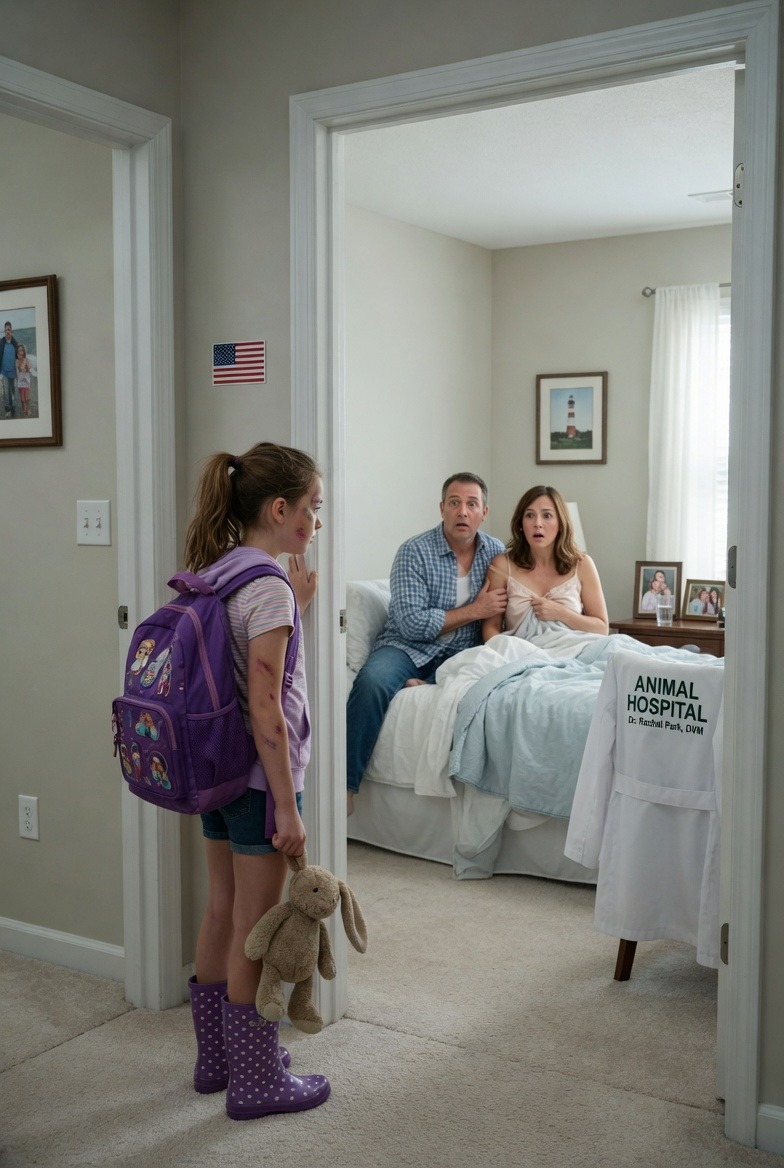
The Father Everyone Trusted, The Aunt Everyone Loved, And The Little Girl Who Exposed Them Both
The first thing people said afterward was that Dennis Hawthorne had always seemed like the perfect father.
That was the lie everyone wanted to keep alive, because admitting the truth meant admitting they had mistaken performance for goodness.
In Mill Creek, Nebraska, reputation was not just something people earned.
It was something they wore in public, polished carefully, and used like armor when the truth came knocking.
Dennis wore his reputation better than anyone I knew.
He wore it to church breakfasts, Little League games, school fundraisers, and bank meetings where nervous families trusted his gentle handshake.

He remembered birthdays, mailed sympathy cards, carried groceries for elderly neighbors, and smiled at children with the practiced warmth of a family man.
People did not see the man behind closed doors, because Dennis understood that monsters survive best when everyone calls them respectable.
My name is Victoria Hawthorne, though most people in town called me Doc Tori.
I was the veterinarian who stitched torn paws, delivered calves, treated barn cats, and answered emergency calls during storms.
Before that, I had been Captain Victoria Hale.
Twenty years in uniform taught me discipline, patience, and the terrifying value of staying calm when everything human inside you screamed.
But nothing in war prepared me for the phone call from County General Hospital.
Nothing prepared me for hearing that my seven-year-old daughter was in critical condition.
I was closing a border collie’s shoulder when the call came.
The clinic smelled like antiseptic, wet fur, and fear, though fear was something I usually kept outside my skin.
My assistant saw my face change before I said anything.
She took the needle from my hand, and I remember telling her to cancel the rest of the day.
I drove to the hospital with both hands locked around the steering wheel.
The world outside looked painfully normal, which felt like an insult I could not answer.
At the emergency desk, the receptionist recognized my name.
Her expression shifted in a way I had seen too many times before, when people already knew something unbearable.
A nurse met me with a clipboard.
She said Meadow was alive, but her voice carried the careful distance people use when they fear hope might be cruel.
Leave a Reply