Author: Jonh Philip

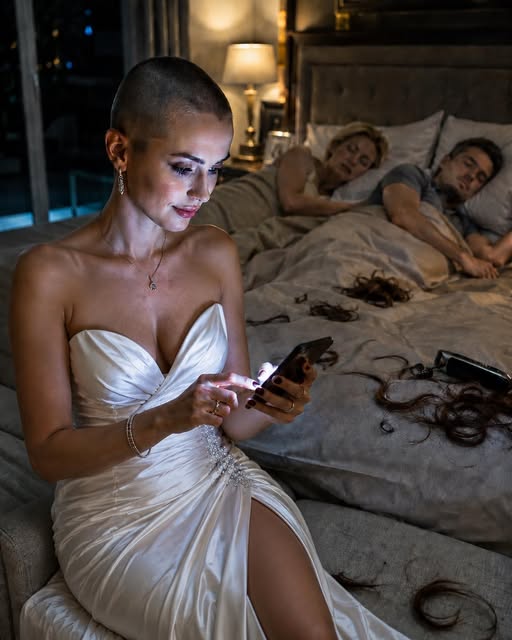
  • Right after my career-changing promotion, my mother-in-law cut my hair while I slept. My husband just shrugged.

    “Elena…”

    Almost unfamiliar.

    Elena opened the folder with the calm precision of someone who had spent too many nights crying and too many mornings deciding never to cry again.

    Inside were copies of bank statements, property records, insurance policies, and a printed timeline with dates highlighted in yellow.

    Marcus stared at it as if it were written in another language.

    “What is this?” Evelyn asked, trying to keep her chin lifted.

    Elena slid the first page across the table.

    “Proof.”

    Marcus did not touch it.

    Evelyn did.

    She snatched it up, scanned the first few lines, and frowned.

    “What kind of proof?”

    “The kind your son will need when he tries to tell people I destroyed his life.”

    Marcus flinched.

    “Elena, I would never—”

    “You already started.”

    Her voice remained quiet, which made it worse.

    “You told your friends I emasculated you. You told your mother I controlled money to control you. You told your coworkers I cared more about my career than my family.”

    Marcus swallowed.

    Evelyn’s fingers tightened around the paper.

    Elena continued, “So I prepared.”

    The kitchen felt colder than it had minutes ago.

    Outside, morning light spilled across the windows, soft and golden, completely indifferent to the collapse happening inside.

    Marcus looked at the folder again.

    “Elena, we can talk about this.”

    “We did talk.”

    “No, I mean really talk.”

    “That usually means I talk, you pretend to listen, then your mother tells you what to think.”

    Evelyn slammed the paper onto the table.

    “How dare you speak to me like that?”

    Elena turned to her.

    “For four years, you called me selfish in my own house. You insulted my work, my clothes, my cooking, my family, my decisions, even the way I breathed near your son. You said I wasn’t a real wife because I didn’t submit.”

    She took a slow sip of coffee.

    “So now I’m submitting.”

    Evelyn’s face reddened.

    “That is not what we meant.”

    “No. You meant you wanted my money with your rules.”

    Marcus rubbed his forehead, breathing hard.

    “Okay. Fine. I was wrong. We were wrong. I admit it.”

    Elena studied him.

    There it was.

    Not remorse.

    Strategy.

    The old Marcus would have reached for her hand by now. He would have softened his voice and said, baby, please. He would have talked about stress, pressure, expectations. He would have made her feel responsible for his discomfort until she apologized for being hurt.

    But this Marcus could not find the right door anymore.

    Elena had changed all the locks inside herself.

    “Good,” she said.

    Marcus blinked. “Good?”

    “Yes. Admitting it is healthy.”

    He waited.

    Nothing else came.

    His jaw tightened.

    “So what now?”

    Elena closed the folder.

    “Now you leave.”

    The silence that followed was not empty.

    It was alive.

    Evelyn laughed once, sharply.

    “Excuse me?”

    “You heard me.”

    Marcus stood straighter.

    “This is my home.”

    “No, Marcus. It’s where you live.”

    “That’s the same thing.”

    “Not legally.”

    His face twisted with humiliation.

    “You’re kicking out your husband?”

    “I’m asking my husband and his mother to leave my property.”

    Evelyn stepped forward. “You cannot throw us out like trash.”

    Elena’s eyes flickered over her.

    “No. Trash gets picked up on Wednesdays. You have until Friday.”

    Marcus stared at her, stunned.

    For a moment, Elena saw the boy his mother had raised. A boy taught that love meant being served. A boy taught that apology was optional if the woman stayed. A boy taught that anger could replace accountability.

    Then she saw the man who had watched her work late nights to keep the mortgage current, who had eaten meals paid for by her overtime, who had accepted gifts bought with her bonuses, who had let his mother sneer while Elena stood there carrying the whole structure on her back.

    And the last soft place in her heart went still.

    “Elena,” Marcus whispered, “please don’t do this.”

    She stood, gathered her laptop, and tucked the folder beneath her arm.

    “I didn’t do this. I only stopped preventing it.”

    That day, the house became a battlefield without raised weapons.

    Evelyn stormed from room to room, muttering insults under her breath. She called relatives, friends, old church acquaintances, anyone who might agree that Elena had become cruel and unnatural.

    But sympathy became complicated once details appeared.

    “So the house is hers?” one aunt asked.

    Evelyn hung up.

    “She paid the mortgage?” a cousin said.

    Evelyn hung up again.

    Marcus spent the afternoon making calls of his own. First to the bank. Then to the insurance company. Then to the credit card provider.

    Each conversation ended the same way.

    No, sir, you are not the primary account holder.

    No, sir, we cannot discuss her account with you.

    No, sir, removal from an authorized-user account is permitted at the account holder’s request.

    No, sir, marital status does not override ownership.

    By evening, panic had eaten through his pride.

    He found Elena in the study.

    It was the room Evelyn hated most.

    Too many books. Too many awards. Too much evidence that Elena existed beyond the roles they assigned her.

    Marcus stood in the doorway.

    “Can I come in?”

    Elena did not look up from her screen.

    “You used to walk in without asking.”

    “I’m asking now.”

    “Growth.”

    He exhaled, wounded by the single word.

    “Elena, I know I messed up.”

    She kept typing.

    “I let things get bad.”

    Still typing.

    “I should have defended you.”

    Her fingers paused.

    There.

    That sentence.

    The one she had waited years to hear.

    Once, it would have healed something.

    Now it only confirmed the wound had been real.

    She turned her chair toward him.

    “Yes. You should have.”

    Marcus stepped inside.

    “My mom can be difficult.”

    Elena smiled faintly.

    “Your mother wasn’t the marriage. You were.”

    He looked down.

    “I thought keeping peace meant staying neutral.”

    “No. You chose peace for yourself and war for me.”

    His eyes glistened.

    “I love you.”

    Elena’s expression did not change.

    “I believe you love what I made possible.”

    “That’s not fair.”

    “Neither was living as a tenant in my own life.”

    Marcus sank into the chair across from her.

    “What do you want from me?”

    “For once? Nothing.”

    He looked frightened by that.

    Need had always tied them together. Her need to be loved. His need to be carried. Evelyn’s need to rule. All of them tangled in one suffocating knot.

    But Elena had cut her strand.

    Marcus could feel it.

    “I can change,” he said.

    “I hope you do.”

    “With you.”

    “No.”

    “Elena—”

    “No.”

    The second no was softer.

    Final.

    Marcus leaned back as if struck.

    Behind him, Evelyn appeared in the hallway, listening.

    Elena saw her shadow before she saw her face.

    “Tomorrow,” Elena said, “I’m meeting with my attorney. After that, communication about the house, accounts, or separation goes through her office.”

    Marcus went pale.

    “Separation?”

    Evelyn marched in.

    “You ungrateful woman.”

    Elena turned her laptop slightly, clicked once, and Evelyn’s recorded voice filled the room.

    “She thinks paying bills makes her powerful. A real wife knows her place.”

    Evelyn froze.

    Then Marcus’s voice followed, quieter but clear.

    “Just let her calm down. She always comes around.”

    The recording ended.

    Marcus stared at the laptop.

    “When did you record that?”

    “The night you both discussed how to pressure me into quitting my job.”

    Evelyn’s lips parted.

    Elena clicked again.

    Another recording.

    Evelyn: “If she has no job, she’ll stop acting superior.”

    Marcus: “We can’t afford that.”

    Evelyn: “Then make her think it’s her choice.”

    Elena closed the laptop.

    The study seemed to shrink around them.

    Marcus whispered, “That wasn’t how it sounded.”

    “That is exactly how it sounded.”

    Evelyn lifted her chin.

    “You recorded private conversations?”

    “In my home, concerning my finances, my career, and my future.”

    “You’re evil.”

    “No,” Elena said. “I’m documented.”

    Friday came faster than Marcus expected.

    For two days, he moved through the house like a ghost. He tried anger in the morning, guilt by noon, affection at night. None of it worked.

    Evelyn, however, refused to pack.

    “She won’t really do it,” she said.

    But Elena did.

    At nine on Friday morning, a moving company arrived.

    At nine fifteen, her attorney arrived.

    At nine thirty, Marcus realized the choice was no longer emotional.

    It was procedural.

    The movers did not touch anything without permission. Elena had already separated belongings into labeled areas: Marcus’s clothes, Marcus’s electronics, Evelyn’s personal items, family keepsakes that belonged to them, and household items Elena could prove she had purchased.

    Evelyn screamed when she saw her boxes.

    “You packed my things?”

    “No,” Elena said. “I organized what you abandoned in my guest room.”

    “Guest room?”

    “Yes. That is what it was.”

    Marcus looked exhausted.

    “Elena, where are we supposed to go?”

    She handed him an envelope.

    Inside was a cashier’s check.

    His eyes widened.

    “What is this?”

    “Thirty days of temporary housing. Consider it a final courtesy, not an obligation.”

    Evelyn scoffed. “Hush money.”

    Elena looked at Marcus.

    “It’s also the last money you will ever receive from me.”

    His fingers trembled around the envelope.

    Something broke in his face then.

    Not loudly.

    Not dramatically.

    Just a small collapse behind the eyes.

    For the first time, he understood that Elena had not acted out of rage.

    Rage could fade.

    This was clarity.

    And clarity did not negotiate with the past.

    By noon, they were gone.

    The house did not feel peaceful immediately.

    At first, it felt enormous.

    Every room echoed with absence. Evelyn’s sharp perfume no longer lingered in the hallway. Marcus’s shoes no longer blocked the entryway. No television shouted from the living room while Elena tried to work.

    Still, grief walked beside her.

    It sat at the kitchen island while she ate dinner alone. It stood in the bathroom while she stared at two toothbrush spaces and used one. It waited in the bedroom where half the closet was empty.

    Freedom, she learned, did not always arrive singing.

    Sometimes it arrived carrying boxes.

    That night, Elena slept diagonally across the bed.

    She woke at three in the morning from a dream in which Marcus was calling her name from another room.

    For a second, she almost answered.

    Then she remembered.

    The house was silent.

    Her phone lit up on the nightstand.

    A message from Marcus.

    I’m sorry. I know that doesn’t fix anything. I just needed to say it without asking you for something.

    Elena read it twice.

    Then she set the phone face down.

    Not because she felt nothing.

    Because she felt enough to know silence was safer.

    Over the next week, the story spread.

    Not Elena’s version.

    At least not at first.

    Evelyn told everyone her daughter-in-law had gone mad with money and pride. Marcus told fewer people, but his version was worse because it sounded sad rather than cruel. He said Elena had changed. That success had hardened her. That she chose independence over family.

    People believed him.

    Some sent Elena messages.

    Marriage is about forgiveness.

    A woman shouldn’t humiliate her husband.

    You’ll regret being alone.

    Elena did not respond.

    Instead, she posted one thing.

    A photo of the house keys on the kitchen table.

    Beneath it, she wrote:

    I spent years confusing endurance with love. I am learning the difference.

    No names.

    No accusations.

    No details.

    But people understood enough.

    Then someone else commented.

    It was Marcus’s cousin, Daniel.

    I wondered how long you’d stay quiet. I remember when Marcus bragged that he didn’t need to worry about bills because you “handled the boring stuff.”

    Another cousin added:

    Aunt Evelyn told my mom Elena should quit her job so Marcus could feel like the man of the house.

    Then a former coworker of Marcus wrote:

    He used to joke that his wife was his retirement plan.

    By evening, the comments had become a mirror.

    And Marcus had nowhere to hide.

    Elena did not enjoy it.

    That surprised her.

    She had imagined vindication would taste sweet.

    Instead, it tasted like cold tea.

    Satisfying, but bitter.

    Two weeks later, she met Marcus at her attorney’s office.

    He looked different.

    Not better.

    Smaller.

    He wore a wrinkled shirt and had dark circles beneath his eyes. Without Elena’s invisible labor smoothing the edges of his life, reality had found him quickly.

    Evelyn was not with him.

    That was the first surprise.

    The second was that Marcus had brought his own attorney.

    A thin man with silver glasses and a careful smile.

    Elena’s attorney, Ms. Clarke, greeted them politely.

    They sat across a polished table that reflected everyone’s hands.

    Marcus kept his folded.

    His attorney began.

    “My client does not wish for this matter to become hostile.”

    Elena almost laughed.

    Ms. Clarke only nodded.

    “That will depend on your client’s expectations.”

    Marcus looked up.

    “I don’t want the house.”

    Elena stayed still.

    “I don’t want your accounts. I don’t want your retirement. I don’t want to fight you.”

    His attorney’s smile tightened, as if Marcus had drifted from the script.

    Elena studied him.

    “Then what do you want?”

    Marcus looked at her for a long moment.

    “The truth.”

    Ms. Clarke glanced at Elena, but Elena said nothing.

    Marcus reached into his jacket and pulled out a small flash drive.

    He placed it on the table.

    “My mother has been recording you too.”

    The room changed.

    Elena’s fingers curled slightly.

    Marcus pushed the flash drive forward.

    “She wanted to use clips to prove you were unstable. Angry. Controlling. She said if we made people doubt you, you’d settle quietly.”

    Elena’s pulse slowed.

    Not from calm.

    From danger.

    Ms. Clarke picked up the drive with a tissue and placed it in a clear evidence sleeve.

    Marcus continued, voice low.

    “I didn’t know at first. Then I found her sending files to someone.”

    “Who?” Elena asked.

    Marcus hesitated.

    His attorney touched his arm, warning him.

    Marcus ignored it.

    “My father.”

    Elena frowned.

    “Your father is dead.”

    Marcus shook his head.

    “No.”

    For the first time since the nightmare began, Elena felt unprepared.

    Evelyn had always said Marcus’s father died when Marcus was five. There were no photos in the house. No grave visits. No stories except vague tragedy and sacrifice.

    Marcus swallowed hard.

    “She lied.”

    Elena’s attorney leaned forward.

    “Mr. Hale, choose your next words carefully.”

    Marcus nodded.

    “My father is alive. His name is Richard Vale. And he contacted my mother three months ago.”

    Elena’s skin prickled.

    Vale.

    The name meant nothing.

    Yet something in Marcus’s voice made it feel like a door opening in a dark hallway.

    “What does that have to do with me?” Elena asked.

    Marcus looked ashamed.

    “At first, I thought nothing. But then I heard them talking.”

    His gaze dropped to the table.

    “He knew your name before she told him.”

    Elena did not move.

    The polished conference room seemed suddenly too bright.

    Ms. Clarke asked, “Why would he know Ms. Navarro?”

    Marcus’s answer came barely above a whisper.

    “Because he said your house was never supposed to belong to you.”

    Elena stared at him.

    Her house.

    Her title.

    Her payments.

    Her sanctuary.

    “What does that mean?”

    “I don’t know,” Marcus said. “But my mother does.”

    His attorney sighed, clearly regretting the entire morning.

    Marcus reached into his jacket again and removed a folded photograph.

    He slid it across the table.

    Elena looked down.

    The photo was old, creased at the edges.

    Four people stood in front of the house many years ago, back when the paint was a different color and the front garden had not yet been replaced.

    One was a much younger Evelyn.

    Beside her stood a man Elena had never seen.

    Richard Vale, she guessed.

    But it was the woman on the other side of him who made Elena’s breath stop.

    She knew that face.

    Not from memory.

    From the framed picture her mother kept beside her bed until the day she died.

    Elena touched the photograph with numb fingers.

    “That’s my mother.”

    Marcus closed his eyes.

    “I know.”

    A deep ringing filled Elena’s ears.

    The house was not just a house.

    It had never been just a house.

    Ms. Clarke’s voice cut through the silence.

    “Where did you get this?”

    “My mother’s suitcase,” Marcus said. “She was packing to leave town.”

    Elena looked up sharply.

    “Leave town?”

    Marcus nodded.

    “She left this morning.”

    The conference room door opened before anyone could speak again.

    Ms. Clarke’s assistant stood there, pale.

    “I’m sorry to interrupt.”

    “What is it?” Ms. Clarke asked.

    The assistant looked at Elena.

    “There’s a woman at reception asking for Ms. Navarro.”

    Elena’s heart tightened.

    “What woman?”

    The assistant held out a sealed envelope.

    “She wouldn’t give her name. She only said to tell you…” The assistant swallowed. “She said, ‘Your mother kept the first key. Evelyn kept the second. Now find the third before Richard does.’”

    Elena slowly opened the envelope.

    Inside was a brass key, darkened with age.

    And beneath it, written in her mother’s handwriting, were six words:

    Do not trust the widow’s son.

    Elena lifted her eyes to Marcus.

    His face had gone white.

    Outside the office window, across the street, an old black car pulled away from the curb.

    In the back seat sat Evelyn, watching Elena through the glass with a smile that looked nothing like defeat.

    The Folder That Made the House Go Silent

    “Elena…”

    Marcus said her name as if it were suddenly fragile, as if he had discovered it could shatter.

    But Elena did not answer immediately.

    She simply placed the folder on the kitchen table between them. The sound was soft, almost delicate, yet it struck the room harder than a slammed door.

    Evelyn stepped closer, her robe wrapped tightly around her thin shoulders. “What is that?”

    Elena took another sip of coffee. Her shaved head caught the early sunlight from the window, and for the first time since the nightmare began, she looked untouchable.

    “A boundary,” Elena said.

    Marcus stared at the folder as though it might bite him. “A boundary?”

    “Yes.” She opened it. “From my attorney.”

    Evelyn let out a sharp laugh. “An attorney? For what? Because I cut some hair?”

    Elena’s eyes shifted to her mother-in-law. Calm. Steady. Clear.

    “You entered my bedroom while I was unconscious,” Elena said. “You used clippers on my body without permission. You threatened my employment. You attempted to control my income. And Marcus defended you.”

    Marcus flinched. “I didn’t defend—”

    “You shrugged,” Elena interrupted. “That was worse.”

    The silence that followed was so complete that even the refrigerator seemed too loud.

    Evelyn folded her arms. “You are being dramatic. Women forgive worse things to keep families together.”

    Elena leaned forward.

    “Not this woman.”

    Marcus reached for the folder, but Elena placed her hand over it.

    “Before you read anything,” she said, “you should know one thing. I am not resigning.”

    His face tightened.

    “But you said—”

    “I said what you wanted to hear so you would sleep peacefully.”

    Evelyn gasped as if Elena had confessed to a crime. “You lied?”

    Elena smiled faintly. “You taught me that survival sometimes requires strategy.”

    Marcus looked from his wife to his mother, suddenly unsure which side of the table was safe.

    “What do you want?” he asked.

    The question made Elena laugh quietly.

    Not because it was funny.

    Because he had asked it four years too late.

    “I want you both out of my house.”

    Evelyn’s jaw dropped. Marcus went pale.

    “You can’t kick out my mother,” he said.

    “I can,” Elena replied. “And I am.”

    “This is my home too.”

    “No,” she said gently. “It was your comfort. Not your home.”

    Marcus stepped back as if she had slapped him.

    Evelyn’s voice sharpened. “You arrogant little—”

    “Elena Navarro, Commercial Director,” Elena said, cutting her off. “Homeowner. Primary account holder. Sole mortgage payer. Sole insurance payer. Sole grocery payer. Sole utility payer. And until last night, apparently the family fool.”

    Her voice did not rise.

    That made it worse.

    Marcus looked down at the documents. “You’re serious.”

    “I’ve never been more serious.”

    His anger began searching for a place to land. “So what, you’re going to destroy us because of hair?”

    Elena stood.

    That single motion made both of them stop.

    “No, Marcus. You destroyed this marriage when you looked at my pain and called it inconvenience. The hair is just what finally made me believe you.”

    For one brief second, something like shame crossed his face.

    Then Evelyn ruined it.

    “Don’t let her manipulate you,” she snapped. “She’s trying to make you weak. She’s always wanted power.”

    Elena turned to her. “No, Evelyn. I wanted peace. You mistook my patience for permission.”

    Marcus rubbed his forehead. “Where are we supposed to go?”

    It was the first practical question either of them had asked.

    Elena handed him a second envelope.

    “I booked a motel for three nights under your name. After that, you can arrange whatever you like.”

    Evelyn blinked. “A motel?”

    “Yes.”

    “I have medical appointments.”

    “Then Marcus can drive you.”

    “My prescriptions—”

    “Marcus can pay for them.”

    Marcus looked at Elena with panic. “You know I don’t have that kind of money right now.”

    “I know.”

    His face changed. Hurt first. Then anger.

    “You’re enjoying this.”

    “No.” Elena’s voice softened, but only slightly. “I am grieving it.”

    That answer confused him more than cruelty would have.

    The woman he knew—or thought he knew—would have cried by now. She would have explained, apologized, tried to make everyone comfortable. She would have carried the blame just to end the tension.

    But this Elena stood in the kitchen with a shaved head, her hands steady, her eyes dry.

    She had become the consequence.

    Evelyn suddenly marched toward the hallway. “I am not leaving.”

    Elena picked up her phone. “Then I will call the police and explain that a guest who assaulted me refuses to leave my property.”

    Evelyn stopped.

    The word assaulted seemed to hang around her like smoke.

    “You wouldn’t dare,” she whispered.

    Elena looked at her without blinking.

    “Try me.”

    Marcus lowered his voice. “Elena, please. Let’s talk upstairs.”

    “No private conversations,” she said. “Not anymore.”

    His expression twisted. “You’re treating me like some monster.”

    “I’m treating you like someone I can no longer trust.”

    That one landed.

    He swallowed hard. “I’m your husband.”

    “You were.”

    He stared at her.

    “Elena…”

    She lifted her wedding ring from the table.

    He had not noticed it there before.

    The small circle of gold sat beside the coffee cup like a period at the end of a sentence.

    “I took it off last night,” she said. “After the cards. Before the attorney.”

    Evelyn’s anger cracked into fear. “Marcus, do something.”

    But Marcus had nothing left to do.

    For years, his authority had been imaginary, built on Elena’s silence and money. Without them, he was just a man in sweatpants standing in a house he did not own, beside a mother who had gone too far and finally found a locked door.

    Elena closed the folder.

    “You have until noon.”

    “Noon?” Marcus said.

    “Yes.”

    “That’s impossible.”

    “So was waking up to clippers on my scalp.”

    He looked away.

    Evelyn started crying then, not softly, not regretfully, but dramatically, as if the walls themselves should comfort her.

    “I gave up everything for my son,” she wailed. “And this is how I’m treated?”

    Elena watched her.

    For years, those tears had worked.

    They had turned every insult into concern, every manipulation into sacrifice, every cruelty into tradition.

    But now Elena heard only noise.

    Marcus moved toward his mother. “Mom, stop.”

    “She’s throwing me into the street!”

    “No,” Elena said. “I paid for three nights.”

    Evelyn glared at her through tears.

    That was when the doorbell rang.

    All three turned.

    Elena walked to the front door and opened it.

    A woman in a navy suit stood outside holding a leather briefcase. Beside her was a man in a gray coat.

    “Ms. Navarro?” the woman asked.

    “Yes.”

    “I’m Dana Whitcomb from Whitcomb & Hale. We spoke last night.”

    Marcus appeared behind Elena. His eyes widened.

    Dana glanced past Elena into the house. “Are these the individuals?”

    Elena nodded. “Yes.”

    The man beside Dana stepped forward. “I’m Officer Grant. I’m here for civil standby while Ms. Navarro requests that unwanted guests leave the premises.”

    Evelyn made a choking sound.

    Marcus whispered, “You called a cop?”

    Elena did not turn around.

    “I called protection.”

    Dana entered first. Officer Grant followed with a polite nod.

    The house changed immediately.

    Not physically. The same family photos sat on the mantel. The same curtains hung by the windows. The same dining table waited with four chairs.

    But authority had shifted.

    Dana placed documents on the kitchen table. “Mr. Whitaker, Mrs. Whitaker, Ms. Navarro is requesting that you vacate the property. You are not being removed by force at this moment, but refusal may create legal consequences.”

    Evelyn clutched Marcus’s arm. “This is humiliation.”

    Elena’s voice was quiet.

    “No. What you did to me was humiliation. This is procedure.”

    Marcus looked at Dana. “Can she really do this?”

    Dana’s expression did not change. “The property is solely owned by Ms. Navarro. You may consult your own counsel.”

    His shoulders sank.

    For the first time, Marcus looked small.

    Not harmless.

    Just smaller than the shadow he had cast.

    Officer Grant remained near the doorway, calm but observant.

    Evelyn started again. “She’s unstable. Look at her head. She shaved herself like a madwoman.”

    Elena’s pulse jumped, but her face stayed still.

    Dana’s pen stopped moving.

    “Mrs. Whitaker,” Dana said evenly, “I would strongly advise you not to insult my client while I am documenting events related to your conduct.”

    Evelyn’s mouth snapped shut.

    It was the first time Elena had ever seen someone silence Evelyn without raising a voice.

    Marcus stared at Elena’s head now. Really stared.

    The shaved scalp. The faint irritation. The uneven mark Evelyn had left before Elena finished the job herself.

    His lips parted.

    Maybe he finally saw what had been done.

    Maybe he only saw the evidence.

    Either way, Elena no longer cared.

    By noon, two suitcases stood by the front door.

    Evelyn refused to carry hers. Marcus carried both.

    Before stepping outside, he turned.

    “Elena,” he said, voice rough. “This isn’t over.”

    She met his eyes.

    “No,” she agreed. “It’s finally beginning.”

    And then she closed the door.

    For several seconds, she stood there with her hand on the lock.

    The house was silent.

    Truly silent.

    No criticism from the hallway. No television blaring from Marcus’s game room. No Evelyn inspecting the kitchen counters. No one asking why dinner was late when Elena had worked a ten-hour day.

    Just silence.

    Then her knees weakened.

    She sat on the floor with her back against the door and pressed both hands to her face.

    She did not cry because she wanted them back.

    She cried because freedom, when it finally arrived, felt almost as terrifying as captivity.

    Her phone buzzed.

    A message from her boss, Natalie.

    You don’t need to come in today. Take whatever time you need. Also, congratulations again, Director. We’re proud of you.

    Elena read the words once.

    Then again.

    Then a third time.

    Proud of you.

    No condition.

    No resentment.

    No demand that she shrink.

    For the first time that morning, Elena sobbed.

    Not from defeat.

    From release.

    PART 4 — The Promotion They Tried to Bury

    By Monday, rumors had already reached the office.

    Not the truth. Rumors rarely carried truth whole.

    Someone had heard Elena’s husband was angry about her promotion. Someone else said there had been “family drama.” Another person whispered that she had shaved her head as a statement, which was close enough to truth and far enough to hurt.

    When Elena stepped into the glass lobby of Mercer-Kline Logistics, conversations thinned.

    A few people smiled too quickly. A few looked away.

    Elena wore a charcoal suit, silver earrings, red lipstick, and no wig.

    She walked in with her shaved head uncovered.

    Every step felt like walking across a frozen lake.

    But she did not crack.

    Natalie, the Senior Vice President, saw her from across the lobby and came straight toward her.

    “Elena.”

    Elena braced for pity.

    Instead, Natalie hugged her.

    Not dramatically. Not as a performance. Just firmly enough to say, I know something happened, and you are still welcome here.

    “You look powerful,” Natalie whispered.

    Elena nearly broke.

    “Thank you,” she said.

    Natalie pulled back. “Your nine o’clock with the regional directors is still on. Only if you want it.”

    “I want it.”

    Natalie studied her face. “Are you sure?”

    Elena looked toward the elevators.

    For years, she had softened her ambition so Marcus would not feel threatened. She had changed clothes before going home. Removed lipstick in the car. Downplayed achievements. Called promotions “extra responsibility” instead of success.

    And still, they had tried to punish her.

    So now?

    Now she would stop apologizing for the space she occupied.

    “I’m sure,” Elena said.

    At nine o’clock, she entered the conference room.

    Twelve people sat around the table. Most had known her as the woman who solved disasters before breakfast, who remembered every client’s contract clause, who could calm an angry supplier with three sentences.

    Now they stared at her head.

    Elena set down her folder.

    “Good morning,” she said. “Let’s begin.”

    Her voice did not tremble.

    The meeting moved slowly at first. People were careful, almost awkward. But then the quarterly numbers appeared on the screen, and Elena became what she had always been at work: precise, strategic, alive.

    She explained the new freight partnership. Challenged an inflated cost projection. Reframed a warehouse delay as a negotiation advantage.

    Twenty minutes in, nobody was staring at her hair anymore.

    They were staring at the numbers.

    By the end, the Chief Operations Officer leaned back in his chair and smiled.

    “That,” he said, “is why we promoted you.”

    Heat rose behind Elena’s eyes.

    She nodded once. “Thank you.”

    After the meeting, a junior analyst named Priya caught up to her near the hallway.

    “Ms. Navarro?”

    “Elena is fine.”

    Priya hesitated. “I just wanted to say… I don’t know what happened. But seeing you walk in today helped me.”

    Elena’s throat tightened. “Helped you how?”

    Priya looked down at her tablet. “My family thinks this job is too much for me. They keep saying I should choose something easier. Smaller.” She looked up. “You didn’t choose smaller.”

    Elena could barely speak.

    “No,” she said softly. “I didn’t.”

    That afternoon, while Elena reviewed contracts, her phone lit up.

    Marcus.

    She watched it ring until it stopped.

    Then a message appeared.

    We need to talk. Mom is sick from stress. You went too far.

    Elena stared at the screen.

    A second message followed.

    The motel won’t extend without payment. You canceled everything.

    Then a third.

    I’m your husband. You can’t just abandon us.

    Elena typed one sentence.

    Communication goes through my attorney.

    She sent it.

    Marcus replied immediately.

    Cold. That’s what you’ve become.

    Elena almost answered.

    Almost.

    Then she set the phone facedown and returned to the contract.

    At six, Natalie knocked on her office door.

    “Dinner?” Natalie asked. “No pressure. Just two women eating pasta and pretending not to check email.”

    Elena smiled. “That sounds illegal in this company.”

    “Extremely.”

    They went to a small Italian restaurant two blocks away. Warm lights. Basil in the air. Rain tapping the windows.

    For the first time in years, Elena ate dinner without watching the clock.

    Natalie did not push. She talked about work, her terrible first apartment, her niece’s obsession with dinosaurs.

    Only after dessert did she say, “Do you have somewhere safe to sleep?”

    Elena nodded. “The house is mine. They’re gone.”

    Natalie exhaled quietly. “Good.”

    Elena looked down at her coffee. “I keep waiting to feel victorious.”

    “You might not for a while.”

    “Then why does everyone call it winning?”

    Natalie’s face softened.

    “Because they only see the door closing. They don’t see the years it took to reach the handle.”

    Elena looked out at the rain.

    That sentence stayed with her.

    That night, she returned home to find a car parked across the street.

    Marcus’s dealership sedan.

    Her stomach tightened.

    She did not pull into the garage. Instead, she kept driving and called Officer Grant’s card number.

    Within twenty minutes, a patrol car arrived. Marcus was asked to leave.

    He did, but not before sending one more text.

    You’re embarrassing me.

    Elena laughed once in the dark.

    A bitter, exhausted sound.

    He was not sorry she had been hurt.

    He was sorry people might find out.

    The next morning, Dana called.

    “Elena,” the attorney said, “Marcus has retained counsel.”

    “Already?”

    “Yes. And there’s more.”

    Elena closed her office door.

    “What?”

    Dana paused. “He is claiming financial abuse.”

    For a moment, Elena thought she misheard.

    “He’s claiming I abused him financially?”

    “Yes. His position appears to be that you controlled the household funds and abruptly cut him off.”

    Elena sat down slowly.

    “He asked me to quit my job.”

    “I know.”

    “His mother assaulted me.”

    “I know.”

    “I paid for everything.”

    “I know.”

    Dana’s voice stayed calm. “This is not uncommon. The person who benefited from the arrangement may try to rewrite it once the benefit ends.”

    Elena closed her eyes.

    There it was.

    The old trap.

    The one that said, Defend yourself until you collapse.

    Explain every receipt. Justify every boundary. Prove your pain enough times that someone finally believes you.

    Dana continued, “We have documentation. Bank statements. Title records. Medical photos if you choose to provide them. Messages. Witnesses. You are not powerless here.”

    Elena opened her eyes.

    Through the glass wall of her office, she could see employees moving through the building. Phones ringing. Printers humming. Life continuing.

    Marcus wanted to drag her backward.

    But she had meetings to run.

    People to lead.

    A life waiting impatiently for her to claim it.

    “Dana,” Elena said, “file everything.”

    “Everything?”

    “The separation. The protective request. The formal eviction notice if needed. The financial response. All of it.”

    Dana’s voice warmed. “Understood.”

    Elena ended the call.

    Then she looked at her reflection in the dark screen of her laptop.

    No hair to hide behind.

    No marriage to perform.

    No family fantasy to protect.

    Only herself.

    And for the first time, Elena realized that might be enough.

    PART 5 — When the Truth Learned to Speak

    Two weeks later, Marcus changed tactics.

    Flowers arrived at Elena’s office.

    White roses.

    The card read:

    I miss my wife. Come home to us. —M

    Elena stared at it for a long moment, then handed the arrangement to the receptionist.

    “Please donate these to the lobby.”

    The receptionist nodded, but her eyes were full of questions.

    Elena returned to her office and shut the door.

    Five minutes later, her email chimed.

    A video attachment.

    From Marcus.

    Her hand hovered over the mouse.

    She knew she should send it directly to Dana.

    She opened it anyway.

    Marcus sat in his car, face pale, eyes red. His voice was softer than she had heard it in years.

    “Elena,” he began, “I know things got out of hand.”

    She paused the video.

    Out of hand.

    Not cruel. Not violating. Not wrong.

    Out of hand.

    She pressed play.

    “Mom shouldn’t have done what she did. I see that now. But you know how she is. She panicked. She felt like she was losing me. And I guess… I did too.”

    Elena’s breath caught despite herself.

    “Your promotion scared me,” he admitted. “Everyone was congratulating you. You were moving ahead, and I felt stuck. I know that’s not fair. But I felt like your life was getting bigger and mine was getting smaller.”

    There it was.

    The truth.

    Ugly. Small. Human.

    But still not an excuse.

    Marcus leaned closer to the camera.

    “I love you. I don’t want a divorce. I’ll go to counseling. I’ll tell Mom to apologize. Just please don’t make this public. Please.”

    Elena stopped the video.

    The office felt too bright.

    She sat back and pressed her fingers to her eyes.

    Part of her wanted to believe him.

    Not because he deserved it.

    Because believing him would make the past easier to carry.

    If Marcus was sorry, maybe the good memories were not all contaminated. Maybe the early years had meant something. Maybe the man who once brought her soup during flu season had not been completely swallowed by pride.

    Then her phone buzzed.

    Dana.

    “Did you receive the video?” Dana asked.

    “Yes.”

    “Forward it to me.”

    “I will.”

    “And Elena?”

    “Yes?”

    “Do not meet him alone.”

    Elena looked at the frozen image of Marcus’s face on her screen.

    “I won’t.”

    But that night, Evelyn came instead.

    Elena saw her through the security camera at 8:43 p.m., standing on the porch in a dark coat, clutching her purse like a weapon.

    Elena did not open the door.

    She spoke through the camera.

    “Leave.”

    Evelyn looked up, startled.

    “Elena, please. I only want to talk.”

    “Leave.”

    “I owe you an apology.”

    Elena almost laughed.

    “Then send it in writing.”

    Evelyn’s face hardened, then softened again with visible effort.

    “I was wrong.”

    The words sounded painful for her.

    “I shouldn’t have touched your hair.”

    Elena watched through the screen.

    Evelyn continued, “I was raised differently. In my day, a woman who put work before family was asking for trouble.”

    Elena’s voice came through the speaker. “That is not an apology. That is a biography.”

    Evelyn’s eyes flashed.

    “You think you’re clever.”

    “No. I think I’m done.”

    Evelyn stepped closer to the door.

    “You have no idea what it feels like to watch another woman take your son away.”

    Elena’s hand tightened around the phone.

    “I did not take Marcus away from you. I married him.”

    “He changed after you.”

    “Yes,” Elena said. “He had health insurance.”

    Evelyn recoiled.

    For a moment, the mask slipped completely.

    “You cruel girl.”

    “There she is.”

    Evelyn’s nostrils flared. “You think because you have money, you can humiliate people.”

    “No,” Elena replied. “I think because I have locks, I can keep unsafe people outside my house.”

    Evelyn stared into the camera.

    Then she said something that chilled Elena more than shouting would have.

    “You’ll regret making enemies of family.”

    Elena saved the video.

    Then she called Dana.

    By the end of the week, Dana had enough documentation to make Marcus’s attorney considerably less aggressive.

    But Marcus still refused to sign the separation agreement.

    He wanted mediation.

    Elena agreed, against Natalie’s advice, against her own exhaustion, because part of her needed to see him in a room where he could no longer pretend.

    The mediation took place in a bland office with beige walls and a glass pitcher of water no one drank.

    Marcus arrived in a navy blazer Elena had bought him.

    Evelyn was not allowed inside.

    He looked thinner.

    For one second, Elena felt a familiar tug of concern.

    Then she remembered waking up cold.

    Dana sat beside her. Marcus’s attorney sat beside him. The mediator, a gray-haired woman named Ms. Bell, reviewed the terms.

    House remains Elena’s.

    No spousal support requested by either party.

    Personal belongings to be collected by appointment.

    No direct contact except through counsel.

    Marcus shifted in his chair. “I don’t agree to no direct contact.”

    Ms. Bell looked at him. “Why not?”

    “Because she’s my wife.”

    Elena spoke before Dana could.

    “I am a person before I am your wife.”

    Marcus looked wounded. “I said I was sorry.”

    “No,” Elena said. “You said things got out of hand.”

    His jaw tightened.

    “I admitted I was scared.”

    “You admitted you were insecure.”

    “What do you want me to say?” he snapped.

    There he was.

    The softness gone.

    The anger underneath, waiting.

    Elena leaned back.

    “The truth.”

    Marcus laughed bitterly. “Fine. You want the truth? I hated it.”

    Everyone went still.

    He looked at her, eyes shining with humiliation. “I hated watching people admire you. I hated hearing my friends say I was lucky. I hated knowing you made more money. I hated that Mom saw it too.”

    Elena felt each word enter her, but none of them destroyed her.

    Marcus continued, voice cracking. “And when you came home that night glowing like the world had finally noticed you, I couldn’t stand it.”

    The mediator’s pen stopped.

    Elena whispered, “So you let her punish me.”

    Marcus looked down.

    “I didn’t think she’d actually do it.”

    “But when she did?”

    He said nothing.

    Elena nodded.

    “That’s the answer.”

    Marcus raised his head. “I’m not a monster.”

    “No,” Elena said. “You’re a man who could have protected me and chose comfort instead.”

    His face crumpled.

    For a brief moment, she saw the boy in him. The son trained to obey Evelyn. The husband too proud to be grateful. The man who built himself out of resentment and called it tradition.

    She felt sorry for him.

    And still, she did not move closer.

    Pity was not a bridge back.

    Marcus signed the agreement that afternoon.

    His hand shook as he wrote his name.

    Elena signed after him.

    When she stepped outside, the sky was unexpectedly bright. Winter sunlight spilled across the parking lot, thin and clean.

    Dana touched her arm. “How do you feel?”

    Elena looked at the signed copy in her hand.

    “Like I just put down something heavy.”

    “Good.”

    “But my arms still hurt.”

    Dana smiled sadly. “They will for a while.”

    That evening, Elena went home and opened every window despite the cold.

    She let fresh air move through the rooms.

    Then she began packing Marcus’s things.

    Not angrily.

    Carefully.

    Shirts. Watch boxes. Old dealership awards. A baseball cap from a vacation they had taken before everything soured.

    At the bottom of his nightstand drawer, she found a small velvet box.

    Inside was the necklace he had given her on their first anniversary.

    A tiny gold compass.

    He had said, “So you always find your way back to me.”

    Elena held it for a long time.

    Then she placed it in Marcus’s box.

    Because she had found her way.

    Just not back to him.

    PART 6 — The Woman in the Mirror Had No Hair and No Fear

    Spring arrived slowly.

    Not like a miracle.

    Like a negotiation.

    First came rain. Then mud. Then one brave green shoot near the mailbox. Then another.

    Elena’s hair began to grow back in soft dark fuzz, but she kept it short by choice. Every Saturday morning, she went to a small salon owned by a woman named Rosa, who had silver hair, purple glasses, and the comforting habit of asking no unnecessary questions.

    “The usual?” Rosa asked one morning.

    Elena smiled. “The usual.”

    Rosa ran the clippers gently over Elena’s head, cleaning the edges, shaping the new growth.

    At first, the sound had made Elena’s stomach twist.

    Now it felt different.

    No longer invasion.

    Ritual.

    The same sound that once marked humiliation had become the sound of ownership.

    After the haircut, Elena drove to the office for a leadership workshop she had organized for junior employees.

    She had named it “The Room You Deserve.”

    Natalie teased her for the title, but Priya cried when she saw the invitation.

    Twenty-seven employees showed up.

    Mostly women. Some men. A few interns who looked terrified of the conference table.

    Elena stood at the front, wearing a cream blouse and emerald trousers, sunlight glowing behind her.

    “I used to believe hard work would speak for itself,” she began. “It doesn’t always. Sometimes you have to speak with it.”

    The room listened.

    She did not tell them every detail of what had happened.

    She did not need to.

    Instead, she talked about negotiation, salary transparency, documenting accomplishments, recognizing manipulation disguised as concern, and the danger of shrinking to keep someone else comfortable.

    Priya raised her hand. “How do you stop feeling guilty?”

    Elena paused.

    The honest answer was: you don’t stop all at once.

    Guilt had followed her for weeks. It sat beside her at breakfast. Whispered when she ignored Marcus’s messages through counsel. Tapped her shoulder when Evelyn’s relatives sent cruel emails accusing Elena of destroying the family.

    But guilt was not always truth.

    Sometimes guilt was just the echo of old obedience.

    Elena looked at Priya.

    “You ask yourself: Did I do something wrong, or did I disappoint someone who benefited from me having no boundaries?”

    A silence fell.

    Then someone exhaled.

    Then someone else nodded.

    After the workshop, Natalie found Elena in the hallway.

    “You realize you just became a company legend.”

    Elena laughed. “That sounds exhausting.”

    “It is. But the snacks are better.”

    They walked toward the elevators together.

    Natalie hesitated. “There’s something else. Corporate wants you in Chicago next month for the national strategy summit.”

    Elena stopped walking.

    “That’s usually executive level.”

    “Yes.”

    “I’m not executive level.”

    Natalie smiled. “Not yet.”

    The words opened something in Elena’s chest.

    Not ambition exactly.

    Possibility.

    For years, possibility had felt dangerous. Every opportunity came with Marcus’s mood attached. Every late meeting required emotional payment. Every success created debt at home.

    Now, possibility arrived clean.

    No apology required.

    “I’ll go,” Elena said.

    “Good. Because I already told them you would.”

    Elena laughed for real then.

    The sound surprised her.

    That night, she celebrated alone.

    She made pasta with too much garlic, poured sparkling water into a wineglass, and played music loud enough to fill the house.

    Halfway through dinner, the doorbell rang.

    Her body froze.

    Old fear returned quickly, like a trained animal.

    She checked the camera.

    A delivery driver stood outside holding a package.

    Elena breathed again.

    After he left, she brought the package inside.

    No return address.

    Inside was a framed photograph.

    Her and Marcus on their wedding day.

    Across the glass, someone had written in black marker:

    LOOK WHAT YOU RUINED.

    Elena stared at it.

    The house seemed to tilt.

    Then her phone buzzed.

    Unknown number.

    You can pretend you’re happy, but everyone knows what kind of wife abandons family.

    Another message.

    You think a job will love you back?

    Another.

    Marcus deserved better.

    Elena’s hands began to shake.

    Not from fear this time.

    From fury.

    She forwarded everything to Dana.

    Then she did something she had avoided for months.

    She opened a blank document and began to write.

    Not a legal statement.

    Not an email.

    Her story.

    The first sentence took twenty minutes.

    My mother-in-law cut my hair while I was asleep, right after I received the biggest promotion of my life.

    She stopped.

    Looked at the sentence.

    Then wrote another.

    And another.

    By midnight, she had six pages.

    By two in the morning, she had twelve.

    She wrote about money. Silence. Shame. The way Marcus called her ambition disrespect. The way Evelyn weaponized tradition. The way people mistake endurance for love.

    She wrote until the sun lifted pale gold over the neighborhood.

    Then she sent the document to Dana.

    Not to publish.

    Not yet.

    Just to make sure the truth existed somewhere outside her body.

    Dana called at eight.

    “Elena,” she said quietly, “this is powerful.”

    “I don’t know what to do with it.”

    “You don’t have to decide today.”

    “I’m tired of them telling the story for me.”

    “Then maybe someday, you tell it yourself.”

    That someday came sooner than Elena expected.

    At the Chicago summit, after her presentation on regional expansion, a panel moderator asked each speaker to share a professional turning point.

    The question was harmless.

    Routine.

    A year earlier, Elena would have answered safely. She would have said something about mentorship or resilience or learning to lead under pressure.

    Instead, she looked out at a ballroom filled with executives, managers, analysts, and strangers.

    And she chose herself.

    “My turning point,” Elena said, “was realizing that some people will call your growth betrayal because they preferred your silence.”

    The room stilled.

    Elena continued, heart pounding.

    “I received a promotion and went home proud. Someone in my household tried to shame me for it. Someone else told me to accept it. The next morning, I understood that success means very little if you cannot safely bring it home.”

    No names.

    No graphic details.

    Just truth.

    Natalie, seated near the front, had tears in her eyes.

    Elena finished with a steady voice.

    “So I changed what home meant. And now I don’t measure leadership only by how much responsibility I can carry. I measure it by what I no longer allow to be placed on my back.”

    For one breath, no one moved.

    Then applause rose.

    Not polite.

    Not corporate.

    Real.

    Elena stood beneath the lights, trembling slightly, and accepted it.

    But near the back of the room, unnoticed by almost everyone, a man lowered his phone.

    Marcus.

    He had come to Chicago.

    And he had recorded everything.

    PART 7 — The Lie That Broke Its Own Teeth

    The video appeared online the next morning.

    Not Elena’s full speech.

    Just carefully cut pieces.

    Her saying, “Someone in my household tried to shame me.”

    Then, “I changed what home meant.”

    Then, “what I no longer allow.”

    Marcus added a caption:

    When your wife becomes successful and rewrites your marriage to play victim.

    By noon, it had spread through his circle. By evening, Evelyn’s relatives had joined in.

    Comments appeared beneath the video.

    Some cruel. Some suspicious. Some eager to judge a woman they had never met.

    Career women always blame family.

    Poor Marcus.

    She sounds cold.

    No wonder his mother was upset.

    Elena sat in her office reading the first dozen comments before Natalie walked in and took the phone from her hand.

    “No.”

    Elena looked up.

    “It’s everywhere.”

    “It’s not everywhere. It’s in a dirty little corner of the internet with bad lighting.”

    Despite herself, Elena almost smiled.

    Natalie sat across from her. “Dana?”

    “Already called.”

    “And you?”

    Elena leaned back. “I feel stupid.”

    “For what?”

    “For thinking truth would be enough.”

    Natalie’s face softened. “Truth is enough. But sometimes it needs witnesses.”

    That afternoon, Dana sent a formal cease-and-desist.

    Marcus ignored it.

    Then he made a second post.

    This time he sat beside Evelyn, who wore a pale sweater and a wounded expression polished to perfection.

    “My mother made a mistake,” Marcus said to the camera. “But families handle mistakes privately. Elena has chosen to destroy us publicly.”

    Evelyn dabbed her eyes.

    “I loved her like a daughter,” she whispered.

    Elena turned the video off so quickly her nail struck the screen.

    Loved her like a daughter.

    The phrase made something inside Elena go very cold.

    A daughter?

    Evelyn had mocked her cooking. Criticized her clothes. Inspected dust on shelves Elena paid for. Called her selfish for working late while using Elena’s money for medication.

    A daughter.

    No.

    Not anymore.

    Elena opened the document she had written weeks earlier.

    Then she opened a new email.

    To Dana.

    Subject: I’m ready.

    Dana called within three minutes.

    “Are you certain?”

    “Yes.”

    “We can release a statement. Controlled. Factual. No unnecessary emotion.”

    Elena looked at the paused image of Evelyn’s fake tears.

    “No,” she said. “Emotion is not the enemy. Lies are.”

    So they prepared carefully.

    Not revenge.

    Record.

    Elena posted the statement from her own account at 7:00 p.m.

    She included no insults.

    No dramatic accusations beyond what she could support.

    She wrote:

    My name is Elena Navarro. I stayed silent because I wanted peace. But silence has been used to rewrite what happened to me.

    She described the promotion.

    The night she came home.

    The morning she woke to find part of her hair shaved.

    She described Marcus’s response:

    He looked at the damage and told me hair grows back.

    She explained the finances with screenshots of account summaries, redacted for privacy.

    Mortgage: paid by Elena.

    Utilities: paid by Elena.

    Insurance: paid by Elena.

    Evelyn’s prescriptions: paid by Elena.

    She posted the motel receipt.

    The attorney letter.

    The text messages.

    The security footage transcript of Evelyn saying, “You’ll regret making enemies of family.”

    Then she ended with:

    I did not abandon a family. I stopped funding my own humiliation. I did not ruin my marriage by speaking. My marriage was already broken the moment my pain became negotiable.

    She hovered over the button.

    Her finger trembled.

    Then she posted it.

    For ten minutes, nothing happened.

    Then Priya shared it.

    Then Natalie.

    Then coworkers.

    Then women Elena barely knew began commenting.

    I believe you.

    This happened to my sister.

    Thank you for saying it.

    “I stopped funding my own humiliation” — I needed this.

    By morning, Marcus had deleted his videos.

    But deletion was not disappearance.

    Screenshots remained.

    So did consequences.

    His dealership manager called him in.

    Marcus tried to explain. He said marital conflict had been taken out of context. He said Elena was vindictive. He said people were too sensitive.

    But clients had seen the posts.

    Coworkers had seen the posts.

    One female customer had canceled a purchase after recognizing him.

    The dealership did not fire him immediately.

    They moved him off the sales floor.

    For Marcus, who lived on being admired, it was a quieter punishment than firing.

    Worse, Evelyn’s church friends began whispering.

    Not all believed Elena.

    But enough did.

    Enough asked questions.

    Enough remembered Evelyn’s sharp tongue, her habit of smiling while cutting people down.

    For the first time, Evelyn tasted what she had fed others for years: public doubt.

    She did not handle it gracefully.

    Three days later, Marcus called Dana begging for a private meeting.

    Dana refused direct contact but agreed to a supervised legal meeting.

    Elena almost declined.

    Then Dana said, “There is one thing you should hear. He claims he has information about the original incident that changes the situation.”

    Elena’s stomach tightened.

    “What information?”

    “He wouldn’t say.”

    So Elena went.

    Not because Marcus deserved another audience.

    Because Elena was done being afraid of rooms.

    The meeting took place in Dana’s office.

    Marcus arrived alone.

    He looked wrecked.

    Not attractively sad. Not romantically broken. Just exhausted, unshaven, and cornered by his own choices.

    Elena felt no satisfaction.

    That surprised her.

    She had imagined revenge would taste sharp and sweet.

    Instead, it tasted like cold coffee.

    Marcus sat across from her.

    Dana remained beside Elena.

    “Well?” Dana said.

    Marcus stared at his hands.

    “I lied.”

    Elena’s pulse slowed.

    “About what?” Dana asked.

    Marcus swallowed.

    “About not knowing Mom would do it.”

    The room chilled.

    Elena’s fingers curled around the armrest.

    Marcus did not look at her.

    “She was angry after Elena came home from the promotion party. She kept saying Elena needed to be humbled. I told her to leave it alone.”

    He breathed shakily.

    “Then later, Mom said women like Elena only understand shame. She said if Elena woke up looking ridiculous, maybe she’d stay home.”

    Elena’s face went numb.

    Dana’s voice sharpened. “And you?”

    Marcus closed his eyes.

    “I said… maybe it would teach her.”

    The words did not explode.

    They landed quietly.

    That made them worse.

    Elena stared at him.

    The man who once kissed her forehead before work.

    The man who danced badly at their wedding.

    The man she had defended to friends, to herself, to her own aching intuition.

    He had not merely failed to stop it.

    He had permitted it.

    Marcus finally looked up, tears in his eyes.

    “I didn’t think she’d actually—”

    “Stop,” Elena said.

    Her voice was barely above a whisper, but he obeyed.

    She stood slowly.

    “Elena,” he pleaded. “I’m telling the truth now.”

    “Yes,” she said. “You are.”

    He looked hopeful for one foolish second.

    Then she continued.

    “And that truth has finished what your silence started.”

    His face collapsed.

    Dana stood too. “Mr. Whitaker, I strongly advise you to provide a written statement through your counsel.”

    Marcus nodded weakly.

    Elena turned toward the door.

    “Elena, please,” he said. “What do I do now?”

    She paused.

    There had been a time when that question would have pulled her back.

    She would have made him a plan. Found him a therapist. Paid a bill. Softened the landing.

    But that woman had been shaved away in the dark.

    Elena looked over her shoulder.

    “You live with yourself.”

    Then she walked out.

    Outside, rain had begun falling over the city.

    Elena stepped into it without opening her umbrella.

    Water touched her scalp, cool and clean.

    By the time she reached her car, she was crying.

    But the tears were different now.

    Not grief for Marcus.

    Grief for the Elena who had loved him.

    She had deserved a better witness to her life.

    And finally, she was becoming one.

    PART 8 — The House That Finally Learned Her Name

    The divorce was finalized on a Thursday.

    No courtroom drama.

    No shouting.

    No last-minute confession that changed everything.

    Just signatures, stamped papers, and a judge who wished them both a civil future.

    Marcus did not look at Elena when it ended.

    Evelyn was not there.

    Dana squeezed Elena’s hand outside the courthouse.

    “It’s done.”

    Elena looked at the paper in her hand.

    Done.

    Such a small word for the end of four years.

    She expected thunder. Relief. Collapse.

    Instead, she felt quiet.

    Like a house after a storm, still standing, checking its windows one by one.

    That evening, Elena returned home and found Natalie, Priya, Rosa from the salon, and three coworkers standing on her porch with balloons, takeout bags, and a cake that read:

    WELCOME HOME TO YOURSELF

    Elena stared at them.

    “What is this?”

    Natalie grinned. “A completely respectful ambush.”

    Priya lifted the cake. “We brought dinner.”

    Rosa held up a bottle of sparkling cider. “And I brought scissors, but only for ribbon.”

    Elena laughed so hard she cried.

    They filled the house with food and noise and warmth. Someone opened windows. Someone played music. Priya burned garlic bread and blamed the oven. Natalie gave a dramatic toast about legal freedom and strong Wi-Fi.

    At some point, Elena stood in the doorway between the kitchen and living room, watching them.

    For years, the house had felt like a stage where she performed the role of acceptable wife.

    Now people sat barefoot on her couch, laughing with full mouths, asking where the plates were, calling her name with affection instead of demand.

    The house had not been empty because Marcus left. It had been waiting for Elena to arrive.

    Later that night, after everyone helped clean and went home, Elena found a small envelope on the kitchen counter.

    From Priya.

    Inside was a handwritten note.

    Elena, you taught me that becoming smaller is not the price of being loved. Thank you.

    Elena pressed the note to her chest.

    The next months unfolded with unexpected beauty.

    Not perfect beauty.

    Real beauty.

    There were lonely Sundays. Bills that still made her sigh. Nights when memory entered without knocking. Moments when she reached for her phone to tell Marcus something funny before remembering there was no place for that habit to go.

    But there were also mornings when she woke diagonally across the bed because no one complained.

    There were dinners made exactly how she liked them.

    There were promotions to chase, flights to catch, rooms where her voice carried weight.

    Her hair grew into a soft pixie cut, then a sleek crop. Eventually, she stopped measuring time by inches.

    One afternoon, Mercer-Kline announced a new executive role: Vice President of Strategic Partnerships.

    Natalie called Elena into her office.

    Elena sat down, suspicious. “Why are you smiling like that?”

    Natalie slid a folder across the desk.

    Elena opened it.

    The offer letter stared back.

    Vice President.

    Salary increase.

    Equity package.

    National authority.

    Elena read it twice before the words made sense.

    “I don’t understand.”

    Natalie laughed. “That’s concerning, because strategy is in the title.”

    Elena looked up, stunned. “Me?”

    “You.”

    “But there are people with more years.”

    “Yes.”

    “More connections.”

    “Yes.”

    “Bigger reputations.”

    Natalie leaned forward. “And none of them turned a collapsing regional division into the strongest unit in the company while surviving a personal disaster with more grace than most people show in mild traffic.”

    Elena’s vision blurred.

    Natalie’s voice softened. “You earned this. Not because of what happened to you. Because of what you built anyway.”

    Elena signed the offer the next day.

    That night, she drove home under a violet sky.

    When she pulled into the driveway, she noticed someone sitting on the front steps.

    Marcus.

    Her body went still.

    He stood quickly, hands visible, posture careful.

    “Elena, I know I shouldn’t be here. I’m leaving. I just wanted to give you this.”

    He placed an envelope on the step and backed away.

    “You can throw it out,” he said. “But I needed to write it.”

    Elena did not move closer.

    Marcus looked different. Not redeemed. Not transformed into some perfect man. Just stripped of performance.

    “I’m moving to Ohio,” he said. “A friend got me warehouse work. I’m starting over.”

    Elena said nothing.

    “Mom’s living with my aunt.”

    Still nothing.

    Marcus nodded, accepting the silence.

    “I blamed you because it was easier than becoming someone worth respecting.”

    The words entered the evening air.

    Elena watched him.

    He continued, voice unsteady. “What I did… what I allowed… I don’t expect forgiveness. I don’t deserve contact. I just wanted to say I know now that you weren’t trying to be above me. You were trying to stand, and I kept asking you to kneel.”

    Elena’s throat tightened.

    Not because she wanted him back.

    Because the truth, even late, still mattered.

    Marcus wiped his face quickly.

    “I hope your life gets bigger than anything I was afraid of.”

    Then he walked to his car.

    This time, Elena let him leave without calling anyone.

    After his taillights disappeared, she picked up the envelope.

    Inside was a letter.

    No excuses.

    No blame.

    A written statement confirming everything: his jealousy, Evelyn’s plan, his permission, his lies online, his regret.

    At the bottom, one sentence stood alone.

    You were never hard to love. I was too small to love you properly.

    Elena folded the letter.

    Then she placed it in a drawer with the divorce papers.

    Not as a treasure.

    As a receipt.

    Weeks later, Elena hosted a gathering at her house.

    Not a party exactly.

    A beginning.

    Natalie came. Priya came. Rosa came. Dana came too, wearing jeans and looking strangely human outside a law office.

    They brought plants, candles, books, and one ridiculous doormat that said:

    DIRECTOR OF THIS HOUSE

    Elena corrected it with a marker.

    VICE PRESIDENT OF THIS HOUSE

    Everyone cheered.

    As evening deepened, they gathered in the backyard beneath strings of warm lights. The air smelled of jasmine and grilled vegetables. Laughter drifted into the dark.

    Dana raised her glass. “To Elena. For knowing when to fight, when to leave, and when to live.”

    “To Elena,” everyone echoed.

    Elena looked around at the faces glowing in the light.

    Then she thought of the morning it began.

    The clippers.

    The pillow covered in hair.

    Marcus’s shrug.

    Evelyn’s command.

    Obey.

    How small that word seemed now.

    It had once filled a room.

    Now it could not even cross her fence.

    Elena stood and lifted her glass.

    “I used to think a happy ending meant getting back what I lost,” she said. “But I was wrong.”

    Everyone quieted.

    “A happy ending is not always the marriage saved, the apology earned, or the past repaired. Sometimes a happy ending is waking up in your own house, under your own name, with your own keys, and realizing no one gets to decide how much of you is allowed to exist.”

    Priya wiped her eyes.

    Natalie smiled proudly.

    Rosa whispered, “Amen.”

    Elena looked up at the sky.

    For the first time in years, she did not feel watched, measured, corrected, or contained.

    She felt vast.

    The shocking thing was not that Marcus lost the house.

    Not that Evelyn lost control.

    Not even that Elena rose higher than anyone expected.

    The shocking thing was that the life waiting after devastation was not smaller. It was brighter, louder, kinder, and completely hers.

    Months later, a magazine profiled Elena for a feature on women transforming logistics leadership.

    The interviewer asked about her signature short hair.

    Elena smiled.

    “There’s a story behind it,” she said.

    “Do you want to share?”

    Elena touched the soft dark waves that had grown back, shaped exactly how she liked them.

    “Only this,” she said. “Someone once tried to use shame to make me disappear. Instead, I became impossible to ignore.”

    The article went viral.

    Not because it was scandalous.

    Because it was true.

    Somewhere in Ohio, Marcus read it during a lunch break and quietly turned off his phone.

    Somewhere across town, Evelyn saw Elena’s photo in the magazine and told a neighbor she had always known that girl was ambitious.

    But Elena never heard about either reaction.

    She was in a boardroom, presenting a national partnership plan that would change the company’s next five years.

    When she finished, the room stood.

    Applause surrounded her.

    Elena accepted it with a steady smile.

    Not hungry for approval.

    Not afraid of envy.

    Simply present.

    That night, she came home, kicked off her heels, and placed her keys in the blue bowl by the door.

    The house was quiet.

    Warm.

    Hers.

    She walked to the bathroom mirror and studied her reflection.

    The woman looking back had survived humiliation, betrayal, loneliness, and the long ache of rebuilding.

    But she was not defined by any of it.

    She leaned closer and whispered to herself, smiling:

    “Welcome home.”

    And this time, no one answered with a command.

    Only silence.

    Only peace.

    Only the beginning of everything.

    The End.

  • My daughter told me I had two choices: serve her husband or leave her home…

    Part 3

    I stared at the screen for a long time. A misunderstanding. I almost laughed.

    After everything, she still believed this was about beer. Then the calls started. Five. Ten. Fifteen. Twenty-two missed calls by midnight.

    I set the phone face down. And finally—finally—I thought about Martha. She had warned me once, years ago, when Tiffany first married Harry.

    “You’re building a house for them, Clark,” she had said softly. “Not a home.”

    I had told her she was being unfair.

    That families support each other.

    That love means giving without counting.

    Now I sat on a motel bed realizing she had never been talking about generosity.

    She had been talking about boundaries.

    The next morning, I did something I had not done in years.

    I checked everything.

    Bank accounts.

    Mortgage records.

    Utility bills.

    Property documents.

    And slowly, like pieces of a puzzle I had refused to look at, the truth formed.

    The house was in my name.

    Still.

    Fully.

    The mortgage had been paid down years ago using my retirement transfers. The utilities? All under my account. The insurance? Mine. Even the property tax notices still came to my P.O. box.

    Tiffany and Harry had never truly taken ownership of anything.

    They had simply taken advantage of my silence.

    I closed the laptop.

    For the first time, I didn’t feel hurt.

    I felt awake.

    And then I made one phone call.

    By afternoon, the first change took effect.

    Quietly.

    I called the utility company and authorized a temporary suspension on my accounts—maintenance review, I told them. Standard procedure for “owner verification.”

    No drama. No confrontation.

    Just procedure.

    Then I moved to the bank.

    And finally, I updated access permissions on everything tied to the property.

    It wasn’t revenge.

    It was correction.

    By evening, my phone rang again.

    This time I answered.

    Tiffany’s voice was sharp, anxious now instead of angry.

    “Dad, what did you do? The power is acting weird. The water company left a notice. Are you trying to scare us?”

    “I’m not trying to scare anyone,” I said calmly. “I’m organizing my affairs.”

    “Your affairs?” she snapped. “We live there!”

    Harry’s voice came through the speaker, loud and panicked in the background.

    “This is illegal. He can’t just—”

    I ended the call.

    Then I turned the phone off.

    The next morning, I drove back to town.

    Not to the house.

    To the bank where I had worked for thirty years.

    People there still remembered me.

    Retired, yes. But not forgotten.

    I asked for a meeting with the legal department.

    What I said was simple:

    “I want to begin eviction proceedings.”

    The room went quiet.

    Even the young advisor blinked at me.

    “You’re sure, Mr. Clark?” she asked carefully.

    I looked at the papers in front of me.

    Not at the house.

    Not at my daughter.

    At the truth.

    “Yes,” I said. “I’m sure.”

    That evening, I sat in my motel room again.

    But this time, I didn’t feel lost.

    I felt something settling into place.

    Like a door that had finally closed after years of swinging open.

    The next call came at 9:14 p.m.

    Tiffany again.

    But her voice was different now.

    Smaller.

    “Dad… please. The locks changed. We can’t get in. Harry is furious. I don’t understand what’s happening.”

    I stayed quiet.

    “You don’t understand?” I repeated softly.

    “Just tell me what you want,” she said quickly. “We can fix this.”

    That word again.

    Fix.

    As if respect was something that could be repaired after being broken too many times.

    “You told me to leave if I didn’t obey your husband,” I said.

    A long silence followed.

    “I didn’t mean it like that,” she whispered.

    But she did.

    And I knew it.

    There are sentences people only say when they believe they will never be obeyed.

    I stood up and looked out the motel window at the small lights of Kalispell.

    “I spent my life building stability for you,” I said quietly. “Not obedience for him.”

    “I’m your daughter,” she said, voice cracking now.

    “Yes,” I replied. “And I am your father. But I am not your servant.”

    Another silence.

    Then, for the first time, her voice broke completely.

    “Where will we go?”

    That question stayed in the air longer than anything else she had said.

    Not anger.

    Not excuses.

    Just fear.

    I closed my eyes.

    And when I spoke again, my voice was steady.

    “I don’t know,” I said. “But you will figure it out the same way I had to. Without disrespecting the people who gave you everything.”

    I ended the call.

    Not out of cruelty.

    But because for once, I finally understood something Martha had tried to teach me:

    Love without respect eventually becomes permission to be used.

    Seven days later, I received the message I never expected.

    It was from Tiffany.

    Not a demand.

    Not a complaint.

    Just five words.

    “I’m sorry, Dad. Truly.”

    And beneath it, another line.

    “We’re moving out today.”

    I sat on the edge of the bed for a long time after reading it.

    Outside, the Montana wind pressed against the motel window like a passing memory.

    I didn’t go back to celebrate.

    I didn’t go back to punish.

    I simply stayed where I was.

    For the first time in my life, I wasn’t living inside someone else’s expectations.

    Only my own quiet, hard-earned peace.

    Part 4 (Ending)
    I stayed in the motel another night after that message.

    Not because I was waiting for something else to happen—but because I wasn’t sure what life looked like after the noise stopped.

    The silence that used to feel empty now felt… complete.

    On the second morning, I drove back into town.

    Kalispell looked the same as always. The same mountain line. The same slow-moving streets. The same neighbors who pretended not to notice everything while noticing everything anyway.

    My house came into view near noon.

    It looked smaller than I remembered.

    Or maybe I had just grown beyond the version of myself that used to live inside it.

    A moving truck was parked outside.

    Boxes lined the porch.

    Tiffany stood near the steps, holding one in her arms like it weighed more than cardboard. Her hair was pulled back messily, her face pale and tired.

    Harry was nowhere in sight.

    When she saw my car, she froze.

    For a moment, neither of us moved.

    Then I stepped out.

    No anger. No performance. Just two people standing in the ruins of what they used to be.

    “Dad,” she said quietly.

    I nodded.

    “I got your message,” I replied.

    She looked down at the box in her hands.

    “He left,” she said. “Two days ago.”

    I didn’t respond immediately.

    Not surprise.

    Not satisfaction.

    Just acceptance.

    “I figured he would,” I said.

    That made her flinch slightly, like the truth had weight.

    “I didn’t know how bad it had gotten,” she said quickly. “I swear I didn’t. I thought… I thought you were just being difficult that day.”

    I looked at her for a long time.

    “You didn’t see me as a person in that moment,” I said calmly. “You saw me as something that could be directed.”

    Her eyes filled, but she didn’t interrupt.

    “I spent years trying to make your life easier,” I continued. “And somewhere along the way, I stopped being your father and became your convenience.”

    Her lips trembled.

    “I was wrong,” she whispered.

    That was the first sentence she said that I believed without question.

    We stood there with boxes between us and everything unspoken finally allowed into the air.

    “I’m not here to punish you,” I said.

    She looked up quickly, hope flickering.

    “But I can’t go back to what it was,” I added.

    That hope didn’t disappear—but it changed shape.

    Smaller. More honest.

    “I don’t expect you to,” she said softly. “I just… I want to fix it.”

    I almost smiled.

    That word again.

    Fix.

    But this time, I saw what she meant behind it.

    Not repair.

    Rebuild.

    “I already changed the accounts back,” I said. “You’ll have time to leave properly. No chaos. No surprises.”

    Her shoulders dropped in relief and sadness at the same time.

    “Where will you go?” she asked.

    I looked at the house behind her.

    Then past it.

    Toward the mountains.

    “I’ll stay,” I said. “But not like before.”

    She nodded slowly, understanding more than she expected.

    We didn’t hug right away.

    Some apologies are too heavy for immediate comfort.

    But when she finally stepped forward, I didn’t move away.

    And that was enough for now.

    Epilogue
    Two months later, I sold the house.

    Not because I lost it.

    Because I didn’t need it to hold my life anymore.

    Tiffany found a small apartment on the other side of town. She got a job at a clinic office. Nothing glamorous. Nothing easy. But honest work has a way of rebuilding people in quiet ways.

    Sometimes she visited.

    At first awkwardly.

    Then more naturally.

    We didn’t talk about Harry unless we had to. Some chapters don’t need revisiting to be understood.

    One evening, she brought coffee and sat across from me on a wooden bench overlooking the lake.

    “I used to think you’d always be there no matter what,” she said.

    I nodded.

    “That was my mistake,” she added softly.

    I looked out at the water.

    “No,” I said gently. “That was my silence.”

    We sat quietly for a while.

    The wind moved across the surface of the lake the same way it always had—unbothered by human arguments, patient with human lessons.

    “I miss the old version of you sometimes,” she admitted.

    “I miss him too,” I said.

    Then after a pause, I added:

    “But he stayed too long in places he shouldn’t have.”

    She smiled faintly through tears.

    “So what now?” she asked.

    I watched the light fade over the mountains.

    “Now,” I said, “we do it differently.”

    And for the first time in a long time, that didn’t feel like loss.

    It felt like peace.

  • My Husband Used My Debit Card to Romance His Mistress—Then He Called Me Begging

    PART 3

    The word hit the room like broken glass.

    Madison’s eyes widened.

    “What?”

    “My wife,” I repeated. “We’ve been married for twelve years.”

    She slowly turned toward Ethan.

    “…Tell me she’s lying.”

    He didn’t.

    He couldn’t.

    “I…”

    “You told me you were divorced.”

    Another silence.

    “You said your ex-wife refused to sign the papers because she wanted more money.”

    Still nothing.

    “You told me she’d been dating someone else for almost a year.”

    Ethan rubbed his forehead.

    “Madison…”

    “You said the marriage was over.”

    I quietly opened the folder in my hands.

    “I think this belongs in your collection.”

    I handed her our wedding photo.

    It had been taken in Florence during our anniversary trip two years earlier.

    The date was printed neatly in the corner.

    Madison looked from the picture…

    …to Ethan…

    …back to the picture.

    “You celebrated your anniversary two years ago?”

    She sounded as though she’d forgotten how to breathe.

    “I…”

    “You were still celebrating your anniversary while you were telling me you were separated?”

    He opened his mouth.

    Nothing came out.

    Madison took two steps backward.

    “Oh my God.”

    She covered her mouth.

    “Oh my God…”

    I watched her carefully.

    She wasn’t acting.

    Every emotion crossing her face looked painfully genuine.

    Confusion.

    Disbelief.

    Embarrassment.

    Then anger.

    Pure anger.

    She looked at me.

    “I’m so sorry.”

    I blinked.

    “I didn’t know.”

    “You have nothing to apologize for,” I answered honestly.

    “I swear to you…” Her eyes filled with tears. “He told me he’d been divorced for almost a year.”

    She reached into her purse with trembling hands.

    One by one, she began pulling things out.

    Restaurant receipts.

    Boarding passes.

    Printed emails.

    A jewelry box.

    “I thought he was buying these gifts with his own money.”

    She placed the jewelry box on the table.

    Inside sat a diamond bracelet.

    I recognized it immediately.

    Three weeks earlier, Ethan had told me our washing machine had suddenly broken and needed nearly three thousand dollars in repairs.

    I had canceled my annual girls’ weekend because “money was tight.”

    The washing machine had never been broken.

    Instead…

    He had bought another woman jewelry.

    With my money.

    Something inside me became strangely quiet.

    Not broken.

    Not emotional.

    Just…

    Finished.

    Madison opened her phone.

    “You know what?”

    She looked directly at Ethan.

    “I have something too.”

    She turned the screen toward me.

    Hundreds of messages.

    Months of conversations.

    Voice recordings.

    Photos.

    Travel reservations.

    Plans.

    Promises.

    One message caught my eye.

    “I can’t wait until we’re finally free.”

    Another.

    “My marriage has been dead for years.”

    Another.

    “Everything will be ours soon.”

    Mine.

    He meant my house.

    My savings.

    My retirement account.

    Our investments.

    Everything.

    Luca quietly muttered under his breath in Italian.

    Even without translating it, I knew it wasn’t complimentary.

    Ethan suddenly snapped.

    “This isn’t fair!”

    The room turned toward him.

    “You two ambushed me!”

    I almost laughed.

    “Ambushed you?”

    “You froze my accounts!”

    “My account.”

    “You embarrassed me!”

    “You embarrassed yourself.”

    “You don’t understand—”

    “I understand perfectly.”

    I reached into my folder again.

    “This is every charge you made using my debit card.”

    I laid the papers across the bed.

    “$418 for champagne.”

    “$620 at the spa.”

    “$1,140 for jewelry.”

    “$830 sunset cruise.”

    “$2,900 luxury shopping.”

    “$560 private dinner.”

    “$310 room service.”

    “$190 flower arrangement.”

    Each receipt landed like another stone.

    Madison slowly picked one up.

    Her eyebrows furrowed.

    “Wait…”

    She looked at Ethan.

    “You told me your company paid for this trip.”

    Another lie.

    Another mask falling away.

    “I…”

    “You said your corporate card covered everything.”

    He looked cornered now.

    Like an animal realizing every exit had disappeared.

    The security manager finally spoke.

    “Sir…”

    His tone remained polite.

    “We also need to address the matter of the declined payment.”

    Ethan forced a smile.

    “I’ll pay once my wife fixes the misunderstanding.”

    I answered before anyone else could.

    “I won’t.”

    His smile disappeared.

    “What?”

    “I won’t authorize a single charge.”

    “You have to.”

    “No.”

    “You’ll ruin my credit.”

    “No, Ethan.”

    I looked him straight in the eye.

    “You ruined your own credit the moment you decided my bank account was your dating budget.”

    He took a step closer.

    His voice lowered.

    “Clara…please.”

    There it was.

    The tone.

    The one he used whenever he wanted something.

    Gentle.

    Patient.

    Manipulative.

    “I made a mistake.”

    “A mistake is forgetting our anniversary.”

    He opened his mouth.

    “This…”

    I pointed around the luxury suite.

    “…is a lifestyle.”

    Madison suddenly stood.

    “You know what?”

    She grabbed her suitcase.

    “I’m leaving.”

    Ethan spun toward her.

    “Madison, wait.”

    “No.”

    “You don’t understand.”

    “I understand perfectly.”

    She reached into her handbag and removed the hotel room key.

    She placed it on the table.

    “You lied about your marriage.”

    Another item appeared.

    The bracelet.

    “You lied about your money.”

    Then another.

    A watch he’d given her.

    “You lied about your future.”

    She looked at me one final time.

    “I’m truly sorry.”

    I nodded.

    “I believe you.”

    She turned and walked toward the door.

    Ethan grabbed her wrist.

    She pulled away instantly.

    “Don’t touch me.”

    The room fell silent again as the elevator doors closed behind her.

    For the first time since I’d arrived…

    Ethan was completely alone.

    He looked at me.

    His confident smile…

    His expensive linen shirt…

    His carefully rehearsed charm…

    All of it had disappeared.

    Now he looked exactly like what he was.

    A frightened man whose entire double life had collapsed in less than fifteen minutes.

    But he still didn’t realize the worst part wasn’t losing Madison.

    It wasn’t losing me.

    It wasn’t even losing the money.

    Because while he’d been desperately trying to save his affair…

    My attorney back in New Jersey had already uncovered something buried deep inside our financial records.

    And what she found was far more devastating than infidelity.

    PART 4

    Ethan stood in the middle of the suite as though the floor beneath him had disappeared.

    For the first time in twelve years, I saw genuine fear in his eyes.

    Not regret.

    Not shame.

    Fear.

    The difference mattered.

    Regret is about what you’ve done to someone else.

    Fear is about what happens to you afterward.

    He looked from me to Luca, then toward the closed door where Madison had just disappeared.

    “Clara…”

    His voice cracked.

    “I know how this looks.”

    I almost smiled.

    “No,” I replied quietly. “You still don’t.”

    He took another step toward me.

    “I made a terrible decision.”

    “Several hundred of them, judging by the receipts.”

    “It wasn’t serious.”

    I stared at him.

    “Then why did you spend nearly eleven thousand dollars on a woman you claim wasn’t serious?”

    His mouth opened.

    Closed.

    Opened again.

    Nothing.

    Luca checked his watch.

    “I’ll give you both some privacy.”

    He looked at me.

    “You sure?”

    I nodded.

    “If he raises his voice, you’ll hear it.”

    “I’ll be outside.”

    The head of security followed him into the hallway, leaving Ethan and me alone in the suite that my own money had paid for.

    The silence stretched.

    Finally, Ethan sank onto the edge of the bed.

    “I never meant for you to find out.”

    There it was.

    Not “I never meant to hurt you.”

    “I never meant for you to find out.”

    I sat across from him.

    “Tell me something.”

    “What?”

    “If Luca hadn’t been the hotel manager…”

    He looked away.

    “…would you have come home, kissed me, unpacked your suitcase, and pretended everything was normal?”

    His silence answered.

    I nodded slowly.

    “I thought so.”

    He rubbed both hands over his face.

    “I got carried away.”

    “With another woman?”

    “With everything.”

    He looked exhausted now.

    “I felt trapped.”

    “Trapped?”

    “You were always watching every dollar.”

    I laughed.

    Actually laughed.

    It startled both of us.

    “I was watching every dollar because you kept telling me we were struggling.”

    “You worried too much.”

    “I worried because you told me we couldn’t afford to replace our leaking roof.”

    He looked down.

    “You remember that?”

    “I remember every lie.”

    I opened another section of the folder.

    “This.”

    I slid a printed bank statement toward him.

    “March.”

    Another.

    “April.”

    Another.

    “May.”

    Then June.

    Then July.

    Then August.

    Every page had one thing in common.

    Cash withdrawals.

    Large ones.

    Two thousand dollars.

    Three thousand.

    Five thousand.

    Seven thousand.

    Always just below the amount that would automatically trigger extra verification.

    I watched his expression change.

    He recognized the statements immediately.

    “Where did you get those?”

    “Our attorney subpoenaed the records yesterday.”

    He stared at the papers.

    “You hired a lawyer that fast?”

    “No.”

    I looked directly into his eyes.

    “I hired her six months ago.”

    That got his attention.

    “What?”

    “I didn’t know about Madison.”

    His breathing slowed.

    “But I knew something wasn’t right.”

    He said nothing.

    “I noticed the missing money.”

    “I can explain—”

    “I noticed you stopped depositing your bonuses.”

    He swallowed.

    “I noticed new accounts I couldn’t see.”

    His face lost even more color.

    “And then…”

    I pulled out one final document.

    “I noticed this.”

    His eyes widened.

    “No…”

    It was a copy of paperwork from a bank in Nevada.

    An account opened eighteen months earlier.

    His name was on it.

    And another name.

    Not mine.

    Not Madison’s.

    Someone else’s.

    I watched panic spread across his face.

    “Where did you get that?”

    “I told you.”

    “Our attorney.”

    He stood so quickly the chair behind him tipped over.

    “You had no right.”

    “No right?”

    “You invaded my privacy.”

    I almost couldn’t believe what I was hearing.

    “You used my money to fund your affair.”

    “You searched through my accounts!”

    “Our accounts.”

    “They’re not the same thing!”

    “No.”

    I nodded.

    “They’re not.”

    The room fell silent again.

    Then I asked the question that had haunted me ever since my lawyer called.

    “Who is Olivia?”

    His head snapped upward.

    “What?”

    “The woman whose name is on your hidden account.”

    “I…”

    “Who is Olivia Brooks?”

    He froze.

    His entire body became perfectly still.

    “You know her full name.”

    “My attorney does.”

    He looked genuinely shaken now.

    “This isn’t about Madison.”

    “No.”

    I folded my hands together.

    “It isn’t.”

    Because once the investigation had begun, Madison had become the smallest problem.

    My attorney had uncovered something much darker.

    Over the past eighteen months…

    Nearly two hundred and seventy thousand dollars had quietly disappeared from our finances.

    Not all at once.

    Slowly.

    Methodically.

    Small transfers.

    Cash withdrawals.

    Investment liquidations.

    Refunds redirected into unknown accounts.

    Each amount small enough not to attract attention.

    Each one carefully disguised.

    Each one ending in the same place.

    The account he shared with Olivia Brooks.

    “I can explain.”

    “I’d love to hear it.”

    “It’s… complicated.”

    “They always say that.”

    He sat down again.

    “This started before Madison.”

    “I figured.”

    “It wasn’t supposed to become this.”

    “What was it supposed to become?”

    He buried his face in his hands.

    “I made an investment.”

    “What investment?”

    “I met someone.”

    “Olivia?”

    He nodded.

    “She introduced me to people.”

    “What people?”

    “They promised incredible returns.”

    I stared at him.

    “You got involved in some investment scheme?”

    “It wasn’t a scam.”

    “Then where is the money?”

    Silence.

    “Ethan.”

    His shoulders sagged.

    “They lost it.”

    “How much?”

    He whispered something.

    “I didn’t hear you.”

    He looked at me with empty eyes.

    “Almost all of it.”

    I felt every muscle in my body tighten.

    “Define ‘almost.’”

    He whispered again.

    “Two hundred…”

    My heartbeat accelerated.

    “…and forty-eight thousand dollars.”

    For a moment I couldn’t process the number.

    Two hundred forty-eight thousand.

    Not ten thousand.

    Not twenty.

    Nearly a quarter of a million dollars.

    Our retirement.

    The equity we’d built.

    The savings we’d spent twelve years creating.

    Gone.

    I stood so abruptly the chair slid backward.

    “You stole our future.”

    “I thought I’d double it.”

    “You gambled it.”

    “I was trying to give us more.”

    “You gave us nothing.”

    He looked like a man drowning.

    “I thought one good investment would fix everything.”

    “So when it failed…”

    I suddenly understood.

    “…you opened more credit cards.”

    He nodded.

    “You borrowed more money.”

    Another nod.

    “You lied about business trips.”

    Silence.

    “You started stealing from me.”

    Silence again.

    “And Madison…”

    I looked toward the ocean outside the balcony.

    “…was never the beginning.”

    “No.”

    “It was the escape.”

    His eyes filled with tears.

    “I felt like everything was collapsing.”

    “So you decided to pretend you were rich.”

    “I didn’t know what else to do.”

    I slowly closed the folder.

    “No.”

    “You don’t understand.”

    “I understand exactly.”

    I picked up my phone.

    He immediately noticed.

    “Who are you calling?”

    “My attorney.”

    His eyes widened.

    “Please don’t.”

    “I think it’s time she knew everything.”

    He suddenly dropped to his knees in front of me.

    Not dramatically.

    Not romantically.

    Desperately.

    “Please, Clara.”

    He grabbed the edge of my sleeve.

    “I’ll fix it.”

    “How?”

    “I’ll get the money back.”

    “From whom?”

    “I’ll find Olivia.”

    “And if you can’t?”

    “I’ll work.”

    “For thirty years?”

    Tears streamed down his face.

    “I’ll do anything.”

    I looked down at the man I had loved for over a decade.

    The man I thought would grow old beside me.

    The man who had built an entire second life while quietly destroying our first one.

    Then my phone vibrated before I could dial.

    It was my attorney.

    I answered immediately.

    “Clara,” she said without greeting, her voice unusually tense. “Don’t leave the hotel.”

    My stomach tightened.

    “Why?”

    “We’ve just received a call from the bank’s fraud department.”

    I glanced at Ethan.

    He looked terrified.

    “There are three detectives waiting in the hotel lobby.”

    I frowned.

    “Detectives?”

    Her next sentence made the room spin.

    “They aren’t investigating the affair.”

    A pause.

    “They’re looking for Ethan because Olivia Brooks isn’t an investment advisor.”

    Another pause.

    “She’s the mastermind of a nationwide financial fraud investigation… and your husband has just been named as one of her primary accomplices.”

    PART 5

    For several seconds, I couldn’t speak.

    The only sound in the room was the distant crash of waves against the beach.

    “Ethan…” I whispered.

    He had heard every word.

    His face turned ghost white.

    “What… what did she say?”

    I looked at him as though I had never seen him before.

    “My attorney says detectives are downstairs.”

    His breathing became shallow.

    “They’re looking for you.”

    He immediately shook his head.

    “No.”

    “They say Olivia Brooks isn’t an investment advisor.”

    His lips trembled.

    “They say she’s the leader of a financial fraud ring.”

    His knees gave out.

    He collapsed onto the carpet.

    “No…”

    I had never seen a person unravel so completely.

    He wasn’t pretending anymore.

    He was terrified.

    “They think you’re one of her accomplices.”

    He buried his face in his hands.

    “Oh, God…”

    I ended the call.

    “Ethan.”

    No answer.

    “Ethan.”

    Finally, he looked up.

    His eyes were full of tears.

    “I didn’t know.”

    “Then tell me what you did know.”

    For the next forty-five minutes, the man I had married finally told me the truth.

    Not pieces of it.

    All of it.

    It had begun almost two years earlier.

    He had attended a business networking conference in Chicago.

    That was where he met Olivia Brooks.

    She was brilliant.

    Confident.

    Elegant.

    She seemed to know everyone.

    She claimed she helped executives invest in private technology companies before they became public.

    She showed him portfolios.

    Graphs.

    Tax returns.

    Photos with famous entrepreneurs.

    Everything looked legitimate.

    She told him he had “an eye for opportunity.”

    Nobody had spoken to him that way in years.

    He admitted that hearing those words felt intoxicating.

    He invested twenty thousand dollars.

    Within two months, the online account showed it had grown to thirty-five thousand.

    Then fifty.

    Then eighty.

    Every statement looked real.

    He believed he had discovered the opportunity of a lifetime.

    So he invested more.

    He refinanced part of our home equity without telling me.

    He moved savings.

    He liquidated investments.

    He borrowed against retirement accounts.

    Every dollar disappeared into accounts Olivia controlled.

    Whenever he questioned anything, she showed him impressive reports explaining why withdrawals needed to wait.

    Then she introduced him to other “investors.”

    People who praised her endlessly.

    What Ethan didn’t know was that every one of them worked for her.

    Months later he finally tried withdrawing money.

    Nothing came.

    Instead, Olivia convinced him he needed to invest even more to unlock the returns.

    By then he had already lost nearly everything.

    Instead of admitting the truth…

    He hid it.

    He borrowed.

    He lied.

    He forged optimism while drowning in panic.

    Then Madison entered his life.

    He met her while traveling for work.

    She believed every lie because he desperately wanted someone who didn’t know he was failing.

    Their relationship wasn’t just an affair.

    It was an escape from reality.

    A fantasy where he wasn’t bankrupt.

    Where he wasn’t terrified.

    Where nobody asked questions.

    But fantasies always expire.

    Reality collects its debt.


    A knock interrupted the silence.

    Three firm knocks.

    Luca opened the suite door.

    Behind him stood two detectives from New Jersey and two officers from Hawaii.

    One detective stepped forward.

    “Mr. Ethan Walker?”

    Ethan slowly stood.

    “Yes.”

    “We have a warrant to question you regarding an ongoing federal fraud investigation.”

    He looked at me.

    “I’m sorry.”

    For the first time…

    I believed he meant it.

    But apologies cannot erase evidence.

    The detective continued.

    “You have the right to remain silent…”

    As they read his rights, Ethan never looked away from me.

    He wasn’t asking me to save him anymore.

    He already knew I couldn’t.

    Before leaving, he quietly spoke.

    “I never stopped loving you.”

    I answered honestly.

    “I think you loved the version of yourself you pretended to be.”

    His eyes filled again.

    Then they led him away.


    The investigation lasted eleven months.

    It turned out Ethan wasn’t one of the architects of the fraud.

    He was both a victim…

    …and later, someone who unknowingly helped recruit other investors by sharing the fake success stories Olivia had given him.

    Those referrals caused millions of dollars in additional losses.

    The prosecutors eventually acknowledged that Ethan had never intended to help steal people’s money.

    But they also made it clear that intent didn’t erase responsibility.

    He pleaded guilty to several financial crimes related to fraudulent loan applications, tax fraud, and falsified financial disclosures.

    Because he chose to cooperate fully against Olivia and testified in court, his sentence was reduced.

    Olivia Brooks was eventually arrested while trying to leave the country.

    Investigators discovered she had stolen over sixty million dollars from hundreds of families across the United States over nearly a decade.

    Watching her conviction on the news brought me no joy.

    Only exhaustion.


    My divorce became final three months later.

    The judge reviewed every document.

    Every receipt.

    Every bank statement.

    Every fraudulent transaction.

    Because Ethan had hidden debts and committed financial misconduct without my knowledge, the court ruled that I would not be responsible for the overwhelming majority of the liabilities he had created.

    It wasn’t a miracle.

    I still lost money.

    A great deal of it.

    But I didn’t lose everything.

    My attorney had acted quickly enough to freeze several remaining accounts before they disappeared.

    That decision saved my future.


    Madison contacted me six months after everything ended.

    She asked if we could meet.

    Not because she wanted forgiveness.

    Because she wanted to apologize in person.

    We met in a small café overlooking the ocean during one of my later trips to Hawaii.

    She looked different.

    Quieter.

    Older somehow.

    “I’ve replayed that day a thousand times,” she admitted.

    “I should have seen the signs.”

    I smiled gently.

    “So should I.”

    She laughed sadly.

    “I suppose we’re both graduates of the same painful school.”

    We talked for nearly three hours.

    Not about Ethan.

    About life.

    Families.

    Second chances.

    By the end of lunch, neither of us carried anger toward the other.

    Only compassion.

    We had both been deceived by the same man.

    In different ways.


    Luca never stopped checking on me.

    Every Sunday morning, without fail, my phone rang.

    Sometimes we talked for five minutes.

    Sometimes an hour.

    Sometimes he simply asked,

    “You eating properly?”

    Brothers have their own language.

    They don’t always solve your problems.

    Sometimes they simply remind you that you’re not facing them alone.

    One evening, nearly two years after that terrible phone call, I returned to Hawaii.

    Not to confront the past.

    To thank my brother.

    We sat on the beach watching the sunset.

    He handed me a fresh coconut.

    “You know,” he said, smiling, “most people come to Hawaii to start a honeymoon.”

    I laughed.

    “I came here to end one.”

    He laughed so hard he nearly spilled his drink.

    Then he became serious.

    “You okay now?”

    I watched the waves roll toward shore.

    For the first time in years…

    I answered without hesitation.

    “Yes.”

    Not because everything had been restored.

    Some things never are.

    Not because justice had erased the pain.

    It hadn’t.

    But because I had stopped wishing for the life I thought I had.

    Instead, I had built a new one based on the truth.


    Three years later, I stood in the kitchen of my own home.

    A smaller home.

    A simpler life.

    The coffee maker hummed softly.

    My phone rang.

    It was Luca.

    I answered with a smile.

    “Good morning.”

    He laughed.

    “Good morning.”

    No panic.

    No secrets.

    No lies.

    Just my brother calling to see how I was.

    Sometimes people ask what the worst part of betrayal is.

    It isn’t losing money.

    It isn’t losing a marriage.

    It isn’t even discovering the lies.

    The worst part is realizing you were living inside someone else’s fiction.

    And the best part of surviving it is discovering that the truth—no matter how painful—is the only place where real peace can finally begin.

  • Part1: While her family was eating $60 lobsters, my daughter-in-law moved a glass of water toward me and added, “We don’t serve extra food.” “You should know your place, Mom,” my son continued. I just grinned and said, “Noted,” without saying anything further. The chef came out a few minutes later, bowed, and said, “Mrs. Helen, we need you in the office.” My humiliation came to an end at that point, and they eventually found out whose restaurant they had used to put me in my “place.”

    “We don’t serve extra food,” my daughter-in-law said as she slid a glass of water toward me while her family ate $60 lobsters. My son added, “You should know your place, Mom.” I stayed silent — just smiled and said, “Noted.” Minutes later, the chef walked out, bowed, and said, “Mrs. Helen, we need you in the office.” That was the moment my humiliation ended — and they finally discovered whose restaurant they’d used to put me in my “place.”

    “We don’t serve extra food,” said my daughter-in-law, pushing a glass of water toward me while her whole family ate lobster for dinner. My son added, “You should know your place, Mom.” I just smiled and said, “Noted.” When the chef arrived.

    We don’t provide extra food. Those were the exact words my daughter-in-law Marlene said as she pushed a glass of water toward me. Just water. While her entire family devoured fresh lobster right in front of my eyes—enormous lobsters, the kind that cost $60 each, with melted butter shining under the restaurant lights.

    She didn’t even have the decency to be subtle about it. She did it in front of everyone with that fake smile she always uses when she wants to humiliate someone without looking like the villain of the story. And that wasn’t the worst part. The worst part was seeing my son Michael nod his head as if she had just said something reasonable, something fair.

    “You should know your place, Mom,” he added without even looking me in the eye.

    I stayed silent, not because I didn’t have words. I had them—plenty of them—but something inside me decided to hold them back, to observe, to wait. So I just smiled slightly and said calmly, “Noted.”

    Marlene blinked, confused for a second. I think she expected tears, apologies, maybe a scene, but I gave her none of that—just that one word, noted.

    Let me explain how I got here, how I ended up sitting in one of the most exclusive restaurants in the city, watching my own family devour $60 lobsters while I had a glass of tap water in front of me. Because this story didn’t start tonight. It started years ago, when I decided that being a mother meant sacrificing everything.

    And boy did I.

    Michael is my only son. I raised him alone after his father abandoned us when he was just 5 years old. I worked three jobs for years. I cleaned houses. I waited tables. I cooked in other people’s kitchens. All so he could have what I never had—education, opportunities, a future.

    I paid for his entire college education: every semester, every book, every single coffee he’d grab with his friends while he studied. I supported him when he decided to change his major twice. I supported him when he met Marleene and told me she was the woman of his life. I supported him even when she started looking at me as if I were an obstacle in her perfect upper middle class life.

    I never asked for anything in return.

    Well, that’s not entirely true. I asked for respect. I asked to be treated like his mother, not like an employee who had already served her purpose. But apparently that was too much to ask.

    The invitation came a week ago. Michael called me, which was unusual because lately he only sends me short, cold text messages—the everything good or talk later kind. His voice sounded strangely kind when he said that he and Marleene wanted to invite me to dinner to reconnect, he said.

    “We feel like we’ve been distant, Mom. We want to fix things.”

    How naive I was to believe him.

    I got dressed in the best thing I had, a pearl gray dress. Simple but elegant. Nothing flashy. I’ve never been one to draw attention. I fixed my hair. I put on a little makeup. I wanted to look good for my son, to show him that even though I was 64 years old, I was still his mother—the woman who gave everything for him.

    When I arrived at the restaurant, they were all already seated: Michael, Marlene, and to my surprise, her parents as well. Four people waiting for me at a table that was clearly set for five. They greeted me with air kisses, the kind that don’t touch the skin.

    Marlene smelled like expensive perfume, the kind that costs over $200. She was wearing a flawless beige dress and jewelry that sparkled so much it almost blinded me.

    “You’re late, Helen,” she said, looking at her gold watch.

    She called me Helen, not Mom. She never does. Just Helen, as if we were friends of the same age, as if there were no family hierarchy between us.

    “The traffic was terrible,” I replied, taking a seat in the only empty chair—the one at the corner, almost as if they had wanted to hide me.

    The restaurant was impressive: high ceilings, crystal chandeliers, pristine white tablecloths, the kind of place where every dish costs what some people earn in a week. I recognized some of the patrons—businessmen, local politicians, people with real money. I wondered how Michael could afford this. As far as I knew, his job at that consulting firm paid well, but not this well.

    The waiter approached with the menus—black leatherbound menus with no prices listed. That’s always the sign that everything is outrageously expensive.

    Marlene didn’t even open hers. She snapped her fingers.

    “Yes.” She literally snapped her fingers and said, “Five lobster thermodors, the large ones, and a bottle of your best white wine.”

    “Four lobsters,” Michael corrected her gently, glancing at me out of the corner of his eye.

    Marlene looked at him, confused, then followed his gaze to me. And then she smiled. That smile—the same one she uses when she’s about to stick the knife in.

    “Oh, right,” she said as if she had just remembered I existed. “Four lobsters.”

    She turned to the waiter and added, raising her voice just enough to sound casual, but so everyone could hear, “We don’t provide extra food. Just water for her.”

    The waiter blinked, uncomfortable. He looked at me, expecting me to say something, to order for myself. But before I could open my mouth, Michael intervened.

    “It’s just that Mom already ate before she came, right?”

    His tone was soft but firm. It wasn’t a question. It was a command in disguise.

    I felt something break inside me. It wasn’t dramatic. There was no sad background music or slow motion. Just a silent crack somewhere in my chest where hope used to be.

    “Of course,” I said finally. “Just water is fine.”

    Marlene smiled, satisfied, and leaned back in her chair. The waiter nodded and walked away quickly, probably relieved to escape the tension.

    Marlene’s parents didn’t even seem to notice the exchange. They were too busy admiring the place, commenting on how exclusive it all was.

    And so the dinner began.

    Well, their dinner.

    I just had my glass of water—clear, cold, silent—just as I was apparently supposed to be.

    The lobsters arrived ten minutes later: four enormous steaming plates, with that aroma of butter and herbs that filled the whole table. The waiter placed them carefully in front of each of them—Marlene, Michael, and her parents, who hadn’t even said a word to me since I arrived.

    Not a hello. Not a how are you.

    Nothing.

    It was as if I were invisible, or worse, as if I were part of the furniture.

    Marlene was the first to crack the shell of her lobster. The crunch echoed in the awkward silence that had settled. She took a generous piece of white meat, dipped it in melted butter, and brought it to her mouth with deliberate slowness. She closed her eyes as if she were tasting something divine.

    Theatrical. Everything about her was always so theatrical.

    “Exquisite,” she murmured delicately, dabbing the corners of her mouth with her napkin. “Absolutely exquisite. This place never disappoints.”

    Her mother nodded enthusiastically. “It’s the best restaurant in the city. Without a doubt. So exclusive, so refined.”

    Michael also began to eat, though I noticed he avoided looking at me. He kept his eyes fixed on his plate, concentrating on breaking apart the lobster as if it were the most important task in the world.

    Coward.

    My son—the man I raised to be brave, to stand up for what’s right—had become a coward.

    I remained seated, hands in my lap, observing. My glass of water was still there, untouched. I didn’t even feel like drinking it. It wasn’t about thirst. It was about dignity. And in that moment, I felt like they had ripped every last ounce of it from me.

    Marlene’s father, a heavy set man with a gray mustache and an air of superiority, finally spoke.

    “Michael, your mother is very quiet. Has she always been like this?”

    He spoke about me as if I weren’t there, as if I were a topic of conversation and not a real person sitting less than three feet away.

    Michael swallowed his bite before answering. “Mom has always been simple, humble. You know, she comes from a different generation.”

    “Humble,” Marlene repeated. And there was something venomous in the way she pronounced that word. “Yes, definitely humble.”

    I wanted to say something. I wanted to scream at them that humble didn’t mean invisible, that simple wasn’t a synonym for stupid. But I held back because something inside me told me to wait, to observe, to let them keep digging their own grave.

    Marlene’s mother poured herself more wine. The bottle was already half empty.

    “These must be such difficult times for people your age, Helen. With no stable income, not enough savings. It’s a shame the older generation didn’t know how to plan for their future better.”

    There it was—the first direct blow, disguised as concern, but it was a blow nonetheless, implying that I was a burden, that I was poor, that I hadn’t done anything with my life.

    “Mom gets by just fine,” Michael said, but his tone was defensive, weak, as if he didn’t believe what he was saying himself.

    “Of course, of course,” Marlene replied quickly. But her smile said the opposite. “We all do what we can with what we have. Although, well, some of us have more than others.”

    Silence. A silence so thick you could cut it with a knife. No one defended me. No one said, “Hey, that was out of line.” No one.

    Marlene continued eating now with more enthusiasm. Between bites, she started talking about her life, her accomplishments, about everything she had achieved, as if she needed to constantly highlight the difference between her and me.

    “We just closed on the new condo,” she announced, looking at her parents with pride. “Three bedrooms, park view, 12th floor. It cost $450,000, but Michael and I decided it was worth the investment.”

    Her father raised his glass. “Let’s toast to that. To success, to the future.”

    Everyone raised their glasses—except me, of course. I didn’t have a glass, just my glass of water, which now seemed to mock me with its transparency.

    “And the best part,” Marleene continued, “is that we’ll finally have the space we always wanted. No interruptions, no unexpected visits, no having to worry about accommodating people who just show up unannounced.”

    She looked directly at me when she said that, directly into my eyes. She wanted me to know she was talking about me, that she was telling me without saying it explicitly, that I was no longer welcome in their lives.

    Michael coughed uncomfortably. “Marlene, I don’t think that’s necessary.”

    “Necessary what?” She interrupted him with that fake sweetness she had mastered. “I’m just sharing our good news. Is there a problem with that?”

    “None,” he replied, looking down again.

    And that’s when I understood. My son wasn’t just a coward. He was an accomplice. He had chosen his side a long time ago, and that side didn’t include me.

    The waiter returned to clear some empty plates. He glanced at me as if wondering why I was still sitting there with nothing. I felt sorry for him. He had probably seen a thousand awkward scenes in this restaurant, but this one had to be in the top five.

    “Would you like dessert?” he asked in a professional voice.

    “Of course,” Marlene replied immediately. “Bring your best option for four.”

    Again, four, not five. Four.

    The waiter nodded and walked away. I was still there like a ghost, like someone who had been erased from the equation but who, for some cruel reason, still occupied space in the chair.

    Marlene’s mother leaned forward, looking at me with a mix of curiosity and condescension. “Helen dear, what do you do for work currently? Or are you already retired?”

    It was a trap. I knew it immediately. If I said I was retired, it would confirm their narrative that I was an old woman with no purpose. If I said I worked, they would probably mock the kind of work I did.

    But before I could answer, Marleene spoke for me.

    “Helen has done a little bit of everything. Cleaning, cooking, that sort of thing. Honest work. Nothing to be ashamed of, of course.”

    The way she said honest work sounded like the exact opposite. It sounded like contempt, like superiority, like thank God I never had to lower myself to that.

    “Admirable,” Marlene’s father said, but his tone was condescending. “Hard work should always be respected. Though, of course, we made sure Marleene had every opportunity so she wouldn’t have to go through that.”

    I nodded slowly. I said nothing. I just nodded because every word that came out of their mouths was just another reason to wait, to let them keep talking, to let them feel secure on their pedestal.

    Michael finally looked at me. For a second, I saw something in his eyes—guilt? shame? I’m not sure—but it disappeared as quickly as it appeared.

    “Mom,” he said softly. “Are you okay? You’re very quiet.”

    “I’m perfectly fine,” I replied calmly. “I’m just observing.”

    Marlene let out a short laugh. “Observing. How interesting.”

    She turned to her mother. “See? I told you she was quiet.”

    The desserts arrived: four plates of tiramisu with edible gold flakes. Because of course, even the dessert had to be ostentatious. While they devoured their desserts, I was still there, motionless, with my glass of water that I hadn’t even touched. Condensation had formed a small puddle around the base.

    I watched the drops slide down the glass, slow, like tears I wasn’t going to shed. I wouldn’t give them that pleasure.

    Marlene wiped her mouth with her napkin and sighed, satisfied. “This is definitely my favorite restaurant. The quality is unmatched. Of course, it’s not for everyone’s budget.”

    Another jab. Another stab disguised as a casual comment. I wondered how many more would come before this torture ended.

    Her father ordered a cognac. Michael ordered a whiskey. The women ordered more wine. I was still with my water. No one offered me anything else. No one asked if I wanted at least a coffee. It was as if they had collectively decided that I didn’t even deserve basic courtesies.

    Marlene’s father, lighting a cigar that the waiter had brought him, said, “Your wife told us you’re considering that promotion at the company. That would mean more responsibilities, right?”

    My son nodded, straightening in his chair. “Yes, sir. I’d be the regional manager. A raise of almost $40,000 a year.”…………………………..

  • The Poolside Betrayal That Made An Entire Subdivision Stop

    By the time Marissa turned onto Ridge Hollow Lane that afternoon, she was only thinking about avocados. The firm had let everyone leave early because the server went down just before four, and she had stopped at the market almost on instinct. Caleb liked guacamole on Thursdays. That was such a small, married thought that it almost hurt her later.

    She bought avocados, limes, cilantro, and the expensive tortilla chips he always complained were too salty but finished before dinner anyway. The paper bag was too full, and one of the twisted handles cut a red groove into her fingers as she walked up the driveway.

    Nothing about the house looked wrong from the front. The sprinklers ticked over the strip of grass between the sidewalk and the mailbox. The curtains in the upstairs bedroom were half open. Caleb’s new sixty four thousand dollar truck sat in the driveway, clean enough to reflect the sky. The truck had been another argument disguised as a celebration. He said he deserved it after a brutal quarter at work. Marissa said a person could deserve something and still need to count the money. Caleb had smiled then, kissed her forehead, and told her she worried beautifully. That was one of his tricks. He made condescension sound like affection. They had been married long enough for Marissa to recognize his tones, but not long enough, apparently, for her to stop excusing them.

    EzoicRidge Hollow was the kind of subdivision where people pretended privacy existed because the fences were tall. It did not. Everyone knew who got a new car. Everyone knew whose dog barked too much. Everyone knew Vanessa from number 218 came over every Tuesday to borrow sugar, even though she hosted dinner parties with desserts that looked like magazine covers.

    Vanessa had been easy to like at first. She was the kind of neighbor who remembered birthdays, complimented patio plants, and laughed at the exact volume that made a person feel included. She had brought banana bread when Marissa had the flu. She had watered the basil once when Marissa and Caleb went to Austin for a long weekend. She knew the gate code because Marissa had given it to her herself. That was the part Marissa would replay later. Not the pool. Not the bikini. The gate code. Betrayal rarely kicks the door in. Sometimes it waits for you to hand it a key and call that kindness.

    EzoicMarissa had met Vanessa the same week she and Caleb closed on the house, three summers earlier, when Vanessa showed up unannounced with a bottle of prosecco and a plate of lemon bars still warm from the oven. She had a way of making new places feel instantly less foreign, sitting cross legged on the unpacked boxes in Marissa’s living room and telling her which grocery store had the better produce and which neighbor to avoid at the annual block party. Marissa had been grateful for her in a way that felt, at the time, entirely uncomplicated. She had told her own mother, more than once, that moving to Ridge Hollow had been made bearable almost entirely because of Vanessa, who called her most weeks just to check in, who noticed when Marissa seemed tired, who always, always seemed to know exactly what to say.

    The backyard smelled like chlorine when Marissa opened the kitchen door. It was the clean, sharp smell that always rose from the pool on hot days, mixed with warm stone and the green peppery scent of basil near the grill. The sun hit the glass doors hard enough to make the patio glare. For half a second, she could not see clearly. Then the water slapped the tile. Once. Twice. Steady. Wrong.

    EzoicCaleb was in the pool. Vanessa was in his arms. Her black bikini top was on Marissa’s patio chair. His linen pants were beside it, folded in a way that suggested nobody had been in a hurry until the door opened.

    Caleb saw her first. His hands left Vanessa’s waist so fast that the water jumped around them. Marissa, he said. He said her name like a problem. Vanessa sank lower until only her shoulders and mouth stayed above the water. Her lipstick was red and smeared at the corner, the same shade Marissa had seen on a coffee cup the week before. That memory came back with a clarity that made Marissa feel almost stupid. Vanessa had stood at Marissa’s kitchen island that Tuesday, holding the mug with both hands, asking whether Caleb was still working late so often. Marissa had answered honestly. She had trusted the question because she trusted the woman asking it.

    Now there were wet footprints leading from Marissa’s kitchen door to the pool. Not from the side gate. Not from the guest path. From the kitchen.

    EzoicThe paper grocery bag sagged in Marissa’s hand. She thought, absurdly, that the cilantro would wilt. Then she set the bag on the outdoor counter because some part of her still refused to make a mess in her own house. One avocado rolled out. It tapped against the stainless steel sink. The sound was small and final.

    Don’t make a scene, Caleb said.

    That was when the marriage ended. Not when she saw his hands on Vanessa. Not when she saw the clothes. Not even when she noticed Vanessa’s phone glowing with three missed calls from her husband. It ended when Caleb looked at his wife standing in the doorway with groceries in her hand and decided his first concern was volume.

    Marissa did not scream. She did not cry. She walked to the lounge chairs. Caleb’s shirt was damp at the collar. His belt was looped once through itself. His keys were under the towel. Vanessa’s sundress had fallen partly onto the stone. Her sandals were turned sideways as if she had stepped out of them laughing. Her phone lit again. Mark. That was Vanessa’s husband.

    EzoicMarissa gathered everything slowly. She folded each piece over her arm. Vanessa whispered, please, we can explain. Marissa looked at the wet footprints. You already did, she said.

    Caleb moved toward the pool edge. Don’t be dramatic, he said. There it was again. The performance he had already cast her in. If she raised her voice, she would be unstable. If she cried, she would be hysterical. If she demanded answers, she would be humiliating him. Men like Caleb did not simply betray you. They reserved the right to review your reaction.

    Marissa’s fingers tightened around the clothes until the wet fabric pressed cold against her skin. She noticed her own wedding ring. It looked strangely separate from her hand, as though it had already decided, on its own, that it no longer belonged there.

    EzoicThe red emergency button was beside the kitchen entrance. It sat on the security panel Caleb had mocked for months. Marissa had paid twenty seven hundred dollars for that system after a rash of break ins two streets over, and Caleb had called her paranoid at least six times. He had made jokes about it at dinner parties. He had told Vanessa, once, while Vanessa laughed over a glass of wine, that Marissa was turning the house into a bank vault. Marissa remembered laughing along with them that night, a little embarrassed, telling herself it was just teasing, the way couples teased each other, never once imagining she would one day stand exactly where that system had been designed to protect her.

    The system connected the side gate camera, the pool camera, the front doorbell, and the patrol dispatch. It also sent automatic alerts to the monitoring company and pushed emergency notices into the Ridge Hollow community app. Caleb knew all of that. That was why his face changed before she pressed it.

    Marissa. No, he said.

    She pressed once.

    The siren tore through the backyard. It was not a polite alarm. It was sharp, brutal, and designed to be impossible to ignore. Dogs erupted down the block. Curtains moved in front windows. A garage door lifted two houses away, groaning into the noise. Mrs. Palmer leaned over her fence wearing gardening gloves, one hand still muddy. The old man across the street stepped onto his porch holding a coffee mug. Two teenagers stopped their bikes near the curb. A delivery driver froze beside his open van with one box tucked against his hip. For a few seconds, the entire subdivision paused around the sound. A sprinkler kept ticking across someone’s lawn. Mrs. Palmer’s mouth opened, but no words came out. One of the teenagers looked at the ground, then back toward the fence. Nobody moved.

    EzoicCaleb shouted, turn it off. Marissa stood beside the alarm panel with their clothes over one arm. Why, she asked. Her voice was steadier than she felt. You brought this five feet from my kitchen.

    Vanessa covered her face with both hands. The water could hide skin, but it could not hide facts. Caleb tried to climb out. Then he remembered he had nothing to climb out in.

    Marissa’s phone buzzed. Security company. Emergency alert confirmed. Patrol notified. Then the Ridge Hollow community app lit up. Backyard alarm at 214 Ridge Hollow Lane. That alert mattered more than Caleb understood. It created a timestamp. It created witnesses. It created a public record of the exact minute the story stopped belonging only to the person who had been hurt. At five forty two that afternoon, the lie became an event.

    EzoicMarissa reached into Caleb’s pants pocket. She found the key fob to his new truck. Caleb’s mouth opened. She held it between two fingers. This, she said, is the last thing of yours going into my pool. Then she dropped it into the deep end. The fob disappeared under the rippling blue water. For the first time, Caleb had nothing to say.

    Vanessa turned toward the side gate. Then another car door slammed out front. The sound cut through the siren in a way that made Vanessa’s face collapse. A black SUV stopped at the curb. Vanessa whispered, Mark.

    Marissa did not move. She tightened her grip on the clothes. The driver’s door opened. The siren kept screaming. Mark came up the front walk slowly. He was not running. That was somehow worse. A running man still has hope that he can interrupt something before it becomes real. Mark walked like a man who already knew he was arriving after the truth.

    EzoicMarissa’s phone buzzed again. Doorbell camera. Motion clip saved. Front entry. Five thirty nine p.m. She looked down. The thumbnail showed Caleb and Vanessa at the kitchen door. Caleb’s hand rested low on Vanessa’s back as he guided her inside. Three minutes before Marissa came home. Not the side gate. Not the patio entrance. The kitchen. The same kitchen where Vanessa had borrowed sugar. The same kitchen where Marissa had left coffee for Caleb on early mornings. The same kitchen where she had trusted both of them to stand.

    Marissa opened the clip. There was no audio from inside, only the small camera view from the porch angle, but the image was enough. Caleb glanced behind him before entering the code. Vanessa laughed. He kissed her once before the door opened. It was quick. Careless. Familiar. Marissa felt something in her chest go quiet. Not numb. Organized. That was the word. The hurt did not leave. It arranged itself.

    Vanessa saw Marissa’s face and whispered, what. Marissa turned the screen toward Caleb. He stared at the video. His expression did not show guilt first. It showed calculation. That hurt more than guilt would have.

    EzoicMarissa, he said, lowering his voice under the siren. Don’t show him that.

    The doorbell rang. The sound came through the backyard speaker, absurdly clean and polite. Marissa looked at Caleb in the pool. Then she looked at Vanessa. Then she answered through the camera. Mark, she said. His face filled the screen. He was pale, but his voice was controlled. Marissa, before you open this door, tell me one thing. She waited. How long has my wife been using your kitchen door? Vanessa made a sound behind her. Small. Broken.

    Marissa did not answer immediately. She looked down at the saved clip again. Then she scrolled. There were more motion events from earlier Tuesdays. Not all of them showed anything dramatic. Some showed Vanessa arriving with an empty measuring cup. Some showed Caleb opening the door when Marissa was not home. Some showed Vanessa leaving with sunglasses on and her hair different from when she arrived. The camera had not known what it was saving. That was the cruel mercy of machines. They do not understand betrayal. They simply keep the time.

    Marissa opened the front door. Mark stood there in a dark polo shirt, one hand braced against the frame as if he had needed it to steady himself. The siren screamed behind her. The patrol vehicle had not arrived yet, but the whole block was already watching.

    EzoicI’m sorry, Marissa said. It was the first useless thing she had said all afternoon.

    Mark looked past her toward the backyard. Then he heard Vanessa sob. His face changed. He walked through the house without asking permission. Marissa followed. When he stepped onto the patio, Vanessa covered her mouth. Mark, she said. He did not answer her. He looked at Caleb first. Then he looked at the clothes over Marissa’s arm. Then he looked at the patio chair, the bikini top, the linen pants, the phone, the wet footprints, and the glowing security panel. The scene explained itself with humiliating efficiency.

    Caleb tried to speak. Mark, listen. Mark raised one hand. Caleb stopped. That single gesture did what Marissa’s pain had not been allowed to do. It silenced him.

    The patrol officer arrived six minutes after the alarm confirmation. By then, three more neighbors were outside. Mrs. Palmer had retreated from the fence but still watched through the slats. The teenagers had rolled their bikes farther down the curb without actually leaving. The officer asked whether there was an intruder. Marissa said no. Then she looked at Vanessa, still in the pool, and Caleb, still gripping the edge. Not the kind you can arrest today, she said.

    EzoicThe officer took a report because the emergency alarm had dispatched patrol. He recorded the timestamp. He recorded that Marissa was the homeowner. He recorded that two people had been found in the backyard pool without clothing readily available. He recorded that one of them had entered through the kitchen door shortly before the alarm. Caleb hated that part. Marissa could see it. He kept trying to move the conversation toward privacy, misunderstanding, marital issues, anything soft enough to blur. The officer kept writing. Paper has a way of offending people who depend on charm.

    Mark asked for Vanessa’s phone. She hesitated. That hesitation answered more than the phone ever could. Marissa handed him the clothes instead. Vanessa climbed out wrapped in a towel the officer gave her from the outdoor storage bench. Caleb had to wait until Marissa tossed him his shirt and pants, one at a time, without stepping closer. Nobody laughed. That almost made it worse. The neighborhood had seen enough to talk for years, but in that moment, nobody treated it like entertainment. Even Mrs. Palmer looked away when Caleb pulled on his clothes. Humiliation can be deserved and still ugly. Marissa did not need to enjoy it. She only needed not to protect him from it.

    When the siren finally stopped, the silence felt enormous. Caleb turned toward her. Can we talk inside, he asked. Marissa almost laughed then. Inside. After everything, he still thought the kitchen was neutral ground. No, she said.

    EzoicCaleb looked at the neighbors, the officer, Mark, Vanessa, the wet tile, the patio chair, the empty place where his truck key used to be. Marissa, please, he said. She looked at him for a long moment. This was the man who had stood beside her when the pool was installed. The man who had complained about the eighteen thousand dollar cost and then invited everyone over to admire it. The man who had called her careful when he meant boring. The man who had called her paranoid when he meant inconvenient. I’m done discussing my marriage in rooms where you bring other women, she said.

    Mark drove Vanessa home in silence. Caleb’s truck remained in the driveway because the key fob was somewhere at the bottom of the deep end. That detail traveled faster through Ridge Hollow than the alarm had.

    By seven ten that evening, Marissa had changed the gate code. By seven thirty two, she had downloaded every saved camera clip from the security system. By eight oh four, she had emailed them to herself, her sister, and a divorce attorney whose name she had once saved for a friend and never expected to use herself.

    EzoicShe did not sleep much that night. Caleb slept in the guest room after realizing she had locked the bedroom door. He texted her from across the hallway. We need to handle this carefully. She stared at the message. Carefully. That word again. Careful was what he called secrecy once he was caught. Careful was what he wanted from her after he had been reckless with everything that mattered.

    The next morning, Marissa called a pool service. The technician arrived before noon and retrieved the key fob with a net and a long pole. It did not work. Caleb stood on the patio watching the technician shake water from the dead plastic shell. Marissa signed the service invoice. She kept a copy. That was petty, maybe. It was also documentation.

    Over the next week, Caleb tried every version of apology. He tried shock. He tried shame. He tried blaming Vanessa. He tried blaming stress. He tried saying the pool incident made everything worse, as if the siren had betrayed their marriage and he had only been nearby. Marissa listened once. Only once. Then she played the five thirty nine p.m. doorbell clip. Caleb went quiet when he saw his own hand on Vanessa’s back. He went quieter when the next clip loaded. A Tuesday. Then another. Then another. Not all proof is explosive. Some of it is repetitive. Some of it ruins you by pattern.

    EzoicMark sent Marissa a message three days later. It was short. Thank you for not letting them make us both stupid. She sat at the kitchen island and cried when she read it. Not because of Mark. Because he understood the specific injury. The cheating was one wound. The staging was another. Caleb and Vanessa had used ordinary neighborly life as camouflage, and then expected the people they hurt to feel embarrassed for noticing.

    The divorce was not clean, because divorces rarely are. Caleb wanted the house listed immediately. Marissa refused. Her attorney pointed to the records, the camera clips, the patrol report, the alarm timestamp, and Caleb’s own messages afterward. The twenty seven hundred dollar security system he had mocked became one of the cleanest timelines in the file. The backyard pool became less a luxury item than a witness stand.

    There were mediation sessions in a small conference room downtown that smelled like burnt coffee, Caleb across the table in a suit that looked slightly too formal for the occasion, his lawyer speaking in the careful, bloodless language of someone paid to make bad behavior sound like a difference of perspective. Marissa sat through three of those sessions before she stopped feeling the need to explain herself, before she understood that her attorney’s calm recitation of dates and timestamps did more work than any amount of her own outrage ever could. Caleb tried, at one point, to argue that the security footage constituted an invasion of his privacy, an argument her attorney dismantled so efficiently that even the mediator, a retired judge who had clearly seen every version of this room before, allowed himself the smallest flicker of a smile.

    EzoicMarissa did not get everything. Nobody does. But she got the house through temporary agreement, then through settlement. Caleb got the dead key fob back in a plastic bag because his attorney insisted personal property should be returned. Marissa mailed it with tracking. She allowed herself that one smile.

    Vanessa and Mark sold their house before the end of the season. Mrs. Palmer left a basil plant on Marissa’s porch two weeks later with a note that said, for the grill. Marissa stood in the doorway holding it for a long time. People surprised her after that. Some were nosy. Some were kind. Some pretended they had not watched from their windows, which was kinder than admitting they had. The teenagers stopped biking past her house for a while. The delivery driver waved once from his van and looked immediately embarrassed.

    The Ridge Hollow community app, which had once carried nothing more interesting than lost cat notices and complaints about parked trailers, stayed quiet on the subject for the most part, though Marissa noticed a few pointed comments under an unrelated post about neighborhood watch volunteers, someone mentioning without naming anyone that a good security system pays for itself eventually. She never found out who wrote it, and she decided she didn’t need to. A woman two streets over, whom Marissa had spoken to perhaps twice in three years, left a card in her mailbox that simply read, good for you, no signature, no further explanation needed. Marissa kept that card in a kitchen drawer for longer than she probably should have, taking it out sometimes on the harder days, the ones where she still caught herself reaching for her phone to tell Caleb something before remembering there was no one on the other end of that habit anymore.

    Photos That Defy Logic

    Declassified evidence of UFOs, cryptids & unexplained phenomena experts still can’t solve

    EzoicIn the weeks that followed, Marissa found herself noticing small things she had never paid attention to before, the particular quality of the light in the kitchen at six in the evening, the way the basil smelled different depending on how recently it had rained, the sound the refrigerator made when it cycled on at night, a sound Caleb had always complained about and she had never actually heard until he was gone. She realized, slowly, that she had spent years tuning her own senses to his comfort, adjusting the volume of her own life to whatever frequency kept him from sighing. Without him in the house, the silence did not feel empty. It felt, oddly, like room to breathe.

    Her sister flew in for a weekend in October, helped her repaint the guest room a soft gray that Caleb would have called depressing, and the two of them sat on the patio late into the night eating cheap wine and better cheese than either of them could usually justify, laughing about nothing in particular in the way sisters do when the worst of something has already passed and only the strange, giddy relief is left. Her sister had never liked Caleb, it turned out, had simply kept it to herself for years out of some misplaced sense that it wasn’t her place to say so, and hearing that now, so plainly and so late, made Marissa laugh until she nearly cried, wondering how many other quiet opinions had been sitting politely on the sidelines of her marriage the whole time. Marissa told her about the avocados, about how she still could not fully explain why that detail mattered so much, why it was the thing she kept returning to in her mind rather than the pool or the bikini or the truck. Her sister said maybe it was because the avocados were proof of who she had been walking up that driveway. An ordinary woman thinking about guacamole. Not a fool. Not a victim. Just someone who had trusted the wrong door.

    Marissa learned that public humiliation is not the same as justice, but sometimes it is the only way to stop a private lie from swallowing you whole. She thought about that a lot in the months that followed, turning it over the way you turn over a stone you’re not sure you want to keep. She did not regret pressing the button. She did regret, a little, how long it had taken her to trust her own discomfort about Vanessa, about the gate code, about the Tuesday visits that had always felt slightly too convenient once she started actually examining them instead of simply being grateful for the company.

    EzoicMonths later, she swam in the pool alone for the first time. The water was cold at first. The tile still made that same slapping sound. The basil had grown back thicker, spilling over its clay pot in a way that would have annoyed Caleb, who had always wanted the yard kept trimmed within an inch of its life. She floated under the afternoon light and looked at the kitchen door. For a moment, she remembered herself standing there with grocery bags cutting into her fingers, watching two people wait for her to become small. She had not become small. She had pressed one button.

    By the following spring, the house felt entirely hers in a way it never quite had, even in the early years of the marriage, when every room still carried some negotiation about whose furniture stayed and whose taste won out. She replaced the lounge chairs, not out of any dramatic gesture but because the old ones had simply worn out, and she found she liked choosing new ones without needing anyone’s opinion on the fabric. She repainted the kitchen a pale, warm yellow that Caleb would have called too bright for resale value, a phrase he used to justify nearly every decision in the house, as though they were perpetually staging it for strangers rather than living in it themselves. She hosted her own small dinner one warm evening in June, just her sister and two friends from work, and nobody brought banana bread with an agenda attached to it, and nobody knew the gate code except the people she had chosen to give it to, slowly, and only after they had earned it in ways that had nothing to do with borrowed sugar.

    People liked to ask afterward whether she regretted making the whole neighborhood look. Marissa always gave the same answer. Caleb brought it five feet from her kitchen. All she did was refuse to keep it quiet.

    Ethan Blake is a skilled Creative Content Specialist with a talent for crafting engaging and thought-provoking narratives. With a strong background in storytelling and digital content creation, Ethan brings a unique perspective to his role at TheArchivists, where he curates and produces captivating content for a global audience.

    Ethan holds a degree in Communications from Zurich University, where he developed his expertise in storytelling, media strategy, and audience engagement. Known for his ability to blend creativity with analytical precision, he excels at creating content that not only entertains but also connects deeply with readers.

    At TheArchivists, Ethan specializes in uncovering compelling stories that reflect a wide range of human experiences. His work is celebrated for its authenticity, creativity, and ability to spark meaningful conversations, earning him recognition among peers and readers alike.

    Passionate about the art of storytelling, Ethan enjoys exploring themes of culture, history, and personal growth, aiming to inspire and inform with every piece he creates. Dedicated to making a lasting impact, Ethan continues to push boundaries in the ever-evolving world of digital content.

    Categories: Stories
    Ethan Blake

    Written by:Ethan Blake All posts by the author

    Ethan Blake is a skilled Creative Content Specialist with a talent for crafting engaging and thought-provoking narratives. With a strong background in storytelling and digital content creation, Ethan brings a unique perspective to his role at TheArchivists, where he curates and produces captivating content for a global audience. Ethan holds a degree in Communications from Zurich University, where he developed his expertise in storytelling, media strategy, and audience engagement. Known for his ability to blend creativity with analytical precision, he excels at creating content that not only entertains but also connects deeply with readers. At TheArchivists, Ethan specializes in uncovering compelling stories that reflect a wide range of human experiences. His work is celebrated for its authenticity, creativity, and ability to spark meaningful conversations, earning him recognition among peers and readers alike. Passionate about the art of storytelling, Ethan enjoys exploring themes of culture, history, and personal growth, aiming to inspire and inform with every piece he creates. Dedicated to making a lasting impact, Ethan continues to push boundaries in the ever-evolving world of digital content.
  • I Woke Up From Surgery Alone And Learned My Children Had Been Left On A Porch

    I woke up tasting anesthesia, the chemical bitterness still coating the back of my throat, and reached for my phone before I’d even fully registered the ceiling above me. This is what single mothers do. You surface out of sedation and your first coherent thought is never about your own body. It’s about your children. Where are they. Who has them. Are they okay.

    There were fourteen missed calls from Margaret Doyle waiting on the screen.

    Margaret is seventy three years old and lives next door to me. I gave her my number years ago for genuine emergencies only, and she has always used it the way her generation uses emergency numbers, which is to say sparingly, with real gravity, never for anything that could wait until morning. In four years she has called me exactly twice. Once when she thought she smelled gas in her own house. Once when she saw a stranger fiddling with the latch on my back gate.

    Fourteen calls.

    I pressed her name before I’d even finished reading the string of texts underneath it, and she picked up before the first ring had completed.

    Ezoic

    “Whitney.” Her voice had that particular strained quality of someone who has been holding herself together for a long stretch of time and is only now, finally, allowing herself to let go of the effort. “Your kids are here. They’re okay. Oliver’s watching a movie. Sophie just fell asleep on my couch.”

    I was lying in a hospital bed with an IV taped into my left arm and a surgical gown sliding off one shoulder, and all I could manage was, “What happened?”

    Ezoic

    “Your parents left at eleven thirty. I saw their car pull out while I was trimming the hedge. I don’t know why I looked over, I just did, and the children were sitting on the porch alone. Eleven thirty.”

    My surgery had started at eleven fifteen.

    “Sophie was crying,” Margaret said. “Oliver had his arm around her. He told me your father said they’d be back in an hour.” A pause, heavier than the last one. “That was three hours ago.”

    Ezoic

    Seven years old. Oliver was seven years old, and he’d had his arm wrapped around his five year old sister on our porch in the middle of May because every single adult who was supposed to be watching them had simply left.

    “Are you all right?” Margaret asked. “You sound strange.”

    “I just woke up from surgery,” I said.

    Silence on the line. Then, quietly, “Oh, Whitney.”

    I counted eight beeps on the heart monitor mounted above my bed. Then I called my mother.

    My name is Whitney Walsh. I’m thirty six years old, and I have two children, Oliver, who is seven, and Sophie, who just turned five. I work as a project coordinator for a civil engineering firm, which means my professional life is spent managing timelines and dependencies and the very specific, very costly consequences that follow when people fail to do what they said they would do, when they said they would do it. I’ve done this work for nine years. I’ve done a version of it, unofficially, with my own family, for a great deal longer.

    My mother is Diane Walsh, sixty two, and she possesses a genuine talent for warmth. It’s real warmth, practiced and freely given, deployed with the easy generosity of someone who has never once had to calculate what it might cost her, because the cost has always landed on somebody else’s ledger. She’s the person strangers adore instantly. Neighbors describe her as wonderful. And she is, in the very specific experience of her older daughter, wonderful to absolutely everyone right up until being wonderful becomes inconvenient, at which point she says something like your sister needed us more, and hangs up on you in a hospital recovery room.

    Ezoic

    My sister is Amber, thirty years old, living twelve minutes from our parents’ house, and she has maintained a relationship with them that can only be described as full service. They show up for everything she does. They attend everything. They are available, endlessly, for her. I don’t resent Amber for this exactly. What I resent is the underlying math of it, the fact that our parents’ capacity for presence is apparently a fixed and limited resource, and Amber holds first claim on it through sheer proximity, personality, and a lifelong habit of simply asking for what she wants.

    My father is Ray Walsh, sixty five and retired, and within our family he functions the way a cosigner functions on a loan. Present on the paperwork. Never the one making the actual payments. He agrees with my mother the way some men agree with weather, without resistance, because resisting something that inevitable seems entirely beside the point.

    I had scheduled my surgery for a Tuesday in May specifically because Tuesdays in May are school days, which meant I needed someone reliable to handle pickup at three fifteen, then dinner, then bedtime. My parents had said yes. They’d said yes six weeks in advance when I first asked, and they’d confirmed it again just two days before the procedure. My mother had told me, don’t worry about anything, you focus on yourself, don’t worry about anything at all.

    Ezoic

    I went under anesthesia at eleven fifteen that morning fully believing my children were accounted for.

    Instead they were sitting on a porch. Sophie crying. Oliver with his arm around her. And when I finally reached my mother, she picked up on the third ring sounding cheerful and breezy, the exact voice she reserves for calls she’s pleased to receive.

    “Hi, sweetheart! How did it go?”

    I lay there with the IV in my arm and the gown slipping off my shoulder and said, “Where are my children?”

    There was a beat. I have heard that particular beat my entire life, the half second gap between what she’s just heard and how she’s decided to respond to it. It sounds like silence. It is not silence. It is calculation.

    Ezoic

    “Oh, did Mrs. Doyle call you,” she said, not really a question, more an acknowledgment that she was now operating within a specific information landscape. “Your father took Amber to…”

    “Listen to me.”

    “She had a last minute cancellation at her salon. You know how hard it is to get Ricardo, he books out for weeks.”

    “They were sitting on the porch,” I said. “Sophie was crying.”

    “Well, Mrs. Doyle was right there. She lives next door, she saw them through the hedge, she was available.”

    “She’s seventy three years old, and she happened to notice my children had been abandoned on a porch while she was trimming her hedge.”

    Ezoic

    “Nobody abandoned anyone. Why did you even leave them alone, is what I want to know.”

    The pause that followed was longer than the first one. Then seven words arrived, delivered with the patient tone of someone explaining something entirely obvious to a person who should already understand it.

    “Your sister needed us more.”

    I lay there and counted the beeps again. Eight of them. Then I said, “Don’t come to my house. Don’t call my children,” and I hung up.

    I stayed in that hospital bed for a while afterward, not really thinking, just breathing. Eventually I called the discharge station to ask about the release process, and the nurse told me I needed someone to drive me home. I told her my neighbor would come.

    Ezoic

    That wasn’t true. Margaret hasn’t driven in two years, not since her night vision started failing. I knew that when the words left my mouth. I said it anyway because I needed to be discharged, and I had no one else to call, and the truth wasn’t going to change that particular fact, while the lie was at least functional enough to get me out the door.

    I drove myself home at five o’clock that evening. The surgical site pulled sharply on every left turn. The discharge paperwork said do not drive in bold letters at the top of the second page. I drove anyway, because Oliver and Sophie were waiting at Margaret’s house, and I had to go get them, and there was genuinely no one else who could.

    There’s a particular kind of alone that doesn’t come from an absence of people, but from an absence of people who actually show up. I’ve been a single mother for three years now. I understand the difference between the two.

    Ezoic

    The first kind, I’ve made peace with. The empty chair at dinner. Being the only single adult at a school event full of couples. The quiet of a house after bedtime that belongs to no one but me. That version of alone I’ve learned to carry without much difficulty.

    The second kind is different. That’s the kind you discover only after you believed you weren’t alone, and then found out, all at once, that you were.

    Margaret had made pot roast. I don’t know exactly when, but it was already on the stove by the time I came through her door at twenty to six. Either she’d been planning dinner before any of this started, or she’d made it sometime during the three hours she’d unexpectedly had my children, because she is the sort of person who manages a crisis by feeding people through it. She handed me a bowl before I’d even gotten my coat off.

    Ezoic

    Oliver hugged me around the waist and held on for a long time without saying a single word. Sophie was still half asleep on the couch, wrapped in the quilt Margaret keeps folded over the armrest, pulled up to her chin. I sat at Margaret’s kitchen table and ate pot roast and listened to Oliver describe the movie he’d watched, something about a dog, and I kept my own voice deliberately normal, because children read the frequency underneath your voice even when they can’t follow every word, and what Oliver needed from me in that moment was simply the sound of normal. Margaret sat across from me and watched me eat and didn’t say a single thing about any of it.

    Once the kids were settled in front of dessert in the living room, she leaned across the table and said quietly, “I wrote down what time they left, in case you need it.” Beside her cutting board sat a small notepad with a time and a brief line in her own handwriting. Eleven twenty eight a.m. Walsh car departed. Children alone on porch, both crying.

    “Can I take a photo of that,” I asked.

    She slid it across the table without saying a word.

    I drove us home at seven. I ran baths for both kids, read to Sophie twice because she asked twice and I said yes both times, tucked Oliver into bed, and he said, “Mom, I wasn’t scared,” in the specific voice that means he absolutely had been.

    Ezoic

    “I know,” I told him. “You were very brave.”

    “Sophie was scared.”

    “I know. You took care of her.”

    He considered this for a moment. “Grandpa said they’d be back.”

    “I know.”

    “They weren’t.”

    “I know, buddy.”

    He went quiet for a while, then asked, “Is everything okay?”

    “Everything is okay,” I said. “I’m home. You’re home. Sophie’s home. Everything is okay.” I turned off the light.

    Downstairs, I opened Instagram. Amber’s most recent post was timestamped ten forty eight that morning. A salon chair, black cape, Ricardo with a comb in his hand. The caption read, emergency glam sesh, mom came through last minute. Ten forty eight. My surgery had started at eleven fifteen. Which meant they had already been driving to the salon, a forty minute trip at minimum, while my children were still technically in their care. They had left, or decided to leave, before I was even fully under anesthesia.

    I scrolled further. My mother had commented under Amber’s post with three red hearts. Anything for my girl.

    Anything for my girl.

    The next post was timestamped one thirty that afternoon. Amber and my mother at a cafe, a marble table between them, two iced lattes catching the specific golden slant of afternoon light that tells you the day has already gotten away from you. The caption read, post salon brunch with my bestie, aka my mom. One thirty. I had been lying in recovery at that exact hour, barely able to focus my eyes enough to read Margaret’s texts. Oliver had been making Sophie a peanut butter sandwich in a stranger’s kitchen because he is seven years old and he understood that his sister was hungry, and in every way that actually matters, he is a better person at seven than the adults who left him sitting on that porch.

    I stared at both photographs for a long time. Then I opened my laptop, started a new document, and typed out six items in a list. I saved it into a folder labeled May. Then I went to bed and did not sleep for a long time.

    Ezoic

    The next morning I called Sandra Klein. Sandra is a family law and estate attorney with twenty two years of practice behind her. She’d handled my divorce three years earlier with the exact, no wasted words efficiency of someone who has helped a great many people restructure their lives and understands the work is done best when it’s done cleanly. I had her saved in my phone as Sandra K, call directly. So I called directly and told her what I needed. Guardianship documentation updated. Power of attorney changed. Medical directive revised. Beneficiary designations amended. I told her I needed it done that week.

    She was quiet for a moment. “Who are we removing?”

    I told her.

    Another pause. “And who are we adding?”

    I told her that too. Claire Walsh, my ex husband Marcus’s sister, who has two children of her own and has been a steady, genuinely present figure in Oliver and Sophie’s lives for the past three years, and who, when I’d texted her the night before, had answered within four minutes with, whatever you need, whenever, I mean it.

    “I can have the documents ready Thursday,” Sandra said. “Two hours in my office.”

    “Thursday works,” I told her.

    Then I called Dale, from Ridgeview Lock and Key. Dale has done locksmith work in our neighborhood for eleven years, and he’s the kind of person who never needs context. You tell him what you need, he brings the right tools, does the work, and sends an invoice that’s always exactly what he quoted you.

    Ezoic

    He came Wednesday morning. Two new deadbolts. A new garage code. Three brass keys cut, one for Claire, one for Margaret, one for me. The old key, the one my mother had, the one I’d handed her two years earlier for emergencies, went into the junk drawer under the takeout menus. Not thrown away. Just placed somewhere that quietly acknowledged its new status as a thing that no longer opened anything.

    Thursday morning I stopped by Ridgeview Elementary before the first bell. Mrs. Holt has worked the front desk there for fifteen years, in her early sixties now, and in all that time she has seen every possible configuration of family crisis that ends with a parent standing at her counter holding a form. She watched me draw a single line through two names on the authorized pickup list, Diane Walsh and Ray Walsh, with the same steady, unhurried patience she probably brings to every version of this moment, and she initialed the change without a single word of comment.

    At the door I turned back. “Thank you, Mrs. Holt.”

    “Of course,” she said. Just that.

    Thursday afternoon I sat in Sandra’s office, cream walls, good natural light, the particular order of a woman who has spent twenty two years managing other people’s paperwork and keeps her own with equal care. Three documents. Six signatures. A notary stamp pressed into each one. My parents removed from guardianship, removed from power of attorney, removed from the medical directive. Claire Walsh added to all three in their place.

    Ezoic

    “She’ll need to sign her own acknowledgment,” Sandra told me. “I’ll send it directly to her.”

    “She’s expecting it,” I said.

    Friday I called the insurance company. Kevin, in the beneficiary management center, confirmed the change in nine minutes flat and had the updated confirmation sitting in my inbox before we’d even hung up.

    By Saturday morning, the list in the folder labeled May had six lines drawn through it. Six walls, none of them threats, none of them revenge, just paperwork, the quiet kind that nobody notices until the day they try a key and the deadbolt simply refuses to turn.

    They showed up the following Sunday. I hadn’t told them to come. I hadn’t called anyone since the hospital, and neither had my father. Amber had sent one text, mom said you’re upset, can we talk, which I’d read and never answered. They came anyway, all three of them, early that afternoon, carrying a Dutch oven with a pot roast inside it. The specific pot roast my mother makes for occasions when she wants to establish that everything is normal, that she is a generous and loving person, and that whatever happened can simply be absorbed back into the ongoing warmth of the family.

    Ezoic

    I was in the kitchen when I heard them on the porch. I picked up the manila folder from the counter and tucked it against my hip, then walked to the door.

    My mother reached for the handle automatically, the reflexive gesture of someone who has let herself into this house with her own key for two years and hasn’t yet updated her behavior for new information. She fit the key into the lock and turned it. The deadbolt didn’t move. She tried again, slower this time, with the patience of someone who assumes a stiff lock is simply a matter of technique. It still didn’t move.

    I opened the door from the inside. White blouse, hair pulled back, folder against my hip. My mother’s arms opened automatically. “Whitney, we brought pot roast.”

    Ezoic

    “The key doesn’t work anymore,” I said.

    Her arms came back down.

    I held up the first document. The Ridgeview Elementary authorized pickup form, their two names crossed out with a single horizontal line in black pen, Mrs. Holt’s initials beside each deletion. “Oliver and Sophie’s school pickup list,” I said. “You’re no longer authorized to collect them.”

    My mother’s face moved through several expressions in quick succession. I held up the second document. “Guardianship codicil. If anything happens to me, Oliver and Sophie go to Claire Walsh. Marcus’s sister.”

    I looked at my father. “You know Claire.”

    “We know Claire,” he said, his voice carefully neutral, though he was holding the pot roast and suddenly looked like a man who has carried something a very long way and no longer knows where to set it down.

    Ezoic

    Third document. “Power of attorney and medical directive. If I’m ever incapacitated, Claire makes the decisions. Not you.”

    My mother finally found her voice. “Whitney, this is, you’re being”

    I held up the last page. “Insurance confirmation. Beneficiary updated.”

    Amber stepped forward from where she’d been standing slightly behind our parents, wearing the expression of someone who arrived to support one position and is now absorbing information that complicates it considerably. “You changed your life insurance?”

    “I changed everything that needed changing,” I said. “These aren’t threats. They’re changes I’ve already made. They’re done.”

    My mother’s composure fractured then, the way composure fractures when it was always performance rather than substance underneath. Not a crack so much as a sudden absence, the performance simply stopping, the thing beneath it finally surfacing. “I am your mother,” she said. “I have given you everything.”

    I opened my phone and turned the screen toward her. The salon photo. Ten forty eight. Ricardo with his comb. Amber in the chair. My mother’s comment underneath, anything for my girl.

    Ezoic

    “This was posted forty five minutes before my surgery even started,” I said. “While you were still supposed to be at my house. While my children were still in your care.” I scrolled to the second photo. “One thirty. Two iced lattes on a marble table. I was in recovery at one thirty, reaching for my phone with shaking hands. Oliver was making Sophie a peanut butter sandwich in Margaret’s kitchen, because he understood she was hungry, and he is seven years old.”

    My mother’s mouth opened, then closed again.

    “Margaret has a notepad,” I said. “She wrote down the time your car left. Eleven twenty eight. She wrote down exactly what she saw.” I let that sit in the air a moment, in case I ever needed it again. My father was staring down at the pot roast in his hands like it had suddenly become very heavy. Same ground, I thought, just a different surface underneath.

    I stepped back into the doorway. “I’m going to close the door now,” I said. “You don’t need a key for something that’s already closed.”

    Ezoic

    I shut the door. The new deadbolt clicked into place. Brass against brass, clean and final and entirely mine.

    Through the kitchen window I could see the backyard catching the afternoon light, and through the interior doorway, Oliver at the table with his crayons, tongue pressed into the corner of his mouth the way it gets when he’s truly concentrating. I stood at the window a moment longer, then went to see what he was drawing.

    A house. Four walls, a triangle roof, a door with a small yellow rectangle for a window. Four stick figures standing inside, one tall, two medium, one small, colored in with that dense, committed pressure of wax crayon that means a child isn’t sketching anymore, he’s decided something. Outside the house, at some distance from the door, stood one more figure. Alone. No color at all, just an outline. Beside it, in his careful seven year old printing, he’d written one word.

    Grandma.

    I sat down beside him without saying anything and asked if I could have some of the blue. He handed it over without looking up. We sat there together while the afternoon light shifted across the table, and outside, the pot roast on the porch slowly went cold, and the new locks held.

    Ezoic

    Four months have passed since that Sunday. Claire Walsh has a key now, and she uses it twice a week, Tuesday and Thursday afternoons, picking Oliver and Sophie up from school and keeping them at her place until I’m off work. She texts me the moment they arrive. She texts me when they ask for a snack. She sends me things I never even asked for and didn’t strictly need, like the message telling me Sophie had learned to do a cartwheel that afternoon, because she has decided I should know everything, and I have decided she’s right to think so.

    Margaret still has her key too. She’s used it exactly once, back in November, when I locked myself out in the rain and called her from the driveway, and she appeared at my back door in her housecoat holding the spare key and wearing an expression of magnificent I told you so that she was far too polite to actually say aloud. I made her tea. We sat in my kitchen for an hour. Her notepad is still tucked into a kitchen drawer somewhere. I haven’t needed it since.

    My mother has texted me twice since then. Both messages had the careful, deliberate construction of something written with an awareness of its own potential future significance, measured and reasonable in a way clearly designed to look, in retrospect, like the record of someone who tried. I read both of them. I haven’t answered either.

    Ezoic

    My father called once, in October, on a quiet Sunday afternoon. We talked for eleven minutes. He said he should have said something back at the hospital. He should have called from the salon himself. He should have done something the moment he saw the car pulling out of my driveway at eleven twenty eight.

    I told him it should have taken three times in eleven minutes for that admission to feel like enough.

    He said, “I know.”

    That was all I had room for from him right then. Maybe there’s more later. I’m leaving that question open the way you leave a window cracked in early spring, not because you’re certain of the weather ahead, but because you want to keep the option of fresh air available to you.

    Oliver drew me a second picture last month. Same house, same four figures standing inside it. Claire’s car parked in the driveway, easy to recognize because of the curly antenna he always draws on it, since Claire’s actual Subaru has a specific antenna that Oliver finds endlessly funny. No figure standing outside this time. No lone outline waiting by the door.

    Ezoic

    I taped it to the refrigerator, right at eye level. Some pictures earn a place where you’ll see them every single morning, whether you’re ready to or not.

  • My Husband Framed Me In Court Until Our 9 Year Old Son Stood Up And Exposed The Truth

    The Weight of a Lie

    The fluorescent lights of Federal Courtroom 302 hummed with an indifferent mechanical buzz that seemed perfectly matched to the precision of my husband’s perjury. There is a particular kind of suffocation that comes from being trapped inside a narrative written by someone who claims to love you, a slow asphyxiation where you stop screaming at some point and simply forget how to breathe. You stop fighting the current and just let yourself sink, because fighting only exhausts you faster.

    I had been sinking for six months.

    Daniel sat in the witness box looking like a grieving saint, the kind of man who belonged on the cover of a magazine about business leaders and their tragic personal struggles. He wore an expensive navy suit purchased with dividends from Aetheris Tech, the software company I had conceived, coded, and built from scratch at our kitchen table a decade ago. His silk tie was perfectly adjusted. His brown eyes held exactly the right amount of sorrow, calibrated with the precision of someone who understood that emotion was simply another tool to be wielded strategically, another weapon in his arsenal.

    I remembered the moment I’d fallen in love with those eyes. We were both in our twenties, sitting in a coffee shop in Seattle, and he’d looked at me like I was the most interesting person in the world. He’d listened to me talk about my dreams of building software that could revolutionize data management. He’d encouraged me. He’d believed in me. Or at least, he’d convinced me that he did, which was apparently the same thing to a naive young woman who thought love was enough to build a life on.

    Ezoic

    “She forged my signature,” Daniel said now, his voice catching at just the right moment to suggest a husband’s breaking heart. “Elena was acting erratically for months. Paranoia. She couldn’t sleep. The insomnia made her irrational. When I finally ordered the internal audit and discovered she’d drained the company’s reserve accounts into offshore shell corporations, it destroyed me. I tried to get her psychiatric help. I consulted with therapists. I tried everything to save our family. But the greed consumed her completely. It was like watching someone you love gradually disappear behind an obsession with money.”

    I sat rigidly at the defense table, my hands folded so tightly my fingernails cut crescents into my palms. The pain was almost welcome because at least it was real, at least it was something I could point to and understand. I whispered to myself, though nobody heard over the jury’s note-taking and the ambient sounds of the courtroom. “I didn’t do this. I didn’t take anything. I didn’t forge a single document.”

    Ezoic

    But the digital footprint told a different story. A trail meticulously fabricated from my own IP address, using my own master passwords. Evidence that would land me in federal prison for twenty years. Evidence that Daniel had spent six months carefully constructing while I worked late nights on the company’s new product line, never noticing that my login credentials were being used to move money I hadn’t touched.

    I turned my head slightly, looking past Daniel’s broad shoulders toward the gallery. My fifteen-year-old daughter Maya sat in the second row, her arms crossed defensively over her chest, her eyes fixed on the floor with the intensity of someone determined not to make eye contact. She refused to look at me. Over the past six months, Daniel had systematically convinced her that her mother was a criminal, a thief, someone dangerous and untrustworthy. Your mother is sick, Maya. Your mother is stealing from your future. Your mother doesn’t love us anymore. She loves money more than she loves you.

    Ezoic

    Seeing the disgust in my daughter’s face, understanding that my own child had been turned into a tool to hurt me, was a pain that made the prospect of federal prison almost feel merciful by comparison. At least in prison I wouldn’t have to see that expression every day.

    My defense attorney looked defeated. His shoulders sagged. His eyes had that glazed, hopeless quality of a man who’d realized he couldn’t win this case. The jury was taking detailed notes, their expressions hardened with contempt for the greedy, erratic wife. I had lost. Everything was gone. The company I’d built with my own hands. My family. My freedom. My identity. I closed my eyes and felt the phantom weight of steel handcuffs on my wrists, cold and unyielding, pressing into the bone.

    Judge Harrison adjusted his glasses and looked down at his docket with the weariness of someone who’d seen this same story play out a hundred times before. “If there is nothing further from the prosecution, we will move to closing arguments and—”

    Ezoic

    The heavy oak doors at the back of the courtroom groaned open with a sound that made several jurors look up.

    Every head in the room turned in unison. Standing in the doorway, impossibly small against the dark wood paneling that had intimidated adults for decades, was my nine-year-old son Noah. He wore his favorite green corduroy jacket, the one with the fraying cuff that he refused to let me fix because he said it gave the jacket character. His blue backpack was gripped so tightly in his small hands that his knuckles had turned white, the skin stretched tight over the bones. He didn’t look terrified, which was somehow worse. He looked directly at the judge with an unchildlike resolve that made my breath catch in my throat.

    I had no idea how he’d gotten past security. I had no idea why he was here. My mind raced with terrible possibilities. Had Daniel sent him? Was this another manipulation, another way to prove me unfit?

    Ezoic

    “Your Honor,” Noah said, his voice trembling only slightly, piercing the silence of the room like a needle through stretched fabric. “I know who framed my mom. And they’re in this courtroom.”

    The courtroom erupted.

    Daniel’s attorney, a expensive-looking man named Morrison whose hourly rate exceeded my monthly mortgage payment, leaped to his feet so fast his chair crashed backward onto the floor with a sound like a gunshot. “Your Honor, this is blatant emotional manipulation,” he shouted, his face reddening. “This is a desperate mother using her own prepubescent child to derail these proceedings and muddy the evidence. I move for immediate contempt charges.”

    But I wasn’t listening to the lawyer. I was staring at Daniel.

    For six months, my husband had been a monolith of control. He’d maintained his composure through depositions and discovery, through my desperate attempts to explain what had actually happened, through the prosecution’s presentation of the fabricated evidence. But in that moment, seeing his nine-year-old son standing alone in a federal courtroom, his polished demeanor shattered completely.

    Ezoic

    His face turned ashen, the healthy color draining away like someone had pulled a plug. Sweat broke across his forehead, visible even from where I sat across the room. His jaw clenched and unclenched repeatedly, the muscles bunching and releasing, as though his body was trying to process information his mind refused to accept.

    “Noah, go wait in the hall,” Daniel commanded, leaning over the rail of the witness stand, his voice cracking with desperation that the jury instantly recognized and noted. “He’s confused. He’s been deeply traumatized by his mother’s actions. This is exactly the kind of emotional manipulation I’ve been trying to protect him from.”

    “Order!” Judge Harrison bellowed, slamming his gavel with a force that echoed through the courtroom like thunder. The sound made me jump. “Sit down, Counselor. Another outburst and I will hold you in contempt.”

    Ezoic

    The courtroom settled into a stunned, breathless silence that felt like the moment before an avalanche. Everyone was holding their breath.

    The judge leaned over his bench, peering down over his reading glasses at the small boy standing alone in the center aisle. His stern face, the one that had intimidated attorneys and defendants for years, seemed to soften infinitesimally.

    “Son,” Judge Harrison said, his voice rumbling with quiet authority that somehow carried more weight than any shout. “You are in a federal court of law. These are incredibly serious allegations you are making. You said you know who set your mother up. Are you prepared to identify this person?”

    Ezoic

    Noah straightened his shoulders. I could see him drawing himself up to his full height, all four foot six inches of him, gathering courage like a warrior preparing for battle. His eyes found mine across the vast room. He gave me a microscopic nod, barely a movement of his head, but it carried the weight of absolute certainty.

    “Yes, Your Honor,” Noah said.

    His small arm rose slowly, as if moving through water. His index finger extended. I expected him to point directly at the witness box, at Daniel, to accuse the father he’d begun to understand was not the man he thought he was. But his finger drifted past the jury box. It moved past the prosecution tables. It bypassed his father entirely, sweeping across the room with the precision of a prosecutor’s closing argument.

    Noah’s finger locked onto the second row of the gallery, aiming with lethal precision directly at a woman sitting two seats away from my sobbing daughter. Chloe. Daniel’s new “fiancée.” The current Chief Financial Officer of Aetheris Tech. And in a past life that felt like a century ago, she had been my best friend since college. We’d shared apartments, secrets, dreams. I’d been the maid of honor at her wedding. I’d held her hand when her marriage ended in divorce.

    Ezoic

    She sat frozen in a beige cashmere coat that probably cost more than my monthly salary, her perfectly contoured face draining of all blood in real time, as if someone had opened a valve and let all her confidence drain away.

    “I saw her,” Noah said, his young voice ringing crystal clear off the marble walls of the courtroom, carrying no malice, only the terrifying weight of absolute truth. “I hid in the hallway closet when they thought I was asleep. I watched them talk. I saw Chloe take Mom’s red notebook from the locked drawer in the home office. The one with all the master passwords written inside.”

    Chaos detonated in the gallery like a bomb.

    “He’s lying!” Chloe shrieked, her voice climbing to a pitch that made several jurors wince. She leaped to her feet, her designer handbag tumbling to the floor with a dull thud. “The boy is a pathological liar! Elena coached him to say this! This is absolutely insane!”

    Ezoic

    My mind reeled, spinning with implications. Chloe. Not just Daniel acting alone, driven by his own narcissism and greed. It was a coordinated, calculated conspiracy between the man I’d slept next to for twelve years and the woman I’d trusted with both my company’s finances and my personal secrets. They had built the guillotine together, and Daniel was just the one chosen to pull the lever.

    “Bailiffs, restrain the gallery,” the judge roared, banging his gavel continuously, the sound echoing through the room like a warning bell.

    Daniel was hyperventilating on the stand, his chest heaving, his eyes darting frantically between Chloe and the judge and his son standing alone in the aisle. “Your Honor, you cannot admit the testimony of a child. There is no physical proof of these absurd claims. It’s pure hearsay. It’s not admissible.”

    Ezoic

    The judge raised his hand to silence the room, but his eyes remained on my son. “Noah, seeing someone take a notebook is a serious claim, but a notebook alone does not prove a federal financial crime. I need more than your testimony.”

    Noah didn’t flinch. He didn’t cry. He didn’t lose his composure. He reached around and swung his faded blue backpack off his shoulders. The peeling sticker of a comic book hero on the front seemed to mock the gravity of the room, the seriousness of what was about to happen.

    He knelt on the floor, his small knees landing on the cold marble, and unzipped the main compartment. He reached his small hand inside and pulled out a heavy, rectangular piece of metal. An external hard drive. Silver. Encrypted. The kind of thing that could contain entire lives.

    Ezoic

    “I know notebooks aren’t proof,” Noah said, standing back up and holding the drive out in his palm like an offering. “That’s why I also took the backup drive from Dad’s wall safe before he changed the passcode.”

    The entire courtroom was paralyzed in a state of suspended animation. It felt as if someone had stopped time, had extracted all the oxygen from the room, had left everyone suspended in a moment of profound understanding that everything was about to change.

    Judge Harrison stared at the silver hard drive in the boy’s hand. Then he looked at Daniel. Daniel looked like a man who had just stepped on a landmine and heard the click. He was gripping the wooden rail of the witness box so hard his knuckles were stark white, his mouth opening and closing without producing any sound.

    Ezoic

    “Bailiff,” the judge ordered, his voice dangerously low and controlled. “Take that drive from the child. Hand it to the court’s IT specialist immediately.”

    My defense attorney, David Linus, who had looked like a defeated man just five minutes ago, was suddenly energized with the terrifying ferocity of a shark that had just smelled blood in the water. He lunged toward the IT terminal at the side of the room, his entire demeanor transforming from resignation to aggressive purpose.

    The courtroom waited in excruciating silence as the technician plugged Noah’s silver hard drive into the secure evidence monitor. The cursor spun. Files began to appear on the screen. David Linus leaned over the technician’s shoulder, his eyes scanning the directories, his breathing becoming audible in the quiet room.

    Ezoic

    “Your Honor,” David stated, his voice booming with newfound authority and certainty. “I am looking at a root directory labeled Project Clean Slate. Within it appears to be a complete mirror image of the Aetheris Tech internal server logs from the exact night the funds were embezzled.”

    Daniel violently shook his head, his entire body moving with the denial. “They’re fabricated. She planted that drive. This is entrapment.”

    “Shut up, Mr. Daniel,” the judge snapped, his patience apparently exhausted. “Proceed, Counselor.”

    “The prosecution’s entire case rests on the claim that my client, Elena, logged in from her home laptop at 2:00 AM to transfer the corporate assets,” David explained, his finger tracing the lines of code on the glowing monitor, his voice steady and professional. “The digital forensic experts presented evidence of her IP address, her login credentials, her master passwords. However, these raw, unfiltered logs which were completely deleted from the main corporate server but apparently backed up on this private drive by Mr. Daniel himself show the true IP address used for that login.”

    Ezoic

    David pressed a button, mirroring the IT screen to the large monitors facing the jury box. The evidence was now visible to everyone. The code. The timestamps. The undeniable truth captured in digital form.

    “That IP address does not belong to the marital home,” David said, his voice echoing in the dead-silent room with absolute clarity. “A basic geolocation trace shows it belongs to a luxury condominium located downtown. A condominium registered to Miss Chloe Vance.”

    Chloe, sitting in the gallery, seemed to physically shrink. Her heavy gold jewelry suddenly looked like chains dragging her down into the floor. The jury members turned their heads in unison, glaring at her with naked disgust, finally seeing her not as a woman in an expensive coat but as a criminal who’d conspired to frame an innocent person.

    Ezoic

    “But it goes further, Your Honor,” David continued, clicking open a sub-folder. “We have an extensive log of saved, encrypted communications between Daniel and Chloe. Text messages. Emails. And we have an audio voice memo recorded by Mr. Daniel on his phone, dated three days before the theft occurred. I request immediate permission to play it for the court.”

    The judge, his face an unreadable mask of furious judicial authority, gave a sharp nod. The room held its breath.

    Click.

    A hiss of digital static filled the courtroom, followed by Daniel’s voice. But this wasn’t the sorrowful, breaking voice he had used on the stand. It was arrogant, relaxed, dripping with sociopathic cruelty and absolute confidence in his own invincibility.

    Ezoic

    “Chloe, baby, it’s done,” the recording of Daniel said, his voice casual in a way that made my stomach turn. “I slipped the Ambien into Elena’s chamomile tea. She’ll be out cold for at least ten hours. You need to come over now. Grab the red notebook from the bottom left drawer of her desk. Use her credentials to authorize the wire transfers to the Cayman shells. By the time she wakes up and shakes off the drugs, the money will be gone, and the digital forensic trail will point straight to her laptop.”

    A soft, horrified gasp echoed through the courtroom. I could feel it, the moment when reality reorganized itself for the jury, the moment when they understood what they’d actually been witnessing.

    “She’ll go down,” the recorded voice of my husband continued with casual cruelty that made my skin crawl. “She’s too fragile to fight a federal indictment. We take the board, we take the equity, and I take full custody. Just get over here.”

    Ezoic

    The audio cut off. The silence that followed was heavier than wet earth, thicker than concrete.

    They hadn’t just stolen from me. They hadn’t just framed me. Daniel had drugged me in my own kitchen, while our children slept upstairs. The hubris, the sheer, intoxicating arrogance of narcissists who believed they were entirely untouchable, had led them to document their own crimes. They had assumed I would be too broken, too numb, to ever fight back. And they had completely underestimated the quiet, observant boy who lived in the shadows of their shouting matches, who noticed things because he had learned that survival depended on it.

    Noah stood by the bailiff, his face solemn and ancient, carrying the weight of knowledge no nine-year-old should ever have to carry. He knew about the safe behind the painting in Daniel’s office. He had watched Daniel punch in the code a hundred times. He knew what the red notebook meant. He had seen the monsters plotting in the dark, and he had patiently waited for the perfect moment to burn their house to the ground.

    Daniel realized it was over. The bespoke suit, the perfectly crafted narrative, the millions of dollars, the control, the power. None of it mattered anymore. The trap he had spent six months building for me had just violently snapped shut on his own neck.

    Ezoic

    His face didn’t show remorse. He didn’t hang his head in shame or look away. Instead, his eyes locked onto Noah with an intensity that made the hair on my arms stand up. The sorrowful mask completely disintegrated, revealing a look of such pure, unhinged, violent hatred that I understood in that moment exactly what my son had been protecting me from all these months. This man, this creature wearing Daniel’s face, was incapable of love. He was only capable of possession, control, and destruction.

    “You little bastard,” Daniel snarled, his muscles bunching as he placed his hands on the wooden rail of the witness box, preparing to launch himself at his own child.

    Before the bailiff could even react, Daniel vaulted over the wood, lunging directly toward his nine-year-old son.

    I didn’t think. I moved on pure instinct, on a mother’s ancient, undeniable need to protect her child. I threw my heavy oak chair backward, leaping entirely over the defense table, putting my own body directly between the monster and my son.

    Ezoic

    I hit the floor hard, the impact knocking the wind from my lungs, wrapping my arms fiercely around Noah and dragging him down into the aisle, shielding his small body entirely beneath mine. I braced for the impact of Daniel’s fury, ready to take whatever violence he had left to give.

    But the impact never came.

    A cacophony of shouting erupted above me. “Restrain him. Get him down. Now.”

    I turned my head, keeping Noah pressed tightly to my chest, feeling his heart racing against my ribs. Two massive court bailiffs had tackled Daniel mid-air. They slammed him brutally into the carpeted floor just inches from my boots. Daniel thrashed wildly, his face pressed into the floorboards, screaming incoherently as a third officer drove a knee into his back, forcing his arms behind him.

    The click of the heavy steel handcuffs was the loudest sound I had ever heard. It sounded like liberation. It sounded like survival. It sounded like the moment when the nightmare finally ended.

    Ezoic

    “He made me do it,” a hysterical shriek shattered the chaos that was still building around us.

    I looked up. Chloe was scrambling backward over the gallery benches, her expensive beige coat tearing on a wooden armrest. Her perfectly styled hair had fallen wildly into her face. She was retreating from two bailiffs who were converging on her with their own cuffs drawn.

    “I’m a victim,” Chloe screamed, pointing a trembling, manicured finger at Daniel, who was still pinned to the floor, his face pressed against the carpet. “He threatened to fire me. He told me he would ruin my career if I didn’t help him wire the money. I was just following orders. He’s a sociopath.”

    “Shut up, you stupid bitch,” Daniel roared from the floor, spitting blood onto the carpet as he struggled against the officers, his voice hoarse with rage. “It was your idea. You wanted the company. You wanted her out of the way. Tell them it was you.”

    Ezoic

    The grand, sophisticated corporate conspiracy had instantly dissolved into a pathetic, cowardly street brawl. The mask of superiority had melted away, revealing two terrified rats turning on each other the second the trap closed. They possessed no loyalty, no love, no honor. They had only ever possessed greed and the willingness to destroy anyone who stood in the way of their desires.

    Judge Harrison stood at his bench, his face a portrait of absolute, righteous fury. He hammered his gavel continuously until the screaming subsided into heavy, ragged breathing that echoed through the room.

    “Bailiffs,” the judge’s voice thundered with biblical authority. “Place Mr. Daniel and Ms. Vance under formal arrest. Take them into federal custody immediately. There will be no bail. No release pending trial. I am declaring a mistrial in the case of the State versus Elena Hartwell, and I am personally contacting the United States Attorney’s office to draft the indictments.”

    Ezoic

    He leaned over the bench, looking directly at Daniel, who was being hauled roughly to his feet, his expensive suit now torn and dirty, his face bleeding.

    “You drugged your wife in her own home. You attempted to manipulate the federal justice system to execute a corporate coup. You conspired with a co-conspirator to frame an innocent woman for your own crimes. You are looking at decades in a federal penitentiary for this mockery of my courtroom and everything the law stands for. Get them both out of my sight.”

    Two bailiffs dragged Daniel toward the door. He didn’t look at me. He didn’t look at Noah. He stared blankly ahead, a king being marched to the gallows of his own making, a man finally facing the consequences of his own choices.

    Ezoic

    Chloe followed, sobbing hysterically, her designer coat torn and dragging behind her, her carefully constructed image destroyed completely. The heavy oak doors closed behind them with a finality that sounded like the end of something.

    Suddenly, a ragged, horrifying sob tore through the room behind me. I turned. Maya was standing in the gallery aisle. The cold, practiced disdain that had hardened her face for six months, the contempt she’d directed at me day after day, the disgust in her eyes every time she looked at me, had been entirely obliterated by sheer, agonizing horror.

    She was looking at the heavy doors where the father she had trusted implicitly, the man whose voice she’d believed over her own mother’s denials, had just been hauled away in chains. Reality was reorganizing itself for her, and the reorganization was violent and complete.

    Ezoic

    Her knees buckled. She collapsed onto the thin courtroom carpet, burying her face in her hands, her shoulders shaking violently with the weight of understanding exactly what she’d done to me.

    “Mom,” she wailed, the sound raw and desperate, the sound of a child whose world had just crumbled. “Mom, I’m so sorry. I’m so sorry. I didn’t know. I didn’t know.”

    I didn’t hesitate. I walked over and dropped to my knees, pulling my fifteen-year-old daughter into my chest, rocking her as she wept into my shoulder. I held both my children, one on each side, and felt the chains that had bound me for six months finally, finally begin to break.

    Ezoic

    “It’s okay,” I whispered, though nothing was okay, though we would spend years processing this moment. “It’s okay. I’ve got you both. I’ve got you.”

    That evening, we went home to a house that no longer felt like a crime scene.

    I stood in the kitchen where Daniel had carefully placed Ambien in my tea, where he’d plotted my destruction with the woman I’d called my best friend. The kitchen where I’d built my company from nothing, my dreams written on napkins, my future sketched out on the backs of takeout menus.

    I poured three mugs of chamomile tea and made sure to watch each one carefully as it steeped. Some things you don’t take for granted again after someone poisons you.

    Ezoic

    Maya was asleep on the couch, her body finally exhausted from the emotional trauma of the day. Noah was upstairs in his room, probably still processing what he’d done, the weight of the bravery that a nine-year-old should never have had to summon.

    I sat alone in the kitchen and let the reality wash over me. I had my life back. I had my company back. My children were safe. The men and women in that courtroom had seen the truth. Justice, actual justice, had won.

    But the night was long, and the quiet was heavy with everything that came next. Healing. Rebuilding. Learning to trust again. Teaching my children that the world wasn’t entirely composed of people like Daniel, people capable of such calculated cruelty.

    Ezoic

    I held my mug of tea, the steam rising up and warming my face, and I began the work of putting my family back together, piece by piece, day by day, breath by breath.

    The hardest part was just ahead. The trial would come. The questions would be asked. The trauma would be examined and re-examined. But I would face it all because I had learned something in that courtroom.

    I was stronger than the person who had tried to destroy me. My children were braver than the man who had tried to turn them into weapons. And the truth, eventually, will always find its way into the light, no matter how deep someone tries to bury it.

    Ezoic

    I drank my tea and waited for morning.

    Ethan Blake is a skilled Creative Content Specialist with a talent for crafting engaging and thought-provoking narratives. With a strong background in storytelling and digital content creation, Ethan brings a unique perspective to his role at TheArchivists, where he curates and produces captivating content for a global audience.

    Ethan holds a degree in Communications from Zurich University, where he developed his expertise in storytelling, media strategy, and audience engagement. Known for his ability to blend creativity with analytical precision, he excels at creating content that not only entertains but also connects deeply with readers.

    At TheArchivists, Ethan specializes in uncovering compelling stories that reflect a wide range of human experiences. His work is celebrated for its authenticity, creativity, and ability to spark meaningful conversations, earning him recognition among peers and readers alike.

    Passionate about the art of storytelling, Ethan enjoys exploring themes of culture, history, and personal growth, aiming to inspire and inform with every piece he creates. Dedicated to making a lasting impact, Ethan continues to push boundaries in the ever-evolving world of digital content.

    Categories: Stories
    Ethan Blake

    Written by:Ethan Blake All posts by the author

    Ethan Blake is a skilled Creative Content Specialist with a talent for crafting engaging and thought-provoking narratives. With a strong background in storytelling and digital content creation, Ethan brings a unique perspective to his role at TheArchivists, where he curates and produces captivating content for a global audience. Ethan holds a degree in Communications from Zurich University, where he developed his expertise in storytelling, media strategy, and audience engagement. Known for his ability to blend creativity with analytical precision, he excels at creating content that not only entertains but also connects deeply with readers. At TheArchivists, Ethan specializes in uncovering compelling stories that reflect a wide range of human experiences. His work is celebrated for its authenticity, creativity, and ability to spark meaningful conversations, earning him recognition among peers and readers alike. Passionate about the art of storytelling, Ethan enjoys exploring themes of culture, history, and personal growth, aiming to inspire and inform with every piece he creates. Dedicated to making a lasting impact, Ethan continues to push boundaries in the ever-evolving world of digital content.

  • I wrote a $500,000 check for my son’s wedding.But his pregnant bride didn’t look at my son when I handed her the deed. She looked straight at my wife. Two days later, the restaurant manager called me, and whispered, “You need to see this immediately. Come alone. And whatever you do, do not tell your wife.” My blood ran cold. And the secret behind it shattered my world.


    Tony Russo had managed The Gilded Oak for a decade. He was a man who handled intoxicated senators, weeping brides, and arrogant billionaires with the same placid, immovable smile. Tony did not scare easily. He didn’t get rattled. So, when his voice crackled through the receiver—hushed, frantic, and trembling—a cold dread coiled in my gut.
    “Mr. Sterling,” he whispered. The background noise was completely dead; he was hiding somewhere. “Please. You need to come down here right now. Alone. And whatever you do… do not tell your wife.”
    I was sitting at my kitchen island, staring absently at the steam rising from my black coffee. Across the room, my wife of forty years, Eleanor, was meticulously trimming the stems of white hydrangeas by the farmhouse sink. The morning sun caught the silver strands in her hair, casting her in a soft, angelic glow. She looked peaceful. Devoted. She looked exactly like the woman this city believed she was.
    “I’ll be there in twenty minutes,” I kept my voice flat, professional.
    Eleanor paused her shears. She didn’t turn around immediately, but the tilt of her head changed. “Who was that, Richard?”
    “The pharmacy,” I lied smoothly, picking up my mug. “There’s a backorder on my blood pressure prescription. I need to go sort it out in person.”
    She turned then. Her eyes, usually a warm hazel, narrowed for a fraction of a second. Yesterday, I would have thought she was just concerned about my health. Today, with Tony’s warning echoing in my ear, that brief narrowing looked entirely different. It looked like calculation.
    “Don’t stress yourself, darling,” she said, her voice dripping with artificial honey. “You know what the doctor said about your heart.”
    “I’ll be fine,” I replied, grabbing my keys.
    At the restaurant, Tony bypassed the host stand entirely. He met me at the service entrance in the alley, his face pale, and silently led me down the concrete stairs into the basement security room. The air smelled of stale grease and floor cleaner.
    “If I show you this, Richard… I need your word you won’t do anything rash,” Tony said, his hand hovering over the computer mouse. “This isn’t just a family dispute. It’s a conspiracy.”
    “Play it,” I ordered.
    The screen flickered to life. It was the security feed from the VIP bridal lounge, time-stamped two nights ago—the night of the wedding reception.
    The heavy oak door swung open, and Eleanor walked in. She was not using the elegant, silver-handled cane she often leaned on at church. Her stride was strong, purposeful, and entirely pain-free. A moment later, my new daughter-in-law, Harper, trailed in behind her, drowning in a sea of Vera Wang tulle.
    Eleanor moved straight to the wet bar and poured two glasses of vintage champagne. She handed one to the young bride.
    “To the stupidest man in Chicago,” Harper sneered, raising her glass.

    Eleanor let out a sharp, genuine laugh. A sound I hadn’t heard from her in years. “To Richard,” she replied, clinking her glass against Harper’s. “The goose that lays the golden eggs.”

    My hands gripped the edge of the metal desk so hard my knuckles popped.

    I stood there in the damp basement and watched my wife and my daughter-in-law meticulously dissect my life’s work. They casually discussed selling the lake house I had just deeded to my son, plotting to funnel the cash into Harper’s hidden credit card debts and a secret condo in Aspen. They spoke of the Sterling Family Trust, an ironclad legal structure designed to unlock the bulk of my fortune only upon the birth of a biological grandchild.

    On the screen, Harper rested a manicured hand on her flat stomach and smirked. “Preston actually thinks the baby is his. He doesn’t even know how to do the math.”

    “Just make sure he never finds out,” Eleanor warned, taking a delicate sip of champagne. “And whatever you do, don’t let Richard demand a DNA test when the child is born. He’s sentimental, but he’s not blind.”

    The room lost its oxygen. I couldn’t breathe.

    “When is he going to… retire permanently?” Harper asked, rolling her eyes. “I can’t play the doting daughter forever.”

    Eleanor set her glass down. Her face was completely devoid of emotion. “Soon. I swapped his heart medication three weeks ago. I’ve been crushing digoxin into his morning ginger smoothies. It mimics a gradual cardiac decline. One day, very soon, he’ll just fall asleep in his armchair and not wake up. Then, we control the board. We own everything.”

    Tony put a hand on my shoulder, but I couldn’t feel it. For four decades, this woman had prayed beside me, held my hand through surgical recoveries, and smiled at me across a thousand breakfast tables. And every single morning for the past month, she had looked me in the eye and handed me poison.

    Then came the kill shot.

    Harper sighed, leaning against the vanity. “God, Preston is so gullible. I swear, he gets it from his father.”

    Eleanor offered a thin, cruel smile. “Richard?” she scoffed. “No. Preston isn’t Richard’s. He’s Marcus’s son.”

    Reverend Marcus Thorne.

    My closest confidant. My golfing partner. The man who had baptized the boy I thought was my son, the man who had eaten Sunday roast at my table for thirty years, the moral compass of our entire community.

    A primitive, violent roar built in the back of my throat. I lunged for the monitor, ready to smash it to pieces, but Tony threw his entire weight against me, pinning my arms.

    “Richard, stop!” he hissed. “If you destroy this, you destroy your only leverage! If you go home screaming right now, she’ll call the police. She’ll tell the doctors the poison is making you hallucinate. They will lock you in a ward, and she will win.”

    He was right. The cold, logical part of my brain—the part that had built a real estate empire from nothing—snapped back into focus.

    I took a shaky breath, straightening my jacket. “Can you put this on an encrypted drive?”

    “Already done,” Tony said, slipping a black flash drive into my palm.

    I walked out of the basement and sat in my car for a long time. I called my attorney, Ms. Sterling—no relation, just the most ruthless litigator I knew.

    “Open a new, highly classified file,” I instructed, staring blankly at the brick wall of the alley. “Freeze everything offshore. Prepare to lock the properties and suspend all trust access. And find me a private toxicologist. I need a discreet test for digoxin.”

    “Understood, Richard,” she replied without missing a beat. “What’s our timeline?”

    “Short,” I rasped. “I have to go home and drink poison.”

    The true horror of my situation did not hit me in the restaurant basement. It hit me that night, lying in the dark, listening to the rhythmic breathing of the woman sleeping beside me.

    The scent of her lavender night cream, a smell that had once meant comfort and home, now turned my stomach. I lay rigid, staring at the ceiling, acutely aware of how close her hand was to my neck. I was sharing a bed with an executioner who kissed me goodnight.

    The next seven days became a psychological thriller set within the walls of my own estate. Every interaction was a tightrope walk over a gaping abyss. I had to play the part of the fading patriarch perfectly.

    The mornings were the hardest.

    “Here you go, my love,” Eleanor would coo, setting the thick, green ginger smoothie on the mahogany desk in my home office. “Drink it all. You need your strength.”

    “Thank you, El,” I would smile, forcing my hand not to shake as I took the cold glass.

    I would wait until I heard her heels click down the hallway. The liquid tasted sharply bitter beneath the burn of the ginger—a chemical taint I had blindly ignored for weeks. I couldn’t just pour it down the sink; she checked the pipes, the trash, everything. She was meticulous.

    Instead, I turned to the massive, potted Meyer lemon tree sitting in the corner of my study—a gift she had given me for our anniversary. Every morning, I quietly poured the lethal green sludge into the soil, burying it under the decorative moss. Then, I would wipe the rim of the glass and leave a tiny sip at the bottom, just enough to look authentic.

    By the fourth day, the leaves on the lemon tree began to curl. By the sixth day, they were turning a sickly, necrotic yellow. The poison was so potent it was killing a six-foot plant.

    Eleanor noticed my “decline” with sickening glee. She began making subtle adjustments to our life. I caught her measuring the wall space in my study, likely planning what art she would hang once my desk was gone. I heard her on the phone with the country club, asking about the transferability of legacy memberships “in the event of a sudden passing.”

    But I was not idle. While she planned my funeral, I planned her ruin.

    Through burner phones and late-night meetings in empty parking garages, Ms. Sterling moved my empire into an impenetrable fortress. The toxicologist confirmed the presence of lethal digoxin levels in the residue I smuggled out in a thermos. I secretly submitted my DNA and a hair sample from my hairbrush—and one from Reverend Marcus, lifted from a discarded coffee cup after his Wednesday visit—to a private lab.

    The hardest part was playing the fool when my son, Preston, came to visit. He would sit across from me, talking about his new startup ideas, completely oblivious—or so I thought—to the impending execution of the man who raised him. I looked at his eyes, searching for my own reflection, and found nothing but Marcus Thorne’s arrogant brow.

    On the seventh day, the pressure became unbearable. I was losing sleep, losing weight from paranoia over my food, and the lemon tree in the corner was completely dead. I knew she would notice the plant soon. I needed to force her hand before she changed her methodology.

    I needed to give her exactly what she wanted. I needed to die.

    It happened on a rainy Tuesday afternoon. Eleanor and I were in the grand living room. She was reading a novel by the fireplace; I was sitting in my leather armchair, supposedly sipping my spiked smoothie.

    I let the glass slip from my fingers. It shattered on the Persian rug, splashing green liquid everywhere.

    I gasped sharply, clutching my chest, and threw myself forward. I hit the floor hard, making sure my shoulder took the brunt of the impact. I let out a choked groan and let my limbs go entirely slack, staring blankly at the intricate patterns of the rug.

    Eleanor did not scream. She did not drop her book in a panic.

    I heard the soft rustle of pages closing. Slowly, her footsteps approached. She stood over me, her shadow falling across my face.

    “Richard?” she asked, her tone conversational, as if asking if I wanted more tea.

    I didn’t blink. I focused on a loose red thread in the carpet, employing a meditation technique I hadn’t used in decades to slow my breathing to an imperceptible rhythm.

    She nudged my ribs with the hard toe of her designer flat. It hurt, but I remained dead weight.

    “Wake up, old man,” she whispered. The venom in her voice was absolute.

    When I didn’t move, she sighed. I heard the rustle of her purse. A moment later, I felt something cold and hard press just beneath my nostrils. She was using her silver makeup mirror to check for condensation from my breath. I held the air in my lungs until they burned, letting out only the faintest, shallowest wisps.

    Apparently satisfied that I was in a catastrophic state, she knelt beside me. I felt her manicured nails scrape against my left hand. She grabbed my gold wedding band—the ring she had slid onto my finger forty years ago—and began twisting it violently.

    “Better get this off now,” she muttered to herself, yanking the gold over my knuckle, tearing the skin. “Fingers always swell when the heart stops.”

    She stood up and dialed her phone.

    “Harper? It’s done,” Eleanor said smoothly. “He’s on the floor. Bring the blue binder from the safe. We need the medical power of attorney and the Do Not Resuscitate order on the table before anyone calls the paramedics.”

    Fifteen minutes later, the front door burst open. Heavy footsteps rushed into the room.

    “Dad!” Preston shouted, dropping to his knees beside me. His hands grabbed my shoulders, shaking me. “Oh my god! Mom, what happened? Call 911!”

    For a fraction of a second, warmth flooded my chest. He was terrified. He cared. Blood didn’t matter; he was the son I had raised, and he loved me.

    But before Preston could pull out his phone, Harper’s voice sliced through the room. “Don’t touch that phone, Preston. Put it down.”

    Preston froze. “What are you talking about? He’s having a heart attack!”

    “He is supposed to be having a heart attack,” Eleanor corrected coldly, stepping into his line of sight. “He signed a DNR last year, sweetheart. We have to respect his wishes.”

    I had never signed a DNR in my life.

    Preston looked from his mother to his wife, who was calmly laying out legal documents on the coffee table. The realization dawned on his face. He looked down at me, his eyes wide.

    Suddenly, my cell phone, resting in my breast pocket, began to ring loudly. The caller ID would clearly show it was Ms. Sterling.

    “Who is that?” Harper snapped.

    Preston reached into my pocket and pulled out the ringing phone. He stared at the screen. He looked at my lifeless face. He looked at the staggering pile of debt Harper had racked up. He looked at the multi-million-dollar estate surrounding him.

    He had a choice. Save the man who wiped his tears, taught him to ride a bike, and built him an empire, or secure the bag.

    Preston’s thumb moved. He pressed the power button, declining the call and turning the phone completely off. Then, he stood up, walked to the antique credenza, and tossed my phone into the bottom drawer.

    “Okay,” Preston whispered, his voice shaking but resolute. “We wait.”

    Something inside me fractured, violently and irrevocably. The love I had for the boy evaporated, leaving nothing but cold, hardened ash. He wasn’t just a victim of a lying mother. He was an active participant in my murder.

    They stood around me, a macabre vigil, coordinating their stories for the police. Harper opened the binder and pointed to a line. “Preston, you need to date his signature here. Use the blue pen.”

    I waited until he uncapped the pen.

    Then, I took a massive, gasping breath and coughed violently, rolling onto my back.

    The silence that hit the room was deafening. It was the sound of three people realizing they were standing in hell.

    I blinked, looking up at their horrified faces. I let my eyes unfocus slightly, playing the disoriented survivor.

    “What… what happened?” I rasped, clutching my chest.

    Eleanor recovered first, though her face was the color of chalk. She threw herself onto the floor, wrapping her arms around my neck. “Oh, thank God! Richard! You collapsed! We were just… we were just about to call the ambulance!”

    “Of course I’m alive,” I grumbled, weakly pushing her away and struggling to sit up. “Takes more than a dizzy spell to put me in the ground. Though I feel like I got hit by a truck.”

    I let them help me to the sofa, watching their eyes dart frantically to each other. They thought they had failed, but they didn’t know I knew.

    “This scare…” I breathed heavily, looking around at them. “It made me realize something. Life is fragile. Too fragile.”

    “Dad, you should rest,” Preston stammered, looking sick to his stomach.

    “No,” I raised a hand. “No more resting. Next week is our 40th wedding anniversary. I was going to keep it a surprise, but… I’ve rented the grand ballroom at the St. Regis. I’m launching the Sterling Family Foundation.” I looked directly into Eleanor’s panicked eyes. “I want everyone there. The board, the politicians, our friends. And Pastor Marcus, of course. I want everyone present when I officially step down and transfer power to the next generation.”

    I smiled. A weak, tired, old man’s smile.

    “I want everyone to get exactly what they deserve.”

    They exhaled. They smiled back. The fools thought they had won.

    The week leading up to the gala was a masterclass in deception. I played the frail, compliant husband to perfection. I let Eleanor guide me by the arm. I let Preston talk over me at dinner. I let them believe they were the architects of my final chapter.

    In reality, I was engineering their apocalypse.

    Every afternoon, while Eleanor thought I was napping, I was in a secure boardroom downtown with Ms. Sterling. The forensic accounting was complete, and what we found was staggering.

    “Your wife wasn’t just planning to steal the estate,” Ms. Sterling said, sliding a massive dossier across the glass table. “She’s been bleeding it for years. But that’s not the worst part.”

    She opened a folder to reveal a complex web of bank transfers.

    “Reverend Marcus Thorne,” Sterling continued, adjusting her glasses. “He runs the church’s charitable outreach fund. Over the last five years, nearly four million dollars of your corporate donations haven’t gone to the community. They’ve gone into a shell company in the Cayman Islands.”

    “Marcus is stealing from his own church?” I asked, disgusted.

    “He’s stealing from the church to pay off your son,” Sterling corrected gently. “Preston has a severe, undocumented gambling problem. Illegal sports betting syndicates. Marcus has been embezzling the church funds to keep the bookies from breaking Preston’s legs. It’s a vicious cycle.”

    I closed my eyes. The holy man and his bastard son, bonded by blood and crime, financed by my hard work……………….

    Click Here to continuous Read​​​​ Full Ending Story👉PART(2):​ I wrote a $500,000 check for my son’s wedding.But his pregnant bride didn’t look at my son when I handed her the deed. She looked straight at my wife. Two days later, the restaurant manager called me, and whispered, “You need to see this immediately. Come alone. And whatever you do, do not tell your wife.” My blood ran cold. And the secret behind it shattered my world.

    Related Posts
    Part 3: Five minutes after the divorce was signed, I boarded a flight with my two kids and disappeared overseas. Meanwhile, all seven of his family members crowded into a maternity clinic, celebrating his mistress—until the doctor spoke… and the room went dead silent.
    June 29, 2026

    Part 4: Five minutes after the divorce was signed, I boarded a flight with my two kids and disappeared overseas. Meanwhile, all seven of his family members crowded into a maternity clinic, celebrating his mistress—until the doctor spoke… and the room went dead silent.
    June 29, 2026

    Part1: Not Invited To Wedding. I Went To Rome. They Couldn’t Pay #13
    June 29, 2026

    Post navigation
    Previous Article
    PART 2: I wrote a $500,000 check for my son’s wedding.But his pregnant bride didn’t look at my son when I handed her the deed. She looked straight at my wife. Two days later, the restaurant manager called me, and whispered, “You need to see this immediately. Come alone. And whatever you do, do not tell your wife.” My blood ran cold. And the secret behind it shattered my world.
    Next Article
    My in-laws sent my 6-year-old daughter a cute brown teddy bear for her birthday.

    About TOPSTORYUSA
    View all posts by TOPSTORYUSA →
    Leave a Reply
    Your email address will not be published. Required fields are marked *

    Comment *

    Name *

    Email *

    Website

    Save my name, email, and website in this browser for the next time I comment.

    Search
    Search for:
    Search …
    About This Site
    This may be a good place to introduce yourself and your site or include some credits.

    PopularCommentsTags

    Part2: AT MY HUSBAND’S WILL READING, HIS THREE GROWN KIDS SMIRKED AS THE LAWYER GAVE THEM THE MANSION, THE ACCOUNTS, EVERYTHING—AND HANDED ME, HIS WIFE OF 40 YEARS, ONLY A RUSTY IRON KEY AND A SCRAWLED ADDRESS TO A “WORTHLESS” HOUSE IN A TOWN NOBODY HAD HEARD OF. THEY GAVE ME 30 DAYS TO DISAPPEAR, SO I LEFT WITH ONE SUITCASE AND MY WEDDING PHOTO… AND DROVE INTO THE WOODS EXPECTING A COLLAPSING SHACK. BUT WHEN THAT KEY TURNED IN THE OAK DOOR, I STEPPED INTO A HOUSE LINED WITH HUNDREDS OF SECRET PHOTOS OF ME… AND ON THE DESK SAT A SEALED ENVELOPE IN HIS HANDWRITING THAT MADE MY KNEES GO WEAK: “FOR PEGGY.”
    March 26, 2026

    Part5: My son had to sit on the floor to eat at a family party while everyone around him had a seat, and my mother-in-law smiled as if it were completely normal. I didn’t argue, raise my voice, or give them the scene they were waiting for. I just took my children and left, because for the first time, I was ready to let them see for themselves what family life would look like without me working so hard to keep everything peaceful.
    March 27, 2026

    I Stopped Helping My Parents Financially—Their Revenge Was Cruel
    October 2, 2025

    PART2: “Savannah Guthrie Breaks Down in Emotional Plea to Suspected Abductor: ‘Please… Just Tell Us She’s Alive’” 😢
    March 11, 2026

    When Family Chose a Boat Over My Future: A Military Daughter’s Journey to Independence
    March 21, 2026

    Recent Posts
    Part 3: Five minutes after the divorce was signed, I boarded a flight with my two kids and disappeared overseas. Meanwhile, all seven of his family members crowded into a maternity clinic, celebrating his mistress—until the doctor spoke… and the room went dead silent.
    Part 4: Five minutes after the divorce was signed, I boarded a flight with my two kids and disappeared overseas. Meanwhile, all seven of his family members crowded into a maternity clinic, celebrating his mistress—until the doctor spoke… and the room went dead silent.
    Part1: Not Invited To Wedding. I Went To Rome. They Couldn’t Pay #13
    Part2: Not Invited To Wedding. I Went To Rome. They Couldn’t Pay
    Part1: At sixty-six, Mrs. Larisa went to the gynecologist’s office claiming she was already nine months pregnant.

  • I wrote a $500,000 check for my son’s wedding.But his pregnant bride didn’t look at my son when I handed her the deed. She looked straight at my wife. Two days later, the restaurant manager called me, and whispered, “You need to see this immediately. Come alone. And whatever you do, do not tell your wife.” My blood ran cold. And the secret behind it shattered my world. – TOP STORY USA

    Tony Russo had managed The Gilded Oak for a decade. He was a man who handled intoxicated senators, weeping brides, and arrogant billionaires with the same placid, immovable smile. Tony did not scare easily. He didn’t get rattled. So, when his voice crackled through the receiver—hushed, frantic, and trembling—a cold dread coiled in my gut.“Mr. Sterling,” he whispered. The background noise was completely dead; he was hiding somewhere. “Please. You need to come down here right now. Alone. And whatever you do… do not tell your wife.”I was sitting at my kitchen island, staring absently at the steam rising from my black coffee. Across the room, my wife of forty years, Eleanor, was meticulously trimming the stems of white hydrangeas by the farmhouse sink. The morning sun caught the silver strands in her hair, casting her in a soft, angelic glow. She looked peaceful. Devoted. She looked exactly like the woman this city believed she was.“I’ll be there in twenty minutes,” I kept my voice flat, professional.Eleanor paused her shears. She didn’t turn around immediately, but the tilt of her head changed. “Who was that, Richard?”“The pharmacy,” I lied smoothly, picking up my mug. “There’s a backorder on my blood pressure prescription. I need to go sort it out in person.”She turned then. Her eyes, usually a warm hazel, narrowed for a fraction of a second. Yesterday, I would have thought she was just concerned about my health. Today, with Tony’s warning echoing in my ear, that brief narrowing looked entirely different. It looked like calculation.“Don’t stress yourself, darling,” she said, her voice dripping with artificial honey. “You know what the doctor said about your heart.”“I’ll be fine,” I replied, grabbing my keys.At the restaurant, Tony bypassed the host stand entirely. He met me at the service entrance in the alley, his face pale, and silently led me down the concrete stairs into the basement security room. The air smelled of stale grease and floor cleaner.“If I show you this, Richard… I need your word you won’t do anything rash,” Tony said, his hand hovering over the computer mouse. “This isn’t just a family dispute. It’s a conspiracy.”“Play it,” I ordered.The screen flickered to life. It was the security feed from the VIP bridal lounge, time-stamped two nights ago—the night of the wedding reception.The heavy oak door swung open, and Eleanor walked in. She was not using the elegant, silver-handled cane she often leaned on at church. Her stride was strong, purposeful, and entirely pain-free. A moment later, my new daughter-in-law, Harper, trailed in behind her, drowning in a sea of Vera Wang tulle.Eleanor moved straight to the wet bar and poured two glasses of vintage champagne. She handed one to the young bride.“To the stupidest man in Chicago,” Harper sneered, raising her glass.

    Interesting For You

  • His Son Called From Home Crying. Then His Brother Reached the

    His Son Called From Home Crying. Then His Brother Reached the

    My four-year-old son called me at work crying, “Dad, Mom’s boyfriend hit me with a baseball bat.”
    I was twenty minutes away.
    That sentence still sits in my chest like something I never fully swallowed.
    The call came during a budget meeting on a Tuesday afternoon, the kind of meeting where grown people argue for twenty minutes over a line item nobody will remember by Friday.
    The conference room smelled like old coffee, dry marker ink, and lemon cleaner from the night crew.
    My plastic cup sat near my elbow, and when my phone buzzed against the table, the water inside trembled.
    I looked down and saw Noah’s name.
    My son was four years old.
    At four, Noah still called elevators “up-down rooms.”
    He still believed the moon followed our car home from daycare.
    He still thought hiding behind the curtains worked as long as he could not see me.
    He did not call me at work.
    Lena and I had made a little emergency chart for him with picture cards on the fridge.
    A flame meant fire.
    A bandage meant hurt.
    A scared face meant someone was making him feel unsafe.
    A spilled cup did not count.
    A dead tablet did not count.
    A missing dinosaur toy did not count, even though Noah had argued hard for that one.
    So when I saw his name once, I felt a strange little pinch in my stomach.
    When I declined it because my manager was pointing at the quarterly slide, I told myself Lena had probably let him play with her phone.
    Then it buzzed again.
    That was when every ordinary thing in the room changed shape.
    I answered under the table at first, trying to keep my voice low.
    “Hey, buddy. You okay?”
    There was breathing on the line.
    Not normal breathing.
    Broken, tiny, wet breathing, like he had one hand over his own mouth and was trying to disappear while still begging to be found.
    “Dad…” he whispered.
    I sat up so fast my chair legs scraped the carpet.
    “Noah? What’s wrong?”
    “Please come home.”
    Every person around that table looked at me then.
    The woman from accounting stopped with her coffee cup halfway to her mouth.
    My manager’s hand hovered near the laptop trackpad.
    The budget slide glowed behind him with numbers that suddenly looked obscene.
    “Noah,” I said, already standing, “where’s Mom?”
    “She’s not here.”

    Interesting For You

    My mouth went dry.

    “What happened?”

    “Mom’s boyfriend… Travis… hit me with a baseball bat.”

    For one second, my brain refused to arrange those words into meaning.

    Then my son cried harder and whispered, “My arm hurts really bad. He said if I cry, he’ll hit me again.”

    A grown man’s voice exploded behind him.

    “Who are you talking to? Give me the phone!”

    The line cut off.

    There are moments when the body knows before the mind does.

    My hands went cold.

    My hearing sharpened until I could hear the air conditioner clicking in the ceiling and somebody’s cuff link tapping once against the table.

    No one asked if I was okay.

    Maybe they were stunned.

    Maybe they were afraid.

    Maybe people in offices have been trained so long to treat emotion like a scheduling conflict that nobody knew what to do with a father whose world had just cracked open in front of a pie chart.

    I gripped the edge of the table.

    I wanted to scream.

    I wanted to run through the glass wall instead of around it.

    I wanted my hands around Travis before another breath passed through his mouth.

    But rage is useless if it makes you slow.

    So I made myself speak clearly.

    “My son has been attacked,” I said. “I’m leaving.”

    Then I walked out before anybody could ask whether I needed to fill out a form.

    In the hallway, my hands shook so hard I almost dropped my keys.

    The time on my phone read 2:14 PM.

    My call log showed two calls from Noah and one thirty-one-second connection.

    Later, that call would become evidence.

    Later, the audio would be forwarded with a dispatcher’s incident number and referenced in a police report.

    Later, people would ask me how I stayed calm enough to remember what he said.

    The answer is that I did not stay calm.

    I stayed useful.

    There is a difference.

    I was twenty minutes away from the house on a good day.

    This was not a good day.

    Downtown traffic had already started to thicken, and every street between my office and home suddenly looked like a trap built by people who had never loved a child.

    The only person closer than me was my older brother, Derek.

    Derek had been in Noah’s life from the beginning.

    When Lena and I brought Noah home from the hospital wrapped in a blue blanket, Derek was the first person waiting on the porch with grocery bags and a pack of diapers we had not asked for.

    He taught Noah how to fist-bump.

    He fixed the training wheel on Noah’s little bike after Noah bent it in the driveway and sobbed like the bike had been injured.

    He once sat beside Noah’s bed all night during a fever because I had been awake for almost thirty hours and Lena was crying in the laundry room from exhaustion.

    Derek did not make speeches about family.

    He showed up with tools, soup, medicine, jumper cables, or both hands ready.

    That was why I called him before I even reached the elevator.

    He answered on the second ring.

    “Hey, what’s up?”

    “I just got a call from Noah,” I said.

    My voice came out breathless and wrong.

    “Lena’s boyfriend hit him with a baseball bat. I’m twenty minutes away. Where are you?”

    There was a pause.

    It was small.

    Most people would have missed it.

    Then Derek’s voice changed.

    “I’m about fifteen minutes from your house,” he said.

    “Go now,” I said. “I’m calling 911.”

    “I’m already moving.”

    Years before, Derek had fought in regional mixed martial arts.

    A shoulder injury ended it before it became anything big.

    But violence was never what made Derek intimidating.

    Control did.

    He could stand completely still and make a drunk man reconsider the next ten seconds of his life.

    I had seen it once in a grocery store parking lot when two men started shoving each other near a minivan full of kids.

    Derek stepped between them without raising his voice.

    Nobody threw another punch.

    That was the voice he used now.

    Quiet.

    Measured.

    Terrible.

    The elevator took forever.

    I pressed the button again even though I knew it did nothing.

    The number over the doors blinked down one floor at a time, slow enough to feel personal.

    For one ugly second, I saw Travis standing over my little boy with that bat still in his hand.

    I swallowed hard enough that my throat hurt.

    I had to stay useful.

    When the doors opened, I ran through the parking garage and called 911.

    My shoes cracked against the concrete.

    The dispatcher asked for the emergency.

    I gave her Noah’s name.

    I gave her Lena’s name.

    I gave her Travis’s first name.

    I gave her the address.

    I repeated exactly what my son had said.

    “My four-year-old son said my ex’s boyfriend hit him with a baseball bat,” I said. “He said his arm hurts. The man threatened to hit him again if he cried.”

    The dispatcher’s voice stayed even.

    That was her job.

    Mine was not to break apart while she did it.

    “Is the child currently with the adult male?” she asked.

    “I believe so.”

    “Is the child’s mother there?”

    “My son said she wasn’t.”

    “Are you at the residence?”

    “No. I’m twenty minutes out. My brother is closer. He’s heading there now.”

    Keys clicked through the speaker.

    “An incident call is being created now. Units are being sent.”

    I reached my car and dropped into the driver’s seat so hard my knee hit the steering column.

    “Tell your brother not to engage if he can avoid it,” she said.

    That sentence almost broke me.

    Avoid it.

    As if there were a clean version of arriving at a door where a four-year-old was hiding from a grown man.

    As if love could always follow instructions.

    But I repeated it because repeating it was something I could do.

    I put the dispatcher on speaker and pulled out of the garage.

    Traffic was jammed almost immediately.

    Brake lights glowed red in long rows ahead of me.

    A delivery truck blocked half the lane.

    A man in a sedan in front of me took too long to move after the light turned green, and I had to bite down on the inside of my cheek to keep from screaming.

    My phone flashed with Derek’s name.

    I answered while keeping the dispatcher on the other line.

    “Derek?”

    “I’m two blocks out.”

    “Stay on the line.”

    “I will.”

    His breathing was slower than mine.

    Lower.

    Controlled.

    “Don’t go in swinging,” I said, because the dispatcher had told me to say something like that, and because a small part of me was terrified of what my brother might do if Travis stepped toward Noah again.

    Derek did not answer right away.

    Then he said, “I’m going to get him away from that door if I can.”

    The dispatcher heard that.

    “Sir,” she said through my speaker, “advise him to remain outside if possible. Officers are en route.”

    I repeated it.

    Derek said, “Understood.”

    That word did not comfort me.

    It sounded like a man filing information he might not obey.

    A parent learns the exact shape of helplessness in seconds.

    Not fear.

    Not anger.

    Distance.

    A red light can become a locked door.

    Derek turned onto my street while I was still trapped behind traffic near the gas station.

    “I see the house,” he said.

    My fingers tightened around the steering wheel.

    “What do you see?”

    “Lena’s car isn’t in the driveway.”

    My stomach dropped again.

    “Travis’s truck?”

    “Yeah.”

    There was a rustle, then the sound of his engine cutting off.

    A second later, his truck door slammed.

    The sound came through my phone like a judge’s gavel.

    “What’s happening?” I asked.

    Derek did not answer.

    I heard his footsteps on concrete.

    Then wood.

    The porch.

    He was at my front door.

    “Derek,” I said, “talk to me.”

    He spoke, but not to me.

    “Noah,” he called softly. “It’s Uncle Derek. I’m here.”

    Nothing.

    The dispatcher’s typing stopped for a beat.

    Then came the smallest voice I had ever heard.

    “Uncle Derek?”

    I almost drove into the bumper in front of me.

    “Noah!” I shouted, even though he probably could not hear me.

    Derek’s voice stayed steady.

    “Buddy, are you near the door?”

    There was a scrape from inside.

    Then Travis’s voice came through, muffled but clear enough.

    “Get away from there.”

    The inside of my car seemed to shrink.

    I heard Derek stop moving.

    He did not pound on the door.

    He did not threaten.

    He just said, “Travis, open the door.”

    No answer.

    “Open the door and step outside,” Derek said.

    Again, nothing.

    Then Noah cried, “He still has it.”

    Derek’s voice lowered.

    “The bat?”

    There was a pause.

    Then Noah made a sound I will hear for the rest of my life.

    Not a scream.

    A little broken yes.

    The dispatcher’s voice sharpened.

    “Units are close. Tell your brother to maintain distance.”

    I tried to say it.

    I really did.

    But before I could get the words out, Lena’s voice appeared somewhere inside the house.

    “Travis, please. He’s four.”

    I had never heard Lena sound like that.

    Whatever anger I had carried toward her for bringing Travis into our son’s life got swallowed for one second by the terror in her voice.

    Then Travis shouted something I could not fully make out.

    Derek answered in the same level voice.

    “Put it down.”

    The next few seconds were a blur of sound.

    A door chain rattled.

    Noah sobbed.

    Lena said, “Don’t.”

    The dispatcher said, “Sir, what is happening?”

    I could not answer because I did not know.

    Then Derek said, very calmly, “He’s opening the door.”

    The line filled with a hard metallic scrape.

    The front door opened partway.

    From what Derek told me later, Travis stood in the gap with one hand on the door and the baseball bat still hanging from the other.

    Noah was behind him, low near the hallway wall, clutching his arm.

    Lena was several steps back, pale and shaking.

    Derek did not step inside.

    That mattered later.

    He kept one boot on the porch and one hand visible.

    He said, “Send Noah out.”

    Travis laughed.

    Derek said it again.

    “Send Noah out.”

    That was when Travis made the mistake that changed everything.

    He looked back at Noah.

    Not for long.

    Just long enough.

    Derek moved when Travis turned his head.

    He did not punch him.

    He did not charge into the house.

    He grabbed the bat with both hands, twisted it down and away from the doorway, and shoved the door wider with his shoulder.

    The phone exploded with sound.

    Travis cursed.

    Lena screamed.

    Noah cried out.

    Derek said, “Run to me.”

    For two seconds, I could not breathe.

    Then I heard small feet slap against the floor.

    I heard Noah sob, “Uncle Derek.”

    And then Derek’s voice cracked for the first time.

    “I got you, buddy.”

    The dispatcher asked, “Is the child out?”

    I could not answer.

    Derek answered for me.

    “I have the child outside. Send medical.”

    Units arrived less than a minute later.

    I know that because the incident report later listed officer arrival at 2:32 PM.

    At the time, it felt like both one second and a year.

    I was still six blocks away when I heard the sirens through Derek’s phone before I heard them through my own windshield.

    The first cruiser pulled up with its lights flashing against the siding of my house.

    A second followed.

    Then an ambulance turned onto the street.

    By the time I reached the driveway, Derek was sitting on the porch steps with Noah wrapped against his chest.

    My son’s face was wet and red.

    His little body shook so hard Derek had both arms around him like a seat belt.

    A paramedic knelt beside them.

    Lena stood near the open front door with an officer between her and Travis.

    Travis was on the walkway, yelling that everyone was overreacting.

    He kept saying he had not meant it.

    That is a strange thing people say after they have already done the thing.

    I parked halfway crooked, left the driver’s door open, and ran.

    Noah saw me and tried to move.

    The paramedic gently stopped him.

    “Easy, buddy,” she said. “Let’s keep that arm still.”

    I dropped to my knees in front of him.

    “Hey,” I said.

    It was the only word I could get out.

    Noah reached for me with his good arm.

    I took him as carefully as I could.

    His hair smelled like sweat and apple shampoo.

    His cheek was hot against my neck.

    “I called you,” he whispered.

    “You did perfect,” I said.

    The sentence broke in the middle.

    “You did exactly right.”

    Derek stood behind me, breathing hard now that the danger had somewhere else to go.

    His knuckles were scraped from the doorframe, not from Travis.

    That mattered too.

    An officer asked me questions while the paramedics checked Noah.

    I gave them the call log.

    I gave them the recording.

    I gave them the dispatcher’s timeline.

    I gave them everything I had because useful was still the only thing keeping me upright.

    Noah was transported to the hospital for evaluation.

    I rode with him.

    Derek followed behind in his truck.

    Lena was interviewed separately.

    Travis was taken into custody from the front walkway after officers recovered the bat from inside the entryway.

    I did not watch him get placed in the cruiser.

    I wanted to.

    Part of me wanted that image so badly it scared me.

    But Noah was on a stretcher, staring at the ambulance ceiling, and every time the vehicle turned, his fingers tightened around mine.

    So I watched my son instead.

    At the hospital intake desk, a nurse with kind eyes asked Noah his name.

    He whispered it.

    She asked his birthday.

    He looked at me for help.

    I gave it.

    A doctor examined his arm and shoulder.

    There was swelling.

    There were bruises.

    There was no need for graphic language to understand what had happened.

    A child had been hurt by someone big enough to know better.

    That was enough.

    The hospital paperwork named it clinically.

    The police report named it legally.

    Noah named it in the only way that mattered.

    “He scared me,” he said.

    Those three words made the room go quiet.

    Derek stood near the wall with his arms folded, his face turned toward the window.

    Lena sat in a plastic chair across the room, crying into both hands.

    For a while, I could not look at her.

    Then Noah asked, “Is Mom in trouble?”

    No one answered fast enough.

    That is how children learn the shape of adult failure.

    They ask simple questions, and adults fill the silence with shame.

    I told him, “You are not in trouble. You did the right thing calling me.”

    He nodded, but I could tell he was only half-listening.

    He was tired.

    He was scared.

    He wanted the world to become small again.

    A blanket.

    A juice box.

    A cartoon he had already seen twenty times.

    Not police.

    Not hospitals.

    Not adults whispering in hallways.

    That night, Derek drove us home after the hospital released Noah.

    Noah slept in his car seat with his good arm tucked against his chest.

    I sat beside him in the back like he was a newborn again.

    The porch light was still on when we pulled into the driveway.

    The small American flag near the railing moved a little in the night breeze.

    One of Noah’s sneakers was still by the entryway where it had been kicked aside.

    Derek picked it up and set it on the bench by the door.

    That small, ordinary gesture nearly undid me.

    The next days were not clean.

    Real life rarely gives you a sharp ending and a neat moral.

    There were statements.

    Follow-up calls.

    Case numbers.

    Medical notes.

    Photographs of the entryway.

    A copy of the police report.

    A meeting about custody that I attended with my jaw clenched so tight it hurt by evening.

    Lena told me she had left the house that afternoon for what she thought would be a short errand.

    She told me she came back to yelling.

    She told me she froze.

    I believed some of it.

    I did not forgive all of it.

    Those are different things.

    Derek came by every night for a week.

    He did not talk much about what happened at the door.

    He brought dinner.

    He fixed the bent latch.

    He sat on the living room floor while Noah showed him dinosaurs with one hand.

    On the fourth night, Noah looked at him and asked, “Were you scared?”

    Derek thought about lying.

    I saw it cross his face.

    Then he said, “Yeah, buddy. I was scared.”

    Noah frowned.

    “But you came.”

    Derek’s eyes went wet.

    “Yeah,” he said. “I came.”

    That became the sentence Noah repeated for weeks.

    When he was afraid to sleep.

    When he startled at a truck door outside.

    When he asked whether bad people could come through locked doors.

    I would tell him, “You called me. Uncle Derek came. The police came. You were not alone.”

    Sometimes he believed me.

    Sometimes he needed to hear it again.

    Healing is not a straight road.

    It is the same driveway over and over, learning which sounds are safe.

    The thing people remember most about this story is that my brother got there before I did.

    They ask what Derek did.

    They ask if he hurt Travis.

    They ask if I would have done worse.

    They ask the wrong questions.

    The part that saved my son was not violence.

    It was a four-year-old remembering what an emergency was.

    It was a father answering the second call.

    It was a dispatcher doing her job.

    It was a brother who understood that control is sometimes stronger than rage.

    It was everyone useful arriving before the worst version of the story could finish itself.

    I still think about that conference room sometimes.

    The old coffee.

    The dry marker ink.

    The water trembling in the plastic cup.

    The way nobody moved when I said my son had been attacked.

    Then I think about Derek’s truck door slamming through the phone.

    I think about Noah whispering, “Uncle Derek?”

    I think about the porch boards creaking under my brother’s boots.

    A parent learns the exact shape of helplessness in seconds.

    But sometimes, if you are lucky, love is already closer than you are.

    And it shows up……………….