Author: Jonh Philip

  • Two months after my divorce, I found my ex-wife sitting by herself in a hospital corridor… and the moment I recognized her, something inside me shattered.

    Two months after my divorce, I found my ex-wife sitting by herself in a hospital corridor… and the moment I recognized her, something inside me shattered.

    The hallway smelled like hand sanitizer, burnt coffee, and the kind of cold air hospitals keep blowing through vents no matter how many people are shivering under thin blankets. Somewhere down the hall, a monitor kept beeping in a steady little rhythm, and every few seconds a cart wheel squeaked against the polished floor.

    I had gone there to visit my best friend after surgery.

    I never expected to see Emily.

    Not like that.

    She sat alone near the corner of the internal medicine hallway, swallowed by a pale blue hospital gown that hung loose on her shoulders. Her hands were folded in her lap like she was trying to take up less space. Her eyes were open, but they were fixed on nothing, blank and tired under the harsh white ceiling lights.

    For one second, I forgot how to breathe.

    My name is Michael. I’m thirty-four, just a regular office employee with a rented apartment, a dented sedan, and a life I kept telling myself was finally under control.

    Emily and I had been married for five years.

    To everyone else, we looked steady. Quiet house, regular jobs, grocery runs on Sunday, coffee in paper cups before work, bills paid late sometimes but still paid. Emily was never loud about love. She showed it by warming leftovers before I got home, leaving my clean shirts over the back of a chair, asking if I had eaten even when she was too tired to eat herself.

    We had ordinary dreams.

    A small house with a driveway.

    Kids.

    A backyard with cheap patio chairs and too many toys in the grass.

    Then came three years of waiting, two miscarriages, and a silence neither of us knew how to hold.

    The first loss broke something open in her. The second made her fold into herself. After that, Emily got quieter in a way that made the whole apartment feel careful. She still smiled when someone asked if she was okay, but it never reached her eyes.

    I changed too, and I hate admitting how easy it was to call avoidance responsibility. I stayed late at work. I answered emails I could have ignored. I told myself overtime mattered more than another painful conversation across the kitchen table.

    Grief does not always tear a house down in one night. Sometimes it loosens one screw at a time until the whole thing starts leaning and nobody wants to be the first to say it.

    By April, we were two exhausted people living around each other. There were no screaming fights. Just small arguments over laundry, money, dinner, silence. The kind that end with one person in the bedroom and the other staring at the sink like the dishes might explain what went wrong.

    On Tuesday, April 9, at 10:42 p.m., after another pointless argument that left both of us standing in the kitchen with our voices low and our faces empty, I said the words I had been too afraid to say for months.

    “Emily… maybe we should get divorced.”

    She looked at me for a long time. Then she asked softly, “You had already decided before you said that, hadn’t you?”

    I did not have the courage to lie.

    I nodded.

    She did not scream. She did not throw anything. She did not beg me to stay.

    Somehow, that was worse.

    She just lowered her eyes, walked to the bedroom, and started packing her clothes into the old gray suitcase we had once used for a weekend trip when we still believed we had forever to fix things.

  • My family dragged me to court, accusing me of a lie. Then one piece of evidence silenced the entire room.

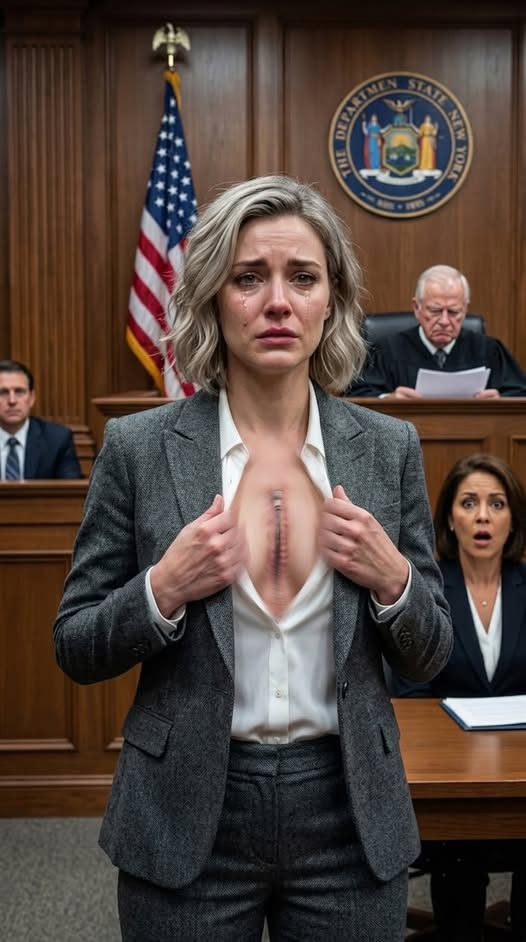
    My Family Dragged Me to Court, Accusing Me of Being a Fake Veteran. My Mother Swore Under Oath That I “Made It All Up.” I Didn’t Argue. I Simply Lifted My Shirt… and the Courtroom Fell Silent.

    My family dragged me to court like people drag trash to the curb — without looking back, convinced that my feelings didn’t matter.

    The petition was filed by my mother, Linda Caldwell, and my older brother, Travis. They claimed I was a “fraudulent veteran” who had lied about military service to steal sympathy and “the good name of the Caldwell family.” In our small Ohio town, reputation was currency, and my mother guarded hers like a vault.

    I am Harper Caldwell. I’m thirty-four years old. I served eight years in the U.S. Army as a combat medic. I have a DD214, discharge papers, medals in a shoebox, and scars I don’t show at barbecues.

    But my family never wanted proof. They wanted a story that made them look like victims.

    After my father died, I cut off contact for a while. My mother told people I had “run away” and come back with made-up stories. When I didn’t show up to parties, she said it was because I was “too embarrassed.” When I did show up, she’d touch the spot where my old unit patch used to be and laugh, “What branch are you pretending to be today?”

    I didn’t confront her publicly. I got my paramedic license, worked night shifts in a trauma ER, and kept my service private.

    Then my grandfather’s estate became the battleground. He had left me his old house and a modest investment account — money he had kept out of my mother’s reach. Two weeks after the will was read, the lawsuit arrived: fraud, defamation, “stolen value.” They wanted the court to label me a liar so the estate could be attacked.

    On the morning of the hearing, my mother walked into the courtroom as if it were her own. Travis followed, grinning, wearing a cheap camouflage jacket as a joke at my expense.

    When the clerk called the case, my mother took the stand and swore to tell the truth. She looked straight at me and snarled under oath:

    “She never served in the military. She stole our family’s reputation. She made it all up. We have neighbors who can prove she was here the whole time.”

    I didn’t flinch. I didn’t cry. I didn’t plead.

    I just stared at the judge, the Honorable Marissa Keane, and waited.

    When my mother finished, the judge leaned forward.

    “Miss Caldwell,” she said to me, “this is a serious charge. Do you have proof of service?”

    “Yes, Your Honor,” I replied. “And I have something else.”

    The courtroom stirred. My mother’s mouth curved as if she had already won.

    I stood up, took off my blazer, and reached for the hem of my shirt, right where the fabric met my left shoulder.

    “Permission to show the court,” I said quietly.

    Judge Keane nodded once. “Proceed.”

    I lifted the fabric just enough to reveal the raised, pale scar etched across my shoulder — a jagged wound from shrapnel during a firefight in Afghanistan eight years ago.

    The courtroom fell completely silent.

    Gasps. Murmurs. A few people covered their mouths.

    My mother’s face went white. Travis’s smirk vanished.

    Judge Keane’s eyes softened for a moment, then hardened as she looked at my family.

    “Mrs. Caldwell,” she said, her voice sharp, “you have wasted this court’s time with a malicious and false accusation. This case is dismissed with prejudice. Furthermore, I am referring this matter to the prosecutor for potential perjury charges.”

    My mother started to protest, but the judge cut her off.

    “Enough. The court has seen more than enough.”

    I lowered my shirt, put my blazer back on, and walked out of the courtroom without looking back.

    Two months later, my mother and brother were hit with perjury charges. The town finally saw who they really were. I kept my grandfather’s house and finally felt peace.

    Sometimes the strongest proof isn’t a piece of paper.

    It’s the scar you carry from serving the country they claimed you never protected.

  • I came home from a business trip to find my wife and newborn son exhausted and barely responsive while my mother called her “LAZY.” But when a hospital doctor noticed unusual marks on my wife’s wrists, everything changed. Then my mother coldly said, “If caring for a baby is so hard for her, maybe she never should’ve become a mother.”

    Part 1: The Day I Came Home Too Late

    “If taking care of a baby is this difficult for you, maybe you never should’ve become a mother.”

    Those were the first words I heard when I walked into my bedroom and found my wife barely conscious beside our crying newborn son. My name is Ethan Parker, and at the time I worked as an operations manager for a freight company outside Kansas City. My wife Hannah had given birth to our son Owen less than a week earlier and was still recovering from a difficult labor.

    My mother, Patricia Parker, never liked Hannah. She constantly criticized her personality, her independence, and even the way she spoke to people. My younger sister Courtney copied every opinion our mother had, so Hannah spent most family gatherings quietly enduring insults disguised as “advice.”

    Things became much worse during Hannah’s pregnancy when my mother pressured me to buy a house using my savings but place the property entirely in her name. According to Patricia, that was the safest way to “keep things inside the family.” Hannah immediately refused and warned me that my mother was trying to control our future financially.

    I didn’t listen carefully enough.

    At the time, I convinced myself Hannah was simply stressed from the pregnancy and that my mother only wanted to help us. Looking back, I realize I ignored warning signs because admitting the truth about my family felt easier than confronting it.

    When Owen was born, I genuinely hoped becoming a grandmother would soften Patricia’s behavior. For a few days, it actually seemed possible. She brought flowers to the hospital, kissed Owen’s forehead gently, and promised Hannah she would help however she could during recovery.

    Then an emergency happened at one of our company facilities in another state.

    I hated leaving so soon after Owen’s birth, but my mother immediately volunteered to stay with Hannah while I traveled. Patricia insisted she had raised children herself and claimed Hannah only needed guidance from someone more experienced. Courtney laughed and told me we would survive a few days apart.

    The only person who looked unhappy about the plan was Hannah.

    She stood quietly beside the hospital bed with fear written across her face, but when I asked whether everything was okay, she forced a small smile and told me to be careful during the trip. Even now, I still regret walking away from that room.

    During the next three days, I called constantly.

    Most of the time my mother answered the phone instead of Hannah. Patricia always claimed Hannah was resting, feeding the baby, or sleeping because new mothers became emotional and exhausted easily. Whenever Hannah briefly spoke, her voice sounded weak and nervous.

    On the third night, Hannah whispered something that immediately unsettled me.

    “Ethan… please come home.”

    I asked what was wrong, but before she could explain anything, my mother grabbed the phone and laughed the situation away. She insisted Hannah was overwhelmed by hormones and sleep deprivation. Still, something about the conversation felt deeply wrong afterward.

    The next morning, I decided to drive home without warning anyone.

    I bought diapers, pastries from Hannah’s favorite bakery, and a small green blanket for Owen during the trip back because I wanted to surprise them. But the moment I pulled into the driveway, dread settled into my stomach.

    The front door stood slightly open.

    The house smelled stale.

    Dirty dishes covered nearly every surface in the kitchen while the television blasted loudly from the living room. My mother and Courtney were asleep on the couch beneath piles of blankets like they were relaxing through a vacation instead of caring for a recovering mother and newborn baby.

    I ran toward the bedroom immediately.

    Nothing prepared me for what I found inside. Hannah lay motionless across the bed with pale gray skin, cracked lips, and sunken eyes. She looked dangerously ill. Beside her, Owen’s face burned bright red with fever while weak cries barely escaped him. His diaper clearly hadn’t been changed for hours.

    “Hannah!” I shouted.

    Her eyes opened slowly, and for a second she looked genuinely shocked to see me standing there. Then she whispered the sentence that made my blood run cold.

    “They took my phone.”

    Before I could respond, my mother appeared behind me acting irritated instead of concerned. Patricia accused Hannah of exaggerating for attention while Courtney folded her arms and complained that Hannah always enjoyed playing the victim.

    I ignored both of them and picked Owen up immediately.

    The heat radiating from his tiny body terrified me. Within minutes, I had Hannah and Owen in the car while I sped toward the hospital barely able to think clearly.

    Doctors rushed both of them into separate treatment rooms the moment we arrived.

    A physician examined them before turning toward me with visible anger across his face. He explained that both Hannah and Owen were severely dehydrated. Then his expression darkened even further when he noticed bruises circling Hannah’s wrists.

    “And those injuries,” he said carefully, “need an explanation immediately.”


    Part 2: The Hospital Room Where the Truth Finally Broke Open

    While doctors treated Hannah and Owen, I stood frozen in the hallway trying to understand how everything collapsed so quickly. Less than four days earlier, I left home believing my mother would help care for my recovering wife and newborn son. Now both of them were lying in emergency treatment rooms while hospital staff looked at me like they suspected something criminal happened inside my own house.

    I came home from a business trip to find my wife and newborn son exhausted and barely responsive while my mother called her “LAZY.” But when a hospital doctor noticed unusual marks on my wife’s wrists, everything changed. Then my mother coldly said, “If caring for a baby is so hard for her, maybe she never should’ve become a mother.”

    Part 2 of 3

    Then my mother arrived at the hospital.

    Patricia rushed through the emergency department crying loudly and insisting she had only been trying to help. Courtney followed closely behind her acting offended that anyone would question our family. But the moment Hannah heard Patricia’s voice from down the hallway, her entire body started trembling uncontrollably.

    That reaction changed everything.

    The nurses immediately exchanged uneasy looks, and the doctor who examined Hannah quietly stepped aside to contact hospital security. A detective named Rebecca Morales arrived shortly afterward and separated everyone into different rooms for questioning.

    My mother launched into her explanation immediately.

    According to Patricia, Hannah refused to eat properly, ignored instructions about caring for the baby, and spent most of the time behaving emotionally unstable. Courtney eagerly supported every accusation and claimed Hannah constantly exaggerated problems for attention.

    But the doctor interrupted before either of them could continue.

    He calmly explained that the medical evidence did not support their story at all. Hannah had an untreated infection, severe dehydration, high fever, and clear signs of prolonged neglect. Then he mentioned the bruises around her wrists and asked whether anyone wanted to explain how those injuries happened.

    Nobody answered.

    Detective Morales eventually sat beside Hannah’s hospital bed and gently asked her to describe everything that happened after I left town. For several seconds Hannah stayed quiet like she still feared someone would interrupt or punish her for speaking honestly. Then, slowly, she began telling the truth.

    She explained that Patricia constantly criticized her parenting from the moment we arrived home from the hospital. My mother insisted Hannah’s breast milk was “bad” for Owen and repeatedly prevented her from feeding him naturally. Courtney mocked her whenever she asked for help or complained about pain from the delivery recovery.

    The situation escalated every day.

    Hannah described being denied proper meals because Patricia claimed she needed to “earn rest” by proving herself as a mother first. Whenever Hannah asked to contact me privately, my mother confiscated her phone and insisted I was too busy working to deal with emotional drama.

    Then Detective Morales asked the question that changed the entire investigation.

    “Did anyone physically stop you from leaving the house?”

    Hannah slowly raised both arms.

    Dark bruises circled her wrists.

    Her voice barely rose above a whisper when she answered.

    “I tried to leave with my son,” she said. “They stopped me.”

    My mother exploded immediately.

    “She’s lying!” Patricia screamed. “She’s trying to destroy this family!”

    But for the first time in my life, I looked at my mother and felt absolutely no instinct to defend her. Everything Hannah described matched the fear I heard in her voice during those phone calls and the horror I saw inside our bedroom.

    Then Hannah revealed the reason behind everything.

    “It was about the house,” she whispered while looking directly at me. “Your mother kept saying I stole you from her. She said once I broke down, you’d finally understand who truly belonged in your life.”

    Suddenly every argument from the previous year made sense. The pressure about putting property in Patricia’s name. The constant warnings about trusting wives. The guilt whenever I prioritized Hannah over my mother. I realized Hannah had seen the danger long before I ever allowed myself to acknowledge it.

    The breakthrough happened accidentally.

    While pacing angrily through the hallway, Courtney dropped her phone onto the floor. The screen lit up automatically, and Detective Morales immediately noticed a message preview still open across the display.

    “If she holds out one more day,” the message read, “Ethan will blame her instead of us.”

    Everything changed after that.

    The detective confiscated the phone immediately despite Patricia screaming protests through the hallway. Investigators quickly discovered voice recordings saved on the device. One recording captured Hannah crying softly while Owen screamed in the background. Then my mother’s voice became clearly audible.

    “You wanted to run this house so badly,” Patricia said coldly. “Figure it out yourself.”

    Courtney’s laughter followed immediately afterward.

    “If Ethan asks,” she joked, “we’ll tell him you refused to feed the baby.”

    The entire hallway fell silent after the recording ended. My mother insisted the audio was fake. Nobody believed her anymore.

    I came home from a business trip to find my wife and newborn son exhausted and barely responsive while my mother called her “LAZY.” But when a hospital doctor noticed unusual marks on my wife’s wrists, everything changed. Then my mother coldly said, “If caring for a baby is so hard for her, maybe she never should’ve become a mother.”

    Part 3 of 3

    Part 3: The Day I Finally Chose My Own Family

    After the recordings were recovered from Courtney’s phone, the entire investigation changed immediately.

    Detective Morales no longer treated the situation like a misunderstanding between exhausted family members. The evidence clearly showed a deliberate pattern of abuse, neglect, and intimidation directed toward Hannah while she was physically vulnerable after childbirth.

    My mother still refused to accept reality.

    Patricia screamed that Hannah manipulated everyone and accused the hospital staff of turning me against my own family. Courtney panicked the moment investigators started reviewing more messages from her phone, and within minutes she completely turned on our mother trying to protect herself.

    “You planned all of this!” Courtney shouted at Patricia in the hallway. “You said if Hannah broke down emotionally, Ethan would finally stop listening to her and give you the house money!”

    That was the moment the truth became impossible to deny.

    This had never been about helping Hannah recover after childbirth. It had never been about supporting our family or caring for Owen. My mother wanted control, and when Hannah refused to surrender it, Patricia decided to punish her until she broke emotionally and physically.

    Police arrested Patricia and Courtney that same night.

    Some relatives immediately started calling me afterward accusing me of betraying my own mother. Others insisted family problems should remain private no matter how serious they became. But every time someone tried defending Patricia, I pictured Hannah lying weak and dehydrated in that bedroom beside our feverish newborn son.

    My answer never changed.

    “Owen is my son,” I told them. “My responsibility is protecting him and his mother.”

    Hannah’s recovery took months.

    The physical injuries healed first. The infection eventually cleared, the bruises faded, and Owen slowly regained his strength after proper treatment. The emotional damage lasted much longer. For a long time, Hannah flinched whenever someone raised their voice unexpectedly or knocked loudly at the front door.

    The hardest part for me was realizing how badly I failed her before any of this happened.

    Hannah warned me repeatedly about my mother’s behavior during the pregnancy. She told me Patricia’s obsession with controlling the house, the finances, and our future was dangerous. Instead of listening carefully, I kept convincing myself things would improve if everyone simply spent more time together.

    I confused loyalty with denial.

    I thought protecting my mother’s feelings would somehow preserve peace inside the family. In reality, my silence only gave her more room to hurt the people I should have protected first.

    The criminal trial lasted several weeks.

    Doctors testified about Hannah and Owen’s medical condition. Detectives presented the recordings, messages, and photographs documenting the abuse inside our home. Hospital staff described Hannah’s fear whenever Patricia entered the room, and forensic analysts confirmed the recordings on Courtney’s phone were authentic.

    The verdict devastated what remained of our extended family.

    Patricia was convicted of assault, unlawful restraint, domestic abuse, and child endangerment. Courtney received a lighter sentence after cooperating with investigators and providing additional evidence against our mother.

    As officers escorted Patricia from the courtroom, she turned toward me one final time.

    “Ethan!” she screamed. “I’m your mother!”

    For years, those words would have controlled me completely.

    This time, I looked directly at her and answered calmly.

    “A mother doesn’t destroy her son’s family because she can’t control it.”

    Then I walked away.

    Today, Owen is two years old.

    We moved to a quieter city far away from the house where everything happened. Our home is smaller, simpler, and far less impressive than the one my mother obsessed over for so long, but for the first time since Owen’s birth, it actually feels peaceful.

    Hannah smiles more now.

    She no longer apologizes for setting boundaries or taking up space inside her own life. Sometimes I still catch her watching Owen sleep beneath the small green blanket I bought the day I rushed home unexpectedly. Every time I see it, I remember how close I came to losing both of them because I ignored warning signs I didn’t want to face.

    I learned painful lessons from everything that happened. Love means nothing without protection. Loyalty does not require excusing abuse.

    And sometimes the people claiming to love you most are fully capable of causing the deepest harm if control matters more to them than compassion.

    Every night, when I tuck Owen into bed and Hannah rests beside me safely, I think about the promise I silently made in that hospital hallway years ago.

    I failed my family once. I never intend to fail them again.

  • My 15-year-old daughter kept getting sick, but my husband said she was faking it until a secret hospital visit revealed something terrifying inside her that left me screaming in horror

    For weeks, I sensed that something was deeply wrong long before anyone else in the house cared enough to notice. My fifteen-year-old daughter Maya kept complaining about nausea, stabbing stomach pain, and a crushing exhaustion that seemed to drain all the energy from her body.

    This was not the same girl I had always known. Maya had once been lively and full of energy, the kind of teenager who filled every room with laughter. She loved soccer practice after school and spent late nights editing photos on her laptop while music played softly in the background.

    But recently, that spark inside her had faded. She moved slowly, barely touched her meals, and slept for endless hours. What frightened me most was how quiet she had become, as though she were carrying a burden far too heavy for someone her age.

    She constantly kept the hood of her sweatshirt pulled over her head, even indoors, and she rarely looked directly at me anymore. Whenever anyone asked if she was okay, she only shrugged as if none of it mattered.

    But it mattered to me more than anything.

    Every little change in her behavior settled inside my chest like a sharp splinter that would not come out. My husband Robert, however, dismissed everything with an explanation that felt far too easy.

    “She is just faking it to get attention,” Robert said one evening while staring at the television during a football game.

    “She has been vomiting almost every morning,” I replied, trying desperately to make him understand.

    “Teenagers exaggerate everything,” he muttered carelessly. “She probably just wants an excuse to skip school.”

    That night, I looked across the kitchen table at Maya as she pushed food around her plate without eating a single bite. “She has lost a lot of weight,” I said quietly.

    Robert scoffed and accused me of overreacting like I always did whenever it came to our daughter. His voice carried that familiar harshness that usually shut every conversation down before it could truly begin.

    Most of the time, I would have stayed silent just to avoid another argument. But this time, something inside me would not let the issue go.

    I had seen Maya bend over in pain when she thought nobody was looking. I had seen her wipe tears away when she believed she was alone.

    Something was hurting my daughter, and it felt like I was the only person who truly cared.

    Everything changed on a quiet Tuesday night.

    The house had gone still. Robert was asleep upstairs after another exhausting day at work, and the only sound downstairs came from the humming refrigerator.

    I walked toward Maya’s room to check on her and noticed her bedroom door was cracked slightly open.

    The room was almost completely dark except for the dim glow of her desk lamp stretching shadows across the floor. She was curled tightly into herself on the bed, and for a second I thought she was sleeping.

    Then I heard it.

    A soft, broken sound.

    Someone trying desperately not to cry.

    My stomach dropped instantly.

    “Maya?” I whispered into the darkness.

    She did not answer right away. I stepped closer and saw her arms wrapped tightly around her stomach. Her face was pale, streaked with tears, and twisted with pain.

    “Mom,” she whispered weakly.

    The sound of her voice shattered something inside me.

    “It hurts so much,” she said softly. “Please, Mom, make it stop.”

    I sat beside her immediately and pulled her gently against me, shocked by how thin and fragile she felt.

    “How long has it been this bad?” I asked while brushing her hair back carefully.

    She glanced nervously toward the bedroom door.

    “Please do not tell Dad,” she whispered.

    Those words hurt more than anything else.

    I swallowed hard and promised her I would not tell him.

    Eventually she drifted into an uneasy sleep while still trembling in my arms. I stayed awake beside her for hours before finally returning to my own bedroom.

    That night, while Robert slept beside me, I stared at the ceiling and made a decision.

    By sunrise, I already knew what I needed to do.

    The following afternoon, Robert left for work as usual.

    The moment his car disappeared down the street, I grabbed my keys and walked quickly to Maya’s room.

    “Maya, put your shoes on,” I said gently but firmly.

    She looked confused. “Where are we going?”

    “We’re going to the hospital.”

    Her eyes widened slightly. “Dad said I’m fine.”

    “I do not care what your father said,” I replied softly. “You are in pain, and we are going to find out why.”

    She did not argue.

    That frightened me more than anything.

    The drive to Riverside Medical Center felt endless. Maya sat silently beside me staring out the window while dark gray clouds gathered overhead.

    When we entered the hospital, the sharp scent of antiseptic filled the air immediately. A nurse checked Maya in and soon guided us to a small examination room near the back of the clinic.

    Maya sat quietly on the paper-covered table with her feet dangling slightly. In that moment she looked younger than fifteen.

    She looked like my little girl again.

    About twenty minutes later, the doctor entered the room.

    “My name is Dr. Lawson,” he introduced himself calmly.

    He had kind eyes and the steady voice of someone accustomed to difficult conversations.

    “What seems to be going on today, Maya?” he asked gently.

    Maya looked toward me nervously, unable to answer.

    “She has been nauseous for weeks,” I explained. “Severe stomach pain. Constant exhaustion.”

    Dr. Lawson nodded thoughtfully. “Let’s run a few tests and see what’s happening.”

    The next hour passed in a blur.

    Blood tests.

    Questions.

    An ultrasound.

    Maya lay silently while the technician moved the scanner across her stomach. I stared helplessly at the monitor, unable to understand the strange flickering shapes on the screen.

    The technician remained expressionless until the scan ended.

    “The doctor will review the results shortly,” she said quietly before leaving the room.

    The waiting afterward felt unbearable.

    The room seemed colder somehow.

    I twisted my hands nervously while Maya leaned against me in silence.

    Finally the door opened again.

    Dr. Lawson stepped back inside holding a clipboard far too tightly.

    “Mrs. Thorne,” he said carefully. “We need to discuss the scan results.”

    I immediately felt my stomach sink.

    Maya trembled beside me as the doctor shut the door behind him.

    “There’s something inside her,” he said quietly.

    For a moment I could not breathe.

    “What do you mean?” I whispered.

    The doctor hesitated, and that silence terrified me more than any words possibly could.

    “What is it?” I asked again while grabbing Maya’s hand tightly.

    Dr. Lawson exhaled slowly.

    “We need to discuss this carefully,” he said. “But I need you to prepare yourself.”

    The room suddenly felt impossibly heavy.

    Maya’s face crumpled with fear.

    Before the truth was even spoken aloud, I felt my entire world splitting apart beneath me.

    I do not remember how long I screamed.

    The sound ripped out of me before I could stop it, echoing harshly against the white hospital walls.

    Maya flinched beside me, and seeing her reaction finally forced me back to reality.

    I had to stay strong for her.

    She sat shaking beside me with tears streaming down her cheeks while her hands covered her mouth.

    I forced myself to breathe.

    “Please explain,” I said weakly.

    Dr. Lawson looked at us with visible sympathy.

    “Mrs. Thorne,” he said gently, “your daughter is pregnant.”

    The word hit me like an explosion.

    “No,” I whispered automatically.

    It sounded childish. Impossible.

    I turned toward Maya.

    She had collapsed into herself, sobbing uncontrollably.

    “Sweetheart,” I whispered while touching her arm. “Please tell me they made a mistake.”

    But she only cried harder.

    Dr. Lawson explained that the scan suggested she was approximately twelve weeks pregnant.

    Twelve weeks.

    Three entire months.

    Three months of pain while I failed to understand what was happening.

    “She’s only fifteen,” I whispered hoarsely.

    “I know,” Dr. Lawson replied quietly.

    My chest tightened painfully as I struggled to process everything.

    Maya suddenly whispered, “I’m sorry.”

    That apology broke me completely.

    “No, baby,” I said immediately while wrapping my arms around her. “You did nothing wrong.”

    Dr. Lawson carefully explained that because of Maya’s age, certain procedures now had to be followed. A social worker would need to speak with her privately.

    The word “safe” kept repeating during the conversation.

    Safe.

    The moment Dr. Lawson mentioned it, Maya stiffened beside me.

    The social worker arrived shortly afterward.

    Her name was Megan, and she spoke gently as she knelt beside Maya.

    “Would you mind talking with me privately for a little while?” she asked kindly.

    Maya looked toward me nervously.

    “It’s okay,” I whispered while squeezing her hand. “I’ll be right here.”

    Megan guided her into another office and shut the door behind them.

    The silence afterward nearly drove me insane.

    Pregnant.

    Fifteen years old.

    The words echoed endlessly inside my head.

    Maya barely dated. She spent most of her time either at home or with a few close friends I had known for years.

    How had I missed something this huge?

    Then another thought slowly crept into my mind.

    One so terrifying I could barely face it.

    When Megan finally returned with Maya nearly an hour later, Maya’s eyes were swollen from crying.

    “Mrs. Thorne,” Megan said softly, “could we speak privately?”

    My heart pounded violently.

    “Please just tell me what’s happening,” I begged.

    Megan inhaled slowly.

    “Maya told me the pregnancy was not consensual.”

    The words hit me like a physical blow.

    “She said someone hurt her,” Megan added quietly.

    I gripped the back of a chair to steady myself.

    “Who?” I whispered.

    Megan hesitated.

    “She isn’t ready to fully identify the person yet,” she explained. “But she indicated it’s someone she sees regularly.”

    A horrible chill spread through my body.

    Then Megan asked carefully, “Does Maya feel safe at home?”

    “Of course she does,” I answered automatically.

    But even as I said it, uncertainty filled my voice.

    Memories flooded back instantly.

    Maya flinching whenever Robert raised his voice.

    Her refusal to sit beside him on the couch.

    The way she started locking her bedroom door at night.

    Suddenly I could barely breathe.

    Maybe the danger had never been outside our home at all.

    “Sometimes children stay silent because they are afraid nobody will believe them,” Megan said softly.

    Tears streamed down my face.

    “And sometimes,” she continued gently, “they stay silent because they’re trying to protect someone they love.”

    My knees finally gave out beneath me.

    The terrifying thought I had been avoiding now rooted itself fully inside my mind.

    What if the person who hurt my daughter had been living under our roof this entire time?

    Megan recommended that Maya and I stay somewhere else temporarily until the situation became clearer.

    I barely managed to nod.

    She handed me contact numbers and explained that the police would need to speak with us soon.

    When I returned to the waiting area, Maya looked up at me with red swollen eyes and immediately burst into tears again.

    I held her tightly.

    “You are safe,” I whispered fiercely. “I will never let anything happen to you again.”

    The drive to my sister Rachel’s house was painfully quiet.

    Halfway there, Maya suddenly asked in a trembling voice, “Are you mad at me?”

    I pulled the car to the side of the road immediately.

    “Maya,” I said while holding her face gently between my hands, “listen to me carefully. None of this is your fault. I am not angry with you.”

    She cried harder.

    I held her until she calmed enough for us to continue driving.

    But deep inside me, something darker was growing.

    Fear.

    Anger.

    And a terrible suspicion I could no longer ignore.

    Rachel opened the front door before I even knocked.

    One look at my face told her everything.

    “Oh my God,” she whispered while pulling us inside quickly.

    She wrapped Maya in a warm hug and prepared the guest room for us immediately.

    Maya fell asleep almost as soon as her head touched the pillow.

    Hours later, Rachel found me sitting alone in the living room unable to sleep.

    “What happened?” she asked quietly.

    I finally whispered the truth.

    “Maya is pregnant.”

    Rachel’s face went pale.

    Then I admitted something even worse.

    “I think someone hurt her.”

    Rachel stared at me carefully. “Who?”

    I could not say the name aloud.

    But inside my mind, it echoed over and over again.

    Robert.

  • At my daughter’s wedding, my son-in-law demanded that I hand over the farm keys in front of two hundred guests. When I refused, he slapped me so hard I lost my balance…

    The slap rang through the wedding hall louder than the music.

    For one horrifying second, two hundred guests froze and stared at me like I was the embarrassment ruining my daughter’s perfect day.

    My knees buckled.

    My hand crashed against the gift table to keep myself upright. Champagne glasses rattled. Someone gasped near the dance floor.

    And standing over me in his white tuxedo was my brand-new son-in-law, Carter Whitmore, smiling like a man who already owned everything I had spent my entire life protecting.

    “Don’t make a scene, Helen,” he said smoothly, loud enough for nearby tables to hear. “Just hand over the farm keys.”

    Beside him stood my daughter, Emily.

    My baby girl.

    Her face looked pale beneath her bridal makeup, her fingers trembling around her bouquet.

    “Mom,” she whispered shakily, “please… just give him the keys.”

    Discover more
    Baked Goods
    Desserts
    Cookie

    That hurt far worse than the slap.

    The farm had belonged to my family for four generations.

    Forty acres of apple orchards, cornfields, horse pasture, and the white farmhouse my late husband, Thomas, rebuilt board by board after the tornado twenty years earlier.

    Carter used to call it “worthless dirt.”

    Until the county announced plans for a new highway extension nearby.

    Suddenly, that “worthless dirt” became prime development land worth millions.

    Carter’s mother, Vanessa Whitmore, lifted her champagne glass with a thin smile.

    “This drama is exhausting, Helen. You’re sixty-two years old and living alone. How much longer do you honestly think you can manage that place?”

    A few guests laughed quietly.

    Alone.

    That was what they thought I was.

    A widowed woman in sensible shoes and a navy dress. A quiet churchgoing mother with dirt permanently trapped beneath her fingernails.

  • The bank called me during my hospital

    PART 3

    “It doesn’t prove intent,” he corrected. “But it does place the submission physically inside that property.”

    I closed my eyes.

    Amanda.

    Still, part of me resisted. Part of me kept trying to defend the past we had.

    Detective Harris continued, “We also found something else. The notary stamp used on the closing documents is fake. But the seal number matches a notary who used to work with your brother-in-law.”

    Brian.

    Of course.

    The perfect couple. The perfect house. The perfect life.

    Built like a pyramid—each piece balanced on something rotten underneath.

    That night, I didn’t go home.

    I drove instead.

    Highland Drive.

    I parked half a block away and just watched the house.

    It looked the same as always.

    Warm lights glowing through the windows. Soft music. Shadows moving inside like a painting of a happy life.

    A life I had unknowingly financed.

    At 9:14 p.m., Amanda stepped onto the balcony holding a wine glass.

    She laughed at something inside.

    Then she looked down.

    And saw me.

    Even from a distance, I saw her smile falter.

    Not fear.

    Not guilt.

    Recognition.

    She knew I was no longer just her sister visiting for dinner.

    I was a problem.

    The family dinner invitation came the next evening.

    Text message.

    Amanda: “Come over. We need to talk. No drama.”

    No apology.

    No explanation.

    Just control.

    I almost didn’t go.

    But I needed answers more than I needed peace.

    So I went.

    The house was exactly as I remembered, except now it felt like a stage set.

    Everything too perfect.

    Too intentional.

    Amanda greeted me at the door wearing a cream blouse.

    The same calm smile.

    The same polished voice.

    “Hey, sis,” she said softly. “You look tired.”

    I didn’t answer.

    Brian was already at the table.

    Calm. Relaxed. Smiling like nothing in the world had ever gone wrong for him.

    Lasagna was served.

    Wine poured.

    Normal family dinner sounds filled the air.

    Forks clinking. Soft laughter. The illusion of ordinary life.

    For five minutes, no one spoke about the truth.

    Then I placed the folder on the table.

    Not loudly.

    Not dramatically.

    Just… gently.

    The sound it made was enough.

    Amanda’s fork stopped mid-air.

    Brian’s smile faded slightly.

    “What’s that?” Amanda asked.

    I opened it.

    The mortgage papers.

    The forged signature.

    The credit accounts.

    The police report.

    “I got a call from the bank,” I said quietly. “You bought a house in my name.”

    Silence.

    Then Amanda laughed.

    A short, sharp laugh.

    Not amused.

    Defensive.

    “That’s insane,” she said. “Heather, what are you talking about?”

    Brian leaned back in his chair.

    “She’s stressed,” he said casually. “Hospitals are hard. You know how she gets.”

    I turned to him slowly.

    “No,” I said. “This is not stress.”

    I slid the first page forward.

    “Explain this.”

    Amanda didn’t look at it.

    She looked at me.

    Her voice softened.

    “Someone stole your information. That’s all. You think I would do that to you?”

    And that was the moment something inside me shifted.

    Because she didn’t deny it with shock.

    She denied it with performance.

    Like she had rehearsed this.

    I leaned forward.

    “The IP address came from your house.”

    A flicker.

    Just a flicker.

    Then gone.

    Brian cleared his throat.

    “That proves nothing legally.”

    “I don’t care about legal,” I said.

    My voice shook for the first time.

    “I care about the fact that I owe six hundred thousand dollars for a house I’ve never lived in.”

    Amanda finally set her glass down.

    Her tone changed.

    Cooler now.

    Sharpened.

    “You were always bad with money,” she said.

    The words hit harder than I expected.

    Not because they were true.

    But because she believed they excused everything else.

    I stared at her.

    “You forged my signature.”

    She sighed like I was being difficult.

    “You don’t understand how things work,” she said. “We were going to fix it.”

    “Fix it?” I repeated.

    “Yes,” she said. “Brian had a plan. We just needed time.”

    Brian didn’t correct her.

    He didn’t confirm it either.

    He just watched me.

    Evaluating.

    Like I was a risk they hadn’t fully priced in yet.

    That’s when I realized something worse than betrayal.

    They weren’t ashamed.

    They were inconvenienced.

    I left the house without finishing the conversation.

    Amanda called after me once.

    I didn’t turn back.

    Not because I was strong.

    But because if I did, I might have broken in a way I couldn’t recover from.

    The next morning, I gave Detective Harris everything.

    Every document.

    Every bank record.

    Every connection I had uncovered.

    He listened quietly, then said:

    “This is bigger than family fraud. This is organized financial fraud.”

    The words didn’t feel real.

    Organized.

    As if my life had been processed like paperwork.

    A week later, the arrest happened.

    Not dramatic.

    Not cinematic.

    Just quiet.

    Brian first.

    Leaving his office building in a suit, still checking his phone.

    Then Amanda.

    At home.

    In the kitchen that wasn’t hers in any legal sense.

    I didn’t go to watch.

    But Detective Harris called me afterward.

    “She didn’t resist,” he said. “She asked one question.”

    My throat tightened.

    “What question?”

    “If Heather was going to testify.”

    I didn’t answer for a long time.

    Because part of me still saw her in every childhood memory.

    Braiding my hair.

    Helping me study.

    Calling me “kiddo.”

    But memory is not evidence.

    And love is not immunity.

    The trial moved fast once the full structure collapsed.

    Brian had done this before.

    Smaller frauds.

    Hidden debts.

    Manipulated loans.

    Amanda was the face.

    The charm.

    The access point.

    My identity was just one of several they had tested.

    But mine was the one that stuck.

    Because I trusted her.

    That was the pattern.

    Trust first.

    Then exploit.

    Then disappear.

    The day I testified, Amanda didn’t look at me at first.

    She stared straight ahead.

    Composed.

    Perfect.

    Until I described the moment I saw my signature on the mortgage papers.

    That was when she finally turned her head.

    Just slightly.

    Our eyes met.

    And for the first time, I didn’t see my sister.

    I saw someone I didn’t recognize at all.

    Not monster.

    Not victim.

    Just… consequence.

    ENDING

    I didn’t get the house back.

    Not directly.

    That debt took time to unwind, legally and financially.

    But I wasn’t responsible for it anymore.

    The court recognized what I had been afraid to claim at first:

    I was not the author of that destruction.

    Just the person who discovered it too late.

    Amanda was sentenced.

    Brian too.

    Nothing dramatic in the end.

    No final apology that fixed anything.

    No emotional reconciliation.

    Just silence where a family used to be.

    Months later, I went back to work full-time.

    Pediatric ward.

    Room 214.

    A new child asked me if something would hurt.

    I smiled.

    “A little,” I said gently. “But I’ll stay right here with you.”

    And I realized something strange.

    Betrayal didn’t end my ability to care.

    It only ended my ability to pretend.

    Because now I understood something I didn’t before:

    Betrayal doesn’t always arrive loudly.

    Sometimes it arrives in a cream blouse.

    And the most dangerous lies…

    are the ones told by people who once taught you how to tie your shoes.

  • Five minutes after signing the divorce papers, I left the courthouse with only my son. Behind me, my ex-husband, his mistress, and her family were already celebrating their “new beginning”… until his phone rang.

    Five minutes after signing the divorce papers, I left the courthouse with only my son. Behind me, my ex-husband, his mistress, and her family were already celebrating their “new beginning”… until his phone rang……..

    Five minutes after signing the divorce papers, I walked out of the courthouse with my son’s hand in mine and my entire married life reduced to one duffel bag, a pickup truck with a cracked windshield, and a silence so thick it seemed to muffle even the traffic beyond the courthouse square. Owen pressed close to my side in his red sweatshirt and worn sneakers, the laces on the left shoe untied, his little face pale from too much tension for a seven-year-old. He kept looking up at me the way children do when they want to believe the grown-up beside them can still hold the world together if they just choose the right words. I did not have the right words. I had no elegant explanation for why twelve years could be erased in under an hour, why a man who once traced circles over my palm in church pews and promised me forever could stand ten feet away smiling at the woman he had sworn was “just a coworker,” or why his family had brought champagne to celebrate the legal burial of my marriage.

    Grant Holloway didn’t look at me when the clerk handed over the final documents. He barely looked at Owen either. His attention remained fixed on Sabrina, standing by the courthouse window in cream-colored heels and a fitted pale blue dress, blond hair in soft waves, one manicured hand resting over the tiny gold chain at her throat. She had perfected the expression of a woman trying to appear sympathetic while secretly thrilled to have won. Grant’s mother stood near her adjusting her pearls with the quiet satisfaction of someone who believed a nuisance had finally been handled. His brother Tyson laughed too loudly, his voice carrying through the hall as he slapped Grant on the shoulder and muttered something about freedom. I didn’t hear every word. I heard enough.

    For months Grant had been building this ending while pretending our life could still be saved. He told people I was unstable, impossible, bitter, difficult to live with. He said I was emotional, erratic, ungrateful. He did not mention the hotel receipts I found under the truck seat, the second phone hidden in the garage, the money siphoned from our joint account in neat little increments too careful to attract attention until I added them all together and realized almost forty thousand dollars had gone missing over eleven months. He did not mention that I was the one who handled payroll, vendor negotiations, tax filings, inventory records, and the small mountain of invisible labor that kept Holloway Building Group standing upright while he collected handshakes and applause. By the time we reached court, his version of me had already spread through town like mold under wallpaper. Poor Grant. Saddled with a difficult wife. Thank heaven he’d found someone gentler, brighter, younger. I had become the villain in my own marriage before I even knew the final act had begun.

    The settlement was called fair.

    He kept the house because his attorney had argued it sat on family land. He kept the lake cabin because it had technically been transferred through a trust with his father’s name on the original deed. He kept the company because my years of work had never translated into formal ownership on paper, despite all the times he’d kissed my forehead and said, “You know this is ours.” All I got was temporary alimony, primary custody of Owen, a modest cash settlement already diminished by legal fees, and the pickup truck I had driven since before we were married. His lawyer, with his careful silver tie and polished diction, called it documented property. I remember wanting to ask him if betrayal had a filing category too, or if deceit became legitimate once a man hired the right attorney to sort it into binders.

    When I stepped out onto the courthouse steps, the April wind hit my face and for one strange second I felt weightless. Not free. Just hollowed out. Owen squeezed my hand harder.

    “Mom?” he asked softly. “Are we going home?”

    I looked past the parking lot to the street beyond it, to the bare-branched trees trembling in the breeze, to a pigeon hopping near a storm drain, to anything but the cluster gathered near Grant’s black SUV.

    Grant loosened his tie and Sabrina slid her arm around him. His mother kissed his cheek. Tyson twisted the wire off a bottle and it popped with a celebratory crack that made Owen flinch. Sabrina’s mother gave a little laugh and said something about a toast to new beginnings. New beginnings. As if my marriage had been some unfortunate delay in the schedule of their real life.

    Grant finally looked at me then.

    Not with regret. Not even with discomfort.

    With relief.

    He lifted his keys slightly in a mock salute, and the smile on his mouth was the kind a man wears when he believes he has outplayed everyone in the room.

    I turned away before he could read what was in my face, because what was in my face wasn’t weakness or despair. It was something colder. Not yet revenge. Just clarity.

    “Let’s go somewhere safe,” I told Owen.

    We had taken only three steps toward my truck when Grant’s phone rang.

    He glanced down at the screen with the lazy confidence of a man too pleased with himself to imagine bad news could still reach him. He answered without moving away from the group, still smiling, still half-turned toward Sabrina. I saw the exact moment the smile died. His shoulders stiffened first. Then his brow pulled in. Sabrina’s laugh faltered. His mother’s expression sharpened.

    “What do you mean?” Grant said, voice suddenly low and tight.

    Tyson stopped mid-joke. Sabrina looked from Grant to the phone and back again.

    Grant took two quick steps away from them. “No, that’s impossible. She wouldn’t—” He broke off and looked straight at me.

    For one heartbeat we stared at each other across the parking lot.

    Then he said, more sharply, “Who authorized that?”

    I knew before he spoke another word what the call was about, and even so, a hard pulse of adrenaline went through me. Not because I had sabotaged him. I hadn’t. But because for the first time in months I realized he had spent so long assuming I would stay soft, stay frightened, stay grateful for scraps, that he had forgotten one simple truth: I knew where everything was buried.

    He started walking toward me fast.

    Sabrina called after him. His mother said his name with alarm. Tyson followed.

    I opened the truck door and lifted Owen inside.

    “Mom?” Owen whispered.

    “Seat belt,” I said calmly, though my heart had begun to hammer.

    Grant reached the truck before I could shut the passenger-side door. “What did you do?”

    There it was. No greeting. No concern for his son. No effort to hide his panic.

    I straightened slowly. “You’ll have to be more specific.”

    His eyes were wild now, that smug courthouse expression shattered. “The bank just froze the company’s operating line. Payroll access is blocked. There are state investigators at the office asking for records. What did you do?”

    I stared at him for a moment and almost laughed. Almost. Instead I asked, “Did you think removing me from the company and accusing me of mismanagement would have no consequences?”

    “You reported us?”

    “I protected myself.”

    Sabrina had reached his side by then, her face losing color beneath careful makeup. “Grant, what is he talking about?”

    He ignored her. “You vindictive—”

    “Finish that sentence,” I said quietly. “In front of our son.”

    His mouth snapped shut.

    Behind him, his mother approached in a flurry of expensive perfume and outrage. “How dare you create a scene? The divorce is final. You have no right—”

    “No right?” I turned to her, and I had not raised my voice once, which somehow made them all look more rattled. “For twelve years I did your son’s books, covered his debts, fixed his payroll mistakes, cleaned up his tax messes, negotiated with vendors, and made sure he looked like a genius in public. Then he stole from our joint account, lied in court, and tried to pin financial misconduct on me in the filings. You’re right about one thing, though. The divorce is final. That means I no longer have any reason to carry his secrets.”

    Sabrina stepped back as if I might have struck her. Tyson muttered, “Jesus.”

    Grant leaned close enough for me to smell champagne on his breath. “If this is some kind of stunt—”

    “It isn’t.” I held his gaze. “Three weeks ago, when your attorney filed a claim suggesting I mishandled payroll and expenses, my lawyer advised me to provide documentation to the forensic accountant we hired. Yesterday, after the judge signed the asset division, certified copies went to the bank, the labor board, and the state tax office. I didn’t lie, Grant. I just stopped protecting you.”

    For a second there was only the sound of traffic and the dull clink of champagne glasses from Tyson’s loosened grip.

    Grant’s face drained of color. He understood. More than that, he knew I had chosen my moment carefully. Not out of cruelty. Out of survival. I had spent months backed into a corner while he laid a trail of paperwork designed to leave me holding the blame if his bookkeeping ever came under scrutiny. The only safe moment to tell the truth had been once the divorce was final and he no longer had leverage over custody or the settlement. He had planned ahead. So had I.

    His phone rang again.

    He looked at it and swore under his breath. This time he didn’t bother hiding the screen. It was Greg Danner, his operations manager.

    Grant answered immediately. “What?”

    I could hear Greg’s tinny, frantic voice through the speaker. “They’re in your office, man. They’ve got copies of everything. Bank says the line’s suspended pending review. The concrete supplier says they won’t release the shipment without cash. And half the crew walked because they heard payroll might not clear.”

    Grant dragged a hand over his face. “Tell them to wait.”

    “Wait for what?”

    Grant’s eyes snapped to mine again. Hatred, disbelief, panic. He took a step closer. “You have the master vendor file. The quarterly reconciliations. The passwords.”

    “No,” I said. “You made sure I didn’t. Remember? You had IT lock me out after mediation.”

    He swore louder.

    Owen was watching all of this from the truck, frightened and confused, and that was the moment something inside me became absolutely still. Whatever pain remained, whatever part of me still remembered the good man Grant had once pretended to be, it went cold under the sight of my child shrinking into the seat while his father turned our family into a parking-lot spectacle.

    I shut the truck door gently, walked around to the driver’s side, and climbed in.

    Grant slapped his palm once against the window. “You can’t just leave.”

    I rolled the window down two inches. “Watch me.”

    “You’ll regret this.”

    I looked at him through the narrow opening. “That makes one of us.”

    Then I drove away.

    For the first few blocks, Owen said nothing. He just sat with both hands clutched around the straps of his small backpack, looking out the window as courthouse buildings gave way to shops and stoplights and the ordinary Friday bustle of people who had no idea my life had just ended and begun at the same time. I kept both hands on the wheel because if I let go, I thought I might start shaking and never stop.

    At the third red light Owen asked, very softly, “Was Dad mad at you?”

    I swallowed. “Your dad got some difficult news.”

    “Because of us?”

    “No.” I glanced at him. “None of this is because of you.”

    He nodded, but children hear what isn’t said. “Are we poor now?”

    I laughed once, and the sound that came out was so brittle I barely recognized it. “We are not poor. We’re just… changing plans.”

    “Can we still get pizza?”

    The question hit me harder than all the champagne smiles and legal papers had. I reached over and squeezed his knee. “Yes. We can still get pizza.”

    He thought about that as though it were a serious financial metric. “Okay.”

    I had already decided where somewhere safe would be. Not the apartment I had rented sight unseen two towns over, because I couldn’t move in until Monday and the air mattresses were still in the back of the truck. Not my mother’s place in Tulsa, because she was recovering from knee surgery and had no room. Not a friend’s couch, where Owen would overhear pity disguised as encouragement. I drove instead to the Briar Motor Lodge on the edge of Marlowe County, a faded L-shaped motel with flower boxes under the office window and a sun-faded sign that still glowed OPEN in uneven red letters after dark. Twenty years earlier my grandmother used to bring me here for pie when the attached diner still ran a lunch special. Now it belonged to her old friend Dottie Mercer, who had once told me, when Grant’s first big contract almost sank us and I cried into a slice of pecan pie at nineteen, that a woman should always know where the nearest safe bed is.

    Dottie opened the office door before I even parked.

    She was seventy if she was a day, with bright silver hair pinned up in a loose knot and reading glasses hanging from a beaded chain over her chest. One look at my face and the duffel bag and Owen climbing stiffly from the truck, and she said only, “Room seven’s clean. Stay as long as you need.”

    That was when I finally nearly broke.

    I managed a thank-you, but my throat closed over the words. Dottie pressed the key into my hand, then crouched to Owen’s level and asked if he liked grilled cheese. He nodded solemnly. “With tomato soup?” she added. He nodded harder. “Well, then,” she said. “You’re my most important customer of the day.”

    By the time we got into room seven, the adrenaline had begun to drain from my body, leaving behind a deep bone-level exhaustion. The room smelled faintly of lemon cleaner and old quilt cotton. There were two double beds with blue coverlets, a humming air conditioner, a tiny table, a lamp with a crooked shade, and curtains patterned with little green leaves. Owen set his backpack on one bed and looked around.

    “Are we sleeping here?”

    “For tonight.”

    “For lots of nights?”

    “Maybe a few.”

    He climbed onto the bed and bounced once, testing. “It’s okay.”

    I sat beside him and pulled him close. He leaned into me without resistance, his head under my chin, all warmth and trust and smallness, and I felt the first tear slip down before I could stop it.

    “Mom?” he whispered.

    “We’re okay,” I said, though my voice shook. “Do you hear me? We’re okay.”

    He nodded against my shoulder. “I know.”

    Children can be merciful when adults least deserve it.

    Dottie brought grilled cheese and soup on a tray an hour later, along with coffee for me and a paper plate of chocolate-chip cookies wrapped in foil. She didn’t pry. She just set everything down and said, “Lock the deadbolt tonight. And if anybody comes asking questions, I never saw you.” Then she touched my shoulder once and went back to the office.

    After Owen fell asleep, one arm flung over his face, I sat at the little table by the window and turned my phone on for the first time since we left the courthouse. It lit up like a flare.

    Seventeen missed calls from Grant.
    Eight from his mother.
    Four from Tyson.
    Three from numbers I didn’t know.
    Six texts from my lawyer, Mara.

    I called Mara first.

    She answered on the second ring. “Please tell me you’re somewhere secure.”

    “I’m at the Briar.”

    “Good.” Papers rustled on her end. I pictured her in her office above the old hardware store, heels off, dark hair half-fallen from its clip, fueled by caffeine and fury. “I expected he’d melt down, but maybe not that fast.”

    “He got the call in the parking lot.”

    Mara let out a low whistle. “Well. That’s poetic.”

    I closed my eyes. “What happens now?”

    “What happens now is that you do exactly what we discussed. You do not answer his calls. You do not provide any documents. You do not explain anything to anyone except me. The disclosures were lawful, timely, and necessary because his filings attempted to assign liability to you. If he wants to complain, he can complain to the bank, the labor board, and his own accountant.”

    “He says payroll’s frozen.”

    “That sounds like a him problem.”

    Despite everything, a tired laugh escaped me.

    Mara’s tone softened. “Listen to me carefully. You did not sabotage his business. You disclosed financial inconsistencies after he accused you in a court document of mishandling company funds. That is called protecting yourself. If there are consequences, those consequences belong to the people who created the mess.”

    I stared at the motel window, at my own faint reflection hovering over the dark parking lot outside. “Do you think they’ll come after custody?”

    “Let them try. You left court with primary custody already in place. If he starts harassing you tonight, I’ll file for emergency communication boundaries by Monday. Did Owen witness the parking-lot scene?”

    “Yes.”

    “Good. Not for him, obviously. For us.”

    There was a pause. Then Mara said, “There’s one more thing. You got a certified letter this morning while you were in court. My office signed for it. It’s from Arthur Vance.”

    I frowned. “Arthur Vance? Grant’s father’s attorney?”

    “Former attorney. Semi-retired now. The letter says he’s been instructed to deliver certain documents to you if the divorce was finalized and if you were no longer employed by Holloway Building Group.”

    The room seemed to tilt slightly. “What documents?”

    “He wouldn’t say over the phone. Just that they relate to Harold Holloway’s estate and something he called a contingent trust arrangement. I asked if Grant knew about it. Arthur got very quiet and said, ‘No, and it may be best if it stays that way until Ms. Holloway reviews the file.’”

    Harold.

    For a second I could see my father-in-law as he’d been before the stroke took most of his speech: broad-shouldered even in old age, with weathered hands and eyes so pale they seemed almost silver in sunlight. Harold had founded the company from one pickup, one nail gun, and a reputation for finishing what he started. He and I had gotten along better than Grant liked. Harold said I had a head for numbers and a spine he hoped his son would grow into. The year before he died, he called me “the only one in this family who knows the cost of things.” I had laughed then. I didn’t understand until later that it wasn’t a compliment. It was a warning.

    “What kind of trust?” I asked.

    “I don’t know. Meet him tomorrow. Bring any identification he requests. And Lena?” Her voice gentled again. “You may feel guilty tonight, because decent people tend to feel guilty when selfish people finally experience consequences. Don’t. Sleep if you can.”

    After I hung up, I sat for a long time with the phone in my lap, listening to the air conditioner rattle. Harold had been gone almost three years. During the funeral Grant cried publicly and then argued with the probate clerk two days later over equipment titles. Harold had never trusted the shine in his son’s ambition. He once told me, while we were balancing invoices at the office after closing, “A man who wants to look successful more than he wants to be useful will mortgage his soul for applause.” At the time I thought he was talking about some local politician. Now I knew better.

    Grant’s calls continued until after midnight. I silenced the phone and tucked it into the drawer.

    Sometime around two in the morning, I woke to voices in the parking lot. My body went rigid until I realized it was only a couple arguing near the vending machine. Still, I did not sleep well again. When dawn crept under the curtain edges, pale and colorless, Owen was already awake watching me.

    “Did we really lose our house?” he asked.

    There are questions no parent ever imagines answering in a motel room with day-old coffee on the table.

    “Yes,” I said, because lies rot trust faster than poverty does. “But a house isn’t the same as home.”

    He considered that. “Will Dad still be my dad?”

    My throat tightened. “Yes. That doesn’t change.”

    “Even if he was mean?”

    I took a breath. “People can love you and still make bad choices. Really bad ones.”

    He looked down at the blanket. “I don’t want him to yell anymore.”

    I brushed the hair off his forehead. “I know.”

    This, more than the affair or the stolen money or the smug courthouse grin, was the true grave of my marriage. Not that Grant had betrayed me. That he had made our son afraid of his voice.

    After breakfast in Dottie’s diner, I drove Owen to the small park behind the post office and let him burn off nervous energy while I sat on a bench with a notebook and began the kind of planning I’d always done best. Immediate expenses. Apartment deposit already paid. School transfer paperwork. Grocery budget. Job prospects. Who owed me favors. Which clients from the company might discreetly hire me for contract bookkeeping if I asked carefully. What I could sell. What I could survive without.

    Grant used to mock my lists. “You can’t spreadsheet life, Lena,” he’d say, usually while enjoying some crisis I had prevented by doing exactly that. But lists had gotten me through pregnancies, layoffs, drought years, tax seasons, Harold’s stroke, and the year Grant nearly buried us by buying equipment we couldn’t afford because he wanted to impress a developer from Tulsa. Lists were how I dragged panic down into manageable pieces. By the time Owen came back from the swings asking if ducks liked crackers, I had four pages.

    Arthur Vance’s office occupied the second floor of a red-brick building downtown, above a florist and across from the feed store. His receptionist wore lavender and spoke in a whisper. Arthur himself looked older than I remembered, but still precise—thin shoulders, starched shirt, liver spots on his hands, steel-framed glasses low on his nose. He rose when I entered and studied me for a long moment with something that might have been sympathy.

    “You look like Harold said you would,” he murmured.

    I frowned. “What does that mean?”

    “Tired. Angry. Still standing.” He gestured to the chair opposite his desk. “Sit, please.”

    He slid a thick accordion file across the desk, bound with a faded blue ribbon and labeled in Harold’s slanted handwriting: FOR LENA IF NECESSARY.

    My pulse kicked hard.

    Arthur folded his hands. “Approximately eleven months before his death, Harold amended certain estate directives and created a contingent trust. He did so without informing Grant.”

    “Why?”

    Arthur’s expression did not change. “Because, in his words, Grant confuses inheritance with entitlement.”

    That sounded exactly like Harold.

    Arthur opened the file and withdrew several documents. “This is the trust instrument. This is a letter of intent. And these,” he tapped a stack of papers clipped together, “are notarized memoranda concerning the original capitalization of Holloway Building Group after its expansion from a sole proprietorship into a limited company.”

    I stared at the papers, then at him. “I don’t understand.”

    “I believe you will.”

    He pushed the letter of intent toward me first. The paper trembled slightly in my hands before I even unfolded it. Harold’s handwriting leaned hard to the right, ink dark and decisive.

    Lena, if you are reading this, then matters with my son have gone where I feared they would. I hope I was wrong. If I was not, then hear me plain. You were not a helper in that company. You were one of the builders of it. The year we incorporated, your savings and labor kept us from collapse. Grant forgets what is handed to him. I do not.

    I had to stop because the words blurred.

    Arthur said quietly, “Take your time.”

    I read on.

    Harold had documented something I had never realized was fully formalized. In the second year of our marriage, when Grant insisted on expanding the business, the bank refused additional lending without more capital and better internal controls. I had emptied the small inheritance my grandmother left me—thirty-two thousand dollars I had planned to use for nursing school someday—and put it into the company. At the time Grant kissed me and promised we’d draw up papers later. We never did. Or so I thought. Apparently Harold had insisted on memorializing the contribution in a private equity memorandum and internal ledger, witnessed by Arthur and the company accountant. It granted me a contingent beneficial interest to be activated if Grant ever attempted to sever me from the company while denying my contribution or if misconduct endangered Owen’s financial future. Harold had also transferred a percentage of his own shares into a trust for Owen, to be administered by me as trustee if Grant was found to have committed fraud, dissipated marital assets, or endangered the child’s welfare through financial misconduct.

    I looked up, stunned. “This is real?”

    Arthur gave me the kind of dry look only an old lawyer can give. “I do not traffic in imaginary trusts, Mrs. Holloway.”

    “Grant never told me.”

    “Harold made it clear he did not want him told unless the trigger conditions arose.”

    I laughed once in disbelief, then covered my mouth.

    Arthur continued, “Additionally, Harold retained copies of several internal notes regarding your role in operations. He had concerns, even then, about Grant’s growing habit of treating appearances as assets. He believed you were the practical counterweight.”

    I stared at the letter again. There was more.

    If you are here because my son chose vanity over family, then use what I have set aside. Do not waste time asking whether you deserve it. You earned it twice over. Protect Owen. Protect yourself. And do not, under any circumstance, rescue Grant from a fire he set on purpose.

    I lowered the paper slowly. For a moment I could not speak.

    Arthur slid a box of tissues toward me without comment.

    “I’m sorry,” I whispered, embarrassed by the tears.

    “No,” he said softly. “You’re not. You’re grieving all over again. That’s different.”

    I pressed the tissue to my eyes and tried to breathe. “Can this actually help? Legally?”

    “It may do more than help. Depending on the findings already emerging from the disclosed financial records, it may significantly alter the posture of both the divorce aftermath and any claims regarding the company. At minimum, it strengthens your position that you were materially involved and wrongfully excluded. At maximum…” He let the sentence hang.

    “At maximum?”

    “At maximum, your ex-husband may discover that what he thought he secured yesterday was built on a foundation less stable than he imagined.”

    I left Arthur’s office with the file clutched to my chest and a strange sensation moving through me—part vindication, part sorrow, part fear of hope itself. Outside, the florist was putting buckets of tulips on the sidewalk. People passed with grocery sacks and coffee cups and dog leashes, and none of them knew that the dead had just reached across years to steady me.

    When I got back to the motel, there was a black SUV parked crookedly near room seven.

    My stomach turned over.

    Grant was leaning against the hood, tie gone, shirt wrinkled, eyes bloodshot. He looked like a man who had aged a decade in twenty-four hours. Sabrina was nowhere in sight.

    I set Owen behind me instinctively. Dottie had apparently seen the same thing because the office door opened and she stepped out with a baseball bat I suspected was more for moral effect than actual use, though I wouldn’t have tested that theory.

    “I’m here to talk,” Grant said.

    “You can talk to my lawyer.”

    “This isn’t legal, Lena. This is personal.”

    “Exactly why you should leave.”

    He dragged a hand down his face. “The bank suspended the line because of irregularities flagged in the disclosure packet. Greg says there are duplicate invoices, vendor transfers, tax withholding discrepancies—”

    “Then perhaps you should review your records.”

    His jaw clenched. “You know damn well who handled the records.”

    I laughed then, unable to stop myself. “Still trying to pin it on me? Even now?”

    He looked around sharply, aware Dottie was within earshot. “I’m not doing this here.”

    “You are not doing anything here. Owen, go inside and help Dottie count jelly packets.”

    That won him. Dottie beckoned, Owen slipped from behind me though he glanced back twice, and once the office door shut, Grant stepped closer, dropping the desperate tone.

    “What do you want?”

    I folded my arms. “Peace. Stability. Distance. An honest tax return. Pick one.”

    “Don’t be clever.”

    “Then don’t insult my intelligence.”

    He exhaled through his nose like a bull about to charge. “If the company goes under, your alimony disappears.”

    “Maybe you should have thought about that before lying in court.”

    “I was advised to protect my interests.”

    “So was I.”

    He looked at me then with something like baffled resentment, as though he genuinely could not comprehend why I refused to continue sacrificing for him. It struck me that this was his real injury. Not the frozen accounts. Not the investigators. The fact that I had finally stepped out of the role he assigned me.

    “Sabrina’s father had investors lined up,” he said. “A resort contract. We were expanding.”

    I smiled without warmth. “Were you? With whose numbers?”

    He flinched.

    That was when I knew. Not suspected. Knew. He had been using the books I built, the projections I vetted, the vendor relationships I maintained, all while planning to cut me out and rebrand the company with Sabrina at his side like some younger, shinier mascot for a success story I financed. The sheer arrogance of it almost took my breath.

    “You actually thought you could replace me with a new wife and a different signature on the Christmas cards,” I said softly.

    His face hardened. “This isn’t about feelings.”

    “No. It’s about consequences.”

    He lowered his voice. “Tell the bank the issues are procedural. Clarify that you were just protecting yourself from the divorce filings. Release a statement saying the discrepancies are under review, nothing more. I’ll make sure you’re taken care of.”

    I stared at him. “You think I can still be bought?”

    “Everyone can.”

    “No, Grant. Everyone can be pressured. Not the same thing.”

    Something ugly flashed across his face then. “Don’t forget I’m still Owen’s father.”

    There are moments when fear leaves and is replaced by something far more useful. Mine arrived then.

    “Then start acting like one,” I said. “Because if you ever use our son as leverage again, I will make sure every court in this county sees the messages, the financial records, and the witnesses who watched you scream at me in front of him. Leave.”

    His lips parted as if to say something cruel. Then Dottie reappeared behind the office screen door, bat still in hand. Grant looked from her to me and seemed, for the first time, to understand the landscape had changed. I was not alone. I was not cornered. And I was not afraid of him enough to do what he wanted.

    He got in the SUV and drove away so fast gravel spat from under the tires.

    That night Sabrina called from a blocked number.

    I almost let it ring out. Then curiosity got me.

    “What?”

    She inhaled sharply, perhaps surprised I answered. “I know you hate me.”

    “Hate takes energy. I’m conserving mine.”

    A brittle laugh. “Right. Of course. Listen, Grant is losing his mind. He says you set him up.”

    “Interesting. Did he also tell you how long he’s been moving money through shell vendors?”

    Silence.

    My fingers tightened around the phone. “He didn’t tell you that part?”

    “Those weren’t shell vendors. They were consulting agreements.”

    “Were they?” I looked at Harold’s file on the table. “How much did he transfer to your brother’s landscaping company?”

    Another silence, longer now.

    “Did you know,” I continued, “that the business paid the lease on your car for eight months?”

    Her voice came smaller. “He said it was a bonus.”

    I closed my eyes briefly. There it was. Not innocence, exactly, but ignorance of scale. Sabrina knew she was sleeping with a married man. She may even have enjoyed the thrill of replacing me. But she had probably imagined herself the romantic exception in some stale marriage story, not an accessory to financial misconduct.

    “What do you want, Sabrina?”

    “Is it true there are investigators?”

    “Yes.”

    A strangled sound came through the line. “My father’s name is on that resort proposal.”

    “Then he should hire a lawyer.”

    “You could stop this.”

    “No,” I said. “I couldn’t. Truth has a way of continuing once it starts.”

    She hung up without another word.

    On Monday I moved Owen and our few belongings into the apartment over the bakery on Sycamore Street. It had sloped floors, stubborn windows, old radiators, and exactly one closet. The paint in Owen’s room was the wrong kind of blue, too gray to be cheerful and too blue to ignore, but it had sunlight in the mornings and a giant maple tree outside, and the bakery downstairs made cinnamon rolls from four-thirty onward, which meant the whole place smelled like sugar and yeast before dawn. After the motel, it felt almost luxurious.

    We slept on borrowed mattresses for the first week. Dottie loaned us dishes. My cousin Mel drove over with towels, two lamps, and enough canned soup to survive a minor apocalypse. Mara brought a folding table and called it chic because she was the sort of woman who could make sarcasm sound like legal strategy. Owen arranged his books in one neat row and asked if the maple tree would turn red in fall. I told him yes. He said then maybe this place would be special.

    Children build home from astonishingly small ingredients.

    The company fallout spread faster than I expected. By Wednesday half the county knew Holloway Building Group was under formal review for payroll tax discrepancies and vendor irregularities. By Friday a local rumor page had posted that Grant Holloway’s divorce had “triggered a financial scandal.” Tyson blamed me publicly in a comment so vulgar even his friends told him to delete it. Grant’s mother called my mother in Tulsa and cried about how I had ruined her son’s future. My mother, who had always been gentler than I was, told her with surprising calm that perhaps her son should have kept his zipper closed and his books cleaner.

    Then the subpoenas started.

    Mara handled most of it, but I still had to sit for interviews and turn over copies of old emails, archived spreadsheets, and handwritten notes I’d kept because Grant hated digital trails when he wanted flexibility. Investigators are not dramatic people. They do not pound tables or deliver cinematic revelations. They ask patient questions in neutral voices and then circle back six different ways until contradictions reveal themselves by accident. The more I spoke, the more a disturbing picture emerged. Grant had not merely siphoned money for the affair. He had been floating company expenses through vendor accounts, delaying withholding payments, and presenting inflated receivables to secure the line of credit. The resort proposal depended on projections that assumed cash reserves we did not actually have. He had even used old vendor performance reports I wrote and simply updated the header dates.

    “You’re very composed,” one investigator said during our second interview.

    “I spent twelve years cleaning up his messes,” I replied. “You develop stamina.”

    At home, though, composure cost me. I would pack Owen’s lunch, answer his questions about spelling words, smile through dinner, read him two chapters of Charlotte’s Web, and then once his door shut I would sit on the kitchen floor and feel the delayed force of grief hit like surf against rock. Not because I missed Grant. By then whatever love remained had gone down with trust. I grieved the years. The effort. The humiliating realization that while I was keeping his business alive, he was building an exit plan that erased me. Some nights I lay awake and replayed old scenes with cruel new understanding: the way he insisted I keep my name off certain filings “to save time,” the way he discouraged me from finishing my accounting certification because “we need you flexible at home,” the way his mother always praised my support but never my work. They had all benefited from my invisibility.

    What kept me moving was Owen.

    He adapted to the new school more slowly than he pretended. The first two weeks he came home quiet and too polite, which was his version of unhappy. He missed the backyard trampoline at the old house, his bike path by the lake, his room with the glow-in-the-dark stars on the ceiling. Twice I found him drawing the old house in careful crayon lines. Once he drew me and him outside it, standing in the yard while the windows glowed yellow and no one opened the door. I kissed the top of his head and did not ask him to explain.

    Grant exercised his visitation only twice that first month. The first time he arrived late and distracted, wearing the same strained expression he’d had at the motel. He brought Owen a giant remote-control truck that cost too much and required batteries he forgot to include. The second time he called an hour before pickup and said something had come up. Owen sat on the couch in his sneakers for forty minutes after the cancellation, pretending to watch cartoons. That night he asked if adults could get grounded. I told him the law had other words for it.

    I found work faster than I expected. Not glamorous work, but clean and honest. A hardware wholesaler in town needed part-time bookkeeping after their office manager retired, and the owner’s wife had known my grandmother. Once word spread quietly that I was available, two small contractors hired me to organize their payroll and invoicing. Then Dottie needed help formalizing her diner accounts, and the bakery downstairs wanted someone to straighten out inventory costs. I spent long evenings at the folding table surrounded by receipts and ledgers while bread rose below us and Owen colored beside me. It wasn’t the life I had imagined at twenty-three when I married Grant in a church full of lilies. But for the first time in years, every hour I worked belonged to me.

    The first major break came six weeks after the divorce when Greg Danner requested a private meeting.

    We met at a diner off the highway because men like Greg believe difficult truths are easier to confess over coffee no one really wants. He arrived in a wrinkled polo shirt and looked like he hadn’t slept in days.

    “I shouldn’t be here,” he said before he even sat.

    “You’re here anyway.”

    He rubbed both palms on his jeans. “Grant says you’re trying to destroy him.”

    “Greg, if I were trying to destroy him, you’d know.”

    He looked up sharply, perhaps realizing I wasn’t bluffing.

    “Why are you here?” I asked.

    He took an envelope from inside his jacket and slid it across the table. “Because I’m not going down with him.”

    Inside were copies of purchase orders, internal emails, and a handwritten note from Grant instructing Greg to delay certain supplier payments until “after line renewal” and to backdate a completion certificate on a county project. There were also several receipts for cash withdrawals tied to job sites that did not exist.

    I let out a slow breath. “You kept copies.”

    “I started when he told me to change dates on the crew classification sheets. Then after you left the office, he got sloppy. Sabrina’s brother was in and out all the time. They were billing landscaping consulting through the general operations account. Her dad wanted polished financials for the resort pitch. Grant kept saying it was temporary, that once the deal closed, everything would balance.”

    “That’s not how math works.”

    Greg gave a bleak little smile. “I know that now.”

    I looked back through the documents. “Why not take this straight to the investigators?”

    “I am. I just thought…” He hesitated. “You should have it too. You were the only one who ever knew what was really going on. And for what it’s worth, most of the crew knows you weren’t the problem.”

    Strange how healing can arrive in small ugly envelopes from men you never especially liked.

    After Greg left, I sat there staring at the papers until the waitress asked if I wanted a refill. I did. I wanted many refills. I wanted a new nervous system and maybe an entirely different decade. Instead I called Mara.

    She was silent for nearly thirty seconds after I summarized the envelope.

    Then she said, “Well. That’s felony-flavored.”

    I snorted despite myself.

    “Bring everything to my office,” she said. “And Lena?”

    “Yeah?”

    “He’s unraveling.”

    I knew. I could feel it in the rhythm of events now, the way the story had shifted from my being cornered to his scrambling across ground he no longer controlled. Men like Grant survive on perception. Once perception cracks, all the hidden dependencies start pulling apart.

    His mother came to see me not long after.

    June had turned hot and damp, and the bakery downstairs was doing wedding cakes. I was carrying groceries up the back stairs when I found Judith Holloway standing outside my apartment door in a linen suit the color of bone. She had always dressed for occasions, even small humiliations.

    “What are you doing here?” I asked.

    She looked me up and down—my grocery bags, my damp hair, the sweat-darkened collar of my shirt—and for the first time in twelve years there was no superiority in her expression. Only strain.

    “We need to talk.”

    “We don’t.”

    “This is not the time for childishness.”

    I set the bags down carefully. “You seem to misunderstand our relationship. I am not a child, and you are not in a position to scold me.”

    She flinched, tiny but unmistakable. “Grant is under extraordinary pressure.”

    “Actions do create that.”

    Her nostrils thinned. “You think you’re very righteous.”

    “No. Just done.”

    The hallway was hot. Somewhere below us metal pans clanged. Judith lowered her voice. “The house is at risk.”

    For a moment I almost laughed. She said it like the house were a family member in intensive care. That beautiful white-pillared house with its wraparound porch and imported tile and enormous kitchen I once scrubbed at midnight while Grant drank bourbon with developers. The house she helped him take from me in court because it was “family legacy.”

    “Is it?”

    “Because the company loans are cross-collateralized. I didn’t understand. Harold handled those things before he passed.” She clasped her purse with both hands. “If the bank forces liquidation, the property could be included.”

    I leaned against the wall, suddenly too tired for politeness. “Why are you telling me this?”

    “Because,” she said, and I heard the crack beneath the pride, “you always knew how to fix things.”

    There it was. The entire family system in one sentence. They demeaned my work as long as it was free. They dismissed my value until they needed it.

    I met her eyes. “No.”

    She blinked. “No?”

    “No, Judith. I am not coming back to save your son from consequences. I am not re-entering that company to untangle the lies he told. I am not sacrificing my safety, my credibility, or my child’s stability so you can keep a house.”

    Color rose in her cheeks. “That house is Owen’s heritage.”

    “Owen’s heritage is whatever honesty and peace I can still give him.”

    Her voice sharpened. “You are vindictive.”

    “And you are late.” I picked up the groceries. “You should have cared how the machine ran while I was inside it. Goodbye.”

    I opened the door, went in, and locked it before she could reply. My hands shook afterward, but not from doubt. From release.

    That evening Arthur Vance called. “Mrs. Holloway, I thought you should know that Judith has apparently become aware there may have been more estate planning than she realized. She contacted me this afternoon.”

    I sat at the table while Owen built a block tower on the floor. “What did you tell her?”

    “That confidentiality still exists.”

    I smiled despite myself. “I’m starting to like you, Arthur.”

    “I advise against it. I’m tiresome in person.” A pause. “The trust documents may soon become strategically important. Your former mother-in-law is not as uninformed as she pretends, but she does panic when real money becomes unstable.”

    “Will Grant fight it?”

    “He will, if he learns enough to know what to fight.”

    When he did learn, it was almost theatrical.

    Mara filed the trust notice and beneficial-interest claim in conjunction with motions related to the financial investigation, because by then Grant’s counsel had started hinting that any misconduct was attributable to “a former spouse with extensive bookkeeping access.” Mara responded by dropping Harold’s documents into the record like a hand grenade wrapped in legal stationery.

    Grant called forty-two times the day he was served.

    I answered on the forty-third only because Owen was at a birthday party and I wanted to hear the sound of his certainty collapsing.

    “You manipulated my father,” Grant hissed.

    “Hello to you too.”

    “He never would have done this.”

    “He did.”

    “This trust is fraudulent.”

    “Arthur Vance would disagree.”

    “He was senile by the end.”

    I sat very still. “Be careful, Grant.”

    “What, now you’re threatening me?”

    “No. I’m reminding you that insulting your dead father’s competence while standing on his name is a bad look.”

    I could hear him breathing hard. Somewhere on his end a door slammed. “You’ve poisoned everyone against me.”

    “No. You did that by being exactly who you are when there were finally witnesses.”

    He lowered his voice, and that frightened, furious softness was always more dangerous than shouting. “This isn’t over.”

    “You’re right,” I said. “Investigations take time.”

    He made a sound I’ll never forget, some mix of rage and desperation. “You think you’ve won?”

    I looked around my tiny apartment—the mismatched chairs, the stack of invoices on the table, the dinosaur towel hanging from the oven handle, the maple leaves moving green and bright outside Owen’s window—and understood with perfect clarity that winning had changed meaning for me.

    “I think,” I said, “that I stopped losing.”

    Then I hung up.

    Summer deepened. The air turned heavy. The maples thickened. Owen learned the route to the library and the bakery ladies began slipping him free cookies if he carried flour sacks from the storeroom. We built a life out of routines. Saturday morning pancakes. Tuesday laundry. Evening walks if the heat broke. Quiet homework at the folding table. He stopped drawing the old house. Instead he drew our apartment with the bakery awning below and the maple tree stretching almost to the roof. In one drawing he added a yellow dog we did not own.

    “Who’s that?” I asked.

    “The dog we’re going to have later,” he said.

    It moved me in ways I can’t fully explain that he could still imagine later.

    The case accelerated in July when the state tax office issued formal findings. Payroll withholdings had been delayed and partially misreported over multiple quarters. Several vendor payments appeared to be related-party transfers not properly disclosed. The bank demanded immediate remediation. The resort investors withdrew. Sabrina’s father publicly denied knowledge of financial irregularities and privately threw Grant out of every room that mattered.

    Sabrina herself vanished for a while. Then one afternoon she turned up outside the hardware wholesaler where I worked Tuesdays and Thursdays. She looked thinner, less polished, and frightened in a way no one had ever been frightened for her before.

    “I need five minutes.”

    “You had more than five when you climbed into my marriage.”

    She winced. “I know.”

    I should have walked away. I did not. Maybe because humiliation had stripped her down to something more human. Maybe because the truth, once set loose, keeps attracting fallout.

    We sat in my truck under a punishing sun while she twisted a tissue into damp threads.

    “He lied to me too,” she said.

    “I assumed as much.”

    “He told me you were already separated when it started. Then he said you stayed for the business. Then he said you were trying to ruin him because you couldn’t accept it was over.” She laughed bitterly. “You know what’s stupid? I believed every version that made me feel special.”

    I said nothing.

    “He proposed to me in March,” she whispered. “Before the divorce was final. Did you know that?”

    A cold little wave went through me. “No.”

    She nodded, eyes on her lap. “He said the courthouse day would be the start of our clean life. My father loved the idea of partnering with him on the resort. He said Grant had grit.” Her mouth twisted. “Now my father says he has delusions.”

    “What do you want from me, Sabrina?”

    She took a long breath. “I have emails. Messages. Some are personal. Some are about the company. He used my laptop a lot because he said his phone was being monitored for the divorce. I found things after the investigators showed up. Instructions to move money. Messages to Tyson about getting cash off the books. Notes about making you look unstable.” Her voice cracked. “He called me an asset in one of them.”

    For the first time, I felt not satisfaction but pity.

    “Why bring them to me?”

    “Because he’s saying if I help investigators, he’ll tell everyone I was involved. And maybe I was, a little, by being stupid. But I didn’t know.” Tears finally spilled down her cheeks. “I didn’t know.”

    I stared out through the windshield at the heat shimmering over asphalt. “Give them to Mara. Not me. Get your own lawyer first.”

    She nodded. “I already did.”

    I almost smiled. “Good.”

    She turned to me then. “Do you ever stop feeling humiliated?”

    I thought about the courthouse, the motel, the folding table, Owen waiting in sneakers for a father who did not come. “Yes,” I said. “But only after you stop arranging your life around the person who humiliated you.”

    She cried harder at that, and for one strange moment I felt like the older woman in the car, though we were only eight years apart.

    By August Grant was sleeping in a rented condo because the house was under foreclosure proceedings tied to the bank’s loan exposure. Judith moved in with Tyson and called everyone she knew to say it was temporary. It wasn’t. Rumor said Grant tried to borrow against future contracts that no longer existed. He sold the boat, then the extra truck, then some equipment Harold would have considered part of the family skeleton. Every sale was a tiny obituary for the man he had played in public.

    Still, collapse does not always produce remorse. Sometimes it produces a more frantic cruelty.

    He began sending messages through Owen.

    “Dad says you made Grandpa hate him.”

    “Dad says you took money that belongs to the family.”

    “Dad says the judge will make us move again.”

    The first time it happened, I went cold all over. The second time I documented it. The third time Mara filed a motion so blistering she practically set the page on fire. The court ordered all communication regarding the child to go through a parenting app, warned Grant against emotional manipulation, and reduced his unsupervised visitation pending compliance. He emerged from the hearing white with fury.

    Outside the courtroom he tried one last appeal. “You’re turning my son against me.”

    I looked at him across the hallway where courthouse portraits watched from sepia frames. “No, Grant. I’m keeping you from doing it yourself.”

    He stepped in close enough that the bailiff glanced over. “You think you’re so much better.”

    “No.” I held his gaze steadily. “I think I’m finally accurate.”

    There are victories that feel like fireworks and victories that feel like the simple absence of terror. The reduction of his access to Owen was the second kind. That night my son slept without waking from nightmares for the first time in weeks.

    School started. Owen lost a front tooth and wrote a report on frogs. The maple outside his room began to edge toward gold. I took on another client and bought a secondhand desk from a church sale. With the first small retainer from the beneficial-interest claim, I replaced our borrowed mattresses with real ones. We celebrated with takeout Chinese eaten on the floor because we still didn’t have a dining set. Owen said the apartment looked “more official now.” I said maybe soon we’d even own matching forks.

    Arthur Vance came by one Sunday afternoon carrying a banker’s box and wearing a hat that made him look like an elderly detective from a black-and-white film. “Additional materials,” he said. “Harold’s storage unit was finally cleared. These are copies of correspondence and journals I thought relevant.”

    Inside the box were ledgers from the early company years, old photographs of job sites, and three spiral notebooks in Harold’s handwriting. In them he recorded everything: weather, lumber prices, labor shortages, Grant’s strengths, Grant’s weaknesses, my first vendor negotiation, the day I convinced a supplier to extend terms and saved a project from default. Harold had seen me from the beginning, not as help but as structure. One entry made me cry so hard I had to stop reading. It was dated the week after Owen was born.

    Lena returned to the office with the baby in a basket because Grant forgot to approve payroll before leaving for a fishing weekend. She balanced the books one-handed while the child slept. If my son ever loses this woman, it will not be because she failed him.

    I pressed the notebook to my chest and thought of all the ways we remain alive in the sentences others write about us. Grant had spent years defining me as difficult. Harold, long dead, had left a clearer record.

    The final unraveling began with Tyson.

    You could always count on Tyson to choose loyalty right up until loyalty became inconvenient. Investigators cornered him over cash withdrawals and undisclosed equipment sales, and suddenly he developed a passion for transparency. He entered into a cooperation agreement and confirmed what Greg’s documents had implied: Grant had directed misstatements, used company funds for personal expenses, and discussed “burying Lena” if the divorce turned hostile. Tyson’s testimony wasn’t noble. It was survival. I didn’t care. Truth does not lose value because cowards deliver it late.

    The settlement conference that followed lasted nine hours.

    I sat in one room with Mara and Arthur, drinking terrible coffee and rereading notes until the words blurred. In the other room Grant and his attorney moved through the phases I knew by heart: denial, outrage, bargaining, wounded self-pity, threats. By late afternoon Mara came in with a look on her face that meant something large had shifted.

    “He wants to avoid trial,” she said.

    “Of course he does.”

    “He’s willing to concede your beneficial interest, increase the compensatory settlement, and release any future challenge to the trust if we agree not to pursue certain civil claims related to emotional distress and reputational harm. The state’s case still proceeds on its own. This only affects what you pursue directly.”

    I sat very still. “What’s the catch?”

    Mara’s smile was thin. “His ego.”

    Arthur cleared his throat. “He also wants a confidentiality clause broad enough to keep his social image from further deterioration.”

    I laughed so suddenly coffee nearly came out my nose. “He wants me to protect his reputation?”

    “Apparently he misses your services.”

    I leaned back and stared at the ceiling tiles. The fluorescent light hummed. Somewhere down the hall a copier started up. For months I had imagined a dramatic courtroom victory, the kind where truth erupts publicly and everyone gasps and justice arrives dressed for the cameras. But real life is messier. Sometimes justice arrives in a conference room smelling of toner and stale coffee, wearing bifocals and carrying settlement drafts.

    “What would you advise?” I asked quietly.

    Mara studied me. “Legally? We have a strong case either way. Financially, this offer is substantial, especially when paired with the trust assets. Emotionally…” She shrugged. “That depends on whether you need him publicly broken more than you need peace.”

    Arthur added, “Trials are expensive ways to satisfy honorable anger.”

    I thought about Owen’s school photos taped to my refrigerator. About the dog he still wanted later. About nights on the kitchen floor. About how exhausted I was, not in my body anymore but in that deeper place where a person gets tired of being defined by damage.

    “Can I see him?” I asked.

    Mara lifted a brow. “You want to speak to Grant directly?”

    “Yes. Alone.”

    She disliked it. Arthur disliked it more. But after some argument they agreed to let me have ten minutes in a side conference room with the door cracked and a bailiff nearby.

    Grant looked diminished when he came in. The expensive polish was gone now. No tailored jacket, no easy charm, no aura of control. Just a man in a wrinkled shirt, face drawn, eyes too bright, carrying the wreckage of his own decisions like invisible luggage. For a second I saw the boy Harold must once have loved fiercely and worried over constantly. Then the second passed.

    “What now?” he asked.

    I folded my hands on the table. “I wanted to hear you say it.”

    “Say what?”

    “The truth.”

    He laughed without humor. “You think that matters now?”

    “It matters to me.”

    He looked away first. “Fine. I moved money. I delayed taxes. I covered shortfalls. I thought once the resort deal closed, we’d stabilize and nobody would know.”

    “And the affair?”

    His jaw tightened. “That’s not relevant to the settlement.”

    “It’s relevant to me.”

    A muscle flickered in his cheek. “I was done long before it started.”

    I nodded slowly. “That’s a lie.”

    He looked back at me, and for the first time in all those months he seemed unsure of which version of himself to present. “I didn’t plan for things to go this far.”

    “No,” I said. “You planned for me to absorb the damage quietly.”

    His shoulders slumped a fraction. “Maybe.”

    The room went still.

    “You told people I was unstable,” I said.

    He didn’t answer.

    “You let your mother humiliate me. You used my work, my savings, my trust. You let our son watch you celebrate while we walked away with a duffel bag.” My voice stayed level, which somehow made each word land harder. “I need to know if there was ever a point when you understood what you were doing.”

    He pressed his lips together. When he finally spoke, the arrogance was gone, stripped out by loss. “I understood. I just kept thinking I’d fix it before it mattered.”

    I stared at him. There, in one sentence, was the whole disaster. Not madness. Not even hatred. Entitlement so deep it treated consequences as optional.

    “You can sign the settlement,” I said, rising. “Or don’t. But either way, I am done carrying the part of your story that asks me to feel responsible for what you chose.”

    He looked up at me, and there was something close to pleading in his face now, though whether for money, absolution, or the return of his old illusion I couldn’t tell. “Lena—”

    “No.” I stood fully. “You don’t get me back in pieces just because the whole thing collapsed.”

    He signed within the hour.

    The settlement didn’t make me rich in the fantasy sense. It made me stable in the real sense, which is better. Combined with the trust for Owen and the recovered beneficial-interest compensation, it allowed me to clear my debts, secure our apartment long term, start a college fund, and build an actual business under my own name. Hollow Ledger Services sounded too sterile, so I named it Maple Bookkeeping after the tree outside Owen’s room, a private reminder that new roots can begin in strange places.

    Grant’s criminal exposure continued independent of me. There were fines, probation conditions, restitution schedules, and eventually a plea that spared him prison but ended any serious hope of restoring his old reputation. He was barred from certain contracting roles, required to submit monitored financials, and forced to sell off what remained of his controlling interest. Holloway Building Group, as a family empire, ceased to exist. Portions were bought by a regional firm that kept some of the crew and rebranded everything under a different name. Harold’s original company died not with dignity but with auction tags on equipment and a foreclosure notice taped to the gate.

    Judith never forgave me, though I suspect what she truly never forgave was reality.

    Sabrina moved to Dallas and, through her attorney, provided information that materially helped the investigation. We never became friends. That would have been absurd. But once, nearly a year later, I received a note from her with no return address. It said only: You were right. Peace matters more than being chosen. I tucked it into a drawer and left it there.

    The most surprising part of the aftermath was how ordinary healing looked. There was no triumphant music. No grand public apology. No magical morning when I woke and every scar had sealed. Healing looked like buying Owen new sneakers without checking the bank balance three times. It looked like replacing the folding table with a secondhand oak desk. It looked like Sunday chili simmering while rain struck the windows. It looked like realizing one afternoon that an entire week had passed without Grant occupying more than ten minutes of my mind.

    And yes, eventually, it looked like the dog.

    Not immediately. First there was a hamster debate, then a fish phase, then six months of drawings featuring the same floppy-eared yellow mutt. One crisp October afternoon the animal shelter held an adoption event in the square, and Owen stopped dead in front of a lanky golden-brown dog with one ear bent and solemn amber eyes.

    “He looks like he needs somewhere safe,” Owen whispered.

    That did me in.

    We brought him home with a bag of kibble, a frayed rope toy, and paperwork that claimed his name was Rusty. Owen renamed him Biscuit within an hour. Biscuit slept at the foot of Owen’s bed from the first night as if he had been waiting for us too.

    By the next spring Maple Bookkeeping had grown enough that I rented a tiny office above the bakery storeroom. The irony wasn’t lost on me. For years I had hidden behind someone else’s business while doing the work. Now my name was on the frosted glass. Clients came because I was thorough, discreet, and had an unusual talent for spotting where money tried to lie. Dottie said I should put that on a sign. I told her it was not exactly elegant branding. She said elegance was overrated.

    Owen turned eight, then nine. The maple outside his room flamed red each fall exactly as promised. We hung school photos in the hallway. We bought a real couch. I painted his room a brighter blue. On hard days he still asked questions about his father—why he lied, why he got so angry, whether broken people knew they were broken. I answered as honestly as I could without loading adult poison into a child’s mouth. Some hurts should be understood slowly.

    Grant remained in his life in reduced, structured ways. Supervised visitation became limited day visits, then occasional dinners. He tried, in bursts. Sometimes he was attentive and subdued, and I caught flashes of the man I once thought he might become if he ever outran his own greed. Other times he canceled. Owen learned to stop expecting transformation. That knowledge made him older than I wished, but also wiser.

    One rainy afternoon, almost two years after the courthouse, I found myself driving past the old house on the way back from a client site. I hadn’t meant to. The detour just happened. The place looked smaller than I remembered. The paint needed work. The porch rail sagged. A FOR SALE sign leaned crookedly in the front yard because the bank had held it for months before unloading it. No one was home. No one special would ever be home there again, not for me.

    I parked at the curb for a moment and let the rain bead on the windshield.

    This was the house I had scrubbed, decorated, painted, filled, defended. The house where I brought Owen home as a newborn. The house where I learned to decode footsteps and bottle caps and the subtle weather changes of a marriage rotting from the inside. I expected to feel grief. Instead I felt distance. Not coldness. Just scale. My life had once seemed bound to this property, these walls, this porch, this illusion of arrival. But a structure built around erasure is not a sanctuary. It is just a prettier kind of trap.

    My phone buzzed. It was Owen, calling from Dottie’s where he was waiting after school.

    “Mom? Biscuit stole my grilled cheese.”

    I laughed aloud in the empty truck.

    “Did you leave it where a dog could reach it?”

    “Maybe.”

    “Then I find for the dog.”

    “That’s not fair.”

    “It’s extremely fair.”

    He sighed dramatically. “Can we get pizza?”

    The same question, years later. Different life.

    “Yes,” I said. “We can still get pizza.”

    When I got back, he was sprawled in Dottie’s booth doing math homework while Biscuit slept under the table and Dottie refilled coffee for a farmer who flirted with everyone over sixty. The diner windows glowed gold against the rain. Owen looked up and grinned. In that instant I felt something simple and immense settle in me. Not triumph. Not vindication. Home.

    Mara joined us later, dropping case files onto the counter and announcing she was billing no one for pizza-related legal consultation. She had become family in the odd way some people do—through paperwork, fury, and loyalty tested under pressure. Dottie shooed us into the big booth. Owen made Biscuit do a trick that was really just sitting down with enthusiasm. We ordered too much food. The jukebox played old country songs. Rain tapped the glass.

    At some point, while Owen was explaining multiplication arrays to Mara with grave authority, Dottie leaned over and said quietly, “You know, the first night you came to the motel, I thought you looked like a woman standing in the ash of her own life.”

    I smiled into my coffee. “That sounds cheerful.”

    “I’m getting to the good part.” She nodded toward Owen. “Now you look like a woman who discovered ash can grow gardens if it has to.”

    I looked at my son, at the dog, at the women who had held pieces of me when I was too shattered to carry them alone. I thought about Harold’s letter, Arthur’s box of notebooks, the courthouse parking lot, the motel room, the old folding table, the long humiliating climb back toward solidity. I thought about how close I came to believing Grant’s version of me: unstable, difficult, too much, not enough. And I understood with a force that almost made me dizzy that survival had not merely preserved me. It had revealed me.

    Later that night, after pizza and homework and rain, after Biscuit curled into his bed and Dottie locked up and the apartment settled around us in familiar creaks, Owen stood in the doorway of my room in striped pajamas holding his blanket.

    “Mom?”

    “Yeah?”

    He leaned against the frame. “You know when we left the courthouse and I asked if we were going home?”

    I set my book down slowly. “I remember.”

    He nodded, serious in the soft light. “I think maybe we were.”

    For a moment I could not speak.

    Then I opened my arms and he came running, still small enough to fit there, though not for much longer. I kissed the top of his head and held him tight and listened to the old building breathe around us—the pipes, the settling wood, the faint sweet ghost of bread from below—and knew he was right. We had been going home all along. Not back to what was taken. Forward to what could finally be ours.

    And somewhere, in whatever merciful place the dead keep watch over the living, I hoped Harold knew his letter had done what he intended. It had reached me not as a weapon, though it was that too, but as a witness. A record. A hand at my back. He had seen me when others profited from not seeing. In the end, that mattered more than money.

    Years later, people in town would still occasionally mention the Holloway collapse, usually with the half-thrilled tone communities reserve for scandals they feel morally superior to. Sometimes they asked if it had been awful. Sometimes they asked if I regretted “going nuclear,” as Tyson once called it before moving to Arkansas and pretending none of it touched him. I always answered the same way.

    No. What was awful was being erased while I held everything together. Telling the truth was just the first honest thing that happened after a very long time.

    And that was the truth of it. I did not save myself with vengeance. I saved myself with evidence, boundaries, work, and the stubborn refusal to keep carrying a man who called my labor love only when it benefited him. The rest was fallout. Necessary, painful, clarifying fallout.

    The courthouse day remained in memory not because it was the day my marriage ended, but because it was the day the story Grant wrote for me stopped controlling the ending. He thought he was stepping into his new life with champagne and applause. He had no idea the phone ringing in his hand was the sound of his old lies meeting daylight. He had no idea that the woman walking away with the duffel bag and the child and the battered pickup was carrying not ruin, but the first true pieces of her future.

    I know that now.

    I know it every time I unlock my office and see my name on the glass.

    I know it every time Owen comes home laughing, bigger and steadier than the frightened little boy in the red sweatshirt.

    I know it every time Biscuit thumps his tail against the floor because all he ever wanted was a family that stayed.

    And I knew it most on an ordinary spring evening not long ago, when I was standing at the stove making spaghetti while Owen set forks at the table and the open window let in warm air and the scent of maple blossoms. My phone buzzed with an unknown number. I almost ignored it. Then I answered.

    Grant.

    His voice sounded older than his years.

    “I just wanted to say,” he began, then stopped.

    I waited.

    He cleared his throat. “I was wrong.”

    There are apologies that arrive early enough to change the architecture of a life, and apologies that arrive only after the building has already burned and been rebuilt by someone else. His was the second kind.

    “I know,” I said.

    He exhaled shakily. “I should have said it sooner.”

    “Yes.”

    Another pause. “How’s Owen?”

    I looked at my son, who was trying to teach Biscuit not to steal napkins and failing spectacularly. “He’s good.”

    “I’m glad.”

    He sounded like he wanted more. Forgiveness, maybe. Relief. A door. But not every truth earns access to the people it once wounded.

    “I have to go,” I said.

    “Lena—”

    I waited one last time.

    Nothing came. Or maybe what needed to come had already come too late.

    “Goodbye, Grant.”

    I hung up, set the phone down, and turned back to the stove. Owen asked who it was. I told him it was no one we needed to wait on. Then I drained the pasta, plated dinner, and sat at our table while the evening light turned honey-colored across the walls of our little apartment over the bakery, the one with the sloped floors and the wrong blue paint we had long since made right.

    There was laughter. Sauce on napkins. A dog underfoot. Bills to pay. A future to keep building. Nothing dramatic. Everything precious.

    That, in the end, was the real new beginning.

  • My ex offered me $25,000 after five years of marriage. I smiled, cut off his sister’s $150,000 tuition, and waited for the first phone call because his family had no idea what I’d stopped paying for next.

    The divorce papers had barely been stamped when I made the call.

    I didn’t wait to go home. I didn’t cry in my car. I didn’t pour a glass of wine or call my best friend first. The moment the clerk handed me the document confirming I was no longer Ethan’s wife, I stood outside the courthouse under the burning June sun, opened my phone, and ended five years of quiet financial bleeding.

    “James,” I said when my assistant answered. “Cancel every account connected to Ashley.”

    He paused. He knew my voice well enough to understand there was no room for second thoughts.

    “All of them, ma’am? Tuition, rent, living expenses, credit cards?”

    “All of them. Block everything. Effective immediately.”

    “Yes, ma’am.”

    I ended the call and looked down at the divorce decree in my hand. The air smelled like hot pavement and exhaust, but inside me there was no warmth left. No shaking. No sudden grief for the man I once believed would be my forever. Only a cold, clean clarity—like taking my first real breath after years of being slowly drained.

    My name is Claire Whitmore. For five years, I was married to a man who mistook my silence for weakness.

    Ethan stood a few feet away, adjusting his cuffs as if we had just finished a business meeting instead of ending a marriage. His suit was perfect, his shoes polished, and his smile carried the smug satisfaction of a man who believed I had finally accepted defeat.

    “Claire,” he said smoothly, “you finally came to your senses.”

    I looked at him and remembered everything I had carried for him: the cash shortages, the hidden debts, the emergency transfers, the quiet rescues he called “temporary pressure.” He had let me believe marriage meant sacrifice, when what he truly meant was that I would fund his life while he took credit for surviving it.

    “You should have signed months ago,” he continued. “But it’s over now.”

    I said nothing.

    Sometimes silence is not surrender. Sometimes it is a locked door.

    He smiled wider, thinking he had won.

    “Don’t worry,” he said. “Even though you won’t receive any assets, I’ll give you twenty-five thousand dollars. A goodwill gesture. To help you start over.”

    Twenty-five thousand dollars.

    For a second, I thought I had heard wrong. Five years of marriage. Five years of acting as his private bank, silent investor, and invisible safety net. And he offered me charity because he had no idea what I owned.

    A quiet laugh escaped me.

    “If this had been five years ago,” I said softly, “I might have cried.”

    His smile tightened. “What’s that supposed to mean?”

    I ran my thumb along the edge of the decree.

    “Ethan, let me ask you something. Your sister Ashley’s school in California costs over one hundred and fifty thousand dollars a year. Do you know where that money came from?”

    He laughed. “That was company money. What does Ashley have to do with you?”

    I glanced at my watch. Less than a minute had passed since my call to James.

    “In September 2020, when Ashley’s scholarship fell short and your company was nearly out of cash, I transferred eighty thousand dollars from my personal account to cover her first year. From 2021 to 2023, I paid her tuition, rent, living expenses, health coverage, travel, and emergencies. Last year, when she wanted a luxury car, you came to me, and I transferred sixty thousand dollars directly to you.”

    His laughter faded.

    “That’s not true.”

    “Would you like the bank statements?”

    His face changed then. Not completely. But enough.

    “That was company money,” he muttered.

    “No, Ethan. It was mine.”

    Before he could answer, my phone rang. International number. I answered on speaker.

    Ashley’s furious voice exploded through the line.

    “Claire, what is going on? My cards are blocked. I’m in a boutique and my card was declined in front of everyone. Do you know how humiliating this is?”

    Ashley was twenty-two, living in an apartment I paid for, driving a car I paid for, and spending on cards I maintained. For years, she had spoken to me like generosity was something I owed her.

    “Ashley,” I said calmly, “from today on, you’re responsible for yourself.”

    “What?”

    “Your brother and I are divorced. I no longer pay your expenses.”

    She erupted. “You can’t just cut me off! My tuition is due. I was literally about to buy a bag!”

    I hung up.

    Ethan’s face reddened.

    “Reactivate her accounts. Now.”

    I tilted my head. “She’s your sister. You support her. You’re a successful businessman, aren’t you?”

    The gentleness of my voice made it worse, because we both knew the truth. Ethan’s proud business empire, Apex Innovations, was not strong. It was a polished shell held together by money that had never belonged to him. Without my quiet rescue payments, his company would have collapsed years ago.

    His phone rang. His mother. He looked at the screen, rejected the call, and blocked her.

    That almost made me feel something.

    “You’re insane,” he snapped. “You’re trying to destroy my family.”

    I stepped closer.

    “Last year, when you hired men to corner me on the street and scare me into signing early, did you think about destruction then?”

    His eyes flickered.

    “I knew more than you thought,” I said. “For five years, I gave you time. Patience. Chances you never earned. But I finally learned that some people don’t change because of kindness. They simply mistake it for permission.”

    I turned to leave.

    Behind me, he said, “You’ll regret this.”

    I lifted one hand without looking back.

    “There’s a bigger surprise waiting tomorrow.”

    My driver opened the door of the black car at the curb. I slid inside. In the mirror, I saw Ethan standing on the courthouse steps, his expression shifting from anger to confusion to the first shadow of fear.

    He had no idea the car was one of the least valuable things I owned.

    And he had never understood that the woman he treated like furniture was never ordinary.

    The car stopped at a skyscraper in the center of the city. Four polished words stood above the entrance.

    The Sterling Group.

    My company.

    Ethan had never known, not because I lied, but because he never cared enough to ask. He thought I had family money and a talent for managing households. He did not know that the contracts that saved Apex, the partnerships that made him look brilliant, and the investments that arrived just before disaster all came through me.

    On the top floor, my assistant Linda waited with files.

    Discover more
    Divorce legal services
    Phone call apps
    family

    “Mr. Peterson is in the conference room,” she said. “And someone from Apex called about this quarter’s investment.”

    “Let Peterson wait five minutes. Delay the investment.”

    “The contract says—”

    “The contract also includes a risk review clause in cases of instability,” I said. “Ethan just finalized a divorce. That qualifies.”

    “Yes, ma’am.”

    In my office, Peterson placed a thick file on my desk.

    “We have everything,” he said. “Asset transfers, falsified reports, proof of infidelity, financial misconduct. If we proceed, we can recover damages.”

    “How much?”

    “At least thirty million dollars.”

    I closed the file.

    “I don’t need the money.”

    He looked up.

    “I want Apex Innovations bankrupt.”

    The room went still.

    “That will take time,” he said.

    “I have time. I only need the result.”

    By evening, the first warnings began spreading through the right circles. Apex flagged for default risk. Partner commitments delayed. Banks reviewing loans.

    Ethan called again and again. I ignored him until he used another number.

    “Claire,” he said, voice rough. “What are you doing?”

    “I don’t know what you mean.”

    “The investment. The banks. The partners. Everything is happening at once.”

    “Your company has been unstable for years. Why ask me?”

    “We were married.”

    I paused.

    “When you moved assets so I would leave with nothing, did you remember we were married? When you spent company money on other women, did you remember? When you hired men to frighten me, did you remember?”

    Silence.

    “You’ll learn what I want,” I said. “Just not tonight.”

    Three days later, Ethan came to my office. His suit was wrinkled, his tie crooked, his face exhausted.

    “Claire,” he said. “Are you really going to do this? Apex is everything to me.”

    “If it’s gone, you have nothing?” I asked.

    He stared. “We were married once.”

    “Yes,” I said. “We were.”

    I placed documents in front of him.

    “This is every dollar I invested in Apex. More than ten million. Transfers you never reported.”

    He read the pages slowly. His face moved from denial to recognition.

    “I didn’t know,” he whispered.

    “Of course you didn’t. You never asked.”

    Then I pushed another document toward him.

    “Sign this. Step down from management. In return, you are released from personal liability for the company’s debts. Refuse, and Apex enters bankruptcy in seventy-two hours.”

    He stared at the papers for a long time. Then he signed.

    “Claire,” he said bitterly, “you’ve changed.”

    “No,” I replied. “I just stopped pretending to be who you wanted.”

    After he left, I felt no victory. Only relief, like setting down something heavy after carrying it too long.

    Weeks passed. Apex was restructured. Every number was reviewed. Every false report exposed. I sat at the head of the table and made decisions without someone else’s needs drowning out my own thoughts.

    Eventually, Ashley called. This time she wasn’t shouting.

    “I got a job,” she said quietly. “At a restaurant near campus. It’s hard, but I think I can manage.”

    I listened.

    “I won’t ask you for help again,” she added. “I understand now. No one owed me that life.”

    “Good,” I said. “Take care of yourself.”

    Months later, Ethan invited me to the opening of his new small office. I went. The space was modest, nothing like Apex. But it was real, built on ground that finally belonged to him.

    Discover more
    Family budget planning
    Family therapy sessions
    Communications Equipment

    “I’m starting over,” he said.

    “That’s good,” I replied. And I meant it.

    Before leaving, I placed an envelope on a desk.

    “I don’t need it,” he said.

    “I know. It’s not for you. It’s for the beginning.”

    That night, I stood on my balcony, looking at the city lights. A message arrived from Arthur, my father’s old friend.

    Everything is finalized. The transfer is complete.

    I thought about the woman I had been five years earlier, quietly calculating how much she could give without breaking herself. I had mistaken self-erasure for love. I had called fear kindness. I had filled everyone else’s empty spaces until I forgot my own life was waiting for me.

    I typed back:

    Thank you. I’m ready.

    Then I put the phone away and stayed there in the soft night air.

    The city lights did not go out.

    Neither did I.

  • My Brother Stole Every Dollar I Had and Disappeared—Then My 10-Year-Old Daughter Quietly Said, “Mom, I Already Took Care of It”

    My Brother Stole Every Dollar I Had and Disappeared—Then My 10-Year-Old Daughter Quietly Said, “Mom, I Already Took Care of It”

    My brother emptied my bank accounts and disappeared with his girlfriend.
    I was devastated until my ten-year-old daughter told me, “Mom, don’t worry.
    I took care of it.”
    Two days later, my brother called me, screaming.
    At first, I could not understand a single word he was saying.
    His voice cracked through the speaker like someone running from a fire, high and furious and terrified all at once.
    “What did you do, Laura?” he shouted.
    “What did you do?”
    I was standing in the kitchen with one hand wrapped around a cold mug of coffee I had forgotten to drink.
    My daughter, Emily, sat at the table with her cereal untouched, her brown hair still messy from sleep, her backpack leaning against the chair.
    When Ethan’s name lit up my phone, my whole body went cold.
    For two days, I had called him until my fingers hurt.
    I had texted him with shaking hands.
    I had left voicemails that went from pleading to rage to something small and broken.
    He had ignored every one of them.
    Now he was calling me.
    And he was the one screaming.
    “Ethan,” I said, my voice barely steady, “where is my money?”
    There was a sound on the other end, like he had slammed a door.
    Then Maya’s voice hissed somewhere behind him, sharp and panicked.
    “Do not say anything else,” she snapped.
    “Hang up.”
    But Ethan did not hang up.
    He breathed hard into the phone.
    “You think you’re so smart? You think sending that stuff is going to scare me?”
    My eyes moved to Emily.
    She had gone completely still.
    Her spoon hovered above the bowl.
    Her face had changed in that quiet way children have when they know adults are about to discover something they were not supposed to know.
    “What stuff?” I asked.
    Ethan let out a bitter laugh, but there was no confidence in it.

    “Don’t play dumb,” he said.
    “The video.
    The screenshots.
    That location thing.
    Maya’s bank account is frozen, Laura.
    Frozen.
    They called her mother.
    Her mother.
    Do you understand what you’ve done?”
    I gripped the counter.
    I had not sent anyone a video.
    I had not found screenshots.
    I had not frozen anything.
    Across the kitchen, Emily slowly lowered her spoon into the bowl.
    “Mom,” she said softly.
    Ethan heard her voice through the phone.
    For half a second, he went silent.
    Then he whispered, “Emily?”
    Something in his tone made my skin crawl.
    My daughter looked at the phone as if it were a snake on the table.
    Then she lifted her chin.
    “You shouldn’t have taken Mom’s money,” she said.
    There are moments in a person’s life when everything slows down, not because time is kind, but because the truth is too heavy to arrive all at once.
    That was one of them.

    Before last spring, I thought my brother was careless, selfish, and irresponsible.
    I did not think he was dangerous to me.
    I did not think he could sit at my kitchen table, laugh with my child, drink my coffee, and count the days until he could clean me out.
    Ethan had always been reckless.
    Growing up, he was the kind of kid who broke windows and somehow convinced our mother the baseball had slipped out
    of someone else’s hand.
    He crashed cars, borrowed money, dodged rent, and loved people only as long as they were useful.
    Still, he was my brother.
    That sentence became the excuse I used for everything.
    When he called me in March and said he had been laid off, I believed him.
    When he said his landlord was “being insane” and gave him two weeks to leave, I let him move into the guest room.
    When he said Maya had nowhere safe to stay either, I let her sleep on the pullout sofa for a weekend that became three weeks.
    Emily did not like Maya.
    She never said it in a dramatic way.
    Emily was a careful child, observant in the quiet corners.
    She noticed when people changed tone.
    She noticed when adults smiled with their mouths but not their eyes.
    One night, while I was washing dishes, she came beside me and whispered, “Does Uncle Ethan have to stay forever?”

    I laughed because I thought she was being a child who wanted her space back.
    “No, honey,” I said.
    “He’s just getting back on his feet.”
    Emily looked toward the hallway where Ethan and Maya were whispering behind the guest room door.
    “He doesn’t sound like he’s getting better,” she said.
    “He sounds like he’s planning.”
    I should have listened.
    Instead, I dried my hands, kissed the top of her head, and told her not to worry.
    The worst part is how normal the betrayal looked while it was happening.
    Ethan bought groceries one afternoon and made a big show of leaving the receipt on the counter.
    He fixed the loose handle on my pantry door.
    He drove Emily to soccer practice twice when I had late meetings.
    He asked about my mortgage, my utilities, my savings, my old emergency fund.
    |He made it sound like concern.
    “You’ve always been good with money,” he said one evening, leaning against the fridge with a beer in his hand.
    “I don’t know how you do it.”

    I remember feeling proud in the smallest, saddest way.
    As a single mother, I had built my stability dollar by dollar.
    Every overtime shift, every packed lunch, every vacation I skipped, every sale rack sweater I bought instead of something new had gone into those accounts.
    That money was not luxury.
    It was safety.
    It was rent if I got sick.
    It was groceries if my hours got cut.
    It was braces for Emily one day, college applications later, a car repair without choosing between heat and food.
    Ethan knew that.
    And he took it anyway.
    I had added him as a temporary authorized user because he said he wanted to contribute to shared expenses while staying at my house.
    He told me his direct deposit was delayed and that using the same account for groceries and utilities would make things easier
    It sounded inconvenient but reasonable.
    The bank representative warned me that authorized access meant authorized actions.

    I remember nodding impatiently, distracted by work emails and Emily asking where her blue sweater was.
    I did not hear the danger because the danger was wearing my brother’s face.
    On the Monday morning I found the money gone, my first thought was that the app had glitched.
    The number in checking was so low it looked absurd.
    Like a typo.
    Like a missing digit.
    I refreshed the screen three times.
    Then I opened savings.
    The emergency fund was empty.
    For a few seconds, I heard nothing.
    Not the refrigerator hum.
    Not Emily in the bathroom brushing her teeth.
    Not the neighbor’s dog barking outside.
    Just a hollow rushing in my ears.
    I called the bank with trembling hands.
    The woman on the line was kind, but kindness did not put money back into an account.
    “Ma’am,” she said gently, “the transfers were made by an authorized user.”
    “Who?” I asked, even though I already knew.
    There was a pause, then typing.
    “Ethan Mitchell.”
    I remember sitting down on the edge of my bed because my knees stopped trusting me.
    He had moved the money in pieces, not all at once.
    Late-night transfers.
    Electronic payments.
    Cash app transactions.

    It had started three days earlier while I was in the same house, sleeping down the hall.
    I called him.
    Voicemail.
    I called again.
    Voicemail.
    I texted, Ethan, call me now.

    Then, What did you do?

    Then, Please don’t do this.

    Then, I am calling the police.

    By noon, I walked into the guest room and found the closet empty.

    The bed was stripped.

    The drawer where Maya kept her curling iron was bare.

    Ethan’s old hoodie, the one he always left on the chair, was gone too.

    Only a faint smell of cologne remained.

    That was what broke me.

    Not the numbers on the screen.

    Not the bank’s explanation.

    Not even the silence after my calls.

    It was the empty room.

    The proof that he had packed calmly.

    He had folded clothes while I made dinner.

    He had carried bags out while Emily slept.

    He had left no note, no apology, no hesitation.

    I sank onto the kitchen floor and cried so hard my ribs hurt.

    Emily found me there after school.

    She stood in the doorway with her backpack still on, holding a permission slip in one hand.

    Her face changed when she saw me.

    I tried to wipe my cheeks quickly.

    “I’m okay,” I lied.

    She did not believe me.

    Children may not understand adult finances, but they understand devastation.

    They understand when the person who makes the world safe suddenly looks like she has nowhere to stand.

    That night, I sat at the kitchen table surrounded by papers from the bank, police report notes, and a list of bills I no longer knew how to pay.

    Emily sat across from me, swinging her legs slowly, watching me with eyes too serious for ten.

    Then she said it.

    “Mom, don’t worry.

    I took care of it.”

    I looked up, exhausted.

    “Honey, this is adult stuff.”

    She nodded.

    “I know.

    That’s why I did what I did.”

    At the time, I thought she meant she had prayed, or hidden her allowance for me, or made some small childlike plan that would break my heart if I asked too many questions.

    I was too tired to ask.

    For the next two days, my life became a blur of forms and phone calls.

    The bank opened a review but warned me again that Ethan’s access complicated everything.

    The police officer who took my statement looked sympathetic, but his questions were careful.

    “You voluntarily gave him account access?”

    “Temporarily,” I said.

    “Was there anything in writing about what he could or couldn’t do?”

    I stared at him.

    There was not.

    Because I had trusted him.

    Because I had been stupid in the exact way loving people are stupid when someone they grew up with asks for help.

    By Wednesday, I had barely slept.

    I was sitting at the kitchen table, trying to decide which bill could survive being late, when Ethan called.

    And now he was screaming about videos, screenshots, frozen accounts, and Maya’s mother.

    “Put Mom on,” Emily said suddenly.

    I looked at her.

    “What?”

    My daughter swallowed.

    Her face was pale, but her voice stayed steady.

    “Put it on speaker.”

    I should have said no.

    I should have protected her from whatever this was.

    But something had shifted.

    Ethan’s panic, Emily’s calm, the strange words coming through the phone, all of it told me my daughter had been carrying something alone.

    I tapped speaker.

    Ethan’s voice filled the kitchen.

    “You little brat,” he snapped.

    My heart turned to ice.

    “Do not speak to my daughter like that,” I said.

    He ignored me.

    “You had no right to touch my stuff.”

    Emily’s lower lip trembled once.

    Then she pressed it flat.

    “You used my tablet,” she said.

    “You said yours was dead.”

    Maya cursed in the background.

    Ethan went silent.

    Emily looked at me, then down at the table.

    “He borrowed my tablet Saturday night,” she whispered.

    “I was supposed to be asleep.

    But I came downstairs because I wanted water, and I heard them talking in the guest room.

    Maya said, ‘Once the transfer clears, we leave before Laura wakes up.’”

    The room seemed to tilt.

    “Emily,” I said carefully, “what did you do?”

    She pulled her school backpack closer and unzipped the front pocket.

    From inside, she took out her small blue tablet, the one with a cracked corner and stickers on the case.

    “I forgot my tablet was still recording,” she said.

    Ethan exploded.

    “She’s lying! Laura, she is lying! She’s a kid!”

    But he sounded afraid.

    Emily opened the tablet with shaking fingers.

    She tapped through a folder I had never seen before, then turned the screen toward me.

    The first file was a video.

    It had been recorded from a low angle, probably from the dresser in the guest room.

    The image was partly blocked by a pile of clothes, but the sound was clear.

    Maya’s voice came first.

    “How much can you move before they flag it?”

    Then Ethan.

    “Enough.

    She never checks at night.

    She trusts me.”

    I put one hand over my mouth.

    On the phone, Ethan stopped breathing loudly.

    Maya whispered, “Hang up.

    Hang up now.”

    The recording continued.

    Maya said, “And your sister won’t call the cops?”

    Ethan laughed.

    That laugh was worse than any confession.

    “Laura? No.

    She’ll cry first.

    Then she’ll try to fix it quietly because she doesn’t want Emily scared.

    By the time she grows a spine, we’ll be gone.”

    My eyes burned, but I did not cry.

    Not then.

    Something colder was building in me.

    Emily tapped another file.

    This one was a screenshot.

    Ethan had used her tablet to log into a ride-share account because his phone battery was low.

    He had not logged out………………………

  • The bank called me during my hospital

    PART 3

    “It doesn’t prove intent,” he corrected. “But it does place the submission physically inside that property.”

    I closed my eyes.

    Amanda.

    Still, part of me resisted. Part of me kept trying to defend the past we had.

    Detective Harris continued, “We also found something else. The notary stamp used on the closing documents is fake. But the seal number matches a notary who used to work with your brother-in-law.”

    Brian.

    Of course.

    The perfect couple. The perfect house. The perfect life.

    Built like a pyramid—each piece balanced on something rotten underneath.

    That night, I didn’t go home.

    I drove instead.

    Highland Drive.

    I parked half a block away and just watched the house.

    It looked the same as always.

    Warm lights glowing through the windows. Soft music. Shadows moving inside like a painting of a happy life.

    A life I had unknowingly financed.

    At 9:14 p.m., Amanda stepped onto the balcony holding a wine glass.

    She laughed at something inside.

    Then she looked down.

    And saw me.

    Even from a distance, I saw her smile falter.

    Not fear.

    Not guilt.

    Recognition.

    She knew I was no longer just her sister visiting for dinner.

    I was a problem.

    The family dinner invitation came the next evening.

    Text message.

    Amanda: “Come over. We need to talk. No drama.”

    No apology.

    No explanation.

    Just control.

    I almost didn’t go.

    But I needed answers more than I needed peace.

    So I went.

    The house was exactly as I remembered, except now it felt like a stage set.

    Everything too perfect.

    Too intentional.

    Amanda greeted me at the door wearing a cream blouse.

    The same calm smile.

    The same polished voice.

    “Hey, sis,” she said softly. “You look tired.”

    I didn’t answer.

    Brian was already at the table.

    Calm. Relaxed. Smiling like nothing in the world had ever gone wrong for him.

    Lasagna was served.

    Wine poured.

    Normal family dinner sounds filled the air.

    Forks clinking. Soft laughter. The illusion of ordinary life.

    For five minutes, no one spoke about the truth.

    Then I placed the folder on the table.

    Not loudly.

    Not dramatically.

    Just… gently.

    The sound it made was enough.

    Amanda’s fork stopped mid-air.

    Brian’s smile faded slightly.

    “What’s that?” Amanda asked.

    I opened it.

    The mortgage papers.

    The forged signature.

    The credit accounts.

    The police report.

    “I got a call from the bank,” I said quietly. “You bought a house in my name.”

    Silence.

    Then Amanda laughed.

    A short, sharp laugh.

    Not amused.

    Defensive.

    “That’s insane,” she said. “Heather, what are you talking about?”

    Brian leaned back in his chair.

    “She’s stressed,” he said casually. “Hospitals are hard. You know how she gets.”

    I turned to him slowly.

    “No,” I said. “This is not stress.”

    I slid the first page forward.

    “Explain this.”

    Amanda didn’t look at it.

    She looked at me.

    Her voice softened.

    “Someone stole your information. That’s all. You think I would do that to you?”

    And that was the moment something inside me shifted.

    Because she didn’t deny it with shock.

    She denied it with performance.

    Like she had rehearsed this.

    I leaned forward.

    “The IP address came from your house.”

    A flicker.

    Just a flicker.

    Then gone.

    Brian cleared his throat.

    “That proves nothing legally.”

    “I don’t care about legal,” I said.

    My voice shook for the first time.

    “I care about the fact that I owe six hundred thousand dollars for a house I’ve never lived in.”

    Amanda finally set her glass down.

    Her tone changed.

    Cooler now.

    Sharpened.

    “You were always bad with money,” she said.

    The words hit harder than I expected.

    Not because they were true.

    But because she believed they excused everything else.

    I stared at her.

    “You forged my signature.”

    She sighed like I was being difficult.

    “You don’t understand how things work,” she said. “We were going to fix it.”

    “Fix it?” I repeated.

    “Yes,” she said. “Brian had a plan. We just needed time.”

    Brian didn’t correct her.

    He didn’t confirm it either.

    He just watched me.

    Evaluating.

    Like I was a risk they hadn’t fully priced in yet.

    That’s when I realized something worse than betrayal.

    They weren’t ashamed.

    They were inconvenienced.

    I left the house without finishing the conversation.

    Amanda called after me once.

    I didn’t turn back.

    Not because I was strong.

    But because if I did, I might have broken in a way I couldn’t recover from.

    The next morning, I gave Detective Harris everything.

    Every document.

    Every bank record.

    Every connection I had uncovered.

    He listened quietly, then said:

    “This is bigger than family fraud. This is organized financial fraud.”

    The words didn’t feel real.

    Organized.

    As if my life had been processed like paperwork.

    A week later, the arrest happened.

    Not dramatic.

    Not cinematic.

    Just quiet.

    Brian first.

    Leaving his office building in a suit, still checking his phone.

    Then Amanda.

    At home.

    In the kitchen that wasn’t hers in any legal sense.

    I didn’t go to watch.

    But Detective Harris called me afterward.

    “She didn’t resist,” he said. “She asked one question.”

    My throat tightened.

    “What question?”

    “If Heather was going to testify.”

    I didn’t answer for a long time.

    Because part of me still saw her in every childhood memory.

    Braiding my hair.

    Helping me study.

    Calling me “kiddo.”

    But memory is not evidence.

    And love is not immunity.

    The trial moved fast once the full structure collapsed.

    Brian had done this before.

    Smaller frauds.

    Hidden debts.

    Manipulated loans.

    Amanda was the face.

    The charm.

    The access point.

    My identity was just one of several they had tested.

    But mine was the one that stuck.

    Because I trusted her.

    That was the pattern.

    Trust first.

    Then exploit.

    Then disappear.

    The day I testified, Amanda didn’t look at me at first.

    She stared straight ahead.

    Composed.

    Perfect.

    Until I described the moment I saw my signature on the mortgage papers.

    That was when she finally turned her head.

    Just slightly.

    Our eyes met.

    And for the first time, I didn’t see my sister.

    I saw someone I didn’t recognize at all.

    Not monster.

    Not victim.

    Just… consequence.

    ENDING

    I didn’t get the house back.

    Not directly.

    That debt took time to unwind, legally and financially.

    But I wasn’t responsible for it anymore.

    The court recognized what I had been afraid to claim at first:

    I was not the author of that destruction.

    Just the person who discovered it too late.

    Amanda was sentenced.

    Brian too.

    Nothing dramatic in the end.

    No final apology that fixed anything.

    No emotional reconciliation.

    Just silence where a family used to be.

    Months later, I went back to work full-time.

    Pediatric ward.

    Room 214.

    A new child asked me if something would hurt.

    I smiled.

    “A little,” I said gently. “But I’ll stay right here with you.”

    And I realized something strange.

    Betrayal didn’t end my ability to care.

    It only ended my ability to pretend.

    Because now I understood something I didn’t before:

    Betrayal doesn’t always arrive loudly.

    Sometimes it arrives in a cream blouse.

    And the most dangerous lies…

    are the ones told by people who once taught you how to tie your shoes.