Category: Uncategorized

  • My fiancé said, “Don’t call me your future husband.” I nodded. That night, I quietly removed my name from every guest list he’d made. Two days later, he walked into lunch and froze at what waited on his chair.

    My fiancé said, “Don’t call me your future husband.” I nodded. That night, I quietly removed my name from every guest list he’d made. Two days later, he walked into lunch and froze at what waited on his chair.

    The moment my fiancé told me not to call him my future husband, something inside me went completely still. Around us, silverware scraped porcelain, champagne glasses rang softly, his mother laughed like shattering crystal—but inside my chest, something faithful and old quietly d:ied.

    I had only said it once.

    “My future husband hates olives,” I told the waiter with a smile, sliding the little dish away from Adrian’s plate.

    Adrian’s fingers stopped against his wineglass. Then he turned toward me wearing that polished, handsome expression he reserved for investors, cameras, and women he wanted to charm.

    “Don’t call me your future husband.”

    He said it gently. That somehow made it crueler.

    Across the table, his sister Camille smirked. His mother, Vivienne, lowered her eyes to my engagement ring like she was checking if it had suddenly turned counterfeit.

    I blinked once. “Excuse me?”

    Adrian leaned back in his chair. “We’re engaged, Mara. Not married. Don’t make it sound so… permanent.”

    Vivienne released a delicate sigh. “Men need space to breathe, darling.”

    Camille lifted her champagne flute. “Especially when they’re marrying above themselves.”

    Heat crept up my throat, but my hands stayed folded neatly in my lap. I had learned composure in boardrooms full of men who confused silence with weakness.

    Adrian reached over and patted my wrist like I was a poorly trained pet.

    “Don’t be dramatic,” he said. “You know I care about you.”

    Care.

    He cared when my father’s private investment firm approved the bridge loan that rescued his company. He cared when I introduced him to hotel owners, museum donors, senators, and magazine editors. He cared when I paid deposits for the wedding he insisted must be “tasteful but unforgettable.”

    He cared every time my name unlocked a door.

    I looked at him, then at the ring he had selected using my money through my jeweler.

    “Of course,” I said evenly. “I understand.”

    His smile returned instantly. He thought he had won.

    That night, while he slept in my penthouse with his phone turned facedown and his shoes abandoned on my marble floor, I sat at my desk and opened every wedding spreadsheet he had ever created.

    Guest lists. Vendor access. Security permissions. Seating charts. Hotel reservations. Private luncheon bookings for his “inner circle.”

    One by one, I erased my name from all of it.

  • Part1: My husband texted that he had left with my best friend. My reply was simple—and everything changed the next morning.

    Part1: My husband texted that he had left with my best friend. My reply was simple—and everything changed the next morning.

    The digital clock beside my bed glowed a harsh, unforgiving 2:07 AM on what should have been an unremarkable Tuesday. When my phone screen flared to life, illuminating the dark bedroom, it delivered a message that efficiently obliterated twenty-three years of matrimony in under fifteen words.
    It wasn’t a late-night wrong number. It wasn’t a phishing scam trying to steal my identity. The thief was already sleeping in my bed—or, rather, he had been. It was from my husband, Ethan Bennett.
    I ran away with your best friend. We’re never coming back.
    A photograph was attached. I tapped the screen, and the image expanded, burning itself into my retinas. There they were, standing barefoot on the powder-white sands of Cancun. Crystal champagne flutes were raised toward the camera lens in a mock toast, wearing the ecstatic expressions of people who had just scratched off a winning lottery ticket. Ethan’s smile was blindingly wide, a genuine, carefree grin I hadn’t witnessed in our home for the better part of a decade. Leaning intimately against his chest was Rachel Brooks, my closest confidante, her collarbone adorned with the delicate sapphire pendant I had purchased for her forty-fifth birthday.

    I didn’t shatter. I didn’t hurl the phone against the drywall or collapse into a weeping heap on the mattress. At forty-five years old, I, Olivia Bennett, operated under a different physiological protocol. As a senior accountant for a formidable regional logistics firm just outside Columbus, Ohio, my entire existence was anchored in logic. My daily bread consisted of balancing labyrinthine spreadsheets, auditing quarterly reports, and rescuing small business owners from their own catastrophic financial blunders.

    I knew one universal truth: numbers were fundamentally incapable of deception. Human beings, however, lied as easily as they breathed. The supreme irony was that I had completely failed to apply my professional paranoia to the man living under my own roof.

    I stared at the photograph for sixty agonizing seconds. I wasn’t hoping the image would miraculously dissolve into a prank. I was cataloging data. The neon green all-inclusive bracelet fastened around Ethan’s wrist. The oversized, designer tortoiseshell sunglasses shielding Rachel’s eyes. The pristine azure ocean churning in the background. The vintage champagne.

    None of this luxury had been financed by their own labor. It was a mathematical impossibility. Ethan owned a struggling boutique construction firm; I knew precisely how anemic his business accounts were because I frequently subsidized them. Rachel had been unemployed for a year.

    That sudden realization draped over my shoulders like a shroud of freezing rain. I opened my mobile banking application. Navigating to the credit management tab, I stared at the three supplementary cards tethered to my primary gold-tier account.
    Card one: Mine.
    Card two: Ethan’s.
    Card three: Rachel’s “emergency” card.

    Years ago, Rachel had been pickpocketed during a solo trip to Florence. I had overnighted her a card tied to my account. She paid me back upon her return, but in a rare lapse of administrative diligence, I had never formally revoked her authorization.

    My thumb hovered, then clicked on the pending transaction history.
    Hotel Riviera Cancun Luxury Resort.
    Oceanside Private Dining.
    Marina Yacht Charters.
    Boutique Sol y Mar.
    Lotus Blossom Spa.

    Thousands of dollars. Charge after relentless charge. A hemorrhaging of my hard-earned assets.

    My pulse did not accelerate. In fact, my heart rate dropped to a slow, methodical thud. This physiological reaction terrified me far more than a panic attack would have. When I bypass emotion and arrive at absolute, crystalline calmness, I tend to make permanent, earth-scorching decisions.

    I drafted my reply to Ethan’s message. Two words, devoid of punctuation.

    Good luck

    I dialed the twenty-four-hour customer service line for my credit card provider.

    “Good morning, premium member services,” a shockingly cheerful voice answered.

    “I need to initiate an immediate, hard cancellation on every supplementary card attached to my account,” I stated, my voice as flat as a pane of glass.

    “Certainly, ma’am. May I document the reason for the cancellation?”

    “Because the authorized users have irrevocably lost my authorization.”

    Within four minutes, every piece of plastic in their wallets was transformed into useless, decorative rectangles. I didn’t stop there. I initiated a digital lockdown. Online banking passwords, security challenge questions, two-factor authentication protocols, wire transfer clearances—I razed the old infrastructure and built a new fortress.

    Next, I opened a browser and searched for an emergency, overnight locksmith.

    “You need every lock changed? Tonight?” the groggy dispatcher asked, a hint of suspicion in his voice.

    “Every point of entry. Immediately.”

    Sixty minutes later, a battered gray pickup truck idled in my driveway. The locksmith, a man pushing sixty with weary eyes and calloused, grease-stained hands, surveyed the brick house, then looked at my stoic expression.

    “Everything alright, ma’am?”

    “No,” I answered, the absolute truth. “But it’s going to be.”

    He didn’t pry. For the next two hours, the screech of his drill fractured the suburban silence of my quiet cul-de-sac. The front door, the garage man-door, the sliding back patio mechanism, the basement deadbolt. Every old brass tumbler was tossed into a heavy canvas bucket. Every newly cut, jagged key was dropped directly into my waiting palm.

    “You want duplicate sets made?” he asked, wiping his brow.

    “No.”

    “You’re absolutely sure?”

    “I don’t anticipate trusting many people with keys after tonight.”

    He gave a slow, solemn nod—the universal gesture of a man who had seen the ugly aftermath of shattered vows more times than he cared to count.

    After his taillights faded down the street, I wandered through the echoing halls of my home. The aesthetic remained untouched. Framed anniversary photos still clung to the drywall. Ethan’s distressed leather reading chair sat innocently by the hearth. Rachel’s designated ceramic coffee mug rested in the cabinet, a testament to the countless Sunday afternoons she had spent lounging on my sofa.

    Yet, the atmospheric pressure of the house had fundamentally shifted. It felt lighter. Unburdened. As if the foundation itself knew it finally, exclusively, belonged to the woman whose signature was the only one on the deed.

    I climbed back into bed and, to my profound astonishment, slept for six uninterrupted hours. The nightmares I anticipated never materialized; pure, adrenaline-depleted exhaustion claimed victory.

    But my sanctuary was short-lived. At precisely 7:18 on Wednesday morning, a violent, percussive pounding shook the frame of my newly secured front door.

    Not a knock. A demand for entry.

    I slipped my silk robe over my shoulders, tied the sash tight, and walked deliberately toward the foyer. The rhythmic pounding echoed again. Had Ethan discovered his plastic was dead? Had his paradise collapsed in record time?

    I leaned forward and peered through the brass peephole, ready for war. But the two faces staring back at me didn’t belong to a cheating husband or a traitorous friend.

    They belonged to the police.

    Chapter 2: The Paper Fortress

    I engaged the heavy brass security chain before turning the new deadbolt. The door cracked open three inches, revealing two uniformed officers standing on my pristine welcome mat. One was a seasoned veteran with a graying mustache; the other, a fresh-faced rookie. Both wore expressions of practiced, neutral severity.

    The older officer tipped the brim of his uniform hat. “Good morning, ma’am. Are you Olivia Bennett?”

    “I am.”

    He shared a fleeting, unreadable glance with his young partner. “Mrs. Bennett, we caught a dispatch call early this morning. A complaint filed by your husband. We need to step inside and ask you a few questions.”

    I didn’t flinch. “I’m Officer Daniels,” the older cop said, holding up his badge. “This is Officer Ruiz.”

    I slid the chain free and pulled the heavy oak door wide. “Please, gentlemen. Come in.”

    As they stepped across the threshold, their trained eyes swept the entryway. I watched them clock the freshly milled metal of the new deadbolt lock, the immaculate hardwood, and the faint, lingering aroma of the locksmith’s graphite spray.

    I guided them into the formal living room. Morning sunlight cascaded through the bay windows, illuminating the rich oak floors that Ethan and I had painstakingly refinished by hand fifteen years ago. A phantom memory of him laughing, accidentally smearing dark walnut stain across his denim jeans, flickered in my mind’s eye. I extinguished the memory instantly.

    Officer Daniels remained standing, his posture rigid. “I’ll get straight to the point, ma’am. Your husband contacted our precinct. He alleges that you have unlawfully locked him out of his primary marital residence, frozen his access to joint financial resources, and effectively seized control of shared assets.”

    His delivery wasn’t an interrogation; it was a recitation of procedural protocol.

    I crossed my legs and rested my hands in my lap. “I understand.”

    Officer Ruiz, the younger cop, narrowed his eyes, studying my utter lack of distress. “You don’t appear particularly surprised by these allegations, Mrs. Bennett.”

    “I’m not.”

    Daniels cleared his throat. “Mr. Bennett stated he attempted to purchase emergency return flights this morning, but discovered his credit cards were systematically declined. He accuses you of draining the family accounts overnight.”

    “I didn’t drain a single cent,” I replied smoothly.

    “But you did terminate the credit lines?”

    “Yes, I did.”

    Daniels pulled a small, spiral-bound notepad from his breast pocket. “Could you elaborate on your legal justification for doing so?”

    Rather than engaging in a verbal spar, I stood up. “Excuse me for a moment.”

    I retreated to my home office. In my profession, I had learned early on that high-stakes confrontations were never won with raw emotion; they were won with irrefutable documentation. Tucked inside a fireproof, gray steel filing cabinet were folders categorized with surgical precision. I extracted three specific manila envelopes and carried them back to the dining room, laying them flat on the mahogany table.

    “I anticipated there might be inquiries,” I said, gesturing to the files.

    Officer Daniels approached the table and flipped open the first folder. His eyes scanned the heavy, watermarked parchment. It was the property deed.

    His thick eyebrows inched upward. “This document indicates the property belongs solely to an Olivia Caldwell.”

    “My maiden name,” I clarified. “I purchased this home with an inheritance from my grandmother six months prior to my wedding day. Ethan moved in after the ceremony.”

    “And Mr. Bennett was never legally added to the title or the mortgage?”

    “Never.”

    Ruiz peered over his partner’s broad shoulder. The room fell into a heavy, contemplative silence.

    “Mr. Bennett emphatically referred to this property as ‘our house’ on the recorded line,” Daniels noted, closing the folder.

    “Colloquially, perhaps,” I countered, my voice steady. “But legally, the definitions are vastly different.”

    I nudged the second folder forward. It contained the blueprints of my financial architecture: investment portfolios, high-yield retirement accounts, and inherited trusts.

    “Everything here predates my marriage,” I explained. “The accounts are solely in my name. Ethan possessed an authorized user card linked to my primary line of credit. It was a privilege, not a right.”

    Daniels leaned back, digesting the paper trail. “Meaning, revoking his access was entirely within your legal purview.”

    “I believe the law would agree.”

    Through the bay window, the mundane sounds of the neighborhood drifted in—a dog barking, a lawnmower roaring to life. Outwardly, it was a beautiful Wednesday morning. Inwardly, a twenty-three-year union was being meticulously autopsied and reduced to cold, hard legal standing.

    Daniels snapped his notepad shut. “Mrs. Bennett, off the record… what exactly triggered this?”

    I reached into my robe pocket, unlocked my smartphone, and opened the message thread. Without a word, I slid the glowing screen across the polished mahogany.

    Both officers leaned in. They read the brutal, fifteen-word text. They stared at the vibrant, mocking photograph of Ethan and Rachel on the beach, raising their champagne glasses.

    Officer Ruiz let out a long, slow exhale, his cheeks flushing with second-hand embarrassment. “He actually sent you this? At two in the morning?”

    “He did.”

    Daniels gently pushed the phone back to me. His professional mask slipped, revealing a look of profound sympathy. “I suddenly possess a crystal-clear understanding of why the locks were changed.”

    “I assumed the context might be helpful.”

    “Mr. Bennett conveniently omitted this narrative from his complaint,” Daniels muttered. He looked around the room. “Has he exhibited violent tendencies? Made threats against your physical safety?”

    “No.”

    “Then, purely from a safety standpoint, why the immediate lock change? Why not just demand he stay away?”

    I looked directly into the veteran cop’s eyes. “Because, Officer Daniels, he explicitly stated in writing that he was never coming back. I was simply honoring his wishes by securing my property.”

    A ghost of a smirk played on Daniels’s lips. “A very fair point.”

    Ruiz shifted his weight, returning to the business at hand. “What about the cash, ma’am? He was adamant that you transferred his money.”

    “I transferred absolutely nothing. I merely severed his unearned access.” I opened my laptop, typed in my credentials, and swiveled the screen toward them. “You’re welcome to verify. The balances are intact.”

    Daniels pointed a thick finger at the recent transaction log. “Mind scrolling down?”

    I obliged. The screen populated with the sickening itinerary of their betrayal. The luxury resort, the private boat charter, the high-end spa.

    “It appears they were living quite large,” Daniels noted dryly.

    “Indeed.”

    But as my eyes scanned past the recent Mexican charges, my breath hitched. A bizarre anomaly glared at me from the ledger.

    Electronic Transfer – $8,000 – Recipient: External Acct #4492

    The timestamp was from three weeks ago.

    I frowned, leaning closer to the retina display. “That shouldn’t be there.”

    “What is it?” Ruiz asked, his cop instincts flaring.

    “I didn’t authorize an eight-thousand-dollar wire transfer.” I clicked the filter to show only external electronic transfers for the current fiscal year.

    The screen cascaded with data.

    6,000.∗∗

    4,500.
    $9,200.

    Different dates. Varied amounts. All approved electronically. All siphoned cleanly from my primary account.

    A heavy, icy pressure clamped down on my chest. The betrayal wasn’t just a spontaneous flight to Cancun. It was an ongoing, systematic bleed.

    “You didn’t make these transfers?” Daniels asked, his voice dropping an octave.

    “No.” My accounting training kicked in, violently suppressing my rising nausea. Analyze the data. Emotion is the enemy. “I review my summary statements monthly. These transfers were digitally camouflaged, hidden beneath layers of routine, automated business reimbursements for Ethan’s company.”

    I ran a quick mental summation as I scrolled. Ten thousand. Twenty-five. Thirty-eight.

    Nearly forty thousand dollars. Evaporated. Not overnight. Over the course of ten agonizing months.

    I looked up at the officers, my face devoid of color but my eyes burning with sudden, terrifying clarity. “Gentlemen, I don’t believe my husband just ran away from me. I believe he has been systematically embezzling from me.”

    Officer Daniels slowly unbuttoned his breast pocket and retrieved his notepad. “Mrs. Bennett, I strongly advise you to contact your banking institution’s fraud department the second we leave. And I highly recommend securing retained legal counsel.”

    “I already have a name in mind,” I whispered.

    “For what it’s worth,” Daniels added gently, “this has escalated far beyond a domestic property dispute. There are no criminal charges to be filed against you regarding the locks or the credit cards.”

    As they turned to leave, Daniels paused at the threshold. “If he attempts to breach this property, do not engage. Call 911.”

    “I will.”

    “I’m deeply sorry your morning began this way.”

    I offered a grim, razor-thin smile. “My morning began at 2:07 AM, Officer. I’m just finally waking up.”

    Chapter 3: Following the Ghost

    By noon, the pristine dining room table had vanished beneath an avalanche of financial archaeology. Bank statements, encrypted wire confirmations, cross-referenced tax filings, and credit card summaries were stacked like the walls of a paper fortress. The deeper I excavated, the more grotesque the architecture of Ethan’s deception became.

    This was no mid-life crisis fueled by sudden passion. This was a premeditated, heavily financed exit strategy. I had spent my entire adult life meticulously balancing the ledgers of strangers, yet I had allowed an amateur thief to cook the books of my own life.

    I picked up my phone and dialed the only person terrifying enough to handle this. Lauren Hayes, the most ruthlessly brilliant financial litigation attorney in the tri-state area. We had crossed paths during corporate embezzlement cases before; she was a predator in a tailored pantsuit.

    She answered on the second ring. “Lauren Hayes.”

    “Lauren, it’s Olivia Bennett.”

    A brief pause. “Olivia. Your vocal cadence is off. What’s wrong?”

    “I need representation. Personal, not corporate.”

    Another pause, this one heavy with professional anticipation. “Give me the headline.”

    I stared at the glowing laptop screen, the cursor blinking accusingly next to a $9,200 fraudulent transfer. “My husband absconded to Cancun with my best friend, and I’ve just discovered he’s been committing wire fraud against my personal accounts for the better part of a year.”

    Absolute silence on the line. Then, Lauren delivered a six-word command that would dictate the rest of my life.

    “Do not touch another single document. I’m on my way.”

    Lauren arrived at 3:15 PM. She carried no sympathy, only a scuffed leather briefcase and a legal pad. It was exactly what I needed. Pity would have broken me; strategy kept my spine steel.

    “You’ve already done the grunt work,” she murmured, surveying the dining room table. “I’ve spent a decade relying on your forensic accounting, Olivia. Let’s see what you’ve found in your own backyard.”

    For three grueling hours, the only sounds were the scratching of Lauren’s fountain pen and the rhythmic clicking of my keyboard. We were hunters tracking a wounded animal through a forest of numbers. Lauren tagged every anomaly with a neon yellow sticky note. Soon, the table looked like a field of toxic dandelions.

    “Look at this cluster,” Lauren commanded, sliding three distinct bank statements toward me. “On the surface, they look like disparate expenses. A lump sum wired to a high-end downtown apartment complex. A hefty down payment sent to a luxury auto dealership. A recurring monthly debit labeled vaguely as ‘Consulting Retainer.’”

    “What’s the connective tissue?” I asked, rubbing my temples.

    Lauren tapped the routing numbers with her pen. “The destination. Different shell labels, but they all funnel into an account ending in 4492.”

    My stomach plummeted, a visceral, sickening drop. “Ethan opened a shadow account.”

    “A shadow account he heavily subsidized with your liquidity,” she corrected.

    While we waited for the bank to expedite the destination account details, Lauren leaned back, her hawk-like eyes piercing me. “Talk to me about the accomplice. Rachel.”

    Saying her name felt like chewing on broken glass. “We met as freshmen in college. She was… she was the vault. I trusted her with my darkest secrets.”

    “Did she suffer financial instability?”

    “Not until about fourteen months ago. Her marketing firm downsized. She lost her job, panicked about losing her condo. Ethan stepped in to help her manage her budget.”

    Lauren scribbled furiously. “So Ethan became her financial savior.”

    “I thought he was just being a supportive husband to my friend.”

    “Or,” Lauren said softly, “that’s when the foundation of the affair was laid, and he realized he needed capital to play the hero.”

    A montage of sickening memories flooded my brain. Rachel pulling up to my house in a pristine, late-model SUV she claimed was a “miracle lease deal.” The sudden appearance of Prada bags she swore were thrifted. The weekend spa retreats she brushed off as “groupon steals.” I hadn’t questioned it because my default setting with her was absolute trust.

    My laptop chimed. The bank’s fraud department had delivered the expanded transfer logs.

    We leaned in, practically shoulder-to-shoulder. The PDF decoded the mystery of account 4492. It wasn’t just the destination that was damning; it was the mechanism of theft.

    “Olivia,” Lauren whispered, her finger tracing the digital ink. “Look at the IP origination.”

    I followed her finger. The electronic authorizations for the massive transfers hadn’t originated from our shared home network. They hadn’t come from my office. The IP address pinged directly back to Ethan’s struggling construction firm.

    “He wasn’t just moving money,” I breathed, the reality strangling me. “He was digitally forging my authorization protocols.”

    Lauren slammed her laptop shut, the sound cracking like a gunshot in the quiet house. “This just escalated from a messy divorce with unauthorized spending to felony identity theft and wire fraud. He weaponized your digital signature.”

    I looked across the room at a framed photo on the mantle. Ethan, Rachel, and I, arms draped over each other, laughing at some forgotten joke at a summer barbecue. A trinity of fools.

    “There’s a cherry on this toxic sundae,” Lauren said, pulling up one final document from the newly acquired file. “That luxury apartment lease downtown? The one funded by your money?”

    “What about it?”

    “The primary leaseholder isn’t Ethan Bennett. It’s Vanessa Rachel Brooks.”

    I closed my eyes. “I’ve been paying rent for my husband’s mistress.”

    “It appears so.”

    The affair was never the primary betrayal. The affair was just the motive. The true betrayal was the methodical, cold-blooded financial slaughter of my autonomy.

    As the sun dipped below the horizon, casting long, bruised shadows across the dining room, an automated email notification pinged on my phone.

    SECURITY ALERT: Multiple failed login attempts to Cloud Storage via external IP (Location: Cancun, MX).

    Lauren smirked. “They’re locked out of the cash, so they’re trying to access your digital vault. They’re looking for the tax returns. They want to see how much leverage they have.”

    “They have none,” I said, a dangerous, freezing calm settling into my bones.

    Lauren packed her briefcase, her movements brisk and militaristic. She divided our findings into distinct, terrifying categories: Fraudulent Transfers, Forged Authorizations, Digital Trespass.

    “Here are your rules of engagement, effective immediately,” Lauren ordered, standing at my front door. “You do not answer a single text from Ethan. You do not pick up the phone for Rachel. If they materialize on your property, you dial 911. You are a ghost.”

    “And when they realize they’re stranded and broke?” I asked.

    Lauren’s smile was predatory. “They can scream into the void. Or, they can speak to me.” She paused, her hand on the doorknob. “People who have lived a lie this comfortably for this long always make one fatal, arrogant mistake.”

    “Which is?”

    “They believe they can talk their way out of it. They’ll come back, Olivia. Prepare yourself.”

    I locked the door behind her. The house was silent again, but the dread was gone. I wasn’t a victim waiting for the executioner’s axe to fall. I was the executioner, and my axe was made of paper and ink.

    Chapter 4: The Return of the Prodigal Parasites

    Lauren’s prophecy manifested in less than forty-eight hours.

    It was a brilliant, unseasonably warm Saturday afternoon. The kind of spring day that begs for lemonade and open windows. I was in the front yard, methodically pruning the deadwood from the climbing rose bushes, when a battered yellow taxi groaned to a halt against my curb.

    The door opened, and the illusion of Cancun spilled onto the asphalt.

    I recognized Ethan immediately, though he looked like a degraded photocopy of the man in the picture. His designer polo was rumpled and stained with travel sweat. His jaw was covered in patchy, uneven scruff. The arrogance he wore like a tailored suit had evaporated.

    Rachel climbed out of the opposite side. She dragged two massive, overstuffed suitcases—one of which was a Tumi bag I distinctly remembered purchasing. The atmospheric tension between the two of them was thick enough to choke on. They weren’t speaking. They weren’t even making eye contact. Poverty, it seemed, was the ultimate buzzkill in paradise.

    I didn’t panic. I didn’t run. I calmly placed my pruning shears on the brick retaining wall, wiped the dirt from my gardening gloves, and walked up the steps into the house, quietly engaging the heavy security latch just before they reached the porch.

    Three frantic, heavy knocks vibrated through the wood.

    “Olivia!” Ethan shouted.

    I leaned against the wall, breathing steadily.

    “Olivia, her car is in the driveway! I know she’s in there!”

    Only then did I unlock the primary deadbolt, pulling the door open just wide enough for the security chain to pull taut.

    Ethan’s face appeared in the crack, a desperate, manufactured smile plastered across his lips. “There you are.”

    I stared at him, my expression utterly blank. “What is your business here?”

    The fake smile vanished, replaced by petulant annoyance. “The credit cards are dead. All of them.”

    “I am aware.”

    “We’ve been calling you for two days!”

    “I am aware.”

    “You changed the goddamn locks on my house!”

    “Yes, I did.”

    Rachel pushed her way into my line of sight, her face pinched with indignation. “Okay, Liv, you’ve made your dramatic point. Can we please just come inside? We’re exhausted.”

    I looked at her. Really looked at her. The woman who had held my hand at my mother’s funeral. The woman who was currently wearing a necklace I bought her while sleeping with my husband.

    “No, Rachel,” I said, my voice eerily soft. “I haven’t even begun to make my point.”

    She crossed her arms, feigning defiance. “We just need to get inside and talk like adults.”

    “You explicitly stated in writing that you were never coming back,” I reminded Ethan.

    He dragged a hand down his sweaty face, exasperated. “People say crazy things when emotions are high, Olivia. You know that. Can we please not do this on the front porch where the neighbors can see?”

    I glanced past his shoulder. Mrs. Gable across the street had completely stopped checking her mail and was staring openly.

    “No.”

    Ethan lowered his voice to a frantic hiss. “The hotel manager locked us out of the suite. The reservation was flagged for fraud. We had to pawn a watch just to get a flight back. I need access to my checking accounts!”

    “Stop saying ‘you know’ and ‘my accounts,’” I corrected, enunciating every syllable. “I terminated the supplementary cards because you stole them.”

    Rachel scoffed, an ugly, grating sound. “You had zero right to do that! Everything Ethan has belongs to the marriage. It’s half his!”

    I couldn’t suppress the genuine, dark chuckle that bubbled up in my throat. “Actually, the Federal Bank of America vehemently disagrees with your legal assessment, Rachel.”

    Ethan’s jaw clenched so hard I thought his teeth might crack. “We are legally married, Olivia. Half of that liquidity is mine.”

    I locked eyes with him, letting the full weight of my hatred bleed through. “Then your legal counsel will have a spectacular time proving that in discovery.”

    The word discovery hit Ethan like a physical blow. The bluster drained out of him. “What… what are you talking about?”

    Rachel grabbed his arm, sensing the shift in the wind. “Ethan, let’s just get some cash and get our clothes. We’ll go to a hotel.”

    “Your retirement portfolio wasn’t designed to subsidize your tropical infidelity,” I noted.

    “It wasn’t a honeymoon!” Ethan pleaded, backpedaling wildly. “It was a mistake. A massive, stupid mistake.”

    “I understand exactly what it was.” I reached into the entryway console table and retrieved the thick, manila envelope Lauren had couriered over that morning. I slid it through the crack in the door.

    Ethan took it hesitantly. He tore the flap and pulled out the thick stack of legal documents. His eyes scanned the bold, black header text, and the color rapidly drained from his face, leaving him looking like a corpse.

    PETITION FOR DISSOLUTION OF MARRIAGE.
    EMERGENCY MOTION FOR TEMPORARY FINANCIAL INJUNCTION.
    ORDER TO PRESERVE MARITAL AND NON-MARITAL ASSETS.

    “You… you already filed?” he stammered, the papers trembling in his hands. “You didn’t even give us a chance to talk!”

    “You formally announced the termination of our marriage via text message from a beach chair,” I replied. “I simply formalized the paperwork.”

    Rachel leaned over, trying to read the legalese. “What does all this mean, Ethan?”

    Ethan swallowed hard, his Adam’s apple bobbing. “It means… it means she’s legally frozen everything. Every account with her name attached to it.”

    “Correct,” I affirmed. “Your struggling construction business will now have to survive solely on the accounts legally registered to its own LLC. Without my capital injections.”

    He looked up, sheer terror in his eyes. “You knew.”

    “I know a magnificent amount more today than I did seventy-two hours ago.”

    “What does that mean, Olivia? What did you find?”

    “It means my attorney, Lauren Hayes, has been incredibly thorough.”

    Rachel stepped back, her bravado shattering. “Who is Lauren?”

    “My lawyer,” I said smoothly. “A predator.”

    Ethan took a step toward the door, his voice cracking. “You hired a shark. Over a mistake?”

    “I hired an exterminator.”

    He realized, in that exact second, that this was no longer a lovers’ quarrel. He wasn’t going to charm his way back into my bed or my bank account. The game board had been flipped.

    “Let’s just get our stuff,” Rachel whimpered, pulling at Ethan’s sleeve. “Please.”

    I nodded toward the side of the house. “Your belongings have already been prepared.”

    They both turned. Stacked neatly beneath the overhang of the carport were thirty cardboard moving boxes. Every suit, every pair of stilettos, every golf club, every shared kitchen gadget they had purchased together. I hadn’t destroyed a single item. I had packed them with the same chilling, meticulous care I applied to my spreadsheets.

    Rachel’s mouth fell open. “You packed my entire condo?”

    “I had plenty of free time.”

    Ethan drifted toward the boxes like a man in a trance. He read the sharpie labels. Office. Winter Wear. Sporting Goods. He stopped at a small box labeled Sentimental. He popped the tape and looked inside. The framed photos of our vacations, our wedding, carefully wrapped in bubble wrap.

    He turned back to me, his eyes shining with unshed tears. “You packed the memories. You’re just throwing it all away.”

    “Those memories belong to your narrative now. They are useless to me.”

    Guilt, genuine and visceral, washed over his features. “Olivia… please. I’ll end it. Right now.”

    Rachel gasped, stepping back as if she’d been slapped. “Ethan! What the hell are you saying?”

    He didn’t even look at her. He kept his desperate eyes locked on the crack in my door. “I’ll leave her. I’ll come back inside. We can go to therapy. I’ll fix this.”

    The words hung in the stagnant spring air. They were pathetic. They were the desperate bargaining of a man who realized his host body had suddenly developed an immune system.

    “You didn’t leave because you were confused, Ethan,” I said softly, the absolute finality ringing in my voice. “You left because you calculated that I would always be your safety net. You thought I was weak.”

    Before he could formulate another lie, the wail of a siren cut through the neighborhood.

    Two black-and-white patrol cruisers turned sharply onto my cul-de-sac, their light bars flashing silently in the midday sun, painting the manicured lawns in aggressive hues of red and blue.

    Rachel shrieked, backing away from the boxes. “Ethan! You called the cops again?!”

    “I didn’t!”

    Officer Daniels stepped out of the lead cruiser, his hand resting casually on his utility belt. Officer Ruiz flanked him. They strode up the driveway, recognizing the cast of characters instantly.

    “Good afternoon, Mrs. Bennett,” Daniels called out, tipping his hat.

    “Good afternoon, Officer.”

    Daniels turned his imposing bulk toward Ethan. “Mr. Bennett. We meet again.”

    Ethan raised his hands, palms out, the universal sign of surrender. “We weren’t doing anything illegal! We’re just trying to get our things.”

    Daniels’s face was carved from granite. “Dispatch received a 911 call regarding individuals attempting to breach a secure residence after being legally notified to vacate.”

    “I wasn’t forcing my way in!” Ethan cried, pointing at the cracked door.

    “But you are trespassing on private property,” Daniels corrected. “Unless Mrs. Bennett is inviting you in for tea?”

    He looked at me. I slowly shook my head.

    “We are legally married!” Ethan shouted, his voice cracking in hysteria. “This is a marital asset!”

    Daniels sighed, the sigh of a man exhausted by domestic stupidity. “Mr. Bennett, my precinct has already reviewed the deed and the emergency injunction filed this morning. This property is solely titled to the woman standing behind that door. You have zero legal standing to be on this concrete.”

    Ethan’s mouth opened and closed like a landed fish. The reality of his utter disenfranchisement finally crushed him. The swagger of the Cancun playboy was dead and buried.

    “Load your boxes into the cab,” Officer Ruiz instructed, pointing at the taxi driver who was looking increasingly terrified. “We’ll wait.”

    It took them twenty minutes of humiliating, sweaty labor to cram their shattered lives into the trunk and backseat of the taxi under the watchful gaze of the Columbus Police Department.

    Before ducking into the cab, Ethan turned back to me one final time. His eyes were dark, filled with a sudden, impotent malice.

    “This isn’t over, Olivia.”

    I met his gaze through the crack in the door, my voice steady and cold. “I know it’s not. But next time we speak… make sure you bring your lawyer.”

    The taxi sped away, tires squealing. I closed the door, slid the deadbolt home, and leaned against the wood. My phone buzzed in my pocket. It was an email from Lauren.

    Subject: War.
    Message: Opposing counsel has filed a response. We have a court date. 30 days. Rest up.

    Chapter 5: The Anatomy of a Ruin

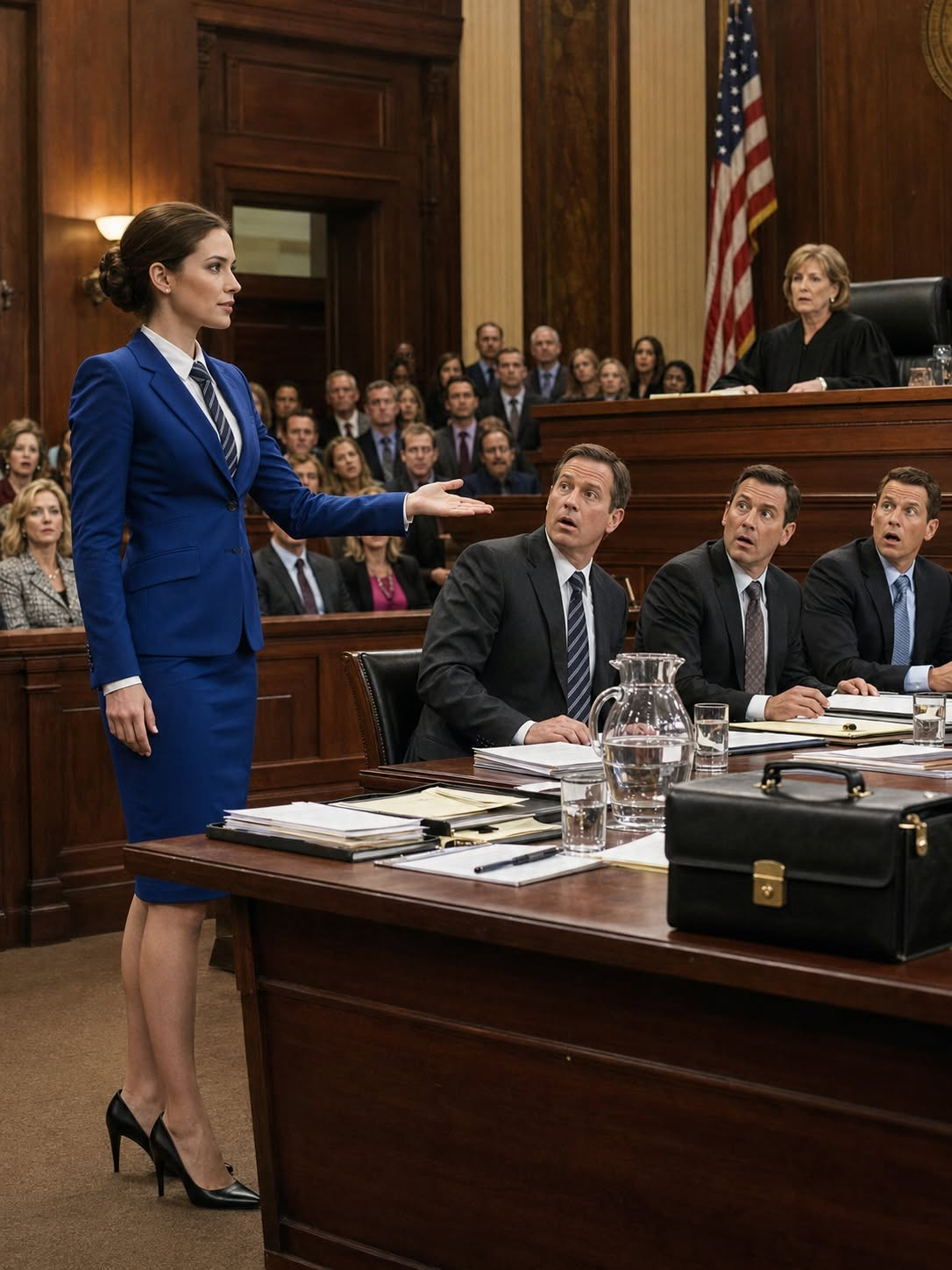
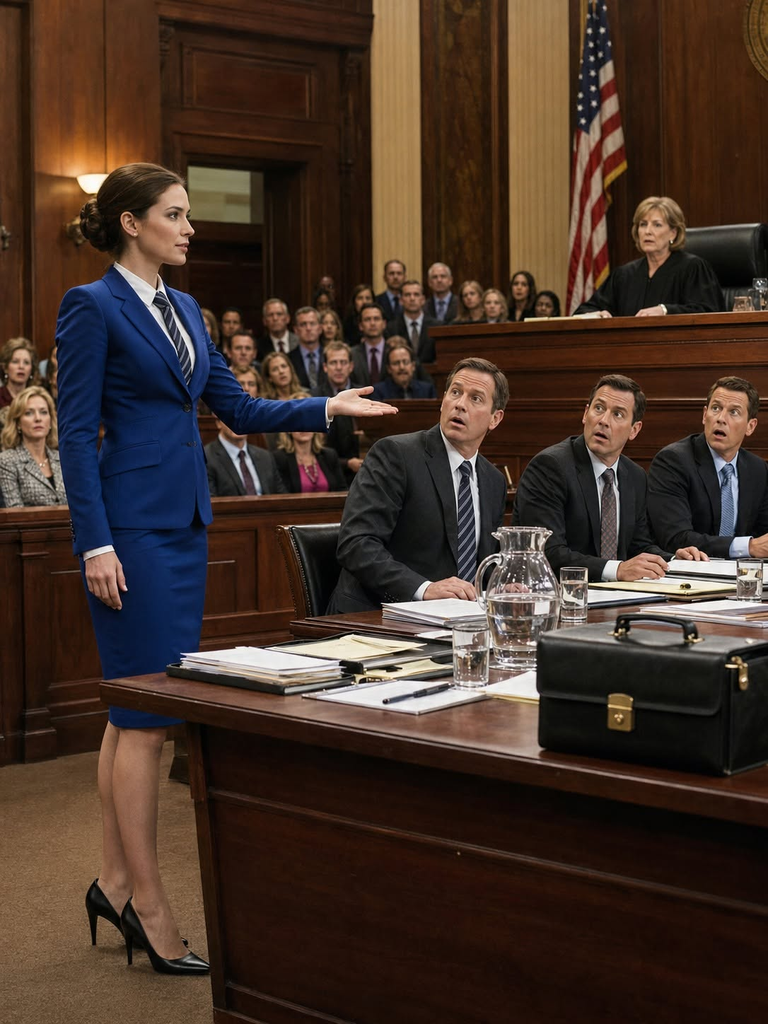
    Thirty days later, I walked into the Franklin County Courthouse. The architecture was imposing—vast expanses of gray slate, echoing marble corridors, and the sterile hum of metal detectors. I had been here before as an expert witness, a numbers mechanic hired to explain corporate malfeasance to bored juries.

    Today, I was the plaintiff. Today, the malfeasance was mine.

    Lauren was waiting outside Courtroom 4B, clad in a razor-sharp charcoal suit, clutching two massive, color-coded trial binders.

    “Heart rate?” she asked, assessing my calm demeanor.

    “Steady,” I replied, smoothing the skirt of my navy dress.

    “Good. Remember the protocol. Do not editorialize. Do not show anger. Answer only what is asked. Let the paper trail hang him.”

    We pushed through the heavy oak double doors. Ethan was already seated at the respondent’s table alongside his attorney, Mark Ellison. Ethan wore a bespoke suit I had purchased for our twentieth anniversary. It made me sick to look at it.

    Sitting directly behind him in the gallery was Rachel. The last thirty days had not been kind to her. The Cancun tan had faded to a sickly pallor, and dark, exhausted circles framed her eyes. The fantasy of a wealthy, stolen life had crashed into the brutal reality of frozen assets and cheap motels……………………………..

  • My Son Inherited a Five Million Dollar Penthouse While I Received an Old Farm With a Hidden Secret

    My Son Inherited a Five Million Dollar Penthouse While I Received an Old Farm With a Hidden Secret

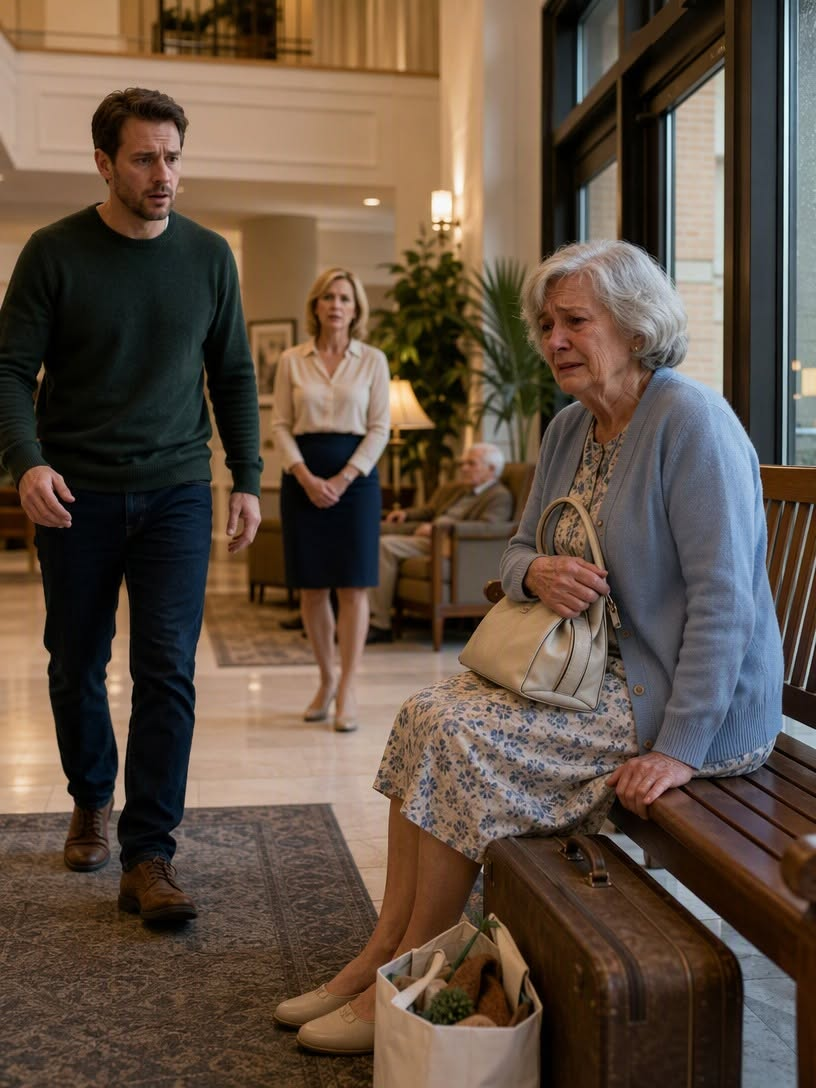
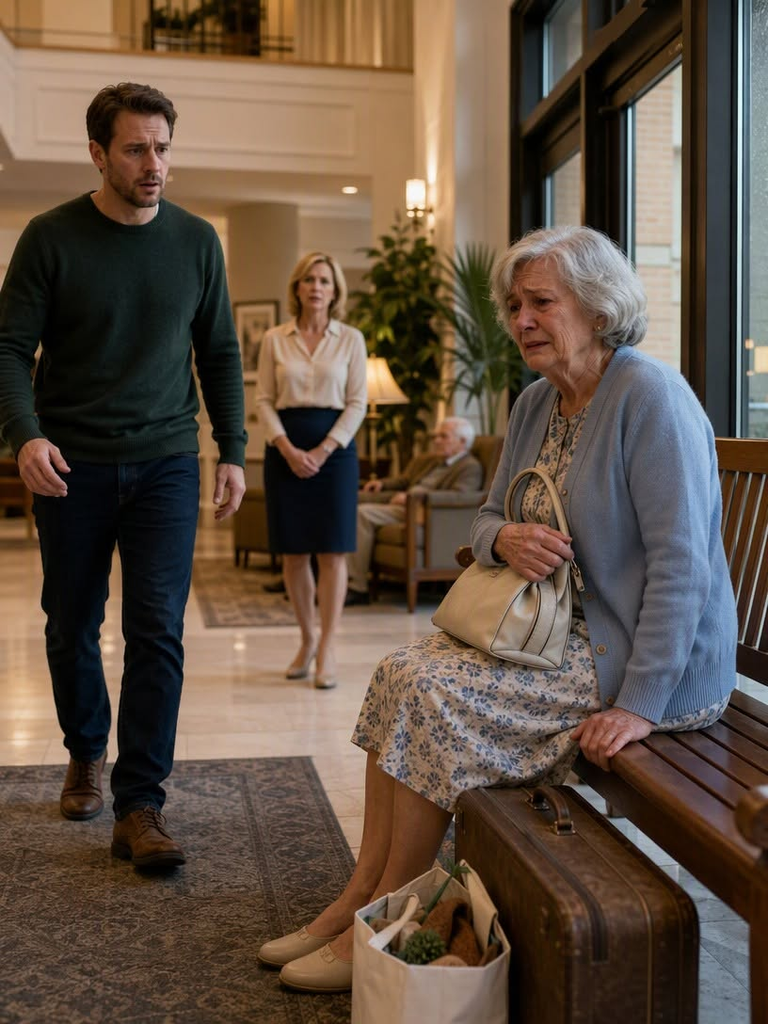
    I inherited an old farm from my late wife, while my son received a $5 million penthouse in Los Angeles. He treated it like the farm was all I needed and made it clear I couldn’t stay. So I drove there with one bag and no answers. When I opened the door, I finally understood why Jenny had sent me.

    Seven days after I buried my wife, a lawyer in Century City read her will and handed my son the keys to a five-million-dollar penthouse in Los Angeles. Then she turned to me, slid a rusted key across the mahogany table, and said my wife had left me an old farm two hours north that no one had mentioned in years.

    My son called it a burden before we even stood up. By the end of that week, he had contractors in the penthouse, fresh paint samples laid out, and a legal notice waiting in the guest room.

    I drove toward that farm with one duffel bag, a wedding photo, and no idea why Jenny wanted me there so badly.

    My wife always had a reason for everything she did.

    She was the kind of woman who could walk into a room full of men in expensive suits and walk out with the deal, the permits, and the best seat at the table. Jenny built her life the way some people build steel bridges—clean lines, no wasted effort, every piece carrying purpose.

    I was a history teacher.

    I liked chalk dust, red pens, yellow legal pads, and the steady rhythm of semesters. Jenny liked maps, contracts, hard hats, and open land. For forty years, we made that difference feel easy.

    Then she got sick.

    In her final months, she started taking quiet trips I didn’t understand. Meetings with her attorney behind closed doors. Requests for old documents. And she kept telling me, in that calm voice that made everything sound manageable,

    “If anything happens, trust the farm.”

    I used to smile and kiss her forehead.

    I thought she meant memory.

    I didn’t realize she meant survival.

    At the will reading, my son Marcus barely let the lawyer finish the first page before his posture changed. He sat straighter when she mentioned the penthouse. His wife touched his wrist and gave him a quick, satisfied smile—the kind people give when they think the future just opened for them.

    Then the lawyer said my name.

    “To Samuel Preston,” she read, “the property known as Preston Farm, including the farmhouse, outbuildings, and surrounding acreage.”

    Marcus blinked.

    “That’s it?”

    The lawyer adjusted her glasses.

    “There is also a sealed letter, to be opened on the property.”

    Marcus let out a short laugh.

    “A rundown farm and a mystery envelope. Mom really knew how to make a point.”

    I looked down at the key in my hand. Old iron. Cold. Heavy.

    “Your mother was very deliberate,” the lawyer said quietly.

    Marcus stood, grabbed his coat, and looked at me like I had somehow chosen this outcome myself.

    “Dad, don’t act surprised when you realize she left you a tax bill and a broken roof.”

    I should tell you something about my son.

    He wasn’t always like this.

    There was a time he ran barefoot through the yard with a plastic shovel, convinced every patch of dirt might hide treasure. A time he helped Jenny plant roses and came inside covered in mud, asking if roots could hear us talking.

    But money changes how people listen.

    And grief, mixed with entitlement, can turn a son into someone you barely recognize.

    Three days after the will reading, I woke in the penthouse to the sound of drills.

    Not one. Several.

    By the time I came downstairs, workers were carrying lighting fixtures through the foyer and covering the floors. Marcus stood in the living room with coffee in one hand and a clipboard in the other.

    “You didn’t say they were starting this early,” I said.

    “I have a schedule,” he replied without looking up.

    One worker pushed open the door to Jenny’s study. Her shelves were still full. Her notebooks still stacked beside the brass lamp. The framed map she loved was already being taken down.

    “Wait,” I said. “Those are her things.”

    Marcus finally looked at me.

    “Dad, the place needs updating.”

    “Your mother’s been gone one week.”

    He exhaled.

    “Jessica and I are moving forward.”

    That afternoon, I found the notice in the guest room.

    Twenty-two days.

    Not a conversation. Not a plan. A deadline.

    “I need the room cleared by the end of the month.”

    When I went downstairs, Marcus was scrolling on his phone.

    “You’re serious,” I said.

    He leaned back.

    “Dad, the farm is yours. Live there. Sell it. Lease it. I don’t care. But this place is part of my life now.”

    “This was our home.”

    “And now it isn’t.”

    That night, I packed in silence.

    A few shirts. A wedding photo wrapped in a towel. Jenny’s gray cardigan that still carried the faintest trace of her perfume.

    The next morning, while taking a box outside, I found something in the recycling bin.

    A glossy brochure.

    A private residential community near Bakersfield. Clean lawns. Perfect smiles.

    Behind it—a draft intake form.

    My name printed at the top.

    A move-in date already chosen.

    Before Jenny had even passed.

    I stood there holding it while the sunlight hit the driveway.

    Marcus hadn’t just planned for me to leave.

    He had planned where I would go.

    And Jenny… somehow… had known.

    I didn’t confront him.

    Not yet.

    I put the papers in the trunk, got in the car, and drove away.

    The city faded behind me.

    Glass towers turned into warehouses, then open roads, then fields stretching under a wide sky.

    By the time I reached the gravel drive, everything felt quieter. More real.

    The farm stood there waiting.

    Peeling paint. Crooked shutters. A leaning barn. Dry grass.

    Exactly the kind of place someone like Marcus would dismiss in seconds.

    I sat in the truck, listening to the engine tick as it cooled.

    Then I took Jenny’s cardigan from the seat.

    As I slipped it on, something crackled in the pocket.

    A note.

    Small. Folded. Her handwriting.

    Trust the farm. Check the barn after you go inside.

    That was all.

    No explanation.

    Just the same words she had spoken before.

    I stepped onto the porch.

    The boards creaked under my boots. The key felt heavier in my hand.

    I slid it into the lock.

    For a moment, I expected resistance. Dust. Decay. Disappointment.

    Instead, it turned smoothly.

    The door opened.

    And inside—

    A wooden table that looked deliberate.

    Two sealed envelopes.

    An old olive trunk.

    And on top, in Jenny’s handwriting, just three words:

    “FOR YOU FIRST.”

    And the moment I opened that first envelope…

    I knew this farm was never meant to be a burden.

    The first page contained only one sentence.

    Samuel, before you look inside the trunk, go to the barn.

    I almost laughed.

    Even after death, Jenny was still giving instructions in the precise order she wanted them followed.

    I folded the letter, slipped it into my pocket, and walked back outside.

    The afternoon sun had begun to sink behind the fields. Long shadows stretched across the dry grass, and the barn stood at the far end of the property like an abandoned ship.

    From the farmhouse, it had appeared ready to collapse.

    Up close, I noticed something strange.

    The siding was weathered, but the foundation was new.

    The hinges were rusted, but the lock had recently been oiled.

    A small black camera was mounted beneath the roofline.

    Jenny had wanted the place to look forgotten.

    But it was not.

    The same iron key opened the barn door.

    When I pulled it toward me, lights flickered on automatically.

    I stopped in the doorway.

    There was no rotting hay inside.

    No broken equipment.

    No animals.

    The entire interior had been rebuilt.

    Polished concrete covered the floor. Steel beams reinforced the roof. Along one wall stood filing cabinets, shelves of binders, rolled construction plans, and several computer monitors.

    A large wooden desk sat beneath the loft.

    Beside it was a leather chair I recognized immediately.

    It had once stood in Jenny’s office in downtown Los Angeles.

    A framed photograph rested on the desk.

    Jenny and me on our twentieth anniversary.

    We were standing near the ocean, wind pushing her hair across her face while she laughed at something I could no longer remember.

    Under the photograph was another envelope.

    SIT DOWN BEFORE YOU OPEN THIS.

    “That serious?” I whispered.

    My voice echoed through the barn.

    I lowered myself into her chair and opened the envelope.

    This letter was longer.

    Much longer.

    Jenny had written it by hand.

    My dearest Samuel,

    If you are reading this, then Marcus has done exactly what I feared he would do.

    I hope I was wrong.

    I hope he gave you time to grieve.

    I hope he treated our home as your home.

    I hope he remembered that you were his father before you became an obstacle to whatever future he imagined for himself.

    But I stopped building plans around hope many years ago.

    Six months before her death, Jenny had discovered that Marcus and Jessica were researching senior communities.

    Not for themselves.

    For me.

    Marcus had contacted two facilities and requested information about transferring an older parent without that parent’s direct involvement.

    He had also asked one of Jenny’s assistants for copies of our property records, medical documents, and financial statements.

    When the assistant refused, Marcus told her that Jenny had given him permission.

    She had not.

    Jenny confronted him privately.

    According to the letter, Marcus claimed he was preparing for “every possibility.”

    He told her that if she died first, I would not be capable of managing the penthouse alone.

    He said the apartment was too valuable to be wasted on an aging retired teacher.

    I lowered the letter.

    For several moments, I could hear nothing except the faint hum of the lights.

    Marcus had made those plans while Jenny was still alive.

    While I was driving her to medical appointments.

    While I was helping her into bed.

    While I was sitting beside her at night, pretending not to notice when her breathing changed.

    I forced myself to continue reading.

    I did not tell you, Jenny had written, because I knew what it would do to you. You loved the boy he had been. Part of you still believed that boy would return if you waited long enough.

    Then came the line that broke something inside me.

    I could not control what kind of son Marcus chose to become. I could only make certain his choices did not destroy you.

    I covered my mouth with one hand.

    Jenny had known.

    She had known I would be standing there alone.

    She had imagined me reading those words in the chair where she had once worked.

    And she had built an answer before I even understood there was a problem.

    The farm was not a forgotten piece of land.

    It consisted of four hundred and eighty acres.

    Jenny had quietly purchased neighboring parcels over a period of twenty-three years, using several holding companies to prevent developers from learning what she was assembling.

    The property included agricultural water rights that were older than most of the surrounding towns.

    A renewable-energy company had signed a thirty-year lease for part of the land.

    The remaining acreage had been approved for a research and education facility.

    There was also a private trust.

    The trust contained enough money to maintain the property, pay its taxes, restore the farmhouse, and provide me with an income for the rest of my life.

    At the bottom of the second page, Jenny had written a number.

    I read it three times.

    The estimated value of the land, water rights, lease, and trust was more than eighteen million dollars.

    The penthouse Marcus had received was worth five.

    The farm was worth more than three times as much.

    But even that was not the real reason Jenny had left it to me.

    I continued reading.

    You spent forty years teaching history, Samuel. You preserved other people’s stories while never believing your own life was important enough to preserve.

    I bought this farm because of you.

    Years ago, you told me that children learn history differently when they can stand where something happened, touch an old tool, open a real document, and understand that the past belonged to ordinary people.

    I remembered the conversation.

    We had been driving through Northern California after attending a wedding.

    I had pointed toward an abandoned schoolhouse and told Jenny it should have been restored as a place where students could learn about the farming families who had built the region.

    It had been a passing comment.

    At least, I had believed it was.

    Jenny had remembered it for twenty-seven years.

    The barn contained architectural plans for the Preston Rural History Center.

    There would be classrooms, an archive, a small museum, and workshops where students from city schools could learn about agriculture, migration, local industries, and the people whose labor rarely appeared in textbooks.

    The farmhouse would remain my private home.

    The center would be funded by income from the energy lease.

    Jenny had already created the nonprofit organization.

    She had already hired an administrator.

    She had already contacted school districts.

    She had already done everything except tell me.

    I looked toward the shelves.

    Boxes were labeled by year and county.

    Some contained donated journals.

    Others held photographs, family records, farming equipment catalogs, maps, and oral-history transcripts.

    My wife had not left me a place to disappear.

    She had left me somewhere to become useful again.

    At the end of the letter, Jenny wrote:

    The penthouse was the most beautiful object Marcus could see.

    The farm was the most valuable future he refused to look at.

    I gave him what he believed mattered.

    I gave you what I knew mattered.

    Do not feel guilty.

    Do not sell the property because he demands it.

    Do not surrender your future to prove that you are a loving father.

    Love is not measured by how much mistreatment you are willing to accept.

    There is a video on the computer.

    Watch it when you are ready.

    Always yours,

    Jenny

    I remained in her chair until the barn windows turned dark.

    Then I switched on the computer.

    There was only one file on the screen.

    FOR SAMUEL.

    Jenny appeared when I opened it.

    She was sitting in the same chair, wearing the gray cardigan I had carried from Los Angeles.

    Her face was thinner than I remembered.

    Her eyes were tired.

    But her voice was steady.

    “Hello, Sam.”

    I reached toward the screen before I could stop myself.

    Jenny smiled.

    “I know you hate recorded messages. You always say people behave unnaturally when a camera is pointed at them, so I will try not to behave unnaturally.”

    A laugh escaped me.

    It came out broken and wet.

    She leaned slightly closer to the camera.

    “I need you to understand that this is not revenge against Marcus. I love our son. I always will. But protecting someone from the consequences of his character does not improve his character.”

    She paused to catch her breath.

    “He may come to the farm when he learns what it is worth. When he does, listen carefully to the first question he asks.”

    Behind the screen, I could hear the faint sound of papers being moved.

    “If his first question is whether you are safe, whether you are well, or whether you need him, then perhaps the boy we raised is still inside him.”

    Her expression changed.

    “If his first question is about the money, believe the man standing in front of you.”

    Jenny looked down for a moment.

    When she raised her eyes again, they were shining.

    “I am sorry I will not be there to see what you build. But I know you, Samuel. You think your life became smaller when you retired. It did not. You were simply waiting for a new classroom.”

    The video ended with her pressing her fingers to her lips.

    Then the screen went black.

    I sat alone in the barn and cried harder than I had at the funeral.

    At the funeral, people had been watching me.

    They had touched my shoulder, handed me tissues, and told me I needed to remain strong.

    In the barn, there was no one to remain strong for.

    I cried for the woman I had lost.

    For the son I no longer understood.

    For the years Jenny had spent preparing a future she would never share.

    And for the terrible comfort of realizing that even while she was dying, she had been protecting me.

    A truck arrived the following morning.

    The driver was a broad-shouldered man in his late fifties with silver hair and a sun-darkened face.

    He introduced himself as Daniel Ruiz.

    “I managed the neighboring property for thirty years,” he said. “Your wife hired me eighteen months ago.”

    He looked toward the farmhouse.

    “She said you might arrive without knowing anything.”

    “That sounds like Jenny.”

    Daniel smiled.

    “Yes, sir. It does.”

    He showed me the property.

    The dry fields near the road had been left untouched intentionally, preserving the appearance of an abandoned farm.

    Farther north, rows of young olive trees stretched across a gentle slope.

    New irrigation lines had been installed beneath the soil.

    Survey markers identified the section leased for solar development.

    A restored schoolhouse stood beyond a line of eucalyptus trees.

    Jenny had purchased it from the county and moved it onto the property board by board.

    Inside were twelve wooden desks, a chalkboard, and a teacher’s table.

    On the table rested a fresh box of white chalk.

    I picked up one piece.

    My fingers remembered its weight.

    “She chose everything herself,” Daniel said from the doorway.

    I looked at the desks.

    “How many people know about this place?”

    “More than you think. She met with teachers, historians, archivists, engineers, and local families. She made us promise not to contact you until you arrived.”

    “Why keep it secret?”

    Daniel hesitated.

    “She said someone in the family would try to stop her.”

    I did not need to ask who.

    During my first week at the farm, I barely slept.

    I read every file.

    I walked every path.

    I learned that Jenny had visited the property at least twice each month during the final year of her life.

    Some of those trips had occurred on days when she claimed to be meeting her attorney.

    Others had happened after chemotherapy appointments.

    There were photographs of her standing inside the unfinished barn wearing a hard hat and holding construction plans.

    In one, she was smiling beside the schoolhouse.

    She looked exhausted.

    She also looked completely alive.

    The farmhouse was structurally sound.

    The roof had been replaced.

    The electrical system was new.

    The plumbing had been repaired.

    Only the exterior remained neglected, exactly as Jenny had intended.

    On my sixth night, I slept in the bedroom overlooking the fields.

    At dawn, sunlight entered through the curtains and fell across Jenny’s cardigan draped over the chair.

    For the first time since her death, I woke without immediately feeling that I was falling.

    Then Marcus called.

    I watched his name flash across the phone.

    It was the first time he had contacted me since I left Los Angeles.

    “Dad,” he said when I answered. “Where are you?”

    “At the farm.”

    There was a short silence.

    “What exactly did Mom leave you?”

    Jenny’s voice returned to me.

    Listen carefully to the first question he asks.

    Not Are you safe?

    Not How are you managing?

    Not Do you need anything?

    What exactly did Mom leave you?

    I closed my eyes.

    “Why are you asking?”

    “Jessica found some records online. There’s an energy lease attached to the property. And something about water rights.”

    “So?”

    “So you told us it was an old farm.”

    “I did not tell you anything. You decided what it was before I saw it.”

    His voice sharpened.

    “What is it worth?”

    There it was.

    The question Jenny had predicted.

    I looked through the kitchen window toward the barn.

    “Come and see it,” I said.

    Marcus arrived the next afternoon in a black car polished so perfectly that the surrounding fields reflected across its doors.

    Jessica did not come.

    Marcus stepped out wearing sunglasses and shoes entirely unsuitable for gravel.

    He stared at the farmhouse.

    Then at the barn.

    Then at the rows of olive trees in the distance.

    His expression tightened.

    “You have been renovating.”

    “Your mother renovated most of it.”

    He removed his sunglasses.

    “She knew about this?”

    “She created it.”

    I led him into the barn.

    The moment he saw the monitors, documents, and development maps, his pace changed.

    He walked more quickly.

    His eyes moved across the room the same way they had moved around the attorney’s office when the penthouse was announced.

    “What is the lease paying?” he asked.

    I did not answer.

    He opened one of the binders without permission.

    “Thirty years?”

    “Put that down.”

    He ignored me.

    “This land could be worth twenty million dollars in ten years.”

    “Put the binder down, Marcus.”

    He dropped it onto the desk.

    “You knew.”

    “I discovered it when I arrived.”

    “And you did not call me?”

    “You had given me twenty-two days to leave my own home.”

    “The apartment belongs to me now.”

    “And this farm belongs to me.”

    His mouth tightened.

    “That is different.”

    “How?”

    “Because Mom clearly did not understand the value of what she was doing.”

    I stared at him.

    “Your mother assembled this property over twenty-three years. She negotiated the water rights. She created the trust. She designed the center. She understood every dollar.”

    Marcus turned toward the architectural plans.

    “What center?”

    I showed him.

    He looked through the drawings without admiration.

    Without curiosity.

    Without once mentioning the mother who had designed them while dying.

    “This is ridiculous,” he said. “You cannot manage something like this.”

    “Daniel manages the property. The nonprofit has an administrator. I will oversee the historical program.”

    “You’re a retired schoolteacher.”

    “Yes.”

    “You have no experience handling land worth this much.”

    “Your mother believed I did.”

    “She was sick.”

    The words settled between us.

    I felt anger rise, but it was not loud.

    It was colder than that.

    “Do not use her illness to explain a decision you do not like.”

    Marcus began walking across the barn.

    “You should sell before you make a mistake. We can divide the proceeds. I’ll arrange everything.”

    “We?”

    “I am your son.”

    “You remembered that quickly.”

    He stopped.

    “I am trying to protect you.”

    I walked to the desk, opened my bag, and removed the senior-community brochure.

    Then I placed the incomplete admission form beside it.

    Marcus’s face changed.

    Not much.

    But enough.

    “Where did you find that?”

    “In the recycling bin.”

    He stared at the form.

    “That was only an option.”

    “My move-in date had already been selected.”

    “Jessica was researching facilities.”

    “My name was typed on the paperwork.”

    “You were going to need somewhere appropriate to live.”

    “I had somewhere to live.”

    “The penthouse was too large for you.”

    “It was not too large when your mother was alive.”

    He rubbed a hand across his forehead.

    “You are making this sound worse than it was.”

    “You planned to remove me before she died.”

    “We did not know how long she had left.”

    The moment he said it, regret crossed his face.

    But the words could not be pulled back.

    I studied the man standing in front of me.

    For weeks, I had searched for the child who once asked whether roots could hear people speaking.

    I had tried to find him behind Marcus’s anger, entitlement, and expensive clothes.

    But Jenny had warned me not to confuse memory with evidence.

    I opened the olive-colored trunk.

    Inside were the original property deeds, trust documents, family records, and one final envelope.

    Marcus’s name was written across it.

    His eyes fixed on the handwriting.

    “That’s for me.”

    “Yes.”

    “Give it to me.”

    I held the envelope but did not release it.

    “Your mother left instructions.”

    “What instructions?”

    “She told me to listen to the first question you asked when you came here.”

    He looked away.

    “What does that have to do with the letter?”

    “Everything.”

    I handed it to him.

    Despite all that had happened, he was still our son.

    Jenny had written those words for him.

    Keeping them would not change his character.

    Marcus tore open the envelope.

    He read silently.

    At first, his expression remained hard.

    Then his shoulders lowered.

    He reached the second page and sat down in Jenny’s chair without asking.

    I moved toward the barn door and waited.

    After several minutes, he spoke.

    “She knew about the facilities.”

    “Yes.”

    “She knew I talked to them.”

    “Yes.”

    “Why didn’t she confront me?”

    “She did.”

    “She asked why I was requesting financial records. She never mentioned the forms.”

    “She wanted to see whether you would tell her yourself.”

    Marcus looked down at the letter.

    “What did she say to you?”

    “Nothing until after she was gone.”

    He continued reading.

    I never saw every word Jenny wrote to him.

    He never showed me the letter.

    But I saw the moment one sentence reached him.

    His face collapsed for less than a second.

    Then he folded the pages and stood.

    “She made me look like a monster.”

    “No, Marcus.”

    I remained near the door.

    “She gave you privacy while you showed her who you were.”

    “You think you’re better than me now because you got the larger inheritance?”

    “This is not about who received more.”

    “It is always about money when there is this much money.”

    “That may be true for you.”

    He stepped closer.

    “You would never have any of this without her.”

    “Neither would you.”

    “At least I know how to use what she built.”

    “You began tearing apart her study seven days after she died.”

    “The penthouse needed work.”

    “You threw away her notebooks.”

    “They were papers.”

    “They were hers.”

    Marcus flinched.

    I realized then that he had not considered the notebooks valuable because no appraiser had placed a number beside them.

    That was the difference Jenny had understood.

    He knew the price of every visible object.

    He did not understand the value of what could not be purchased again.

    “I will not sell the farm,” I said. “I will not divide it. I will not use it to pay for renovations, investments, or the life you believe you deserve.”

    “So that is it?”

    “That is it financially.”

    He gave a bitter laugh.

    “Financially?”

    “You are my son. When you are ready to have a relationship that does not begin with the value of my property, you know where I live.”

    Marcus placed Jenny’s letter inside his coat.

    Then he walked out.

    His car sent a cloud of dust across the driveway as he left.

    I did not chase him.

    That was the first boundary I had ever allowed to remain standing between us.

    Three months later, the Preston Rural History Center welcomed its first group of students.

    They came from a middle school in Los Angeles.

    Most had never visited a working farm.

    They stepped off the bus staring at the open fields as though they had arrived in another country.

    I showed them the schoolhouse.

    We examined handwritten letters from farming families, old county maps, newspaper pages, and photographs of laborers who had traveled west with almost nothing.

    One boy asked why ordinary people kept journals if they were not famous.

    “Because they did not know they were ordinary,” I told him. “They were simply living their lives. History decided later that their lives mattered.”

    As I spoke, I understood that Jenny had known exactly what she was giving me.

    Not land.

    Not money.

    Continuity.

    A reason to wake early.

    A reason to read, prepare, explain, and listen.

    A place where grief could become something other than an empty room.

    The penthouse was listed for sale before the end of the year.

    Marcus had borrowed heavily against it to finance renovations and a business investment.

    The investment failed.

    The contractors filed claims for unpaid work.

    Jessica moved into a hotel and eventually filed for divorce.

    I learned most of this from the attorney.

    I did not celebrate.

    There is no pleasure in watching your child discover that consequences are real.

    But I did not rescue him either.

    When Marcus called asking for a loan, I said no.

    When he asked me to sell ten acres, I said no.

    When he accused me of choosing dead strangers and schoolchildren over my own family, I ended the call.

    For most of the following year, we did not speak.

    Then, one rainy morning in March, I found him standing on the farmhouse porch.

    There was no polished car in the driveway.

    No expensive coat.

    No folder of financial documents.

    He held a cardboard box against his chest.

    For a moment, neither of us spoke.

    “I found these in storage,” he said.

    He placed the box on the porch table.

    Inside were Jenny’s notebooks.

    Her construction journals.

    Several framed photographs.

    The brass reading lamp from her study.

    And the old map that had been removed from the penthouse wall.

    “I thought the workers threw them away,” I said.

    “I told them to put everything in storage.”

    “Why?”

    He looked toward the fields.

    “I don’t know.”

    I waited.

    He took a slow breath.

    “Maybe part of me knew I would regret it.”

    Rain struck the porch roof.

    Marcus looked older than he had a year earlier.

    Not physically.

    There was simply less certainty in his face.

    “I sold the apartment,” he said.

    “I heard.”

    “After the loans, fees, and everything else, there was not much left.”

    “I’m sorry.”

    He looked surprised.

    “I expected you to say Mom warned me.”

    “She did.”

    A tired smile passed across his face.

    “Yes. She did.”

    He removed Jenny’s letter from his coat.

    The paper had been folded and unfolded so many times that the creases were beginning to tear.

    “I have read this every week.”

    I said nothing.

    “She wrote that you gave me every good thing you knew how to give. She said you taught me patience, loyalty, and kindness, but I began treating those qualities as weaknesses because the world rewarded me for being harder.”

    His voice became unsteady.

    “She said the worst thing I could inherit from her was wealth without responsibility.”

    He looked at me.

    “I proved her right.”

    An apology can be another form of manipulation when it arrives beside a request.

    So I waited for the request.

    It never came.

    Marcus did not ask about the trust.

    He did not ask about the energy lease.

    He did not ask what the land was worth now.

    He looked through the farmhouse doorway and said, “Are you all right here?”

    The question came almost a year too late.

    But it came.

    “Yes,” I said. “I am.”

    He nodded.

    “I should have asked that first.”

    “Yes.”

    “I should have let you stay.”

    “Yes.”

    “I should not have treated Mom’s death like a transfer of property.”

    “No.”

    His eyes filled.

    “I don’t know how to repair this.”

    “You do not repair forty years in one conversation.”

    “What do I do?”

    “You begin with today.”

    I carried the box inside.

    Marcus followed.

    I made coffee.

    We sat at the kitchen table where Jenny had placed the envelopes on the day she prepared the house for my arrival.

    I did not forgive him completely that morning.

    Real forgiveness is not a door someone opens once.

    It is a road built slowly, with evidence.

    Marcus began returning to the farm.

    At first, he came once every few weeks.

    Then every Saturday.

    He repaired fences with Daniel.

    He cataloged Jenny’s notebooks.

    He helped move boxes into the archive.

    When visitors asked whether the property belonged to him, he always gave the same answer.

    “It belongs to my father.”

    One afternoon, I found him replacing the uneven shutters on the farmhouse.

    Jenny had left them crooked as part of the disguise.

    Now the farm no longer needed to pretend it was worthless.

    Neither did I.

    Two years after Jenny’s death, we dedicated the completed education building in her name.

    A bronze plaque near the entrance read:

    THE JENNY PRESTON CENTER FOR LIVING HISTORY

    Every life leaves evidence. Every story deserves a witness.

    Teachers, neighbors, former colleagues, and local families filled the courtyard.

    Marcus stood in the back rather than beside the ribbon.

    He had not asked to speak.

    He had not asked for recognition.

    After the ceremony, a little boy wandered toward an exhibit of old farming tools.

    He picked up a small plastic shovel used for the children’s archaeology program.

    Then he looked at Marcus.

    “Do you think there’s treasure buried here?”

    Marcus froze.

    I remembered him at six years old, barefoot in our yard, asking the same question.

    He looked toward me.

    For one brief moment, I saw the child he had been.

    Then he crouched beside the boy.

    “Sometimes,” Marcus said. “But it usually doesn’t look valuable until you understand what it is.”

    The boy ran toward the garden with his shovel.

    Marcus remained where he was.

    “I think Mom would have liked today,” he said.

    “She planned it.”

    “I know.”

    We stood together beneath the enormous open sky.

    The farmhouse no longer had peeling paint.

    The shutters were straight.

    The barn doors had been restored, though I had insisted that the original iron lock remain.

    I still carried Jenny’s key in my pocket.

    Not because I needed it.

    The locks had been modernized months earlier.

    I carried it because it reminded me of the moment my old life ended and another one opened.

    Marcus had believed the farm was all Jenny had left me.

    He had been wrong.

    She had left me security.

    Purpose.

    A final lesson about love.

    And the strength to understand that being a father did not require me to surrender my dignity.

    The farm had not saved me because it was worth eighteen million dollars.

    It saved me because Jenny had built a place where no one could decide I was no longer welcome.

    A place where my past remained mine.

    A place where my future had been waiting behind an old rusted key.

    And every morning, when the first sunlight crossed the fields and touched the schoolhouse windows, I could almost hear Jenny telling me the same thing she had tried to explain from the beginning.

  • At 2 AM, my husband secretly packed his luggage and slipped out of our bedroom like a thief. Thirty minutes later, he sent me a photo of himself and his mistress at the airport

    At 2 AM, my husband secretly packed his luggage and slipped out of our bedroom like a thief. Thirty minutes later, he sent me a photo of himself and his mistress at the airport

    At 2 AM, my husband quietly packed his bags and crept out of our bedroom like a burglar. Half an hour later, he sent me a photo of himself with his mistress at the airport, grinning beneath the message, “Goodbye, useless woman! I’ve stripped you of all your assets!” I simply laughed.

    At exactly 2:00 a.m., the sound of a suitcase zipper cut through the darkness like a blade leaving its sheath.

    I remained motionless on my side of the bed, my eyes barely open, listening as my husband, Victor Langley, hurried carefully around our walk-in closet like a nervous thief. He believed the sleeping pills he had ground into my tea had taken effect.

    They had not.

    I had exchanged our cups.

    For the next twenty minutes, I observed him in the reflection of the darkened window. Expensive shirts. His passport. Bundles of cash. The blue velvet case holding his cufflinks. He packed everything except his shame.

    At 2:18 a.m., he approached the bed and looked down at me.

    “Poor Claire,” he murmured. “You never even saw it coming.”

    I kept my breaths deep and even.

    He bent closer, bringing with him the scent of his costly cologne—the one his mistress had purchased for him, according to the receipt I had found inside his coat three weeks earlier.

    Then he left.

    I did not move until I heard his car disappear from the driveway.

    My phone glowed at 2:37 a.m.

    A photograph appeared.

    Victor was standing inside Boston Logan Airport with Olivia Marsh, his twenty-nine-year-old mistress, wrapped against his chest. She had sunglasses on despite being indoors, and my diamond tennis bracelet circled her wrist.

    Underneath the image was a message:

    “Goodbye, useless woman! I’ve stripped you of all your assets!”

    I read it.

    Then I laughed.

    Not because it caused no pain. It did. Eleven years of marriage can still wound you, even when you already know the blade is coming.

    I laughed because Victor had always confused quietness with helplessness.

    He assumed the house belonged to him because his name was printed on the mailbox. He believed the business accounts were his because I allowed him to occupy the largest chair during dinners with investors. He considered me useless because I always let him speak before I did.

    What he did not realize was that six months earlier, after uncovering his affair, falsified signatures, secret debts, and the shell corporation registered under Olivia’s brother’s name, I had stopped acting like a wife and started gathering evidence.

    Every financial statement. Every email exchange. Every hotel bill. Every intoxicated voice recording in which he boasted about “emptying Claire out before the divorce.” By 10:00 p.m. the night before, all of it had reached my lawyer, forensic accountant, and the FBI’s financial crimes division.

    At 2:45 a.m., I sent a single response.

    “Enjoy the airport.”

    Victor called at 3:06 a.m.

    I ignored it.

    Olivia tried at 3:09.

    Smiling, I emptied his drugged tea into the sink and watched December’s first snowfall cover the front yard.

    By morning, Victor would discover that the passport he carried had become useless, the accounts he had raided were locked, and the woman he dismissed as worthless had already authorized the warrant that would bring him down.

    Part 2
    The first call arrived at 6:12 a.m. from Detective Marcus Reed.

    “Mrs. Langley,” he said, his voice calm and professional, “your husband attempted to board Flight 418 to Zurich with Ms. Olivia Marsh. Homeland Security flagged both passports before boarding. They are currently being held for questioning.”

    Wearing my robe, I stood in the kitchen and watched coffee fall slowly into the machine Victor had once declared “too cheap” for people of our status.

    “Did he say anything?” I asked.

    Detective Reed paused. In the background, I heard muted airport announcements, suitcase wheels, and travelers continuing toward lives that still belonged to them.

    “He claimed you were emotionally unstable,” Detective Reed said. “Then he said you had given him full authority over all marital and business assets.”

    I gave a quiet laugh. “Of course he did.”

    “We also found one hundred and eighty thousand dollars in cash inside Ms. Marsh’s carry-on. Along with several certified checks made out from accounts linked to Langley Medical Logistics.”

    Even then, the company’s name felt wrong in my mouth.

    Langley Medical Logistics had begun inside my father’s Ohio garage, years before Victor understood anything about freight regulations. My father, Harold Whitaker, had developed partnerships with hospitals throughout the Midwest. I later expanded operations along the East Coast. Victor entered the business only after we married, bringing charisma, self-assurance, and almost no practical knowledge.

    As the years passed, I allowed others to believe he was the company’s driving force. It simplified things. Investors responded to his grand speeches. Clients trusted my quiet competence. Privately, I repaired his calculations, corrected his failures, and rescued contracts he nearly destroyed.

    Then Olivia entered the picture.

    Her beauty was not the real problem. Her ambition was wild and careless. She repeatedly told Victor he deserved more. To her, I was plain and dull, “a spreadsheet in human form.” I had seen the phrase in one of their conversations.

    But spreadsheets retain every detail.

    At 8:00 a.m., my attorney, Diane Caldwell, came to the house with two associates and a closed folder.

    “You look rested,” she said, pulling off her gloves.

    “I slept before the storm.”

    Diane smiled. “Good. Because Victor’s attorney is already demanding an emergency hearing. He claims you froze the accounts out of revenge.”

    I accepted the folder. “Can he prove legal access?”

    “No. That is the beautiful part. The company restructuring you approved last month placed operational control under the Whitaker Family Trust. Victor signed it himself.”

    “He thought it was tax planning,” I said.

    “He never read page seven.”

    Victor rarely read anything longer than a restaurant menu.

    By midday, our board members had heard about the situation. Three contacted me privately. One offered an apology. Another acted as though he had suspected Victor’s instability for years. Arthur Bell, the third, wanted to know whether quarterly deliveries would suffer.

    “No,” I told him. “The company will run better by Monday.”

    At 2:30 p.m., I listened to Victor’s first recorded message.

    “Claire, listen to me. This is a misunderstanding. Olivia panicked. I didn’t mean that message. You know how I get when I’m angry. Call Diane off. We can fix this.”

    His second voicemail was more aggressive.

    “You think you’re clever? You think paperwork makes you powerful? I made you relevant!”

    Olivia left the third.

    “Claire, please. Victor told me you two were separated. I didn’t know about the money. I didn’t know any of this was illegal.”

    I played it a second time.

    Not because I trusted her explanation.

    I listened because the trembling in her voice sounded exactly like mine had five months earlier, when I stood alone in the bathroom reading her messages on Victor’s phone and understood that my marriage had not shattered in one dramatic moment. It had been quietly taken apart while I struggled to preserve the life we had built.

    That evening, Diane and I faced Victor across a conference table inside the federal building.

    Without his custom-tailored coat, he seemed diminished.

    His gaze fixed on me. “Claire,” he said, softening his voice, “baby, please.”

    I placed my hands together on the table.

    “You called me useless at 2:37 this morning.”

    Beside her public defender, Olivia lowered her eyes.

    Victor swallowed hard. “I was angry.”

    “No,” I said. “You were honest. That was your mistake.”

    Diane unsealed the folder and pushed a document toward him.

    The color vanished from Victor’s face as he read the opening page.

    It was not a petition for divorce.

    It was a civil action accusing him of fraud, violation of fiduciary obligations, conversion of corporate money, identity theft, and conspiracy.

    I rose from my chair.

    “Enjoy the hearing, Victor.”

    His hands tightened around the table’s edge. “Claire, you can’t destroy me.”

    I studied the man I had once loved, the man who had interpreted my patience as permanent permission.

    “I’m not destroying you,” I said. “I’m returning everything you built.”

    PART 3
    Two days later, the emergency hearing was held at Suffolk County Superior Court.

    Victor entered wearing a navy suit that had been poorly pressed. I took more satisfaction in that than I should have. For years, I had managed all the unseen details that created his polished appearance: the dry cleaning, restaurant bookings, charity lists, presents for clients’ spouses, revised speeches, and carefully worded apologies. Without my help, he resembled a man who had thrown on clothes in a rush and mistaken it for a plan.

    Olivia sat in the row behind him, without jewelry. My diamond bracelet had already been photographed, entered into evidence, and delivered to Diane’s office for protection.

    Judge Evelyn Ross entered at 9:05 a.m. and immediately made it clear she had little tolerance for delays.

    Victor’s lawyer, a sharp-featured attorney named Peter Nolan, rose first.

    “Your Honor, my client has been locked out of personal and professional accounts by his wife in an act of emotional retaliation. Mr. Langley has been a senior executive of Langley Medical Logistics for nearly eight years. He has a right to access funds necessary for his living expenses and legal defense.”

    Judge Ross peered over the top of her glasses. “Was Mr. Langley attempting international travel when these accounts were frozen?”

    Nolan paused. “He had planned a short business trip.”

    Diane stood with deliberate calm. “With his mistress, Your Honor. One-way tickets to Zurich. Purchased under aliases. Carrying one hundred and eighty thousand dollars in cash and certified checks drawn from company accounts he was not authorized to access.”

    A subtle movement passed through the courtroom. Even the court clerk raised his head.

    Nolan’s jaw hardened. “Those allegations are under investigation.”

    “They are documented,” Diane replied.

    She displayed the first piece of evidence on the screen.

    One transfer record.

    Then another.

    Then a series of emails exchanged by Victor and Olivia’s brother, Grant Marsh, explaining how money should be moved through a consulting firm with no staff, no physical location, and no genuine clients.

    Victor kept his eyes fixed ahead.

    I focused on his hands. His right thumb repeatedly brushed his wedding band, which remained on his finger. Perhaps he believed it made him appear more sympathetic. Perhaps habit had outlasted his guilt.

    Diane then projected the airport message he had sent me.

    “Goodbye, useless woman! I’ve stripped you of all your assets!”

    The sentence appeared in stark black lettering across the screen.

    Sometimes a room suddenly feels colder even though the temperature has not changed. This was one of those moments.

    Judge Ross examined the message two times.

    “Mr. Nolan,” she said, “does your client dispute sending this?”

    Nolan turned toward Victor.

    Victor stared down at the table.

    “No, Your Honor,” Nolan said.

    Diane went on. “Mrs. Langley did not freeze accounts in retaliation. The Whitaker Family Trust, majority owner of Langley Medical Logistics, initiated emergency protective action after forensic accountants identified unauthorized transfers totaling 2.6 million dollars over a period of nine months.”

  • At Christmas dinner, my sister-in-law ins:ulted my wife until the argument exploded. Then my mother sl:apped my wife across the face and said, “You’ll always be trailer trash. Take your daughter and get out.”

    Part 1

    During  Christmas dinner, my wife and sister-in-law got into a fight over something that should have ended back in the kitchen with the burned green bean casserole.

    Christmasdinner catering

    My sister-in-law, Vanessa, had a talent for cutting people down without ever sounding angry. She was thirty-eight, elegant, married to a dentist, and seemed to resent anyone who proved that wealth had nothing to do with kindness. My wife, Emily, had spent six years acting like Vanessa’s constant little digs never bothered her.

    “You always make everything so dramatic,” Vanessa said, slowly swirling her wine. “Some of us didn’t grow up learning how to survive on coupons and resentment.”

    The dining room fell completely quiet.

    Emily’s expression shifted first. Not to anger, but to pure exhaustion.

    “Say what you mean, Vanessa,” she said.

    My mother, Margaret, placed her fork on the table. “Emily, don’t start.”

    Pregnancy& Maternity

    “I didn’t start this,” Emily answered. “But I’m finished pretending to smile while she insults me in front of my daughter.”

    Our seven-year-old daughter, Lily, sat beside me in her red Christmas dress, holding her glass of milk with both hands. Her eyes moved from one face to another, searching for an adult who still felt safe.

    Vanessa smirked. “Oh, please. Your daughter hears worse at school.”

    Emily rose from her chair. “No. She hears worse here.”

    That was when my mother stood up.

    She had never needed to shout to command a room. Silence had always been enough. But that night, something in her face changed into someone I hardly recognized. She stepped toward Emily and struck her so hard the crystal chandelier overhead seemed to vibrate.

    Lily gasped. A red mark spread across Emily’s cheek.

    Then Mom hissed the words: “You’ll always be trailer trash. Take your daughter and get out.”

    Mother-daughterbonding

    For a long second, the room was frozen.

    I looked at my mother. Then at Emily, standing motionless with tears in her eyes but dignity still intact. Then I looked at Lily, whose tiny hands were shaking.

    I didn’t argue. I didn’t defend anyone. I didn’t ask my mother how she could speak that way to the woman who helped rebuild my life after Dad passed away, or to the mother of her only granddaughter.

    I stood up from my chair.

    “Lily,” I said quietly, “get your coat.”

    Mom stared at me. “Daniel—”

    Mother-daughterbonding

    I met her eyes. “No.”

    That single word carried more weight than any scream could have.

    While Emily comforted Lily in the guest room, I packed our bags. My brother, Mark, came upstairs and quietly said, “Don’t turn this into something bigger.”

    I closed the suitcase.

    “She hit my wife.”

    “She’s Mom.”

    “Emily is my  family.”

    Snow drifted past the porch lights as we walked out the front door. Nobody tried to stop us.

    The following morning, Mom called me in tears.

    Mother-daughterbonding

    Part 2

    I watched my phone buzz across the motel nightstand.

    Emily was asleep, lying on her side with Lily curled up beside her. The room carried the scent of bleach, worn carpet, and the cinnamon rolls the front desk had put out for breakfast. Outside, tires whispered through the gray slush along the highway.

    Mom’s name appeared again.

    I let the call go unanswered.

    A voicemail came in. Then another call. Then a text.

    Daniel, please answer. I need to explain.

    I sat on the edge of the bed with my feet on the cold, thin carpet and felt an old habit waking up inside me. It wasn’t exactly guilt.

    It was conditioning.

    When Dad died, I was twenty-four. Mom fell apart, and I became the one who fixed everything. I handled the insurance paperwork, cleaned the gutters, drove her to appointments, calmed her after fights she had started, apologized to relatives she offended, and convinced myself that loyalty meant taking every hit without complaint.

    Mother-daughterbonding

    Then I met Emily.

    She worked double shifts at a diner while finishing nursing school. She drove a fifteen-year-old Honda with a cracked side mirror and always carried emergency granola bars in her purse. She had grown up in a trailer outside Tulsa with a mother who disappeared for weeks and a stepfather who gambled away the rent. She never tried to hide any of it. She wore survival the way people wear old denim—plain, worn, and practical.

    Mom never accepted that part of her.

    In the beginning, the insults hid behind good manners.

    “Oh, Emily, we use cloth napkins here.”

    “Did no one teach you how to pronounce that?”

    “Daniel always wanted someone ambitious. But I suppose kind is enough.”

    Emily gave them more grace than they deserved. She brought casseroles, mailed birthday cards, drove Mom to physical therapy after her hip surgery, and invited her to every one of Lily’s school performances.

    None of it was ever enough.

    I opened the voicemail.

    Mom’s voice filled the dim motel room, shaky and soaked with tears.

    Mother-daughterbonding

    “Daniel, sweetheart, I’m so sorry. I didn’t sleep. I don’t know what came over me. Vanessa pushed me, and everyone was tense, and Emily was being disrespectful. But I should not have slapped her. Please call me. Christmas can’t end like this.”

    I listened to it twice.

    Not because I needed to hear it again, but because I wanted to understand what was really inside those words.

    There it was.

    I’m sorry, but.

    Emily was disrespectful.

    Christmas can’t end like this.

    She never mentioned Emily’s name without attaching blame to it.

    Emily shifted behind me.

    “Was it her?”

    I nodded.

    “What did she say?”

    I handed her the phone.

    She listened without reacting. When it finished, she returned it and stared toward the window. Morning sunlight reached the bruise forming along her cheekbone. My stomach knotted.

    “I’m not going back there,” she said.

    “You’re not.”

    “And Lily isn’t either.”

    “No.”

    She searched my face, looking for the old Daniel—the one who kept the peace by sacrificing pieces of himself to whoever shouted the loudest.

    I reached for her hand.

    “I should have stopped this years ago.”

    Her expression softened, but she didn’t shield me from the truth.

    “Yes,” she said. “You should have.”

    It hurt.

    But it also made everything clear.

    By nine o’clock, Mom had called six more times. Vanessa sent one text.

    Mother-daughterbonding

    You’re seriously punishing Mom on Christmas because Emily can’t take a joke?

    I deleted it.

    A few minutes later, Mark called.

    “Daniel,” he said, “Mom’s falling apart.”

    “Good morning to you too.”

    “Don’t be sarcastic. She knows she screwed up.”

    “Does she?”

    “She was embarrassed.”

    “She assaulted my wife in front of my daughter.”

    He sighed as though I were the problem.

    “You know Mom. She gets emotional.”

    “Lily gets emotional when she drops her ice cream. She doesn’t slap people.”

    “Come on. It’s Christmas.”

    “That stopped being a valid excuse last night.”

    Silence.

    Then Mark lowered his voice.

    “Are you really choosing Emily over Mom?”

    Mother-daughterbonding

    I looked at my wife and daughter sleeping in a motel because my own  family had made them unsafe inside a house decorated with wreaths and candles.

    “I’m choosing the family I’m responsible for,” I said.

    Mark ended the call.

    Around noon, I sent Mom one message.

    Do not call Emily. Do not call Lily. I will contact you when I am ready. Before any conversation, you owe Emily a direct apology with no excuses. You also owe Lily an apology for what she witnessed. Until then, we need space.

    She answered almost immediately.

    I’m your mother.

    I replied with one sentence.

    And Emily is my wife.

    Then I switched my phone off.

    That afternoon, we checked out of the motel and drove home through falling snow. Lily slept almost the entire trip with Emily’s scarf tucked beneath her chin. Emily quietly watched the road through the passenger window.

    When we pulled into our driveway, our little house felt warmer than ever. The porch light was glowing. Lily’s paper snowflakes still decorated the front window. The plastic reindeer leaned slightly to one side because I had never repaired its stake.

    Inside, we made grilled cheese sandwiches with tomato soup and watched an animated movie. Lily sat between us beneath a blanket, and halfway through she quietly asked,

    “Is Grandma mad at me?”

    Emily closed her eyes.

    I paused the movie and knelt in front of Lily.

    “No, sweetheart,” I said. “Grandma did something wrong. That is not your fault. Adults are responsible for their own actions.”

    “She told Mommy to leave.”

    Mother-daughterbonding

    “I know.”

    “And we left.”

    “Yes.”

    “Are we bad?”

    I felt Emily squeeze my shoulder.

    “No,” I said. “We left because nobody gets to hurt Mommy. Nobody gets to scare you. Not even Grandma.”

    Lily thought for a moment.

    “Can people say sorry?”

    “Yes,” I said. “But sorry has to mean they understand what they did.”

    She nodded with the seriousness of a judge before leaning against Emily.

    That night, after Lily had gone to bed, Emily and I sat together at the kitchen table. The bruise on her cheek had grown darker beneath the yellow kitchen light.

    “I don’t want revenge,” she said. “I just want it to stop.”

    “It will.”

    “How?”

    I looked at the dark screen of my phone.

    “By not going back to normal.”

    PART 3

    Three days passed before I kept my phone on for longer than a few minutes.

    When I finally did, it exploded.

    Seventeen missed calls from Mom. Nine from Mark. Four from Aunt Carol. Two from Vanessa’s husband, Rob. Messages filled the screen beneath their names like evidence.

    Mother-daughterbonding

    Mom’s came first.

    I am sick over this.

    You know I love Emily.

    You are breaking my heart.

    Your father would be ashamed of you.

    That last one hit harder.

    For years, Dad’s memory had been a leash. Mom had used it softly at first, then carelessly, then anytime she needed me to stop pushing back.

    Your father would have fixed the porch by now.

    Your father would never let me spend Thanksgiving alone.

    Your father believed family came first.

    But Dad had also taught me to check tire pressure before a long drive, pay debts quickly, and never lift a hand in anger. He had loved Mom, but he had not been blind to her. Near the end, when cancer had hollowed him out and his voice was barely a breath, he once gripped my wrist and said, “Don’t let grief turn you into somebody else’s furniture.”

    I had not understood then.

    I did now.

    Aunt Carol’s voicemail sounded like a performance.

    “Daniel, this is your aunt. Your mother is devastated. She made a mistake, yes, but Emily needs to accept that our family has a certain way of speaking. We’re not cold people. We’re passionate. You can’t cut everyone off over one slap.”

    Mother-daughterbonding

    One slap.

    As if violence became less serious because it could be counted.

    Mark’s texts were sharper.

    Vanessa is getting blamed for everything and that’s not fair.

    Mom hasn’t eaten.

    You need to come over.

    This is childish.

    I almost replied to that one. Instead, I called a  family therapist whose number Emily’s friend had given us. Her name was Dr. Rachel Klein, and her first opening was two weeks away. When I explained that our daughter had watched a grandparent physically assault someone, the receptionist found a cancellation for Friday.

    That session changed more than I expected.

    Dr. Klein’s office sat in a brick building between a dentist and a tax preparer. There were soft chairs, quiet paintings, and tissue boxes on every table. Lily stayed with our neighbor, Mrs. Alvarez, while Emily and I went alone.

    Emily spoke first. Calmly. Clearly. She described the years of remarks, the way Mom corrected her, mocked her background, ignored her nursing graduation, and called her childhood “unfortunate circumstances” in the same tone people used for stains on furniture.

    Mother-daughterbonding

    I listened as shame pressed against my ribs.

    Not because I had never seen it. Because I had seen it and renamed it.

    Mom is old-fashioned.

    Vanessa is insecure.

    They don’t mean it.

    Just ignore them.

    Dr. Klein asked me, “What did you do when these things happened?”

    I looked down at my hands.

    “Usually, I changed the subject.”

    Emily turned her face away.

    Dr. Klein didn’t scold me. Somehow, that made it worse.

    She said, “A family system often protects the loudest person by asking everyone else to be quieter. When someone finally refuses, the system calls that refusal the problem.”

    I wrote that down.

    We left with a plan. No in-person contact with Mom until she gave Emily a direct apology. No contact between Lily and Mom until Lily felt safe and Emily agreed. No conversations with relatives who minimized the slap. Most importantly, no private negotiations where Mom could cry to me and leave unchanged.

    Mother-daughterbonding

    So I sent another message.

    Mom, I am willing to have one phone call with you on speaker with Emily present. The purpose is for you to apologize directly to Emily and acknowledge what happened in front of Lily. No blaming Emily, Vanessa, alcohol, stress, Christmas, or grief. If you cannot do that, we will not continue the call.

    She didn’t answer for four hours.

    Then came one word.

    Fine.

    No warmth. No remorse. Just surrender through clenched teeth.

    We set the call for Saturday at ten.

    Emily sat beside me on the couch. Lily was in her room building a Lego veterinary clinic. I put the phone on speaker.

    Mom picked up on the first ring.

    “Daniel,” she said, her voice shaking.

    “Emily is here too.”

    Silence.

    Then Mom breathed in. “Emily.”

    Mother-daughterbonding

    Emily’s hands rested folded in her lap. “Margaret.”

    “I am sorry that Christmas became so ugly.”

    I closed my eyes.

    Emily said nothing.

    Mom went on, “I should not have slapped you. But you have to understand, I felt attacked in my own home.”

    I reached for the phone.

    Mom rushed on. “No, wait, Daniel, please.”

    “The condition was no excuses,” I said.

    “I’m trying.”

    “Try again.”

    Another silence followed. Longer this time.

    When Mom spoke again, her voice was quieter. “I am sorry I slapped you, Emily. I am sorry I called you trailer trash. I am sorry I told you to take Lily and leave. I should never have done that.”

    Emily’s eyes shone, but her voice stayed even. “Thank you for saying that.”

    Mom let out a small sob, the kind that used to make me fold. “I just want my family back.”

    Mother-daughterbonding

    Emily looked at me.

    I said, “Mom, an apology is the first step. It doesn’t erase what happened.”

    “What more do you want from me?”

    That was the real question. Not what do you need? Not how can I repair this? What more do you want from me?

    I answered carefully. “We want you to understand this was not one bad moment. You and Vanessa have treated Emily badly for years. I allowed too much of it. That part is on me. But it stops now.”

    Mom’s crying sharpened. “So now I’m abusive?”

    “I said what I said.”

    “I’m your mother, Daniel.”

    “I know.”

    “I raised you.”

    “I know.”

    “I gave up everything for you and Mark.”

    “And none of that gives you the right to hit my wife.”

    Marriagecounseling services

    She made a wounded sound. “I cannot believe you’re speaking to me this way.”

    Emily touched my wrist, steadying me.

    I said, “We are taking a break from visits. No Christmas redo. No New Year’s dinner. No dropping by. We’ll revisit contact after you’ve had time to think about what happened.”

    “You’re keeping my granddaughter from me.”

    “We’re protecting our daughter from being around adults who call her mother trash.”

    Mom stopped crying.

    The silence turned cold.

    “So this is Emily’s doing,” she said.

    Emily flinched.

    Something inside me finally locked into place.

    “No,” I said. “This is mine.”

    Mom hung up.

    For the next week, the  family machine switched on.

    Familytherapy services

    Aunt Carol posted something vague online about forgiveness and how “young people throw away family too easily.” Vanessa commented with a heart. Mark texted that I had humiliated Mom and made her blood pressure spike. Rob, Vanessa’s husband, sent a strange message asking if we could “keep  legal language out of family matters,” which told me Vanessa was starting to fear consequences.

    Emily posted nothing. She went to work. She packed Lily’s lunches. She went to the school winter concert and clapped when Lily sang “Jingle Bells” half a beat behind everyone else. She lived with the quiet dignity that had always frightened my mother more than any argument.

    Then, on January 3rd, Mom came to our house.

    I saw her car pull up while I was taking down the porch lights. She stepped out in a camel coat, hair perfect, sunglasses hiding her eyes even though the sky was cloudy.

    My stomach tightened.

    Emily was inside helping Lily with a puzzle.

    I climbed down the ladder and met Mom halfway up the walk.

    “This is not a good time,” I said.

    “I need to see my granddaughter.”

    “No.”

    Her mouth tightened. “Daniel, don’t embarrass me in the front yard.”

    “I’m not inviting you in.”

    She glanced toward the window. “Lily! Grandma’s here!”

    I stepped in front of her.

    “Do not call for her.”

    Mom took off her sunglasses. Her eyes were red, but her expression was furious.

    Mother-daughterbonding

    “You have changed,” she said.

    “Yes.”

    “She did this to you.”

    I shook my head. “Emily didn’t change me. She waited for me to grow up.”

    Mom’s face collapsed, but no tears came this time. “You’re cruel.”

    “No. I’m late.”

    Behind me, the front door opened.

    Emily stood there with Lily partly hidden behind her leg. Lily’s eyes were wide.

    Mom softened her voice instantly. “Lily, sweetheart.”

    Lily didn’t move.

    Emily said, “Margaret, you need to leave.”

    Mom stared at her like furniture had spoken. “I was talking to my granddaughter.”

    “Our daughter,” Emily said.

    That small word, our, changed the air.

    Mom looked to me, waiting for correction.

    Mother-daughterbonding

    I said, “You heard her.”

    Lily peeked around Emily. “Grandma, you scared me.”

    Mom’s face shifted. For the first time since Christmas, something like recognition passed across it.

    “Oh, honey, I didn’t mean to.”

    Lily’s voice was tiny. “You hit Mommy.”

    Mom swallowed.

    “Yes,” she said.

    “And you said she was trash.”

    Mom closed her eyes.

    Emily’s hand rested gently on Lily’s shoulder, but she did not speak for her. Neither did I.

    Lily said, “Mommy is not trash.”

    The street stayed quiet except for a distant snowblower.

    Mom opened her eyes. “No. She is not.”

    Lily nodded once, then stepped back behind Emily.

    Mom looked older then. Not fragile. Just smaller than the version of her I had carried in my head.

    Mother-daughterbonding

    “I should go,” she said.

    “Yes,” I replied.

    She returned to her car without another word.

    For several months, that was the last time we saw her.

    January turned into February. February became March. Life did not become easy overnight, but it became simpler. Emily laughed more in our kitchen. Lily stopped asking whether Grandma was angry. I started therapy on my own and learned that peace felt uncomfortable when you had been raised to mistake it for abandonment.

    Mark didn’t speak to me until Easter.

    He called while I was mowing the lawn.

    “I talked to Vanessa,” he said.

    “Okay.”

    “She admitted she said some things at Christmas.”

    I turned off the mower. “Some things.”

    “She says Emily has always looked down on us too.”

    I almost laughed. “Emily spent six years trying to be accepted by people who treated her like a stain.”

    Mark exhaled. “I didn’t see it that way.”

    “No. You didn’t want to.”

    He was quiet for a long moment.

    Then he said, “Mom’s seeing someone.”

    “A doctor?”

    “A counselor. Pastor recommended her first, but Mom wanted someone outside church.”

    Mother-daughterbonding

    That surprised me.

    “She told me not to tell you,” Mark added.

    “Then why are you telling me?”

    “Because I think she’s actually trying. And because Vanessa is mad about it.”

    That second part made me believe the first.

    In May, a letter arrived.

    Not a text. Not a voicemail. A letter in Mom’s slanted handwriting, addressed to Emily.

    Emily left it on the kitchen counter for two days before opening it. When she finally did, we read it together.

    Emily,

    I have written this several times and thrown it away because every version sounded like I was still trying to defend myself.

    I slapped you. I humiliated you. I attacked your childhood because I knew it was the easiest place to hurt you. That was cruel.

    You did not deserve it. Lily did not deserve to see it. Daniel did not overreact by leaving. He did what a husband and father should do.

    I have told myself for years that I was protecting my  family from someone who did not belong. The truth is uglier. I resented you because Daniel became less available to manage my feelings after he married you. I called that disrespect. It was not. It was his life.

    Familytherapy services

    I am ashamed of what I said about where you came from. You have shown more strength, patience, and generosity than I wanted to admit.

    I do not expect forgiveness. I am asking for the chance, eventually, to make different choices consistently enough that you and Lily can feel safe around me.

    Margaret

    Emily cried then.

    Not loudly. Not like someone breaking down. Like someone finally setting down something heavy enough to leave marks.

    I held her.

    “What do you want to do?” I asked.

    She wiped her face. “Nothing yet.”

    So we did nothing yet.

    That became our rule. We did not rush healing to make guilty people comfortable.

    In June, Emily agreed to meet Mom briefly in Dr. Klein’s office. Lily did not come. I sat beside Emily, not between her and my mother.

    Mom looked nervous. She wore no jewelry except her wedding band. Her hands trembled slightly as she folded them.

    Mother-daughterbonding

    She repeated much of what she had written, but this time she had to say it while Emily watched her.

    Emily listened.

    Then she said, “I need you to understand something. You didn’t just insult me. You taught my daughter, for a moment, that love can turn into humiliation without warning. That is what I cannot allow.”

    Mom nodded. “I understand.”

    “I don’t know if you do yet.”

    Mom accepted that. That mattered.

    “There will be no unsupervised time with Lily,” Emily continued. “Not for a long while. Maybe not ever. There will be no comments about my background, my clothes, my job, my parenting, or my family. If Vanessa insults me again and you stay silent, we leave.”

    Mom’s eyes flickered at Vanessa’s name, but she nodded again.

    “And if you ever put your hands on me or anyone in my house again,” Emily said, “there won’t be another conversation.”

    “I understand,” Mom whispered.

    Dr. Klein asked Mom what she had heard.

    Mother-daughterbonding

    Mom repeated the boundaries, not perfectly, but honestly enough.

    Afterward, in the parking lot, Mom did not try to hug Emily. She did not ask to see Lily. She only said, “Thank you for meeting me.”

    Emily said, “We’ll see.”

    It was not forgiveness.

    It was a door left unlocked, not opened.

    Summer passed in careful steps.

    Mom sent Lily a birthday card in August. It said, “I love you and I am proud of you.” No guilt. No request. No “Grandma misses you so much.” Just love without hooks.

    Lily read it twice and asked, “Can I draw her a picture?”

    Emily looked at me. I looked at Emily.

    “That’s up to you,” Emily told her.

    Lily drew a purple cat wearing roller skates and wrote, “Thank you for the card.”

    In October, we met Mom at a park for thirty minutes. Emily chose the place. I stayed near Lily. Mom brought no gifts, which was good because gifts had always been one of her favorite ways to buy silence.

    Mother-daughterbonding

    She sat on a bench while Lily showed her how far she could jump from a tree root. When Lily fell and scraped her palm, Mom stood by instinct, then stopped and looked at Emily.

    Emily went to Lily first.

    That restraint told me more than any apology.

    By Thanksgiving, we were ready for a small dinner. Not at Mom’s house. Not with Vanessa. Not with Aunt Carol and her speeches about forgiveness.

    At our house.

    Mom arrived with sweet potatoes and a store-bought pie. She asked where to put her coat. She complimented Emily’s table without sounding surprised that it looked nice. She asked Lily about school. When Lily said she wanted to be a veterinarian and an astronaut, Mom said, “That sounds like a lot of studying,” then caught herself and added, “But you are very determined.”

    Emily noticed. So did I.

    Halfway through dinner, Mark arrived alone.

    I opened the door and found him standing there in a navy sweater, holding a bottle of sparkling cider.

    “Vanessa isn’t coming,” he said.

    “Was she invited?”

    He smiled weakly. “No.”

    Emily appeared behind me.

    Mark looked at her. “I owe you an apology.”

    The room behind us seemed to stop.

    He continued, “I minimized what happened. I made it about Mom being upset instead of you being hurt. I’m sorry.”

    Mother-daughterbonding

    Emily studied him. “Thank you.”

    He nodded. “And Vanessa has some work to do before she’s welcome around my  family too.”

    That was new.

    Later, while Lily forced everyone to play a board game with rules she invented and changed whenever she started losing, Mom helped Emily clear the plates.

    From the dining room, I watched Mom pick up a serving spoon and say quietly, “You have a beautiful home.”

    Emily replied, “Thank you.”

    Mom looked around the kitchen, at the school calendar covered with stickers, the chipped mug full of pens, and the photo of Lily missing two front teeth.

    Then Mom said, “I’m sorry I spent so long refusing to see it.”

    Mother-daughterbonding

    Emily did not answer immediately.

    At last, she said, “I am too.”

    That was all.

    But it was real.

    Christmas came again.

    This time, we did not go to Mom’s house.

    We woke up in our own home. Lily ran downstairs at 6:12 in the morning and screamed because Santa had eaten the cookies. Emily made coffee. I burned the first batch of pancakes and blamed the pan, which fooled nobody.

    At noon, Mom came for lunch. Mark came too. Vanessa did not.

    There was no dramatic reunion. No swelling music. No speech beside the Christmas tree.

    There was only Mom handing Emily a wrapped gift with both hands.

    Emily opened it carefully.

    Inside was a framed photograph from Lily’s school play two years earlier. Emily stood beside Lily in the picture, crouched in her nurse scrubs, smiling with tired eyes while Lily held a paper star. I remembered that day. Mom had come, then complained afterward that Emily looked “messy” in the photo.

    Mother-daughterbonding

    Now Mom said, “I found it in a drawer. I used to see everything wrong with this picture. Now I think it may be one of the best pictures I have.”

    Emily’s lips parted slightly.

    Mom added, “You looked tired because you had worked all night and still came for Lily. I should have admired that.”

    Emily looked down at the picture. Her eyes filled, but she smiled.

    “Thank you,” she said.

    Lily leaned over the frame. “I remember that star. It ripped in the car.”

    “We taped it,” I said.

    “With dinosaur tape,” Lily added proudly.

    Everyone laughed.

    It was small. Ordinary. Almost boring.

    That was what made it precious.

    A year earlier, I thought family meant surviving whatever happened at the table because blood and history demanded it. I thought peace meant silence. I thought my job was to stand in the middle and take blows from both sides until everyone else felt better.

    Familytherapy services

    I was wrong.

     Family was not the house where you were expected to swallow disrespect with dessert. It was not the comfort of the loudest person. It was not pretending cruelty became tradition because it happened more than once.

    Family was Emily’s hand finding mine under the table.

    It was Lily feeling safe enough to correct her grandmother during a card game.

    It was my mother learning, late but not too late, that an apology without change was only performance.

    And it was me understanding that leaving  Christmas dinner had not broken the family.

    It had shown us which parts were already broken.

    The rest of our lives did not become perfect. Vanessa stayed distant. Aunt Carol still posted dramatic quotes online. Mark and I rebuilt slowly. Mom sometimes slipped into old habits, then caught herself, apologized, and tried again.

    Emily forgave in pieces, carefully, on her own timeline.

    Lily grew less afraid.

    And every Christmas after that, we hosted dinner in our own home with one rule written plainly in the quiet confidence of how we lived:

    Dinnerwaresets

    No one stayed where love required humiliation.

  • I Worked All Day at the Hospital but My Mother-in-Law Called Me Lazy for Using the Air Conditioner

    The Key Near the Door

    I came home late from the hospital that night and turned on the air conditioning in the living room for ten minutes, and before those ten minutes were up my mother-in-law had crossed the room, yanked open the electrical panel, and cut the power cord with a pair of kitchen scissors, shouting that we were not going to waste money keeping a lazybones comfortable. By the time I understood that I would have to leave the house, the thermometer in the living room read thirty-eight degrees. There was no relief outside. There was no relief inside. The old stone house in Nîmes had swallowed the day’s heat and held it in every room like a stubborn guest, heavy and sticky and impossible to escape. The sparrows in the courtyard had been dead for days. Even they had given up.

    My name is Juliette Marceau, and that evening I was coming home from the emergency room after thirteen hours on my feet. It was twenty-three hours and thirty-six minutes when I finally stepped through the door, my badge still clipped to my belt, my hair plastered to my neck, my feet swollen inside my white sneakers. At the hospital that day we had stopped counting the bruises and the feverish children and the old men lying in beds too narrow for them, all of them worn thin by the heatwave that had settled over the south of France and refused to move on. I had spent the whole day smiling at people who were suffering, holding hands that trembled, running down corridors where the air conditioning had failed and the smell of illness pooled thick in the stillness. I had told a nine-year-old girl that her father was not coming home.

    So when I finally got home, I did not ask for dinner. I did not ask for conversation. I did not ask for tenderness. I put my bag down at the entrance, I took off my shoes, and I turned on the air conditioning. Ten minutes. That was the entire size of my ambition. I wanted, for ten minutes, to breathe.

    On the couch, my mother-in-law Solange turned her head slowly toward me. She was wearing her pink satin nightgown, her glasses perched at the end of her nose, watching some variety show at a volume that filled the whole ground floor. She had arrived a few weeks after her knee surgery, or so the story went, and in those weeks she had taken over the house like a landlord inspecting a property she intended to seize. She chose the meals. She criticized my schedule. She examined the bills line by line. She called me poor thing in the same tone a person might use for a chipped plate or a wobbling chair.

    My husband Julien sat at the dining table in front of his laptop. He was not working. He was performing the appearance of work so that he would not have to choose a side. Coming home late again, Solange said, and I did not answer, not out of weakness but out of a tiredness that had settled into the marrow of me. I opened the fridge. There was a single plate covered in plastic wrap, two slices of ham and a tomato cut into quarters, and a note in Solange’s careful handwriting. For Juliette, if she comes home. If. As if I had been out dancing. As if I had not spent my day pressing gauze into open wounds.

    I drank a mouthful of water. Behind me the air conditioner exhaled its faint breath, not even cold yet, just slightly less impossible to inhale. Solange slammed the remote down on the table. Julien, did you hear that, she said, and my husband barely lifted his eyes from the screen. Mom, he murmured, don’t start. And that, strangely, was the moment everything ended. Not with a slap. Not with a scream. With that small worn-down phrase, don’t start, aimed at me as if I were the one who had done something wrong. My mother-in-law had stood in front of the electrical meter and humiliated me in my own home, and my husband’s response was to ask, gently, that I not make trouble.

    Something inside me went very calm. It was a dangerous kind of calm, the kind that arrives after the last argument has burned itself out. I climbed the stairs without a word. The bedroom was even hotter than the rest of the house, the sheets faintly damp with the day’s humidity. On my nightstand stood our wedding photograph, the two of us in front of the town hall, me in an ivory dress, Julien with that soft smile that had once convinced me a gentle man must also be a brave one. I picked it up and looked at it for a long time. Then I set it down and opened my suitcase.

    I did not pack much. Two pairs of trousers. Three shirts. My medical file. My family record book. My marriage contract. And at the very bottom of the drawer, tucked beneath my mother’s old scarves, a small kraft envelope I had never once had the courage to open since my father died. Across the front, in his square, deliberate handwriting, he had written, for Juliette, only when she stops forgiving.

    For four years I had told myself the envelope held a letter. Some final piece of advice. A tender line. A way for my father to keep protecting me even after he was gone. I had been too afraid to look, because looking meant admitting there might be something I needed protecting from. But that night, in that suffocating heat, with the word lazybones still stinging on my skin, I tore the zipper of the envelope open. Inside there was no letter. There was a copy of a notarized document. A property deed. And a name written at the bottom of the page, Maître Armand Lenoir, an attorney in Avignon, with a telephone number beside it.

    I read the first lines. Then I read them again. Then a third time, because my mind kept sliding off the words as though they belonged to someone else’s life. My heart was pounding so hard I barely heard Julien coming up the stairs. Juliette, he said from the doorway, what are you doing? I placed the documents into my suitcase. I’m leaving, I said. He stood there stunned, as if I had announced something absurd and extravagant. Over a climate issue, he said. I closed the suitcase. The click of the lock was louder than anything his mother had ever shouted. No, Julien. Over a matter of respect.

    Downstairs, in the corridor, Solange was waiting for me beside the open electrical panel with a triumphant smile on her face. You’re not going far, my girl, she said. Everything you have here, you have because of my son. I took out my phone. She frowned. Who are you calling? I dialed the number on the document. He answered on the third ring, despite the lateness of the hour. Cabinet Lenoir, he said. My voice did not tremble. Maître Lenoir, this is Juliette Marceau. I just opened my father’s envelope. There was a silence on the line, and then the sound of a man drawing a slow breath. Madame Marceau, he said. Finally.

    I looked up at Julien. His face had changed. He knew the name. Maître Lenoir went on, quieter now. Do not leave the house without the original document, he said. Your mother-in-law may not understand what your father left you. But your husband has known since the day of your wedding. I stopped breathing. In the living room, the smile slid off Solange’s face. And the lawyer added one more thing. Look behind the electrical panel. Your father hid the one item they were never meant to find.

    I turned toward the panel. Its little metal door still hung crooked against the wall, and the severed cable lay beneath it like a dead snake. Solange moved first. She stepped between me and the wall. There is nothing back there, she said, and she said it far too quickly. Across the room Julien closed his laptop. For the first time all evening he was no longer pretending. Juliette, he said, listen to me. I looked at him. Move your mother. You’re exhausted, he said. You’re not thinking clearly. I almost laughed. For years those exact words had done their work. Whenever I questioned an expense, I was tired. Whenever I noticed a lie, I was stressed. Whenever Solange insulted me, I was too sensitive. But something had shifted upstairs in that overheated bedroom, maybe the deed inside my suitcase, maybe my father’s handwriting, maybe the simple, late-arriving understanding that a woman can survive on crumbs for so long that everyone around her forgets she still has teeth.

    I held the phone to my ear. Maître Lenoir, they’re standing in front of the panel. The lawyer’s voice hardened. Put me on speaker. I did. His voice filled the corridor. Monsieur Marceau, step away from the electrical panel immediately. Julien’s face turned the color of ash. Solange looked at him. Not at me. At him. And that told me everything I still needed to know. Who does this man think he is, she demanded. I am the attorney appointed by Étienne Valmont to protect his daughter’s property, Maître Lenoir replied. And unless you would like to explain your interference with that property to the police tonight, I suggest you do exactly as I say.

    My father’s name settled over the room like dust. Étienne Valmont. A man Solange had always described as suspicious, difficult, controlling, a man who, according to her, had never accepted that his daughter had married up into a better family. My father had been an electrician for thirty-seven years. He owned two work shirts, one winter coat, and a small van that smelled permanently of copper wire and cold coffee. He had never cared about looking wealthy. He cared about things being done correctly. Doors locked. Bills paid. Promises kept. And, as it turned out, evidence hidden precisely where only an electrician’s daughter might one day think to look.

    Solange stepped aside, slowly. I crossed to the panel and crouched, my knees cracking beneath me, the heat pressing against my back while my hands went strangely cold. Maître Lenoir guided me through it. The lower metal plate, he said. There should be two screws on the left. Your father replaced the original ones with flatheads. Julien took a step closer. Juliette, please. I looked over my shoulder at him. Please what? His lips moved but no sound came out. I found the small screwdriver in the kitchen drawer and worked the first screw loose, then the second. The plate came away, and behind it was a narrow cavity in the wall, just deep enough to hold a flat metal box wrapped in plastic.

    Solange made a sound then, and it was not surprise. It was recognition. I pulled the box free. It was no larger than a paperback. A strip of yellowed tape ran around its middle, and across the top, in my father’s blocky capitals, was my name. JULIETTE. Inside I found three things. A small brass key. A folded document sealed in transparent plastic. And a black voice recorder. I stared at the recorder, and behind me Julien whispered, I thought he had destroyed that.

    The room went completely silent. Even the studio audience on the television had stopped applauding. I turned around. You knew about this, I said. Julien looked toward his mother. She shook her head once, a small sharp warning I had seen a hundred times, at dinners, during arguments, every time he was on the verge of saying something honest. He had spent half his life obeying that tiny movement of her chin. But that night his shirt had darkened with sweat around the collar, and the warning was not enough. Your father made recordings, he said. Of what? Conversations. What conversations? Juliette, we shouldn’t do this tonight. We are doing it tonight.

    Solange lifted her chin. Your father was a paranoid old man who enjoyed spying on people, she said. I pressed the button. For a second there was only static. Then my father’s voice entered the room, older than I remembered, tired, but unmistakably his. If this recording is being played, then Juliette has finally opened the envelope. I covered my mouth with my hand. He went on. Juliette, forgive me for leaving you a puzzle when I should have left you the truth. But when I tried to give you the truth while I was alive, you defended the people who were lying to you. Julien lowered his head.

    The recording clicked, and another conversation began, clearer this time. You will not use my daughter’s house as security for your company, my father said. Then Julien’s voice, younger and angrier. We’re married. It’s our house. No, my father said. It is Juliette’s house. She doesn’t even know how to manage it, Julien snapped. She works sixty hours a week in a hospital, my father replied. She manages more before breakfast than you have managed in ten years. A chair scraped. Then Solange’s voice, cool and clipped. You have always looked down on my son. I look directly at him, my father answered. That is what he cannot tolerate.

    I stopped the recording. My chest hurt so badly that I pressed my fist against it. When was that, I asked. Julien did not answer. Maître Lenoir did, through the phone. Six days before your wedding. I unfolded the second item with shaking fingers, wrestling the plastic open. Inside was an agreement signed by Julien, a declaration of separate ownership. It stated plainly that the house in Nîmes, the adjoining courtyard, the small apartment at the rear, and the parcel of land beyond the stone wall belonged solely to me. Not to Julien. Not to his mother. Not to our marriage. To me. My father had purchased the property when I was nineteen and transferred it into my name before I had ever met Julien. The agreement further stated that Julien had no right to sell it, borrow against it, rent any part of it, or claim reimbursement for improvements without my written permission. At the bottom of the final page was his signature, Julien Marceau, and beside it the date, the day before our wedding.

    You signed this, I said. Your father forced me, he answered. He forced you to acknowledge that my house belonged to me? He said he wouldn’t come to the wedding otherwise. And you never told me. We were getting married, Julien said. I didn’t think it mattered. It mattered enough for you to hide it. Solange crossed her arms. A husband doesn’t need his wife’s permission for every decision, she said. I turned toward her. In my house, he did. Her mouth tightened into a hard line.

    I pressed play again. This time the recording opened with Solange’s voice. When Étienne is gone, Juliette will listen to Julien. She always does. Julien answered quietly. She won’t sell while she’s working at the hospital. Then make the house expensive for her, Solange said. Repairs. Taxes. Bills. She’ll get tired eventually. She loves this place, Julien said. She loves you more, his mother replied. There was a pause. Then she laughed, a small dry laugh I had heard across our dinner table for years. Women like Juliette confuse endurance with love, she said. Let her work. Let her pay. One day she’ll be too exhausted to ask what she owns.

    I stopped the recorder. Solange’s face had lost all its color. I looked at the severed cable lying on the floor. Ten minutes. That was all I had asked for. Ten minutes of cool air after thirteen hours in an emergency room. But the cable had never really been about electricity, and I understood that now with a clarity that felt almost surgical. It had been a message. They controlled the temperature. The money. The meals. The space I was allowed to occupy. Even the air I was permitted to breathe.

    How long, I asked. Juliette, Julien began. How long have you been using my property? His silence answered before he could. Then Maître Lenoir spoke through the phone. Madame Marceau, he said, the brass key opens a security box at the Banque Provençale in Avignon. Your father placed the original deed inside, along with financial records. I believe those records will answer your question. Solange edged toward the recorder. I stepped back and put myself between her and it. Don’t touch it. This is ridiculous, she snapped. Your father is dead. Whatever he imagined. He didn’t imagine your voice, I said. She stared at me, and for the first time since she had installed herself in my house, she looked uncertain. Not guilty. Uncertain. People like Solange rarely fear what they have done. What they fear is losing control of the person they have done it to.

    Julien took another step toward me. We can explain everything, he said. Then explain why Maître Lenoir said you knew his name. He closed his eyes. He contacted me. When? A few months ago. About what? Maître Lenoir answered for him. About an attempted mortgage registration against your property. The corridor seemed to tilt beneath me, and I put a hand against the wall. A mortgage? The application was submitted using a power of attorney supposedly signed by you, the lawyer said. I had reason to question the signature and notified the notary responsible. The registration was suspended. I looked at Julien. You forged my signature. I was going to tell you, he said. When? After the loan was approved. The plainness of it was somehow worse than a denial. How much? Juliette. How much money, Julien? Two hundred and forty thousand euros.

    I laughed once, a dry, hollow sound. What did you need two hundred and forty thousand euros for? He looked at his mother again, and in that glance I understood, not everything, but enough. Her apartment, I said. Neither of them moved. Solange had sold her apartment in Montpellier the year before, or so they had told me. The buyer had supposedly pulled out at the last minute. Then had come the knee surgery. Then the temporary stay. Then the bills, the complaints, the inspections, the way she had rearranged my kitchen cupboards within two days of arriving. She had not come to recover. She had come to move in permanently, and the story of the failed sale had been the cover.

    There is no apartment anymore, I said. Julien sat down heavily on the bottom stair. There were debts, he said. Whose debts? Mine. What kind of debts? The company failed. For eight years Julien had told everyone he was a consultant. He left the house in clean pressed shirts, carried a leather bag, complained about difficult clients and stalled contracts. Whenever I offered to look at our finances together, he would kiss my forehead and tell me I already carried enough stress. I had believed that leaving each other’s accounts private was a kind of respect, a form of dignity. He had treated my trust like a door I had forgotten to lock. How much do you owe, I asked. He looked at the floor. More than the house loan. How much? Almost four hundred thousand.

    Solange cut in. It was an investment, she said. He was trying to build something for both of you. By forging my name? A wife supports her husband. A husband does not steal his wife’s house. Her expression hardened into something cold. Everything you have came from Julien, she said. I held up the deed. Apparently not. She lunged for the document so suddenly that the torn edge of the paper caught the plastic and ripped it. I pulled it against my chest. Julien stood and seized his mother’s arm. Stop, he said. She slapped him. The crack of it echoed down the corridor. Then she pointed at me. She has turned you against your own mother.

    Some small, tired part of me almost admired her consistency. Even caught on tape planning to strip me of my home, she still believed herself the wronged party. I lifted my phone. Maître Lenoir, I’m calling the police. Julien’s head snapped up. Juliette, don’t. Your mother destroyed an electrical appliance during a heatwave, I said. You admitted to forging my signature. Both of you tried to take my property. We are family, he said. You remembered that too late. I ended the call with the lawyer and dialed emergency services. Solange began shouting before anyone even answered, calling me ungrateful, unstable, hysterical, saying the hospital had made me arrogant, saying my dead father had poisoned me against them from beyond the grave. And through all of it Julien stood in the hallway with his arms hanging useless at his sides, still not choosing, still waiting for someone else to end the scene for him.

    When the police arrived, the living room had climbed to thirty-nine degrees. One officer examined the cut cable while another listened as I explained the documents and the attempted mortgage. Solange interrupted so many times that the younger officer finally turned to her. Madame, he said, you will have your opportunity to speak. Right now you need to be quiet. She looked as though no one had ever said such a thing to her in her entire life. They did not arrest anyone that night. But they photographed the cable. They took the recorder after I played the relevant sections. They wrote down the names of the lawyer and the notary. And they told Julien and Solange that, given the threats, the property damage, and the escalating conflict, it would be better for them to stay elsewhere until the situation had been reviewed.

    Solange refused. This is my son’s home, she said. The officer looked at the deed in my hands. According to the paperwork we’ve seen, he replied, it is not. That single sentence accomplished what years of my arguments never had. Solange went upstairs and packed, and she did it loudly, slamming drawers, hurling toiletries into a bag, dragging her suitcase down each step so that every thud announced how terribly she had been mistreated. At the door she turned to Julien. Are you coming? He looked at me. For one second I saw the man from our wedding photograph, the gentle smile, the uncertain eyes, the man I had once mistaken for safety. Juliette, he said. Let me stay. We can talk. I thought of all the nights I had come home emptied out and found him waiting for me to fix something, a bill, a leaking tap, a fight with his mother, a mistake he had made. He always wanted to talk after the consequences had already arrived. Never before the decision. Go with her, I said. This is my home too. You knew it wasn’t. His face folded in on itself. He picked up his laptop and followed his mother out into the night.

    The door closed behind them, and for the first time in months the house was silent. Not peaceful. Silence and peace are not the same thing. Silence is only what remains when the shouting stops. Peace comes later, once you understand that the shouting cannot come back whenever it decides to. I locked the door. Then I sat down on the floor beside my suitcase and cried until the officers had gone and the television screen had faded to black. I did not cry because my marriage was ending. Not exactly. I cried because I finally understood how long it had already been over.

    The next morning Maître Lenoir arrived from Avignon with a locksmith, an electrician, and a woman named Madame Coste, a commissaire de justice. He was smaller than I had imagined, silver-haired, immaculately dressed despite the punishing heat. When he saw me he did not immediately offer his hand. He looked at my face and said, you have your father’s eyes. That nearly undid me all over again. The electrician made the severed cable safe and restored power to the main system. The air conditioning could not be repaired that day, but he carried in two industrial fans from his van, and Maître Lenoir positioned one directly in front of me. Your father would be furious that I let you sit in this heat discussing paperwork, he said. You didn’t cut the cable, I told him. No, he answered. But competent people do not wait for innocence before making themselves useful. In that moment I understood exactly why my father had trusted him.

    We drove to Avignon before noon. The brass key opened security box 317. Inside was the original deed, the occupancy agreement, copies of letters Maître Lenoir had once sent me and I had never received, bank statements, company records, and a thick envelope bearing my father’s handwriting. I opened the financial file first. For nearly four years Julien had been collecting rent from the small apartment behind our house, the apartment I had believed sat empty since my father died. He had rented it out through a property company registered in Solange’s name, instructing the tenants to come and go through the rear gate. Because of my hospital schedule, my nights and my double shifts, I had never once seen them. The rental income had flowed directly into an account controlled by Julien and his mother. Forty-eight thousand euros. That was what they had taken from that alone, not counting the forged mortgage application, not counting the letters they had intercepted, not counting the money I had transferred to Julien every month because he told me our household costs had gone up.

    I sat in the bank’s private consultation room with the documents spread around me. How did I not know, I whispered. Maître Lenoir removed his glasses. Deception rarely survives because the victim is foolish, he said. It survives because the victim is busy loving, working, grieving, or trusting. I looked at the unopened envelope from my father. Why didn’t he tell me directly? He tried, the lawyer said. And I remembered. The last year of my father’s life. His questions about Julien. His sudden, uncharacteristic interest in my bank account. The afternoon he asked whether I even knew who paid the property tax. I had become angry with him. I had accused him of refusing to respect my marriage. I told him Julien was not like the men he had known. My father had looked at me for a long time, and then he said, one day, Juliette, I hope you will defend yourself as quickly as you defend everyone else. It had been our last real argument. Three weeks later his heart stopped.

    I opened his letter. My Juliette, it began. If you are reading this, then something finally hurt more than the fear of being called difficult. I am sorry for the pain that brought you here. A father wants to save his child from every fire. But sometimes, when the child insists the room is warm rather than burning, all he can do is leave the key near the door. The house belongs to you. It always has. I did not leave it to you because walls are valuable. I left it to you because I wanted there to be one place in this world where no one could make you feel like a guest. Julien knows this. He signed the agreement willingly. Do not believe him if he tells you otherwise. He was given the choice to marry you with no claim to the house, or to walk away, and he chose to marry you. What he chose afterward belongs to his character, not to your failure. I know you forgive, because you are kind. But forgiveness without change becomes permission. You do not have to hate anyone. You only have to stop handing them the knife. The day you stop forgiving what continues to harm you, call Armand. Then go home. Your real home. And breathe. Papa.

    I read the final word several times. Breathe. Outside the bank the temperature had reached forty degrees, and for the first time in years I did not feel trapped inside the heat. I felt, somehow, like I had stepped out of a room I had been locked in for a very long time.

    The investigation took eleven months. The divorce took fourteen. Julien denied forging my signature until the handwriting expert filed his report, and then he claimed I had given him verbal permission. When the prosecutor produced the recording, he changed his story a third time. Solange insisted the rental account had been set up for my benefit, though she could never explain why not a single euro had ever reached me. She could not explain the messages she had sent Julien over the years, retrieved from his phone. Keep her away from the rear apartment. Tell her the tax increased. Once the loan clears, we can handle her. The last of them had been sent three days before she cut the cable. She is tired enough now. Do it before she starts asking questions. That sentence closed whatever small door of doubt might still have remained open in me.

    Julien received a suspended prison sentence for attempted fraud, forgery, and the unlawful interception of correspondence. He was ordered to repay the missing rental income and to compensate me for legal costs and damages. Solange was found jointly responsible for part of the financial loss, and she sold a small property she still owned near Arles to satisfy the judgment. At the divorce hearing Julien sat across from me wearing the same blue tie he had worn at our wedding. He looked older. Smaller. When the judge asked whether there was any possibility of reconciliation, he turned toward me. I made mistakes, he said. I waited. He seemed to believe those three words would swing the old door open the way they always had. They did not. You made plans, I said. A mistake happens once. A plan requires repetition. His lawyer touched his arm, but he kept going. I loved you. Maybe you did. His eyes filled. Doesn’t that matter? I thought carefully before I answered. Love that requires one person to stay ignorant is not love, I said. It is management. The judge lowered her gaze to the file. Julien said nothing more.

    Solange was waiting for me outside the courthouse. She wore dark glasses and leaned on a cane, though her knee had healed months earlier. You destroyed my son, she said. There had been a time when those words would have followed me all the way home and stayed for days. I would have turned them over from every angle. I would have wondered whether I had been too harsh, searched the wreckage for the piece that surely belonged to me. Instead I looked at her calmly. No, I said. I stopped protecting him from what he did. Families forgive, she said. People forgive, I answered. Families change. Her mouth twisted. You’ll end up alone in that house. I thought of the house. The repaired windows. The fresh white walls. The rear apartment, no longer hidden behind a story. The new locks. The air conditioning units now installed in every bedroom. The kitchen table where I drank my coffee each morning without anyone timing how long the kettle had run. Alone is not the same as unwanted, I said. And I walked away.

    I did not sell the house. Everyone assumed I would. Maître Lenoir told me I could have taken enough from a sale to buy an apartment anywhere in the region. But my father had not protected that house so that I could escape it. He had protected it so that one day I might come back to it as myself. I renovated the rear apartment, the one Julien had rented out in secret for four years. And the following summer, when another heatwave came down over Nîmes and pressed the city flat, I offered that apartment, free of charge, to hospital staff working night shifts. At first it was only Céline from radiology, whose own flat had no ventilation at all. Then Malik, an emergency-room nurse with a newborn who could not sleep in the heat. Then two medical students whose residence hall had lost power. We put clean sheets on the beds. We filled the fridge with cold water. We hung heavy curtains and installed a second air conditioning unit. Someone taped a handwritten sign beside the rear entrance. La Maison d’Étienne. Rest. Drink. Breathe. I left it exactly where they put it.

    Three years after the night Solange cut the cable, I came home from another long shift. It was twenty-three hours and thirty-six minutes, the very same time. The city was still warm, though nothing like that night. I set my bag down beside the entrance. I took off my shoes. From the rear apartment I could hear quiet laughter drifting across the courtyard. Someone had left a bowl of peaches on my kitchen counter, and beside it a note. For Juliette, when she comes home. Not if. When. I stood there holding that little piece of paper until my eyes blurred.

    Then I walked into the living room. On the mantelpiece stood my father’s photograph, not my wedding photograph. That one lived in a box in the attic now, not because I hated the woman in the ivory dress, but because I no longer blamed her. She had believed that gentleness always meant goodness. She had mistaken silence for peace. She had forgiven and forgiven because no one had ever taught her that forgiveness was allowed to have a locked door. I turned on the air conditioning. Cool air moved softly through the room. No one shouted. No one lunged for the meter. No one asked how much it was going to cost. I sat down on the couch and closed my eyes. Ten minutes passed. Then twenty. Then an hour. And for the first time in my own home, I did not need anyone’s permission to breathe.

  • Part2: I locked my wife in the storage room because my mother cried and said she had been disrespectful. At dawn, I opened the door expecting to find her apologetic, but what I saw left my legs weak. The room was empty. Her ring was lying on the floor. And on top of an old box was a pregnancy test with my last name written on the back.

    Part2: I locked my wife in the storage room because my mother cried and said she had been disrespectful. At dawn, I opened the door expecting to find her apologetic, but what I saw left my legs weak. The room was empty. Her ring was lying on the floor. And on top of an old box was a pregnancy test with my last name written on the back.

    I went to therapy because Sarah asked it as a condition for any future conversation. I went to anger management classes because I requested them myself. I signed an agreement where I accepted not to approach her without permission. My mother called me every day. I didn’t answer. Then she started leaving messages. First crying. Then insulting. Finally begging. “I made you a man,” she said. I deleted the message and thought: “No. You made me obedient.”

    My father and I started seeing each other on Sundays. It wasn’t easy. There were no miraculous hugs or background music. There were too many dead years between us. But he told me small things: that as a baby I slept with my hand clenched, that I liked to bite wooden spoons, that the embroidered blanket was something he had ordered from a local market before I was born. One day I asked him why he didn’t hate me. He thought for a moment. “Because hating you would have been finishing Catherine’s job.” I didn’t know how to respond.

    Sarah went to live with her aunt in Tybee Island. For months, I only heard from her through brief messages. “The baby is fine.” “I have an appointment Thursday.” “Don’t come.” I obeyed. For the first time in my life, obeying a woman didn’t feel like losing authority. It felt like regaining humanity.

    When she was five months pregnant, Sarah agreed to let me accompany her to a check-up. I sat in a corner of the office, hands on my knees, without speaking too much. Then I heard the heartbeat. Fast. Strong. Stubborn. Like a little horse racing inside a cave. I covered my mouth and cried. Sarah looked at me, but she didn’t comfort me. That, too, was a gift. She let me feel without trying to “save” me from it.

    The baby was born on a rainy dawn. A girl. Sarah named her Lucy. Not Morales first. Not as a prize for my last name. Lucy Sarah Torres. Later, with time, she said we could talk about the full registration. I didn’t argue. That girl had already survived too many heavy last names before she even opened her eyes.

    When I saw her, she was red, small, furious. She cried with her whole body. My father was outside the hospital, praying without quite knowing to whom. Mrs. Catherine was not invited. She sent white flowers. Sarah returned them without a note.

    I held Lucy only when Sarah allowed me to. I held her with fear. With care. With all the care I should have learned before. “Hi,” I told her. “I’m Andrew.” I didn’t say “I’m your dad.” I felt like that word had to be earned every single day.

    A year later, we sold the house. Before handing it over, Sarah agreed to go one last time. We went in together, with Lucy asleep against her chest and my father walking slowly behind us. The storage room was open. Empty. No boxes. No wardrobe. No lock. The false wall had been torn down and the passage was exposed, lit by a bare bulb. It no longer looked like a secret. It looked like a clean wound.

    Sarah took a chain from around her neck. From it hung her ring. The same one she left on the floor that morning. She held it in her palm. I thought she was going to give it back to me forever. Instead, she placed it on the doorframe. “It stays here,” she said. “Not as a symbol of marriage. As proof that I did get out.”

    I looked at her. “Thank you for surviving me.” She took a deep breath. “I didn’t survive for you, Andrew.” I nodded. “I know.” Sarah looked at Lucy. Then she looked at me. “But you’re learning not to be like her.”

    It wasn’t complete forgiveness. It wasn’t a “back to normal.” It wasn’t a happy ending of the kind that erases violence with a kiss. It was something harder. An opportunity watched over by memory.

    We walked out of the house and my father closed the door without locking it. On the sidewalk, the air smelled of rain and fresh biscuits. The city still sounded the same, with bells, cars, vendors, and life. But I no longer heard my mother’s voice inside my head telling me what I should believe.

    Sarah walked toward the car with Lucy in her arms. I carried the diaper bag. Nothing more. Nothing less. And as we moved forward, I understood that that morning I didn’t lose my wife in a locked room. I found her coming out of it. The one who almost stayed locked in was my entire life. And the key, finally, was no longer in my mother’s hand.

  • I Married A Man 30 Years Older For His Fortune Until His Lawyer Gave Me What I Deserved

    The apartment smelled of instant noodles and rain slipping through a window that never closed properly. I sat on the bed, sorting my tips into small stacks across the comforter, rent, electricity, groceries. The grocery stack was always the smallest. My feet ached inside socks I had worn for twelve straight hours, and at thirty two, I was still surviving paycheck to paycheck, still feeling as if I were holding my breath beneath water.

    The charity dinner came as a last minute shift, black pants, white shirt, and a tray of champagne glasses balanced along my forearm. I had skipped both lunch and dinner so I could fit into the uniform, and the chandeliers above me kept blurring. That was where Russell noticed me, silver touching his temples, dressed in a suit that likely cost more than my car.

    He took one glass, paused, and asked for my name. When I answered, he did not look past me the way men usually looked past servers. He asked if my feet hurt. I almost dropped the tray. Then he caught the catering captain’s attention from across the ballroom and quietly angled a chair behind a column, where I could sit without anyone seeing.

    We spoke about nothing important, his late wife’s garden, the book I read on the bus, and how he had not eaten a homemade meal in three years, even though his kitchen was as large as my entire apartment. He asked about my family, and I told him, honestly, that there wasn’t much of one left to speak of, a mother in Tucson who called twice a year and a father I hadn’t seen since I was fourteen. He didn’t offer pity. He just nodded, the way you nod at something you recognize in yourself, and told me his own house had felt like an empty museum since his wife died, three rooms he hadn’t opened in over a year because he couldn’t bear to see her reading chair still angled toward the window.

    He called the next morning. Then he called every morning after that, gentle and precise, as though kindness could become a routine. He never asked about my shifts in a way that felt like checking up on me. He asked what I’d eaten, whether the bus had been crowded, whether I’d finished the book. Small questions, the kind that add up over weeks into something that starts to feel, against every instinct trained into you by a hard life, like being cared for.

    Three months later, in a small restaurant where the waiter knew him by name, Russell pushed a ring across the table. He said he was not asking me to love him, only to let him care for me. I told myself I was being practical. A drowning person reaches for a hand. I said yes, and some of my friends called me reckless.

    I understood why. I had known Russell for exactly ninety four days when I agreed to marry him, and I had spent most of those days waiting tables at three different restaurants across the city, coming home each night to count coins on a bedspread that had started to fray at the corners. My friend Priya, the only person from the restaurant who still spoke to me once the engagement became gossip, sat across from me at a diner two days after I said yes and asked, very carefully, whether I actually loved him or whether I was just tired of being poor. I told her I didn’t know yet, and that felt like the most honest thing I had said to anyone in years.

    His children attended the engagement gathering. His daughter, Marlene, did not shake my hand. She looked at me as though I had dragged dirt across an antique rug.

    So you’re the new project, she said.

    I tried to smile. It’s nice to meet you too.

    All evening, she watched and judged me from across the room. Her brothers, Wesley and Grant, were politely distant in a way that felt almost like relief compared to their sister, offering brief handshakes and quick, appraising glances before drifting back toward each other, murmuring things I wasn’t meant to hear but caught fragments of anyway. Gold digger. Grief. Embarrassing.

    After the wedding, Russell held my hand and led me through his front door. Marble floors. Tall ceilings. A staircase curved like something from a film.

    Welcome home, he said softly.

    From the landing above, Marlene watched us with a face so motionless it looked carved. Later, after the reception inside the house had thinned out, I went to find water. She stopped me near the staircase, one manicured hand resting on the banister. Her smile never reached her eyes.

    You think you’re getting the house? she whispered. You’ll get nothing.

    Russell appeared behind her, his bow tie loosened, champagne forgotten in his hand. He had heard everything. His shoulders squared, but his voice stayed even.

    She’ll get exactly what she deserves, he said.

    Marlene smiled as though he had handed her a victory. I carried that sentence away like a bruise, turning it over for days afterward, unable to decide whether it had been a promise or a threat, whether Russell had meant it the way his daughter clearly wanted it to sound or something else entirely, something I wouldn’t understand until much later.

    The months that followed were quieter than I had imagined. Russell remembered peppermint tea after difficult nights. He left the curtains slightly open because I could not sleep in complete darkness. One morning, when I pushed my toast away, he looked at me with a tenderness I did not know how to receive.

    You don’t have to earn your coffee, he said.

    I laughed, unsteady. I had spent my whole life earning every small kindness. Somewhere between the tea, the curtains, and a Tuesday in October when he reached for my hand at a red light, I stopped pretending. Maybe I had accepted because I was exhausted from drowning, but I stayed because I loved him.

    After that, love began arriving in ordinary forms. Russell learned which bus stop I used before I admitted I still rode it whenever the driver was off, a small, stubborn habit I couldn’t quite let go of, the fifteen minutes of ordinary anonymity it gave me in a life that had otherwise become entirely unrecognizable. Once, he slipped cash into my coat, and I returned it to his desk with a note saying I wanted partnership, not rescue. He never did it again. Instead, he asked which groceries I liked, whether I missed my old neighborhood, whether the quiet inside his house scared me. Sometimes it did. Sometimes I missed the cracked window and noisy pipes because they had belonged to me.

    I began, slowly, to make the house feel less like a museum. I planted herbs in pots along the kitchen windowsill, basil and thyme that Russell teased me about killing within a month, though I never did. I found his late wife’s old reading chair still angled toward the window in one of the closed rooms, and instead of moving it or covering it, I simply opened the door one afternoon and sat in it myself, reading, letting the room breathe again after a year of being sealed shut. Russell found me there that evening and stood in the doorway for a long moment without speaking. Later he told me it was the first time since her death that the room had felt like part of the house again instead of a wound he was avoiding.

    I started cooking again, real meals rather than the reheated takeout I’d survived on during my waitressing years, and Russell would sit at the kitchen island watching me chop vegetables with an expression I didn’t have a name for at the time, something between wonder and disbelief, as though the ordinary act of a woman cooking dinner in his kitchen was still, months into the marriage, a thing he hadn’t quite let himself trust was permanent. I taught myself his late wife’s recipe for lemon chicken from a card I found tucked inside a cookbook, her handwriting faded but legible, and the first time I made it correctly, Russell put down his fork halfway through the meal and had to leave the room for several minutes. He came back apologizing, and I told him he never had to apologize for missing her in front of me, that loving him didn’t require me to pretend she hadn’t existed, and something in his shoulders loosened that I hadn’t even realized was tense until it wasn’t anymore.

    Marlene visited less often than her brothers, but when she did, the temperature in every room she entered seemed to drop several degrees. She had a habit of arriving unannounced, letting herself in with a key she apparently still carried, and finding small, precise ways to remind me I was temporary. Once she rearranged the photographs on the hallway console table, sliding a portrait of her mother back into the center and pushing our wedding photo to the edge, close enough to the lip of the table that it looked accidental. I said nothing. Russell noticed and said everything, quietly, later that night, in a conversation I wasn’t meant to overhear but did anyway, standing outside his study door with a cup of tea going cold in my hands.

    Another time, she cornered me in the garden while Russell was on a call inside, and told me, with the particular calm of someone who has rehearsed a speech many times, that her mother had chosen every rose bush in that yard, that her mother had spent thirty years making this house what it was, and that I would never understand what it meant to actually build something rather than simply walk into it finished. I told her she was right, that I hadn’t built the garden, but that I had learned every one of her mother’s rose varieties by name because Russell had taught them to me one afternoon, patiently, the way he taught me everything, and that I intended to keep learning whatever he was willing to teach for as long as I had him to learn it from. She didn’t have a response to that. She simply turned and walked back inside, and I stood alone among roses I hadn’t planted, understanding for the first time that Marlene’s cruelty wasn’t really about me at all. It was about a woman who had lost her mother and was terrified of losing the last physical evidence that her mother had ever mattered here.

    The diagnosis arrived in November.

    Six weeks. That was all we were given.

    The hospital hallway smelled of antiseptic and lilies. Marlene intercepted me three doors away from his room.

    He’s resting, she said. He doesn’t need a scene.

    I could have pushed past her. I was his wife. But her hand was shaking, nurses were glancing over, and I thought of Russell hearing raised voices through the wall.

    I sat in the hallway for three hours. When she left for coffee, I slipped into his room. Russell looked paler than the sheets.

    He squeezed my hand.

    Don’t fight them, he whispered. Just trust me.

    I told him I did not care about the house.

    I know, he said. That’s why.

    I thought there would be time to ask what he meant. There was not.

    Those six weeks compressed into something I still find difficult to describe accurately, a blur of hospital corridors and small mercies, of Russell’s good days when he asked to sit by the window and his bad days when even the effort of speaking exhausted him within minutes. I quit two of my three jobs in the first week, keeping only the fewest shifts I could manage to maintain some fragile sense of my own footing, though Russell had begged me, more than once, to stop working entirely. I told him I needed something that was still mine, something that existed outside the walls of his house and his illness, and he had nodded, understanding, the way he understood almost everything about me without needing lengthy explanation.

    I remember one afternoon in the third week, when he was lucid and almost himself again for a few precious hours, and he asked me to bring him the ledger from his desk at home, the one where he tracked household expenses in his own careful handwriting rather than leaving it entirely to an accountant. He went through it page by page from his hospital bed, correcting small errors, noting which vendors overcharged, and I realized, watching him, that this was not vanity or control. It was the last version of himself he had left to offer me, the version that solved problems methodically, that left nothing disorganized behind him if he could help it. When he finished, he closed the ledger and told me, almost offhandedly, that everything important had already been arranged elsewhere, in a way I wouldn’t fully understand until later, and that I shouldn’t worry about any of it. I didn’t understand, at the time, how literally he meant that.

    Grant visited twice during those six weeks, awkward and clearly uncomfortable in hospital settings, bringing crossword puzzles his father never had the energy to finish and leaving them half completed on the tray table. Wesley came more often, sitting quietly in the corner some afternoons doing nothing but being present, a kindness I hadn’t expected from either of them given how their sister had positioned herself against me from the very beginning. Marlene came daily, but always managed to time her visits so they overlapped with mine as little as possible, a careful choreography of avoidance that must have required real effort to maintain in a hospital as small as the one Russell had chosen.

    The day before he died, he asked for the blue blanket from home. I brought it folded over my arm and found Marlene arranging flowers near the sink, throwing away lilies before they had opened.

    For one second, she looked less cruel than simply exhausted. Then she saw me, and the hardness returned. Russell slept through most of that afternoon. I sat beside him, counting breaths instead of tips, wishing for any bargain that could buy us one more month. When he woke, he only touched my wrist, as if reminding himself that I was real.

    At the funeral, his three children stood across from me in matching black coats, like a wall. People offered condolences, then drifted toward them. I stood alone beside the casket and cried because I had loved him, and because nobody there believed that I had.

    After the final guest left, the lawyer touched my elbow.

    Elena, he said, Russell left instructions.

    They had to be delivered face to face, with his children present.

    Tomorrow morning, he said. My office, nine.

    Then his voice softened. He asked me to repeat his last instruction. Trust him.

    The cold of the funeral still clung to my skin when I sat in the lawyer’s office the next morning.

    Marlene and her brothers were already there, arranged like a jury. She crossed her legs and tilted her head at me.

    How generous of you to come, Marlene said. When do you plan to leave our father’s house?

    I folded my hands to keep them from trembling.

    A small wooden box sat on the desk. No will was visible.

    The lawyer placed his glasses on his nose and looked from one of us to the other.

    Russell asked that I follow his instructions in order.

    Marlene gave a soft laugh. The serving girl gets a souvenir.

    The lawyer pushed the box toward me.

    He wanted you to receive this first.

    Inside were no keys, no money, no jewelry, only a folded letter and an old photograph.

    Marlene snorted. There it is. Daddy’s last little joke.

    I picked up the photograph. It showed me at the charity dinner, holding a tray, caught mid laugh. I did not remember anyone taking it, but the charity logo was faintly stamped in the corner.

    The letter was written in Russell’s careful hand. I unfolded it with both hands.

    What does it say? Marlene demanded.

    I kept reading. My eyes blurred.

    What does it say? she snapped again, reaching across the desk.

    The lawyer gently stopped her.

    The letter is private. Your father was clear.

    Then read the real will.

    He opened a sealed envelope. Marlene’s smile weakened.

    The brothers leaned forward. He read in a steady voice, but I could barely focus. I kept staring at the photograph, at the woman who had no idea someone across the room was truly seeing her.

    Skip ahead, Marlene snapped. Who gets the house?

    The lawyer turned one page, then another. Her anger began shifting into fear.

    This cannot be right.

    He looked up. It is exactly right. Your father reviewed every line, completed a competency evaluation before signing, and expected objections.

    Marlene’s brother touched her arm. She jerked away.

    The lawyer’s voice became firmer. He knew what each of you was capable of.

    As he read, I noticed the safeguards Russell had hidden from everyone, including me. The company interest came with advisors for one year. The trust allowances covered education, housing, and medical costs, but not lawsuits, threats, or public accusations. The house could not be sold while my child was a minor. There was even a clause naming guardians if grief or pressure swallowed me completely. It was not a punishment written from anger. It was a map, careful and steady, drawn by a man who knew he would not be there much longer to hold the pen.

    He cleared his throat and continued. The house, the estate, and controlling interest in my company go to my wife. My children will receive trust allowances, contingent on the conditions outlined. Any contest forfeits the share entirely.

    Marlene stood so quickly that her chair hit the wall.

    She manipulated him. He was sick, lonely, and she crawled into his life.

    For the first time, I did not lower my eyes.

    Maybe I said yes because I was tired of drowning, I said. But I would have stayed if he had lost everything. The box was the gift.

    She laughed, sharp and fragile. You expect us to believe that?

    I unfolded the letter and read one line aloud.

    I watched you refuse my check the night before the doctor called. You said you needed only me. You did not know you were carrying our child. I guessed after the toast, the tea, the mornings you went pale. I booked the appointment so you would be cared for.

    The room became still.

    Marlene’s mouth opened, closed, then opened again.

    That proves it, she said, though her voice had thinned. She trapped him. A baby, at his age.

    He knew before I did, I said. He wrote it before he died. Read the date.

    Her brothers stared down at the floor. The lawyer slid the page forward, but she would not touch it.

    You’re pregnant, one brother whispered.

    Yes.

    The lawyer set the envelope down and gave me a small nod, the kind Russell used to give me across the breakfast table.

    I picked up the box, the letter, and my coat. Nobody stopped me.

    Outside, the air smelled of rain. I held the box against my chest the way I had once held my final paycheck, like something rare and fragile.

    For a while, I expected victory to feel brighter. It did not. The first weeks were filled with paperwork, nausea, and rooms that echoed with his absence. Marlene sent one letter through her attorney, then nothing else. Her brothers accepted their allowances and kept their distance. I kept the charity photograph on the dresser, not because I looked beautiful in it, but because I looked unguarded.

    Some nights, I spoke to Russell as though he were downstairs making tea, about to ask whether I had eaten. I told him I was trying. I told him the baby kicked whenever rain touched the windows.

    There were harder nights too, nights I don’t like to remember with any particular clarity, when the size of the house pressed in on me until I felt like a trespasser in my own life, when I would wake at three in the morning certain I had imagined the entire marriage, that I would open my eyes and find myself back in the apartment with the noodles and the leaking window, that none of this, the tea, the curtains, the letter, had actually been real. Priya came to stay with me for two weeks during the worst of it, sleeping in the guest room that had once been closed off like all the others, and she never once mentioned the money, only asked how I was sleeping and whether I’d eaten, echoing without meaning to the exact rhythm of Russell’s own questions in those first gentle months.

    Priya was the one who finally asked, one evening over tea in the kitchen, whether I had told anyone at the old restaurant what had happened, whether any of my former coworkers even knew Russell had died. I hadn’t. I had simply vanished from that entire chapter of my life the day I married him, the way you’re supposed to when a fairy tale finally resolves itself, and it hadn’t occurred to me until she asked that grief doesn’t actually care whether your old life and your new one ever properly introduced themselves to each other. I called two of my old coworkers that week, women I’d shared double shifts and sore feet with for years, and both of them cried on the phone, genuinely, for a man they’d never met, simply because I had loved him and now he was gone. That call did something the lawyer’s office and the funeral hadn’t managed to do. It made the grief feel less like a private transaction between me and a house full of marble, and more like something ordinary and human, the kind of loss anyone might carry.

    I hired a doctor who specialized in high risk pregnancies given my age and the stress of the previous months, and I spent long afternoons in the nursery Russell and I had started planning before the diagnosis arrived, painting the walls myself despite everyone’s insistence that I hire someone, needing the physical work of it, the paint under my fingernails, the ache in my shoulders that felt earned rather than inherited.

    Wesley reached out once, about four months in, not through his attorney but directly, a short, awkward phone call in which he asked how I was doing and, almost as an afterthought, whether I needed anything. I told him I was managing. He said Marlene wasn’t handling any of it well, that she’d moved to a smaller apartment across town after selling the condo their father had originally purchased for her, unable to afford its upkeep without the allowance she’d forfeited by contesting the will through her attorney before eventually withdrawing the challenge once it became clear how thoroughly Russell had anticipated exactly that possibility. I felt no satisfaction hearing it, only a tired, complicated sadness for a woman who had spent her father’s final months convinced that grief and greed were the same shape.

    Months later, I stood in the kitchen of the house Russell had built. Sunlight stretched across the floor in long, gentle squares. One hand rested on my belly. The other held his letter, softened and worn at the creases.

    Exactly what you deserve, I whispered.

    I finally understood. Not the money. Not the marble. To be seen, completely and without conditions.

    I placed the letter down and walked toward the window, ready for whatever came next.

    That evening, I opened the old kitchen windows as wide as they would go. They sealed perfectly, but I wanted the scent of rain inside. I made peppermint tea and set one cup across from mine, foolish and comforting.

    Then I counted nothing. Not bills, not debts, not the people who believed me. For the first time in years, the silence did not feel dangerous. It felt like room to breathe. I pressed my palm to my belly and promised our child a different beginning, one built with truth, warmth, and a home where love would never need to prove itself before being allowed through the door.

    Our daughter was born on a bright morning in early spring, seven pounds two ounces, with Russell’s steady gray eyes and a stubborn set to her jaw that I recognized immediately, though I couldn’t have told you from where. I named her Rosalind, after his late wife, a decision that surprised the lawyer when I mentioned it, though he told me, gently, that he thought Russell would have found it exactly right. I sent a photograph to Wesley and Grant, both of whom responded with careful, genuine warmth, small gestures that over the following years grew into something I hadn’t expected to have room for anymore, an actual, if cautious, relationship with two of Russell’s three children. Marlene never responded to anything I sent. I stopped sending things to her after Rosalind’s first birthday, not out of spite, but because some doors, I had come to understand, stay closed regardless of how many times you knock, and there is a particular kind of peace in finally accepting that some reconciliations simply aren’t owed to you no matter how much grace you’re willing to offer.

    I kept the reading chair in the room that used to belong to Russell’s late wife, and some afternoons, when Rosalind is napping and the house is quiet in that particular way old houses get quiet, full rather than empty, I sit there with a cup of tea and read, the way I did the first time Russell found me and understood, without needing to be told, that I had finally stopped feeling like a guest inside his life.

    I think, sometimes, about the sentence Marlene meant as a threat that night on the staircase, about how Russell had answered it so evenly that I carried it away like a bruise, uncertain for months afterward which of them had actually won that exchange. I understand it differently now. She’ll get exactly what she deserves. He had meant it the whole time as a promise, one he spent his last six weeks quietly keeping, page by careful page, until the truth of it arrived in a lawyer’s office and could not be argued away by anyone, not even his own furious, grieving daughter. I did get exactly what I deserved. Not the house, though I kept the house. Not the money, though I no longer count my tips on a fraying bedspread. What I deserved, and what he gave me before he ran out of time to say it any other way, was to be believed.

  • For 15 Years, I Sent My Parents $4,000 Every Month. Last Christmas, I Overheard Mom Tell My Aunt: “She Owes Us. We Fed Her For 18 Years.”

    I was carrying a pie into the dining room when I heard my mother say it.

    “She owes us,” Patricia Bennett told my Aunt Sandra in a low, matter-of-fact voice from the kitchen. “We fed her for eighteen years.”

    I froze in the hallway so suddenly the pie tin nearly slipped from my hands.

    Promoted Content

    Sandra let out a soft laugh, like my mother had made a reasonable point. “Well, she’s done pretty well for herself.”

    Grocerydelivery service

    “She should,” my mother said. “After everything we did.”

    For a moment, I genuinely thought I had misheard her. Then everything around me snapped into focus: the smell of ham, the football game blaring from the den, the clink of ice in my father’s glass. My chest tightened so sharply I had to set the pie down on the hallway table before I dropped it.

    For fifteen years, I had sent my  parents four thousand dollars a month. Every single month. No missed payments, no delays, not even when I had the flu, not even when I was laid off in March, not even when my own checking account started looking like a joke. I started at twenty-three, right after my father, Richard, injured his back at the steel plant outside Pittsburgh. My mother called me crying, said they were three months away from losing the house. I had just landed my first job as a paralegal in Boston. I told myself it would be temporary.

    Temporary stretched through my twenties, then my thirties.

    The money paid their mortgage, then the roof, then my father’s prescriptions, then “unexpected bills,” then a new SUV because the old one was “unsafe,” then property taxes, then my mother’s kitchen remodel that somehow became “necessary.” I skipped vacations, wore the same winter coat for seven years, and told men I dated that I “wasn’t in the right place” for marriage because I could never admit I was financially supporting two adults who treated my bank account like a utility.

    Parenting

    And now my mother was standing ten feet away, talking about me like I was a debt she was finally collecting.

    I walked into dinner smiling.

    I passed plates. I laughed when my father made a joke. I kissed my mother on the cheek when she asked me to bring more gravy. I didn’t say a single word about what I had heard.

    At 10:14 that night, in the guest room with the door locked, I opened my banking app. After rent, credit card minimums, and the holiday flight home, I had $611.83 left. My next automatic transfer to my parents was scheduled for January first.

    I took out my phone and made one call.

    “Claire,” I said when my financial adviser picked up, “stop the transfer. Shut down the  family account. Effective tonight.”

    Children’sparty supplies

    There was a pause. She knew better than to waste time.

    “Are you sure?”

    I stared at the floral wallpaper my mother had chosen ten years earlier with money I had sent.

    “For the first time in fifteen years,” I said, “I am.”

    I hung up, turned off my phone, and lay awake until morning, listening to the quiet house I had helped pay for, wondering how long it would take before they realized I was gone.

    I drove back to Boston the day after Christmas in a snowstorm with bad coffee in the cup holder and a migraine building behind my eyes. My mother texted twice during the drive, both times about leftovers I had forgotten in her fridge. Not a single word about my trip home, my job, or whether I had made it safely through the weather.

    Grocerydelivery service

    By the time I reached my apartment in Quincy, Claire had already sent me everything.

    Every transfer receipt. Every wire confirmation. Every note attached to a payment. Fifteen years of proof stacked inside a secure folder in my inbox.

    I opened it at my kitchen table and kept reading until dark.

    The regular monthly transfers alone totaled $720,000.

    The extras were worse.

    $8,200 for a furnace.

    $14,000 for a roof.

    $11,600 after my father’s second surgery.

    Parenting

    $22,000 to “help avoid refinancing,” which they did anyway six months later.

    $18,400 for back taxes.

    $9,700 because my mother said the kitchen cabinets were literally falling apart.

    And that was before the smaller numbers that bled me dry over time: car repairs, dental bills, insurance gaps, Christmas cash, “just until next month,” “we’re embarrassed to ask,” “don’t tell your brother.”

    By midnight, the grand total was just over $861,000.

    I sat there staring at the screen, numb.

    At twenty-three, I had believed I was saving my parents.

    At thirty-eight, I realized I had funded their entire adult life.

    What made it worse was what they never knew about mine. When the law firm where I worked cut half the compliance staff in March, I told my  parents I was “thinking about consulting.” In reality, I spent the spring burning through savings to keep the transfers going. In July, I cashed out a retirement account and swallowed the tax penalty. In September, I sold my car and started taking the Red Line into the city. In November, I gave up on finding another legal job quickly enough and started working nights at a hotel front desk near Back Bay while freelancing document review during the day.

    Crafts

    I was exhausted all the time. I was behind on two cards. I had stopped buying anything that wasn’t rent, groceries, or transit. But the money to Pennsylvania kept going because I couldn’t stand the idea of being the daughter who let her parents drown.

    On December thirtieth, my phone exploded at 8:03 a.m.

    Mom: Did the bank make a mistake?

    Dad: Money didn’t hit.

    Mom: Call me now.

    I let it ring three times before answering.

    “What happened?” my mother demanded. No hello. No concern. “Your father’s account is short.”

    Grocerydelivery service

    “I stopped the transfer.”

    Silence. Then: “You what?”

    “I stopped it.”

    My father came on next, his voice already hard. “Emily, don’t do this. We have bills.”

    I laughed, and it came out sharper than I intended. “Yes. I know. I’ve been paying them.”

    My mother snatched the phone back. “Are you punishing us over something you think you heard?”

    That landed exactly where she meant it to, but I was too tired to bleed anymore.

    “No,” I said. “I’m done financing people who think I owe them for being born.”

    Her voice rose. “That is not what I meant.”

    “It’s exactly what you meant.”

    For ten full seconds, no one spoke.

    Then she said, colder now, “So you’re just abandoning us?”

    I opened Claire’s spreadsheet again and looked at the final number.

    “No,” I said quietly. “I abandoned myself.”

    I emailed them the records while we were still on the phone.

    All of them.

    Every transfer. Every extra payment. Every year-end summary. At the top of the message, I wrote one line: This is what your daughter has paid since she was twenty-three.

    My aunt Sandra called an hour later. Her voice shook.

    “Emily,” she said, “I didn’t know. Your mother never said— I didn’t know it was that much.”

    Grocerydelivery service

    “She never asked how I was doing either,” I said.

    That night my father left a voicemail saying they were driving up on New Year’s Eve and that this conversation would happen face-to-face. It sounded less like a request than an order.

    I texted back with my address.

    Not the old one.

    The new one.

    A basement studio in Dorchester I had rented two weeks earlier after breaking my lease and selling most of my furniture to stay afloat one more month.

    If they wanted the truth, they were going to see all of it.

    My parents arrived on New Year’s Eve at 6:40 p.m.

    Parenting

    I watched their SUV pull up from the narrow basement window beside my kitchenette sink. The street outside was wet from earlier rain, and the last of the daylight was turning the snowbanks gray. For a strange second, I considered not opening the door. Then my father knocked, once, hard enough to rattle the frame, and I walked over.

    My mother stepped inside first and stopped so abruptly my father nearly ran into her.

    The studio was clean, but there was no hiding what it was. A twin bed against one wall. A folding table with two chairs. A borrowed lamp. Four cardboard boxes stacked beside a metal clothing rack. No couch. No television. No framed art. No dining room set. No polished version of the life they had apparently imagined while cashing my transfers for fifteen straight years.

    My mother’s eyes moved across the room in confusion.

    “Where’s your apartment?” she asked.

    “This is my apartment.”

    My father frowned. “No. Your real place.”

    I shut the door behind them. “You’re standing in it.”

    Neither of them spoke. My mother looked almost offended, as if the room itself were bad manners.

    Grocerydelivery service

    On the table, I had laid out everything before they arrived: bank statements, credit card balances, my retirement withdrawal paperwork, the bill from the IRS penalty, the hotel pay stubs, and the folder Claire had helped me organize under a plain label: FAMILY SUPPORT, 15 YEARS.

    My father noticed it first.

    “What is all this?”

    “The part you never asked about.”

    They stayed standing while I sat down. I wanted that. I wanted them to feel, for once, a little unsteady.

    “I lost my job in March,” I said.

    My mother blinked. “What?”

    “I lost my job in March. I started temp work in April. I cashed out my retirement in July. I sold my car in September. I took this apartment in December. I have two hundred and fourteen dollars in checking, seventeen dollars in savings, and sixty-eight thousand in debt.”

    My father stared at me like I had started speaking another language.

    “That’s not possible,” he said.

    I slid the statements toward him. “It is when you send four thousand dollars a month to two people who think it’s their due.”

    My mother’s face changed then, but not into guilt. Into defense.

    Grocerydelivery service

    “You never said it was this bad.”

    I felt something in me go still.

    “You never asked.”

    That was the first real silence of the night.

    My father sat down slowly. He picked up the spreadsheet Claire made and ran a finger down the columns as if the numbers might shrink if he touched them. Regular transfers. Additional expenses. Grand total. The line at the bottom was impossible to misunderstand.

    $861,400.

    He swallowed hard.

    My mother finally sank into the other chair. “We thought you were doing well,” she said, but even she could hear how weak it sounded.

    “You thought because I kept rescuing you, I must have plenty left,” I said. “You saw the money. You never looked for the cost.”

    Outside, somewhere down the block, someone set off an early firework. The sharp pop echoed through the street. My father kept staring at the papers.

    “The house is paid off,” I said.

    Both of them looked up.

    “What?” my mother asked.

    Grocerydelivery service

    “It’s been paid off for nine years. The second refinance was for the kitchen and the truck. I know because I paid the closing shortage.”

    My father closed his eyes.

    “The club membership?” I asked. “The cruises? The new appliances? The landscaping? Don’t tell me you were surviving. You were living.”

    My mother opened her mouth, then closed it again.

    For the first time in my life, neither of them had a speech ready.

    “I’m not sending another dollar,” I said. “Not next month. Not next year. I’m done.”

    My father nodded once, barely. When he finally spoke, his voice sounded smaller than I had ever heard it.

    “We didn’t know.”

    “No,” I said. “You didn’t want to.”

    At 11:52 p.m., they stood to leave. My mother paused at the door and looked back at the bed, the boxes, the folded winter coat hanging from the rack.

    Grocerydelivery service

    “I didn’t think…” she started, then stopped.

    I believed that part. She had never thought. Not really.

    After they left, I cleaned up the papers and sat alone at the folding table while the city counted down outside. At midnight, my phone buzzed.

    It was my father.

    We’re listing the SUV next week. I canceled the club. We’ll manage.

    A second message came a minute later.

    I’m sorry, Emmy.

    My mother did not text.

    She sent her apology three months later in a card with no return address and shaky handwriting that looked older than I remembered. It wasn’t enough to erase fifteen years, but it was the first thing she had ever given me that didn’t come with a price.

    That New Year’s Eve, though, I didn’t wait for redemption. I sat in my tiny apartment, listening to fireworks over Dorchester, and felt something far more unfamiliar than anger.

    Relief.

    For the first time since I was twenty-three, broke or not, I finally belonged to myself.

  • “My Daughter Told Me I Had Two Choices: Serve Her Husband or Leave Her Home. I Smiled, Packed My Suitcase, and Walked Away Without an Argument. Seven Days Later, I Woke Up to Twenty-Two Missed Calls… and One Message They Never Thought They’d Have to Send.”

    “My Daughter Told Me I Had Two Choices: Serve Her Husband or Leave Her Home. I Smiled, Packed My Suitcase, and Walked Away Without an Argument. Seven Days Later, I Woke Up to Twenty-Two Missed Calls… and One Message They Never Thought They’d Have to Send.”

    “My Daughter Told Me I Had Two Choices: Serve Her Husband or Leave Her Home. I Smiled, Packed My Suitcase, and Walked Away Without an Argument. Seven Days Later, I Woke Up to Twenty-Two Missed Calls… and One Message They Never Thought They’d Have to Send.”

    When my daughter told me I could either wait on her husband or leave, I didn’t raise my voice.

    ADVERTISEMENT

    I didn’t argue.

    I didn’t slam the groceries onto the counter or remind her of every sacrifice that had quietly kept that house standing. I didn’t list the mortgage payments, the utility bills, the repairs, or the retirement savings I had slowly emptied because I believed helping my only child was simply what a father was supposed to do.

    ADVERTISEMENT

    I only smiled.

    Then I carried my suitcase out of the house I had spent a lifetime paying for.

    ADVERTISEMENT

    Tiffany believed I would come back before dinner. She thought I’d cool off, apologize, grab Harry another beer, and pretend none of it had happened. That was how every disagreement had ended for the past five years.

    But something inside me changed that afternoon in Kalispell, Montana.

    ADVERTISEMENT

    Not with anger.

    With clarity.

    ADVERTISEMENT

    The grocery bags were still cutting into my hands when I walked through the front door. Outside, spring sunlight covered the neighborhood in warm gold, and somewhere down the street a lawn mower hummed steadily, as ordinary as any other Saturday.

    Inside, my entire life shifted.

    ADVERTISEMENT

    Harry was stretched across my recliner.

    Not just any chair.

    ADVERTISEMENT

    Martha had bought it for my birthday only months before cancer took her. Every evening after she passed, I sat there with a cup of coffee, remembering the sound of her humming in the kitchen and convincing myself the silence wasn’t quite as lonely as it felt.

    Now my son-in-law had his muddy boots resting on the armrest. A basketball game blasted from the television while an open bottle of Corona dangled loosely from his hand.

    ADVERTISEMENT

    He didn’t even bother looking at me.

    “Hey, old man,” he called. “Grab me another beer while you’re standing there.”

    ADVERTISEMENT

    I slowly set the grocery bags on the floor.

    The milk shifted inside one sack. Bread slid against a carton of eggs. The plastic handles had already left deep red grooves across my palms.

    ADVERTISEMENT

    “I’m sorry?” I asked.

    “You heard me,” Harry replied, still watching the television. “Cold Corona. Not that bargain-store garbage you drink.”

    ADVERTISEMENT

    A cold heaviness settled inside my chest.

    I’d bought those beers with my Social Security check because Tiffany once mentioned Harry liked imported beer after work. I remembered standing in the checkout line thinking it was a small gesture that might make life inside the house easier for everyone.

    Looking back, it wasn’t kindness.

    It was surrender disguised as generosity.

    ADVERTISEMENT

    “Harry,” I said calmly, “I just got home. I’d like to put these groceries away first.”

    Only then did he finally look at me.

    His expression carried the same irritated superiority I’d seen so many times before, as though my existence had interrupted his comfort.

    “Seriously?” he said. “You’re already standing. What’s the problem?”

    ADVERTISEMENT

    “The problem,” I answered, “is that this is my house.”

    His feet dropped to the floor.

    ADVERTISEMENT

    He stood slowly, using his height the way some men use shouting.

    Harry was thirty years old, broad-shouldered, confident, and completely convinced confidence alone made him powerful.

    ADVERTISEMENT

    I had spent thirty-one years working in banking.

    I’d negotiated with businessmen who mistook volume for authority and arrogance for intelligence.

    ADVERTISEMENT

    Harry wasn’t intimidating.

    He was simply disappointing.

    ADVERTISEMENT

    “My house?” he repeated with a laugh. “That’s funny, considering Tiffany and I actually live here.”

    “You live here because I invited you.”

    ADVERTISEMENT

    “We pay the bills.”

    “With money I provide.”

    ADVERTISEMENT

    He shrugged.

    “Same difference.”

    ADVERTISEMENT

    Then he stepped closer.

    “Look, Clark. We can make this easy. You want things peaceful around here? Then stop making everything difficult. I ask for something, you do it. End of story.”

    ADVERTISEMENT

    Before I could answer, the kitchen door opened.

    Tiffany walked in drying her hands with a dish towel.

    ADVERTISEMENT

    She looked from Harry to me, then toward the grocery bags sitting untouched near the doorway.

    “What’s going on?”

    ADVERTISEMENT

    Harry answered before I could speak.

    “Your dad’s throwing a fit because I asked him to grab me a beer.”

    ADVERTISEMENT

    Tiffany sighed.

    Not because she thought Harry was wrong.

    ADVERTISEMENT

    Because she was already tired of hearing me defend myself.

    “Dad,” she said quietly, “just get him the beer. This isn’t worth arguing over.”

    ADVERTISEMENT

    I looked at her for several long seconds.

    Somewhere behind her face I searched for the little girl who used to crawl into my lap during thunderstorms and ask me to make the scary noises stop.

    She wasn’t there anymore.

    Harry folded his arms.

    ADVERTISEMENT

    “See?” he said. “That’s how this house works.”

    Then he smiled.

    ADVERTISEMENT

    “You stay here. You help out. So when I ask for something, I expect it done.”

    “Our house,” Tiffany corrected gently.

    ADVERTISEMENT

    Those two words hurt more than anything Harry had said.

    She stepped beside him without hesitation.

    ADVERTISEMENT

    “Dad,” she continued, “you need to decide today.”

    Her voice remained calm.

    Almost rehearsed.

    “You either respect Harry and help out… or you find somewhere else to live.”

    Silence filled the kitchen.

    Harry’s smile grew wider.

    He already believed he’d won.

    I looked at my daughter one last time.

    Not angrily.

    Just long enough to accept that she had already made her choice.

    “All right,” I said softly.

    Harry leaned back against the counter, satisfied.

    “Good.”

    He lifted the empty bottle.

    “Now about that beer…”

    Instead, I carried the groceries into the kitchen, placed every bag neatly on the counter, and walked quietly toward my bedroom.

    Neither of them followed.

    They assumed I had finally accepted my place.

    Twenty minutes later, I zipped my suitcase closed.

    I gathered Martha’s photograph, my banking records, a small wooden box containing our marriage certificate, and the leather notebook where I’d recorded every household payment I’d made since Tiffany and Harry moved in.

    Before leaving, I placed my house keys on the kitchen island.

    Tiffany looked surprised.

    “Dad… what are you doing?”

    I smiled.

    “You gave me two choices.”

    Harry chuckled.

    “So you’re really leaving?”

    “Yes.”

    He laughed harder.

    “Where are you going?”

    “I’ll figure that out.”

    He raised his beer like someone celebrating a victory.

    “Well… good luck.”

    I wished them both a pleasant evening, closed the front door behind me, and drove away without looking back.

    For the first time in years, I felt strangely peaceful.

    Seven days later, I woke up in a small furnished apartment across town.

    The room was quiet.

    Sunlight filtered through the blinds while fresh coffee brewed in the kitchenette.

    My phone buzzed nonstop across the nightstand.

    Twenty-two missed calls.

    Nineteen from Tiffany.

    Three from Harry.

    Then I opened the newest message.

    It contained only six words.

    “Dad… please call us. We’re desperate.”

    The Part They Forgot

    I didn’t call right away.

    I poured coffee first.

    Used the cheap ceramic mug the apartment manager had left in the cabinet, one with a faded moose on it and a hairline crack near the handle. I stood by the window in my socks and watched a woman in pink scrubs scrape frost off her windshield with a pharmacy card.

    Seven days. And now desperate.

    That word sat there on the screen like a bug.

    I took a sip. Burned my tongue a little. Deserved.

    When I’d driven out of my neighborhood the week before, I hadn’t had any grand plan. That’s the truth. I had eight hundred and forty dollars in my checking account, one suitcase in the backseat, and enough stubbornness to keep the car moving west on Highway 2 until I found a place that didn’t smell like them.

    The apartment belonged to a retired schoolteacher named Janice Fuller. She rented two furnished units above her garage to traveling nurses in the summer and desperate people in the spring, which was how she put it. Seventy-two years old. Hair sprayed into a helmet. Asked if I drank, smoked, or played drums.

    “No.”

    “Good. The last one had a banjo.”

    That first night she’d shown me the unit, then stood in the doorway while I held Martha’s picture under the kitchen light and tried to decide if leaving my own house counted as freedom or failure.

    Janice had looked at the frame and said, “Wife?”

    “Yes.”

    “Dead?”

    “Yes.”

    She nodded once.

    “Those are the ones we stay loyal to.”

    Then she’d handed me the lease.

    So no, I didn’t rush to call Tiffany back.

    I sat down at the tiny table, opened my phone again, and saw the missed calls stacked one after another starting at 6:14 p.m. the night before. Then 6:22. 6:31. 7:05. A gap after midnight. Another at 5:48 in the morning.

    Harry had called too.

    That interested me more than I liked.

    Harry didn’t call unless he wanted something or thought he could win by talking louder than the other person. Men like him think volume is a form of paperwork.

    I finally pressed Tiffany’s number.

    She answered on the first ring.

    “Dad?”

    Her voice cracked on the one word. Thin. Fast.

    “I’m here.”

    “Oh my God. Dad, where are you?”

    “Safe.”

    “Please don’t do this right now.”

    I almost laughed at that. Not because it was funny. Because after everything, she still spoke as if I were the one creating conditions.

    “What happened?” I asked.

    A pause.

    Then I heard it. Not crying exactly. That hitching breath people get when they’ve cried so much the machine is overheated.

    “It’s Harry,” she said.

    Of course it was.

    Seven Days Earlier

    If you want to understand why I didn’t jump the moment she called, you need the missing parts.

    The trouble didn’t start with the beer.

    It started five years earlier in a hospital room that stank of hand sanitizer and old coffee, when Tiffany sat beside Martha’s bed and promised her, through tears and runny mascara, that she’d “take care of Dad.” People say all kinds of brave things when death is in the room. They mean them at the time. Then life keeps going.

    Martha died on a Tuesday in October.

    Cold morning. Gray sky. The maples outside the window had just turned.

    For six months after the funeral, Tiffany came by every Sunday with muffins from that bakery near the railroad tracks. She’d sit at the kitchen table, sort my mail, nag me about eating vegetables. I thought maybe the worst thing in the world had happened, but at least I still had my girl.

    Then Harry came along.

    He showed up in a black pickup with bald tires and a grin that looked practiced. Construction work when he felt like it. Landscaping when he got fired from construction. Some story about a business he was “building.” A lot of men are building businesses that look exactly like sitting on someone else’s couch.

    He called me “sir” the first month.

    By month three he was calling me Clark.

    By month six he was leaving bottles on my coffee table.

    Tiffany changed in pieces.

    Not all at once.

    First she stopped correcting him when he made small digs. “Your dad still writes checks?” Stuff like that.

    Then she started asking for help. “Just until Harry gets steady work.” “Just till we catch up on the truck payment.” “Just one month, Dad, I swear.”

    One month turned into six.

    Six turned into them moving into my house after their landlord sold the duplex off Meridian Road. Temporary, Tiffany said. Just through winter.

    That was three winters ago.

    They took the guest room first. Then Harry moved his tool chest into my garage without asking. Then Tiffany decided the dining room would make a better office for her online resale business. Then my study became storage. Then my late wife’s china got boxed up because Harry “didn’t like clutter.”

    I let it happen.

    That’s the part people enjoy skipping when they tell these stories. They want a clean villain and a clean victim. Life usually isn’t that neat. I helped build the trap by saying yes too many times because every no felt like risking the last close family I had.

    And because after Martha died, the house was so quiet that even Harry’s idiot television noise seemed, on bad nights, better than nothing.

    Ugly truth.

    There it is.

    The Message Behind the Message

    “Dad?” Tiffany said again on the phone. “Are you there?”

    “Yes.”

    “Can you come over?”

    “No.”

    That landed hard. I could hear it.

    “Please. It’s really bad.”

    “What happened?”

    This time she answered.

    “Yesterday there were two men at the house. They said they were looking for Harry.”

    I set my mug down.

    The spoon beside the sink rattled from my hand hitting the counter.

    “What men?”

    “I don’t know. One was short, shaved head, neck tattoo. The other had a gray Carhartt jacket and this folder. They asked if he lived there. I said yes. They asked if the house belonged to him.”

    A bad feeling started crawling up the back of my neck.

    “And?”

    “And Harry told me to say it was ours.”

    I closed my eyes.

    Of course he had.

    “They came back with a tow truck this morning,” she said. “And another man. Dad, they weren’t there for the truck.”

    I said nothing.

    “They had papers.”

    That word. Papers.

    Real trouble often arrives in paper form. Quiet. Stapled. Dated.

    “What papers, Tiffany?”

    Her breathing hitched again.

    “I don’t know all of it. Harry handled it at first, then he started yelling, and one of the men said if he didn’t calm down they’d call the sheriff. Dad…”

    She stopped.

    I waited.

    “Dad, Harry used this address.”

    My hand tightened around the phone.

    “For what?”

    “For loans. Credit cards. Business stuff. I don’t know. He said it was fine because we lived there. He said mail gets sent everywhere and it doesn’t matter. But now they say there are liens, and some of the accounts were tied to the property records because he listed himself as owner on contractor forms and on a loan application, and I didn’t know, I swear to God I didn’t know…”

    She was talking too fast now, sentences crashing into each other.

    My old banker brain had already started sorting pieces.

    Address fraud. False ownership. Debt collection. Maybe contractor complaints if he’d taken deposits and not finished jobs. If anybody relied on county records mixed with a mailing address and a forged statement of ownership, the mess could get nasty fast.

    “Did you sign anything?” I asked.

    “No.”

    “Did Harry sign your name to anything?”

    Silence.

    Then a whisper.

    “I think maybe one thing. Maybe two. He said it was just for a supply account.”

    I sat down slowly.

    The chair legs scraped the linoleum.

    Outside, the woman in pink scrubs finally got her windshield clear and drove away.

    Inside, the whole morning changed shape.

    What I Took With Me

    People think the smartest thing I carried out of that house was the payment notebook.

    It wasn’t.

    The smartest thing was smaller.

    A metal firebox, black, dented at one corner from when Harry had dropped it moving Christmas decorations two years before. It had my deed, title insurance, tax records, homeowner’s policy, Martha’s will, and every refinancing statement I’d ever signed. I kept it on the closet shelf behind old blankets because I never trusted banks entirely, even after a career in one.

    When I packed my suitcase, I took that box too.

    Heavy little thing.

    At the time, I almost left it because my shoulder had been acting up in damp weather, and anger makes you careless. But Martha’s voice got in my head the way it sometimes still does. Not mystical. Just memory. Her practical side.

    Take the papers, Clark.

    So I had.

    And because I had, Harry had nothing in his hands except lies and photocopies.

    “Tiffany,” I said, “listen carefully. Is anyone at the house right now?”

    “The sheriff left. The men left. Harry left too.”

    “He ran?”

    “He said he was going to fix it. He took my car.”

    “Your Honda?”

    “Yes.”

    “How much gas?”

    “What?”

    “How much gas was in it?”

    “I don’t know, half a tank?”

    “Then he won’t get far.”

    That came out colder than I intended.

    Maybe colder than she deserved.

    She started crying for real then. Not loud. Just the sound of a person finally losing control over their face.

    “Dad, what do I do?”

    That was the question, wasn’t it.

    Not what happened. Not who’s to blame. What now.

    Back to the House

    I made her wait three hours.

    Not to punish her.

    To think.

    And because I needed to do two things first.

    The first was call my old friend Dennis Pruitt, who’d spent twenty-six years doing title work before he retired to fish and complain about his knees. Dennis answered with, “If you’re selling me vitamins, I’m hanging up.”

    I told him the short version.

    He let out one long whistle.

    “Your daughter marry a jackass?”

    “Yes.”

    “Need me to meet you at the recorder’s office?”

    “Please.”

    By eleven-thirty we were downtown in that squat county building with the flag snapping outside and the lobby smelling like wet coats. Dennis wore his battered brown cap and reading glasses low on his nose. He still walked like he was late for something.

    We pulled property records.

    Exactly what I feared.

    Three contractor supply accounts had my home address listed as the principal place of business for “Harrison Dunn Custom Exterior Solutions,” which already sounded fake enough to itch. One application attached a copy of a utility bill. My utility bill. Another listed Harry as “acting owner/manager.” One handwritten lien notice draft from a supplier in Missoula referenced “owner refusal to pay.”

    “Sloppy,” Dennis muttered.

    “Criminal?”

    He gave me a look over his glasses.

    “Depends how badly the county attorney wants to ruin somebody’s year.”

    The second thing I did before going home was stop at First Glacier Bank and ask for Marlene Hatch.

    Marlene had taken over my branch when I retired. Tough woman. Sixty if she was a day. Hair the color of steel wool. She hugged me once after Martha’s funeral and never again, which I appreciated.

    In her office I laid out the notebook, my deed, and copies Dennis had helped me make.

    She looked through everything without interrupting.

    Then she said, “You need a lawyer this afternoon.”

    “I know.”

    “And you need that man out of your house before sunset.”

    “I know.”

    She leaned back.

    “You want me to tell you the thing you don’t want to hear?”

    “Probably.”

    She tapped the notebook.

    “You spent five years confusing love with access. Cut the access.”

    There wasn’t much to say to that.

    The House Smelled Different

    When I pulled into my driveway a little after three, Tiffany was sitting on the front steps in yesterday’s sweatshirt. Hair unbrushed. Face blotchy. She looked younger and older at the same time.

    My house was behind her.

    White siding. Green shutters Martha picked out in 1998. Wind chime by the porch that only worked when the weather turned. Same house. Different feeling.

    Tiffany stood when she saw me.

    “Dad.”

    I got out and closed the car door.

    “Where’s Harry?”

    “I don’t know.”

    “Inside?”

    “No.”

    “Keys.”

    She blinked.

    “What?”

    “Your keys to the house.”

    She fumbled in her pocket and handed them over without arguing. That scared me more than tears.

    Inside, the living room looked ransacked in that half-specific way panic leaves behind. Couch cushions off. Junk drawer dumped onto the floor. Harry’s muddy work boots gone from beside the door. The television missing from the stand.

    “He took the TV?” I asked.

    She nodded.

    “My mother’s television,” I said.

    Another nod.

    Classy to the end.

    I walked to the kitchen island. No keys there now, of course. No beer bottles either. Tiffany had cleaned. People clean when they think tidiness can reverse shame.

    “Dad, I really didn’t know.”

    I kept my eyes on the counter.

    “Did he hit you?”

    Her silence answered first.

    Then, “No. Not really.”

    I turned.

    “‘Not really’ isn’t a category.”

    She folded her arms tight over her middle. Looked at the floor.

    “Just once he grabbed me too hard. Last month. We were fighting.”

    I had a brief, stupid picture of my hands around his throat.

    Just a picture.

    Nothing more.

    “When were you planning to tell me?”

    “I wasn’t.”

    “Why?”

    Her face did that crumpling thing children do and adults hate in themselves.

    “Because you already hated him.”

    I almost said I hadn’t hated him.

    That would’ve been a lie.

    The One Thing Harry Didn’t Know

    By four-thirty my attorney, Russ Doyle, had faxed over exactly what I needed. Occupancy revocation. Formal notice. Temporary protective filing tied to fraudulent use of address and suspected forgery. Russ liked paper almost as much as Dennis did.

    The sheriff’s office sent a deputy out to witness service if Harry returned.

    He did.

    At 5:12 p.m., in Tiffany’s Honda, riding the brakes too hard down the block like a man who still thought swagger could fix math.

    He came through the front door hot and loud.

    “There you are,” he snapped at Tiffany first, then saw me in the kitchen and actually smiled. “Well hell. The landlord came back.”

    He was trying to get his footing.

    He hadn’t expected me sitting at my own table with a yellow legal pad, my attorney on speakerphone, and Deputy Wilkes standing by the pantry drinking stale coffee from a foam cup.

    Harry’s face changed.

    Not much.

    Enough.

    “What is this?” he asked.

    I slid the papers toward him.

    “This is you leaving.”

    He didn’t touch them.

    Tiffany stood near the sink, hands shaking.

    Deputy Wilkes set down his cup.

    “Mr. Dunn, you’ve been served notice. You are to collect your personal belongings under supervision and vacate the property today.”

    Harry laughed.

    Then he looked at Tiffany.

    “You’re kidding me, right?”

    She didn’t answer.

    “You called him?” Harry said. “You called your dad on me?”

    Still nothing.

    That shook him harder than the deputy did.

    He pointed at me.

    “You can’t throw me out. I live here.”

    “No,” I said. “You’ve been staying here.”

    He took a step forward.

    The deputy moved before I could even stand.

    One hand up. Flat voice.

    “Not another inch.”

    For a second I thought Harry might try something stupid enough to become handcuffs. He had that bright, cornered look in his eyes. Men like him always believe one more push will make the room return to their shape.

    But then Russ’s voice came through the speakerphone.

    “Mr. Dunn, if you forged my client’s ownership information or used this property to secure credit under false statements, you’re already in trouble. Don’t add criminal trespass.”

    Harry stared at the phone like it had insulted his bloodline.

    Then at me.

    Then at Tiffany.

    What he said next told me everything.

    “Babe, tell them the generator was your idea.”

    Tiffany’s head jerked up.

    “The what?”

    He looked annoyed.

    “The generator. The one from Flathead Supply.”

    “I don’t know what you’re talking about.”

    His whole posture changed.

    A collapse. Not of guilt. Of strategy.

    There had been more.

    Of course there had.

    Twenty-Two Missed Calls

    He left with garbage bags full of clothes, two power tools, and my late wife’s television.

    The deputy made him bring the television back.

    Small joy. Still a joy.

    When he backed down the driveway for the last time, he shouted through the truck window that Tiffany would “come to her senses” and that I’d “regret turning family against family.”

    Then he nearly clipped my mailbox.

    After he was gone, the house got very quiet.

    I stood in the living room and listened to the refrigerator kick on in the kitchen.

    Tiffany sat on the couch like her bones had been removed.

    I could’ve lectured her then. Could’ve spent an hour laying out every warning sign she’d ignored. The money. The lies. The way he’d chipped at her until she mistook fear for loyalty.

    I didn’t.

    I asked one question.

    “Do you want help, or do you want rescue? They’re different.”

    She looked at me with red-rimmed eyes.

    “What’s the difference?”

    “Help means you do the hard parts too.”

    That took a minute.

    Then she nodded.

    “I want help.”

    So I gave it.

    Not all at once.

    Not cheaply.

    We called the bank and froze what we could. We filed a police report. We changed every lock in the house that night. Dennis knew a locksmith named Pete Vargas who owed him a favor and showed up by seven with nicotine fingers and a tackle box full of deadbolts. We pulled Tiffany’s credit report at my apartment table after midnight and found two store cards, a fuel account, and one ugly personal loan she’d never seen.

    She cried once.

    Then stopped.

    Some people think the missed calls were because the house was in immediate danger of being taken. It wasn’t quite that dramatic. Not overnight. Paper moves slower than panic.

    The real emergency was simpler.

    Harry had hollowed out more than money.

    He’d left Tiffany with almost nothing in her own name that wasn’t tangled up with him, and he had counted on me still being in that house, still paying bills, still smoothing things over, still acting as the soft place where consequences went to die.

    When I left, the whole crooked structure sagged within a week.

    That’s why there were twenty-two missed calls.

    Not because they suddenly loved me correctly.

    Because I was no longer standing in the spot they’d built me for.

    What Came After

    Tiffany didn’t stay in my house.

    That surprised her.

    Maybe it surprises you too.

    Three days after Harry was gone, I sat across from her at the same kitchen table where she’d once told me to serve her husband or leave. Sunlight hit the wood in stripes through the blinds. The dish towel she’d been holding that day still hung by the stove.

    “I found an apartment listing for you,” I said.

    Her face went blank.

    “You want me to move out?”

    “Yes.”

    Tears came immediately this time.

    “Dad, please. I said I was sorry.”

    “I know.”

    “I thought we were fixing things.”

    “We are.”

    She stared at me like I was speaking another language.

    “I can’t live alone right now.”

    “You can.”

    “I made a mistake.”

    “You made a hundred.”

    That landed.

    I hated saying it. Still said it.

    Then I pushed an envelope across the table. First month’s rent. Deposit. Enough grocery money to start clean if she was careful.

    Her fingers rested on it but didn’t pick it up.

    “Are you punishing me?”

    “No.”

    I looked around the kitchen. At Martha’s curtains. At the dent Harry had left in the drywall by the laundry room two winters before, which I’d never repaired because some part of me wanted to keep evidence that I hadn’t imagined any of it.

    “I’m ending something I should’ve ended a long time ago.”

    She cried quietly after that. No arguments. No dramatic speech. Just crying and nodding and wiping at her nose with the heel of her hand the same way she did when she was eight.

    She moved out the following Friday.

    Janice rented me her second unit for another month while the house got aired out and put back in order. I painted the guest room myself. Took down the ugly metal sign Harry had hung in the garage that said MAN CAVE in fake rust lettering. Put Martha’s china back where it belonged.

    One evening, almost a month later, Tiffany came by with takeout from that Thai place Martha liked.

    She stood on the porch holding the paper bag.

    “Can I come in?”

    I thought about it.

    Then opened the door wider.

    Not everything was fixed.

    It may never be.

    She has a smaller apartment now near the tire shop off Idaho Street. She’s working at a dental office. She pays her own bills. Once a week she brings over groceries I don’t ask for and sits at the table without trying to run my house. We talk. Some days more than others.

    As for Harry, he called twice from numbers I didn’t know. I didn’t answer either time. Russ handled the rest. There are still things moving through court. Signatures being checked. Accounts being pulled apart. Men like Harry always think the mess ends when they leave the room.

    It doesn’t.

    Last Sunday, Tiffany noticed the recliner had been cleaned and the worn patch on the left arm sewn up.

    She touched the fabric and said, “Mom would’ve liked that.”

    “She would’ve hated Harry’s boots on it.”

    Tiffany gave a wet little laugh.

    “Yeah.”

    Then she looked around the living room.

    The room Martha painted yellow twenty years ago. The shelves. The lamp by the window. My coffee ring on the end table. Home.

    “I’m glad you didn’t come back that night,” she said.

    I didn’t answer right away.

    Outside, somebody’s dog barked twice. A truck rolled by slow over the cracked pavement. The old wind chime on the porch knocked out one thin note.

    Neither was I.

    If this stayed with you, pass it to somebody who might need it.

    If you’re looking for more jaw-dropping family drama, you won’t want to miss the story of a mother-in-law who announced her engagement at our reception, or the moment the judge opened a black folder during my divorce hearing. And for a tale of sibling rivalry taken to the extreme, read about how my sister smirked until I said one unit number.