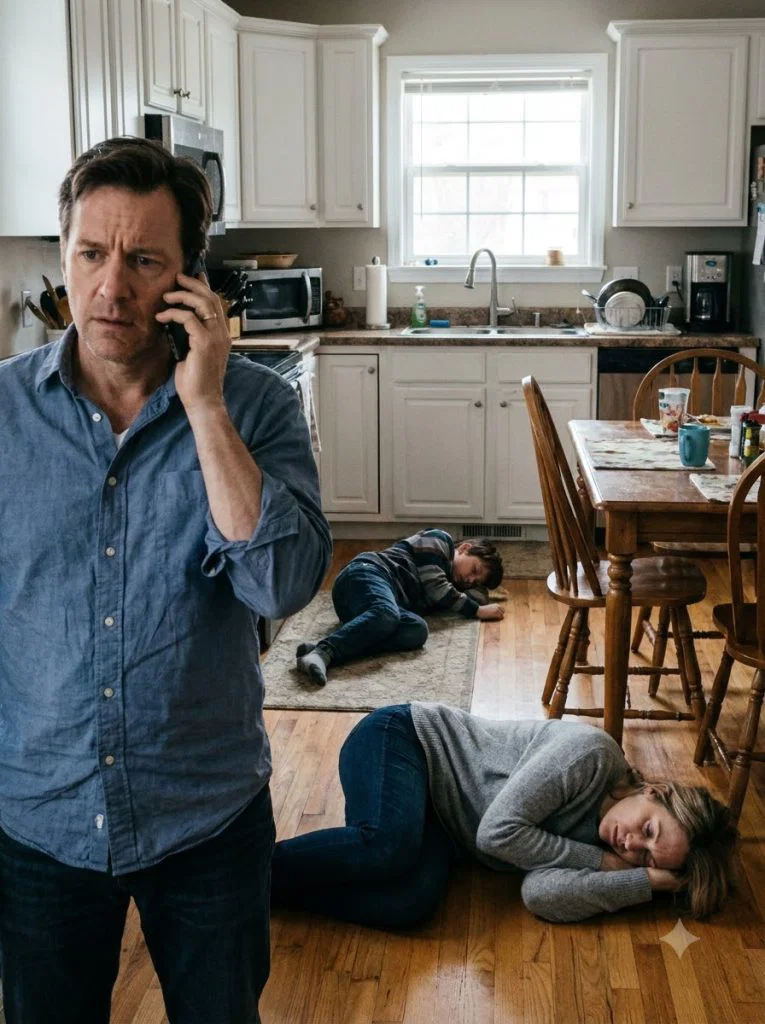
The night before I gave birth, I heard my husband offer a doctor half a million dollars to make sure I never left the delivery room alive. I was eight months and three weeks pregnant, pretending to sleep while the man I had loved for seven years whispered, “Make it look like a complication. Infect her, let her die in delivery, and the money is yours.”
For three seconds, I forgot how to breathe.
Then I heard Dr. Julian Vance answer quietly from the sitting room of my private hospital suite.
“Five hundred thousand?”
My husband, Flynn, let out a soft, callous laugh.
“You’ll get half tomorrow morning before she goes into surgery. The rest after the funeral.”
My hand tightened around the blanket, the rough cotton cutting into my palms. Flynn thought I was sound asleep because he had slipped a heavy sedative into my evening tea twenty minutes earlier. What he didn’t know was that I had caught his reflection in the dark glass of the microwave while he crushed the small white pill. The moment he stepped out of the kitchen to take a phone call, I had poured the drugged tea down the bathroom sink and replaced it with warm water.
Through the cracked bedroom door, I saw Flynn standing beside the doctor, dressed in the expensive tailored navy suit I had bought him for our wedding anniversary.
“Once Mabel is gone,” Flynn said, his tone as casual as if he were discussing a stock trade, “everything transfers cleanly to me.”
Everything.
My late grandfather had left me a commercial property firm worth nearly twelve million dollars. Flynn had spent seven years pretending money didn’t matter to him—pretending he was perfectly content with his modest salary as an associate architect while I managed the family trust. Apparently, twelve million dollars had drastically altered his philosophy.
Then he uttered the name that turned my blinding panic into something cold, sharp, and terrifyingly clear.
“Selina is already five months pregnant. I’m tired of hiding her in that downtown apartment. I want this settled.”
Selina.
His firm’s “lead interior design consultant.” The woman who had smiled at me over dinner at our house last Christmas. The woman who had gently touched my swollen stomach at a corporate gala last month, tilted her head, and whispered, You must be so excited to finally become a mother, Mabel.
A wave of nausea crashed over me, but I didn’t scream. I didn’t burst through the door. Instead, I slowly slid my hand beneath my pillow, unlocked my smartphone, and pressed the record button on my voice notes app.
That was Flynn’s first mistake.
His second was believing I was merely a fragile, sheltered heiress. Before stepping back to focus on my high-risk pregnancy, I had worked for four years as a corporate compliance attorney. I understood evidence. I understood chain of custody. And I understood that when someone was actively plotting your murder, emotional breakdown was a luxury you couldn’t afford.
Evidence could not wait.
After Flynn escorted Dr. Vance out of the suite, I waited until I heard his steady snoring from the adjoining couch. With trembling fingers, I uploaded the audio recording to three separate locations: my primary corporate attorney’s secure server, my encrypted cloud storage, and my older brother Arthur’s private email.
Then I typed a single, frantic text to Arthur:
If anything happens to me or the baby tomorrow, do not let them touch my body. Take the attached file directly to the district attorney.
Arthur called my phone two seconds later. I declined the call immediately, texting him back: He’s in the next room. Do not call again. Just be at the hospital at 6:00 AM with the police.
Flynn returned to the bedroom twenty minutes later. He bent down, pressed a feather-light kiss to my forehead, and whispered into the dark, “Tomorrow, everything finally changes, sweetheart.”
I kept my eyes closed, forcing my breathing to remain slow and rhythmic.
Yes, I thought, as the tears finally burned behind my eyelids. It does. But not the way you planned.
PART 2
At six the next morning, Flynn walked into the room carrying a large bouquet of fresh flowers.
White lilies. Funeral flowers.
“How’s my beautiful wife feeling today?” he asked, setting the vase on the bedside table with a bright, performative smile.
I forced a weak, exhausted smile onto my face. “Just… nervous about the delivery, Flynn.”
He squeezed my hand tightly. “Trust Dr. Vance. He’s the best chief of obstetrics in the state. You’re in great hands.”
The sickening irony almost made me choke. Instead, I closed my eyes and whispered, “Flynn, could you go down to the main lobby cafeteria and get me some shaved ice? My throat is so dry.”
“Of course, darling. Anything you need.” He kissed my cheek with the breezy carelessness of a man who believed his plan was entirely foolproof.
The second the door clicked shut behind him, I slammed my hand onto the emergency nurse-call button.
When Nurse Ramirez hurried into the room, I looked her straight in the eye and said in a low, trembling voice, “I need hospital security, the chief medical officer, and law enforcement in this room right now. Do not alert my husband or Dr. Vance.”
Nurse Ramirez’s professional smile vanished. “Mrs. Vance, what’s wrong? Are you having contractions?”
“I am in physical danger,” I said flatly. I handed her one of my wireless earbuds and hit play on my phone.
Thirty seconds into the crystal-clear recording of Flynn and Dr. Vance negotiating my murder, every drop of color drained from Nurse Ramirez’s face. She stared at me in absolute horror, swallowed hard, and pulled her radio from her hip.
“I’m calling the Chief of Security on a private line right now,” she whispered.
Within fifteen minutes, my suite became the hub of a silent, high-stakes law enforcement operation. Hospital administration quietly transferred my care to an emergency obstetric team led by the hospital’s head of surgery. Security personnel began reviewing hallway CCTV footage from the previous evening, capturing the exact moment Flynn handed Dr. Vance a thick manila envelope in a private service corridor.
That envelope—later seized by plainclothes detectives from Dr. Vance’s locked office drawer—contained twenty thousand dollars in crisp hundred-dollar bills.
A “down payment.”
But the most damning evidence came directly from Flynn’s own arrogance. Because Flynn Vance could never resist gloating before the finish line.
At 8:17 AM, while I lay hooked up to fetal heart monitors in a new, secured delivery room, my brother Arthur—who had arrived with two state detectives—showed me live intercepts from Flynn’s cell phone.
Flynn had texted Selina at 8:02 AM:
By tonight, we’re finally free. The doctor is handling it.
Selina had replied instantly:
Make sure she doesn’t change the terms of the family trust before they put her under.
Unfortunately for both of them, I had already restructured the trust three weeks earlier. Suspicious of Flynn’s unauthorized wire transfers from our joint account, I had quietly executed an emergency amendment with my attorney. Under the new terms, Flynn would receive absolutely nothing if our marriage ended through divorce—or if he became the subject of a criminal investigation connected to my death or incapacitation.
My unborn child’s inheritance was locked in a blind trust managed exclusively by Arthur and an independent corporate fiduciary. Flynn had planned a brutal murder for money he was legally barred from ever touching.
By noon, my contractions had escalated rapidly.
Flynn had been escorted into the new delivery room, completely unaware that the “shift change” was a police tactic. He stood beside my bed playing the role of the terrified, devoted husband while two undercover officers stationed themselves just outside the door.
Dr. Vance stepped into the room once, holding a tray of instruments. His eyes met mine, and for a fleeting second, I saw something flicker across his features.
Doubt. Fear.
“Everything looks… routine, Mrs. Vance,” Dr. Vance stammered, his fingers trembling slightly as he adjusted his surgical mask.
I smiled up at him from the pillows. “I certainly hope so, Doctor. My life is in your hands, isn’t it?”
He swallowed hard, unable to hold my gaze, and quickly stepped out to “prep.” He was intercepted in the hallway by federal marshals three seconds later.
Flynn leaned over me, brushing a strand of hair from my forehead. “After today, Mabel,” he whispered, his breath warm against my cheek, “you and I can finally start over.”
I turned my head slowly toward him. “Funny you should say that, Flynn.”
His smile faltered for a fraction of a second. “What do you mean?”
Before he could process my tone, a massive contraction hit, and the surgical team rushed into the room.
Two hours later, under the expert care of the hospital’s Chief of Surgery, I gave birth to a healthy, screaming six-pound baby girl.
When the nurse placed my daughter against my bare chest, I sobbed hysterically. Not from pain, not from exhaustion, but from the overwhelming, miraculous realization that we had both survived the night.
Flynn stepped forward toward the bed, forced tears welling conveniently in his eyes as he reached out toward the baby. “She’s… she’s perfect, Mabel. We did it.”
Snap.
The heavy double doors of the delivery suite swung open. Two plainclothes detectives walked in, flanked by the hospital’s Chief Medical Officer and my brother Arthur.
Flynn froze, his hand suspended in midair. He frowned in confusion. “What is this? Who authorized these people in here?”
The lead detective pulled a gold badge from his jacket and looked flatly at my husband. “Flynn Vance?”
“Yes?” Flynn asked, his voice tightening.
“Step away from your wife and keep your hands where we can see them.”
The room went dead quiet. Flynn’s face went completely blank as the metal handcuffs clicked around his wrists.
PART 3
Flynn spun around, staring at me in absolute shock as the officers pulled his arms behind his back. “Mabel?! What is happening?! Tell them who I am!”
I gently cradled my daughter against my shoulder, kissing her soft forehead, and looked up at him with cold, unyielding eyes.
Flynn stared at me, his chest heaving as the reality began to puncture his delusion. “What did you do?”
I let out a soft, breathy laugh. “What did I do, Flynn?”
A second team of officers entered the hallway outside, leading a cuffed Dr. Vance past the glass window.
That was the exact moment Flynn completely unraveled.
“This is a mistake! This is insane!” Flynn screamed, struggling against the detective’s grip. “She’s delirious from the epidural! She’s misinterpreting everything!”
The lead detective produced a clear evidence bag containing the envelope of marked twenty-dollar bills seized from Dr. Vance’s desk. Then, he pulled out an audio recorder and pressed play.
Flynn’s own voice echoed sharply through the delivery room:
“Infect her, let her die in delivery, and the money is yours. Five hundred thousand.”
Flynn’s knees buckled. He would have hit the linoleum floor if the detective hadn’t hauled him back up by his arms. He stared at me as if I were a stranger who had just handed him a death sentence.
“You… you recorded me?” he choked out.
“You tried to murder me and our daughter for an inheritance,” I replied, my voice steady and icy.
“I wasn’t serious!” Flynn stammered desperately, sweat pouring down his neck. “It was just talk! I was stressed!”
The detective raised an eyebrow. “You paid a chief of obstetrics twenty thousand dollars as a down payment for a ‘joke,’ Mr. Vance?”
Flynn’s eyes darted wildly around the room before landing back on me. “Mabel, please! Listen to me! Selina manipulated me! She came onto me, she planned the whole thing—she made me think you were sleeping with your business partner!”
I looked at him with pity. Even with steel cuffs biting into his wrists, his instant, coward’s instinct was to throw another woman to the wolves to save his own skin.
“Selina is downstairs in the holding room, Flynn,” I said softly.
His face drained of what little color remained. “What?”
Law enforcement had picked Selina up at her luxury apartment two hours earlier. Confronted with the text messages linking her directly to the estate financial scheme, she had hired a criminal defense lawyer on the spot and turned over every email, voice note, and text exchange between her and Flynn to secure a plea bargain.
“She surrendered her phone, Flynn,” the detective informed him flatly. “She’s currently giving a formal statement to the District Attorney.”
Flynn closed his eyes, his head dropping against his chest. Game over.
The financial and criminal investigation unfolded with terrifying speed over the next three months.
Selina Cole claimed she had merely wanted Flynn to divorce me so they could be together, insisting she never truly believed Flynn would go through with a physical assassination plot. However, months of recovered text messages painted a far more sinister picture: Selina had repeatedly asked when I would “finally be out of the picture,” questioned how quickly my twelve-million-dollar estate would clear probate, and actively researched the legalities of spousal inheritance laws in our state.
She avoided the attempted murder charge by testifying for the prosecution, but she was still indicted on corporate fraud, criminal conspiracy, and grand larceny charges related to unauthorized withdrawals from my firm.
Dr. Julian Vance had his medical license permanently revoked by the state board before his criminal trial even commenced. Faced with overwhelming digital and physical evidence, he pled guilty to conspiracy to commit capital murder and received a twenty-five-year sentence in a maximum-security state facility.
And Flynn?
The police forensic audit revealed that Flynn had spent nearly eight months meticulously preparing for my death. Investigators uncovered over three hundred thousand dollars in hidden gambling debts, forged corporate loan applications, unauthorized transfers from my family’s real estate accounts, and a two-million-dollar supplemental life insurance policy he had secretly taken out on my life just four months into my pregnancy.
He hadn’t just planned a single, desperate crime. He had systematically constructed an entire second life built on top of my grave.
At his sentencing hearing six months later, Flynn looked twenty years older. His sleek, arrogant demeanor was entirely gone, replaced by a hollow, sunken shell. He wore a orange jumpsuit, his hands chained to his waist.
His high-priced defense attorney attempted to present him as a desperate man who had fallen under the toxic influence of a mistress and made “catastrophic errors in judgment under severe financial stress.”
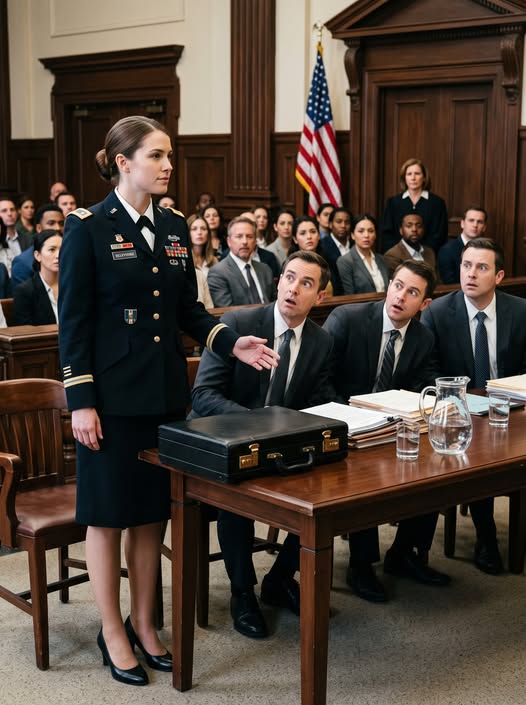
When the judge asked if I wished to read a victim impact statement, I stood up from the prosecution bench. I was holding my six-month-old daughter, Chloe, in my arms.
I walked to the podium and looked straight into Flynn’s eyes.
“You thought pregnancy made me weak,” I said, my voice carrying clearly through the silent courtroom. “You thought my love made me stupid. You believed that because I trusted you, I would sit quietly in the dark while you sharpened a knife behind my back.”
Flynn’s gaze dropped to the wooden table.
“You mistook my quiet nature for helplessness,” I continued. “I loved you, Flynn. I gave you seven years of my life, my trust, and my heart. That is why your betrayal hurt more than anything I have ever experienced.”
I paused, holding my daughter a little tighter.
“But loving you never meant I belonged to you. And it certainly never meant I would let you destroy my child’s future.”
The judge sentenced Flynn Vance to thirty-five years in state prison without the possibility of parole for conspiracy to commit first-degree intentional homicide, attempted medical assassination, and corporate fraud.
EPILOGUE
Eighteen months later.
The warm summer sun reflected brightly off the calm, blue waters of the Atlantic Ocean. A gentle coastal breeze blew through the open windows of my new home in Kennebunkport, Maine.
My daughter, Chloe, now a thriving, energetic toddler with bright blue eyes, toddled barefoot across the warm hardwood floor of the kitchen, chasing a colorful wooden rolling toy and letting out bursts of pure, unburdened laughter.
My brother, Arthur, stepped through the patio doors carrying two fresh mugs of iced coffee. He set one down on the marble island beside me and leaned against the counter, watching Chloe play in the sunbeam.
“How are the quarterly compliance reports looking for the firm?” Arthur asked, taking a sip of his coffee.
“Thriving,” I smiled, closing my laptop. “We officially completed the transition of Grandfather’s real estate assets into Chloe’s irrevocable trust this morning. Everything is protected, transparent, and completely insulated.”
Arthur looked at me thoughtfully. “Do you ever think about him? Flynn?”
I looked out the window at the roses blooming along the white picket fence in the garden.
“Sometimes,” I admitted honestly.
“Are you still angry?”
I considered the question carefully, feeling the quiet, deep stillness inside my chest.
“No,” I said, shaking my head gently. “Anger requires giving him space in my mind. He doesn’t deserve the real estate.”
Flynn Vance had wanted my family’s fortune, my grandfather’s legacy, my life, and my child’s future. In his boundless greed and arrogance, he had lost every single thing he ever pretended to care about. He was currently sitting in a cold, concrete cell, stripped of his freedom, his reputation, and his name.
I looked back at my daughter, who had just managed to catch her rolling toy, turning around to offer me a triumphant, toothy smile.
I walked over, scooped her up into my arms, and pressed a soft kiss to her warm cheek as she giggled against my neck.
Flynn had tried to ensure I never left that delivery room alive. Instead, he had handed me the ultimate clarity required to tear down his lies, protect my daughter, and step into a future that was entirely, beautifully, and unconditionally my own.
My Son Cut Me Out of the Family Then I Made One Phone Call and He Learned Who Owned His House
The message came at 2:30 in the afternoon on a cold Thursday while I was sitting in my kitchen, making soup for my sick neighbor.
My phone buzzed on the counter right beside the stove, cutting through the quiet hum of the afternoon. When I picked it up, I saw a new message in our family group chat that made my stomach drop.
“Mom, we’ve talked about this as a family, and it’s time we cut ties,” my eldest son, Kenneth, wrote. “Please don’t plan on coming to holiday dinners anymore because this is better for everyone.”
I stared at those cold words on my small phone screen, my heart heavy in my chest. Twenty-five years of Christmas mornings, birthday parties, and family meals seemed to vanish with just a few thumb taps.
Before I could even process the shock, my daughter-in-law Brenda added a quick thumbs-up emoji to his message.
My younger son, Mason, marked the message as read without adding a single word of his own. My sister Gertrude stayed completely silent, refusing to intervene or ask what was going on. Nobody stood up for me, and not a single person in that chat bothered to defend their own mother.
I took a screenshot of the message immediately because I learned long ago that keeping records is essential. Always keep proof, dear ones, because you never know when you will need it.
I scrolled back through old messages and photos, slowly realizing the painful truth that had been hiding in plain sight.
There were pool parties I was never invited to, summer trips they enjoyed without telling me, and graduations I only discovered by scrolling through Facebook. They had been pushing me out of their lives for months, quietly chipping away at my presence.
The newest photo Brenda posted showed their recent vacation in sunny San Diego, where they were all smiles on the beach.
That was the beach house I had helped them buy with my hard-earned savings, just as the car parked outside was one I co-signed for. Even Kenneth’s steady job was at the logistics company my late husband built from the ground up.
Everything they enjoyed came from our family money, yet somehow I was the one treated like a burden.
I put my phone down and stepped out onto my back porch to catch my breath in the cool air. My garden was full of blooming hydrangeas and roses that I had planted over thirty years ago.
This house held so many precious memories of birthday parties, Christmas mornings, and lively family dinners around my old oak table. It was heartbreaking to realize that my own children were so eager to throw all of that history away.
I walked back into the kitchen where my old rotary phone sat faithfully on the counter. I picked up the heavy receiver and dialed a private number I had kept in my address book for years but never used.
“Hello, Mr. Abernathy,” I said calmly when the line connected after two quiet rings. “I think it’s time we finally talked about that business matter.”
The voice on the other end paused for a brief moment before a low chuckle came through the speaker. “I was wondering when you would finally call me about this, Mrs. Gable.”
“Well, I am calling now, so how soon can you meet me?” I asked, keeping my tone steady and firm.
“I can be at your house in thirty minutes if that schedule works for you,” he replied without hesitation.
I hung up the receiver and looked at my reflection in the hallway mirror while waiting for him. The woman looking back at me was no longer the heartbroken mother who had read that cruel text an hour ago.
This woman stood with straight shoulders and had a bright fire burning in her eyes. If Kenneth wanted to cut ties so badly, I was more than ready to show him what cutting ties truly meant.
My phone started ringing loudly on the counter, displaying Kenneth’s work number on the screen. He was probably getting nervous because I had not replied to his dramatic announcement in the group chat.
I chose not to answer, simply watching his name flash across the screen over and over again. It was funny how yesterday I was treated like trash, but today my silence made me worth fifty urgent phone calls.
I opened the family chat one last time and typed a simple response. “Message received and understood, so please enjoy your last family dinner.” After sending it, I left the group chat forever without waiting for anyone to respond.
Some people burn bridges slowly over time, while others prefer to blow them up and watch the pieces fall. Today, I felt like using dynamite.
The family panic started within minutes of my departure from the chat. Kenneth called thirty-seven times in a row before switching to a barrage of angry text messages. I calmly drank my hot tea and watched his fear grow while planning exactly how to teach him a lesson about respect.
Mom, what did you mean by last dinner? his text read. Answer your phone right now because this isn’t funny anymore, and Brenda is crying, so are you happy now?
Brenda was crying, which struck me as extraordinarily rich considering her past behavior. The woman who had spent three solid years erasing me from family photos was now upset because I finally chose to fight back. I saved every single one of those desperate messages as additional proof for what was coming.
My doorbell rang right on schedule, interrupting the constant buzzing of my mobile phone. “Mrs. Gable, your visitor has arrived,” my sweet neighbor called out through the open window.
“Send him right in, dear,” I called back to her. “And please ensure I have no other visitors for the next two hours because I am not home to anyone else.”
Mr. Abernathy walked into my living room wearing a sharp dark suit and carrying a heavy leather briefcase. He had the unmistakable look of an experienced professional who solved complicated problems for a living.
“Hello, Mrs. Gable,” he said as he shook my hand with a firm grip. “You certainly look ready for business today.”
“I haven’t even started yet, Mr. Abernathy,” I replied with a tight smile.
I led him into my formal dining room, where legal papers and financial records covered the table like strategic battle plans. I offered him a cup of fresh coffee and declared that we were celebrating today.
“What exactly are we celebrating?” he asked as he set his briefcase down on a chair.
“We are celebrating Kenneth’s education,” I explained as I poured the coffee. “He is about to learn what happens when you disrespect the woman who actually owns your house.”
Mr. Abernathy’s eyes widened slightly as he leaned over the table to inspect the documents. “These are the original house deeds for all three properties in the neighborhood.”
“I never liked controlling people,” I noted while handing him a mug. “However, I suppose today I am feeling very controlling indeed.”
He sat down in my sturdy dining chair and put on his reading glasses with total composure. “Tell me everything from the very beginning, Mrs. Gable.”
I pulled out a thick folder filled with bank statements, loan agreements, property records, and printed photos of Kenneth and Brenda living luxuriously. It was the kind of undeniable proof that showed exactly who paid for their lifestyle.
“Kenneth thinks he has been clever by using my money to buy luxury items and putting my property in his name without asking,” I said as I flipped through the pages. “He even made me co-sign major loans while treating me like garbage.”
I pointed to several specific banking entries that highlighted unauthorized spending over the past few years. “And Brenda has been spending money from the emergency account I established, using it for shopping trips, fancy dinners, and weekend getaways while planning to throw me away.”
Mr. Abernathy whistled softly as he analyzed the numbers on the paper. “This is clear financial abuse, elder abuse, fraud, theft, and emotional manipulation.”
“It seems they were trying to see just how much they could hurt one old lady,” I remarked softly.
My phone rang again with another frantic incoming call from Kenneth, but I ignored it completely. Mr. Abernathy noticed my calm reaction and asked if I was going to answer him.
“I learned that ignoring calls from them is a trick they used on me for months,” I replied. “It is funny how family communication becomes a one-way street when it suits their convenience.”
I added Mr. Abernathy’s contact info to my phone under the label Justice Helper before asking him about our next steps. “I want you to help me take back everything that is legally mine, including the house Kenneth lives in, the car loan I co-signed, and the credit cards in my name.”
I paused for a moment as my expression softened slightly. “My grandson, Dustin, will finally see what real strength looks like when adults are held accountable.”
Mr. Abernathy signed several preliminary documents with his fountain pen and smiled. “This is going to be quite something to watch unfold, Mrs. Gable.”
“Oh, dear,” I replied as I raised my coffee cup. “Quite something does not even begin to cover what is coming.”
The proof I needed continued to pile up through Brenda’s social media posts while Kenneth sent desperate voicemails. His wife was actively posting pictures from an emergency family meeting held at an expensive restaurant with drinks and prime steaks.
It seemed that nothing announced a family crisis quite like ordering hundred-dollar meals on someone else’s tab.
I sat in my favorite pajamas drinking coffee while watching their pathetic attempt at damage control play out online. Brenda even tagged their location at a high-end steakhouse in downtown Phoenix, proving she had terrible survival instincts.
However, the one message that truly confirmed I was doing the right thing came late that night from my grandson, Dustin. Sweet sixteen-year-old Dustin was the only family member left who possessed a working brain and a good heart. He called me well after midnight, and his voice was shaking with anxiety.
“Grandma, they are telling everyone that you have gone crazy,” Dustin whispered into the phone. “Dad says you are threatening to destroy the whole family out of pure spite.”
“And what do you think about all this, sweetheart?” I asked gently.
“I think they are lying to everyone,” Dustin answered without hesitation. “You never do things out of spite because you only do things when they are right.” He paused for a moment before continuing in a lower tone.
“But Grandma, they are telling the relatives that you never loved Dad and that you only ever cared about money and control.”
I sat in my dark kitchen and looked out at the moonlight washing over the garden. I had spent twenty-eight years raising Kenneth and working two jobs to give him every advantage in life. It was heartbreaking to hear how easily they tried to rewrite our entire history together.
“Dustin, do you remember when you broke your leg at the skate park when you were ten years old?” I asked him softly.
“Yeah, I remember that.”
“Who took you to the emergency room that day?”
“You did, Grandma, because Dad was busy at work and Mom was at her weekly book club.”
“And who stayed beside your bed for four days while sleeping in a terrible hospital chair?”
“You did,” his voice grew much softer. “You brought me puzzle books and snuck in real hamburgers when the nurses were not looking.”
“Your father visited you exactly once for fifteen minutes just to take a selfie for his social media page,” I reminded him gently. “Does that sound like a grandmother who does not love her family?”
There was a long silence on the line before Dustin spoke again. “No, Grandma, it doesn’t.”
“I need you to understand that the house your parents live in has been in our family for forty years,” I explained in plain terms he could grasp.
“I worked three jobs to pay off the mortgage and saved every penny to make it a wonderful home, but your father and Brenda have treated it like a personal piggy bank while trying to throw me out.”
Dustin listened intently as I laid out the details regarding the altered property deeds, the stolen emergency funds, and the fraudulent loan applications. “Holy cow, Grandma,” he exclaimed once he understood the scope of their actions.
“Language, dear, but yes, it is quite serious,” I said with a light chuckle. “When I called Mr. Abernathy, I called someone who can legally recover what belongs to me without letting sentimentality get in the way.”
“Are you going to kick them out of the house?” he asked cautiously.
“I am going to give them exactly what they deserve based on the choices they made, Dustin,” I replied while stirring my tea. “Your father wanted to cut ties, and I happen to be very good at cutting things cleanly.”
Dustin laughed softly despite his worries about the drama. “You are actually kind of scary, Grandma.”
“Thank you, sweetheart,” I said warmly. “It has taken me seventy-three years to learn how to be properly scary when necessary.”
After Dustin hung up, I made a cup of chamomile tea and reviewed the legal paperwork Mr. Abernathy had prepared. He had moved with impressive speed, uncovering financial discrepancies that made my initial evidence look simple.
Kenneth and Brenda were not just taking advantage of me; they were sloppy about it and left paper trails everywhere they went.
By the next morning, Mr. Abernathy’s first formal legal demands caused my son to panic on an unprecedented level.
The lawyer demanded immediate explanations regarding property titles, bank account access, and major purchases made over the past five years. Kenneth called my cell phone ninety-one times throughout the morning while I was getting my hair styled at the local salon.
“Mrs. Gable, should I answer that phone for you?” my hairstylist asked as the device buzzed continuously on the shelf. “It has been buzzing non-stop.”
“Oh no, dear, just let it buzz,” I told her calmly. “It is like an annoying alarm clock that eventually stops when the battery dies.”
She laughed while curling my silver hair, leaving me to enjoy my morning in peace. By lunchtime, Mr. Abernathy sent me text updates that made my day brighter than Christmas morning.
Kenneth had tried to claim that the property transfers were gifts, while Brenda insisted that the emergency account withdrawals were necessary family expenses. Apparently, buying a three-thousand-dollar designer purse was considered a vital family emergency in her mind.
I called Dustin during his lunch break at school to check on him. “Grandma, kids at school are already talking about the legal papers served to Dad,” he reported. “Someone mentioned it online, and Dad tried calling me this morning, but I didn’t answer.”
“Good boy,” I praised him. “What would you have said if you had answered?”
“Probably that he is finally getting what he deserves,” Dustin replied cheekily.
I nearly choked on my sandwich from laughing so hard. “I have certainly raised you right, Dustin.”
“Actually, Grandma, I have something useful for you,” Dustin added in a quiet tone. “I have been keeping track of their household spending for a school economics project on family budgets, so do you want to see Dad’s credit card statements from this year?”
“Dustin Gable, you clever and sneaky child, send them to my email right away,” I said with absolute delight.
Fifteen minutes later, I was reviewing financial documents that would make any judge take immediate action.
There were luxury vacations charged to my emergency accounts, personal shopping sprees labeled as utility costs, and a fifteen-thousand-dollar pool upgrade categorized as essential home repairs. I forwarded the entire batch to Mr. Abernathy with the subject line Dessert Course.
His reply arrived instantly: You have raised a wonderfully sharp grandson, Mrs. Gable.
At exactly three o’clock in the afternoon, my landline phone rang, displaying Kenneth’s office number. I picked up the receiver and waited.
“Mom, we need to talk right now,” Kenneth demanded without even saying hello.
“Do we?” I asked coolly. “Because yesterday you seemed completely clear about wanting to cut ties with me.”
“That was just, I was angry, and Brenda was upset about the lawyer asking questions,” he stammered.
“Was she upset about getting caught taking things that did not belong to her?” I asked directly.
“She wasn’t stealing! Those were legitimate family expenses!”
I laughed so hard that I almost dropped the phone receiver. “Kenneth, sweetheart, in what world is a designer handbag a legitimate family expense? Were you preparing for a sudden fashion emergency?”
“This isn’t a joke, Mom, because Mr. Abernathy is threatening to take the house back,” he said, his voice rising in panic.
“How terrible for you,” I noted. “Perhaps you should have considered that outcome before treating your mother like trash.”
“He is demanding to see all our personal bank accounts too!”
“How terribly rude of him,” I said smoothly. “It is almost as if he suspects you have been doing something illegal.”
“You are going to ruin us, Mom!” he shouted.
“You are absolutely right that taking money from family is serious business,” I replied while inspecting my fresh manicure. “Though I hear orange jail uniforms are quite slimming these days.”
“Mom, please,” he pleaded, his tone shifting dramatically. “We can fix this and pay back whatever we borrowed.”
“Borrowed?” I questioned sharply. “How generous of you to finally admit that you took my money without permission.”
The deep fear in his voice was like music to my ears after months of disrespect. Yesterday I was treated like dead weight, but today I was his only hope for survival. The irony of the situation was so absolute it felt breathtaking.
“What do you actually want from me, Mom?” he asked weakly.
“Nothing that you are capable of giving me, Kenneth,” I answered firmly.
“Money? I will get you the money back!”
“With what?” I asked with a soft chuckle. “Your emergency accounts are completely frozen.”
The strange sound he made through the receiver was somewhere between a desperate whimper and a groan. “How do you even know about those accounts?”
“I know everything, my dear boy,” I informed him quietly. “I have known for months and was simply waiting for the right moment to act.”
I hung up the phone without another word and immediately called Mr. Abernathy to check on our progress. “Things are moving like Christmas morning for lawyers,” he reported cheerfully. “We have identified four fraudulent transfers, fake expense claims, and enough evidence to keep investigators busy for a long time.”
“And how is Kenneth holding up?” I asked.
“He is crumbling like a stale cookie, and Brenda has already called three different defense attorneys,” he replied. “Phase two begins tomorrow morning.”
The first major face-to-face confrontation took place at Kenneth’s workplace, where he had foolishly tried to get his company’s management to pressure me into dropping the legal claims. Instead of getting help, he walked right into a trap that left him completely speechless.
I arrived at the corporate office in downtown Phoenix wearing my finest dress, a classic navy outfit that made me look like a woman who could run a major corporation before breakfast.
Mr. Abernathy had arranged for me to meet with the executive board under the guise of a concerned family member, giving me a front-row seat to watch my son unravel.
Kenneth stood in the large conference room, surrounded by several nervous colleagues who suddenly found their coffee cups extremely interesting. Brenda sat right beside him, clutching her expensive leather handbag like a security blanket. The poor woman looked as though she had aged ten years in a single week.
“This legal action is pure harassment,” Kenneth began, his voice trembling as he addressed the room. “Mr. Abernathy is completely overstepping his bounds as my mother’s attorney.”
“Actually,” Mr. Abernathy interrupted smoothly, “I am operating entirely within legal parameters to recover assets that were fraudulently transferred from Mrs. Gable.”
Kenneth’s face turned pale. “That is impossible because Mom explicitly agreed to help us with the property.”
“Helping you is one thing, but signing over full legal ownership without her knowledge or consent is fraud,” Mr. Abernathy countered calmly as he opened a thick document folder. “We have fully documented evidence of forged signatures and unauthorized bank transfers.”
The atmosphere in the room grew cold as Kenneth’s co-workers shifted uncomfortably in their seats. They quickly realized they were witnessing a public reckoning rather than a simple business discussion.
“Forged signatures?” Kenneth stammered, his voice cracking.
“Oh yes, handwriting analysis has become remarkably sophisticated these days,” Mr. Abernathy said while sliding copies of the documents across the polished table. “Would you care to explain these banking forms and backdated property deeds to your superiors?”
Kenneth’s hands shook visibly as he stared at his own forged signatures spread out for everyone to see. “This is just a complete misunderstanding,” he attempted to explain. “Those were legitimate transactions that Mom approved.”
“Is a seventy-thousand-dollar property transfer considered a routine transaction?” Kenneth’s regional manager asked sternly, looking down at the papers.
“It was executed without a neutral attorney present and backdated to bypass property taxes,” Mr. Abernathy added helpfully.
The silence that followed was heavy enough to cut with a knife. Brenda let out a soft whimpering sound as she realized the legal trap had closed around them permanently. I stood up slowly, allowing my seventy-three years of life experience to command the attention of everyone in the room.
“Kenneth,” I said, my voice sounding like steel wrapped in soft velvet. “Do you remember what I taught you about honesty when you were just eight years old?”
“Mom, please don’t do this here,” he begged softly.
“You broke Mrs. Gable’s window down the street and blamed it on the neighbor’s boy,” I recalled clearly. “An innocent child lost his allowance for two weeks because of your lie, so what did I make you do back then?”
Kenneth lowered his head in shame. “You made me confess to her and pay for the broken glass with my own savings.”
“Exactly,” I said firmly. “Actions always have consequences, Kenneth, without exception.”
I turned my attention to the company executives who were listening intently. “My son has forgotten that basic life lesson, and Brenda has actively encouraged him to forget it, but today they are going to remember.”
Mr. Abernathy checked his legal notes and stepped forward. “Kenneth Gable, effective immediately, you are required to vacate the residence at 425 Oak Avenue and return all assets obtained through these fraudulent transfers.”
“You cannot just throw us out of our home!” Kenneth yelled.
“We can, and we are doing precisely that,” Mr. Abernathy stated with absolute authority. “Furthermore, Brenda Gable is barred from entering the property and will face formal charges related to financial elder abuse.”
Brenda finally found her voice and shouted, “Mrs. Gable, you are destroying your own family!”
I looked directly at the woman who had systematically erased me from photos, spent my medical emergency money, and convinced my son to treat me like trash. “Sweetheart,” I said, adjusting my pearl earrings with complete calm, “I am not destroying anything because I am simply taking out the trash.”
Security guards appeared at the door right on cue, escorting a weeping Brenda and a stunned Kenneth out of the building.
The remaining executives sat in stunned silence as Mr. Abernathy packed up his files with a satisfied smile. Through the large glass windows, I watched Kenneth and Brenda standing on the sidewalk below, looking small, defeated, and completely lost. Justice, I decided right then, tasted absolutely delicious.
Over the next few days, support began arriving from the most unexpected places, proving that Kenneth and Brenda’s arrogance had alienated many people over the years. By the end of the week, I had built an entire network of supportive allies.
Dustin called me on Monday morning, his tone bright with excitement. “Grandma, my high school economics teacher wants to use your legal case as an example of how senior citizens can defend themselves against financial fraud!”
“How educational of her,” I replied with a smile.
“Also, two of Dad’s old friends called me because they want to apologize to you personally,” Dustin added. “They feel terrible for not speaking up when Dad was spreading rumors about you.”
“What kind of rumors was he spreading?” I asked, my tone turning serious.
“He was telling everyone that you were developing severe senility,” Dustin explained softly. “He claimed you could no longer handle your own finances and that he had to take control of your property to protect you from yourself.”
I sat in my kitchen, sipping my morning coffee, and felt a profound wave of moral clarity wash over me. I was not just seeking payback anymore; I was reclaiming my dignity.
“Dustin, please invite those friends to have coffee with me somewhere nice, and it will be my treat,” I told him.
“Are you building a whole support team, Grandma?” he asked playfully.
“I am building proof that we were right all along, sweetheart,” I answered warmly.
Later that afternoon, Mr. Abernathy called with even more shocking news from his ongoing financial audit. “Mrs. Gable, you will not believe what our investigation uncovered today. Kenneth was not only taking money from you, but he was also stealing from his own employer.”
“How much did he take?” I asked, gripping the phone tightly.
“Over twelve thousand dollars over the last two years through fake expense reports and unauthorized equipment purchases,” he revealed. “His lavish lifestyle with Brenda was partially funded by corporate fraud.”
A strong surge of anger ran through me. Taking advantage of his own mother was personal, but stealing from hardworking colleagues who trusted him was entirely unforgivable.
“Mr. Abernathy, I want every single penny recovered and returned to its rightful owner, regardless of what it costs us,” I instructed him firmly.
“I am already coordinating with the local authorities,” he assured me. “The police want to interview you tomorrow because your recordkeeping was so thorough that they called it a textbook case of fraud detection.”
“How very flattering,” I remarked.
“Also, a local news reporter from Channel 7 wants to do an exclusive story on your case,” he added. “Their working headline is Grandmother Fights Back Against Family Fraud.”
I weighed the options carefully in my mind. “Schedule the television interview for Thursday afternoon, Mr. Abernathy.”
That evening, I met with Kenneth’s former long-time neighbors, Linda Martinez and Carol Williams, at a cozy cafe in downtown Phoenix. Both women looked deeply embarrassed about their months of silence.
“Mrs. Gable, we genuinely thought you were aware of what Kenneth was saying,” Linda explained apologetically. “He told everyone in the neighborhood that your health was failing rapidly and that you had been moved to a private nursing facility.”
“He told people I was in a nursing home?” I asked, my coffee cup trembling slightly in my hand.
“Yes, he claimed you suffered from severe memory loss and could no longer recognize family members,” Carol added sadly. “That was his justification for taking over your house and bank accounts.”
The cheerful ambient noise of the cafe felt suddenly suffocating as the full scope of his deception became clear. My own son had declared me mentally incompetent just to cover up his crimes.
“Ladies,” I said, setting my cup down with deliberate precision. “Would you be willing to help me ensure that complete justice is served here?”
“We would be honored to help you, Mrs. Gable,” Linda responded immediately.
Walking out of that cafe into the cool evening air, I realized that my fight had grown into something much larger than a personal dispute. I was leading a movement to protect seniors, and every movement needs dedicated allies. Kenneth had no idea what kind of storm was heading his way.
The entire conflict reached a dramatic peak when Mr. Abernathy hosted an open community meeting at the neighborhood center to present the complete findings of his investigation. The room was packed with local residents, former friends, police officers, and news reporters who filled every single chair.
I took a prominent seat in the front row, wearing my late mother’s diamond brooch and a posture that radiated strength. Across the aisle, Kenneth sat slumped in his chair, looking as though he had aged decades in a matter of weeks. Brenda was notably absent, having been advised by her defense lawyer to avoid public appearances following her formal indictment.
Mr. Abernathy took the podium and adjusted the microphone. “Ladies and gentlemen, today’s presentation details the systematic financial exploitation of Mrs. Karina Gable by her son, Kenneth, and his wife, Brenda.” He activated a large display screen that showed detailed line graphs, bank
statements, forged property documents, and text message threads outlining their schemes. “Over a three-year period, the accused illegally transferred forty-seven thousand dollars from Mrs. Gable’s accounts, forged property deeds valued at seventy thousand dollars, and accumulated thirty-two
thousand dollars in credit card debt under her name.”
A collective gasp echoed through the room as neighbors viewed the visual evidence of greed.
“These stolen funds paid for high-end vacations, designer apparel, and expensive home renovations,” Mr. Abernathy continued, switching to slides of Brenda’s public social media posts. “Most egregiously, Kenneth Gable covered up these actions by falsely telling community members that his mother suffered
from advanced dementia.”
Angry murmurs swept through the audience as local residents realized how thoroughly they had been manipulated. Kenneth buried his face in his hands, unable to meet anyone’s gaze.
I stood up slowly from my chair and walked up to the microphone, prompting an immediate silence to fall over the room.
“Kenneth,” I said, looking directly at my broken son. “Stand up.”
He hesitated before rising shakily to his feet.
“You told this entire community that I could no longer remember my own name and that I needed to be locked away,” I said, my tone clear and unwavering. “You attempted to erase my presence and isolate me from everyone I cared about, but most importantly, you forgot the fundamental values of honesty
and respect that I instilled in you as a child.”
I turned to face the gathered crowd of neighbors and reporters. “The property at 425 Oak Avenue will remain under proper legal ownership, every stolen dollar will be fully recovered, and every lie told regarding my mental health has now been exposed.”
The room erupted into enthusiastic applause, with several long-time neighbors standing up to cheer. Mr. Abernathy stepped back to the podium to announce that formal criminal charges had been processed by the state prosecutor’s office. When the meeting concluded, local news crews rushed forward to
capture my statements for the evening broadcast. Kenneth was left standing near the exit, surrounded by former friends who now viewed him with total disgust.
However, the legal battle was not entirely over. Two days later, Brenda’s family hired an aggressive attorney who attempted to file a counter-suit against me, claiming emotional distress and grandparent alienation. They absurdly argued that I was simultaneously too mentally fragile to manage property
transactions, yet somehow sophisticated enough to orchestrate an abusive conspiracy against them.
Mr. Abernathy called me while I was tending to my back garden, chuckling over the absurdity of their legal filing. “Mrs. Gable, their defense argument is completely self-contradictory, and any judge will dismiss it almost instantly.”
“If they want to portray me as a confused old woman on television, let us give them a clear demonstration of my actual mental state,” I told him.
That afternoon, I held a press conference right outside the county courthouse. Wearing a sharp suit and standing before a dozen news microphones, I presented a clear chronological timeline of the financial records I had independently gathered.
“My name is Karina Gable,” I stated clearly into the cameras. “I raised four children, ran a successful local catering business for thirty years, and single-handedly uncovered a complex financial fraud scheme. If that demonstrates a lack of mental capacity, then I would love to see what these defense
lawyers consider sharp thinking.”
The reporters chuckled, and my statement made the lead story on the six o’clock news that night. The public response was overwhelmingly supportive, turning my personal ordeal into a celebrated story of senior empowerment.
Four months after that initial text message arrived, my life had transformed completely. I was appointed as the regional coordinator for a new elder fraud prevention initiative funded by the state.
My daily routine was now filled with purpose, community organizing, and helping other seniors protect their assets from predatory relatives.
One pleasant Sunday morning, Dustin came over to my house bringing fresh pastries and orange juice from a local bakery. We sat at my oak kitchen table, reviewing upcoming schedule requests for community workshops.
“Grandma, nine different neighborhood associations have requested your training program this month alone,” Dustin reported with a proud smile. “You have become a local legend.”
“It is incredible how standing up for what is right can create so much positive change,” I reflected warmly.
My phone buzzed with a text message from Mr. Abernathy, informing me that Kenneth had reached out to his office asking for a personal meeting to apologize and seek reconciliation.
I looked out the window at my garden, where the morning sunlight illuminated the vibrant flowers I had nurtured for decades. I felt no lingering anger or bitterness, only a profound sense of peace and independence.
What should I tell him? Mr. Abernathy had asked in his text.
I typed back a thoughtful response: Tell him that I am currently busy building something meaningful for our community. If he demonstrates genuine remorse and consistent positive change over time, we may discuss forgiveness in the future. Until then, he must focus on fixing his own life.
I put my phone down and smiled at Dustin across the table. I was no longer just a mother who had been pushed aside; I was Karina Gable, a resilient woman who had turned betrayal into a force for good. In the quiet strength of my new life, surrounded by truth and genuine love, I had finally achieved the ultimate victory.
The workshops kept me busier than I expected, especially once word spread past our own neighborhood into the surrounding towns. Senior centers called asking me to speak. A community college invited me to guest lecture in a course on family law, an offer that made me laugh out loud when
I first read the invitation, imagining myself standing at a podium in front of twenty-year-olds explaining forged property deeds. I accepted anyway. If nothing else, I wanted young people to understand, before it ever became relevant to their own families, that love does not excuse theft, and that age does not
disqualify a woman from defending what is hers.
Kenneth wrote to me eventually, a real letter, handwritten, mailed rather than texted, which surprised me more than its contents did. He did not ask for money. He did not ask to move back into the house. He wrote, in careful, halting sentences that read like a man unused to admitting fault, that he
understood now what he had done, that Brenda’s influence did not excuse his own choices, that he had spent his childhood watching me sacrifice everything for him and had somehow convinced himself, as an adult, that sacrifice was simply what mothers were for indefinitely, a resource to be drawn down
rather than a person to be honored.
I did not write back immediately. I let the letter sit on my kitchen table for two full weeks, reading it again some mornings with my coffee, deciding what, if anything, I owed him in response.
Eventually I called Mr. Abernathy and asked him to arrange one supervised meeting, at his office, with Dustin present if Kenneth agreed to it. Kenneth agreed immediately.
The meeting was not warm. I did not pretend it needed to be. Kenneth sat across the conference table from me, thinner than I remembered, the confidence that had once made him so easy to resent almost entirely gone. He apologized again, in person this time, and I listened without interrupting, the way I had once listened to Mr. Abernathy lay out the evidence against him.
“I’m not asking you to forget any of it,” Kenneth said finally. “I just wanted you to hear it from me instead of a lawyer or a headline.”
“I appreciate that,” I said. “It doesn’t change what happens next. But I appreciate it.”
“What does happen next?”
I considered the question honestly, the way I’d learned to consider most things over those difficult months. “You rebuild your own life, Kenneth. Not with my money. Not with my house. With whatever you’re actually capable of earning and holding onto honestly. If you manage that, consistently, for long
enough, we can talk again about what a relationship between us might look like.”
“And if I don’t manage it?”
“Then you’ll have your answer too.”
He nodded slowly, and something in his face suggested he had expected exactly that response and had come anyway, because some conversations need to happen regardless of the outcome.
Brenda never reached out. I heard, secondhand through the same network of neighbors who had once been too intimidated to speak up, that she and Kenneth separated within the year, her legal troubles compounding faster than their marriage could absorb. I felt no satisfaction in that news, only the same
flat acknowledgment I’d learned to offer most updates about my former daughter-in-law’s life.
Dustin, meanwhile, thrived. He finished high school with the same sharp, watchful intelligence that had first alerted him to his father’s spending patterns, and he enrolled in a program studying forensic accounting, of all things, joking that his grandmother had accidentally inspired his entire career path.
“You uncovered actual fraud with a rotary phone and a filing cabinet,” he told me once, helping me clear the dinner table. “Imagine what I could do with an actual degree.”
“I imagine you’ll do quite a lot,” I told him, and meant it completely.
The elder fraud prevention program grew steadily over the following years, eventually expanding well beyond our corner of Phoenix into a statewide initiative. I trained hundreds of seniors on how to recognize the same quiet, incremental erosion of dignity and autonomy that Kenneth and Brenda had
once inflicted on me: the small dismissals that grow into larger ones, the financial favors that quietly become financial control, the gradual isolation dressed up as concern for someone’s declining capacity.
I told my own story at every single session, without embellishment, because I had learned that nothing convinced a frightened eighty-year-old woman to check her bank statements more effectively than hearing exactly how it had happened to someone who looked, from the outside, entirely too sharp to be fooled.
“They will tell you it’s for your own good,” I would say, closing each session the same way every time. “They will tell you that you’re too old, too confused, too fragile to manage what’s yours. The moment someone tells you that, ask yourself who benefits most from you believing it. Usually, the answer tells you everything you need to know.”
I never remarried, never particularly wanted to, content instead with the garden, the community work, and Dustin’s increasingly frequent visits as he came home from college breaks with new stories and, occasionally, new friends curious to meet the grandmother he’d built an entire career path around.
Some evenings, tending to the hydrangeas I’d planted thirty years earlier, I thought about that cold Thursday afternoon, the soup on the stove, the phone buzzing beside it with words designed to erase me quietly and completely. I thought about how easily that erasure could have succeeded, if I had
simply accepted it, if I had let shame or exhaustion or the particular loneliness of old age convince me that fighting back wasn’t worth the effort.
It had been worth every bit of the effort. Not for revenge, though revenge, I’d discovered, tasted considerably sweeter than anyone had ever properly warned me it would. But because somewhere beneath all the legal filings and community meetings and press conferences, I had rediscovered
something I hadn’t realized I’d lost: the simple, stubborn certainty that I still mattered, on my own terms, entirely independent of whether my own children remembered to treat me like I did.
That certainty, more than the house, more than the recovered money, more than the statewide program bearing quiet witness to everything I’d survived, was the real inheritance I intended to leave behind. Not to Kenneth, not yet, perhaps not ever. But to Dustin, and to every frightened senior who walked into one
of my workshops convinced that love and abuse were the same thing simply because the people delivering both happened to share their blood.
They were never the same thing. It had taken me seventy-three years to learn the difference. I intended to spend whatever years I had left making sure fewer people needed quite that long to learn it themselves.
I told my husband not to come home. But when I opened his jacket, I found an envelope containing a letter that wasn’t his—and what it revealed changed everything.
PART 1
At fifteen, Irene stopped asking for help in her own home because her father had taught her that expressing pain was just a manipulative cry for attention.
The belief had solidified one crisp October afternoon in the kitchen of their home in Arlington, Virginia. Her mother, Martha, was pouring coffee before logging back into her remote work shift when Irene quietly murmured, “I don’t tell Dad when I’m hurting anymore. He says I’m just exaggerating so everyone has to cater to me.”
Martha set her mug down on the counter, her heart sinking.
For months, she had seen subtle signs she couldn’t quite piece together: untouched breakfasts, excessively long hot showers, a heating pad hidden under a heap of throw blankets, and days when Irene walked with a hesitant, guarded stride while claiming she was just exhausted from school.
That afternoon, Martha didn’t ask if Irene wanted to wait for her father to get home.
The next day, Martha picked Irene up before her final class period and drove her straight to the emergency room at Virginia Hospital Center without informing her husband, Mark.
Irene barely protested. That quiet, defeated resignation was what terrified Martha the most.
In the examination room, the ultrasound technician maintained light, cheerful small talk until she suddenly stopped asking questions. She stared intently at the monitor, captured several additional images, and stepped out into the hallway with a polite excuse.
A few minutes later, an attending physician entered, closed the door, and sat directly across from them.
“I need to clarify something before we proceed,” the doctor said, glancing between their intake file and the screen. “How long has Irene’s father known that these specific symptoms required a comprehensive workup?”
The doctor shook his head gently. “I don’t mean today.” He rotated the monitor toward Martha.
Five weeks earlier, Irene had been seen at the exact same hospital, accompanied by Mark. The electronic health record detailed the identical abdominal and flank pain, explicitly recommending a urgent follow-up with a pediatric urology specialist and advanced imaging within ten days.
Martha stared at her husband’s name printed clearly on the intake log three times. “I… I knew nothing about this.”
Irene huddled deeper into her oversized hoodie, her shoulders slouched. “Dad said it wasn’t a big deal.”
The physician didn’t make accusations. He simply explained that the original recommendation was not a routine administrative suggestion. There was a clear clinical reason to investigate the source of the pain, and it was now critical to act without further delay.
Martha sat beside her daughter, her voice trembling. “Irene, you’re not in trouble, sweetheart. You don’t have to protect anyone. Tell me exactly what happened after that appointment five weeks ago.”
Irene took a shaky breath. “He got really upset in the car on the way home. He said you were under too much stress with work, that you were already exhausted, that the household bills were piling up… and that I was making everything harder.”
Martha felt an icy, suffocating weight collapse in her chest. She desperately tried to construct a logical, forgiving explanation in her head. Maybe Mark had misunderstood the doctor’s tone. Maybe he genuinely thought it could wait until the end of the school semester. Maybe he was just trying to shield her from worry.
Then the physician asked the question that dismantled her final line of defense.
“Irene, did your father explicitly ask you not to tell your mother about the recommended follow-up?”
Irene’s hands balled into tight fists inside her sleeves. She looked down at the floor and nodded. “He said he would handle it himself.”
Martha reached over and squeezed her daughter’s cold hand. “And did he handle it?”
Irene shook her head.
A suffocating silence filled the room. But before Martha could process the anger rising in her throat, Irene added one more devastating detail.
“Mom… Dad did go back to the hospital. He just went back without me.”
PART 2
Martha blinked, certain she had misheard. “How do you know he went back?”
Irene pulled her phone from her pocket and unlocked the screen. She pulled up a text message Mark had sent her four days after that initial visit: I spoke with the hospital. Mom doesn’t need to know about this, and you don’t need to go back. Drop it.
The attending physician requested permission to check the hospital’s administrative audit log. The system confirmed a phone inquiry from Mark asking about the pending orders, followed two days later by an in-person visit to the patient advocacy and records department.
Crucially, no medical cancellation had ever been filed by a doctor.
“So he knew,” Martha whispered, her voice dangerously quiet. “He knew the testing was still required.”
Tears spilled over Irene’s eyelashes. “I thought… I thought if I kept complaining that it hurt, you and Dad would end up getting into a huge fight because of me.”
Martha pulled her daughter into a tight, protective embrace. Before dealing with Mark, she needed to restore something fundamental that had been stolen from her child: the right to trust her own body and her own pain.
That evening, Martha called Mark and ordered him to come to the hospital immediately.
He arrived forty minutes later, stepping into the consultation room looking rushed and defensive. But when his eyes landed on the medical chart sitting on Martha’s lap, he didn’t ask how his daughter was feeling. He looked directly at the physician.
“I take it you found it,” Mark said flatly.
Martha stood up, her pulse hammering in her ears. “Found what, Mark?”
Mark reached into the inner breast pocket of his jacket. He pulled out a folded, white legal envelope stamped with the hospital’s seal and set it on the examination table.
Inside was a copy of the original specialist referral and an unsubmitted insurance authorization form that he had tucked away weeks ago.
But tucked behind those official documents was something far more damning: a handwritten letter addressed directly to Martha.
And the handwriting wasn’t Mark’s.
It belonged to Irene.
PART 3
Mark went completely pale as Martha unfolded the lined notebook paper.
The letter was dated five weeks prior. Irene had written it in the hospital cafeteria immediately after that first appointment while Mark was paying for parking. It wasn’t long. She wrote that she had been waking up in sharp pain for months, that it was getting harder to sit through her afternoon classes, and that she was tired of being told it was just anxiety or “growing pains.”
At the bottom, Irene had written a final plea to her mother:
I don’t want to scare you. I just want you to believe me, even if they don’t know what’s wrong yet.
Martha raised her eyes, her gaze cutting straight through her husband. “Why do you have this?”
Mark slowly sat down in an armchair, the arrogant composure he usually carried completely evaporating. For the first time since entering the room, he stopped trying to manage the narrative.
He confessed that on the day of the first visit, Irene had tried to call Martha the moment they stepped out of the clinic. Mark had stopped her. Martha was navigating a brutal week at her firm—her company was undergoing a massive round of corporate layoffs, and on top of that, she was spending her evenings assisting her elderly father after his knee surgery.
Up to that point, Martha could almost comprehend a spouse making a misguided, temporary decision to delay a stressful conversation for twenty-four hours.
What came next was entirely unforgivable.
Mark confessed that he had been hiding a catastrophic secret of his own for over two months: he had been laid off from his management position at a regional logistics firm.
Every single morning, he had dressed in his suit, grabbed his briefcase, and left the house at seven-thirty to maintain the illusion that he was going to work. In reality, he spent his days sitting in public libraries, applying for positions, and returning home at five-thirty as if nothing had changed. He had been quietly drawing down their joint emergency savings account to pay the mortgage, desperately hoping he would land a new role before Martha discovered the financial hole.
When Irene’s medical issues flared up, Mark didn’t prioritize his daughter’s health. He prioritized his own panic. He realized that if Martha accompanied Irene to a specialist, the medical billing and insurance claims would immediately expose his employment status and the drained savings account.
“I panicked,” Mark swallowed hard, his voice trembling. “I was terrified of everything falling apart at once.”
Martha stared at him, her expression hardening into stone. “Being terrified explains making a panicked mistake for twenty-four hours, Mark. It does not explain gaslighting your fifteen-year-old daughter for five weeks.”
Mark bowed his head, unable to meet her eyes.
Martha pushed further. “Why did you go back to the hospital without her?”
Mark took a long, painful breath. He had returned four days after the first appointment, searching for a medical loophole. He had tried to convince the patient services coordinator that the tests weren’t urgent, claiming Irene had midterms coming up and that the family was dealing with temporary scheduling issues.
The staff had firmly reiterated that the referral was mandatory and handed him a duplicate packet.
“I thought… I convinced myself that if she just rested, she’d get better, and I wouldn’t have to blow up our lives,” Mark admitted quietly.
“And when she didn’t get better?” Martha asked.
Mark closed his eyes. That was the most shameful confession of all.
Every time Irene mentioned her pain over the following weeks, Mark felt his elaborate web of lies slipping. Instead of coming clean, his panic manifested as anger toward his daughter. He began snapping at her, telling her she was hyper-focusing on minor discomforts, accusing her of drama, and demanding she stop burdening the family.
Not because he truly believed she was faking. But because he needed her to be quiet so his secret would stay buried.
The silence that followed his confession was absolute.
Irene looked up from her hoodie, staring at her father with a cold, devastating realization. “So you did believe me all along.”
Mark opened his mouth, but no words could repair the damage. “Yes,” he whispered softly. “I knew you were in real pain.”
That single admission hurt Martha more than any financial lie. Mark had willingly sacrificed his daughter’s physical health and emotional sanity to protect his own pride.
Irene began to cry quietly. “I thought I was being a burden. I thought I was losing my mind.”
Mark took a step toward his daughter. “Irene, sweetheart—”
Martha instantly stepped between them, her hand raised. “Don’t. Do not take another step toward her. Let her decide if she wants you anywhere near her right now.”
It was a small boundary, but a pivotal one. For the first time that day, someone was giving Irene total control over her own boundaries.
Irene wiped her face with her sleeve and shook her head, refusing to look at him.
The pediatric specialist arrived shortly after and explained the clinical situation with a calm clarity Martha was deeply grateful for. Imaging confirmed a structural blockage in Irene’s right kidney that was obstructing normal drainage, causing recurrent, severe flank pain and placing the organ at risk for long-term damage. They needed to schedule a minimally invasive procedure with a pediatric urologist to relieve the obstruction.
The physician made no promises about whether the five-week delay had caused permanent harm, but emphasized that acting immediately would yield a strong prognosis.
“We’re going to do whatever it takes,” Martha told her daughter firmly. “And from this second on, you will be involved in every single medical decision.”
That night, Mark did not return to the family home. Martha calmly informed him that he needed to stay elsewhere so Irene could recover without feeling walking-on-eggshells anxiety in her own living room. Mark moved into his brother’s spare apartment in nearby Bethesda.
Over the following month, Martha completely reorganized her work schedule to manage Irene’s care. She filed formal medical leave, met with Irene’s high school guidance counselor to arrange accommodations, and handled every appointment directly.
Crucially, Martha refused to use Irene as a messenger between adults. When Mark texted asking for updates, Martha replied strictly regarding logistical facts. If he asked to speak to Irene, Martha asked Irene first, respecting her daughter’s boundaries when she repeatedly declined.
Three weeks later, Irene underwent a successful outpatient procedure to clear the blockage.
In the weeks following the surgery, at Martha’s insistence, the family began attending sessions with a licensed adolescent and family therapist.
During one particularly difficult session, Mark attempted to defend his past actions by discussing his severe depression following his job loss, the pressure of being the traditional provider, and his overwhelming shame.
The therapist gently cut him off. “Mr. Sterling, your financial stress explains your emotional state. It does not excuse weaponizing your daughter’s pain to cover your tracks. Today, we are focusing on what Irene experienced.”
Mark went silent.
In a subsequent session, the therapist asked Mark to read aloud a list he had been instructed to write—a list of every phrase he had used to dismiss his daughter over those five weeks:
“It’s not that bad.”
“You’re always looking for something to be wrong.”
“Your mother has enough on her plate without you creating problems.”
“Stop seeking attention.”
Mark read each line aloud, his voice cracking. “I used those words to force her into silence,” he admitted, looking at the floor. “Because her silence kept my secret safe.”
Irene didn’t offer immediate forgiveness. But for the first time in months, she looked directly at her father without flinching.
Ten months later, the physical and emotional landscape of their lives had fundamentally shifted.
Irene’s kidney function had fully recovered, and her physical pain was completely gone. She had returned to her art classes, rejoined her friends, and stopped carrying a heating pad in her backpack like a dirty secret.
Martha and Mark proceeded with a formal legal separation. Mark eventually secured a new management position, but the culture of secrecy in the family was permanently dismantled. Household finances, medical records, and major life decisions were now laid out with absolute transparency.
A new, non-negotiable rule was established in Martha’s home: If someone says they are in pain, no one questions whether they are ‘exaggerating.’ We listen first.
During their final joint family therapy session, the counselor asked each of them to write down a single sentence summarizing what they had learned through the painful recovery process.
Martha wrote:
“Asking your child how they feel is useless if you’ve created an environment where they’re terrified to tell you the truth.”
Mark wrote:
“Protecting your family means being honest, even when the truth destroys your pride.”
Irene took her time. She wrote her sentence on a index card, folded it in half, and set it in the center of the coffee table.
Her card read:
“When someone tells you they are hurting, believing them doesn’t mean you have all the answers. It just means you refuse to leave them alone in the dark while they figure it out.”
Mark bowed his head in quiet reflection. Martha reached over and took her daughter’s hand—and this time, Irene didn’t pull back or hide her arms inside her sleeves.
The real healing hadn’t started on the day a doctor finally pulled up an ultrasound scan in an emergency room. It had started the moment a fifteen-year-old girl found the courage to stop hiding her pain—and found a mother who was ready to listen.
I was about to marry the woman I had left my family for—a mistress thirty years younger than me. But just before I walked down the aisle, my three-year-old grandson grabbed my hand and whispered, “Grandpa, she hit Mommy.” Then he pointed at my young bride-to-be and pulled a USB drive from his pocket. What I saw on that drive exposed a lie powerful enough to destroy the woman I was moments away from marrying.
PART 1: The Child Who Stopped My Wedding
Ten minutes before I was supposed to marry the woman thirty years younger than me, my three-year-old grandson grabbed my hand and whispered, “Grandpa, don’t marry her… she hurt Mommy.”
My name is Richard Hale, and I stood frozen in the hallway of a luxury hotel while one hundred and twenty guests waited inside the ballroom with music, white flowers, and raised champagne glasses.
My grandson, Milo, clutched my hand with desperate strength. His gray suit was too big, his shoes were untied, and his bow tie sat crooked under his chin.
But he was not playing.
He was terrified.
I knelt in front of him. “Who hurt your mommy, buddy?”
Milo lifted a trembling finger and pointed down the hall.
At Serena Whitmore.
The woman I was about to marry.
Serena stood near the bridal suite in ivory lace, smiling for the photographer while her bridesmaids adjusted her veil. She looked gentle, radiant, perfect.
This was the same woman who had brought me coffee at my firm for two years, who made soup when I was sick, and who claimed she wanted to love my family as her own.
My daughter, Hannah, had not arrived yet. That morning, she had texted that she had a migraine and might be late.
Serena had sighed softly. “Your daughter doesn’t accept me, Richard. But I’ll be patient. Love takes time.”
I had wanted to believe her.
Now Milo was hiding behind my leg as if Serena were dangerous.
“Where is your mommy?” I asked.
“With Aunt Claire,” he whispered. “Mommy told me not to come with her.”
My sister Claire lived across town. Hannah was supposed to be resting at her apartment.
None of this made sense.
Then Milo reached into his tiny suit pocket and pulled out a scratched black USB drive.
“She said if she fell asleep for a long time, I had to give this to you.”
My knees nearly gave out.
Before I could ask more, Serena turned. Her smile flickered, then returned perfectly as she walked toward us.
“Richard, darling, the music is starting. Everyone is waiting.”
I slipped the USB into my breast pocket.
“I need five minutes.”
Serena’s eyes narrowed at Milo.
“What did he say to you?”
“Just grandpa stuff.”
Her voice tightened beneath the smile. “This is not the time for games.”
“I said five minutes.”
I carried Milo into my dressing room and locked the door. Then I opened my laptop, inserted the drive, and saw one folder.
SERENA.
Inside were screenshots, bank records, forged documents, and a video from my hallway.
I clicked play.
Hannah’s hidden camera shook as Serena’s voice cut through the speakers.
“I warned you to stop interfering, Hannah.”
PART 2: The Video Behind the Door
“My father has a right to know what you’re planning,” Hannah said in the video, her voice trembling.
A sharp sound cracked through the speaker, followed by a crash. Hannah gasped.
Then Serena spoke with terrifying calm.
“By the time your father figures it out, the house, the accounts, and every asset he built will already be in my name.”
Pounding rattled my dressing-room door.
“Richard! Open this door!” Serena demanded.
Milo covered his ears and pressed his face against my chest.
I closed the laptop but did not unlock the door.
“Richard, what are you doing in there?” Serena called, trying to sound pleasant.
“Changing my tie.”
“You’ve changed it twice already!”
“Then this will be the third time.”
Her heels clicked away down the hall.
I called Hannah.
No answer.
I called again.
Nothing.
Then I called my sister Claire.
“Is Hannah with you?”
A long pause tightened around my chest.
“Yes.”
“Put her on.”
“She’s sleeping, Richard.”
“Milo told me Serena hurt her.”
Claire exhaled shakily.
“You need to come here.”
“Tell me what happened.”
“Not over the phone.”
“Claire.”
Her voice cracked.
“Hannah came to my house at two in the morning. She was hurt, scared, and convinced you wouldn’t believe her. She said Serena came to her apartment.”
My husband brought three expensive attorneys to court because he thought I was too poor and too helpless to fight him. His father even laughed at me from the gallery. I stayed calm, opened my old leather bag, and pulled out one red folder. They didn’t know the woman they called a charity case had spent years prosecuting financial fraud for the U.S. Army.
PART 1: The Woman They Thought Couldn’t Fight
My father-in-law laughed at me in open court, never realizing that his arrogance would bring down one of Chicago’s richest real estate families.
The first laugh came from Eleanor Blackwell, my mother-in-law. It was quiet and polished, hidden behind manicured fingers and a diamond bracelet meant to remind everyone who had money.
Beside her, Grant Blackwell leaned back and smirked.
Across the aisle, my husband, Nathan, sat with three expensive attorneys, Italian suits, leather files, encrypted laptops, and color-coded binders. They represented the sole heir of Blackwell Holdings, one of the most powerful commercial development firms in Illinois.
On my side, there was only a scuffed leather tote bag and a paper cup of water.
Judge Mariana Ellis looked down at me over her glasses.
“Mrs. Blackwell, do you understand that you have the right to retain legal counsel?”
“Yes, Your Honor.”
“And you wish to represent yourself?”
“I do.”
A few people in the gallery exchanged amused looks. To the Blackwells, my decision proved I had either lost my mind or had no money left to fight.
For seven years, they had called me a charity case who was lucky to marry into their bloodline. They never cared what I had given up to stand beside Nathan.
Three weeks earlier, Nathan had ended our marriage with a white envelope on the marble counter.
“What is this?” I asked.
“You know what it is, Clara. Don’t make a scene.”
It was a divorce petition claiming irreconcilable differences, complete separation of assets, and zero financial contribution from me.
“You’re saying I contributed nothing?”
Nathan sighed. “You managed the house. You ran errands.”
“I managed your corporate galas, public image, private schedule, and the contracts you were too lazy to read.”
He laughed. “Don’t turn hostessing into a federal case.”
That sentence cut deeper than the papers.
Now, in court, his lead attorney stood.
“We will show Mrs. Blackwell’s contributions were strictly nominal.”
Grant leaned forward.
“You’re too poor to hire a real lawyer, Clara.”
They expected me to lower my eyes.
Instead, I reached into my bag and pulled out a red-labeled exhibit folder.
The quiet wife they dismissed had spent over a decade as a Senior JAG Officer prosecuting financial fraud.
And what I was about to file would tear their empire apart.
PART 2: The Folder That Changed the Room
I walked to the podium calmly.
Nathan’s attorney, Victor Sloan, adjusted his cuffs, ready to destroy what he assumed was an emotional plea.
“Your Honor,” I said, “before we discuss marital property, I move to strike Petitioner’s Exhibit 12 for evidentiary spoliation and lack of chain of custody.”
Victor’s smirk vanished.
“I beg your pardon?”
“The petitioner’s financial disclosure was altered forty-eight hours after the discovery deadline. Metadata shows three offshore holding accounts tied to Blackwell Holdings were removed before submission.”
Judge Ellis leaned forward.
“Are you alleging fraudulent alteration of court disclosures?”
On January 2nd, he drove to my parents’ house expecting another easy victory. But the second he pulled into their driveway, he slammed on the brakes and went pale. Standing beside my father was someone he never expected to see—and suddenly, my husband knew I hadn’t been helpless at all.
PART 1
The day I lost my job, my husband didn’t ask if I was okay. He looked at me across our kitchen island and said, “Your parents aren’t getting Christmas gifts this year,” like he was canceling a subscription.
I stared at Julian, still wearing the gray sweater I’d had on when HR ended my eight-year career in corporate compliance over a video call.
“What?”
“You heard me.” He sipped his coffee. “Money’s tighter now. We need priorities.”
Two hours later, I watched a charge hit our joint credit card: $2,300 at an electronics store.
Julian came home carrying boxes: a tablet for his mother, noise-canceling headphones for his brother, a gaming console for his nephew, and a designer watch for his father.
I stood in the hallway holding a grocery bag. “You said money was tight.”
He shrugged. “My family actually appreciates things.”
The sentence landed harder than losing my job. I remembered every birthday my mother had celebrated for him, every Sunday dinner my father had cooked, and every time they had defended him when I complained.
My parents had treated Julian like a son for six years. My father had helped him rebuild our deck. My mother had sat beside his hospital bed after his appendix surgery while I was stuck on a business trip. Every Christmas, they gave him something thoughtful.
Julian gave them contempt.
When I asked whether he was serious, his mouth twisted. “Phoebe, you’re unemployed. Maybe don’t lecture me about spending.”
I swallowed the anger. Not because I was weak, but because Julian had forgotten what I did for a living. I had spent eight years investigating fraud, tracing hidden assets, reviewing vendor contracts, and finding the tiny inconsistencies arrogant men assumed nobody would notice.
That night, while Julian slept, I opened our financial records. I found three transfers from our home-equity line into an account I didn’t recognize. Then I found payments to a company called Northstar Consulting—Julian’s company.
Except Northstar wasn’t his employer. It was an LLC registered four months earlier to his brother, Leo.
By sunrise, I had copied every statement, contract, and transaction into an encrypted folder.
On Christmas morning, Julian’s family filled our living room, tearing open expensive gifts while his mother laughed about my “little career break.” Julian kissed her cheek and looked at me with a smug smile.
“You’ll bounce back,” he said loudly. “Eventually.”
I smiled.
Then my phone buzzed. It was my father. I stepped outside and answered.
“Phoebe,” he said, “the person you asked me to call is here.”
I looked through the window at Julian, raising a glass while his family applauded him.
“Good,” I said. “Tell him January second works perfectly.”
PART 2
For the next week, Julian mistook my silence for surrender.
He started making rules: no takeout, no unnecessary shopping, no gifts for my parents. I was to cancel my gym membership and “contribute around the house” until I found work.
Meanwhile, he booked a ski weekend for his brother. When I pointed at the confirmation email, he laughed. “That’s networking.”
“With Leo?”
“He knows people.”
I almost admired the confidence. Almost.
What Julian didn’t know was that Northstar Consulting had received $86,000 in “strategy fees” from his employer during the previous six months. What he also didn’t know was that I recognized the vendor approval format.
Julian had once asked me to look over a purchasing policy his company was revising. I remembered the rule: any vendor connected to an employee or immediate relative had to be disclosed in writing and approved by legal.
There was no disclosure. There was something worse: two payments to Northstar had been routed through project budgets Julian personally controlled.
I called an old colleague, Miles Sterling, a forensic accountant who had worked with me on three internal fraud cases. I asked him to review my household records and the public corporate filings I already possessed.
Two hours later, Miles called. “Phoebe, your husband didn’t just move marital money.”
“I know.”
“No, listen. The home-equity transfers match deposits into Northstar within forty-eight hours. He may be using your house to float his side company.”
My fingers tightened around the phone. “How much?”
“Forty-two thousand from the line of credit. Maybe more.”
That was the moment I stopped hoping this could still be a misunderstanding. That house had been mine before Julian. My parents had helped me with the original down payment. When we married, I added Julian to the deed. He had rewarded that trust by borrowing against it behind my back.
So I made one more call. My father had recently retired as senior partner from a regional accounting firm. The man he contacted was Arthur Reed, a commercial litigation attorney who specialized in financial misconduct.
On December twenty-ninth, I met Arthur in my parents’ dining room. He reviewed the documents in silence before looking up.
“You have enough to freeze the home-equity account and seek temporary financial protections in a divorce filing.”
I nodded. “And if his employer discovers the undisclosed vendor relationship?”
Arthur’s expression hardened. “That’s their decision. But if they ask questions, the records will speak for themselves.”
I handed him a second folder. Julian had been pressuring my father for months to invest $150,000 in a “private expansion opportunity”—Northstar, the same shell company funded with our debt.
Arthur stared at the emails. “He tried to pull your parents into this?”
“Yes.”
He leaned back. “Then January second isn’t just a meeting. It’s the day Julian learns exactly who he tried to rob.”
PART 3
On January second, Julian left our house wearing the expression he used when he believed everyone else was slower than him.
“My dad says your father still hasn’t committed to the investment,” he said, grabbing his keys. “I’m going over there. Maybe he needs someone to explain business properly.”
I kept pouring coffee. “Drive carefully.”
Twenty minutes later, Julian turned into my parents’ driveway—then slammed on the brakes.
My father stood beside Arthur Reed and Miles Sterling. Julian recognized both men from industry events.
Julian’s face drained white. I arrived in my mother’s car a minute later.
He got out slowly. “What is this?”
Arthur answered first. “A meeting you were very eager to have with Mr. Sterling.”
Julian looked at my father. “About the investment?”
My father folded his arms. “About why you tried to convince me to put $150,000 into a company owned by your brother while hiding that you were funding it with debt against my daughter’s house.”
Julian spun toward me. “You went through my accounts?”
“Our accounts,” I said.
His voice rose. “You had no right—”
Miles cut in. “She had every right to review marital financial records.”
Arthur handed Julian an envelope. “Phoebe filed for divorce this morning. She also requested temporary orders preventing further borrowing against the property.”
Julian laughed sharply. “You’re unemployed. You can’t afford a war.”
“I’m not unemployed anymore.”
His smile disappeared. Three days after Christmas, a former client had hired me as director of ethics and compliance at a higher salary. I had waited to tell Julian because I wanted to know who he became when he thought I had nothing. Now I knew.
His phone rang. It was his boss. Julian ignored it, but it rang again.
Miles said calmly, “Your company’s vendor controls triggered a review yesterday. Northstar was flagged automatically.”
Julian stared at him. The phone rang a third time. He answered, and we watched his face collapse.
“What do you mean, suspended?” Silence. “No. I can explain.”
By week’s end, Julian was terminated. Leo’s consulting contract was canceled, and Northstar was pulled into a civil dispute over improperly obtained payments. His parents demanded repayment of money he had borrowed from them.
He blamed me. I let the documents answer.
Six months later, our divorce was final. I kept the house after refinancing it in my name, with Julian’s share reduced by the marital debts he had created.
My parents finally received their Christmas gift: two tickets to Italy, paid for with my first bonus. For the first time in months, the house felt quiet instead of empty, and I slept through the night without checking any accounts.
The night before their flight, we sat on their porch drinking wine. My father smiled. “Best January second I’ve ever had.”
Across town, Julian was living in Leo’s spare room, fighting lawsuits and rebuilding the career he had nearly destroyed.
I didn’t feel triumphant anymore. I felt free. And freedom was the only revenge that kept getting sweeter.
EPILOGUE
Eighteen months after the crisp morning Julian turned into my parents’ driveway, the autumn sun bathed my front porch in warm, golden light. A soft October breeze swept through the quiet neighborhood, rustling the fiery red leaves of the sugar maple trees that lined the street.
I sat on the wooden swing, holding a steaming mug of coffee in my hands. The house stood behind me—sturdy, quiet, and entirely mine. The mortgage was refinanced solely under my name, the home-equity line of credit was fully satisfied, and the lingering shadow of financial deception that had once suffocated these rooms had completely dissolved.
A car pulled up to the curb, and my father stepped out, carrying a small cardboard box of fresh pastries from the local bakery. He walked up the porch steps with a light, easy stride, his face relaxed and entirely unburdened.
“Morning, Phoebe,” he smiled, setting the box on the small outdoor table beside my swing. “Your mother sent over the cinnamon rolls. She insists you aren’t eating enough since your promotion.”
I laughed, taking a pastry from the box. “Tell Mom that running an entire ethics and compliance department keeps me plenty busy, but I’ll never turn down her baking.”
My father sat in the wicker chair across from me, taking a slow sip from his own travel mug. We didn’t need to talk about court dates, forensic audits, or legal filings anymore. For the first time in nearly two years, our conversations were simply about life, family, and the quiet joy of peaceful weekends.
“How’s the new compliance framework coming along at work?” my father asked gently.
“It’s thriving,” I said, feeling a deep, quiet sense of pride. “We just finalized a nationwide training program on internal vendor transparency. It turns out that when you build a system based on absolute integrity, people actually respect it.”
“I never doubted you for a second, kiddo,” he said, his eyes crinkling at the corners. “You were built for this.”
My mind drifted briefly to the journey that brought me to this porch.
When Julian walked out of the house eighteen months ago, he had genuinely believed he was the architect of his own destiny. He had looked at my sudden corporate layoff as a flaw, an opportunity to exert control, isolate my family, and strip away my dignity. He had treated my parents with arrogant contempt, assuming that his polished suits, vague business jargon, and superficial charm would shield him from accountability.
He had forgotten one fundamental truth: an empire built on lies and borrowed debt will always collapse under the weight of cold, hard facts.
A few weeks prior, Miles Sterling, my old colleague who had helped unravel the Northstar records, had dropped by my office for lunch and provided a final update on the fallout.
The corporate investigation into Northstar Consulting had been swift and uncompromising. Julian’s former employer had pursued full civil recovery for the $86,000 in unapproved, routed vendor payments. To avoid a lengthy criminal trial for commercial fraud, Julian had agreed to a comprehensive restitution order, surrendering the entirety of his liquid assets and retirement funds to satisfy the debt.
His brother, Leo, had been forced to dissolve Northstar LLC permanently, facing heavy tax penalties and a ruined professional reputation. The ski trips, high-end electronics, and lavish holiday gifts Julian had bragged about were long gone—replaced by mounting legal fees and strained family relationships. Julian’s parents, who had once cheered on his arrogance and laughed at my “little career break,” were forced to mortgage their own property to cover the debts Julian had convinced them to co-sign.
Julian was currently living in a cramped, two-bedroom apartment on the far edge of the city, sharing the space with Leo. He was working an entry-level inventory logistics job for a regional supplier—earning a fraction of his former salary, stripped of his corporate authority, and completely barred from holding managerial positions in compliance-regulated industries.
He had sent an email to my work address three months ago—a long, rambling message attempting to reframe his actions, blaming the pressure of his former job, and asking if we could “talk over coffee like reasonable adults.”
I hadn’t felt anger when I read it. I hadn’t felt a surge of triumph or a desire to strike back.
I simply selected the email, clicked Delete, and permanently blocked his address.
When a person proves to you who they really are when they believe you have nothing, you owe them no space in your life once you have everything.
My father set his coffee cup down, looking out over the quiet street. “You know, your mother and I were looking through the photos from our trip to Florence last night. We still talk about that sunset over the Ponte Vecchio.”
I smiled, my heart swelling with warmth. “That was the whole point of the trip, Dad.”
“It was the best gift we’ve ever received,” he said softly, looking at me with deep affection. “Not just because of the destination, Phoebe. But because of what it represented. You reclaimed your power, and you used it to honor the people who loved you.”
“You and Mom taught me how to stand up for myself,” I said. “I was just putting the lesson to work.”
The autumn wind rustled through the maple trees, scattering bright leaves across the green lawn.
Julian had entered my parents’ driveway on January second expecting a surrender—expecting an embarrassed, unemployed wife and an aging father he could manipulate into funding his fraudulent schemes. He had believed that money, status, and control were things he could simply take through deceit.
Instead, he had handed me the exact motivation to dismantle his arrogance, protect my family, and build an unshakeable career on my own terms.
I took a final sip of my coffee, leaned back on the wooden porch swing, and listened to the peaceful rustle of the autumn breeze.
The house was quiet. My career was thriving. My family was safe.
And as the morning sun climbed higher into the clear blue sky, I smiled—knowing that the sweetest revenge wasn’t watching a dishonest man fall, but standing tall in the bright, beautiful freedom you created for yourself.
The March wind cut across the long-term parking lot at Chicago O’Hare International Airport, carrying the wet, bitter cold that settles into your bones before you notice how badly you are shivering.
I had flown overnight from Seattle because my son, Daniel Foster, was turning thirty-two, and I wanted to surprise him before he could spend another birthday pretending that a phone call from his father was enough.
I expected coffee, laughter, and two five-year-old grandsons tackling my legs before I made it through the front door.
Instead, I found Daniel sleeping inside a silver Honda Civic.
The car sat in the cheapest section of long-term parking, far enough from the terminal that most travelers would never notice it. Condensation coated every window from the inside, and when I recognized the license plate, a tightening in my chest told me something was wrong before my mind accepted what I was seeing.
I approached slowly and looked through a cleared patch in the glass.
Daniel was slumped against the driver’s door.
In the back seat, curled beneath one heavy blanket, were my twin grandsons, Caleb and Noah.
They were surrounded by clothes, fast-food wrappers, backpacks, stuffed animals, and plastic grocery bags.
For several seconds, I forgot the cold.
Then I knocked hard against the window.
Daniel startled awake with the wild panic of someone who had learned to sleep lightly. When he recognized me, the fear on his face disappeared and something worse replaced it.
Shame.
He opened the door.
“Dad? What are you doing here?”
His voice sounded rough, exhausted, and much older than thirty-two.
“I came for your birthday. The better question is why my son and grandsons are sleeping in a parking lot.”
Daniel looked down.
“It is complicated.”
“You are living in a car with two five-year-old boys during a Chicago winter. We have passed complicated.”
Movement came from the back seat.
Caleb sat upright and rubbed his eyes.
“Grandpa?”
The word almost broke me.
I forced my expression into something gentler.
“Good morning, buddy. How about you and Noah come with me for breakfast while your dad and I figure out what happens next?”
Noah woke beside him and immediately reached for his stuffed bear.
Daniel’s eyes filled.
“They think we are camping.”
I looked at my son’s hollow cheeks, his worn boots, and the clothes folded into grocery bags.
Whatever had happened, humiliation had kept him silent long enough.
I was finished allowing it.
Part 2 — Everything She Took
An hour later, we sat inside an airport restaurant while the twins demolished pancakes and Daniel wrapped both hands around black coffee.
I leaned toward him.
“Start at the beginning, and do not protect anyone.”
His former wife, Lauren Whitaker, had left him three months earlier.
According to Daniel, leaving had been the least damaging part.
Six months before the separation, Lauren convinced him to sign documents transferring title to their suburban home into her name alone. She told him the restructuring would protect the property if his technology startup encountered creditor problems.
Daniel believed her.
She had handled much of the household paperwork and most daily accounting for the company they had built together.
Then, one afternoon, Daniel came home and found the locks changed.
A process server stood outside with an emergency protective order.
Lauren alleged that Daniel had become mentally unstable, threatening, controlling, and frightening around the children.
“They had messages,” Daniel said. “Screenshots supposedly showing me threatening her, talking about taking the boys, saying things I never said.”
“Who supported her?”
“Her parents. Especially her mother, Diane.”
Daniel explained that witnesses connected to Lauren’s family claimed they had observed him behaving erratically in public.
The first court hearing went badly.
His temporary contact with the twins became supervised.
Two afternoons each week, he saw Caleb and Noah under Diane Whitaker’s observation while the custody dispute continued.
Then came the money.
Several years earlier, I had invested $150,000 into Daniel’s startup.
Lauren controlled the operating accounts.
The day before seeking the protective order, almost all remaining company capital moved into an investment account connected to her father, Charles Whitaker, a prominent real-estate developer.
Lauren described the transaction as repayment of a business loan.
Daniel had no loan agreement.
No invoice.
No documentation showing Charles had ever advanced the money.
“What happened to the business?”
Daniel stared toward the runway.
“Lauren called clients and told them I was having some kind of breakdown. Contracts disappeared. I could not make payroll, and the company collapsed.”
He had taken temporary labor jobs while trying to rebuild.
Without sufficient income or housing, he had struggled to convince the court that his circumstances were stabilizing.
“Why did you not call me?”
Daniel looked directly at me for the first time.
“Because you invested in me, Dad. I lost the company, my home, most of my access to the boys, and I thought telling you would mean admitting everyone was right about me.”
I felt anger rising, but not at him.
“Anyone who convinced you that asking your father for help was failure has already taken too much from you.”
Daniel lowered his eyes.
I reached across the table.
“This ends with you sleeping in that car.”
Part 3 — Building a Case Instead of Starting a War
That evening, Daniel and the twins slept in real beds inside my hotel suite.
I made two calls.
The first went to David Park, a corporate attorney I had known through three decades of business relationships.
The second went to Detective Karen Blake, an old friend in Chicago who had once trusted me when her own family was struggling.
David listened without interruption.
“You need a family-law attorney who understands financial fraud, not someone who treats this as an ordinary custody dispute.”
“Give me the best person you know.”
His answer was immediate.
“Melissa Grant.”
Melissa worked from a glass-walled office downtown and appeared to be in her forties. She had the controlled intensity of someone who disliked theatrics because evidence usually performed better.
Daniel spent nearly an hour explaining everything.
When he finished, Melissa set down her tablet.
“We are going to separate what feels true from what we can prove. Your former wife’s conduct may involve financial coercion, false evidence, and interference with your parental relationship, but courts respond to records, credibility, and the children’s best interests.”
Daniel nodded.
“Can we prove any of it?”
“We start with documents you are legally entitled to possess, carrier records, financial records obtained through discovery, employment evidence, housing stability, medical records you authorize, and the supervised-visit history.”
Daniel admitted that he had seen a therapist during the previous year because startup stress had become overwhelming.
The therapist, Dr. Priya Shah, had documented anxiety and exhaustion but no violent ideation or psychotic symptoms.
Melissa actually looked pleased.
“Seeking treatment for stress is not evidence that you were dangerous. Properly presented, it may demonstrate that you recognized pressure and sought help responsibly.”
Over the following weeks, I rented Daniel a modest three-bedroom apartment in Evanston, close enough to the boys’ existing routines that nobody could reasonably claim he was trying to relocate them.
A former colleague offered him a position at a technology firm after reviewing his work history and rejecting the gossip surrounding his divorce.
We did not pretend my help made Daniel instantly self-sufficient.
Instead, we documented the assistance honestly.
Family support was part of his stability, not something to conceal.
Meanwhile, Melissa began asking where the money had gone.
Part 4 — The Financial Trail
Detective Blake could not simply hand us confidential police intelligence or manufacture evidence for a custody case.
What she could do was point us toward public records and explain which concerns deserved professional examination.
Charles Whitaker’s name had appeared in prior financial disputes involving unusually structured business transactions.
Nothing publicly available proved he had stolen from Daniel.
It provided a reason to look carefully.
Melissa retained Ethan Cho, a forensic accountant whose quiet manner made him look more like a university librarian than someone capable of dismantling financial stories line by line.
Three weeks later, Ethan placed a flowchart on the conference table.
“The original $150,000 investment moved into the startup exactly as expected. Later, $150,000 left the operating account and went to an account controlled by Charles Whitaker under a description reading ‘vendor settlement.’”
I leaned forward.
“Where is the vendor agreement?”
“We have not found one. No invoice, no executed loan agreement, and no identifiable service matching the payment.”
He turned the page.
The problem extended beyond that transfer.
Over approximately fourteen months, smaller amounts moved from the business into personal accounts controlled by Lauren, then onward to entities linked to her father.
Five hundred dollars.
One thousand.
Several thousand.
Individually, many looked ordinary.
Together, they created a pattern.
Immediately before the separation, the remaining operating capital was largely depleted.
Ethan’s preliminary reconstruction identified approximately $280,000 in transfers requiring explanation.
Daniel went pale.
“I was working eighteen-hour days trying to keep the company alive while money was leaving behind me.”
Melissa raised a hand.
“We do not call it theft until the evidence supports that conclusion. What we can say is that substantial funds moved through related accounts without the documentation we would expect.”
That discipline became essential.
We were not trying to replace Lauren’s story with another exaggerated story.
We were trying to reconstruct reality.
The next problem was the supervised visitation.
Diane Whitaker’s notes described Daniel as aggressive, intrusive, unpredictable, and frightening to the children.
Daniel described visits filled with Lego towers, snacks, shoelaces, hugs, and constant criticism from Diane.
Melissa investigated whether recording conversations was lawful under Illinois rules and the specific circumstances of the visits.
Rather than instructing Daniel to secretly record anything on our own assumptions, she obtained guidance regarding lawful documentation and requested that future supervision occur through a neutral professional service whenever possible.
That change would eventually matter more than anyone expected.
Part 5 — The Story in Diane’s Notes
The neutral visitation center created professional records.
Those records looked nothing like Diane’s.
Caleb and Noah ran toward Daniel when he arrived.
They asked when they could visit his apartment.
They climbed into his lap during story time.
They showed no observable fear of him.
A licensed supervisor documented one moment when Noah became upset after losing a toy, and Daniel calmed him without raising his voice.
Diane’s earlier note for a similar visit had described Daniel as “hovering aggressively.”
Melissa placed the two descriptions beside each other.
“This does not prove every statement Diane made was knowingly false, but it raises a serious credibility problem.”
Then digital analysis changed the case.
Lauren had submitted screenshots of threatening messages supposedly sent by Daniel.
Melissa subpoenaed relevant carrier and device records through the proper process.
A digital-forensics specialist compared those records with the screenshots.
Several timestamps did not correspond with the carrier logs.
Some messages shown in the screenshots had no corresponding transmission record.
Metadata associated with image files suggested they had been assembled or altered rather than captured directly from Daniel’s messaging history.
The accusations had once seemed overwhelming because they appeared in a stack.
Now the stack was separating.
One unsupported claim at a time.
Six months after I found Daniel at O’Hare, the court held an extended temporary-custody and evidentiary hearing.
Lauren arrived with Charles, Diane, and attorney Scott Lambert.
Daniel sat beside Melissa and me.
His hands trembled.
I squeezed his shoulder.
“You do not need to defeat anyone today. Tell the truth and let the records do their work.”
Judge Eleanor Briggs, a woman in her sixties known for careful family-court decisions, entered and began the hearing.
Melissa first established Daniel’s employment, apartment, continued therapy, and compliance with every supervised-contact requirement.
Scott argued that much of Daniel’s current stability had been made possible by me.
Melissa did not deny it.
“A parent receiving lawful family support is not inherently unstable, especially when that support produces safe housing, employment continuity, and compliance with court orders.”
Then she turned to the allegations.
Part 6 — When Evidence Replaced Accusation
Diane’s visitation notes were introduced.
Then the neutral professional reports were placed beside them.
Melissa asked Diane whether she had characterized Daniel’s behavior as aggressive when he helped Noah tie his shoe.
Diane insisted context mattered.
Melissa agreed.
Then she read the neutral supervisor’s description of almost identical behavior as ordinary parental assistance.
The contrast did not decide the case by itself.
It weakened certainty.
Next came the message evidence.
The digital-forensics specialist explained that several threatening screenshots lacked matching carrier records and showed signs inconsistent with authentic message captures.
Lauren became visibly uncomfortable.
Melissa asked her directly.
“Did Daniel send every threatening message you submitted to this court?”
Lauren looked toward Scott.
He objected to the form of several questions, and the judge required Melissa to proceed carefully.
Eventually, Lauren admitted she could not personally verify every screenshot because some had been “prepared” with help from family members.
The courtroom shifted.
Then Ethan Cho testified regarding the money.
He traced the original $150,000, the undocumented transfer to Charles, and additional transactions bringing the disputed total near $280,000.
Scott insisted the payments involved legitimate family financing.
Ethan answered calmly.
“That explanation may ultimately be established, but the documentation normally associated with such financing is absent from the records produced so far.”
Judge Briggs looked toward Lauren.
“Where is the loan agreement supporting the $150,000 repayment?”
Lauren said the agreement had been verbal.
“And the remaining transfers?”
She could not provide a consistent answer.
Melissa did not shout.
She did not need to.
“Your Honor, we are not asking the court to decide criminal liability today. We are asking the court to reconsider whether the original parenting restrictions were imposed on a reliable factual foundation.”
That distinction changed everything.
The judge took a recess.
When she returned, her ruling was serious but more measured than the victory speech I had imagined during sleepless nights.
The prior supervision arrangement was modified immediately.
Daniel received significantly expanded parenting time, including unsupervised periods and a structured progression toward overnights, subject to continuing review.
The twins’ primary residence would not change instantaneously because courts do not casually reverse a child’s living arrangement without considering stability.
However, Lauren’s credibility concerns, the disputed messages, the neutral visitation records, and Daniel’s improved circumstances justified substantial reconsideration.
A guardian ad litem and custody evaluator would continue reviewing the case.
The financial issues were referred for separate proceedings, and records suggesting possible fraud or perjury could be provided to appropriate authorities.
Daniel lowered his face into his hands.
He was not crying because he had “won.”
He was crying because, for the first time in months, the system had stopped treating every accusation against him as established truth.
Part 7 — Getting His Sons Back in Real Life
The final custody order came months later, after additional evaluation rather than one dramatic afternoon.
The guardian ad litem interviewed teachers, therapists, relatives, visitation supervisors, and both parents.
Daniel’s relationship with the twins remained strong.
Lauren’s repeated attempts to restrict contact without adequate justification weighed heavily against her.
The court eventually designated Daniel as the parent with the majority of parenting time while preserving defined parenting rights for Lauren.
Decision-making responsibilities were structured to reduce opportunities for either parent to use the children as leverage.
Diane no longer supervised visits.
Financial litigation proceeded separately.
The court ordered accounting remedies regarding funds improperly transferred from the business, while the more serious allegations involving falsified evidence and financial misconduct were referred for investigation.
Charles faced scrutiny extending beyond Daniel’s case after regulators and tax authorities began reviewing transactions uncovered during discovery.
The consequences took time.
Some allegations resulted in civil liability.
Others produced negotiated resolutions.
Lauren was required to restore substantial funds through settlement and asset division.
The criminal process concerning false evidence and financial conduct developed independently, without the family judge pretending to serve as prosecutor.
Daniel recovered enough to begin again.
This time, he formed a smaller technology company with contracts reviewed by David Park and accounting controls that prevented any single partner from quietly controlling every financial record.
I stayed in Illinois.
Returning permanently to Seattle no longer made sense.
I found an apartment within fifteen minutes of Daniel and the twins.
Caleb and Noah quickly decided that my home existed primarily for snacks, board games, and leaving socks in impossible locations.
Daniel never became the man he had been before the divorce.
I considered that fortunate.
The old Daniel trusted because he believed love made safeguards insulting.
The new Daniel understood that trust and documentation could exist together.
He still attended therapy.
He still had difficult days.
None of that made him unstable.
It made him someone recovering from prolonged fear and humiliation without pretending recovery was effortless.
Part 8 — What Fathers Actually Do
Almost one year after I found the Honda at O’Hare, Daniel and I sat on my balcony watching aircraft descend in the distance.
Inside, Caleb and Noah were arguing about Jenga.
Daniel took a drink and remained silent long enough that I knew something important was coming.
“Dad, I never properly thanked you.”
I looked at him.
“You did not owe me gratitude for showing up.”
He shook his head.
“If you had not come that morning, I do not know how long I would have stayed in that car. They had convinced me that asking for help proved I was incapable.”
His eyes moved toward the skyline.
“The worst part was that I started believing them. I wondered whether maybe I really was unstable, whether every memory I had was wrong because so many people repeated the same story.”
I understood why that frightened him.
A lie repeated by enough people can begin sounding like evidence, especially when the person being accused is exhausted, isolated, and financially cornered.
“I knew my son,” I said. “That did not mean I automatically knew every fact, but I knew enough to stop accepting a story before we checked the evidence.”
Daniel swallowed.
“You believed me when nobody else seemed willing to.”
“I believed you deserved investigation instead of condemnation.”
That distinction mattered to me.
Parents can love their children fiercely without pretending their children are incapable of wrongdoing.
If the evidence had shown Daniel had threatened Lauren, harmed the twins, or stolen money himself, love would not have required me to deny it.
What fatherhood required was refusing to abandon him before the truth was known.
From inside came Caleb’s voice.
“Grandpa! Noah is cheating again!”
Noah immediately shouted back.
“I am using strategy!”
Daniel laughed.
The sound no longer carried the exhaustion I had heard inside the airport restaurant.
I stood.
“Apparently, the court of Jenga requires an experienced judge.”
Daniel smiled.
“You had better hurry before somebody files an appeal.”
Inside, the boys had constructed a wooden tower that leaned so dramatically it looked almost intentional.
Caleb pointed at the base.
“Grandpa, do not let it fall.”
I lowered myself onto the rug beside them.
For a moment, I thought about the Honda Civic, the fogged windows, and Daniel opening the door with shame written across his face.
I could not promise my grandsons that nothing would ever fall.
Houses fall apart.
Businesses fail.
Marriages end.
Courts make imperfect decisions.
People we trust sometimes betray us.
The promise I could make was different.
When something collapsed, they would not have to stand alone in the rubble.
I placed one hand beside the wobbling tower.
“If it falls, we build it again.”
Caleb considered that.
Then he smiled.
Daniel stood in the doorway watching us.
A year earlier, he had believed losing his home, company, and reputation meant he had lost himself.
He had not.
The truth was less dramatic and far more hopeful.
He had needed a safe place to stop falling long enough to begin rebuilding.
That was what fathers did when they could.
We did not guarantee our children perfect lives.
We did not erase every consequence or win every battle for them.
We showed up.
We asked questions.
We stayed long enough to separate shame from truth.
Then, when the tower finally tipped across the coffee table and both boys screamed with laughter, I helped them gather every wooden block.
My mother-in-law had no pension; I cared for her for twelve years as if she were my own mother… and before she died, she left me a torn pillow, whispering: “It’s for you, Mable.” No one in the house understood why she gave it to me… until that very night when I felt something hard hidden inside.
PART 1
My name is Mabel.
I got married at twenty-six and entered a family that was already fractured. My father-in-law had passed away very young, and my mother-in-law, Fiona, was left alone to raise her four children with the little she earned from working farmlands in rural Ohio. She farmed corn and soybeans her entire life. She never had insurance, she never had a break, and she certainly never had a pension.
By the time I arrived, almost all of her children had moved on with their lives. They visited her rarely. Sometimes they called. Sometimes not even that.
In the end, the old woman ended up staying with us. And she also ended up becoming more and more alone.
The neighbors whispered a lot.
“Poor Mabel, she seems more like a full-time nurse than a daughter-in-law.”
“Let’s see if the other kids actually show up when the old woman passes.”
I heard everything, but I turned a deaf ear. Because to me, she wasn’t just “my husband’s mom.” She was a woman who had spent her entire life working until her knuckles were worn raw for her children, and in her final years, she couldn’t even pour herself a glass of water without her hands trembling violently.
There were days when I broke down too.
My husband often went to work long shifts in Chicago, and I had to stay alone with my young son and Fiona. I cooked, I cleaned, I bathed her, I changed her clothes, I made her warm oatmeal, I gave her her medicine, and I would wake up in the middle of the night just to check if her frail chest was still rising and falling.
Twelve years like that.
Twelve years watching a once-strong woman grow small and fragile.
Once, out of pure exhaustion, I burst into tears beside her bed:
“Mom, I’m only your daughter-in-law… sometimes I feel like I just can’t do this anymore.”
She didn’t say much. She was never a woman of many words. She just squeezed my hand with her cold, weathered fingers and said softly:
“That’s exactly why, honey… that’s why God is going to look at you differently.”
I don’t know why, but that sentence stuck with me. From then on, I cared for her with even more tenderness. If her stomach hurt, I made her rice soup. If she was cold, I put two heavy wool blankets on her and sat there rubbing her feet. If she couldn’t sleep, I stayed by her side even if I knew I would be completely exhausted the next day.
I never thought she would leave me anything. Not money. Not land. Not even a formal “thank you.” I cared for her because it came directly from my heart.
But the other children didn’t see it that way. When they did visit, they’d stay for a few minutes, ask how she was doing, bring a small basket of fruit, and say the exact same thing before driving away:
“Oh, Mabel, it’s so good you have so much patience.”
“We just couldn’t do it.”
“You know how Mom is—so stubborn.”
I smiled out of politeness. But inside, it hurt. Because yes, they all knew I cared for her… but no one stayed to see the bad nights. No one heard her calling out for her late husband in her dreams. No one saw her cry in silence when she could no longer walk out to the front porch on her own.
This last winter was the hardest. Fiona stopped eating well. She got tired just speaking a few words. Sometimes she would stare at the bedroom door as if waiting for someone who never arrived.
One afternoon, she asked me to help her sit up in bed. I adjusted the old, worn pillow behind her back, and she sat there touching its frayed edges for a long time, deep in thought.
“What is it, Mom?” I asked gently.
“Nothing, Mabel… not yet.”
I didn’t understand what she meant.
That night, her breathing was worse than ever. I wiped her forehead, moistened her dry lips, and stayed by her side while the freezing winter wind blew against the windowpane. My son was already asleep. The house was dead silent. All you could hear was the ticking clock in the hallway… and Fiona’s heavy, shallow breathing.
Suddenly, she opened her eyes and searched for my gaze. I leaned in quickly.
“I’m right here, Mom.”
She raised her hand very slowly, pointed to the old, torn pillow she had slept on for so many years, and with a faint, raspy whisper, said:
“For you, Mabel… only for you.”
Then she tried to say something else, but she couldn’t. Her hand went limp in mine. And her chest… stopped moving.
My world came crashing down. I cried, clinging to that bed until dawn.
A while later, the other children arrived. Shouting, crying, phone calls, neighbors coming and going. In the middle of clearing out her room, one of my brothers-in-law grabbed the old pillow to toss it into a trash bag.
Without thinking, I snatched it from his hands.
“Not that one.”
“What do you want that old thing for? It’s torn and filthy,” my sister-in-law scoffed.
I didn’t know what to say. I just hugged it tightly against my chest. Because those were the last words Fiona had said to me. Because she had left it to me. Because even though it looked old, stained, and almost falling apart, she had gathered her final breath to name it right before she died.
That night, alone in the kitchen, I placed the pillow on the table.
The fabric was split open along one side. Old goose feathers were peeking out. It smelled of mothballs, lavender salve… and time.
I thought maybe it had just been a confused gesture of hers, a meaningless goodbye. I was about to just set it aside in a closet.
But as I reached my hand through the torn seam to smooth out the cotton, my fingers touched something buried deep inside the stuffing that didn’t feel like feathers.
It was hard. Small. And tightly wrapped.
PART 2
My heart started thumping against my ribs.
Slowly, carefully, I pulled my hand out from the torn seam of the pillow. Resting in my palm was a small, heavy velvet pouch tied shut with a piece of discolored twine.
I cut the string with a kitchen knife and tipped the pouch over the wooden table.
Out tumbled two items: a tarnished brass key with an intricate, antique bow, and a small, folded piece of thick parchment paper, yellowed with age.
I unfolded the paper with trembling fingers. Written in Fiona’s sharp, precise handwriting—a hand she had possessed long before arthritis twisted her fingers—was a letter dated fifteen years prior.
“My dearest Mabel,” it read.
“If you are reading this, I have finally gone to rest beside my beloved husband. For years, my own children believed I had nothing left to my name after the farm failed. They assumed I was a burden, a woman relying entirely on their pity, which is why they left me in the dark.”
“They did not know that my grandfather left me a private safety deposit box at the Old National Bank in downtown Columbus—box number 412. Inside, you will find the original land deeds to forty acres of prime commercial real estate along the highway bypass, purchased decades ago before the developers came.”
“My children never asked about my past, nor did they care to stay when I had nothing to offer them. But you, Mabel—you held my hand when I was frightened. You wiped my tears when I missed my home. You loved me not as an obligation, but as a daughter.”
“The key in your hand belongs to Box 412. The property is yours, legally transferred to a private trust in your name. Do not let them take from you what you earned with your pure heart.”
Tears blurred my vision, dripping onto the yellowed paper.
She hadn’t been confused in her final moments. She hadn’t been giving me a worthless piece of junk. Fiona had spent twelve years watching her own children abandon her, while quietly ensuring that the only person who treated her with dignity would be protected for the rest of her life.
PART 3
The following morning, the atmosphere in our house was tense.
My brothers-in-law and sister-in-law sat around the dining table, sipping coffee, going through Fiona’s minimal bank statements, and complaining about the funeral expenses.
“She barely had eight hundred dollars in her checking account,” my eldest brother-in-law grumbled, shaking his head. “We’re going to have to split the burial costs four ways. Mabel, you and my brother need to cover your share.”
I stood by the doorway, holding a warm cup of tea, perfectly calm.
“Mom left something behind,” I said quietly.
My sister-in-law let out a sharp, dismissive laugh. “What? That torn pillow you were hugging like a child last night?”
“No,” I replied, pulling the antique brass key and the certified trust document from my apron pocket. “She left the deeds to forty acres of commercial land near the Columbus highway bypass.”
The entire room went dead silent.
My eldest brother-in-law froze, his coffee cup suspended halfway to his mouth. “What are you talking about? Mom didn’t own any commercial land! The family farm was liquidated twenty years ago!”
“She owned it before she ever met your father,” I explained, setting the notarized trust papers flat on the table in front of them. “It’s worth nearly two million dollars today. And three years ago, while you were all ‘too busy’ to visit her for Christmas, she placed the entire holding into a private trust.”
My sister-in-law snatched the paper, scanning the legal text frantically. Her eyes widened in pure disbelief. “This… this says you are the sole trustee and beneficiary! That’s impossible! She was confused! You manipulated her!”
“I didn’t ask her for a single penny,” I said, my voice steady, ringing with absolute truth. “I didn’t even know this existed until last night. For twelve years, I bathed her, fed her, and held her hand while she cried in the dark, while the four of you couldn’t be bothered to call her once a month.”
My brother-in-law stood up, his face flushing dark red. “She was our mother! You have no right to take our inheritance!”
I looked him dead in the eye.
“She wasn’t an inheritance to you,” I said softly, the weight of twelve years of quiet sacrifice standing behind every word. “She was an inconvenience. You left her alone when she was alive, and she chose who stood by her when she died.”
They threatened to hire lawyers. They threatened to contest the trust. But Fiona’s estate attorney had meticulously documented her mental soundness, including video affidavits recorded years prior, confirming that her children had voluntarily neglected her and that Mabel was her true intended heir.
Within six months, the legal challenges were thrown out of court.
I used a portion of the commercial land’s value to pay off our mortgage, set up an untouchable college fund for my son, and establish a local senior care foundation in Fiona’s memory, ensuring no elderly person in our county would ever have to face their final days alone or uncared for.
Sometimes, late at night, I sit on the front porch with a warm cup of tea, listening to the quiet rustle of the wind through the Ohio trees.
My husband’s siblings no longer speak to us, bitter over the fortune they lost. But I feel no regret, nor do I harbor any anger.
Fiona had been right all along. God, and a loving mother-in-law, had indeed looked at me differently—not because I asked for a reward, but because true love is proven not in grand declarations, but in the quiet, faithful care we give when no one else is watching.
The deadbolt clicked before I had a chance to respond. The front door started moving inward.
Communications Equipment
I stood up with Miles against my chest and the second phone in my hand, while Tessa stayed curled against the kitchen cabinets with a glass of water beside her.
Their mother stepped inside and stopped when she saw me.
She had no grocery bags.
That detail hit harder than it should have, because less than a minute earlier Tessa had told me exactly what she had been instructed to say if I came home early: Mom went to get groceries.
Her eyes moved from me to Miles, then to Tessa.
Babies & Toddlers
Then she saw the phone.
She froze.
Not confused. Not curious. Not even surprised that I was home.
She knew exactly what I was holding.
“Grant,” she said quietly. “Why do you have that?”
I had expected denial first.
Instead, she asked why I had found the thing she had hidden.
Kitchen & Dining
“Tessa showed me where it was.”
Her face tightened.
“Tessa, I told you never to touch that.”
“Don’t,” I said.
My voice came out sharper than I intended, and Miles startled against me.
I lowered it immediately.
“She is nine years old. She is exhausted. She has been alone with an eight-month-old baby since before lunch. You are not making this her problem.”
Their mother looked at Tessa again.
Tessa pulled her knees closer to herself.
That was enough for me.
I carried Miles into the living room, settled him against my shoulder, and told Tessa she could sit on the couch where I could still see her from the kitchen.
“You don’t have to explain anything else right now,” I told her. “You don’t have to listen to anything either.”
She nodded and climbed onto the couch without arguing, which somehow made me feel worse.
Tessa was normally the kid who negotiated everything from bedtime to how many strawberries counted as a serving.
That afternoon she looked too tired to negotiate where she sat.
I went back to the kitchen.
Their mother was standing near the counter with both hands pressed flat against it.
“It isn’t what you think,” she said.
I looked at the hidden phone.
“I haven’t told you what I think.”
“Grant—”
“Who is R?”
She didn’t answer.
Kitchen & Dining
The phone buzzed again.
Neither of us touched it at first.
Then the screen lit up with another preview.
R: “Are you coming back?”
A second message arrived under it.
R: “You said he wouldn’t be there until tonight.”
Their mother reached for the phone.
I moved it back, not dramatically, just far enough that she stopped.
“This belongs to me,” she said.
“Maybe it does. But those messages mention me. They mention Tessa. They mention leaving my kids here.”
She rubbed her forehead.
“I needed a break.”
Communications Equipment
I stared at her.
Of all the things I expected, that wasn’t one of them.
“A break?”
“I have been overwhelmed. Miles barely sleeps. Everything has been nonstop. I was supposed to be gone a few minutes.”
“Seventeen.”
She looked at me.
Email & Messaging
“What?”
“You told Tessa seventeen minutes. Not a few minutes. Seventeen.”
Her mouth opened, then closed.
I continued before she could reshape it.
“And you left before lunch.”
“I lost track of time.”
“You told our nine-year-old not to call me.”
“I told her to call if something was wrong.”
“Something was wrong the second an elementary-school kid became responsible for an infant without another adult in the house.”
She flinched at that, but I wasn’t trying to win an argument.
I was trying to understand how a person could walk out the door, keep walking, and somehow make a child believe the dangerous part was disappointing her mother.
She said she had only meant for Tessa to sit with Miles while he napped.
Babies & Toddlers
She said she had expected to be back quickly.
She said Miles had been fed.
She said Tessa was responsible for her age.
She said a lot of things that afternoon.
None of them changed the kitchen floor.
None of them changed Tessa’s shaking hands.
None of them changed the fact that my daughter had whispered, “Dad, I can’t hold the baby anymore,” because she thought making that call might get her in trouble.
I set the hidden phone on the counter between us.
“Unlock it.”
She stared at me.
“No.”
“Then don’t.”
That caught her off guard.
I wasn’t going to wrestle a phone away from her or turn the kitchen into something the kids would remember for the rest of their lives.
“But don’t stand here and tell me this was one mistake if you’re not willing to show me the one thing that could settle that.”
She looked toward the living room.
Tessa was leaning sideways on the couch, watching Miles chew on the edge of his soft bib while I held him.
Their mother whispered, “Can we talk about this later?”
“We can talk about us later. We are talking about the kids now.”
That distinction mattered to me.
I could survive finding out someone had lied to me.
What I couldn’t accept was discovering that my daughter had been recruited into maintaining the lie.
Kitchen & Dining
The hidden phone buzzed again.
This time their mother grabbed it before I could even look at the preview.
She held it against her chest.
“Please don’t do this in front of Tessa.”
“I agree.”
I nodded toward the hallway.
“So we’re not.”
I took Miles to the couch and sat beside Tessa while their mother went into the bedroom.
For the next several minutes, I did nothing except take care of the two people who should have been taken care of all day.
I warmed Miles’s food.
I brought Tessa something easy to eat.
I found the blanket she liked and put it over her legs.
Communications Equipment
I answered her when she asked whether she was in trouble.
“No.”
“Is Mom in trouble?”
I chose my words carefully.
“The adults are going to handle the adult part.”
She looked toward the hallway.
“Are you mad at me for showing you the phone?”
“Not even a little.”
“Mom’s going to be.”
There it was.
Not fear of what the phone contained.
Fear of being blamed for revealing it.
I shifted Miles higher on my shoulder.
“Listen to me. You never have to keep a secret that makes you responsible for keeping an adult out of trouble.”
Tessa’s eyes filled, but she didn’t cry.
She just nodded once.
A few minutes later, their mother returned.
The second phone was unlocked in her hand.
She placed it on the kitchen table.
“You can look,” she said. “But I want to explain.”
I didn’t start with photographs.
I didn’t go hunting for the worst possible sentence.
I opened the message thread with R because that was the thread that had told someone to leave my children with Tessa.
The first thing I noticed was the date.
The conversation hadn’t started that day.
It had been going on for months.
Most of it wasn’t dramatic.
That almost made it worse.
There were ordinary messages about when I would be working, when Miles usually slept, when Tessa got home, and how long their mother believed she could be gone before anyone noticed.
One message from several weeks earlier read, “Same plan. She thinks I’m running errands.”
Another said, “Tessa knows what to say if Grant calls.”
I stopped scrolling.
“What does that mean?”
Their mother sat down across from me.
“Grant, please.”
“What does it mean?”
She stared at the table.
“There were a couple of other times.”
The room seemed to narrow around that sentence.
“You left them alone before?”
“Not like today.”
“That’s not an answer.”
She said there had been shorter absences.
Once while Miles was asleep.
Once when she claimed she was picking something up nearby.
Once when Tessa had been told to stay inside and call only if there was an emergency.
Every explanation contained the same assumption: because nothing terrible had happened the previous time, the risk must have been acceptable.
It wasn’t.
And the messages proved something even uglier than carelessness.
This hadn’t been a moment when an exhausted parent cracked and made one reckless decision.
There had been a system.
My work schedule was part of it.
Tessa’s obedience was part of it.
The fake grocery story was part of it.
The second phone existed because I wasn’t supposed to see any of those pieces together.
I finally asked the question that had been sitting underneath everything else.
“Who is R?”
Communications Equipment
She took a long breath.
“Someone I’ve been seeing.”
I felt the answer land, but not the way I would have expected before that day.
If I had discovered the affair first, maybe that would have been the center of the story.
It wasn’t anymore.
“Does he know Tessa is nine?”
She looked up quickly.
That hesitation told me almost enough.
“He knows she’s my daughter.”
“And he told you to leave the kids with her anyway.”
“I made my own decisions. Don’t put this all on him.”
For the first time since she had walked through the door, she said something I completely agreed with.
Kitchen & Dining
“I’m not.”
I pushed the phone back toward her.
“You made the decision.”
She began crying then, quietly at first.
She told me the relationship with R had started as messages and turned into meetings.
She said she had felt invisible, overwhelmed, trapped in routine, and desperate to feel like something other than the person constantly needed at home.
I listened because explanations matter when you’re deciding what happens next.
But an explanation isn’t the same thing as an excuse.
She had every right to say she was exhausted.
She had every right to ask for help.
She had every right to tell me she was unhappy with our relationship.
Email & Messaging
She did not have the right to make Tessa the hidden support beam holding up an adult double life.
“I never wanted her scared,” she said.
“Then why did she think calling me would make you angry?”
She had no answer.
From the living room came a small laugh.
Miles had grabbed Tessa’s sleeve, and Tessa was gently trying to free it without pulling him toward her.
I watched her for a second.
She was still taking care of him even after she had already done far too much.
That decided something for me.
“We’re done talking about the phone tonight.”
Their mother looked startled.
“Grant—”
“The kids need food, baths, and sleep. Tomorrow can hold the rest.”
She asked what that meant for us.
I told her I didn’t know yet.
That wasn’t punishment.
It was the truth.
What I did know was simpler.
Tessa would not be left responsible for Miles again.
No child would be used as a cover story.
No adult conversation about the affair would happen in front of either kid.
And for the immediate future, I was changing my work schedule so I could be certain the kids had appropriate adult care while everything else got sorted out.
Their mother started to object, then stopped.
Communications Equipment
“Are you taking them away from me?”
“I’m making sure they’re safe tonight. I’m not turning this into a fight in front of them.”
That night was strange because the house looked exactly the same.
Same cabinets.
Same refrigerator humming behind me.
Same stack of mail near the counter.
But every ordinary object seemed connected to a timeline I hadn’t known existed.
At 1:17 p.m., the hidden phone had received a message.
Before lunch, their mother had walked out.
Seventeen minutes was what Tessa had been promised.
Hours later, my daughter had been sitting on the kitchen floor trying not to drop her baby brother.
Those were not interpretations.
They were facts.
Over the next few days, their mother and I kept the conversations away from the kids as much as possible.
The relationship with R mattered, obviously, but I refused to let betrayal between adults swallow the part that had actually put a child in danger.
She admitted the secret meetings had happened several times.
She admitted Tessa had been given cover stories before.
She admitted she had convinced herself that because Tessa was mature and Miles was usually easy, leaving them briefly wasn’t the same as truly leaving them alone.
She admitted she had been wrong.
I didn’t need a dramatic confession beyond that.
I needed behavior to change.
I canceled training sessions I couldn’t cover safely.
I rearranged what I could.
I made sure Miles’s care no longer depended on a nine-year-old filling whatever gap the adults had created.
Most importantly, I stopped asking Tessa questions about what her mother had done.
She had already carried enough information for adults.
When she volunteered something, I listened.
When she didn’t, I left it alone.
One evening she asked me whether she should have called sooner.
I was washing Miles’s bottle at the sink.
I put it down before answering.
“You called when you realized you needed help. That’s exactly what I want you to do.”
“Even if somebody says not to?”
“If you or Miles aren’t safe, yes.”
She thought about that.
“What if they’re mad?”
“Then the adult can be mad at me.”
That finally got a tiny smile out of her.
The future of the adult relationship did not resolve in one argument.
There was no big speech that repaired trust.
There was no morning when I woke up and suddenly stopped remembering the kitchen floor.
Their mother and I separated our daily routines while we figured out what responsibility and contact would look like going forward.
She stopped seeing R.
I didn’t treat that as proof that everything was fixed.
The harder part was rebuilding the children’s confidence that an adult would actually be there when one was supposed to be there.
For Tessa, that happened in small pieces.
Communications Equipment
She stopped checking the clock whenever someone left the room.
She stopped asking me three times how long an errand would take.
She stopped watching Miles with that tense little expression that made it look as though she were waiting to be assigned responsibility again.
Weeks passed.
Then more.
The hidden phone stayed powered off.
Once every necessary message and date had been preserved for the adults to deal with, there was no reason to keep letting it buzz through the house like it still had authority over us.
I put it away.
Not because the truth disappeared when the screen went dark.
Because we already knew enough to stop building our lives around it.
One Saturday afternoon, I was sitting on the living-room floor with Miles while Tessa worked on something beside us.
Email & Messaging
Miles crawled toward her and reached for the sleeve of her hoodie.
Tessa laughed and looked at me.
“Can I hold him?”
The question caught me off guard.
Not because she had never held her brother since that day.
Because this time she was asking for something she wanted, not accepting a job somebody had handed her.
“Sure,” I said. “I’m right here.”
I helped Miles into her lap and stayed beside them.
He immediately grabbed a fistful of her hair.
“Ow. Dude.”
She laughed again while I freed her hair from his fingers.
They stayed like that for maybe two minutes before Miles started squirming.
Kitchen & Dining
Tessa looked at me.
“Dad, take him.”
I reached out immediately.
No hesitation.
No seventeen-minute promise.
No secret phone buzzing in another room.
She handed her little brother back to me, stretched her arms over her head, and returned to what she had been doing.
And this time, when my daughter decided she had held the baby long enough, an adult was already there to take him.
My husband cooked dinner, and right after my son and I ate, we collapsed. Pretending to be unconscious, I heard him on the phone saying, “It’s done… soon they will both be gone.”
After he left the room, I whispered to my son, “Don’t move yet…”
What happened next went far beyond anything I could have ever imagined.
I kept my cheek against the cold kitchen tile and forced my breathing to stay slow while my heart hammered against my ribs.
A few feet away, my son Lucas lay beside his chair with one arm twisted beneath him, and I watched the faint movement of his shirt.
“Stay completely still, Lucas,” I whispered under my breath, barely moving my lips so the sound wouldn’t carry.
“Mom, I’m scared, what’s happening to us?” he whimpered softly, his voice trembling as he kept his face pressed against the floor.
“Just trust me and keep your eyes shut,” I urged him gently while I counted three breaths before looking toward the hallway where Christopher had disappeared.
His voice carried from the den, low enough that I missed several words but clear enough when he said, “They won’t be a problem after tonight.”
“Are you sure everything is handled properly on your end?” a distant voice asked over the speaker of his phone.
“Yes, the compound works fast, so they won’t be awake to notice a thing,” Christopher replied with a calm tone that chilled my blood.
I let my eyelids close again when his heavy footsteps came back toward the kitchen.
Christopher entered the room and stopped right beside me, while I kept every single muscle loose even though my mouth felt dry enough to hurt.
He knelt down, lifted my wrist for a moment to feel for a pulse, and then lowered my hand carefully to the floor.
“You really should have minded your own business, Brenda,” he muttered under his breath before standing up.
When he crossed over to Lucas, I resisted every urge to turn my head and jump at him.
Christopher touched Lucas’s shoulder and said softly, almost kindly, “This will be easier for everybody, kiddo.”
“Did you double check their breathing?” the voice on the phone quieted down as Christopher walked back toward the table.
“They are completely out, so I am going to package the leftovers right now,” Christopher answered as he picked up several dishes.
I heard him collect something from the wooden table before he finally walked away toward the side entrance.
I waited until the door to the attached garage shut with a heavy click before I dared to open my eyes.
Lucas opened his at the exact same time, staring at me with wide, terrified eyes.
“Is he gone, Mom?” Lucas asked, his voice cracking as he gasped for air.
“Shh, don’t speak loudly, but listen to me carefully,” I raised one finger to my lips and pushed myself onto my elbows even though my arms shook violently beneath me.
Lucas tried to sit up quickly, but I caught his sleeve before his shoe could knock his chair against the lower cabinet.
“Our phones, where are our phones?” he whispered frantically, reaching toward his pockets.
I checked my own pocket first, then glanced at the granite counter, and realized both of our cellphones were completely gone.
“He took them so we couldn’t call anyone for help,” I realized aloud, feeling a surge of anger cut through my panic.
Lucas reached toward the table to steady himself, but I stopped him when I noticed the dark blue plate Christopher had served me was still sitting there with several bites of dinner left on it.
“Mom, why are you looking at the food like that?” Lucas asked, wincing as he tried to rub his forehead.
“Because that food is the proof of what he just did to us,” I answered, staring at the blue plate for another second before pulling open the freezer drawer beneath the refrigerator.
My heel caught a grocery store receipt on the tile floor, and I shoved the useless strip of paper under the cabinet because my shaking hands desperately needed something ordinary to do.
“What are you getting from the freezer?” Lucas asked, watching me with confusion as he leaned against the counter.
“Hold this drawer steady for me, sweetie,” I instructed him as I took a clean plastic freezer bag from the box.
I carefully scraped a generous portion of the untouched chicken and rice into the bag without disturbing the rest of the arrangement on the plate.
“Are you saving it for the police?” Lucas asked, holding the plastic handle firmly while I worked.
“Exactly, because without this, he will just claim we got sick on our own,” I explained while I sealed the zip top tightly and pushed the bag deep behind a half empty package of frozen peas.
I returned the blue plate back to the exact spot on the table where Christopher had left it.
Then I opened the narrow cabinet beside the pantry and reached behind a dusty stack of old takeout menus for the ancient corded landline phone Christopher always complained we should disconnect.
I pressed the receiver to my ear, and to my relief, the dial tone was loud and steady.
“Hello, 911 dispatcher, what is your emergency?” a calm female voice spoke through the receiver after I dialed the three digits.
“My name is Brenda Vance, and my ten year old son and I just collapsed after eating a dinner prepared by my husband, Christopher,” I said quickly, keeping my eyes fixed on the hallway.
“Ma’am, are you in immediate danger right now?” the operator asked urgently.
“He gave us something in our food, and I just overheard him on the phone saying we would be gone soon,” I whispered into the mouthpiece.
“Where is your husband right now, Mrs. Vance?” the dispatcher inquired, her tone growing sharper.
“I believe he went outside toward the garage, but I can’t tell whether he has actually left the property or if he is coming back inside,” I replied.
“Stay on the line with me, because emergency services and police units are already on their way to your location in Oakridge,” she reassured me.
I kept the receiver pressed against my ear while Lucas crawled silently toward the front window and lifted one corner of the plastic blind.
He looked back at me through the dim light and shook his head to signal that he couldn’t see the car yet.
“Is the garage connected to the house?” the dispatcher asked over the line.
“Yes, it connects right through the kitchen laundry area,” I told her while monitoring Lucas’s movements.
“If you can safely exit through the back door, I want you to head toward the tree line, but stay on the phone with me until officers arrive,” she instructed.
“We are going to move toward the backyard right now,” I said, hanging up the corded phone only after she confirmed the police sirens were approaching the neighborhood.
“Mom, can we please just run outside right now?” Lucas pleaded, pulling on my arm with tears welling in his eyes.
“Not yet, we need to hide the evidence on us first,” I told him, opening the freezer drawer one more time to grab the sealed food bag.
I tucked the heavy plastic bag firmly inside the waistband of my sweatpants, pulling my loose shirt down over it so it was completely hidden from view.
“Okay, let’s go toward the back door now,” I whispered, checking the dark hallway before helping Lucas stand up.
His knees buckled almost instantly, and I barely caught him against the refrigerator before he could crash to the floor.
“I feel so dizzy, Mom,” Lucas groaned, resting his forehead against my shoulder.
“Hold onto my wrist tight, and we will walk together,” I reassured him, keeping one hand flat against the kitchen counter for support.
We crossed the room slowly and silently, step by step, until I reached out and unlocked the deadbolt on the back door.
Just as the metal latch clicked open, bright car headlights swept across the kitchen blinds from the driveway.
“He’s back,” I gasped, shutting the deadbolt instantly and pulling Lucas away from the glass door.
“What do we do now?” Lucas whimpered, his body trembling against mine.
“Get back down on the floor right now,” I whispered urgently, dropping to my knees beside the dining table.
Lucas dropped beside his wooden chair, and I quickly lowered myself back onto the cold tile, arranging his arm almost exactly where it had been before we got up.
I reached out and slid the blue plate two inches closer to my place setting because that was where Christopher had left it, then flattened my palm beside my face.
A car door slammed shut out in the driveway with a heavy thud.
I heard Christopher’s brass keys scrape aggressively against the front door lock.
I kept my eyes tightly shut and held my breath while Lucas froze completely beside me.
The heavy door opened, and Christopher stepped back into the kitchen.
PART 2
Christopher hadn’t come back to check on our well being.
He walked straight past our bodies to the dining table, grabbed the blue plate, and slipped it directly into a heavy black trash bag while Lucas and I stayed motionless on the floor.
“That takes care of the main evidence,” Christopher muttered to himself as he tied a quick knot in the plastic bag.
He swept a few stray crumbs off the placemat with his bare hand, but he never once opened the freezer.
I listened intently as he carried the rustling trash bag back toward the garage, his boots echoing loudly on the linoleum.
“I cleaned everything up, so there is nothing left on the table or in the sink,” Christopher said into his phone as he walked.
“Good, make sure you park down the street so it looks like you were out running errands,” the person on the other end advised him.
“I will, but I need to make sure they are completely inactive first,” Christopher replied smoothly.
Suddenly, the distant wail of police sirens cut through the quiet night, growing rapidly louder as the vehicles turned into our residential street.
Christopher stopped dead in his tracks right by the hallway entrance.
“What is that sound?” the caller asked over the speaker.
“It sounds like emergency vehicles coming down the road,” Christopher answered, his voice finally losing its cold composure.
I opened my eyes slowly, cutting off the act completely.
When Christopher turned back toward the center of the kitchen, Lucas was already sitting up on the floor, glaring at him with pure terror and confusion.
Christopher stared at the two of us for half a second, his mouth opening in shock before his entire tone changed completely into one of overwhelming concern.
“Thank God!” Christopher exclaimed, rushing forward with his arms outstretched. “I thought you both fainted or had some kind of sudden medical reaction!”
“Don’t come any closer to us, Christopher,” I said, my voice cold and firm as I stayed seated next to my son.
“Brenda, honey, what are you talking about?” Christopher asked, putting on a panicked expression as he knelt down. “I went out to grab some air, and I came back to hear sirens!”
“You know exactly what you did to our food,” I replied, pulling Lucas closer to my side.
Before Christopher could answer, the front door was thrown open, and two police officers along with a pair of paramedics rushed into the bright house.
“Ma’am! Are you the one who called 911?” the lead officer, Officer Davis, asked as he drew his flashlight.
“Yes, my son and I were poisoned by the food my husband served us,” I stated loudly, pointing directly at Christopher.
“Officer, that is completely absurd!” Christopher interrupted immediately, throwing his hands up in defense. “My wife has been extremely exhausted lately, and I think she might have confused her daily medication or had a severe panic attack!”
“He took our phones and threw away the dinner plates in a trash bag!” Lucas spoke up, his young voice ringing clearly across the room.
“I was just clearing the table because the food went cold while they were resting!” Christopher countered quickly, looking at the paramedics with a pathetic smile. “Please, check them over, they are clearly confused and delirious right now!”
I looked directly at the paramedic kneeling beside me and interrupted Christopher’s continuous excuses.
“We ate the same dinner at the exact same time, so please test both of us for chemicals right away,” I said firmly.
“We are taking both of them to the emergency room immediately,” the chief paramedic announced, waving his colleague over with a stretcher.
At the regional hospital, the initial blood screening confirmed our suspicions within the hour, showing a heavy dose of a controlled sedating drug in both of our systems that neither Lucas nor I had ever been prescribed.
When the investigating detective, Detective Miller, entered the private examination room, Christopher’s carefully constructed version of the evening suddenly had a massive flaw he couldn’t explain away.
“Mr. Vance claims there was no toxic substance in the meal he cooked, but the blood work says otherwise,” Detective Miller said, leaning against the doorframe while looking at Christopher, who was standing nervously in the corner.
“I don’t understand how that drug got into their blood, Detective,” Christopher insisted, wringing his hands together. “Maybe the ingredients were contaminated at the store, or maybe Brenda took something by mistake earlier in the day!”
“The food was destroyed, so we don’t have a sample from the kitchen to verify his claim,” Officer Davis added, reviewing his notepad.
Before anyone could say another word or ask where the missing meal had gone, I reached beneath my sweatpants shirt, pulled the sealed freezer bag out from my waistband, and placed it directly into the nurse’s gloved hand.
“Here is the exact food he served us tonight,” I said, looking Christopher dead in the eyes. “Test this.”
PART 3
The sealed bag from the freezer was the one crucial piece of evidence Christopher had not accounted for in his meticulous plan.
When the nurse took the cold plastic bag from my hand, the entire atmosphere of the hospital room changed instantly.
Christopher had spent the entire ambulance ride and the subsequent hour repeating the exact same fake explanation to every staff member he met.
He had repeatedly insisted that I was overworked, that I was suffering from severe mental fatigue, and that Lucas and I had simply suffered a strange allergic reaction to a standard meal.
“She has been under so much stress lately, officer, you have to understand her mind isn’t clear,” Christopher had pleaded in the waiting area.
But there was one insurmountable problem facing him now.
The physical food was still right there in front of the authorities.
The doctors and police officers did not need a believable story from him anymore because they finally possessed the actual physical evidence.
Sitting under the harsh, humming hospital lights with Lucas holding my hand tight, I watched Christopher realize that the evening he had planned so carefully was falling apart completely.
“Where did you get that bag, Mrs. Vance?” Detective Miller asked, his eyes locking onto the frozen contents.
“I scraped it off my plate and hid it in the freezer before he could throw the rest in the trash,” I replied, keeping my voice steady despite the lingering dizziness.
“This is ridiculous, she must have put something in that bag herself to frame me!” Christopher burst out, his face turning pale as he took a step back toward the exit.
“Stay right where you are, Mr. Vance,” Officer Davis commanded, stepping directly into his path to block the doorway.
Earlier that very night, everything had looked so entirely ordinary in our suburban house.
That was the specific part of the memory that stayed with me the most as the nurses checked Lucas’s vital signs.
Nothing about the dining room table had looked remotely dangerous or threatening when we sat down.
The overhead kitchen light was soft and warm, the dishwasher was running its normal cycle, and Lucas had been excitedly telling me about a science project he was building for school.
Christopher had been moving smoothly between the stove and the kitchen counter, acting just like any other loving husband preparing a late family meal on a weekday.
He had even complained about the local supermarket being overly crowded during his evening trip.
“The lines at the store were ridiculous tonight, everyone was buying groceries at the exact same time,” Christopher had complained with a light laugh as he set the blue plates down.
It was a normal complaint from a normal man on a normal night.
That mundane setting was precisely what made it so terrifying when my body suddenly stopped cooperating with my brain just ten minutes into the meal.
I remembered setting my heavy silver fork down on the napkin.
I remembered looking across the wooden table at Lucas and seeing a sudden look of utter confusion wash over his face.
“Mom, my eyes feel really heavy all of a sudden,” Lucas had murmured right before his chin dropped toward his chest.
Then the entire room shifted violently, and the world went completely black for a moment.
The very next thing I knew, my left cheek was pressed flat against the cold tile of the kitchen floor.
I could hear the sounds around me, and I could feel the cold surface underneath my skin, but I could not move my limbs the way I desperately wanted to.
I heard Christopher walk away toward the front of the house, his footfalls steady and unhurried.
I heard his quiet voice speaking on his mobile phone near the den.
The words were spoken in a low register, but they were more than enough to expose his true intent.
He spoke with the absolute confidence of a man who believed there was no one left alive or conscious to listen to his betrayal.
After that horrifying realization, every single second that passed became a calculated choice for survival.
I stayed completely still when he walked back into the room.
I stayed completely still when his cold fingers checked the pulse on my wrist.
I stayed completely still when he knelt down right beside Lucas.
The hardest part of the entire ordeal was hearing him speak so gently to our son while preparing to abandon us.
“Is he completely asleep?” the voice on his phone had asked during that terrifying pause.
“Yes, neither of them will wake up from this dose,” Christopher had answered without a single trace of hesitation.
Real danger did not sound angry or monstrous in real life.
It sounded horrifyingly calm, carefully measured, and completely relaxed.
When Christopher finally walked away to the garage and the heavy door clicked shut, I opened my eyes.
Lucas opened his at the exact same moment, his small frame shaking with silent terror.
We did not cry, we did not hug, and we did not waste a single second trying to ask each other why Christopher was doing this to us.
We immediately looked around the room for the tools we needed to survive.
Our primary cellphones were completely gone from the counter, which was the very first thing we noticed.
Christopher had methodically removed the easiest, most obvious way for us to call emergency services.
But he had stupidly forgotten one tiny detail in his rush to clean up the crime scene.
He forgot the old, cream colored corded phone tucked away in the side cabinet.
It was the outdated landline he had nagged me to disconnect for months because he thought it was completely useless.
I had reached behind the faded takeout menus and found the receiver right where it had been sitting for years.
The line worked, providing a clear dial tone that saved our lives.
I gave the dispatcher our street address before I explained anything else, ensuring help was already moving toward us.
“Help is on the way, ma’am, just stay quiet and stay hidden,” the dispatcher had urged me over the static.
While we waited in the dark, Lucas and I noticed the one specific detail Christopher had overlooked in his haste.
The blue plate was still sitting right there on the wooden dining table with half eaten food on its surface.
Most people in a state of pure panic would have ignored a simple plate of food and run straight out the door.
But after hearing his phone conversation, I knew that plate was the only physical evidence that could disprove the lies Christopher would tell the authorities later.
“Hold the plastic bag open for me, Lucas,” I had whispered, forcing my trembling hands to scrape the food into the bag.
“Are you sure he won’t see it in the freezer?” Lucas had asked nervously, his teeth chattering from fear.
“He won’t check behind the frozen vegetables, he’s in too much of a hurry,” I assured him as I sealed the bag.
It was not a dramatic or movie like scene.
It was a slow, careful, and absolutely necessary act of desperation.
Then we heard the familiar hum of his car engine turning into the driveway.
The bright headlights swept across the window blinds, signalling his unexpected return.
“Back on the floor, right now!” I commanded in a harsh whisper.
We dragged ourselves back into our exact fallen positions on the cold tile floor.
The heavy front door lock turned, and Christopher walked right back into the kitchen.
For a long moment, he didn’t even look down at our bodies.
He walked straight to the table to retrieve the blue plate he had forgotten to throw away earlier.
That was the exact second I understood he had not returned to check if we were alive out of guilt.
He had returned solely because his dark plan was unfinished and he needed to erase every trace of the drug.
He picked up the blue plate, dumped it into a black trash bag, and tied it tight.
He never once opened the freezer drawer.
That one small, arrogant mistake changed the outcome of everything.
Christopher thought he was successfully removing the very last piece of the puzzle.
Instead, he left behind the exact sample that would send him to prison for the rest of his life.
When the police sirens echoed down the street, his calm demeanor shattered instantly.
He turned back toward us, his face pale with sudden fear.
I opened my eyes and looked at him, and Lucas sat right up beside me.
Christopher stopped dead in his tracks, staring at us in complete shock.
Only for a brief second did his composure slip, and then he instantly tried to transform into someone else.
He attempted to play the part of the horrified husband and the deeply concerned father.
“Thank God you guys are awake!” he had put on that fake, frantic voice.
At the hospital, he kept that rehearsed story ready for the medical staff and the police officers.
He told everyone that I was under extreme mental strain and suggested I had accidentally mixed up my daily vitamins with old medication.
He used sweet, reasonable words that sounded completely convincing to an outsider.
That plausibility was precisely what made his deception so incredibly dangerous.
However, the initial blood tests performed by the ER doctor quickly revealed the dark reality.
Both Lucas and I had a heavy, dangerous sedative in our bloodstream that neither of us had ever been prescribed by a doctor.
His carefully rehearsed story began to crumble under the weight of scientific facts.
Then Detective Miller asked the definitive question about the actual food served that evening.
Christopher looked toward me with a smug expression, confident the trash bag in his trunk had solved his problem.
That was when I reached under my shirt and handed the cold, sealed freezer bag to the head nurse.
The dinner he was certain he had erased was handed directly over to the forensic lab for immediate testing.
The police investigation moved remarkably fast after that critical piece of evidence was secured.
Our quiet suburban kitchen instantly became the central crime scene of a major attempted murder case.
The blue plate was no longer just a simple piece of dishware from a store.
It established a definitive timeline of Christopher’s actions throughout the evening.
It proved what had been cooked, what had been served, and what had been intentionally poisoned.
It proved beyond a shadow of a doubt that Christopher’s frantic attempt to clean the kitchen was an effort to destroy evidence of a crime.
Detectives returned to our house with a search warrant and thoroughly documented every single corner of the property.
They photographed the dining table, the open pantry cabinet, the freezer drawer, and the hidden corded phone.
They documented every location where ordinary household objects had suddenly become life saving tools.
The police also thoroughly reviewed Christopher’s suspicious actions right after my emergency call went through.
They analyzed his choice to conceal the dinner plates, his rush to scrub the kitchen counters, and the false statements he made before he realized we had survived.
Every single explanation he tried to give the detectives created ten more unanswerable questions.
Lucas and I spent several weeks staying at my sister’s quiet home after we were discharged from the hospital.
The complete silence of those initial recovery days felt strange and unsettling to both of us.
In the quiet hospital room, Lucas had repeatedly asked me if we were ever going back to live in our house again.
“Mom, do we have to go back to that kitchen?” he had asked, staring at his bandage where the IV had been.
“Not until we are ready, sweetie,” I had told him gently, rubbing his shoulder.
A family home can look completely identical on the outside even after something truly terrible happens inside it.
It still has the exact same painted walls, the exact same living room furniture, and the exact same coffee cups sitting in the upper cabinet.
But the emotional meaning attached to those mundane objects changes forever.
The old corded phone was no longer just an ugly, outdated piece of plastic from the past.
It was the singular reason my son and I were still breathing.
The deep freezer was no longer just a place to store frozen groceries for family meals.
It was the secure vault that held the critical evidence Christopher failed to discover.
And the blue plate was no longer part of a peaceful family dinner night.
It became the primary evidence that tied every single piece of his dark plot together.
The criminal case eventually moved forward smoothly in court due to the overwhelming evidence collected that night.
Christopher had built his entire scheme around the concept of absolute control.
He believed he controlled the food, he believed he controlled the communication lines, and he believed he controlled the story the police would hear.
But he failed to realize that he could never control everything.
He couldn’t control what Lucas noticed while sitting at the dinner table.
He couldn’t control what I overheard while lying pretend unconscious on the floor.
He couldn’t control the small portion of food I hid away in the dark freezer drawer.
That fundamental flaw was the exact difference between life and death for us.
The smallest, most mundane thing left behind in that kitchen became the very reason the truth could never be buried.
Six months later, I walked back into our kitchen for the very first time since that terrible night to pack up our belongings.
seasonal sunlight poured through the window, making the room look entirely ordinary and peaceful.
The granite counter was sparkling clean, the overhead lights worked perfectly, and the side cabinet still held the dusty corded phone.
I walked over, touched the wooden cabinet door gently, and left the phone exactly where it was sitting.
Some objects do not need to be thrown away or replaced.
Some objects serve as a quiet, powerful reminder of how strong you were when it mattered most.
The blue plate was long gone by then, stored away in a police evidence locker for the upcoming trial.
But the empty spot on the wooden dining table where it used to sit was still clearly visible to me.
Every single time I look at that empty space, I remember the exact same vital lesson.
Christopher truly believed that throwing away one single plate would allow him to erase the horrific truth forever.
He was entirely wrong, because the truth was already hidden safely somewhere else.