Category: Uncategorized

  • The bank called me during my hospital

    PART 3

    “It doesn’t prove intent,” he corrected. “But it does place the submission physically inside that property.”

    Check This Out

    I closed my eyes.

    Amanda.

    Still, part of me resisted. Part of me kept trying to defend the past we had.

    Detective Harris continued, “We also found something else. The notary stamp used on the closing documents is fake. But the seal number matches a notary who used to work with your brother-in-law.”

    Brian.

    Of course.

    The perfect couple. The perfect house. The perfect life.

    Built like a pyramid—each piece balanced on something rotten underneath.

    That night, I didn’t go home.

    I drove instead.

    Highland Drive.

    I parked half a block away and just watched the house.

    It looked the same as always.

    Warm lights glowing through the windows. Soft music. Shadows moving inside like a painting of a happy life.

    A life I had unknowingly financed.

    At 9:14 p.m., Amanda stepped onto the balcony holding a wine glass.

    She laughed at something inside.

    Then she looked down.

    And saw me.

    Even from a distance, I saw her smile falter.

    Not fear.

    Not guilt.

    Recognition.

    She knew I was no longer just her sister visiting for dinner.

    I was a problem.

    The family dinner invitation came the next evening.

    Text message.

    Amanda: “Come over. We need to talk. No drama.”

    No apology.

    No explanation.

    Just control.

    I almost didn’t go.

    But I needed answers more than I needed peace.

    So I went.

    The house was exactly as I remembered, except now it felt like a stage set.

    Everything too perfect.

    Too intentional.

    Amanda greeted me at the door wearing a cream blouse.

    The same calm smile.

    The same polished voice.

    “Hey, sis,” she said softly. “You look tired.”

    I didn’t answer.

    Brian was already at the table.

    Calm. Relaxed. Smiling like nothing in the world had ever gone wrong for him.

    Lasagna was served.

    Wine poured.

    Normal family dinner sounds filled the air.

    Forks clinking. Soft laughter. The illusion of ordinary life.

    For five minutes, no one spoke about the truth.

    Then I placed the folder on the table.

    Not loudly.

    Not dramatically.

    Just… gently.

    The sound it made was enough.

    Amanda’s fork stopped mid-air.

    Brian’s smile faded slightly.

    “What’s that?” Amanda asked.

    I opened it.

    The mortgage papers.

    The forged signature.

    The credit accounts.

    The police report.

    “I got a call from the bank,” I said quietly. “You bought a house in my name.”

    Silence.

    Then Amanda laughed.

    A short, sharp laugh.

    Not amused.

    Defensive.

    “That’s insane,” she said. “Heather, what are you talking about?”

    Brian leaned back in his chair.

    “She’s stressed,” he said casually. “Hospitals are hard. You know how she gets.”

    I turned to him slowly.

    “No,” I said. “This is not stress.”

    I slid the first page forward.

    “Explain this.”

    Amanda didn’t look at it.

    She looked at me.

    Her voice softened.

    “Someone stole your information. That’s all. You think I would do that to you?”

    And that was the moment something inside me shifted.

    Because she didn’t deny it with shock.

    She denied it with performance.

    Like she had rehearsed this.

    I leaned forward.

    “The IP address came from your house.”

    A flicker.

    Just a flicker.

    Then gone.

    Brian cleared his throat.

    “That proves nothing legally.”

    “I don’t care about legal,” I said.

    My voice shook for the first time.

    “I care about the fact that I owe six hundred thousand dollars for a house I’ve never lived in.”

    Amanda finally set her glass down.

    Her tone changed.

    Cooler now.

    Sharpened.

    “You were always bad with money,” she said.

    The words hit harder than I expected.

    Not because they were true.

    But because she believed they excused everything else.

    I stared at her.

    “You forged my signature.”

    She sighed like I was being difficult.

    “You don’t understand how things work,” she said. “We were going to fix it.”

    “Fix it?” I repeated.

    “Yes,” she said. “Brian had a plan. We just needed time.”

    Brian didn’t correct her.

    He didn’t confirm it either.

    He just watched me.

    Evaluating.

    Like I was a risk they hadn’t fully priced in yet.

    That’s when I realized something worse than betrayal.

    They weren’t ashamed.

    They were inconvenienced.

    I left the house without finishing the conversation.

    Amanda called after me once.

    I didn’t turn back.

    Not because I was strong.

    But because if I did, I might have broken in a way I couldn’t recover from.

    The next morning, I gave Detective Harris everything.

    Every document.

    Every bank record.

    Every connection I had uncovered.

    He listened quietly, then said:

    “This is bigger than family fraud. This is organized financial fraud.”

    The words didn’t feel real.

    Organized.

    As if my life had been processed like paperwork.

    A week later, the arrest happened.

    Not dramatic.

    Not cinematic.

    Just quiet.

    Brian first.

    Leaving his office building in a suit, still checking his phone.

    Then Amanda.

    At home.

    In the kitchen that wasn’t hers in any legal sense.

    I didn’t go to watch.

    But Detective Harris called me afterward.

    “She didn’t resist,” he said. “She asked one question.”

    My throat tightened.

    “What question?”

    “If Heather was going to testify.”

    I didn’t answer for a long time.

    Because part of me still saw her in every childhood memory.

    Braiding my hair.

    Helping me study.

    Calling me “kiddo.”

    But memory is not evidence.

    And love is not immunity.

    The trial moved fast once the full structure collapsed.

    Brian had done this before.

    Smaller frauds.

    Hidden debts.

    Manipulated loans.

    Amanda was the face.

    The charm.

    The access point.

    My identity was just one of several they had tested.

    But mine was the one that stuck.

    Because I trusted her.

    That was the pattern.

    Trust first.

    Then exploit.

    Then disappear.

    The day I testified, Amanda didn’t look at me at first.

    She stared straight ahead.

    Composed.

    Perfect.

    Until I described the moment I saw my signature on the mortgage papers.

    That was when she finally turned her head.

    Just slightly.

    Our eyes met.

    And for the first time, I didn’t see my sister.

    I saw someone I didn’t recognize at all.

    Not monster.

    Not victim.

    Just… consequence.

    ENDING

    I didn’t get the house back.

    Not directly.

    That debt took time to unwind, legally and financially.

    But I wasn’t responsible for it anymore.

    The court recognized what I had been afraid to claim at first:

    I was not the author of that destruction.

    Just the person who discovered it too late.

    Amanda was sentenced.

    Brian too.

    Nothing dramatic in the end.

    No final apology that fixed anything.

    No emotional reconciliation.

    Just silence where a family used to be.

    Months later, I went back to work full-time.

    Pediatric ward.

    Room 214.

    A new child asked me if something would hurt.

    I smiled.

    “A little,” I said gently. “But I’ll stay right here with you.”

    And I realized something strange.

    Betrayal didn’t end my ability to care.

    It only ended my ability to pretend.

    Because now I understood something I didn’t before:

    Betrayal doesn’t always arrive loudly.

    Sometimes it arrives in a cream blouse.

    And the most dangerous lies…

    are the ones told by people who once taught you how to tie your shoes.

  • My Father Blocked Me from Entering My Own Medical School Graduation Because My Stepmother Wanted Her Daughter to Use My Ticket Instead. “You’re Basically Just a Nurse’s Assistant Anyway,” he scoffed while pushing me toward the exit. I stood outside in the rain watching them celebrate without me… completely unaware that I wasn’t just another graduate. Minutes later, when the Dean stepped onto the stage to introduce the university’s keynote speaker and highest research grant recipient, my family’s smiles vanished instantly.

    My Father Blocked Me from Entering My Own Medical School Graduation Because My Stepmother Wanted Her Daughter to Use My Ticket Instead. “You’re Basically Just a Nurse’s Assistant Anyway,” he scoffed while pushing me toward the exit. I stood outside in the rain watching them celebrate without me… completely unaware that I wasn’t just another graduate. Minutes later, when the Dean stepped onto the stage to introduce the university’s keynote speaker and highest research grant recipient, my family’s smiles vanished instantly.

    Part 1: The Ticket My Father Gave Away

    By the time I came home from another exhausting hospital shift, my entire body felt worn down. My hands still smelled like disinfectant from the pediatric oncology ward, and my back ached after working nearly twenty-two straight hours between the hospital and the university research lab. All I wanted was to crawl into my small basement bedroom and sleep for a few hours before my graduation ceremony.

    The house stopped feeling like home years earlier after my mother died. My stepmother Victoria replaced my mother’s furniture and decorations with expensive mirrored pieces that looked cold and artificial, while my father acted like erasing every trace of her somehow made his new family more important. Even the air smelled different because Victoria filled every room with strong lavender diffusers that made the house feel fake and suffocating.

    When I walked into the hallway, my stepsister Haley was filming another livestream beneath a giant ring light in the dining room. She modeled expensive designer clothes for her followers while Victoria sat nearby criticizing everyone around her. My father barely looked up from his tablet when Victoria ordered me to clean a pile of dirty dishes before going to sleep because Haley had an important social media shoot the next morning.

    I was too exhausted to argue, but there was something important I needed to say. Inside my bag was a gold-embossed guest pass for my graduation ceremony. Because of strict university security rules, I only received one ticket, and despite everything, I still hoped my father might finally attend something important in my life.

    I handed him the envelope and quietly explained that my ceremony was Friday. Before I could even finish the sentence, my father snatched the ticket from my hand and immediately passed it to Haley without bothering to read anything printed on it. He told me not to be selfish because Haley needed the event for networking and social media content.

    According to my father, I was “just a nurse’s assistant” who would probably sit somewhere in the back during a meaningless ceremony anyway. He insisted Haley deserved the VIP experience more because wealthy families and influential people would attend the medical school graduation. Haley squealed excitedly while waving the ticket in front of her livestream camera like she had won a prize.

    Neither of them knew the truth I had hidden for four years. I never corrected them when they assumed my hospital work was low-level assistant labor because I knew my father would try exploiting my connections and Victoria would resent any success that threatened Haley’s spotlight. They had no idea I wasn’t graduating from a small certificate program. I was graduating from one of the top medical schools in the country with a dual MD and PhD.

    I said nothing and quietly went downstairs to my basement room. As I reached the bottom step, I overheard Victoria asking my father whether “the papers” were ready. My father calmly explained that after the graduation ceremony, they planned to officially evict me from the house so Haley could convert the basement into a personal content studio.

    The morning of the ceremony, heavy rain poured across the university campus while families crowded around the entrance to University Hall. I arrived early and stood quietly beneath a stone archway watching my family pull up in a taxi near the VIP entrance. Haley stepped out first carrying my stolen ticket while Victoria complained about the weather ruining her appearance.

    When I approached the security checkpoint, my father spotted me immediately. I tried explaining to the guard that I didn’t actually need a guest pass because I was part of the graduating doctoral class, but before I could finish speaking, my father grabbed my arm and violently pulled me away from the line.

    He hissed that I was embarrassing the family by standing near important people while soaked from the rain. Victoria laughed coldly and told me to let Haley “have her moment” while my father shoved me toward the wet stone steps outside the building. I nearly slipped as the giant bronze doors closed behind them, leaving me alone in the freezing rain.

    For a few seconds, I seriously considered leaving.

    Then the rain above my head suddenly stopped. I looked up and saw Dean Jonathan Bradley holding a large black umbrella over me while staring in complete confusion. The head of the university medical board asked why the valedictorian and keynote speaker of the ceremony was standing outside alone while the trustees searched frantically backstage for her.


    Part 2: The Moment My Family Realized Who I Really Was

    The atmosphere backstage felt completely different from the cold chaos outside. The halls smelled like polished wood, expensive flowers, and fresh coffee while university staff rushed around preparing for the ceremony. The moment Dean Bradley escorted me through the faculty entrance, several assistants hurried toward me carrying warm towels and asking whether I was alright after standing in the rain.

    A few seconds later, Dr. Charles Fletcher appeared from one of the dressing rooms carrying my doctoral hood carefully folded across his arms. He was the head of pediatric oncology at the university hospital and had supervised my research for years. The moment he saw me, his serious expression softened into genuine relief because everyone backstage thought something terrible had happened when I failed to arrive on time.

    Dr. Fletcher carefully placed the heavy velvet hood over my shoulders and adjusted the green-and-gold satin lining that marked my dual MD and PhD degree. Then he smiled proudly and reminded me that my leukemia research was already attracting national attention inside the medical community. When he mentioned how proud my late mother would have been, I nearly cried for the first time all morning.

    Standing in front of the large backstage mirror, I barely recognized myself anymore. Just an hour earlier, I felt like the exhausted, invisible girl sleeping in a basement while working endless hospital shifts. Now I stood there wearing the academic regalia I had spent years sacrificing everything to earn.

    Meanwhile, inside the auditorium, my family was behaving very differently.

    Using my stolen VIP ticket, my father, Victoria, and Haley sat proudly in the reserved seating section surrounded by wealthy doctors, university donors, and medical executives. Victoria bragged loudly to nearby families about Haley’s social media career while dismissing me as “just a nurse’s assistant” who supposedly wasn’t important enough to attend the event properly.

    My father seemed especially interested in networking with influential people because his logistics company was quietly struggling financially. He scanned the room constantly searching for wealthy investors and pharmaceutical executives while carrying the eviction notice he planned to hand me after the ceremony ended.

    A few minutes before the ceremony began, Dean Bradley quietly warned me that several major pharmaceutical investors were attending specifically because news about my research grant had already spread. He also mentioned that Marcus Sterling, the CEO of Sterling Pharmaceuticals, sat somewhere in the audience. Ironically, my father had spent the last two years unsuccessfully trying to secure a business contract with Sterling’s company.

    Then the ceremony finally started.

    The giant velvet curtains opened while bright stage lights illuminated the auditorium. Dean Bradley stepped to the podium and welcomed the audience before speaking about the graduating medical class. After a long pause, however, his tone changed completely as he began describing one student whose achievements stood far above everyone else.

    He announced that this student graduated at the very top of the class with a dual MD and PhD in pediatric oncology while also becoming the sole recipient of the university’s highest national research grant worth two million dollars. The entire auditorium erupted into shocked whispers the moment people realized how extraordinary those accomplishments were.

    In the fourth row, my father leaned toward Victoria and quietly muttered how amazing it would feel to have a daughter like that instead of “Clara scrubbing bedpans.” Victoria laughed dismissively beside him. Neither of them understood what was about to happen next.

    Then Dean Bradley smiled toward the audience and spoke my name.

    “Please welcome our valedictorian, keynote speaker, and the future of oncology research… Dr. Clara Hensley.”

    The spotlight shifted toward the stage entrance as I stepped out wearing my doctoral regalia. More than three thousand people immediately rose to their feet in a standing ovation powerful enough to shake the auditorium.

    I looked directly toward the fourth row.

    My father’s face lost all color instantly while Victoria stared at me like she had seen a ghost. Haley dropped her phone onto the floor in complete shock as the realization finally hit all three of them at once. The daughter they treated like a servant was now standing at the center of the most important stage in the entire university.

    I walked calmly to the podium and waited for the applause to settle. Then I looked directly at my trembling father before speaking my first sentence into the microphone.

    “To the people who told me to step aside so someone else could have their moment,” I said clearly, “thank you. Your cruelty forced me to build a stage where I no longer need your permission to stand.”

    My Father Blocked Me from Entering My Own Medical School Graduation Because My Stepmother Wanted Her Daughter to Use My Ticket Instead. “You’re Basically Just a Nurse’s Assistant Anyway,” he scoffed while pushing me toward the exit. I stood outside in the rain watching them celebrate without me… completely unaware that I wasn’t just another graduate. Minutes later, when the Dean stepped onto the stage to introduce the university’s keynote speaker and highest research grant recipient, my family’s smiles vanished instantly.

    Part 2 of 2

    Part 3: The Day I Stopped Begging to Be Seen

    The entire auditorium stayed silent for a second after I finished speaking. Then the applause returned even louder than before while faculty members, researchers, and graduating students rose to their feet again. From the stage, I could clearly see my father frozen in his chair while Victoria stared at the program in her lap like she hoped my name would somehow disappear from it.

    I delivered my keynote speech calmly even though my heart pounded the entire time. I spoke about the children I met during overnight oncology shifts, the families who slept in hospital chairs for weeks, and the reason I dedicated my research to improving pediatric leukemia treatment. Every sacrifice, every sleepless night, and every humiliating moment inside that house suddenly felt smaller standing beneath those lights.

    When the ceremony ended, dozens of faculty members and medical researchers surrounded me near the stage. Investors, donors, and pharmaceutical executives introduced themselves one after another while reporters photographed the event. Somewhere behind the crowd, I noticed my father trying desperately to push through people toward me for the first time in years.

    By the time he finally reached me, his entire attitude had changed.

    His voice suddenly sounded warm and emotional as he congratulated me publicly and claimed he always knew I would accomplish something extraordinary. Victoria stood beside him smiling nervously while Haley avoided eye contact completely. The same people who pushed me into the rain hours earlier now acted like proud family members trying to share ownership of my success.

    Then Marcus Sterling approached us.

    The CEO of Sterling Pharmaceuticals shook my hand personally and congratulated me on the oncology research grant. He explained that his company planned to fund additional clinical trials connected to my leukemia research and invited me to discuss future partnerships after the ceremony.

    My father immediately interrupted the conversation.

    He introduced himself loudly and began talking about his struggling logistics company, mentioning that he had tried contacting Sterling Pharmaceuticals several times over the previous two years regarding transportation contracts. Marcus Sterling politely listened for a moment before calmly asking a simple question.

    “You’re Dr. Hensley’s father?”

    My father smiled proudly.

    “Yes, sir.”

    Marcus looked at me briefly, then back at him.

    “That’s interesting,” he replied carefully. “Because ten minutes ago, I watched security footage of you dragging your daughter away from the entrance while she stood alone in the rain.”

    The color immediately drained from my father’s face.

    Dean Bradley had apparently reviewed the entrance security footage after learning why I arrived backstage late, and several university administrators had already seen exactly what happened outside the building. Victoria started trying to explain the situation awkwardly, but nobody around us looked convinced anymore.

    Marcus Sterling’s expression turned cold.

    “At Sterling Pharmaceuticals,” he said calmly, “we invest in integrity as carefully as intelligence. I don’t conduct business with people who humiliate their own children publicly.”

    Then he walked away.

    My father stood speechless while several nearby executives quietly followed Marcus toward another conversation across the ballroom. In less than thirty seconds, the networking opportunity he chased for years disappeared completely.

    Afterward, my father tried apologizing privately.

    He claimed he never understood how hard I worked and insisted Victoria influenced too many decisions inside the house after my mother died. He even admitted the eviction papers were a mistake caused by financial stress and confusion. But listening to him speak, I realized something important.

    He was only sorry after other powerful people witnessed how he treated me.

    Not when I worked double shifts.

    Not when I slept in the basement.

    Not when he handed away my graduation ticket like I was invisible.

    I looked at him quietly and handed the folded eviction papers back into his hands.

    “You don’t need to evict me anymore,” I said calmly. “I already signed the lease on my new apartment near the research hospital.”

    For the first time in years, I watched panic replace control in his eyes.

    He realized I no longer needed his approval, his house, or his permission to succeed. The daughter he treated like unpaid labor had built an entire future without him noticing.

    Three months later, I officially moved into my apartment overlooking the city skyline near the university medical center. My schedule stayed exhausting, my research responsibilities became even larger, and some nights I still fell asleep wearing hospital scrubs after twenty-hour shifts. But the difference was simple.

    The life finally belonged to me.

    Sometimes I still think about that moment outside University Hall in the freezing rain. At the time, I felt humiliated and invisible standing alone while my family disappeared through those giant bronze doors without me. Looking back now, I understand something completely different.

    That was never the moment they took my future away.

    It was the moment I finally stopped handing it to them.

  • The Courtroom File That Made Rachel’s Parents Go Silent-ruby

    My parents spent my entire life treating me like I was invisible.

    arrow_forward_ios
    Read more

    Then my grandmother left me $4.7 million, and suddenly I became the most important person in the family.

    Not loved.

    Image

    Not understood.

    Important.

    Discover more
    Spiritual healing services
    Religious art prints
    Religious gift items

    There is a difference, and by the time I sat in that courtroom, I knew it better than anyone.

    My name is Rachel Bennett, and for most of my life, my family treated me like a footnote in a story about everyone else.

    My brother’s birthday dinners were planned weeks in advance.

    My sister’s awards were framed, photographed, and reposted until even distant cousins knew about them.

    My milestones were met with a shrug, a quick nod, or some little sentence that sounded harmless unless you had been hearing it since childhood.

    When I graduated near the top of my class, my father said, “Well, somebody had to.”

    My mother laughed like he had made a joke.

    I smiled because that was what I had learned to do.

    You can live a long time in a family by becoming easy to overlook.

    You learn where to sit.

    You learn when not to speak.

    You learn that asking for fairness only gives people another reason to call you difficult.

    My grandmother Eleanor was the exception.

    She did not make a speech about seeing me.

    She simply did.

    She called every Sunday evening, usually around seven, when I was making coffee for the week or folding laundry on my couch.

    She asked about work and remembered the answers.

    She asked about cases I could not discuss, and when I told her that, she said, “Then tell me whether you ate dinner.”

    She sent cards that arrived two days early because she hated late birthdays.

    She clipped newspaper articles about military families and tucked notes into envelopes with her careful handwriting.

    Once, after a long stretch when I had been too tired to call anyone, she left a voicemail that said, “You do not have to perform being okay for me, sweetheart.”

    I saved it.

    When Grandma Eleanor died, I thought the worst part would be the silence where her calls used to be.

    I was wrong.

    The reading of her will took place in a quiet law office in Chicago on a rainy afternoon that smelled like old coffee and wool coats.

    The carpet was the kind of gray that exists only in offices where people say words like estate and beneficiary in soft voices.

    My parents sat together across the polished conference table.

    Richard Bennett, my father, had dressed like he was attending a business meeting he expected to control.

    Susan Bennett, my mother, wore a cream blouse and kept smoothing the cuff of one sleeve, a habit she had whenever she was pretending not to be nervous.

    My brother and sister were there too, whispering together before the attorney came in.

    Nobody asked me how I was holding up.

    That did not surprise me.

    The attorney read through the usual language first.

    I remember watching rain streak down the window and trying to focus on the sound of his voice.

    Then he reached the final section.

    “Mrs. Eleanor Bennett leaves the sum of four million seven hundred thousand dollars to her granddaughter, Rachel Bennett, as sole beneficiary.”

    The silence after that sentence felt physical.

    My mother’s hand froze around her paper coffee cup.

    My father stared at the attorney as if the man had mispronounced a word.

    My sister blinked at me.

    My brother’s mouth actually opened.

    I thought I had misheard.

    Then the attorney repeated the language, and the truth settled over the room.

    Grandma had left everything to me.

    Not a token amount.

    Not a sentimental keepsake and a small check.

    Everything.

    I did not feel triumphant.

    I felt overwhelmed in a way that had almost nothing to do with money.

    Four million seven hundred thousand dollars is a number large enough to change a life, but what broke me was the fact that Grandma had made a choice no one could dismiss.

    She had seen me.

    She had believed me worthy of being trusted.

    And my parents hated that immediately.

    My father recovered first.

    “This has to be a mistake,” he said.

    The attorney folded his hands. “It is not.”

    My mother’s eyes moved to me.

    There was no grief in them then.

    Only accusation.

    “Rachel,” she said, as if my name itself had become evidence.

    I said nothing.

    I had spent too many years explaining myself to people committed to misunderstanding me.

    The lawsuit arrived less than two weeks later.

    I was standing at my kitchen counter when I opened the envelope, still wearing my coat, my keys cold in my palm.

    The filing accused me of manipulating my elderly grandmother.

    It claimed I had influenced her decisions, isolated her from her children, and lacked the emotional maturity to manage an estate of that size.

    It described me in language that was polished enough to sound legal and cruel enough to sound familiar.

    Irresponsible.

    Unstable.

    Opportunistic.

    I read every page.

    Then I read it again.

    There was a county clerk stamp on the front page.

    There were dates, signatures, and allegations arranged in neat paragraphs.

    My father had always liked neat paragraphs when he was rewriting reality.

    For a moment, I stood there with the papers spread across my counter, listening to the hum of my refrigerator and the faint traffic outside my apartment.

    I could have cried.

    I could have called my mother and asked how she could do this after burying her own mother.

    I could have let myself become the version of me they kept describing.

    Instead, I smiled.

    Not because I was amused.

    Because for the first time in my life, I had information they did not.

    My parents believed they knew my limits because they had spent years assigning them.

    They knew Rachel, the quiet daughter.

    Rachel, who never made a scene.

    Rachel, who did not demand attention at family dinners.

    Rachel, whose achievements were vague background noise to them.

    They did not know the woman who had built a career outside their approval.

    They did not know the officer whose name appeared in files they had never bothered to ask about.

    They did not know what Grandma knew.

    Three months passed before the hearing.

    During that time, my parents performed outrage the way some people perform grief.

    They told relatives I had taken advantage of Grandma.

    They hinted that I had hidden things.

    They said the money had changed me, though I had not spent a dollar of it.

    What money changes first is not always the person who receives it.

    Sometimes it exposes the people who thought they were entitled to it.

    I prepared quietly.

    I met with my attorney.

    I gathered the documents.

    I reviewed the dates.

    I placed everything in folders labeled in my own handwriting because order calmed me.

    The morning of the hearing, I chose a navy-blue suit, plain heels, and a coat I had owned for years.

    No luxury purse.

    No jewelry beyond small earrings.

    Nothing my mother could stare at and call proof that I had been waiting to enjoy Grandma’s death.

    The courthouse hallway smelled like damp coats, copy toner, and burnt coffee from a vending machine near the elevators.

    A small American flag stood near the courtroom door.

    Every time someone walked past, the fabric shifted slightly, barely moving in the indoor air.

    I arrived early.

    I sat on a bench and held my folders on my lap.

    My hands were steady.

    That surprised me a little.

    For years, my parents had made me feel like any confrontation with them would turn me back into a child at the dinner table, waiting for a scrap of approval.

    But that morning, I did not feel like a child.

    I felt tired.

    And tired can become powerful when it finally stops trying to be chosen.

    My parents arrived with their attorney ten minutes before the hearing.

    My father saw me first.

    “She doesn’t deserve a dollar,” he said, loudly enough for the people nearby to hear.

    A woman on the bench across from us looked down at her phone.

    My mother shook her head.

    “She’s always been difficult.”

    There it was.

    The family word for anyone who refused to stay small.

    Their attorney gave me a polite smile.

    It was the kind of smile professionals use when they believe the facts are already on their side.

    I nodded once and looked away.

    Inside the courtroom, the lights were bright and unforgiving.

    Wooden benches filled the back half of the room.

    The clerk called the matter.

    The judge entered.

    Everyone stood.

    Then everyone sat.

    My parents settled at their table like people taking their reserved seats at a show.

    Their attorney opened with confidence.

    He said my grandmother had been elderly and vulnerable.

    He said I had been unusually close to her in the final years of her life.

    He said the size of the inheritance raised obvious questions.

    He said my parents, as Eleanor’s children, had been shocked by a will that cut them out entirely.

    Then he turned toward me.

    He described me as emotionally unstable.

    He questioned my maturity.

    He suggested I had somehow convinced a grieving, aging woman to abandon her own children.

    Every word was designed to make me look smaller.

    I listened.

    I did not interrupt.

    I did not roll my eyes.

    I did not give my parents the reaction they had always known how to use against me.

    For one ugly second, I imagined standing up and telling the courtroom everything.

    How my parents forgot my ceremonies but remembered my siblings’ lunch reservations.

    How Grandma had been the one to call after my hardest days.

    How my own mother did not know the difference between my job title and a hobby.

    How my father once asked if my work was “mostly paperwork anyway.”

    I imagined saying all of it in one clean, burning sentence.

    But rage is expensive, and I had already paid enough for theirs.

    So I sat still.

    My attorney made notes beside me.

    Across the aisle, my mother whispered something to my father.

    He did not look at me.

    He looked at the judge, waiting for the world to return to the version he understood.

    Then the judge began reviewing the file.

    At first, it was ordinary.

    A page turned.

    Then another.

    Then another.

    The soft sound of paper filled the room.

    The attorney’s pen tapped once, twice, then stopped.

    The judge’s expression changed.

    It was subtle at first.

    His eyes narrowed slightly.

    He went back a page.

    He read it again.

    The courtroom quieted in that strange way rooms do when people sense the air has shifted before they know why.

    My mother stopped whispering.

    My father looked annoyed.

    Their attorney leaned forward, trying to see what the judge was reading.

    The judge looked up at me.

    “Excuse me,” he said carefully.

    “Yes, Your Honor?”

    He looked down once more.

    “Wait a moment.”

    Those three words changed the temperature of the room.

    My father frowned.

    My mother’s fingers tightened around the edge of the table.

    The judge leaned back slightly, still holding the file.

    “You’re Rachel Bennett?”

    “Yes, sir.”

    He nodded, slow and thoughtful.

    Then he said the seven words that made my parents go completely still.

    “You’re JAG Officer Rachel Bennett?”

    My father’s face emptied.

    Not softened.

    Not humbled.

    Emptied.

    My mother turned toward me as if the woman sitting there had been switched with a stranger while she was not looking.

    Their attorney’s confident smile vanished so quickly it almost looked painful.

    “Yes, Your Honor,” I said.

    The judge looked back at the file.

    “Counsel,” he said, addressing my parents’ attorney, “I’m looking at military service records, legal credentials, and professional evaluations that appear directly relevant to several claims made in your petition.”

    The attorney cleared his throat.

    “I was not aware—”

    The judge cut his eyes toward him.

    “That much is becoming apparent.”

    A small sound moved through the benches behind us.

    Not laughter.

    Not shock exactly.

    Recognition.

    The sound people make when a story turns and everyone sees who has been lying to themselves.

    My father whispered, “Military?”

    One word.

    That was all.

    It told the room more than any speech could have.

    They had not known.

    They had not asked.

    They had not cared enough to learn the basic shape of my life.

    My mother stared at me with her mouth slightly open.

    For years, she had called me difficult whenever I had a boundary, dramatic whenever I had feelings, and secretive whenever I stopped volunteering information she never valued.

    Now she was discovering that silence is not emptiness.

    Sometimes silence is a whole life being built where no one bothered to look.

    The judge turned another page.

    His expression shifted again.

    This time it was not surprise.

    It was focus.

    He read for several seconds.

    Then he looked at the attached documents.

    There was Grandma Eleanor’s notarized letter.

    There was a competency evaluation from her physician.

    There was a dated memo from her estate attorney documenting meetings my parents had not attended, questions Grandma had answered clearly, and reasons she had given without hesitation.

    My attorney had placed those records in the file because Grandma had insisted they exist.

    That was the part that still made my throat tighten.

    Grandma had known them better than I wanted to admit.

    She had known they would fight.

    She had known they would call me greedy.

    She had known they would try to turn her final act of love into evidence against me.

    So she prepared.

    My parents thought they were walking into court against me.

    They were actually walking into court against the truth Grandma had left behind.

    Their attorney reached for his copy of the filing too quickly.

    A few pages slid off the table and landed on the floor.

    My mother flinched at the sound.

    The judge read from the memo, not loudly, but clearly enough for the courtroom to hear.

    Mrs. Bennett had stated she was not estranged from Rachel.

    Mrs. Bennett had stated Rachel called regularly and visited when able.

    Mrs. Bennett had stated her children had treated Rachel with lifelong disregard.

    At that line, my mother made a small noise.

    My father stiffened.

    The judge paused, then continued.

    Mrs. Bennett had stated that Rachel was the only family member who had never asked her for money.

    That sentence did what the inheritance had not.

    It made my father look down.

    My mother whispered, “That is not fair.”

    I almost laughed.

    Fair.

    The word arrived decades late and wearing borrowed clothes.

    The judge looked over the top of the document.

    “Mrs. Bennett’s capacity appears to have been evaluated and documented. Her intentions appear to have been recorded by counsel. And the petitioner’s characterization of Ms. Bennett as immature or incapable is difficult to reconcile with the contents of this file.”

    Their attorney stood, then seemed unsure why he had done it.

    “Your Honor, we would request an opportunity to review—”

    “You filed the petition,” the judge said.

    The attorney stopped.

    The room went quiet again.

    My sister, sitting behind my parents, covered her mouth with one hand.

    My brother stared at the floor.

    For the first time in my life, neither of them looked pleased to be associated with the winning side.

    My father finally turned toward me.

    There was anger in his face, but beneath it was something weaker.

    Fear, maybe.

    Or embarrassment.

    He had expected a daughter he could define.

    He had found a stranger with a file.

    My mother’s eyes filled with tears, but I knew those tears too well.

    They were not for me.

    They were for the story she could no longer tell.

    The judge asked my attorney whether there was anything further relevant to the allegations of undue influence.

    My attorney stood with one folder in her hand.

    “Yes, Your Honor.”

    She placed a document on the table.

    It was a copy of Grandma’s letter.

    Not the formal legal summary.

    The personal one.

    I had read it only once because once had nearly undone me.

    The judge reviewed it silently.

    Then he asked if I wished it entered into the record.

    My attorney looked at me.

    I nodded.

    My parents watched the exchange like people seeing a door close from the wrong side.

    The judge did not read the whole letter aloud.

    He read only the portion that mattered.

    Eleanor had written that money was not affection, but it could be protection.

    She wrote that she wanted to protect the one grandchild who had learned to survive without being protected.

    She wrote that she had watched me become disciplined, capable, and kind despite being underestimated in my own home.

    I stared at the table.

    The paper blurred.

    I did not want to cry in front of my parents.

    Not because tears are weakness.

    Because they had taken enough from me without getting that too.

    My mother whispered my name.

    “Rachel.”

    It was the first time she had said it that morning without accusation.

    I did not look at her.

    The judge set the letter down.

    He addressed my parents’ attorney with a level voice.

    “Based on the filings before this court, the supporting documentation, and the apparent lack of factual basis for several claims made in the petition, I am strongly inclined to dismiss.”

    My father’s chair scraped back.

    “Your Honor, she turned my mother against us.”

    The judge looked at him.

    “Mr. Bennett, sit down.”

    My father sat.

    Slowly.

    The courtroom watched him obey a tone he had used on others his entire life.

    My mother began crying then.

    Quietly at first.

    Then with one hand pressed to her mouth, like she could hold back the humiliation if she held herself tightly enough.

    I felt no joy in it.

    That surprised me too.

    I had imagined for years what it would feel like if they finally saw me.

    I thought it might feel like victory.

    Instead, it felt like standing in a house after a storm and realizing the roof had been gone for years.

    The judge dismissed the petition.

    He did not make it theatrical.

    There was no grand speech.

    Just legal words, spoken plainly, ending a fight my parents had started because they could not imagine I had earned anyone’s trust.

    When it was over, my attorney touched my arm gently.

    “You did well,” she said.

    I nodded.

    Across the aisle, my parents remained seated.

    Their attorney packed his briefcase without looking at them.

    My brother left first.

    My sister followed him.

    Neither spoke to me.

    My father stood near the table, his face red now, his hands flexing at his sides.

    My mother wiped her cheeks and looked at me as if she expected me to comfort her.

    That was an old expectation.

    One I finally let die in that courtroom.

    “Rachel,” my father said.

    I turned.

    For once, I did not feel small when he looked at me.

    He glanced toward the door, toward the spectators, toward the flag behind the bench, anywhere but directly at the truth.

    “You should have told us,” he said.

    There it was.

    Not an apology.

    A complaint that I had failed to make their neglect harder to prove.

    I held my folder against my side.

    “You never asked,” I said.

    My mother’s face crumpled.

    “That’s not fair.”

    This time, I did smile.

    Not cruelly.

    Sadly.

    “No,” I said. “It wasn’t.”

    Then I walked out.

    The hallway was brighter than I remembered.

    People moved around me carrying files, coffee, keys, children’s backpacks, whole ordinary lives continuing in every direction.

    I stopped near the window and took one breath.

    Then another.

    My phone buzzed in my purse.

    For one impossible second, I thought of Grandma.

    Sunday evening.

    Seven o’clock.

    Her voice asking whether I had eaten.

    I stood there in the courthouse hallway with the inheritance still untouched, the lawsuit behind me, and my grandmother’s faith in me recorded in black ink.

    The money would change practical things.

    It would pay off debt.

    It would make choices possible.

    It would give me safety.

    But the real inheritance had already been given long before the will was read.

    Grandma had given me proof that being overlooked did not mean being invisible.

    She had given me a witness.

    And when my parents tried to erase me one last time, she made sure the file spoke first.

  • The bank called me during my hospital

    PART 3

    “It doesn’t prove intent,” he corrected. “But it does place the submission physically inside that property.”

    I closed my eyes.

    Amanda.

    Still, part of me resisted. Part of me kept trying to defend the past we had.

    Detective Harris continued, “We also found something else. The notary stamp used on the closing documents is fake. But the seal number matches a notary who used to work with your brother-in-law.”

    Brian.

    Of course.

    The perfect couple. The perfect house. The perfect life.

    Built like a pyramid—each piece balanced on something rotten underneath.

    That night, I didn’t go home.

    I drove instead.

    Highland Drive.

    I parked half a block away and just watched the house.

    It looked the same as always.

    Warm lights glowing through the windows. Soft music. Shadows moving inside like a painting of a happy life.

    A life I had unknowingly financed.

    At 9:14 p.m., Amanda stepped onto the balcony holding a wine glass.

    She laughed at something inside.

    Then she looked down.

    And saw me.

    Even from a distance, I saw her smile falter.

    Not fear.

    Not guilt.

    Recognition.

    She knew I was no longer just her sister visiting for dinner.

    I was a problem.

    The family dinner invitation came the next evening.

    Text message.

    Amanda: “Come over. We need to talk. No drama.”

    No apology.

    No explanation.

    Just control.

    I almost didn’t go.

    But I needed answers more than I needed peace.

    So I went.

    The house was exactly as I remembered, except now it felt like a stage set.

    Everything too perfect.

    Too intentional.

    Amanda greeted me at the door wearing a cream blouse.

    The same calm smile.

    The same polished voice.

    “Hey, sis,” she said softly. “You look tired.”

    I didn’t answer.

    Brian was already at the table.

    Calm. Relaxed. Smiling like nothing in the world had ever gone wrong for him.

    Lasagna was served.

    Wine poured.

    Normal family dinner sounds filled the air.

    Forks clinking. Soft laughter. The illusion of ordinary life.

    For five minutes, no one spoke about the truth.

    Then I placed the folder on the table.

    Not loudly.

    Not dramatically.

    Just… gently.

    The sound it made was enough.

    Amanda’s fork stopped mid-air.

    Brian’s smile faded slightly.

    “What’s that?” Amanda asked.

    I opened it.

    The mortgage papers.

    The forged signature.

    The credit accounts.

    The police report.

    “I got a call from the bank,” I said quietly. “You bought a house in my name.”

    Silence.

    Then Amanda laughed.

    A short, sharp laugh.

    Not amused.

    Defensive.

    “That’s insane,” she said. “Heather, what are you talking about?”

    Brian leaned back in his chair.

    “She’s stressed,” he said casually. “Hospitals are hard. You know how she gets.”

    I turned to him slowly.

    “No,” I said. “This is not stress.”

    I slid the first page forward.

    “Explain this.”

    Amanda didn’t look at it.

    She looked at me.

    Her voice softened.

    “Someone stole your information. That’s all. You think I would do that to you?”

    And that was the moment something inside me shifted.

    Because she didn’t deny it with shock.

    She denied it with performance.

    Like she had rehearsed this.

    I leaned forward.

    “The IP address came from your house.”

    A flicker.

    Just a flicker.

    Then gone.

    Brian cleared his throat.

    “That proves nothing legally.”

    “I don’t care about legal,” I said.

    My voice shook for the first time.

    “I care about the fact that I owe six hundred thousand dollars for a house I’ve never lived in.”

    Amanda finally set her glass down.

    Her tone changed.

    Cooler now.

    Sharpened.

    “You were always bad with money,” she said.

    The words hit harder than I expected.

    Not because they were true.

    But because she believed they excused everything else.

    I stared at her.

    “You forged my signature.”

    She sighed like I was being difficult.

    “You don’t understand how things work,” she said. “We were going to fix it.”

    “Fix it?” I repeated.

    “Yes,” she said. “Brian had a plan. We just needed time.”

    Brian didn’t correct her.

    He didn’t confirm it either.

    He just watched me.

    Evaluating.

    Like I was a risk they hadn’t fully priced in yet.

    That’s when I realized something worse than betrayal.

    They weren’t ashamed.

    They were inconvenienced.

    I left the house without finishing the conversation.

    Amanda called after me once.

    I didn’t turn back.

    Not because I was strong.

    But because if I did, I might have broken in a way I couldn’t recover from.

    The next morning, I gave Detective Harris everything.

    Every document.

    Every bank record.

    Every connection I had uncovered.

    He listened quietly, then said:

    “This is bigger than family fraud. This is organized financial fraud.”

    The words didn’t feel real.

    Organized.

    As if my life had been processed like paperwork.

    A week later, the arrest happened.

    Not dramatic.

    Not cinematic.

    Just quiet.

    Brian first.

    Leaving his office building in a suit, still checking his phone.

    Then Amanda.

    At home.

    In the kitchen that wasn’t hers in any legal sense.

    I didn’t go to watch.

    But Detective Harris called me afterward.

    “She didn’t resist,” he said. “She asked one question.”

    My throat tightened.

    “What question?”

    “If Heather was going to testify.”

    I didn’t answer for a long time.

    Because part of me still saw her in every childhood memory.

    Braiding my hair.

    Helping me study.

    Calling me “kiddo.”

    But memory is not evidence.

    And love is not immunity.

    The trial moved fast once the full structure collapsed.

    Brian had done this before.

    Smaller frauds.

    Hidden debts.

    Manipulated loans.

    Amanda was the face.

    The charm.

    The access point.

    My identity was just one of several they had tested.

    But mine was the one that stuck.

    Because I trusted her.

    That was the pattern.

    Trust first.

    Then exploit.

    Then disappear.

    The day I testified, Amanda didn’t look at me at first.

    She stared straight ahead.

    Composed.

    Perfect.

    Until I described the moment I saw my signature on the mortgage papers.

    That was when she finally turned her head.

    Just slightly.

    Our eyes met.

    And for the first time, I didn’t see my sister.

    I saw someone I didn’t recognize at all.

    Not monster.

    Not victim.

    Just… consequence.

    ENDING

    I didn’t get the house back.

    Not directly.

    That debt took time to unwind, legally and financially.

    But I wasn’t responsible for it anymore.

    The court recognized what I had been afraid to claim at first:

    I was not the author of that destruction.

    Just the person who discovered it too late.

    Amanda was sentenced.

    Brian too.

    Nothing dramatic in the end.

    No final apology that fixed anything.

    No emotional reconciliation.

    Just silence where a family used to be.

    Months later, I went back to work full-time.

    Pediatric ward.

    Room 214.

    A new child asked me if something would hurt.

    I smiled.

    “A little,” I said gently. “But I’ll stay right here with you.”

    And I realized something strange.

    Betrayal didn’t end my ability to care.

    It only ended my ability to pretend.

    Because now I understood something I didn’t before:

    Betrayal doesn’t always arrive loudly.

    Sometimes it arrives in a cream blouse.

    And the most dangerous lies…

    are the ones told by people who once taught you how to tie your shoes.

  • My Greedy Son Left Me Stranded on a Dirt Road After My Husband Died — But He Never Knew What I Had Prepared

    My Greedy Son Left Me Stranded on a Dirt Road After My Husband Died — But He Never Knew What I Had Prepared

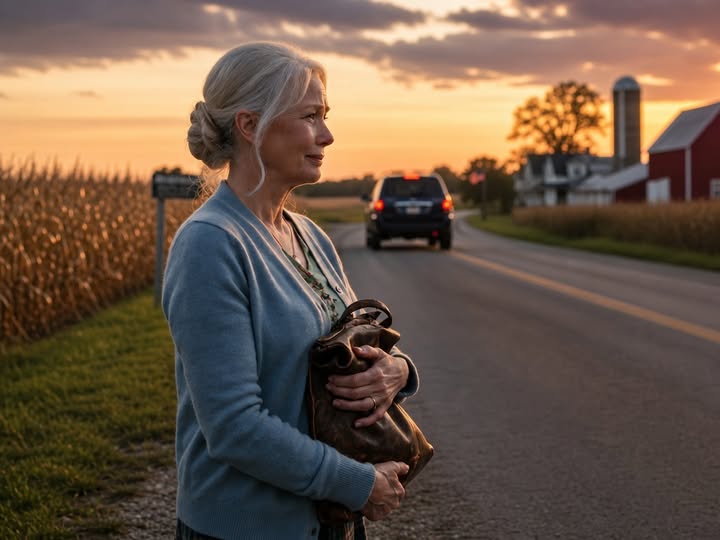
    The gravel crunched under the tires as my son’s truck pulled away, leaving me standing alone on the side of a dusty country road with nothing but the clothes on my back and a small suitcase at my feet. I was 68 years old, a widow of just three weeks, and the man I had given birth to — the boy I had rocked to sleep, taught to ride a bike, and sacrificed for — had just abandoned me like I was nothing more than an inconvenience. The sun was setting behind the hills, painting the sky in soft oranges and pinks, but all I could feel was a cold numbness spreading through my chest. This wasn’t how  family was supposed to work. This wasn’t the ending I had imagined after fifty years of marriage to the love of my life.

    Family

    My husband Robert and I had built everything together. We started with almost nothing — a small farm, a modest house we renovated ourselves, and a little feed store that grew into a successful agricultural supply business serving three counties. We raised two children: our daughter Sarah, who moved to the city and built her own life, and our son Daniel, who stayed close but always seemed to want more than he was willing to earn. Robert used to say Daniel had “big ideas but small effort.” I defended him because that’s what mothers do. I believed that with time and guidance, he would grow into the responsible man we hoped he would be. I was wrong. And on that lonely dirt road, I finally understood just how wrong I had been.

    The trouble started the moment Robert’s heart gave out one quiet Tuesday morning. He had been working in the garden, something he loved, when he simply sat down on the bench and never got back up. The funeral was beautiful — filled with friends, neighbors, and people whose lives our business had touched over the decades. Daniel stood beside me at the graveside, looking appropriately solemn. But the very next day, his mask slipped. He began talking about “what comes next” and how the house and business should be transferred quickly “to keep things running smoothly.” I told him we would handle everything properly through the lawyer, but he didn’t want to wait. He wanted control. Immediately.

    What followed was a nightmare I never saw coming. Daniel changed the locks on the house while I was at the attorney’s office. He transferred business accounts into his name using documents I later discovered he had forged. He even told customers that I had decided to retire and move away. When I confronted him, he looked me in the eye and said, “Mom, you’re getting older. You don’t need all this stress. Let me handle it.” The entitlement in his voice chilled me to the bone. This wasn’t grief talking. This was a man who had been waiting for his father to die so he could finally take what he believed was his.

    The breaking point came on a Friday afternoon. I returned from running errands to find a moving truck in the driveway and strangers carrying our furniture out the front door. Daniel stood on the porch with a smug expression, arms crossed. When I demanded to know what was happening, he simply said, “The house is mine now. Dad left it to me.” I knew that wasn’t true. Robert and I had updated our wills together just two years earlier, leaving everything in a trust that protected both children equally while ensuring I had lifetime rights to the house. But Daniel had other plans. He had convinced himself that as the only son who stayed local, he deserved it all.

    When I refused to leave, he did the unthinkable. He had me escorted off the property by two men he had hired. They didn’t touch me, but the message was clear: I was no longer welcome in the home I had lived in for forty-eight years. As I stood on the side of the road watching his truck disappear into the distance, I felt something shift inside me. Not just sadness or anger, but a fierce determination. I had spent my entire adult life being the peacekeeper, the supporter, the one who smoothed things over. That version of myself died on that dirt road. A new version was born — one who would fight for what was rightfully hers.

    What Daniel never knew — what he never bothered to ask about — was the plan Robert and I had put in place years earlier. While Daniel was busy dreaming about taking over, we had quietly transferred the business into a revocable living trust with strong protections. The house was similarly protected. More importantly, I had something Daniel knew nothing about: a separate investment account in my name only, built from years of careful saving and wise investments Robert had helped me make. That account, combined with the trust documents, gave me the power to take everything back.

    The next morning, I met with my attorney. Within forty-eight hours, legal notices were delivered. The bank accounts Daniel had transferred were frozen. The moving company was ordered to return our belongings. And Daniel received a formal letter informing him that he had thirty days to vacate the property or face eviction proceedings. The look on his face when the sheriff delivered the papers must have been something to see. He called me that evening, furious and panicked. “Mom, what have you done? This is my house! Dad wanted me to have it!”

    I listened quietly as he raged. When he finally paused for breath, I spoke with a calmness I hadn’t felt in weeks. “Daniel, your father wanted both his children to be taken care of. Not for one to take everything while the other gets nothing. You made your choice when you put me on the side of the road. Now I’m making mine.”

    The legal battle was shorter than I expected. The trust documents were ironclad. The forged transfers were thrown out. Within three months, I was back in my home, the business was under proper management again, and Daniel was forced to find somewhere else to live. The relationship between us remains fractured. Some wounds run too deep to heal completely. But I sleep better at night knowing I protected what Robert and I had worked so hard to build — not just for myself, but for my daughter Sarah and for the grandchildren who deserve to inherit something more than debt and bitterness.

    This experience taught me lessons I wish every parent would learn before it’s too late. First, never assume your children will do the right thing simply because they share your blood. Love should be unconditional, but financial inheritance should never be. Proper estate planning isn’t about distrust — it’s about protection. Second, never let anyone make you feel guilty for protecting what you’ve earned. Generosity is beautiful, but it should never come at the cost of your own security and dignity. Third, document everything. Have conversations in writing. Update wills regularly. Make your wishes crystal clear so there can be no room for manipulation when you’re gone.

    Looking back, I realize that Daniel’s greed didn’t start the day Robert died. The seeds were planted years earlier — in the times I made excuses for his irresponsibility, in the moments I bailed him out financially instead of letting him face consequences, in the way I prioritized keeping peace over teaching accountability. Parents want to believe the best about their children. But sometimes that belief blinds us to the truth. Love doesn’t mean enabling. It means preparing them for life by allowing them to experience its natural lessons.

    Today, my house feels like mine again. The garden Robert and I planted together is blooming. The business is stable and serving the community that supported us for decades. Sarah visits often with her  family, and we’ve grown closer than ever. We talk openly about money, about boundaries, and about the importance of planning ahead. The grandchildren are learning that hard work and honesty matter more than entitlement.

    Family

    As for Daniel, he eventually moved to another state. We exchange polite texts on holidays, but the warmth is gone. Some relationships cannot be repaired once trust has been completely shattered. I’ve made peace with that. Not every story needs a perfect ending. Some simply need an honest one.

    If you’re a parent reading this, please take this story to heart. Have the difficult conversations now. Update your estate plans. Teach your children responsibility rather than entitlement. Show them through your actions that love includes boundaries and accountability. Don’t wait until you’re gone for them to learn these lessons the hard way.

    And if you’re an adult child who recognizes yourself in Daniel’s behavior, I urge you to pause and reflect. The legacy you leave isn’t measured by how much you inherit. It’s measured by how you treat the people who gave you life. Greed might feel good in the moment, but it leaves you poorer in every way that truly matters.

    Standing on that dirt road that day, watching my son drive away, I felt abandoned and betrayed. But I also felt something else — a quiet strength rising from deep within. I realized I wasn’t just fighting for my house or my business. I was fighting for the dignity Robert and I had earned together. For the right to grow old in the home we built. For the peace of knowing I had protected what mattered most.

    That fight changed me. It made me stronger, wiser, and more determined to live the rest of my life on my own terms. The dirt road wasn’t the end of my story. It was the beginning of a new chapter — one written with courage, clarity, and the deep satisfaction that comes from refusing to let anyone take what you’ve rightfully earned.

    If you’re facing your own family struggles, remember this: you are allowed to protect yourself. You are allowed to say no. You are allowed to choose peace over pretense. And sometimes, the greatest act of love you can offer your children is teaching them that actions have consequences — even when those actions come from your own flesh and blood.

    I stood on that dirt road and chose myself. And I’ve never regretted it for a single day since.

  • Before getting married, my mom forced me to put my two-million-dollar apartment in her name. She told me: “Don’t say anything to Jason or his family.” I thought she was crazy. Until my mother-in-law took the microphone in front of 200 guests and announced that my place on the Upper East Side would be her retirement home

    Before getting married, my mom forced me to put my two-million-dollar apartment in her name. She told me: “Don’t say anything to Jason or his family.” I thought she was crazy. Until my mother-in-law took the microphone in front of 200 guests and announced that my place on the Upper East Side would be her retirement home

    “What do you mean it’s not Sophia’s anymore?” Eleanor asked.
    Her voice still sounded sweet, but it cracked at the end. My mother didn’t answer immediately. She stood there in front of the two hundred guests, holding the microphone as if it weighed less than the truth she had just dropped.
    I wasn’t breathing. Neither was Jason. I felt his hand—the same one that seconds ago was squeezing my waist—clench into a fist against his leg.
    “Exactly what I said,” my mother stated. “The Upper East Side apartment is no longer in my daughter’s name.”
    A murmur rippled through the room. It wasn’t an uproar yet. It was that low, poisonous sound of tables leaning in toward someone else’s misfortune.
    Eleanor blinked several times. “I don’t understand. Sophia told us that apartment was hers.” “It was,” my mother replied.
    Jason suddenly stepped toward the microphone. “What did you do, Sophia?” The way he said it chilled me. It wasn’t “What happened?” It wasn’t “Are you okay?” It was “What did you do?”, as if I had committed a crime. As if the betrayal was not handing him my house.
    My mother turned to look at him for the first time. “She didn’t do anything. I asked her to do it.”
    Jason swallowed hard. The skin around his eyes tightened. “Ma’am, with all due respect, this isn’t your business.”
    My father stood up from his table. Slowly. That man, who always let my mother speak first because he said she had better aim, walked toward us without taking his eyes off Jason.

    “The moment your mother announced in front of everyone that she was going to live in my daughter’s property,” my father said, “it became our business.”
    Eleanor let out a little laugh. “Oh, please. Let’s not exaggerate. It was a family comment, a nice joke.”
    My mother raised her eyebrows. “A joke?” “Of course,” she said, looking back at the guests. “We’re celebrating. A mother-in-law can’t say anything these days without being accused of being a gold digger.”
    A few women laughed quietly, uncomfortably. Jason stepped closer to me. “Honey, give me the mic. Let’s settle this in private.” That “honey” sounded used. Like a napkin passed through too many mouths.
    “Did you know your mother planned on moving into my apartment?” I asked him. He smiled, but it didn’t reach his eyes. “It wasn’t like that.” “Then how was it?” “It was a future possibility. My mom is alone. You have space. We could live with her for a while while…” “While what?”

    Jason clenched his jaw. My mother didn’t take her eyes off him. Eleanor jumped back in. “While you two learn how to manage a marriage. Because with all due respect, Sophia, you’ve always lived very protected. An apartment of that caliber for two newlyweds is too much. It goes to your head.”
    I laughed. It wasn’t a pretty laugh. It was a short, sharp laugh that escaped before I could stop it. “My apartment was too much for me, but perfect for you?”
    The background music cut off abruptly. I didn’t know if the DJ realized the party was over or if someone signaled him. The silence became massive.
    Jason grabbed my arm. “That’s enough.” It hurt. Not because he squeezed hard, but because he did it without thinking. As if my body were something he could move to accommodate his shame.
    My father took a step forward. “Let go of her.” Jason let go.

    Eleanor stopped pretending. Her face changed right then and there, in front of everyone. The elegant mother-in-law, the woman with the perfect smile, vanished. Another woman remained—furious, hungry, with her nails digging into her glass.
    “This is a humiliation,” she said. My mother tilted her head slightly. “No, Eleanor. Humiliation was taking the microphone at my daughter’s wedding to announce you already had plans for what doesn’t belong to you.” “It was for the family!” “No. It was for you.”
    Jason stepped between them. “Mom, stop.” But she couldn’t stop. “Don’t tell me to stop!” she spat at him. “You told me it was already settled. You told me Sophia did everything you asked.”
    The whole room heard it. I felt something open up inside me. Something hot. It wasn’t pain yet. It was clarity.
    Jason closed his eyes. “Mom…” “No,” I said. My voice was firmer than I expected. “Let her continue.”
    Jason looked at me with hatred for half a second. A flash. Quick. Sufficient. Right there, I saw the man my mother had seen before I did.
    Eleanor was breathing heavily. “Do you think my son married you to live as a guest in his mother-in-law’s house?” she said. “He deserves better than starting from zero. And if you have, you share. That’s what marriage is for.”
    My mother let out a breath through her nose. “How interesting. Because when we asked for a prenuptial agreement, Jason said it was out of love, that he didn’t want money to contaminate anything.”

    Jason’s face lost its color. “Did you tell her about that too?” “I didn’t tell her anything,” my mother said. “I was there.”
    I remembered that afternoon at the lawyer’s office. Jason smiling, signing without reading, saying: “What we have isn’t measured in property.” My mother sitting behind me, silent. Watching him. Learning.
    Eleanor looked at her son. “A prenup?” The question wasn’t an act. She didn’t know. And then I understood that Jason had lied to her, too.
    The woman who wanted my apartment didn’t know that her own son had no direct legal route to touch it. That’s why they needed pressure. That’s why they needed a spectacle. That’s why they wanted me to accept publicly, in front of everyone, that it would one day be hers.
    They weren’t looking for a house. They were looking for a social confession. A recorded promise. A chain with a white bow.
    Jason took my hand. Gently now. Too gently. “Sophia, honey, you’re confusing everything. My mom got excited. It’s not worth ruining our wedding over a comment.” “It wasn’t a comment,” I said. “It was a plan.”

    He stared at me. “Be careful.” That word pierced through me. It wasn’t loud. It wasn’t shouted. But my mother heard it. My father did too. And unfortunately for Jason, the microphone was still on.
    An entire table stopped whispering. My best friend, Natalie, stood up with her phone held high. “I’m recording everything, Soph.”
    Jason turned toward her. “Turn that off.” “No.” “Turn it off!”
    My father stepped closer. “Touch her and this party ends even worse for you.”
    A waiter set a tray on the bar so carefully that the clinking of the glasses sounded like bells. Eleanor composed herself. She wiped a tear that hadn’t fallen and looked at the guests. “How sad that such a beautiful family starts this way. I only wanted to feel included.”
    My mother smiled thinly. “Included in the public records, apparently.”
    A few people let out a nervous laugh. Eleanor glared at her. “You judge me because you have money.” “No,” my mother said. “I judge you because you tried to take from my daughter what she built.” “Nobody tried to take anything!”

    My mother reached into her purse. She pulled out a beige envelope. The same envelope she had kept at the lawyer’s office. My heart thudded.
    “Three months ago,” she said, “someone asked the building manager if Sophia could authorize permanent entry for ‘immediate family.’ They also asked how many storage units the apartment had, if the private elevator could be deactivated for other floors, and if the master key could be changed without Sophia being present.”
    Jason froze. Eleanor stopped breathing. “That’s a lie,” she said.
    My mother opened the envelope and took out a sheet of paper. “The manager has worked with us for twenty years. He told me the same day.”
    I looked at Jason. I wanted him to defend himself. I wanted, still like a fool, for him to say: “That wasn’t me.” But he looked at the floor. And that was his confession.
    My wedding dress started to feel heavy, as if it were wet. “Is that why you asked for a copy of my ID?” I asked him.
    Jason looked up. “It was for the trip.” “There was no trip,” my father said.
    We all turned toward him. My father pulled out his phone, tapped the screen, and held it up. “The travel agency confirmed yesterday that the honeymoon to Italy was canceled six weeks ago. The refund went into an account in Jason’s name.”

    The room erupted in murmurs. The air left my lungs. Italy. I had chosen every hotel. I had bought dresses. I had dreamed of walking with him through ancient streets, holding hands, as if the world owed us beauty.
    “You canceled our honeymoon?” I whispered. Jason took a step toward me. “I was going to reschedule it.” “With what money?”
    He didn’t answer. Eleanor clenched her teeth. “This is all getting out of hand.”
    My mother calmly put the papers away. “No, Eleanor. For the first time, it’s getting into hand.”
    Then, the final blow. A man in a gray suit stood up from a table in the back. I didn’t know him. Or maybe I did. I had seen him greeting Jason at the start of the party, whispering in his ear, clapping him on the back.
    The man walked toward us with a glass in his hand. “Jason,” he said in a low voice, but the room was so quiet that everyone heard, “I need to talk to you.”
    Jason turned pale. “Not now, Arthur.” “Yes, now.”
    Eleanor closed her eyes. As if she recognized the scent of a tragedy that had been following her footsteps for a long time. Arthur looked at me. Then he looked at my father.
    “Sorry for interfering in a family matter, but if the apartment is not in Sophia’s name, we have a problem.”

    My mother turned slowly toward him. “We do?” Arthur swallowed hard. “Jason presented that property as a moral guarantee for an investment.”
    My father let out a dry laugh. “‘Moral guarantee?’ What an elegant term for a lie.”
    Jason held up his hands. “I didn’t sign anything.” “No,” Arthur said. “But you promised that after the wedding you would have access. And your mother confirmed it was already settled.”
    Eleanor brought her glass to her mouth, but her hand was shaking so much that the wine spilled onto her gold dress. It looked like dark blood.
    I no longer felt the shame. The shame had been replaced by something colder. “How much do you owe?” I asked. Jason looked at me. “Sophia, don’t do this here.” “How much?”
    He didn’t answer. Arthur did. “Twelve and a half million.”
    The room became a void. My mother closed her eyes for a second. My father cursed under his breath. I looked at my husband. My husband of two hours. The man who had cried when he saw me walk in. The man who had promised to take care of me. The man who had gambled my house before I even finished taking off my veil.

    “Is that why you married me?” I asked. Jason opened his mouth. And for the first time, he couldn’t find a lie fast enough.
    Eleanor stepped forward. “My son loves you.” “Shut up,” I said.
    She froze. I had never spoken to her like that. I didn’t know I could. “Don’t ever say the word love in my name again.”
    Jason tried to touch me again. I backed away. “Don’t touch me.” “Sophia…” “No.”
    The DJ, who had been paralyzed for twenty minutes, finally turned off the colored lights. The room remained lit only by the chandeliers and cell phones. No one was pretending this was a wedding anymore.
    My mother came over to me. “Honey, we’re leaving.” Eleanor let out a desperate laugh. “Leaving? Just like that? After my family spent money on this wedding?”
    My father looked at her. “I paid for the wedding.” Eleanor opened her mouth. Nothing came out. “And the venue contract is in my name,” he added. “So you can stay for dinner if you’re hungry. We have nothing left to celebrate.”

    My mother carefully took the cake knife out of my hand. I hadn’t even realized I was still holding it. Natalie came running over with my bouquet. “Soph, let’s go.”
    I looked at Jason one last time. I expected to feel like I was dying. But I didn’t. What I felt was worse for him. I felt the love leaving me. Not all at once. Not with screams. It was leaving like dirty water down a drain.
    “I’ll send someone for my things tomorrow,” I said. Jason approached with red eyes. “You can’t leave me at my wedding.” “You already did that first.”
    I walked toward the exit with my mother on one side and Natalie on the other. The guests parted as if I were carrying fire. A few aunts were crying. One of Jason’s cousins was recording secretly.
    Claire, his younger sister, was sitting by a pillar with her face covered. When I passed her, she lowered her hands. “I’m sorry,” she said to me.|
    I stopped. Jason shouted from behind: “Sophia!” I didn’t turn around. But Claire took my wrist. “My mom has a key.”
    I felt the floor move. “What?” Claire cried silently. “I don’t know if it’s for the apartment. She had it made from a photo. Jason gave her your keys one night when you fell asleep. I saw them.”

    My mother heard. Her face didn’t change, but her eyes did. They turned to stone. “When?” she asked. “About two weeks ago.”
    My father pulled out his phone immediately. “I’m going to have everything changed now.” “It’s not enough,” Claire said. We all stood there looking at her. She looked toward her mother, who remained in the center of the room, stained with wine, faking dignity amidst ruins.
    “My mom didn’t want to move in later,” Claire whispered. “She wanted to get in tonight, while you guys were going to Italy. She said once she was inside, no one could get her out without a scandal.”
    Jason started walking toward us. “Claire, shut your mouth.” My father stepped in front of me. But Claire, trembling, said the last thing. “And she wasn’t going alone.”
    The man in the gray suit set his glass on a table. My mother squeezed my hand. “Who else?” Claire opened her mouth to answer. At that instant, the doors of the ballroom burst open from the outside.
    Two security guards rushed in, talking into their radios. Behind them appeared my building manager, Mr. Henderson. He was pale, sweating, his suit jacket disheveled.

    “Mr. Roberts,” he said to my father, “sorry for coming here, but you weren’t answering.” My father went rigid. “What happened?”
    Mr. Henderson looked first at Jason. Then at Eleanor. Then at me. “Fifteen minutes ago, a young woman and two men tried to enter Ms. Sophia’s apartment with a duplicate key.”
    My hands froze. “Who?”
    Mr. Henderson took a deep breath. “A young woman and two men. They said they were sent by Mrs. Eleanor.”
    Eleanor shouted from the back: “That’s a lie!” But no one looked at her. Because Mr. Henderson held up his phone. On the screen was an image from the private elevator camera. A woman with a cap, dark sunglasses, and a huge bag. Next to her, two men were carrying empty cardboard boxes.
    I didn’t recognize the men. But I recognized the bag. It was Eleanor’s. The same gold bag she had brought to my bridal shower.
    My mother murmured: “My God.”
    Then Jason’s phone vibrated. Once. Twice. Three times. He looked at the screen and his expression completely broke. It wasn’t fear. It was panic. The man in the gray suit also received a call. He walked a few steps away, answered, and stood motionless.

    Eleanor started walking toward the exit, but security blocked her path. “Excuse me,” she said. “I feel sick.”
    My mother picked up the microphone again. No one knew she still had it. “Eleanor.” Her voice came through the speakers, clear and terrifying. Eleanor stopped. “Before you leave, you should know something.”
    Everyone turned. My mother looked at me. Not like a scared mother. Like a woman who had survived a war before I was even born.
    “The apartment isn’t in my name just for the sake of keeping it,” she said. “It’s protected in a family trust. And for the last three months, any unauthorized entry attempt triggers an automatic police report.”
    Jason’s eyes went wide. “What?” My mother smiled slightly. “I told you my daughter wasn’t going to lose her house because she was too trusting.”
    At that moment, outside the ballroom, sirens sounded. Not many. Just two. But they were enough for Eleanor to drop her glass. The glass shattered against the floor.
    And I, dressed as a bride, with the bouquet trembling in my hands, understood that my marriage hadn’t lasted even one night. I also understood something worse. My mom hadn’t done all this just out of suspicion. She had been waiting for them to dare.
    And when the police entered the ballroom asking for Jason and his mother, my mother leaned into my ear and said the sentence that left me bloodless:
    “Honey, this didn’t start with your apartment. It started with Jason’s first wife.”

    Part 3:

    “First wife?” I repeated.

    I didn’t recognize my own voice. It sounded like someone else was speaking from inside my dress—a woman who looked like me but no longer understood the language of the world.

    Jason stopped looking at the police. For the first time since everything exploded, he didn’t try to justify himself. He didn’t try to smile. He didn’t reach for my hand. He only looked at my mother. And in that look, there was a silent question, an old rage: How did you know?

    My mother didn’t move. “Yes, Sophia,” she said, just for me. “Jason has been married before.”

    Eleanor let out a laugh that convinced no one. “That’s ridiculous! My son has never been married!”

    The officer at the front, a broad-shouldered man with a tired face, held up a folder. “Eleanor Ortega, Jason Montes, we need you to come with us to give a statement regarding the attempted entry into Sophia Roberts’ property.”

    “Give a statement?” Eleanor screamed. “I didn’t do anything! I’m at my son’s wedding!”…………………………………………………………………

  • For Years, I Sent My Parents $550 Every Friday So They Could Live Comfortably. On My Daughter’s Birthday, They Didn’t Even Bother to Show Up. Then My Father Looked Me in the Eye and Said, “We Don’t Count Your Family the Same.” I Opened My Banking App, Ended Every Transfer in Less Than Ten Seconds, and Sent a Message That Changed Their Lives Forever.

    I opened my banking app, severed the lifeline, and typed a message that would hit harder than any birthday song. Every Friday at nine on the dot, like a church bell, $550 slipped out of my checking account. The first time I set it up, I cried into my sleeve.
    I was finally the kid who could give back. They raised me on casseroles and lectures about doing the right thing; when Dad’s hours got cut and Mom said the salon had slowed to a crawl, I didn’t hesitate. Family helps family. I typed my routing number the way you write a prayer.
    Three years later, “help” looked like duct tape inside Lily’s sneakers. Rent late—again. Groceries on a credit card. Marcus dragging himself home from a second shift, hands split from corrugate and cold. He tapped the statement with a bandaged finger. “Just a month,” he said. “Ask them to scale back.” I kissed his knuckles.

    “They need it,” I said, and tried not to do the math on my daughter’s shoes. Mom promised they’d be at Lily’s party. “Wouldn’t miss it—with bells on.” I believed her, because believing is cheaper than admitting you’ve been financing a story you’re not even in. Saturday arrived cotton-candy pink. Dollar-store balloons. Paper streamers.

    I frosted a leaning chocolate cake with Lily’s favorite swirls because, according to my six-year-old, “pink tastes like cake.” Two o’clock softened into 2:30. Musical chairs got loud in the best way. Lily kept glancing at the door like it could grow grandparents on command. By three, a princess dress and a still-wrapped present sat on the couch together.

    By four, the last goodie bag left, and the quiet landed sticky and sweet. I called. Dad answered over laughter and clinking glasses. “Oh—today? We’re at Danny’s. He insisted. Busy house, you know how it is.” “You knew,” I said. “I reminded you yesterday.” He sighed like I was the unreasonable one. “We can’t drop everything for every little thing, Sarah. We have other grandkids. It’s easier there.” “How’d you afford the trip?”

    I asked, even though I already knew. “We saved,” he snapped. “What we do with our money is our business. You offered to help. Nobody forced you.” Then the cut that cauterized: “We don’t count your family the same way. Danny’s is… better established. You understand.” I hung up before Lily could hear my voice crack through the bedroom door.

    The kitchen went very still. My bank app threw a blue square of light across the counter. A balloon’s reflection drifted over the microwave door. Marcus stared at the empty cake plates like they’d said something ugly. Down the hall, one small sniffle. I canceled the transfer. Then I pulled every thread they’d tied to me. The car loan I’d co-signed “just to lock a better rate”—closed, title rerouted.

    The two extra phone lines on my plan—removed, port-out codes generated. The “emergency” credit card they treated like a punch card for takeout—frozen, statements downloaded, charges highlighted like evidence. Fifteen minutes of taps unraveled three years of obligation. Mom called, voice high and shiny.

    “What did you do? That’s our money!” I looked at the crayon crown Lily had left on the table, the frosting smear shaped like a question mark, the photo taped to the wall from last July—Lily with a sparkler and a little U.S. flag she’d colored herself—and felt something old and heavy lift. I opened Photos. Screenshot of the transfers. The text where Mom promised “bells on.”

    Dad’s message from last winter—not our problem—when our car died and Marcus took the bus in the dark for a week. A picture of Lily in her purple dress, smiling at a door that never opened. I opened the family thread. The cousins who “stay out of it.” The aunts who forward prayers. Danny with his perfect-lawn thumbs-ups. I typed two sentences. Clean.

    No swearing, no apology, no ladder back down. I attached the screenshots, the statement PDF, and a photo of Lily’s cake with two empty chairs behind it. Marcus watched my face. “You sure?” he asked. I looked down the hall where my daughter slept with glitter still on her cheek. My thumb hovered over Send I pressed send.

    The little circle spun for a heartbeat, a digital pendulum swinging between the life I had and the life I was choosing. Then it vanished. Delivered.
    For ten seconds, nothing happened. The kitchen remained still, save for the hum of the refrigerator and the distant sound of Marcus running water in the bathroom sink. I set the phone down on the counter, screen up. It looked like a bomb waiting to detonate.
    “Done,” I said. My voice sounded foreign to my own ears. Flat. Final.
    Marcus dried his hands on a towel and came to stand beside me. He didn’t look at the phone. He looked at me. He saw the tension in my shoulders drop, the way my hands stopped trembling. He wrapped an arm around my waist and pulled me into his side. He smelled like cardboard dust and laundry detergent. He smelled like safety.
    “They’re going to call,” he said.
    “Let them,” I replied.
    “Your mom… she’s not going to take this well, Sarah. She’ll call everyone. She’ll tell them you’re selfish. That you abandoned them.”
    “I didn’t abandon them,” I said, looking at the crayon crown on the table. “I stopped funding their rejection of me.”
    We stood there for a long time, watching the phone screen dim until it went black. Then, as if on cue, it lit up. A notification. Then another. Then a cascade.
    I didn’t pick it up. I walked down the hall to Lily’s room.
    She was asleep, curled around a stuffed rabbit that had lost an ear years ago. There was glitter on her cheek, exactly where Marcus had said it would be. I sat on the edge of her bed and brushed the glitter away with my thumb. She stirred but didn’t wake.
    “I’m sorry,” I whispered to the quiet room. “I’m sorry they weren’t here. But I promise… I’m going to be enough. Just me.”
    I went back to the kitchen. The phone was buzzing continuously now. A steady, angry vibration against the laminate counter. I picked it up.
    Mom: What is this? Why did the transfer fail? Mom: Sarah? Call me immediately. Dad: This is childish. Turn it back on. Aunt Carol: Is everything okay? Your mother is very upset. Danny: Hey cuz, heard there’s some drama. Everything cool?
    I scrolled through the notifications. Thirty-two messages in five minutes. The group chat, usually a stream of birthday wishes and prayer emojis, had become a tribunal.
    I typed one more message. Not to the group. To Dad.
    You said we don’t count the same way. So I stopped counting you in my budget. Use Danny’s establishment to pay the bills now.
    I blocked the number. Then I blocked Mom. Then I muted the group chat.
    The silence that followed was louder than the buzzing had been.

    The first week was the hardest. Not financially—that relief was immediate and intoxicating. For the first time in three years, when I logged into my banking app, I didn’t feel a knot of dread in my stomach. I saw the $2,200 a month that used to vanish every Friday. I saw it sitting there. Waiting.
    I used the first week’s surplus to buy Lily new sneakers. Not the ones with the duct tape. Real ones. White and pink with velcro straps she could fasten herself. When she put them on, she marched around the living room stomping loudly, laughing every time the squeak echoed off the walls.
    “Look, Mama! They fit!”
    “They fit,” I agreed. My throat tightened.
    But while Lily marched, my phone sat in the drawer, occasionally lighting up with calls from numbers I didn’t recognize. Blocked. Voicemails full of heavy breathing, sighs, and sometimes, sharp accusations.
    “How could you do this to your own blood?” “We raised you.” “You’re punishing us for being human.”
    I didn’t listen to all of them. I listened to enough to know the narrative was shifting. I was no longer the helpful daughter. I was the ungrateful child. The one who turned her back when things got tough.
    Marcus handled the logistics. He changed our passwords. He put a fraud alert on our credit reports because Dad had co-signed nothing, but he had access to enough information to be dangerous. We fortified the perimeter.
    On Wednesday of that first week, Mom showed up at our apartment.
    I was at work. Marcus called me during my lunch break, his voice low. “She’s in the parking lot. She says she won’t leave until you talk to her.”
    “Did you let her in?”
    “No. But she’s making a scene. Talking to the neighbors.”
    I left work early. When I pulled into the lot, I saw her car—a sedan I had helped pay the insurance on for two years—parked across two spaces. Mom was standing by the entrance, arms crossed, wearing the coat I bought her last Christmas. She looked small against the brick building, but her posture was rigid with indignation.
    I walked toward her. I didn’t run. I didn’t hide.
    “Sarah,” she said when I was ten feet away. Her voice was loud, intended for the windows above us. “You think you can just cut us off? After everything we did?”
    “You didn’t come to Lily’s birthday,” I said. My voice was calm. I was surprised by how calm it was. “You went to Danny’s.”
    “Danny’s mother was there,” she snapped. “It was a family gathering. You know how your father gets about being outnumbered.”
    “So I should have brought Lily to Danny’s? Instead of you coming here?”
    “We’re the parents,” she said, as if that explained the geometry of the universe. “We go where we want. You send the money because you can. Because you’re stable. Why are you punishing us for your own success?”
    That was the core of it. I realized then. It wasn’t about need. It was about hierarchy. They needed me to be the ATM because it kept me in the child role. As long as I was paying, I was subordinate. If I stopped paying, I became an equal. And they couldn’t tolerate an equal.
    “I’m not punishing you,” I said. “I’m balancing the books. You said my family doesn’t count the same way. So I removed you from the ledger.”
    “Your father is going to have a heart attack,” she said, playing the final card. The health scare. The guilt trip that had worked for decades.
    “If he’s sick, take him to the hospital,” I said. “I’m not paying the bills anymore. But I will call 911 if you think he’s in danger.”
    She stared at me. Her mouth opened, then closed. She had no script for this. In her story, I was supposed to crumble. I was supposed to apologize and double the transfer to prove my love.
    “You’re cold,” she whispered. “Just like your father said.”
    “Maybe,” I said. “Or maybe I’m just warm enough for my own daughter now.”
    I turned my back and walked into the building. I didn’t look to see if she was crying. I didn’t look to see if she was leaving. I just kept walking………………
  • My 15-year-old daughter kept getting sick, but my husband said she was faking it until a secret hospital visit revealed something terrifying inside her that left me screaming in horror

    For weeks, I sensed that something was deeply wrong long before anyone else in the house cared enough to notice. My fifteen-year-old daughter Maya kept complaining about nausea, stabbing stomach pain, and a crushing exhaustion that seemed to drain all the energy from her body.

    This was not the same girl I had always known. Maya had once been lively and full of energy, the kind of teenager who filled every room with laughter. She loved soccer practice after school and spent late nights editing photos on her laptop while music played softly in the background.

    But recently, that spark inside her had faded. She moved slowly, barely touched her meals, and slept for endless hours. What frightened me most was how quiet she had become, as though she were carrying a burden far too heavy for someone her age.

    She constantly kept the hood of her sweatshirt pulled over her head, even indoors, and she rarely looked directly at me anymore. Whenever anyone asked if she was okay, she only shrugged as if none of it mattered.

    But it mattered to me more than anything.

    Every little change in her behavior settled inside my chest like a sharp splinter that would not come out. My husband Robert, however, dismissed everything with an explanation that felt far too easy.

    “She is just faking it to get attention,” Robert said one evening while staring at the television during a football game.

    “She has been vomiting almost every morning,” I replied, trying desperately to make him understand.

    “Teenagers exaggerate everything,” he muttered carelessly. “She probably just wants an excuse to skip school.”

    That night, I looked across the kitchen table at Maya as she pushed food around her plate without eating a single bite. “She has lost a lot of weight,” I said quietly.

    Robert scoffed and accused me of overreacting like I always did whenever it came to our daughter. His voice carried that familiar harshness that usually shut every conversation down before it could truly begin.

    Most of the time, I would have stayed silent just to avoid another argument. But this time, something inside me would not let the issue go.

    I had seen Maya bend over in pain when she thought nobody was looking. I had seen her wipe tears away when she believed she was alone.

    Something was hurting my daughter, and it felt like I was the only person who truly cared.

    Everything changed on a quiet Tuesday night.

    The house had gone still. Robert was asleep upstairs after another exhausting day at work, and the only sound downstairs came from the humming refrigerator.

    I walked toward Maya’s room to check on her and noticed her bedroom door was cracked slightly open.

    The room was almost completely dark except for the dim glow of her desk lamp stretching shadows across the floor. She was curled tightly into herself on the bed, and for a second I thought she was sleeping.

    Then I heard it.

    A soft, broken sound.

    Someone trying desperately not to cry.

    My stomach dropped instantly.

    “Maya?” I whispered into the darkness.

    She did not answer right away. I stepped closer and saw her arms wrapped tightly around her stomach. Her face was pale, streaked with tears, and twisted with pain.

    “Mom,” she whispered weakly.

    The sound of her voice shattered something inside me.

    “It hurts so much,” she said softly. “Please, Mom, make it stop.”

    I sat beside her immediately and pulled her gently against me, shocked by how thin and fragile she felt.

    “How long has it been this bad?” I asked while brushing her hair back carefully.

    She glanced nervously toward the bedroom door.

    “Please do not tell Dad,” she whispered.

    Those words hurt more than anything else.

    I swallowed hard and promised her I would not tell him.

    Eventually she drifted into an uneasy sleep while still trembling in my arms. I stayed awake beside her for hours before finally returning to my own bedroom.

    That night, while Robert slept beside me, I stared at the ceiling and made a decision.

    By sunrise, I already knew what I needed to do.

    The following afternoon, Robert left for work as usual.

    The moment his car disappeared down the street, I grabbed my keys and walked quickly to Maya’s room.

    “Maya, put your shoes on,” I said gently but firmly.

    She looked confused. “Where are we going?”

    “We’re going to the hospital.”

    Her eyes widened slightly. “Dad said I’m fine.”

    “I do not care what your father said,” I replied softly. “You are in pain, and we are going to find out why.”

    She did not argue.

    That frightened me more than anything.

    The drive to Riverside Medical Center felt endless. Maya sat silently beside me staring out the window while dark gray clouds gathered overhead.

    When we entered the hospital, the sharp scent of antiseptic filled the air immediately. A nurse checked Maya in and soon guided us to a small examination room near the back of the clinic.

    Maya sat quietly on the paper-covered table with her feet dangling slightly. In that moment she looked younger than fifteen.

    She looked like my little girl again.

    About twenty minutes later, the doctor entered the room.

    “My name is Dr. Lawson,” he introduced himself calmly.

    He had kind eyes and the steady voice of someone accustomed to difficult conversations.

    “What seems to be going on today, Maya?” he asked gently.

    Maya looked toward me nervously, unable to answer.

    “She has been nauseous for weeks,” I explained. “Severe stomach pain. Constant exhaustion.”

    Dr. Lawson nodded thoughtfully. “Let’s run a few tests and see what’s happening.”

    The next hour passed in a blur.

    Blood tests.

    Questions.

    An ultrasound.

    Maya lay silently while the technician moved the scanner across her stomach. I stared helplessly at the monitor, unable to understand the strange flickering shapes on the screen.

    The technician remained expressionless until the scan ended.

    “The doctor will review the results shortly,” she said quietly before leaving the room.

    The waiting afterward felt unbearable.

    The room seemed colder somehow.

    I twisted my hands nervously while Maya leaned against me in silence.

    Finally the door opened again.

    Dr. Lawson stepped back inside holding a clipboard far too tightly.

    “Mrs. Thorne,” he said carefully. “We need to discuss the scan results.”

    I immediately felt my stomach sink.

    Maya trembled beside me as the doctor shut the door behind him.

    “There’s something inside her,” he said quietly.

    For a moment I could not breathe.

    “What do you mean?” I whispered.

    The doctor hesitated, and that silence terrified me more than any words possibly could.

    “What is it?” I asked again while grabbing Maya’s hand tightly.

    Dr. Lawson exhaled slowly.

    “We need to discuss this carefully,” he said. “But I need you to prepare yourself.”

    The room suddenly felt impossibly heavy.

    Maya’s face crumpled with fear.

    Before the truth was even spoken aloud, I felt my entire world splitting apart beneath me.

    I do not remember how long I screamed.

    The sound ripped out of me before I could stop it, echoing harshly against the white hospital walls.

    Maya flinched beside me, and seeing her reaction finally forced me back to reality.

    I had to stay strong for her.

    She sat shaking beside me with tears streaming down her cheeks while her hands covered her mouth.

    I forced myself to breathe.

    “Please explain,” I said weakly.

    Dr. Lawson looked at us with visible sympathy.

    “Mrs. Thorne,” he said gently, “your daughter is pregnant.”

    The word hit me like an explosion.

    “No,” I whispered automatically.

    It sounded childish. Impossible.

    I turned toward Maya.

    She had collapsed into herself, sobbing uncontrollably.

    “Sweetheart,” I whispered while touching her arm. “Please tell me they made a mistake.”

    But she only cried harder.

    Dr. Lawson explained that the scan suggested she was approximately twelve weeks pregnant.

    Twelve weeks.

    Three entire months.

    Three months of pain while I failed to understand what was happening.

    “She’s only fifteen,” I whispered hoarsely.

    “I know,” Dr. Lawson replied quietly.

    My chest tightened painfully as I struggled to process everything.

    Maya suddenly whispered, “I’m sorry.”

    That apology broke me completely.

    “No, baby,” I said immediately while wrapping my arms around her. “You did nothing wrong.”

    Dr. Lawson carefully explained that because of Maya’s age, certain procedures now had to be followed. A social worker would need to speak with her privately.

    The word “safe” kept repeating during the conversation.

    Safe.

    The moment Dr. Lawson mentioned it, Maya stiffened beside me.

    The social worker arrived shortly afterward.

    Her name was Megan, and she spoke gently as she knelt beside Maya.

    “Would you mind talking with me privately for a little while?” she asked kindly.

    Maya looked toward me nervously.

    “It’s okay,” I whispered while squeezing her hand. “I’ll be right here.”

    Megan guided her into another office and shut the door behind them.

    The silence afterward nearly drove me insane.

    Pregnant.

    Fifteen years old.

    The words echoed endlessly inside my head.

    Maya barely dated. She spent most of her time either at home or with a few close friends I had known for years.

    How had I missed something this huge?

    Then another thought slowly crept into my mind.

    One so terrifying I could barely face it.

    When Megan finally returned with Maya nearly an hour later, Maya’s eyes were swollen from crying.

    “Mrs. Thorne,” Megan said softly, “could we speak privately?”

    My heart pounded violently.

    “Please just tell me what’s happening,” I begged.

    Megan inhaled slowly.

    “Maya told me the pregnancy was not consensual.”

    The words hit me like a physical blow.

    “She said someone hurt her,” Megan added quietly.

    I gripped the back of a chair to steady myself.

    “Who?” I whispered.

    Megan hesitated.

    “She isn’t ready to fully identify the person yet,” she explained. “But she indicated it’s someone she sees regularly.”

    A horrible chill spread through my body.

    Then Megan asked carefully, “Does Maya feel safe at home?”

    “Of course she does,” I answered automatically.

    But even as I said it, uncertainty filled my voice.

    Memories flooded back instantly.

    Maya flinching whenever Robert raised his voice.

    Her refusal to sit beside him on the couch.

    The way she started locking her bedroom door at night.

    Suddenly I could barely breathe.

    Maybe the danger had never been outside our home at all.

    “Sometimes children stay silent because they are afraid nobody will believe them,” Megan said softly.

    Tears streamed down my face.

    “And sometimes,” she continued gently, “they stay silent because they’re trying to protect someone they love.”

    My knees finally gave out beneath me.

    The terrifying thought I had been avoiding now rooted itself fully inside my mind.

    What if the person who hurt my daughter had been living under our roof this entire time?

    Megan recommended that Maya and I stay somewhere else temporarily until the situation became clearer.

    I barely managed to nod.

    She handed me contact numbers and explained that the police would need to speak with us soon.

    When I returned to the waiting area, Maya looked up at me with red swollen eyes and immediately burst into tears again.

    I held her tightly.

    “You are safe,” I whispered fiercely. “I will never let anything happen to you again.”

    The drive to my sister Rachel’s house was painfully quiet.

    Halfway there, Maya suddenly asked in a trembling voice, “Are you mad at me?”

    I pulled the car to the side of the road immediately.

    “Maya,” I said while holding her face gently between my hands, “listen to me carefully. None of this is your fault. I am not angry with you.”

    She cried harder.

    I held her until she calmed enough for us to continue driving.

    But deep inside me, something darker was growing.

    Fear.

    Anger.

    And a terrible suspicion I could no longer ignore.

    Rachel opened the front door before I even knocked.

    One look at my face told her everything.

    “Oh my God,” she whispered while pulling us inside quickly.

    She wrapped Maya in a warm hug and prepared the guest room for us immediately.

    Maya fell asleep almost as soon as her head touched the pillow.

    Hours later, Rachel found me sitting alone in the living room unable to sleep.

    “What happened?” she asked quietly.

    I finally whispered the truth.

    “Maya is pregnant.”

    Rachel’s face went pale.

    Then I admitted something even worse.

    “I think someone hurt her.”

    Rachel stared at me carefully. “Who?”

    I could not say the name aloud.

    But inside my mind, it echoed over and over again.

    Robert.

    And the thought of it made me feel like I was drowning in betrayal.

  • My stepson smashed my son’s handmade airplane, stared directly at me, and said, “YOU’RE NOT MY REAL MOTHER ANYWAY.” That night, I quietly stopped paying for every luxury, privilege, and expense I had been covering for that household… and before morning came, I discovered exactly WHO HAD BEEN TEACHING HIM TO TREAT ME LIKE GARBAGE ALL ALONG.

    Part 1: The Sentence That Changed Everything

    The breaking point came on a Thursday evening after years of tension quietly building inside our blended family. My name is Rachel Carter, I’m forty-three years old, and I lived in Phoenix with my husband Daniel. I brought two children into the marriage, my daughter Olivia and my son Ethan, while Daniel had two teenagers from his previous marriage: Jason and Alyssa.

    Their biological mother, Melissa, lived across town in Scottsdale and constantly filled their heads with ideas about “real family” and blood relationships. The children returned from her house carrying resentment toward me no matter how much I tried helping them. Still, I kept trying because I genuinely believed patience and kindness could eventually create peace.

    I paid for school clothes, sports equipment, birthday gifts, phones, streaming services, doctor visits, and countless emergency expenses. I drove everyone to practices, appointments, and school events while learning every small detail about what they liked and disliked. I never demanded they call me Mom, and I never expected affection. I only wanted basic respect.

    But respect never came.

    Jason openly ignored my authority whenever I asked him to help around the house, and Alyssa made it clear she only listened to Daniel. Every time I tried discussing the situation privately with my husband, he brushed it aside by claiming the teenagers were simply “adjusting.”

    Eventually the hostility spread toward my children too.

    One afternoon, Olivia cried quietly at the dining table after Alyssa deliberately ruined the expensive art markers I bought her for Christmas by leaving every cap off overnight. When Olivia confronted her politely, Alyssa shrugged and reminded her that “Dad controls this house, not your mom.”

    That same week, Ethan asked me a question I couldn’t answer.

    “Mom… why can they talk to you like that when I’d get in trouble for it?”

    The truth was painful. I had spent years tolerating disrespect because I believed keeping peace mattered more than protecting myself. In the process, I accidentally taught my own children that humiliation was something adults were supposed to endure quietly.

    Everything finally exploded when I came home one evening and found Ethan sitting silently on the living room floor holding the broken remains of his wooden airplane. We spent nearly three weeks building that model together in the garage, sanding tiny wings, painting details, and carefully assembling every piece. Now the airplane had been snapped cleanly in half.

    When I asked what happened, Ethan admitted Jason destroyed it after getting angry about headphones.

    I walked into the living room where Jason sat comfortably playing games on the console I bought the previous Christmas. At first he claimed the damage was an accident, but when I calmly corrected him, his entire expression changed.

    “Listen carefully, Rachel,” he said coldly. “You’re not my real mom. I don’t owe you respect, explanations, or anything else. Ethan isn’t my family either. You’re just the woman Dad married.”

    Something inside me became very quiet after hearing those words.

    I didn’t yell or argue. I simply nodded, walked into my office, opened my laptop, and began removing everything connected to my name. Phone plans, streaming services, gaming subscriptions, internet permissions, cloud storage, console access, and shared credit cards disappeared one by one.

    Then I called a locksmith.

    Later that evening, Daniel came home and stared at the cancellation lists open on my desk with obvious panic spreading across his face. He asked what I was doing, and for the first time in years, I answered honestly.

    “I’m returning everyone to the truth,” I told him.

    When he asked what truth I meant, I closed the laptop and looked directly at him.

    “If I’m not their family,” I said quietly, “then they don’t get family benefits anymore.”


    Part 2: The Locks Changed Everything

    The next afternoon, I left work early and drove home after the locksmith finished replacing every lock in the house. He handed me four new keys: one for me, one for Daniel, one for Olivia, and one for Ethan. There were no spare copies for Jason or Alyssa anymore.

    Afterward, I calmly packed the teenagers’ belongings into labeled boxes and placed everything neatly beside the front door. I didn’t scream, throw things, or behave dramatically. By the time I finished, the boxes looked less like punishment and more like the unavoidable result of choices nobody expected to have consequences.

    At exactly 5:02 p.m., Daniel called me saying the key no longer worked. I told him I already knew because I changed the locks myself. In the background, I could hear Alyssa yelling and Jason cursing while Daniel tried to keep the conversation under control.

    “You cannot lock my children out,” Daniel whispered angrily.

    “I’m not doing this because they’re your children,” I replied calmly. “I’m doing it because they made it very clear they don’t recognize my authority, my rules, or my family in this house.”

    Daniel repeated the same excuse he always used by reminding me they were teenagers. I reminded him that plenty of teenagers managed not to destroy property or humiliate people inside their own homes. Then I finally said the sentence I had apparently been carrying for years.

    “Call Melissa. Their things are packed.”

    When I arrived home, Daniel sat on the curb looking exhausted while Alyssa cried quietly beside the porch. Jason pretended not to care, but his shaking hands revealed more fear than confidence. A few minutes later, Melissa arrived already irritated and dismissive about the entire situation.

    I looked directly at her and calmly explained that Jason made it very clear I was nothing more than “the woman Dad married.” Since he didn’t consider me family, I finally decided to stop pretending otherwise too. Before Melissa could argue, Daniel quietly admitted she had been encouraging the kids to use me financially for years.

    My stepson smashed my son’s handmade airplane, stared directly at me, and said, “YOU’RE NOT MY REAL MOTHER ANYWAY.” That night, I quietly stopped paying for every luxury, privilege, and expense I had been covering for that household… and before morning came, I discovered exactly WHO HAD BEEN TEACHING HIM TO TREAT ME LIKE GARBAGE ALL ALONG.

    Part 2 of 2

    The driveway became completely silent after that confession. Melissa tried denying it, but Alyssa softly admitted her mother repeatedly told them I was only trying to “buy” their affection and that they should take advantage of my generosity while it lasted.

    For the first time since we married, Daniel looked genuinely ashamed instead of defensive. Meanwhile, I simply took a breath and explained that the arrangement officially ended that day. Jason forced a sarcastic laugh and claimed they were better off staying with their mother anyway.

    Then Melissa hesitated.

    That hesitation changed everything because it revealed the truth before she even spoke. She eventually admitted she was living with her own mother in a small house with only one extra bedroom, meaning there wasn’t actually enough space for both teenagers permanently.

    For the first time since I met him, Jason stopped looking rebellious and started looking scared. Alyssa stared at her mother in disbelief while quietly asking where they were supposed to go. Nobody answered because nobody really had one.

    Before getting into the SUV, Jason finally turned toward me and asked what would happen if they wanted to come back someday. I looked him directly in the eyes before giving him the only honest answer left.

    “Then you’ll have to do something you’ve never done with me before,” I said quietly.

    “What?” he asked.

    “Tell the truth.”

    Part 3: The Door Had to Close First

    The first week after Jason and Alyssa left felt strange, but not empty. What surprised me most was how peaceful the house suddenly became. Olivia started drawing at the dining table again without hiding her art supplies afterward, and Ethan stopped carrying his headphones around like he was protecting valuables in an unsafe place.

    Daniel barely spoke during those days. Every evening, though, I noticed him pausing outside Alyssa’s empty bedroom before going quietly to bed. Twice I caught him crying when he thought nobody could see him.

    That was when I fully understood something people rarely admit about boundaries. Saying “enough” doesn’t feel empowering at first. It feels painful because you’re carrying grief and guilt at the same time while hoping the damage was worth finally protecting yourself.

    A week later, Melissa called asking to meet me at a coffee shop downtown. She looked exhausted and emotionally drained in a way I had never seen before. Almost immediately, she admitted she spent years convincing Jason and Alyssa that I was trying to “buy” their affection because she felt insecure watching me provide things she couldn’t afford herself.

    Then she quietly admitted something else.

    Jason confronted her the night before and blamed her for destroying his relationship with our family. According to Melissa, Alyssa barely stopped crying since leaving the house because both children finally realized stability wasn’t guaranteed forever.

    That evening, everyone came over to talk. We sat together in the backyard beneath the Arizona sunset while nobody seemed to know how to begin the conversation. Eventually, Jason spoke first.

    For the first time since I met him, there was no sarcasm or attitude in his voice. He admitted he broke Ethan’s airplane on purpose because he resented how safe Ethan felt coming to me for comfort and support. Jason confessed he wanted Ethan to experience the same anger and instability he carried himself.

    Then Alyssa started crying too.

    She admitted she copied Jason because she believed loyalty to her mother required treating me like an enemy. But after leaving the house, she finally realized I wasn’t trying to replace anyone or manipulate them with money. I was simply trying to care for them the best way I knew how.

    Melissa eventually stood up and accepted responsibility for her role in everything. She admitted being their biological mother never gave her the right to encourage disrespect or poison the children against another adult trying to help raise them. Hearing her finally say it aloud changed the atmosphere completely.

    Then Jason turned toward Ethan.

    “I’m sorry about the airplane,” he said quietly. “I don’t have money to replace it yet, but I can help build another one.”

    Ethan stayed silent for several seconds before nodding slowly.

    “Okay,” he answered softly. “Just don’t break this one.”

    A small awkward laugh moved through the group after that, but it felt honest instead of forced. I agreed to let Jason and Alyssa come home that night, not because everything was magically fixed, but because truth had finally entered the conversation for the first time.

    We spent the rest of the evening creating new rules together. Respect applied equally to everyone, responsibilities would be shared, and consequences would finally matter inside the house. Jason got a weekend job to help pay for Ethan’s new airplane and part of his phone bill, while Alyssa apologized properly to Olivia and spent an entire Saturday reorganizing the art supplies she ruined.

    Nothing became perfect afterward.

    But the family finally became real instead of pretending peace existed while resentment quietly poisoned everyone underneath it. Months later, I walked into the garage and found Jason and Ethan building the new airplane together while arguing over paint colors and laughing like actual brothers.

    Daniel stood beside me watching them before quietly taking my hand. In that moment, I realized something I should have understood years earlier. Family is not built by blood, money, or titles. It’s built through accountability, respect, and the willingness to face difficult truths honestly instead of hiding from them.

    Sometimes the only way to save a home is to finally close the door long enough for everyone inside it to understand what they almost lost.

  • I drove eighteen hours in an old semi-truck to watch my daughter become an Army officer… but before the ceremony ended, a three-star general noticed the worn leather band on my wrist and went completely silent.

    I drove eighteen hours in an old semi-truck to watch my daughter become an Army officer… but before the ceremony ended, a three-star general noticed the worn leather band on my wrist and went completely silent.

    I drove eighteen straight hours in an old semi-truck just to watch my daughter become an Army officer.

    That day was supposed to belong to her.

    I wasn’t there for attention. I wasn’t there for praise. I was just a tired truck driver climbing down from an old Freightliner with a stiff knee, rough hands, and a blue flannel shirt I had ironed inside the sleeper cab. I came because Emma Carter had worked too hard to stand on that field without her father in the crowd.

    I pulled into the stadium parking lot shortly after sunrise. Families were already walking toward the gates in clean clothes, holding flowers, flags, and gift bags. I sat behind the wheel for a moment, smelling diesel, coffee, and fresh-cut grass, trying not to feel out of place.

    The ceremony started at ten.

    My phone said 9:18.

    My knee ached when I climbed down. Eighteen hours behind the wheel had made it worse. I checked my collar in the side mirror. The flannel was clean. That mattered to me. Emma had seen me come home covered in road dust and grease too many times. Today, I wanted her to know I had tried.

    I grabbed the ceremony notice she had mailed me three weeks earlier. Her name was printed inside.

    Cadet First Class Emma Carter.

    Soon to be Second Lieutenant Emma Carter.

    I had read those words so many times they nearly blurred.

    Then my eyes dropped to the old leather band around my wrist. It was cracked, darkened by sweat and years on the road. Most people probably thought it was just a worn-out keepsake.

    It wasn’t.

    It was a promise.

    Before I reached the gate, I heard her.

    “Dad!”

    Emma ran toward me in full dress uniform, sunlight flashing across the gold on her shoulders. For a second, I didn’t see the officer she was becoming. I saw the little girl who used to sit beside me in the truck, coloring maps and asking where we were going.

    She threw her arms around me.

    “You made it,” she said.

    “Wouldn’t miss it.”

    She pulled back and studied my face.

    “You drove all night again, didn’t you?”

    “Maybe.”

    She shook her head, smiling through emotion, then linked her arm through mine and led me toward the family section like I belonged there.

    That was Emma. She had never been ashamed of my boots, my tired face, or the truck that had paid for groceries, braces, college applications, and the shoes she wore to her first ROTC interview.

    But other people noticed.

    Clean suits. Expensive watches. Pressed dresses.

    Then me.

    A trucker in a flannel shirt.

    Being dismissed has a sound. It is not always laughter. Sometimes it is only a pause before people decide you do not matter.

    Emma squeezed my arm.

    “You okay?”

    “Today is yours,” I said.

    “No,” she whispered. “Today is ours.”

    The ceremony began beneath a bright Tennessee sky. Cadets stood in perfect lines. Families raised phones. The band played. I sat holding the program in both hands.

    At 10:07, the guest speaker stepped to the podium.

    Lieutenant General Daniel Mercer.

    Three stars.

    The stadium erupted in applause. He stood straight and still, a man shaped by command and time. When the crowd quieted, he began speaking about sacrifice—not the kind people clap for, but the kind people live with after everyone else goes home.

    My thumb found the leather band again.

    Mercer spoke about duty, leadership, and carrying the weight of people who trusted you. I watched Emma more than I watched him. That is what fathers do. We pretend to listen while memorizing how our children stand when they no longer need us to hold them up.

    Then Mercer stopped speaking.

    His eyes had moved across the crowd, then locked on me.

    At first, I thought he was looking behind me. But his mouth went still. The words died in the microphone.

    The stadium slowly noticed.

    Phones lowered.

    People turned.

    Mercer stepped away from the podium and walked down from the platform.

    Toward me.

    Thousands of people watched.

    I stood because I didn’t know what else to do.

    The closer he came, the clearer it became that he wasn’t looking at my face or my clothes.

    He was looking at my wrist.

    At the leather band.

    Emma whispered, “Dad?”

    I couldn’t answer.

    Mercer stopped in front of me. For a moment, all the authority left his face, and only old grief remained.

    “You,” he whispered.

    His aide handed him a black folder. Mercer opened it and showed me an old folded photograph.

    A unit photo.

    A date stamped at the bottom.

    06/14.

    My chest tightened.

    I knew that photo. I knew the men in it. Some memories do not live in the mind. They stay in the body, waiting for one face or one sound to unlock them.

    Mercer looked from the photo to my wrist.

    “Sir,” he said.

    The word moved through the crowd like another sh0ck.

    I was a truck driver.

    He was a lieutenant general.

    And he had called me sir.

    Then he saluted me.

    Sharp. Formal. Unmistakable.

    The stadium fell silent.

    I didn’t return it immediately. For one second, I wasn’t in that stadium anymore. I was back in heat, dust, smoke, and shouting. Back where that leather band had first been pressed into my palm.

    Finally, I raised my hand and returned the salute.

    Mercer lowered his hand and asked, “Sir, where did you get Sergeant Holloway’s rescue band?”

    The name hit me like a door opening in a house I had tried to leave behind.

    Holloway.

    I had not heard it spoken aloud in years.

    “General,” I said quietly, “I didn’t get it from him.”

    Mercer went still.

    “I was there when he gave it away.”

    Emma stared at me as if she had never fully seen me before.

    “What was your name then?” Mercer asked.

    I swallowed.

    “Carter,” I said. “Staff Sergeant Michael Carter.”

    Mercer’s face lost color. His aide looked sharply at the folder.

    “You were listed as missing in the final extraction report,” Mercer said.

    Emma touched my sleeve.

    “Missing?” she whispered.

    I closed my eyes for half a second. There are truths a father hides because he mistakes silence for protection.

    “I was found later,” I said. “Not by our people at first.”

    Emma’s voice cracked.

    “Why didn’t you tell me?”

    I looked at her in uniform, standing inside the life she had built.

    “I wanted your service to be yours,” I said. “Not buried under mine.”

    Her eyes filled.

    “You thought I’d be ashamed?”

    “No. Never.”

    I looked down at the band.

    “I thought you would ask what happened to the man who gave me this. And I didn’t know if I could say his name without going back there.”

    Mercer lowered the folder.

    “Sergeant Holloway pulled me out of a burning vehicle,” he said, his microphone carrying the words. “He got three of us out before the second blast. We were told the man who helped carry him to the extraction point never came home.”

    I remembered Holloway’s hand closing around my wrist. I remembered him pushing the band into my palm.

    “You tell them I kept my word,” he had said.

    But I hadn’t told anyone. Not really.

    I came home damaged in ways paperwork could not explain. I found work that kept me moving because stopping felt dangerous. Then Emma was born, and my life became bottles, school shoes, freight loads, and making sure she never saw the nightmares.

    The band stayed on my wrist.

    The story stayed locked behind my teeth.

    Until that stadium.

    Mercer faced the crowd.

    “Ladies and gentlemen,” he said, “before we continue, there is a correction that should have been made years ago.”

    I stiffened.

    “No,” I muttered.

    Mercer looked back gently.

    “Yes.”

    Emma tightened her hand on my sleeve, keeping me there.

    Mercer read from the old report. He spoke of a rescue under fire, men pulled from smoke, a soldier listed as missing after refusing to leave another man behind.

    Then he said my name.

    Staff Sergeant Michael Carter.

    Not Mike the truck driver.

    Not Emma’s dad in the old flannel.

    The name I had buried came back through the loudspeakers.

    Something inside me opened.

    Emma stood beside me crying, but not embarrassed. Her shoulders stayed squared.

    Mercer looked at her.

    “Second Lieutenant Carter,” he said, “you come from service.”

    “Yes, sir,” she answered.

    Then the applause began.

    It spread section by section until the entire stadium stood.

    I wanted to disappear.

    I also wanted Holloway to hear it.

    Later, Mercer stepped close and said, “He talked about you in the hospital before he died. He didn’t know your name. He called you the stubborn driver’s son from Kentucky who dragged him anyway.”

    A broken laugh escaped me.

    “That sounds like him.”

    Mercer smiled through wet eyes.

    “He said you kept your promise.”

    Emma gently took my wrist and looked at the band.

    “Will you tell me about him?” she asked.

    “Every part I can,” I said.

    “And the parts you can’t?”

    “We’ll get there.”

    The ceremony continued. Cadets took their oaths. Bars were pinned. When Emma’s turn came, she looked back at me once.

    I stood as straight as my knee allowed.

    She raised her right hand beneath the Tennessee sky and became an officer.

    Afterward, Mercer gave me a copy of the unit photograph.

    “I think this belongs with you,” he said.

    Emma looked between us.

    “Sergeant Holloway saved you?” she asked him.

    “Yes,” Mercer said.

    “And my dad saved him?”

    Mercer looked at me.

    “Your father tried,” he said carefully. “And because he tried, others lived.”

    That was the truth.

    Not clean.

    Not simple.

    But true.

    Later, Emma walked with me back to the truck. She stopped beside the cab and touched the passenger door.

    “I used to think this truck took you away from me,” she said.

    That hurt.

    Then she added, “Now I think it brought you back every time.”

    I had to look away.

    The diesel smell was still there. So was the ache in my knee. So was the old leather around my wrist.

    But the weight had changed.

    Emma climbed one step onto the rig and looked back.

    “Dad,” she said. “When we get home, where do we start?”

    I touched the rescue band once.

    “We start with Sergeant Holloway,” I said.

    “And then?”

    “Then I tell you everything I should have told you sooner.”