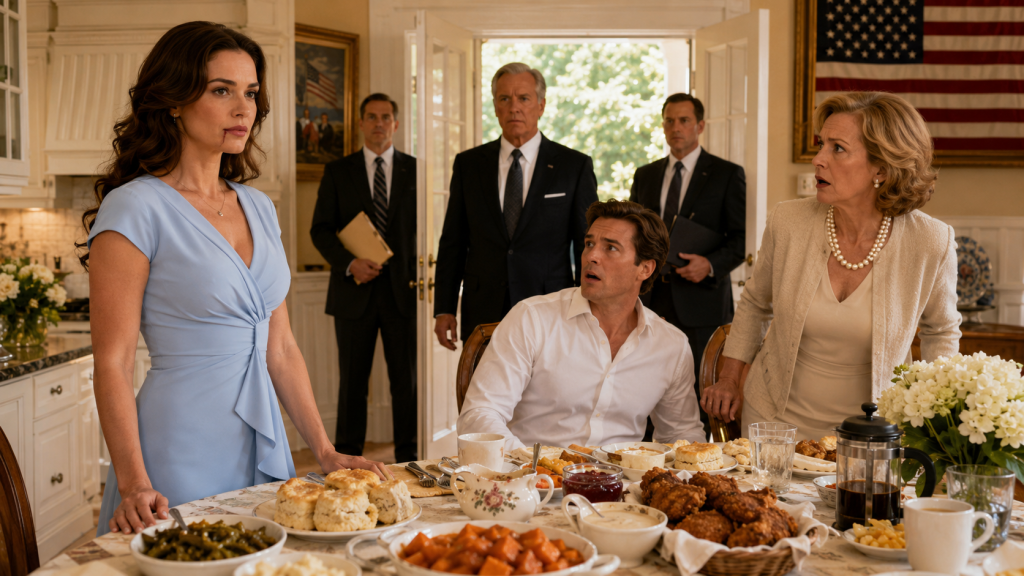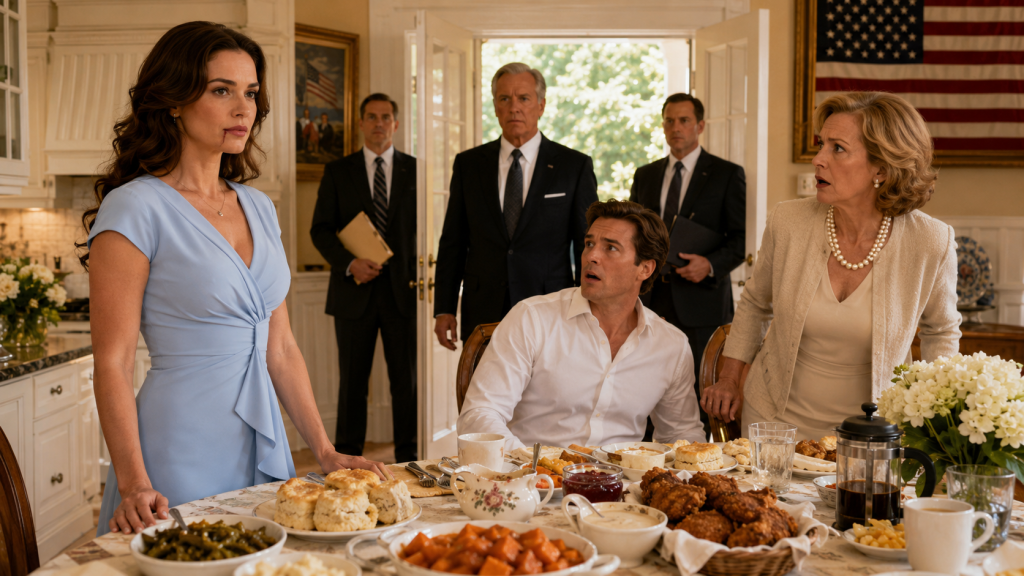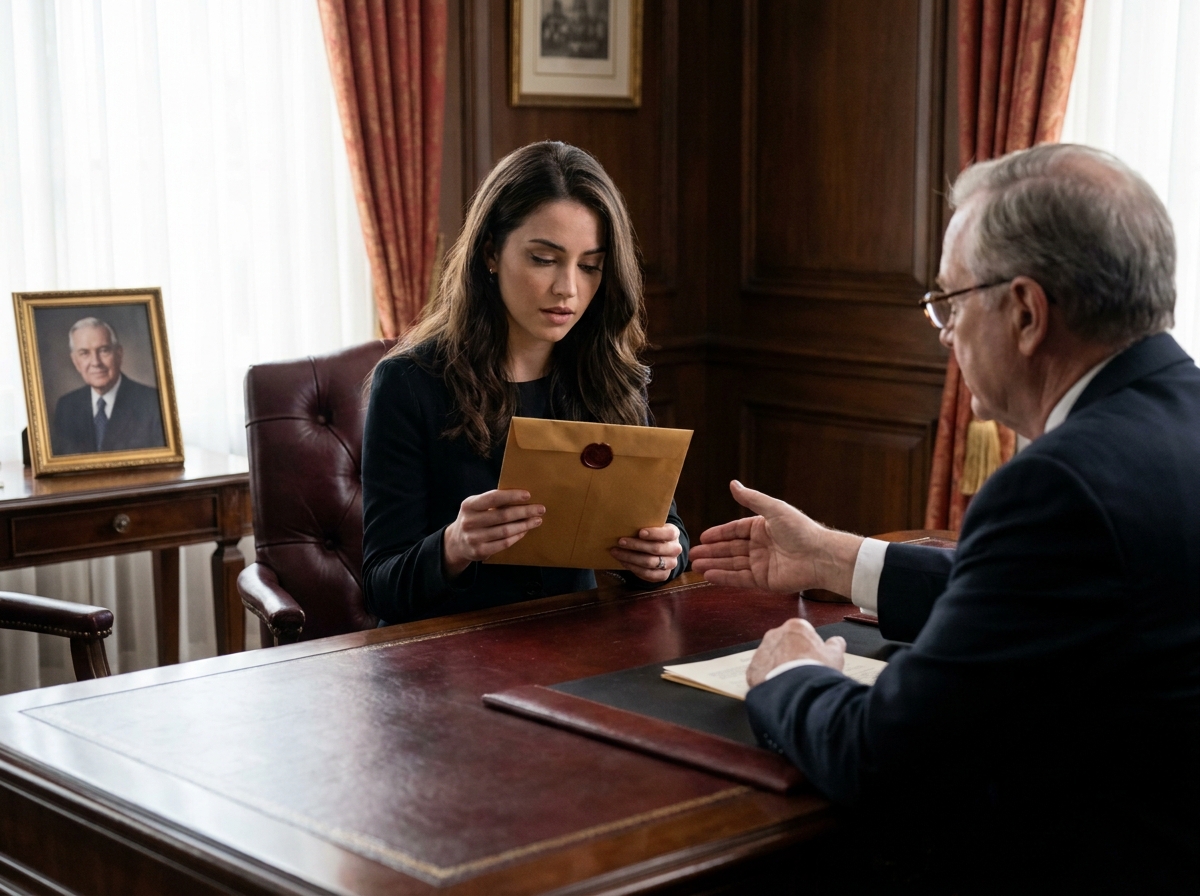
• My husband asked me for a divorce. He said: “I want the house, the cars, everything… except the boy.”

    My husband asked me for a divorce. He said: “I want the house, the cars, everything… except the boy.”

    My husband asked me for a divorce. He said: “I want the house, the cars, everything… except the boy.” My lawyer begged me to fight. I said: “Give it all to him.” Everyone thought I had gone mad. At the final hearing, I signed everything over to him. He smiled… until his lawyer read the last page.

    Advertisement

    When Daniel told me he wanted a divorce, he did not raise his voice.

    He sat across from me at the kitchen island beneath the skylight I had designed myself, folded his hands as if discussing lawn maintenance, and spoke in the calm tone he used whenever he wanted something to sound reasonable simply because he had said it without emotion.

    “I want the house,” he said. “The cars. The savings. Everything.”

    He paused, glanced once toward the staircase, and added almost lazily, “You can keep the boy.”

    The boy. Not Ethan. Not our son. Just the boy.

    Upstairs, Ethan was 8 years old, working through spelling words at his desk, whispering them aloud before writing them down. I could hear the faint shape of his voice through the ceiling. While Daniel divided our life into trophies and leftovers, Ethan was still upstairs spelling words, still expecting this house to mean home.

    My chest tightened. I did not cry.

    Advertisement

    “When?” I asked.

    Daniel seemed almost relieved. “We can do this cleanly. No drama. No dragging it out. You take Ethan, I take the assets, and we both move on.”

    A week later I sat in Margaret Collins’s office. She had been practicing family law in Greenwich for 26 years. She listened to me once, took off her glasses, and stared.

    “You want to give him everything,” she said.

    “Yes.”

    She dropped her pen. It rolled off the desk into her lap.

    “Emma, you contributed financially to this marriage. You’re entitled to half at minimum. Full custody isn’t something we accept as a side note.”

    “I understand.”

    “Is he threatening you? Is there abuse?”

    “No.”

    “Then what is this?”

    Advertisement

    “The primary conflict,” I said, “already happened.”

    She studied me. “That is not an answer.”

    “It’s the only one I can give you today.”

    Over the next 5 weeks Daniel and his attorney strutted through mediation as if collecting trophies. He never once asked for more time with Ethan. Never asked how school transitions would work or whether Ethan’s therapy and routines would be preserved. He only asked who would hold title to the house. Who would keep the investment accounts. Whether I was claiming any interest in the art collection.

    Margaret would glance at me. I would say the same thing every time: “Let him have it.”

    What Daniel did not know was that I had hired a forensic accountant three months before I hired Margaret.

    Six months earlier, Daniel had grown reckless. Unexplained transfers from savings. Equity draws against the house. New lines of credit. When I asked, he dismissed everything with bored confidence. “Short-term repositioning. You wouldn’t understand the tax side.”

    Advertisement

    Then Ethan got sick one night in February and I went into Daniel’s office looking for the insurance card. In the second drawer, under a file labeled Quarterly Statements: three envelopes from lenders and a margin call notice printed in red.

    I didn’t sleep that night.

    Over the next week I began reading. Loan files. Private notes. Account screenshots with handwritten numbers in the margins.

    The house had a second mortgage I knew nothing about. The brokerage account had been pledged as collateral. One car was leased through a vanity LLC with balloon terms. And the savings Daniel wanted in the divorce were already half gone — siphoned into failed speculative investments and, based on hotel charges, into a relationship with a woman who liked expensive weekends.

    I hired Margaret knowing exactly what he was really asking for.

    Not wealth. Burden. Not security. Liability wrapped in polished surfaces.

    Advertisement

    The final hearing took 19 minutes.

    Daniel looked almost radiant in a charcoal suit — the tie I had bought him for our tenth anniversary. His attorney, Stephen Hale, had spent mediation wearing the smug patience of a man who mistook my silence for collapse.

    The judge reviewed the agreement. A broad-faced woman with tired eyes and dry intelligence.

    “Mrs. Mercer, do you understand that under this stipulation your husband receives the marital residence, both vehicles, the joint savings, the taxable investment account, and the contents listed in Schedule C?”

    “Yes, Your Honor.”

    “You understand this division is unusually imbalanced.”

    “I do.”

    Daniel smiled. Not at me. At the room. At the shape of his own success inside it.

    He took the pen. Signed the main agreement. The custody acknowledgment. The property division schedule. The debt allocation page he barely glanced at.

    Advertisement

    Then he reached the final packet.

    Stephen flipped the page toward him.

    That was when the smile vanished. Not slowly. It simply stopped.

    His eyes moved to the addendum. Then back to the prior page. Then to Stephen. Then to Margaret. Then finally to me.

    “What is this?”

    Stephen took the page, read four lines, and went pale beneath his tan.

    The judge extended her hand. The document was passed forward.

    She read.

    Then she looked at Daniel.

    Then at me.

    Then she said, very carefully: “Counsel, this supplementary rider appears to attach full personal liability for all undisclosed debt instruments to Mr. Mercer as the receiving party of the encumbered assets. Including the second mortgage on the residence, the pledged brokerage collateral, and three margin accounts. Is that your client’s understanding?”

    Advertisement

    Stephen was no longer smiling.

    “Your Honor, we may need a brief recess—”

    “The document was submitted and acknowledged 48 hours prior,” Margaret said. “Exhibit D-4.”

    Daniel looked at me.

    For the first time since he had sat down at our kitchen island and told me he wanted everything, I saw something real on his face. Not the performance. The person under it. Afraid, finally, in the way people become afraid when they realize they got exactly what they asked for.

    “Emma—”

    The judge raised one hand. “Mr. Mercer, I am going to ask you once. Do you understand what you are signing?”

    His lawyer leaned in. Whispered.

    Daniel looked at the document.

    He had spent months believing I was giving up. Believing I was devastated and irrational and incapable of seeing past grief. He had designed the entire proceeding around my anticipated collapse.

    Advertisement

    What he had signed, along with the house, the cars, the accounts, and the art, was every dollar of hidden debt he had accumulated. Two years of leveraged risk. Three failed margin accounts. The second mortgage. The balloon lease. All of it, now sole personal liability.

    The assets were his.

    So were the anchors.

    He signed.

    The judge accepted the documents.

    Outside the courthouse, Daniel stood on the steps while his attorney made calls. I walked past him without slowing.

    “Emma.”

    I stopped.

    He looked at me with the specific expression of a man who has just calculated a loss too large to fully process.

    “You knew,” he said.

    “Yes.”

    Advertisement

    “How long?”

    “Long enough.”

    He looked away toward the street. A taxi passed. A woman walked a dog. The world continued without pause.

    “The house,” he said finally.

    “Has a second mortgage you took without telling me,” I said. “The lender expects payment. You have 60 days before the first default notice.”

    He said nothing.

    I walked to the car where Ethan was waiting with my sister, who had picked him up from school. He had a drawing he wanted to show me of a robot he had invented that could do homework. I told him it was excellent and asked if it could do third-grade spelling words.

    He said it could do anything.

    I told him I believed him.

    Part 2

    Advertisement

    The house on Chestnut Hill sold at foreclosure auction 14 months later.

    Daniel had attempted, in the intervening time, every available restructuring: refinancing, consolidation, negotiated settlements with the margin lenders. All of it failed. The interest on the hidden debt had been compounding for longer than he had admitted even to himself. Without my income to offset it, without my quiet financial management to smooth the monthly gaps, the structure he had built came apart in the way overleveraged things always do — fast once it started, and thoroughly.

    I heard about it through our mutual accountant, who was no longer mutual by then, who called to tell me as a professional courtesy.

    I thanked him and hung up.

    Ethan and I lived in a two-bedroom apartment in Riverside during that time. Smaller than anything we had known in the marriage. It had a bedroom with a window that faced east and let in the morning light in a way that made Ethan name it the golden room the first week we moved in. He kept his spelling words on a card taped to the wall.

    Advertisement

    I had a studio space down the hall where I took on residential design commissions. Modest at first. Then less modest.

    I had rebuilt before. I knew how it went.

    The only hard conversation was Ethan himself.

    He was 9 by then and not fully able to understand what had happened, but children understand more than they can articulate. He knew the house was gone. He knew his father was somewhere different now and not part of the regular week. He was processing it in the way children do: episodically, in questions that arrived without warning.

    One morning he asked me, while eating cereal, why Dad hadn’t wanted to keep him in the divorce.

    I thought about what to say.

    I thought about easy answers and incomplete ones.

    Then I told him the truth in the clearest form I could make it.

    Advertisement

    “Your father wanted things that seemed valuable to him. I wanted what actually was valuable to me. That’s why you came with me.”

    Ethan thought about this for a long time.

    “What did he end up with?” he asked.

    “Everything he asked for,” I said.

    He nodded slowly, with the precise gravity of a child who suspects there is more to that sentence but has decided to accept it for now.

    “Okay,” he said.

    He went back to his cereal.

    Outside the kitchen window, October had turned everything orange. A tree by the corner store had gone gold overnight. The morning light came through in long quiet bars across the floor.

    I made my coffee and sat across from my son and watched him eat breakfast in the golden room and thought about all the things a woman gets to keep when she stops being afraid of what she might lose.

    Everything that mattered.

    That was what I had kept.

    Everything that mattered.

  • A DNA test destroyed my family… but three years later, the truth destroyed me instead

    I found out completely by accident.

    Three years after the divorce, I was sitting in my doctor’s office while he reviewed some genetic screening results for a medical issue. He frowned at the file, then looked at me strangely.

    Promoted Content

    “Are you sure you’re not your son’s biological father?” he asked.

    My stomach dropped.

    “What?”

    He turned the monitor toward me and explained that based on my rare blood markers, there was almost no way the original paternity test had been accurate.

    I felt the room spin.

    For three years, I had hated my ex-wife.
    For three years, I had ignored a little boy who used to call me Daddy.

    And suddenly, I couldn’t breathe.

    I drove straight to the lab that handled the original test. After hours of arguing and demanding answers, an older technician finally admitted something horrifying.

    Three samples had been processed that same day.

    One had been mislabeled.

    My hands shook so badly I could barely hold the paperwork.

    “You’re telling me,” I whispered, “that I destroyed my family over your mistake?”

    The technician looked sick. “We are… deeply sorry.”

    Sorry.

    That word meant nothing now.

    I sat in my car for nearly an hour before finally calling my ex-wife, Elena. She answered cautiously.

    “What do you want?”

    My voice cracked. “The test was wrong.”

    Silence.

    Then I heard her breathing change.

    “What?”

    “I’m his father.”

    For several seconds, neither of us spoke.

    Then she started crying.

    Not loud sobs. Quiet, exhausted crying—the kind that comes after carrying pain for too long.

    “I told you,” she whispered. “I begged you to trust me.”

    Guilt hit me so hard I thought I’d throw up.

    I remembered the day I walked out. The way she held our baby while pleading with me not to leave. The way I refused to even look at him.

    And worst of all… the smirk I thought meant she was guilty.

    Now I realized it had probably been hurt. Anger. Disbelief that her husband could doubt her so easily.

    “Can I see him?” I asked weakly.

    She didn’t answer immediately.

    “You don’t get to walk back into his life because a paper changed,” she finally said. “You abandoned him.”

    Every word was deserved.

    Still, a week later, she agreed to meet at a park.

    I saw him near the swings wearing a little blue jacket. He looked so much like me it hurt. Same dark eyes. Same stubborn expression.

    He peeked at me shyly from behind his mother’s leg.

    “That’s him,” Elena said quietly.

    I dropped to my knees, tears already falling.

    For three years, I had convinced myself I felt nothing for that child.

    But the moment I saw him, something inside me broke open.

    He tilted his head. “Are you really my dad?”

    I couldn’t speak at first.

    Finally, I nodded.

    “If you’ll let me be.”

  • On my 63rd birthday, my son muttered in front of the cake, “I hope this is the last candle you blow out.” I blew out the flame, looked him in the eye, and replied, “My wish has already come true… tomorrow you will understand.” No one stopped clapping. No one saw how the last ounce of my patience died. And before dawn broke, I had already opened the safe.

    A small smile.
    The kind that no longer expects anything good.
    “Yes,” I said. “About the insurance… and other things.”
    Lucy adjusted her hair.
    Too quickly.
    Like someone who already smelled an opportunity.
    “That’s good, Ernest,” she said sweetly. “There are things you shouldn’t have to carry alone anymore.”
    Alone.
    What a convenient word for people who want to take things from you.
    The kids ran out to the backyard.
    Thank God.
    They didn’t deserve to hear what was coming.
    Daniel poured himself some coffee.
    As if he were in his future house.
    “So, what did you decide?”
    I looked at the table.
    The same one where Theresa used to knead dough for fresh bread.

    The same one where we cried over bills.
    The same one where Daniel once did his elementary school homework while I came in covered in grease from the shop.
    And I thought something horrible:
    there is pain that only exists because you loved too much.
    “First, I want to show you something.”
    I pulled out the napkin.
    I placed it in front of them.
    The list.
    “House. Shop. Insurance. Investment account. Pending signature.”
    Lucy stopped breathing for a second.
    Just a tiny one.
    But I saw it.
    Daniel went still.
    Very still.
    “What is that?” he asked.
    The lie arrived too fast.
    Bad sign.
    Very bad.
    “Your handwriting, Lucy.”
    Silence.
    She tried to smile.
    “Oh, Ernest… that was just to get organized.”

    Get organized.
    As if they were planning a party.
    Not my ruin.
    “Sure,” I said. “Just like the documents you wanted me to sign.”
    Daniel shifted his posture.
    No longer relaxed.
    Tense.
    “Dad, no one wants to hurt you.”
    Dad.
    How curious.
    It came back when it was convenient.
    “No,” I nodded. “You just wanted to phase me out of the equation, little by little.”
    Lucy sat up straight.
    “That’s unfair.”
    “Unfair was hearing last night that you hoped it would be my last candle.”
    The air vanished.
    Daniel turned pale.
    “I didn’t say that.”
    Liar.
    So fast.
    So clean.
    I stared right at him.

  • My 7-year-old daughter sent a boy to the hospital. His parents, both lawyers, demanded $500k. “She violently assaulted our son,” they told the police. I thought our lives were over. But when the surgeon saw my daughter, he didn’t call for security. He walked over to her and asked for her autograph, everyone stunned……

    By the time I reached the principal’s office, I had already heard three different versions of what my daughter had done. None of them sounded like Lily, but all of them sounded expensive. The office smelled like floor wax, printer toner, and the coffee the principal had poured but never touched. A blue ice pack crackled in Damian Ashford’s hand every time he pressed it against his jaw. His parents were already there. Mrs. Ashford stood with her arms folded, wearing the kind of cream suit that made every stain look like evidence. Mr. Ashford had a legal folder tucked under one arm. “Your daughter violently assaulted our son,” Mrs. Ashford said before I had even sat down. She said it cleanly, like a prosecutor reading a charge already proven beyond doubt. Mr. Ashford opened the folder and laid several pages on the desk. “We are filing a civil suit. The starting figure is $500,000. And naturally, given the severity of the trauma, we are pressing criminal charges.” Damian was bigger than Lily by a head and a half. Purple bruising had already begun to spread under his jaw, and his mouth sat slightly crooked, as if pain had pulled it out of place. It looked terrible. That was the part that made everyone believe them so quickly. Adults trust visible damage more than quiet terror. A broken face speaks louder than a frightened child.

    Lily was seven. She weighed fifty pounds soaking wet. She apologized when she knocked over a chair. She once cried because a cartoon dog had to sleep outside in the rain. That morning, I had signed her school emergency card at 8:05. I had written my phone number, her allergy warning, and the instruction that she should never be released to anyone not listed. By 2:17 p.m., that same trust had become a school incident report, three witness statements, and Officer Caldwell’s county juvenile intake sheet resting on the principal’s desk. People with money learn to make injury sound like a verdict. Parents like me learn to hear numbers as threats. In that office, $500,000 did not sound like a claim. It sounded like a life sentence. Officer Caldwell looked uncomfortable, but discomfort did not stop him from stepping forward. “Sir, based on the witness statements and injuries, I have to take Lily to the station for processing. We need prints.”

    Fingerprints. For a child who still slept with a nightlight. Mugshots. For a little girl who kept a smooth stone in her backpack because she said it helped her be brave. The principal kept glancing at the witness statements as if the papers might rearrange themselves into mercy. The counselor stared at her yellow legal pad. The secretary outside stopped typing completely.

    I wanted to grab the file and throw every polished page across the room. Instead, I folded my hands together until my knuckles hurt and asked to see my daughter. The nurse’s office was two hallways away, past construction-paper tulips and crayon suns. The cheerful walls made the whole walk feel obscene, like the building was pretending childhood had not just cracked open.


    Lily sat on the exam table with one hand wrapped in gauze. Her legs dangled over the edge. Dried red specks marked the bandage near her knuckles.

    When she looked up, I expected fear. I expected sobbing. I expected the wild panic of a child accused of something too large for her to understand.

    Instead, I saw a calm, cold certainty that frightened me more than tears would have. Lily looked small in that room, but not ashamed. She looked like she had chosen something.

    The nurse pulled me aside and whispered, “She will not explain. She just keeps asking whether Tommy is okay. I do not know who Tommy is.”

    I knew. Tommy was Thomas Reyes, the little boy from Lily’s reading-buddy group. He liked dinosaurs, hated loud bells, and wore a brace under his shirt after spinal surgery.

    Lily talked about him every Tuesday. She had told me he was brave because he kept smiling even when kids asked rude questions about the medical strap visible under his sweater.

    I had thought it was a classroom friendship. A sweet, small thing. I had not known that friendship would become the line my daughter refused to step back from.

    I sat beside her and took her uninjured hand. Her fingers were cold and damp. “Honey,” I said quietly, “the police are here. You have to tell me what happened.”

    The Ashfords had followed us. Damian stood behind his mother, still holding the ice pack. Officer Caldwell waited near the door, one hand close to his cuffs, his face tight with duty.

    Lily looked from me to the officer. Then she looked straight at Damian. Her little hand tightened around mine, and she said four words.

    “He hurt Tommy first.”

    The nurse went pale in a way that told me she had remembered something important. She crossed to the medication cabinet and pulled down the clipboard hanging beneath the emergency cards.

    There, under the 2:09 p.m. nurse log, was the note: Thomas Reyes sent to St. Mark’s Pediatric Trauma Center for evaluation after hallway incident. Possible brace displacement. Parent notified.

    Officer Caldwell read it twice. Mrs. Ashford said, “That proves nothing.” But Damian’s eyes dropped so fast that even his father noticed.

    Lily began to speak in pieces. Damian had cornered Tommy near the service hallway after lunch. He had called him fake sick and pulled at the strap under Tommy’s shirt.

    Tommy had gasped. Lily said his face changed color. She told Damian to stop. Damian laughed. When he yanked again, Tommy stumbled into the wall and made a sound Lily had never heard from a person before.

    Then Damian turned toward Lily. According to Lily, he lifted his metal lunch container and said he would show her what happened to tattletales.

    Lily did not punch him like the witness statements claimed. She shoved the lunch container away with both hands. Damian slipped on spilled water near the sink and struck his jaw against the porcelain edge.

    Her right hand tore against the metal latch. That was why she bled. That was why she had dried red specks on the gauze. She had not been hiding guilt. She had been hiding pain.

    The first witness statements had come from two boys who repeated Damian’s version. The school hallway camera was supposed to confirm it, but the principal admitted it had not been reviewed yet.

    Officer Caldwell asked for the footage. Mr. Ashford objected immediately, which did more to expose him than silence ever could. The principal left the room and returned with a district tablet.

    The video had no sound, but the picture was enough. Tommy appeared first, small and stiff, one hand pressed to his brace. Damian stepped close and pulled. Tommy folded toward the wall.

    Then Lily entered the frame. She pointed toward the nurse’s office. Damian swung the lunch container. Lily raised both hands and shoved it away. Damian stumbled backward, slipped, and hit the sink.

    No violent assault. No ambush. No little girl hunting a bigger boy. The camera showed a seven-year-old trying to stop a child from being hurt worse.

    The nurse’s desk phone rang before anyone spoke. She answered, listened, and looked at Lily as if the whole story had just grown a second spine.

    “Yes, Doctor,” she said. “She’s here. No, sir. They were about to take her.”

    A few minutes later, the exterior hallway door buzzed open. A man in blue surgical scrubs walked in with a hospital badge swinging from his chest.

    He did not ask where the injured boy was. He did not ask for security. He walked straight toward Lily and lowered himself to her eye level.

    “Are you Lily?” he asked.

    My daughter nodded, suddenly shy.

    He took a folded piece of paper from his pocket. It was a drawing of a dinosaur in a cape, shaky and bright with crayon. At the bottom, in uneven letters, it said: For Lily.

    The surgeon swallowed hard. “Tommy is my son,” he said. “His brace shifted when Damian pulled the strap. If Lily had not stopped him, the second hit could have damaged the surgical site.”

    The room changed shape around that sentence. Mrs. Ashford’s face went blank. Mr. Ashford stared at the floor. Damian began to cry, but not from his jaw.

    The surgeon held out the drawing and a black marker. “Tommy asked whether the brave girl could sign this for him,” he said. “He wants it by his hospital bed.”

    That was when everyone understood why he had asked for her autograph. Not because Lily was famous. Because to one frightened boy at St. Mark’s, she was the reason he was still safe.

    Officer Caldwell closed his notebook. He told me Lily would not be processed that day. He also told the principal that the original witness statements needed to be supplemented with the video and nurse log.

    The Ashfords did not apologize. People like that rarely do in the moment. They collect themselves first. They look for angles, language, technicalities, safer rooms.

    But $500,000 disappeared from the conversation. So did criminal charges. Mr. Ashford left with his file pressed tightly under one arm, suddenly much less eager to put evidence in front of a judge.

    Damian was still treated for his jaw injury. That mattered. Lily had never wanted him hurt. But the hospital record listed the mechanism as a fall during a hallway altercation, not a targeted assault.

    Tommy stayed overnight for observation. His father sent me one update at 11:38 p.m.: stable, scared, asking for Lily. I read it three times before I finally let myself breathe.

    The next week, the district reviewed the incident. The two boys who lied admitted Damian told them what to say. The principal apologized to me privately and publicly to Lily.

    Lily’s hand healed with a thin scar near one knuckle. For weeks, she asked whether protecting someone was still wrong if somebody else got hurt.

    I told her the truth adults hate because it is complicated. Protecting someone can still leave damage. Being brave can still be terrifying. Doing the right thing does not always feel clean afterward.

    Tommy mailed her another dinosaur drawing. This one showed two children standing under a huge green T. On the back, his father had written, “Thank you for seeing him when others looked away.”

    People with money learn to make injury sound like a verdict. Parents like me learn to hear numbers as threats. But my daughter taught a room full of adults something sharper than either lesson.

    The loudest story is not always the true one. Sometimes the truth is a child with a bandaged hand, sitting quietly on an exam table, asking only whether somebody smaller is okay.

    Years from now, Lily may not remember every face in that nurse’s office. She may forget the folder, the threats, and the blue ice pack pressed to Damian’s jaw.

    I will remember all of it. Especially the moment a surgeon walked past the lawyers, past the police, past the accusation, and asked my seven-year-old daughter for her autograph.

    When my stepdaughter called me the help at my own dinner table, I stood there with a dish towel in my hands and corrected her, calm and polite. My husband didn’t defend me. He looked right at me and said,

    “She’s not your daughter. Don’t correct her.”

    That was the moment everything changed.

    I’m Diane Mercer. I’m fifty-two years old, and I live in Carmel, Indiana. I’ve been married twice. The first one ended when I was forty-three after twenty years of what I thought was a stable life.

    It wasn’t dramatic. No yelling, no broken plates, just a quiet unraveling that left me sitting in an empty kitchen one night, realizing I didn’t recognize my own life anymore. I told myself I wouldn’t make the same mistake twice.

    et, there I was, standing in my own kitchen, holding a damp towel, being told I had no place at my own table.

    That night was a Sunday, a week before Thanksgiving. My sister Patricia had come over early with her usual green bean casserole. She makes it the same way every year, with too many crispy onions on top.

    My brother-in-law Ron was in the living room flipping between the Colts game and some hunting show. My son Ethan had driven up from Fishers after work, still in his boots, smelling faintly of motor oil and cold air.

    It was a normal family evening, the kind I’d worked hard to build again after my first marriage fell apart. I remember thinking, as I wiped down the counter, that things finally felt settled.

    That feeling lasted about twenty minutes.

    Ashley came in late like she usually did. The front door opened, heels clicking on the hardwood, her voice carrying before she even stepped fully inside.

    “Dad, do we have anything decent to eat, or is it all casseroles again?”

    She laughed at her own joke.

    No one else did.

    Ashley is twenty, a sophomore at Indiana State. Blonde, sharp-featured, always dressed like she’s heading somewhere more important than wherever she actually is.

    She’s not stupid. Not lazy either. But she’s used to things being handled for her, especially lately.

    She brushed past me in the kitchen, dropped her purse on a chair, and opened the fridge without asking.

    “Hi, Diane,” she said, not looking at me.

    I smiled anyway.

    “Hi, Ashley.”

    I had learned over the past year to pick my moments. Not everything needed correcting. Not everything needed to turn into a conversation.

    Greg always said she just needed time.

    “She’s adjusting,” he’d tell me. “It’s a big change.”

    So I adjusted too.

    Dinner started out fine. We all sat down, Patricia to my left, Ethan across from me, Greg at the head of the table, Ashley scrolling through her phone between bites.

    I remember the sound more than anything. Forks against plates. The TV faint in the other room. Ice shifting in glasses.

    Normal sounds.

    Until Ashley set her fork down and looked straight at Patricia.

    “So,” she said, “how long has Diane been running things like this?”

    Patricia frowned slightly.

    “What do you mean?”

    Ashley shrugged, casual.

    “I don’t know. It just feels like she acts like she’s in charge of everything. Like it’s her house or something.”

    There was a pause, the kind that stretches just long enough for everyone to realize something’s off.

    I felt it in my chest first, that tightening. I kept my voice steady.

    “Ashley, this is my house.”

    She smiled then, not kindly.

    “Yeah,” she said, “but let’s be honest. You’re basically just the help here.”

    It landed harder than I expected. Not because of the words. I’ve heard worse in my life.

    But because of where we were, who was sitting at that table, the fact that my sister heard it, my son heard it, and no one said anything.

    I set my fork down carefully.

    “Don’t speak to me like that,” I said, calm, clear, not loud.

    She rolled her eyes.

    “See? This is what I mean. You’re always correcting me like you’re—”

    “Like I’m an adult in this house,” I said, “which I am.”

    That was when Greg leaned forward. Not toward me, toward her.

    “She’s not your daughter,” he said, his voice flat, like he was stating something obvious. “Don’t correct her.”

    The room went completely still.

    I remember hearing the hum of the refrigerator, the ticking of the wall clock. Even the TV seemed to go quiet.

    I looked at him, really looked.

    And in that moment, I saw something I hadn’t wanted to see before. Not confusion. Not conflict.

    Certainty.

    He meant it.

    I didn’t argue. I didn’t raise my voice. I didn’t push my chair back or storm out.

    I just nodded once.

    “Okay,” I said.

    That was it.

    Dinner limped along after that. Patricia tried to change the subject. Ron made a comment about the game.

    Ethan didn’t say much, just watched, quiet in that way he gets when he’s thinking too hard. Ashley went back to her phone like nothing had happened.

    And Greg, he acted like he’d settled something, like he’d kept the peace.

    By the time everyone left, the house felt different. Empty in a way that had nothing to do with people being gone.

    I cleaned the kitchen slowly, washed the dishes, dried them, put everything back exactly where it belonged. Greg stayed in the living room.

    Didn’t come in. Didn’t say anything.

    I didn’t ask him to.

    Around midnight, I went upstairs and lay down. The ceiling fan spun above me, slow and steady.

    I didn’t cry.

    That surprised me.

    The last time I felt this kind of shift, I cried for hours, sat on a bathroom floor, and wondered how I got there. This time was different.

    I stared at the fan and counted the blades as they passed.

    One. Two. Three.

    Somewhere between the second and third rotation, something settled in my chest. Not anger. Not even hurt.

    Clarity.

    This wasn’t about Ashley. Not really. This was about a man who had watched me build a home, contribute, support his daughter, and still saw me as optional, replaceable, convenient.

    I turned my head and looked at the empty space beside me in the bed, and I thought very clearly, I’m not fixing this.

    I’m done paying for it.

    I woke up before the sun came up. That’s something that happens more as you get older. Your body doesn’t wait for alarms anymore.

    It just decides it’s time.

    The house was quiet. Too quiet. No TV, no footsteps, no doors opening and closing.

    Just that early-morning stillness that sits heavy for a minute before the day starts.

    I went downstairs, made coffee the same way I always do, two scoops, a little too strong, and stood at the kitchen island staring at my phone.

    For a second, I almost told myself to let it go. Just smooth things over. Talk to Greg. Give Ashley time. Keep the peace.

    I’d done that before. In small ways. In quiet ways.

    That’s how I got here.

    I took a sip of coffee, set the mug down, and opened my laptop.

    If you’ve ever handled the finances in a household, you know what I mean when I say this: everything starts to live in one place. One login leads to another. Bills connect to accounts. Accounts connect to autopay.

    It’s like a web. And if you’re the one managing it, you’re the only one who really sees how it’s built.

    Greg made more money than I did, on paper anyway. But I was the one who actually paid things on time, every time.

    At some point, it had just become easier that way.

    I logged into the bank first. Then the credit cards. Then the insurance portal. Then the university payment system.

    Each screen loaded one after the other, quiet and indifferent.

    Numbers don’t care how you feel.

    That was the first thing I noticed. The second thing was how much of this had quietly become my responsibility.

    Ashley’s car, a Toyota RAV4, leased at $412 a month. Insurance, $180. Her off-campus apartment shortfall varied, but usually a couple hundred.

    Sorority dues and extras, sometimes another $300 depending on the month. Phone plan. Parking permit. Textbooks I’d paid for without thinking twice.

    I leaned back slightly in the chair.

    At fifty-one, when all this started, I told myself it made sense. It was temporary. It was support. It was family.

    I took another sip of coffee, now already cooling.

    At fifty-two, sitting in that quiet kitchen, I saw it differently.

    I wasn’t just helping.

    I had built the structure everything was sitting on.

    I clicked into the joint account. That’s where things got interesting.

    There were transfers I didn’t recognize. Small ones, easy to miss if you weren’t looking closely.

    Four hundred here. Five hundred there. Always labeled something vague.

    Emergency. Books. Miscellaneous.

    I clicked one open.

    Transferred to Ashley.

    No conversation. No mention. Just done.

    I stared at the screen for a long second.

    It wasn’t the amount.

    It was the pattern.

    Greg hadn’t just leaned on me. He’d gotten comfortable moving things around, assuming I wouldn’t question it, assuming I wouldn’t notice, or maybe assuming I wouldn’t push back if I did.

    I closed that tab slowly. Then I opened a fresh notepad file and started listing everything.

    Car. Insurance. Tuition payments. Transfers. Subscriptions.

    It took about twenty minutes.

    When I was done, I just looked at the list.

    It didn’t feel dramatic.

    It felt clear.

    Upstairs, I heard movement. Greg getting up.

    I didn’t rush.

    I opened the insurance account first. Canceled autopay. Not the policy itself. I’m not reckless.

    Just the payment tied to my account.

    Then the car lease portal. Removed my payment method.

    Phone plan. Same thing.

    University account. Switched off scheduled payments.

    Each step was simple.

    Click.

    Confirm.

    Done.

    No raised voices. No confrontation.

    Just removing my hand from things I never should have been carrying alone.

    My phone buzzed.

    A text.

    Ashley: Why was my card declined?

    I stared at it for a second. Just a second.

    I almost laughed.

    Not because it was funny. Because it was predictable.

    I set the phone down without answering.

    A minute later, another message.

    Hello?

    I took a breath and stood up, carrying my coffee to the sink. Greg came down the stairs in sweats, still half asleep.

    “Morning,” he said, rubbing his eyes.

    “Morning.”

    He poured himself coffee, glanced at me, then at his phone.

    I watched the moment it hit him.

    His posture changed slightly, shoulders tightening.

    “What did you do?” he asked, not looking up yet.

    I didn’t answer right away.

    I walked back to the island, picked up the folder I’d printed, just a few pages, nothing dramatic, and set it down in front of him.

    “I stopped paying for things that aren’t mine,” I said.

    He looked up then.

    “What does that mean?”

    “It means,” I said, keeping my voice even, “if she’s not my daughter, I’m not responsible for her expenses.”

    His jaw tightened.

    “Diane, don’t start this again.”

    “I’m not starting anything,” I said. “I’m ending something.”

    He flipped open the folder, scanning the pages.

    “You can’t just cut her off like that,” he said. “She’s in school.”

    “I didn’t cut her off,” I said. “I stopped paying. There’s a difference.”

    “She relies on that.”

    I met his eyes.

    “So did you.”

    That landed.

    He looked back down at the papers.

    “You’re overreacting,” he said. “It was one comment.”

    “It wasn’t one comment,” I said quietly. “It was the first honest one.”

    He let out a breath, frustrated.

    “You’re making this into something it’s not.”

    “No,” I said. “I’m seeing it for what it is.”

    His phone buzzed again, Ashley calling. He declined it.

    Then it buzzed again. And again.

    He finally picked it up and stepped into the other room. I could hear his voice, low, trying to calm her down.

    “It’s fine. I’ll handle it. No, just give me a minute, Ashley.”

    I turned back to the sink and rinsed my mug. The water ran steady, warm against my hands.

    For the first time in a long while, I didn’t feel like I was holding everything together.

    I felt like I’d stepped out of something.

    And the world didn’t fall apart.

    It just shifted.

    A few minutes later, Greg came back in, phone still in his hand.

    “She’s freaking out,” he said. “Her insurance, her card, everything.”

    “I know,” I said.

    “You need to fix this.”

    I shook my head.

    “No,” I said. “You do.”

    He stared at me like he didn’t recognize me.

    Maybe he didn’t.

    That was fine.

    Because for the first time in a long time, I recognized myself.

    By noon, I realized something worse than the insult.

    My husband hadn’t just let me be disrespected.

    He had been rewriting the story behind my back.

    Greg spent most of the morning on the phone. I could hear him pacing between the living room and the back patio, his voice going from controlled to irritated to something close to pleading.

    I didn’t interrupt. I stayed at the kitchen table with my laptop open, going through things I should have looked at months ago.

    You know how sometimes you don’t check something? Not because you can’t, but because you don’t really want to know what you’ll find.

    That had been me.

    Not anymore.

    I pulled up old messages, emails, payment confirmations, anything tied to Ashley’s accounts.

    That’s when I found it.

    An email thread from about six months earlier. Greg had forwarded something to Ashley, tuition-related, I think, and then replied again a few minutes later.

    I almost didn’t open it.

    Then I did.

    “Don’t worry about Diane,” he’d written. “She likes taking care of this stuff. Makes her feel needed. Just focus on school.”

    I sat back slowly.

    Read it again.

    Then again.

    It was so casual, so normal in tone, like he wasn’t lying, like he actually believed what he was saying.

    That was the part that got me.

    It wasn’t just that he’d let her think I was paying because I wanted to impress them.

    It was that he had framed it that way, turned me into something smaller, convenient.

    I closed the laptop for a minute and pressed my palms against the table.

    That tight feeling came back, but different this time. Sharper. Clearer.

    Up until that moment, part of me had still been wondering if I’d gone too far that morning. If cutting everything off all at once had been harsh.

    That email answered that.

    I hadn’t overreacted.

    I had just stopped participating.

    My phone buzzed.

    Patricia.

    I answered on the second ring.

    “Hey,” she said. “You okay?”

    I looked out the window. The backyard was still, a few leaves moving in the cold wind.

    “I’m fine,” I said. “Or I will be.”

    She was quiet for a second.

    “What happened after we left?”

    I told her. Not everything at once, just the important parts. What Greg said. What I did that morning.

    There was a pause on the other end. Then she let out a slow breath.

    “Well,” she said, “it’s about time.”

    I almost smiled.

    “I found something,” I added. “An email. He told Ashley I like paying for things. That it makes me feel needed.”

    Patricia didn’t hesitate.

    “That’s not just disrespect, Diane,” she said. “That’s manipulation.”

    “I know.”

    “You don’t yell at men like that,” she went on. “You document them.”

    I leaned back in the chair.

    “I started.”

    “Good,” she said. “Because at our age, peace is expensive, but dignity costs more when you lose it.”

    That one stuck.

    We talked a little longer about practical things, not feelings. That’s how Patricia is. She cares, but she keeps it grounded.

    When I hung up, I sat there for a minute.

    Then I grabbed my keys.

    I needed to get out of the house.

    The Kroger on Rangeline Road was busy like it always is late morning. People picking up last-minute groceries, carts clattering, holiday displays already half up.

    I walked through it on autopilot.

    Milk. Bread. A couple things I didn’t even really need.

    At checkout, the cashier made small talk.

    “Getting ready for Thanksgiving?”

    “Something like that,” I said.

    I paid, loaded the bags into the back seat, then got in the car and just sat there, engine off, hands on the steering wheel.

    And for the first time since that dinner, I cried.

    Not loud. Not dramatic.

    Just quiet.

    The kind that comes up before you can stop it.

    It wasn’t about Greg. Not really.

    It was about me.

    The version of me who believed this time would be different. Who thought if she showed up enough, gave enough, kept things smooth enough, she’d be treated like she belonged.

    I wiped my face with the sleeve of my coat and let out a long breath.

    “I should have seen it,” I said out loud.

    And maybe I should have.

    But seeing it now was enough.

    I started the car and drove back home.

    When I walked in, Greg was at the kitchen counter with his phone and the stack of papers I’d left. He looked up immediately.

    “We need to fix this,” he said.

    “We?” I asked.

    “Yes, we. Ashley can’t just—she has classes, she has—”

    “Greg,” I said, cutting in gently, “you told me she’s not my daughter.”

    He exhaled sharply.

    “That’s not what I meant.”

    “It’s exactly what you meant.”

    He ran a hand through his hair.

    “You’re blowing this out of proportion.”

    I stepped closer, resting my hand lightly on the back of a chair.

    “No,” I said. “I’ve been shrinking it for a year. I’m just not doing that anymore.”

    His phone rang again.

    Ashley.

    He picked it up this time.

    “Ashley, listen. No, I know. I’m talking to her now.”

    I turned away, giving him space.

    But I could hear her. Not the words, just the tone. High, panicked, realizing maybe for the first time that things weren’t as stable as she thought.

    Greg lowered his voice, pacing again.

    “I’ll figure it out,” he said. “Just give me a day.”

    A day.

    I almost laughed at that.

    He’d had a year.

    When he hung up, he looked tired.

    “Can you just turn it back on for now?” he asked. “We’ll talk this through later.”

    I shook my head.

    “No,” I said. “We’re not pausing this so it’s easier for you.”

    “It’s not about me.”

    “It is,” I said. “It always has been.”

    That stopped him.

    He didn’t argue right away. Just stood there looking at me like he was trying to find the version of me he was used to. The one who would soften, compromise, let things slide.

    She wasn’t there anymore.

    “I’m not trying to punish anyone,” I said. “I’m just done paying for something I’m not part of.”

    He didn’t respond.

    Didn’t apologize either.

    That told me everything I needed to know.

    I picked up my laptop again, opened a new document, and started organizing everything I had. Dates. Amounts. Accounts.

    If this was going to continue, and it was, I wanted it clear. Not emotional. Not messy.

    Just accurate.

    Because I had a feeling this wasn’t going to stay inside the house.

    And when it didn’t, I wasn’t going to let anyone rewrite what really happened.

    The restaurant was louder than I expected.

    Saturday brunch in Carmel always is. Plates clinking. People talking over each other. The low hum of espresso machines behind the counter.

    It gave everything a kind of cover, like you could say almost anything and no one outside your table would really hear it.

    Greg had picked the place. Of course he did.

    Neutral ground. Public. Easier to keep things contained.

    Or at least that’s what he thought.

    I arrived a few minutes early, sat down at a table near the window, ordered coffee, black.

    I wasn’t nervous, but I was aware of the way my hands rested on the table, of the folder in my bag, of the fact that this wasn’t just another conversation.

    This was the end of something.

    Greg walked in first, Ashley right behind him.

    She looked different. Still put together, hair done, makeup perfect, but there was something underneath it now.

    Tension.

    Her eyes flicked around the room, then landed on me. She didn’t smile.

    Greg did.

    “Hey,” he said, like we were just meeting for a normal meal. “You got here early.”

    “I like to be on time,” I said.

    He sat across from me. Ashley slid into the seat beside him.

    For a few seconds, no one spoke.

    The server came by, cheerful, unaware.

    “Can I get you anything to drink?”

    Greg ordered coffee. Ashley asked for a latte, extra something I didn’t catch.

    Then we were alone again.

    Greg leaned forward slightly.

    “Diane,” he said, keeping his voice low, “we don’t need to make this a big thing.”

    I took a sip of coffee.

    “I’m not making anything,” I said. “I’m just explaining.”

    Ashley let out a small scoff.

    “Explaining what?” she said. “Why you decided to ruin my life overnight?”

    I looked at her. Really looked this time.

    “You think your life was mine to ruin?” I asked.

    She opened her mouth, then closed it.

    Greg jumped in.

    “Okay, let’s not do this here,” he said. “We can talk at home.”

    “No,” I said, calm. “We’re talking here.”

    He frowned.

    “Why?”

    I met his eyes.

    “Because this is where you like things to look normal.”

    That landed.

    He sat back slightly.

    Ashley crossed her arms.

  • On my birthday, my father walked in, looked at my b:ruised face, and asked, “Sweetheart… who did this to you?” Before I could speak, my husband smirked and said, “I did. Gave her a sl:ap instead of congratulations.”

    On the morning of my birthday, my father stepped inside, took one look at the b:ruises on my face, and asked, “Sweetheart… who did this to you?” Before I could respond, my husband curled his lips into a smirk and said, “I did. Gave her a sl:ap instead of congratulations.” My father calmly slipped off his watch and told me, “Step outside.” But the moment my mother-in-law dropped to her hands and knees and crawled out of the room ahead of everyone else, I realized this day was about to take a completely unexpected turn.

    “Sweetheart, why is your whole face covered in bruises?”

    My father, Richard Bennett, had only just crossed the threshold when the cheerful expression he carried disappeared. He had come in holding a neat white bakery box with my favorite strawberry shortcake, planning to celebrate my thirty-second birthday. Instead, he saw me standing in the kitchen, layers of concealer unable to fully mask the dark purple bruising along my cheekbone and jaw.

    For a moment, silence filled the room. My husband, Derek, lounged at the dining table with one ankle resting over his knee, casually sipping his coffee as though it were an ordinary Saturday. His mother, Linda, sat beside him slicing into the pie she had brought, carefully avoiding eye contact with me. My hands trembled so badly I nearly let the paper plates slip from my grip.

    Dad gently placed the cake box on the counter. “Emily,” he said quietly, “who did this to you?”

    I tried to speak, but Derek answered first. He actually laughed.

    “Oh, that was me,” he said with a smug grin. “Instead of congratulations, I gave her a slap.”

    Linda released a brief, uneasy laugh, the kind people make when they sense something is wrong but lack the courage to challenge it. Derek leaned farther back in his chair, clearly assuming Dad would chuckle along or at least complain and move on. Derek had always confused silence with fear and courtesy with weakness. He had absolutely no idea who my father really was.

    Dad studied him for a long moment, face completely blank. Then he slowly unclasped his watch and set it beside the cake on the counter. He rolled the sleeves of his blue button-down shirt up with the same steady concentration he used to show while fixing engines in our garage. Nothing about his movements was hurried, and somehow that made the atmosphere far more frightening.

    Then he turned toward me.

    “Emily,” he said, keeping his eyes fixed on Derek, “step outside.”

    I staggered toward the back porch, my heart hammering so violently I struggled to breathe. Through the window above the sink, I looked back into the kitchen. Derek rose too quickly, his chair scraping across the tile floor. Linda abruptly pushed herself away from the table, panic overtaking whatever loyalty she had left. Wanting no part of what was about to happen, my mother-in-law dropped down and scrambled out of the room on all fours, bumping into a barstool as she hurried away.

    Then my father moved toward my husband.

    What followed lasted less than a minute, yet it changed the entire direction of my life.

    Dad didn’t charge or raise his voice. He simply walked across the kitchen, grabbed Derek by the front of his expensive gray sweater, and slammed him against the wall hard enough to make the framed family photo beside the refrigerator shake. Derek’s confidence vanished so fast it looked unreal. One second he was smirking; the next he looked like someone who had just woken inside the wrong nightmare.

    “You hit my daughter?” Dad said.

    Derek tried shoving him away. “Hey, man, calm down—”

    Dad forced him back again. “You put your hands on my daughter and then joked about it in front of me?”

    I had never seen my father like that before. He wasn’t out of control—that would have been easier to comprehend. Instead, he was composed, icy, and finished pretending this was a private marital matter. Memories of warning signs raced through my mind in ruthless sequence: Derek smashing my phone during an argument and replacing it the next day as if that fixed everything; Derek calling me dramatic whenever I cried; Derek gripping my wrist so hard at a neighborhood barbecue that his fingerprints remained; Linda telling me every couple had “rough patches”; me apologizing repeatedly for things I hadn’t even done.

    The bruises on my face came from the night before. Derek had been drinking bourbon while I decorated a cake for my own birthday because he forgot to order one. When I reminded him my parents were coming over, he accused me of “making him look bad.” Then he slapped me once, and again when I stumbled against the counter. Linda had watched the entire thing from the doorway and said, “You should stop provoking him.”

    Standing on the porch, I realized the most dangerous lie I had been living with wasn’t that Derek loved me. It was believing I still had time to fix him.

    Inside, Derek’s voice cracked. “Richard, this is between me and Emily.”

    “No,” Dad said. “It stopped being between you two the moment you decided she was something you could break.”

    Linda appeared again in the hallway clutching her purse, begging everyone to calm down. Dad didn’t even look at her. He told me to call the police. My fingers stiffened around my phone for a moment—not because I doubted him, but because I felt ashamed it had taken this long for me to act.

    Then Derek stared directly at me through the window and said with pure hatred, “If you do this, you’ll regret it.”

    That was the moment the fear inside me finally transformed into something clearer.

    Resolve.

    I opened the door, stepped back inside, and called 911.

    The police arrived before the candles on my birthday cake were ever lit.

    Two officers immediately separated everyone. One sat with me in the living room to take my statement while the other escorted Derek outside. Linda tried interrupting every few minutes, insisting it was all a misunderstanding, that Derek was under pressure, that I was “too sensitive.” The officer stopped her with a single sharp sentence: “Ma’am, bruises are not a misunderstanding.”

    Once I began talking, the words kept coming. I told them about the first shove six months after our wedding. The hole punched through the laundry room door. The way Derek monitored my bank account, checked my messages, and called my office repeatedly if I didn’t answer right away. I showed them photos I had secretly taken of bruises on my ribs, the cracked bathroom mirror, and the lamp he hurled last winter. I had stored everything in a hidden folder disguised as a grocery list, just in case I ever needed proof. I hated that I had prepared for that moment. I was grateful that I had.

    Derek was arrested before noon.

    After the officers left, I thought I might collapse. Instead, I felt strangely steady. Dad brewed coffee. Mom arrived in tears and wrapped a blanket around my shoulders even though the house was warm. No one mentioned the birthday anymore, and that was fine. Surviving felt like enough of a gift.

    By evening I was at my parents’ home with an overnight bag, my important documents, and the strawberry shortcake Dad had brought that morning. We ate it at the kitchen table on paper plates the same way we had when I was little. My face ached. My chest hurt even more. But for the first time in years, the quiet around me felt safe.

    The divorce stretched over several months. Derek’s lawyer attempted to portray me as unstable, vindictive, emotional. But facts are stubborn things. Photographs, medical records, statements from neighbors, and the police report told a much clearer story. Linda stopped calling once the protective order was issued. Derek eventually agreed to a plea deal. I didn’t attend the final hearing. I didn’t need to see him again to understand I was free.

    A year later, I celebrated my birthday in a small home that belonged to me alone. My friend Megan brought balloons. My mother baked the cake. Dad arrived early, smiling this time, and handed me a small wrapped box with a silver watch inside.

    “For new beginnings,” he said.

    I wear it every day.

    Sometimes people ask why I stayed as long as I did. The truth is uncomfortable and ordinary: abuse rarely starts with a slap. It begins with excuses, isolation, embarrassment, and the slow erosion of what you believe you deserve. Then one day you look in the mirror and barely recognize the person apologizing back at you.

    I recognize her now. She’s gone.

    And if this story struck something deep inside you, share your thoughts. Too many people still confuse control with love. In America, far more families know this story than they admit—and sometimes a single honest conversation is where freedom begins.

  • Coming home from my eight-year-old grandson’s funeral, I found him standing on my porch in torn clothes. I thought grief was making me see things—until he whispered, “Grandma, please don’t tell them I’m alive.”

    Ellie returned home from her grandson’s funeral, heavy with grief and disbelief. As she approached her porch, she froze. Eight-year-old Tyler stood there, drenched in rain and smeared with cemetery mud. He whispered a single plea: “Help me.”

    Tyler was supposed to be dead. He had been declared, mourned, and buried. Yet here he was, trembling and alive. Through fear and exhaustion, he revealed what had happened inside the coffin—and before it.

    He spoke of being drugged, unable to move or speak. He described hearing voices, feeling the lid close, and struggling in silence. Most chillingly, he named the people responsible.

    His survival shattered Maplewood. What seemed like a tragic death quickly unraveled into suspicion. Denise Harper began digging through records, uncovering troubling patterns tied to the town doctor, Leonard Graves.

    Graves had signed Tyler’s death certificate without conducting an autopsy or ordering further examination. His signature appeared across multiple documents—medical prescriptions, missing allergy records, and a waiver that rushed the burial process.

    Financial records deepened the case. Quiet payments labeled as “consulting” flowed through accounts connected to Tyler’s mother, Michelle, in the weeks before his supposed death. The evidence suggested planning, not error.

    When confronted, Graves claimed negligence, blaming grief and reliance on EMT reports. But searches on his computer told another story—queries about expedited burials, sedatives, and payment timelines.

    In court, the truth emerged. Prosecutors called it a conspiracy driven by debt and greed. Michelle, Graves, and Brian were convicted. Ellie stayed home, caring for Tyler—cooking, watching, and listening—choosing, every day, to believe the child who survived the darkness.

  • I Won $89 Million and Told No One — Three Days Later, My Son Said Something That Made Me Realize Why I Had to Keep It Secret

    I Won $89 Million and Told No One — Three Days Later, My Son Said Something That Made Me Realize Why I Had to Keep It Secret

    Margaret Bravo never expected the most painful betrayal of her life to come from her own son. After her husband Anthony passed away, Daniel convinced her to sell her beloved home in Miami and move in with his family near Boston. He promised she would never be alone. Trusting him, Margaret left behind decades of memories, her rose garden, and the porch where she and Anthony had shared countless mornings together.

    For two years, Margaret did everything she could to help. She cooked meals, drove her grandchildren to activities, folded laundry, and quietly supported the household. Yet over time, she began feeling less like family and more like an unwanted guest. Clara, her daughter-in-law, referred to her room as “the guest room,” and Margaret even overheard complaints about the food and utilities she supposedly consumed.

    Then came the moment that changed everything. During a family dinner, Daniel looked across the table and calmly asked, “Mom, when are you planning on moving out for good?” The question stunned everyone. Margaret felt humiliated, but she remained composed. What Daniel didn’t know was that months earlier she had won an $89 million lottery jackpot and had secretly taken steps to protect her future.

    Instead of arguing, Margaret quietly hired attorneys, created a private trust, and purchased a beautiful home of her own. As she prepared for her new life, an unexpected truth emerged. A debt collector arrived at Daniel’s house seeking more than $120,000 in hidden loans tied to Clara’s business. It became clear that financial troubles, not concern for family, were behind much of their behavior.

    Margaret moved into her new home and reclaimed the independence she thought she had lost forever. Later, Daniel visited, ashamed of how he had treated her. Their relationship slowly began to heal, but Margaret had learned an important lesson. The lottery money gave her freedom, but the greatest prize was recovering her dignity, self-respect, and the confidence to build a new life on her own terms.

  • My whole family laughed when Grandpa’s will gave my cousins millions in cash and houses and gave me nothing but a plane ticket to Riviera, but when I boarded that first-class flight and a flight attendant handed me a sealed envelope with my name on it, the invitation inside made their laughter feel a little too early.

    My whole family laughed when Grandpa’s will gave my cousins millions in cash and houses and gave me nothing but a plane ticket to Riviera, but when I boarded that first-class flight and a flight attendant handed me a sealed envelope with my name on it, the invitation inside made their laughter feel a little too early.

    My name is Jade Parker, and I had just turned twenty-six when my life changed in a way no one in my family would have believed. We were all gathered inside a cold, mahogany-paneled office to hear the final will of my grandfather, Samuel Fletcher.

    While my cousins whispered excitedly about the luxury cars and houses they expected to receive, I sat quietly in the back. The family lawyer, Mr. Kensington, adjusted his glasses and began reading the estate distribution in a flat, formal voice.

    “To my grandson Luke, I leave five million dollars and the vineyard estate in Northern California.”

    Luke raised his fist in victory and shot me a smug look that made my stomach twist.

    “To my granddaughter Skylar, I leave the Miami penthouse and three million dollars in liquid assets.”

    Skylar squealed so loudly the room seemed to shrink around her. She immediately grabbed her phone, probably already planning how to decorate a penthouse she had never worked for.

    My parents, Robert and Sarah Parker, sat in the front row waiting for their share, barely acknowledging that I was there. They had always treated me less like a daughter and more like the dependable worker they could use whenever life became inconvenient.

    Then Mr. Kensington reached my name.

    “And finally, to my granddaughter Jade Parker, I leave a first-class plane ticket to the Riviera of San Maro and a handwritten note.”

    The room went silent.

    Heat rushed to my face. Then Luke laughed.

    “Looks like Grandpa finally realized who the real failure in this family was,” he sneered, pointing at me in front of everyone.

    Even my mother smirked and leaned toward my father to whisper something cruel.

    Twenty-six years of working at the family firm, fixing disasters, staying late, and carrying burdens no one else wanted had earned me nothing but a plane ticket. I stood with as much dignity as I could, took the envelope from Mr. Kensington, and ignored the laughter behind me.

    Inside the envelope was a short note written in my grandfather’s familiar hand.

    “Trust the journey, Jade.”

    I left the office without a word. I knew that if they saw my pain, they would only enjoy it more.

    That night, I packed my bags in my small Cincinnati apartment, wondering whether I was foolish for following the instructions of a man who was no longer alive. I had only four hundred dollars in savings and no job to return to after quitting the family firm in a rare moment of clarity.

    The flight to the Riviera of San Maro lasted almost twelve hours. I spent most of it staring out at the endless blue Atlantic, too nervous to drink the expensive champagne the flight attendant kept offering me.

    When the plane landed, the view outside the window looked unreal. The Mediterranean water shone bright turquoise, and white yachts floated in the harbor like palaces under the sun.

    I took a taxi to the Grand Azure Hotel, the place listed on my reservation. The building was all marble, gold, and quiet luxury. In my simple travel clothes, I felt completely out of place.

    “Welcome, Miss Parker,” the concierge said with a deep bow. “We have been expecting you for quite some time.”

    He did not ask for a credit card. Instead, he handed me a heavy gold key and signaled for a porter to take my single suitcase.

    I was taken to the Royal Penthouse, a suite so enormous it could have held my entire apartment building back in Ohio. On the table sat a chilled bottle of wine and a card that read:

    “For courage. Love, Grandpa.”

    That evening, I stood on the balcony as the sunset painted the sky violet and orange. My phone buzzed nonstop. Skylar had posted a photo of her new diamond watch with a caption mocking people who received “cheap vacations.”

    I turned my phone off.

    I decided I would not let their cruelty ruin the only thing my grandfather had left me.

    The next morning, I put on my best navy suit and followed the instructions in the note. A car took me to the Sovereign Palace.

    The palace stood high on a cliff above the sea, grand and ancient. I approached the guards at the gate and showed them the letter, my heart pounding so hard I could barely breathe.

    One guard spoke rapidly into a radio in French before leading me through a private side entrance. We walked through halls lined with tapestries and royal portraits until we reached a pair of massive oak doors.

    A tall, silver-haired man in an impeccable suit greeted me warmly.

    “I am Xavier, personal attaché to the Prince,” he said. “Your grandfather spoke of your arrival with great expectation.”

    I entered a bright office where a man in his late forties stood behind a magnificent desk. My breath caught when I realized it was Prince Leopold himself.

    “Please, Miss Parker,” he said gently. “There is no need for formality here.”

    I sat in a velvet chair, still trying to understand why my grandfather had connections inside a European palace.

    “My grandfather told me to find Xavier and say Samuel sent me,” I explained.

    Prince Leopold smiled faintly.

    “Your grandfather was not merely a businessman to us. He was a visionary partner who helped protect our economy many years ago.”

    He opened a thick leather folder and pushed it across the desk.

    “Samuel Fletcher did not simply invest here,” Xavier added. “He built a legacy. And he wanted it to go to someone who understood hard work.”

    I opened the folder, and my vision blurred as I tried to understand the legal language and impossible numbers.

    “This confirms that you are now the sole owner of the Sovereign Heritage Collection,” the Prince said. “That includes the three largest hotels and the main casino in San Maro.”

    The air left my lungs.

    My “worthless” inheritance was not a vacation.

    It was an empire worth hundreds of millions.

    “I don’t understand,” I whispered. “Why didn’t he mention this in the American will? Why not give it to the rest of the family?”

    “Because your grandfather knew that giving wealth to people who do not respect it can become a disaster,” Xavier said. “He tested you quietly for years.”

    He explained that Samuel had received monthly reports about my work at the family firm. He knew how I handled difficult clients, solved problems, and protected the business even when no one thanked me.

    “He wanted to give you responsibility,” Prince Leopold said, “not just money. He believed you were the only one capable of leading these people.”

    I looked down at the city below the palace and realized I was no longer the ignored granddaughter sent away with a plane ticket. I was now responsible for thousands of employees, hotels, families, and a legacy my grandfather had hidden from greedy hands.

    For the next three weeks, I went through an intense orientation. I met hotel managers, chefs, accountants, lawyers, and department heads. For the first time in my life, people looked at me with respect instead of expectation.

    “Miss Parker, the quarterly projections for the Azure Hotel are up twelve percent,” Isabella, the general manager, said during one morning meeting.

    She treated me like a real executive from the very beginning.

    I learned to read complex reports, understand local regulations, and navigate the delicate politics of the principality. Whenever I felt overwhelmed, I reread my grandfather’s note.

    Trust the journey.

    A month after I arrived, my phone began ringing nonstop.

    It was Luke.

    I hesitated, then answered.

    “Jade, what the hell is going on?” he shouted. “Some investigator just said you’re running hotels in Europe.”

    I could hear Skylar and my parents arguing in the background.

    “I’m exactly where Grandpa sent me,” I said calmly. “And I’m very busy.”

    “You stole that money from us!” Luke screamed. “You manipulated him when he was sick!”

    I ended the call without answering.

    A few days later, Xavier told me my family had hired expensive lawyers to challenge the San Maro holdings. They claimed Samuel had not been mentally sound when he made the transfers.

    But the documents were flawless. Medical records from top European doctors proved my grandfather had been fully capable until the end. The transfers had been made years before his illness progressed.

    My family arrived in San Maro like an invading army. They checked into a rival hotel and demanded a meeting at the palace. Prince Leopold agreed, though he made it very clear where his support stood.

    When I entered the conference room, my parents, aunt, and cousins sat across from me with poisonous expressions.

    “You have ten minutes to explain yourself before we file to freeze everything,” my father said.

    “There is nothing to explain,” I replied. “Grandpa made these decisions years ago.”

    I laid out the documents, dates, signatures, and government witnesses.

    Skylar stared at photos of the resorts with horror.

    “He wouldn’t leave us out of something this huge!”

    “He didn’t leave you out,” I said. “He gave you exactly what matched how you treated him.”

    My mother softened her voice.

    “We are your family, Jade. You owe it to us to share this.”

    I almost laughed. If the situation had been reversed, they would not have given me a cent.

    “I owe it to the thousands of employees here to keep this business stable,” I said.

    Then I stood and signaled for Xavier to show them out.

    The legal battle lasted for months. My family tried everything: tabloid leaks, accusations, threats, and even attempts to bribe hotel staff for information. But the more they attacked me, the more the people of San Maro stood behind me.

    Then Isabella brought me a file that changed everything.

    During discovery, her team had uncovered years of financial misconduct inside my grandfather’s American firm. My parents and cousins had been secretly siphoning money, hiding losses, and lying to Samuel about the company’s condition.

    “Grandpa knew, didn’t he?” I asked quietly.

    Isabella nodded.

    “He kept records of every dollar. He stayed silent to protect the San Maro assets for you.”

    A tear slipped down my face. I finally understood the burden my grandfather had carried alone.

    I called one final meeting with my family and their lawyers. This time, I held the power.

    I placed the evidence on the table and watched their faces lose color.

    “If you drop the lawsuits and leave now, I will not press charges for the money you stole from the American company.”

    The room became painfully quiet.

    “You wouldn’t send your own parents to prison, would you?” my father whispered.

    I looked at him and realized I did not want revenge.

    I wanted peace.

    “I want you to leave San Maro and never contact me for money or favors again.”

    They signed the settlement that afternoon and left on the next available flight.

    For several days, I felt strangely empty. Then the emptiness became freedom.

    I renovated the older hotels, created a scholarship fund for employees’ children, and invited my old roommate Hailey to move to San Maro and help run marketing.

    “I still can’t believe this is your life now,” Hailey said one evening as we sat on the Azure Hotel balcony.

    “Sometimes I can’t either,” I admitted. “But for the first time, I know I’m doing something that matters.”

    A year later, Prince Leopold invited me to a palace gala celebrating our new international partnership. I wore an emerald silk gown and walked through the room with a confidence that felt natural.

    World leaders and business icons spoke to me as an equal.

    That was when I understood: my grandfather’s greatest gift was not the money, the hotels, or the casino.

    It was his belief that I was capable of greatness.

    I still keep his handwritten note framed on my desk in the Azure Hotel penthouse.

    Trust the journey.

    Every time I look at it, I remember how far I have come.

    The people of San Maro have become my true family, and I have found a home more beautiful than anything I once dreamed of. Sometimes I wonder what my grandfather would say if he could see what his hidden legacy became.

    I think he would simply smile and say he knew I had it in me all along.

    My life proves one thing clearly: your worth is not decided by the people who underestimate you. It is built by the work you are willing to do when no one is watching.

    My name is Jade Parker.

    And I finally found my place in the world.

  • My son forgot to hang up, and I heard him call me … My son forgot to hang up, and I heard him call me a burden. So while he and his wife were smiling through Italy and France, already planning a future that included my house, I quietly sold the $875,000 home his father and I spent 32 years payi off… and came back just in time to watch his key stop working in my front door.

    The key would not turn.

    Daniel stood on my front porch in his airport clothes, one hand gripping the handle of a hard-shell suitcase, the other twisting that silver key again and again, as if the lock had made some foolish mistake.

    Melissa stood beside him in dark sunglasses, a tan scarf tied around her neck, shopping bags looped neatly over her wrist. The first time the key stuck, she laughed.

    It was a small laugh. Light. Careless. The kind of laugh that comes from people who expect every door to open because it always has.

    Then Daniel tried harder.

    He leaned into the door with his shoulder. His jaw tightened. The muscles in his wrist stood out as he turned the key again, slower this time, with a pressure that looked almost personal.

    Nothing.

    The smile left Melissa’s face.

    Daniel pulled the key out and stared at it. Then he looked at the door the way a man looks at something he has trusted for years and suddenly does not recognize.

    The house had not betrayed him.

    I had.

    Across the street, inside a rented moving truck with tinted windows, I sat with my purse in my lap, Frank’s wedding ring hanging from a thin chain beneath my sweater, and a paper cup of cold coffee wedged into the cup holder beside me.

    I had been there since a little after six that morning.

    The movers had dropped me off before sunrise. I had watched the neighborhood wake up slowly, the way it had for more than three decades. Sprinklers clicked on at the Alvarez house. Mr. Greene came out in his robe to pick up his newspaper and stood too long at the end of his driveway, staring at my front yard.

    There was no For Sale sign.

    There had never been one.


    That was the part Daniel and Melissa could not understand. They thought a thing like this should have made noise. They thought a house worth eight hundred and seventy-five thousand dollars could not change hands without neighbors whispering, without a sign going up, without someone calling them before the ink dried.

    But quiet things happen all the time in America.

    A bank account is moved.

    A will is changed.

    A doctor signs one clear sentence about a woman’s mind.

    A widow calls an attorney.

    A key stops working.

    Three weeks.

    That was all it had taken to dismantle thirty-two years.

    Three weeks to wrap dishes in paper, pull family photos from the hallway wall, empty closets, cancel utilities, sign closing documents, and leave behind rooms that had once held the whole shape of my life.

    Three weeks to sell the home my husband and I bought when our son was four years old, back when Cedar Grove was still half mud lots and construction dust, and every young family on Oak Hollow Lane believed they had found their forever place.

    I should tell you how I got there.

    Not to defend myself.

    I am past that.

    I spent too many years explaining reasonable choices to people who only listened when my words benefited them. This is not a defense. It is simply the truth, told in the order it finally made sense to me.

    Frank and I bought that house in 1991.

    It was a white colonial with black shutters, a maple tree in the front yard, and a laundry room wall where we measured Daniel every September before school started. Frank would put the pencil flat against the top of Daniel’s head, and I would write the date and his age beside the mark.


    Daniel loved that wall when he was little. He used to drag visitors to it, pointing proudly at each line as if height were something he had earned through hard work.

    When he turned seventeen, he rolled his eyes and told me he was too old for that.

    I laughed and pretended not to mind.

    Mothers do that. We pretend not to mind many things so our children can grow up without feeling how much their growing costs us.

    Frank died on a Tuesday in March.

    He had been complaining about heartburn that morning, though of course he did not call it complaining. Frank never complained. He reported discomfort the way a man reports a change in weather. Calmly. Almost politely.

    By noon, he was gone.

    I found him in the kitchen, one hand still near the dish towel, the faucet running behind him. For a few seconds, my mind refused to understand what my eyes were seeing.

    Then I turned off the water.

    It is a strange thing, the small habits grief allows through first. Frank hated wasting water. Even with my husband lying on the floor, even with the sound of my own voice already breaking as I reached for the phone, I could not leave the faucet running.

    After Frank died, the house changed.

    Not in any visible way. The stairs still creaked on the fourth step. The living room windows still filled with late afternoon light. His leather chair still sat by the front window, the left arm cracked from years of his elbow resting in the same place while he read the newspaper.

    But the air inside grew larger.

    The rooms seemed to stretch.

    I would walk from the kitchen to the bedroom and feel as if I were crossing a much bigger distance than I had the day before. The house that had once held a marriage now held echoes. It held two coffee mugs in the cabinet when only one was being used. It held a closet with Frank’s jackets still hanging in it because I could not bear to decide what grief should do with wool and cotton.

    Daniel and Melissa came around more after the funeral.

    Everyone said I was lucky.

    “Not every widow has a son close by,” the ladies at church told me.

    And I believed them.

    Daniel brought groceries. Melissa brought soup in heavy paper containers from a place downtown that charged too much for broth. She arranged flowers when people sent them. She tossed the wilted ones before I had the strength to notice they were dying too.

    She had a polished way of moving through my house, my daughter-in-law. Efficient but soft. Helpful in a way that looked beautiful from a distance.

    She was very good at looking like she cared.

    At first, I was grateful.

    Grief made me slow. It softened the edges of my judgment. It made ordinary tasks feel like puzzles. I would stand in the grocery aisle looking at cereal and suddenly realize I no longer knew which box to buy because Frank was not there to eat the one with raisins.

    So when Daniel sat at my kitchen table and paid bills with me, I let him.

    When Melissa said, “Eleanor, you shouldn’t have to worry about all this by yourself,” I nodded.

    When she took my checkbook and organized the statements into little piles, I told myself she was only helping.

    Then the comments began.

    “This house is too much for one person,” Melissa said one evening, running her hand along the banister as if she were already imagining it without my fingerprints on it.

    Daniel looked up from his phone.

    “Stairs can get dangerous, Mom.”

    He said it casually, almost lazily, but his eyes stayed on the staircase one beat too long.

    “I’ve lived here thirty-two years,” I said.


    “That’s exactly why it’s hard to see clearly,” Melissa replied, with that soft church-lunch voice of hers. “Sometimes people hold on because it’s familiar, not because it’s good for them.”

    I remember looking at my son then, waiting for him to say, “Melissa, stop.”

    He did not.

    He stared down at his phone, thumb moving over the screen.

    That was how it started. Not with shouting. Not with threats. Not with anyone announcing they wanted my house.

    It started with concern.

    Concern is a powerful costume when the person wearing it knows how to sound kind.

    Melissa began sending me links to senior communities with bright names and cheerful websites. Sunrise Meadows. Maple View. Harmony Village. Little cottages with white fences. Fitness rooms. Craft schedules. Smiling women with silver hair drinking coffee on patios that looked as if no one had ever been lonely there.

    Daniel started talking about property taxes. Home maintenance. Insurance premiums.

    “You don’t want to be stuck making big decisions in a crisis,” he told me.

    “A crisis?” I asked.

    “I’m just saying we should plan ahead.”

    We.

    That word appeared suddenly and often.

    We should look at your accounts.

    We should think about selling.

    We should consider a safer place.

    We should talk to an attorney.

    But the more they said we, the more I began to feel myself disappearing from the sentence.

    Still, I said nothing.

    That is the shameful part, though I have made peace with it now. I saw small things and explained them away. I heard tones in Melissa’s voice and blamed my own sensitivity. I noticed Daniel watching the house the way men watch investments, and I told myself grief was making me suspicious.

    A mother can be very slow to believe the worst of her child.

    We are not stupid. We are loyal.

    There is a difference.

    The truth came through a voicemail.

    Daniel and Melissa were leaving for Europe the next morning. Ten days in Italy and France, an anniversary trip Melissa had been posting about for weeks. I had agreed to water their plants and pick up a package if one came to their condo.

    That afternoon, Daniel called while I was upstairs folding laundry. I missed it.

    A minute later, I saw he had left a message.

    I pressed play expecting something ordinary. Maybe the alarm code. Maybe a reminder about their mail. Maybe one of those careless son messages that begins in the middle of a thought because he assumes his mother will catch up.

    Instead, I heard a car door shut.

    Then Melissa’s laugh.

    Not the soft laugh she used in my kitchen. Not the careful little laugh she brought to church gatherings and family dinners.

    This was sharper. Looser. Real.

    Then Daniel’s voice came through.

    “She’s a burden, Mel. She doesn’t see it, but she is. We’ve put our lives on hold long enough.”

    I sat down so hard the towels slid from my lap onto the bedroom floor.

    The phone stayed pressed to my ear.


    For a moment, I thought I had misunderstood. Not the words. The world around the words. Surely there had to be some context that made them less cruel. Surely my son did not mean me.

    Then Melissa said, “Once the house is handled, everything gets easier.”

    Handled.

    That was the word that did it.

    Not sold. Not discussed. Not settled.

    Handled.

    As if my home, my life, my grief, my marriage, and my future were all part of some unpleasant chore they planned to finish once I stopped being difficult.

    The voicemail ended.

    I played it again.

    Then again.

    Not because I needed proof.

    Because some part of me needed to let the pain land fully before I decided what kind of woman would stand up from it.

    That night, I walked through the house in the dark.

    I touched the banister Frank had sanded himself after Daniel scratched it with a toy truck. I stood in the living room beside his chair. I opened Daniel’s old bedroom door and looked at the dent near the handle from the night he kicked it at sixteen because we would not let him drive to a party after midnight.

    I remembered everything.

    That was the cruelty of it. The house would not let me be only angry. Every room brought me evidence that I had loved him.

    I had sat beside his bed through fevers. I had packed lunches. I had mailed college care packages with extra socks because he always lost them. Frank had worked overtime for years so Daniel could graduate without loans. When Daniel and Melissa bought their first condo, Frank took twenty-two thousand dollars from our savings and told me, “We can make it back. They’re just starting out.”

    They did not make it back to us.

    That is not why we gave it.

    Parents understand that some gifts do not return. What hurts is when the people who received them decide your generosity was not love but weakness.

    By morning, I had stopped crying.

    Something had changed in me overnight. Not dramatically. I did not wake up vengeful or theatrical. I woke up clear.

    Clarity is quieter than anger.

    It does not slam doors.

    It opens file drawers.

    The first drawer I opened was Frank’s.

    He had always kept our important papers in labeled folders. Mortgage. Insurance. Tax returns. Medical. Legal. He believed in plain handwriting, clean copies, and knowing where things were before you needed them.

    “Hope for decency,” he used to say, “but prepare for paperwork.”

    I found our deed. Our paid-off mortgage documents. Our wills. The trust papers we had created years earlier and never revisited after Frank died.

    Then I went to the spare room.

    Daniel had left two storage boxes there after college, promising to pick them up “next time.” Next time had stretched into nearly twenty years.

    I do not know what made me open them. Maybe suspicion. Maybe instinct. Maybe Frank’s practical voice in my head telling me not to stop halfway through a bad feeling.

    Inside the second box, beneath old tax forms and a cracked picture frame, I found a folder that did not belong to me.

    Printed emails.

    Notes in Melissa’s handwriting.

    A draft letter to an elder care attorney.

    Questions about power of attorney.

    Phrases circled in blue ink.

    “Resistance to reasonable transition planning.”

    “Possible cognitive decline.”

    “Emotionally unstable since spouse’s death.”

    “Family safety concerns.”

    I remember sitting at the kitchen table with those pages spread in front of me while the morning light moved across them. The house was silent except for the refrigerator humming. Outside, someone’s lawn crew started up a mower, that ordinary suburban growl that had filled so many summer mornings.

    I stared at a highlighted article about challenging an elderly parent’s competency.

    Elderly parent.

    That was me.

    Not Eleanor. Not Mom. Not the woman who had paid for braces, stayed up on prom night, written checks, hosted holidays, and buried her husband with one hand holding Daniel’s.

    Elderly parent.

    A category.

    A problem.

    A door they were trying to find a legal key for.

    I sat there for a long time.

    Then I made coffee.

    That may sound like a small thing, but I still remember it clearly. I stood at the counter, spooned grounds into the machine, filled the reservoir, and pressed the button with steady hands.

    Something about that steadiness comforted me.

    I was not falling apart.

    I was thinking.


    By nine o’clock, I had called Frank’s attorney.

    Arthur Greer had handled our papers for more than twenty years. He was the kind of man who wore the same brown leather shoes until they looked like part of his feet. He spoke slowly, listened fully, and never used ten words when five honest ones would do.

    I told him what I had heard. I told him what I had found.

    When I finished, he was quiet for several seconds.

    Then he said, “Eleanor, do you want to protect yourself, or do you want to make a point?”

    “Both,” I said.

    I heard him exhale.

    “All right,” he replied. “Then we do it correctly.”

    Correctly mattered.

    I did not want drama. I did not want revenge Daniel could later dress up as confusion. I wanted clean paperwork, clean timing, and clean proof that I had acted freely, knowingly, and while fully capable.

    Arthur sent me first to my physician, Dr. Kaplan, who had known me for fifteen years and had no patience for foolishness. She examined me, asked questions, reviewed my medications, and then signed a letter stating clearly that I was of sound mind and capable of managing my own financial and legal affairs.

    “Do I want to know why?” she asked after signing it.

    “No,” I said.

    She studied my face for a moment, then slid the letter into an envelope.

    “Then I hope whoever needs this learns something.”

    Next, I called Gloria Kessler.

    Gloria had sold three houses on our street and half the homes near the elementary school. She was in her sixties, sharp as a sewing needle, and better at keeping secrets than most lawyers.

    “I need to sell quietly,” I told her.

    “How quietly?”

    “No sign. No open house. No neighbors walking through. No family discussion.”

    She paused.

    Then she said, “I can have a private buyer by Friday.”

    She had one by Thursday.

    A young couple with two children and a golden retriever had been trying to move into Cedar Grove for months. They had lost two bidding wars and were living with the husband’s parents while waiting for the right house.

    They came through once.

    The wife cried in the laundry room when she saw the pencil marks on the wall.

    “I’m sorry,” she said, wiping her face. “It’s just… we have two little ones. This feels like a house that already knows how to raise children.”

    I almost told her no then.

    Not because she was wrong.

    Because she was right.

    A house that knows how to raise children can also break your heart when the child it raised grows into someone who sees it only as an asset.

    But the husband shook my hand and said, “We would take good care of it.”

    I believed him.

    Or maybe I needed to.

    They paid cash and agreed to a fast closing.

    While Daniel and Melissa posted photos from Italy, standing under old stone arches and raising glasses over plates of pasta, I signed my name in a title office beside a vase of fake hydrangeas and a receptionist who kept offering me bottled water.

    The world does not stop for your private grief.

    That is one of the hardest things to accept.


    You can be signing away the house where your husband died while a printer jams, someone laughs in the hallway, and a man in a gray suit asks whether you prefer blue or black ink.

    I signed in blue.

    Arthur sat beside me the entire time.

    When the final page was done, he placed his hand over mine, not in a dramatic way, just briefly.

    “Frank would be proud,” he said.

    I looked down at the signature drying on the paper.

    “No,” I said. “Frank would be furious it came to this.”

    Arthur nodded.

    “That too.”

    While the sale moved forward, I changed everything else.

    My accounts. My beneficiaries. My medical directive. My emergency contacts.

    I removed Daniel from every place where convenience had once masqueraded as trust.

    I named Sandra Chen as my power of attorney. Sandra had been my friend since our boys were in third grade. She had seen me in church kitchens, emergency rooms, school gyms, and one terrible night after Frank’s funeral when I sat on her back porch and could not stop shaking.

    When I asked her, she did not say, “Are you sure?”

    She said, “Tell me what you need.”

    That is how you recognize love when you are older.

    It does not rush to take over.

    It stands beside you and asks for instructions.

    The movers came the second Monday after Daniel and Melissa left.

    I had already packed the things I could bear to touch: photo albums, Frank’s shaving mug, the blue vase he bought me for our twenty-fifth anniversary, the quilt my mother made, Daniel’s baby shoes wrapped in tissue I had not opened in years.

    The rest was harder.

    Not the furniture. Furniture is furniture until memory sits in it.

    Frank’s chair nearly broke me.

    Two movers carried it toward the truck, and for one wild second I wanted to shout at them to stop. I wanted to say, “Put it back. He sits there.”

    But Frank did not sit there anymore.

    Only I did, sometimes, and always with the ache of knowing the chair remembered a different weight.

    The piano went last.

    Frank bought it used when Daniel was eight because Daniel said he wanted lessons after hearing a girl play “Moon River” at a school program. He lasted six months. Frank kept playing badly for twenty-four years.

    He never learned to read music properly. He played by ear, with pauses, mistakes, and great confidence. On Sunday mornings, I would hear him in the living room trying to find some old song while I made eggs in the kitchen.

    The movers rolled it down the ramp.

    I touched the side as it passed.

    The wood was cool beneath my palm.

    I sold it to a retired music teacher across town.

    Daniel would later say, “That was mine someday.”

    But it was never his someday.

    It was my today.

    By the time Daniel and Melissa’s plane landed, I was living in a small furnished rental by the lake.

    Two bedrooms. White kitchen tile. No stairs. A balcony facing east. Enough space for my books, Frank’s photograph, the blue vase, and one good chair that belonged to no one’s memory but mine.


    The first night, I sat on the edge of the bed listening to the unfamiliar sounds of the building. A door closing down the hall. Water moving through pipes. Wind crossing the lake.

    I expected to feel homeless.

    Instead, beneath the sadness, I felt something else.

    Light.

    Not happy exactly. Not yet.

    But lighter, the way your hand feels after you put down a bag you forgot you were carrying.

    Before I left the house, I placed one white envelope on the kitchen counter.

    Daniel’s name was written across the front.

    I did not write much.

    Long letters invite argument. They give selfish people places to hide.

    I kept mine simple.

    Daniel,

    The house has been sold. It no longer belongs to me, and it does not belong to you.

    Your key no longer works because the locks were changed after closing. The new owners take possession tomorrow morning. Do not contact them. Do not make a scene. Do not embarrass yourself further.

    I heard the voicemail. Every word.

    I also found the emails, the notes, and the language you and Melissa were preparing to use against me.

    You were not protecting me. You were planning around me.

    So I protected myself.

    Mom.

    That was all.

    It was enough.

    From the truck across the street, I watched Daniel finally shove the door open after the key failed. I do not know whether the latch caught or whether he forced it. Either way, he stepped inside first, Melissa close behind him.

    Both of them stopped in the foyer.

    Even from where I sat, I could feel the silence that hit them.

    The walls were bare.

    The rugs were gone.

    The framed photos that had lined the hallway for thirty years had left pale rectangles behind. The living room looked larger without Frank’s chair, and sadder too, as empty rooms often do before new life comes in.

    Daniel walked slowly into the kitchen.

    Melissa followed.

    He saw the envelope.

    For a moment, he did not pick it up.

    I think some part of him already knew. The body knows bad news before the mind agrees to read it.

    Then he opened it.

    I watched him read.

    His shoulders changed first. They sank, just slightly. Then his hand lowered, the paper hanging at his side.

    Melissa snatched it from him before he could fold it.

    Her sunglasses were pushed up in her hair. The tan she had been proud of looked suddenly strange against the color leaving her face.

    She read quickly at first.

    Then slower.

    Then she turned in a circle, looking at the empty kitchen as if the walls might correct me.

    “No,” she said.

    I could not hear the word through the glass, but I saw her mouth form it.

    No.

    It was not grief.

    It was disbelief from someone who had mistaken access for ownership.

    Daniel moved into the living room. He stood in the empty space where Frank’s chair had been.

    For one second, I saw my little boy.

    Not the man with the suitcase. Not the son who had called me a burden. The child who once ran barefoot through that room with a toy fire truck, making siren sounds while Frank pretended to be trapped on the sofa.

    Then Daniel’s face hardened.

    The boy vanished.

    A man whose inheritance had walked away reached for his phone.

    Mine lit up in my lap.

    I let it ring.

    He called again.

    Then again.

    Messages followed.

    Mom. Call me now.

    This isn’t funny.

    Where are you?


    I looked at each message and felt no urge to answer.

    That surprised me.

    For most of my life, Daniel’s need had pulled me like a bell. If he called, I answered. If he hurt, I softened. If he was angry, I found a way to make peace.

    But sitting in that truck, watching him stand in the front window of a house that no longer belonged to either of us, I felt something I had not felt in years.

    Not revenge.

    Peace.

    A police car arrived twelve minutes later.

    That was Daniel. Of course it was. When people like him lose control, they often reach for authority and assume it will take their side.

    Officer Paul Bennett stepped out of the cruiser.

    I had known Paul since he was a teenager. His mother brought lemon bars to church potlucks, and Frank once helped him change a tire in a rainstorm outside the pharmacy. He was a good man, careful, polite, and not easily impressed by panic.

    Melissa reached him before Daniel did.

    “My mother-in-law is missing,” she said, loud enough for the whole porch and half the street. “She is elderly. She’s been unstable since her husband passed. She sold this house without telling us. Something is obviously wrong.”

    There it was.

    The story.

    The one they had been rehearsing.

    Poor confused widow. Vulnerable. Grieving. Influenced by someone. Needs family intervention.

    I opened the truck door.

    The sound was soft, but Daniel heard it.

    His head turned.

    For one brief moment, relief crossed his face. I think he believed I would fix it for him. Step into the role he knew. Explain myself. Cry. Apologize. Reopen the door he had found locked.

    Then he saw me.

    I walked across the street slowly.

    Not because I was weak.

    Because every step belonged to me, and I wanted to feel that.

    The pavement under my shoes. The cool morning air. The neighbors pretending not to watch. The folder in my purse. The truth in my mouth.

    Officer Bennett turned.

    “Mrs. Whitaker?”

    “Hello, Paul.”

    Daniel hurried down the porch steps.

    “Mom,” he said, forcing his voice into that gentle tone people use when they want witnesses to hear how caring they are. “Thank God. What is going on? We’ve been terrified.”

    Terrified.

    The word almost made me smile.

    Terrified was what I felt when I heard my son call me a burden.

    Terrified was sitting at my kitchen table with printed notes about my supposed decline spread in front of me.

    Terrified was realizing the people offering to help you stand might be measuring how soon they could move you out of the way.

    What Daniel felt was not terror.

    It was a plan collapsing in public.

    Melissa stepped forward and reached for my arm.

    I stepped back.


    Her hand stopped in the air between us, fingers curled, her face flickering with surprise.

    She was not used to me refusing comfort.

    “I am not missing,” I said. “I am not confused. I am not in danger. I sold my house legally, willingly, and with my attorney present.”

    Daniel’s mouth tightened.

    “Mom, you can’t just sell the family home without talking to me.”

    “The family home,” I repeated.

    I let the words sit there.

    Let him hear them.

    The family home.

    Spoken by a man who had not paid the mortgage, replaced the roof, sat through property tax meetings, scrubbed the kitchen after holidays, or held his father’s cooling hand on the floor where he died.

    His face flushed.

    “You know what I mean.”

    “Yes,” I said. “That is exactly the problem. I finally know what you mean.”

    Melissa folded her arms.

    “We were trying to help you.”

    “No,” I said. “You wanted me to need help.”

    Officer Bennett asked the questions he had to ask.

    Did I have somewhere safe to stay?

    Yes.

    Was I there voluntarily?

    Yes.

    Had I completed the sale willingly?

    Yes.

    Was I under pressure or threat?

    “No,” I said, then looked at Daniel. “Not the kind that worked.”

    I reached into my purse and took out the folder.

    Frank would have appreciated that folder. Everything labeled. Copies in order. Doctor’s letter first. Closing documents second. Attorney statement third. Then the screenshots and printed notes.

    I handed it to Officer Bennett.

    Daniel’s face went pale before Paul even opened it.

    Melissa stopped moving.

    For half a second, her chest did not rise.

    Officer Bennett read quietly. He did not react much, but his jaw changed. Sometimes that is all the confirmation you need.

    After a moment, he closed the folder.

    “Daniel,” he said, “your mother appears to be fully capable of making her own decisions. The sale of the property is a civil matter, and from what I’m seeing, a legal one.”

    “She’s my mother,” Daniel snapped.

    “And she is an adult,” Officer Bennett replied.

    The sentence landed like a gavel.

    Melissa recovered first.

    “So that’s it?” she said. “You sold everything and ran away because of one private conversation?”

    “One?” I asked.

    She looked away.

    That was when Daniel understood.

    I had found more.


    The emails. The notes. The careful words they had been preparing to use when the time came to make me look unstable enough to manage.

    I stepped closer to him, lowering my voice.

    “I heard you call me a burden,” I said. “But that was not what broke my heart.”

    His eyes flickered.

    “It was how normal you sounded,” I continued. “Like you had already said it before. Like you had practiced living without me before I was even gone.”

    His mouth opened.

    No words came.

    There are silences that comfort.

    This was not one of them.

    This silence felt like standing beside a grave that had not yet been dug, knowing something precious was going into it anyway.

    Melissa shook her head.

    “Every family has difficult conversations.”

    “You were not having a difficult conversation,” I said. “You were counting.”

    “Counting what?”

    “My years. My money. My rooms. My usefulness.”

    The porch went quiet.

    Across the street, Mrs. Alvarez stood near her hydrangeas with garden gloves still on. Mr. Greene checked his mailbox for the third time that morning, though the mail had not come.

    Cedar Grove had always been a polite town.

    Polite towns hear everything.

    By dinner, everyone on Oak Hollow Lane would know my son had come home from Europe and found his key useless in the front door of the house he thought he would one day own.

    I found I did not care.

    Daniel noticed the neighbors and lowered his voice.

    “Mom, please. Let’s go somewhere and talk.”

    “No.”

    The word came out clean.

    No apology attached to it. No explanation. No softening.

    For decades, I had buried that word under maybe, not now, let me think, we’ll see. I had made it small so other people would not feel the shape of my refusal.

    Not that day.

    Daniel flinched.

    “No?”

    “No. There is nothing to discuss on this porch. The house is sold. I have moved. My attorney has updated my will, my financial accounts, my medical directive, and my power of attorney. You no longer have access to anything that belongs to me.”

    Melissa’s eyes widened at the word will.

    There it was.

    The crack in the polished mask.

    The house was one thing. Embarrassment was another.

    But the will was the real architecture of their plan. The quiet future they had already built inside their heads. Hearing that it had changed was like hearing the foundation had been poured somewhere else.

    Daniel saw her reaction.


    For one second, shame crossed his face.

    Not enough.

    But some.

    “You changed the will?” he asked.

    “Yes.”

    His voice dropped.

    “You cut me out?”

    I looked at him for a long moment.

    A mother has many weapons in memory if she chooses to use them.

    I could have reminded him of fever nights and lunch boxes, of tuition checks and birthday cakes, of Frank’s overtime and my quiet sacrifices. I could have dragged thirty-eight years of love onto that porch and laid them at his feet like evidence.

    But I was tired of using my love to argue for my worth.

    So I told him the truth.

    “I did not cut you out, Daniel. You walked out. I simply locked the door behind you.”

    His eyes filled.

    Maybe with anger. Maybe with fear. Maybe with genuine pain. People are rarely one thing at a time.

    He looked past me toward the empty house.

    “What about Dad’s things?”

    “I have what matters.”

    “The piano?”

    “Sold.”

    His face twisted.

    “That was mine someday.”

    “No,” I said. “It was mine today.”

    The new owners took possession the next morning.

    I drove past and parked at the end of the street, just long enough to say goodbye.

    Their little girl ran across the lawn first, arms spread wide, laughing as if the house had been waiting for her. Her younger brother chased the golden retriever around the side yard. Their mother stood on the porch crying softly while their father carried in a box labeled Kitchen.

    Through the front window, I saw a lamp switch on in the living room.

    Warm light filled the empty place where Frank’s chair had been.

    I thought it would hurt more.

    It did hurt.

    But beneath the ache was relief.

    The house was not dead. It was becoming someone else’s beginning.

    Frank would have liked that.

    I drove back to the lake and unpacked slowly.

    Frank’s photograph went on the bookshelf.

    The blue vase went on the windowsill where morning light could pass through it.

    Daniel’s childhood drawings stayed in a box for three days before I could open them.

    That was the hardest part.

    Not the confrontation. Not the folder. Not selling the piano or watching my son turn pale on the porch.

    The hardest part was unfolding a crooked crayon drawing that said Mom in large blue letters and realizing love does not vanish just because trust does.

    I could protect myself from my son and still miss the boy he had been.

    I could despise what he had done and still remember teaching him to ride his bicycle on the sidewalk in front of that house, running beside him with one hand on the seat, letting go without telling him, watching him pedal half a block before realizing he was moving on his own.

    Two weeks passed before he came to see me.

    I saw him from my balcony before he rang the bell.

    He stood on the walkway below, hands in his coat pockets, looking smaller than I remembered. No Melissa. No suitcase. No polished confidence. Just my son staring at the building like he was trying to decide whether he still had the right to knock.

    I let him wait a full minute.

    Then I opened the door.

    “Hi, Mom,” he said.

    “Daniel.”

    His eyes searched my face for softness.

    I gave him honesty.

    “What do you want?”

    “To talk.”

    I almost said no.

    Then I thought of Frank.


    Not the imaginary version people create after death, the gentle ghost who would want everyone to get along no matter the cost. The real Frank. Practical. Stubborn. Kind, but not foolish.

    Frank believed apologies were only useful when they arrived carrying change in their hands.

    I opened the door wider.

    Daniel stepped inside and looked around my apartment.

    “It’s nice,” he said.

    “It is.”

    He nodded.

    Silence stretched between us, tight and uncomfortable.

    Finally, he sat on the edge of my sofa and said, “Melissa and I are separating.”

    I did not gasp.

    I did not rush to comfort him.

    Some part of him seemed to expect that I would. That I would become useful again. That I would step back into the old role of mother as cushion, mother as witness, mother as the woman who absorbs pain until everyone else feels better.

    “I’m sorry,” I said.

    It was not warm.

    It was not cold.

    It was simply the smallest truth available.

    He rubbed both hands over his face.

    “She was furious about the house. About the money. About the will. But the truth is…” He swallowed. “The truth is I let it happen. I said things. I thought things. I convinced myself I was being practical.”

    I stood by the window with the lake behind me.

    “You called me a burden.”

    He closed his eyes.

    “I know.”

    “You were preparing to make me look incapable.”

    His voice cracked.

    “I know.”

    “You were going to take my choices away.”

    A tear slid down his cheek.

    “I know.”

    For a moment, the only sound was the faint hum of the refrigerator and a gull crying somewhere outside.

    Then he said, “I am sorry, Mom.”

    There was a time when those words would have undone me.

    I would have crossed the room and taken his face in my hands. I would have told him it was all right. I would have given him forgiveness so quickly he would never have had to sit with the weight of needing it.

    I had been that mother for forty years.

    I had been the smoother of rough edges, the keeper of peace, the woman who could turn any hurt into a family lesson if everyone promised to behave at Thanksgiving.

    But not every wound should be covered before it is cleaned.

    “I believe you are sorry,” I said.

    Hope flashed in his eyes.

    Then I finished.

    “But sorry does not rebuild what you broke.”

    His face fell.

    I sat across from him.

    “I am not punishing you, Daniel. I am living with the truth. There is a difference.”

    He nodded, crying quietly now.

    “What happens next?”

    “That depends on you.”

    “I want to fix it.”

    “You cannot fix it with one visit.”

    “I know.”

    “You cannot fix it by needing something from me.”

    He looked down.

    “And you cannot fix it while believing my forgiveness is your inheritance.”

    That one landed.

    His shoulders shook once, hard.

    I softened then.

    Not enough to remove the boundary. Not enough to hand him a key. But enough to let him see that I had not become cruel simply because I had become clear.

    “We can have coffee once a month,” I said. “In public. For now.”

    He looked up.

    “That’s all?”


    “That is more than you earned.”

    He nodded slowly.

    “You’re right.”

    At the door, he turned back.

    “Did you really sell the piano?”

    “Yes.”

    “Why?”

    I could have said I needed the money, but that was not true.

    I said, “Because every time I looked at it, I remembered waiting for you to ask whether I was lonely. And you never did.”

    His head bowed.

    “I’m sorry.”

    “I know.”

    After he left, I cried.

    Not like the night I heard the voicemail. Those tears had been sharp, humiliated, full of disbelief.

    These were quieter.

    Older.

    They came from the place inside me that still loved my son but had finally stopped surrendering to that love.

    Months passed.

    Daniel came for coffee.

    The first time was stiff. We sat in a bakery downtown near the window, both of us holding paper cups like they were props in a scene we had not rehearsed. He asked how I was. I said fine. I asked about work. He said busy.

    The second time was worse. He tried too hard. He laughed at things that were not funny. He told me about therapy in the tone of a child holding up a report card, waiting to be praised.

    I did not praise him.

    I said, “I hope you stay with it.”

    The third time, something shifted.

    He did not mention Melissa.

    He did not mention money.

    He did not ask about the will, the house, or whether I had reconsidered anything.

    He asked about my book club.

    A small question.

    A real one.

    “What are you reading?”

    I almost smiled.

    Healing does not arrive like a sunrise.

    It comes like weather changing by degrees.

    A conversation without manipulation.

    A visit without expectation.

    An apology that does not ask to be rewarded.

    Melissa sent one email.


    It was long, polished, and filled with sentences that began with You misunderstood and From my perspective.

    I deleted it after the first paragraph.

    Some doors do not need to be reopened to prove they are closed.

    I heard later from Sandra that Melissa had moved into a condo near her sister and was telling people I had “turned Daniel against her.” That almost made me laugh.

    I had not turned Daniel anywhere.

    For the first time in his adult life, I had simply stopped turning myself toward him every time he wanted something.

    That is different.

    A year after I sold the house, I drove past it again.

    The porch had been painted blue.

    There were bicycles in the yard, chalk drawings on the driveway, and a plastic basketball hoop near the garage. Someone had planted sunflowers where Frank’s rosebushes used to be. They leaned toward the street, tall and bright, greeting every car that passed.

    The golden retriever barked at a squirrel near the maple tree.

    For a moment, my chest ached.

    Then I saw movement through the kitchen window.

    A man stood at the sink drying dishes while a woman laughed beside him. The same counter. The same window. The same ordinary act of love Frank and I had performed a thousand times without knowing it was sacred.

    And suddenly I understood.

    The house had not been stolen from me.

    It had not been lost.

    It had carried me through marriage, motherhood, grief, betrayal, and finally out the other side. It had done its work. Then it let me go.

    That evening, Daniel met me at the lake.

    We sat on a bench with paper cups of coffee between us, watching the water turn gold under the lowering sun.

    He looked older. There were lines around his eyes I did not remember, and his hair had started thinning near the temples.

    I suppose I looked older too.

    Time had done its quiet work on both of us.

    But what mattered was not how he looked.

    It was how he sat.

    Still.

    Patient.

    Without agenda.

    After a while, he said, “Mom, do you ever regret selling it?”

    I thought about the staircase. The laundry room wall. Frank’s chair. The piano. The locked door. The white envelope on the kitchen counter. Daniel’s face when he realized his key no longer opened a future he had already claimed.

    Then I looked up at my balcony, where my windows glowed warmly above the lake and my life belonged to me.

    “No,” I said. “I regret that it had to happen. But I do not regret saving myself.”

    Daniel nodded.

    For once, he did not argue with my truth.

    He did not soften it, reframe it, explain it, or turn it into something easier for him to hear.

    He simply let it stand.

    We sat there until the sun disappeared and the water darkened, until the first stars appeared over the lake like small patient witnesses.

    When I stood to leave, Daniel reached for my hand.

    Then he stopped.


    His fingers hovered in the air between us, waiting to see if I would allow it.

    That pause meant more than any apology he had given me.

    It meant he understood something at last.

    Not just that he had hurt me.

    Not just that he had lost access to money or a house or the comfortable certainty of being forgiven.

    He understood that the space between us was mine now.

    Mine to close.

    Mine to keep open.

    Mine to protect.

    I took his hand for a moment.

    Then I let go.

    Because forgiveness, I have learned, does not mean handing someone the key again.

    Sometimes forgiveness is simply being able to stand beside the person who hurt you and no longer feel trapped by what they did.

    Sometimes it is walking home alone to a place you chose for yourself, opening a door that no one else controls, and sitting down in a chair that belongs to no one’s memory but your own.

    My son forgot to hang up, and I heard him call me a burden.

    So I sold the house he thought would someday be his.

    I moved without warning.

    I locked doors he never expected to find closed.

    But in the end, what I took back was not just property.

    It was not the money, the will, the medical directive, or the power of attorney.

    It was my name.

    My voice.

    My future.

    And the quiet, unshakable truth that I was never the burden.

    I was the foundation.

    And when the people standing on it forgot to be grateful, I finally, gently, without malice and without regret, stopped holding them up.

  • On my 63rd birthday, my son muttered in front of the cake, “I hope this is the last candle you blow out.” I blew out the flame, looked him in the eye, and replied, “My wish has already come true… tomorrow you will understand.” No one stopped clapping. No one saw how the last ounce of my patience died. And before dawn broke, I had already opened the safe.

    On my 63rd birthday, my son muttered in front of the cake, “I hope this is the last candle you blow out.” I blew out the flame, looked him in the eye, and replied, “My wish has already come true… tomorrow you will understand.” No one stopped clapping. No one saw how the last ounce of my patience died. And before dawn broke, I had already opened the safe.

    A small smile.
    The kind that no longer expects anything good.
    “Yes,” I said. “About the insurance… and other things.”
    Lucy adjusted her hair.
    Too quickly.
    Like someone who already smelled an opportunity.
    “That’s good, Ernest,” she said sweetly. “There are things you shouldn’t have to carry alone anymore.”
    Alone.
    What a convenient word for people who want to take things from you.
    The kids ran out to the backyard.
    Thank God.
    They didn’t deserve to hear what was coming.
    Daniel poured himself some coffee.
    As if he were in his future house.
    “So, what did you decide?”
    I looked at the table.
    The same one where Theresa used to knead dough for fresh bread.

    Check This Out

    The same one where we cried over bills.
    The same one where Daniel once did his elementary school homework while I came in covered in grease from the shop.
    And I thought something horrible:
    there is pain that only exists because you loved too much.
    “First, I want to show you something.”
    I pulled out the napkin.
    I placed it in front of them.
    The list.
    “House. Shop. Insurance. Investment account. Pending signature.”
    Lucy stopped breathing for a second.
    Just a tiny one.
    But I saw it.
    Daniel went still.
    Very still.
    “What is that?” he asked.
    The lie arrived too fast.
    Bad sign.
    Very bad.
    “Your handwriting, Lucy.”
    Silence.
    She tried to smile.
    “Oh, Ernest… that was just to get organized.”

    Get organized.
    As if they were planning a party.
    Not my ruin.
    “Sure,” I said. “Just like the documents you wanted me to sign.”
    Daniel shifted his posture.
    No longer relaxed.
    Tense.
    “Dad, no one wants to hurt you.”
    Dad.
    How curious.
    It came back when it was convenient.
    “No,” I nodded. “You just wanted to phase me out of the equation, little by little.”
    Lucy sat up straight.
    “That’s unfair.”
    “Unfair was hearing last night that you hoped it would be my last candle.”
    The air vanished.
    Daniel turned pale.
    “I didn’t say that.”
    Liar.
    So fast.
    So clean.
    I stared right at him.

    Check This Out

    Only this time it wasn’t a vase.

    It was my heart.

    My lawyer stepped out of the kitchen.

    Because, yes.

    He had been waiting in there.

    Silent.

    Robert.

    Dark suit.

    An elegant funeral face.

    Daniel swallowed hard.

    “What is he doing here?”

    “What you forced me to do.”

    Protect myself.

    Robert placed a folder on the table.

    Heavy.

    Very heavy.

    “As of today,” he said calmly, “there have been modifications to the estate.”

    Lucy turned white.

    “What modifications?”

    I slowly opened the folder.

    Because pain deserves a ceremony, too.

    “The house can no longer be sold.”

    “Neither can the shop.”

    Daniel frowned.

    “What did you do?”

    I took a deep breath.

    A very deep breath.

    And for the first time in years…

    I didn’t feel guilty.

    “The house was put into a trust.

    When I die, it will become a community center for young trade apprentices.

    The shop will become a free vocational school.

    And the accounts…”

    I barely smiled.

    “The accounts are no longer where you thought they were.”

    Lucy set her mug down so hard the coffee splashed.

    “Are you crazy?”

    There it was.

    The true face.

    No “Ernest.”

    No “father-in-law.”

    No tenderness.

    Lost money.

    That hurt less than I thought it would.

    Because when you finally see someone for who they are…

    something inside stops fighting.

    Daniel stood up.

    “Dad, that belonged to the family!”

    I let out a dry laugh.

    “I am the family.”

    Silence.

    Brutal.

    “Or did you forget who worked for thirty years to pay for this?”

    He started breathing heavily.

    “You’re punishing us!”

    I shook my head.

    “No.

    I’m just no longer rewarding you.”

    That hit him.

    Hard.

    Because people who are used to receiving believe that setting boundaries is revenge.

    Lucy exploded.

    “After everything we’ve done for you!”

    I wanted to laugh.

    Truly.

    “What did you do?

    Come over for free dinners?

    Try to shuffle papers around?

    Patiently wait for me to die?”

    She went quiet.

    Bad sign.

    Very bad.

    Robert opened another folder.

    “Furthermore, Daniel, any future attempt at fraudulent transfers will trigger legal consequences.”

    My son’s face changed.

    Because, yes.

    My lawyer had found things.

    Emails.

    Texts.

    Inquiries into estate transfers.

    Overly specific questions about power of attorney for incapacitation.

    My administrative death was already drafted.

    All it needed was my signature.

    And my corpse.

    “It wasn’t like that…” Daniel muttered.

    Right then, it almost broke me.

    Almost.

    Because I still saw the boy.

    The boy who used to wait for me at the shop to eat burgers.

    The boy who used to hug my legs.

    But then I remembered the phrase.

    “I hope this is your last candle.”

    And something shut down.

    Slowly.

    Definitively.

    “Do you know what the worst part was?” I asked.

    My voice trembled a little.

    I hated that.

    “Not that you wanted the house.

    Not the money.

    The worst part was discovering that you were already tired of waiting for me to die.”

    Daniel started crying.

    Crying for real.

    I think.

    “Dad…”

    But that word was arriving too late.

    Way too late.

    “Do you know what I wished for last night when I blew out the candle?”

    He looked at me.

    Scared.

    “That I would have enough self-respect to stop begging for affection.”

    Silence.

    Even Lucy lowered her gaze.

    Because everyone knew.

    I always gave.

    Always.

    Money.

    Time.

    Second chances.

    And they…

    only took.

    My grandchildren came running in.

    The youngest hugged my leg.

    “Grandpa, can we play?”

    I felt something break again.

    Because they were blameless.

    They were never to blame.

    I kneeled down.

    “Sure, buddy.

    In a little bit.”

    Daniel gave me a strange look.

    Like he was understanding something far too late.

    That he could still lose more.

    So much more.

    Because an inheritance can be replaced.

    A father…

    sometimes cannot.

    Before leaving, he stood at the door.

    Red eyes.

    Broken.

    “Do you not love me anymore?”

    That question.

    After everything.

    I took a deep breath.

    “I will always love you.

    That is my punishment.

    But loving you doesn’t mean letting you destroy me.”

    He left crying.

    Lucy stayed silent.

    Without her perfume of triumph.

    And the house returned to silence.

    That night, I sat across from Theresa’s empty chair.

    I poured coffee.

    Just like before.

    “I think I finally understand,” I muttered.

    I don’t know if dead people can hear.

    But I liked to imagine they do.

    Months later, Daniel showed up again.

    Alone.

    Without asking for money.

    Without folders.

    Without schemes.

    He brought a box of fresh pastries.

    And an old box.

    Photos.

    Of the shop.

    Of us.

    “I’m in therapy,” he said softly.

    “And I hate myself a little for what I did to you.”

    I didn’t answer right away.

    Because forgiveness isn’t a light switch.

    It’s an ugly road.

    Slow.

    But I poured him coffee.

    Black.

    Like always.

    And that afternoon…

    we talked.

    It didn’t fix everything.

    But it started something.

    Small.

    Honest.

    Because sometimes, love doesn’t save families.

    But boundaries force them to look each other in the eye.

    And I learned something at sixty-three:

    There are children who confuse love with an inheritance.

    Until one day they discover…

    that the worst fear isn’t losing the house.

    It’s losing the father before he actually dies.