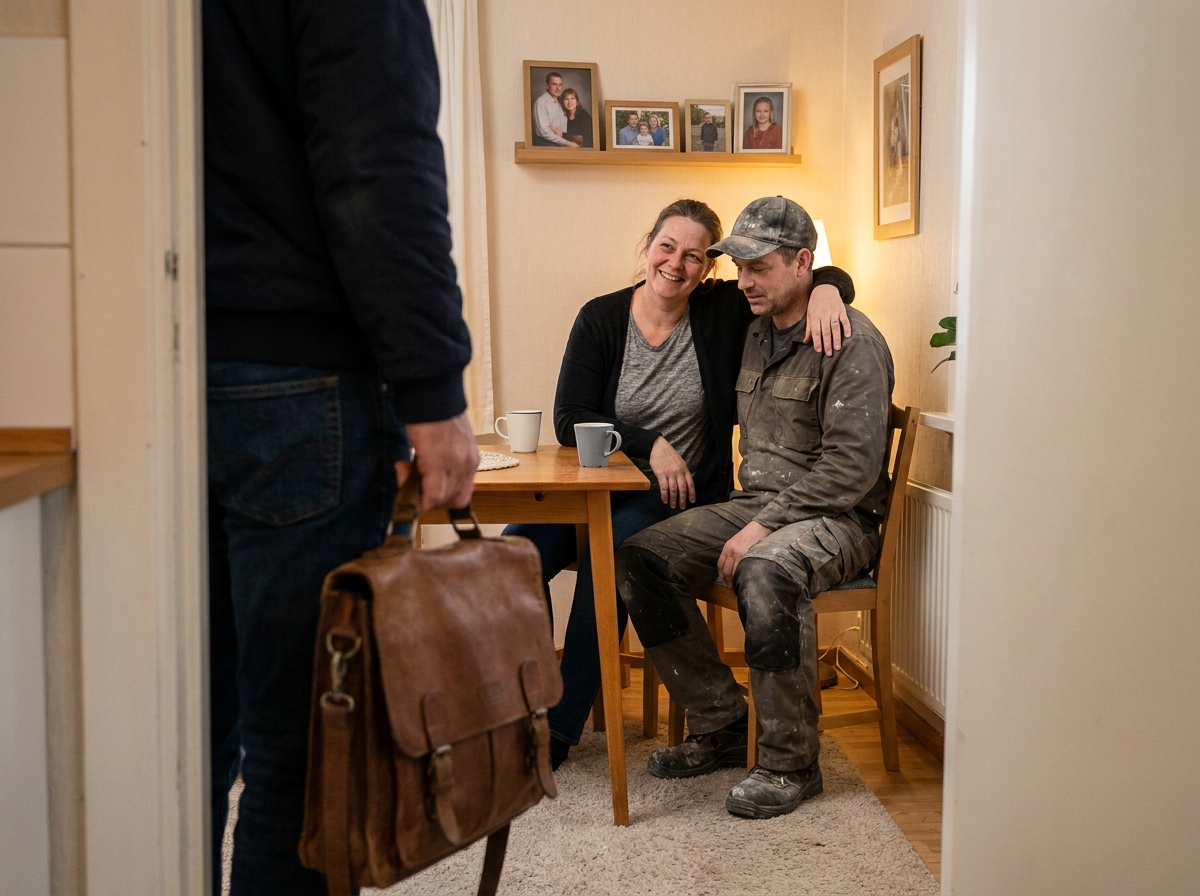
• At Easter, my aunt gave every grandchild $100 — except mine. “Their mom isn’t really family,” she whispered loudly.

    At Easter, my aunt handed every grandchild $100 — except mine. “Their mom isn’t really family,” she said under her breath, loud enough to carry. My kids heard it. I stood up and said, “We’re leaving.” As I strapped them into the car, I sent one message to the family group chat: “FYI — I’m the co-signer on Aunt Carol’s car loan. Enjoy your repossession letter.” Twenty-three minutes later…

    Promoted Content

    27 Foods You Can Eat A Lot Of Without Gaining Weight, Ranked In Order
    More…
    309
    77
    103
    Easter at my mother’s house always looked gentler than it truly felt. There were pastel napkins, honey-glazed ham, deviled eggs sprinkled with paprika, and plastic eggs scattered across the yard like everything in our family was cheerful and safe. My wife, Rachel, had spent the morning helping my mother in the kitchen while our two kids, Noah and Sophie, ran around with their cousins in church clothes already streaked with grass.

    I wanted the day to go well.

    For once, I wanted my side of the family to treat Rachel like she truly belonged.

    We had been married seven years. She had helped my father through chemo visits, delivered meals after my grandmother’s hip surgery, and remembered every birthday better than I ever did. But to my Aunt Carol, she was still “the woman Graham married,” not family.

    After lunch, Carol put on her usual performance of generosity.

    She sat in the living room with a stack of white envelopes on her lap, calling each grandchild and great-niece forward like she was hosting an award ceremony.

    “For Madison,” she sang. “For Tyler. For Grace. For little Benjamin.”

    Each envelope held a crisp hundred-dollar bill. The kids gasped and hugged her. Parents laughed. Phones came out.

    Noah, eight, stood beside Sophie, five, waiting with hopeful smiles.

    Carol looked right past them.

    Then she folded the final empty envelope and slipped it into her purse.

    Sophie tugged at my sleeve. “Daddy, did Aunt Carol forget us?”

    Before I could answer, Carol leaned toward my cousin Brenda and whispered loudly enough for half the room to hear, “Their mom isn’t really family, so I didn’t think it was necessary.”

    The room went silent.

    Rachel went completely still.

    Noah’s expression changed first. His smile dropped, and his eyes moved from Carol to his mother, trying to understand why someone had just made her smaller in front of everyone. Sophie’s lower lip trembled.

    Something inside me snapped, clean and final.

    I stood up.

    “We’re leaving,” I said.

    My mother whispered, “Graham, please don’t do this today.”

    “I didn’t do anything today,” I said, looking straight at Carol. “She did.”

    Carol gave a thin, dismissive laugh. “Oh, don’t be dramatic. They’re children. They’ll forget.”

    “No,” Rachel said quietly. “They won’t.”

    I picked up Sophie. Noah took Rachel’s hand. No one stopped us. They just watched, embarrassed and silent, which somehow felt worse.

    Outside, I buckled Sophie into her booster seat while Rachel helped Noah. My hands shook so badly I dropped the keys.

    Then my phone buzzed.

    A message from Carol appeared in the family group chat.

    Carol: Some people are too sensitive. Money doesn’t make children family.

    I stared at it.

    Then I typed one sentence.

    Me: FYI — I’m the co-signer on Aunt Carol’s car loan. Enjoy your repossession letter.

    I hit send.

    Twenty-three minutes later, my phone started ringing so hard it slid across the cup holder.

    It was Carol…

    Part 2
    I let it ring. Then I let it ring again. By the time we pulled into our driveway, there were seventeen missed calls, twelve text messages, and one voice memo from my mother that began with, “Graham, what did you do?”

    Rachel sat quietly in the passenger seat, staring out the window. Noah hadn’t spoken since we left. Sophie clutched her stuffed rabbit and asked once, very softly, “Is Mommy not family?”

    That question hurt more than anything Carol had said.

    Rachel turned before I could respond.

    “Sweetheart,” she said, her voice steady in that way mothers make it steady when they are breaking inside, “I am your family. Daddy is your family. Noah is your family. Grandma is your family too. Sometimes grown-ups say hurtful things because something is wrong in their own hearts, not because something is wrong with you.”

    Sophie nodded, but she didn’t look convinced.

    Inside the house, I made the kids hot chocolate even though it was warm outside. Rachel took them upstairs to change out of their Easter clothes. I stayed in the kitchen with my phone on the counter, watching the messages stack up.

    Mom: Please call me.
    Brenda: That was cruel. Carol is crying.
    Uncle Pete: You had no right to threaten her transportation.
    Carol: You wouldn’t dare.

    I finally answered when my mother called again.

    “Graham,” she said, breathless. “Tell me you didn’t mean that.”

    “I meant every word.”

    “She needs that car.”

    “Then she should have remembered who helped her get it.”

    The truth was simple. Two years earlier, Carol had bad credit, no savings, and a job across town at a medical billing office. Her old sedan died, and no dealership would approve her alone. She cried to my mother, my mother cried to me, and I agreed to co-sign on a used Toyota because Carol promised she would make every payment.

    For the first year, she did. Then she started paying late. I covered two payments without telling anyone because I didn’t want the loan damaging my credit. I called her after the second time and told her it could never happen again. She said she was embarrassed. She said she would fix it. She said, “You’re a good nephew, Graham. Family helps family.”

    Apparently, family came with conditions when it involved my wife and children. My mother lowered her voice. “She was wrong. I know that. But you embarrassed her in front of everyone.”

    I almost laughed.

    “She embarrassed my children in front of everyone.”

    “That’s different.”

    “No, Mom. That’s the problem. You think it’s different.”

    There was silence on the line. Then she said what I had been waiting years to hear and dreading at the same time.

    “Carol never accepted Rachel because she thinks you married beneath you.”

    My throat tightened.

    Rachel was a public school counselor. I managed logistics for a grocery distribution company. Neither of us came from money. Carol only acted like we did because she confused cruelty with standards.

    Discover more
    behind your
    Brain health exercises
    destroy your
    “I’m not paying another dime for that car,” I said. “And tomorrow morning, I’m calling the lender to ask what my legal options are.”

    My mother started crying. “That will ruin her.”

    “No. Her choices might. Mine won’t.”

    When I hung up, Rachel was standing in the doorway.

    “You don’t have to do this for me,” she said.

    “I’m not only doing it for you.”

    I glanced toward the stairs, where our children were whispering in Noah’s room.

    “I’m doing it because they heard her.”

    Rachel came over and took my hand.

    “I don’t want revenge,” she said. “I want boundaries.”

    That word shifted everything. Until then, I had imagined Carol’s panic, her humiliation, her perfect Easter unraveling into disaster. Part of me wanted that. Part of me wanted the whole family to feel the shock my kids had felt.

    But Rachel was right. Revenge would only make Carol the center of the story again.

    The children needed something better than punishment. They needed proof that love had a backbone.

    That night, after they fell asleep, I opened my laptop and pulled up the loan documents. My name was there beside Carol’s, legally tied to a woman who had publicly declared my children less worthy.

    I didn’t sleep much. At 8:03 the next morning, I called the bank.

    Part 3
    The bank representative was calm, polite, and very clear. I couldn’t simply remove myself from the loan. Carol would have to refinance the car in her own name or sell it and pay off the balance. If she missed payments, the bank could pursue both of us. If I wanted to protect my credit, I needed to keep records, document communication, and make sure the account stayed current until a legal solution was reached.

    That was the moment my anger turned practical. I sent Carol an email, not a text. I wrote that I would not cover another missed payment. I gave her thirty days to refinance or sell the car. I attached screenshots of the two payments I had already made on her behalf and asked for repayment within six months. I kept the language clean, factual, and impossible to twist. Then I sent a second message to the family group chat.

    Me: Yesterday hurt my children. This is not about $100. This is about telling them their mother does not belong. Rachel and I are taking space from anyone who excuses that. Carol’s car loan will be handled legally and privately from now on.

    No insults. No threats. No performance.

    The replies were different this time.

    My cousin Brenda apologized first. She admitted she had heard Carol’s comment and stayed quiet because she “didn’t want drama.” My uncle Pete called later and said he still thought the car message had been harsh, but Carol had been cruel. My mother came over that evening with Easter baskets for Noah and Sophie, not to replace Carol’s money, she said, but to remind them they were loved.

    Rachel accepted the baskets. She did not accept my mother’s excuse.

    “Next time,” Rachel said gently, “please defend us in the room, not afterward in private.”

    My mother cried again, but this time she nodded.

    Carol did not apologize.

    For two weeks, she sent messages accusing me of betrayal. She said I was destroying her independence. She said Rachel had turned me against my blood. She said children needed to learn disappointment.

    I did not respond to any of that. I only forwarded the refinance deadline.

    On the twenty-sixth day, Carol called. Her voice sounded smaller than I had ever heard it.

    “No bank will approve me alone,” she said.

    “I’m sorry,” I replied.

    “So what am I supposed to do?”

    “Sell the car before it becomes a bigger problem.”

    She cursed under her breath. Then, unexpectedly, she began to cry. Not the dramatic crying she used at family gatherings. This was tired and frightened.

    “I can’t keep losing things,” she said.

    For the first time, I heard something beneath her cruelty. Carol had spent years measuring everyone else’s worth because she was terrified of her own life shrinking. Her husband had died. Her savings were gone. Her pride was all she had left, and she had sharpened it into a weapon.

    Understanding that didn’t excuse her. But it helped me stop hating her.

    In the end, she sold the Toyota to a coworker’s son. The sale didn’t cover the full balance, so she took a small personal loan from a credit union with my uncle as a guarantor. She repaid me for the two missed payments in installments of fifty dollars a month. Each check arrived without a note.

    We didn’t see Carol for nearly a year.

    The next Easter, my mother asked if we would come for brunch. I said we would, but only if Rachel and the kids were treated as full family, openly and without awkward exceptions.

    My mother said, “I understand.”

    When we arrived, Carol was already there.

    She looked older. Less polished. There were no envelopes in her lap.

    After lunch, she walked up to Rachel in the kitchen, where everyone could hear her.

    “I was cruel to you,” Carol said. “And I was cruel to your children. I am sorry.”

    Rachel looked at her for a long moment.

    “Thank you,” she said. “I accept the apology. Trust will take longer.”

    Discover more
    My in-laws
    Her Room
    This house
    Carol nodded. “I know.”

    Then she turned to Noah and Sophie.

    “I said something last year that was wrong. Your mother is family. You are family. I should never have made you feel otherwise.”

    Sophie hid behind Rachel’s leg, but Noah said, “Okay.”

    It wasn’t a movie ending. No one hugged in slow motion. No one pretended the past had disappeared.

    But later that afternoon, Carol helped Sophie dye an egg purple, and Noah showed her how to fold a paper airplane. Small things. Ordinary things. The kind of things families rebuild with when big speeches aren’t enough.

    I never co-signed another loan for anyone.

    But I learned something from that Easter.

    A boundary is not the opposite of love. Sometimes it is the only door love can still walk through without being trampled.

    Carol lost her car, her pride, and her power to decide who belonged.

    But in losing those things, she gained one last chance to become more than the cruelest thing she had ever said. And my children learned a better lesson than revenge.

    They learned that family is not proven by blood, money, or tradition. It is proven by who stands up when someone tries to make you feel like you do not belong.

    Related posts:
    My son skipped his father’s funeral for a party. That night, I found a clause letting me decide his inheritance. By morning, one decision erased everything he expected.
    My mother-in-law took one look at my 38-week belly, told my husband to bolt the doors and leave me to labor on my own, then flew to Miami on my money for a luxury getaway. A week later, they came back bronzed, smug, and loaded down with designer shopping bags, but the second they saw the front door, they knew they had gone too far and there was no fixing it.
    At my sister’s wedding reception, my mother stood up and told all 200 guests, “At least she wasn’t a complete failure like my other daughter. Even her birth ruined my life and destroyed my dreams.”

  • “We Didn’t Order For Your Son,” My Sister Said, Ha…

    “We Didn’t Order For Your Son,” My Sister Said, Handing Him A Bread Basket While Her Kids Ate $100..

    “We didn’t order for your son.” My sister said, handing him a bread basket while her kids ate $100 steaks and dessert. My dad added, “You should have packed him something.” I just smiled and said, “Noted.” When the waiter came back, I stood up and announced, “I’ve spent most of my adult life cleaning up after my sister’s messes. Financial, emotional, even babysitting her kids while she went on her last-minute emergency getaways. I did it without much thanks, always hearing the same line from our parents, ‘She’s going through >> >> as if I wasn’t.’ Jill’s life has always been one dramatic mess after another, >> >> but somehow she still manages to land softly because someone else is always catching her. Usually me. And our parents, they act like she’s this fragile, helpless creature who can’t be held accountable for anything. Meanwhile, I’m the reliable one, the stable one, the one who never gets a break. So, when I offered to pay for our parents’ 40th anniversary dinner, a night I genuinely hoped would be a peaceful gathering, it was a big deal.

    I booked the best steakhouse in town, arranged for a private room, and planned to surprise them with a framed photo from their wedding day I had restored. It wasn’t about making a statement. I just wanted a night where everyone sat down, shared a meal, and acted like a family. >> >> Instead, I walked into a firing squad of indifference.

    We arrived 5 minutes early. My son Mason held my hand as we walked in, excited in his shy, quiet way. He kept asking if it was okay to order dessert. I told him he could have whatever he wanted. >> >> Inside, Jill and her family were already seated. Doug had a drink in hand. Their boys were loudly playing some game on their tablets.

    Jill didn’t stand up. She just looked over her shoulder and said, “Oh, hey.” My mom gave me a distracted hug. My dad stayed seated and barely acknowledged me. No one asked how Mason was. No one even looked at the bag I was holding with their gift. We sat down. >> >> I helped Mason unfold his napkin and started looking over the menu with him.

    He pointed at the chicken tenders and smiled. I was about to flag down the waiter when Jill leaned over, pulled the bread basket toward Mason and said, “We didn’t order for your son.” She said it like it was normal. I blinked. I thought maybe she misunderstood, but then my dad chimed in like it was obvious.

    “You should have packed him something if you knew he’d be hungry.” That was the moment. Not just the words. The casual tone. The way Mason’s face fell just slightly. >> >> The silence from my mom who didn’t even glance up from her water. Jill’s smug little smirk like she had scored some kind of point.

    I sat there for a few seconds and I realized something I probably should have accepted years ago. They weren’t going to change, but I could. I waved the waiter over. When he arrived, I stood and said, “Please cancel any orders that haven’t been sent to the kitchen and put everything that’s already on the way on my father’s bill.

    >> >> It’s his anniversary after all. You could hear a pin drop.” Then I looked right at the waiter again and added, “Also, my son will have the ribeye medium rare with the truffle mac and a Coke. Make it quick, please.” Doug coughed like he’d swallowed his drink wrong.

    Jill just stared at me like she couldn’t believe what she’d heard. My mom opened her mouth then closed it. Uncle Gary let out a single laugh. Just one low and slow. Aunt Denise didn’t even try to hide her smile. The waiter nodded and walked off. I sat down like nothing had happened and handed Mason a breadstick.

    He took it still quiet, but I could see it. He knew I’d stood up for him. Dinner went on, but the mood had shifted. Jill’s kids were whining about their orders being delayed. Doug was whispering in her ear. My parents kept glancing at each other like they were trying to decide if they should say something. I didn’t care anymore. The cake came.

    My dad stared at it like it was an insult. >> >> He didn’t say thank you. He didn’t even look at me. As we got up to leave, I gave the framed wedding photo to the waiter and asked him to set it on the table when we were gone. >> >> I grabbed Mason’s hand. As we were walking out, I accidentally bumped into the dessert tray. A plate shattered.

    I didn’t apologize. That night my phone blew up. Calls, texts, voicemails, all of them angry. Jill asking what my problem was. My dad demanding I reimburse him. My mom saying I embarrassed them. I ignored every message until the next day when they said they were coming over. They had no idea what was waiting for them.

    They didn’t even text first, just pulled into my driveway like it was their house and marched right up the steps. My parents and Jill. Doug was suspiciously absent, probably smart on his part. >> >> He always seemed to vanish when real needed to happen. Mason saw them through the window before I did.

    >> >> He didn’t say anything, just looked up at me with that same tired expression I’d started to recognize in myself. >> >> I didn’t panic, didn’t try to clean up the house or smooth things over. I just picked up the phone and called Uncle Gary. They’re here, I said. We’ll be there in 10, he replied.

    No questions, no drama, just like always. I opened the front door before they could ring the bell. My mom walked in first like she was the one who owned the place. Jill followed, her arms folded, jaw tight. My dad was last holding a manila envelope like it was some kind of contract I was about to be served.

    No one said hello. No one looked at Mason who was sitting on the couch pretending to play on his switch but listening to every word. Jill opened her mouth the second they were all inside. You embarrassed the entire family last night. She said it like it was a fact, like I had ruined some sacred ritual by refusing to let my son be treated like a stray dog begging at the table.

    I didn’t respond. My mom jumped in. You made a scene. You disrespected your father. We’ve never been so humiliated in public. That was laughable. These are the same people who once had a screaming match at a Chili’s over a forgotten coupon. But sure, I was the disgrace. >> >> My dad placed the envelope on the counter and gave it a little tap.

    That’s the invoice for the restaurant’s private room, a thousand dollars. Since you bailed on your responsibility, we expect you to pay your share. The entitlement was insane. I didn’t touch the envelope. I just said, “Wait here.” and walked off. 2 minutes later, the side door opened and Uncle Gary and Aunt Denise walked in.

    They didn’t bother with hellos, either. They knew what this was. My mom’s smile dropped the second she saw them. Jill muttered something under her breath. My dad looked like he just swallowed something sour. I went back to the kitchen and stood across from them. “I’ve decided I’m done supporting Jill.” >> >> I said. No build-up. No apology.

    Just the truth. She’s not my child. I’m not her safety net. I’ve been covering half her rent for the better part of a year. That ends today. If she and Doug want to stay in their apartment, Doug can pick up the slack. Or she can move. Jill started raising her voice, but I didn’t even look at her. >> >> My mom turned to Uncle Gary trying to pull him into it saying he should stay out of private family matters.

    Denise stepped in before he could respond. He didn’t yell. She didn’t even raise her voice. She calmly listed everything I’d done for Jill over the years. The money, the child care, the emotional labor, and then asked one simple question. “When’s the last time any of you helped Linda?” >> >> No one answered.

    I finally picked up the envelope, opened it, and scanned the invoice. 1,000 even. “Here’s what I’ll do.” I said. “I’ll give you 500. Not out of obligation, but out of pure pettiness. Just to make sure I can sleep tonight knowing you didn’t get the whole thing.” My dad’s hand hit the counter. My mom’s face twisted into some mix of sadness and rage.

    Jill looked like she might actually lunge at me. “Get out.” I said. They didn’t move. So, I walked to the door and opened it. Stood there silent. Uncle Gary stood, too. That was enough. They left muttering and slamming the door on their way out. >> >> I didn’t say a word. I just locked the door behind them and stood there for a while. It wasn’t relief. It wasn’t joy.

    >> >> It was just silence. A clean break. I thought that was the end of it. But, the games were just getting started. It started with the phone calls. First from my mom, then Jill, then my dad. Voicemails, texts, long Facebook messages, all of them varying levels of guilt, manipulation, and flat-out insults.

    >> >> I ignored all of it. For 2 days, nothing from me. I didn’t respond. I didn’t explain. I didn’t apologize. That’s when the other kind of revenge started. Jill posted a long vague status on Facebook, something about certain family members who think they’re better than everyone else.

    >> >> Said she was grateful to be raised by real parents who taught her love, not pride. Got likes. Got sympathy comments. A few people messaged me privately to ask what happened. I didn’t say a word. Then came the calls to Mason’s school. A week later, I got a call from the front office saying someone had reported a concern about Mason’s emotional well-being. Anonymous, of course.

    I knew exactly who it was. They’d stoop to anything. The school counselor met with Mason, said he seemed fine, smart, quiet, respectful. >> >> No red flags. I told the counselor there were family issues, and she nodded like she’d heard it before. >> >> Then came the group text.

    My mom created a new thread with extended family, aunts, uncles, cousins. Said she was deeply heartbroken that one of her daughters was cutting off family for no reason. She never named me, but she didn’t need to. Uncle Gary replied just one sentence, “We know exactly what’s going on.” Jill left the chat 10 minutes later.

    >> >> Then out of nowhere, Doug called me. I didn’t even have his number saved. I let it go to voicemail. He said he didn’t agree with how everyone else was handling things, but wanted to stay neutral, and hoped this didn’t mean we were cutting off the kids from each other. Like Mason was the problem.

    >> >> I didn’t respond. I blocked his number. And then 10 days after the dinner, my dad showed up at my work. >> >> He came into the lobby like he was just running errands. Told the receptionist he was there to drop something off. When I came out, he handed me a printed photo. It was from the dinner.

    Someone had taken a candid, >> >> me standing, Mason looking up at me, everyone else in the background either shocked or frozen. My dad had circled himself in red marker and wrote, “This is who you embarrassed.” I didn’t take the photo. I told him to leave. He didn’t say a word, just walked out. That night, I sat on the edge of my bed and finally let myself feel all of it.

    Not the sadness, the disbelief, >> >> that these were my people, that this was the response to me defending my son. I could have burned the whole thing down right then, exposed everything. But I didn’t want a war, not yet. Instead, I made one final effort, a letter, handwritten, simple.

    I mailed it to my parents’ house and another to Jill. I said I wanted peace, that I wasn’t interested in dragging things out, but I wouldn’t be guilted, blamed, or manipulated anymore. That if they wanted to move forward, it had to be mutual, respectful, >> >> honest. No response. A week passed. Then Then I saw it, another post.

    This time from my mom’s account, a picture of her, Jill, and Jill’s kids, smiling, hugging, captioned, “Family is everything, even if some forget what that means.” That was the final straw. I was done being the quiet one. I was ready to fight back. I didn’t feel anger when I saw that photo of my mom and Jill smiling on Facebook.

    I felt something worse, emptiness. It was like watching people I used to know pretending to be a family that never existed. >> >> And the caption, “Family is everything, even if some forget what that means,” was the last push I needed. I wasn’t going to respond emotionally. No ranting, no drama.

    I was going to let the truth do the work for me. So, I started gathering. I emailed my landlord and asked for all documentation related to my rent payments toward Jill’s apartment. He sent it within the hour, line by line, month by month. Seven months of partial rent. The total, $5,700. >> >> I printed it out, highlighted the payments, attached a short summary, and sent it to Jill in a flat manila envelope.

    No note, no message, nothing extra. 12 minutes later she texted me a screenshot of her Venmo balance, $34, and just four words, “Take me to court then.” I didn’t answer. Instead, I posted anonymously in a private parenting group I’m in, Real Moms, Real Stories. I asked, >> >> “Would you forgive your sister if she took money from you for 7 months, lied, and then publicly humiliated you for setting a boundary?” The responses were overwhelming. Hundreds of comments.

    Most were angry on my behalf. Some shared eerily similar stories. One woman even said, “I tried to forgive mine. >> >> I’m still cleaning up the mess she left behind.” But what shook me came later that night. A woman I didn’t recognize messaged me privately. She said she used to work with Jill at a digital marketing firm.

    Claimed Jill had made up a false HR complaint to get her demoted after a minor disagreement. She lost her job 3 months later. I didn’t believe her at first until she sent me a photo from a party. Jill, poolside, wine glass in hand, smiling in a designer dress. The timestamp was from that same weekend Jill told me she was completely broke because Doug had been rushed to the ER.

    She even asked me for money that day, and I sent her $200. I didn’t respond to the woman, but I saved everything. The next day I found something I hadn’t seen in years. While clearing space in the garage, I found an old box from my childhood. Inside were dusty photo albums, loose crayon drawings, and some birthday cards my mom had saved.

    >> >> At the bottom was an envelope that didn’t belong. It was addressed to my dad from my mom. The date was nearly 22 years ago, >> >> a week after Jill was born. It was handwritten. I wasn’t supposed to see it. In the letter, she wrote about how tired she felt after the birth, how overwhelmed she was.

    But then it got darker. She said she didn’t want another child, that she had been content with one. She called me a surprise she wasn’t ready for. >> >> And then came the part that stopped me cold. I don’t think I’ll ever bond with this new baby. I feel like I’m faking it. I’m too tired to try. He was talking about me.

    I sat on the floor for an hour staring at it. I kept thinking back to every time I had to earn her love, beg for attention, sit in the shadow of my sister’s chaos while pretending I was fine. It wasn’t in my head. It had been there from the beginning. That night, after Mason went to sleep, I poured a glass of wine and opened my laptop. I wrote one email.

    Not emotional, just facts. >> >> I listed the money I paid, the messages I received, the lies Jill told, the manipulation. And then I attached a photo of the last page of the letter. Just one paragraph. I don’t think I’ll ever bond with this new baby. I feel like I’m faking it. I’m too tired to try. I hit send.

    No subject line. No signature. Just the truth. Then I blocked all of them. Every number. >> >> Every email. Every account. I didn’t do it for revenge. I did it for peace. But peace was never their goal. And in less than 48 hours, they found a new way to come for me. One I didn’t see coming. The knock on the door didn’t even register as a warning.

    It was 2:40 in the afternoon. I had just finished a work call, and I was halfway through folding Mason’s laundry. I thought it was Amazon or maybe one of the neighbors dropping off misdelivered mail. I wasn’t expecting two women in plain clothes flashing badges. Child Protective Services, one of them said. I stared for a second thinking they had the wrong house.

    But no, they asked for me by name. Someone had submitted a report. Anonymous, of course. That I was leaving Mason home alone for long stretches. That he seemed withdrawn and possibly neglected. I can’t even describe the feeling. Like ice sliding down your spine while your heart’s trying to punch its way out of your chest. But I didn’t panic.

    I let them in. They were professional, careful, not accusatory. >> >> They looked around, checked the fridge, looked for signs of neglect. They asked questions, even spoke to Mason’s school that same day. The report didn’t match reality, obviously. Mason’s room was clean, stocked with books and games.

    His teachers told them he was well-behaved, doing great in class, even helping other kids when they struggled. The fridge was full. His schedule was structured. And yet, a report like that doesn’t just disappear. It stays in the system. His school now had a file. The principal, though sympathetic, had to add an official note.

    “Just a heads-up,” she told me, “even unfounded reports can trigger automatic escalations if there’s a second call.” That’s when I knew this wasn’t a cry for attention. It wasn’t family drama anymore. It was war. I went home and sat in silence for over an hour. Just stared at the carpet, thinking. >> >> Then I called Uncle Gary.

    I told him everything. The visit, the questions, the way the case worker apologized on the way out because she knew it was a waste of time. He didn’t react the way I expected. He didn’t get angry. He just said, “That was the warning shot. We need to move.” So, I did. I pulled out the receipts, the rent statements, the Venmo screenshots, the party photos with Jill lounging poolside sipping wine the same weekend she said Doug was in the year and begged me for help.

    I printed it all. I organized everything into folders. I even dug up old texts where she thanked me for saving her again. And then, while digging through a box of documents, I found something I’d forgotten about. A handwritten card. Mason’s second birthday, >> >> from Jill. It said, “Thanks for always being the stable one.

    I’d fall apart without you, literally.” That went in the folder, too. Then came the cease and desist. My lawyer was quick. She’d seen cases like this before, where families weaponized false reports to force someone back into control. We sent one to Jill, one to my mom, one to my dad.

    Each letter detailed the harassment, the online smears, the false CPS claim, the unpaid debt. It made it clear another move like that and we were were charges. >> >> Then the unexpected happened. Doug messaged me. I didn’t even know I hadn’t blocked him. He sent one thing, a screenshot of a bank transfer, $2,850, exactly half of what I’d paid toward their rent.

    No note, no apology, just the transaction. A few minutes later another message came through. I told her to stop. I’ve moved out. Do whatever you have to do. I stared at it for a long time. Doug was spineless, but this this was him jumping ship. Denise called me 2 days later. Said she ran into my mom at the grocery store.

    Told me my mom looked exhausted, like she hadn’t slept in days. Said she was muttering to herself in the baking aisle about me destroying the family. But Denise wasn’t having it. She told her, “Linda didn’t destroy anything. She just finally stopped playing your game.” More messages followed. A cousin I hadn’t spoken to in 4 years reached out.

    Said Jill had borrowed $600 from her 6 months ago. Promised to pay it back in a week, then blocked her. She saw my name in the comments and put the pieces together. Another aunt said she once drove 2 hours to pick Jill up after a fight with Doug >> >> and never even got a thank you. The more I pulled away, the more the stories came in.

    Turns out I wasn’t the only one they had drained. I was just the last one to say enough. But it wasn’t over. I was finally free, or so I thought, until 2 weeks later a letter arrived. Not from Jill, >> >> not from my parents, from their attorney. And it said one sentence that made my stomach turn. >> >> “We are pursuing visitation rights for Mason.

    ” They were about to make it legal. They were going after my son. The envelope wasn’t thick, but it felt heavy. Heavier than any of the messages, any of the insults, any of the manipulation. Inside was one page, a letter from their attorney, my parents’ attorney. They were filing for grandparent visitation rights. They said I was denying them access to Mason out of spite, that I was damaging his emotional development, that I had abruptly and without cause severed all ties with his extended family. They had the nerve to say it was

    in Mason’s best interest to see them. That’s when I stopped feeling hurt and started feeling dangerous. I called my lawyer immediately. She read it, paused, and said flatly, “They don’t have a case. Arizona law’s clear. They have no grounds.” But she also said something else. “This isn’t legal. It’s personal.

    They’re using the courts to scare you, to wear you down.” And that’s when it hit me. This wasn’t about seeing Mason. They didn’t care about his well-being. They’d ignored him at the dinner. Told me I should have packed him something. Handed him a bread basket while their kids ate $800 steaks. This was about control.

    >> >> About reminding me that no matter how far I pulled away, they could still find a way in. That weekend, I got everything in order. First, I filed a formal response through my attorney. We didn’t just reject their claim. We attached evidence. Screenshots, messages, photos, receipts, the report from CPS that had been closed without findings. All of it.

    Next, I contacted Mason’s school again and added formal documentation. I submitted a list of restricted individuals. My parents and Jill were now banned from all school access. No pickups, no volunteering, nothing. Then I had the locks changed. I didn’t stop there. I updated my living will.

    Denise and Uncle Gary were now the only ones with legal guardianship of Mason if anything ever happened to me. I gave them access to my legal documents, my bank accounts, everything. And finally, I made one last phone call to a friend of mine who worked in social media moderation. I asked if it was possible to track the IP that had submitted the original CPS tip anonymously.

    She couldn’t confirm much, but what she did say was enough. Let’s just say it came from a familiar neighborhood. Jill. They tried to ruin me with CPS. >> >> That hadn’t worked, so now they were trying to use the courts. But this wasn’t a game I was going to lose. The night before the court filing was officially rejected, I wrote one last message. It wasn’t sent through email.

    It was printed. I mailed it. One copy to my parents, one to Jill. This is what it said. This is the last time you’ll hear from me. I gave you decades of chances. I helped you. I protected you. >> >> I stayed quiet. I played the part. You repaid me with betrayal, lies, and now legal threats aimed at my child.

    >> >> You are no longer my family. If you try to contact me or Mason again, I will pursue a restraining order. If you show up at my door, I will call the police. If you ever attempt to involve yourself in my life again, I will make every detail public. We are done. For good. Then I blocked their numbers, blocked their emails, removed mutual contacts, and I erased them.

    Not out of anger, but survival. I thought I’d feel empty. I thought I’d grieve, but I didn’t. I took Mason camping the next weekend. Just the two of us. No phones. No noise. Just trees, sky, and quiet. He toasted a marshmallow, grinned, and said, “You seem happier.” I was. We were finally safe. Finally free. And no matter what came next, I knew one thing for certain.

  • When my son told me I wouldn’t be attending my granddaughter’s wedding, I simply said it was fine. I returned home in silence, opened the file bearing my name on every page, and carefully reviewed the white flowers I had paid for. By the next morning, he had received a letter that completely changed his life.

    The afternoon sun was perfect. It cast a golden, cinematic glow over the sprawling lawns of the Green Valley Estate. From where I stood in the manicured driveway, clutching my vintage beaded purse, the venue looked exactly as the glossy brochure had promised: a fairy-tale palace. I smoothed the skirt of my dusty-pink silk dress—the one I had preserved for years, saving it for this exact day. I adjusted the pearl necklace that had belonged to my mother, feeling the cool, familiar weight against my collarbone. A hint of expensive French perfume, used only for the most monumental occasions, wafted around me. My oldest granddaughter, Clara, was getting married. My heart swelled with a profound, almost overwhelming pride. I still remembered the scent of baby powder when I changed her diapers. I remembered the messy afternoons in my kitchen, teaching her how to bake Robert’s favorite rice pudding. And now, my little girl was about to walk down the aisle.  I wanted Clara to see me today not just as her grandmother, but as a vibrant, happy woman. A matriarch. I paid the cheerful taxi driver, tipping him generously. “You look fancy, ma’am,” he smiled. “Heading to a big party?”   “The biggest,” I beamed. “My granddaughter’s happiest day.” I turned and walked toward the grand wrought-iron gates. The air was filled with the soft, elegant melody of a string quartet playing in the distance. The scent of hundreds of white floral arches perfumed the breeze. Two hundred guests—family, friends, neighbors—were arriving, dressed to impress, laughing and chatting as they flowed toward the entrance.


    Several guests recognized me, offering warm smiles and compliments on the breathtaking venue. I nodded graciously, feeling a quiet sense of ownership over the beauty surrounding us. Because I hadn’t just been invited to this wedding. I had built it. For the past six months, my son, Richard, and his wife, Susan, had made my living room their second home. They would sit on my velvet couch, drinking the coffee I brewed, speaking in soft, calculated, desperate tones. “You know, Mom, the economy is so tough right now,” Richard would sigh, running a hand through his perfectly styled hair.  “We just want Clara to have her dream wedding,” Susan would add, her eyes wide and pleading. “She deserves to feel like a princess, Denise. But we simply can’t afford it.”  Naively, blindly, I had opened my heart—and my checkbook. “How much does a dream wedding cost?” I had asked. They had shown me the brochure for Green Valley. The catering included fresh lobster. The floral arrangements cost more than my first car. Clara’s custom designer gown was astronomically priced. And I paid for every single dollar. Over $100,000. All drawn from the careful savings my late husband, Robert, had left to ensure I could live comfortably and help the family when truly needed. I signed the vendor contracts. I managed the wire transfers. My name, Denise Parker, was printed on every single receipt and invoice. I approached the main entrance, my heart light. Richard and Susan were standing near the grand archway, greeting the arriving guests. My son looked impeccably sharp in a tailored tuxedo. Susan sparkled in a bright emerald-green gown that caught the sunlight a bit too aggressively. “Richard, my boy,” I smiled, stepping forward, my arms open to hug him. “Everything looks absolutely wonderful.” He didn’t step forward to meet my embrace. He didn’t even smile.


    His eyes, when they met mine, were cold. Incredibly, terrifyingly cold. They were the eyes of a stranger looking at an inconvenience. Susan immediately turned her back, pretending to be deeply engrossed in adjusting a floral arrangement on a nearby pedestal. “Mom,” Richard said, his tone icy and flat. “What are you doing here?” I let out a short, confused laugh, my arms slowly dropping to my sides. “What am I doing here? Richard, it’s a joke, right? I came to my granddaughter’s wedding.” Richard didn’t laugh. He turned to the professional receptionist standing behind a velvet rope and snatched the leather-bound guest list from her hands. He held it up, looking at it for a long, agonizing moment. The string quartet seemed to fade. The chatter of the two hundred guests bottlenecking behind me suddenly died down. “Your name,” Richard said, his voice carrying clearly in the sudden silence, “isn’t on the list.” My smile completely vanished. The warm afternoon air suddenly felt freezing. “What do you mean, Richard? What kind of joke is this?” “It’s not a joke,” he said curtly, his jaw tight. “Probably a mistake in the invitation process.” “A mistake?” I echoed, my voice trembling, rising slightly in disbelief. “I paid for the invitations, Richard. I sat at my dining table and helped Susan double-check this exact list to make sure no one was forgotten!”


    Shame ignited across my face, burning like physical fire. I looked at Susan. She had turned back around. She wasn’t fixing flowers. She was looking right at me, and she was smirking. A tiny, triumphant, cruel smirk. I looked around. Every single eye was on me. My longtime neighbor, Mrs. Gable, covered her mouth in shock. My nephew stared intently at his shoes. Two hundred people, and not a single one stepped forward. Not a single voice rose in my defense. In front of the entire world, I was being treated like a delusional intruder at a party I had entirely funded. I took a deep, shaky breath. I had lived seventy-two years with dignity. I would not let an ungrateful child strip me of it on a gravel driveway.  I straightened my posture. I touched my mother’s pearls. And I looked straight into my son’s dead, cold eyes. “All right, sweetheart,” I said, my voice eerily calm, projecting clearly for the crowd to hear. “If I am a mistake, I apologize for the inconvenience.” I didn’t wait for his reply. I turned around.  The crowd of two hundred people silently parted, stepping aside as if my pink silk dress was contagious. I walked back down the long driveway, under the floral arches I had bought, listening to the music I had selected, leaving behind the fairy tale I had built.

    The taxi driver was still waiting by the curb, sensing something was wrong. “Did you forget something, ma’am?” he asked gently.

    I opened the door and slid into the back seat, staring blankly at the iron gates.

    “Yes,” I whispered to the empty air. “I forgot what kind of son I raised.”

    The ride home was suffocatingly silent.

    Anger and humiliation sat like lead weights in my chest, too heavy, too dense even for tears. I stared out the window, watching the city blur past, realizing the horrific truth. They had used me. They had drained every ounce of kindness, every drop of my savings, and tossed me into the trash the moment I was no longer financially useful. They didn’t want a grandmother in their photos; they were ashamed of my age, but not of my wallet.

    When I finally unlocked the door to my apartment, the silence inside felt painful. The dusty-pink silk dress, my mother’s pearls—it all felt utterly ridiculous now. A costume for a play I wasn’t cast in.

    I walked into my bedroom, unzipped the dress, and let it fall to the floor in a heap. I didn’t pick it up.

    My eyes drifted to the framed photo of Robert on the nightstand. My strong, fiercely protective husband. If Robert had been alive today, he would have walked right up to those iron gates, looked Richard in the eye, and said, “You are no son of mine.”

    But Robert was gone. There was only me.

    I could have crumbled. I could have crawled into bed, taken a sleeping pill, and surrendered to the grief of a discarded mother.

    But the woman who came home that night was not the same Denise who had happily hailed a taxi hours earlier. The public execution of my dignity had burned away the soft, accommodating grandmother. It had awakened someone else.

    It woke up the Denise Parker who had run a massive logistics company alongside her husband for a decade. The woman who negotiated ruthless union contracts, who balanced corporate ledgers down to the last cent, and who knew the absolute, uncompromising value of leverage.

    I didn’t cry. I put on my comfortable slacks, walked straight into my home office, and opened the locked filing cabinet.

    I pulled out a thick, cream-colored folder labeled CLARA’S WEDDING.

    Inside was the ammunition. The Green Valley Estate contract bearing my signature. The catering invoices addressed to my name. The receipts for the floral arrangements. And the bank statements proving every single wire transfer had originated from my personal account.

    I picked up the phone and dialed a number I knew by heart.

    Martin Hayes had been my legal advisor, and Robert’s closest friend, for thirty years. He answered on the second ring.

    “Mrs. Parker,” Martin’s warm voice greeted me. “What a coincidence. Today is Clara’s big day, isn’t it? I thought you’d be dancing.”

    I smiled, though my reflection in the dark window looked like carved stone. “Martin. I need the best attorney you can be, in my living room, tomorrow morning at 9:00 AM.”

    A pause. The lawyer in him instantly sensed the shift in my tone. “Do you have five minutes now? I have the whole evening. Denise, what happened?”

    “I was asked to leave the wedding I paid for,” I said, my voice devoid of emotion. “My son and daughter-in-law think they can take my money and treat me like garbage on the street.” I placed my hand flat on the cream-colored folder. “I need you to help me fix that.”

    “I’ll be there at 8:30,” Martin said grimly.

    I hung up the phone and sat in my leather chair. The humiliation still burned, but it was being rapidly consumed by the cold, calculating fire of a plan. Richard thought he had humiliated me by locking me out of a party. He had no idea I was about to lock him out of his entire life.

    I didn’t sleep that night. I sat in the dark living room, drinking black coffee. When the sun finally rose, the doorbell rang.

    Martin stood there in his weekend clothes, holding a briefcase. He was Richard’s godfather. When he saw the cold, hard expression on my face, he froze in the doorway.

    “Good Lord, Denise,” he breathed. “Sit down.”

    “I’m fine,” I said, pointing to the dining table. “The files are already laid out.”

    Martin sat down and began to review the documents. I stood by the window, watching the neighborhood wake up. It was a beautiful Sunday. I should have been at a fancy hotel brunch, laughing with Clara about the wedding cake.

    “Denise,” Martin’s voice pulled me back. He tapped the paperwork. “I see the contracts. The receipts. Everything is legally in your name. You paid from your personal account. Under the law, you are the sole owner and host of that event.”

    I laughed bitterly. “The host? Escorted off the property. How ironic.”

    “It’s not just ironic, it’s actionable,” Martin said, his eyes darkening with anger on my behalf. “We can sue for severe emotional distress. You have two hundred witnesses who saw you publicly humiliated. What do you want to do?”

    I turned away from the window and looked at Martin. “What do you think I want, Martin? An apology? A compensation check written with the very money I gave them?”

    I walked over to the table and leaned down. “They didn’t just insult me. They showed me their truth. They never saw me as a mother. To them, I am a wallet. And when a wallet is empty, or when it ruins their aesthetic, they close it.”

    I walked out of the room, into Robert’s old office, and opened the heavy floor safe. I pulled out a second folder. A bright blue one.

    I walked back and dropped it onto the table in front of Martin.

    “This,” I said quietly, “is rediscovered power.”

    Martin opened the blue folder. He blinked, reading the first document. “These are property deeds.”

    “One is for the luxury three-bedroom apartment Richard and Susan currently live in,” I stated. “The other is the beachfront property they use for their summer vacations.”

    Martin looked up, stunned. “Everything is in your name.”

    “Of course it is,” I said. “I bought them as investments. Richard complained rent was too high in the city, so I let them live there. No lease. No rent. They’ve been there for ten years. They have never paid a dime in property tax or HOA fees. I pay it all.”

    Martin swallowed hard. “And the cars?”

    “The gray SUV Richard drives to his agency, and the convertible Susan takes shopping. Both registered to my LLC,” I replied.

    Martin slowly closed the blue folder, leaning back in his chair, looking at me with a mixture of awe and slight terror. “Denise Parker. What exactly do you want me to do?”

    “They erased my name from their guest list,” I said, staring at the blue folder. “Now, it’s my turn to erase them from my payroll.”

    I laid out the strategy. A formal, thirty-day eviction notice posted on their apartment door the day they returned from their honeymoon. The locks on the beach house changed immediately. A registered legal demand for the immediate return of my vehicles, under threat of police report for grand theft auto.

    And finally, the masterstroke. I opened my banking app on my phone. I navigated to the scheduled transfers.

    Monthly Allowance. Richard Parker. $4,000.

    “Susan doesn’t work. Richard’s ad agency barely covers his tailored suits,” I told Martin. “They survive on my allowance.”

    I hit Cancel. The screen flashed green. Transfer Terminated.

    Martin let out a low breath. “They are going to hate you, Denise.”

    “They already do, Martin,” I said coldly. “They just hid it well because they needed my money. Let them hate me from afar. And broke.”

    “And Clara?” Martin asked softly.

    The name hit me like a physical blow. “She knew I paid for her dress. She watched me get turned away and said nothing. She chose the money. Now, she will live with her choice.”

    Martin nodded, slipping the blue folder into his briefcase. “I will file the eviction notice tomorrow morning. When they land from Paris, the bailiff will be waiting.”

    He left, and I was alone again. My son and daughter-in-law were currently flying across the Atlantic, sipping champagne, believing they had successfully discarded a foolish old woman.

    They were headed to the City of Light. But when they returned, every single light in their comfortable, parasitic lives was going to go permanently dark.

    The following fifteen days were the most bizarre, liberating days of my life.

    While Richard and Susan were in Paris, eating brie and taking selfies by the Eiffel Tower, I was in New York, systematically dismantling every pillar of their privileged existence.

    The fragile, heartbroken grandmother was dead. Denise Parker, the corporate strategist, had resurrected.

    On Tuesday, Martin called. “Denise, the beach house locks are changed. Armed security is on site. If they approach the property, it’s criminal trespassing.”

    “Perfect,” I replied, sipping my morning tea.

    I didn’t stop there. I went into the “guest room”—which Susan treated as her personal storage locker for her expensive overflow wardrobe—gathered all the high-end linens and towels she had demanded I buy, and threw them in the dumpster. I took down the family portrait in the living room, the one where Susan wore her fake, triumphant smile, and shoved it deep into a closet.

    In its place, I hung an old black-and-white photo of Robert and me, covered in engine grease, standing in front of our very first logistics truck.

    Then came the first of the month. The day the $4,000 allowance usually hit their account.

    I woke up early, made a strong pot of coffee, and sat in my armchair, waiting. I closed my eyes, picturing the exact moment the illusion shattered. Susan, wandering into a Parisian boutique, handing over her platinum card. The clerk swiping it once. Twice. “Declined, Madame.” Richard, trying to pay for an overpriced dinner, his card also declining. The sudden, suffocating panic setting in.

    By late afternoon, my phone buzzed. A text message from Richard.

    Mom, are you okay? The transfer didn’t go through today. Did something happen with the bank?

    Not “Mom, I’m so sorry about the wedding.” Just “Where is the money?”

    My fingers hovered over the keyboard. I wanted to scream at him. I wanted to unleash seventy-two hours of rage. But the strategist in me knew better. Silence is a weapon that cannot be countered.

    I deleted the message. I let them sit in their Parisian hotel room, staring at their empty bank accounts, completely disoriented and terrified.

    While they panicked, I thrived. I went to a high-end salon and chopped off my hair into a sharp, modern bob, dyeing it a rich chestnut that erased ten years from my face. I walked into an Apple store and bought a top-of-the-line laptop. I hired a sharp twenty-something tutor to come to my house for daily lessons on advanced financial software and digital investing.

    Susan had mocked me, saying a banking app was “too complicated” for my old brain. She didn’t know that within seven days, I had successfully transferred ninety percent of my liquid assets into an ironclad, high-yield trust fund that Richard couldn’t touch with a ten-foot pole.

    Finally, Sunday arrived. The day their flight landed back in New York.

    I knew their itinerary. I knew they would reach their apartment building by 8:00 PM. I drew a hot salt bath, changed into luxurious silk pajamas, and sat by the phone.

    At exactly 8:15 PM, it rang.

    I let it ring four times before calmly picking it up. “Hello?”

    “Mom! What the hell is this?!” Richard’s voice exploded through the speaker, frantic and furious. “Are you insane?! Did you kick us out of our apartment?!”

    In the background, I could hear Susan screeching hysterically. “She’s lost her mind, Richard! Call the police!”

    “Richard,” I said, my voice smooth and chillingly calm. “Lower your voice. I am not deaf.”

    “There is an eviction notice taped to our front door! Thirty days!” he yelled. “You’re joking, right?!”

    “It’s a legal notice from the court, Richard. Very serious. Not a joke.”

    “You’re throwing your own son out on the street?!”

    “No, I am reclaiming my property,” I corrected. “You will need to find somewhere else to live.”

    A stunned, heavy silence fell over the line. He hadn’t expected this tone. He had expected tears, guilt, or confusion.

    “This is about the wedding, isn’t it?” Richard’s voice shifted, suddenly adopting that oily, pleading tone he used when he needed cash. “Mom, please. That was just a misunderstanding. Susan was stressed. There was a mistake with the list…”

    “A mistake?” I cut him off, my voice turning to steel. “You looked your mother in the eye and said, ‘You’re not on the list.’ You publicly humiliated me, Richard. You and your wife made me a laughingstock. But I’m grateful. Because now, I understand.”

    “Understand what?”

    “I understand that I no longer have a family,” I said. “I have a parasitic son and daughter-in-law who live in my house, drive my cars, spend my money, and ban me from my own granddaughter’s wedding.”

    “That’s not true! We love you!” Susan shrieked into the phone.

    “You love my wallet, Susan,” I replied. “But the wallet is permanently closed. The allowance is gone. And the cars? You have twenty-four hours to return them to my lawyer’s office, or I report them stolen.”

    Richard lost his mind. He screamed, threatening to sue me, threatening to have me declared mentally incompetent so he could seize control of my estate.

    I laughed. A sharp, genuine laugh. “Go ahead, Richard. But lawyers cost money, and yours is gone. You blocked me at the door by mistake. I am blocking you from my life by choice. You have thirty days. The clock is ticking.”

    I hung up the phone and unplugged it from the wall. The silence in my apartment was the most beautiful sound I had ever heard.

    The next morning, Richard decided to test my resolve. He put on his tailored suit, went down to his building’s luxury garage, and tried to drive “his” SUV to work.

    The doorman, George, a man I had tipped very well for years, stopped him at the gate.

    “I’m sorry, Mr. Parker,” George said politely. “I have direct orders from the owner, Mrs. Denise Parker. This vehicle is unauthorized to leave the premises. If you attempt to drive it, I am required to call the police.”

    Richard threw a violent tantrum in the garage, ripping his briefcase out of the car and screaming obscenities, forced to hail a yellow cab in front of all his wealthy neighbors. Public humiliation. Checkmate.

    That afternoon, Susan tried to order expensive sushi delivery. Her card declined. Richard’s card declined. They were entirely, utterly broke.

    By 4:00 PM, they were desperate enough to do the one thing I knew they would. They came to my building.

    I was walking back from my computer class, laptop bag over my shoulder, when I saw them standing by my building’s entrance. They looked like shipwreck survivors. Susan’s hair was messy, her designer sunglasses failing to hide her panicked eyes. Richard looked feral.

    “Mom!” Richard shouted, storming toward me.

    My doorman, Patrick, immediately stepped forward, but I raised a hand, stopping him.

    “Richard. Susan. What a surprise,” I said coldly, standing my ground.

    “Open the door. We need to talk,” Richard demanded, reaching for my arm.

    I stepped back, out of his reach. “I have nothing to say to you. And you are not allowed inside my home.”

    “Mrs. Denise, please!” Susan cried, her voice trembling with fake emotion. “Don’t be cruel! We were wrong! It was the receptionist’s mistake!”

    “Susan, stop,” I interrupted, my voice laced with disgust. “That performance is pathetic. You stood there, watched my son turn me away, and you smiled. You thought you won. You got a $100,000 wedding and got rid of the bothersome old woman all in one day. Quite a bargain.”

    Susan went pale, her mouth snapping shut.

    Richard’s face contorted with rage. “You’ll regret this! You’ve lost your mind! I’m calling my lawyer right now to prove you’re senile!”

    I stared at the man I had given birth to, the man who was now threatening to lock me in an asylum for cutting off his allowance.

    “Lost my mind?” I smiled, reaching into my purse. I pulled out my phone and opened my investment portfolio app. I held the screen up to his face. “See this, Richard? This morning, I executed a block trade of tech stocks. I can navigate financial markets perfectly fine. What can you do besides spend my money?”

    Richard stared at the screen, his eyes widening at the massive, multi-million dollar figures displayed there. Figures he had no idea existed.

    “You want to sue me?” I continued, my voice echoing off the brick building. “Go ahead. But last week, I paid a top forensic psychiatrist $5,000 for an eight-page evaluation confirming I am of perfectly sound mind. Any judge will laugh your greedy lawsuit out of court.”

    I leaned in closer, dropping my voice to a lethal whisper. “You two forgot who I am. You think I lived off a meager retirement fund? I kept the commercial real estate from Robert’s business. Six warehouses. One leased to Amazon. One to FedEx.”

    Richard’s jaw literally dropped. The blood drained entirely from Susan’s face.

    “The $100,000 I paid for Clara’s wedding?” I smiled coldly. “That’s roughly what I pay in annual property taxes. It was spare change, Richard. And you threw it in my face.”

    I turned to my doorman. “Patrick. Call the police. These two are trespassing.”

    “Wait, Mom!” Richard panicked, stepping forward.

    “Don’t call me Mom,” I snapped, the authority of a CEO radiating from my bones. “You lost that right at the wedding gates. Now, get off my sidewalk.”

    I turned and walked through the glass doors of my building, leaving them standing on the street, entirely destroyed.

    As the elevator carried me up to my penthouse, my phone buzzed. An unknown number.

    I answered. “Hello?”

    “Grandma?” a small, weeping voice came through the speaker. “It’s me. Clara.”

    My heart, despite the armor I had built over the last month, gave a painful, involuntary flutter.

    “Clara,” I said, keeping my voice steady. “What a surprise. How was the honeymoon in Paris? Was the wedding—the one I paid for—beautiful?”

    “Grandma, please,” Clara sobbed, her voice thick with panic. “What’s happening? Mom and Dad are screaming. They said you’ve lost your mind and kicked them out of their apartment. They said you took their cars.”

    I walked into my living room and poured myself a glass of water. “I haven’t lost my mind, Clara. I am simply taking back what legally belongs to me. The apartment, the cars, the money—it was all mine.”

    “But… is this because of the wedding?” she stammered. “Grandma, I swear I didn’t know! I was so nervous, everything happened so fast, I didn’t notice you weren’t there!”

    “You didn’t notice?” I repeated, my tone turning dangerously sharp. “You didn’t see the grandmother who raised you missing from the front row? You didn’t ask your parents why the woman who bought your dress wasn’t at the reception?”

    Silence stretched over the line, broken only by her muffled crying.

    “No, Clara,” I said softly, but firmly. “You noticed. But you were too afraid to ruin your perfect aesthetic. Your father threw me out like a stray dog, and you stood at the altar and smiled. Then you went to Paris for two weeks, and you didn’t call me once to apologize.”

    “Grandma, I’m sorry…”

    “You are only calling now because your parents ran out of money,” I stated, the truth ringing clear and undeniable in the quiet room.

    “Your parents chose their path, Clara. And through your silence, you chose yours. You chose the party and the luxury over me. Now, live with that choice. I love you, but the foolish grandmother who paid for everything died at the gates of your wedding.”

    I hung up the phone.

    The new balance of power was set in stone.

    The thirty days passed. Richard and Susan couldn’t afford a lawyer, and they couldn’t afford to fight the eviction. They surrendered the keys to the apartment and the beach house on the very last day. According to my neighbor, Mrs. Martha, they had to take out a high-interest loan just to rent a cramped, one-bedroom apartment in a noisy suburb. Susan was forced to sell her designer handbags online to buy groceries. Richard was taking the bus to his failing agency.

    I didn’t feel pity. I felt peace.

    I sold the luxury apartment within a week for a massive profit. I didn’t hoard the money. I used it to fund a no-kill animal shelter on the outskirts of the city—a dream Robert and I had shared decades ago. Martin handled the legal paperwork pro-bono, claiming it was the best work he had done in years.

    Two months later, my doorbell rang.

    I looked through the peephole. It was Clara. But she wasn’t the radiant, spoiled bride anymore. She looked exhausted, wearing plain jeans, carrying a single duffel bag.

    I opened the door. “Clara.”

    She burst into tears. “Grandma. I’m getting a divorce.”

    I let her in, brewing a pot of chamomile tea as she sobbed on my couch. “What happened?”

    “Michael,” she wept, holding the warm mug. “He didn’t marry me for love. He married me because I was Denise Parker’s granddaughter. When he found out Mom and Dad were broke and that you cut us off… he changed. He became cruel. He threw me out.”

    She looked up at me, her eyes red and swollen. “I realized his love was exactly like the love my parents had for you. It only existed when the bank account was full. I’m so sorry, Grandma. I saw Dad kick you out. I was a coward. I understand why you did it.”

    I looked at my granddaughter. She had lost her fairy tale, but she had finally found reality.

    “Dignity has no age, Clara,” I said softly, taking her hand. “What I did wasn’t revenge. It was self-preservation. Unfortunately, you had to learn that lesson the hard way.”

    I didn’t hand her a check. I didn’t solve her problems with cash. But I pointed to the hallway. “The guest room is empty. You can stay here while you look for a job.”

    Clara moved in. She started working as a freelance designer. She paid her own phone bill. She learned the value of a dollar, and more importantly, the value of respect.

    Richard and Susan never reached out again. They tried to sue me once for “elder neglect,” a laughable case that a judge threw out in five minutes. They became nothing more than a cautionary tale, a dark stain in my past that I no longer thought about.

    Today, as I sit on the porch of my animal shelter, watching rescue dogs play in the sun, I don’t feel anger about the pink dress or the floral arches.

    I feel profound gratitude. Because the moment I was shut out of that wedding, was the exact moment I was finally invited back into my own life

    Chapter 1: The Grand Opening

    Six months after Clara moved into the guest room, the “Robert and Denise Parker Rescue Sanctuary” officially opened its gates. It wasn’t just a building; it was a sprawling ten-acre plot of land an hour outside the city, nestled against a wooded ridge that reminded me of the countryside where Robert and I had spent our earliest anniversaries.

    I stood at the podium, the microphone feedback squealing slightly before Martin tapped it for me. The crowd was a mix of local dignitaries, potential donors, and the staff I had personally interviewed. Clara stood off to the side, wearing a simple navy blazer and holding a clipboard. She wasn’t there as my granddaughter; she was there as the sanctuary’s volunteer coordinator. She had earned the title.

    “Welcome,” I began, my voice steady despite the breeze rustling the papers on the lectern. “Many of you know me as a businesswoman. Some know me as a widow. But today, I stand before you simply as someone who understands the value of a second chance.”

    I looked out at the sea of faces. Somewhere in the back, I knew there were reporters. The story of the grandmother who evicted her son had become a minor local sensation, though I had never spoken to the press.

    The facts had leaked out anyway: the wedding humiliation, the financial cutoff, the eviction. Public opinion was overwhelmingly on my side. In a world obsessed with family loyalty at all costs, my story resonated because it touched on a universal truth: loyalty must be reciprocal.

    “This sanctuary,” I continued, gesturing to the red ribbon stretched across the entrance of the main kennel building, “is built on the belief that every living creature deserves safety, dignity, and love. Not because they are useful. Not because they are convenient. But because they exist.”

    I caught Clara’s eye. She smiled, a genuine, tired smile that reached her eyes for the first time in months. She had lost weight. The designer clothes were gone, replaced by jeans and sturdy boots. She looked healthier than she had as a bride. The poison of entitlement had been purged from her system, replaced by the hard-earned strength of self-reliance.

    I cut the ribbon. The applause was thunderous. Dogs barked in the distance, a chorus of gratitude that drowned out the string quartet we had hired.

    After the ceremony, during the mingling hour, a man approached me. He was older, distinguished, holding a glass of sparkling water.

    “Mrs. Parker,” he said. “I’m Arthur Vance. I run the city’s housing authority.”

    “Nice to meet you, Arthur,” I said, shaking his hand.

    “I wanted to commend you,” he said quietly. “Not just for the shelter. But for the stance you took with your family. My wife… she’s been dealing with something similar. Her son expects everything. Seeing you stand firm… it gave her courage.”

    I felt a lump in my throat. I had thought my actions were purely personal. I hadn’t realized they were political. I hadn’t realized that by drawing a line in the sand, I was drawing a map for others who were lost in the same wilderness.

    “It’s not about courage,” I told him. “It’s about clarity. Once you see the truth, you can’t unsee it.”

    “Clara seems to be doing well,” Arthur noted, glancing toward my granddaughter.

    “She is,” I said. “She’s learning that love isn’t a transaction.”

    “Good,” Arthur said. “Because I heard rumors. Your son… Richard… he’s been asking around. Asking about your health. Asking about the shelter’s finances.”

    My spine stiffened slightly. “Is that so?”

    “Just be careful, Denise. Desperate people do desperate things.”

    “I’m aware,” I said. But the warning settled in my stomach like a cold stone. I thought I was done with them. I thought the eviction was the final period on the sentence. But perhaps for people like Richard, there is no final period. Only ellipses.

    Chapter 2: The Shadow at the Gate

    Two weeks after the opening, the shadow arrived.

    It was a Tuesday morning. I was in the shelter’s office, reviewing the quarterly budget with Clara. The door burst open without a knock. One of the kennel assistants, a young man named David, looked panicked.

    “Mrs. Parker? There’s… there’s a man at the gate. He’s causing a scene. He says he’s your son.”

    My pen stopped moving. Clara froze, her hand hovering over the calculator.

    “Is he alone?” I asked.

    “Yes, ma’am. But he’s shouting. Saying you stole his inheritance.”

    I stood up slowly. “Clara, stay here.”

    “No, Grandma,” Clara said, standing up too. Her voice was firm. “I’m coming. He’s my father. If he’s going to scream, he should scream at both of us.”

    We walked out to the main gate together. The security guard, a former police officer I had hired specifically for this reason, was holding a clipboard, blocking the entrance. Richard was on the other side of the barrier. He looked terrible. His suit was wrinkled, his tie loose. He had lost weight, but not the healthy kind. He looked gaunt. His eyes were bloodshot.

    “Denise!” he screamed when he saw me. “Open this gate! You have no right to keep me out!”

    “This is private property, Richard,” I said calmly, stopping ten feet from the barrier. “You are trespassing.”

    “Trespassing?” He laughed, a hysterical, jagged sound. “I’m your son! This is my inheritance! You’re giving away my money to stray dogs while I’m living in a motel!”

    “You had an inheritance,” I said. “You traded it for pride. You traded it for a wedding where I wasn’t allowed to exist.”

    “It was a mistake!” he pleaded, grabbing the metal bars of the gate. His knuckles were white. “Mom, please. Susan left me.”

    I glanced at Clara. She flinched, but didn’t look away.

    “Susan left?” I asked.

    “She took what was left of the jewelry,” Richard spat. “She said I was a failure. She said I should have fought harder for the apartment. She said I should have had you declared incompetent years ago.”

    “And now you want me to save you,” I said.

    “You’re seventy-two years old!” Richard yelled. “What do you need money for? You’re just going to die anyway! Why not give it to family?”

    “Because family protects each other,” I said, my voice rising slightly, carrying over the wind. “You didn’t protect me. You sacrificed me for a party. You sold me for a venue upgrade.”

    “I was desperate!”

    “We are all desperate sometimes, Richard. But we don’t eat our children to survive. And we don’t sell our mothers.”

    Richard started shaking the gate. “Open it! I need to talk to Clara! Clara, tell her! Tell her she’s being cruel!”

    Clara stepped forward. She walked up to the gate, standing beside me. She looked at her father. For a long moment, she said nothing. She just looked at him, really looked at him, seeing the man behind the monster. Seeing the weakness behind the aggression.

    “Dad,” Clara said softly. “Grandma didn’t take anything from you. You gave it away. You gave away your dignity when you humiliated her. You gave away your home when you stopped paying rent. You gave away your daughter when you asked me to choose between you and her.”

    “Clara, I’m your father,” Richard whispered, his voice breaking.

    “And she is my grandmother,” Clara said, gesturing to me. “She paid for my dress. She paid for the flowers. She paid for the food. And you kicked her out. I chose her. Because she’s the only one who taught me what love actually looks like.”

    Richard slumped against the gate. The fight went out of him. He looked small. Defeated.

    “Please,” he whispered. “Just a loan. I’ll pay it back.”

    “No,” I said. “But I will give you this.”

    I reached into my pocket and pulled out a card. I handed it to the security guard, who passed it through the bars to Richard.

    “What is this?” he asked, looking at the card.

    “It’s a contact for a shelter,” I said. “The St. Jude Mission. They have a work-for-housing program. You can sleep there. You can eat there. But you have to work. No handouts. Just like everyone else.”

    Richard stared at the card. He looked up at me, hatred warring with desperation in his eyes.

    “You’d rather give me to a charity than help me yourself?”

    “I am helping you,” I said. “I’m giving you a chance to stand on your own feet. If I give you money, you’ll just spend it. If I give you work, you might save yourself. The choice is yours, Richard. But you will not get another dime from me. Not ever.”

    Richard crumpled the card in his fist. He threw it on the ground.

    “You’ll regret this,” he hissed. “When you’re old and sick, don’t expect me to come.”

    “I don’t expect anything from you,” I said. “That’s why I’m free.”

    He turned and walked away. He didn’t look back. He walked down the long driveway toward the main road, a solitary figure shrinking in the distance. I watched him until he turned the corner and disappeared.

    Clara let out a breath she had been holding. “Do you think he’ll go to the mission?”

    “I don’t know,” I said. “But I did what I could. The rest is up to him.”

    Chapter 3: The Healing of Clara

    That evening, Clara and I sat on the porch of the shelter’s main house. The sun was setting, casting long shadows across the fields where the dogs were playing.

    “Thank you,” Clara said quietly.

    “For what?”

    “For not giving him the money. If you had… I think I would have hated you. And I would have hated myself for hoping you would.”

    I sipped my tea. “Why is that?”

    “Because it would have proven him right,” Clara said. “It would have proven that money fixes everything. That loyalty can be bought. But it can’t. I learned that the hard way.”

    She looked at her hands. “Michael filed for divorce last week. He’s keeping the ring. He said it was a family heirloom, but I know he just wants to sell it.”

    “I’m sorry, Clara.”

    “Don’t be,” she said. “I’m not. I feel… light. Like I put down a heavy backpack I didn’t realize I was carrying.”

    She turned to look at me. “Grandma, I want to stay here. Not just in the guest room. I want to work here. Full time. I want to learn how to run it.”

    I looked at her. I saw the spark that had been missing for so long. The spark Robert used to have. The spark of purpose.

    “It’s hard work,” I warned. “It pays very little. There will be days when you smell like wet dog and bleach. There will be days when animals die despite your best efforts.”

    “I know,” she said. “I want to do it anyway.”

    “Then you’re hired,” I said. “But on one condition.”

    “What?”

    “You pay rent. Not market rate. But something. Even if it’s fifty dollars a month. You need to understand the value of a roof over your head.”

    Clara smiled. “Deal.”

    We sat in silence for a while, watching the stars come out. The air was cool, crisp with the scent of autumn.

    “Grandma?”

    “Yes, Clara?”

    “Are you lonely?”

    The question caught me off guard. I thought about the empty side of my bed. I thought about the quiet dinners. I thought about the parties I no longer attended.

    “Sometimes,” I admitted. “But loneliness is better than betrayal. Loneliness heals. Betrayal rots.”

    “I wish I could fix it,” she said. “I wish I could go back to that day and stand up for you.”

    “You can’t go back,” I said. “But you can move forward. You stood up for me today at the gate. That counts.”

    She leaned her head on my shoulder. “I love you, Grandma.”

    “I love you too, Clara. More than you know.”

    Chapter 4: The Final Letter

    A year passed. The shelter became a cornerstone of the community. We rescued over three hundred animals in the first year. Clara was promoted to Assistant Director. She had found a new circle of friends, people who valued her work, not her lineage. She was dating someone—a teacher named Ben who drove a used Honda and brought her coffee just because he liked her smile.

    I was seventy-three. My hair was fully white now. I walked with a cane sometimes, when my knees acted up. But my mind was sharp. My spirit was lighter.

    One morning, a letter arrived. No return address. Postmarked from a town three states away.

    I opened it at the kitchen table. The handwriting was shaky. It was from Richard.

    Mom,

    I’m at the mission. The one you gave me the card for. It’s hard. The beds are hard. The food is plain. I have to wash dishes for six hours a day.

    I hated you for a long time. I blamed you for everything. Susan leaving. The apartment. The cars.

    But lately… I’ve been watching the other men here. Some of them are here because of addiction. Some because of bad luck. Some because they made bad choices.

    I made bad choices.

    I see now that I expected the world to owe me something just because I existed. I expected you to owe me something.

    I’m not asking for money. I’m not asking for forgiveness. I just wanted you to know that I’m working. I’m sober. I’m alive.

    Thank you for the card.

    Richard.

    I read the letter twice. I didn’t feel triumph. I didn’t feel sadness. I felt a quiet sense of closure. He hadn’t apologized for the wedding. He hadn’t apologized for the humiliation. But he had acknowledged his own agency. He had admitted that his life was his own responsibility.

    It was the first honest thing he had said to me in twenty years.

    I took the letter and walked out to the shelter’s garden. There was a small fire pit where we burned old bedding that was too damaged to be donated. I tossed the letter into the fire.

    It curled and blackened. The words disappeared into the smoke.

    “Goodbye, Richard,” I whispered.

    Clara came up behind me. “Was that him?”

    “Yes,” I said.

    “Are you okay?”

    “I am,” I said. “He’s finding his own way. It’s not the way I would have chosen for him. But it’s his.”

    “Do you think he’ll come back?”

    “Maybe someday. When he has nothing to ask for. When he just wants to say hello.”

    “And if he does?”

    “Then we’ll see,” I said. “But not today.”

    Chapter 5: The True Inheritance

    On my seventy-fourth birthday, I didn’t want a party. I didn’t want cakes or balloons. I wanted to go to the beach.

    Clara, Ben, Martin, and I drove down to the coast. It was a crisp November day. The ocean was gray and choppy, the waves crashing against the shore with relentless energy.

    We walked along the water’s edge. My cane sank into the wet sand. Clara walked beside me, matching my pace.

    “I have something for you,” Clara said, handing me a small, wrapped box.

    I opened it. Inside was a simple silver locket. I opened it. Inside was a photo of Robert on one side, and a photo of me and Clara at the shelter opening on the other.

    “It’s not expensive,” Clara said nervously. “I made it myself. I learned silversmithing at a community class.”

    “It’s perfect,” I said, my voice thick. I clasped it around my neck. The metal was cool against my skin.

    “I wanted to give you something that lasts,” Clara said. “Something that isn’t just money.”

    “Money fades,” I said. “Values don’t.”

    We sat on a driftwood log, watching the sunset. The sky turned purple, then orange, then deep blue.

    “Grandma,” Clara said. “I’ve been thinking about the future. About the shelter. About… everything.”

    “Yes?”

    “When you’re… when you’re not here anymore. I want to make sure the shelter stays safe. I want to make sure no one can take it away.”

    I looked at her. “Are you asking about the will?”

    “Yes,” she said. “I know you haven’t told me. But I want you to know… I don’t want the money for me. I want it for the work. For the dogs. For the mission.”

    I smiled. “I know, Clara. That’s why you’re the heir.”

    She blinked, surprised. “Really?”

    “Really,” I said. “Richard… he’s on his own path. He needs to build his own life. But you… you’ve already built yours. You’ve earned this.”

    “I won’t let you down,” she whispered.

    “You already haven’t,” I said.

    The sun dipped below the horizon. The stars began to appear, one by one, piercing the darkness.

    I thought about the woman I was two years ago. The woman in the pink dress, standing on the gravel driveway, humiliated and heartbroken. She felt so far away now. Like a character in a book I had read long ago.

    That woman thought her worth was tied to her son’s approval. She thought her legacy was her bloodline. She thought love meant sacrifice without boundaries.

    The woman sitting on the beach now knew better.

    My worth was tied to my integrity. My legacy was the shelter, the animals, the woman my granddaughter had become. My love was fierce, but it was protected.

    “Grandma?” Clara asked. “What are you thinking?”

    “I’m thinking,” I said, watching the waves crash against the shore, “that I’m finally home.”

    “Not at the house?”

    “No,” I said. “Home isn’t a place. It’s a feeling. It’s knowing who you are. It’s knowing you don’t have to apologize for taking up space.”

    Clara squeezed my hand. “You take up plenty of space, Grandma. And we’re all better for it.”

    We sat there until the cold drove us back to the car. As we drove back toward the city, toward the shelter, toward the life we had built from the ashes of the old one, I felt a profound sense of peace.

    Richard was finding his way. Susan was gone. Clara was thriving. And I… I was free.

    The wedding had been a funeral for the family I thought I had. But from that grave, something stronger had grown. A family of choice. A family of respect. A family of truth.

    As the city lights came into view, twinkling like stars fallen to earth, I closed my eyes and leaned back in the seat.

    The pink dress was gone. The pearls were in the safe. The pain was in the past.

    All that remained was the future. And for the first time in my life, I wasn’t afraid of it.

    Epilogue: The Garden

    Five years later.

    The shelter is thriving. We have expanded to three states. Clara is the Executive Director. I am retired, officially, though I still come in every Tuesday to review the books.

    I sit in the garden we planted behind the main office. Roses. Lavender. Sunflowers. Robert’s favorites.

    A young woman approaches me. She’s holding a clipboard. She looks nervous.

    “Mrs. Parker?” she asks. “I’m Sarah. I’m the new volunteer coordinator.”

    “Welcome, Sarah,” I say. “How are you settling in?”

    “Well,” she hesitates. “I… I heard about your story. About your son.”

    I smile gently. “And?”

    “I just… I wanted to say thank you,” she says. “My mother-in-law… she’s been trying to move in with us. Expecting us to pay for everything. I was feeling guilty. Saying no. But reading about what you did… it gave me permission to set boundaries.”

    “Boundaries aren’t walls,” I tell her. “They’re gates. You decide who comes in.”

    “Thank you,” she says. She looks relieved.

    “You’re welcome,” I say.

    She walks away. I watch her go.

    I look down at the roses. They are in full bloom. Red. Vibrant. Alive.

    I think about Richard. I hear from him sometimes. A card at Christmas. A letter every few months. He’s working at a warehouse now. He’s sober. He’s alone, but he’s okay. We talk sometimes. Short conversations. Polite. Distant. But honest.

    I think about Susan. I heard she remarried. A wealthy man this time. I hope she learned her lesson. I hope she finds what she’s looking for.

    I think about Clara. She’s getting married next month. To Ben. It’s a small wedding. In the shelter garden. No lobster. No designer gown. Just love.

    I paid for it. Not because I had to. But because I wanted to. Because this time, I was on the guest list. This time, I was family.

    I close my eyes and feel the sun on my face.

    The wind rustles the leaves. The dogs bark in the distance. The world moves on.

    I am Denise Parker. I am a widow. I am a grandmother. I am a protector.

    And I am finally, completely, at peace.

    The End.

  • Part1: While playing at the park, my best friend’s son fell and broke his arm, so I rushed him to the ER. Just as I paid the hospital bill, the police handcuffed me. “You’re under arrest for child abuse.” My friend stood there sobbing, swearing she saw me deliberately push her son. I was completely frozen—until the doctor carried the boy out. Trembling, the little boy gripped the doctor’s coat, looked at the police, and whispered: “Officer… please take off my undershirt.”

    The July sun was merciless, a relentless hammer baking the suburban pavement until the air itself shimmered with heat. Cicadas screamed in the oak trees, a frantic, deafening chorus. Yet, despite the sweltering ninety-degree afternoon, seven-year-old Leo sat quietly on the porch swing engulfed in a thick, navy-blue turtleneck sweater.

    I wiped a bead of sweat from my collarbone and handed him a cherry popsicle. My brow furrowed as I looked at the heavy knit wool clinging to his small, fragile frame.

    “Aren’t you roasting in that, buddy?” I asked, keeping my voice gentle. I had known Leo since the day he was born. As a childless woman whose maternal instincts ran deep and fierce, I loved him as if he were my own flesh and blood. “Let’s go inside and get you a t-shirt. You’re going to melt all over the cushions.”

    Before Leo could answer, his pale blue eyes darted frantically past me, fixing on the screen door.

    Jessica stepped out. My best friend of ten years. She was the undisputed queen of our cul-de-sac, a woman whose life was meticulously curated for an audience of thousands on social media. Her blonde hair was perfectly blown out, her white linen sundress entirely unwrinkled. She smiled, radiant and camera-ready, but as always, the warmth failed to reach her eyes.

    “Oh, you know Leo, Sarah,” Jessica laughed softly, casually stepping behind the boy and resting a manicured, diamond-clad hand on his small shoulder. “He’s just self-conscious about his scrawny little arms. We’re working on his confidence, aren’t we, sweetie?”

    I watched, a cold, heavy knot forming in the pit of my stomach. As Jessica’s fingers dug slightly into his sweater, Leo’s entire body went rigid. It wasn’t just a flinch; it was the petrified stillness of a prey animal hoping the predator would pass. His small knuckles turned stark white as he gripped the wooden popsicle stick.

    Something is wrong, a voice whispered in the back of my mind. Something is deeply, fundamentally wrong.

    But I pushed the thought away. This was Jessica. We had shared college dorms, bridesmaids’ dresses, and a decade of secrets. My absolute trust in her became the blind spot that nearly destroyed my life.

    Later that afternoon, the suffocating heat drove us inside to the pristine, white-carpeted living room. Leo, trembling slightly, accidentally dropped his half-melted popsicle. The red syrup splattered across the spotless rug. Jessica’s breath hitched, a sharp, terrifying intake of air that made the hairs on my arms stand up.

    “I’ve got it!” I said quickly, dropping to my knees with a handful of paper towels. Leo was frozen, staring at the stain in absolute horror. I reached out to gently pull him away from the mess. As my hand caught his wrist, the heavy sleeve of his turtleneck pushed up to his elbow.

    For a fraction of a second, I saw it.

    Etched into the tender skin of his forearm was an angry, blistered, raw red shape. It wasn’t a scrape. It was a perfect, horrifying geometric triangle.

    “Wow, Leo, what kind of rash is that?” I murmured, reaching to inspect it.

    Before I could touch his skin, Jessica was there. She yanked his sleeve down with startling violence, her perfectly painted lips stretched into a thin, bloodless line. “It’s just eczema,” she snapped, her voice carrying a serrated edge I had never heard before. “Come on, Leo. We’re going to the park. Now.”

    I stood up, dismissing the shape as a bizarre allergic reaction. It was a fatal, naive mistake. I had no idea that as we walked to the car, we were driving straight into a nightmare from which one of us would not return.

    Chapter 2: The Severed Bond

    The playground was a chaotic blur of screaming children and blinding afternoon sun. I sat on a bench, my eyes trained on Leo as he slowly climbed the metal ladder toward the monkey bars. He was clumsy in the heavy sweater, his movements hesitant and deeply uncoordinated. Jessica was twenty feet away, her back turned to her son, aggressively filtering a selfie on her phone.

    “Careful, buddy,” I called out, standing up.

    He reached for the first metal rung. His small hand slipped.

    The sound of the fall will haunt my nightmares until the day I die. It wasn’t a thud; it was a sickening, hollow crack of bone hitting packed dirt.

    “Leo!” I screamed, sprinting across the woodchips. I fell to my knees beside him. His left arm was bent at a gruesome, unnatural angle. He wasn’t crying. He was just gasping, his eyes wide with a terrifying, silent shock.

    Jessica finally looked up from her screen. She didn’t drop her phone. She walked over, her face a mask of calculated annoyance. “Oh, for god’s sake. Get him up, Sarah. He’s just being dramatic.”

    “His arm is broken, Jessica! We need to go to the emergency room right now!”

    I didn’t wait for her permission. I scooped Leo up, mindful of his shattered limb, and practically carried him to my car. Jessica followed in silence, her demeanor suspiciously distant, her eyes darting around as if calculating her next move.

    The emergency room was a sensory assault of glaring fluorescent lights and the smell of rubbing alcohol. They rushed Leo into pediatric surgery immediately. While Jessica sat in the waiting room, weeping into her hands for the benefit of the triage nurses, I stood at the billing desk. I eagerly handed over my credit card to cover the massive out-of-pocket deductible, desperate to ensure Leo got the absolute best care without delay.

    I was signing the receipt when I felt a heavy presence behind me.

    “Sarah Jenkins?”

    I turned. Two uniformed police officers stood there, their faces grim. Before I could process the question, one of them grabbed my arm, spun me around, and slammed my wrists together.

    The cold metal of the handcuffs bit brutally into my skin, the ratcheting click echoing through the sterile hospital lobby.

    “You have the right to remain silent,” the officer droned, his grip tightening.

    Across the hall, Jessica was dramatically collapsing into a nurse’s arms, sobbing hysterically, pointing a shaking finger directly at my face.

    “She pushed him!” Jessica shrieked, her voice echoing off the linoleum floors. “She’s always been jealous of my family! I saw her shove my baby off the platform with my own eyes!”

    My vision blurred. The betrayal was so sudden, so unfathomably profound, that the air left my lungs. I couldn’t form words. The woman I considered a sister was framing me for a violent felony. I was completely broken, staring at the floor, ready to let them drag me away to a cell.

    But suddenly, the swinging double doors of the pediatric trauma unit burst open.

    Dr. Evans, the lead trauma surgeon, marched out. He was a tall, imposing man, but his face was currently a mask of absolute, terrifying fury. He walked right past Jessica’s wailing display, ignoring her entirely, and stopped directly in front of the police officers.

    “Take those cuffs off her,” the doctor commanded, his voice trembling with a volatile mixture of rage and sorrow.

    The arresting officer frowned. “Doctor, we have an eyewitness statement from the mother—”

    “I said take them off,” Dr. Evans growled. He turned slowly toward Jessica, who had suddenly stopped sobbing, her face draining of all color. Dr. Evans reached into a plastic biohazard bag he was holding and pulled out Leo’s thick, navy-blue turtleneck. It was cut down the middle, stained with sweat and iodine.

    He held it up for the silent, crowded lobby to see.

    “The boy just woke up from anesthesia,” Dr. Evans announced, his voice ringing with absolute clarity. “He told us he wore the long sleeves today on purpose. He wore them to hide the fresh, third-degree iron burns his mother branded into his chest yesterday afternoon.”

    Chapter 3: The Iron and the Alibi

    The interrogation room at the precinct smelled of stale coffee, floor wax, and sheer desperation. I sat in a plastic chair, sipping from a styrofoam cup, watching through the two-way glass as Jessica executed the most chilling pivot I had ever witnessed.

    She didn’t confess. She didn’t break down. Without missing a single beat, she weaponized the legal system.

    “She’s a sociopath!” Jessica screamed at the Child Protective Services detective, slamming her palms flat on the metal table. Her tears were gone, replaced by a terrifying, predatory indignation. “Sarah babysat him on Tuesday! She’s the one who burned my boy! She’s always been obsessed with him, and now she’s brainwashed him into blaming me to steal him away!”

    The detective rubbed his temples. It was a brutal, textbook “he-said-she-said.” Leo was just a seven-year-old child, highly traumatized, and currently pumped full of painkillers. His testimony alone, against a wealthy, prominent suburban mother, wouldn’t be enough for an immediate criminal indictment. Until the investigation was complete, CPS had no choice but to place Leo into a neutral, emergency foster home.

    They were going to give him to strangers. And if Jessica’s high-priced lawyers spun the narrative, they might just give him back to his torturer.

    I was released from custody uncharged, but the shadow of suspicion hung heavy over me. As I walked out into the humid evening air, a profound transformation took root in my soul. The shock evaporated, burning away to leave only a cold, hard, unyielding resolve. I wasn’t going to be a victim. I was going to be the architect of her destruction.

    I needed undeniable, physical proof. I needed the weapon.

    At 2:00 AM, under the heavy cover of a torrential thunderstorm, I parked my car three blocks away from Jessica’s subdivision. I pulled up the hood of my dark rain jacket and slipped through the shadows of the manicured lawns. My hands shook as I retrieved the spare emergency key from inside the hollow, ceramic garden frog by her porch.

    I slid the key into the deadbolt. It turned with a soft click.

    I slipped into her dark, silent house. It smelled of expensive vanilla diffusers and bleach. My heart hammered against my ribs like a trapped bird, the adrenaline making my vision sharp and narrow.

    I crept past the flawless white living room, heading straight for the back of the house. The laundry room.

    I turned on my small penlight. I systematically tore through the meticulously organized cabinets. I checked the hampers, the utility sink, the high shelves. Nothing. Panic began to claw at my throat. Think, Sarah, think. Where do you hide the things you don’t want the maid to see?

    I dropped to my knees and opened the cabinet beneath the utility sink, reaching far into the back, behind a heavy stack of industrial bleach bottles. My fingers brushed against thick, braided plastic cord.

    I pulled it out.

    It was a heavy-duty, stainless-steel Rowenta steam iron.

    I carefully lifted it into the beam of my flashlight, holding my breath. There, melted onto the pointed metal plate of the iron, were the distinct, charred synthetic fibers of a navy-blue fabric.

    I had her.

    I quickly slipped the heavy iron into a thick plastic evidence bag I had brought. I zipped my jacket. I had to leave immediately.

    But as I stood up, the world stopped spinning.

    Through the pouring rain, I heard the unmistakable, heavy crunch of SUV tires rolling onto the gravel driveway. A blinding flash of headlights swept through the laundry room window.

    The heavy metal garage door began to rumble upward with a mechanical groan. The security system panel on the wall beeped, signaling the perimeter was disarmed.

    Footsteps echoed on the concrete floor just beyond the interior door.

    And then, Jessica’s voice, calm, cold, and entirely devoid of sanity, echoed from the front hallway: “I know you’re in here, Sarah.”

    Chapter 4: The Sound of the Gavel

    I didn’t breathe. I pressed myself flat against the cold washing machine, clutching the plastic bag with the iron to my chest. The laundry room door was cracked open just an inch. Through the sliver of darkness, I watched Jessica’s silhouette move through the kitchen. She wasn’t holding a phone to call the police. She was holding a heavy, brass fire poker.

    I had one advantage: the house’s layout. Before she reached the hallway, I bolted out the back laundry room door, throwing myself into the torrential rain of the backyard, scrambling over the wooden fence just as I heard her scream my name from the patio.

    I ran until my lungs burned, clutching the evidence that would save Leo’s life.

    Seventy-two hours later, the air inside the county family court was suffocatingly dry. It was an emergency evidentiary hearing to determine Leo’s permanent custody and my pending criminal charges.

    Jessica sat at the defense table in a modest, beige cashmere sweater, dabbing at her dry eyes with a tissue. She was playing the tearful, victimized mother perfectly. The judge, an older man with tired eyes, seemed swayed by her polished, aristocratic demeanor.

    “Your Honor,” my lawyer, a sharp, relentless woman named Ms. Vance, stood up, breaking the silence. “The defense claims my client inflicted the burns. However, we have physical evidence that contradicts this deeply fabricated narrative.”

    Ms. Vance signaled the bailiff, who wheeled in a small AV cart. “We submitted a household appliance, legally obtained from the mother’s residence by a private investigator, to a certified forensics lab. It is a Rowenta steam iron. The melted fibers on the plate are a 100% DNA and chemical match to the sweater Leo was wearing.”

    Jessica scoffed loudly. “Sarah planted it! She broke into my house!”

    “The iron is circumstantial, Ms. Vance,” the judge warned, leaning forward. “Do you have anything else?”

    “We do, Your Honor,” Ms. Vance said softly. “We have the only testimony that matters.”

    She clicked a remote. The large monitor on the cart flickered to life.

    The courtroom went dead silent. On the screen was seven-year-old Leo. He was sitting in a colorful playroom at the child psychologist’s office, his left arm wrapped in a bright green fiberglass cast. He looked small, but for the first time, he didn’t look terrified.

    “Leo, sweetheart, can you tell the judge what happened on Tuesday?” the off-camera psychologist asked gently.

    Leo looked softly into the camera lens. “Auntie Sarah never hurt me,” his small voice echoed off the heavy wood-paneled walls. “Mommy gets mad when the house isn’t perfect. When I spill things. Or when I don’t smile right for her pictures.”

    He took a deep breath, his little chin trembling.

  • “She Said My Kids Weren’t Family—So I Became the Villain They Never Expected… Would You Have Done the Same?” 012

    At Easter, my aunt gave every grandchild $100 — except mine. “Their mom isn’t really family,” she whispered loudly. My kids heard. I stood up: “We’re leaving.” As I buckled them in, I sent one text to the family group chat: “FYI — I’m the co-signer on Aunt Carol’s car loan. Enjoy your repossession letter.” 23 minutes later…
    Easter at my mother’s house always looked sweeter than it felt. There were pastel napkins, honey-glazed ham, deviled eggs dusted with paprika, and plastic eggs scattered across the backyard like everything in our family was bright and harmless. My wife, Rachel, had spent the morning helping my mother in the kitchen while our two kids, Noah and Sophie, ran around with their cousins in church clothes already stained with grass.
    I wanted the day to go well.
    For once, I wanted my side of the family to treat Rachel like she belonged.
    We had been married seven years. She had helped my father through chemo appointments, brought meals after my grandmother’s hip surgery, and remembered every birthday better than I did. But to my Aunt Carol, she was still “the woman Graham married,” not family.
    After lunch, Carol made her usual production of being generous.
    She sat in the living room with a stack of white envelopes on her lap, calling each grandchild and great-niece forward like she was hosting an award show.
    “For Madison,” she sang. “For Tyler. For Grace. For little Benjamin.”
    Each envelope had a crisp hundred-dollar bill inside. The kids gasped and hugged her. Parents laughed. Cameras came out.
    Noah, eight, stood beside Sophie, five, waiting with hopeful smiles.
    Carol looked past them.
    Then she folded the last empty envelope and placed it in her purse.
    Sophie tugged my sleeve. “Daddy, did Aunt Carol forget us?”
    Before I could answer, Carol leaned toward my cousin Brenda and whispered loudly enough for half the room to hear, “Their mom isn’t really family, so I didn’t think it was necessary.”
    The room died.
    Rachel went completely still.
    Noah’s face changed first. His smile fell, and his eyes moved from Carol to his mother, trying to understand why someone had just made her smaller in front of everyone. Sophie’s lower lip trembled.
    Something in me snapped clean through.
    I stood up.
    “We’re leaving,” I said.
    My mother whispered, “Graham, please don’t do this today.”
    “I didn’t do anything today,” I said, looking straight at Carol. “She did.”
    Carol gave a thin little laugh. “Oh, don’t be dramatic. They’re children. They’ll forget.”
    “No,” Rachel said quietly. “They won’t.”
    I picked up Sophie. Noah grabbed Rachel’s hand. No one stopped us. They just watched, embarrassed but silent, which somehow felt worse.
    Outside, I buckled Sophie into her booster seat while Rachel helped Noah. My hands were shaking so badly I dropped the keys.
    Then my phone buzzed.
    A message from Carol appeared in the family group chat.
    Carol: Some people are too sensitive. Money doesn’t make children family.
    I stared at it.
    Then I typed one sentence.
    Me: FYI — I’m the co-signer on Aunt Carol’s car loan. Enjoy your repossession letter.
    I hit send.
    Twenty-three minutes later, my phone began ringing so violently it slid across the cup holder.
    It was Carol…

    No photo description available.

    PART 2 

    I let it ring. Then I let it ring again. By the time we reached our driveway, there were seventeen missed calls, twelve text messages, and one voice memo from my mother that began with, “Graham, what did you do?”
    Rachel sat silently in the passenger seat, looking out the window. Noah had not said a word since we left. Sophie held her stuffed rabbit against her chest and asked once, very softly, “Is Mommy not family?”
    That question did more damage than anything Carol had said.
    Rachel turned around before I could answer.
    “Sweetheart,” she said, her voice steady in the way mothers make it steady when they are breaking inside, “I am your family. Daddy is your family. Noah is your family. Grandma is your family too. Sometimes grown-ups say hurtful things because something is wrong in their own hearts, not because something is wrong with you.”
    Sophie nodded, but she did not look convinced.
    Inside the house, I made the kids hot chocolate even though it was warm outside. Rachel took them upstairs to change out of their Easter clothes. I stayed in the kitchen with my phone on the counter, watching the messages pile up.
    Mom: Please call me.
    Brenda: That was cruel. Carol is crying.
    Uncle Pete: You had no right to threaten her transportation.
    Carol: You wouldn’t dare.
    I finally answered when my mother called again.
    “Graham,” she said, breathless. “Tell me you didn’t mean that.”
    “I meant every word.”
    “She needs that car.”
    “Then she should have remembered who helped her get it.”
    The truth was simple. Two years earlier, Carol had bad credit, no savings, and a job across town at a medical billing office. Her old sedan died, and no dealership would approve her alone. She cried to my mother, my mother cried to me, and I agreed to co-sign on a used Toyota because Carol promised she would make every payment.
    For the first year, she did. Then she started paying late. I covered two payments without telling anyone because I did not want the loan damaging my credit. I called her after the second time and told her it could never happen again. She said she was embarrassed. She said she would fix it. She said, “You’re a good nephew, Graham. Family helps family.”
    Apparently, family had conditions when it came to my wife and children. My mother lowered her voice. “She was wrong. I know that. But you embarrassed her in front of everyone.”
    I almost laughed.
    “She embarrassed my children in front of everyone.”
    “That’s different.”
    “No, Mom. That’s the problem. You think it’s different.”
    There was silence on the line. Then she said the thing I had been waiting years to hear and dreading at the same time.
    “Carol never accepted Rachel because she thinks you married beneath you.”
    My throat tightened.
    Rachel was a public school counselor. I managed logistics for a grocery distribution company. Neither of us came from money. Carol only acted like we did because she confused cruelty with standards.
    “I’m not paying another dime for that car,” I said. “And tomorrow morning, I’m calling the lender to ask what my legal options are.”
    My mother started crying. “That will ruin her.”
    “No. Her choices might. Mine won’t.”
    When I hung up, Rachel was standing in the doorway.
    “You don’t have to do this for me,” she said.
    “I’m not only doing it for you.”
    I looked toward the stairs, where our children were whispering in Noah’s room.
    “I’m doing it because they heard her.”
    Rachel came over and took my hand.
    “I don’t want revenge,” she said. “I want boundaries.”
    That word changed everything. Because until then, I had imagined Carol’s panic, her humiliation, her perfect Easter turning into a disaster. Part of me wanted that. Part of me wanted the whole family to feel the shock my kids had felt.
    But Rachel was right. Revenge would only make Carol the center of the story again.
    The children needed something better than punishment. They needed proof that love had a backbone.
    That night, after they fell asleep, I opened my laptop and pulled up the loan documents. My name was there beside Carol’s, legally tied to a woman who had publicly declared my children less worthy.
    I did not sleep much. At 8:03 the next morning, I called the bank.

    PART 3 

    The bank representative didn’t sound shocked when I explained the situation. That surprised me. Maybe people untangle themselves from “family obligations” more often than we admit. She walked me through my options carefully—what I could do as a co-signer, what would trigger repossession, and what would protect my credit. It wasn’t instant. It wasn’t dramatic. It was procedural, slow, and very real. When I hung up, I realized something uncomfortable: this wasn’t revenge anymore. It was responsibility finally catching up to someone who had relied on everyone else’s silence.

    Carol called again while I was still holding the phone.

    This time, I answered.

    Her voice cracked before she even said my name. “Graham, please… you can’t do this to me. It was a misunderstanding. I didn’t mean it like that.”

    I didn’t raise my voice. “You said it clearly enough for my children to understand.”

    “They’re kids,” she snapped, slipping for just a second. “They’ll forget.”

    “No,” I said. “They’ll remember who made their mother feel small—and who stayed quiet while it happened.”

    There was a long pause. Then she tried a different angle. Softer. Calculated. “We’re family.”

    I almost ended the call right there. “That didn’t seem to matter yesterday.”

    She started crying again, louder this time, but it felt less like pain and more like panic. Not about what she said—but about what it might cost her. That’s when it fully clicked for me: this was the first time her words had consequences she couldn’t talk her way out of.

    That evening, my mother came over unannounced.

    She looked older than she had the day before, like the illusion she’d been protecting had finally cracked. Rachel offered her tea anyway. That’s who she is—graceful even when she’s been wounded.

    “I spoke to Carol,” my mother said carefully. “She wants to apologize.”

    Rachel didn’t respond right away. She just sat there, hands folded, thinking. “To me,” she asked quietly, “or to the children?”

    My mother hesitated.

    That was the answer.

    Rachel nodded once. “Then she’s not ready.”

    I watched something shift in my mother’s face—not anger, not even disappointment. Understanding. Slow, reluctant, but real. “I should have said something,” she admitted. “Yesterday. Years ago.”

    “Yes,” I said. Not harshly. Just honestly.

    Upstairs, Noah laughed at something Sophie said. It was the first time I’d heard that sound since Easter morning. It grounded me more than anything else.

    A week later, Carol sent a message in the group chat.

    Not a performance this time. No audience. Just words.

    She apologized—properly. To Rachel. To the kids. No excuses. No justifications. Just acknowledgment.

    I didn’t respond immediately. Neither did Rachel.

    Because forgiveness, I realized, isn’t about timing—it’s about truth. And for the first time, it felt like she might actually understand what she’d done.

    I never rushed to cancel anything with the bank. I didn’t need to.

    The threat had done its job—but not the way I first intended.

    It didn’t destroy her.

    It forced her to see us.

    And that mattered more than any repossession ever could.

  • PART1: Before getting married, my mom forced me to put my two-million-dollar apartment in her name. She told me: “Don’t say anything to Jason or his family.” I thought she was crazy. Until my mother-in-law took the microphone in front of 200 guests and announced that my place on the Upper East Side would be her retirement home.

    “What do you mean it’s not Sophia’s anymore?” Eleanor asked.
    Her voice still sounded sweet, but it cracked at the end. My mother didn’t answer immediately. She stood there in front of the two hundred guests, holding the microphone as if it weighed less than the truth she had just dropped.
    I wasn’t breathing. Neither was Jason. I felt his hand—the same one that seconds ago was squeezing my waist—clench into a fist against his leg.
    “Exactly what I said,” my mother stated. “The Upper East Side apartment is no longer in my daughter’s name.”
    A murmur rippled through the room. It wasn’t an uproar yet. It was that low, poisonous sound of tables leaning in toward someone else’s misfortune.
    Eleanor blinked several times. “I don’t understand. Sophia told us that apartment was hers.” “It was,” my mother replied.
    Jason suddenly stepped toward the microphone. “What did you do, Sophia?” The way he said it chilled me. It wasn’t “What happened?” It wasn’t “Are you okay?” It was “What did you do?”, as if I had committed a crime. As if the betrayal was not handing him my house.
    My mother turned to look at him for the first time. “She didn’t do anything. I asked her to do it.”
    Jason swallowed hard. The skin around his eyes tightened. “Ma’am, with all due respect, this isn’t your business.”
    My father stood up from his table. Slowly. That man, who always let my mother speak first because he said she had better aim, walked toward us without taking his eyes off Jason.

    “The moment your mother announced in front of everyone that she was going to live in my daughter’s property,” my father said, “it became our business.”
    Eleanor let out a little laugh. “Oh, please. Let’s not exaggerate. It was a family comment, a nice joke.”
    My mother raised her eyebrows. “A joke?” “Of course,” she said, looking back at the guests. “We’re celebrating. A mother-in-law can’t say anything these days without being accused of being a gold digger.”
    A few women laughed quietly, uncomfortably. Jason stepped closer to me. “Honey, give me the mic. Let’s settle this in private.” That “honey” sounded used. Like a napkin passed through too many mouths.
    “Did you know your mother planned on moving into my apartment?” I asked him. He smiled, but it didn’t reach his eyes. “It wasn’t like that.” “Then how was it?” “It was a future possibility. My mom is alone. You have space. We could live with her for a while while…” “While what?”

    Jason clenched his jaw. My mother didn’t take her eyes off him. Eleanor jumped back in. “While you two learn how to manage a marriage. Because with all due respect, Sophia, you’ve always lived very protected. An apartment of that caliber for two newlyweds is too much. It goes to your head.”
    I laughed. It wasn’t a pretty laugh. It was a short, sharp laugh that escaped before I could stop it. “My apartment was too much for me, but perfect for you?”
    The background music cut off abruptly. I didn’t know if the DJ realized the party was over or if someone signaled him. The silence became massive.
    Jason grabbed my arm. “That’s enough.” It hurt. Not because he squeezed hard, but because he did it without thinking. As if my body were something he could move to accommodate his shame.
    My father took a step forward. “Let go of her.” Jason let go.

    Eleanor stopped pretending. Her face changed right then and there, in front of everyone. The elegant mother-in-law, the woman with the perfect smile, vanished. Another woman remained—furious, hungry, with her nails digging into her glass.
    “This is a humiliation,” she said. My mother tilted her head slightly. “No, Eleanor. Humiliation was taking the microphone at my daughter’s wedding to announce you already had plans for what doesn’t belong to you.” “It was for the family!” “No. It was for you.”
    Jason stepped between them. “Mom, stop.” But she couldn’t stop. “Don’t tell me to stop!” she spat at him. “You told me it was already settled. You told me Sophia did everything you asked.”
    The whole room heard it. I felt something open up inside me. Something hot. It wasn’t pain yet. It was clarity.
    Jason closed his eyes. “Mom…” “No,” I said. My voice was firmer than I expected. “Let her continue.”
    Jason looked at me with hatred for half a second. A flash. Quick. Sufficient. Right there, I saw the man my mother had seen before I did.
    Eleanor was breathing heavily. “Do you think my son married you to live as a guest in his mother-in-law’s house?” she said. “He deserves better than starting from zero. And if you have, you share. That’s what marriage is for.”
    My mother let out a breath through her nose. “How interesting. Because when we asked for a prenuptial agreement, Jason said it was out of love, that he didn’t want money to contaminate anything.”

    Jason’s face lost its color. “Did you tell her about that too?” “I didn’t tell her anything,” my mother said. “I was there.”
    I remembered that afternoon at the lawyer’s office. Jason smiling, signing without reading, saying: “What we have isn’t measured in property.” My mother sitting behind me, silent. Watching him. Learning.
    Eleanor looked at her son. “A prenup?” The question wasn’t an act. She didn’t know. And then I understood that Jason had lied to her, too.
    The woman who wanted my apartment didn’t know that her own son had no direct legal route to touch it. That’s why they needed pressure. That’s why they needed a spectacle. That’s why they wanted me to accept publicly, in front of everyone, that it would one day be hers.
    They weren’t looking for a house. They were looking for a social confession. A recorded promise. A chain with a white bow.
    Jason took my hand. Gently now. Too gently. “Sophia, honey, you’re confusing everything. My mom got excited. It’s not worth ruining our wedding over a comment.” “It wasn’t a comment,” I said. “It was a plan.”

    He stared at me. “Be careful.” That word pierced through me. It wasn’t loud. It wasn’t shouted. But my mother heard it. My father did too. And unfortunately for Jason, the microphone was still on.
    An entire table stopped whispering. My best friend, Natalie, stood up with her phone held high. “I’m recording everything, Soph.”
    Jason turned toward her. “Turn that off.” “No.” “Turn it off!”
    My father stepped closer. “Touch her and this party ends even worse for you.”
    A waiter set a tray on the bar so carefully that the clinking of the glasses sounded like bells. Eleanor composed herself. She wiped a tear that hadn’t fallen and looked at the guests. “How sad that such a beautiful family starts this way. I only wanted to feel included.”
    My mother smiled thinly. “Included in the public records, apparently.”
    A few people let out a nervous laugh. Eleanor glared at her. “You judge me because you have money.” “No,” my mother said. “I judge you because you tried to take from my daughter what she built.” “Nobody tried to take anything!”

    My mother reached into her purse. She pulled out a beige envelope. The same envelope she had kept at the lawyer’s office. My heart thudded.
    “Three months ago,” she said, “someone asked the building manager if Sophia could authorize permanent entry for ‘immediate family.’ They also asked how many storage units the apartment had, if the private elevator could be deactivated for other floors, and if the master key could be changed without Sophia being present.”
    Jason froze. Eleanor stopped breathing. “That’s a lie,” she said.
    My mother opened the envelope and took out a sheet of paper. “The manager has worked with us for twenty years. He told me the same day.”
    I looked at Jason. I wanted him to defend himself. I wanted, still like a fool, for him to say: “That wasn’t me.” But he looked at the floor. And that was his confession.
    My wedding dress started to feel heavy, as if it were wet. “Is that why you asked for a copy of my ID?” I asked him.
    Jason looked up. “It was for the trip.” “There was no trip,” my father said.
    We all turned toward him. My father pulled out his phone, tapped the screen, and held it up. “The travel agency confirmed yesterday that the honeymoon to Italy was canceled six weeks ago. The refund went into an account in Jason’s name.”

    The room erupted in murmurs. The air left my lungs. Italy. I had chosen every hotel. I had bought dresses. I had dreamed of walking with him through ancient streets, holding hands, as if the world owed us beauty.
    “You canceled our honeymoon?” I whispered. Jason took a step toward me. “I was going to reschedule it.” “With what money?”
    He didn’t answer. Eleanor clenched her teeth. “This is all getting out of hand.”
    My mother calmly put the papers away. “No, Eleanor. For the first time, it’s getting into hand.”
    Then, the final blow. A man in a gray suit stood up from a table in the back. I didn’t know him. Or maybe I did. I had seen him greeting Jason at the start of the party, whispering in his ear, clapping him on the back.
    The man walked toward us with a glass in his hand. “Jason,” he said in a low voice, but the room was so quiet that everyone heard, “I need to talk to you.”
    Jason turned pale. “Not now, Arthur.” “Yes, now.”
    Eleanor closed her eyes. As if she recognized the scent of a tragedy that had been following her footsteps for a long time. Arthur looked at me. Then he looked at my father.
    “Sorry for interfering in a family matter, but if the apartment is not in Sophia’s name, we have a problem.”

    My mother turned slowly toward him. “We do?” Arthur swallowed hard. “Jason presented that property as a moral guarantee for an investment.”
    My father let out a dry laugh. “‘Moral guarantee?’ What an elegant term for a lie.”
    Jason held up his hands. “I didn’t sign anything.” “No,” Arthur said. “But you promised that after the wedding you would have access. And your mother confirmed it was already settled.”
    Eleanor brought her glass to her mouth, but her hand was shaking so much that the wine spilled onto her gold dress. It looked like dark blood.
    I no longer felt the shame. The shame had been replaced by something colder. “How much do you owe?” I asked. Jason looked at me. “Sophia, don’t do this here.” “How much?”
    He didn’t answer. Arthur did. “Twelve and a half million.”
    The room became a void. My mother closed her eyes for a second. My father cursed under his breath. I looked at my husband. My husband of two hours. The man who had cried when he saw me walk in. The man who had promised to take care of me. The man who had gambled my house before I even finished taking off my veil.

    “Is that why you married me?” I asked. Jason opened his mouth. And for the first time, he couldn’t find a lie fast enough.
    Eleanor stepped forward. “My son loves you.” “Shut up,” I said.
    She froze. I had never spoken to her like that. I didn’t know I could. “Don’t ever say the word love in my name again.”
    Jason tried to touch me again. I backed away. “Don’t touch me.” “Sophia…” “No.”
    The DJ, who had been paralyzed for twenty minutes, finally turned off the colored lights. The room remained lit only by the chandeliers and cell phones. No one was pretending this was a wedding anymore.
    My mother came over to me. “Honey, we’re leaving.” Eleanor let out a desperate laugh. “Leaving? Just like that? After my family spent money on this wedding?”
    My father looked at her. “I paid for the wedding.” Eleanor opened her mouth. Nothing came out. “And the venue contract is in my name,” he added. “So you can stay for dinner if you’re hungry. We have nothing left to celebrate.”

    My mother carefully took the cake knife out of my hand. I hadn’t even realized I was still holding it. Natalie came running over with my bouquet. “Soph, let’s go.”
    I looked at Jason one last time. I expected to feel like I was dying. But I didn’t. What I felt was worse for him. I felt the love leaving me. Not all at once. Not with screams. It was leaving like dirty water down a drain.
    “I’ll send someone for my things tomorrow,” I said. Jason approached with red eyes. “You can’t leave me at my wedding.” “You already did that first.”
    I walked toward the exit with my mother on one side and Natalie on the other. The guests parted as if I were carrying fire. A few aunts were crying. One of Jason’s cousins was recording secretly.
    Claire, his younger sister, was sitting by a pillar with her face covered. When I passed her, she lowered her hands. “I’m sorry,” she said to me.|
    I stopped. Jason shouted from behind: “Sophia!” I didn’t turn around. But Claire took my wrist. “My mom has a key.”
    I felt the floor move. “What?” Claire cried silently. “I don’t know if it’s for the apartment. She had it made from a photo. Jason gave her your keys one night when you fell asleep. I saw them.”

    My mother heard. Her face didn’t change, but her eyes did. They turned to stone. “When?” she asked. “About two weeks ago.”
    My father pulled out his phone immediately. “I’m going to have everything changed now.” “It’s not enough,” Claire said. We all stood there looking at her. She looked toward her mother, who remained in the center of the room, stained with wine, faking dignity amidst ruins.
    “My mom didn’t want to move in later,” Claire whispered. “She wanted to get in tonight, while you guys were going to Italy. She said once she was inside, no one could get her out without a scandal.”
    Jason started walking toward us. “Claire, shut your mouth.” My father stepped in front of me. But Claire, trembling, said the last thing. “And she wasn’t going alone.”
    The man in the gray suit set his glass on a table. My mother squeezed my hand. “Who else?” Claire opened her mouth to answer. At that instant, the doors of the ballroom burst open from the outside.
    Two security guards rushed in, talking into their radios. Behind them appeared my building manager, Mr. Henderson. He was pale, sweating, his suit jacket disheveled.

    “Mr. Roberts,” he said to my father, “sorry for coming here, but you weren’t answering.” My father went rigid. “What happened?”
    Mr. Henderson looked first at Jason. Then at Eleanor. Then at me. “Fifteen minutes ago, a young woman and two men tried to enter Ms. Sophia’s apartment with a duplicate key.”
    My hands froze. “Who?”
    Mr. Henderson took a deep breath. “A young woman and two men. They said they were sent by Mrs. Eleanor.”
    Eleanor shouted from the back: “That’s a lie!” But no one looked at her. Because Mr. Henderson held up his phone. On the screen was an image from the private elevator camera. A woman with a cap, dark sunglasses, and a huge bag. Next to her, two men were carrying empty cardboard boxes.
    I didn’t recognize the men. But I recognized the bag. It was Eleanor’s. The same gold bag she had brought to my bridal shower.
    My mother murmured: “My God.”
    Then Jason’s phone vibrated. Once. Twice. Three times. He looked at the screen and his expression completely broke. It wasn’t fear. It was panic. The man in the gray suit also received a call. He walked a few steps away, answered, and stood motionless.

    Eleanor started walking toward the exit, but security blocked her path. “Excuse me,” she said. “I feel sick.”
    My mother picked up the microphone again. No one knew she still had it. “Eleanor.” Her voice came through the speakers, clear and terrifying. Eleanor stopped. “Before you leave, you should know something.”
    Everyone turned. My mother looked at me. Not like a scared mother. Like a woman who had survived a war before I was even born.
    “The apartment isn’t in my name just for the sake of keeping it,” she said. “It’s protected in a family trust. And for the last three months, any unauthorized entry attempt triggers an automatic police report.”
    Jason’s eyes went wide. “What?” My mother smiled slightly. “I told you my daughter wasn’t going to lose her house because she was too trusting.”
    At that moment, outside the ballroom, sirens sounded. Not many. Just two. But they were enough for Eleanor to drop her glass. The glass shattered against the floor.
    And I, dressed as a bride, with the bouquet trembling in my hands, understood that my marriage hadn’t lasted even one night. I also understood something worse. My mom hadn’t done all this just out of suspicion. She had been waiting for them to dare.
    And when the police entered the ballroom asking for Jason and his mother, my mother leaned into my ear and said the sentence that left me bloodless:
    “Honey, this didn’t start with your apartment. It started with Jason’s first wife.”

    Part 3:

    “First wife?” I repeated.

    I didn’t recognize my own voice. It sounded like someone else was speaking from inside my dress—a woman who looked like me but no longer understood the language of the world.

    Jason stopped looking at the police. For the first time since everything exploded, he didn’t try to justify himself. He didn’t try to smile. He didn’t reach for my hand. He only looked at my mother. And in that look, there was a silent question, an old rage: How did you know?

    My mother didn’t move. “Yes, Sophia,” she said, just for me. “Jason has been married before.”

    Eleanor let out a laugh that convinced no one. “That’s ridiculous! My son has never been married!”

    The officer at the front, a broad-shouldered man with a tired face, held up a folder. “Eleanor Ortega, Jason Montes, we need you to come with us to give a statement regarding the attempted entry into Sophia Roberts’ property.”

    “Give a statement?” Eleanor screamed. “I didn’t do anything! I’m at my son’s wedding!”…………………………………………………………………

  • I Walked Into My Little Brother’s Custody Hearing Wearing Full Navy SEAL Combat Gear Instead of a Designer Suit, and My Wealthy Parents Laughed in My Face—Until Their Smug Attorney Grabbed My Arm and the Entire Courtroom Went Silent…

    The heavy oak doors of the Cook County family courtroom flew open, and my combat boots cracked against the marble floor like pistol shots. I am Lieutenant Commander Maya Sterling, and I didn’t have time for a wardrobe change. I marched straight down the aisle in full desert digital camouflage, a heavy Kevlar chest rig, and a high-tech ballistic helmet. Slung tightly across my chest was my M210 sniper rifle—cleared, chambered with a bright orange safety flag, but lethal in appearance. My father, sitting at the front table, let out a smug smirk. My mother just buried her face in her hands and sighed, clearly mortified by what she deemed a “freak show.” They wanted custody of my fourteen-year-old brother, Toby, not because they loved him, but to control his multi-million dollar trust fund. To them, I was just the rebellious daughter who ran off to the military.

    Their high-priced attorney, Bradley Vance, stepped forward to block my path to the witness stand. He was a tall, sleek man smelling of expensive cologne. He sneered, looking down at my dirt-streaked gear. “Your Honor, this is an absolute circus,” Vance barked, turning to the bench. “This woman is bringing weapons and military theater into a sacred custody hearing. It’s an insult to the court.” He turned back to me, stepping directly into my personal space, and mockingly tapped his polished finger against my ballistic plate. “Take the costume off, little girl. You’re in the real world now.” Big mistake. Years of muscle memory took over. Before he could blink, I snatched his wrist, twisted it into a tight joint-lock, and slammed him face-first onto the defense table. Papers scattered everywhere as his cheek pressed hard against the polished wood.

    “Step back, counselor,” I whispered, my voice ice-cold.

    The courtroom erupted. My father jumped up, screaming. Judge Margaret Henderson slammed her gavel down like thunder, her eyes locking onto mine with an intensity that made the entire room freeze. “Lieutenant Commander Sterling! Release him immediately and explain yourself before I have you thrown in a military brig!”

    Part 2

    I didn’t flinch under Judge Henderson’s icy glare. Releasing the tension in my shoulders, I unclipped the M210 sniper rifle with practiced fluidity and handed it to the bailiff, a burly Marine veteran whose eyes widened the moment he handled the weapon and noticed the specific operational markings on the receiver.

    “Your Honor,” I spoke, my voice ringing out with absolute clarity. “I apologize for the physical escalation. But my safety and the security of my equipment are paramount. I was ordered directly from a deployment to this court by the Department of the Navy. I had no window for a uniform change if I wanted to save my brother.”

    Bradley Vance rubbed his wrist, his face flushed with rage as he adjusted his tailored suit. “Save him? From what? His loving, wealthy parents? Your Honor, this woman is a ghost! She claims she loves her brother, yet her military records for the last five years are completely blank. She is never home. She’s an absentee sister who lives a fantasy life while her parents provide a luxury estate for young Toby.”

    I turned my gaze slowly toward Vance. The sheer, freezing weight of my stare made the slick lawyer take a half-step back.

    “Blank records mean classified operations, Mr. Vance,” I said calmly. “And while my parents provided a luxury estate, they forgot to provide themselves.”

    I opened a weatherproof tactical pouch on my vest and pulled out a ruggedized, encrypted tablet. I handed it to the bailiff to pass to the judge.

    “Over the last three years, while I was deployed in hostile territories, my satellite phone was the only thing raising Toby,” I stated, looking directly at my parents, whose smirks were rapidly fading. “On October 14th, Toby called me crying because he had been left alone in that giant house for six straight days without food or money while my parents were vacationing in Cabo. On February 22nd, Toby fell from a tree and broke his radius. He had to beg a neighbor to drive him to the ER because his mother was passed out drunk and his father was at a golf resort.”

    “That’s a lie!” my mother shrieked, slamming her purse onto the table. “We are prominent citizens! We provide everything for him!”

    “You provide neglect,” I countered, my voice cutting through her screech. “I have the satellite call logs, the neighbor’s sworn affidavits, and the medical bills I paid remotely from an active combat zone in Syria.”

    Vance quickly intercepted, trying to salvage his case. “This is hearsay and cyber-fabricated nonsense! Your Honor, we cannot give custody of a minor to a low-level field grunt who thinks she’s Rambo. Look at her! She’s playing dress-up with surplus gear to intimidate this court!”

    Judge Henderson raised her hand, silencing Vance. She reviewed the documents on the tablet, her expression turning incredibly grim. Then, she looked up, her eyes fixing onto the chest patch on my armor—a silver eagle clutching a flintlock pistol and a trident, partially obscured by dirt.

    “Mr. Vance,” Judge Henderson said softly, a dangerous edge to her voice. “Before I review the custody motion, the court requires the petitioner’s verified organizational status. Lieutenant Commander Sterling, state your full name, rank, and exact current attachment for the record.”

    I stood at perfect attention. “Lieutenant Commander Maya Sterling. United States Navy. Currently serving as Team Leader and Master Sniper for the Naval Special Warfare Development Group.”

    The words echoed in the high-ceilinged room. Vance frowned, looking confused. “Development Group? What is that, some bureaucratic office? She’s a secretary in camo!”

    But Judge Henderson’s face went entirely pale. She was a former Navy JAG officer; she knew exactly what those words meant. She knew that DEVGRU was the official name for SEAL Team 6—the most lethal, highly trained, and secretive counter-terrorism unit on the planet. I wasn’t just a soldier. I was a living weapon who hunted the world’s worst monsters in the shadows.

    “Mr. Vance,” the judge whispered, her voice trembling slightly. “Sit down and shut your mouth right now before I hold you in federal contempt.”

    If you’ve read this far, don’t hesitate to leave a like and comment before reading part 3. It makes us as happy as reading a complete story! Thank you. 👍❤️

    Part 3

    The silence in the courtroom was so thick you could hear the steady ticking of the wall clock. Bradley Vance froze, his mouth half-open, looking between the judge and me. My father’s arrogant posture completely collapsed. He knew enough about the military to recognize the gravity of the judge’s reaction. My mother looked bewildered, her tears drying up as she realized the tide had completely turned.

    “Your Honor?” Vance stammered, his confidence entirely shattered. “I don’t understand. She’s just…”

    “She is a tier-one special operator, Mr. Vance,” Judge Henderson interrupted, her voice echoing with profound respect. “The gear she is wearing is not a costume. That rifle is the tool of her trade. She just returned from a high-value target extraction, which is why the Department of Defense authorized her immediate transit to this courtroom. If she had delayed for a wardrobe change, she would have defaulted this hearing.”

    My father suddenly snapped. Realizing he was losing control of Toby’s multi-million dollar trust fund, his greed overcame his fear. He lunged across the aisle toward the witness stand, his face contorted in rage. “You ruined everything!” he roared, swinging a wild, frantic fist directly at my face.

    I didn’t even blink. I slipped the punch effortlessly, grabbed his extended arm, and used his own momentum to redirect him. With a swift sweep of my leg, I sent him crashing heavily onto the hardwood floor. Before he could scramble up, I placed my heavy combat boot firmly on his chest, pinning him flat.

    “Bailiff, restrain the respondent,” Judge Henderson ordered immediately, her gavel striking with finality.

    The Marine bailiff stepped forward, his face gleaming with immense satisfaction. He forcefully pulled my father up and slammed him into handcuffs. My mother began to weep hysterically, realizing their reputation, their dignity, and their access to Toby’s wealth were gone forever.

    Judge Henderson looked down at me, her expression softening into genuine admiration. “Lieutenant Commander Sterling, the evidence provided on this encrypted device paints a horrifying picture of parental abandonment and exploitation. While your parents were attending country club galas, you were keeping your brother alive and motivated from thousands of miles away, amidst rocket fire and enemy engagements. You have demonstrated a level of devotion that defies distance.”

    She picked up her pen and signed the official decree. “Effective immediately, full legal and physical custody of Toby Sterling is awarded to Lieutenant Commander Maya Sterling. Furthermore, I am ordering a federal audit into the handling of Toby’s trust fund by the respondents, and domestic neglect charges will be filed with the District Attorney.”

    I removed my boot from the floor, stood at absolute attention, and delivered a crisp, flawless salute to the bench. “Thank you, Your Honor.”

    As I walked down the center aisle, the Marine bailiff stood straight, snapped to attention, and returned my salute with the utmost reverence. I walked out into the corridor where Toby was waiting on a wooden bench, his eyes wide with anxiety.

    When he saw me, his face lit up. I unbuckled my heavy ballistic helmet, letting my hair fall down, and knelt in front of him. For the first time all day, the icy demeanor of a SEAL team leader melted away, replaced by the warmth of a protective older sister.

    “Is it over?” Toby whispered, his voice trembling.

    “It’s over, buddy,” I smiled, wrapping my arms around him, my tactical vest crinkling against his jacket. “You’re coming with me. No more empty houses. No more being alone.”

    In the years that followed, Toby thrived. Under the structure, discipline, and unconditional love we built together, he excelled in everything he touched, eventually graduating as the valedictorian of his high school class. My parents never dared to bother us again, terrified of the warrior they had spent a lifetime undermining. I taught Toby that true strength isn’t about loud arrogance or expensive suits; it’s about the quiet, unyielding commitment to protect the people you love, no matter the cost.

    What do you think of this story? Please leave a like and share your thoughts in the comments. Your support means a lot to us and inspires us to keep writing more meaningful and powerful stories. Thank you! 👍❤️

  • My Sister Swapped My Baby’s Powder as a “Joke”—Thirty Seconds Later, We Were Racing to the Hospital

    The Powder Keg: How My Sister’s “Prank” Cost Her 30 Years

    My daughter, Lily, had just turned six months old. She was at that delicious age where everything was a discovery—her own toes, the ceiling fan, the sound of my voice. Her laugh was a bubbling, perfect sound that erased the exhaustion of sleepless nights. It was a Tuesday afternoon, the kind of mundane, gray day you never expect to be the setting of a tragedy.

    I laid Lily on the changing table. She cooed, kicking her legs, trusting me implicitly. I reached for the container of baby powder on the nursery shelf. It felt familiar in my hand, the weight unchanged. I popped the cap and sprinkled a cloud of white dust across her soft skin, just as I had done hundreds of times before.

    Thirty seconds. That is all it took.

    Lily’s eyes went wide. The cooing stopped abruptly, replaced by a terrible, wet gasping sound. Her tiny chest heaved, fighting against an invisible weight. Her face flushed red, then deepened into a terrifying shade of violet.

    I snatched her up, panic clawing at my throat. “Lily? Baby, breathe! Breathe for Mommy!”

    Her body went limp in my arms, a dead weight that stopped my heart cold.

    My hands shook so violently I dropped my phone twice before dialing 911. The operator’s voice sounded like it was coming from underwater as I screamed my address, sobbing between breaths. Those seven minutes waiting for the ambulance stretched into an eternity. I sat on the floor, rocking my unconscious child, feeling her heartbeat flutter like a trapped bird against my chest.

    When the paramedics burst through the door, the air in the room changed. One medic took Lily, working rhythmically on her chest. Another picked up the powder container. I watched his expression shift from professional urgency to confusion, and then to something darker.

    He didn’t say a word. He just bagged the container as evidence.


    St. Mary’s Hospital became my purgatory for the next three days.

    Lily lay in the Pediatric ICU, a tiny figure swallowed by technology. A ventilator breathed for her. Four lines snaked into veins that were impossibly small. Machines beeped and hummed, a mechanical symphony keeping my daughter tethered to this world.

    I sat in a hard plastic chair, unable to eat, unable to sleep. Every time I closed my eyes, I saw her turning purple. I felt her go limp.

    My parents arrived on the second day. My mother’s face was pinched with performative worry, but it was the look in my father’s eyes that unsettled me—he looked annoyed, as if this were an inconvenience to his schedule. Trailing behind them was my sister, Natalie.

    My blood ran cold.

    “How is she?” Natalie asked. Her voice didn’t tremble. It dripped with a casual curiosity, as if asking about the weather.

    I couldn’t look at her. I stared at the floor tiles. “She’s in a coma.”

    Mom reached out, her hand hovering over my shoulder. “Sweetheart, we heard what happened. The flour in the baby powder… it was just a silly prank. Natalie feels terrible.”

    My head snapped up so fast my neck cracked. “What?”

    “It was supposed to be funny,” Natalie said, actually rolling her eyes. She shifted her weight, looking bored. “I switched it out when I was over last week. I didn’t think it would be such a big deal. Babies breathe in dust all the time. You’re being dramatic.”

    The rage that flooded my body was unlike anything I had ever known. It wasn’t hot; it was ice cold.

    “You switched my baby powder with flour?” I whispered, my voice rising. “My daughter almost died.”

    Dad’s hand clamped down on my shoulder, his grip punishing. “Keep your voice down. This is a hospital. People are staring.”

    “She could have died!” I screamed, shoving his hand away.

    “She’s been unconscious for two days, but she didn’t die,” Natalie snapped, inspecting her fingernails. “She’s going to be fine. You always have to make everything about you, don’t you? Always the victim.”

    I stood up, my chair screeching against the linoleum. “Get out. All of you. Get out of my room.”

    Mom’s face crumbled into a mask of martyrdom. “Please, you can’t mean that. Natalie made a mistake. She didn’t mean any harm.”

    “A mistake?” I was shaking now, vibrating with the force of my adrenaline. “This wasn’t a mistake. This was reckless. It was cruel. Get out!”

    “You need to forgive your sister,” Dad said, his voice dropping into the commanding baritone he used to silence us as children. “Family forgives family. We do not hold grudges over accidents.”

    “This wasn’t an accident!”

    Dad moved faster than a man his age should. His hand flashed out, and the sound of the slap rang through the ICU like a gunshot.

    My cheek burned. The shock silenced the room. I stared at him, my hand flying to my face.

    “Don’t you dare overreact and ruin this family,” he hissed, a vein pulsing in his forehead. “Your sister made a joke that went wrong. You will forgive her, and we will move past this. Do you understand me?”

    Before I could breathe, Mom grabbed a fistful of my hair and yanked my head back. Pain exploded across my scalp. “Listen to your father! Natalie is sorry! The baby is fine! Let it go!”

    I wrenched myself away, stumbling back until I hit the rail of Lily’s bed. “You’re defending her? She almost killed your granddaughter!”

    “Stop being so dramatic!” Natalie shouted, stepping into my personal space. Her eyes were cold, void of any empathy. She shoved me hard. My shoulder blades slammed against the painted concrete wall with a dull thud. “Natalie is upset enough without you making her feel worse! Grow up and stop being such a baby!”

    “Security!” A nurse appeared in the doorway, eyes wide. “I need you all to leave immediately. You are disturbing the patients.”

    My family filed out, straightening their clothes as if nothing had happened. But before he left, Dad pointed a finger at me. “We will talk about this when you have calmed down and can be reasonable.”

    I slid down the wall and sat on the floor, hugging my knees. My cheek stung. My scalp ached. But the physical pain was nothing compared to the sickening realization that my parents had just assaulted me to protect the person who nearly murdered my child.

    I didn’t know it then, but the flour was just the beginning.


    Dr. Patricia Morrison came in an hour later. She was the head of Pediatrics, a woman with kind eyes but a spine of steel. She sat down across from me, holding a tablet.

    “We got the toxicology and blood test results back,” she said carefully. “There is something we need to discuss.”

    My heart hammered against my ribs. “Is Lily okay?”

    “She is stable,” Dr. Morrison said. “But the findings are… concerning.”

    She turned the tablet toward me. It was a flurry of charts and numbers that meant nothing to my untrained eye.

    “Your daughter has critically elevated levels of heavy metals in her system,” she explained. “Lead. Mercury. Arsenic. And microscopic silicates.”

    The room tilted. “I don’t understand.”

    “The levels suggest prolonged exposure,” Dr. Morrison said, her voice grave. “This wasn’t a single incident with the powder. Someone has been poisoning your daughter for months.”

    I couldn’t breathe. The air in the room felt too thin. “Poisoning? But… I’m with her all the time. I’m the only one who feeds her, who changes her…”

    And then it hit me. Like a freight train in the dark.

    Natalie.

    Natalie had been visiting every week since Lily was born. She had volunteered to babysit so I could shower. She brought “homemade” baby food in cute little jars. She brought painted wooden toys. She insisted on helping with feedings.

    I had thought she was finally stepping up. I thought she was trying to be a good aunt.

    “Oh my god,” I whispered, bile rising in my throat. “My sister.”

    Dr. Morrison nodded grimly. “We tested the residue in the powder container the paramedics brought in. It wasn’t just flour. It was mixed with crushed glass.”

    My world went black for a second. Crushed glass.

    “I’ve already contacted the police,” Dr. Morrison said. “They are on their way. Hospital security has been notified that no one—absolutely no one—is allowed in this room without your explicit permission.”

    The next forty-eight hours were a blur of police interviews, forensic testing, and watching my daughter fight her way back to consciousness. When Lily finally opened her eyes, confused and frightened by the tubes, I broke down and wept until I had nothing left.

    Detective James Rodriguez took over the case. He was a tired-looking man who had seen too much evil, but his anger on my behalf was palpable.

    “We executed a search warrant on your sister’s apartment,” he told me in a quiet conference room. “We found the grinder she used for the glass. We found the receipts for the heavy metals, purchased from industrial suppliers online.”

    He paused, looking down at his notes. “We also recovered her text messages and social media DMs. It appears your sister has harbored a deep resentment toward you for years. The birth of your daughter was the trigger.”

    “Why?” I asked, my voice hollow.

    “Jealousy,” Rodriguez said simply. “She messaged a friend saying that the baby was ‘stealing her spotlight.’ She wanted to hurt you. She wrote that she wanted to see you suffer by watching the thing you loved most slowly fade away.”

    She hadn’t wanted to kill Lily quickly. She wanted it to be slow. She wanted me to watch my child wither. The glass in the flour was just an escalation because she wasn’t getting the reaction she wanted fast enough.

    “We have a warrant,” Rodriguez said. “We’re picking her up now. The District Attorney is charging her with attempted murder, aggravated child abuse, and assault with a deadly weapon.”

    I should have felt relief. Instead, I felt a terrifying clarity. My sister was a monster. My parents were her enablers. And I was the only thing standing between them and my daughter.


    The arrest did not silence my family. It weaponized them.My phone became a grenade of notifications. Mom and Dad demanded I drop the charges. They threatened to disown me. They threatened to sue for grandparents’ rights.

    Natalie sent me one text from a burner phone before she was booked: “You’ll regret this.”

    I blocked them all. Detective Rodriguez helped me file emergency restraining orders against all three of them.

    Three weeks later, I sat across from Jessica Thornton, the prosecutor. She was sharp, aggressive, and specialized in crimes against children.

    “Your sister is trying to cut a deal,” Jessica said. “Her lawyer is arguing mental instability. They want to plead down to reckless endangerment. No jail time, just probation and therapy.”

    “No,” I said, my voice steel. “She planned this for months. She fed my baby batteries and arsenic. No deal.”

    Jessica smiled, a predatory glint in her eyes. “Good. Because we have enough evidence to bury her. But I need to warn you: your family will testify for her. It’s going to be ugly.”

    “Let them,” I said. “I don’t have a family anymore.”

    The months leading up to the trial were a siege. My parents launched a smear campaign that would have made a politician blush. They contacted distant relatives, old friends, even my church. They painted me as vindictive, mentally unstable, and jealous of Natalie…………………..

  • He Took $56M After The Funeral, But One Hidden Clause Exposed Him-iwachan

    The rain had followed us from the cemetery to the lawyer’s office
    It clung to my black dress, darkened the hem with mud, and made every car outside Harold Jenkins’s conference room hiss against the wet street like it was trying not to interrupt.
    My father did not look wet.
    Thomas Stewart never did.
    He looked pressed, polished, and faintly impatient, as if my grandfather’s funeral had been an appointment that ran longer than expected.
    I sat across from him with both hands wrapped around the old brass key Grandpa William had given me when I was eight years old.
    The key had a tag on it.
    HOME.
    Grandpa had written it in black marker himself.
    He had put it in my palm after my mother died and told me I would always have a door that opened for me.
    My father had never liked that story.
    He had never liked anything that made Grandpa look like the parent he had refused to be.
    Harold Jenkins sat at the head of the glass table with a thick folder in front of him.
    He was the kind of lawyer who looked older than he probably was because he carried other people’s worst days for a living.
    His glasses kept sliding down his nose.

    Every time he pushed them back up, his eyes flicked toward me.
    Not long enough for my father to notice.
    Long enough for me to feel seen.
    A small American flag stood beside a framed courthouse photo on the credenza behind him.
    It was the sort of office detail I had never paid attention to before that morning.
    That day, everything looked official enough to hurt.
    “We are here to read the last will and testament of William Arthur Stewart,” Harold said.
    My father laughed under his breath.
    “Skip the ceremony, Harold. We all know why we’re here.”

    I looked at him then.

    Really looked.

    At the graveside, he had accepted condolences with the right slow nod, the right lowered voice, the right hand placed briefly over his chest.

    But while the priest was still speaking, he had leaned close enough for me to smell his cologne and whispered, “The estate needs to be cleared out.”

    Not mourned.

    Not protected.

    Cleared out.

    “I live there,” I had whispered back.

    “For now,” he said.

    That was my father.

    He could stand beside a casket and discuss locks.

    He could shake hands with old friends of his father and already be thinking about listing prices.

    He could make grief look like bad business.

    Harold opened the folder and began to read.

    The Oak Lane house came first.

    The house where I had learned to ride a bike in the driveway.

    The house where my mother’s photo still sat on the hallway table because Grandpa said love did not get packed away just because it hurt.

    Then came the investment accounts.

    Then the controlling interest in Stewart and Sons Construction.

    Then the full value of the estate.

    Fifty-six million dollars.

    All of it passed to Thomas Stewart.

    My father leaned back as if a throne had appeared under him.

    “Excellent,” he said.

    The word did not echo.

    It landed.

    I stared at the folder, waiting for my name.

    I did not want a mansion.

    I did not want a company.

    I wanted one line.

    One sentence that said Grandpa had remembered the girl who sat beside him during chemo appointments, who learned how to make his oatmeal the way he liked it, who kept his pill organizer filled when my father was too busy to answer the phone.

    Harold turned a page.

    My father stood before he could read another word.

    “Send the transfer documents to my office by noon,” Dad said. “I want the house empty today. Stagers are coming Monday.”

    Harold’s hand stopped on the paper.

    “Thomas,” he said, “Sophia has lived in that house for most of her life.”

    “Sophia is twenty-four,” my father said. “She has a degree. She can find an apartment. My father was sentimental. I am not.”

    He said it with the smoothness of a man who had practiced sounding reasonable while doing cruel things.

    I swallowed.

    “Dad, I just buried the man who raised me.”

    “You buried my father,” he said. “Do not confuse affection with ownership.”

    There are moments when a family sentence becomes a diagnosis.

    That one did.

    My father did not hate me in the dramatic way people imagine hatred.

    He simply considered me unnecessary.

    He walked around the table until he stood over me.

    “You have two hours,” he said.

    “For what?”

    “To remove your personal effects.”

    The phrase made me feel like a box in storage.

    “My mother’s photo is there,” I said. “Grandpa’s books are there. My whole life is there.”

    “Then pack quickly.”

    Harold’s jaw tightened.

    He looked like a man holding back a sentence he was not yet allowed to say.

    That was the first moment I understood something was wrong.

    Not wrong with the will.

    Wrong with my father’s confidence.

    “Please,” I said.

    I hated the word before it finished leaving my mouth.

    “Give me a week.”

    Dad checked his watch.

    “You are useless to me now, Sophia.”

    He did not shout.

    He did not spit.

    He did not lose control.

    He filed me away.

    Harold closed his eyes for half a second.

    My father picked up his briefcase.

    “At noon,” he said, “anything left in the house becomes mine. If you take anything of value, I will treat it as theft.”

    Then he walked out.

    No hug.

    No apology.

    No backward glance.

    I drove to Oak Lane with my funeral shoes still damp.

    The house looked the same from the road, which felt like betrayal.

    The oaks leaned over the driveway.

    The mailbox still had one corner dented from the winter Grandpa backed into it with his old pickup.

    The porch light was on even though it was almost noon, because Grandpa had believed a lit porch made a house look kinder.

    But there was already a locksmith’s van in the driveway.

    Two security men stood near the front steps.

    My father pointed at the door.

    “Exterior locks first,” he said. “Then the gate code.”

    I ran past him.

    In my room, I opened my suitcase on the bed and began throwing clothes inside.

    Jeans.

    A sweater.

    A hoodie.

    My laptop charger.

    The stuffed bear Grandpa had won for me at a county fair when I was ten.

    My hands were shaking so badly I dropped the framed photo of my mother, and the glass struck the carpet with a soft thud.

    It did not break.

    I remember thinking that was the only mercy the room gave me.

    At 11:31 a.m., I tried to enter Grandpa’s bedroom.

    My father blocked the doorway.

    “Nothing from here,” he said.

    “I just want his watch.”

    “It’s worth ten grand.”

    “He was my grandfather.”

    “And now he is an asset.”

    Something inside me went quiet.

    Not peaceful.

    Quiet in the way a courtroom goes quiet before the verdict is read.

    I looked past his shoulder at the room.

    Grandpa’s cardigan was still hanging over the chair.

    His reading glasses were on the nightstand.

    The book he had been too tired to finish lay facedown beside the lamp.

    The room still smelled faintly of cedar, coffee, and the peppermint candies he kept in his pocket.

    A family can train you to beg for warmth from a closed door.

    The day you stop knocking, they call it disrespect.

    “You’re going to regret this,” I said.

    My father laughed.

    “Threats from a homeless girl. How dramatic.”

    That was when I remembered what Grandpa had told me two months earlier.

    We had been sitting at the kitchen table while rain hit the windows.

    He had asked me to bring him his blue folder from the office.

    When I did, he covered my hand with his and said, “Sophia, when people show you who they are, don’t argue with the evidence.”

    I thought he meant my father’s absence.

    I thought he meant the missed birthdays, the unanswered calls, the way Dad only came to dinner when investors were visiting and he wanted the family table to look warm.

    I did not know he meant evidence literally.

    So I stopped begging.

    I packed only what belonged to me.

    I photographed every room.

    I recorded the locksmith’s van in the driveway, the real estate agent’s SUV parked behind my father’s car, and the security guard taking the brass key from my hand.

    My phone stamped the final video at 11:46 a.m.

    In the foyer, Dad smiled.

    “Good girl,” he said.

    I walked out with one suitcase, one framed photo, and the stuffed bear tucked under my arm like I was eight years old again.

    That night, I slept in my car under the harsh white lights of a grocery store parking lot.

    The store was open twenty-four hours, and every few minutes someone pushed a cart across the pavement.

    The wheels rattled.

    The automatic doors sighed.

    A teenage employee in a red vest came outside to collect carts and pretended not to notice me wiping my face with my sleeve.

    I did not cry loudly.

    I did not want strangers to hear the sound my father had managed to pull out of me.

    I kept my mother’s photo wrapped in Grandpa’s sweater on the passenger seat.

    At 9:00 the next morning, my phone rang.

    Harold Jenkins.

    “Sophia,” he said, “where are you?”

    “In my car.”

    Silence.

    Then he exhaled.

    “Come back to Oak Lane.”

    I sat up so quickly my neck hurt.

    “Why?”

    “Do not call your father. Do not warn him. Bring nothing except yourself.”

    “Harold, what is going on?”

    His voice changed then.

    It became careful.

    Almost kind.

    “Your grandfather trusted you more than he trusted anyone. I need you to remember that before we walk in.”

    One hour later, Harold and I stood on the porch together.

    The new lock was halfway installed.

    A small cardboard box of hardware sat by the door.

    Inside, my father’s voice carried from the foyer.

    “We’ll tear out the built-ins,” he was saying. “Buyers don’t want dark wood. They want clean lines.”

    I stopped walking.

    Grandpa’s library had been the heart of the house.

    He had built those shelves himself when my mother was pregnant with me.

    He had measured every board, sanded every edge, and told me that books deserved a proper home because people often did not get one.

    Harold looked at me.

    “Ready?” he asked.

    No.

    But I nodded.

    We stepped inside.

    My father was standing beside a real estate agent with a tape measure in her hand.

    The locksmith was near the staircase.

    One security guard stood by the door, looking bored until he saw Harold.

    Dad turned red the instant he saw me.

    “I told you to get lost.”

    Harold set his briefcase on Grandpa’s entry table.

    For the first time since the funeral, he smiled.

    “Thomas,” he said, “did you actually read the whole will?”

    Dad’s mouth tightened.

    “I read enough.”

    “No,” Harold said. “You read the part your ego wanted.”

    The real estate agent lowered the tape measure.

    The locksmith stopped moving.

    Harold opened the briefcase and removed a sealed section from behind the probate filing.

    It was clipped separately.

    The paper looked ordinary.

    That made it more terrifying.

    My father stared at it.

    “What is that?”

    “Your father’s conditional transfer addendum,” Harold said.

    Dad laughed once.

    It was a bad laugh.

    Too short.

    Too dry.

    “That’s not enforceable.”

    “You may argue that later,” Harold said. “But you will not argue it while attempting to remove property or alter the residence.”

    He laid the first page on the table.

    My name was there.

    Sophia Elaine Stewart.

    My knees nearly gave out.

    Harold kept one hand on the document.

    “William left temporary control of the estate to you for twenty-four hours, Thomas, with one specific test attached. If you used that control to preserve the family home and provide Sophia access, the transfer would continue under supervision.”

    Dad’s face changed.

    Not fully.

    Not yet.

    But the smugness cracked.

    Harold continued.

    “If you attempted to remove Sophia, change locks, liquidate the residence, destroy the library, or interfere with her personal property before final certification, your control terminated immediately.”

    The foyer froze.

    The real estate agent whispered, “Oh my God.”

    My father reached for the page.

    Harold moved it away.

    “I would advise against touching it.”

    Dad’s voice dropped.

    “You set me up.”

    “No,” Harold said. “Your father gave you a choice.”

    That sentence did what shouting could not.

    It made my father look small.

    Harold opened a thin envelope I had never seen before.

    My name was written on it in Grandpa’s crooked black ink.

    Sophia — only open this if your father forgets what family means.

    For a second, I was back at the kitchen table with Grandpa’s warm hand over mine.

    I could hear the rain on the windows.

    I could smell his coffee.

    I could see him trying not to look tired.

    My father saw the envelope too.

    All the color drained from his face.

    “Harold,” he said. “Don’t.”

    The word sounded nothing like the man who had called me useless.

    It sounded like fear.

    Harold slid the envelope toward me.

    “Your grandfather asked me to give this to you if the condition was triggered.”

    My fingers trembled as I broke the seal.

    Inside was a letter and one notarized page.

    The letter began with my name.

    My dear Sophia.

    I had to stop reading for a moment because the handwriting blurred.

    Harold waited.

    Nobody else moved.

    Even the locksmith seemed to understand he had walked into something larger than a lock job.

    I read the first paragraph silently.

    Then the second.

    Then I looked at my father.

    He would not meet my eyes.

    Harold took the notarized page and read aloud.

    “Upon breach of conditional stewardship by Thomas Stewart, full residential ownership of the Oak Lane property transfers to Sophia Elaine Stewart, along with the William Stewart Family Preservation Trust established for maintenance, taxes, and protection of the residence.”

    The real estate agent covered her mouth.

    My father gripped the edge of the table.

    Harold kept reading.

    “Additionally, Thomas Stewart shall be removed from controlling authority over Stewart and Sons Construction pending board review, due to demonstrated conflict of interest and failure to comply with fiduciary conditions.”

    Dad looked like he had been slapped by air.

    “The company?” he said.

    Harold nodded.

    “The board received notice this morning.”

    At 9:42 a.m., Harold told him, the certification packet had been filed.

    At 9:57 a.m., the conditional breach notice had been delivered to the company’s registered office.

    At 10:12 a.m., the first board member called Harold back.

    Every time Harold named a time, my father flinched.

    Not because the times were dramatic.

    Because they were documented.

    People like my father can dismiss tears.

    They struggle with timestamps.

    “You can’t do this,” Dad said.

    “I am not doing it,” Harold replied. “William did.”

    Then he looked at me.

    “Sophia, the house is yours.”

    I did not smile.

    I thought I would.

    I thought if the day ever came when my father was forced to face the cost of his cruelty, I would feel triumphant.

    Instead, I felt the terrible weight of being loved by a dead man more carefully than I had been loved by a living father.

    I picked up the old brass key from the table.

    The guard had returned it when Harold demanded it.

    The tag still said HOME.

    Dad looked at the key like it had betrayed him.

    “You think this makes you important?” he said.

    I looked at him for a long moment.

    “No,” I said. “It means Grandpa knew exactly who you were.”

    The real estate agent quietly gathered her clipboard.

    “I’m leaving,” she said.

    The locksmith packed up his tools without being asked.

    The security guard stepped aside.

    My father did not move.

    For the first time in my life, he was standing in a room where his money, his name, and his tone did not open the door.

    Harold handed him a copy of the notice.

    “You have until five p.m. to remove yourself from the property,” he said. “Anything belonging to the estate or the residence stays here.”

    Dad stared at him.

    Then he stared at me.

    I remembered the conference room.

    I remembered the cemetery mud.

    I remembered sleeping under grocery store lights with my mother’s photo beside me.

    I remembered his voice saying, “You are useless to me now, Sophia.”

    That sentence had felt like an ending when he said it.

    It was not.

    It was evidence.

    By sunset, my father was gone from Oak Lane.

    He left in silence.

    No apology.

    No explanation.

    No dramatic final speech.

    Just a man carrying a briefcase down the porch steps of a house he had tried to sell before the grief inside it had cooled.

    I stood in the doorway and watched him pass the mailbox Grandpa had dented with his old pickup.

    The porch light clicked on behind me.

    For the first time in twenty-four hours, the house did not feel like something being taken.

    It felt like something keeping its promise.

    Later that night, I went into Grandpa’s room.

    His watch was still on the dresser.

    I did not put it on.

    I sat beside it and read his letter again.

    He wrote that he was sorry he had not protected me sooner.

    He wrote that he knew Thomas would mistake inheritance for permission.

    He wrote that blood did not make someone family if all they knew how to do was calculate your value.

    Then he wrote the line that finally broke me.

    You were never useless, Sophia. You were the reason this house stayed warm.

    I cried then.

    Not loudly.

    Not prettily.

    I cried the way people cry when their body finally believes it is safe.

    The next morning, I made coffee too strong and toast too dark.

    I set one cup at Grandpa’s place at the kitchen table, not because he was coming back, but because love sometimes needs a ritual before it can become memory.

    Then I took the old brass key, locked the front door from the inside, and stood there listening to the quiet house breathe.

    My father had called me useless because he could not use me anymore.

    Grandpa had called me home because he knew the difference.

    And that difference changed everything.

  • My Family Mocked Me at My Sister’s Wedding Until I Warned Them and the Truth Walked Through the Door

    Remember This Moment
    My family started laughing the moment I walked through the gate.

    Not the quiet, incredulous kind of laughter that people try to contain. The open kind, pointed and social, designed to expand by pulling in an audience. My mother’s voice carried across the courtyard first, bright and carrying, tuned to exactly the frequency that makes everyone in earshot look.

    “Well, look who finally showed up.”

    The venue was a country club on the edge of the city, the kind of place with a circular stone courtyard, a central fountain, white folding chairs arranged in arcs, and string lights threaded through the trees in a way that suggested someone had paid a lot of money to make it look effortless. The floral arch where my sister Marissa would stand was still being adjusted by someone with a clipboard. Bridesmaids moved between the ceremony area and a side room, trailing the particular energy of women managing too many logistics at once. The afternoon had the quality of late summer light, golden and slightly anxious.

    I came through the entrance with a small gift bag and my shoulders back. I had chosen a navy dress that was appropriate without being self-effacing, done my hair simply, worn heels I could walk in. I had thought carefully about every choice because I understood that everything I did today would be interpreted by people who had already decided what kind of story they were telling. I was not there to compete with anyone. I was not there to prove anything. I was there because Marissa was still my sister and because I had made a promise to myself that I would not let them write me into the narrative as the absent one, the one who ran away, the one who could not handle the family.

    My father Gordon was at the bar with a glass that already had the particular amber of whiskey rather than the pale clarity of something that came before noon. He turned when he heard my mother’s voice, squinting across the courtyard the way he did when he was looking for entertainment rather than information.

    “Where’s your date?” he called, loud enough that several heads turned in our direction. “Don’t tell me you came alone.”

    He said it the way men say things when they already know the answer and want the performance of asking to be the point. He wanted me to respond. He wanted any response, confusion, embarrassment, defiance, because all of them gave him something to work with. The laughter started softly at a few nearby tables and then moved outward the way laughter does when it is looking for permission rather than a reason.

    Marissa stepped out from the side room where the bridesmaids had been gathered. She saw my face and something brightened in hers, not warmth but recognition, the particular alertness of someone who has just noticed a familiar game starting. “Aw,” she said, pitching her voice into the false-sweet register she had been using on me since we were children. “She couldn’t even find a date.”

    More laughter. Someone at a corner table was pulling out a phone.

    I felt the heat at the back of my neck, the biological betrayal of a body that experiences humiliation as temperature regardless of whether the mind has decided to care. I had spent years learning that reacting to them was what they were after, that any visible emotion was a reward they would use to justify the next performance. I kept my face neutral.

    “I’m here to celebrate you,” I said to Marissa, evenly.

    My father scoffed. “Celebrate.” He made the word sound ridiculous. “You don’t even have anyone to bring. Pathetic.”

    A couple of guests clapped, apparently deciding this was a comedy event they had not expected when they confirmed their RSVP.

    I began walking toward my assigned seat. I had the table card in my bag. I knew exactly where I was going. I was not going to stand in the entrance and debate my father about whether I was pathetic while guests filmed it.

    He stepped into my path.

    I stopped.

    He smelled of whiskey and the kind of confidence that comes from decades of being the loudest person in a room and having that loudness mistaken for authority. He was not a large man, but he had always understood how to use his physical presence as an announcement, stepping into people’s space as a reminder that he was allowed to and they were not.

    “Hey,” he said, his voice rising, working the crowd. “Everyone should get a better look at the lonely one.”

    Then his hand hit my shoulder.

    I was not ready for it. I do not know why I was not ready, after everything, after all the years of understanding exactly what he was capable of. Maybe it was the specific context, the wedding, the guests, the venue’s careful prettiness, the assumption that there were limits even for him in a space like this. Maybe it was that I had not fully understood, until the moment it happened, that there were no limits. There had never been limits.

    My heels slipped on the stone. The momentum was wrong, my weight going backward, my arms reaching for something to grab that was not there. The fountain was behind me. I had noted it when I came in, the large circular centerpiece of the courtyard, ornamental and impressive.

    I hit the water.

    The cold was total. It went through my dress and into my skin in the single second of submersion, and when I came up gasping the sound of the courtyard was extraordinary, laughter and clapping and someone cheering and the metallic blur of phones rising, everyone capturing the exact image my family had apparently hoped to produce.

    My mother had her hand over her mouth. She looked delighted.

    My father leaned over the fountain’s edge. His expression was the expression of a man who has just landed the joke he was building toward and is checking to confirm the audience understood it. “Now you match your life,” he said.

    I pushed wet hair from my face and stood in the water with my dress heavy against my legs and my gift bag floating a few feet away and approximately sixty people watching me be humiliated at my sister’s wedding. I thought about climbing out and saying nothing. I thought about crying, which I absolutely was not going to do. I thought about thirty years of this, every form it had taken, every time I had been the subject of a joke that only worked if I agreed to be the punchline.

    I looked at my father and I smiled.

    “Remember this moment,” I said.

    It came out quietly, not as a threat, not performed. Just a statement, calm and certain, like something I already knew to be true rather than something I was hoping for. His grin shifted, just slightly. Something uncertain moved behind his eyes, and then his expression reassembled itself, but I had seen the shift and it was enough.

    Then, from beyond the courtyard gate, I heard it.

    An engine, low and unhurried. The particular sound of a well-made car moving slowly, deliberately, into a place where it had not been expected. People were already beginning to turn, the way crowds turn when something enters a space that changes its composition. The laughter was fading at the edges. Phones were lowering.

    A black car stopped at the courtyard entrance. The driver stepped out, came around the rear, and opened the door. The man who emerged was tall, in a suit that had been made for his specific body, dark and impeccably fitted, and he stood still for one moment, scanning the crowd with an unhurried precision that suggested he was not looking for the scene but for one specific person within it.

    He found me.

    My mother’s voice came from somewhere to my left. Thin and suddenly uncertain. “Who is that?”

    Marissa had gone still in the way of someone whose understanding of a situation has just collapsed and is trying to rebuild before anyone notices. Drew, her fiancé, leaned toward her and said something quietly that she did not answer.

    My father was staring. I watched the shift happen in his face too, slower and different from Marissa’s, because my father recognized him and the recognition was not comfortable. I watched him remember, in real time, that consequences existed.

    Elias walked to the fountain’s edge without hurrying. He moved through the crowd with the calm of someone who does not need to announce himself, and the crowd parted for him in the way crowds part for people they have already decided to take seriously. He reached the fountain and looked at me, just at me, as though nothing else in the courtyard was particularly interesting.

    “Katherine,” he said. My name in his voice, the way it always sounded in his voice, like something worth saying carefully.

    “Elias,” I said. My voice came out smaller than I intended, the cold water and the adrenaline and the specific relief of seeing him all arriving at once.

    He took off his jacket in a single smooth motion and draped it over my shoulders. The warmth was immediate and specific and the gesture was so direct, so intimate, that the courtyard actually inhaled. A collective sound, guests turning to one another, a bridesmaid touching another bridesmaid’s arm.

    Elias looked up at my father.

    “Did you push my wife into that fountain?”

    The word moved through the crowd like a current.

    My mother made a strangled sound. “Wife?”

    Marissa said “No” automatically, reflexively, as though denial were the correct response to a statement of fact.

    Elias reached into his jacket pocket, the jacket that was now around my shoulders, and removed a chain from which hung a simple gold band. He unclasped it and held it out, and I lifted my hand from the water and let him slide it onto my finger, where it settled as though it had always known where it was going.

    “We were married three months ago,” he said, his voice carrying to the nearest tables without effort. “Privately. Exactly the way Katherine wanted.”

    I had wanted it private because I knew my family. I had watched them treat every milestone of my life as an opportunity to extract something, whether that was attention, money, influence, or simply the satisfaction of making the occasion smaller than it should have been. If I had brought Elias to a family event before we were married, they would have worked on him. My mother would have been charming in the way she was charming when she sensed value, all warmth and flattery and carefully placed suggestions about what family really meant. My father would have tested him with the particular aggression he used on men he wanted to categorize as above or below him. Marissa would have tried to claim proximity to him as a social asset.

    I had refused to give them that. We married at a courthouse on a Tuesday in May with two witnesses, and we had dinner afterward at a restaurant where neither of us had to perform anything for anyone, and it was the best day of my adult life.

    My father attempted to recover. “That’s a joke,” he said, his voice trying to find the old volume and failing. “She’s not married.”

    Elias turned to face him with no change in expression. “I’m Elias Hartwell.”

    The name moved differently than a name usually moves. I watched it travel through the nearest guests and then outward, and I watched people recalibrate, the small visible adjustments of people who have just recognized something they were not expecting to find here.

    “Hartwell,” someone said. “As in Hartwell Group?”

    Drew blinked, looked at Marissa, looked back.

    Marissa repeated the name as though testing whether it was real. “The Hartwell Foundation?”

    Elias had not taken his eyes from my father. “Did you push her?” he said again.

    My father’s face had gone from alarmed to defensive in the way of someone who has committed to a position before understanding how exposed it makes him. “It was a joke,” he said. “She’s always so dramatic.”

    Elias nodded slowly, the nod of a man who has received the confirmation he needed. “A joke is when everyone is safe,” he said. “Not when a woman is knocked into cold water while strangers applaud.”

    My mother stepped forward with the urgency of someone whose damage-control instincts had finally caught up with the situation. “We didn’t know she was married,” she said, as though that were the relevant factor.

    Elias turned his gaze to her, which was, by all appearances, worse than when it had been on my father. “You didn’t need to know she was married,” he said, “to treat her with basic decency.”

    The wedding coordinator was hovering near the hedge line. The bridesmaids had formed a loose, stunned cluster. A few guests had stopped filming, apparently having realized somewhere in the last sixty seconds that they were documenting something that now looked considerably less like comedy.

    I climbed out of the fountain. A guest near the edge moved to hand me a napkin and Elias waved it off and made a small gesture toward the car. His assistant appeared from somewhere with a warm towel and a wrap, and the quiet efficiency of it was so far from everything my family had ever made me feel about what I was worth that I had to close my eyes for one second to stay level.

    My father made his final attempt. He drew himself up and pointed at Elias with the gesture he used when he wanted to invoke the authority of being the patriarch of something. “This is family business,” he said. “You don’t get to walk in here and—”

    “I’m family now,” Elias said. The sentence was simple and irrefutable. “And you just assaulted my wife.”

    The word fell into the courtyard differently than the word wife had. Where wife had produced surprise and social recalibration, assault produced a different kind of quiet. People stepped back. The phones that had come back out went down again. Someone who had been clapping earlier looked at their hands.

    My father’s mouth opened. He had lived his entire adult life inside a family where words could be walked back, reframed, absorbed, forgiven because family. He had never had to reckon with the possibility that what he did would be named correctly, out loud, in front of witnesses, by someone he could not dismiss or redirect.

    Nothing came out.

    Marissa’s face crumpled in a way that I recognized from childhood, the face she made when she was realizing that the story was not going to go the way she had written it. “Katherine,” she said, her voice cracking, “why would you do this today?”

    I looked at her for a moment. “Do what?” I said. “Show up?”

    Elias bent his head toward me, his voice low enough for only me. “Do you want to leave?”

    I looked at my family. At my father, who had just called what he did a joke and found that the word no longer had the power it used to. At my mother, whose expression was cycling rapidly through several versions of how to manage the situation, none of which involved concern for whether I was cold. At Marissa, who had come to her wedding prepared to enjoy my arrival as entertainment and was now standing very still in her satin robe with an expression that looked, for the first time I could remember, genuinely uncertain.

    I looked at the guests, the ones still watching, the ones who had laughed, the ones who had gotten their phones out, the ones who now appeared to be reconsidering.

    “Yes,” I said. “I want to leave.”

    Elias put his hand at the small of my back and we walked toward the gate. Behind us my mother called my name twice, trying to reshape the moment with her voice. Then my phone buzzed in my bag and I kept walking.

    In the car, with the heated seat warming me through the towel, the delayed adrenaline arrived in my hands as a fine trembling that I could not fully control. Elias handed me water. He did not fill the silence with reassurances or strategy or questions. He let me shake, which was the right thing, because it was what I needed, the permission to have a physical response to something physical that had happened.

    The voicemail notification came through while we were still in the parking area. The venue manager, voice professional and careful, calling me Ms. Hartwell, informing me that their security team had documented an incident on the property and wanted to discuss the footage.

    I held the phone and looked at Elias.

    “You don’t have to do anything tonight,” he said. “Whatever you want done, we do it. Whatever you want left alone, we leave alone. Only your decision.”

    My family had made decisions for me my entire life. They had decided I was the one who could handle things, the one who did not need softness, the one who could take the joke, absorb the shove, climb out of the fountain, and smooth it over at the next family gathering so everyone could move forward comfortably. They had made those decisions with complete confidence and no consultation.

    Elias asked.

    That was the difference, and it was not small.

    I listened to the voicemail again. “I don’t want a public scene,” I said. “But I’m done letting them treat me like this.”

    “Then we do it cleanly,” he said.

    We went to a nearby hotel so I could change, because I was not going to give a statement to anyone in a waterlogged dress. Elias’s assistant brought me clothing, and while I appreciated it, I was still adjusting to the fact that my husband had an assistant, that this was simply a feature of the life I had moved into. I changed into something plain and comfortable and washed the fountain out of my hair, and by the time I came back out I felt less like a spectacle and more like myself.

    Elias called the venue manager on speaker.

    “This is Elias Hartwell,” he said. “My wife is safe. We will provide a statement. Please preserve all security footage and have copies made available to our legal counsel upon request.”

    The manager’s tone reorganized itself in the space of one sentence. “Yes, of course, Mr. Hartwell. We’re terribly sorry. The incident team has started a report.”

    “I need the names of staff members who witnessed the event directly,” Elias said. “And confirmation that your security team has documented the full sequence.”

    “Absolutely, sir. Yes. We’ll send everything through.”

    Elias set the phone down and looked at me. “Do you want to file a report with the police?”

    I thought about my father’s face when he said now you match your life. I thought about the years of smaller versions of that, the comments at dinner tables and family gatherings, the laughing at expenses I had not incurred, the consistent, patient campaign to make me feel like less than I was. The shove was just the version he was willing to do in public.

    “I want it on record,” I said.

    The officer who took my statement was unhurried and precise. She asked whether I knew the individual. I said yes, my father. She asked whether I wanted to press charges. I said I wanted to see the footage first. She said that was a reasonable position and moved to the next question.

    Elias sat beside me for the entire interview and did not speak over me once. He did not rephrase my answers or lean in to add things. He was simply present, which was a kind of support I had not had much practice receiving.

    My mother called three times during the interview. I let all three calls go. After the third, a voicemail arrived that I listened to in the parking lot outside the station. Her voice was performing grief rather than feeling it, pitched for an imaginary audience she always seemed to be performing for even in private. “Katherine, you embarrassed your sister,” she said. “This was her day. Your father was joking. Why are you doing this to us?”

    Doing this to us.

    My body went into the fountain and somehow I was doing something to them.

    Elias listened to the voicemail without comment. Then he asked if I wanted him to respond.

    “No,” I said. “Silence is my response.”

    We watched the security footage the next morning with an attorney. I had not been prepared for how clear it would be. The cameras at a venue like that are positioned to capture the courtyard entirely, the arc of the fountain, the chairs, the entrance path. The footage showed my father stepping into my path. It showed the shove. It showed me going backward and the crowd’s reaction and my mother’s expression. It showed everything I had already lived but with the particular objectivity of a lens that had no reason to protect anyone’s version of events.

    Elias kept his eyes on the screen. His jaw was set. He did not say anything.

    The attorney turned to me. “This is straightforward,” she said. “Battery. Public witness. If you want a protective order in addition to the report, that is absolutely viable.”

    I thought about what I wanted. Not in the abstract, not in the version where I was the bigger person who rose above everything. In the specific, practical, honest version. What I actually wanted.

    “I don’t want revenge,” I said. “I want limits they can’t move.”

    We filed the report. We formalized a no-contact order, covering my home, my workplace, my phone, and any events I attended. The documentation of the incident became the foundation of it, not a threat, not a weapon, but a record, a real and legal account of what had happened, existing in the world in a form that could not be rewritten by whoever spoke the loudest at the next family gathering.

    The wedding continued, presumably, after we left. Marissa posted photographs over the following days with captions about perfect days and family and joy, filtered and arranged to look like nothing had happened in the courtyard before the ceremony. My mother’s calls came in waves, sometimes pleading, sometimes cold, sometimes the particular voice she used when she wanted me to understand that my behavior had disappointed her. The calls I did not answer became voicemails I eventually stopped saving.

    My father called once. Once, in the weeks after, from a number I did not recognize, and I heard his voice on the message for four seconds before I stopped it and forwarded it to the attorney.

    Some things did change. I had not expected much, and the things that changed were small but real. Three relatives called in the week after the wedding, not to discuss what had happened, not to offer explanations, but to say simply that it had been wrong. One woman I had not spoken to in five years sent a text saying only, I should have said something at the time. I’m sorry. Some of the bridesmaids who had been standing there when it happened did not call, and those silences told me what I needed to know about them too.

    I kept all of it. The calls and the silences. The ones who saw it and said so, and the ones who saw it and decided the seeing was too inconvenient. I was building a more accurate map of who people were, which is something you can only do after you stop protecting everyone from the consequences of their own behavior.

    Elias and I did not become a story. We had never wanted to be one. People tried, the relatives and the distant acquaintances who had been at the wedding and processed what they had seen slowly enough that it kept generating questions for weeks afterward. Some reached out to him through professional channels, the tentative social maneuvering of people who understood they had misjudged something important and wanted to correct course. He was polite and brief and gave no one an opening.

    We went back to our life. To mornings in our apartment and evenings that belonged to us, to the particular quiet of a home where no one is monitoring your vulnerability and cataloguing it for later use. I cooked things I liked and watched things I wanted to watch and had the kind of silence between two people that does not require filling because it is not uncomfortable, it is just peace.

    One evening, maybe six weeks after the wedding, I was standing at the kitchen window and I thought about what I had said to my father in the fountain. Remember this moment. I had said it without planning to, from somewhere below my conscious thinking, from the part of me that understood something my mind had not yet organized into words.

    What I had understood, standing in the cold water with my family laughing, was that this moment was going to matter. Not because Elias was about to arrive, not because the account was about to be balanced or the tide turned or whatever metaphor fits the shape of a situation suddenly reversing. I did not know any of that when I said it. I said it because I understood, at the deepest level of something I cannot quite name, that I was done.

    That was the moment. Not the moment Elias walked through the gate. Not the attorney’s office or the police report or the voicemails I stopped answering. The moment was me in the fountain, soaking and cold and out of patience, looking at my father and telling him clearly that he should pay attention to what was happening right now, because it was the last time.

    Every year before that day I had come back. For dinners, for holidays, for weddings, for the low-grade performance of family that my parents required, absorbing each incident and returning for the next one because I believed, or was trained to believe, that leaving entirely was the failure rather than staying. I told myself I kept coming back because I loved them. I had confused endurance with love for so long that I had stopped noticing the difference.

    The love was real. It is still real in some form, the particular irreducible love for people who shaped you, even when what they shaped was partly a capacity for pain. But love does not obligate you to stand in the path of harm. It does not require you to be available to people who have demonstrated, consistently and clearly, that they will use your availability against you.

    The attorney’s paperwork gave the boundary legal weight. The no-contact order gave it teeth. But the decision was made standing in a fountain at my sister’s wedding before any of that existed, in the moment I stopped hoping they would change and started understanding that they did not have to in order for me to be finished.

    I kept my promise to my father. I remembered the moment.

    Because it was the one in which I finally, completely, stopped arriving.