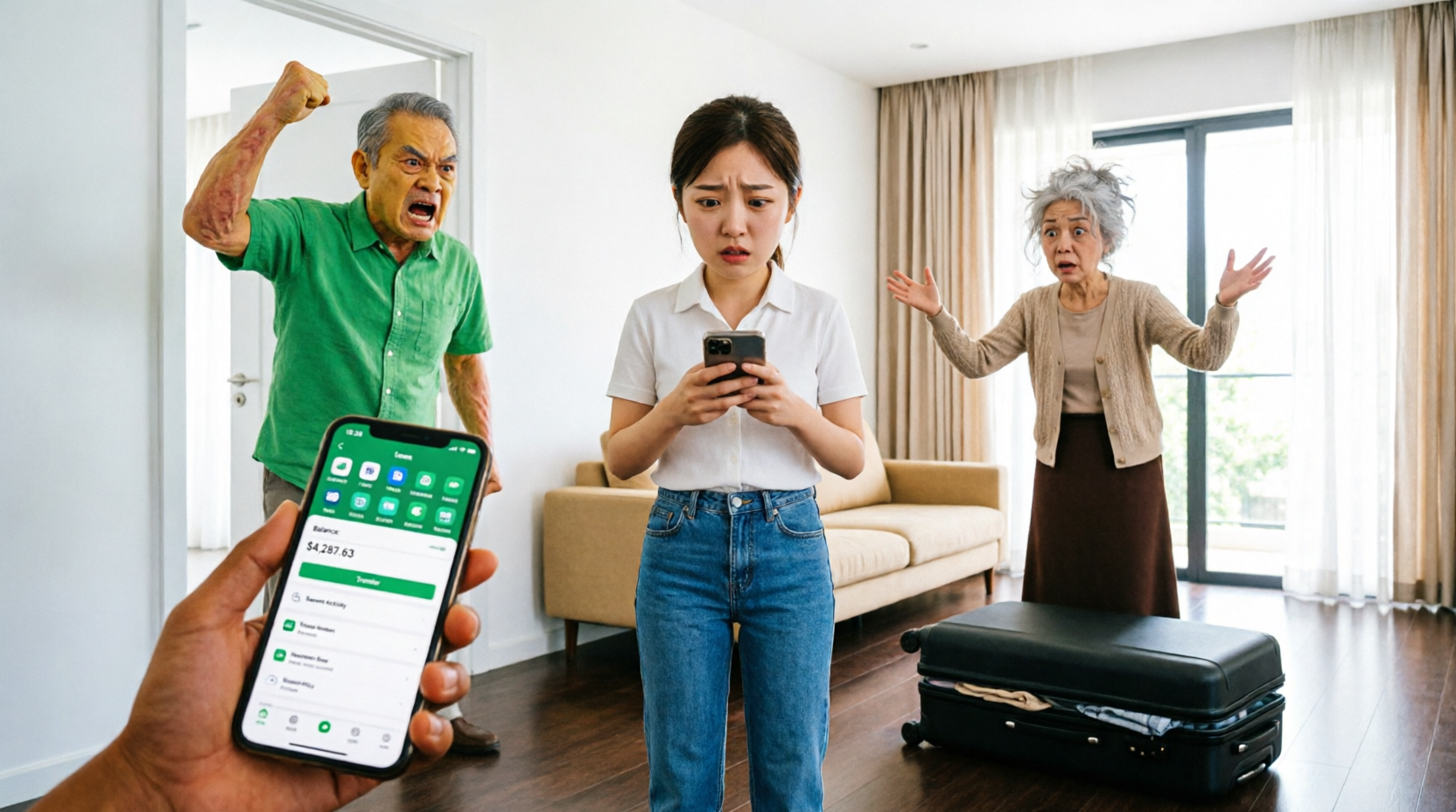
• I nodded when my mother said, “IF YOU CAN’T AFFORD IT, STAY BEHIND.” Later, I received an alert stating that my credit card had been used for four business-class tickets, not mine. Each ticket costs $2,500. I clicked “DISPUTE ALL AND LOCKED THE ACCOUNT. MY DAD SHOWED UP AT MY APARTMENT” after opening my app, however I didn’t

    I nodded when my mother said, “IF YOU CAN’T AFFORD IT, STAY BEHIND.” Later, I received an alert stating that my credit card had been used for four business-class tickets, not mine. Each ticket costs $2,500. I clicked “DISPUTE ALL AND LOCKED THE ACCOUNT. MY DAD SHOWED UP AT MY APARTMENT” after opening my app, however I didn’t

    Part 1

    “The flight is twenty-five hundred each,” my mother said, swirling her wine like she was auditioning for a reality show. “Business class. Qatar. Real luxury.”

    We were wedged into a leather booth at a downtown steakhouse that smelled like truffle butter and expensive cologne. My father sat upright, shoulders squared, scanning the room like he expected someone to recognize him. My brother, Trayvon, lounged beside his wife, Jessica, as if the booth belonged to him. Jessica’s smile stayed fixed, bright and empty, the way a ring light looks when it’s turned on.

    My mother leaned toward me. “We covered Trayvon and Jessica. You know… because he’s reinvesting.” She said the word reinvesting like it was holy. “But you’ll need to cover yourself. And your share of the villa. If you can’t afford it, stay behind.”

    The sentence landed soft and sharp at the same time. Like a feathered dart.

    I took a sip of water. I let my face stay calm. I let silence do the work I used to do with begging. There was a time, years ago, when I would’ve tried to prove myself right there at the table. I would’ve offered to pay, or defended my job, or explained my budget. I learned the hard way that explanations were just invitations. In my family, anything I had was automatically theirs, and anything I didn’t have was proof I wasn’t worth much.

    Trayvon’s mouth twitched, like he was holding back laughter. Jessica reached across the table and patted my hand with the kind of pity that felt like spit.

    “Oh, Jada,” she said. “Don’t feel bad. Maybe next year.”

    Next year, I thought, I might be living on Mars. I might be running for office. I might be anywhere but trapped under my mother’s stare.

    “I can’t swing it,” I said, soft and pleasant. “So I’ll stay behind. Have fun.”

    My father nodded, satisfied. “That’s maturity. Knowing your place.”

    Knowing your place. I repeated it in my head as they went back to discussing overwater bungalows and lounge access. The whole dinner felt like a performance I’d seen too many times: my parents pretending they were wealthy, my brother pretending he was brilliant, Jessica pretending she came from some glittering dynasty. Meanwhile, I played the role they wrote for me years ago: the quiet daughter who never quite made it.

    They didn’t know my real title. They didn’t know my bonus. They didn’t know my apartment looked out over the Chicago skyline like a postcard. They didn’t know my “plain” watch was simple on purpose because I had no interest in wearing my net worth on my wrist.

    I left early, paid for my salad, tipped the valet, and drove home in my perfectly unexciting Honda Civic. I liked my car because it was invisible. It didn’t invite questions. It didn’t invite hands reaching into my pockets.

    My apartment, though, was another story. Floor-to-ceiling windows. Clean lines. Quiet. My sanctuary. I kicked off my heels and poured a glass of water. I was halfway to the couch when my phone lit up.

    Then it lit up again.

    Fraud alert.

    My banking app wasn’t dramatic. It didn’t scream. It simply displayed the facts in neat, cold lines: a charge for ten thousand dollars. Pending. Qatar Airways. Four business-class tickets.

    Four.

    Not one.

    Not mine.

    I stared at the last four digits of the card and felt my stomach drop, not with panic, but with recognition. Years ago, when I first got promoted, I’d applied for a premium travel card and used my parents’ address because I was between leases. The card arrived around the same time I moved out after a blowout fight with my father. I’d left a box of paperwork in my old closet and never thought about it again.

    Apparently, someone had.

    I opened the transaction. My thumb hovered. A call wouldn’t help. A family conversation wouldn’t help. They’d deny, deflect, cry, accuse. They’d turn it into my fault for having a card at their house in the first place. I had spent years learning how fraud works. I knew the biggest mistake victims make is warning the thief.

    I tapped Dispute Transaction. Fraud. Stolen card.

    The app asked if I had authorized the charge. No.

    Do you have the card in your possession? No.

    Would you like to lock the account? Yes.

    A warning popped up: by submitting, I was declaring under penalty of law that the charge was unauthorized. The bank might investigate. The card would be shut down immediately. Future charges would be declined.

    I thought about my mother’s voice: stay behind.

    I pressed Submit.

    A green check mark appeared. Dispute filed. Account locked.

    I set my phone down, face down, and breathed like I’d been holding my lungs hostage for years. The city outside my windows glittered, indifferent. Somewhere, my family was probably celebrating. Somewhere, they thought they’d pulled it off.

    I poured myself a glass of wine, slow and steady, and waited for the consequences to arrive at their door.

    Part 2

    The next afternoon, I sat on my couch with a clay mask drying tight across my cheeks and watched Jessica’s life the way you watch a car wreck: horrified, unable to look away.

    Jessica went live on Instagram at JFK like she was hosting her own travel show. The camera bobbed as she walked, oversized sunglasses indoors, white cashmere set, glossy lips. Behind her, Trayvon pushed a cart stacked with designer luggage like he was moving a museum exhibit.

    “Hey guys,” she chirped. “We’re finally headed to the Maldives. Dream trip. You know how it is. Work hard, play hard.”

    She angled the camera toward the Qatar Airways business-class counter, the one with the little velvet ropes and the soft lighting. My mother floated forward, chin lifted, scarf arranged just so. My father handed over passports like he was granting an audience.

    The airline agent typed. Click-click-click.

    Then she stopped.

    Her smile tightened. She tried again. Click-click.

    My mother leaned in. “Is there a problem?”

    “Yes, ma’am,” the agent said, voice polite but cool. “The payment method used for these tickets has been declined. There is a note from the issuer. The card has been reported stolen and used fraudulently.”

    Jessica’s live ended so fast the screen snapped to black like someone slammed a door.

    I didn’t need to see the rest. I could picture it: the confusion turning to panic, the panic turning to anger, the anger turning toward me like a spotlight.

    My phone started ringing within minutes.

    Trayvon first. I ignored it. Then again. Then again.

    On the fourth call, I answered and put it on speaker, letting my voice stay mild.

    “Hello?”

    “Jada!” Trayvon’s voice cracked, sharp with fear. Airport noise hissed behind him. “What did you do?”

    “What are you talking about?”

    “The card,” he snapped. “The travel card. Mom found it in your old room. We used it for the tickets. They’re saying it’s stolen. The police are coming over here. You need to call the bank and fix this. Tell them you authorized it.”

    I let the silence stretch long enough to make him sweat.

    “Just so I’m clear,” I said. “You went into my things, took a card in my name, and spent ten thousand dollars without asking me.”

    “We’re family!” he shouted. “We were going to pay you back when the investors—”

    “There are no investors,” I said, still calm. “And you’re not family when you’re stealing.”

    My father grabbed the phone. I could hear his breathing, heavy and furious.

    “This is your father speaking,” he said, like the words themselves were a badge. “You are humiliating us. Call the bank. Now.”

    “You humiliated yourselves,” I replied. “And you stole from me.”

    “You ungrateful—” he began.

    I hung up.

    Not dramatically. Not with shaking hands. Just a clean, deliberate tap. Then I blocked Trayvon. Then my father. Then my mother. Then Jessica. One by one, like locking doors in a hallway.

    That night, the pounding came at 2 a.m.

    Not on my phone. On my apartment door.

    My building had a doorman. Cameras. A security intercom. Still, my father’s voice thundered down the hall like he owned the floor.

    “Open this door, Jada!”

    I checked the monitor by my bed. The lobby camera showed him arguing with Earl, the night doorman, Trayvon pacing behind like a caged animal, Jessica leaning against the wall, phone out, fixing her hair as if she could filter reality.

    I pressed the intercom. “Earl, send them up.”

    “Miss Jada,” Earl said cautiously, “they’re really heated. I can call the police.”

    “Let them come,” I said. “I want this on record.”

    I slipped on a robe, turned off the main lights, and stood in the shadows of my living room. The city glowed behind the windows. My small bookshelf camera blinked a soft red dot, quiet and patient.

    When the elevator dinged, my father didn’t knock. He kicked.

    I opened the door before he could damage it again.

    He stormed inside, suit wrinkled, tie loose, sweat on his forehead. “You little witch,” he spat, scanning my apartment like he was looking for something he could break. Trayvon followed, eyes bloodshot. Jessica dragged her carry-on over my hardwood, leaving a black scuff mark like a signature.

    “You did this,” my father yelled. “We were detained. Detained. Do you know what that does to a man’s reputation?”

    “A man who commits fraud?” I said. “It makes it accurate.”

    He lunged toward me, hand lifting.

    In my childhood, that raised hand meant I shrank. It meant I apologized for things I didn’t do.

    Now it meant I stepped aside.

    His palm cut through air and his momentum slammed him into my countertop. He grunted, clutching his ribs, shock flickering across his face.

    “Don’t touch me,” I said, voice low. “If you try again, you’ll leave in handcuffs.”

    Trayvon sneered. “Look at you. You’re enjoying this.”

    Jessica wandered my living room like she was inspecting a rental. “Sad,” she murmured, brushing my sofa with her fingertips. “So cold in here. I get why you’re bitter.”

    Then she tilted her head at me and said, softly, “Things are different for you people.”

    The words didn’t just insult me. They clarified everything. Trayvon let her say it. My parents stood there, letting it hang in my apartment like smoke.

    “Get out,” I said.

    My father puffed himself up again, trying to reclaim authority. “Not until you call the bank.”

    I pointed to the camera. The blinking red light.

    His face drained.

    “It’s been recording since you walked in,” I said. “Including you admitting you used my card. Including you trying to hit me.”

    He stared at the lens like it was a gun.

    “Now leave,” I said. “Before I send this to your school board with a note that says ‘principal behavior at 2 a.m.’”

    They backed out, suddenly quiet, suddenly cautious. Jessica avoided my eyes. Trayvon muttered curses. My father paused at the threshold, searching my face for the daughter who used to fold.

    He didn’t find her.

    When the door shut, I locked it, then saved the footage, then backed it up twice.

    If they wanted war, I wasn’t bringing feelings.

    I was bringing evidence.


    Part 3

    By morning, my mother had already rewritten the story online.

    A long Facebook post. A photo of her holding a Bible. A caption about betrayal and the devil and “malicious banking errors.” Dozens of comments from church ladies and cousins who hadn’t paid me back for loans they begged for. People who hadn’t asked for my side, because my side didn’t fit the version of me they enjoyed: the struggling daughter who needed lessons.

    I scrolled without reacting. Anger is a fire. In my line of work, you either use it to forge steel or you let it burn your house down.

    At 9 a.m., my work email pinged with an urgent message: come to Mr. Sterling’s office immediately.

    Sterling wasn’t a man who wasted words. Senior partner. Legend. The kind of forensic accountant other forensic accountants quoted like scripture.

    When I walked in, he held a printed email in his hand.

    “Sit,” he said.

    The subject line was misspelled and loud: Fraud alert employee Jada.

    The body accused me of stealing from my family, being mentally unstable, abusing my elderly father, and being under police investigation. The sender claimed to be a “concerned citizen” and urged the firm to fire me.

    My throat tightened, but I kept my face still. “It’s them,” I said quietly.

    Sterling lifted a second page. “We traced the IP. The email came from your parents’ home internet.”

    The room went very quiet.

    Then Sterling fed the printed complaint into the shredder without ceremony. Paper screamed as it disappeared.

    “We don’t make career decisions based on anonymous emails written by idiots,” he said, and it was the closest thing to comfort I’d ever heard from him. “But you have a problem. A real one.”

    “I can handle it,” I said.

    “I know you can,” Sterling replied. “That’s why I’m putting you on mandatory leave. Paid. Effective immediately.”

    I started to protest, but he cut me off with a look.

    “Your family just tried to weaponize your reputation,” he said. “People don’t do that unless they’re desperate. Desperate people hide receipts.”

    He slid a folder toward me. “Use your time. Follow the money. And if you need legal teeth, I know sharks.”

    When I left the building, the air felt sharper, like Chicago itself had woken up and chosen violence with me.

    I went straight to the Cook County Recorder of Deeds.

    Most people think secrets live in diaries. I’ve learned they live in public records, buried under stamps and signatures.

    At the clerk’s window, I requested the full property history for my parents’ home: deeds, mortgages, liens, releases. I paid for certified copies. The file they handed me was thick enough to bruise.

    I sat at a table under fluorescent lights and started flipping.

    Original deed. Paid-off mortgage. Normal.

    Then I hit the document dated three years ago: a home equity loan for one hundred fifty thousand dollars.

    My stomach tightened. My parents never mentioned it.

    I scanned down to the signature block.

    Vernon Washington. Lorraine Washington.

    And then, in blue ink, my name.

    Jada Washington.

    My vision tunneled for a second. I knew exactly where I was on that date: London, auditing a hedge fund. I had passport stamps and hotel receipts. I had an Uber history. I had an entire life that proved I wasn’t in Illinois signing anything.

    They had forged my signature.

    Worse, the disbursement statement showed where the money went.

    Pay to: Trev Solutions LLC.

    My brother’s “startup.”

    The startup with no product. No customers. No revenue. The startup that somehow always had money for luxury clothes and weekend trips and “networking dinners.”

    I flipped again and found the notary stamp.

    Marcus D. Henderson.

    I actually laughed, once, under my breath. Marcus was Trayvon’s friend. Loan officer. The guy who always slapped my brother on the back at family barbecues and called me “little sis” like that gave him permission to talk down to me.

    I photographed every page. I bought certified copies. I carried the envelope outside like it was radioactive.

    On the courthouse steps, the wind off the lake cut through my coat, but my hands were steady.

    Now I had the shape of their scheme: forged documents, stolen identity, money funneled to Trayvon.

    The credit card wasn’t the beginning.

    It was just the first thing they thought I wouldn’t notice.

    I got in a cab and stared at the address of the bank branch where Marcus worked.

    The impulse to go to the police was loud. But arrests without context turn into sob stories. And my family had a talent for sob stories.

    I needed more than outrage.

    I needed a paper trail so clean a jury could follow it with their finger.

    The cab pulled up to the bank. I stepped out, clutching my envelope, and walked in with the quiet confidence of someone who spends her life dismantling lies.

    Marcus looked up when I approached his desk and smiled like we were friends.

    That smile was about to die……………………………….

  • My Family Left My 6-Year-Old Son Alone at Disney Because He Needed the Bathroom

    My Family Left My 6-Year-Old Son Alone at Disney Because He Needed the Bathroom

    My office’s fluorescent lights always made everything appear a little off, a feature I had long since concluded was intentional

    some unconscious architectural decision made by people who knew that a workforce under pressure to meet deadlines and run on adrenaline didn’t need the distraction of looking comfortable.

    The glare was especially unbearable on Tuesday morning. Financial reports, spreadsheets, and three half-empty cups of coffee at different temperatures covered my desk,

    I felt the kind of exhaustion that resides beneath the muscles and in the bones themselves—the kind of exhaustion that results from working double shifts for months to provide housing and food for one adult and one child in a city that charges premium rates for both.

    Elliot had spent months sketching Mickey Mouse, so I had agreed to the Disney trip.

    He was six years old, and he drew the way all six-year-olds draw: with fierce intention and no regard for proportion.

    His tiny hands gripped his red and black crayons like they were tools of serious work, creating portraits of the famous mouse that were anatomically creative but also incredibly enthusiastic.

    The shame I had been carrying about working so much would tighten every time he showed me a new one. Elliot would frequently spend his evenings with babysitters while I closed out accounts, despite my best efforts as a single mother.

    I told myself that I was constructing something. I was supplying. However, the phrase I’m offering has never consoled a six-year-old.

    Therefore, before the rest of me could weigh in, a part of me that was tired, guilty, and desperate for Elliot to have something magical without me having to make it myself said yes when my parents and sister Kara announced they were going on a family vacation to Florida and casually suggested bringing him along.

    The fear had existed from the start. The instant I accepted, a heavy, cold stone sank into the pit of my stomach.

    “We’ll take him,” my mother Denise said, dismissing worries as performance by waving a well-groomed hand over her coffee cup. “The children of your sister are also leaving.” It will be simple. Give up worrying.

    “Mom, he’s six.” He is not the same as Kara’s boys. In crowds, he becomes overwhelmed. I spoke in a calm, deliberate tone that I had learned to employ when I wanted to be heard rather than ignored. He requires a handshake. He must be patient.

    Kara didn’t look up while she was texting. “He’ll be alright. My boys are well-behaved. You give in to him. It’s only Disney. She said it with a certain kind of warmth that was exactly the exact opposite of how she usually spoke to me.

    Ray, my father, had checked his watch and grunted something that sounded like agreement. They presented whatever Denise decided as family consensus before I had an opportunity to ask a question, putting up a united face of dismissal as they had always done.

    Children were logistics in their world. You were able to control them. You silenced them. Your afternoon was not rearranged to accommodate their bladder.

    I carefully packed Elliot’s Spider-Man backpack the night before they departed, knowing that I was putting him in an uncontrollable scenario.

    I put labels on the extra socks and the water bottle. He slept with a small plush dog, which I nestled in.

    I wanted there to be a tangible item that a Disney cast member could locate and read, so I printed a card with my phone number on it and threaded it through the lanyard I had purchased especially for this trip. This way, he would always be able to contact me even if he couldn’t reach them.

    That night, Elliot was remarkably silent. While I packed, he stood in his room’s doorway and watched me with a stillness that didn’t belong on a six-year-old’s face on the eve of a trip. I dropped on my knees. There was a concern in his brown eyes that he was still unable to articulate.

    “If I call, you’ll answer, right?” When I gave him a hug, he mumbled into my hair.

    “Always,” I said. I inhaled the scent of his strawberry shampoo while kissing his forehead. “Always. Tell Grandma or Aunt Kara to call me if you’re afraid. Alright?

    He gave a nod. He held onto my shirt for a few more seconds than was necessary.

    The group chat provided me with pictures during the first few hours of the first day, and those pictures gave me something to cling to.

    Elliot gave the camera a friendly, if slightly perplexed, smile beneath the entrance sign. With the demeanour of a man on a mission no one else had volunteered for, my father marched through the crowds. Kara’s twins in blurry motion, driven through theme parks by whatever sugar and speed mix. The boys are seven years old.

    I told myself I was being paranoid as I looked at my screen. With a new cup of coffee and the brittle, hard-won serenity of a parent who has chosen to trust the people she shouldn’t have trusted but really wanted to, I turned off the notifications and entered my afternoon appointments.

    That tranquillity lasted precisely three hours.

    My phone vibrated on the conference room table around 3:17 p.m. I was unfamiliar with the Florida number displayed on the caller ID. I had been carrying a large stone all week, and it fell right through my stomach.

    Without finishing the phrase I had interrupted, I excused myself and went into the hallway, swiping the screen with damp palms.

    “Hi there. Is Sarah Davis here? A calm, well-trained woman’s voice.

    “Yes. “Who is this?”

    “Guest relations at Disney.” Here at Lost and Found, we have your child.

    The corridor slanted. In my ears, the office ventilation system’s background hum became static. With one hand, I held onto the doorframe.

    Is he in pain? “Where is my family?”

    The woman said, “He was found alone near the exit corridor by the transportation area,” but her pleasant tone did not lessen the gravity of her statement.

    Although he is physically safe, he is in great distress. He asked to call you and had a card with your number on it.

    Alone by the exit hallway.

    I said, “Please.” “Let me talk to him.”

    The sound I shall remember for the rest of my life is the rustle of a phone being passed. A strained, little breath. The intentional stability of a youngster attempting to maintain his composure.

    “Mom?”

    I sank against the wall after pushing through the fire door at the end of the corridor and into the concrete stairway. “Baby, I’m here. Mommy is here. Are you alright? Have you split up?

    “They abandoned me.” The dam eventually gave way as his voice broke on the final phrase. He started crying the way kids weep when they finally give themselves permission after holding it inside for a long time. They were upset that I had to use the loo.

    I was slowing everyone down, according to Grandma. I was told to hold it, but I was unable to do so. When I emerged from the loo, they had vanished.

    I kept waiting. Before I entered, I heard Grandpa say, “We’re leaving.” Your mother is capable of handling it. Mom, they then departed from the park. They returned home.

    The narrative I had been frantically crafting—the one in which this was a throng, a moment of distraction, and a scared youngster who had wandered—fell apart.

    They had left. until the age of six. purposefully. Tens of thousands of strangers congregate in a park.

    “Elliot.” My tone changed. The trembling ceased. In a moment, the burning panic that had been rising in my chest since 3:17 burnt cleanly and precisely, like a flame that has found the precise material it was meant to consume.

    “Pay close attention to what I say. You remain just next the woman wearing the uniform. Don’t move. This is being handled by Mommy. I adore you.

    He said, “I love you too.”

    I hung up and contacted my mother after telling the cast member I would give them a call straight away.

    On the second ring, she answered. Jimmy Buffett and splashing water were audible to me. She sounded at ease and happy, like folks who have successfully moved past terrible situations and are at a pool cabana.

    She said, “We’re by the pool.” “Go quickly.”

    “Elliot, where are you?”

    A moment of silence. She then burst out laughing.

    Not a nervous chuckle. Not the chuckle of an unprepared person trying to hide their uneasiness.

    A sincere, carefree chuckle, the laugh of a woman who thought the whole thing was kind of funny.

    He’s at Lost and Found, huh? “I didn’t notice,” she remarked.

    I heard Kara ask in the background, “Is she freaking out? Inform her that my children are never lost. They do pay attention. Kara then started laughing as well.

    The cord that connected me to the woman on the other end of that phone broke, something that had been a part of me since I was a young child. Not tattered. Not broken. severed.

    I responded, “So you left him there.” It wasn’t a query.

    My mother let out the kind of sigh she saved for broken appliances. “Calm down, Sarah. You are so dramatic all the time, God.

    He abruptly needed to use the loo as we were waiting for the monorail, and he refused to wait. Your dad was suffering from a headache.

    The youths of Kara were starving. Disney has a whole infrastructure in place for this. It’s almost like a nursery. He’s alright. We had had enough waiting. After we eat, we’ll pick him up.

    I stared at the stairwell’s grey cinderblock wall and experienced the strange sharpness that comes when everything unimportant disappears.

    I said, “You have one minute to tell me where you are.”

    Kara’s voice approached, brimming with the unique arrogance she had been honing since we were kids. “Sarah, what will you do? Take off down here? Put an end to your tantrums. He is secure.

    I whispered, “I’m going to make sure you never have unsupervised access to my child again.”

    Before my mother could start the rant I knew was coming, I hung up. I then gave Henderson, the Disney security supervisor, a call and informed him exactly what my family had said. I explained to him that it wasn’t a lost child, an accident, or a separation. Adults in charge of a six-year-old who needed to use the loo made the conscious choice.

    Henderson’s tone of customer service vanished. It was replaced by something more formal and difficult.

    “Are you implying that they made it clear that they intentionally left him?”

    “Yes. I’m currently receiving SMS messages confirming it.

    “Ms. Davis, we are immediately contacting Orange County law police and park security at the highest level. Until you or a designated guardian show up, your son will be kept in safe custody. Officers will be sent to your parents’ resort.

    In ten minutes, I was in an Uber on my way to the airport.

    My phone kept lighting up with the family group conversation while I booked the most costly direct flight I had ever bought from the back seat.

    Kara: Sarah is acting insanely once more. We’re going to the swimming pool. He’s in the world’s greatest nursery, haha.

    Mom: Tell her to settle down. Her child’s little bladder isn’t going to ruin my afternoon.

    Dad: Don’t overreact, Sarah. Your mother is being stressed out by you. We’re on vacation.

    Kara: Sarah, please mature. He’ll get ice cream from the Disney police. He’s alright.

    I didn’t respond to any of it. I captured screenshots. Every single one. each timestamp.

    They had lived my entire life believing that I was the daughter who gave in, who took the insult and changed her emotions to bring about harmony.

    Without realising that I was no longer the person they were writing to, they were constructing their argument for why this was my overreaction and presenting me with proof of their own brutality.

    It seemed like a six-hour flight. I sat in the middle seat, gazed at the seatback in front of me, and considered all the times I had justified them.

    Mom is just picky. Kara is merely a competitive person. Dad detests confrontation. For thirty years, I had accepted those reasons because the alternative—realizing that the people who were meant to love me were incapable of doing so—was more than I had been prepared to accept.

    However, I was finally prepared to put up with it when my son was by himself in a security room, eating a pretzel and watching cartoons at thirty thousand feet.

    They weren’t challenging. They posed a threat. They had noticed a delay in their afternoon when they observed my nervous, sensitive six-year-old child.

    When we landed, the sun was setting over Orlando, casting an awful pink and orange hue across the Florida sky. I ran through the airport, skipped baggage claim, and got into the first cab that came up.

    As we were crossing the roadway, an Orange County Sheriff’s Office deputy called. He assured me that Elliot was eating, watching cartoons, and staying secure. He informed me that deputies had been sent to the resort. He informed me that my family had not cooperated.

    “They are presently being held in the security hub’s lobby,” he stated. “When we refused to release the child to them, your father became verbally hostile.”

    I said, “I’ll be there in ten minutes.” “Leave them there.”

    Elliot was in a little, formal room with a luxurious enormous chair that was several sizes too big for a six-year-old, and it smelt like industrial cleaning solution.

    His legs hung over the carpet, his eyes bulging and red, and he was holding a plush Mickey Mouse that someone had given him. He was making the specific expression that kids make when they resolve to be bold beyond what is sustainable.

    He looked up when the door opened. His expression vanished.

    “Mom.”

    Before I could fully comprehend the distance between us, he was off the chair and across the room.

    We met on the floor, with me encircling him and him pressing his face against my neck as we both sank to the carpet. I did everything in my power to hold him. His heart was racing quickly before starting to slow down.

    I whispered into his hair, “I’ve got you.” “No one will ever abandon you again.”

    My family was in the room when I got up. Under the fluorescent lights, they looked ridiculous as they sat in chairs along the wall in their resort attire, sunburnt and enraged.

    My mom in her cover-up of flowers. My dad wears short khakis. Kara was waiting for the rest of the room to come up, her arms crossed in the position she had been practicing since she was a young child, indicating that she had already decided she was correct.

    As soon as she spotted me, my mother got up. “This is really absurd! Tell these cops to quit bothering us! We were instructing the boy on how to keep up!

    “Sit down, ma’am.” The deputy’s voice was unequivocal even though it wasn’t loud. She took a seat.

    Kara rolled her eyes. “Officer, she’s overreacting. We were certain he was secure. We advised him to remain where he was.

    I answered, “That is a lie.”

  • I nodded when my mother said, “IF YOU CAN’T AFFORD IT, STAY BEHIND.” Later, I received an alert stating that my credit card had been used for four business-class tickets, not mine. Each ticket costs $2,500. I clicked “DISPUTE ALL AND LOCKED THE ACCOUNT. MY DAD SHOWED UP AT MY APARTMENT” after opening my app, however I didn’t

    I nodded when my mother said, “IF YOU CAN’T AFFORD IT, STAY BEHIND.” Later, I received an alert stating that my credit card had been used for four business-class tickets, not mine. Each ticket costs $2,500. I clicked “DISPUTE ALL AND LOCKED THE ACCOUNT. MY DAD SHOWED UP AT MY APARTMENT” after opening my app, however I didn’t

    Part 1

    “The flight is twenty-five hundred each,” my mother said, swirling her wine like she was auditioning for a reality show. “Business class. Qatar. Real luxury.”

    Promoted Content

    We were wedged into a leather booth at a downtown steakhouse that smelled like truffle butter and expensive cologne. My father sat upright, shoulders squared, scanning the room like he expected someone to recognize him. My brother, Trayvon, lounged beside his wife, Jessica, as if the booth belonged to him. Jessica’s smile stayed fixed, bright and empty, the way a ring light looks when it’s turned on.

    My mother leaned toward me. “We covered Trayvon and Jessica. You know… because he’s reinvesting.” She said the word reinvesting like it was holy. “But you’ll need to cover yourself. And your share of the villa. If you can’t afford it, stay behind.”

    Promoted Content

    The sentence landed soft and sharp at the same time. Like a feathered dart.

    I took a sip of water. I let my face stay calm. I let silence do the work I used to do with begging. There was a time, years ago, when I would’ve tried to prove myself right there at the table. I would’ve offered to pay, or defended my job, or explained my budget. I learned the hard way that explanations were just invitations. In my family, anything I had was automatically theirs, and anything I didn’t have was proof I wasn’t worth much.

    Trayvon’s mouth twitched, like he was holding back laughter. Jessica reached across the table and patted my hand with the kind of pity that felt like spit.

    “Oh, Jada,” she said. “Don’t feel bad. Maybe next year.”

    Next year, I thought, I might be living on Mars. I might be running for office. I might be anywhere but trapped under my mother’s stare.

    “I can’t swing it,” I said, soft and pleasant. “So I’ll stay behind. Have fun.”

    My father nodded, satisfied. “That’s maturity. Knowing your place.”

    Knowing your place. I repeated it in my head as they went back to discussing overwater bungalows and lounge access. The whole dinner felt like a performance I’d seen too many times: my parents pretending they were wealthy, my brother pretending he was brilliant, Jessica pretending she came from some glittering dynasty. Meanwhile, I played the role they wrote for me years ago: the quiet daughter who never quite made it.

    They didn’t know my real title. They didn’t know my bonus. They didn’t know my apartment looked out over the Chicago skyline like a postcard. They didn’t know my “plain” watch was simple on purpose because I had no interest in wearing my net worth on my wrist.

    I left early, paid for my salad, tipped the valet, and drove home in my perfectly unexciting Honda Civic. I liked my car because it was invisible. It didn’t invite questions. It didn’t invite hands reaching into my pockets.

    My apartment, though, was another story. Floor-to-ceiling windows. Clean lines. Quiet. My sanctuary. I kicked off my heels and poured a glass of water. I was halfway to the couch when my phone lit up.

    Then it lit up again.

    Fraud alert.

    My banking app wasn’t dramatic. It didn’t scream. It simply displayed the facts in neat, cold lines: a charge for ten thousand dollars. Pending. Qatar Airways. Four business-class tickets.

    Four.

    Not one.

    Not mine.

    I stared at the last four digits of the card and felt my stomach drop, not with panic, but with recognition. Years ago, when I first got promoted, I’d applied for a premium travel card and used my parents’ address because I was between leases. The card arrived around the same time I moved out after a blowout fight with my father. I’d left a box of paperwork in my old closet and never thought about it again.

    Apparently, someone had.

    I opened the transaction. My thumb hovered. A call wouldn’t help. A family conversation wouldn’t help. They’d deny, deflect, cry, accuse. They’d turn it into my fault for having a card at their house in the first place. I had spent years learning how fraud works. I knew the biggest mistake victims make is warning the thief.

    I tapped Dispute Transaction. Fraud. Stolen card.

    The app asked if I had authorized the charge. No.

    Do you have the card in your possession? No.

    Would you like to lock the account? Yes.

    A warning popped up: by submitting, I was declaring under penalty of law that the charge was unauthorized. The bank might investigate. The card would be shut down immediately. Future charges would be declined.

    I thought about my mother’s voice: stay behind.

    I pressed Submit.

    A green check mark appeared. Dispute filed. Account locked.

    I set my phone down, face down, and breathed like I’d been holding my lungs hostage for years. The city outside my windows glittered, indifferent. Somewhere, my family was probably celebrating. Somewhere, they thought they’d pulled it off.

    I poured myself a glass of wine, slow and steady, and waited for the consequences to arrive at their door.

    Part 2

    The next afternoon, I sat on my couch with a clay mask drying tight across my cheeks and watched Jessica’s life the way you watch a car wreck: horrified, unable to look away.

    Jessica went live on Instagram at JFK like she was hosting her own travel show. The camera bobbed as she walked, oversized sunglasses indoors, white cashmere set, glossy lips. Behind her, Trayvon pushed a cart stacked with designer luggage like he was moving a museum exhibit.

    “Hey guys,” she chirped. “We’re finally headed to the Maldives. Dream trip. You know how it is. Work hard, play hard.”

    She angled the camera toward the Qatar Airways business-class counter, the one with the little velvet ropes and the soft lighting. My mother floated forward, chin lifted, scarf arranged just so. My father handed over passports like he was granting an audience.

    The airline agent typed. Click-click-click.

    Then she stopped.

    Her smile tightened. She tried again. Click-click.

    My mother leaned in. “Is there a problem?”

    “Yes, ma’am,” the agent said, voice polite but cool. “The payment method used for these tickets has been declined. There is a note from the issuer. The card has been reported stolen and used fraudulently.”

    Jessica’s live ended so fast the screen snapped to black like someone slammed a door.

    I didn’t need to see the rest. I could picture it: the confusion turning to panic, the panic turning to anger, the anger turning toward me like a spotlight.

    My phone started ringing within minutes.

    Trayvon first. I ignored it. Then again. Then again.

    On the fourth call, I answered and put it on speaker, letting my voice stay mild.

    “Hello?”

    “Jada!” Trayvon’s voice cracked, sharp with fear. Airport noise hissed behind him. “What did you do?”

    “What are you talking about?”

    “The card,” he snapped. “The travel card. Mom found it in your old room. We used it for the tickets. They’re saying it’s stolen. The police are coming over here. You need to call the bank and fix this. Tell them you authorized it.”

    I let the silence stretch long enough to make him sweat.

    “Just so I’m clear,” I said. “You went into my things, took a card in my name, and spent ten thousand dollars without asking me.”

    “We’re family!” he shouted. “We were going to pay you back when the investors—”

    “There are no investors,” I said, still calm. “And you’re not family when you’re stealing.”

    My father grabbed the phone. I could hear his breathing, heavy and furious.

    “This is your father speaking,” he said, like the words themselves were a badge. “You are humiliating us. Call the bank. Now.”

    “You humiliated yourselves,” I replied. “And you stole from me.”

    “You ungrateful—” he began.

    I hung up.

    Not dramatically. Not with shaking hands. Just a clean, deliberate tap. Then I blocked Trayvon. Then my father. Then my mother. Then Jessica. One by one, like locking doors in a hallway.

    That night, the pounding came at 2 a.m.

    Not on my phone. On my apartment door.

    My building had a doorman. Cameras. A security intercom. Still, my father’s voice thundered down the hall like he owned the floor.

    “Open this door, Jada!”

    I checked the monitor by my bed. The lobby camera showed him arguing with Earl, the night doorman, Trayvon pacing behind like a caged animal, Jessica leaning against the wall, phone out, fixing her hair as if she could filter reality.

    I pressed the intercom. “Earl, send them up.”

    “Miss Jada,” Earl said cautiously, “they’re really heated. I can call the police.”

    “Let them come,” I said. “I want this on record.”

    I slipped on a robe, turned off the main lights, and stood in the shadows of my living room. The city glowed behind the windows. My small bookshelf camera blinked a soft red dot, quiet and patient.

    When the elevator dinged, my father didn’t knock. He kicked.

    I opened the door before he could damage it again.

    He stormed inside, suit wrinkled, tie loose, sweat on his forehead. “You little witch,” he spat, scanning my apartment like he was looking for something he could break. Trayvon followed, eyes bloodshot. Jessica dragged her carry-on over my hardwood, leaving a black scuff mark like a signature.

    “You did this,” my father yelled. “We were detained. Detained. Do you know what that does to a man’s reputation?”

    “A man who commits fraud?” I said. “It makes it accurate.”

    He lunged toward me, hand lifting.

    In my childhood, that raised hand meant I shrank. It meant I apologized for things I didn’t do.

    Now it meant I stepped aside.

    His palm cut through air and his momentum slammed him into my countertop. He grunted, clutching his ribs, shock flickering across his face.

    “Don’t touch me,” I said, voice low. “If you try again, you’ll leave in handcuffs.”

    Trayvon sneered. “Look at you. You’re enjoying this.”

    Jessica wandered my living room like she was inspecting a rental. “Sad,” she murmured, brushing my sofa with her fingertips. “So cold in here. I get why you’re bitter.”

    Then she tilted her head at me and said, softly, “Things are different for you people.”

    The words didn’t just insult me. They clarified everything. Trayvon let her say it. My parents stood there, letting it hang in my apartment like smoke.

    “Get out,” I said.

    My father puffed himself up again, trying to reclaim authority. “Not until you call the bank.”

    I pointed to the camera. The blinking red light.

    His face drained.

    “It’s been recording since you walked in,” I said. “Including you admitting you used my card. Including you trying to hit me.”

    He stared at the lens like it was a gun.

    “Now leave,” I said. “Before I send this to your school board with a note that says ‘principal behavior at 2 a.m.’”

    They backed out, suddenly quiet, suddenly cautious. Jessica avoided my eyes. Trayvon muttered curses. My father paused at the threshold, searching my face for the daughter who used to fold.

    He didn’t find her.

    When the door shut, I locked it, then saved the footage, then backed it up twice.

    If they wanted war, I wasn’t bringing feelings.

    I was bringing evidence.


    Part 3

    By morning, my mother had already rewritten the story online.

    A long Facebook post. A photo of her holding a Bible. A caption about betrayal and the devil and “malicious banking errors.” Dozens of comments from church ladies and cousins who hadn’t paid me back for loans they begged for. People who hadn’t asked for my side, because my side didn’t fit the version of me they enjoyed: the struggling daughter who needed lessons.

    I scrolled without reacting. Anger is a fire. In my line of work, you either use it to forge steel or you let it burn your house down.

    At 9 a.m., my work email pinged with an urgent message: come to Mr. Sterling’s office immediately.

    Sterling wasn’t a man who wasted words. Senior partner. Legend. The kind of forensic accountant other forensic accountants quoted like scripture.

    When I walked in, he held a printed email in his hand.

    “Sit,” he said.

    The subject line was misspelled and loud: Fraud alert employee Jada.

    The body accused me of stealing from my family, being mentally unstable, abusing my elderly father, and being under police investigation. The sender claimed to be a “concerned citizen” and urged the firm to fire me.

    My throat tightened, but I kept my face still. “It’s them,” I said quietly.

    Sterling lifted a second page. “We traced the IP. The email came from your parents’ home internet.”

    The room went very quiet.

    Then Sterling fed the printed complaint into the shredder without ceremony. Paper screamed as it disappeared.

    “We don’t make career decisions based on anonymous emails written by idiots,” he said, and it was the closest thing to comfort I’d ever heard from him. “But you have a problem. A real one.”

    “I can handle it,” I said.

    “I know you can,” Sterling replied. “That’s why I’m putting you on mandatory leave. Paid. Effective immediately.”

    I started to protest, but he cut me off with a look.

    “Your family just tried to weaponize your reputation,” he said. “People don’t do that unless they’re desperate. Desperate people hide receipts.”

    He slid a folder toward me. “Use your time. Follow the money. And if you need legal teeth, I know sharks.”

    When I left the building, the air felt sharper, like Chicago itself had woken up and chosen violence with me.

    I went straight to the Cook County Recorder of Deeds.

    Most people think secrets live in diaries. I’ve learned they live in public records, buried under stamps and signatures.

    At the clerk’s window, I requested the full property history for my parents’ home: deeds, mortgages, liens, releases. I paid for certified copies. The file they handed me was thick enough to bruise.

    I sat at a table under fluorescent lights and started flipping.

    Original deed. Paid-off mortgage. Normal.

    Then I hit the document dated three years ago: a home equity loan for one hundred fifty thousand dollars.

    My stomach tightened. My parents never mentioned it.

    I scanned down to the signature block.

    Vernon Washington. Lorraine Washington.

    And then, in blue ink, my name.

    Jada Washington.

    My vision tunneled for a second. I knew exactly where I was on that date: London, auditing a hedge fund. I had passport stamps and hotel receipts. I had an Uber history. I had an entire life that proved I wasn’t in Illinois signing anything.

    They had forged my signature.

    Worse, the disbursement statement showed where the money went.

    Pay to: Trev Solutions LLC.

    My brother’s “startup.”

    The startup with no product. No customers. No revenue. The startup that somehow always had money for luxury clothes and weekend trips and “networking dinners.”

    I flipped again and found the notary stamp.

    Marcus D. Henderson.

    I actually laughed, once, under my breath. Marcus was Trayvon’s friend. Loan officer. The guy who always slapped my brother on the back at family barbecues and called me “little sis” like that gave him permission to talk down to me.

    I photographed every page. I bought certified copies. I carried the envelope outside like it was radioactive.

    On the courthouse steps, the wind off the lake cut through my coat, but my hands were steady.

    Now I had the shape of their scheme: forged documents, stolen identity, money funneled to Trayvon.

    The credit card wasn’t the beginning.

    It was just the first thing they thought I wouldn’t notice.

    I got in a cab and stared at the address of the bank branch where Marcus worked.

    The impulse to go to the police was loud. But arrests without context turn into sob stories. And my family had a talent for sob stories.

    I needed more than outrage.

    I needed a paper trail so clean a jury could follow it with their finger.

    The cab pulled up to the bank. I stepped out, clutching my envelope, and walked in with the quiet confidence of someone who spends her life dismantling lies.

    Marcus looked up when I approached his desk and smiled like we were friends.

    That smile was about to die……………………………….

  • Part2: My daughter abandoned her autistic son eleven year…

    Some I remembered. Some I had forced myself to forget. They were messages Karla had sent in the early years, when I still begged her to care.

    “Don’t call me about his school problems.”

    “You wanted him, so deal with him.”

    “I don’t have money for doctors.”

    “Don’t bring up his birthday.”

    “If he cries, ignore him. He has to learn to be normal.”

    Line after line appeared.

    No mother fighting to recover her child.

    No desperate woman begging for visitation.

    No evidence that I had stolen Emiliano from her arms.

    Only rejection.

    Karla turned on me.

    “You showed him these? You poisoned him against me?”

    “No,” Emiliano said.

    She looked at him.

    “I read them myself.”

    The word “myself” seemed to irritate her more than any accusation could have. Because it meant he was not a puppet. It meant his mind, the mind she wanted everyone to doubt, had been watching.

    “I had the right to know why Grandma cried in the kitchen,” he continued. “I had the right to know why nobody came to my birthdays. I had the right to know why she stopped smiling when people mentioned you.”

    I turned away.

    Not from shame. From pain.

    For years, I had tried to hide my grief from Emiliano. I had cried quietly while washing dishes, while folding laundry, while stirring rice. I had told myself he did not notice.

    He had noticed everything.

    Attorney Ramírez recovered his voice.

    “Even if these messages are authentic, they do not automatically terminate a biological mother’s rights. Mrs. Gómez is entitled to explain her circumstances. She may have been under mental distress, emotional pressure, medical hardship—”

    Emiliano opened another file.

    “Then she can explain this.”

    A video appeared.

    My old kitchen.

    The peeling wall. The plastic tablecloth. The rattling fan. Karla stood near the door, younger but already wearing that same expression of annoyance. I was there too, holding a plastic cup.

    I remembered the day.

    Karla had come once, almost 10 years earlier. Not to see Emiliano. Not to ask about school or therapy. She came because she needed money. When I told her I had none, she became angry.

    In the video, Karla’s voice rang clear.

    “You kept him. You deal with him. Don’t use that child to drag me back.”

    My voice answered, tired and pleading.

    “He asks about you. He looks at your picture.”

    Karla rolled her eyes.

    “He doesn’t understand. How much can he understand when he’s like that?”

    I saw Emiliano’s fingers tighten on the chair.

    In the video, I said, “He understands more than you think.”

    Karla laughed.

    “Then tell him his mother is dead. I don’t want to be involved anymore.”

    Silence crushed the room.

    Even Attorney Ramírez could not speak.

    Karla’s face went pale, then red.

    “I don’t remember saying that.”

    “But you did,” Emiliano said.

    “I was angry!”

    “I know.”

    His calmness frightened her more than shouting would have.

    “Anger is a feeling,” he said. “Leaving me for 11 years was a decision.”

    I covered my mouth.

    I had spent years teaching Emiliano to name emotions. Anger. Sadness. Fear. Pain. Overload. Need. I had not realized he was also learning to name truth.

    Karla stood very still.

    Then, like any cornered animal, she changed tactics.

    “This is enough,” she snapped. “I did not come here to be attacked by a child who has been manipulated.”

    Mr. Méndez’s voice sharpened.

    “Be careful.”

    But Karla had already stepped into the open.

    “He is autistic. He is vulnerable. My mother controls him. She made him collect these things. She made him hate me.”

    Emiliano looked down at his tablet and opened another file.

    This time, the title read, “Plan.”

    Karla froze.

    The change in her face was so sudden that everyone saw it.

    Fear.

    Not sadness. Not outrage. Fear.

    Screenshots filled the television. They were messages between Karla and someone named Daniela.

    I did not know who Daniela was. A friend, perhaps. Someone Karla trusted enough to tell the truth.

    The first message read:

    “He’s really rich now. 3.2 million. My mom kept him, but legally I’m still the mother.”

    Daniela replied:

    “After 11 years, you think you can get it?”

    Karla:

    “I’m the biological mother. The law will be on my side if I perform it right.”

    My hands went numb.

    Another screenshot appeared.

    “I only need control of the assets first. After that, if he’s too much trouble, I can put him in some center.”

    Daniela:

    “And the old lady?”

    Karla:

    “She has no papers. She was just a free babysitter for 11 years.”

    A sound came from somewhere in the room. A broken little sound.

    It took me a moment to realize it came from me.

    Free babysitter.

    That was what I was to her.

    Not the woman who woke before dawn. Not the woman who sat beside her child’s hospital bed. Not the woman who learned every sensory trigger, every safe food, every warning sign before a meltdown. Not the woman who sold tamales and washed strangers’ clothes until her hands cracked open.

    A free babysitter.

    Emiliano did not look at me, but his hand moved slightly toward my side of the chair. He did not touch me. He rarely did without asking. But he placed his hand closer.

    For him, that was a sentence.

    I am here.

    Karla lunged toward the television.

    “Turn it off!”

    Attorney Ramírez stood between her and the screen.

    “Karla, don’t.”

    “These are private!”

    Mr. Méndez replied coldly, “Messages describing a plan to gain control of a minor’s assets through deception are not merely private.”

    Karla turned to Emiliano, her face shifting again, now trying softness.

    “Emiliano, sweetheart, you don’t understand. Adults say things they don’t mean.”

    Emiliano looked at her.

    “You wrote that 3 days ago.”

    The date stamps were visible.

    3 days ago.

    Not 11 years ago. Not during youth. Not in illness. Not in confusion.

    3 days ago.

    After the money.

    After hiring a lawyer.

    After deciding to walk into my house and call herself a mother.

    Attorney Ramírez slowly closed his briefcase.

    “I need to speak privately with my client,” he said.

    “No,” Karla hissed. “We are not done.”

    But Emiliano was not finished.

    He opened one more video.

    This one was recent. Emiliano sat in his room, wearing a gray shirt, headphones around his neck. His eyes did not look directly into the camera, but his voice was clear, slow, and prepared.

    “If Karla Gómez returns to ask for custody or control of my assets, I want to state that I do not agree. I know she is my biological mother. I know she left me with my grandmother Teresa when I was 5. For 11 years, my grandmother took care of me, took me to school, took me to doctors, cooked my food, protected me, and helped me work. I do not want to live with Karla. I do not want Karla to manage my money. I want Teresa to remain my guardian.”

    The video ended.

    I stared at Emiliano.

    “Mijo…”

    “I recorded it yesterday,” he said. “In case I could not speak today.”

    That broke something in me.

    I had spent 11 years believing I was the one protecting him. I did not know that, quietly and carefully, he had been preparing to protect both of us.

    Karla’s voice rose.

    “No. He cannot decide that. He is a child. He has autism. He cannot understand these things.”

    The room changed.

    Emiliano slowly lifted his head.

    Mr. Méndez turned to Karla with a look I had never seen on his face.

    “Careful,” he said again.

    But Karla kept going.

    “He is not like normal people. He is influenced. My mother controls everything he thinks. He cannot understand money, law, or documents the way an adult can.”

    Emiliano stood.

    No one expected it. Not even me.

    He set the tablet down, removed his headphones completely, and stood facing Karla. He was taller than I sometimes remembered. In my mind, part of him was still that 5-year-old under the porch light. But he was not that child anymore.

    He was 16.

    Quiet. Thin. Pale from stress.

    But not helpless.

    “I understand,” he said.

    Karla opened her mouth.

    He continued.

    “I understand that you want money. I understand that you do not want me. I understand that you think autism makes me weak. But autism does not make me stupid.”

    No one interrupted.

    “I may not speak fast. I may need headphones. I may dislike being touched. But I remember. I read. I save things. I recognize patterns.”

    He paused, breathing carefully.

    “You are a pattern.”

    Karla stepped back as if struck.

    “You appear when you need money. You disappear when someone needs care. You lie when questioned. You play victim when someone is watching. The pattern is clear.”

    Attorney Ramírez looked at the floor.

    Karla stared at Emiliano, and for the first time, she had no immediate answer.

    Then she began to cry.

    It was skillful. Sudden, but not too sudden. Soft, but loud enough to be heard. She covered her face with both hands.

    “I lost my son,” she sobbed. “I know I made mistakes. I was young. I was alone. I was sick. Every day I thought about you.”

    For one painful second, I felt myself weaken.

    Because before Karla was the woman in my living room, she had been my little girl. I had held her when she was sick. I had braided her hair. I had kissed her scraped knees. A part of me still remembered the child she had been and grieved the woman she had become.

    Emiliano sat down again.

    “You can apologize,” he said.

    Karla looked up quickly.

    “You forgive me?”

    “No,” he said. “I said you can apologize. Those are different things.”

    The door she thought had opened closed in her face.

    Mr. Méndez stepped forward.

    “That is enough for today. Any future request will be handled through the court. After what has been presented, we will file an emergency petition recognizing Teresa as Emiliano’s de facto guardian and requesting protection of his assets from any improper claim.”

    Attorney Ramírez did not object.

    Karla looked at him.

    “Say something.”

    He answered quietly, “I need to review the entire case.”

    “You are my lawyer.”

    “I am a lawyer,” he said. “Not a shield for concealed evidence.”

    Karla’s expression hardened.

    The tears disappeared.

    Before leaving, she turned back to me.

    “You think you won?” she said.

    I did not answer.

    She looked at Emiliano.

    “You will regret this. Both of you will.”

    Then she walked out, her heels striking the floor like small hammers.

    When the white SUV finally drove away, the house fell into a silence so deep I could hear the air-conditioning.

    Emiliano sat motionless.

    I moved near him, stopping at a safe distance.

    “May I hug you?” I asked.

    He did not answer immediately.

    Then he gave one small nod.

    I held him carefully, not too tightly. His arms did not wrap around me, but after a moment, his forehead rested against my shoulder.

    For Emiliano, that was more than an embrace.

    It was trust.

    “Were you scared?” I whispered.

    “Yes,” he said after a long pause. “But I was more scared she would take your house.”

    “No house matters more than you.”

    He leaned against me for 2 more seconds.

    Then he said, “Same.”

    Part 3

    The days that followed were not peaceful.

    I had hoped Karla would disappear after being exposed. I should have known better. Shame does not stop people who return for money. It only teaches them to change costumes.

    The next morning, Mr. Méndez came to the house with dark circles under his eyes and a stack of documents under his arm. Emiliano had already been awake for hours. He sat at the kitchen table with his tablet, a glass of water, and a plate where the rice and beans did not touch.

    On his screen was a numbered list of evidence files.

    Mr. Méndez studied it, then looked at him.

    “You prepared all of this?”

    Emiliano nodded.

    “I do not like surprises.”

    For the first time in days, I almost smiled.

    Mr. Méndez explained what came next. We needed to file an emergency petition in family court. We had to prove the history of care, the abandonment, Emiliano’s expressed wishes, Karla’s financial motive, and the potential harm if she gained control of his assets.

    The words frightened me.

    Custody. Guardianship. Emergency motion. Asset protection. Best interest of the minor. Psychological evaluation.

    My whole life, I had understood concrete things. Masa needed water. Rice needed a low flame. A frightened child needed quiet. A fever needed medicine. Dirty sheets needed soaking. Law was different. Law was paper, seals, deadlines, arguments, rooms where strangers could decide whether 11 years of love counted.

    “Doña Teresa,” Mr. Méndez said, seeing my fear, “last time I said we could lose because the legal paperwork was weak. But now we have facts. We have records. And we have Emiliano.”

    I looked at my grandson.

    He was arranging files in chronological order.

    He did not look like a child waiting to be rescued. He looked like someone who had spent years being underestimated and had quietly built a map out of the dark.

    That afternoon, the messages began.

    Relatives who had never helped me suddenly remembered family unity. A cousin of Karla’s wrote that blood was blood and that I should not deny a mother the chance to reconnect with her son. An aunt from Karla’s father’s side said money changed people and warned me not to become greedy.

    Greedy.

    I almost laughed.

    Part3: My daughter abandoned her autistic son eleven year…

    Where had they been when greed would have meant asking someone else to buy Emiliano’s medicine? Where had blood been when he sat alone at school events? Where had family been when I was choosing between therapy and electricity?

    Then Karla texted me.

    “How far will you go to humiliate me? If you really loved Emiliano, you would let him have his mother.”

    I placed the phone facedown on the table.

    Emiliano saw.

    “You can block her,” he said.

    “I don’t want to make things worse.”

    He thought about that.

    “You are not making it worse. She is.”

    I wanted to tell him life was more complicated than that. But in this case, it was not. His sentence was simple because it was true.

    Two days later, the court agreed to an initial emergency hearing.

    On the morning we went, I dressed in the plainest clean dress I owned. Emiliano wore a soft blue-gray shirt with no tags, his noise-canceling headphones, and a small card in his pocket that read: “I need time to answer. Please do not touch me without asking.”

    Before leaving, he stood by the door for a long time.

    “I might not be able to speak,” he said.

    “That is all right,” I told him. “You do not have to prove who you are by speaking quickly.”

    He looked down.

    “But people listen to people who speak.”

    That sentence hurt because it was true.

    The courthouse was not dramatic. It was worse than dramatic. It was ordinary. Cold lights. Hard chairs. Echoing footsteps. A printer somewhere down the hall. Families sitting apart from one another, holding folders full of private pain.

    For Emiliano, it was too much.

    The fluorescent lights buzzed. Shoes scraped against the floor. Names were called from offices. Someone’s phone rang with a sharp melody that made him flinch. He put both sides of his headphones over his ears and stared at a fixed point on the wall.

    I stood beside him without touching him.

    Karla was already there.

    She had changed her costume.

    No red lipstick. No expensive sharpness. She wore pale colors now, soft makeup, her hair pulled back. She looked like a tired mother trying to be brave.

    Beside her stood a new lawyer.

    Mr. Méndez noticed immediately.

    “She changed representation,” he murmured.

    Karla saw us and gave Emiliano a gentle smile.

    He turned his face away.

    The hearing took place in a small room. There was a family court judge, a court clerk, a psychologist, both lawyers, Karla, Emiliano, and me. Because Emiliano was a minor with autism, everyone was instructed to speak clearly, avoid sudden pressure, and allow him time to answer.

    Karla’s lawyer went first.

    She told a polished story.

    Karla, she said, had been a young mother under unbearable emotional strain. She had been misunderstood by her own family. She had never stopped loving her son. She had now found stability and wanted to repair the relationship. She was concerned that I, an elderly woman with limited education, could not properly manage the future of a boy with significant needs and significant assets.

    She did not say “money” too often.

    She did not need to.

    It was sitting underneath every sentence.

    She spoke of structure. Professional care. Biological bonds. Maternal rights. Long-term planning. The importance of a mother.

    I sat with my hands clasped in my lap, feeling each word press against my chest.

    Then Mr. Méndez spoke.

    He did not shout. He did not insult Karla. He began with the morning Emiliano appeared at my door.

    He placed the photograph of the note into the record.

    Then the call recording.

    Then the old messages.

    Then the video in my kitchen.

    Then school records, medical receipts, therapy documents, letters from teachers, proof that I had attended every meeting, managed every appointment, paid every bill, handled every crisis.

    He showed the history of Emiliano’s app, the sale to the company in Monterrey, and the protected trust structure created afterward. Finally, he presented the messages from 3 days before Karla arrived at my house.

    When those messages were read aloud, Karla lowered her head.

    Her lawyer objected, arguing privacy. The judge allowed the materials to be considered because they went directly to motive, intent, and the welfare of the minor.

    The psychologist turned to Emiliano.

    “Emiliano,” she said gently, “may I ask you a few questions?”

    He looked at the card in his hand.

    Then he nodded.

    “Do you understand why you are here today?”

    He was silent for 8 seconds.

    I counted each one, terrified someone would interrupt him.

    “Yes,” he said. “Karla wants custody and money control. Grandma wants me safe.”

    Karla closed her eyes.

    The psychologist continued.

    “Who do you want to live with?”

    “Teresa.”

    “Why?”

    The silence this time was longer.

    His shoulders tensed. His fingers pressed the edge of the card. Every part of me wanted to answer for him, to fill the silence before someone mistook it for confusion. But I did not. Loving Emiliano meant not stealing his voice, even when his voice needed more time to arrive.

    Finally, he said, “Because she stayed.”

    3 words.

    In those 3 words were 11 years.

    The psychologist’s face softened.

    “And Karla?”

    Emiliano looked at her for only a moment.

    “She left.”

    Karla began to cry.

    “Son, I made mistakes. I know I did. But I am your mother. I carried you. I gave birth to you.”

    Emiliano flinched slightly at her rising voice. The judge asked Karla to remain calm.

    Emiliano placed his card on the table.

    “You gave birth to me,” he said. “Grandma raised me.”

    The room became still.

    There was nothing dramatic in the way he said it. That made it stronger. It was not an insult. It was not revenge. It was a fact.

    Karla’s lawyer tried to regain control.

    “Emiliano, has your grandmother ever spoken badly about your mother?”

    “No.”

    “Did your grandmother tell you to gather evidence?”

    “No.”

    “Who guided you?”

    “No one.”

    “Then why did you do it?”

    He looked down at the table.

    “Because adults forget. Data does not.”

    The judge looked up from her notes.

    Emiliano continued.

    “Grandma forgets because she is tired. She worked a lot. She cried and said she was fine. I do not like when truth becomes a different story. So I saved it.”

    My eyes burned.

    It was a terrible kind of pride, the kind that hurts. No child should have to become the archivist of his own abandonment. No child should have to preserve proof that he was loved by the person who stayed and discarded by the person who returned.

    But Emiliano had done it.

    Not loudly.

    Not angrily.

    Carefully.

    At the end of that hearing, the judge did not issue a final decision. But she did issue temporary protections. Emiliano would remain with me. Karla would have no access to his accounts, financial records, devices, or personal documents. Any contact would need to be supervised or handled through legal channels. A full evaluation would follow, but Karla would not be taking Emiliano anywhere.

    My legs nearly gave way with relief.

    Outside the courtroom, Karla stopped.

    “Emiliano,” she called.

    He paused but did not turn fully around.

    Her voice was softer now. Perhaps because people were watching. Perhaps because something in her had finally cracked. I did not know.

    “I am not a monster,” she said.

    Emiliano thought for a moment.

    “I did not say you are a monster,” he replied. “I said you are not safe.”

    Karla looked as if all the air had left her body.

    Not safe.

    That was the language Emiliano understood best. The world, to him, was not divided neatly into good and bad. It was divided into places where he could breathe and places where he could not. People who waited and people who grabbed. Voices that helped him return to himself and voices that made him disappear under tables.

    Karla was not safe.

    And no amount of biology could change that.

    Weeks later, the final decision came.

    The court recognized me as Emiliano’s legal guardian until he reached adulthood. The decision cited continuous care, prolonged abandonment, Emiliano’s clear wishes, and evidence that Karla’s request was financially motivated and not in his best interest.

    His assets remained protected in trust. Large expenditures would require oversight and had to serve his education, health, living needs, development, or projects. Karla would not manage or access the money. If she wanted any relationship with Emiliano, it would have to begin through supervised counseling, at Emiliano’s pace, without pressure and without financial involvement.

    When Mr. Méndez read the decision aloud in our kitchen, I cried.

    Quietly at first. Then harder.

    Emiliano sat beside me, staring at one line on the paper.

    “Legal guardian: Teresa.”

    He read it several times.

    “Now it matches,” he said.

    “What matches?” I asked through tears.

    “The paper and the real thing.”

    That made me cry even more.

    For most people, paperwork is a formality. For Emiliano, it was order restored. What had been true in kitchens, clinics, classrooms, grocery stores, and long nights was finally true in ink.

    Karla sent letters afterward.

    The first was long, full of apologies and explanations. Emiliano read 3 lines and put it down.

    “Not today,” he said.

    I did not force him.

    The second letter was shorter. The third did not mention money, at least not directly. I did not know whether that meant change or strategy. I had learned not to confuse words with repair.

    Forgiveness, I discovered, is not a door other people are allowed to kick open because they finally feel guilty.

    Sometimes forgiveness is a locked room.

    Sometimes healing is not letting someone back inside.

    Months passed.

    Life became quiet again, but not the same quiet as before. Before, our peace had always felt fragile, like something that could be taken because no paper recognized it. Now, there was a steadiness beneath it. I still cooked rice the way Emiliano liked it. I still made tamales, even though I no longer needed to sell them. Emiliano said the smell of steaming masa was “a quiet sound,” and while I did not fully understand the phrase, I loved it.

    He continued working on his app with the company in Monterrey, but he also began building a new version. More icons. More languages. More tools for children who could not speak under stress. More ways for caregivers to understand without forcing children to become easier for adults.

    One evening, I was in the kitchen, spreading masa over corn husks, when Emiliano sat at the table with his laptop open.

    “I want to use some money for a fund,” he said.

    I looked up.

    “What kind of fund?”

    “For grandparents,” he said. “And other people caring for children who were left. Especially children like me.”

    I wiped my hands on a towel.

    He continued, eyes fixed on his screen.

    “For legal papers. Guardianship. Therapy. Soft clothes. Headphones. Training. Emergency help.”

    My throat tightened.

    “Emiliano…”

    “Adults need instructions,” he said. “You did not have any. You had to learn everything alone.”

    I stepped closer, stopping at the distance he preferred.

    “I had you.”

    He was silent for a moment.

    Then he said, “I had you too.”

    Outside, the lights of Querétaro glowed softly against the evening. In the garden, basil leaves moved in the breeze. There was no white SUV at the gate. No high heels striking my floor. No lawyer demanding access to a child’s life as though love were a bank account and motherhood a legal shortcut.

    There was only the warm kitchen.

    The steam from the tamales.

    A boy who had once been left at my door and had grown into someone who could defend his own truth.

    And me, Teresa, an old woman who had once believed she was powerless because she had no money, no education, no official title, no perfect words for courts or contracts.

    But I had stayed.

    For 11 years, I stayed.

    When he screamed, I stayed. When he was silent, I stayed. When he hid, I waited. When people called him difficult, I learned him better. When Karla disappeared, I became the person who did not.

    In the end, the truth did not need to shout.

    It did not need red lipstick, a white SUV, or a lawyer’s briefcase.

    It needed a boy with a tablet, a grandmother with tired hands, and one quiet sentence spoken in a room full of lies.

    “Let her talk.”

  • Part1: My daughter abandoned her autistic son eleven year…

    My daughter abandoned her autistic son eleven years ago and came back just when he was worth 3.2 million dollars. But when she arrived with a lawyer to demand “what belonged to her as his mother,” my grandson only whispered: “Let her talk”.I panicked. Our lawyer turned pale. And she smiled as if she had already won.

    My name is Teresa, and for 11 years, I was the only mother my grandson knew.

    Not because I gave birth to him. I did not. Not because the law had ever been kind enough to put the truth on paper. It had not. I became his mother because one cold morning, before the sun had fully risen, my daughter left him at my door with a backpack, 3 changes of clothes, and a note pinned to his shirt.

    I still remember the sound of that knock.

    It was not loud. It was not desperate. It was the kind of small, uncertain sound a child makes when he has been told to do something but does not understand why. When I opened the door, Emiliano was standing under the weak porch light, his eyes fixed on the ground, his little hands gripping the straps of his backpack as though it was the only thing keeping him from floating away.

    He was 5 years old.

    His shirt was twisted at the collar. His hair was messy from sleep. His shoes were on the wrong feet. He did not cry. Emiliano rarely cried the way other children cried. When pain or fear overwhelmed him, he seemed to fold inward instead, disappearing into a place no one could reach.

    There was a piece of paper pinned to his chest with a safety pin.

    My hands shook when I unfastened it.

    The handwriting was Karla’s.

    “I can’t handle him. You take care of him.”

    That was all.

    No apology. No explanation. No promise to come back. No mention of a doctor, a school, a favorite food, a bedtime routine, or how to calm him when the world became too loud.

    Just 8 words.

    “I can’t handle him. You take care of him.”

    I crouched in front of Emiliano, careful not to touch him too quickly. Even then I knew sudden touch frightened him. He did not look at my face. His gaze stayed fixed near my knees, and one small hand crept up to scratch at the inside of his collar, where the clothing tag was rubbing his skin raw.

    “Mijo,” I whispered, “come inside.”

    He did not move at once. He stood there for a few seconds, processing the doorway, my voice, the dim hallway behind me, the morning air, the fact that his mother was gone.

    Then he stepped into my house.

    Karla had already left.

    When I called her later, she answered as though I was the one disturbing her peace.

    “You got him, didn’t you?” she asked.

    “He is your son, Karla.”

    There was a silence on the line. Then she said the words that burned themselves into me forever.

    “He ruined my life.”

    I pressed the phone so hard against my ear that it hurt.

    “A mother does not abandon her child.”

    Karla laughed once, cold and tired.

    “Then you be his mother.”

    And she hung up.

    That was the beginning of everything.

    People like to imagine abandonment as one dramatic moment. A child on a doorstep. A mother walking away. A note. A slammed door. But abandonment is not one moment. It stretches. It repeats itself. It arrives on every birthday when the phone does not ring. It sits at the table every Christmas when one chair remains empty. It appears at school meetings, in hospital waiting rooms, in the faces of strangers who ask where the mother is.

    For 11 years, Karla did not come back.

    She did not call on Emiliano’s birthdays. She did not ask whether he had learned to read, whether he had friends, whether he still covered his ears when motorcycles passed. She was not there when he had a fever so high that I carried him to the clinic in the middle of the night, whispering the same 3 words over and over because repetition comforted him.

    “You are safe. You are safe. You are safe.”

    She was not there when children at school called him weird.

    She was not there when a boy broke his glasses and the teacher told me Emiliano must have provoked him.

    “How?” I asked. “He barely speaks.”

    The teacher looked away and said, “Children like Emiliano can be difficult.”

    Children like Emiliano.

    I learned to hate that phrase.

    It meant people had already decided who he was before they knew him. It meant they heard his silence and called it emptiness. They saw his discomfort and called it bad behavior. They saw his need for order and called it stubbornness. They saw him cover his ears and decided he was dramatic.

    But I saw more.

    I saw a little boy who could notice the smallest change in a room. I saw him line up bottle caps by color and size with the focus of a watchmaker. I saw him remember every bus route after traveling it once. I saw him panic when the beans touched the rice, not because he wanted to cause trouble, but because his world had rules that helped him survive.

    So I learned his rules.

    I cut the tags from his shirts. I bought the softest socks I could afford. I cooked his rice on one side of the plate and his beans in a separate bowl. I warned him before turning on the blender. I lowered my voice when he was overwhelmed. I learned not to hug him unless I asked first. I learned that when he crawled under the table, I should not drag him out. I should sit nearby, lower myself to his level, and let him return when he was ready.

    We were poor, but poverty teaches a person how to stretch the smallest things.

    I woke before dawn to make tamales. My hands kneaded masa while the rest of the neighborhood slept. I filled corn husks with pork, chicken, green chile, beans, and cheese. Steam fogged the kitchen windows before sunrise. By morning, I was standing on the corner with a pot full of tamales, calling softly to passersby, saving coins in a cloth pouch tied beneath my apron.

    In the afternoons, I washed clothes for other families. Shirts, sheets, school uniforms, work pants, baby blankets. I scrubbed until my knuckles cracked. I carried baskets that made my back ache. Sometimes, after Emiliano fell asleep, I sat at the kitchen table counting money and deciding which bill could wait.

    Therapy or electricity.

    Shoes or medicine.

    Bus fare or groceries.

    I did not always choose correctly. I was tired. I was scared. I was learning as I went. But I never left.

    And Emiliano grew.

    Quietly, yes. Differently, yes. But he grew.

    At 13, he fixed my old cellphone with a watchmaker’s screwdriver. I had taken it to a repair shop, and the man there told me it was not worth saving. I brought it home, placed it on the table, and sighed because that phone was how customers ordered tamales and how schools called me when Emiliano needed me.

    Emiliano stared at it for a long time. Then he disappeared into his room and returned with a tiny screwdriver set I did not know he owned.

    He took the phone apart.

    I nearly shouted. Every instinct in me wanted to say, “Stop, you’ll break it more.” But I had learned that Emiliano’s hands often understood what the rest of us did not.

    Two hours later, he pushed the phone toward me.

    “Turn it on,” he said.

    I pressed the power button.

    The cracked screen lit up.

    I cried.

    He looked uncomfortable with my tears, so I wiped them quickly. He lowered his gaze and said, “It was not dead. The connector was loose.”

    Not dead.

    That became one of the secret sentences of our life.

    At 14, Emiliano created a webpage to help me sell tamales. At first, I thought he was just playing on the computer. He photographed my food with careful lighting, wrote a menu, created a simple order form, and organized customers by delivery time. Within 2 months, I was receiving orders from offices. Secretaries called me. Managers ordered trays. Workers bought tamales for morning meetings.

    For the first time, I did not have to stand on the street every day.

    Emiliano did not celebrate. He simply adjusted the spreadsheet and told me I needed more green salsa on Thursdays because offices ordered more chicken tamales then.

    At 16, he built the app.

    He did not create it to become rich. He created it because talking was hard.

    That is what people never understood about him. Emiliano had thoughts. Thousands of them. Detailed, layered, sharp thoughts. But words did not always come when the world demanded them. Sometimes his throat closed. Sometimes a question felt too large. Sometimes emotion arrived faster than language, and all he could do was cover his ears, retreat, and wait for the storm inside his body to pass.

    So he built something for children like him.

    The app helped autistic children organize routines, choose emotion icons, request help, signal pain, hunger, fear, exhaustion, or the need for quiet without needing to speak. It used soft colors, simple symbols, predictable menus, and no sudden sounds. A child could press one image and send a message to a caregiver: I need a break. The noise hurts. I am confused. Please do not touch me. I want to go home.

    A teacher tried it first. Then a therapist. Then a group of parents.

    And then a company in Monterrey called.

    They wanted to buy it.

    I did not understand all the legal language. Licensing. Intellectual property. Structured payments. Trust protection. Future development rights. But I understood the number when Mr. Méndez, the lawyer who helped us, said it aloud.

    3.2 million dollars.

    I thought I had heard wrong.

    I looked at Emiliano, expecting shock, joy, fear, something. But he only adjusted his headphones, looked at the screen, and said, “Grandma, you can stop washing clothes now.”

    That was the most beautiful sentence anyone had ever said to me.

    Not because of the money.

    Because he had seen me.

    All those years I thought he did not notice my cracked hands, my swollen feet, my whispered prayers over unpaid bills. But he had noticed everything.

    We bought a simple house in Querétaro.

    Not a mansion. Not a palace. Just a peaceful house with soft light, a small garden, and enough space for both of us to breathe. Emiliano’s room had dimmable lamps, thick curtains, shelves arranged exactly as he wanted them, and a desk near the wall so no one could come up behind him unexpectedly. My kitchen was larger than the one I had known for years, and even though I no longer had to sell tamales to survive, I kept making them.

    Some habits are not just work. They are memory.

    For a while, I believed the worst was behind us.

    I should have known that money is a kind of noise. It travels farther than love. It reaches people who ignored every cry for help but somehow hear the whisper of a bank account.

    The white SUV arrived on a Thursday afternoon.

    I was wiping the kitchen counter when I heard it stop outside. Emiliano was in the living room, sitting in his armchair with his tablet on his lap. He did not look up, but his fingers stopped moving. That was how I knew he had heard it too.

    I opened the door.

    Karla stepped out of the SUV like a woman arriving at a place she had already decided belonged to her.

    High heels. Expensive purse. Red lipstick. Hair smooth and shining. Beside her stood a man in a dark suit carrying a black briefcase.

    She looked at the house before she looked at me.

    Her eyes moved across the gate, the windows, the garden, the front door. I watched her calculate.

    Then she smiled.

    “Mom,” she said, “I came for my son.”

    My knees nearly failed me.

    “Karla,” I whispered. “What are you doing here?”

    “What I should have done long ago.” She walked past me before I invited her in. “I’m here to take back my child.”

    The man beside her nodded once.

    “Attorney Ramírez,” he said. “I represent Mrs. Karla Gómez.”

    Inside, Emiliano sat still.

    Karla entered the living room as if walking onto a stage. She did not ask how he was. She did not ask if he remembered her. She did not ask what he liked, what frightened him, what kind of life he had lived in the 11 years she had been absent.

    She walked toward him and softened her voice.

    “My love,” she said. “I’m Mom.”

    Emiliano blinked once.

    Then again.

    He slowly raised his head.

    “No,” he said calmly. “You are Karla.”

    Her smile hardened.

    Attorney Ramírez opened his briefcase and pulled out a stack of papers.

    “Mrs. Karla Gómez remains the biological mother and natural legal representative of the minor, Emiliano. We are here to request custody, administration of his assets, and immediate access to all accounts connected to him.”

    The room seemed to tilt.

    “She abandoned him,” I said.

    Karla placed a hand on her chest as though I had wounded her.

    “I was young. I was sick. My mother took him from me, and now she wants to keep the money.”

    For a moment, I could not speak.

    Eleven years of food, fevers, therapies, school meetings, broken glasses, sleepless nights, unpaid debts, and whispered comfort under kitchen tables. Eleven years turned into theft in a single sentence.

    Our lawyer, Mr. Méndez, arrived an hour later.

    He read the documents. He read the lawsuit. He read the birth certificate. His face changed.

    “Doña Teresa,” he said quietly, “we could lose.”

    I gripped the back of a chair.

    “What do you mean, lose?”

    “You never formalized custody,” he said. “You cared for him, yes. But legally…”

    He did not finish.

    He did not have to.

    Karla crossed her legs in my living room.

    “I don’t want to fight, Mom. I only want what is fair. Emiliano needs a mother who knows how to manage his future.”

    Emiliano remained silent.

    Too silent.

    “Mijo,” I whispered.

    He lifted one hand gently, asking me not to speak.

    Then he removed his headphones.

    He looked at Karla for the first time since she entered, and his voice came out low, calm, and terrifyingly steady.

    “Let her talk.”

    Karla smiled.

    She thought he was surrendering.

    But Emiliano touched one key on his tablet.

    The television turned on by itself.

    A folder appeared on the screen.

    The title made the whole room go cold.

    “Evidence Against My Mother.”

    Part 2

    For a few seconds, no one moved.

    The only sound was the faint hum of the television and the tiny electronic click as Emiliano opened the folder. Blue light washed over Karla’s face, turning her red lipstick dark and sharp. Her smile remained, but it no longer belonged to her. It looked trapped there, like a mask she was suddenly afraid to remove.

    Attorney Ramírez frowned.

    “What is this?” he asked.

    Emiliano did not answer him.

    He placed his tablet on the arm of his chair, lowered the volume, and selected the first file.

    A photograph appeared on the screen.

    It was old and slightly blurry, but I recognized it instantly.

    The note.

    The same note Karla had pinned to his chest 11 years before.

    “I can’t handle him. You take care of him.”

    The room seemed to shrink around those words.

    I stared at the screen, stunned. I had thought the note was lost. I had thought only my memory held it now, stained by panic and grief. But there it was.

    Emiliano spoke without looking at anyone.

    “Grandma photographed it because she was afraid people would forget what it said.”

    I turned to him.

    I barely remembered taking that picture. Perhaps I had done it in shock. Perhaps some buried instinct had warned me that one day, the truth would need proof.

    Karla laughed, but the sound came out thin.

    “A piece of paper from 11 years ago proves nothing. I was in crisis. I was sick. Your grandmother took advantage of that.”

    Emiliano touched the tablet again.

    An audio recording began.

    At first there was static. Then my daughter’s younger voice filled the room.

    “Then you be his mother.”

    My breath stopped.

    My own voice followed, shaking.

    “He is your son, Karla.”

    “He ruined my life,” Karla said in the recording. “I don’t want to hear more.”

    Then came the dead tone of the call ending.

    Karla jumped to her feet.

    “That is illegal!”

    Attorney Ramírez put out a hand, silently telling her to sit, but even he looked shaken now.

    “Emiliano,” he said carefully, “you are still a minor. You may not understand how evidence works, or whether this material can be used.”

    “I understand,” Emiliano said.

    Just 2 words.

    But they landed hard.

    Mr. Méndez stepped closer to the television. A few minutes earlier, he had looked like a man preparing for defeat. Now his eyes had changed. Something like hope had entered them.

    The next file opened.

    Messages.

    Dozens of them.

    Click Here to continuous Read​​​​ Full Ending Story👉 Part2: My daughter abandoned her autistic son eleven year…

  • I Learned Too Late Who the Real Hero Was

    I Learned Too Late Who the Real Hero Was

    My sister raised me after Mom passed away. She was nineteen. I was twelve. One day she was worrying about exams, friends, and what to wear to a party.

    The next, she was signing school forms, meeting teachers, and standing in a funeral home trying to choose flowers she couldn’t afford. Grief didn’t come gently to us.

    It arrived like a storm that tore the roof off our lives and left her holding the pieces together with hands that were still supposed to be young.

    Overnight, she stopped being a teenager. She dropped out of school before the semester even ended. I remember overhearing her

    on the phone with the counselor, her voice steady as she said, “I’ll come back someday.” We both knew she wouldn’t. She picked up shifts at a diner during the

    day and cleaned office buildings at night. She learned how to stretch one chicken into three meals, how to sew holes in my jeans so neatly no one at school noticed, how to smile like she wasn’t bone-tired. I was the one everyone said had “potential.”

    Teachers said it at conferences. Neighbors said it over fences. Relatives said it with that meaningful nod, as if my future were a shiny thing they could already see. “He’s going to do big things,” they’d tell her, and she’d glow like they’d complimented her instead. So she made sure I never missed a class. Never missed a meal. Never felt the weight she carried on her narrow shoulders.

    She hid the overdue notices. She hid the eviction warnings until the last possible moment. She hid her coughs, the ones that bent her in half when she thought I was asleep.

    Unlike her, I went to college.

    The day I left, she hugged me so tight I could feel her ribs. “Don’t look back,” she said into my shoulder. “Just go.” I thought she meant don’t be sad. I didn’t realize she meant don’t let guilt drag you down. So I went. I studied while she worked. I complained about exams while she pulled double shifts. I called sometimes, but less and less as my world got bigger.

    Years passed in a blur of lectures, labs, internships. I kept going. Medical school. Residency. Sleepless nights, endless coffee, the constant pressure to prove I belonged. Whenever things felt impossible, I’d remember her voice: You can do this. You’re meant for more. So I pushed through.

    And I became a doctor.

    At my graduation, the auditorium was packed. People clapped. Professors praised me. My name echoed through the hall, followed by a list of honors that sounded surreal. I felt ten feet tall walking across that stage, my gown swaying, the weight of the stethoscope in my pocket like a medal.

    Relatives crowded around afterward, shaking my hand. “We always knew,” they said. “Your sister must be so proud.”

    I found her in the crowd—standing off to the side, as always. She wore the same simple blue dress she’d owned for years, the fabric faded at the seams. Her hair was pulled back in a quick ponytail, dark circles under her eyes she’d tried to hide with makeup.

    I was high on pride, on relief, on the intoxicating feeling of having made it. I laughed and said the words that still wake me up at night.

    “See? I climbed the ladder. You took the easy road and became a nobody.”

    Even as I said it, part of me knew it sounded wrong. But ego is loud, and gratitude is quiet. I thought I was joking, teasing, celebrating the difference between us like it was proof the sacrifice had worked.

    She didn’t argue.
    She didn’t cry.
    She just smiled softly… and left.

    No dramatic scene. No lecture. She slipped out of the auditorium while I was busy taking photos, shaking hands, being congratulated for a future she had paid for.

    Three months passed without a call.

    I noticed, but I told myself she was just hurt. That she’d get over it. That I’d apologize someday—when things slowed down. When residency wasn’t so brutal. When I had the right words. There’s always a later, until there isn’t.

    Eventually, I had a rare weekend off and decided to visit. First time back in town in years.

    The streets felt smaller. The houses older. I drove past our old school, the park where she used to push me on the swings after work even when her eyes looked half-closed. My chest tightened with memories I had filed away as “before.”

    I walked up to her apartment building—and felt my legs go weak.

    Her name wasn’t on the mailbox.

    I stood there longer than I should have, staring at the row of metal slots as if her name might reappear if I blinked enough. Finally, I went inside and asked the landlord, an older man who used to wave at us when we left in the mornings.

    He looked at me with a kind of pity I recognized from hospital corridors.

    “She moved out months ago,” he said. “Couldn’t keep up with the rent after her health went downhill.”

    My chest went numb.

    “Health?” I repeated. The word felt foreign in relation to her. She was the strong one. The unbreakable one.

    I tracked her down through an old coworker to a small care facility on the edge of town. The building was low and quiet, the kind of place people ended up when life had worn them down too far.

    When I walked into her room, I barely recognized her.

    She was thinner, her face sharper, skin pale against the hospital pillow. Tubes ran from her arm. Machines hummed softly beside the bed. But when she turned her head and saw me, her smile was the same.

    “Hey, kiddo,” she said, like I’d just come home from school. “You look tired. Are you eating enough?”

    That broke something in me.

    I sat beside her, my medical training screaming details I didn’t want to see. The lab reports at the foot of her bed. The late-stage diagnosis. The signs of years of ignored symptoms—fatigue, pain, shortness of breath she must have brushed off because there was always another shift, another bill, another need that wasn’t hers.

    That’s when I learned the truth.

    She’d been working nights for years. Skipping doctor visits because she didn’t have time, or insurance that covered enough. Ignoring symptoms that would have sent anyone else to a clinic. By the time she collapsed at work, it was too late. The disease had spread quietly, patiently, while she poured everything into keeping my path clear.

    I sat there in my white coat, the symbol of everything I’d achieved, and felt like an imposter.

    “I’m sorry,” I said, over and over, the words small and useless. “I didn’t know. I should have—”

    She squeezed my hand with surprising strength.

    “I never wanted you to know,” she whispered. “You had enough to carry.”

    Tears blurred my vision. “I called you a nobody,” I choked. “After everything.”

    She smiled, that same soft smile from graduation day. “You were just talking. You’ve always had big words.” She paused, catching her breath. “I never needed to be somebody. I just needed you to be okay.”

    She passed away two weeks later.

    I was there at the end, holding her hand the way she’d held mine crossing streets when I was small. The monitors went quiet. The room felt impossibly still. For the first time since I was twelve, I was alone in the world in a way that mattered.

    I’m a doctor now. People call me successful. They praise my dedication, my long hours, my compassion with patients. They say I climbed far, that I made something of myself.

    But every time someone says it, I see her at nineteen, signing withdrawal papers. I see her at twenty-two, counting tips at the kitchen table. I see her at thirty, coughing into a towel so I wouldn’t hear.

    Every step I took up that ladder, she was underneath it, holding it steady with her own life.

    And I know exactly who the real hero was.

  • My son came back from his mother’s house walking strangely, clenching his teeth, unable to sit down. I didn’t call a lawyer. I didn’t argue with my ex… I called 911 before anyone could erase the evidence.

    My son came back from his mother’s house walking strangely, clenching his teeth, unable to sit down. I didn’t call a lawyer. I didn’t argue with my ex… I called 911 before anyone could erase the evidence.

    You may like

    PART1: My son came back from his mother’s house walking strangely, clenching his teeth, unable to sit down. I didn’t call a lawyer. I didn’t argue with my ex… I called 911 before anyone could erase the evidence.

    A police officer looked up.
    “From the bathroom?” he asked.
    Lorena nodded too quickly.

    You may like 

    “Yes. He slipped. You know how kids are—they complain about everything.”
    I felt a rage so deep it left me speechless.

    My son was behind a door, trembling, and she was still using the same old words: “complaining,” “drama,” “too sensitive.”
    The doctor came out twenty minutes later.

    She didn’t look uncertain.
    Her jaw was tight, and she held a folder against her chest.
    “We need to transfer him to a pediatric hospital and activate protocol,” she said.
    Lorena stepped forward.
    “Doctor, I can take him. I’m his mother.”
    The doctor didn’t even look at her.
    “No. The child will remain under medical protection for now.”
    Lorena turned pale.
    “What are you implying?”
    “I’m not implying anything. I’m documenting injuries.”
    That word pierced straight through me.
    Injuries.
    Not a hit.
    Not a fall.

    Injuries.
    Tomás came out on a stretcher, lying on his side with his face buried in a sheet. When he saw me, he stretched out his hand.
    “Dad…”
    I ran to him.
    “I’m here, champ.”
    “Is Mom coming?”
    I looked at Lorena.
    She tried to smile at him.
    Tomás went stiff.
    The social worker noticed.
    “The lady will wait outside.”
    Lorena let out a nervous laugh.
    “This is absurd. My son is confused.”
    The doctor closed the folder.
    “Then we’ll make sure we hear him without pressure.”

    They took us to the Pediatric Hospital in Coyoacán. The ambulance moved through half-empty streets, the siren echoing against the buildings. I sat beside Tomás holding his hand while he whispered over and over that he didn’t want to go back with Diego.
    That night, the hospital stopped being just a name on a medical form and became the first place where someone saw my son as a child, not a problem.
    “Who is Diego?” the paramedic asked gently.
    Tomás closed his eyes.
    “My mom’s boyfriend.”
    I already knew.
    But hearing it in my son’s broken voice made me hate myself.
    Diego had shown up six months earlier carrying flowers for Lorena, wearing gym clothes, speaking with a friendly voice. He used to slap me on the back.
    “Count on me for anything, buddy.”
    I was never his buddy.
    I was the father who got in his way.
    In pediatric emergency care, they asked me to wait while specialists examined Tomás. I wanted to go in. I wanted to never let him go. I wanted to break every protocol with my bare hands.
    A social worker stopped me.
    “Mr. Andrés, I know this hurts, but we need to protect the evidence and the child. Even from you, even though you were the one who called.”
    I wasn’t offended.
    I felt ashamed.
    Because I understood that real protection meant not blindly trusting any adult.
    Not even me.
    Lorena arrived fifteen minutes later with Diego.
    He looked serious, wearing a black jacket, hair still wet, carrying that offended-man expression people practice in front of mirrors.

    “Where’s my son?” Lorena asked.
    “He’s being evaluated,” the nurse replied.
    Diego stepped forward.
    “I want to see him too. I live with him.”
    The police officer moved in front of him.
    “You’ll wait here.”
    Diego smiled.
    “Officer, don’t make this bigger than it is. The kid fell. Andrés is using this to take custody away from his mother.”
    The examination room door opened.
    Tomás screamed from inside.
    It wasn’t a loud scream.
    It was a scream of panic.
    “Don’t let him in!”
    Everyone froze.
    Diego stopped smiling.
    The doctor stepped out.
    “That man is not to approach the child.”
    Lorena tried to speak, but her voice cracked.
    “Tomás is being manipulated.”
    For the first time, the doctor looked directly at her.
    “Ma’am, your son just asked us not to let him near him. We’re going to listen to him.”
    That sentence felt like watching a door open inside a burning house.
    At midnight, staff from the DIF arrived.

    They explained that Mexico City’s DIF handles reports of child abuse within families through intervention by a multidisciplinary team and can begin comprehensive care for children after screening. I nodded, but inside I was trapped in a single image: Tomás asking me if he could sleep standing up.
    The psychologist spoke to him using dolls.
    She didn’t force him.
    She didn’t pressure him.
    She told him:
    “You can point. You can write. You don’t have to say everything today.”
    Tomás picked up a small doll and placed it behind a chair.
    Then he picked up a bigger one.
    He placed it in front of the door.
    “This is Diego,” he whispered.
    It felt like my skin was being ripped off.
    The psychologist spoke softly.
    “Did Diego hurt you?”
    Tomás nodded.
    “Did your mother see it?”
    He didn’t answer.
    Then his eyes filled with tears.
    “She turned up the TV.”
    Lorena was in the hallway when she heard him.
    “Lies!” she screamed. “Andrés put those ideas in his head!”
    The officer moved her back.
    Diego started walking toward the exit.

    “I’m calling my lawyer.”

    “Do not leave,” the officer said.

    “I’m not under arrest.”

    “You are required to give a statement.”

    Diego let out a humorless laugh.

    “You have no idea who you’re messing with.”

    I did.

    A coward.

    At two in the morning, a woman named Graciela arrived.

    She was Lorena’s neighbor. She lived in the apartment downstairs. She always greeted me when I came for Tomás, but never said more than “good afternoon.”

    That night she walked into the hospital carrying an old cellphone and a bag of sweet bread nobody was going to eat.

    “I’m sorry,” she said, staring at the floor. “I heard things. I recorded some of them.”

    Lorena went white.

    “Graciela, stay out of this.”

    The woman lifted her face.

    “I should’ve gotten involved sooner.”

    On the recording, a television was blaring loudly.

    Underneath it, blows.

    Then Tomás’s voice:

    “No more, please.”

    Then Diego:

    “If you tell your dad, you’ll see what happens.”

    And then Lorena, clear and tired, as if annoyed by the interruption:

    “Make him shut up already. We’ll drop him off tomorrow.”

    I folded over in the chair.

    I didn’t cry.

    Not because I was strong.

    Because sometimes the body freezes so it won’t die.

    Graciela was crying.

    “I’m sorry. I was scared. Diego has friends. Lorena said you were crazy.”

    I took her hand.

    “Thank you for not deleting it.”

    That was all I could say.

    The next morning we were referred to a Women’s Justice Center. In Mexico City, those centers provide specialized and coordinated services for women, girls, and boys up to age twelve who are victims of family or gender violence. Tomás was eight, and for the first time his age wasn’t used to call him a liar, but to protect him.

    That’s when the slow part began.

    The real part.

    The kind that never appears in movies.

    Statements.

    Photographs.

    Evaluations.

    Clothes sealed in bags.

    Interviews with psychologists.

    Copies.

    Signatures.

    Phone calls.

    The same questions repeated carefully without breaking the child.

    Tomás would fall asleep for moments in a chair leaning against my arm, waking every time a door slammed shut.

    “Is Diego here?” he would ask.

    “No.”

    “Mom?”

    “She’s outside.”

    “Are you taking me back?”

    “No.”

    “Even if she says yes?”

    “Even if she screams.”

    He looked at me as if he wanted to believe me but didn’t know how anymore.

    That was the hardest part.

    Not winning temporary custody.

    Not hearing Lorena accuse me.

    Not watching Diego pretend to be innocent.

    The hardest part was realizing my son no longer trusted the word of any adult.

    Not even mine.

    The first emergency hearing was three days later.

    I hadn’t slept.

    Tomás was with my sister under authorized supervision because they didn’t want to expose him to the courthouse hallways.

    Lorena arrived dressed in white.

    Like a victim.

    Diego didn’t go inside, but he stood outside leaning against a truck.

    She cried in front of the judge.

    “My son is being manipulated by his father. Andrés never accepted the divorce.”

    My lawyer tried to touch my arm so I wouldn’t react.
    He didn’t need to.
    That day I wasn’t there to fight Lorena.
    I was there so they would listen to Tomás.
    The prosecutor presented the medical report.
    The social worker presented her report.
    The psychologist requested that the child not return to his mother’s home.
    The neighbor Graciela handed over the recordings.
    Then they showed security footage from Lorena’s apartment building elevator.
    Tomás appeared walking with difficulty, holding onto the wall, while his mother walked ahead without turning around. Diego followed behind them looking at his phone.
    Lorena stopped crying.
    The judge called for silence.
    I looked at the screen and felt something break inside me that I hadn’t realized was still whole.
    It wasn’t only pain.
    It was the loneliness of my son.
    That long hallway.

    Those crooked steps.
    That mother walking ahead.
    In the end, the judge ordered temporary protective measures.
    Tomás would not return to Lorena while the investigation continued. Diego was forbidden from approaching him. Any visits with his mother, if
    authorized, would be supervised and subject to psychological evaluation.
    I didn’t feel victorious.
    I felt like throwing up.
    Because my son had needed to arrive broken before the world stopped demanding impossible proof from him.
    The first night at home, Tomás wanted to sleep in my room.
    I put a mattress beside my bed.
    I didn’t tell him he was too old.
    I didn’t tell him nothing would happen.
    I asked him:
    “Do you want the lamp on?”
    “Yes.”
    “The door open?”
    “Yes.”
    “The lock on?”
    He hesitated.
    “Two locks.”
    I locked both.

    Then I placed a chair against the door.
    He looked at me.
    “Will you get mad if I put that there?”
    “No.”
    He pushed it in front of the door himself.
    Then he lay on his side.
    “Dad.”
    “Yes?”
    “If I wake up, will you still be here?”
    I lay down on the floor next to his mattress.
    “Here.”
    At three in the morning he opened his eyes.
    “You’re still here?”
    “I’m still here.”
    He fell back asleep.
    I didn’t.
    For weeks I learned a new language.
    I didn’t say, “It’s over now.”
    I said, “You’re with me now.”
    I didn’t say, “Don’t be afraid.”
    I said, “You can be afraid and still be safe.”
    I didn’t say, “Your mother loves you.”

    Because I didn’t know what to call a love that turns up the volume while a child cries.
    I said:
    “Adults are supposed to protect children. When we don’t, that’s wrong.”
    Tomás started therapy.
    At first he drew houses without windows.
    Then cars with open doors.
    Then a small figure standing in a living room.
    One day he drew a couch.
    Under it he wrote:
    “Here I can sit.”
    I taped it to the refrigerator.
    Not as a reward.
    As a reminder.
    The school had to respond too.
    The principal, who used to tell me Tomás was “sensitive” and that divorce could cause fantasies, greeted me with swollen eyes.
    “Mr. Andrés, I’m sorry.”
    I looked at her.
    “Don’t say it to me. Say it to the next child who comes in afraid.”
    She stayed silent.
    That was better than any long apology.
    Lorena asked to see him a month later.

    The visit was supervised.
    Tomás walked in holding a ball.
    Lorena stood up crying.
    “My love.”
    He stepped backward.
    The supervisor asked her to sit down.
    “Tomás decides whether he wants to come closer.”
    Lorena looked at me.
    “See what you’ve done?”
    The supervisor raised her hand.
    “Ma’am, if you blame the father or the child, we’ll suspend the visit.”
    Tomás sat far away.
    He didn’t speak for ten minutes.
    Then he asked:
    “Does Diego still live with you?”
    Lorena lowered her eyes.
    “It’s complicated.”

    Tomás squeezed the ball.
    “Then I’m not going.”
    The visit ended.
    Outside, Lorena caught up with me.
    “You took my son away from me.”
    I thought about my apartment door, the ambulance, the words “he’s being dramatic.”
    “No. You left him with someone he was afraid of. And when he came back hurt, you said he was exaggerating.”
    She slapped me.
    Not hard.
    But right in front of the center’s security camera.
    The social worker sighed.
    “That also goes into the file.”
    Lorena froze.
    For the first time she understood that reality no longer depended on her version of events.

    Diego disappeared for two months.

    Then they found him.

    I won’t describe every detail of the legal process because some parts belong to Tomás, not to me. I’ll only say there were charges, evaluations, hearings, and one sentence he repeated to the psychologist:

    “I said it hurt and nobody protected me.”

    That sentence I can repeat.

    Because it haunts me.

    Because it accuses me too.

    Not like Lorena.

    Not like Diego.

    It accuses me of waiting too long.

    Eight months later, Tomás asked me to take him to Parque de los Venados.

    He wanted to ride a bike.

    We got there early.

    There were cotton candy stands, men walking dogs, children running around, and the familiar smell of corn with lime.

    Tomás stared at the bicycles.

    “What if I fall?”

    “I’ll help you up.”

    “What if I cry?”

    “I’ll listen.”

    “What if it hurts?”

    I swallowed hard.

    “I’ll believe you.”

    He got on.

    Pedaled two meters.

    And fell.

    My heart stopped.

    He stayed on the ground staring at me, waiting for something that wasn’t help.

    Waiting for punishment.

    I walked over slowly.

    “Did it hurt or scare you?”

    He blinked.

    “Both.”

    “Let’s check.”

    His knee was scraped.

    Nothing more.

    I cleaned it, put on a bandage, and gave him a kiss he allowed me to give.

    “Can I try again?” he asked.

    “Yes.”

    He pedaled again.

    This time he made it all the way to the fountain.

    Not very far.

    Far enough.

    I cried without letting him see.

    That night, before bed, he sat on the couch with a bowl of popcorn.

    Sitting down.

    Without asking permission.

    Without biting his lips.

    Without asking if he could sleep standing up.

    I watched him the way people watch a small miracle.

    “Dad,” he said.

    “What is it?”

    “Thank you for calling 911 before asking Mom.”

    My throat tightened.

    “I saw you, son.”

    “I wanted someone to see me.”

    I sat beside him carefully, not wanting to invade his space.

    “I see you now.”

    He didn’t answer.

    He just rested his head against my shoulder.

    To me, that was bigger than any sentence a judge could hand down.

    The process continued.

    Lorena got supervised visitation, mandatory therapy, and a distance she could no longer negotiate with tears. Diego faced what he had to face. I learned that being a father isn’t just loving your child deeply. It’s acting in time, even when everything is shaking.

    My name is Andrés.

    My son came back from his mother’s house walking strangely, clenching his teeth, unable to sit down.

    That night I didn’t call a lawyer first.

    I didn’t argue with my ex-wife.

    I didn’t wait for explanations.

    I called 911.

    I wasn’t a hero.

    I was late.

    But that time I wasn’t too late.

    And ever since then, every time Tomás leaves his backpack by the door, curls up on the couch, and fills the living room with crumbs, I don’t scold him right away.

    Sometimes I just watch him.

    A child sitting without pain.

    A child making noise.

    A child slowly beginning to believe that home is no longer a place where he has to endure suffering in silence.

    To me, that is justice.

  • A little girl called 911 crying: “Daddy’s snake is so big it hurts!”…

    A little girl called 911 crying: “Daddy’s snake is so big it hurts!”…

    —”Your little brother?” she asked, lowering her voice even further. “Where is your little brother, Sophie?”

    Advertisement

    The girl squeezed the rabbit until one of its ears bent.

    —”Upstairs… in the gray room.”

    Stephen went rigid for a second. Then he turned toward the hallway as if he could no longer hear anything else. The man in handcuffs, by the patrol car, stopped pretending to be calm for the first time.

    —”She’s confused,” he said. “The girl makes things up. There is no boy up there.”

    But no one believed him.

    Mariela touched Sophie’s shoulder with a delicacy that seemed almost impossible in the midst of such fear.

    —”What is your little brother’s name?”

    The girl swallowed hard.

    —”Tommy.”

    —”How old is he?”

    —”Five.”

    The deputy stood up.

    —”Dispatch, possible second minor at risk inside the residence. Requesting backup, Victim Services, and medical units.”

    From dispatch, Lucy pressed her headset against her ears.

    —”Backup is on the way.”

    Stephen stepped back inside the house. Mariela stayed half a step behind him, never leaving Sophie’s side. The hallway felt narrower now. The small cameras in the corners, the doors with locks on the outside, the smell of bleach mixed with dampness… it was all too clean to be innocent.

    The gray room was at the very end.

    Stephen turned the knob.

    Locked.

    Sophie let out a small whimper behind Mariela.

    —”That’s where he leaves him when he cries.”

    Stephen didn’t say a word. He stepped back and delivered a sharp kick next to the lock. The wood creaked but didn’t give. The second kick shattered it.

    The door slammed against the wall.

    The room was small, with almost no window. It had a single bed without a comforter, an old lamp, a bucket, a discarded plastic cup, and drawings taped to the wall: cars, suns, a blue house, two children holding hands. In a corner, hugging his own knees, sat a very thin boy with huge eyes, a dirty t-shirt, and mismatched socks.

    He didn’t cry.

    That was the worst part.

    He only looked up with the hollow expression of someone who had used up all his fear and had nothing left but pure reflex.

    Mariela felt a knot tighten in her throat.

    —”Tommy,” she said, very softly. “You aren’t alone anymore.”

    The boy didn’t answer. He looked first at Stephen, then at Mariela, and then, past them, toward the hallway.

    —”Sophie?” he asked in a broken whisper.

    Sophie let go of her rabbit and ran to him. They hugged so tightly it seemed they wanted to merge into one another. The boy flinched at first, as if he didn’t know if he was allowed to move, and then he clung to his sister with a silent desperation that made Mariela look away for a second so she wouldn’t break down right there.

    Stephen checked the rest of the room. The closet had a small padlock. He forced it open. Inside were blankets, dirty children’s clothes, a toolbox, bottles of bleach, and a red backpack. There was nothing that explained the word “snake” literally. But no one needed literal explanations anymore.

    Outside, the father was still trying to maintain his mask.

    —”This is all a misunderstanding,” he said as they put him in the patrol car. “The children’s mother fills their heads with nonsense. The girl exaggerates. She always exaggerates.”

    The officer guarding him didn’t even respond.

    Inside the house, medical personnel arrived within minutes. They checked both children in the living room because neither would let go of the other. Sophie had old and new bruises on her arms and legs—signs of neglect, sleepless nights, and accumulated fear. Tommy had dry skin, was underweight, and had such an intense startle response that every noise made him cower.

    —”We need to take them,” the paramedic said. “But together.”

    Mariela nodded.

    —”Together.”

    Sophie looked up.

    —”Where?”

    —”To a safe place,” Mariela replied. “And I’m going with you.”

    It wasn’t exactly protocol. But that night, no one was going to argue with an eight-year-old girl who was still trembling even though the monster was already inside a patrol car.

    As they left the house, neighbors began to peek out from garages and windows. The street, which had seemed asleep minutes before, was now awake in a dirty way.

    —”What happened?”

    —”Who called?”

    —”Is the girl okay?”

    —”I always thought that guy was weird.”

    —”He seemed like such a decent man.”

    The last phrase hung in the air like an insult.

    He seemed like such a decent man.

    Mariela clenched her jaw. She thought about how many times horror hides behind flowerpots on the porch and warm lights so that no one asks questions.

    Sophie and Tommy got into the ambulance. The girl didn’t let go of the rabbit. The boy didn’t let go of his sister.

    Lucy, the operator, followed the movement over the radio. She couldn’t do anything practical anymore, but she didn’t take off her headset. She had been handling emergencies for eleven years and knew from hard experience that the most dangerous calls don’t always end when they hang up. Sometimes, they only begin there.

    At two in the morning, they found the mother.

    It wasn’t easy. The man had claimed the woman “abandoned them” three years ago. That she was unstable. That the children “didn’t even remember her.” But in a folder in the living room, they found an old copy of a domestic violence report that had been partially withdrawn. In another drawer, a notebook with irregular deposits. And on the suspect’s phone, after pushing the District Attorney’s office, they found unsent messages, photos, and threats. The mother’s name appeared in several: Monica Tellez.

    They located her at a sister’s house on the west side of the city. She arrived at the temporary care center in sweatpants, a hoodie, untied sneakers, and the face of a woman who had spent years sleeping with guilt in her chest.

    —”Where are they?” she asked before even fully crossing the threshold. “Where are my children?”

    Sara, the psychologist on duty, tried to calm her.

    —”They are alive. They are together. But I need you to—”

    —”Don’t tell me to calm down,” Monica cut her off, her voice breaking. “Tell me where they are.”

    Sophie saw her first. She was sitting in a small blue chair with a blanket over her legs and the rabbit on her lap. It took her a second to recognize her mother. Not because she didn’t remember her face, but because fear had taught her to distrust even miracles.

    —”Mommy?” she said, very softly.

    Monica froze. And then Sophie jumped up, threw the blanket to the floor, and ran toward her. Tommy was right behind her. The woman fell to her knees to hug them both at the same time, crying with a guilt so deep it sounded like her voice might be broken for life.

    —”I’m sorry… I’m sorry… I’m sorry…” she repeated.

    Sophie gripped her hoodie with both hands. Tommy buried his face in her neck. Monica kissed them over and over, as if by touching their hair and foreheads she could make sure they were really there.

    Mariela stepped out of the room because it didn’t feel right to keep watching.

    Outside in the hallway, Stephen offered her a cup of machine coffee. She took it without enthusiasm.

    —”Are you okay?” he asked.

    Mariela let out a hollow laugh.

    —”No. But right now isn’t the time to think about that.”

    Stephen nodded. In the service, you learn to tell incomplete truths.

    Later, Sara spoke with Monica alone. The story came out in pieces.

    Roger had always been controlling. Jealous at first, then aggressive, then precise. One of those men who doesn’t break everything at once because they understand that the most useful fear is the one administered slowly. He isolated her from friends, work, and her mother. He checked her phone, took her money, locked her in. When Sophie was born, things got worse. When Tommy was born, the violence became shameless. Monica reported him once. His family convinced her to withdraw it “for the sake of the kids.” Years later, one night, he beat her so badly she ended up in the ER. She fled to her sister’s house. She tried to take the kids, but Roger got ahead of her, accused her of abandonment, pulled strings, and bought testimonies. Then he began to stalk her with threats: photos of the children sleeping, messages from unknown numbers, notes from people she didn’t recognize.

    —”I knew he was doing something to them,” Monica said, looking at her hands. “A mother knows when her children’s fear isn’t normal anymore. But every time I tried to get close, he found me first.”

    Sara didn’t judge her. She just took notes and offered her water. There are guilts that aren’t eased by sermons.

    At dawn, Tommy fell asleep for the first time without his body being completely rigid. Sophie didn’t sleep. She sat on the bed next to him, watching, as if her only job in the world was to prevent anything from happening to her brother again.

    Sara sat on the floor of the room.

    —”Do you want to try to rest for a little while?”

    Sophie shook her head.

    —”If I sleep, he cries.”

    The psychologist looked at the boy, curled into a ball under the sheet.

    —”Nothing is going to happen to him here.”

    Sophie looked down.

    —”He always used to say that.”

    That sentence stayed in the room like a living animal.

    Two days later, in the girl’s pink backpack, they found a blue notebook. It looked like a school journal, but from the middle to the back, it had sentences written in pencil, cramped together, some almost illegible.

    Don’t tell.

    If I tell, Tommy pays.

    The snake comes out when he turns off the light.

    I don’t want him to see me cry.

    The teacher said if it hurts, say it.

    Today it hurt more.

    Sara closed the notebook and took a deep breath before handing it to the prosecutor. That notebook stripped away the last alibi of a “misunderstanding.”

    Roger continued to deny everything. That was perhaps the most monstrous part. He didn’t scream. He didn’t lose his composure. He didn’t plead. He kept using the same tone of an offended father, a proper citizen, a man “misunderstood by a child with a vivid imagination.” He told his lawyer that everything had spiraled out of control because of a misinterpreted call. That the police acted in haste. That the mother wanted revenge. That the children were “brainwashed.”

    Only once did he lose his composure. It was when, during a legal proceeding, he heard Sophie’s voice from another room naming the gray room. He slammed the table. Not because the girl was lying, but because she spoke. And right then, everyone understood that silence was the true territory he had lost.

    Oak Valley became a hotbed of rumors. People drove more slowly past 247 Oak Street. Some neighbors brought flowers. Others brought gossip. Some men swore they “could never have imagined it.” Mrs. Bertha, from the corner, cried in front of Mariela when she went to give a statement.

    —”I heard the girl sometimes,” she said. “But he said she was just having tantrums. And you… you don’t want to get involved.”

    Mariela stared at her.

    —”That’s the problem. No one gets involved until it’s too late.”

    Mrs. Bertha didn’t know what to answer.

    Lucy, from dispatch, never met Sophie in person. She was never supposed to. But she followed the case through internal reports, and one morning she received an envelope addressed to “the lady on the phone.” It had been sent by the victim services department with the psychologist’s permission. Inside was a drawing: a girl, a boy, a woman with dark hair, and a huge telephone with crooked wings.

    At the bottom, in a child’s handwriting, it said:

    Thank you for not thinking it was a real snake.

    Lucy went into the bathroom to cry. Not out of pride, but because she understood something that haunted her for weeks: children don’t always tell things with the correct words. They tell them with the words they have. And sometimes the difference between someone saving them or not depends on an adult listening to the fear before the logic.

    Weeks turned into months.

    Sophie started therapy twice a week. Tommy did too, though at first he only drew black lines and circles. The first time Sara offered him playdough, he flattened it into a long snake and then cut it into pieces with a plastic ruler. No one asked for explanations. They weren’t needed.

    Monica got a new job at a pharmacy and a larger room at her sister’s house while the trial proceeded. The three of them slept together at first. Then Sophie accepted a bed next to her. Tommy could only sleep if his foot touched his sister’s blanket. For a while, he asked to check the locks five times before going to bed.

    —”What if he has a key?” he would ask.

    Monica always gave the same answer:

    —”He doesn’t.”

    She didn’t add “anymore” or “never again” because she was learning that trust, after terror, isn’t demanded. It’s built.

    One night, almost two months after the rescue, something tiny and massive happened.

    Sophie came out of the bathroom with wet hair, clutching a pink towel.

    —”Mommy,” she said, “can I sleep without the light on today?”

    Monica froze.

    —”Of course, my love.”

    They turned off the lamp. It took Sophie twenty minutes to close her eyes, but she closed them. Monica cried in silence, sitting on the edge of the bed, until her legs went numb.

    Tommy was slower. He was five years old and possessed a gravity that wasn’t right for his age. He didn’t play with other children. He didn’t run. He looked at doors as if they were animals. But one day, while Sara was taking out some colored blocks, the boy approached and asked:

    —”If a wall already heard mean things, can it be washed?”

    Sara looked at him carefully.

    —”Sometimes walls can’t. But houses can feel safe again.”

    Tommy thought for a while.

    —”And people?”

    Sara swallowed hard.

    —”People too. It takes longer, but yes.”

    The boy nodded. Then he built a blue tower and knocked it down with an open hand.

    The guilt wouldn’t let Monica sleep. Sometimes she watched her children breathe and felt she had no right to keep calling herself a mother. Sophie caught her crying in the kitchen one afternoon.

    —”Does your head hurt?” she asked.

    Monica shook her head.

    —”Then why are you crying?”

    The woman wiped her face quickly.

    —”Because I wish I had gotten there sooner.”

    Sophie stayed quiet. Then she went to the room, came back with the old rabbit, and put it in her hands.

    —”Me too.”

    That was all she said. But Monica understood that, in this new and borrowed house, forgiveness wasn’t going to arrive as a sentence. It was going to arrive like this: by sharing broken things.

    The trial was not resolved quickly. Things that should have been stopped at the first sign never are. There were expert reports, hearings, tired lawyers, attempts to discredit Monica, questions no one should ever ask a child, and the suffocating slowness of a justice system that always seems to walk slower when the victims are small and the aggressor knows how to wear a pressed shirt.

    But the evidence spoke. The call. The notebook. The doors. The cameras. The room. The condition of the children. And above all, the way Sophie held her truth without embellishment, without drama, without a desire for revenge. Only with the clean stubbornness of someone who finally discovered that the secret was no longer forcing her to survive alone.

    Mariela visited them a couple more times. She wasn’t supposed to do it so often, but Sara asked that at least one transition with safe figures be handled carefully. Sophie received her better on the second visit. Tommy even allowed her to sit on the floor and put a puzzle together with him.

    —”You don’t bring a gun anymore?” he asked.

    Mariela smiled a little.

    —”Not today.”

    The boy nodded, satisfied.

    Sophie showed her a new notebook.

    —”This one isn’t for secrets anymore,” she said. “This one is for things you do tell.”

    Inside were drawings of the park, a green ice cream, her mom in the kitchen, and Tommy holding the rabbit. On one page, there was a red telephone with eyes. Mariela almost laughed.

    —”Is that me?”

    Sophie shook her head.

    —”No. That’s the phone.”

    —”And where am I?”

    The girl turned a page. There was a woman in uniform next to an open door.

    —”Right here,” she said. “When you opened it.”

    Mariela had to look away for a second. Because the job doesn’t always give you something back. Almost never, in fact. But sometimes it does. Sometimes a little girl draws an open door, and that’s enough to keep you going for a whole year.

    In Oak Valley, 247 Oak Street took months to be completely vacated. The house remained sealed, empty, with the child’s bicycle still leaning against the wall for a few days until an agent took it into custody. Neighbors continued to lower their voices when passing by. Some looked away. Others stared for too long. The facade looked the same. And yet, no one could see it the same way.

    That was the only good thing about the scandal. The mask of the perfect home had been shattered. And once broken, it could no longer serve to protect the monster.

    Six months later, on a cool November afternoon, Sophie and Tommy went to the park with their mom. It was a small park with old swings and short trees. The sun wasn’t hitting so hard anymore. Tommy ran two steps. Then five. Then ten. He stopped to look back, as if he were still waiting for permission to laugh.

    Sophie was sitting on the slide with the clean rabbit under her arm.

    —”Go,” she told him.

    The boy looked at her.

    —”You too?”

    Sophie hesitated for a second. Then she left the rabbit on the bench and ran with him. They didn’t go far. They didn’t need to.

    Monica watched them from the shade and this time she did cry, but differently. Not from guilt. Not from fear. She cried from something stranger and humbler. Relief. Because she discovered that childhood doesn’t return whole, but sometimes it leaves sprouts. And that after certain terrible nights, the miracle isn’t always grand. Sometimes the miracle is a boy running ten steps. A girl leaving a rabbit on a bench. Two siblings laughing without checking the door first.

    Lucy continued to answer calls. Fires. Crashes. False alarms. Desperate people. Lonely people. One Tuesday, many months later, a call came in from an upset woman because a raccoon had gotten into her yard. Lucy guided her with patience. She hung up. She took a sip of water. And for a second, she thought of Sophie.

    She didn’t know where that girl was. She didn’t know if she was sleeping better. She didn’t know how the trial had ended. She only knew one thing: that night, on the other end of the line, a little girl didn’t have the right words. She had fear. And that was enough.

    Sometimes, she thought, a child’s life hangs on something as fragile as that. On an adult not laughing. Not correcting. Not assuming. Not minimizing. Not translating the horror into something harmless just to feel more comfortable. Just listening. Truly listening.

    Because there are children who don’t say “he is hurting me.”

    They say “there is a monster.”

    They say “I’m afraid to turn off the light.”

    They say “my uncle plays weird.”

    They say “my daddy’s snake is so big it hurts.”

    And in those poorly made, twisted, impossible sentences, the whole truth comes through.

    The people of Austin never looked at that house with the same eyes again. But Sophie did look at something in a new way.

    The telephone.

    And that, although no one saw it from the street, was the beginning of everything.

  • I raised my sister’s abandoned child for 19 years—until she claimed him on his graduation day.

    I raised my sister’s abandoned child for 19 years—until she claimed him on his graduation day.

    My name is Myra Summers, and I was forty-one years old when my sister walked into my son’s high school graduation carrying a grocery-store cake that said, in pink frosting, Congratulations from your real mom.

    She did not come quietly. Vanessa never did anything quietly when she wanted an audience. She arrived in an emerald green dress, auburn hair falling in perfect waves, heels clicking against the gym floor like punctuation. Beside her was a man I had never met, a silver-haired real estate investor named Harrison Whitfield, who looked at the room as if he was evaluating the building for purchase. Behind them came my parents, Rita and Gerald Summers, moving with the stiff importance of people who believed family history belonged to whoever controlled the story.

    And there I sat in the third row, wearing the first new dress I had bought for myself in three years, watching my mother balance that cake on her lap like it was sacred.

    For one second, I thought the words might physically knock the air from my body.

    Congratulations from your real mom.

    Not from the woman who had spent nineteen years being called when he had a fever. Not from the woman who had signed every school form, every emergency contact sheet, every vaccination consent, every permission slip for field trips to museums and science fairs. Not from the woman who knew he hated cooked carrots but would eat them raw, who knew he slept on his left side when he was anxious, who knew his first word, his first nightmare, his first broken heart, his first real dream.

    From your real mom.

    The phrase sat there on buttercream frosting, bright and shameless.

    I did not stand. I did not cry. I did not slap the cake from my mother’s hands, though I will not lie and say the image did not pass through my mind with satisfying clarity. I folded my hands in my lap and looked toward the line of graduates forming by the gymnasium door.

    Dylan saw it too.

    He was standing in his navy cap and gown, tall and steady, gold tassel brushing his cheek. His eyes found mine across the crowd. For a moment, he did not look like the baby I had brought home in a yellow blanket. He did not look like the little boy who had asked if he could call me Mom. He looked like a young man who had been waiting a long time for the truth to arrive in a room big enough to hold it.

    He looked at me, and I understood the message in his eyes.

    Wait.

    So I waited.

    Nineteen years earlier, I had been twenty-two and certain I was finally about to begin my own life. I had just finished my bachelor’s degree in education at Ohio State. I had been accepted into a master’s program with a full scholarship, the kind of opportunity people in Willow Creek, Ohio, talked about like a miracle if it happened to someone else’s child. My apartment was small, but it was mine. The window looked out over a cracked parking lot and a leaning maple tree, and I used to sit on the floor with takeout noodles and think, absurdly, that the view was beautiful because nobody else got to decide whether I deserved it.

    Then my mother called at two in the morning.

    That was how most family disasters arrived in our house: late, urgent, and already assigned to me before I knew the details.

    “Myra,” she said, and I could hear something brittle beneath her voice. “Come home.”

    “Is Dad okay?”

    “Just come home.”

    The drive from Columbus to Willow Creek took forty minutes if there was no traffic and you were willing to speed through empty roads. That night, the highway was black and quiet, the kind of quiet that makes every thought louder. I remember passing a closed gas station, a church sign with half its letters missing, a field still silver under moonlight. I remember thinking Vanessa had probably gotten in trouble at school again. Maybe she had snuck out. Maybe she had crashed the car. Maybe she had been caught with that movie-theater boyfriend, Tyler, the one with the Mustang and the lazy smile.

    I did not imagine pregnancy.

    Maybe because I still thought of Vanessa as a child.

    She was sixteen then. Six years younger than me. The pretty one. The fragile one. The one my mother protected from consequences the way some people protect antique china. Vanessa did not empty the dishwasher; she was tired after dance practice. Vanessa did not apologize when she snapped at people; she was sensitive. Vanessa did not need to think about practical things; she had “a light” in her, according to Rita, and the rest of us were expected to dim ourselves around it.

    I was the reliable daughter.

    That sounds like praise until you realize it is actually a job description.

    I was the one who set the table. The one who washed dishes. The one who drove Vanessa to dance on Tuesdays and Thursdays. The one who remembered Dad’s blood pressure medication, filled out school paperwork, picked up groceries when Mom had a headache, and answered the phone when something needed fixing. If Vanessa cried, everyone rushed toward her. If I cried, my mother told me I was too old for dramatics.

    When I pulled into the driveway that night, every light in the house was on.

    Rita sat at the kitchen table with a cup of tea she had not touched. Gerald stood by the refrigerator, arms crossed, staring at the floor. My father was not a cruel man, exactly. He was something more ordinary and, in some ways, more damaging. He was absent inside his own life. Present at the table, missing from every conversation that required courage.

    Vanessa was upstairs. I could hear her crying through the ceiling.

    My mother pushed a grainy black-and-white photo across the table.

    An ultrasound.

    I stared at it for several seconds before my brain understood what my eyes had already seen.

    “How far along?”

    “Four months,” Rita said.

    Four months.

    Vanessa had known for four months and told no one. Tyler, according to Mom, had stopped returning her calls. His parents were “not the kind of people we involve in private family matters,” which meant they had already refused responsibility or my mother had refused to risk public embarrassment by asking.

    Rita did not ask if Vanessa was scared. She did not ask if the baby was healthy. She did not ask what my sister wanted.

    Her first words were, “The neighbors cannot know.”

    The clock over the stove ticked loudly. Eleven minutes past two. The tea steaming less and less. My father cleared his throat and said nothing.

    Rita laid out the options like a courtroom argument. Adoption, but adoption meant paperwork, and paperwork meant people might talk. Keeping the baby, but Vanessa was sixteen, and Rita would not “raise a teenage mother under her roof.” Sending Vanessa away, but the timing was wrong and people would notice. Every solution, in my mother’s mind, revolved around visibility. Not pain. Not responsibility. Visibility.

    “It would ruin everything we’ve built,” she said.

    I looked around the kitchen. The fake fruit bowl on the counter. The wallpaper peeling near the back door. The fridge covered with Vanessa’s dance photos and one old picture of me holding a spelling bee certificate half-hidden beneath a pizza coupon. I wondered what exactly she thought we had built.

    Then she went to the hall closet and came back with a small yellow blanket folded into a neat square.

    “This was yours,” she said, placing it in my hands. “When you were born.”

    It was soft, thin cotton, faded from years in cedar storage. I held it because she handed it to me, because my body still obeyed before my mind caught up.

    “You have to help,” she said. “You’re her sister.”

    That was my mother’s gift: making exploitation sound like duty.

    The next morning, the ultimatum came in daylight, which somehow made it worse. If I did not take the baby, they would contact an adoption agency by Friday. Vanessa would return to school. The family would move on. We would never discuss it again.

    “What does Vanessa want?” I asked.

    My mother waved her hand. “Vanessa is a child. She doesn’t know what she wants.”

    “She’s the one who’s pregnant.”

    “She has school,” Rita snapped. “She has her whole life ahead of her.”

    She has school.

    I need you to understand how those words sounded then. They sounded practical. Cold, but practical. Vanessa was sixteen. I was twenty-two. I had a degree, an apartment, and the family reputation of being able to handle things. In my mother’s world, that made me the obvious solution.

    I went upstairs.

    Vanessa was sitting on the edge of her bed in an oversized hoodie, mascara smudged under her eyes, both hands pressed around her stomach like she was trying to hold herself together.

    “What do you want?” I asked her.

    She looked at the door, where Mom stood listening. Then she looked at me.

    “I want it to go away,” she whispered.

    That was not consent. I know that now. That was fear speaking through a child. But in the Summers family, fear was often treated as a decision if it served the person in charge.

    Two weeks later, I called my mother and said yes.

    The next morning, I withdrew from my master’s program.

    I told the admissions office it was for family reasons. The woman on the phone was kind. She said the scholarship could not be deferred but wished me well. I remember thanking her like she was the one who needed comfort. Then I sat on the bathroom floor of my apartment and cried with the shower running so my neighbor would not hear.

    Dylan was born on July 14 at 3:17 in the afternoon.

    Six pounds, nine ounces. A full head of dark hair. A scream sharp enough to make the nurse laugh and say, “Well, he knows he’s here.”

    Vanessa labored for eleven hours. She was brave. I will never take that from her. She gripped the bedrail until her knuckles whitened and followed every instruction the nurse gave her. She was sixteen years old, and her body was doing something huge and terrifying. Watching her, I felt something complicated and tender twist inside me. She was my sister. She was a child. She was giving birth to a child she had already been told she could not keep.

    When the nurse wrapped Dylan and asked who wanted to hold him first, Vanessa turned her face toward the wall.

    Rita stood near the door with her arms crossed.

    Gerald waited in the hallway.

    The nurse looked at me.

    So I took him.

    His eyes were closed, his face red and furious. He had one fist curled tight near his cheek. The moment his tiny fingers wrapped around my index finger, he stopped crying. Not gradually. Not after rocking. Immediately. As if he had been waiting for the right person to arrive.

    The nurse smiled. “Looks like he knows you.”

    I looked down at him and felt my old life finish itself.

    Three days later, I carried Dylan into my one-bedroom apartment on East Willow Street. I had a borrowed crib, a donated rocking chair with one uneven leg, a box of dollar-store diapers, two cans of formula, and the yellow blanket from my mother’s closet. I wrapped him in it that first night. It barely covered him. Still, it was ours.

    The first year nearly destroyed me.

    Dylan had colic. Every evening around eight, his whole body would stiffen, his face would darken, and he would scream until midnight as if the world had personally offended him. I walked circles around the apartment holding him against my chest, humming every song I knew and some I invented out of desperation. The carpet developed a path from the kitchen to the window to the crib and back again.

    I worked as a teaching assistant from 7:45 to 3:30, then came home to bottles, laundry, crying, bills, and the particular loneliness of being a mother everyone called temporary. I learned how to eat standing up. I learned that showers could be completed in three minutes if the baby was in the bouncy seat and I kept the curtain open. I learned to sleep in fragments. I learned that love is not always soft. Sometimes love is walking with a screaming infant at 11:47 p.m. while your feet ache and your shirt smells like formula and you whisper, “I’m here, I’m here, I’m here,” until you are saying it to both of you.

    Once, when Dylan had been crying for almost four hours, I called my mother.

    I was standing in the kitchen in sweatpants and a stained T-shirt, crying so hard I could barely speak.

    “Mom,” I said. “Please. I need help. Just one night.”

    Rita sighed.

    “You chose this, Myra. You’re an adult. Figure it out.”

    Then she hung up.

    Vanessa moved to Boston that August for college. Tuition covered by scholarships and our parents’ savings. The same parents who told me they could not help with Dylan’s pediatrician bills because “money was tight after everything this situation has cost us.”

    In October, a family court in Franklin County granted me legal guardianship. Vanessa signed the voluntary relinquishment papers by fax from Boston during rush week. I remember standing in the courthouse hallway holding the stamped documents and feeling both relieved and shattered. Legally, he was mine to care for. Emotionally, he already had been since the nurse placed him in my arms.

    I bought a small fireproof safe and placed the papers inside. Beside them, I put Dylan’s hospital bracelet, the yellow blanket, and a photograph of him sleeping on my chest at four days old, mouth open, face peaceful for the first time since birth.

    That safe became the quiet center of our life.

    Years passed in snapshots.

    Dylan at one, walking from the coffee table to the couch with both arms spread wide, grinning like he had discovered flight. Dylan at two, saying “Ma” for the first time, short and certain, while pointing at me with a spoon covered in applesauce. Dylan at three, fascinated by garbage trucks and convinced every driver personally knew him. Dylan at four, reading the side of a cereal box and asking what riboflavin meant. I had to look it up while he waited impatiently, tapping his small fingers on the table.

    Dylan at five, walking into kindergarten wearing a Spider-Man backpack, not looking back once. I stood outside the school gate for fifteen minutes after he disappeared through the doors, just in case he changed his mind and needed me. He did not. I sat in my car and cried into a fast-food napkin because pride and grief are sometimes the same feeling wearing different clothes.

    No one from the Summers family came during those first five years.

    No birthday parties. No Christmas mornings. No Saturday visits. No offers to babysit so I could sleep. Rita called occasionally to ask how I was “managing,” never to offer help. Gerald sent a fifty-dollar check on Dylan’s third birthday, no note. I used it to buy winter boots because Dylan had outgrown his old ones and had been pretending they did not pinch.

    When Dylan was three, I wrapped his Christmas gifts in newspaper because wrapping paper cost five dollars I needed for milk. He thought the comics were part of the gift. He sat under our small secondhand tree, carefully smoothing a page with Garfield on it, and said, “Pretty.”

    I laughed so hard I cried.

    When Dylan was six, Vanessa called.

    I was making spaghetti. Dylan sat at the kitchen table drawing a dinosaur eating a spaceship, narrating the battle under his breath. The phone rang with a Boston area code. I almost did not answer, thinking it was a telemarketer.

    “Myra, it’s Vanessa.”

    Her voice sounded older, polished, like someone who had learned how to speak in networking events.

    My heart did something stupid. It lifted.

    “Vanessa,” I said.

    She did not ask about Dylan. Not one question. Not how he was doing. Not whether he liked school. Not whether he still carried the yellow blanket, which he did, everywhere, tucked under his arm like a faded flag.

    She asked about a 2003 Toyota Camry she had left in our parents’ garage.

    She wanted to sell it. She needed cash for an apartment deposit after graduation.

    The call lasted forty-two seconds. I timed it afterward because I could not believe that was the whole thing.

    That evening, Rita called.

    “Your sister is graduating next spring,” she said proudly. “Top of her class. Business and marketing. Don’t make things difficult for her.”

    “I’m not making anything difficult,” I said. “I’m making spaghetti.”

    Vanessa graduated summa cum laude. Rita and Gerald drove to Boston for the ceremony. They had the photograph professionally framed and hung in their living room. Dylan’s first school picture was on my refrigerator under a ladybug magnet.

    When Dylan was eight, two things happened.

    First, Willow Creek High School offered me a full-time position as a special education aide, with a path to coordinator if I completed my master’s degree. The salary was $43,000 a year with benefits. To anyone else, it might have sounded modest. To me, it sounded like oxygen.

    Second, Dylan asked me if he could call me Mom.

    It happened while I was washing dishes. He sat at the table, homework spread out in front of him, pencil in hand.

    “Aunt Myra?”

    “Yeah, baby?”

    “How come I don’t have a mom and dad like the other kids?”

    My hands stopped under the running water. A plate slipped and clinked against the sink.

    I turned off the faucet, dried my hands, and sat across from him.

    There are moments when children ask questions that open entire rooms you thought you had locked. I looked at his serious face, those dark eyes already too good at reading adults, and decided he deserved something sturdier than a lie.

    “Dylan,” I said, “your birth mom was very young when you were born. She wasn’t ready to take care of a baby. But I was here. I took you home. I love you more than anything in this world, and I’m the one who’s always going to be here.”

    He studied me for a long moment.

    “I know,” he said. “I just wanted to call you Mom instead of Aunt Myra. Is that okay?”

    I had not cried when Rita refused to help. I had not cried when Vanessa called about the car. I had not cried on the Christmas mornings when the mailbox stayed empty.

    But when that eight-year-old boy asked permission to call me what I had already been for nearly his whole life, I broke.

    He came around the table and hugged me.

    “It’s okay, Mom,” he said.

    The first time.

    That night, after he went to bed, I opened the fireproof safe. I took out the guardianship papers and read every line under the yellow lamp by my bed. My name. His name. Vanessa’s signature. The court stamp. Proof that what I was living was not an overstep, not confusion, not something temporary until Vanessa decided she was ready.

    Under the papers was the yellow blanket.

    Dylan had carried it until he was five, until the corners frayed and the stitching came loose. I had put it away because I was afraid it would fall apart. I was still holding it when a small knock came at my door.

    Dylan stood there in dinosaur pajamas.

    “Mom, I can’t sleep.”

    “Me neither.”

    He climbed into my bed and saw the blanket.

    “That’s my baby blanket.”

    “It was mine first,” I said. “Before it was yours.”

    He took it carefully, rubbing the worn cotton between his fingers. Then he folded it with solemn precision and placed it back inside the safe.

    “We should keep it safe,” he said. “It’s important.”

    He had no idea how right he was.

    I told Dylan the full truth when he was thirteen.

    Not all at once because I wanted to unload my pain. Not cruelly. Not with anger. I told him because he had started asking questions that circled the truth like birds before a storm. Why did Grandma Rita introduce him as Vanessa’s son? Why were there no baby pictures of him in the Summers family albums? Why had he never met Tyler? Why did Vanessa never call?

    We were sitting on the porch on a Sunday afternoon. The air smelled like cut grass and warm concrete. I told him about the two a.m. phone call, the ultrasound, the yellow blanket, Rita’s ultimatum, Vanessa’s fear, the delivery room silence, the faxed relinquishment papers, the years without contact.

    I did not call Vanessa bad. I did not call Rita cruel. I told the truth in order and let the order speak for itself.

    Dylan listened without interrupting.

    When I finished, he stood, went inside, and closed his bedroom door.

    He stayed there most of two days.

    On the third morning, he appeared at the kitchen table dressed for school. I had made scrambled eggs because my hands needed something to do. He sat down, ate three bites, and said, “I’m not angry at her.”

    “At Vanessa?”

    “At any of them.” He stared down at his plate. “I’m just sad for her. She missed everything.”

    Then he went to school.

    I sat at the table holding a spatula, not breathing properly.

    Dylan did not stop calling me Mom.

    He did not ask to meet Vanessa. He did not ask to call Rita. He simply continued being thirteen: awkward, brilliant, growing too fast, leaving shoes in the hallway, reading books at midnight, eating cereal straight from the box when he thought I wasn’t looking.

    While I raised him, Vanessa collected accomplishments. MBA from Northwestern. Marketing director at a boutique agency in Chicago. Corner office. Company car. The kind of career that photographed well online. She also collected marriages. Brett lasted two years. Marco lasted fourteen months. I never met either man.

    Each time Vanessa divorced, Rita called me.

    Not to ask about Dylan’s report card. Not to ask whether he still loved astronomy or whether his asthma had improved. She called to warn me not to “add to Vanessa’s stress.”

    “Your sister is going through a hard time,” Rita said after divorce number two. “She doesn’t need judgment.”

    “I haven’t spoken to Vanessa in three years.”

    “Good,” Rita said. “Keep it that way. Let her heal.”

    Her heal.

    I went back to school at night and completed my master’s degree when Dylan was eight. It took four years. Four years of working full-time, parenting full-time, studying after bedtime, writing papers at the kitchen table while Dylan slept in the next room. Claire Reeves, a colleague who had become my best friend, sat in the third row at graduation and cheered loud enough for ten people. No one from my family came.

    The following year, I became special education coordinator at Willow Creek High School.

    No one called to congratulate me.

    By then, I had mostly stopped waiting.

    When Dylan was fifteen, I made the mistake of bringing him to Thanksgiving at my parents’ house.

    Maybe I wanted him to have the big-table holiday experience. Maybe I was tired of being the one who stayed away. Maybe some part of me still believed family could surprise you in a good way if given enough chances.

    The house was full: cousins, an aunt, two neighbors, Rita’s best dishes, Gerald carving turkey in a tie that did not match his shirt. Dylan wore a button-down he had picked himself and kept adjusting the collar in the passenger mirror on the drive over.

    Rita met us at the door, hugged him briefly, then walked him into the dining room.

    “This is Vanessa’s son, Dylan,” she told a cousin he had never met.

    Not Myra’s son. Not our grandson. Not even simply Dylan.

    Vanessa’s son.

    Dylan’s hand found mine under the table later and squeezed.

    No one asked him about school. No one asked about the science fair project that had won second place at state. No one asked me anything at all. After dessert, Rita cornered me in the kitchen.

    “It was nice of you to bring him,” she said while loading plates into the dishwasher. “Vanessa would be glad to know he’s doing well.”

    “Then maybe Vanessa should ask him herself.”

    Rita gave me the look.

    The one that said I was being difficult again.

    We drove home in silence until Dylan finally said, “I don’t need to go back there, Mom.”

    So we didn’t.

    Dylan’s junior year was when I realized he was not only smart. He was remarkable.

    Straight A’s. AP classes stacked three deep. Debate team captain. Volunteer tutor at the community center every Saturday morning. Teachers stopped me in the hallway with words like gifted and exceptional and rare. I smiled politely, but privately I thought, I am just trying to keep him fed and rested and kind. The rest is him.

    His college counselor called me in that October.

    “Dylan is on track to be valedictorian,” she said. “And his essay is one of the strongest I’ve read in twenty years.”

    She slid a printed copy across the desk.

    The title was centered at the top.

    The Woman Who Chose Me

    I read it in my parked Honda because I knew I could not survive it in front of another human being. He wrote about the night I brought him home, about the yellow blanket, about learning to ride a bike in the cracked parking lot of our apartment complex because we had no driveway, about newspaper Christmas wrapping, about the night he asked to call me Mom.

    Then I reached the sentence that undid me.

    Biology is an accident. Love is a decision. My mother made that decision every single day for nineteen years, and she never once asked for credit.

    I pressed the paper against the steering wheel and cried until the parking lot emptied around me.

    Two months before graduation, Dylan showed me the group chat.

    He came home from school, placed his phone on the kitchen counter screen-up, and said, “Mom, you need to see this.”

    It was a family group text: Rita, Gerald, Vanessa, Aunt Patrice, Uncle Dale. Someone had added Dylan by accident. Probably Rita, who had never met a touchscreen she could operate reliably.

    The messages went back two years.

    Rita: When Vanessa is ready, she will take Dylan back. Myra is just keeping him for now.

    Vanessa: Give me a couple more years. I’m getting my life together.

    Gerald: thumbs-up emoji.

    Aunt Patrice: Poor Vanessa. She’s been through so much.

    Uncle Dale: Myra should be grateful she got to have a kid at all.

    I read the messages twice.

    For two years, my family had been discussing the return of my son like he was a lawn mower I had borrowed and failed to give back. For two years, they had been planning around me as though nineteen years of motherhood were temporary storage.

    I looked at Dylan.

    “Why didn’t you show me sooner?”

    He stood by the window with his arms crossed, face older than seventeen should ever look.

    “Because I didn’t want you to lose them,” he said. “Even though they don’t deserve you.”

    That was when I understood something that hurt more than the messages.

    My son had been protecting me from my own family.

    I did not call Rita. I did not call Vanessa. I did not post screenshots. I did not scream.

    I walked to my bedroom, opened the fireproof safe, and checked every document.

    Guardianship papers. Voluntary relinquishment. School enrollment records. Medical records. Emergency contact forms. My signature everywhere. My name on everything that mattered.

    The paperwork was ready.

    But I was not going to start the fight for them.

    Six weeks before graduation, Rita called.

    “Your sister has met someone,” she said, in the tone people use when announcing engagement rings and lottery wins. “His name is Harrison Whitfield. Very successful. Real estate. Traditional. He wants a family, Myra. A real family.”

    I closed my eyes.

    “Vanessa told him about Dylan,” Rita continued. “About how complicated everything was. About how the family situation forced her to make a difficult choice.”

    “What choice was that?”

    “You know what I mean.”

    “No. Say it.”

    “The choice to let you help.”

    Let me help.

    That was how she described nineteen years.

    “Does Harrison know Vanessa signed away her rights by fax during rush week?”

    Silence.

    Then, colder: “Do not ruin this for her.”

    Not for Dylan. Not for me. For her.

    Three weeks later, Vanessa messaged Dylan on Instagram.

    Her profile photo was professional: auburn hair, white blazer, confident smile. Her message was almost cheerful.

    Hey, handsome. I know this is out of the blue, but I’m your bio mom. I’ve thought about you every single day. I would love to meet you. I’m coming to town soon. ❤️❤️❤️

    Dylan showed me while I was grading IEP reports at the kitchen table.

    “What do you want to do?” I asked.

    “I don’t know. What should I do?”

    “That’s your decision. Not mine.”

    He sat with that for a long moment. Then he typed:

    Hi. Thank you for reaching out. I appreciate you thinking of me.

    No Mom. No love. No exclamation point.

    Vanessa replied within ninety seconds.

    Can’t wait to see you at graduation. I’m bringing someone special I want you to meet.

    Dylan read it, locked his phone, and placed it face-down on the table.

    “She has school,” I thought.

    “I’ve thought about you every single day.”

    Two sentences, nineteen years apart.

    The first, at least, had been honest.

    Graduation morning arrived bright and ordinary, which felt almost insulting. I woke at 5:30 and made coffee I barely drank. Dylan’s cap and gown hung on the back of the dining room chair, navy blue with a gold tassel. I had pressed it on low heat three days earlier, a damp cloth between the iron and the cheap polyester.

    Dylan came downstairs at seven, showered, shaved, dressed in a white shirt and dark slacks. He looked handsome and impossibly grown.

    “How do you feel?” I asked.

    “Hungry.”

    I made eggs, toast, and orange juice. We ate in comfortable silence while sunlight hit the salt shaker and threw a tiny rainbow across the table.

    “Can I read the speech?”

    “No,” he said. “You’ll hear it from the third row.”

    After breakfast, he went upstairs. When he came back down, I saw something small and yellow in his hand.

    The blanket.

    The yellow baby blanket from nineteen years ago. The one that had wrapped me. The one that had wrapped him. The one that had lived in the fireproof safe for most of his life.

    He tucked it into the inside pocket of his vest.

    “For good luck,” he said.

    I did not ask anything else.

    Willow Creek High School’s gym held four hundred people, and that day every seat was filled. Folding chairs lined the gym floor. A banner reading Class of 2026 hung above the stage. The school orchestra tuned in the corner, one tuba player looking deeply regretful about his life choices.

    Claire and I found seats in the third row, left side, close enough to see the podium.

    Then the double doors opened.

    Vanessa walked in like she was entering a gala.

    Emerald dress. Auburn waves. Perfect smile. Harrison beside her, gray suit, silver watch, posture full of money. Behind them, Rita and Gerald.

    And the cake.

    White frosting. Pink letters.

    Congratulations from your real mom.

    Before the ceremony started, Vanessa made her move. She walked straight to the graduate staging area, smiled at the volunteer parent, and said, “I’m Dylan Summers’s mother.”

    Technically, biologically, not a lie.

    I watched her find him in line. She hugged him with both arms, full theatrical embrace, head turned slightly so people could see. Dylan stood rigid, arms at his sides.

    Then Vanessa came toward me.

    She stopped at the end of my row, placed one hand on my shoulder, and smiled down like a queen granting mercy.

    “Myra,” she said, loud enough for people nearby to hear, “thank you so much for taking care of my son all these years. You’ve been an incredible babysitter. But I’m here now. I’ll take it from here.”

    Babysitter.

    Nineteen years.

    Four thousand school lunches. Hundreds of bedtime stories. Fevers. Nightmares. Homework. Haircuts. Parent-teacher conferences. College essays. Tooth fairy quarters. Birthday cakes I baked myself because grocery-store cakes cost forty dollars and sometimes forty dollars was a week of gas.

    Babysitter.

    I could have said all of that.

    I said nothing because Dylan was watching me from the staging area, and his eyes told me again.

    Wait.

    So I waited.

    The ceremony began. Principal Hrix welcomed families. The orchestra played. The superintendent delivered twelve minutes of future-focused metaphors. Names were called. Graduates crossed the stage one by one.

    Then came:

    “Dylan Summers.”

    The whole world narrowed.

    He walked across the stage, accepted his diploma, shook hands, looked down at me, and winked.

    Then he stepped to the podium.

    The valedictorian address.

    He began exactly as expected: jokes about freshman year, cafeteria mystery meat, the substitute teacher who showed movies for six straight weeks. The crowd laughed. Vanessa laughed loudly, her phone recording, already leaning into what she thought would become her moment.

    Then Dylan paused.

    He looked down at his paper.

    Folded it.

    Placed it on the podium.

    And spoke without notes.

    “I wrote nine drafts of this speech,” he said. “But I realized this morning that the most important thing I want to say isn’t on any of those pages.”

    The gym quieted.

    “The person I want to thank most today is not a teacher, not a coach, not a friend. It’s a woman who was twenty-two years old when she was handed a newborn baby and told, ‘This is your responsibility now.’”

    My breath stopped.

    “She had just been accepted into a master’s program with a full scholarship. She gave it up. She moved into a one-bedroom apartment, borrowed a crib, bought dollar-store diapers, and figured it out. I had colic. I cried for four hours a night. She still held me.”

    Someone behind me sniffed.

    “She wrapped my Christmas presents in newspaper because she couldn’t afford wrapping paper. She worked while going to school at night. She came to every parent-teacher conference, every awards assembly, every school play, every moment when a kid looks into the crowd to see if someone came for him.”

    Claire was crying openly beside me.

    “She taught me how to read before kindergarten, how to iron a shirt, how to change a tire, how to write thank-you notes, how to stand up straight, how to tell the truth even when your voice shakes.”

    Dylan looked directly at me.

    “She is not the woman who gave birth to me. But she is the woman who chose me every single day for nineteen years. Her name is Myra Summers. She is my mother.”

    The gymnasium erupted.

    People stood. Teachers clapped with both hands over their hearts. Parents wiped their eyes. The tuba kid stopped looking miserable. Principal Hrix pressed a hand to her chest and turned her face away.

    Vanessa sat two rows ahead of me, phone lowered to her lap, recording the ceiling.

    The cake on Rita’s lap faced outward.

    Congratulations from your real mom.

    And now everyone in that room knew exactly who that was.

    After the ceremony, families poured onto the lawn. The air smelled like cut grass, warm pavement, and cheap cologne. Graduates hugged and posed for pictures. I was standing under the oak tree near the parking lot when Vanessa came at me fast.

    “What was that?” she demanded. “What did you tell him to say?”

    “I didn’t tell him anything.”

    “You coached him. You turned my own son against me.”

    Dylan appeared behind her, still in his cap and gown, diploma in hand.

    “Nobody coached me.”

    Vanessa spun toward him. “Baby, I’m your mother. I carried you for nine months.”

    “And then you signed a piece of paper and faxed it from a sorority house,” Dylan said. “During rush week.”

    Vanessa’s mouth opened. Closed.

    “Grandma told me once that you had to go because you had school,” he continued. “And you did. You went to school. You got your MBA. You built a career. You got married twice. You moved to Chicago. That’s your life, and that’s fine. But you don’t get to walk into my graduation with a cake that says real mom and pretend those nineteen years didn’t happen.”

    Harrison stepped forward.

    His face had changed.

    “Vanessa,” he said quietly. “You told me you were forced to give him up.”

    “It was complicated.”

    “Did you voluntarily sign away your parental rights?”

    “I was sixteen.”

    “Did you sign voluntarily?”

    She looked at Rita.

    Rita stepped forward. “You don’t understand our family.”

    Harrison moved away from her hand. Then he turned to me.

    “You raised him from birth?”

    “Yes.”

    “Alone?”

    “Yes.”

    He looked back at Vanessa, and whatever future she had imagined with him vanished from his face.

    Without another word, he straightened his jacket and walked to the parking lot. His car started a minute later, smooth and expensive. Vanessa stood in the grass watching him drive away, realizing that the man she had brought to witness her motherhood had just learned she had never practiced it.

    The cake sat near the oak tree where Rita had set it down.

    No one touched it.

    No one ever would.

    For one brief second, Rita looked at Dylan with wet eyes. I thought maybe this was the moment. The apology. The collapse. The truth finally breaking through nineteen years of denial.

    “Myra,” she said.

    I waited.

    “If you hadn’t poisoned him against his real mother, none of this would have happened.”

    And just like that, the moment died.

    Dylan looked at her patiently.

    “Grandma,” he said, “no one poisoned me. I’m nineteen. I have eyes, ears, and nineteen years of memories. Do you know how many of those memories include you?”

    Rita said nothing.

    “Seven Thanksgivings. Three Christmases. One birthday card.”

    He turned slightly and gestured toward me.

    “Do you know how many include Mom? All of them. Every single one.”

    There was no answer for that.

    Then he turned to Vanessa.

    “I’m not trying to hurt you,” he said. “I need you to understand that. I’m not angry. But if you want to know me, you have to start from now. Not from a cake. Not from a speech. Not from an Instagram post saying, ‘My son, my pride,’ when you don’t know my GPA, my best friend’s name, or what I’m allergic to.”

    Vanessa blinked.

    “What are you allergic to?”

    “Tree nuts,” Dylan said. “Since I was four. Mom figured it out when I broke out in hives at a birthday party. She drove me to the ER doing sixty in a thirty-five and sat in the waiting room for four hours holding a juice box and praying.”

    Then he reached inside his vest pocket and pulled out the yellow blanket.

    He unfolded it carefully.

    The grass, the families, the gymnasium, the cake, all of it seemed to fall silent.

    He walked to me and placed it in my hands.

    “This is yours, Mom,” he said. “It was always yours.”

    I held it.

    Thin as tissue. Soft as memory. Frayed at every edge.

    I could not speak.

    My son had said everything.

    Vanessa left alone that day. Rita dragged Gerald toward the parking lot, and he followed the way he had always followed. The cake remained under the oak until a custodian finally threw it away.

    Dylan and I went home with Claire. We ordered pizza because neither of us had eaten since breakfast. He changed out of his cap and gown and came to the kitchen in sweatpants, looking suddenly nineteen again instead of heroic.

    “Are you mad?” he asked.

    “At you?”

    “I made it public.”

    I crossed the room and took his face in my hands.

    “No,” I said. “You made it true.”

    He nodded, but his eyes filled.

    Then he hugged me.

    He was taller than me now. Stronger. Almost grown. But in that moment, I felt the whole weight of the baby he had been, the boy he had become, and the man he was choosing to be.

    Vanessa called three days later.

    I almost did not answer.

    When I did, her voice was raw.

    “Harrison left.”

    “I’m sorry.”

    “No, you’re not.”

    I was quiet.

    She exhaled shakily. “He said he could forgive a scared sixteen-year-old. He couldn’t forgive a thirty-five-year-old who lied to him.”

    That sounded like Harrison had understood perfectly.

    “I don’t know how to fix this,” she whispered.

    “You don’t fix nineteen years,” I said. “You start with one honest day.”

    She cried then. Not dramatically. Not for effect. Quietly.

    “Will Dylan talk to me?”

    “That is up to him.”

    “Will you tell him I’m sorry?”

    “No,” I said. “You can tell him yourself, if he lets you.”

    For the first time in my life, I did not carry her message for her.

    Rita did not call for months.

    Gerald sent one letter. Handwritten. Short.

    Myra, I should have said more years ago. I am sorry I didn’t. Dylan is a fine young man. That is because of you. Dad.

    I read it three times.

    Then I put it in the fireproof safe.

    Not because it fixed him.

    Because it was proof that silence, at least once, had cracked.

    Dylan left for college that August on a scholarship. He chose education policy, with a minor in biology because he still liked knowing why cereal boxes listed riboflavin. On move-in day, he packed the yellow blanket in a small box with his important papers.

    “You taking that?” I asked.

    He nodded. “It belongs with the origin documents.”

    I laughed. “You sound like a lawyer.”

    “Maybe someday.”

    His dorm smelled like fresh paint, laundry detergent, and nervous teenagers. We made his bed. Arranged books. Set up his desk lamp. I placed a framed photo of us from graduation on the shelf, the one Claire took after the speech. His arm around my shoulders. My face blotchy from crying. Both of us laughing.

    Before I left, he walked me to the parking lot.

    “I’m scared,” he admitted.

    “Good,” I said. “Means you’re doing something new.”

    He smiled. “That sounds like something you’d put on a classroom poster.”

    “I work in education. We’re legally required to say things like that.”

    He hugged me hard.

    “Thank you for choosing me,” he said.

    I closed my eyes.

    “Thank you for letting me.”

    Years have passed since that graduation, but I still think about the cake sometimes.

    Not because it hurt the most. It did not. Nineteen years of absence hurt more. The phone calls that never came hurt more. Dylan asking why he didn’t have a mom and dad like other kids hurt more. Sitting through Thanksgiving while my mother introduced him as Vanessa’s son hurt more.

    But the cake was the clearest symbol.

    A lie, decorated.

    That is what some families do. They frost over abandonment and call it sacrifice. They write “real mom” on something sweet and hope no one asks who stayed for the bitter parts.

    Vanessa is in Dylan’s life now, carefully. Not as his mother. She lost that word before she understood its weight. But they speak every few months. She has learned his allergies, his major, his favorite coffee order, the fact that he hates being called handsome by strangers and still sleeps with a fan on even in winter. It is not much, maybe, but it is something honest enough to begin with.

    Rita and I are distant.

    That is the kindest word for it.

    She has never truly apologized. Not in the way that matters. But I no longer wait for it. Waiting is a room I lived in too long.

    Gerald visits sometimes. He sits on my porch with coffee and talks about the weather, Dylan, the Browns, anything except the years he disappeared behind my mother’s voice. I let him. Some relationships do not heal into closeness. Some heal only into quieter pain. That is still better than denial.

    And me?

    I still work at Willow Creek High. I still keep extra granola bars in my desk for kids who come to school hungry. I still attend every student meeting with a folder full of notes and a pen that works. I still believe children remember who shows up.

    On the wall of my office, beside my diplomas and the framed thank-you notes from students, I keep a copy of Dylan’s college essay.

    The Woman Who Chose Me.

    Whenever someone asks if I ever regret taking him, I think of that essay. I think of the yellow blanket. I think of Dylan standing at the podium, naming me in front of everyone. I think of nineteen years of ordinary mornings: cereal bowls, homework, lost socks, school buses, fever thermometers, late-night talks, college forms, birthday candles, and the steady miracle of being trusted by a child.

    No.

    I do not regret it.

    I regret only the years I let other people act as if love needed biology to be real.

    Because real motherhood was never in the frosting on that cake.

    It was in the woman who stayed after the party ended.
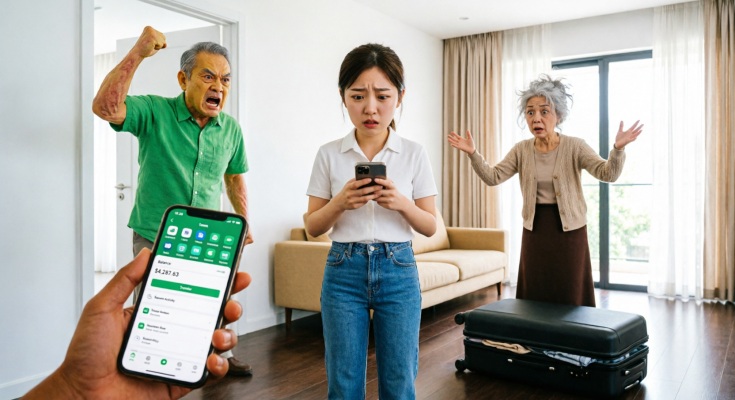
  • Boss Fired Her As Incompetent, Then Learned She Owned The Company-thuyhien

    Boss Fired Her As Incompetent, Then Learned She Owned The Company-thuyhien

    The woman he fired understood all of that better than almost anyone in the building. She knew which vendors returned calls at 6:00 a.m. She knew which machines sounded wrong before a failure code appeared.

    She also knew something Derek did not.

    Harborstone was not public. Its ownership had never been scattered across strangers and market tickers. The voting power sat inside one entity with a plain name and enormous authority: Wrenfield Capital Trust.

    Her trust. Ninety percent.

    She had never announced it because she believed ownership should protect a company, not hover over it like a threat. She worked inside the operation because she wanted to understand what her vote actually controlled.

    For years, that choice made people underestimate her. It also made people tell the truth around her.

    When Derek arrived through a search firm after the founder retired, he came polished, confident, and eager to describe Harborstone to people who had already lived it. He knew revenue targets and board language.

    He did not know the pulse of the place.

    At first, she tried to help him. She brought him supplier notes, quality reports, warnings from engineers, and maintenance timelines that did not fit his aggressive restructuring plan.

    He smiled through the first few meetings. Then he stopped smiling.

    By the third month, he had learned to call warnings negativity. By the fourth, he called objections resistance. By the fifth, he began removing anyone who made his numbers look temporary.

    The first quality technician left after a performance meeting that reduced seventeen years of expertise to failure to adapt. Then a senior engineer was reassigned away from materials review.

    Then cheaper inputs started appearing in purchase approvals.

    The dashboard told the story before Derek admitted any part of it. Supplier lead times stretched. Defects rose. Overtime bled across departments. Customer complaints moved from rare inconvenience to measurable pattern.

    She documented it. Quietly, methodically, without drama.

    Tuesday at 4:47 p.m., Derek decided documentation was incompetence.

    The conference room smelled like burnt coffee and dry-erase markers. The air had that stale corporate warmth that collects after too many closed-door meetings and too little honesty.

    Two managers sat along the table, stiff and silent. An HR representative held a pen above a printed termination form. The projector glowed behind Derek with the very dashboard he had dismissed.

    Derek leaned back in his chair and delivered the sentence as if he had practiced it. ‘We don’t need incompetent people like you. Leave.’

    She did not blink the way he wanted. She did not cry. She did not ask him to reconsider or promise to become easier to manage.

    She looked at the screen. Defects. Lead times. Overtime. Recovery plan.

    ‘Incompetent,’ she repeated. ‘Based on what?’

    That question irritated him more than anger would have. Anger would have made her look unstable. A question required evidence, and evidence was the one thing Derek had spent months stepping around.

    He flicked his fingers toward the dashboard. ‘Based on the fact that you are always pushing back. Always warning us. Always acting like you know better. This is manufacturing, not a debate club.’

    The room went still.

    One manager held a paper cup so tightly the rim bent under his thumb. The other stared at the HDMI cable near the wall like it had suddenly become fascinating.

    The HR representative lowered her eyes to the termination form.

    The projector hummed. Somewhere above them, the air-conditioning clicked. Nobody moved.

    She kept her hands flat on her notebook. Her knuckles wanted to tighten. Her mouth wanted to say everything he did not know. Instead, she let the silence do its work.

    There are men who mistake silence for surrender because it is the only language they have ever been allowed to win.

    Derek Vaughn was one of them.

    The HR representative slid the paper forward. Termination, effective immediately. Cause: failure to align with leadership expectations. At the top, the timestamp sat in neat print: Tuesday, 4:47 p.m.

    The wording was familiar. Too familiar.

    She had seen that phrase in three other files. Same structure. Same soft corporate lie. Same attempt to make technical competence sound like attitude.

    Derek gave her a tight little smile. ‘You should be grateful we’re not dragging this out with a performance plan first.’

    She read the page without touching it. Harborstone Manufacturing. Employee separation notice. HR case reference. Derek’s signature already printed at the bottom.

    A life reduced to a form. A warning reduced to misconduct. A woman reduced to a problem he believed he had solved.

    ‘Fine,’ she said. ‘Fire me.’

    His expression changed before he could stop it. He had expected resistance. Tears would have suited him. Bargaining would have suited him even more.

    Calm did not suit him.

    ‘I’m serious,’ he snapped. ‘Security will escort you out.’

    ‘I heard you.’

    She stood, picked up her notebook and phone, and walked out with the same measured pace she used on the production floor when a machine alarm needed attention.

    In the hallway, two engineers watched her pass. Their faces held the kind of shock people show when they have just seen someone cut a brake line on a moving truck.

    They knew what she did there. Derek did not.

    Inside the elevator, her phone buzzed. The reminder lit the brushed steel wall with cold white text: Quarterly Shareholder Meeting — Thursday 9:00 a.m. — Boardroom A.

    She had set it months before Derek ever learned where the boardroom was.

    For a moment, she simply looked at it. Then she breathed out slowly.

    Derek knew the board. He knew the revenue targets. He knew the org chart. He enjoyed explaining all three to people who had survived problems he had only summarized.

    What he did not know was who controlled the vote.

    As she walked to her car, she could already hear the story he would tell. I fired her. She wasn’t a fit. She couldn’t align.

    Men like Derek loved clean verbs because they hid dirty math.

    She gave him forty-eight hours.

    During those forty-eight hours, she did not send an emotional email. She did not storm back into the building. She did not call employees and ask them to choose sides.

    She worked.

    She gathered the recovery plan, the defect trend reports, the supplier substitution approvals, the overtime summaries, and copies of the termination form. She checked dates, signatures, and the sequence of decisions.

    The package did not need melodrama. It had timestamps.

    By Wednesday afternoon, the board secretary had confirmed the Thursday agenda. Quarterly review. Operating performance. Shareholder matters. Executive leadership update.

    That last phrase sat there like a door Derek had not realized he was about to walk through.

    On Thursday morning, she dressed in a charcoal coat, clipped her old employee badge to her pocket, and entered Harborstone through the front lobby.

    She did not wear the badge because she needed access. She wore it because she wanted Derek to see the mistake first.

    At 8:59 a.m., the boardroom door opened.

    Derek was already seated near the head of the table, confident enough to occupy space before anyone had granted it. He looked up, ready to perform mild annoyance.

    Then he saw her.

    For the first time since Tuesday, his smile disappeared.

    The board chair looked from Derek to the woman in the doorway. The HR representative, seated along the wall with her folder, went pale before anyone spoke.

    Derek recovered first, or tried to. ‘This is a shareholder meeting,’ he said. ‘She no longer works here.’

    The room absorbed the sentence.

    She stepped inside and placed her notebook on the table. ‘That is correct,’ she said. ‘I no longer work here.’

    Then the board secretary cleared her throat and read the attendance line from the packet. Wrenfield Capital Trust, holder of ninety percent voting interest, present by controlling trustee.

    Derek looked at the page.

    He read it twice.

    The second reading did not help him.

    The finance director stopped tapping on his tablet. One manager swallowed so hard it was visible from across the room. The HR representative lowered her pen like she suddenly wanted nothing in her hand.

    She did not raise her voice. She did not need to.

    ‘I am here in my capacity as controlling trustee,’ she said. ‘And before Mr. Vaughn gives his executive leadership update, I would like the record to reflect that he terminated me forty-eight hours ago for failure to align with leadership expectations.’

    The board chair leaned back slowly.

    Derek began, ‘There has been a misunderstanding—’

    ‘No,’ she said. ‘There has been documentation.’

    She opened the folder and placed the termination form on the table, followed by the defect trend reports, supplier substitution approvals, and overtime summaries.

    One by one, the papers made the room smaller.

    The board did not need a speech. The timeline was clear. Derek had cut controls. The defects rose. Engineers warned him. She objected. He removed the objection.

    That was not leadership. That was concealment with a title.

    The board chair asked Derek whether he had reviewed the recovery plan before terminating the person who prepared it.

    Derek said he had reviewed the relevant portions.

    The operations manager, voice low but steady, corrected him. ‘No, you didn’t. You told us not to waste meeting time on it.’

    That was the first crack.

    The second came when HR was asked who drafted the cause language. She looked at Derek, then at the table, and said the phrase had been provided by leadership.

    Failure to align with leadership expectations.

    The words sounded different when read aloud in the presence of the person who owned ninety percent of the vote.

    By 10:12 a.m., the board had moved to executive session. Derek waited outside the room, no longer leaning back, no longer smiling, no longer speaking loudly enough for the hall to hear.

    At 10:43 a.m., he was called back in.

    The resolution was not dramatic. Real consequences rarely arrive like thunder. They arrive as motions, seconds, recorded votes, and signatures at the bottom of pages.

    Derek Vaughn was placed on immediate administrative leave pending review. His authority over purchasing, quality control, and personnel decisions was suspended.

    An independent audit was authorized. The quality control structure he had weakened was restored. The engineers he had sidelined were asked to submit written reports directly to the board.

    Her termination was rescinded from the personnel record, but she did not return to the same role.

    She had no interest in proving she deserved a desk Derek had used as bait.

    Instead, she accepted interim oversight authority from the board and made one condition clear: the people who had been warning Harborstone would be heard before anyone chased another temporary margin gain.

    The company did not heal in one morning. Defects did not vanish because a man lost his chair. Supplier trust had to be rebuilt. Production schedules had to be repaired.

    But the math changed.

    The floor noticed first. Engineers who had stopped speaking in meetings began sending reports again. Quality technicians who had been treated as obstacles returned to the center of the process.

    HR reviewed the prior files with the same phrase Derek had used on her. Three people received corrected records. Two were invited back. One declined but accepted a written acknowledgment.

    Derek resigned before the review ended.

    No one announced it with fireworks. The email was short, clean, and almost absurdly polite. The kind of corporate language he had once used on other people finally wrapped itself around him.

    Months later, the Tuesday termination form remained in her file, not as discipline, but as evidence.

    She kept a copy too.

    Not because she needed revenge. Because institutions forget uncomfortable lessons unless someone preserves the paperwork.

    The sentence stayed with her: He thought my badge was my power.

    Near the end of the first restored quarterly review, she walked past Boardroom A and heard engineers arguing over a supplier variance with the kind of confidence Derek had tried to punish out of them.

    That sound meant more than applause.

    Harborstone had not needed obedience. It had needed people brave enough to say the numbers were wrong before the customers did.

    Derek had believed firing her would make the problem disappear. Instead, it made the problem visible to the one vote he had never bothered to understand.

    He had no clue the next shareholder meeting was about to teach him math.

    It did.