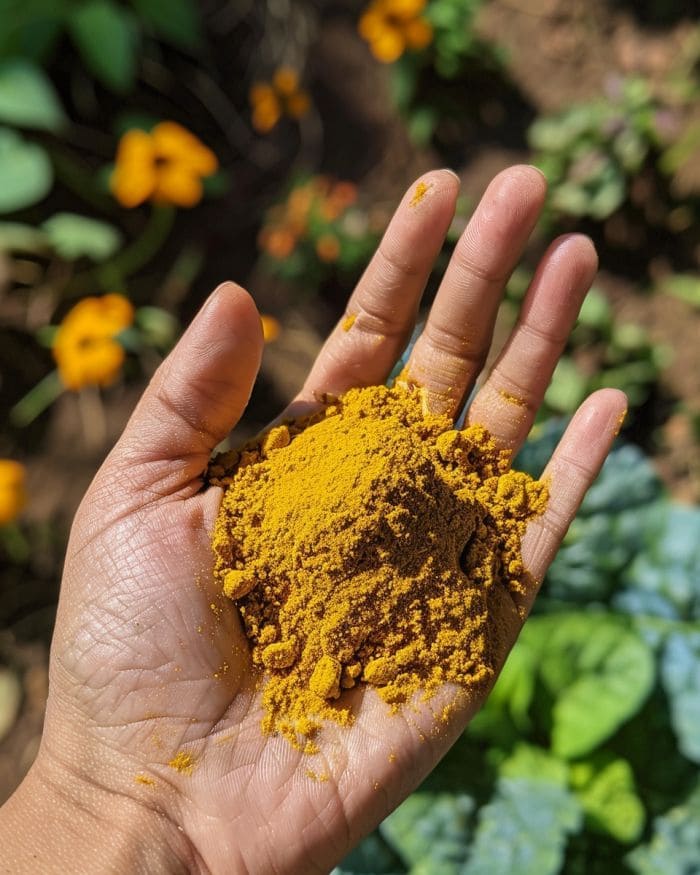
And once you understand why, it’s hard not to sprinkle a little in the soil yourself.
The Hidden Powers of Turmeric
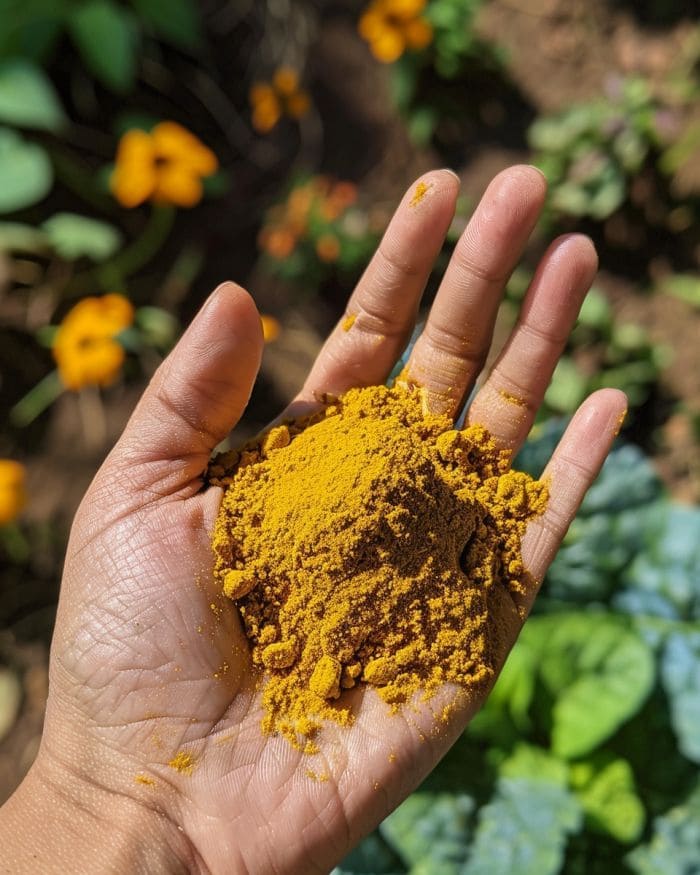
Turmeric (Curcuma longa) has been used for centuries in traditional medicine. Its anti-inflammatory, antibacterial, and antifungal qualities are widely respected but it turns out those same properties can benefit plants too.
The active compound at work here is curcumin, a golden pigment that helps suppress pathogens, heal wounds, and even discourage garden pests.
While turmeric won’t replace sunshine, water, and good soil, it can act as a powerful supplement to your natural gardening toolkit, especially if you’re trying to avoid synthetic chemicals.
4 Reasons Gardeners Pour Turmeric on Their Plants
1. Fighting Fungal Infections, Naturally
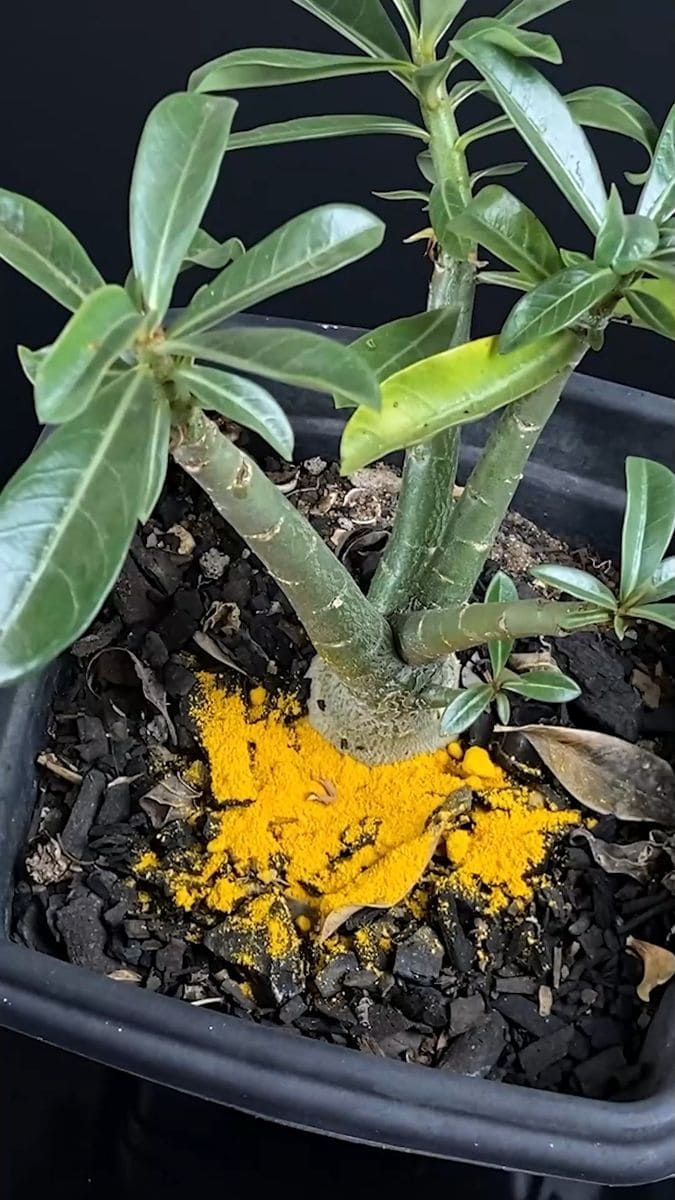
Fungi can be a gardener’s quiet enemy. Root rot, damping-off, and powdery mildew don’t announce themselves until the damage is already underway.
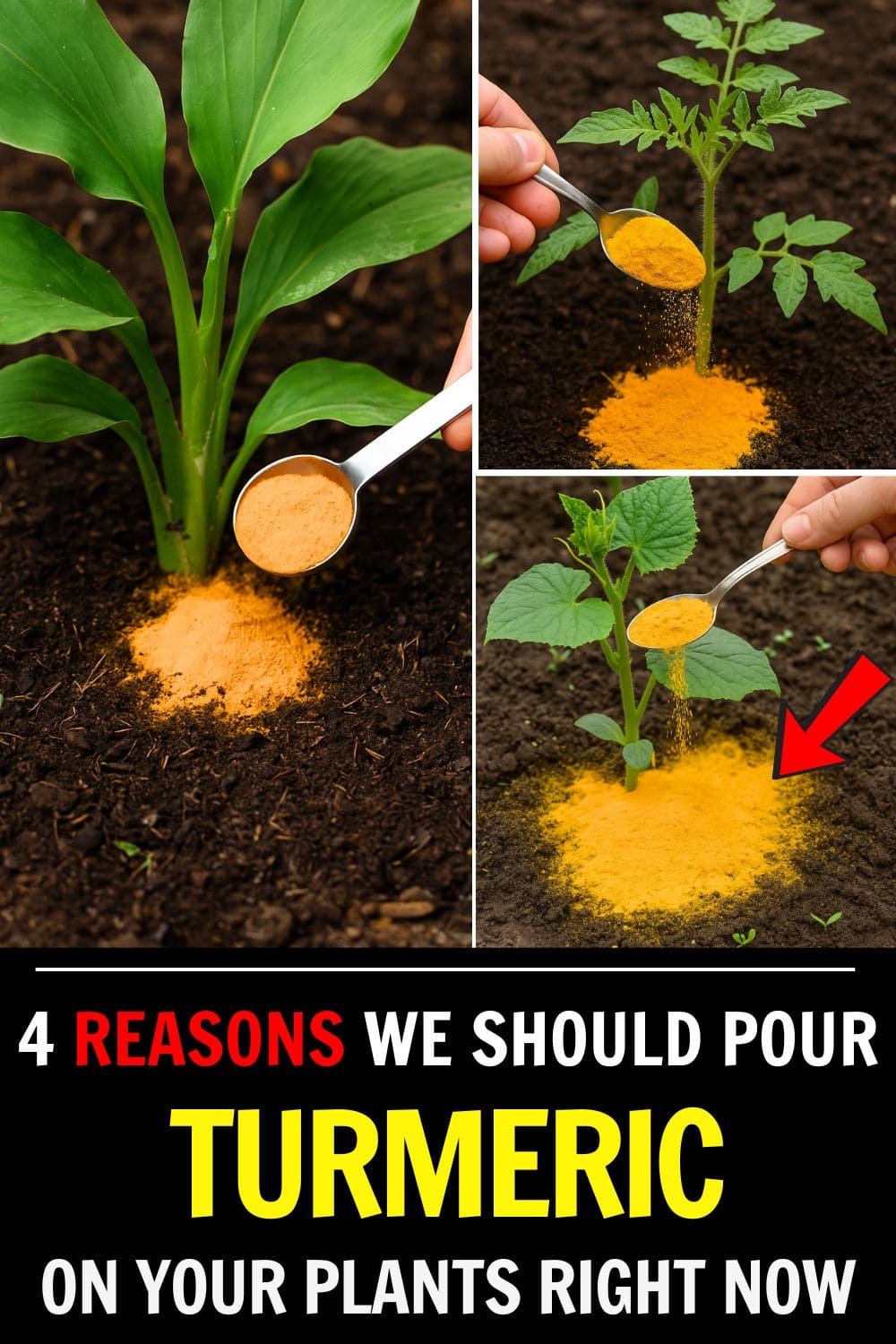
Turmeric offers gentle, preventive support. Sprinkling a little powder around the base of vulnerable plants like tomatoes, beans, or cucumbers creates a barrier that discourages fungal spores from taking hold.
You can also mix turmeric with water and use it as a root drench for young seedlings or around plants after heavy rain.
If you’re dealing with an existing issue, a simple homemade spray made from turmeric and warm water (let it steep and strain before spraying) can help slow the spread of leaf spots or mildew on foliage.
2. Healing Pruned or Damaged Plants
When you prune shrubs or harvest herbs, those open cuts become targets for bacteria or fungus. Gardeners often dust turmeric powder directly onto the wound to help seal it and keep infections out.
It’s especially useful for fruit trees, squash vines, or roses that are prone to rot if exposed.
A little dusting goes a long way, and unlike synthetic wound sealants, turmeric won’t harm the plant or its surrounding soil biology.
3. A Gentle Pest Deterrent
Turmeric isn’t exactly a gourmet delight for pests. Its bitter taste and distinct aroma make it unappealing to ants, aphids, and even certain beetles.
If you’ve noticed a trail of ants crawling up your plant stems or aphids clustering around new growth, try dusting turmeric at the base of the plant or on the leaves where pests tend to gather.
You can also mix it with a little flour or cornmeal if you’re targeting specific pest behavior (like ant trails).
Turmeric won’t harm pollinators or beneficial insects, which makes it a safer alternative to many store-bought repellents.
4. Protecting Seedlings from Damping-Off
Starting seeds at home is satisfying until one morning your bright green sprout collapses at the soil line and turns to mush. This frustrating phenomenon, known as damping-off, is caused by fungal pathogens in the soil.
Sprinkling a thin layer of turmeric powder over your seed trays after planting helps deter these pathogens.
Many gardeners swear by this trick, especially when using seed-starting mixes that may stay moist for long periods.
A Few Tips Before You Start
Turmeric is most effective when used in moderation. A little powder in the soil or on a leaf goes a long way as too much can actually alter soil balance or interfere with microbial activity if overused.
Also, turmeric stains. Gloves and care are helpful when you’re working with it near walkways or on white pots.
If you’re looking to source turmeric for your garden, you can absolutely use culinary-grade powder from your kitchen. However, organic turmeric tends to work best.
Plants That Benefit Most from Turmeric
Turmeric can be used broadly in the garden, but it tends to offer the biggest benefits to:
- Tomatoes
- Cucumbers
- Beans
- Zucchini and squash
- Houseplants (especially fiddle leaf figs or pothos with root issues)
- Roses and citrus trees (for pruning wounds)
You can even experiment with turmeric on bulb rot in garlic or onion beds, or around herbs like basil and mint that tend to attract fungus gnats indoors.
Leave a Reply