
Randy Fine Renews Calls for Possible Action Against Ilhan Omar as New Congressional Citizenship Bill Sparks Constitutional Debate
Washington, D.C. — Rep. Randy Fine is once again raising the possibility of congressional action against Rep. Ilhan Omar while simultaneously promoting legislation designed to prevent people who hold foreign citizenship from serving in Congress.
Although the two issues are politically connected in Fine’s broader argument about congressional allegiance, they involve very different legal questions and would require very different procedures.
Fine, a Republican from Florida, has said he could pursue a House expulsion vote against Omar if evidence eventually emerges to substantiate a longstanding allegation concerning one of her past marriages.
At the same time, Fine is backing the “Disqualifying Dual Loyalty Act of 2025,” a bill that would prohibit a person holding foreign citizenship from being elected to Congress unless the foreign citizenship is renounced. The measure was introduced as H.R. 5817 on October 24, 2025, and was referred to the House Committee on House Administration.
Fine has presented both efforts as questions involving loyalty, eligibility and the responsibilities of elected officials.
But the distinction between the two matters is important.
The allegations concerning Omar’s marriage remain allegations. Omar has denied them, and publicly available information has not definitively established that she married a biological sibling.
An expulsion vote, therefore, would require substantially more than political disagreement or an unproven allegation.
During an interview, Fine said he was waiting for additional information concerning the marriage allegation.
“We’re waiting to get the data on the brother marriage thing, which I think is coming,” Fine said. “If it turns out that that is actually the reality, will there be a vote on the floor to expel this woman from Congress? Absolutely.”
The allegation has circulated for years. Political opponents have repeatedly raised claims that Omar married her biological brother as part of an immigration-related scheme.
Omar has consistently rejected the allegation.
The public record contains questions and disputed issues concerning aspects of her marital history, but those questions should not be treated as proof of the specific allegation Fine referenced.
That distinction could become especially significant if the House were ever asked to consider expulsion.
Congress has constitutional authority to punish its members and to expel a member, but expulsion requires the concurrence of two-thirds of the chamber. That is a much higher threshold than the simple majority generally required for ordinary legislation.
Historically, the House has used its expulsion authority only in extraordinary circumstances.
As of now, no formal House expulsion proceeding based on the marriage allegation has been scheduled.
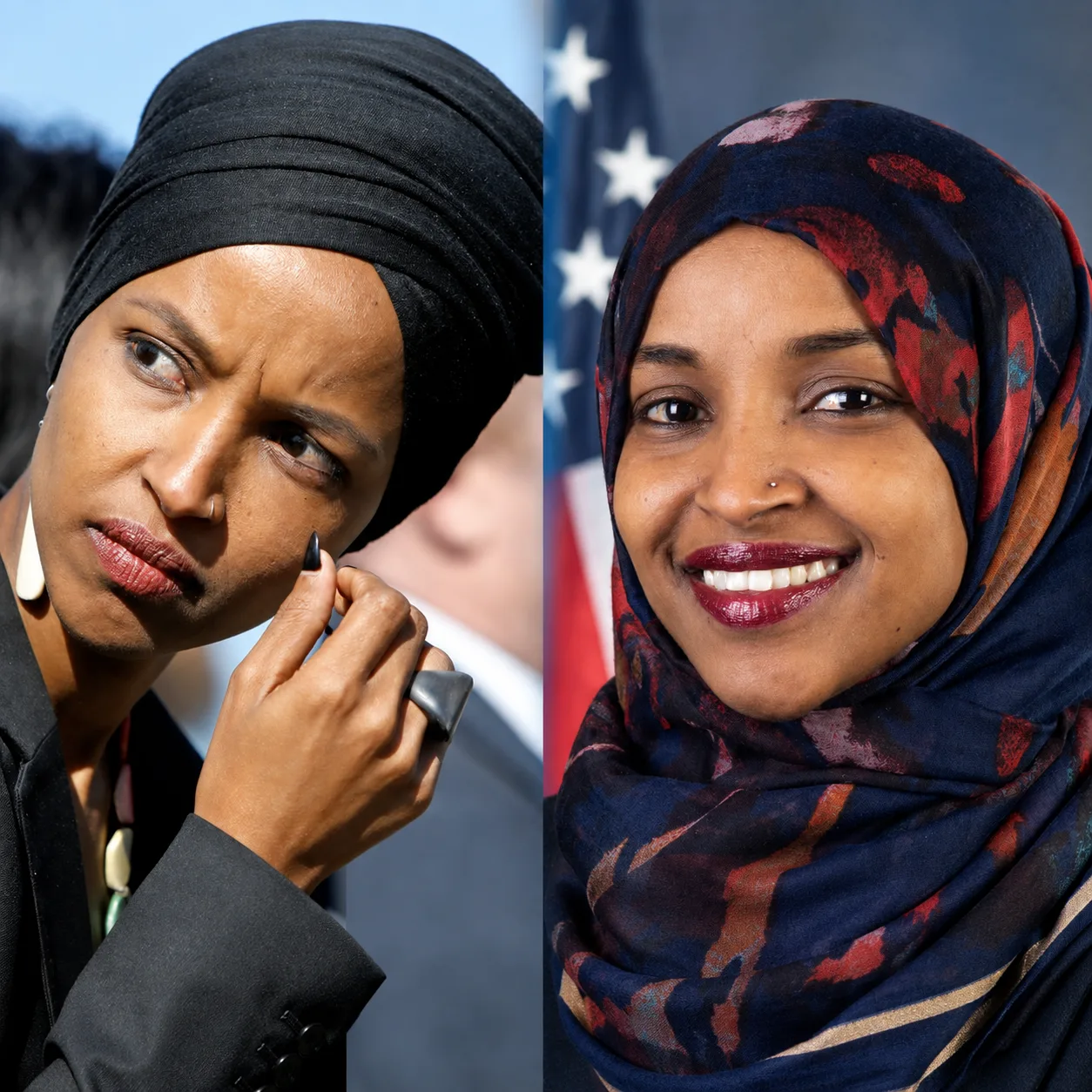 That means any future action would depend first on the emergence and evaluation of additional evidence and then on the political and procedural decisions of House members.
The second part of Fine’s campaign involves a completely separate issue: whether Congress should establish a new restriction on lawmakers who hold foreign citizenship.
Fine calls his proposal the “Disqualifying Dual Loyalty Act.”
The bill is not a new proposal introduced this week. H.R. 5817 was introduced in October 2025. Its official description states that it would prohibit the election to Congress of a person holding foreign citizenship.
Fine argues that members of Congress should have undivided allegiance to the United States.
“The bottom line is that you can’t serve two masters,” Fine said. “If you’re going to serve in the United States Congress, you should serve America ONLY.”
Fine has argued that dual citizenship may be acceptable for private citizens but should be treated differently when someone is entrusted with congressional responsibilities.
His argument has also received support from Rep. Andy Harris, a Maryland Republican.
Harris has emphasized that the issue goes beyond how members vote on legislation.
“It’s not just about the vote,” Harris said. “It’s about access to our national security secrets. They get to learn things that people from their home countries would never get to know.”
Supporters of the proposal therefore frame it as a national-security and allegiance issue.
Their argument is that a member of Congress can receive classified information, participate in national-security decisions and influence U.S. foreign policy. From that perspective, they say, holding citizenship in another country could create at least an appearance of competing obligations.
But the proposal also raises a major constitutional question.
The Constitution already establishes qualifications for members of Congress.
For the House of Representatives, Article I requires a member to be at least 25 years old, to have been a U.S. citizen for at least seven years and to be an inhabitant of the state from which the person is elected.
The Senate has separate requirements involving age, citizenship duration and state residency.
The Supreme Court has previously addressed attempts to add qualifications beyond those written into the Constitution.
In Powell v. McCormack in 1969, the Court held that the House could not exclude a duly elected member who satisfied the constitutional qualifications.
The Court addressed the broader question again in U.S. Term Limits v. Thornton in 1995, reinforcing the principle that Congress and the states cannot simply add new qualifications for federal legislators beyond those established by the Constitution.
That history creates a significant legal issue for Fine’s bill.
H.R. 5817 is an ordinary bill rather than a constitutional amendment. Its proposed restriction therefore could face immediate constitutional challenges if it were used to prevent an otherwise constitutionally qualified candidate from taking office solely because that person possessed another citizenship.
The distinction is crucial.
Congress can legislate in many areas involving elections and government operations, but changing the basic qualifications for federal office presents a different constitutional question.
Fine’s proposal could therefore become the subject of litigation even if Congress were to pass it.
There is another important distinction involving Omar herself.
Omar was born in Somalia and came to the United States as a refugee before becoming a naturalized U.S. citizen in 2000.
Those facts alone do not establish that Omar currently holds dual U.S.-Somali citizenship.
Nor does Fine’s bill establish that she has such citizenship.
Consequently, the broader debate over dual citizenship should not automatically be presented as a factual claim about Omar’s current citizenship status.
The political argument surrounding the legislation is nevertheless likely to continue.
Fine and Harris have argued that congressional office requires exclusive allegiance to the United States.
Critics of the proposal can point to a different principle: citizenship status by itself does not necessarily establish divided loyalty, and the Constitution already provides the basic qualifications for serving in Congress.
The proposal also faces political obstacles.
Harris has acknowledged that the legislation faces difficult prospects in the Senate.
“The Senate will never, ever pass it,” Harris said while discussing the measure’s prospects. “But we want to get it done […] it’s about Americans first.”
That leaves Fine pursuing two separate avenues.
One is the possibility of an expulsion effort involving Omar. Such an effort would depend on evidence concerning the marriage allegation and would require a two-thirds vote in the House.
The second is the citizenship legislation, which would establish a new eligibility restriction and could face both political opposition and constitutional scrutiny.
For now, neither effort has produced a change in law.
No Omar expulsion vote has been scheduled on the basis of the marriage allegation, and the allegation itself remains unproven in the publicly available record.
Likewise, the Disqualifying Dual Loyalty Act has not become law.
The broader controversy illustrates how questions about congressional membership can involve several different standards at once.
A political allegation is not automatically a criminal finding.
A disputed personal history is not automatically grounds for expulsion.
And a proposed statutory qualification for federal office is not automatically constitutional simply because Congress passes it.
Those distinctions will remain central if either of Fine’s efforts advances.

Greg Stanton Defeats Kai Newkirk in Arizona Democratic Primary as Israel Debate Highlights Democratic Divisions
While Fine’s campaign has focused attention on congressional membership and citizenship, another major political contest has highlighted a different divide inside the Democratic Party.
Rep. Greg Stanton won the Democratic primary for Arizona’s 4th Congressional District over Kai Newkirk, a challenger who campaigned as a democratic socialist and made U.S. policy toward Israel one of the central issues of the race.
The contest attracted attention well beyond Arizona because Newkirk attempted to challenge an incumbent Democrat from the left, making the race part of a larger national debate over Israel, political spending, progressive activism and the direction of the Democratic Party.
Initial election-night results showed Stanton with 68.1 percent of the vote and Newkirk with 31.9 percent. Subsequent counting changed the margin, and the official county results provide the final certified figures for the jurisdictions covered.
The basic outcome, however, remained the same: Stanton won the Democratic nomination and advanced toward the November general election.
Stanton, a former mayor of Phoenix, has served in Congress since 2019 and entered the primary with the advantages normally associated with incumbency.
Newkirk sought to make the election a referendum on those advantages.
He presented himself as an alternative to what he described as the Democratic establishment and argued that the party should adopt a more aggressive position on President Donald Trump, corporate political influence and U.S. policy toward Israel.
Israel became the most visible dividing line between the candidates.
Newkirk called for ending U.S. military assistance to Israel and supported an arms embargo.
He also criticized Stanton over political support from pro-Israel organizations and donors.
Another point of conflict came after Stanton voted against an amendment offered by Republican Rep. Thomas Massie that would have reduced military assistance to Israel.
Newkirk used that vote to reinforce his argument that Stanton represented an older approach to the U.S.-Israel relationship.
Stanton defended continued security assistance to Israel, framing the relationship in terms of U.S. strategic interests and regional security.
At the same time, Stanton has criticized Israeli Prime Minister Benjamin Netanyahu and has argued that support for Israel should not be understood as unconditional approval of every action taken by the Israeli government.
That position places Stanton within a segment of the Democratic Party that continues to support Israel’s security relationship with the United States while also expressing criticism of particular Israeli policies.
Newkirk advocated a substantially different approach.
Rather than seeking to preserve military assistance while criticizing aspects of Israeli policy, he argued for ending military assistance and imposing an arms embargo.
The result was a primary campaign in which voters were presented with a relatively clear disagreement over foreign policy.
The race was also about the broader question of what the Democratic Party should look like.
Newkirk’s campaign received support from progressive organizations and activists seeking to challenge Democratic incumbents on issues including Israel and corporate political spending.
His campaign presented the contest as part of a broader effort to move the party toward democratic socialism and a more confrontational approach toward the political establishment.
Stanton’s campaign emphasized experience, legislative results and coalition-building.
After the primary, Stanton described the election as a choice about Democratic leadership.
“This campaign presented voters with a real choice about how Democrats should lead,” Stanton said in a statement.
“Tonight, the voters chose proven leadership that fights back, delivers real results, and brings our party together.”
The result was significant because progressive and democratic socialist candidates have attracted substantial attention in other Democratic primary contests during the 2026 election cycle.
The Arizona race demonstrated that the outcome of such challenges can vary significantly depending on the district, the incumbent, the electorate and the issues emphasized by the challenger.
Arizona’s 4th Congressional District includes portions of the Phoenix metropolitan area, including parts of Tempe and surrounding communities.
The district’s political characteristics differ from some heavily Democratic urban districts where progressive candidates have been able to build particularly strong primary coalitions.
 Stanton also had a substantial fundraising advantage entering the campaign, another factor that shaped the contest.
Newkirk attempted to compensate through grassroots organizing and national progressive attention.
The strategy generated visibility, but the election results ultimately gave Stanton the Democratic nomination.
The campaign also produced disputes concerning Newkirk’s organization and campaign operations.
Some claims circulated regarding endorsements and alleged concerns involving campaign behavior.
Those claims should be distinguished from the election results themselves.
The vote count is an established electoral fact.
Other allegations concerning campaign organizations, endorsements or internal disputes require separate documentation and should not be treated as established facts without reliable supporting evidence.
What is clear is that Stanton survived a challenge designed to move the Democratic primary debate substantially to the left.
The general election will be different from the Democratic primary.
Primary voters represent only a portion of the electorate, while the November contest will involve a broader group of voters.
Stanton is expected to face Republican candidate Zuhdi Jasser in the general election, making the next stage of the contest a different political environment from the Democratic primary.
The primary nevertheless provides an indication of the issues that can divide Democrats.
Israel remains one of them.
Progressive Democrats and activists increasingly argue that military assistance to Israel should be conditioned or ended and that political relationships with pro-Israel organizations should receive greater scrutiny.
Other Democrats continue to emphasize the longstanding U.S.-Israel security relationship while separating support for Israel’s security from support for every policy of Netanyahu’s government.
The Stanton-Newkirk contest placed those competing approaches directly before Democratic primary voters.
The result gives Stanton the nomination, while the broader debate remains unresolved.
The race also illustrates a larger tension within the Democratic Party between established incumbents and activists seeking to change the party’s policy direction.
For challengers such as Newkirk, the objective is not simply to win one congressional seat. A primary campaign can also serve as a platform for changing the party’s debate, particularly on issues such as Israel, corporate influence, healthcare and economic policy.
For incumbents such as Stanton, the challenge is to demonstrate that their approach continues to command support within their districts while responding to pressure from the party’s progressive wing.
In Arizona’s 4th District, the primary ended with Stanton advancing.
But the issues raised during the campaign are unlikely to disappear.
The Democratic Party continues to debate how it should approach Israel, political donations, progressive economic proposals and its broader response to the Trump administration.
At the same time, the race demonstrates that national progressive momentum does not produce identical outcomes in every congressional district.
The Arizona primary therefore becomes another data point in a larger national political discussion rather than a final answer to the future direction of the Democratic Party.
Taken together, the Fine-Omar controversy and the Stanton-Newkirk primary illustrate two very different questions confronting Congress and American politics.
One concerns who is legally eligible to serve in Congress and what constitutional limits apply when lawmakers attempt to impose additional qualifications.
The other concerns what voters want their political parties and representatives to stand for, particularly on divisive issues such as Israel and foreign policy.
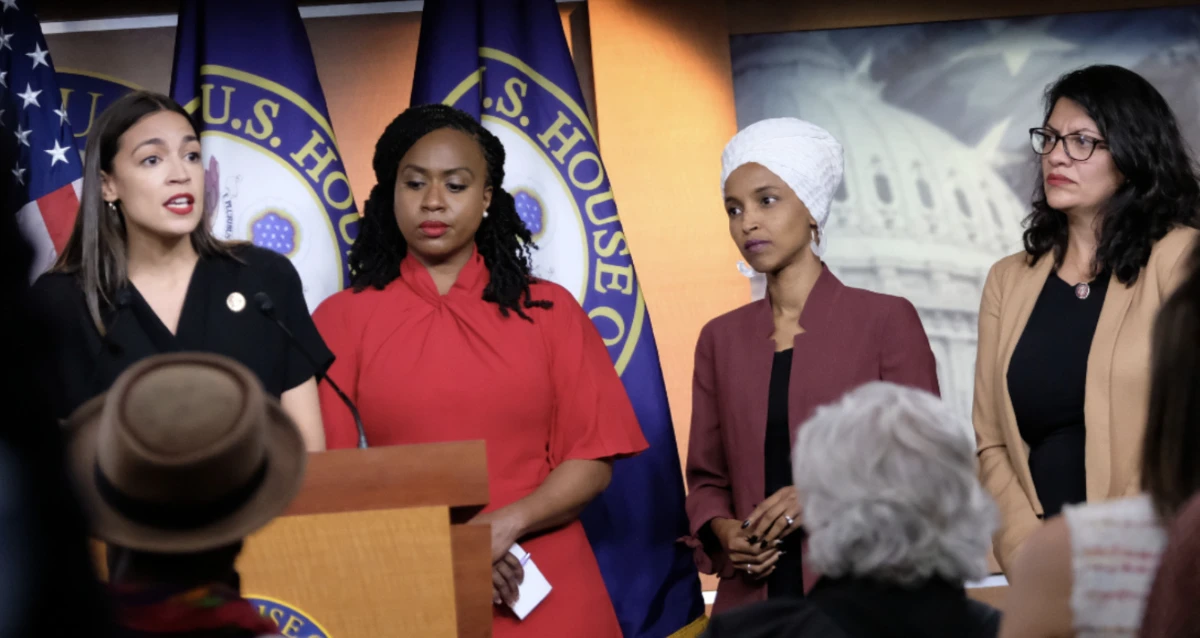 In Fine’s case, the distinction between an allegation and established evidence remains essential. Any expulsion effort against Omar would face a constitutional two-thirds threshold and would require formal House action.
In the citizenship debate, Fine’s legislation remains a proposal rather than law, and its interaction with the Constitution’s existing qualifications for Congress would likely be central to any legal challenge.
In Arizona, Stanton’s primary victory is an established electoral result, while the ideological debate that produced the challenge remains part of the broader Democratic conversation.
None of these developments by itself settles the larger political disputes.
Instead, they show how congressional politics in 2026 continues to revolve around questions of eligibility, loyalty, party identity, foreign policy and the balance between established lawmakers and challengers seeking a different direction.
May you like
🚨 TRUMP & IRAN STUN THE WORLD — AN UNEXPECTED BOMBSHELL NO ONE SAW COMI…
Iran Offers Seven-Day Path to Reopen Strait of Hormuz as U.S. Talks Face New SetbackIran has put forward a proposal that could pot…

🚨 HILLARY CLINTON SPARKS BUZZ AFTER TRUMP STATEMENT — HER RESPONSE CATC…
Hillary Clinton’s Press Freedom Criticism Draws Fresh Scrutiny Over Disputed Assange RemarkFormer Secretary of State Hillary Clint…

🚨 TRUMP UNVEILS THE U.S. SPACE ACADEMY — A NEW ERA FOR AMERICA’S SPACE…
Trump Launches Push for U.S. Space Academy as America Builds a New Generation of Space LeadersPresident Donald Trump has launched…
For now, the immediate outcomes are clear: Fine’s proposed legislation remains pending, the allegations concerning Omar’s marriage have not been conclusively established in the public record, and Greg Stanton has secured the Democratic nomination in Arizona’s 4th Congressional District.
The next stages will depend on congressional procedures, further evidence where relevant, constitutional litigation if legislation advances, and the choices voters make in the general election.
Leave a Reply