NEW YORK — A federal judge has dismissed journalist and author Michael Wolff’s lawsuit against First Lady Melania Trump, ruling that the dispute should be handled in state court rather than through the federal judiciary.
U.S. District Judge Mary Kay Vyskocil described Wolff’s attempt to litigate the matter in federal court as “contorted” and criticized what she characterized as an inappropriate level of tactical maneuvering. Although the judge acknowledged that the parties have a genuine legal dispute, she said the federal court should not be used to manage what she viewed as an improperly presented conflict.
“It’s an inappropriate level of tactical gamesmanship,” Vyskocil said during the proceedings, according to reports.
The judge also said she would not be “drafted to oversee an abusively presented spat,” while emphasizing that her decision did not necessarily resolve the underlying disagreement between Wolff and the first lady.
The dispute began after an attorney for Melania Trump sent Wolff a legal demand last year calling on him to remove statements he had made concerning the first lady. The letter reportedly warned that Melania Trump would have “no alternative” but to pursue legal action if the statements were not withdrawn.
Wolff subsequently filed a lawsuit in state court in October. Melania Trump’s attorney, Alejandro Brito, later moved the case to federal court. Vyskocil ruled that federal jurisdiction existed but declined to exercise it, effectively sending the matter back to be litigated through the state judicial system.
A spokesperson for Melania Trump defended the first lady’s position, saying she remains prepared to challenge what her legal team considers malicious and defamatory statements.
The dispute centers in part on comments Wolff has made about Melania Trump and her relationship with President Donald Trump. Wolff’s lawsuit argues that some of his statements were protected opinion or had been taken out of context.
Among the statements cited in the litigation was Wolff’s characterization of the Trump marriage as a “sham marriage, trophy marriage.” His legal filings reportedly argued that the statement constituted an opinion rather than a factual allegation.
Wolff also maintained that he had never accused Melania Trump of participating in criminal activity connected to convicted sex offender Jeffrey Epstein. The first lady has repeatedly denied any association with Epstein and has publicly objected to what she described as false claims linking her to him.
“The lies linking me with the disgraceful Jeffrey Epstein need to end today,” Melania Trump said during an April press conference.
She accused those making the allegations of attempting to damage her reputation and rejected what she described as efforts to defame her.
The controversy also drew attention after The Daily Beast retracted an article published last summer that had suggested Melania Trump was “very involved” in the Epstein scandal. The article was based on an interview with Wolff and was withdrawn after the publication received a letter from Brito.
Wolff later clarified that his comments referred to Melania Trump being involved “behind the scenes” in dealing with matters at the White House, while he said he was not alleging criminal involvement.
The broader Epstein controversy has also generated political responses. Republican Rep. Nancy Mace praised Melania Trump for speaking publicly about Epstein victims and pointed to her support for legislation addressing the distribution of fabricated intimate images.
Democratic lawmakers have likewise called for greater congressional scrutiny. Rep. Robert Garcia said lawmakers supported Melania Trump’s call for a public hearing and urged congressional leaders to schedule one.
In her remarks, Melania Trump called on Congress to take action and urged lawmakers to give victims an opportunity to testify under oath.
For now, however, the legal dispute with Wolff remains unresolved on its underlying merits. Judge Vyskocil’s ruling determines where the case should be litigated, not whether either side ultimately prevails.
The dismissal represents a procedural setback for Wolff in federal court, while leaving the broader dispute—and the competing claims over speech, reputation and defamation—to be addressed through the appropriate state-court proceedings.
I walked into Dad’s hotel gala – only to hear my stepmother say: ‘Security, remove her.’ I left without a word… Then moved the hotel, the land, and $17M into my trust. Minutes later, 68 missed calls. By midnight, they knocked my door
The first thing I heard when I entered my father’s hotel gala was my stepmother’s voice slicing through the orchestra: “Security, remove her.” The second was my father’s silence.
For one humiliating second, two hundred guests turned toward me beneath the chandeliers of the Grand Halcyon, the hotel my mother had helped transform from an abandoned riverside warehouse before she died. I stood there in a navy dress, invitation in hand, while my stepmother, Vanessa, smiled as though she had finally erased the last blemish from her perfect evening.
“Claire,” Dad said at last, avoiding my eyes. “This is a private donor event.”
“I’m on the board list.”
Vanessa laughed softly. “You were. Before we cleaned up the family’s affairs.”
A few nervous smiles followed from people who thought they were watching a spoiled daughter being put in her place. Across the ballroom, one of Dad’s oldest partners looked away. That hurt more than Vanessa’s smile.
I had grown up in those halls, carrying room-service trays during summer breaks while Mom taught me that ownership meant responsibility, not entitlement.
I looked at my father. “You knew I was invited.”
His jaw tightened. “Don’t make a scene.”
I nearly laughed.
For six months, Vanessa had been telling people I was unstable, resentful, and irresponsible with money. She convinced Dad to remove me from management meetings, then from the hotel foundation, then from anything that kept me visible.
What neither of them understood was that visibility had never been the same thing as control.
A security guard approached with an embarrassed expression. “Ms. Bennett, I’m sorry.”
“It’s fine,” I said.
Vanessa blinked.
She had expected tears.
I placed my unopened gift envelope on the registration table. Inside was a copy of the original land trust my mother had created twenty-two years earlier.
Then I walked out.
At 8:17 p.m., sitting in the back of a black town car, I called Miriam Cole, the estate attorney who had handled my mother’s affairs.
“Are you sure?” she asked.
I watched the hotel lights shimmer behind me.
“They just made it very easy.”
Miriam paused. “Then I’ll execute the transfer sequence.”
My mother had never left the hotel entirely to Dad. She had placed the land beneath it, fifty-one percent of the hotel holding company, and a seventeen-million-dollar reserve fund into a revocable family structure controlled jointly by Dad and me until my thirty-fifth birthday.
I had turned thirty-five three days earlier.
At that moment, Dad’s authority had expired.
He simply didn’t know it yet.
At 8:43, my phone buzzed.
TRANSFER COMPLETE.
I turned the screen facedown.
Then the calls started…..
By the time I reached my apartment, I had twenty-three missed calls. By 9:15, there were forty-one.
I poured tea.
Vanessa left the first voicemail.
“Claire, call your father immediately. Whatever stunt you pulled, undo it.”
Stunt.
That was the word people used when they discovered the person they humiliated had documents.
My father’s message came next.
“You froze the operating reserve? Are you insane? We have payroll, vendors, a lender review on Monday.”
I called Miriam instead.
“Status?”
“The hotel shares are registered to the Bennett Legacy Trust. The land title moved at 8:39. The reserve transferred at 8:42. Your father retains his personal assets and minority distributions.”
“And Vanessa?”
“Nothing.”
My mother had been meticulous.
Near the end of her life, she had grown concerned about Dad’s weakness around ambitious people. Her trust contained a succession clause: once I turned thirty-five, I could assume sole control if I had been removed from governance without documented cause or if any beneficiary attempted to alienate trust property.
Vanessa had done both.
Three weeks earlier, I discovered that she and Dad had signed a letter of intent to sell the hotel’s riverfront parking parcel to a development company owned by Vanessa’s brother.
The proposed price was eleven million below an independent appraisal.
They assumed I didn’t know because they had cut off my company email. They even changed the password to the shared board archive and told staff I was “taking personal leave.”
Unfortunately for them, I was still a trustee.
Trustees automatically received notice of title changes, debt requests, and related-party transactions through the bank’s compliance portal.
Vanessa had locked me out of a mailbox and assumed she had locked me out of the law.
At 9:32, she called again.
This time, I answered.
“What have you done?” she snapped.
“Protected trust assets.”
“You stole your father’s hotel.”
“No. I stopped you from selling my mother’s land to your brother.”
Silence.
Dad came on the line. “Claire, Vanessa said that deal was preliminary.”
“It was signed.”
“It wasn’t binding.”
“That isn’t the point.”
“You’re punishing me over a misunderstanding.”
I looked at a photograph of Mom wearing a hard hat before the Halcyon’s first window had been installed.
“You let her throw me out of Mom’s hotel in front of two hundred people.”
“Don’t be dramatic.”
That sentence erased whatever guilt I still had.
“The board meets tomorrow at nine,” I said. “Until then, no transfers, land sale, new debt, or reserve access.”
Vanessa hissed, “You vindictive little—”
I hung up.
At 10:04, a senior hotel accountant emailed me a file containing reimbursements, consulting payments, event charges, and “design fees” paid to companies connected to Vanessa.
Nearly $1.8 million in eighteen months.
At the bottom was one sentence:
I thought you already knew.
At 11:11, my missed-call count reached sixty-eight.
At 11:53, the intercom buzzed.
“Ms. Bennett, your father and Mrs. Bennett are downstairs.”
By midnight, they were knocking on my door.
I opened the door but didn’t invite them inside.
Dad looked ten years older than he had at the gala.
Vanessa looked furious enough to crack glass.
“You need to reverse this tonight,” Dad said.
“No.”
“Claire, be reasonable.”
Vanessa stepped forward. “Your father built that hotel.”
“My mother built it with him.”
“She’s dead.”
The hallway went silent.
Dad turned toward her. “Stop.”
But Vanessa was too angry to notice the line she had crossed.
“You think some old trust gives you the right to take everything?”
I held her gaze. “Not everything. Just what was never yours.”
I handed Dad a folder containing the underpriced land deal, the trust clause, and the expense ledger.
He started turning the pages.
“What is this?” he whispered.
Vanessa’s face shifted. “Martin, those are business expenses.”
“One point eight million?”
“I can explain.”
“You can explain it to the forensic auditors,” I said.
Dad stared at me, his shoulders sinking.
“Claire, I didn’t know.”
“You didn’t want to know.”
The next morning, the board met without Vanessa.
At 9:14, Miriam read the succession clause into the record.
At 9:22, the independent directors recognized me as controlling trustee and chair.
At 9:40, they authorized a forensic audit.
Dad didn’t fight me.
Vanessa did.
She hired a lawyer, threatened injunctions, and accused me of theft and “emotional retaliation.”
Then the auditors uncovered fake invoices from companies linked to her cousin, her brother, and a former assistant.
The total exceeded $2.4 million.
The police became interested.
So did the bank.
Two directors who had supported Vanessa resigned after investigators discovered they had approved undocumented payments. The hotel’s lender froze credit lines tied to her projects.
Within six weeks, Dad filed for divorce after learning Vanessa had tried to pledge his minority hotel interest as collateral for a private loan.
She also lost access to the family residence, which belonged to a separate trust she had never bothered to read.
Three months later, Dad and I met in the Halcyon lobby.
“I failed you,” he said.
I nodded. “You did.”
“I kept choosing peace with her over fairness to you.”
“That wasn’t peace.”
“No.” He looked down. “It was cowardice.”
I believed that apology.
But I didn’t return his power.
Instead, I gave him something harder: a chance to rebuild his relationship with me without controlling anything I owned.
A year later, the riverfront parcel had become a public garden and events terrace named for my mother.
The hotel recorded its strongest operating year in a decade, and employee profit-sharing returned.
Vanessa eventually pleaded guilty to financial crimes connected to the false invoices.
Her brother’s land deal disappeared with her scheme.
I moved into a house overlooking the river.
At night, I could see the Halcyon glowing through the trees.
The hotel was never my revenge.
My revenge was watching the people who called me powerless discover that my silence had never meant surrender.
The first strange thing was that my grandmother didn’t call me.
A stranger did.
It was shortly after three in the afternoon when my phone rang while I was standing in the kitchen of my Indianapolis apartment.
“Am I speaking with Ethan Cole?”
“Yes.”
“My name is Rebecca. I’m calling from a residential care facility in Ohio. Your grandmother listed you as an emergency contact.”
I put down the coffee mug in my hand.
“My grandmother?”
“Evelyn Cole.”
My stomach tightened immediately.
“What happened?”
The woman paused.
“She’s safe. But there’s a situation we need to resolve.”
Those words rarely introduce good news.
She explained that two relatives had brought my grandmother to the facility earlier that afternoon. They had arrived with a suitcase, several personal items, and medications.
Then, before the admission process had been completed, they said they needed to retrieve something from their vehicle.
They never returned.
I already knew who had brought her.
My parents.
“They just left her there?”
“I don’t want to characterize their intentions,” the administrator said carefully. “But your grandmother is still here, and we don’t have completed authorization for her admission.”
I immediately called my father.
Voicemail.
Then my mother.
Nothing.
I tried again.
Same result.
Ten minutes later, I was in my car.
The drive was nearly 190 miles.
I spent most of it angry enough that I barely noticed the rain.
That morning, my mother had casually mentioned that she and Dad were taking Grandma Evelyn out for lunch.
Nothing unusual.
Grandma had been living independently since my grandfather died, although my father had begun helping her with finances after she underwent surgery several months earlier.
At least, that was the explanation I’d been given.
By the time I reached the facility, dozens of questions were running through my mind.
Why hadn’t my parents answered?
Why would they leave before completing the paperwork?
And most importantly, had Grandma known where they were taking her?
I got my answer the moment I walked into the lobby.
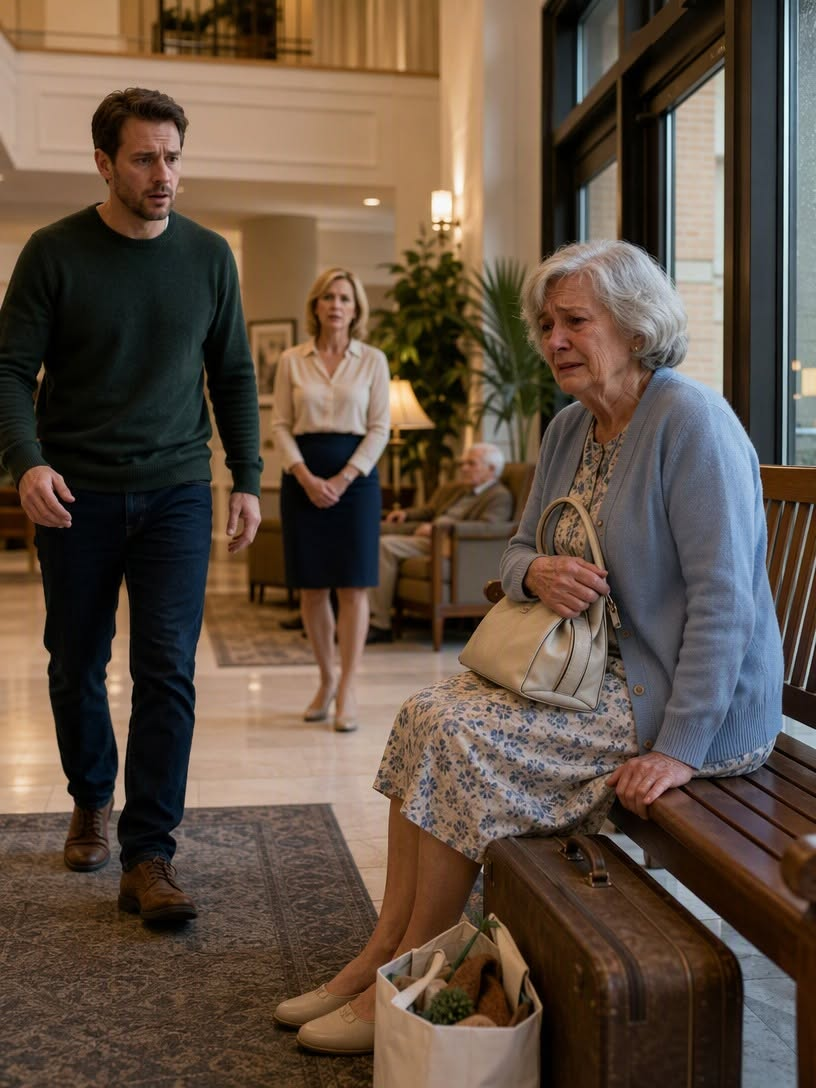
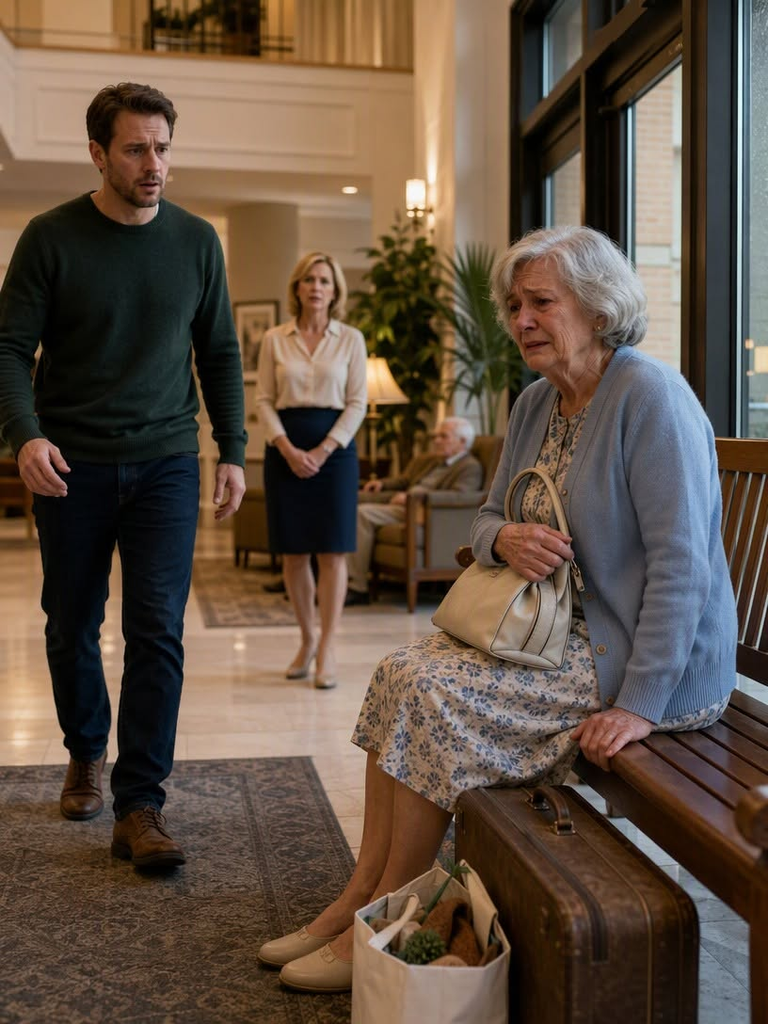
She was sitting upright in a padded chair beside one brown suitcase.
A grocery bag rested near her feet.
Inside it were several prescription bottles and a few personal belongings.
Grandma was still wearing the navy coat she usually saved for church.
Her silver hair was pinned neatly into place.
She didn’t look confused.
She didn’t look frightened.
She looked furious.
Anyone who knew my grandmother understood the difference.
I approached slowly.
“Grandma?”
She looked up.
For several seconds, she said absolutely nothing.
Then she stood.
“Let’s go.”
That was it.
No explanation.
No tears.
She picked up her purse while I carried the suitcase outside.
Once we were in my car, I reached for my phone.
“I’ve been trying to call Dad.”
Grandma fastened her seatbelt.
“Stop.”
I turned toward her.
“What?”
“Don’t call either of them.”
“Grandma, they left you in a care facility.”
“I know exactly what they did.”
Her calmness unsettled me more than anger would have.
She looked through the windshield.
“Start driving.”
“Back to Indianapolis?”
“No.”
“Then where?”
“The county courthouse.”
I stared at her.
“Grandma—”
“Courthouse first. Then the bank.”
She turned toward me.
“After that, we’re going to my house.”
Something had clearly happened before that afternoon.
Something I knew nothing about.
I started the engine.
We had been on the highway for about twenty minutes when Grandma opened her purse.
She removed several folded papers and placed them in my lap.
“Look when you pull over.”
At the next safe place, I stopped.
It was a bank statement.
Several transactions had been marked with red ink.
$11,500.
$17,000.
$24,000.
All within less than two months.
I looked at her.
“What are these?”
“Money leaving my accounts.”
“Did you authorize it?”
“No.”
That single word changed everything.
Grandma looked out the passenger window.
“After my surgery, your father told me it would be easier if he could handle certain bills while I recovered.”
“So you gave him access?”
“I signed a limited power of attorney.”
I felt my jaw tighten.
“Did you know he was moving this much money?”
“I didn’t even know it was happening until yesterday.”
She explained that my father had gradually taken over more of her financial paperwork.
At first, it seemed reasonable.
He paid utilities.
Handled insurance correspondence.
Helped organize medical bills.
Then he began insisting that she shouldn’t worry about bank statements anymore.
According to him, she was becoming forgetful.
Grandma gave me a sharp look.
“I may be eighty-one, Ethan, but I still know when someone is trying to convince me not to trust my own memory.”
“What did Dad say when you showed him these?”
“He said the money was being used for my future care.”
I glanced toward the suitcase in the back.
“And today they brought you here.”
“Yes.”
Without completing the admission.
Without even waiting to make sure she could stay.
I had never felt more ashamed of my parents.
“What exactly did Mom tell you this morning?”
Grandma’s mouth tightened.
“She said we were going somewhere nice for lunch. Then she told me we were stopping at a place with a beautiful garden.”
There was no humor in the small laugh that followed.
“Apparently, the garden belonged to a nursing facility.”
My phone began vibrating in the cup holder.
Dad.
I immediately reached toward it.
Grandma covered the phone with her hand.
“Leave it.”
“But we need to know what he’s doing.”
“No.”
Her voice remained calm.
“I already know what he’s doing.”
I looked at her.
She turned the phone face down.
“Now I need to know how far he’s gone.”
That was when she removed something else from inside her coat.
A small cream-colored envelope.
The paper looked old.
Across the front were two handwritten words.
PROPERTY DEED
The handwriting wasn’t Grandma’s.
I recognized it from birthday cards I’d received as a child.
My grandfather’s.
“Where did you get that?”
“It has been in the house for years.”
“Why are you carrying it?”
Grandma carefully returned it to her lap.
“Because yesterday, after finding those withdrawals, I started wondering what else your father had been doing.”
I didn’t like where this was going.
“My house has been paid off for more than twenty years,” she continued. “Your grandfather and I made sure of that.”
“I know.”
“Last month your father started asking strange questions.”
“What kind of questions?”
“Whether I still needed such a large property. Whether the taxes were becoming difficult. Whether I would prefer somewhere where other people handled maintenance.”
I remembered Dad making similar comments at family dinners.
At the time, I’d thought he was concerned about Grandma living alone.
Now those conversations felt different.
Grandma continued.
“Two days ago, I overheard your mother asking him how soon something could be finalized if I moved into full-time care.”
I slowly turned toward her.
“Finalized?”
“She never said what.”
Grandma tapped the envelope in her lap.
“So yesterday evening, before they came for me, I removed the original property documents from where I normally keep them.”
“You thought Dad might look for them?”
“I wanted to find out.”
“And how would we know?”
Her expression hardened.
“We’re going to my house.”
The courthouse came first.
Grandma wanted official information about her property and whatever filings might recently have been associated with it.
We didn’t accuse anyone.
We didn’t make assumptions.
We simply started gathering facts.
That mattered to Grandma.
“I don’t want revenge,” she told me while we waited.
“Then what do you want?”
“My choices back.”
That sentence stayed with me.
At the bank, she spoke with a manager and began the proper process of reviewing access to her accounts and determining which financial permissions she wanted changed.
Again, she remained remarkably calm.
She wasn’t behaving like a helpless woman rescued by her grandson.
She was behaving like someone reclaiming control of her own life.
By late afternoon, my parents had called me eleven times.
Grandma refused to speak to them.
Then a text from Dad appeared.
Where is your grandmother? This is a family matter. Bring her back immediately.
I showed it to her.
She read it once.
“Interesting.”
“What?”
“He didn’t ask whether I’m okay.”
I looked at the message again.
She was right.
Another text arrived.
Do not interfere with things you don’t understand.
This time Grandma smiled.
It was not a pleasant smile.
“I understand much more than he thinks.”
We reached her neighborhood shortly before sunset.
Something felt wrong before we even turned onto her street.
Grandma noticed it too.
“Slow down.”
I did.
Then we saw her house.
A vehicle was parked in the driveway.
It belonged to my father.
I looked at Grandma.
“They’re here.”
“No,” she said.
“They shouldn’t be.”
We parked several houses away.
Grandma didn’t move.
Instead, she studied the property.
“What are we waiting for?” I asked.
“Look at the front door.”
I did.
At first, I didn’t understand.
Then I noticed the lock.
It was new.
“They changed it?”
Grandma’s face became completely still.
“This morning that lock was brass.”
Now it was silver.
I felt anger surge through me.
“Stay here. I’ll go—”
“No.”
Grandma caught my arm.
“We’re not going inside until we know exactly what we’re dealing with.”
Then the front door opened.
My father stepped outside.
My mother followed.
They were carrying boxes.
Not boxes of Grandma’s clothes.
Boxes from my grandfather’s study.
Dad placed one in the trunk of his car.
Grandma watched silently.
Then she whispered something I barely heard.
“So that’s what they needed.”
“What?”
She looked down at the envelope containing the deed.
“They thought this was still inside.”
I didn’t understand.
“Why would they need the original deed?”
Grandma didn’t answer immediately.
Instead, she reached into her purse and removed a second document.
“I found this yesterday.”
She handed it to me.
It was a photocopy of paperwork I had never seen before.
At the top was Grandma’s name.
Below it was a description of her house.
I scanned the page.
Then stopped.
“Grandma…”
“I know.”
“This looks like you’re transferring an interest in the property.”
“Yes.”
“To Dad?”
“Yes.”
My throat went dry.
“Did you sign it?”
Grandma looked directly at me.
“No.”
I read the signature again.
It looked remarkably similar to hers.
But she was telling me it wasn’t.
For the first time that day, I understood why she had insisted on going to the courthouse before confronting anyone.
She wasn’t trying to create a family argument.
She was trying to establish the facts.
I lowered the paper.
“Where did you find this?”
“In your father’s briefcase yesterday.”
Before I could respond, Dad looked down the street.
He saw my car.
Then he saw Grandma sitting beside me.
His expression changed instantly.
He said something to my mother.
Both of them began walking toward us.
“Grandma, maybe we should leave.”
“No.”
She calmly opened the passenger door.
“I’m finished leaving my own life whenever your father tells me to.”
She stepped onto the sidewalk.
Dad reached us first.
“What are you doing here?”
Grandma looked at him.
“My house, apparently.”
“Mom, you don’t understand what’s happening.”
Grandma pulled the photocopied document from my hand.
“Then explain this.”
Dad stopped.
Mom’s face went pale.
For several seconds, nobody spoke.
Then Grandma held up the old envelope containing her original deed.
“You were looking for this, weren’t you?”
My father’s eyes moved toward the envelope.
And that tiny reaction told me more than anything he could have said.
Grandma turned to me.
“Ethan, remember when I said the nursing facility wasn’t the worst thing they tried to do today?”
I nodded.
She looked back at my parents.
“They didn’t need me living somewhere else because I needed care.”
Her fingers tightened around the deed.
“They needed me living somewhere else because they needed this house without me in it.”
Dad started to speak.
Grandma raised one hand.
“No. You’ve had months to tell your version.”
Then she looked toward the boxes in his car.
“Now we’re going to find out what else you’ve taken.”
And for the first time since the nursing facility called me, I realized Grandma hadn’t asked me to drive 190 miles because she needed someone to rescue her.
My husband’s father actually laughed when he saw me sitting alone at the other side of the courtroom.
It wasn’t loud enough to interrupt the proceedings, but it was loud enough for me to hear.
That was probably intentional.
Beside him sat his wife, Victoria Caldwell, perfectly composed in an expensive cream-colored suit. She covered a smile with one hand while studying me as though I were something mildly embarrassing their family had finally managed to remove.
Across the aisle sat my husband, Andrew.
Three attorneys surrounded him.
Three.
One whispered into his ear while another arranged thick binders across the table. The third worked quietly on a laptop.
Their message was obvious.
They had money.
They had influence.
They had come prepared to overwhelm me.
I had arrived carrying one old leather bag.
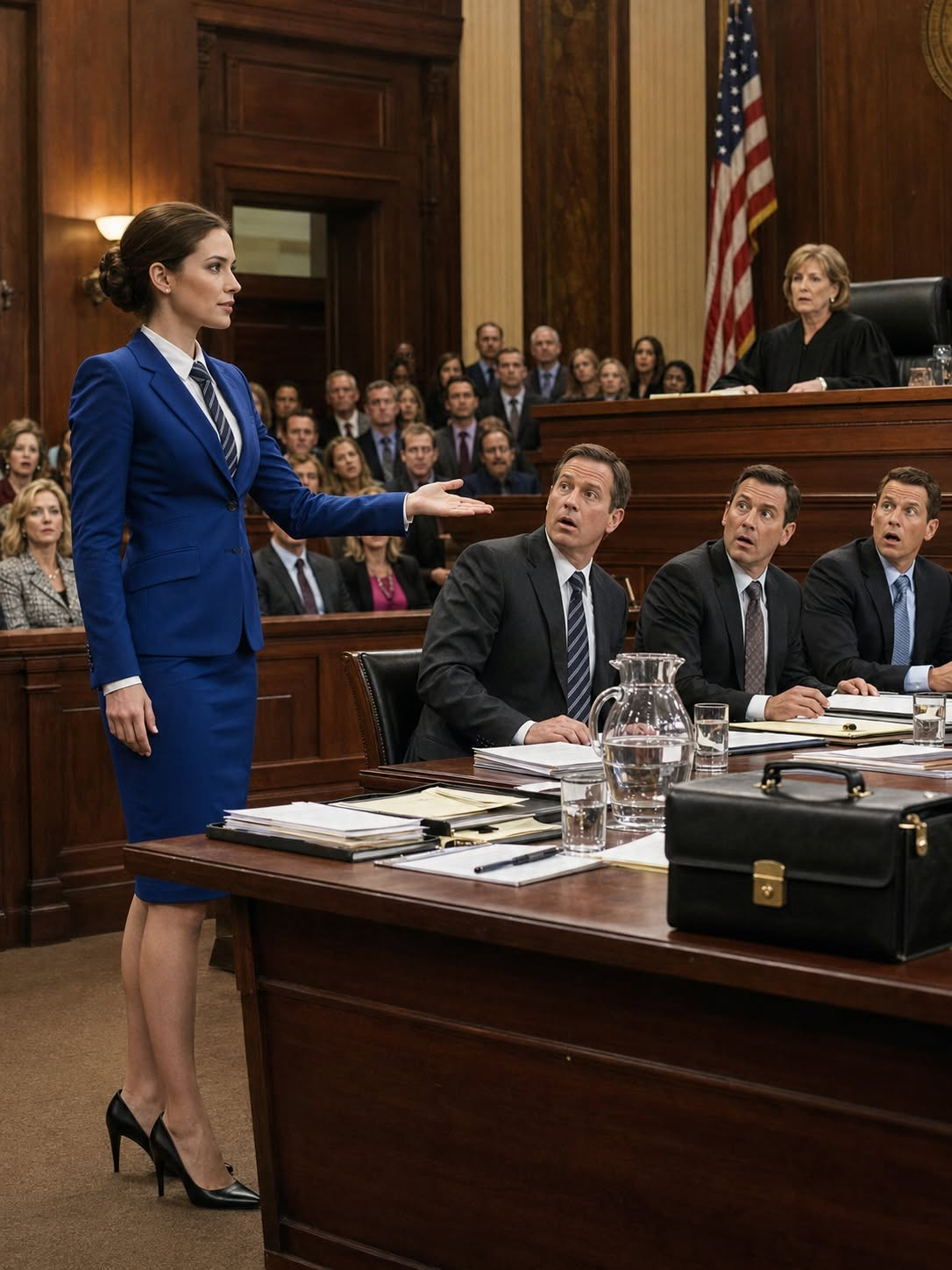
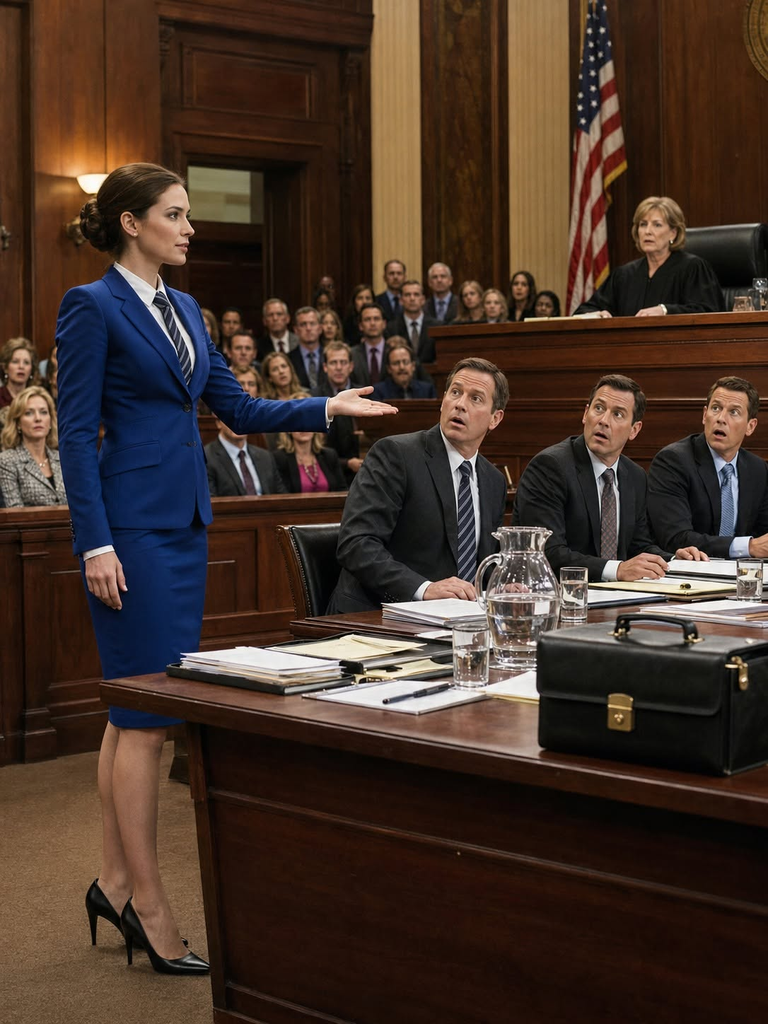
Judge Helen Mercer looked from Andrew’s legal team to the empty chair beside me.
“Mrs. Caldwell, I want to make certain I understand your position. You’ve chosen to proceed today without retained counsel?”
“Yes, Your Honor.”
“You’re comfortable doing that?”
“I understand my decision.”
Behind me, someone whispered.
Then came another quiet laugh.
I didn’t turn around.
For most of my seven-year marriage, the Caldwell family had mistaken silence for weakness.
I saw no reason to correct them yet.
Three weeks earlier, Andrew had walked into our kitchen carrying a white envelope.
He placed it beside my coffee.
I looked at him.
“What’s this?”
“You should read it.”
The first page told me everything.
Divorce.
Andrew stood across the kitchen island with his arms folded.
“Don’t make this more difficult than it needs to be.”
I slowly looked through the documents.
Then I found the section describing our respective contributions during the marriage.
According to Andrew’s filing, my financial and professional contribution had been minimal.
I looked up.
“You told them I contributed almost nothing?”
He sighed.
“Claire, let’s not pretend.”
“Pretend what?”
“You haven’t had a conventional job for years.”
That was technically true.
What Andrew conveniently ignored was why.
When his family’s property-development business began expanding, Andrew had constantly complained that he couldn’t manage everything.
So I stepped away from my own career.
At first, I helped with charity events and corporate dinners.
Then investor schedules.
Then correspondence.
Then contract organization.
Then meetings.
Eventually, I was quietly reviewing documents Andrew barely bothered to read before signing.
Whenever something went wrong, he called me.
Whenever everything went right, the Caldwell family acted as though Andrew had accomplished it alone.
I reminded him of that.
He laughed.
“You arranged dinners and looked over paperwork.”
“I prevented you from signing more than one agreement you didn’t understand.”
His expression hardened.
“Don’t exaggerate what you did.”
I closed the divorce papers.
“What exactly are you asking for?”
“A clean separation.”
“For whom?”
“For both of us.”
But as I continued reading, it became obvious what “clean” meant.
Andrew wanted the marriage ended while preserving the family’s preferred version of our financial history.
My years of unpaid work were reduced to almost nothing.
I looked at him for a long moment.
Then I asked:
“Does your father know what’s in these papers?”
Andrew smiled.
“Of course.”
That answer was more useful than he realized.
The Caldwell family had never understood my life before Andrew.
When we first met, I rarely discussed it.
Not because I was ashamed.
I simply didn’t believe my previous career needed to become my identity.
Years earlier, I had worked in the military legal system before eventually moving into civilian compliance and financial-investigation work.
Much of my experience involved reading the kinds of documents most people found painfully boring.
Expense records.
Ownership structures.
Contracts.
Internal approvals.
Payment histories.
Audit trails.
I had learned something important from that work:
People rarely reveal the whole truth in conversation.
Documents are often much less cooperative.
Andrew knew I’d once worked in law.
His family knew I’d had a government career.
But they had never been particularly interested in the details.
To them, my most important achievement was marrying a Caldwell.
Eventually, they stopped asking about my past altogether.
That suited me perfectly.
Because during the final years of my marriage, I had begun noticing things inside the family business that didn’t make sense.
At first, I assumed they were ordinary accounting mistakes.
Then I noticed another.
And another.
I never accused anyone of a crime.
I didn’t have enough verified information to make that kind of claim.
But I did something Andrew had always underestimated me for doing.
I kept records.
Back in the courtroom, Andrew’s lead attorney stood.
He spoke politely and confidently.
According to their presentation, Andrew had been the primary financial force throughout our marriage.
My role, they suggested, had largely involved household responsibilities and occasional social assistance.
I listened without interrupting.
Then his attorney said:
“Mrs. Caldwell’s participation in matters related to the family business was informal and limited.”
I wrote those words down.
Informal and limited.
Interesting.
The attorney continued.
Behind him, Andrew looked relaxed.
His father looked even more comfortable.
When the attorney finished, Judge Mercer turned toward me.
“Mrs. Caldwell?”
I stood.
“Your Honor, may I clarify something regarding the description of my involvement?”
“You may.”
Andrew’s attorney immediately looked attentive.
I asked:
“Is their position that I had essentially no meaningful involvement in reviewing business-related records during my marriage?”
The attorney stood.
“Our position is that any involvement was incidental.”
“Thank you.”
I reached down.
Grant Caldwell chuckled from the gallery.
Then he said just loudly enough for me to hear:
“You should’ve hired a real lawyer.”
Andrew glanced toward his father and smiled.
That was the moment I opened my leather bag.
Inside were several notebooks and two folders.
I removed the red one.
Andrew’s smile disappeared.
He recognized it.
Not because he’d ever seen what was inside.
But because for years he’d watched me place documents into folders exactly like it whenever I found something requiring a second look.
His attorney approached.
“Mrs. Caldwell, what are you attempting to introduce?”
“Records relevant to my involvement in the financial and administrative affairs my husband just characterized as incidental.”
The room became quieter.
I opened the folder.
The first section contained emails.
The second contained dated notes.
The third contained copies of documents I had lawfully retained because they directly concerned work I had performed or matters affecting our marital finances.
Nothing had been taken from a restricted system.
Nothing depended on secret passwords or unauthorized access.
They were simply records Andrew had forgotten existed.
His attorney studied the first page.
Then the second.
His expression changed.
Andrew leaned toward him.
“What is it?”
The attorney didn’t answer immediately.
I continued.
“For several years, my husband regularly asked me to review agreements, organize financial records, prepare material for meetings and flag inconsistencies before documents reached outside professionals.”
Andrew interrupted.
“That’s not what happened.”
I looked at him.
“Would you like me to show the court your emails asking me to do exactly that?”
Silence.
Judge Mercer raised a hand.
“Mr. Caldwell, you’ll have an opportunity to respond.”
Andrew sat back.
His father was no longer laughing.
I removed another document.
“This is not an accusation of criminal conduct,” I said carefully. “I’m presenting these records because they contradict the claim that I had no meaningful role and may also affect how certain marital financial matters should be examined.”
That distinction mattered.
I wasn’t there to deliver some dramatic courtroom verdict.
I was there to establish facts.
And the facts were already making Andrew nervous.
His attorney requested time to examine the materials.
The judge agreed.
During the short recess, Andrew crossed the aisle toward me.
His lawyers immediately followed.
“What did you do?” he whispered.
I remained seated.
“I brought records.”
“You had no right to keep company information.”
“I retained documents connected to work you personally asked me to perform and records relevant to our finances. Your attorneys can raise any objection they believe is appropriate.”
His jaw tightened.
“Claire, listen to me.”
“No.”
His father approached from behind him.
Grant wasn’t smiling anymore.
“Whatever game you’re playing, stop.”
I finally looked at him.
“I’m not playing anything.”
“You have no idea what you’re getting involved in.”
That sentence caught my attention.
I hadn’t accused Grant of anything.
In fact, I hadn’t even mentioned him.
So why was he worried?
I glanced toward Andrew.
He wouldn’t meet my eyes.
Then his lead attorney returned holding several pages from the red folder.
He looked directly at Grant.
“Mr. Caldwell, I need to speak with you privately.”
Grant’s face changed.
“What about?”
“Now.”
The two men stepped away.
I watched them whisper near the courtroom doors.
Grant shook his head.
The attorney pointed toward one of the pages.
Then Andrew joined them.
For the first time since I’d entered the courtroom, all three men looked genuinely unsettled.
Judge Mercer returned, and everyone took their places.
Andrew’s attorney stood.
“Your Honor, given the newly produced materials, we’d like to request additional time to review certain financial representations relevant to the marital estate.”
The judge looked toward me.
“Mrs. Caldwell?”
“No objection to reasonable review, Your Honor.”
Grant stared at me from the gallery.
There was no laughter now.
Only anger.
And beneath it, something far more revealing.
Fear.
I looked down at the red folder.
The Caldwells had assumed I brought it because I wanted revenge.
They were wrong.
I wanted the truth about my marriage documented accurately.
But hidden among years of emails, schedules, agreements and financial records was a pattern I still didn’t fully understand.
A pattern Andrew apparently recognized the moment his attorney showed him the documents.
As we left the courtroom, Andrew caught up with me in the hallway.
“Claire.”
I kept walking.
“Claire, wait.”
I stopped.
He lowered his voice.
“What exactly did you find?”
That question told me everything I needed to know.
If there was nothing unusual in those records, my husband wouldn’t have been asking what I had found.
He would already have known.
I looked at the man I’d spent seven years married to.
“I was hoping you could tell me.”
Then I walked away.
Behind me, Grant called Andrew’s name.
Their attorneys gathered around them.
And for the first time, the family that had entered court convinced I was powerless was no longer worried about winning the divorce hearing.
They were worried about what else might be inside my red folder.
And I hadn’t even opened the most important section yet.
The Trump administration is working to finalize the framework of a potential agreement aimed at ending the conflict with Iran, as diplomatic negotiations continue through channels in Qatar, according to senior U.S. officials.
Secretary of State Marco Rubio said the administration remains focused on reopening the Strait of Hormuz, a critical global energy route that has been disrupted during the crisis. Speaking during a visit to India, Rubio declared that the waterway “has to be open” and called the closure “unlawful, illegal, unsustainable for the world, and unacceptable.” Rubio confirmed that U.S. and Iranian representatives were engaged in discussions in Qatar, with negotiators working through the language of a preliminary agreement.
He said President Donald Trump’s position remains unchanged: the United States wants “a good deal or no deal,” while acknowledging that completing the final document could require additional time. While diplomacy moved forward, U.S. Central Command announced that American forces carried out what it described as “self-defense strikes” in southern Iran.
Military Operations Continue Amid Negotiations
Capt. Tim Hawkins said the operation targeted missile facilities and Iranian vessels allegedly involved in efforts to place naval mines near key maritime routes. U.S. military officials said the strikes were designed to protect American personnel and assets while maintaining the broader cease-fire framework. A senior defense official said U.S. aircraft and naval forces operating near the Gulf of Oman and Arabian Sea had faced threats from Iranian surface-to-air missile systems, with the strikes occurring near the Iranian naval hub of Bandar Abbas.
Despite the military escalation, negotiations continued in Qatar. Iranian Foreign Ministry spokesperson Esmaeil Baqaei said Tehran and Washington had reached areas of understanding on several issues but warned that a final agreement had not yet been achieved. He also accused the United States of shifting its positions during the negotiations.
President Trump said any future agreement with Iran would be “good and proper,” while continuing to criticize the 2015 nuclear deal negotiated during the Obama administration. Trump argued that the previous agreement provided Iran with economic relief without creating a permanent guarantee that Tehran would not pursue nuclear weapons capability.
Framework Details and Path Forward
According to a senior U.S. administration official, negotiators have made progress on a proposed framework that would require Iran to eliminate its stockpile of highly enriched uranium, reopen the Strait of Hormuz, and accept major limits on future uranium enrichment activities. In return, the United States would reportedly end its naval blockade and begin a phased reduction of economic sanctions.
Officials said the major political issues have largely been resolved in principle, but technical details, verification procedures, and enforcement measures remain under discussion. Washington’s priority is securing a long-term and verifiable agreement that prevents Iran from exceeding agreed nuclear limits, with strong enforcement mechanisms considered a central element of any deal.
The administration believes recent military pressure has increased Iran’s willingness to negotiate. If completed, the agreement would reportedly place stricter restrictions on Iran’s nuclear program than the 2015 accord, reflecting the Trump administration’s push for a broader and more enforceable settlement.
Iranian-linked hackers are reportedly probing critical American infrastructure as Tehran searches for new ways to retaliate against the United States.
The latest threat reportedly targets water systems, telecommunications networks, energy infrastructure, and
other internet-connected automated equipment across the country.
Four people with access to government and industry cyberthreat information told NBC News the attempted intrusions occurred during recent weeks.
Those sources said the newest efforts have so far failed, offering some reassurance amid the escalating confrontation with Iran.
Still, cybersecurity experts warn relatively simple attacks can cause serious problems when outdated industrial equipment remains directly connected online.
A Telegram channel presenting itself as an Iranian cyberoperations voice issued a stark warning Sunday about potential attacks against America.
“Soon, the United States will witness unexpected and critical events in the energy, water, and telecommunications industries,” APT IRAN declared.
The group offered no public evidence proving that it had successfully breached any American system when issuing that ominous statement.
The warning follows heightened concern surrounding municipal water utilities already struck by disruptive cyber activity across multiple states during July.
The FBI and Environmental Protection Agency said water utilities in at least seven states reported cyber incidents beginning July 27.
Hackers remotely accessed internet-facing programmable logic controllers, devices responsible for monitoring and controlling essential industrial operations at affected facilities.
Federal investigators said attackers changed IP addresses and passwords, causing some utilities to lose monitoring and control functionality temporarily.
Officials later said malicious actors targeted more than 100 internet-exposed water and wastewater systems during the July cyber campaign.
Federal authorities have investigated possible Iranian involvement, but the FBI has not publicly made a definitive attribution for those attacks.
Nevertheless, Iranian state-backed hackers have a documented history of targeting American organizations and exploiting poorly protected operational technology.
CISA repeatedly warned infrastructure operators this summer to reduce internet exposure and strengthen protections around equipment controlling physical processes.
Federal guidance recommends removing controllers from direct internet exposure while using firewalls, secure gateways, unique passwords, and strict access controls.
Smaller municipal utilities remain particularly vulnerable because many operate aging technology without the cybersecurity resources available to major corporations.
That weakness makes basic intrusion techniques dangerous when hackers can reach devices
controlling pumps, valves, pressure, and treatment equipment.
The latest reported Iranian activity arrives as military hostilities between Washington and Tehran sharply intensify following renewed American strikes.
U.S. Central Command said American forces struck Iranian Revolutionary Guard Corps targets across Iran on September 1.
Targets included air-defense sites, radar systems, maritime assets, mine-laying capabilities, communications facilities, and other military infrastructure, CENTCOM said.
CENTCOM said the strikes followed attempted IRGC attacks on commercial shipping and American service members near the Strait of Hormuz.
More than 50,000 American troops are currently operating across the Middle East amid the continuing confrontation, according to CENTCOM.
The command said those forces remain “vigilant, lethal, and prepared” to carry out additional operations ordered by President Donald Trump.
The cyber threat opens another front where Tehran could seek retaliation without directly confronting America’s overwhelming conventional military power.
America’s power grid, water plants, pipelines, communications networks, hospitals, and transportation systems increasingly depend upon interconnected digital technologies.
Cyberattacks against civilian infrastructure also allow hostile governments or affiliated groups to create fear far beyond traditional military battlefields.
A successful attack disrupting electricity, communications, or water could impose enormous economic costs without requiring missiles to reach American territory.
So far, the newest reported attempts have failed, and officials have announced no successful nationwide compromise of critical infrastructure.
CISA’s findings suggest the central weakness is often preventable exposure rather than an unstoppable technological advantage possessed by America’s adversaries.
The White House referred NBC’s questions about the latest cyber activity to the FBI, which did not provide a response.
CISA also did not respond to NBC’s request for comment, while the CIA declined to discuss the reported activity.
That official silence leaves major questions unanswered, including who launched each intrusion and whether coordinated Iranian-linked campaigns remain underway.
But Washington cannot afford complacency while foreign hackers actively hunt weaknesses in systems Americans depend upon every day.
America’s message must remain unmistakable: harden vulnerable networks, identify hostile operators, and impose consequences when adversaries attack critical infrastructure.
BREAKING: Shocking reports are circulating that a Russian Su-57 stealth fighter pilot has allegedly carried out a devastating strike on a…
In an era defined by advanced surveillance and
automated protection, early unconfirmed
reports of a devastating strike against a heavily protected vessel have sent
shockwaves through the global community. The attack was reportedly executed with such extreme velocity that sophisticated defensive systems were unable to intercept the threat, resulting in what many fear are catastrophic losses. This breach of a high-value fortified target has prompted immediate and intense scrutiny from defense analysts, who are now forced to reconcile the failure of modern technology against emerging offensive capabilities. As the world awaits official confirmation from government authorities, the vacuum of information is being filled by rapid speculation across social networks. This digital frenzy has exacerbated existing tensions, fueling widespread concern over a potential escalation between major world powers. In light of these developments, geopolitical experts are stressing the importance of verifying facts to prevent the spread of misinformation, which could lead to unintended diplomatic or military consequences. Should these reports be verified, the incident would mark a pivotal shift in the landscape of modern warfare. It highlights a disturbing reality: even the most secure military assets possess vulnerabilities that can be exploited by rapid-response strikes. Such a development would likely necessitate a total overhaul of global military strategy and a redistribution of the balance of power. Currently, the international community remains on high alert as investigators and think tanks analyze the data to determine if this event represents a singular anomaly or the beginning of a dangerous new chapter in international relations.
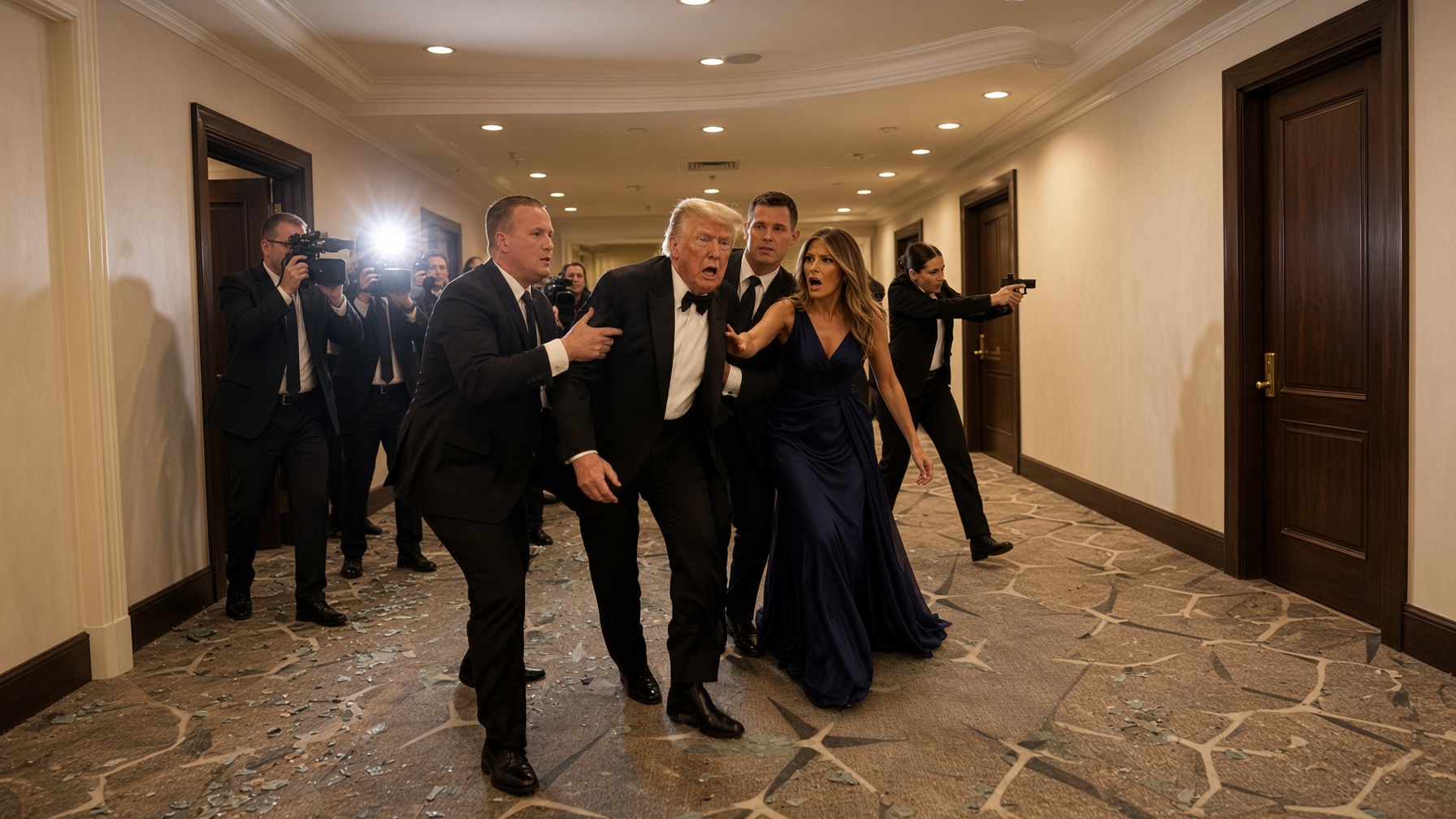
The annual White House Correspondents’ Association dinner, an event typically defined by high-stakes political satire and high-society networking among the nation’s elite, descended into absolute chaos on Saturday night.
The incident occurred as the gala was just beginning to toast the
Washington press corps, turning the star-studded “nerd prom” into a scene of panic and confusion.
According to police reports and photographic evidence released shortly after the incident, Allen was apprehended in the hotel lobby, shirtless and pinned to the floor by Secret Service agents. He was reportedly armed with a shotgun and multiple knives, having charged toward a security checkpoint in a direct attempt to reach the President’s location.
While the motive remains under investigation, Interim DC Police Chief Jeffrey Carroll confirmed that the suspect appeared to be a “lone actor” and was likely a guest at the hotel, suggesting there was no broader threat to the public following his arrest. The intensity of the confrontation resulted in one Secret Service agent being shot at close range.
President Trump later noted that the agent was struck by a “very powerful gun,” but fortunately survived the encounter without life threatening injuries due to the protection of a bulletproof vest
The President praised the rapid response of law enforcement, stating they did a “fantastic job” and acted “very quickly” in neutralizing the threat before the situation could escalate further inside the crowded ballroom.
At a subsequent press briefing, the President labeled Cole Allen a “sick person” and confirmed that authorities were already in the process of searching the suspect’s residence in California. In the wake of the shooting, President Trump reflected on the atmosphere within the room, describing a surprising sense of togetherness among the journalists and politicians present.
He remarked that the event, which is fundamentally dedicated to freedom of speech, managed to unify the press and both political parties in a way he found “very beautiful
Despite the trauma of the evacuation, the President expressed pride in how
the attendees handled the crisis, noting that the sense of unity was a positive takeaway from an otherwise dark night.
Initially, organizers expressed a desire to proceed with the night’s programming
However, by 9:45 p. m.
it was officially announced that the event was canceled
President Trump indicated that he had “fought like hell” to continue the dinner, as he was prepared to deliver a sharp critique of the press corps. Ultimately, the decision was made to reschedule the gala within the next 30 days.
This violent disruption, occurring in the heart of the nation’s capital, marks one of the most significant security breaches at a high-profile political gathering in recent Washington, D. C.
history, prompting an immediate review of safety protocols at the Washington Hilton
I asked the question the moment I walked into my parents’ house.
My mother lifted her coffee mug as if I had interrupted an ordinary, peaceful morning. But there was nothing ordinary about the scene around me.
The house smelled of wet paint, fresh sawdust, and expensive construction.
Through the kitchen window, I could see machines tearing apart the backyard. Workers were preparing the ground for a brand-new in-ground swimming pool.
But it was what I saw inside that made my stomach drop.
The old music room belonged to my grandmother Margaret, and for as long as I could remember, the antique cello had stood in its usual place.
That morning, the stand was empty.
Lucy, my eleven-year-old daughter, stood beside it.
She wasn’t crying.
She wasn’t yelling.
She wasn’t even asking questions.
She was simply standing there, completely still, as though she were afraid that saying the wrong thing might somehow make what had happened her fault.
My father sat at the kitchen table with his tablet. My sister Rachel leaned against the counter, casually sipping an expensive-looking green drink.
My mother gave me a thin smile.
“Your father handled it.”
“Handled it how?”
My father finally looked up.
“We sold it.”
For a moment, I genuinely didn’t understand what he meant.
“You sold Lucy’s cello?”
Dad shrugged.
“It was valuable. It was just sitting there. Your grandmother wasn’t using it.”
I stared at him.
“She gave it to Lucy.”
Rachel laughed.
“She’s eleven.”
The way she said it made it sound as though being eleven meant you couldn’t own something valuable. As though Lucy’s age somehow erased the fact that the cello had been given specifically to her.
My mother put her mug down.
“Emily, don’t start.”
I looked at my father.
“How much?”
His mouth tightened.
Rachel suddenly became very interested in her drink.
My mother answered for him.
“Eighty-seven thousand dollars.”
My fingers tightened around the edge of the counter.
I looked through the window again.
The pool forms were gleaming in the morning sunlight.
“You spent Lucy’s cello on that?”
Rachel straightened.
“It’s for the kids.”
“My kid is a kid.”
Dad rubbed his forehead.
“Lucy will be fine with a student cello. Plenty of children rent instruments.”
Lucy will be fine.
My family seemed to love that sentence whenever Lucy was the person expected to lose something.
She’ll be fine.
She’ll understand.
She’ll get over it.
That was always the justification when something that belonged to her became inconvenient for someone else.
I walked back into the music room.
Lucy was still standing beside the empty stand.
She reached out and touched it with two fingers before immediately pulling her hand away.
“Did I do something wrong?” she whispered.
I knelt in front of her.
“No.”
She looked at me.
“You did nothing wrong.”
That night, Lucy practiced on a battered student cello her teacher had loaned us.
The difference was impossible to ignore.
The antique instrument had always produced a warm, rich sound that seemed to fill an entire room. The replacement sounded thin and boxy.
Lucy never complained.
Not once.
Instead, after putting the bow down, she quietly said something that broke my heart.
“Maybe Great-Grandma didn’t mean for it to be mine yet.”
I hugged her.
But long after she fell asleep, I couldn’t stop thinking about what my mother had said earlier.
You are not telling your grandmother.
Not, “Don’t upset her.”
Not, “She doesn’t need to know.”
Just:
Don’t tell her.
That was when I realized they weren’t afraid of hurting Grandma’s feelings.
They were afraid of what would happen if she found out.
The next morning, I drove straight to my grandmother’s assisted living community.
I told her everything.
The missing cello.
The $87,000 sale.
The buyer.
The money.
The pool.
And most importantly, the warning that she was never supposed to know.
Grandma listened without interrupting.
She didn’t cry.
She didn’t raise her voice.
She simply asked one question.
“And Lucy?”
I swallowed.
“She thinks you changed your mind.”
Something changed in Grandma’s expression.
The softness disappeared.
Her face became completely still.
She reached for her phone and made one quiet call.
Then she looked at me over the top of her glasses.
“I am not the one who should be worried.”
I didn’t understand what she meant.
Not yet.
Six weeks later, my parents held a pool-reveal party.
They invited relatives, neighbors, and friends.
Rachel’s children were already splashing around in the water. Music played in the backyard. People stood around with drinks while my mother worked the grill with the polished, practiced smile she always wore whenever she wanted everyone to believe our family was perfect.
The pool was beautiful.
Expensive.
New.
And, as far as I was concerned, built with money that had never belonged to them.
Lucy stayed beside me.
She held her folded towel in both hands and stared at the pool.
She knew exactly what it represented.
Then the back gate opened.
Everyone turned.
My grandmother Margaret walked into the backyard wearing a crisp blouse.
Beside her was Andrew, her attorney, carrying a slim leather folder.
My mother’s smile disappeared.
My father stared at the folder.
Grandma looked around at the pool, the landscaping, the furniture, the equipment.
Then she looked at my parents.
“Well,” she said pleasantly.
“You’ve been busy.”
My mother forced a laugh.
“This is a party.”
“I know,” Grandma replied.
“That’s why I came.”
Andrew handed her the folder.
Grandma opened it.
Behind us, the pool motor hummed.
Rachel slowly lowered her drink.
Lucy found my hand and squeezed it.
Grandma looked directly at my parents.
“I gave that cello to Lucy.”
Her voice was calm.
“Not to you. Not to Rachel. To Lucy.”
My father opened his mouth.
Grandma raised one hand.
He stopped.
She lifted the first document from the folder.
Then she smiled.
It was the same calm smile she had given me six weeks earlier.
And somehow, that smile frightened me more than if she had walked in screaming.
My father’s face slowly lost its color.
For several seconds, nobody spoke.
The only sounds were the pool filter humming and Rachel’s children laughing in the water.
Dad looked at the first page.
Then at Grandma.
Then back at the page.
“What is this?” he finally asked.
Grandma tilted her head.
“You know exactly what it is, Harold.”
My father swallowed.
My mother stepped forward.
“Margaret, whatever this is, today isn’t the day.”
Grandma gave her a calm smile.
“Actually, Diane, today is precisely the day.”
Andrew opened the folder again.
He pulled out another document.
The letterhead alone made my hands tremble.
It belonged to the auction house that had handled the cello.
Andrew placed the appraisal on the table beside the pool equipment.
The document confirmed what my father had admitted.
The antique cello was valued at approximately $87,000.
The appraisal described its maker, its age, its condition, and its carefully documented history.
But one line mattered more than everything else.
The instrument was registered to:
Lucy Emily Carter.
My eleven-year-old daughter.
Not my mother.
Not my father.
Not Rachel.
Lucy.
My parents had sold property that had never belonged to them.
I looked at Grandma.
She explained that she had deliberately preserved the original gift documents because the cello wasn’t simply an expensive musical instrument.
It was part of our family’s history.
Her father had played it.
Then her husband had played it.
And eventually, Grandma herself had protected it for 62 years.
She had cared for it, maintained it, and preserved its history.
When she decided to give it to Lucy, she didn’t simply hand her a valuable object.
She was passing down a piece of the family.
A memory.
A legacy.
A connection between generations.
My father tried to defend himself.
“She’s too young to understand an instrument worth that much money.”
I stepped between him and my daughter.
“She understands enough to know that her grandparents took something that belonged to her and traded it for a swimming pool.”
Dad’s jaw tightened.
But Andrew wasn’t finished.
He had one more announcement.
The buyer had already been contacted.
And, after reviewing the ownership records, he had agreed to return the cello.
He didn’t demand another payment.
He hadn’t known.
He had purchased the instrument believing my parents had the legal authority to sell it.
Once Andrew explained the documentation and showed him the ownership records, the buyer understood that he had purchased something that legally belonged to Lucy.
He agreed to return it.
The relief that swept through me was almost overwhelming.
I turned to Lucy.
“The cello is coming home.”
For the first time in weeks, I saw her face change.
She smiled.
A small smile at first.
Then a real one.
But Grandma wasn’t finished.
She turned the conversation toward the missing $87,000.
She had traced $68,400 directly to the pool contractor.
Another $20,600 had gone toward landscaping, furniture, equipment, and other expenses surrounding the pool project.
Every dollar had a trail.
This wasn’t an insurance misunderstanding.
It wasn’t a mortgage issue.
It wasn’t some complicated investment made by my parents’ estate.
It was documented money from the sale of an instrument that legally belonged to my daughter.
Money that had been turned into concrete, tile, pumps, plumbing, landscaping, and backyard furniture.
Rachel rolled her eyes.
“So we’re really doing all this over a piece of wood?”
Grandma looked at her.
Then she slowly turned toward the pool.
“A piece of wood?”
Her voice remained calm.
“That piece of wood carried the fingerprints of Lucy’s great-grandfather.”
Nobody answered.
Grandma continued.
“It carried the memories of people in this family who are no longer here.”
She looked at the water.
“This pool may have consumed every dollar.”
Then she looked back at Rachel.
“But it will never carry the history that cello carried.”
The backyard became strangely quiet.
Even Rachel didn’t have an answer.
My father finally spoke.
“You’re humiliating me.”
Grandma looked at him.
“No, Harold.”
She tapped the documents with one finger.
“The paperwork is not humiliating you.”
Her voice was almost gentle.
“What you did is.”
Nobody spoke.
Lucy held my hand tightly.
She knew now that the instrument had not been taken away because she wasn’t old enough.
It hadn’t disappeared because Great-Grandma had changed her mind.
It had been taken from her.
And now it was coming home.
I thought that was the end.
I was wrong.
Grandma turned toward me.
She reached slowly into her handbag.
Her fingers closed around something inside.
Then she looked directly at me.
“There is something else you need to know.”
And judging by the look on my father’s face, I realized he already knew exactly what she was about to reveal.
For the first time that afternoon, I wondered if the cello had ever really been the biggest secret in that family.
Because Grandma Margaret hadn’t driven across town with an attorney, ownership papers, and six weeks of preparation just to recover an instrument.
She had come prepared to uncover the truth.
And whatever was inside that handbag was about to change far more than the fate of an $87,000 cello.
Rewrite this as a journalist with 10 years of experience, don’t make it short, don’t lose the essence, don’t change it, be more creative, don’t make tables, and make it easier for the reader:
My Grandson Whispered a Secret About My Husband’s Death — Then I Learned What My Son Had Hidden for 12 Years
My grandson’s school called me this morning. I have not been allowed to pick that boy up since spring. My son’s wife saw to that. His booster seat is still in the back of my car. I stood in my kitchen with the phone against my ear and my hand on the
“Mrs. Vogel, can you come in at two o’clock today?” the secretary said. “Just you.”
“Is Micah all right?”
“He’s fine. He’s in art.” A pause, the kind where somebody is deciding how much to say on a telephone. “I’d rather you didn’t mention this to his mother beforehand.”
For six years I had that boy every afternoon. Number forty-one in my windshield, third in the pickup line behind the propane truck, Bev out there in her orange vest waving me through with that whistle in her teeth.
He got apple slices in the car and peanut butter in the little green cup with the lid, and we did not turn the radio on because he liked to talk. That is the whole job. You drive slow and you do not turn the radio on and eventually a child tells you everything he has got.
In the spring Dana called me on a Sunday night.
“So, Mom, my mother’s retired now, and she’s just right there off Route 9. It makes more sense for her to do pickups.”
“All right.”
“You’re not upset.”
“Sondra will enjoy it,” I said, and that was true, and it cost me something to say.
Sondra gets Christmas morning now too. She had them all for Easter. At the spring program she sat in the second row with her phone up recording, and I sat in the folding chairs they put along the back wall for whoever comes late, and Micah looked out at that room for a long time before he sang.
I kept the little green cup. I want to be clear that nobody asked me to stop keeping it. I still buy the apples.
Then Kyle called me in June and I understood the shape of it.
“Dana says you’ve been putting things in Micah’s head.”
“What things.”
“She says he’s been asking questions he wouldn’t come up with on his own.”
“He’s seven, Kyle. He comes up with everything on his own.”
“Mom.” That voice he uses now, patient, like I am a bad connection. “We just need everybody on the same page. If you turn up at that school, we’re going to have to make it official.”
Official. My son said that to me about his own child, and I did not say one word back, and after we hung up I washed the little green cup and put it in the cupboard where it lives.
Here is the part I have not told anybody, and I have had it since April.
On the last afternoon I drove him, Micah unbuckled early at the stop sign by the water tower and leaned up between the seats and told me something. Quiet, the way you say a thing you have been carrying. Then he asked me not to tell his mom and dad he told me.
I said I would not. That is all I am going to say about it here.
I have not said it to Kyle. I have not said it to Dana. I have not said it to my sister, who would have it around the county by supper. A woman who tells a seven-year-old’s secret is a woman that child will never talk to again, and I have already lost the afternoons.
At the school today Bev was out front pulling in the cones and she came over to my window.
“They took you off the line,” she said.
“They did.”
“Somebody was up here last week asking about you.” She looked back at the building. “I’m not saying who. I’m saying it wasn’t the mother.”
Dana’s car was already in the lot. Front row, engine running, and she was sitting in it looking straight ahead at the doors.
Inside, the secretary took me past the counter into the little room with the round table where they put you for the conversations nobody wants. Mrs. Prill sat down. So did a young woman with a lanyard who does the counseling for the elementary.
“Mrs. Vogel,” she said, “Micah told me something on Tuesday, and he told me you already knew it.”
The heat went up the back of my neck.
“He is seven years old,” I said. “Whatever he said, he did not get it from me.”
“I know he didn’t.” She turned her chair to face me square. “That’s why I called you and not his parents. Before anybody comes in this room, I need you to hear where he says he heard it. He told me he heard it in the.. “He told me he heard it in the garage.” I stared at her. “The garage?” Mrs. Prill nodded. “The Vogel garage?” I asked. “No. His house.” For a second, I couldn’t make sense of the words. Micah’s house had a two-car garage with a workbench along the back wall and a refrigerator that hummed louder than the one in the kitchen. Kyle had installed a camera above the garage door after somebody stole a bicycle from the neighborhood three summers ago. “What did he hear?” I asked. The counselor glanced toward the closed door. “That’s where I need to be careful.” “Then be careful.” She folded her hands on the table. “Micah said he was in the garage last Friday evening. His father was there with another man. He said they were talking about you.” My stomach tightened.. My seven-year-old grandson, Micah, leaned toward me in the car and whispered something that made my hands tighten around the steering wheel: “Daddy said if you ask about Grandpa, I have to say I don’t remember.” My husband Arthur had been dead for twelve years, and I had spent every one of them believing his sudden death and estate were settled. After the funeral, our son Kyle handled the paperwork while I was grieving, telling me exactly where to sign. I trusted him completely. Then Micah’s school counselor called and revealed that he had overheard Kyle discussing missing documents and saying I could never learn “what happened.” When Micah asked whether his father might go to jail if I told the truth, I knew this was no longer an ordinary family dispute. I called Arthur’s former attorney, Samuel Reed, a man I hadn’t spoken with since my husband died. The moment I mentioned Micah, Sam told me not to go anywhere near Kyle and asked about a green folder Arthur had supposedly left for me. I had never seen it. At Sam’s office, he finally handed me a sealed envelope bearing Arthur’s handwriting and explained that my husband had been secretly investigating money disappearing from our family business. Arthur had traced suspicious transfers back to Kyle and had planned to report him. Then Sam told me something even worse: the estate documents Kyle persuaded me to sign after the funeral had given him financial authority I never realized I was surrendering—and Arthur’s letter suggested his death might not have happened the way I had always believed. The financial trail was staggering. An attorney reviewing Arthur’s records discovered forged signatures, hidden accounts, unauthorized investment transfers, and roughly $2.3 million in lease income from warehouse property that legally remained in my name. Kyle had also used a power of attorney to control assets Arthur intended me to manage. Insurance and medical records raised even more questions because Arthur’s medication did not match what doctors expected to find after his death. Police reopened the investigation, while a court began sorting through the estate, mortgage records, property ownership, and missing funds. Then Kyle’s wife, Dana, produced garage security footage showing him talking with former warehouse employee Peter Lang about copies of Arthur’s documents. Peter was later located alive and agreed to testify about Arthur’s confrontation with Kyle. The financial case was already overwhelming; now investigators finally had evidence connecting the money to the mystery surrounding my husband’s final night. Kyle was eventually arrested, the stolen money was recovered, and Arthur’s trust and warehouse property were restored. The hardest part was watching my own son face consequences while remembering the little boy he had once been. I couldn’t erase what he had done, but I refused to let his choices destroy what remained of our family. Micah eventually returned to my life, still asking for apple slices, still insisting that I keep the radio off during our drives, and still carrying the little green cup he loved. At Grandparents’ Day, he showed me a drawing of the two of us in my car with four crooked words written above it: “MY GRANDMA KEEPS HER PROMISES.” Arthur had left behind documents, property, and the truth about his death, but Micah gave me the lesson I needed most: loving your family doesn’t mean ignoring what you know is wrong.