Did you know that cassava is more than just a staple food? This root vegetable, often used in tropical regions, is packed with essential nutrients that can support your overall well-being.
From boosting energy to improving digestion, cassava has been a lifesaver for millions.
arrow_forward_ios
Read more
Are you looking for a natural way to enhance your health? Let’s explore how this humble plant can work wonders for your body.
#1. A Rich Source of Energy
Cassava is a carbohydrate powerhouse, making it an excellent energy booster. A 100-gram serving of raw cassava provides about 38 grams of carbohydrates, ideal for refueling your body after physical activities.
This makes it a perfect addition to diets for athletes or anyone needing sustained energy throughout the day. Over time, its slow-release carbs help maintain stable blood sugar levels.
Save
#2. Promotes Digestive Health
Cassava is loaded with dietary fiber, which aids digestion and prevents constipation. A single cup of boiled cassava offers approximately 3 grams of fiber, supporting healthy bowel movements and promoting a balanced gut microbiome.
Regular consumption of cassava can alleviate digestive discomfort and encourage better nutrient absorption in the long term.
#3. Supports Immune System Function
Rich in vitamin C, cassava contributes to a stronger immune system. One serving provides about 20% of the daily recommended intake of vitamin C, which helps protect the body against infections.
Over weeks of consistent consumption, cassava can reduce your susceptibility to common colds and enhance your body’s defense mechanisms.
Save
#4. Improves Bone Health
Cassava contains calcium and magnesium, two essential minerals for maintaining strong bones. A cup of boiled cassava contains around 33 milligrams of calcium and 43 milligrams of magnesium.
These nutrients work together to improve bone density and prevent conditions like osteoporosis when incorporated regularly into your diet.
#5. Enhances Eye Health
Cassava is a source of vitamin A and carotenoids, which are vital for maintaining healthy vision. These compounds help prevent eye-related disorders such as macular degeneration and night blindness.
Long-term consumption of cassava can improve overall eye health and protect against age-related vision problems.
Save
#6. Aids in Weight Management
While cassava is calorie-dense, its fiber content helps control hunger by promoting satiety. Eating cassava in moderation can be a useful strategy for managing weight, as it reduces the urge to snack between meals. \
Over weeks of use, cassava helps stabilize energy levels, making it easier to maintain a healthy diet.
How to Use Cassava
Preparation Tips
1. Boiled Cassava:
First, begin by peeling the cassava to remove the tough outer skin. Next, cut it into smaller, manageable pieces to ensure even cooking.
Then, boil the cassava in water for about 20–30 minutes, or until it becomes soft and tender. Once done, you can serve it as a simple yet satisfying side dish.
Discover more
Get Study Guides
Nutritional
Order DNA Kits
2. Cassava Flour:
To explore a gluten-free option, you should use cassava flour in your baking recipes. For example, you can substitute it for traditional flour to make bread, pancakes, or muffins.
This is not only a healthier choice but also versatile in its use.
3. Cassava Chips:
For a delicious snack, start by slicing cassava thinly. Then, season the slices with your favorite spices or salt. Next, either bake them in the oven or fry them until they turn golden and crispy. Finally, enjoy them as a crunchy, guilt-free treat.
Incorporation Ideas
1. Soups and Stews:
Firstly, you can add boiled cassava to soups or stews. This not only enhances the texture but also provides added nutrition to your dishes.
2. Smoothies:
Secondly, blend cassava flour into your morning smoothies. This serves as a fiber-rich thickener, giving your drink a creamy consistency while boosting its health benefits.
3. Gluten-Free Recipes:
Lastly, use cassava flour to create gluten-free alternatives. You can start with pizza crusts or tortillas, making them perfect for those looking to avoid gluten without compromising on taste.
Discover more
nutrition
health
Order Health Supplements
Save
Cautions and Precautions
Raw Cassava Contains Toxins: peel and cook cassava thoroughly to eliminate these harmful compounds.
Cassava is calorie-dense. Overeating may lead to weight gain, so consume in moderation.
Those with diabetes should monitor portion sizes due to cassava’s high carbohydrate content. Similarly, individuals with kidney problems should be cautious, as cassava contains oxalates that can exacerbate kidney issues.
Discover more
Find Chemistry Tutors
Explore Farming Tools
Consult A Nutritionist
Disclaimer
This article is for informational purposes only and does not substitute professional medical advice.
Always consult a healthcare provider before incorporating new foods into your diet, especially if you have specific health conditions.
Save
Uncover the Hidden Health Benefits of Cassava, Nature’s Nutritional Powerhouse
She arrived on a Tuesday in September, weighing seven pounds and four ounces, with Ethan’s nose and an immediate determination to let the entire world know exactly how she felt.
When June was hungry, there was no gradual warning.
She was hungry now.
When she became tired, exhaustion seemed to take over her whole body in seconds.
And when she was happy, every inch of her face lit up with the pure, uninhibited joy only babies seem capable of.
She was four months old the night her temperature reached 104 degrees.
Before I tell you what happened in that emergency-room waiting room, you need to understand who I was before that night.
My name is Rachel Donnelly.
I was thirty-one when June was born.
I’m a nurse practitioner, and at that point I had spent six years working in emergency medicine.
My job had trained me to function when everyone else was frightened.
When something goes wrong in an emergency room, someone has to listen clearly.
Someone has to understand the numbers.
Someone has to recognize what matters immediately and what can wait.
Someone has to explain things to a family whose fear is making it difficult to absorb anything.
That person was often me.
In emergency medicine, you learn quickly that panic can come later.
Later, you can sit alone in your car and shake.
Later, you can cry in the parking garage.
Later, you can replay the shift until dawn.
But inside the room, you stay clear.
Clarity first.
Always.
I had learned another kind of endurance from my mother.
Two years before June was born, Mom had been diagnosed with early-onset Parkinson’s disease at fifty-eight.
I was twenty-six.
She faced the diagnosis the way she faced almost everything else in her life—with dignity, stubbornness, and very little interest in being pitied.
She had raised three children after my father left.
Her philosophy had always been simple.
If something needs to be done and you are capable of doing it, you do it.
Not when it becomes convenient.
Not when someone promises to appreciate you.
You see the need.
Then you act.
After Mom’s diagnosis, I organized medication, coordinated appointments, drove to her house twice a week, and spent Sunday afternoons with her.
We talked about books.
Her garden.
The neighbors.
She had detailed opinions about every person on the street and absolutely no intention of losing them simply because her body had started becoming less cooperative.
I never considered taking care of her heroic.
It was simply necessary.
And I was able to do it.
Then there was Ethan.
Ethan Donnelly was thirty-three when we married.
He was a software architect.
He was intelligent, funny, thoughtful, and genuinely loving in ways that made loving him very easy in the beginning.
If I had a difficult shift, he noticed.
Sometimes dinner would already be waiting when I got home.
If I mentioned wanting something in passing, he might remember three weeks later and surprise me with it.
During our first year of marriage, he was the kind of partner I had hoped existed.
He was also Sylvia’s only son.
And that fact existed inside our marriage like a small crack behind a wall.
Most days you couldn’t see it.
Sometimes you could forget it was there.
But the structure had always been affected.
Sylvia was sixty-two.
She had been married to Ethan’s father, Gerald, for thirty-five years.
Gerald was kind, mild, and extremely skilled at remaining present without interfering with whatever Sylvia had decided should happen.
Sylvia had strong opinions about nearly everything.
But her strongest opinions concerned Ethan.
He was her only child.
He had been the center of her emotional world from the moment he was born.
She loved him deeply.
I never questioned that.
The problem was that her love had protected him from discomfort so consistently that neither of them seemed to understand how much it had shaped him.
I noticed it early.
When I miscarried our first pregnancy, Sylvia called Ethan every day for a week.
She never called me.
I could hear her talking to him from the other room.
“This must be so difficult for you.”
“You’re being incredibly strong.”
“Tell me what I can do.”
I was the one who had been pregnant.
I was the one whose body had lost the pregnancy.
But Sylvia’s concern centered entirely on Ethan.
I said nothing.
At the time, I told myself I was protecting my marriage.
I understood grief professionally.
I understood that people responded imperfectly.
I convinced myself Sylvia simply didn’t know how to offer comfort to anyone who wasn’t her son.
So I chose not to fight that battle.
Years later, I would understand the mistake.
Avoiding conflict does not mean conflict disappears.
Sometimes it only means the problem remains hidden long enough to grow.
Then June arrived.
Seven pounds, four ounces, Ethan’s nose, and enough personality for the entire hospital floor.
Ethan cried when they placed her in his arms.
Really cried.
He whispered her name while looking down at her as though nothing else in the world existed.
That moment was real.
I would remember that later.
For the first six weeks, he was the father I believed he would be.
He changed diapers without being asked.
He got up at night.
He learned to swaddle June with the intense concentration he usually reserved for technical problems.
He wanted to be competent.
And he was.
Around week seven, his company entered a major product launch.
His hours became longer.
He came home drained.
I understood.
I had spent years coming home after impossible shifts with almost nothing left.
But the difference between us slowly became obvious.
When I came home exhausted, June still needed to be fed.
Laundry still existed.
Mom still needed medication organized.
Life continued whether I had energy or not.
When Ethan came home depleted, he often behaved as though being tired completed his responsibilities for the day.
If I told him I was tired too, he heard me.
But my exhaustion rarely changed what he did.
It registered the way rain registers when you’re safely indoors.
You know it exists.
You simply don’t feel wet.
I don’t think Ethan was intentionally cruel.
He had simply spent thirty-three years learning that his exhaustion mattered first.
No one had ever told him that directly.
Sylvia had taught it through actions.
Every time something became difficult, she made it easier.
Every time Ethan became uncomfortable, she rushed in.
Every time life offered him a lesson in enduring inconvenience, Sylvia often removed the inconvenience before the lesson could arrive.
Then June got sick.
Her fever started on a Thursday.
At first, it was 99.8.
Her pediatrician told me to monitor it and call if it passed 101.
By six that evening, it was 101.4.
I called.
Tylenol.
Monitor.
Call again at 102.
At ten that night, the thermometer read 102.3.
More Tylenol.
More watching.
At one in the morning, June’s temperature reached 104.1.
I called the pediatrician again.
This time she didn’t hesitate.
“Take her directly to the ER.”
I woke Ethan.
“June’s fever is 104. We need to go.”
He was barely awake.
But he got up.
We dressed.
He drove.
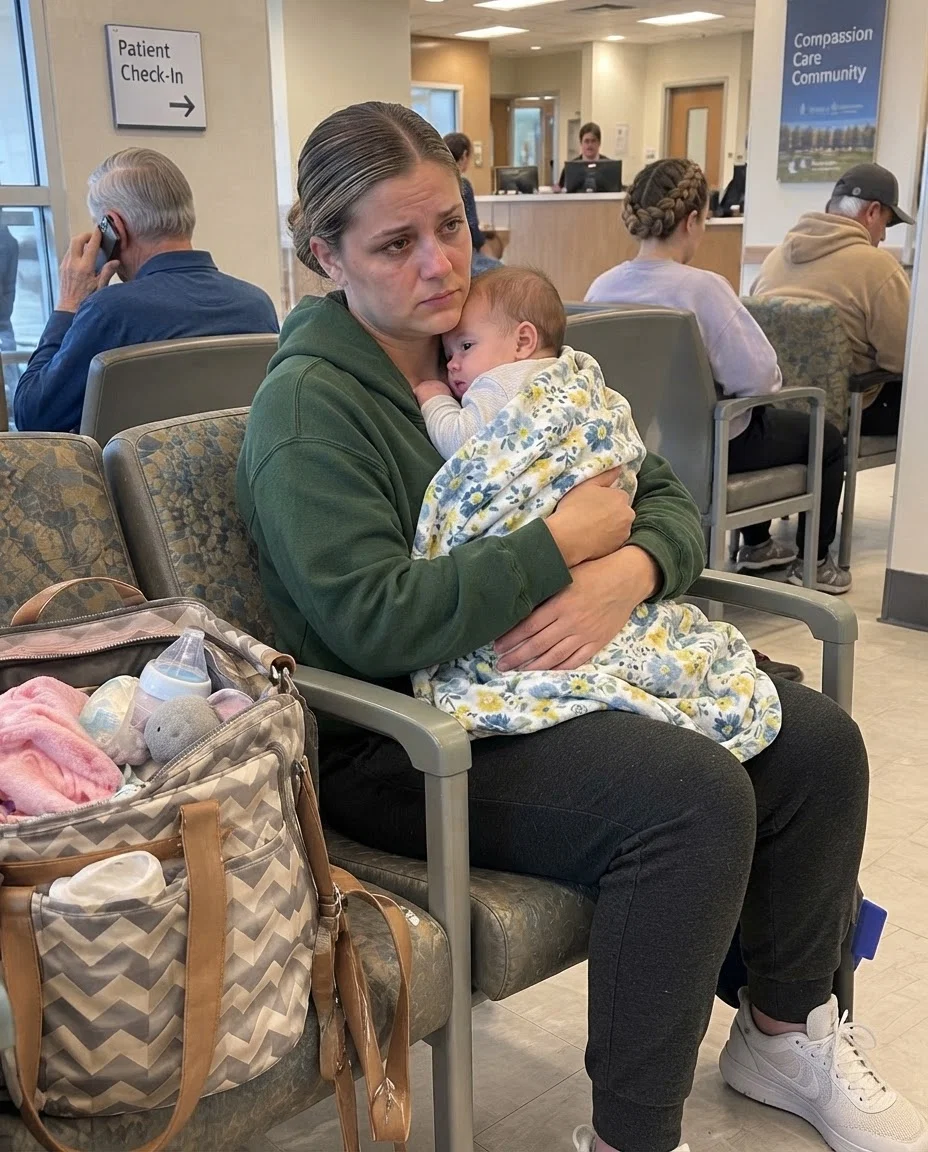
And by around two in the morning, we were sitting in the emergency-room waiting area with our four-month-old daughter screaming in my arms.
It wasn’t her hungry cry.
It wasn’t her tired cry.
It was the cry of a baby whose body felt wrong and who had no way to understand why.
I rocked her.
Bounced her.
Sang the low, wordless melody I had invented during the first weeks of her life.
Ethan paced.
After a while, he looked at the clock.
“This is ridiculous.”
I looked up.
“What?”
“I have a huge presentation at nine.”
“Her fever is still high. We need to wait.”
“I’m exhausted, Rachel.”
The words came out sharply.
Then he pulled out his phone and walked away.
I assumed he was contacting work.
I kept rocking June.
Twenty minutes later, the automatic doors opened.
Sylvia walked into the ER.
She was wearing her coat.
She lived forty minutes away.
She had driven forty minutes across town at two in the morning.
Not for June.
For Ethan.
She walked directly past me.
She picked up his coat from the chair and shoved it toward him.
“Come on.”
I stared at her.
“What are you doing?”
“I’m taking Ethan home with me. He can sleep in his old room for a few hours before his presentation.”
For a second, I honestly thought I had misunderstood.
“We’re waiting for June to see the doctor.”
Sylvia looked at me as though that were obvious but irrelevant.
“He’s exhausted. He cannot sit here all night.”
“So am I.”
Her expression hardened.
“You’re her mother.”
Then, right there in the waiting room, Sylvia finally said out loud what she had been communicating for years.
“He didn’t sign up for this much stress. You’re the mother. Figure it out.”
The room became silent.
Not ordinary silence.
The uncomfortable silence that falls over a public space when everyone suddenly realizes they have become witnesses to something private.
I looked at Sylvia.
Then Ethan.
He was holding his coat.
And waiting.
That was the moment everything became clear to me.
Ethan had learned to wait.
Wait for someone else to decide.
Wait for someone else to handle things.
Wait until discomfort disappeared.
He had learned that if he waited long enough, another person—usually a woman—would eventually take responsibility.
Sylvia had arrived to continue that lesson.
I stood.
Adjusted June against my chest.
Then looked directly at my husband.
“Ethan.”
“Rachel.”
“I need you to listen carefully.”
“I know. I’m sorry about Mom.”
“I’m not talking about your mother.”
He stopped.
“June has a temperature of 104 degrees.”
“I know.”
“She is four months old.”
“I know.”
“Do you understand why we are here?”
“We’re waiting for the doctor.”
“No.”
I kept my voice calm.
“We are here because our infant daughter has a dangerously high fever. We need to determine whether she has an infection and make sure she is not at risk of complications.”
He looked at me.
“This is a medical situation that requires both of her parents.”
“Rachel—”
“Not because I can’t handle it alone.”
He said nothing.
“I can.”
I looked down at June.
“But she deserves both parents.”
Then I looked back at him.
“And you stood in the delivery room holding her and promised you would be here.”
“I am here.”
“You called your mother from the ER and asked her to come take you home.”
Silence.
“When did you call her?”
“When I stepped away.”
“So while your daughter was screaming with a 104-degree fever, you called your mother to rescue you because you were tired.”
“My presentation is at nine.”
“I know.”
I shifted June slightly.
“But June does not know about your presentation.”
He looked down at her.
By then, June had exhausted herself.
Her screaming had faded into a smaller, tired cry.
Somehow, that sound hurt more.
I turned toward Sylvia.
She was still standing beside Ethan, apparently expecting him to leave with her.
“Sylvia.”
“What?”
“Sit down.”
Her eyes widened.
“Excuse me?”
“Sit down or go home.”
She looked toward Ethan.
“Ethan?”
He didn’t answer.
He looked at me.
Then at June.
Then he sat.
Sylvia remained standing for another moment.
Finally, she sat too.
I stayed standing.
“This is what happens now.”
Neither spoke.
“We wait for the doctor.”
I looked at Ethan.
“You stay.”
He nodded slightly.
“When the doctor examines June, you are in the room.”
Still no response.
“If she is admitted, you stay for that process.”
I continued.
“If she is discharged with instructions, you hear those instructions too.”
I looked at him.
“Your presentation may happen tomorrow or it may not. That is between you and your employer.”
Then I glanced at our daughter.
“Your baby has a 104-degree fever. That is the only priority that matters tonight.”
Sylvia started.
“Rachel—”
“I’m not finished.”
For once, she stopped.
“I know you love Ethan.”
Her expression shifted.
“I have never doubted that.”
Then I said the part I had avoided for three years.
“But I have watched what your version of love has allowed him to remain.”
“What is that supposed to mean?”
“It means every time life became difficult, you rushed in.”
She stared at me.
“When he was uncomfortable, you fixed the discomfort.”
“When he needed to learn that another person’s needs mattered just as much as his, you reminded him that his needs came first.”
Her face tightened.
“And tonight you drove forty minutes in the middle of the night to take a thirty-three-year-old man away from his sick four-month-old daughter because he was tired.”
“I was helping him.”
“You screamed at me in an emergency room and told me your son didn’t sign up for this.”
“He didn’t.”
“He became a father.”
“That is different—”
“There is no version of fatherhood that excludes sitting in an emergency room at two in the morning when your infant has a dangerous fever.”
“He has responsibilities.”
“Yes.”
I nodded toward June.
“She is one of them.”
“You can handle this.”
“Yes.”
That answer seemed to surprise her.
“I can handle it.”
I lowered my voice.
“I have been handling most of it for four months.”
Sylvia glanced at Ethan.
“I am not asking him to stay because I’m incapable.”
I looked at my husband.
“I am asking the man I married to stand beside me while I do something difficult.”
Sylvia turned toward her son.
“Ethan.”
He finally looked at her.
Something was changing in his face.
Guilt.
Confusion.
Recognition.
The expression of someone discovering that a truth they had lived inside for decades might not actually be true.
“Mom.”
“Don’t let her speak to me like this.”
“Mom.”
“I drove forty minutes because you called me.”
“I know.”
He took a breath.
“I shouldn’t have called.”
“You needed help.”
“No.”
His voice was quiet.
“I needed to stay.”
Sylvia froze.
He continued.
“Rachel is right.”
“Ethan.”
“She’s right, Mom.”
He stared at the floor.
“I called you because I was tired and I didn’t want to be here.”
Then he looked at June.
“Not because I needed help.”
He swallowed.
“Because I wanted to escape something uncomfortable.”
Sylvia shook her head.
“She is making you say this.”
“No.”
He looked at me.
Then back at his mother.
“I’ve been doing this for months.”
His voice gained strength.
“I keep using work and exhaustion as reasons to let Rachel carry more.”
“She can handle it.”
“That isn’t the point.”
That sentence surprised all three of us.
He continued.
“I’ve watched her handle everything.”
“June.”
“Her job.”
“Her mom.”
“Everything.”
“And I’ve been acting like being tired means I get to step away.”
Sylvia looked hurt.
“I was only trying to help you.”
“I know.”
He nodded.
“You’ve always tried to help me.”
Then he paused.
“But I think some of that helping kept me from learning how to stay when things are hard.”
Sylvia said nothing.
“That’s what I need to learn.”
He looked toward June.
“How to stay even when I don’t want to.”
His voice broke slightly.
“That’s being a parent.”
He turned back toward his mother.
“I don’t want to be the thirty-three-year-old man who calls his mom from an emergency room because his baby being sick is inconvenient.”
Sylvia looked stunned.
“What do you want me to do?”
“Go home.”
Her face changed.
“Ethan.”
“Please.”
Then he added,
“I love you.”
His voice softened.
“But I need to stay here with my family.”
Sylvia looked at me.
I said nothing.
I didn’t need to.
She slowly stood.
Picked up her bag.
“I’ll call tomorrow.”
“Okay.”
She walked toward the automatic doors.
Then she stopped.
Turned.
“Rachel.”
“Yes?”
Her voice was quieter than I had ever heard it.
“I’m sorry.”
I looked at her.
“Thank you.”
Then she left.
The waiting room gradually returned to normal.
People looked back at their phones.
The nurses returned to paperwork.
The room became anonymous again.
Ethan sat beside me.
He placed one hand gently against June’s back.
“It’s okay,” he whispered.
“Daddy’s here.”
June opened her eyes and looked toward his face.
Then she settled slightly.
Ethan looked at me.
“I’m sorry.”
“Yes.”
“For calling my mom.”
“Yes.”
“And for everything before tonight.”
“Yes.”
“I know saying sorry isn’t enough.”
“No.”
“But I mean it.”
“I know.”
He swallowed.
“What do you need from me?”
“I need you to stay.”
“I’m staying.”
“Not just tonight.”
He met my eyes.
“I know.”
“Every night that needs you.”
“Yes.”
I took a breath.
“I have been doing most of this alone for four months.”
“I know.”
“I’m good at handling things.”
“I know.”
“But handling things alone is not what I agreed to.”
“No.”
“What did you agree to?”
“A partner.”
He nodded.
“Yes.”
“That’s what I still want.”
I paused.
“I’m not threatening to leave.”
“I’m not interested in drama.”
“I want my partner to actually show up.”
“I will.”
“Start tonight.”
“I am.”
At 3:47 a.m., they finally called June’s name.
We went back together.
The pediatric resident introduced herself as Dr. Owens.
She examined June carefully.
Then she explained that June had a urinary tract infection.
It wasn’t uncommon in infant girls.
They would run a culture.
Start antibiotics.
Monitor the fever.
She explained the medication schedule.
The signs we needed to watch for.
When to call the pediatrician.
When to return to the ER.
Ethan listened.
Actually listened.
He asked questions.
Good ones.
Not questions designed to prove he was paying attention.
Questions from someone who genuinely wanted to understand what to do.
We left the hospital around 5:15.
June had received her first antibiotic dose.
Her fever had dropped to 101.3.
She was still sick.
But slightly calmer.
I sat in the back beside her.
Ethan drove.
Slowly.
Carefully.
When we reached home, I fed June.
She ate less than usual and eventually fell asleep against my chest.
Ethan sat nearby.
“Do you want me to take her?”
“In a minute.”
“Okay.”
Then he said,
“I’m calling out of work.”
I looked at him.
“The presentation?”
“I’ll tell them I have a family emergency.”
“You don’t have to.”
“Yes.”
He looked toward June.
“I do.”
“You need sleep.”
“So do you.”
“She needs to be monitored today.”
He held out his hand.
“I’m staying.”
I studied him.
Then nodded.
“Okay.”
At eight, he called his boss.
He explained.
His boss said the presentation could be rescheduled.
That was it.
No catastrophe.
No career-ending disaster.
Just a manager saying:
“Take care of your family.”
Ethan returned to the living room.
“Rescheduled.”
Then he held out his arms.
“Rachel.”
I handed June to him.
He settled her against his chest.
“Go sleep.”
I did.
For four hours.
When I woke, Ethan was sitting on the couch.
June slept in the bassinet beside him.
He wasn’t watching television.
He wasn’t on his phone.
He was watching her.
He looked up when I entered.
“Her temperature is 100.2.”
“I checked it two hours ago.”
“I gave the next antibiotic dose at nine.”
“She ate a little.”
“Not much.”
“But something.”
“She fell asleep about an hour ago.”
I sat beside him.
June looked more peaceful.
“She looks better.”
“I think so too.”
Then Ethan became quiet.
“Rachel?”
“Yes?”
“I want to help with your mom.”
I turned toward him.
“My mother?”
“You drive over there twice a week.”
“Yes.”
“I’ve never really helped.”
I waited.
“I’ve watched you work, take care of June, and take care of your mother.”
He shook his head.
“That’s basically three full-time jobs.”
“You work too.”
“I know.”
“But not proportionally.”
I almost smiled.
“No.”
“I want to actually be useful.”
“Not look useful.”
“Be useful.”
“What does that mean?”
He had already thought about it.
“I drive your mom to her Thursday appointments.”
“You take Wednesday mornings.”
“I take Sunday afternoons.”
“And at night with June, we split it.”
He paused.
“Actually split it.”
I nodded.
“That’s what sharing looks like.”
“I know I’ve said things before and not followed through.”
“Yes.”
“I want you to call me out when I stop.”
“I have been.”
He winced.
“I know.”
Then he nodded.
“I guess I need to start listening before you reach the point where you have to force me to listen.”
“That would help.”
He gave a small smile.
Then his expression became serious again.
“I need to talk to my mom too.”
“Yes.”
“I need to be the one who does it.”
“Yes.”
“I’ve let her become a problem in our marriage because confronting her makes me uncomfortable.”
I looked at him.
“And I’ve been choosing my comfort over your reality.”
He paused.
“That’s what I’ve been doing.”
Every time he said:
She means well.
Every time he ignored something Sylvia said.
Every time he asked me to let it go.
Every time he avoided an uncomfortable conversation because avoiding it was easier for him.
He had been choosing comfort.
“I’m going to call her later.”
“After June’s next temperature check.”
“Okay.”
Then he asked something I didn’t expect.
“Why didn’t you just let me leave?”
I looked at him.
“What?”
“Tonight.”
“You could have handled the hospital alone.”
“You could have called your sister.”
“You could have called someone else.”
“You didn’t need me.”
“So why did you make me stay?”
I thought for a moment.
“Because I wanted you to be the person who stays.”
He looked at me.
“Not just any father?”
“You.”
“Why?”
I looked toward June.
“You were there when she was born.”
“You held her.”
“You cried.”
“That version of you was real.”
He nodded.
“And I married that man.”
“June deserves that man too.”
“Not only during the beautiful moments.”
“During nights like last night.”
“I want to be that person.”
“I know.”
“How?”
“Because you stayed.”
“You made me.”
“Yes.”
“But your mother was right there.”
“You still could have walked out.”
He looked down.
“I stopped wanting to.”
“When you said everything in the waiting room…”
He shook his head.
“I didn’t want the excuse anymore.”
“I wanted to be the kind of person who didn’t need a reason to stay.”
“That’s who I need you to become.”
“I know.”
June stirred.
Without thinking, Ethan reached into the bassinet and rested his hand gently against her.
She settled.
I watched him.
He wasn’t looking at me.
He was looking at his daughter.
“She’s beautiful.”
“Yes.”
“I don’t say that enough.”
He glanced at me.
“About her.”
Then:
“About you either.”
“One thing at a time.”
He smiled.
“First, staying.”
“Yes.”
“Then talking to Mom.”
“Yes.”
“Then helping with your mother.”
“Yes.”
“Then everything else.”
“Everything else.”
He nodded.
“Step by step.”
The morning light filled the room.
The kind of light that only feels noticeable after you have been awake through an entire night.
June kept breathing quietly.
The antibiotic was beginning to work.
Her fever would continue falling.
By the next morning, it would be below one hundred.
Soon she would be herself again.
Hungry immediately.
Tired suddenly.
Happy with her entire face.
But first there was that morning.
The quiet room.
Ethan’s hand resting near June.
The strange stillness of a house that had gone through something difficult and reached the other side.
“Ethan?”
“Yeah?”
“Thank you for staying.”
He looked at me.
“Thank you for making me.”
Then he shook his head.
“I mean that.”
“I needed somebody to make me stay.”
He looked toward June.
“I’m going to work on becoming someone who doesn’t need that anymore.”
“I know.”
“But thank you.”
I nodded.
“You’re welcome.”
And we sat there together with our daughter while morning filled the room.
A provocative headline claiming that a woman’s breast size can reveal something about her vagina may attract attention online, but it is based on a common misconception about the human body.
Breast size does not reliably indicate the size, shape, appearance, or sexual characteristics of a woman’s vagina.
Human bodies develop in many different ways, and different physical characteristics do not necessarily predict one another.
Breasts vary considerably from person to person. Their size and shape are influenced by genetics, hormones, body composition, age, pregnancy, breastfeeding, and other biological factors. The vagina and vulva have their own anatomy and develop independently.
This means that looking at someone’s breasts cannot tell you what their genital anatomy looks like.
The misconception may come from the idea that all physical characteristics are somehow connected by a single underlying pattern. While hormones certainly influence many aspects of development, that does not mean that one visible body feature can be used to predict another person’s intimate anatomy.
For example, two women can have similar breast sizes while having very different vulvar anatomy. Likewise, women with very different breast sizes can have similar genital anatomy.
There is simply no reliable visual formula connecting the two.
Another important misconception is the idea that breast size reveals sexual experience.
A woman’s breast size cannot tell you whether she has had sexual partners, how sexually experienced she is, or what kind of relationships she has had.
Those are personal aspects of someone’s life that cannot be determined by appearance.
The appearance of the vulva varies naturally among women. Differences in the size and shape of the labia, clitoris, vaginal opening, and surrounding tissue are normal. There is no single appearance that should be considered the “correct” or “normal” one.
People sometimes become concerned because their bodies do not resemble images they have seen online. This can create unnecessary anxiety.
The internet often presents highly selective images that do not represent the enormous range of natural human anatomy.
Medical professionals understand that variation is normal.
Another common myth involves the idea that vaginal appearance can reveal whether someone has previously had sex.
There is no simple physical examination that can determine whether a woman has had sexual intercourse based solely on the appearance of her vagina or hymen. The hymen varies naturally and can change for many reasons unrelated to sexual activity.
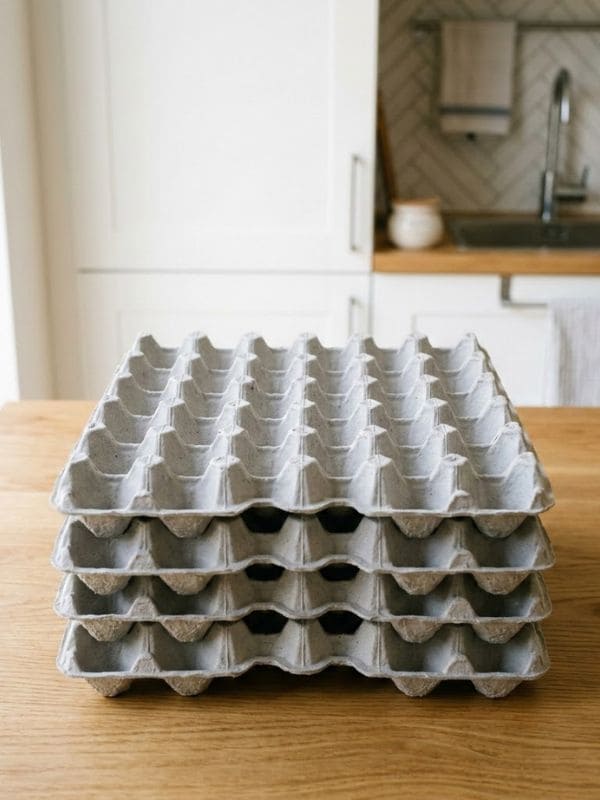
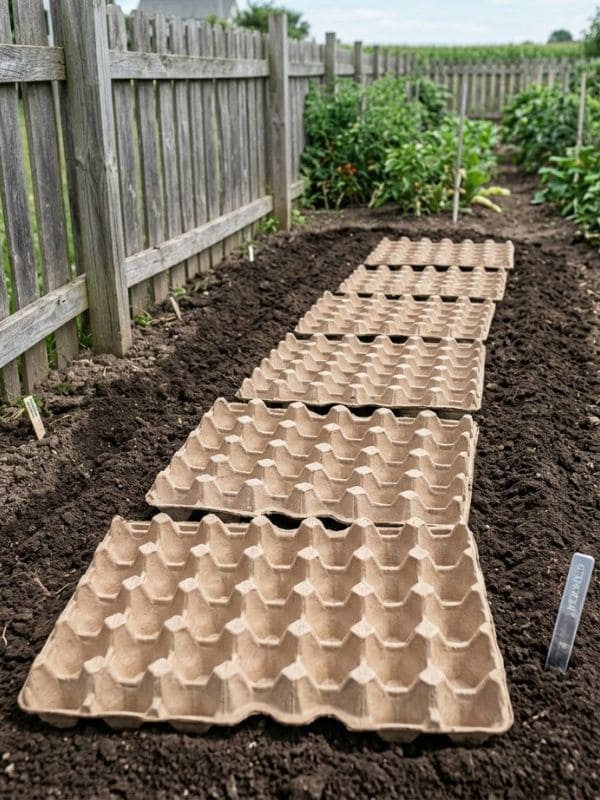
Using egg trays to start bulbs is one of those simple gardening ideas that actually works better than you expect.
↑
The divided cells keep each bulb separated, encourage tidy root growth, and make transplanting much easier.
If you use cardboard trays, they even help regulate moisture because the material absorbs excess water instead of trapping it around the bulb.
Discover more
egg
Choose Cookware Sets
soil
This guide focuses on using 30-egg cardboard trays specifically. They provide more planting space, better stability, and easier management compared to 6 or 12-egg cartons.
With the right soil, moisture control, and timing, you can pre-sprout onions, garlic, tulips, lilies, shallots, and small ornamental bulbs efficiently and inexpensively.
Why 30-Egg Trays Are More Effective Than Smaller Cartons
Discover more
Download Nature Guides
Choose Artisanal Cheeses
Garden
A 30-egg tray offers stability and consistency. Smaller cartons dry out quickly around the edges and tip easily once filled with soil.
The wider base of a 30-cell tray distributes moisture more evenly and makes watering easier to manage.
Cardboard trays are ideal because they breathe. The material absorbs slight excess moisture, reducing water accumulation around the bulb base.
Also, airflow through the cardboard also limits fungal problems. Plastic trays can be used, but they must have drainage holes added to every compartment.
Without drainage, bulbs rot rapidly in shallow containers.
Note: Foam trays should not be used because they trap moisture, restrict airflow, and create the perfect environment for mold.
Discover more
Eggs
GARDEN
Soil
Step-by-Step Method for Growing Bulbs in Egg Trays
Step 1: Preparing the Garden Bed Properly
This is the most important part of the entire process. If the soil is not properly prepared, roots will struggle even if the tray is positioned correctly.
You need to choose a sunny location. Most edible bulbs and flowering bulbs require at least six hours of direct sunlight daily.
Lilies can tolerate partial shade, but onions and garlic perform best in full sun.
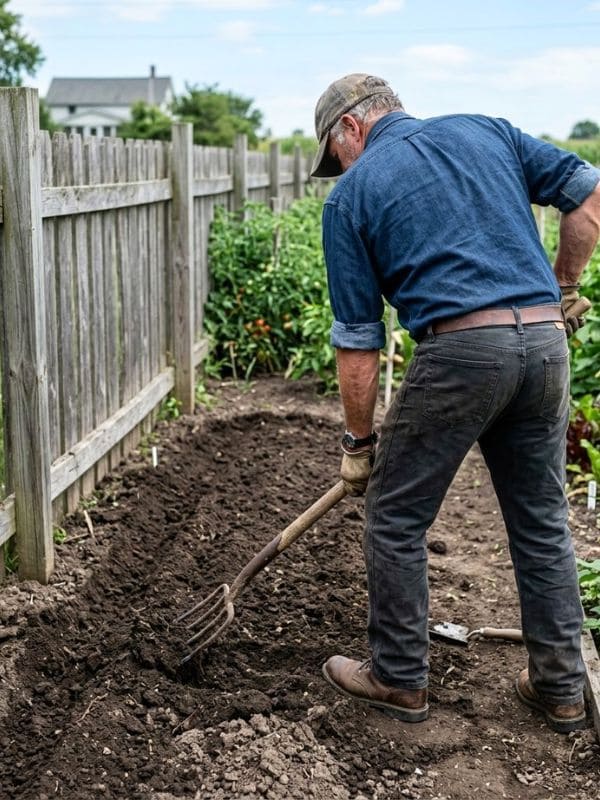
Loosen the soil to a depth of at least 25 to 30 centimeters. Use a garden fork or shovel to break apart compacted areas. Bulbs produce downward-growing roots that need loose soil to expand freely.
Also, remove stones, old roots, and debris that could block root growth.
Next, mix in mature compost thoroughly. A general recommendation is about 3 to 5 kilograms of compost per square meter.
Compost improves drainage, nutrient availability, and soil structure.
If your soil is clay-heavy or drains slowly, incorporate coarse sand to prevent water accumulation. Bulbs are extremely sensitive to standing water, which causes rot.
Discover more
Egg
Access Writing Tools
Garlic
After mixing amendments, level the surface carefully. You can also lightly water the bed before placing trays so the soil is evenly moist but not muddy.
Step 2: Positioning the 30-Egg Tray on the Soil
You place the cardboard tray directly onto the prepared soil surface.
Discover more
Find Geological Maps
Compare Farming Equipment
Eggs
Press down gently with both hands so every cell makes contact with the soil underneath. This step ensures roots can immediately penetrate downward once they begin forming.
If the tray rocks or leaves air spaces underneath, lift it and adjust the soil surface until it sits completely flat.
Multiple trays can be aligned end-to-end to create long, straight planting rows.
The grid automatically provides uniform spacing, typically around 5 to 6 centimeters between bulbs depending on tray design.
For larger bulbs, you may leave alternate cells empty to increase spacing.
Step 3: Adding Soil to the Compartments
Discover more
Discover Garden Tools
garden
Find Geological Maps
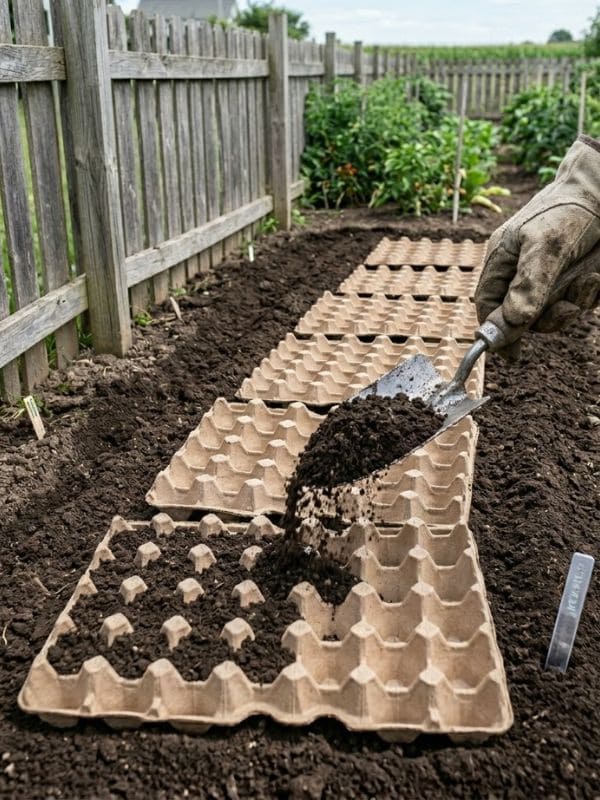
Now, add loose soil into each cell, filling about halfway to two-thirds full. The soil in the cell should connect directly with the soil beneath through the cardboard bottom.
Do not pack the soil tightly as roots require oxygen as well as moisture. Compacted soil reduces root expansion.
This upper soil layer serves two purposes. It stabilizes the bulb and maintains consistent moisture around its base during early growth.
Step 4: Correct Bulb Placement
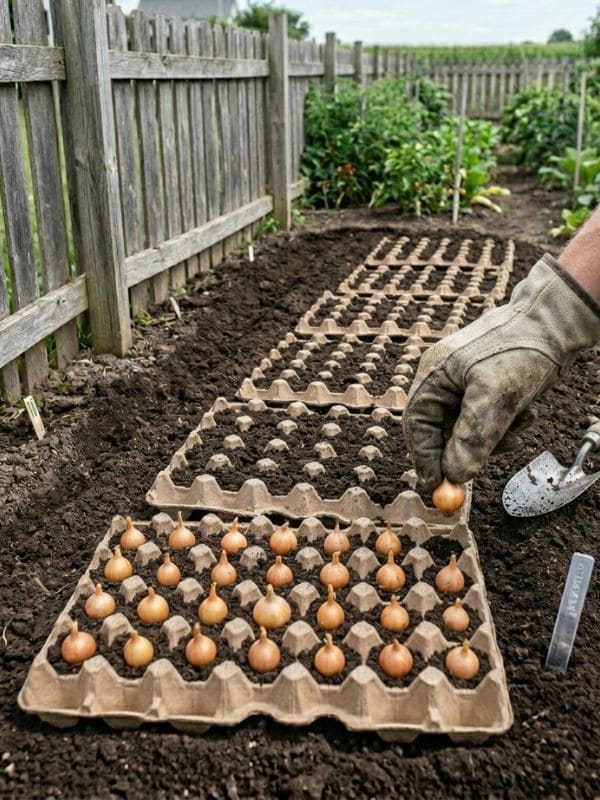
Place one bulb into each compartment. The root end must face downward while the pointed tip must face upward.
Press the bulb gently so the base touches the soil beneath the cardboard. Contact between bulb base and soil is essential for root development.
Do not bury the bulb deeply at this stage because most bulbs should remain partially visible above the soil line.
For tulips and lilies, if deeper planting is required later, additional soil can be added after root establishment.
Step 5: Securing the Tray
After planting all cells, you pull a small amount of soil along the outer edges of the tray row to anchor it in place.
Discover more
Get Organic Produce
gardening
Compare Farming Equipment
The goal is stability, not burial. The tray should remain mostly visible on the surface while being secured from wind movement.
If strong winds are expected, lightly mound soil on corners temporarily.
Step 6: Watering Correctly
Water thoroughly after planting so moisture penetrates through the tray cells and into the soil beneath.
The cardboard absorbs moisture and distributes it evenly, but overwatering must be avoided.
Maintain consistent moisture during the first two weeks. The soil should feel damp about 2 to 3 centimeters below the surface, but not saturated.
During heavy rainfall periods, ensure water drains away freely from the bed.
What Happens Underground
Within one to three weeks, depending on temperature and bulb type, roots begin forming at the base of each bulb.
These roots grow downward, pushing through the softened cardboard bottom and entering the garden soil.
As moisture and microbial activity break down the cardboard, the tray gradually decomposes. By the time bulbs are well established, the cardboard is no longer structurally important.
Because the bulbs were never lifted or transplanted, roots remain undisturbed, leading to faster establishment and stronger growth.
Adjusting for Different Bulb Requirements
For onions and garlic, this method can remain unchanged throughout the growing season. These bulbs naturally prefer partial exposure and perform well with surface positioning.
GetOrganic Produce
For tulips, crocus, and lilies, which typically require deeper planting, you can gently add additional soil over the tray once shoots emerge and roots are established.
Alternatively, once roots penetrate through the tray, the entire section can be covered with additional soil to reach the recommended planting depth.
Always follow the recommended depth guideline for each bulb species while adapting the tray system to your conditions.
Ongoing Care
Keep the bed weed-free. The tray provides mild early suppression, but weeds may appear as it decomposes.
Water consistently, especially during active growth and bulb enlargement stages.
Avoid excessive nitrogen fertilizer once bulbs begin swelling. Too much nitrogen encourages leaf growth rather than bulb formation.
Allow flowering bulbs to complete their natural foliage cycle after blooming so energy returns to the bulb for the next season.
The morning I went into labor, the sky outside my hospital window was the color of old pewter. I remember watching a single crow land on the ledge, look around with that sharp sideways intelligence birds have, and then fly off again. I thought about omens and dismissed the thought immediately. I was a practical woman. I had always been a practical woman. It was the only way I knew how to survive the particular shape my life had taken, one that required a certain flatness of expectation, a willingness to work with what was in front of you rather than grieving what was not.
My name is Dana. I am thirty four years old, a kindergarten teacher, a mother to a six year old boy named Oliver who smells perpetually of grass and peanut butter and who is the most uncomplicated source of joy in my life. I live in a two bedroom apartment with a secondhand couch that I love unreasonably and a coffee maker that takes eleven minutes to brew a full pot, which I have timed on multiple occasions and accepted as simply true about the machine, the way you accept true things about the people you live with. I am the kind of person who writes grocery lists in order of the store layout. I color code my calendar. I do not own a single houseplant because I know my limitations.
I am, in most measurable ways, an ordinary woman.
Except that on that pewter gray morning in late October, I was about to give birth to someone else’s daughter.
My twin brother Ryan has always been the more beautiful of us, which sounds like a strange thing to say about a sibling, but it is simply true and we both knew it from the time we were old enough to understand that faces could be measured against each other. Where I have our mother’s bluntness of feature, Ryan got her eyes and our father’s jaw, and the combination produced something that had been stopping people mid sentence since he was about fifteen. He wore it without particular vanity, which made it more effective rather than less. He was also, in the quiet way that only the people closest to him would ever understand, one of the most genuinely decent human beings I have ever known. Not performatively decent, not kind in the showy way that wants acknowledgment. The real kind. The kind that remembers without being reminded and shows up without being asked and holds whatever you give him without letting it drop.
We grew up in a house where love was real but resources were thin. Our parents worked hard and died young, our father from a heart attack at fifty eight and our mother from a grief that dressed itself up as pneumonia two winters later. Ryan and I inherited their house, their debts, and each other. We sold the house, paid the debts, and for a while we were each other’s entire family, the way twins sometimes are, collapsed inward against the world, presenting a unified front to everything that came at us from outside it.
We were good at it. We had been practicing since before we were born.
Then he met Melissa.
She came into his life at a work conference in Atlanta, where Ryan was presenting a paper on structural load distribution in residential buildings and Melissa was there representing a nonprofit focused on affordable housing design. They argued for twenty minutes over a dinner buffet about whether aesthetics or functionality should drive low income housing decisions, and by the end of the argument they were standing close enough together that a passing colleague stopped to ask if they were married. They were not, at that point, but Melissa later told me that she had thought in that moment, with the matter of fact clarity that characterized most of her thinking, that it was not out of the question.
Three years later, they were.
I liked Melissa immediately and without reservation, which was unusual for me. I tend to circle new people slowly, like a dog deciding whether a stranger’s extended hand represents goodwill or threat. But Melissa had a quality of stillness that I found calming rather than guarded, and a sense of humor that ran dry and late, arriving after a pause, the way a good punchline should arrive: when you have already moved on and then it lands behind you and you have to stop and go back to collect it. She was also visibly, unmistakably good for Ryan. He laughed more. He cooked elaborate things on Sundays and sent me photographs of them with the pleased proprietary air of a man who has recently discovered a talent. He started learning to play guitar badly and without shame, recording himself and sending me the clips, which I considered a sign of profound psychological health.
They tried to have children for four years.
I watched it happen from close enough to see the texture of it, which is different from watching from a distance. The first year was hope, ordinary and energetic. The second was effort and optimism still, with the addition of doctors and the first gentle language of intervention. The third was appointments and procedures and the vocabulary of reproductive medicine settling over everything like a frost, changing the way they spoke about time and the future, making both things feel provisional. By the fourth year there was a quality to their silences that I recognized, the same quality that had lived in my apartment for months after our mother died: that particular hollow that forms when something you have been counting on turns out not to be where you thought it was.
The doctors were thorough and, eventually, conclusive. The issue was with Melissa’s uterus, a structural abnormality that had likely been present since birth and had gone unremarked because there had been no occasion to look for it. The abnormality made carrying a pregnancy to term essentially impossible. Not certainly impossible, one doctor was careful to note, but the probability was low enough that it would be unkind to encourage a path that was likely to produce only more loss. Melissa could produce healthy eggs. Ryan’s sperm tested at every metric within normal range. The genetic material was entirely there, intact and waiting. The only missing piece was a body willing and able to hold it.
Ryan called me on a Tuesday evening in March. I remember it was Tuesday because Oliver had soccer practice and I was sitting in my car outside the field, eating a granola bar, watching small children run chaotically after a ball, which I find unreasonably soothing as an activity. Something about the gap between their earnest effort and their technical execution. Ryan said he needed to ask me something and that I should feel completely free to say no and that he meant it about the no, genuinely, that a no would not change anything between us and he needed me to believe that before he said another word.
I told him to just ask.
He asked.
I sat there in the car watching a child kick the ball directly into their own team’s goal and experience a visible journey through confusion, betrayal, and philosophical resignation, and I thought about what Ryan was actually asking me to do. He was asking me to give over my body for the better part of a year. To go through a pregnancy, which I already knew firsthand was not a walk in the park. To grow a child and then hand her over, to love something into existence from the inside out and then step back and let it belong entirely to someone else.
And here is what I thought, sitting in that car in the failing October light: Ryan had sat in a hospital waiting room for six hours when Oliver was born, eating vending machine crackers and reading me terrible jokes from his phone until I laughed despite the contraction that had just been through me like a train. When our mother died, he drove four hours in a snowstorm because he had understood, correctly, that I should not be alone with that information for any longer than necessary. He had shown up, consistently and without complaint or announcement, at every moment of my life that required showing up. Not because he felt obligated, but because showing up was simply his way of existing in the world.
He was offering me the same chance. To show up for something that mattered. To give him the one thing that only I could give, that no amount of money or medicine or waiting could produce without a willing body.
I told him yes.
He was quiet for a long moment. The kind of silence that has weight to it.
Then he said, “Dana.”
Just my name. But the way he said it contained everything that the situation required, every layer of it, gratitude and relief and love and the particular sorrow of needing help and having it offered.
The process was clinical and strange and, in its way, remarkable. We worked with a reproductive specialist, Dr. Ahuja, who had the manner of a particularly competent librarian: efficient, precise, and somehow reassuring by virtue of her complete lack of sentimentality. She was interested in outcomes and protocols and the accurate measurement of things. She had no interest in the emotional landscape of what we were doing except insofar as it might affect the medical variables. I found this deeply comfortable. There was enough emotional landscape being navigated by all of us without the doctor adding to it.
The embryo transfer happened on a Wednesday morning in June. I lay on a table in a room that smelled of antiseptic and recycled air and watched a monitor and thought, with a kind of stunned wonder that kept surfacing through the clinical reality of the procedure, that the thing currently being introduced into my body was half my brother and half the woman he loved, and that it contained within it the entire compressed potential of a future person, a whole life waiting to unfold from something smaller than the period at the end of this sentence.
The implantation took on the first attempt.
I called Ryan from the parking lot because I could not wait until I got home. He picked up on the first ring, which told me he had been holding the phone.
“It worked,” I said.
He made a sound I had never heard from him before in thirty four years of knowing him. It was not quite crying and not quite laughing. It was something in between, something that existed at the intersection of relief and joy and disbelief, a sound for which English has no specific word, which seems like an oversight given how often humans must have needed it.
The pregnancy was, objectively, not terrible. I had been fortunate with Oliver and I was fortunate again, avoiding the severe nausea that incapacitates some women in the first trimester, the kind of swelling that makes ankles unrecognizable. What I had was tiredness, a tiredness that reached down into the bones and nested there comfortably for months, and lower back pain from about the fifth month that required me to rearrange my classroom furniture and my sleeping habits and my relationship with stairs. There was a stretch in the seventh month when I could not sleep for more than three hours consecutively and began to understand, in a new and intimate way, what prolonged sleep deprivation does to the membrane between the reasonable and the irrational. Ordinary things took on a slightly hallucinatory quality. I cried at a commercial for paper towels. I became briefly and intensely convinced that I had forgotten my own phone number and spent twenty minutes verifying it.
But I managed. I went to work. I got Oliver to school and soccer practice and his Tuesday piano lessons that he claimed to hate and was secretly getting quite good at. I made meals and did laundry and had conversations. I was, in all the ways that counted, fine.
Ryan and Melissa came to every appointment. Every single one, which required Ryan to occasionally leave work meetings early and Melissa to rearrange her own packed schedule, neither of which they ever mentioned except once, in passing, with a completeness that made clear it was not up for discussion. Melissa kept a small notebook in her purse and wrote things down: due dates and developmental milestones and the particular remarks Dr. Ahuja made at each visit, small clinical observations that Melissa received with a gravity that moved me every time. Ryan sat beside her and asked questions, good questions, the kind that revealed he had been reading things outside the scope of what the doctor had told him. When they saw the first ultrasound image, Melissa held the printout afterward in both hands for a long time without speaking. Ryan put his arm around her and I looked away because it felt private, that moment, a moment of intimacy that belonged entirely to them and to which I was at most a benevolent witness.
When they found out at the twenty week scan that the baby was a girl, Melissa cried in the parking lot afterward. Not sad crying, not the kind of crying she had done at the end of bad appointments in years before, but the release kind, the kind that has been held in storage too long and finally finds the door open. Ryan stood beside her with his palm flat against her back in that way he has of steadying people, grounding them back into themselves, and then he looked across the car roof at me and mouthed thank you with a seriousness that made my throat close.
They painted the nursery a warm soft yellow, the color of early morning light before the day has heated into itself. Melissa sent me photographs: the crib they assembled together on a Saturday afternoon, the mobile of small wooden birds Ryan hung above it, the bookshelf already stocked with picture books she had been collecting for years, some of them bought in the early hopeful period before the full weight of what they faced was clear. There was a small white rocking chair in the corner that Melissa had reupholstered herself from a chair that had belonged to her grandmother. The fabric she had chosen was a pale green with small cream figures on it. She told me this in a message at eleven at night, the tone of someone who could not quite sleep, and added that her grandmother had rocked three children in that chair and she hoped it would approve of the new purpose.
I looked at those photographs for a long time.
I had been careful, throughout the pregnancy, about attachment. I want to be honest about this because it matters to the story and because dishonesty about it would be a disservice to anyone who might find themselves in the same position someday. I was aware that the child I was carrying was not mine in any meaningful sense. The genetic material was Ryan’s and Melissa’s. The relationship I was building with her was one of temporary shelter rather than ownership. Before the pregnancy I had worked with a therapist who specialized in surrogacy arrangements, a quiet practical woman named Dr. Seo who helped me understand the emotional terrain I was entering and gave me tools for navigating it. I was not naive about what I was doing or about the feelings it would generate.
But here is what the research and the therapy did not fully prepare me for: the feeling of a foot pressing against your ribs from the inside at two in the morning while the rest of the apartment sleeps. The way a whole personality seems to announce itself through the patterns and rhythms of movement in the weeks before birth, through the timing and force of kicks, so that you begin to know things about a person before you have ever seen their face. Before she was born I knew that she was fierce and impatient. I knew that she had long periods of stillness that felt less like sleep and more like thinking. I knew that certain kinds of music made her move and others left her quiet. I knew her the way you know a person you have lived with in close quarters through seasons and through weather, the particular intimacy of shared space.
I knew her and I had chosen not to keep her, and those two things coexisted in me without resolution, because they did not need to be resolved. They needed only to be held.
I did not tell Ryan any of this. It would have been unkind, and it also would not have changed anything that needed to be changed.
The labor began on a Thursday at three in the morning, six days before the due date. I called Ryan from the hospital parking lot, having driven myself in the early morning dark because Oliver was asleep and the neighbor I had arranged in precisely this scenario still needed to be called, and I had not wanted to call Ryan before I was certain. He arrived forty minutes later with Melissa beside him, her hair still compressed from the pillow on one side, wearing an expression that had not yet decided whether to be terror or joy and had settled provisionally into both at once, stacked on top of each other.
Labor with Oliver had taken eighteen hours. This one took eleven, which my body achieved with an efficiency I was too busy to appreciate at the time. I will not describe the birth in detail because there is a privacy to it I still feel, even now, and because the mechanics of it are not what this story is really about. What I will say is that there were long stretches of those hours when I lost track of everything except the fundamental animal fact of what was happening, the enormous irreducible physicality of it, and that in those stretches Ryan sat beside me and held my hand and said nothing useful and nothing useless. Just stayed. Melissa stood at the window for a long time looking out at the parking lot below, and from the set of her shoulders I understood that she was managing something vast and enormous and was choosing to do it quietly so as not to add it to the weight of what I was already carrying. Both of them loved me in those hours in their different ways and I felt it completely.
The baby arrived at two seventeen in the afternoon.
She was dark haired and furious about her arrival. She had Ryan’s nose already, improbably but unmistakably, that specific architectural decision of cartilage that had been in our family for at least three generations that I knew of and probably many more that I didn’t. She screamed with her entire body, fists clenched and trembling, asserting her existence with everything she had available. The nurses who cleaned her and wrapped her exchanged a look over her head that I interpreted as fond exasperation.
They brought her to me first because I was the one who had done the work. I held her for perhaps ninety seconds. I will not describe what happened inside those ninety seconds. There is not language that does the truth precision service. What I can say is that those ninety seconds were complete in themselves and that I have not needed to add anything to them.
I handed her to Melissa.
Melissa took her the way you take something you have been afraid to want for too long, carefully, with the whole body braced as if against impact. She looked down at the baby’s face and the tears came without apparent decision, without warning, the way some true things arrive. Not quietly. The kind of crying that has been waiting for years to happen and is finally allowed. She held the baby close and turned slightly, creating a small private circle of herself and this child that belonged to them alone.
Ryan put his hand on Melissa’s back and looked down at his daughter’s face.
I have known Ryan’s face my entire life. I have watched it move through grief and anger and embarrassment and joy and the specific expression he makes when he is trying not to laugh at something he considers himself too mature to find funny. I know the way his jaw sets when he is worried. I know the way his eyes go flat when he is in pain and not ready to talk about it.
What I watched happen in the next few moments was something I had never seen on his face. Not in thirty four years.
He looked at his daughter and his face, for just a moment, came entirely open. Not into simple joy. Into something more layered, something that held recognition and weight and a quality I could not name, as if he were seeing not only the person in his arms but a great deal of what that person implied.
Then his face went pale.
Not the pale of illness. The pale of a person who has just understood something important, something that has rearranged in a single instant the shape of what they thought they knew.
He said, very quietly, “Can I hold her?”
Melissa transferred the baby to him, and Ryan held her with the careful uncertain confidence of someone who has not held many babies but is absolutely determined to do it correctly, the forearm cradled properly, the head supported, the whole posture an exercise in concentrated attentiveness. He looked down at her face. Then he shifted his hold, slowly and deliberately, and looked at her back.
His jaw tightened.
“Ryan,” I said. “What is it? What’s wrong?”
He did not answer. He stood very still, looking at his daughter’s back, with the quality of stillness that precedes something seismic. Thirty seconds. Perhaps forty. Then he looked up at me, and then at Melissa, and something moved across his face that I still could not read.
He said, “I’m sorry. I can’t take her home.”
The room contracted. The sounds of the hospital, the cart rolling past in the corridor, the distant elevator chime, the murmur of voices from another room, all of it seemed to pull back like a tide, leaving us exposed.
I said, “Ryan. She is your daughter. What is happening right now?”
He was looking at Melissa. A look that contained, I understood even at the time, an entire conversation that had not yet been spoken aloud but that Melissa was beginning to have her side of, her expression shifting as he held her gaze, something moving in it that looked like comprehension beginning.
“I have to give up the baby,” he said. “I won’t be taking her home.”
And he walked to my bed and laid her back in my arms.
Melissa broke open. She demanded to know why, his name first, then the demand, then his name again. Her voice had dropped to something low and controlled and terrible, the voice of a person who is maintaining composure through a force of will that has no margin to spare. She moved toward him. She put her hand on his arm. She said tell me, and then she said Ryan please and then she said what is wrong with you, and through all of it Ryan stood with a particular anguished stillness, the posture of someone who has understood something they would give a great deal not to have understood.
He exhaled. His face had gone from pale to the red of suppressed and rising feeling, and he said, “Look at her back. Look at her back and tell me what you see.”
I looked at the baby’s back.
The blanket had shifted when Ryan laid her down, leaving a section of her back exposed. And there, spanning from the base of her left shoulder blade down across and toward her right hip, was a birthmark. Large and distinct. A port wine stain, deep reddish purple against her brand new skin, shaped in a way that was immediately, unmistakably, recognizable.
My grandmother had called it the butterfly. She had carried the same mark herself, and she had shown it to me when I was seven years old, standing in front of her bedroom mirror with the cheerful pragmatism of someone who has long since made peace with the unusual things about herself. She had lifted the back of her blouse and showed me the mark and told me it had been on her mother too, and her mother’s mother before that. The butterfly, she called it. A family mark, appearing and disappearing across generations, skipping sometimes for a long stretch and then returning. She had seemed proud of it in some undramatic way, the pride of belonging to something continuous.
Ryan and I both had versions of it. Mine was small, on my left hip, barely visible. Ryan’s was more pronounced, upper back, same coloring, same approximate shape. We had assumed, both of us without ever discussing it in any serious way, that the mark traced to our grandfather’s biological family, our grandfather who had been adopted and whose origins were unknown and who had carried the whole mystery of himself with the same cheerful pragmatism our grandmother brought to everything.
Melissa did not have the mark.
The baby’s mark was enormous, vivid, and shaped with an undeniable clarity as a version of the same butterfly our grandmother had named and passed down through the family like a deed to something.
I lay in the hospital bed with the baby in my arms and felt the world turn over.
Ryan was not refusing to take the baby because something was wrong with her, or because he did not want her. Ryan had looked at his daughter’s face and then at her back and understood, in a flash of recognition that bypassed language and moved straight into certainty, that the baby he was holding was not the child produced by the embryo he and Melissa had created together.
The mark was from our family. From Ryan’s genetic line, from our grandfather’s unknown biological origins, from something ancient and persistent that expressed itself in skin. If the embryo implanted in me had been the correct embryo, the one made from Ryan’s genetic material and Melissa’s, the baby might carry Ryan’s markers. But Melissa had no such marker. The mark this baby wore was so clearly and unmistakably of the butterfly family, so pronounced and so precisely placed, that what Ryan had understood in those forty still seconds looking at her back was this: something had gone wrong. The baby in his arms was his, biologically, genetically, in every inherited physical characteristic. But the other biological parent was not Melissa.
Somewhere in the clinical process, between the embryo preparation and the transfer, an error had been made.
Melissa screamed when she understood it. The sound filled the room and pushed out into the corridor, raw and sudden and enormous, and a nurse was through the door within seconds, her hand on the frame, her face already arranged into the professional readiness to manage crisis. Melissa was standing in the center of the room with her hands pressed hard against her mouth, the scream collapsed back into silence, and her eyes were doing something I had no framework for, a kind of breaking that did not look like anything I had a name for. Not grief exactly. Not rage exactly. Something that had elements of both and several other things and existed outside the normal categories.
Ryan went to her. He put both arms around her and pulled her in and she did not push him away, which was the only mercy available in that moment. She stood inside his arms and shook.
I held the baby, who knew nothing of any of it, whose face was composed in the private gravity of newborn sleep, whose fist was curled against her own cheek. She smelled of the particular newness that newborns carry, something clean and urgent, as though they have just arrived from somewhere more serious than here and carry traces of it still.
Dr. Ahuja arrived within the hour. She came with the careful composure of someone who received a phone call that told her nothing good and has had the elevator ride to prepare her face and her words. She listened to Ryan’s explanation without interrupting. She examined the baby’s back. She looked at the mark for a long time, her expression neutral in the way that professional neutrality becomes its own kind of signal. Then she said, quietly, that she was initiating an immediate investigation, that the clinic’s protocols were strict and the investigation would be thorough, and that they would have genetic testing results within forty eight hours, and that she was profoundly, genuinely sorry.
Ryan said, in the flat steady voice of someone keeping very tight hold of himself, that he appreciated that.
What followed was the strangest period of my life, and I have had some strange periods. I remained in the hospital with the baby because there was nowhere else for her to go while the testing was being done and the investigation was underway. She needed feeding every three hours. She needed warmth and holding and someone to speak to her in low tones, because babies require all of this regardless of what the adults around them are sorting through, and I was the only adult available who was in a physical position to provide it. So I fed her and held her and spoke to her and watched her face move through the small expressions of early life, hunger and satisfaction and the brief startling dreams that newborns apparently have, and I did not think too far forward because there was no useful forward to think to yet.
Ryan and Melissa came back the next morning. They sat in the room with me. We spoke very little and when we spoke it was about small things, whether anyone wanted coffee, whether Oliver was all right with the neighbor, whether the chair by the window was more comfortable than it looked. At some point in the afternoon Melissa asked if she could hold the baby and I gave her without comment, and I watched Melissa’s face while she held her. The love was there. It had nowhere clean to land, it was tangled up with grief and confusion and the particular cruelty of a situation that offered no one anything straightforward, but it was there underneath all of it, recognizable.
Ryan sat beside me and we drank bad coffee and did not discuss what we were waiting for. But at one point, without apparent decision, he reached over and took my hand the way he had when we were children and something was frightening us, the grip that communicated: I’m here, I’m not going anywhere from here, and I held his hand back and we sat like that for a while and the baby slept.
The genetic results came the following afternoon. Dr. Ahuja delivered them in person. She had brought a patient advocate named Marcus, a man with kind eyes and the practiced specific calm of someone who has been present at many terrible moments and has learned how to be useful inside them. They sat down. Dr. Ahuja said that the results confirmed what Ryan had suspected. The baby was Ryan’s daughter, genetically and unambiguously. The other biological parent was not Melissa.
The investigation, she continued, had identified the error. A mislabeling incident during the embryo preparation stage, six months prior. Two vials. A process failure that had not been caught at the subsequent checkpoints where it should have been caught, a failure that would be fully investigated and documented and that the clinic took full responsibility for. A second patient had undergone IVF around the same time. The most probable scenario was that the embryos had been transposed. The clinic could not confirm the full scope without contacting that patient and conducting additional testing, which was already underway.
Marcus spoke then about next steps, legal processes, the clinic’s obligations to both families, the support services available. I heard the words but they moved through me without entirely landing, the way language sometimes does when the situation around it is too large to process in real time.
Ryan sat beside me throughout this very still. Melissa sat across the room with her hands folded in her lap, looking at a point on the wall just above Dr. Ahuja’s head, her face doing the private internal work of a person who has just received information that changes the shape of everything and is deciding, in real time, what to do with the new shape.
When the medical team left, the room held a silence that was not empty but full.
Melissa said, “She’s yours, Ryan.”
Ryan said, “She’s ours if you want her to be.”
Melissa was quiet for a long time. Outside the window a truck was reversing in the hospital parking lot, its beeping rhythmic and indifferent to everything happening inside the room.
She said, “I don’t know yet what I want.”
Ryan said, “That’s okay. You don’t have to know yet.”
I thought about the woman on the other side of this situation. The second patient, whoever she was, somewhere else in the city or perhaps not even the same city, waiting for her own results, or perhaps holding a baby she had not expected, or perhaps at an entirely different point in the same broken sequence of events. I thought about what she was about to find out, or perhaps had already found out, and I felt for her a grief that surprised me with its force, a grief for a stranger I would never meet and whose situation I would never fully know, whose loss was real regardless of its specific shape.
The weeks that followed were not linear. That is the most accurate thing I can say about them. They contained conversations and phone calls and legal consultations and medical appointments and the daily irreducible reality of a newborn who needed someone to show up for her every three hours regardless of everything else that was happening in the lives of the adults around her. Life does not pause for the complicated situations it produces. It just keeps going, and you keep going inside it.
Ryan named her Alice. He told me over the phone, his voice carrying a roughness that had been in it for several days by that point, that it had been the name he and Melissa had chosen together early in the pregnancy, and that Melissa had told him it was still her name. That the name belonged to the baby and not to the circumstances.
I asked how Melissa was.
He was quiet for a moment, the way he gets when he is trying to be accurate rather than just optimistic.
He said that Melissa was the most honest person he had ever known, and that this was both the best and the hardest thing about her, that she was not going to perform an uncomplicated feeling she did not have. But that she was also, he said, not the kind of person who let a hard thing be the last word if she had any say in the matter. He said she had held Alice twice in the first weeks home and that the second time had been longer than the first. And that she had gone back into the nursery and stood in the rocking chair’s doorway for a while, just standing there looking at the room she had made. He did not tell me what she had been thinking in that doorway. Some things are not for telling.
The other patient’s situation resolved through channels that were appropriately private and that I was informed of only in the legal and medical aspects that directly involved me. I tried not to speculate beyond what I knew. I tried to hold the space of her situation with something like respect for the fact that I could not know its full weight.
By the time Alice was six weeks old, Melissa had made her decision.
She called me on a Sunday evening to tell me herself, which I thought afterward was characteristic of her, that she would not outsource this to Ryan but would say it directly to me herself. She talked for a long time, more continuously than I had ever heard her talk, the words coming with a kind of quiet urgency. She talked about what love meant, whether it was primarily a feeling that arrived or primarily an action you took, and in what proportion those two things needed to mix to produce something that lasted. She talked about the months of appointments, the hope that had lived in her notebook with its careful columns of dates and measurements. She talked about the picture books on the yellow room’s shelf, the mobile of wooden birds, the grandmother’s rocking chair she had reupholstered in pale green. She talked about all of it as evidence of something she had been building toward, and she said that what she had been building toward was not one specific embryo in one specific moment, but a child, a particular child who needed a home and parents, and that the child who needed those things was Alice.
She paused for a moment.
Then she said, “I know she didn’t come from me. I have made my peace with knowing that. But she came from Ryan, and she came through you, and she came into a room full of people who were already waiting to love her. That has to count for something. I think it counts for quite a lot, actually.”
I was crying by the time she finished, which I had not anticipated, and which I suspected she could hear but neither of us remarked on.
“She is going to have a mother,” Melissa said. “I am going to be her mother. I just needed some time to understand what that meant, given everything that happened. And now I do.”
Alice went home to Ryan and Melissa three days later. I drove her there myself, which was my choice and felt like the right thing. I carried her inside in her car seat, and Ryan unclipped her and lifted her out with both hands and carried her through the hallway and into the yellow room and laid her gently in the crib beneath the mobile of wooden birds.
Melissa stood in the doorway and watched him.
Her face in that moment was the face of someone standing at the beginning of something enormous, not yet inside it, still on the threshold, but looking in without flinching.
I said goodbye at the front door. Ryan held me for a long time without speaking because the language available was inadequate to the situation and we both knew it and agreed without saying so that silence was the more honest choice.
Melissa hugged me. She was not, I had come to understand over the years, a natural hugger. She was someone who deployed physical affection with intention, which made it mean something distinct when it came. She held on a moment longer than I expected.
She said, “Thank you.”
I said, “Take care of her.”
She said, “I will. I already am.”
I drove home through October streets. Oliver was at my neighbor’s house and I walked over to collect him and he came barreling out the front door still wearing his soccer cleats on the wrong feet and launched himself at me with the full heedless force of a six year old who has been waiting the correct amount of time and has now decided the waiting is complete. I caught him and held him with my whole body, my face pressed against the top of his head where he still smelled like himself, like grass and the particular warm-bread smell of a child’s scalp.
I thought about Alice asleep in the yellow room.
I thought about Melissa in the rocking chair, or wherever she was in that house in that moment, beginning the enormous work of becoming.
I thought about Ryan standing over the crib the way fathers do, that specific helpless attentiveness that is not helplessness at all but its own kind of power.
I thought about the crow on the window ledge on the morning she was born, and how I had dismissed the thought of omens and how it had turned out to be one anyway, though not one you could categorize easily as good or bad. More the kind that announces: something is changing. Something is finding its way to what it is supposed to be, through a route that nobody would have designed for it, that left marks on everyone it passed through.
Oliver wriggled down and ran back inside for his backpack and his water bottle and whatever else six year olds require before they can consider themselves ready to leave a place. I stood on the front step in the October light, the same light that was falling at that moment through the windows of the yellow nursery across the city, and I let everything be exactly what it was.
Ryan called that evening to report that Alice had slept three hours consecutively in the crib, which he delivered with the evangelical fervor of a man who has been waiting for a sign and has received it. I listened to him talk and heard underneath the words the thing I had been waiting for, the voice of a father who has found his footing in the enormous unfamiliar terrain of it, who has located the steadiness that had been there all along underneath the shock of the past weeks. The quiet, settled quality of a person who knows what they are doing and why.
I told him I was glad.
I am glad. Every day I am glad, though not without the complexity that accompanies any true gladness about something that cost a great deal. I am glad that Alice exists. I am glad she is in a yellow room with wooden birds above her and picture books waiting and a grandmother’s chair reupholstered in pale green. I am glad that Melissa understood, through whatever interior journey was entirely her own, that love is not a feeling that arrives complete and unearned but a practice you begin and sustain through choice, and that she chose.
I am glad Ryan was paying attention. That he looked at his daughter’s back and that the mark he saw there registered in him as information rather than something to smooth over and set aside. That he sat with the wrongness of it until he understood what it was telling him, and then said the hard true thing, even though saying it in that room at that moment cost him enormously. Because if he had not, the error might have remained buried for years. It might have become the kind of secret that grows in the dark and changes the shape of everything around it from the inside, and the consequences of that for every person involved would have been immeasurably harder than what we went through instead.
He was paying attention. He looked. He said the true thing.
That is what he has always done. That is why he is my best friend, my twin, the person I call first when the world goes sideways. That is why, when he asked for the one thing that only I could give, I said yes.
On my coffee table there is a photograph. Ryan took it without telling me, in the hospital room, in the first hours. It shows me with Alice against my chest, her face turned slightly outward, wearing the composed private expression that newborns have before they have learned what to do with a face. I am looking down at her. My face is not performing anything. It is not constructing itself into something appropriate or contained.
It is just open.
I look at it sometimes in the early mornings before Oliver wakes up, while the coffee maker takes its eleven minutes and the early light comes through the kitchen window with that particular quality it has before the day has complicated itself, before the phone starts and the lists begin. I look at the photograph and I think about what it means to carry something carefully and then hand it forward into the life it belongs to. To love without keeping. To give because you can, because someone needs it, because it is simply the right thing and you happen to be the person in the position to do it.
Alice is fourteen months old now. She walks with the lurching confident determination of someone who has decided that falling is a minor inconvenience and not a deterrent. She has Ryan’s nose and what appears to be Melissa’s spatial intelligence, expressed through an already impressive ability to locate hidden objects and to escape from any configuration of furniture designed to contain her. She has a laugh that Ryan describes as sounding like someone found the place where happiness is manufactured and left the loading dock door open.
I see her every week. I am her aunt. That is the complete and accurate description of what I am to her, and I have found, to a quiet surprise that I did not entirely expect, that it is enough. More than enough. It is the exactly correct amount of everything.
Melissa called me last week to tell me that Alice had said her first word. The word was Dada, which Melissa delivered with a voice that contained layers I could not fully inventory but that sounded, underneath everything, like a woman who has arrived somewhere she did not know she was traveling toward and has found it good.
I told her that was a very good first word.
She said, “We’re working on Mama. She’s almost there.”
I said, “She’ll get there.”
And she will. She will get there and past it and into the enormous uncharted territory of herself, the full person she is becoming, the one none of us can see completely yet but can sense the shape of already: fierce, impatient, curious, and in the long quiet stretches, thoughtful.
The butterfly is on her back. She will have it her whole life. Someday, maybe, she will show it to someone she loves, or to a child of her own, with the same cheerful pragmatism my grandmother brought to it. She will call it something. She will make it hers in whatever way she decides to make it hers.
And the story of how it got there, the long strange route it traveled to reach her, will belong to all of us: to Ryan and Melissa, to me, to the yellow room and the wooden birds and the grandmother’s chair, to a mark on a newborn’s back that a father saw clearly and had the courage to name, and to everything that followed from that naming, all the pain and the reckoning and the eventual, hard won, genuine peace.
It will belong to Alice.
That was always where it was going.
I think sometimes about the version of this story that did not happen. The version where Ryan looked at his daughter’s back and decided, consciously or not, that what he saw there was a coincidence, a mark he could choose not to read. Where the clinical paperwork was accepted without question and the error remained sealed inside the official record where errors prefer to live. Where Melissa raised a child without knowing, and the child grew up shaped by two biological parents, one of whom did not know she existed. Where the second patient, whoever she is, received the wrong embryo and perhaps never knew, or perhaps knew and had no recourse.
I think about that version and I am grateful it is not the one we are living in. Not because the version we are living in has been easy, because it has not been easy for anyone involved. But because the truth, however disruptive and however late, gives people the chance to build something real on top of it. Whereas the hidden version builds on nothing, on a story that is not quite true, and you cannot trust a structure whose foundation you have had to keep secret from the people living inside it.
Ryan understood that instinctively. In the moment when he could have looked away, he looked, and kept looking, until he knew what he was seeing. I love him for it. I loved him before it, but I love him for it specifically, because it cost something and he paid the cost without hesitation.
Oliver asked me once, about six months after Alice came home, whether Alice was like his cousin. We were driving somewhere, one of the thousand small errands that parenthood turns into an ongoing low grade expedition, and he asked it from the back seat with the offhand quality children bring to questions they have been quietly working through for a while.
I thought about how to answer him. I thought about the word cousin and what it covered and what it left out, the way words are always slightly too small for the things they are supposed to describe.
I told him that Alice was family, which was the truest thing I could think to say, and that family was the people who showed up for you and who you showed up for, and that showing up was what we did.
He considered this for a moment.
Then he said, “She’s really small to show up for things.”
I told him she was working on it.
He seemed to find this satisfactory. He looked out the window at the passing street and then asked if we could have pasta for dinner and the conversation moved on in the way that conversations with six year olds do, leaving the serious things behind in the air of the car, settling gently into the seats.
But I kept thinking about what he said. She is really small to show up for things. And I thought: yes. For now she is. For now she is fourteen months old and working on walking and working on words and working on the enormous project of becoming herself. But she will grow into all of it. She will grow into the showing up. The capacity is already there, visible even now in the way she reaches her arms toward Ryan when she wants him and toward Melissa when she needs steadying and toward me when I walk through the door and she knows me by sight and sound and perhaps by something older than either.
She knows us. We are her family. The shape of us is already imprinted in her.
That is everything. That is, in the end, what all of this was for.
Does Breast Size Really Say Anything About a Woman’s Intimate Anatomy? The Truth Behind a Common Myth
There are many myths about the human body that continue to circulate online, often presented as if they were scientific facts. One particularly common claim suggests that a woman’s breast size can reveal something about her intimate anatomy or sexual characteristics.
The simple truth is that breast size does not reliably tell you anything about the size, shape, or characteristics of a woman’s genitals.
These are different parts of the body, influenced by different combinations of genetics, hormones, age, body composition, pregnancy, breastfeeding, and natural individual variation. Trying to predict one physical characteristic from another is therefore misleading.
Breast development varies enormously from one woman to another.
Some women naturally have a smaller chest, while others have larger breasts. Both are completely normal. Breast size can also change throughout a person’s life because of hormonal fluctuations, weight changes, pregnancy, breastfeeding, medications, and aging.
Just as people inherit differences in height, facial features, hair texture, and body proportions, they can inherit different patterns of breast development.
This means there is no universal relationship between breast size and other parts of the body.
A woman with small breasts can have any range of normal anatomy elsewhere, just as a woman with larger breasts can.
One reason these myths survive is that people sometimes assume the entire body develops according to one simple pattern.
Breast tissue responds strongly to hormones such as estrogen and progesterone. Genetics and body-fat distribution also contribute to breast size and shape.
Genital anatomy, meanwhile, develops through its own biological processes and varies naturally among individuals.
There is no scientific rule stating that a particular breast size corresponds to a particular genital size or shape.
In other words, looking at someone’s chest cannot provide a reliable measurement or prediction of their intimate anatomy.
Freshly cracked black pepper might be a kitchen essential, but few people know it’s something you can actually grow at home, even in a pot.
↑ Quay lại
The black pepper plant (Piper nigrum) is a tropical vine native to South India that produces the peppercorns we dry and grind. And the best part is that with the right care, you don’t need a rainforest to grow your own.
Whether you’re working with a small balcony or a sunny windowsill, this guide walks you through everything you need to grow black pepper in a pot.
Discover more
Order Meal Kits
garden
Download Nature Guides
What Is the Black Pepper Plant?
Piper nigrum is a perennial climbing vine from the tropics. It produces slender, woody stems and glossy, deep green leaves.
As it matures, it puts out slender flower spikes that later form clusters of small green berries. These berries when harvested and dried become the familiar black, white, or green peppercorns.
Discover more
Garden
GARDEN
flower
In the wild, it can grow over 10 feet tall, clinging to trees or supports. But when grown in a pot with a sturdy trellis or pole, it becomes a manageable and attractive edible plant.
What You Need to Grow Black Pepper in a Pot
Growing black pepper in a container starts with the right materials. You’ll need a pot that’s at least 12-14 inches wide and just as deep, with proper drainage holes.
A climbing support is also essential since black pepper is a natural climber. A bamboo stick, trellis, or moss pole works well to guide its upward growth.
Use rich, well-draining potting soil. A mix of garden loam, coconut coir or peat, and compost gives your pepper plant the airy, nutrient-rich base it needs.
This vine prefers warm, humid conditions and filtered sunlight, so choose a growing spot with indirect but bright light. It thrives in USDA zones 10-11, but can be grown in cooler zones as a container plant brought indoors during winter.
Where to Get Black Pepper Plants
Discover more
Discover Garden Tools
Access Writing Tools
Watch Expert Tutorials
Growing black pepper from seed is slow and tricky as it can take months to germinate and years to fruit.
For faster results, start with a live plant or rooted cutting. These are often available at tropical plant nurseries or online specialty sellers.
Additionally, you look for a healthy specimen with at least a few well-established stems and deep green foliage.
How to Plant Black Pepper in a Pot
Start by filling your container with the prepared soil mix, leaving a few inches of space at the top.
Then gently remove the pepper plant from its nursery container and settle it into the soil so that the root ball is fully covered but not buried too deep. Firm the soil gently around the base and water thoroughly.
Next, you insert a support pole or trellis near the plant and loosely tie the main stem to encourage upward growth.
Finally, you just place the pot in a warm location with partial shade or filtered light, similar to what it would experience in a tropical forest under taller trees.
Black pepper thrives in consistently moist soil but not soggy conditions. So you check the soil frequently and water when the top inch feels dry to the touch.
Discover more
Pillow
candles
Commission Custom Prints
In warm, dry seasons or heated indoor spaces, you may need to water every 2-3 days. In cooler months, watering once a week is often enough.
If you’re growing it indoors, place a pebble tray filled with water under the pot or mist the leaves regularly to mimic the moisture of its native environment.
2. Best Light Conditions for Black Pepper in a Pot
Black pepper vines naturally grow under the canopy of tropical trees, which means they’re used to bright but indirect sunlight.
Outdoors, choose a spot with morning sun and dappled afternoon shade. Indoors, place it near a bright window, preferably east- or south-facing, but avoid direct afternoon sun as it can scorch the leaves.
During winter or in low-light homes, supplement with a grow light to keep the plant active and healthy year-round.
Discover more
Find Rare Spices
Order Fresh Flowers
Get Organic Produce
3. Fertilizing Black Pepper Plants
Container-grown black pepper needs regular feeding to keep up with its nutrient demands.
You should use a balanced, organic fertilizer such as a 10-10-10 mix once a month during spring through early fall. Liquid seaweed, worm castings tea, or fish emulsion are great options for gentle, effective feeding.
In winter, reduce or pause fertilizing, as the plant’s growth naturally slows and excess nutrients can cause buildup or root stress.
4. Pruning and Training Black Pepper Vines
As your pepper vine grows, guide it up its support structure and pinch back any unruly tips to encourage branching.
Light pruning also helps improve air circulation and keeps the plant manageable in size. Aim to remove dead or yellowing leaves and keep the center open for light penetration.
Discover more
Order Meal Kits
Garden
Find Rare Spices
A healthy, well-supported vine can grow up to 6-8 feet in a pot, though you can trim it shorter to suit your space.
5. Pest and Disease Management
Though not prone to many issues, black pepper vines can sometimes attract spider mites, aphids, or mealybugs, especially when grown indoors.
FindRare Spices
Discover more
Get Organic Produce
Order Fresh Flowers
garden
You need to inspect regularly, and if pests appear, wipe them off with a damp cloth or treat with a neem oil spray.
Overwatering or poor drainage can lead to root rot or fungal diseases. Avoid this by using the right soil mix, ensuring drainage holes are clear, and never letting the pot sit in standing water.
Flowering, Pollination, and Fruiting
Black pepper plants typically begin to flower after 2-3 years when grown in the right conditions. They produce long, thin flower spikes which later develop into clusters of berries.
In indoor environments, hand-pollination using a soft brush can help encourage fruit set, though the plant may flower and fruit on its own in warm, humid spaces with good air circulation.
How and When to Harvest Peppercorns
Once the berries form, they mature from green to red. If you’re aiming to harvest black peppercorns, pick the berries just as they begin to redden.
Next, dry them in the sun or a dehydrator until they shrink, wrinkle, and turn black. That’s it, you’ve made your own black pepper!
FindRare Spices
Discover more
GARDEN
Download Nature Guides
Commission Custom Prints
If you harvest them fully red and remove the outer skin, you’ll get white pepper. For green pepper, simply dry the berries earlier, before they begin ripening.
Discover more
Garlic
Crafts
Access Writing Tools
Each type has its own unique flavor profile, and it’s incredibly satisfying to season your food with something you grew from scratch.
Final Thoughts: Growing Flavor at Home
Growing black pepper in a pot is one of the most rewarding things you can do as a home gardener.
FindRare Spices
It connects you to one of the world’s oldest spices, gives you a deeper appreciation for what ends up in your grinder, and offers the satisfaction of harvesting your own peppercorns.
With warmth, patience, and just a little daily care, this tropical vine can flourish in even the most modest space.
The cameras barely noticed. The words sounded cautious, almost dull. But behind the polite phrases and staged handshakes, American and Iranian officials are testing something far more dangerous than open confrontation: trust. Every closed-door meeting raises the stakes. Every carefully chosen word could open a door—or close it for a generation. Investors watch. Allies whisper. Enemies prepa… Continues…
Away from the headlines about missiles and sanctions, a slower, more fragile story is unfolding: two longtime adversaries trying, step by step, to talk without collapsing the room. U.S. leaders frame it as a search for clarity, transparency, and predictable rules. Iranian officials weigh economic relief, regional influence, and a chance to re-enter global markets without appearing weak at home. Regional partners like Qatar quietly shuttle messages, host meetings, and remind both sides that instability costs everyone—businesses, tourists, workers, and governments alike.
Progress will not come in a single dramatic breakthrough, but in a series of small, easily overlooked decisions: a phone call returned, a proposal not rejected, a deadline quietly extended. International organizations and diplomatic coalitions can turn these moments into structures—agreements, inspection regimes, economic frameworks—that outlast any one administration. The disagreements remain real, sharp, and sometimes bitter. Yet as long as channels stay open, there is a path—narrow, uncertain, reversible—toward a more stable relationship that could reshape not just U.S.-Iran ties, but the wider balance of security and prosperity across the Middle East and beyond.
The sick clip, titled “How to Kill Melania Trump” and also circulated as “Where to Kill Melania?!,” was released by the Tasnim News Agency, a mouthpiece closely tied to Iran’s Islamic Revolutionary Guard Corps. It shows images of the first lady in her motorcade and at locations around New York City, specifically naming upscale designer stores she is known to visit, including Bergdorf Goodman and Saks Fifth Avenue. Red target-like circles are overlaid on the store signs as a limousine carrying Melania drives past. The video declares that these shopping excursions could be “suitable for operations by global freedom fighters.”
It goes further, suggesting the use of a nerve agent to poison any clothes the first lady might purchase, specifically recommending the deadly VX agent-an oily, odorless, and tasteless liquid-to contaminate garments. The production also names three of Melania’s personal stylists and proposes bribing them with large sums to carry out the poisoning. At the end of the roughly two-minute video, the threat expands to Barron Trump, who is 20 years old. The narrator intones: “This is just the beginning. Barron Trump, wait for us.”
The East Wing and the Secret Service did not immediately respond to requests for comment from reporters. Both the first lady and Barron maintain full-time Secret Service protection. All Trump family residences-the White House, Trump Tower in New York, the Bedminster golf club in New Jersey, and the Mar-a-Lago estate in Florida-remain under heavy security. A Secret Service spokesperson later confirmed the agency is aware of the video and investigates any perceived threat to its protectees, while declining further comment on operational details.
Iranian Threats Against Trump Family Escalate
The president’s family has faced repeated targeting since the war with Iran began following a joint U.S.-Israel operation that eliminated the regime’s supreme leader and key figures. Last week, billboards appeared around Tehran demanding the death of President Donald Trump and his relatives, including Melania and all his children: Don Jr., Ivanka, Eric, Tiffany, and Barron. Another sickening billboard showed mocked-up images of Melania, Barron, and Ivanka with their eyes closed and the word “KILLED” stamped across them, accompanied by the message “Hey, terrorist! Get ready to die.”
Melania Trump has kept a lower public profile this month. She skipped Friday night’s White House Correspondents’ Association dinner; a source close to her cited a “scheduling conflict.” President Trump himself remains Iran’s primary target and has addressed the threats head-on. Earlier this month, due to Iranian threats, he switched from the new Air Force One to an older model while departing Turkey after a NATO meeting.
In comments to reporters, Trump made clear the consequences of any successful attack. “I’ve been on their list for a long time. That’s what we’re dealing with,” he said. “The only thing is, I’ve left instructions-if anything happens, to just literally bomb them at levels that they’ve never seen before.”
U.S. Response to Iranian Propaganda
The Iranian regime’s propaganda machine continues to push these grotesque threats even as it faces the consequences of its aggression. These videos and billboards are not mere rhetoric; they represent a calculated effort by a terrorist-sponsoring theocracy to intimidate the American first family and project strength amid battlefield setbacks. The Secret Service’s vigilant protection of Melania and Barron, combined with the president’s unambiguous resolve, stands in stark contrast to the regime’s desperation.
Shock rippled across social media today after alarming claims began circulating that former U.S. President Donald Trump had been “shot again” in Washington, D.C. The dramatic wording spread rapidly across platforms, sparking panic, speculation, and a flood of reactions from supporters and critics alike. Within hours, however, the truth behind the viral claim became clearer – and far less sensational than the rumors suggested. agency, Secret Service statement, or hospital report has confirmed any new attack on Donald Trump in Washington or anywhere else. Major U.S. and international media outlets, which routinely break and verify incidents of this scale within minutes, have reported nothing supporting the claim. Federal authorities also remain silent on any such emergency – a strong indication that the story is not based on real events.
Much of the confusion appears to stem from recycled footage, misleading captions, and click-driven posts designed to generate fear and engagement rather than provide verified information. Several of the viral posts traced back to unverified social accounts and private groups, where dramatic language is often used without evidence. In the current digital environment, where misinformation can spread faster than official updates, such false alarms are becoming increasingly common.
It is important to distinguish this rumor from the very real and widely documented assassination attempt that occurred in 2024 at a rally in Butler, Pennsylvania, where Trump was wounded but survived. That incident led to sweeping security changes, federal investigations, and a criminal case that remains part of the public record. Since then, there have been heightened security protocols around the former president, with multiple foiled threats reported – but no confirmed new shooting incident as described in today’s viral claims.
Impact of Misinformation
They can cause unnecessary panic, overwhelm emergency services with inquiries, mislead the public, and erode trust in real news reporting. They also place added strain on public safety agencies that must repeatedly respond to rumors instead of real emergencies. Political analysts note that high-profile figures like Trump remain constant targets for misinformation, especially during election seasons and periods of national tension.
Sensational headlines are often crafted to trigger emotional reactions, encouraging users to share before verifying. In many cases, the goal is not to inform, but to generate clicks, outrage, or division. For now, all available verified information confirms that Donald Trump has not been shot again, in Washington or elsewhere.
Officials urge the public to rely only on trusted news outlets and confirmed government statements for developments involving national security or public safety. As this incident shows, not everything labeled “breaking news” online is real. In an age where a single unverified post can reach millions in minutes, caution, verification, and patience remain the most reliable defenses against panic and deception.