I’d spent decades convincing myself that some people belong in your past, no matter how much you once wanted them in your future. Then a voice I hadn’t heard in 41 years said my name.
The hospital room was at the end of the hall. I stood outside it with my hand on the door, trying to understand how I’d gotten there. Forty-one years.
That’s how long it had been since I’d seen Jeffrey.
I stood outside it with my hand on the door.
Forty-one years since his last letter and since he’d asked me not to contact him again.
And now his son, Peter, stood beside me, saying, “He’s been asking if you’re here yet.”
I looked at him.
Peter had Jeffrey’s eyes.
“Is he awake?”
“He’s been trying to stay awake for you.”
That almost made me turn around.
Peter had Jeffrey’s eyes.
I was 60 years old. I’d spent most of my life learning how to live without Jeffrey.
Then, 40 minutes earlier, my childhood landline had rung. Now I was about to see him again.
I pushed open the door. Jeffrey lay in the hospital bed. He was thinner than the boy I remembered. His hair had gone white. His face had changed.
But he was still Jeffrey.
He was thinner.
His eyes found mine.
“Ruthie.”
My throat closed. Then I noticed the chair beside his bed.
Something was waiting on it.
And the second I saw it, I gasped and stopped breathing.
Something was waiting on it.
***
Jeffrey and I became best friends when we were 17. Not boyfriend and girlfriend. Just Jeffrey and Ruth.
He dated other girls. I went out with other boys. I even went to prom with someone else, though my best friend ended up driving me there after my date’s car broke down.
Everyone thought we were ridiculous.
They all believed we’d eventually realize we belonged together, but we laughed.
He dated other girls.
My mother, Erica, used to watch us at the kitchen table arguing over homework and say, “One day, the two of you are going to figure this out.”
Jeffrey would grin.
“Figure out what?”
“You know exactly what.”
Then he’d look at me. I’d roll my eyes.
“We’re friends, Mom.”
That was the truth. Or at least it was what we were willing to admit.
“Figure out what?”
Losing my best friend scared me more than dating him ever excited me. I think he felt the same way. So we kept things simple.
Until one summer night when we were 19.
We’d both had terrible dates. Mine spent two hours talking about himself.
Jeffrey’s date left early after arguing with him about a movie.
Losing my best friend.
We met at our old high school football field afterward. The gates were open, so we climbed under the bleachers and sat on the grass.
Jeffrey leaned back against a metal support.
“We’re bad at this.”
“Dating?”
“Choosing people.”
I laughed.
“We’re bad at this.”
He was quiet for a moment. Then he said, “What if we never get it right?”
“We’ll survive.”
“What if we’re both single forever?”
I looked at him. Then Jeffrey held out his pinky.
“If we’re both single at 60, we’ll stop being idiots and find each other.”
I stared at his hand.
He wasn’t laughing anymore.
“Jeffrey.”
“I’m serious.”
“What if we never get it right?”
“Why 60?”
“Because if we haven’t figured things out by then, we obviously need help.”
I hooked my pinky around his.
“Deal.”
He smiled.
“Deal.”
For one second, neither of us moved.
I remember thinking I should say something. I didn’t.
Two months later, Jeffrey left for college three states away.
“We obviously need help.”
***
At first, we wrote constantly.
Long letters and birthday cards.
Jeffrey told me about his roommate who never cleaned anything. I told him about working at the library while taking classes.
He complained about the cafeteria food. I complained about customers returning books with coffee stains.
We wrote constantly.
For the first year, I knew more about Jeffrey’s life than people living down his street.
Then the letters became less frequent. Every week became every other week. Every other week became once a month.
I thought college was changing him.
The truth was, my life was changing, too.
I knew more about Jeffrey’s life.
I started training to become a teacher. I made new friends. I went on dates.
But every time something important happened, Jeffrey was still the first person I wanted to tell.
Then, during his second year, he wrote about a girl named Margaret. She was studying nursing.
He said she was funny, challenged him, and he thought I’d like her.
That’s when I finally understood something I should’ve known years earlier.
I went on dates.
I was in love with Jeffrey.
I sat on my bedroom floor with his letter in my lap and cried because I’d waited too long to understand my own feelings.
That night, I started writing to him. I got several pages in.
I told him I loved him and thought I always had.
Then I tore it up.
I started writing to him.
If he were happy, I didn’t want to ruin it. So I kept being his friend for a while.
***
In the summer of 1986, a final letter arrived.
I knew something was wrong before I opened it. Jeffrey’s letters usually started with a joke.
This one didn’t.
I didn’t want to ruin it.
“Ruth,
Margaret and I are getting married. The ceremony is in August.”
I sat at our kitchen table staring at the sentence. I kept reading.
My best friend told me the wedding would be small and Margaret’s family was helping them get settled.
Then I reached the bottom. There was one more thing.
Jeffrey asked me not to contact him again.
I kept reading.
He said Margaret knew how close we’d been and that he wanted to give his marriage a fair start. Jeffrey said our friendship mattered too much to him to let it become something that hurt someone else.
Then he wrote:
“I hope you have a wonderful life, Ruthie.
I’m sorry.
Jeffrey.”
I cried for weeks.
But I respected his choice. I didn’t write back, call, or try to see him.
Margaret knew how close we’d been.
I heard pieces of his life through people who still knew his family. He and Margaret had a child, and he built a career.
Eventually, the updates stopped too.
I have never been married. I dated and had relationships.
Some were good.
One almost became serious.
The updates stopped too.
But whenever people asked why I never settled down, I gave them the easiest answer.
“I just never met the right man.”
However, that wasn’t entirely true. I had met him at 17.
***
Last Tuesday, I turned 60.
I live in my childhood home now.
I never settled down.
After my parents died, I kept the house. I’d spent so many years moving from one apartment to another that coming back felt right.
That evening, I had dinner alone and cut myself a piece of birthday cake.
At 9:17 p.m., the old landline rang.
Almost nobody called on it anymore.
I nearly ignored it, but decided to answer.
I kept the house.
“Hello?”
A man said, “Is this Ruth?”
“Yes.”
“My name is Peter. I’m Jeffrey’s son.”
I sat down. For a second, I couldn’t speak.
“Jeffrey’s son?”
“Yes.”
“What happened?”
Peter paused.
“My father wants to speak with you. He… doesn’t have much time.”
My hand tightened around the receiver.
“I’m Jeffrey’s son.”
Before I could answer, I heard movement. Then a weak voice came through the phone.
“Ruthie.”
Tears sprang to my eyes.
Then came a small, weak laugh.
“Jeffrey? You remembered.”
“Of course, I remembered every birthday.”
I covered my mouth.
I heard movement.
Forty-one years disappeared in one sentence.
Then his voice broke.
“Ruthie, I need you to know something before I die.”
I closed my eyes.
“What?”
“I was in love with you when we made that promise.”
I couldn’t move.
I closed my eyes.
“Jeffrey…”
“And I’d already bought the ring.”
My eyes opened.
“What ring?”
“The one I was going to give you before I left for college.”
The room seemed to tilt. I stood up.
“Then why did you marry someone else?”
He started crying.
“That’s what I’ve spent 40 years wishing I could explain.”
“What ring?”
My best friend’s voice dropped.
“I need you to come here.”
“Jeffrey…”
“Please come to the hospital.”
His breathing was uneven.
“There’s one thing you need to see. Once you do, you’ll understand why I walked away.”
“Jeffrey… I…”
“Please, Ruth. Hurry.”
I grabbed my coat.
“Where are you?”
“Please come to the hospital.”
***
Forty minutes later, I walked into his hospital room. Jeffrey looked at me and smiled.
“Hey, Ruthie.”
I cried before I could stop myself.
“Hey, idiot.”
Then I saw the chair beside his bed.
There was a wooden box I knew.
It had belonged to my father, Thomas.
I cried before I could stop myself.
He used to keep important papers in it. But after he died, I searched the house for it and never found it.
I looked at Jeffrey.
“Why do you have my father’s box?”
“Open it.”
My hands shook as I lifted the lid.
Inside were letters. My father’s letters. Years of them.
“Open it.”
Beneath the letters was a small ring box. I opened it.
Inside was a simple diamond ring. I looked at Jeffrey.
“You bought this?”
He nodded.
“Why didn’t you give it to me?”
He nodded toward another envelope. That one had his name on it.
The handwriting belonged to my father.
“You bought this?”
I unfolded the letter.
“Jeffrey,
Ruth will be accepted into a teaching program here. She has a real future ahead of her. If you ask her to follow you, she will. Please don’t make her choose between you and the life she can build here. If you care about her, give her room to become her own person.
Thomas.”
“She has a real future.”
Tears ran down my face. I looked up.
“My father sent this?”
“Before I left for college. He knew about the ring. I showed it to him, because I asked for his blessing.”
I sat down.
“What did he say?” I asked, although I had an idea.
“I showed it to him.”
“That we were too young. That you’d give up anything if I asked because you were loyal to me.”
I looked at the letters in the box.
“So you eventually started a new life?”
“I tried to hold on, but eventually I thought I was helping you.”
“You never even asked what I wanted.”
“I know.”
His voice was quiet.
I felt angry, but mostly I felt tired.
“I tried to hold on.”
Jeffrey looked toward the window.
“When your letters slowed down, I thought your father had been right. I thought you were moving on.”
“My letters slowed down because yours did.”
My friend nodded.
“I know that now. I actually knew before the wedding.”
I stared at him.
“I know that now.”
He continued.
“Your father visited me.”
“What?”
“He came to tell me he’d been wrong.”
My father had died the following year after a long illness.
Jeffrey said that my father began regretting what he’d done. He gave Jeffrey the wooden box as an apology; it included letters he’d sent to my mother before they married.
“Your father visited me.”
My father was also in love with someone whose parent thought they were making a mistake. But if he had listened then, I wouldn’t be here.
“Why didn’t you just come back?” I asked.
“Because I’d already promised my life to Margaret by then. I loved her too, Ruth.”
Strangely, that didn’t hurt as much as I expected.
“I loved her.”
“What you had with her was real?”
“Yes.”
“Then I’m glad.”
He looked surprised.
“I wouldn’t want another woman’s whole life turned into a mistake just because we were afraid to speak when we were teenagers.”
Jeffrey reached for my hand.
He looked surprised.
“I wrote that final letter because I knew if we continued talking, I might run back to you.”
“And you thought cutting me off was better?”
“No.”
A sad smile crossed his face.
“I thought it was responsible. I was wrong.”
“I wrote that final letter.”
I took his hand.
“Margaret knew?”
“Eventually.”
“What did she say?”
“She said we were two of the stupidest people she’d ever heard of.”
I laughed. Jeffrey laughed too. Peter smiled.
“She sounds smart,” I said.
“She was.”
He told me Margaret had died several years earlier.
“Margaret knew?”
Afterward, he’d considered calling me many times. He never did.
“I didn’t know if I had the right,” he said.
“You could’ve tried.”
“I know.”
I shook my head.
“So we lost over four decades because everybody kept deciding what was best for somebody else.”
“Pretty much.”
“That’s incredibly stupid.”
“Also true.”
We sat in silence for a moment.
He never did.
Then I remembered. I looked at him.
“Jeffrey.”
“What?”
“I’m 60.”
His eyes widened. Then he smiled.
“So you are.”
“We had a deal.”
My friend slowly raised his pinky.
His hand shook.
“So you are.”
“If we’re both single at 60…”
I hooked mine around his.
“We stop being idiots and find each other.”
Tears ran down his face.
“Still single?”
“Yes.”
“Me too.”
I glanced at the ring.
Tears ran down his face.
***
I stayed with my best friend through the next day. We talked more in those hours than I thought possible. He told me about Peter and his daughter, Anna. I told him about my students and the years I’d spent teaching.
We talked about my mother, about Margaret, and even about my father.
I was angry with my father, but I also understood something I hadn’t understood at 19.
He told me about Peter.
My father had been scared for me the way my maternal grandfather had been scared for my mother. Dad had made the wrong choice because he thought he was protecting my future.
Jeffrey had done the same thing.
So had I.
We’d all stayed silent because we thought silence was kinder.
It wasn’t.
My father had been scared.
***
Jeffrey came home from the hospital two days later.
Peter arranged for him to stay with family and receive care there. Nobody knows exactly how much time he has. But I’m not measuring it.
***
Yesterday, Peter drove his father to my house.
We sat on the porch where Jeffrey and I used to do homework as teenagers.
He held my hand.
Jeffrey came home.
Jeffrey placed the wooden box next to me.
“I never actually officially asked you.” He smiled. “Ruth, would 19-year-old you have said yes?”
I thought about it. Then I looked at the man beside me.
“Yes.”
He smiled.
“And 60-year-old you?”
I squeezed his hand.
I thought about it.
“She’s smarter.”
Jeffrey laughed.
“So that’s a no?”
“It means she knows we don’t need 40 more years to prove what we already know.”
Then he slipped the ring onto my finger.
It fit.
I looked at him.
He leaned his head against mine.
“So that’s a no?”
For most of my life, I thought our story had ended in 1986.
It hadn’t.
We’d simply stopped writing it.
Now we call each other every morning. Peter comes by often. Anna has already started calling me Aunt Ruth, even though I told her she doesn’t have to.
I thought our story had ended in 1986.
Jeffrey and I won’t get back the years we lost. I’ve accepted that.
But I also won’t waste the time we have by grieving for time we can’t change.
For years, I thought meeting the right person at the wrong time meant you’d lost your chance.
Now I know timing isn’t always the whole story. Sometimes life gives you another door.
Then I fell in love with the nurse who helped me rebuild my life.
For two years, I believed I had been given a second chance. I believed Richard had entered my life when I had nothing left to hold on to. He helped me learn how to walk again, remember the little things about myself, and eventually believe that I could be happy despite everything I had lost.
I believed he was the man who had saved me.
On our wedding night, however, one drunken sentence made me question everything.
And the following morning, when I found something hidden inside his tuxedo pocket, I realized that the man I had just married had been carrying a secret for years.
The string lights above the terrace had gone soft and blurry by the time the wedding reception began winding down.
My wedding dress felt heavier than it had at the altar, and my left leg—the same leg that had spent months in a cast after the accident—was aching beneath the table.
Around me, guests laughed, drank champagne, and slowly said their goodbyes.
Across the dance floor, Richard was laughing with the caterer.
I watched him for a moment and still couldn’t quite believe he was my husband.
My husband.
Two years earlier, I hadn’t even known who I was.
Now I had a wedding ring on my finger and a man beside me whom I thought I knew better than anyone.
My parents had died when I was nineteen, so the two chairs I’d reserved for them at the wedding remained painfully empty.
I tried not to look at them.
Instead, I reached into my clutch and touched the small leather notebook I carried everywhere.
I had carried that notebook since the day I woke up in a hospital with stitches across my forehead, a cast on my leg, and two years of my life completely missing.
Retrograde amnesia.
That was what Dr. Whitaker called it.
Maybe temporary.
Maybe permanent.
No one could tell me for certain.
“Write things down,” she’d told me.
“Don’t rely on anyone else to tell you who you are.”
So I wrote.
Everything.
Even the smallest details.
Coffee: oat milk, one sugar.
Allergic to penicillin.
Best friend: Megan.
That name had eventually been crossed out, with no explanation written beside it.
I didn’t know why I’d done it.
I only knew that when I saw the name, something inside me tightened.
Richard had been there almost every day after I woke up.
He was a nurse, which explained why he always seemed to know what I needed before I even asked.
“You take your coffee with oat milk,” he’d said once.
I had looked at him suspiciously.
“I never told you that.”
“Lucky guess.”
Another time, he carried a vase of lilies out of my hospital room before I could ask him what he was doing.
“They give a lot of people headaches,” he explained.
I accepted that answer too.
There were dozens of little moments like that.
He knew when I was getting tired.
He knew which foods I disliked.
He knew when my leg was hurting even when I tried to hide it.
He seemed to understand me at a time when I didn’t even understand myself.
When I was finally discharged from the hospital, Richard offered me his spare room.
I had no family waiting for me.
No home that felt familiar.
No clear memory of the person I’d been before the crash.
So I accepted.
Somewhere between physical therapy sessions, doctor appointments, relearning how to live with what I’d lost, and slowly building a new routine, I fell in love with him.
And now, two years later, I was standing in a wedding dress, preparing to spend the rest of my life with him.
Or at least, that’s what I believed.
That morning, while we were getting ready for the wedding, I’d asked Richard a question I should have asked much earlier.
“Where are your friends from before?”
He adjusted his cufflinks.
“Most of us drifted apart.”
He smiled faintly.
“The few I still talk to know what you’ve been through. I didn’t want today turning into people asking you questions you can’t answer.”
At the time, it sounded thoughtful.
Protective.
Even loving.
Now I wonder whether it was something else entirely.
Because from the terrace doorway that evening, I noticed Richard’s hand trembling around his champagne glass.
His smile had disappeared.
He looked nervous.
But this wasn’t wedding-day nervousness.
Something was wrong.
When he saw me watching him, he turned away and walked toward the dark garden.
I followed.
“Richard?”
He stopped at the railing.
“I’m sorry, Claire.”
Wine ran unnoticed over his fingers.
He was far more drunk than I’d realized.
When he shifted his weight, he stumbled against the railing and caught himself with one hand.
“Richard, what are you talking about?”
He stared out into the darkness.
Then he looked at me as though I were standing on the other side of a river he couldn’t cross.
“If you knew what I really did,” he whispered, “you wouldn’t be wearing that ring.”
My heart started pounding.
“What wouldn’t matter?”
“I should have told you before we got married.”
His voice cracked.
“I was selfish. I thought if I waited long enough, it wouldn’t matter anymore.”
“What wouldn’t matter?”
He wouldn’t look at me.
“I’m sorry, Claire.”
“For what?”
He opened his mouth.
But before he could answer, his knees suddenly folded beneath him.
He slid down against the terrace wall, champagne and confession disappearing into the same drunken silence.
A bellhop helped me get Richard upstairs.
In our suite, I laid him carefully on his side and made sure he was breathing normally.
Then I sat beside the bed and opened my notebook.
My hands were shaking.
I wrote only one sentence.
If you knew what I really did.
I stared at the words for a long time.
Then I closed the notebook.
I still hadn’t slept when dawn began creeping through the curtains.
Richard hadn’t moved.
I started gathering the scattered pieces of our wedding night from around the room.
His tuxedo jacket was hanging over a chair where the bellhop had left it.
I picked it up to hang it properly.
Then I felt something shift inside one of the inner pockets.
It wasn’t fabric.
It was something solid.
Something with weight.
I slid two fingers into the pocket and pulled it out.
A thin gold chain fell into my palm.
I knew the pendant before I even turned it over.
My breath caught.
It was my mother’s necklace.
The small oval pendant I’d been wearing on the night of the accident.
The same necklace the hospital had told me was lost at the scene.
I stared at it.
Then I looked at Richard.
Then back at the necklace.
He had never told me he was there that night.
I closed my fist around the gold.
For two years, I’d treated my notebook as proof of who I was.
A record of the things I knew.
A collection of facts that could keep me anchored whenever my missing memories made me feel like a stranger in my own life.
But suddenly I wondered how much of that life I’d actually discovered for myself.
And how much had Richard taught me to believe.
For the first time since the accident, I wasn’t afraid of what I’d forgotten.
I was afraid of what I thought I knew.
Richard stirred when the mattress shifted.
His eyes opened slowly.
Then they landed on the necklace in my hand.
His face changed immediately.
“Claire.”
He sat up too quickly.
“Let me explain.”
The answer sounded rehearsed.
“Please do.”
He rubbed his face as though buying himself time.
“I was nearby that night.”
I said nothing.
“I heard the crash and got there before the ambulance.”
My heart pounded harder.
“You were there?”
“Yes.”
“You always told me you first saw me in the hospital.”
He blinked.
“I didn’t want to remind you of the accident.”
“You were there.”
“You were so fragile when you woke up.”
I stared at him.
He continued.
“I pulled you out of the car. The chain caught on my sleeve and broke. I kept it. I meant to have it repaired and give it back to you today.”
He swallowed.
“As a symbol of the night we met.”
I wanted to believe him.
Desperately.
But something about his explanation didn’t feel right.
I found myself remembering something else.
The night before, he’d said he had been selfish.
That he’d waited because he was afraid it wouldn’t matter anymore.
What exactly had he been waiting to tell me?
I decided not to confront him further.
Not yet.
I forced myself to lean over and kiss his cheek.
“Get some sleep,” I said softly. “You have a shift at noon.”
He exhaled as though a man who had just been reprieved.
I walked out of the room.
Then I started searching.
I opened my memory notebook to the pages where I’d kept documents.
Behind the medical statements, I found two old utility bills.
They were from the months before my accident.
Both listed an address I’d never seen before.
I’d lived there before the crash.
That realization hit me harder than I expected.
If I’d lived there, someone might remember the life I couldn’t.
Someone might know who I had been.
Someone might know who Richard had been.
A few hours later, Richard’s phone rang.
The hospital was short-staffed and needed him to come in early.
The moment his car disappeared from the parking lot, I grabbed my coat.
I took the documents and left.
Forty minutes later, I stood in front of a brick walk-up on Halsted.
I showed the address to the building manager.
He stared at me for a few seconds.
Then his face brightened.
“Claire?”
My stomach dropped.
“You remember me?”
“Of course I remember you. It’s been a minute.”
I glanced at the badge on his shirt.
“Mr. Alvarez?”
He smiled.
“You were the one I dealt with.”
Then he looked behind me.
“How’s the new place treating you two?”
I froze.
“You two?”
His smile faded.
“You and the guy you lived with.”
“What guy?”
Mr. Alvarez studied my face.
“Claire, are you okay?”
“I had an accident,” I said carefully. “I don’t remember living here.”
His expression changed.
“Oh.”
“How long did I live here?”
“Almost three years.”
Three years.
The number echoed in my head.
“I mostly dealt with you,” he continued. “Not him.”
“Do you remember his name?”
He frowned, thinking.
“Rick. Ryan. Something like that.”
My pulse quickened.
“As I said, you were the one I dealt with.”
“Who lives there now?”
“No one.”
I stared at him.
“No one?”
He shook his head.
“But you’ve kept paying the rent.”
I felt cold.
“I have?”
“Not you personally.”
He looked confused.
“The rent’s been coming from another account every month.”
“Whose account?”
“I don’t know.”
He shrugged.
“As long as it cleared, I never had a reason to check.”
Someone had been paying to keep my old life exactly where I’d left it.
Why?
Why had Richard never told me about the apartment?
Why had he never told me I’d lived there for almost three years?
And who had I lived with?
I looked toward the stairs.
“Do you still have a spare key?”
Five minutes later, Mr. Alvarez’s spare key turned in the lock of apartment 3B.
The door opened.
The apartment looked as though someone had left in a hurry.
Dust covered most of the surfaces.
A few boxes remained.
There was no obvious explanation waiting for me.
But there were photographs.
I started searching through them.
The first photograph showed me standing knee-deep in the surf on a beach.
I was wearing a white sundress.
My hair was longer.
My left leg was completely healthy.
I stared at the woman in the photograph, waiting for a memory to return.
Nothing happened.
I turned over another photograph.
Nothing.
Then another.
Still nothing.
But one photograph gave me something worse than a memory.
It showed another person who had been part of this life.
I turned it over.
Richard was on one knee.
I was standing in front of him with both hands over my mouth.
An engagement ring caught the light on my left hand.
I stared at the picture.
The same ring Richard had given me eighteen months ago.
The same ring he’d told me he had chosen himself.
My hands began to tremble.
I looked at the date written on the back.
It was from two years before the accident.
He hadn’t met me in the hospital.
We had already been together.
We had already been planning to get married.
The man I’d believed had entered my life after the accident had actually been in it long before.
Underneath the photographs, I found an old phone.
It was dead.
I plugged it in.
While I waited for it to power on, I stared at the engagement photograph.
Then I whispered to myself:
“I need you to tell me.”
When the phone finally came alive, I began scrolling through old messages.
Most of them meant nothing.
Then one name stopped me.
Megan.
The same name I’d crossed out in my notebook.
My heart started racing.
I copied the number into my current phone.
Then I pressed call before I could change my mind.
She answered on the fourth ring.
“Hello?”
“Megan?”
Silence.
“It’s Claire.”
Another silence.
Then I heard her gasp.
“Oh my God.”
“I didn’t think I’d ever hear from you again.”
“I don’t remember what happened between us,” I said. “But I need you to tell me.”
Megan hesitated.
“Does Richard know you’re calling?”
“No.”
She went quiet again.
Then she exhaled.
“A few days before the accident, Richard and I got drunk at a party.”
My stomach twisted.
“We were alone.”
Her voice began shaking.
“And… it happened once, Claire.”
I closed my eyes.
“You slept with him?”
“Yes.”
My throat tightened.
“We were supposed to tell you together,” she continued. “But neither of us did.”
“Why?”
“The night of the accident, you found our messages.”
Until that moment, I’d thought the accident was simply the night my old life ended.
Now I understood it had been the night Richard’s secret began.
I sank into a chair.
“And then what?”
“You called me screaming.”
Megan’s voice broke.
“You got in the car.”
She paused.
“I begged you not to drive.”
I stared at the floor.
“He followed me.”
“What?”
“Richard followed me.”
For one second, there was nothing.
Then something happened.
Not a full memory.
Pieces.
Rain.
Water hammering against a windshield.
Headlights filling my rearview mirror.
A horn behind me, long and desperate.
Richard’s car.
My hands tightening around the steering wheel.
Then metal.
A flash of pain.
And something pulling hard against my throat.
My eyes opened.
My mother’s necklace was still clenched in my hand.
“Megan,” I whispered.
“He was there.”
“What?”
“Richard.”
I could barely speak.
“He followed me.”
Megan was silent.
Then she said:
“I know.”
“He told the police he was trying to get you to pull over.”
I looked down at the broken clasp on my mother’s necklace.
That was enough.
I didn’t remember everything.
Maybe I never would.
But I finally understood something fundamental.
Richard hadn’t met me in that hospital.
We had already been together.
We had already been planning a wedding.
He had known what happened that night.
And for two years, he’d allowed me to build a completely new version of my life around a lie.
The question was no longer whether Richard had hidden something from me.
The question was why he’d kept hiding it for so long.
And what else he hadn’t told me.
That night, I sat at the kitchen table waiting for him.
The photographs, the old phone, the necklace, and my notebook were spread out in front of me.
It was late when his car finally pulled into the driveway.
The front door opened.
Richard stepped inside.
Then he stopped.
For a long moment, neither of us spoke.
His eyes moved across the table.
The photographs.
The necklace.
The old phone.
He knew.
“Claire.”
“You didn’t meet me in that hospital.”
His face went completely still.
“We were already together.”
Richard closed his eyes.
“Yes.”
He looked at the engagement photograph.
“We were going to get married.”
I stared at him.
“You were planning to marry me before the accident.”
“Yes.”
“You let me believe you were a stranger who came into my life after I lost my memory.”
Richard slowly set his bag down.
“Let me explain.”
“You’ve had two years to explain.”
“I didn’t plan this.”
I almost laughed.
“You let me believe we met in a hospital.”
“At first, I was waiting.”
“For what?”
“For your memories.”
His voice cracked.
“The doctors said not to force them. Then weeks passed. You were sleeping again. You were laughing again.”
He looked at me.
“You looked at me without knowing what I’d done to you.”
I felt my chest tighten.
“So you decided I was better off not knowing.”
“I told myself I was protecting you.”
“No.”
I shook my head.
“You were protecting yourself.”
Richard didn’t answer.
My fingers closed around the necklace.
“Why did you keep this?”
His eyes dropped to it.
“I picked it up beside your car.”
“You knew what it was.”
“Your mother gave it to you.”
“You knew.”
“Yes.”
“Then why didn’t you give it back?”
“Because you remembered wearing it that night.”
His voice became quieter.
“If I gave it back, you’d ask how I had it. I’d have to tell you I was there.”
I stared at him.
“So you hid it.”
“At first.”
He looked at my wedding ring.
“I brought it with me yesterday because I was going to tell you everything after the ceremony.”
I felt something inside me break.
“After?”
“I kept thinking if I could just get through the wedding…”
“You wanted me legally tied to you before you told me the truth.”
Richard said nothing.
His silence was worse than an answer.
“I didn’t know the truth,” I said.
“I know.”
“No. You don’t.”
I looked at the ring on my hand.
“You took away my choice.”
“What happened after was real.”
“I know.”
“You chose me again.”
I hated that he was right about one thing.
I had chosen him again.
I had fallen in love with him.
I had trusted him.
I had said yes when he proposed.
“I didn’t make you fall in love with me,” he said quietly.
“No.”
“You chose me.”
“I did.”
“You said yes.”
“I did.”
Richard took a step closer.
“We were happy.”
I looked at him.
“Because I didn’t know the truth.”
He stopped.
“And what happens when happiness depends on someone keeping you ignorant?”
His face crumpled.
“I was terrified that if I told you, I’d lose you again.”
“You should have.”
“You gave yourself another chance.”
I shook my head.
“Before the accident, I had the right to decide whether I could forgive you.”
My voice trembled.
“After the accident, I had that right too.”
Richard stared at me.
“You took it from me both times.”
He didn’t speak.
I continued.
“Maybe the last two years were real to you. They were real to me too.”
I swallowed hard.
“The mornings over coffee. The nights you held me when I woke up frightened. The way you helped me walk again. The way I trusted you.”
My eyes filled with tears.
“I loved you.”
Richard looked at me.
“And that’s what makes this worse.”
He lowered his head.
“I was trying to give us another chance.”
“No.”
I slid the wedding ring off my finger.
“You were giving yourself another chance.”
I placed the ring on the table.
“You just decided I didn’t need to know what I was forgiving.”
Richard’s face went pale.
“Claire, please.”
I picked up my mother’s necklace.
It was the one thing in that room that had belonged to me before the accident.
Before Richard’s version of my life.
Before the lies.
“Someday,” I told him, “you might understand that loving someone doesn’t give you the right to decide which truth they can survive.”
He stared at me.
I walked away.
That night, I opened my notebook one more time.
For two years, I’d used those pages to record facts about my past.
Things other people told me.
Things I remembered.
Things I was afraid I’d forget.
But for the first time, I turned to a completely blank page.
I didn’t write about my childhood.
I didn’t write about the accident.
I didn’t write about Richard.
I wrote about my future.
I may never remember everything.
Maybe there will always be pieces of those two missing years that remain out of reach.
But whatever life came next, I would be the one choosing it.
No one else would decide what I was allowed to know.
My nine-year-old son had been getting his hair cut at the same barbershop for nearly two years.
Then one Saturday, a new barber stopped halfway through the haircut, stared behind Ethan’s ear, and quietly told me,
“Check that when you get home. Somewhere private.”
Ten minutes later, I found a tiny black object hidden against my son’s skin.
Twenty minutes after that, two police cars were parked outside my house.
And before the day was over, I learned that someone had been using my son’s grief over his dead father to set up something far worse than I could have imagined.
It began like any other Saturday morning.
Tony had been cutting Ethan’s hair since he was seven.
Ethan trusted him, which mattered because my son has never been quick to warm up to people.
We arrived a little before ten.
Tony was still working on another customer when Ethan dropped dramatically into a waiting chair.
“Mom, I’m starving.”
“You ate two waffles an hour ago.”
“That was basically yesterday.”
Another barber laughed.
I hadn’t seen him before.
He was younger than Tony, maybe around thirty, with tattoos covering both forearms.
“I can take him,” he said. “Before he starves to death in the lobby.”
I hesitated.
Tony noticed.
“He’s good, Megan,” he said. “That’s Marcus. He’s been helping out here for a few weeks.”
Ethan shrugged.
“Fine.”
So I nodded.
“Okay.”
Marcus settled him into the chair, fastened the cape, and started cutting.
Everything was normal.
For about fifteen minutes.
Ethan talked nonstop.
Soccer.
School.
A boy in his class who had eaten a crayon on a dare.
Marcus joked with him and asked all the usual questions.
I sat nearby answering emails on my phone.
Every few minutes, I glanced up.
Then Marcus began trimming behind Ethan’s left ear.
The clippers stopped.
At almost the same moment, Ethan stopped talking.
That was what caught my attention.
Marcus moved Ethan’s hair aside with his fingers.
Then he stared.
Not the quick look someone gives a mole or a scratch.
He was studying something.
Finally, he looked at me through the mirror.
His expression had completely changed.
“What?” I asked.
Marcus gave the smallest shake of his head.
Then he finished the haircut.
But the joking was over.
He worked quietly.
Quickly.
And something uncomfortable started growing in my chest.
When he was finished, Ethan jumped down and immediately ran toward the door.
“Mom! Can I get a quarter for the candy machine?”
Before I could answer, he was already outside staring at the machine through the glass.
Marcus brushed loose hair off the chair.
Then, without looking directly at me, he said quietly,
“Check behind his left ear.”
I frowned.
“For what?”
A customer had just entered the shop.
Marcus lowered his voice even more.
“When you get home. Somewhere private. Look carefully.”
My stomach tightened.
“Marcus, what did you see?”
He shook his head.
“Not here.”
That was all he would say.
I paid.
Took Ethan home.
And spent the entire drive watching him through the rearview mirror.
He looked completely normal.
He was talking again at full volume, thrilled because the candy machine had apparently given him two gumballs instead of one.
Ten minutes later, we were in our kitchen.
“Hold still,” I said.
Ethan immediately looked worried.
“Did he mess up my haircut?”
“No. I just want to check something.”
I moved the hair behind his left ear.
At first, I saw nothing.
Then I noticed a small flesh-colored patch tucked into the crease behind the ear.
It blended almost perfectly with his skin.
I touched it.
Something hard was underneath.
Every instinct in my body changed at once.
I carefully lifted the edge.
Underneath was a tiny black disc.
Smooth.
Hard.
Barely larger than a grain of rice.
It looked like a tiny piece of black glass.
I had no idea what it was.
But I knew one thing.
It did not belong behind my child’s ear.
“Ethan.”
I forced myself to stay calm.
“Who put this here?”
His whole expression changed.
The bright, talkative boy standing in my kitchen disappeared.
“I don’t know.”
“Ethan. Look at me.”
He stared at the floor.
“Who put it there?”
His voice became tiny.
“Maybe the man from school.”
My blood went cold.
“What man?”
He still wouldn’t look at me.
“The one who knew Dad.”
Everything around me seemed to tilt.
Because Ethan’s father, Ryan, had been dead for three years.
Ryan died when Ethan was six.
It happened quickly.
He became sick in the spring.
By the end of summer, he was gone.
Ethan understood death in the fragmented way six-year-olds do.
He understood his father was gone.
Then, every few months as he grew older, he understood it again in a different way.
For three years, I had been the person keeping Ryan alive for him.
Pictures.
Videos.
Stories.
Little memories.
But something happens when a child loses a parent that young.
Their memories begin fading.
Ethan once remembered Ryan’s laugh.
The way he smelled.
How he tickled him.
Specific moments.
Over time, those memories softened.
Eventually I could no longer tell whether Ethan remembered things himself or remembered me telling him about them.
During the previous month, he had started asking about Ryan more often.
What food did Dad like?
Was Dad good at soccer?
What did Dad want to be when he grew up?
And several times that week, Ethan had asked me about the storage unit where I kept Ryan’s belongings.
“There are boxes of Dad’s things there?”
“Lots.”
“Can we go?”
“We will. I promise.”
I had thought it was heartbreaking but sweet.
My son wanted to know his father.
Standing in my kitchen with a strange object behind his ear, it no longer felt sweet.
I stopped touching the disc.
“Ethan, I need you to tell me everything about this man.”
His eyes widened.
“But first, I’m calling someone.”
I called the police.
The dispatcher’s calm voice was probably the only reason I stayed functional.
I told her what I had found.
That a stranger had apparently placed it behind my son’s ear.
That the stranger had been talking to him near school.
“Don’t remove the object,” she told me. “Leave it exactly where it is. Are you inside your home?”
“Yes.”
“Are the doors locked?”
I looked toward the front door.
“Not the front.”
“Lock it. Keep your son beside you. Stay away from the windows. Officers are on the way.”
I locked the door with Ethan holding my hand.
Then we sat at the kitchen table.
“Am I in trouble?” he whispered.
“No.”
His chin began trembling.
“You did nothing wrong.”
“He told me not to tell you.”
“I know.”
“He said it was a secret.”
“Ethan, you can always tell me the truth. You will never be in trouble for telling me something like this.”
About twenty minutes later, two police cars pulled up.
The lead officer introduced herself as Officer Patel.
She had a calm voice and kind eyes.
She examined the object behind Ethan’s ear without touching it.
Then she crouched in front of him.
“That’s a serious soccer jersey,” she said. “You any good?”
Ethan shrugged.
But some of the tension left his shoulders.
Then she asked him about the man.
Slowly, Ethan started talking.
He had first seen him down the block from school.
Not directly at the gate.
Closer to the corner where I normally picked him up after soccer practice.
The man had shown Ethan a photograph.
An old one.
In the picture, he stood beside Ryan.
Both younger.
Both smiling.
Arms over each other’s shoulders.
“He knew Dad,” Ethan said.
To a nine-year-old child desperate for memories of his dead father, the photograph had been enough.
The man told him stories.
Things about Ryan that I had apparently never told him.
“He knew stuff you didn’t know,” Ethan said.
That hurt.
Not because Ethan had done anything wrong.
Because someone had discovered the exact empty place inside my child.
And stepped into it.
Officer Patel asked,
“Did he ever follow you home?”
“I don’t think so.”
“Did he try to get you into a car?”
“No.”
“Did he give you anything?”
Ethan hesitated.
Only for a second.
But everyone noticed.
“Ethan?” I said.
He grabbed my hand.
Then pointed toward the front door.
“I hid it.”
My stomach dropped.
“Hid what?”
He pointed at the umbrella stand beside the coat closet.
One officer immediately moved Ethan and me back into the kitchen.
Patel and her partner went toward the closet.
I heard the door open.
Boxes moving.
Then silence.
A few minutes later, Officer Patel returned.
Her expression had become unreadable.
“We found a black case hidden behind some winter boots.”
She held her hands about a foot apart.
“Does it belong to you?”
“No.”
“I’ve never seen it before.”
After that, everything changed.
They stopped touching anything.
More officers were called.
The word “evidence” entered the conversation.
Suddenly my home was no longer simply my home.
Officer Patel sat Ethan down again.
This time, she asked me not to answer for him.
And the rest came out slowly.
The man had approached Ethan four times over two weeks.
He knew real things about Ryan.
He knew Ryan had coached Ethan’s soccer team.
He knew Ryan used to call him Buddy.
He knew about a fishing trip Ryan had promised Ethan someday.
Those weren’t details from an obituary.
Whoever this man was, he had really known my husband.
Two days earlier, he had given Ethan the case.
“He said to hide it somewhere you wouldn’t find it.”
Ethan looked at me nervously.
“He said it was important.”
Then the man stuck the black disc behind his ear and covered it with the skin-colored patch.
He called it their secret key.
“He said not to tell anyone.”
Ethan swallowed.
“Especially you.”
Then he said something else.
“He said he’d see me Monday.”
Officer Patel leaned forward.
“Why Monday?”
“To talk again.”
Then Ethan added,
“He said the key belonged to Dad.”
I could barely breathe.
“He said you might throw Dad’s stuff away.”
That sentence broke something in me.
I dropped to my knees in front of him.
“Ethan, look at me.”
He did.
“I would never throw away your father’s things. Ever. Do you understand?”
He nodded.
“I kept everything.”
But the uncertainty in his face told me the damage had already been done.
For two weeks, somebody had been teaching my son to doubt me.
Then Officer Patel asked,
“What did the man tell you to call him?”
Ethan answered,
“Uncle Derek.”
The kitchen became completely silent.
Derek.
Ryan’s older brother.
Ethan had met Derek when he was very young.
He wouldn’t have recognized him now.
And Derek clearly had not introduced himself honestly at first.
I sat down.
Officer Patel was watching me.
So I explained.
Derek had not attended Ryan’s funeral.
Ryan did not want him there.
In fact, during the last months of his life, Ryan had made me promise something.
“Keep Derek away from Ethan.”
He was weak then.
Barely strong enough to talk.
But he made me promise.
I did.
The brothers had stopped speaking roughly a year before Ryan became sick.
Whenever I asked why, Ryan dismissed it as family financial trouble.
He refused to drag me into it.
Then he got sick.
The feud seemed unimportant compared with everything else.
I assumed Ryan simply held a grudge.
Now Derek was standing near Ethan’s school.
Manipulating him.
Convincing him his own mother could not be trusted.
A few minutes later, Officer Patel’s partner asked her to step outside.
Then she returned.
“Can you come onto the porch?”
I followed her.
She pointed beneath the edge of the railing.
There, carefully hidden against the wood, was a tiny camera.
It was aimed directly at my front door.
“Is that yours?”
“No.”
My legs went weak.
The case.
The disc.
Now a hidden camera.
This was not an estranged uncle secretly trying to reconnect with his nephew.
Derek was watching us.
Planning something.
The police brought Ethan and me to the station while specialists examined everything.
At first, I assumed the black disc was some kind of tracker.
It wasn’t.
It was literally a key.
The black case had an electronic lock.
The disc behind Ethan’s ear opened it.
Derek had hidden the key on a place no mother would normally search.
Later, Ethan remembered exactly what Derek had told him.
“You’re going to need this when you take the box to your dad’s things.”
Then:
“If your mom finds the box first, she won’t be able to open it. So keep the key secret.”
When police opened the case, they found financial records.
Copies of checks.
Transfer papers.
And a flash drive.
At first glance, the documents made Ryan look guilty.
They appeared to show him moving money out of a small business he had once co-owned with Derek.
There were signatures that looked like Ryan’s.
Withdrawals.
Transfers.
Enough evidence to make my dead husband look like a thief.
I sat in a police station staring at those papers.
Then I noticed one date.
July 14.
Three years earlier.
I knew exactly where Ryan had been that day.
“This can’t be real.”
The detective looked at me.
“What?”
I pointed.
“Ryan was in intensive care on July fourteenth.”
The detective became very still.
“He was in the ICU that entire month. He could barely hold a spoon. He didn’t leave that hospital.”
That date changed everything.
Once investigators looked closely, the entire paper trail began falling apart.
Signatures were almost right.
Not completely.
Dates conflicted with hospital records.
Transactions did not match originals.
The documents were forged.
Planted evidence.
And suddenly, the plan became clear.
Derek was not using Ethan to take something out of my house.
He was using him to put something in.
The investigation into Ryan’s old financial records exposed the truth.
Years earlier, Ryan had discovered that Derek was stealing money.
Not only from their jointly owned business.
From their mother too.
Their mother had trusted Derek to help manage her finances.
Ryan discovered what he was doing.
He confronted him.
And Ryan being Ryan, he made copies of everything.
Derek responded by turning the accusation around.
When family members noticed missing money, he blamed Ryan.
That was the “family money problem” my husband had refused to explain.
Ryan had been trying to protect everyone from the ugliness.
Then he became sick.
And eventually died.
No case was ever filed.
But Derek knew Ryan had evidence.
Ryan had told him that.
For three years, Derek apparently lived with the possibility that those papers could still surface.
Then about a month earlier, I made an innocent comment to one of Ryan’s cousins.
I said I was finally planning to go through the storage unit.
Someone told Derek.
He panicked.
If I opened Ryan’s boxes, I might find the evidence.
So Derek came up with another plan.
What if I discovered different evidence instead?
Evidence showing Ryan had been the thief?
If forged documents were planted among Ryan’s genuine belongings, I would probably believe them.
After all, I would have found them myself.
Derek couldn’t enter my house.
He couldn’t access my storage unit.
But Ethan could.
And Ethan could convince me to take him there.
That was when the cruelty of the whole thing became unbearable.
Derek had studied my son’s grief.
He understood how desperately Ethan wanted to know his father.
And he turned that longing into leverage.
Then Ethan added one final detail.
“Uncle Derek said he’d see me Monday.”
“For what?” the detective asked.
“To see if Mom said yes.”
My stomach tightened.
“Yes to what?”
Ethan looked down.
“Taking me to Dad’s storage place.”
Suddenly everything made sense.
All week, Ethan had been asking me repeatedly to visit the storage unit.
I had thought it came from him.
It hadn’t.
“Derek told you to keep asking?”
Ethan nodded.
“He said if you said no, ask again the next day.”
His lip trembled.
“I really did want to see Dad’s things though.”
“I know.”
Then he explained the final part.
Derek told him that the papers in the case belonged to Ryan.
That they had been misplaced.
That when Ethan reached the storage unit, he needed to put them back inside his father’s boxes.
The forged evidence was supposed to be planted by my own nine-year-old son.
Someday, perhaps that same day or weeks later, I would discover the papers myself.
And believe my husband had been a criminal.
The camera outside our house made sense too.
Derek could watch our movements.
He could confirm the case had arrived.
He could know when we left for the storage unit.
He had thought through almost everything.
Almost.
He hadn’t anticipated a barber named Marcus noticing something strange behind Ethan’s ear.
And he hadn’t anticipated that Ryan had already left the real truth behind.
The police decided to use Monday.
That was the day Derek expected to meet Ethan near school.
Ethan never went near him.
An officer remained close to the school.
Detectives waited in unmarked cars.
I sat in one of them.
About ten minutes after school ended, Derek appeared.
I had not seen him since before Ryan died.
He looked older.
Grayer.
Otherwise, completely ordinary.
That was what disturbed me most.
He stood across the street smiling warmly as children came outside.
He looked exactly like a friendly uncle waiting for his nephew.
Two detectives approached him.
Derek immediately played innocent.
He was just there to see family.
He had only wanted to give Ethan a few things that had belonged to Ryan.
Then a detective showed him a photograph.
The hidden camera from my porch.
Derek looked at the image and immediately said,
“That doesn’t prove I put it there.”
The detective had never accused him of putting it there.
He had simply shown him a picture.
An innocent person might have asked what the camera was.
Derek defended himself against an accusation that had not yet been made.
That mistake mattered.
He was arrested that evening.
I expected watching him being taken away to feel satisfying.
It didn’t.
Mostly, I felt tired.
Sad.
Then, several days later, Ethan asked to speak to Derek.
“No.”
I answered before he even finished asking.
The detective later explained that, if allowed at all, it could be short and supervised.
Ethan kept asking.
Not whining.
Not begging.
Quietly.
Seriously.
Eventually I asked him why.
“I want to ask why he said you’d throw Dad’s things away.”
I looked at him.
Of everything Derek had done, that was what hurt Ethan most.
The lie about me.
So I agreed.
Under police supervision, with me sitting beside him, Ethan spoke to Derek one last time.
Derek tried that warm smile again.
“Hey, Buddy.”
Hearing Ryan’s nickname for Ethan in Derek’s mouth made my skin crawl.
“I never wanted to scare you. I just wanted to tell you about your dad.”
Ethan stared at him.
“You told me to lie to Mom.”
Derek shifted into a smooth explanation.
“Sometimes grown-ups have complicated situations and—”
Ethan interrupted.
“My dad wouldn’t make me lie to my mom.”
Derek stopped.
For once, he had nothing to say.
I squeezed Ethan’s hand.
And for a second, I saw Ryan inside him.
That was the last time Ethan ever saw Derek.
On the drive home, he asked,
“Was Dad really angry at Uncle Derek?”
This time, I didn’t avoid the truth.
“Yes.”
“Why didn’t you tell me?”
I gave him the easier answer first.
“You were six. Your dad had just died. I thought you were already carrying enough.”
Then I gave him the harder answer.
“Sometimes talking about your dad hurt me. So I avoided it. I told myself I was protecting you, but sometimes I was protecting myself.”
Ethan looked at me.
“I like hearing about him.”
“I know.”
“Even if it’s sad.”
I nodded.
“I’d rather be sad and hear about Dad than not hear about him.”
That sentence stayed with me.
Because I finally understood what my silence had created.
Every time I avoided talking about Ryan, I left another empty space inside Ethan.
And empty spaces get filled.
This time, Derek had tried to fill them.
That weekend, I took Ethan to the storage unit.
My decision.
Nobody else’s.
We pulled Ryan’s boxes down one by one.
The first contained his baseball glove.
His watch.
Old Father’s Day cards Ethan had made in preschool.
At the bottom was Ethan’s tiny hospital bracelet from the day he was born.
Beside it was Ryan’s bracelet marked FATHER.
Ethan stared.
“You really kept all this?”
I smiled through tears.
“I kept way too much.”
We spent hours sitting on the concrete floor.
Pictures.
Fishing gear.
Concert tickets.
Old birthday cards.
A terrible yellow tie Ryan had once worn to Christmas.
And stories.
So many stories.
I told Ethan how Ryan had been so terrified of holding a newborn that, before Ethan was born, he practiced carrying a five-pound bag of flour.
One day the bag split and dumped flour everywhere.
Ryan blamed the imaginary baby.
I told him about the time Ryan chased a raccoon off our porch in nothing but socks, locked himself outside, and had to throw pebbles at our window to wake me.
I told him how terrified Ryan had been the first time baby Ethan got a fever.
How he stayed awake all night checking the thermometer every twenty minutes.
Ethan laughed.
Then cried.
Then laughed again.
So did I.
Near the bottom of one box, inside an old tax folder, I found an envelope.
Inside were copies of bank statements.
Checks.
Financial records.
The actual proof Ryan had gathered against Derek.
Across the front, in Ryan’s handwriting, was one sentence:
Derek knows I kept copies. Don’t destroy these.
I sat on the storage-unit floor laughing and crying at the same time.
It was so Ryan.
Even while sick, he had understood his brother might not be finished.
Derek had spent weeks manipulating Ethan and planting fake evidence.
Meanwhile, the truth had been sitting only a few feet away.
Quiet.
Waiting.
I gave everything to the police.
Between Ryan’s original evidence, Derek’s forged documents, the camera outside my house, and the evidence that he had manipulated a child into planting false records, the case against him was overwhelming.
Derek had tried to use my son to bury Ryan’s truth.
Instead, he led investigators directly to it.
A few weeks later, Ethan needed another haircut.
“Tony?” I asked.
He shook his head.
“Marcus.”
I had already called Marcus to thank him.
His explanation was simple.
His brother worked in security systems.
Marcus had seen enough electronic components in his brother’s workshop to know the black disc behind Ethan’s ear was not normal.
But mostly, he said, he had noticed Ethan’s behavior.
“He kept touching his ear. And when I uncovered that thing, he looked scared. A kid shouldn’t look scared because somebody found something hidden behind his ear.”
Then Marcus said,
“I figured it was better to say something and be wrong than stay quiet and be right.”
“You may have saved both of us.”
Marcus paused.
“I just told his mom to look. You were the one who looked.”
When we returned to the shop, Ethan climbed into Marcus’s chair.
Marcus grinned.
“Back already?”
Ethan grinned back.
“Check behind both ears this time.”
Marcus laughed.
“Both ears. Every haircut until you’re forty.”
I laughed too.
Standing there watching my son act like a normal nine-year-old again nearly made me cry.
When we got home, we opened another box of Ryan’s things.
For three years, I had believed protecting Ethan meant helping him move forward without living too much in the shadow of his father.
Don’t dwell.
Don’t make him sad.
Keep life moving.
I had misunderstood him completely.
Ethan wasn’t trying to live in Ryan’s shadow.
He was trying desperately to remember his father’s face before the memory faded.
He wasn’t trapped in the past.
He was reaching for something that was slipping away.
And I had not always helped him hold onto it.
Derek understood that longing before I did.
He saw exactly where my son was vulnerable.
And he nearly used it to destroy us.
But now, when Ethan asks about Ryan, I answer.
Anything he wants.
When I don’t know, I say so.
Sometimes we watch old videos together.
Ethan studies his father’s face like he is memorizing it.
Because he is.
Sometimes we laugh.
Sometimes neither of us can speak.
Ryan is still gone.
Nothing changes that.
But his memory no longer belongs to whoever appears on a street corner with the most convincing story.
It belongs to us.
To the boxes on our living-room floor.
To the photographs.
To the stories I will keep telling until Ethan can tell them himself.
I cannot give my son his father back.
But I can make sure he knows who his father really was.
Completely.
Truthfully.
Deeply enough that nobody will ever be able to use Ryan’s memory against him again.
The night my husband left my children outside his mother’s birthday celebration, I finally realized that I had spent years defending a marriage that would never defend us.
But when Nathan returned home that night, angry about the money I had declined to spend on his mother’s celebration, he made one enormous mistake.
He thre:atened to make me leave the penthouse.
And when I explained that neither our luxurious home nor his mother’s expensive condominium actually belonged to him, the color disappeared from his face.
What Nathan didn’t realize was that the truth surrounding those properties was only the beginning of a secret that would eventually turn his entire family upside down.
And the person who would reveal the most devastating part of that secret was someone he had never considered important enough to hear.
My fourteen-year-old daughter.
Three hours earlier, I had been standing outside one of Boston’s most exclusive Back Bay restaurants, holding my nine-year-old son’s hand.
White orchids framed the entrance to the private dining room. Crystal chandeliers illuminated tables covered in expensive linen, while a jazz trio played softly behind the glass doors.
A photographer moved between the elegantly dressed guests while waiters circulated carrying champagne.
Everything looked magnificent.
I knew because I had paid for nearly every detail.
My mother-in-law, Margaret Cole, was celebrating her sixty-fifth birthday, and my husband had insisted that the evening had to be unforgettable.
“Caroline, Mom only turns sixty-five once,” Nathan had told me weeks earlier. “Please, let me give her one evening she can brag about for the rest of her life.”
So I had agreed.
The restaurant deposit went onto my American Express card.
The final event payment came directly from my account.
I personally approved the menu, negotiated the private dining package, and organized the flowers, photographer, and musicians.
Margaret had even requested that the floral arrangements be changed three times because the original orchids supposedly didn’t appear expensive enough.
Yet when we reached the restaurant, she stood in the doorway and smiled at us.
“Only Nathan is coming inside. You and the children can wait somewhere else.”
I thought I had misunderstood her.
“Excuse me?”
Margaret adjusted her pearl necklace.
“This is an adults-only celebration. Nathan is welcome, of course, but you and the children should make other arrangements.”
Beside me, my fourteen-year-old daughter, Sophie, held a handmade scrapbook tightly against her chest.
She had spent an entire week filling it with family photographs, handwritten memories, and small notes about the things she loved most about her grandmother.
My nine-year-old son, Caleb, carefully carried a wrapped box containing a porcelain tea set.
He had saved his allowance for months to buy it.
“Grandma,” he said quietly, “I picked the blue flowers because Mom said blue was your favorite. I saved up all my money.”
Margaret barely looked at the gift.
“Put it away, sweetheart. I want a peaceful evening without complications.”
Caleb’s smile disappeared.
I felt my stomach tighten.
“Margaret, these are your grandchildren.”
She gave a dismissive laugh.
“They are your children, Caroline. Let’s not confuse things.”
Then she turned toward Nathan.
“My son already does more than enough for you and those two. I am not rearranging my birthday around another man’s children.”
Another man’s children.
Sophie became completely still.
Their father, Daniel, had died in a car accident six years earlier.
Margaret knew how deeply my children continued to miss him.
She knew that Caleb occasionally woke up crying because he could no longer remember the sound of his father’s voice.
And she knew Sophie kept Daniel’s old photographs beside her bed.
I moved between Margaret and my daughter.
“You will not speak about my children that way.”
Margaret’s expression hardened.
“Nathan already supports you, two children who aren’t his, and that expensive apartment you all enjoy. Don’t stand here pretending you’re the one making sacrifices.”
Then Caleb gently tugged on my sleeve.
“Mom?”
I looked down.
His eyes were shining.
“Are we a burden?”
That question broke something inside me that had been holding together for much too long.
I crouched and held his face in my hands.
“Never, sweetheart. You and Sophie are the best things that ever happened to me.”
Then I stood and looked directly at my husband.
“Are you going inside without us?”
Nathan glanced toward the waiting guests.
Then at his mother.
Finally, he looked at me.
“Caroline, please understand. I cannot ru!n her birthday.”
And he walked inside.
Margaret immediately linked her arm with his.
Before following him, she turned and gave me one final, satisfied smile.
“A well-bred woman knows when to step aside.”
I didn’t shout. I didn’t plead with Nathan to return.
I simply took Caleb’s hand, wrapped my other arm around Sophie, and guided them toward the valet area.
The marriage I had been trying to protect was already over.
Once we were inside the car, I called my older brother.
James Monroe was a litigation attorney with an office downtown.
He answered on the second ring.
“Caroline? Everything okay?”
“Start preparing divorce papers.”
There was a brief silence.
“Where are you?”
“Outside the restaurant where I just paid for Margaret’s birthday party. She refused to let my children inside, and Nathan went in without us.”
James’s voice became calm.
“Don’t argue with him tonight. Save every message, every contract, and every bank record. And stop any new discretionary charges immediately.”
I opened my email.
Within minutes, I sent the restaurant manager written instructions withdrawing authorization for additional wine, overtime, upgraded service, and any charges beyond the prepaid contract.
Ten minutes later, he confirmed that those instructions had been documented.
Then I drove home.
Sophie barely spoke during the drive.
Caleb sat in the back seat with his unopened present resting on his knees.
When we reached the penthouse, he carried the box into his bedroom and placed it inside his closet.
“Can we just give it to somebody else?” he asked.
I kissed his forehead.
“Of course we can.”
He nodded, but his eyes remained wet.
After both children were asleep, I sat alone in the living room.
The city lights glittered beyond the enormous windows.
For years, I had believed that if I could simply be patient enough, generous enough, and understanding enough, Margaret would eventually accept my children.
But now I realized I had been teaching Sophie and Caleb to tolerate mistreatment in exchange for the possibility of being loved.
Nathan came home shortly after midnight.
He closed the front door sharply.
“What was that supposed to be about?” he demanded.
I looked up.
“What?”
“The restaurant made me put the extra wine and overtime on my own card! You embarrassed me in front of everyone!”
I set down my phone.
“The em.bar.rass.ment happened when you walked through that door without Sophie and Caleb.”
“My mother was emotional!”
“And you chose to go inside.”
He lifted his hands into the air.
“You’re seriously ending our marriage over one dinner?”
“No, Nathan. I’m ending it because that dinner showed me exactly who you become whenever your mother asks you to choose.”
He stared at me.
Then he laughed bitterly.
“And what exactly are you planning to do? Make me leave my own home?”
I stood.
“The Seaport penthouse has never been yours.”
His expression froze.
“And the Brookline condo where your mother lives? My father purchased it as an investment. Neither of you owns that property, either.”
Nathan stepped backward.
“You never told me that.”
“You never asked. You were too busy telling everyone how generously you provided for us.”
He grabbed his phone.
“I’m calling my mother.”
“Go ahead. But tomorrow, James will be contacting you regarding the divorce.”
His eyes widened.
“You can’t be serious.”
“I’ve never been more serious.”
Suddenly, his phone rang.
Margaret.
He answered immediately, placing her on speaker.
“Nathan! My building manager just called. Why is someone requesting ownership documents?”
I smiled faintly.
“Because, Margaret, I’ve decided it’s time to review the arrangements regarding your apartment.”
“You ungrateful woman!” she shouted. “After everything my son has done for you!”
Before I could respond, Sophie appeared in the hallway.
“Mom?”
Her voice trembled.
“Did Grandma really mean what she said about us?”
Nathan turned toward her.
“Sophie, honey, listen—”
She stepped backward.
“Please don’t.”
Her voice cracked.
“You left us outside.”
Nathan opened his mouth, but nothing came out.
Then my phone vibrated.
It was a message from James.
Caroline, do not let Nathan remove any documents from the apartment tonight. I found something connected to the Brookline property. Call me immediately.
I read the message twice.
Then I looked at my husband.
“James needs to speak with me.”
Nathan’s face tightened.
“About what?”
“I don’t know yet.”
I walked into my bedroom and closed the door.
When James answered, his first words made my chest tighten.
“Caroline, has Nathan ever asked you to sign anything concerning your father’s property?”
I sat down on the edge of the bed.
“What do you mean?”
“Think carefully. Any document. Any authorization. Any paperwork he claimed was connected to taxes or insurance.”
I searched my memory.
Three weeks earlier, Nathan had brought home a folder containing several documents.
He had told me that Margaret needed to update her insurance information because of changes involving the building’s management.
There had been a document requiring my signature.
I remembered signing it at the kitchen counter while Caleb was asking for help with his homework.
“Yes,” I whispered.
“What did the document say?”
“I didn’t read every page.”
James exhaled slowly.
“All right. Don’t pan!c. I’m going to send you something.”
A moment later, an email appeared on my phone.
Attached was a scanned document.
I opened it.
At the bottom of the page was my signature.
Above it were words I had never noticed before.
Authorization for Property Transfer and Financial Representation.
My chest tightened.
“James, I never agreed to this.”
“I know. Your father asked me to review the ownership records this evening after you called. The building manager mentioned that Nathan had recently requested ownership documentation, claiming he was handling a financial transaction for the condo.”
“What transaction?”
“That’s what we’re going to find out.”
I stared at the signature.
It looked exactly like mine.
Because it was mine.
But the document above it was not the one Nathan had placed before me.
“Are you saying he switched the pages?”
“I can’t establish that yet. But I need you to preserve everything. Don’t confront him about the paperwork until we’ve reviewed the original documents.”
I pressed a hand against my forehead.
“James, why would he need authorization over Dad’s condo?”
There was a pause.
“Because somebody appears to be attempting to use that property as security for a substantial loan.”
I felt the room shift.
“How substantial?”
“The documents I’ve reviewed refer to eight hundred and forty thousand dollars.”
I stopped breathing.
Nathan had not simply allowed his mother to embarrass my children.
He had apparently been preparing something far more serious.
And he had used my signature to do it.
The following morning, I sent Sophie and Caleb to my father’s house.
My father, Richard Monroe, was a retired real estate developer who had spent his career purchasing and restoring residential properties throughout Massachusetts.
He had never been particularly interested in displaying his wealth.
He drove the same old Volvo for years, wore inexpensive sweaters, and believed that money was most valuable when it gave people choices.
When Daniel d!ed, Dad had been the person who held my family together.
He paid for funeral arrangements when I couldn’t bear to make decisions.
He sat beside Caleb through nights of endless crying.
And when Sophie asked why her father hadn’t returned home, Dad listened for an hour before admitting that he didn’t have an answer that would make her pa!n disappear.
Two years after Daniel’s de:ath, I met Nathan at a charity event.
He was charming, attentive, and seemingly comfortable around children.
At first, Sophie kept her distance.
But Nathan remembered her birthday, attended school concerts, and helped Caleb build model airplanes.
He told me that he didn’t expect to replace Daniel.
He simply wanted to become someone my children could depend on.
I had believed him.
When we married, Dad gave us access to the Seaport penthouse, which had been purchased before the wedding and was held in a family trust.
Nathan frequently introduced it as our apartment.
Eventually, he started referring to it as his.
I rarely corrected him.
I thought protecting his pride was a small price to pay for protecting our family.
Now I understood how costly that silence had become.
At James’s office, I met with him and a family-law attorney named Erin Wallace.
She would handle the divorce while James helped investigate the questionable financial documents.
Erin made one point very clear.
“Caroline, we need to proceed carefully. The fact that the penthouse is held in a family trust does not automatically settle every potential financial issue in a divorce. We’ll examine the trust documents and your financial records before drawing conclusions.”
I appreciated her honesty.
For the first time in years, someone was telling me what I needed to hear instead of what would make me easier to handle.
James placed several folders across the conference table.
“Now, let’s discuss Brookline.”
He showed me the property records.
Dad had originally bought the condo through an investment company.
Margaret had been permitted to live there under a written occupancy agreement, with below-market monthly payments and no ownership interest.
I already knew most of that.
What I hadn’t known was that Nathan had recently approached a private lender about borrowing money against the property.
He had provided documents suggesting that Margaret would soon receive ownership of the condo.
He had also submitted what appeared to be my authorization for the transaction.
“But Dad owns it,” I said.
“That is what Nathan appears to have assumed,” James replied. “And that’s why I need to speak with your father before we go any further.”
I looked at him.
“Why?”
James closed the folder.
“Because Richard changed the ownership arrangement eighteen months ago.”
Dad arrived at the office an hour later.
He looked older than he had the afternoon before.
When James explained what we had discovered, Dad removed his glasses and rubbed his eyes.
“I was worried something like this might happen.”
I stared at him.
“What does that mean?”
Dad turned toward the window.
“Caroline, I never liked the way Nathan talked about your money.”
“He never talked about my money.”
“Not around you.”
A strange coldness settled across my chest.
Dad explained that Nathan had approached him twice during the previous year.
The first time, he had proposed transferring the Brookline condo to Margaret as a birthday gift.
Dad refused.
The second time, Nathan suggested using the property to secure a business loan.
He claimed he had discovered an extraordinary investment opportunity and needed temporary collateral.
Dad refused again.
“Why didn’t you tell me?” I asked.
“Because Nathan said he wanted to surprise you. He told me you were overwhelmed with work and that he was trying to create something for your family’s future.”
Dad looked ash@med.
“I should have told you right away.”
I reached across the table and held his hand.
“We both trusted things we shouldn’t have.”
James opened another folder.
“Dad, tell Caroline about the trust.”
My father hesitated.
Then he looked directly at me.
“Eighteen months ago, I transferred the Brookline property into a trust for Sophie and Caleb.”
I blinked.
“What?”
“I wanted them to have something secure. Something that would remain theirs regardless of what happened to either of us.”
I looked down at the documents.
The trust named my children as beneficiaries.
Dad had been serving as trustee.
When he passed away or stepped down, an independent successor trustee would take over until the children reached the ages specified in the agreement.
The condo was no longer simply an investment property my father planned to leave behind.
It was an asset being held for my children.
And Nathan had been attempting to use it as collateral for a loan.
A loan that could have affected the very people his mother had called burdens.
I couldn’t speak.
Then James turned another page.
“There’s something else.”
He pointed toward the financial information Nathan had supplied to the lender.
“The proposed loan wasn’t for a business.”
My heart started pounding.
“What was it for?”
James looked at Dad.
Then back at me.
“It appears Nathan was trying to cover a significant amount of personal debt.”
By that afternoon, the evidence was beginning to form a picture I could barely recognize.
Nathan had been presenting himself as a successful financial consultant.
He spoke constantly about his clients, his investment strategies, and the importance of creating generational wealth.
But the statements James obtained with my authorization showed something completely different.
Nathan had borrowed heavily against his own investments.
Several speculative ventures had failed.
He had unpaid personal loans, substantial credit card balances, and a pattern of moving money between accounts to cover payments as they became due.
The expensive gifts he gave Margaret had not been evidence of financial success.
They had been part of an increasingly unstable appearance.
And the Brookline property had become his proposed solution.
James advised me to preserve the documents and avoid discussing the investigation with Nathan.
Erin began preparing the divorce filing.
I returned home that evening and found Nathan sitting in the living room.
He had arranged flowers on the coffee table.
Beside them was a handwritten card.
I’m sorry about last night. Let’s talk.
For one brief moment, I remembered the man who used to bring me coffee whenever I worked late.
The man who had held my hand during Sophie’s first school performance after Daniel died.
The man who had promised that he would never make my children feel like outsiders.
Then I remembered Caleb standing outside the restaurant, asking whether he was a burden.
I left the flowers untouched.
Nathan stood.
“Caroline, we need to stop this.”
“Stop what?”
“Letting one misunderstanding end our marriage.”
I looked at him.
“Did you tell Margaret that Sophie and Caleb weren’t welcome?”
He hesitated.
“Mom wanted an adults-only party.”
“Did you know before we arrived?”
His silence gave me the answer.
He had known.
For days, I had been imagining that Margaret surprised him at the entrance.
I had told myself that Nathan made a terrible decision while under pressure.
But he had known exactly what was going to happen.
And he had allowed my children to spend a week preparing gifts for a celebration they were never going to attend.
“Why didn’t you tell me?” I whispered.
“Because you would have made it a big deal.”
I stared at him.
“It was a big deal, Nathan.”
He rubbed his forehead.
“Mom thought it would be easier if she explained it when we arrived.”
I felt something inside me become very quiet.
“You both knew what would happen when we arrived.”
“That’s not fair.”
“Neither was leaving two children outside a party their mother paid for.”
His expression shifted.
“Are you really going to walk away from everything we’ve built?”
I looked around the beautiful apartment.
The furniture.
The artwork.
The enormous windows overlooking the city.
For years, I had mistaken these things for evidence of a successful family.
Now they looked like expensive decorations surrounding an incredibly lonely life.
“I’m not walking away from my family, Nathan. I’m choosing the part of it that never should have had to compete for my love.”
The next morning, Margaret called me seventeen times.
I didn’t answer.
By lunchtime, she had begun posting photographs from her birthday celebration on social media.
One picture showed Nathan kissing her cheek beneath the chandeliers.
Another showed her holding a champagne glass beside a towering arrangement of white orchids.
The caption read:
Some people understand the importance of family. Others only understand the importance of money.
I stared at the words.
Then I noticed the comments.
Several of Margaret’s friends were asking why Nathan’s wife and children hadn’t attended.
Margaret replied that we had chosen not to come because I had become upset about the party expenses.
She claimed Nathan had generously paid for the celebration himself.
I felt my hands begin to tremble.
For years, I had quietly paid bills, arranged holidays, and helped Margaret whenever she needed something.
I had never asked for public recognition.
But now she was using that silence to create a version of events in which Nathan was the generous son and I was the selfish wife.
I forwarded screenshots to James.
His response arrived quickly.
Don’t engage publicly. We have the records.
That evening, I received a message from someone I barely knew.
Her name was Helen Parker.
She had attended Margaret’s birthday party with her husband.
Caroline, I hope you don’t mind me contacting you. I was near the entrance when Margaret spoke to your daughter. What happened was awful. I wanted you to know that not everyone believed the story she told afterward.
I stared at the message.
Then another arrived.
My husband and I left shortly after you did. I couldn’t enjoy the party after seeing your son’s face.
I thanked her.
For the first time since the restaurant, I cried.
Not because of what Margaret had done.
But because someone had witnessed it and refused to act as though it was normal.
Two days later, Sophie came into my bedroom carrying her scrapbook.
“Mom, can I show you something?”
I sat beside her on the bed.
She opened the book.
The first pages contained photographs of our family.
There was Caleb at the beach, laughing with ice cream on his face.
There was Sophie receiving an award at school.
There was Nathan helping the children decorate a Christmas tree three years earlier.
Then came a photograph of Daniel.
He was sitting on the grass with Sophie on his shoulders.
Caleb, still a baby, was laughing in his arms.
I touched the photograph.
“I remember that day.”
Sophie nodded.
“Dad kept making me pretend I was an airplane.”
We sat quietly for a moment.
Then she turned several pages.
I recognized the photographs immediately.
Margaret’s birthday lunch from the previous year.
Christmas dinner at our apartment.
A picture of Caleb helping Margaret carry groceries.
Underneath it, Sophie had written:
Grandma always says she likes fresh flowers, so Caleb and I helped her buy some.
My throat tightened.
“Sweetheart, why did you put all these pictures in the book?”
Sophie looked down.
“Because I thought if Grandma saw how many happy memories we had together, she might finally like us.”
I closed my eyes.
She continued quietly.
“Sometimes I thought maybe I just wasn’t trying hard enough.”
I pulled her into my arms.
“You never had to earn a place in this family, Sophie. And you never have to prove that you’re worth loving.”
She cried against my shoulder.
After a while, she reached into the back pocket of the scrapbook.
“There’s something else.”
She handed me a folded sheet of paper.
It was a photocopy of a financial document.
My name appeared near the top.
Nathan’s name appeared underneath.
And at the bottom was a signature that looked exactly like mine.
I felt my entire body turn cold.
“Where did you get this?”
Sophie twisted her fingers together.
“I found it in the printer about two weeks ago. Nathan asked me to bring him some papers, and this was mixed in with them.”
“Why did you keep it?”
“Because there were other pages with your signature on them. They all looked the same.”
I stared at her.
“What do you mean?”
She swallowed.
“Mom, I think he printed your signature onto those documents.”
I called James immediately.
Within an hour, I was sitting in his office with the photocopy Sophie had kept.
James studied it carefully.
The page contained an image of my signature positioned over a blank authorization line.
It was a draft document.
Unlike the completed authorization Nathan had provided to the lender, this version contained a small printed note near the bottom.
Signature placement test.
James looked at me.
“This is important.”
I felt sick.
“Does it prove he created the other document without my permission?”
“It strongly supports the need for a formal investigation. We need the original files and the lender’s records before we can determine exactly what happened.”
I explained how Sophie had discovered it.
James’s expression softened.
“She did the right thing by bringing it to you.”
Then he asked another question.
“Caroline, who has access to your home computer?”
“Nathan and I. Sophie sometimes uses it for school.”
“Do you know whether Nathan keeps other financial documents there?”
I nodded.
“He has an entire folder of business records.”
James advised me not to search or modify Nathan’s private accounts myself. Instead, he would work with Erin to obtain the records through appropriate legal channels.
I returned home and sat beside Sophie.
“Sweetheart, thank you for showing me that paper.”
She looked worried.
“Is Nathan in trouble?”
“I don’t know yet. But the adults will handle it.”
She nodded.
Then she asked the question I had been dreading.
“Are you going to divorce him?”
I took her hand.
“Yes.”
Her eyes filled.
“Because of us?”
I immediately shook my head.
“No, Sophie. Because of the choices he made.”
She looked down.
Then, so quietly that I almost missed it, she said:
“I’m glad.”
The next several weeks changed everything.
Erin filed the divorce petition.
I opened a separate account for my income and began carefully reviewing our shared financial responsibilities.
Nathan moved into a furnished apartment while we worked through the legal arrangements.
Margaret continued calling, leaving messages that shifted between anger, accusations, and requests for money.
One afternoon, she appeared at my building.
The concierge called upstairs.
“Mrs. Cole is here. She says she needs to speak with you urgently.”
I asked him to tell her that any legal or financial questions should be directed to my attorneys.
Margaret refused to leave.
Eventually, I went downstairs.
She stood in the lobby wearing an expensive cream-colored coat, her handbag held tightly against her side.
“Caroline, this has gone far enough.”
I stopped several feet away.
“What do you want, Margaret?”
She lowered her voice.
“Nathan tells me you’ve involved lawyers.”
“Yes.”
“Over one unfortunate evening?”
I looked at her.
“Did you know Sophie spent a week making you that scrapbook?”
Margaret sighed.
“Caroline, children need to learn that not everything revolves around them.”
“Did you know Caleb saved for months to buy your gift?”
“Please don’t start.”
I took a breath.
“Then tell me something. What did you expect my children to do while you celebrated your birthday?”
She looked irritated.
“I expected you to behave like an adult and take them somewhere else.”
“While Nathan stayed inside?”
“He’s my son.”
“And they are my children.”
Margaret shook her head.
“You’re going to regret this.”
For the first time, her words didn’t frighten me.
“I already regret far too much, Margaret.”
I turned toward the elevators.
Then she called after me.
“Your father can’t just make me leave my home!”
I stopped.
The lobby became very quiet.
I looked back at her.
“No, Margaret. He can’t.”
For a moment, she appeared relieved.
Then I continued.
“But you should speak with James before making any assumptions about who owns it.”
Her relief disappeared.
The investigation into Nathan’s proposed loan continued.
The lender suspended the application after receiving notice that the ownership and authorization documents were being disputed.
James helped Dad and the trust’s attorneys preserve relevant records and report the suspected document issue to the appropriate authorities.
No criminal charges had been filed at that point, and James reminded me repeatedly that a legal investigation required evidence rather than assumptions.
But Nathan’s financial situation was becoming increasingly difficult to conceal.
His creditors were requesting payment.
A business associate had threatened legal action over an unpaid personal loan.
And the company he had described as his most promising investment had stopped operating months earlier.
One evening, Nathan called me.
His voice sounded exhausted.
“Caroline, I need to talk to you.”
“About what?”
“The loan.”
I sat down.
“What loan?”
He remained silent for several seconds.
Then he said, “I was trying to fix things.”
“By using my father’s property?”
“I was going to pay everything back.”
“With what money?”
He didn’t answer.
I closed my eyes.
“Did Margaret know?”
“Mom knew I needed help.”
“Did she know you were trying to use the condo?”
Another silence.
Then Nathan whispered:
“She was the one who suggested it.”
I felt a chill move through me.
“Suggested what?”
“She said your father would never give me the money directly. But if we could arrange for the property to be transferred into her name, I could refinance it.”
“And the documents with my signature?”
“Caroline—”
“Did you place my signature on those documents without my permission?”
His breathing changed.
“I didn’t think you’d agree if I asked.”
I stared at the wall.
For weeks, I had wondered how much Margaret knew about the arrangement and how much Nathan had kept from her.
Now I had heard his explanation.
They had both apparently known about the plan.
I ended the call.
Then I wrote down everything he had said and sent the account to James.
A month later, James arranged a formal meeting regarding the Brookline property.
Margaret arrived with Nathan and an attorney.
My father attended with the trust’s counsel.
I sat beside James.
The atmosphere was tense from the beginning.
Margaret insisted that she had always understood the condo would eventually become hers.
Nathan claimed Dad had verbally promised to transfer it to the family.
Dad calmly denied ever making such a promise.
The attorney representing the trust explained that Margaret’s written occupancy agreement did not provide her with ownership rights.
Any changes to her occupancy would have to follow the agreement and applicable law.
Margaret looked furious.
“This is ridiculous. I’ve lived there for years!”
Dad spoke quietly.
“And during those years, Margaret, you paid substantially less than the market rate.”
She turned toward him.
“Because your daughter and my son are married!”
“They are getting divorced.”
Margaret pointed at me.
“She is doing this to punish me.”
I looked at her.
“No. I am doing what I should have done a long time ago. I’m making sure my children’s future is protected.”
Nathan leaned forward.
“Caroline, please. There has to be another solution.”
James placed a document on the table.
“There is something you both need to understand before we discuss anything further.”
Margaret glanced at the paper.
“What is that?”
“The trust agreement governing the Brookline property.”
Nathan frowned.
“We know Richard owns the property.”
James shook his head.
“Richard purchased it originally. But he transferred it eighteen months ago.”
Margaret looked at my father.
“Transferred it to whom?”
Dad didn’t answer immediately.
Instead, he turned toward me.
“Caroline, I think it’s time they understood why I made that decision.”
James opened the document.
And what happened next was something I would remember for the rest of my life.
“The Brookline condominium is currently held by a trust established for the benefit of two children,” James explained.
He turned the document toward Nathan.
“The beneficiaries are Sophie and Caleb.”
Margaret stared at him.
For several seconds, she seemed unable to process the words.
“What?”
James spoke slowly.
“Your occupancy agreement concerns property held for Caroline’s children.”
Nathan’s mouth fell open.
I watched the realization reach him.
The property he had tried to use to resolve his financial problems was held in trust for the two children he had left outside his mother’s birthday party.
Margaret shook her head.
“No. Richard owns that apartment.”
“I purchased it,” Dad said. “And I later transferred it into the children’s trust.”
Margaret turned toward Nathan.
“Tell them!”
Nathan said nothing.
She looked back at James.
“So what are you saying? That two children are my landlords?”
“The trust holds legal title through its trustee,” James replied. “Sophie and Caleb are its beneficiaries.”
Margaret’s expression changed.
She looked at me with something I had never seen from her before.
Concern.
Then she said something that made my stomach tighten.
“Well, surely Caroline can explain to them that Grandma needs somewhere to live.”
I stared at her.
The woman who had refused to let my children enter her birthday party was now appealing to their generosity.
The children she had called burdens were the very people whose trust had been providing her with a comfortable home.
But James had not finished.
He reached into his folder.
“There’s one more matter we need to address.”
Nathan looked up.
“What matter?”
James placed a second document beside the trust agreement.
It was a statement from the private lender.
The document listed the proposed loan amount.
Eight hundred and forty thousand dollars.
And underneath the proposed disbursement instructions was an account name.
I leaned forward.
For a moment, I couldn’t understand what I was seeing.
The account was not Nathan’s.
It was not Margaret’s personal account.
It belonged to a limited liability company I had never heard of.
James pointed toward the company name.
“We have obtained the publicly available registration records for this entity.”
He looked directly at Nathan.
“Would you like to explain why the company designated to receive the loan proceeds lists your mother as its sole manager?”
Margaret went completely pale.
Nathan stared at the document.
“Mom?”
Margaret didn’t answer.
“Mom, what is this?”
She clasped her hands together.
“It’s nothing.”
James continued.
“The records also show that this company recently entered into a purchase agreement for a waterfront condominium in Florida.”
I looked at Margaret.
She had spent years telling everyone that she was a lonely widow who relied on her son’s generosity.
She often complained that Boston winters were becoming unbearable.
And she had mentioned more than once that she deserved a beautiful retirement somewhere warm.
Now the pieces were beginning to fit together.
Nathan had borrowed money to address his debts.
Margaret had encouraged him to use the Brookline property.
But the proposed loan proceeds were being directed toward a company under her control.
“Margaret,” I said slowly, “were you planning to purchase another apartment for yourself?”
She looked away.
Nathan pushed his chair backward.
“You told me the money was going to pay my creditors!”
“I was going to help you!”
“With eight hundred and forty thousand dollars?”
Margaret’s expression hardened.
“After everything I’ve sacrificed for you, Nathan, I deserve something of my own!”
He stared at her.
For the first time, I saw him experience the same confusion my children had felt outside the restaurant.
He had believed his mother was looking out for him.
Instead, she appeared to have been looking out for herself.
But I didn’t feel triumphant.
I felt exhausted.
James closed the folder.
“The proposed loan did not proceed. The disputed documents have been preserved, and the appropriate authorities have been notified. Any further questions regarding the transaction should go through counsel.”
Margaret abruptly stood.
“This meeting is over.”
She hurried toward the door.
Nathan remained seated.
He looked at me.
“Caroline, I didn’t know about the Florida apartment.”
I believed him.
But it didn’t change what he had done.
He had been willing to put my children’s future at risk to protect his own financial reputation.
And no deception by his mother could erase that decision.
The months that followed were not easy.
Divorce rarely is.
There were financial disclosures, difficult negotiations, and days when I felt as though the life I had built was being taken apart one document at a time.
Nathan eventually stopped disputing the basic facts surrounding the restaurant incident.
He acknowledged that he had known beforehand that Margaret intended to exclude Sophie and Caleb.
He also admitted that he had allowed me to believe the children were welcome because he didn’t want to face my reaction before the party.
That admission hurt almost as much as the original betrayal.
But it also gave me clarity.
I no longer needed to wonder whether I had misunderstood what happened.
I hadn’t.
Nathan and I reached a divorce settlement after extensive negotiations.
The disputed financial documents remained a separate matter, subject to further investigation.
Margaret’s Florida purchase did not proceed.
The trust’s attorneys reviewed her Brookline occupancy agreement and handled the required notices and arrangements according to its terms.
There was no dramatic midnight eviction.
No furniture placed on the sidewalk. No sudden changing of locks.
I had no interest in teaching my children that cruelty was an acceptable answer to cruelty.
Margaret eventually arranged to move into a smaller rental apartment.
She complained to anyone willing to listen that I had turned her family against her.
But I no longer spent my evenings trying to correct her version of events.
The people who mattered knew the truth.
And Sophie and Caleb were beginning to heal.
One Saturday afternoon, several months after the birthday party, Caleb walked into the kitchen carrying the porcelain tea set.
The blue floral pattern looked delicate and beautiful beneath the sunlight.
“Mom, can we take this to Grandpa’s house?”
I smiled.
“Why?”
“Because he likes tea.”
I laughed softly.
“Yes, he does.”
Caleb studied the box for a moment.
“Do you think he’ll like it?”
I crouched beside him.
“Caleb, Grandpa will love it.”
He grinned.
Then he asked, “Can Sophie come, too?”
“Of course.”
That evening, we drove to Dad’s house.
He opened the door before we even reached the porch.
Caleb proudly handed him the gift.
Dad carefully unwrapped it and examined the little porcelain cups.
“Well,” he said, “this is the finest tea set I’ve ever owned.”
Caleb beamed.
Sophie brought her scrapbook.
But this time, she had removed the pages she had originally intended for Margaret.
She had replaced them with photographs of our family.
Dad helping Caleb learn to ride a bicycle.
The three of us baking cookies.
Daniel carrying Sophie on his shoulders.
And one new photograph.
It showed Dad opening his front door as Caleb ran toward him.
Underneath, Sophie had written:
“Family is where nobody has to ask if they are allowed inside.”
I turned away before she could see my tears.
Several weeks later, Dad invited us back to his house for dinner.
He had something he wanted to show the children.
After dessert, he carried a small wooden box into the living room.
Inside were photographs, letters, and several documents that had belonged to Daniel.
I recognized the box immediately.
Daniel had kept it in his study.
After his de:ath, I had given it to Dad because I couldn’t bring myself to sort through everything.
“Caroline,” Dad said gently, “I think you’re ready for these now.”
Sophie sat beside me.
Caleb climbed onto the couch.
We spent the next hour looking through old photographs.
There was Daniel standing beside our first apartment.
Daniel holding newborn Caleb.
Daniel and Sophie making pancakes on a Sunday morning.
Then Dad reached the bottom of the box.
He removed a sealed envelope.
My name was written across the front.
In Daniel’s handwriting.
I stared at it.
“Dad, what is this?”
He looked puzzled.
“I found it inside the box while I was organizing the photographs. I don’t remember seeing it before.”
My hands trembled as I opened the envelope.
Inside was a letter.
Daniel had written it shortly before his accident.
He had been preparing for a business trip and, as he sometimes did, had left me a note to discover while he was away.
It began with a joke about how I would probably reorganize the entire kitchen before he returned.
I laughed through my tears.
Then I reached the final paragraph.
And everything inside me became still.
Caroline, if there’s one thing I want our children to understand, it’s that love should never make them feel small.
Whatever happens in life, please make sure they always have a home where they are wanted, where they feel safe, and where nobody makes them wonder whether they belong.
I pressed the letter against my chest.
For six years, I had been trying to create the family I believed Daniel would have wanted for us.
I had convinced myself that keeping my marriage together was the same thing as keeping my children safe.
But somewhere along the way, I had forgotten the most important part.
A family is not something you preserve at the expense of the people within it.
A year after Margaret’s birthday, Sophie asked whether we could celebrate Caleb’s tenth birthday at the same restaurant.
I looked at her in surprise.
“Are you sure?”
She nodded.
“I don’t want that place to remind him of what happened last time.”
I considered her words.
Then I called the restaurant manager.
He remembered us immediately.
When I explained what Sophie wanted, he offered to arrange a small private lunch.
Nothing extravagant.
Just our family, a few friends, and the people who had shown up for my children when it mattered.
On the afternoon of the celebration, Caleb arrived wearing a little navy blazer.
Sophie walked beside him, carrying a new scrapbook.
Dad was waiting near the entrance.
James stood beside him, holding a brightly wrapped present.
When the restaurant doors opened, Caleb hesitated.
I felt his hand tighten around mine.
Then Dad stepped forward.
“There’s the birthday boy!”
He opened his arms.
Caleb ran toward him.
The manager smiled and gestured toward the dining room.
“Your table is ready.”
For one brief moment, I remembered Margaret standing in that doorway.
I remembered Sophie turning pale. I remembered Caleb asking whether he was a burden.
Then I looked at my son.
He was laughing. He was happy.
And every person waiting inside had come because they genuinely wanted to celebrate him.
Nobody was being asked to step aside.
Near the end of lunch, James approached me.
“Caroline, there’s one final thing you should know about the Brookline trust.”
I smiled.
“Please tell me nobody has tried to borrow another eight hundred thousand dollars.”
He laughed.
“No. Nothing like that.”
He handed me a small envelope.
“Your father asked me to give you this today.”
Inside was a letter from Dad.
He explained that he had recently updated the trust’s instructions.
When the children reached adulthood, they would have access to resources intended to help them build independent lives.
But Dad had also included a personal request.
He hoped they would remember that money was not simply something to accumulate.
It was something that could provide safety, dignity, and opportunity for people who needed it.
I carefully folded the letter.
Then Sophie approached us.
“Mom, Grandpa told us about the trust.”
I looked at Dad across the room.
He smiled.
Sophie continued.
“Caleb and I have been talking.”
“About what?”
She looked at her brother.
He nodded enthusiastically.
“We want to do something with the condo.”
I crouched between them.
“What would you like to do?”
Sophie took a breath.
“Grandma always said we weren’t really her family because Dad wasn’t Nathan.”
My chest tightened.
“But Grandpa says family is about what you do for people.”
I nodded.
“He’s right.”
She smiled.
“So we thought that when we’re older, maybe we could use some of the money from the condo to help kids who don’t have a safe home.”
Caleb interrupted.
“Like kids who need somewhere to go when nobody wants them!”
I pulled them both into my arms.
For a moment, I couldn’t speak.
Then I whispered:
“That sounds like a beautiful idea.”
But Sophie wasn’t finished.
She reached into her scrapbook and removed a small photograph.
It showed her father, Daniel, holding her when she was little.
On the back, she had written a sentence.
Dad gave us love. Mom gave us courage. Grandpa gave us a home. Now we want to help someone else find one.
I held the photograph against my heart.
For the first time in a very long time, I felt something stronger than grief.
I felt hope.
Two years later, the Brookline condo was sold through the trust’s authorized procedures.
The proceeds remained protected for Sophie and Caleb.
With assistance from our family and independent advisers, Dad also established a separate charitable fund in Daniel’s memory.
Its purpose was simple.
To help families experiencing sudden housing insecurity following the death of a parent.
Sophie helped design the fund’s first information brochure.
Caleb insisted that it include a drawing of a house with a bright yellow front door.
When I asked him why the door needed to be yellow, he shrugged.
“Because yellow looks happy.”
Then he added:
“And because people should know they’re allowed to come inside.”
I smiled.
But the final surprise came several weeks later.
James called to tell me that the fund had received its first anonymous donation.
It was a substantial amount.
Enough to help several families with emergency housing expenses.
“Do we know who sent it?” I asked.
James hesitated.
“The donor requested confidentiality.”
I thanked him and ended the call.
The following morning, an envelope arrived at my apartment.
There was no return address.
Inside was a handwritten letter.
I recognized the handwriting immediately.
Nathan.
Caroline,
I heard about the fund you created in Daniel’s name. I know I have no right to expect your forgiveness, and I am not writing to ask for it.
I’ve spent a long time thinking about what happened at my mother’s birthday celebration.
For years, I convinced myself that being a good son meant giving my mother whatever she wanted. I used that belief to excuse choices that hurt people who trusted me.
I cannot change what I did to Sophie and Caleb.
But I can stop pretending that I was simply the victim of someone else’s decisions.
I have started repaying what I owe, and I am finally accepting responsibility for the consequences of my choices.
I made a donation to the fund because Daniel’s children deserve to grow up knowing that their father is remembered for the love he gave them, not for the ways I disappointed them.
Please don’t tell the children the money came from me. I don’t want them to feel that they owe me anything.
Nathan.
I read the letter twice.
Then I folded it and placed it inside a drawer.
I did not call him. I did not send him a message. And I did not mistake one thoughtful act for proof that the past had been repaired.
Forgiveness, responsibility, and reconciliation are not the same thing.
Nathan was finally beginning to accept responsibility for his choices.
But my children did not owe him another opportunity to disappoint them.
That evening, I found Sophie and Caleb sitting on the living room floor, surrounded by photographs.
They were creating a new scrapbook.
I sat beside them.
“What’s this one about?”
Sophie smiled.
“Our family.”
I looked at the first page.
There was a photograph of Daniel holding Sophie.
A picture of Dad helping Caleb ride his bicycle.
A photograph of James laughing at our kitchen table.
And a picture from Caleb’s birthday lunch at the restaurant.
Everyone was smiling.
Underneath, Sophie had written:
“The people who stayed.”
Caleb pointed toward an empty space at the bottom of the page.
“Mom, we need a picture of you.”
I laughed.
“Why?”
“Because you’re the one who opened the door.”
I pulled them close.
Outside our windows, Boston glittered beneath the evening sky.
For years, I had believed the most important thing I could give my children was a complete family.
A mother. A father. A grandmother. A beautiful home.
I had been so determined to preserve that picture that I nearly failed to notice what was happening within it.
My children were being taught to tolerate rejection.
To apologize for taking up space.
To feel grateful for affection that came with conditions.
And I had nearly allowed it because I was terrified of losing another family.
But the night Margaret left us standing outside her birthday celebration, something finally changed.
I stopped asking whether I could convince those people to love us.
I started asking whether they deserved access to the love my children had given them so freely.
That single question changed everything.
It changed my marriage. It changed my relationship with Margaret. It changed the way I thought about our home, our money, and our future.
Most importantly, it changed what Sophie and Caleb would grow up believing about themselves.
They would never have to earn their place at my table. They would never have to apologize for needing protection.
And they would never have to stand outside a door, holding gifts for someone who made them feel unwelcome, wondering whether they were worthy of being invited inside.
I kissed the tops of their heads.
Then I looked at the photograph Sophie had placed in the center of her scrapbook.
It showed the three of us standing together outside our new home, smiling beneath the afternoon sunlight.
he white candle stood beside Audrey’s birthday cake every year since I brought her home without her mother. Just before her 15th birthday party, I found Hannah’s handwriting on a box hidden behind her closet shelf. Inside was something written for Audrey, but one line changed what the candle meant.
The white candle was already waiting beside Audrey’s birthday cake when I found the box.
Fifteen pink and purple candles sat in a little glass bowl on the kitchen counter. The white one lay by itself beside them.
It always did.
I found the box.
Audrey had been lighting it for her mother since she was old enough to hold a match.
When she was six, I’d helped guide her hand.
At nine, she’d insisted she could do it herself.
Audrey had been lighting it for her mother.
Last year, I’d forgotten to buy matches, and Audrey had dug through the junk drawer until she found a half-empty book from an old restaurant.
“You can’t forget Mom’s candle, Gee Gee.”
I’d hugged her so hard she’d complained that I was messing up her hair.
“You can’t forget Mom’s candle, Gee Gee.”
Back then, I thought that meant the tradition mattered to her as much as it mattered to me.
That morning, I had no reason to think differently.
***
Audrey was at school, where her friends had apparently decided turning 15 required decorating her locker with enough streamers to cause a fire-code violation.
I had no reason to think differently.
I had the afternoon off and one job before the party.
Find the silver cake server.
I’d misplaced it after Audrey’s 14th birthday, and after checking every likely drawer and cabinet, I finally went upstairs to Hannah’s old room.
I still called it that, even though Hannah had been gone for 15 years.
I finally went upstairs to Hannah’s old room.
Audrey sometimes used the desk, winter coats filled half the closet and wrapping paper lived beneath the bed. But Hannah’s yearbooks, stuffed rabbit, and ceramic earring bowl remained untouched on the top shelf.
I pulled open the closet door and crouched near the bottom shelf.
I pulled open the closet door.
The cake server wasn’t there.
I shifted a stack of old magazines.
Nothing.
Then I noticed a narrow space behind the shelf itself.
Something brown was wedged against the wall.
I noticed a narrow space behind the shelf.
I reached behind it and dragged out a small cardboard box covered in dust.
At first, I assumed it was another box of photographs.
Then I saw the writing across the lid.
I sat down on the carpet.
“For Audrey.”
Hannah’s handwriting.
I assumed it was another box of photographs.
The y in Audrey’s name curved too far underneath the word, exactly the way Hannah always wrote it.
Whatever was inside, Hannah had put this box here before I drove her to the hospital.
***
I rubbed my thumb across the ink.
For a few seconds, I couldn’t open it.
Hannah had put this box here.
Fifteen years earlier, I had driven my 24-year-old daughter to the hospital while she complained that every pothole in town had personally declared war on pregnant women.
She had spent most of the drive joking.
Then, about 10 minutes from the hospital, she’d gone quiet.
She had spent most of the drive joking.
“Mom?”
“Yeah?”
“What if I’m terrible at this?”
I had glanced over at her.
One hand rested on the enormous curve of her belly. The other twisted the strap of her purse.
“You’re going to be a wonderful mother.”
“What if I’m terrible at this?”
“You have to say that.”
“No, I don’t.”
She’d looked at me.
I reached over at the red light and squeezed her hand.
“And I’ll be right there whenever you need me.”
That promise followed me out of the hospital carrying her daughter instead of her.
“You have to say that.”
Audrey’s father lasted barely a week.
“I can’t do this, Giselle,” he told me. “Every time I look at Audrey, I see Hannah.”
“She’s your daughter. She needs you.”
But he left, and I raised Audrey myself.
“Every time I look at Audrey, I see Hannah.”
***
I opened the box.
Inside was a thick blue folder, a small white envelope, and a folded yellow sheet from the childbirth class Hannah had taken near the end of her pregnancy.
My name appeared several times.
I opened the box.
Emergency contact.
Person authorized to make decisions if Hannah became temporarily unable to.
Person she trusted to care for Audrey if something unexpected happened.
The forms themselves weren’t what made my hands shake.
It was the folded page tucked behind them.
The forms themselves weren’t what made my hands shake.
Across the top, Hannah had written:
“If I don’t get to say this myself.”
I stopped breathing for a second.
“No. No, Hannah… No…”
I knew how irrational that sounded.
She wasn’t sitting somewhere waiting for me to refuse.
“If I don’t get to say this myself.”
Still, some part of me wanted to shove the paper back inside the box and pretend I’d never found it.
Instead, I unfolded it.
The first line was written darker than the rest, as if she’d gone back over it twice.
“If Audrey ever asks whether I died because of her, the answer is no.”
Instead, I unfolded it.
The page began trembling between my hands.
I stared at the sentence.
Then read it again.
Below it:
“Mom, if you’re reading this, something went badly wrong, and I’m sorry you have to be the one holding everything together. I know you. You’re going to turn yourself inside out making sure Audrey knows I loved her.”
“Something went badly wrong.”
My vision blurred, but I kept reading.
“Please don’t ever tell her I gave my life for her. I’m not giving my life for anybody. I’m having my daughter because I want her here. If something happens to me, that is not a debt she owes me.”
“Please don’t ever tell her I gave my life for her.”
I covered my mouth.
For 15 years, I’d told Audrey her mother had loved her before she was born.
That part was true.
I’d told her Hannah had been brave.
True.
I’d told her Hannah would be proud of her.
I hoped that was true.
I’d told her Hannah would be proud of her.
But there was one sentence I had used more times than I could count.
“Your mom gave you life.”
I’d said it when Audrey asked why her mother had died.
I’d said it when she cried in elementary school because other girls had mothers at the Mother’s Day breakfast.
“Your mom gave you life.”
I’d said it the first time she asked whether Hannah had been scared.
I had meant it as love.
I had never heard how it might sound from the other side.
***
I looked toward the bedroom door.
Downstairs, the white candle was waiting beside the cake.
I had meant it as love.
My eyes dropped back to the page.
There was more.
“Also, Mom, because I know exactly what you’re like, I need to say one more thing.”
Despite myself, I almost laughed.
That sounded like Hannah.
“Do not make that poor kid’s birthday into an annual memorial service for me.”
There was more.
I blinked.
The room seemed painfully quiet.
“If you want to tell her about me, tell her I got kicked out of choir rehearsal for laughing. That I hated tomatoes but ate ketchup. Tell her I once dated a guy for three months because I couldn’t figure out how to break up with him without hurting his feelings, which was silly and you were right.”
“Tell her I got kicked out of choir rehearsal for laughing.”
I could hear Hannah saying that last part.
Then I reached the final lines.
“Please let her birthday belong to her.”
I didn’t read the next sentence right away.
I stared at those words until they no longer looked like handwriting.
I could hear Hannah saying that last part.
Every year since Audrey turned one, we had done the same thing.
Before the birthday candles, I lit one plain white candle for Hannah.
When Audrey was little, I would say, “This one’s for Mommy.”
Then I told one story.
Sometimes two.
“This one’s for Mommy.”
By the time Audrey was 10, she’d started choosing the story herself.
“Tell the one where Mom backed into Grandpa’s mailbox.”
“Tell the one where Mom dyed your towels pink.”
“Tell the one where she tried to make spaghetti and forgot the water.”
“Tell the one where Mom dyed your towels pink.”
I thought I’d given Audrey something precious.
A mother she could know through stories.
A thread connecting the day Hannah left to the child she’d left behind.
My phone buzzed on the carpet.
A mother she could know through stories.
A message from Audrey.
“Gee Gee, can Mia and Zoe come at 5 instead of 6?”
Then another.
“And DO NOT let them see my baby pictures. Mia has no mercy.”
I looked at the box.
Then at Hannah’s page.
Then I typed: “5 is fine. Baby pictures negotiable.”
I looked at the box.
Three dots appeared.
“TRAITOR”
I smiled.
And then I cried so suddenly I had to put the phone down.
Because Audrey was 15.
Not a symbol.
Not the reason Hannah died.
Not the baby I’d carried out of a hospital while my own child stayed behind.
Not the reason Hannah died.
She was just a girl who wanted chocolate frosting, loud friends, and control over which humiliating photographs I showed at her party.
I wiped my face.
The cake downstairs was strawberry.
Hannah’s favorite.
It had been strawberry every single year.
I sat very still.
It had been strawberry every single year.
Audrey had never once asked for strawberry cake.
I couldn’t remember ever asking what kind she wanted.
The front door slammed downstairs.
“Gee Gee?”
I checked the clock.
School had let out early for teacher conferences.
“Up here!”
I couldn’t remember ever asking what kind she wanted.
Audrey came pounding up the stairs, still wearing the ridiculous silver birthday crown somebody had given her at school.
She stopped in the doorway.
“Why are you sitting on the floor?”
Then she saw the box.
The teasing left her voice.
Then she saw the box.
“Is that Mom’s?”
I nodded.
Audrey set down her backpack.
“What’s in it?”
I looked at Hannah’s page again.
I almost said, “Nothing you need to worry about.”
Exactly the sort of sentence I’d used whenever something hurt too much.
“Is that Mom’s?”
Instead I held the page out.
“Something she wrote for you, sweetheart.”
Audrey didn’t take it immediately.
“For me?”
“And for me,” I said.
She sat beside me.
Our knees touched.
I handed her the page.
“For me?”
Audrey read slowly.
Her eyes stopped for a long time on the line about debt.
Then she kept going.
When she reached the birthday paragraph, she glanced at me.
Neither of us spoke.
Finally, she folded the page along the old crease and handed it back.
Neither of us spoke.
“Gee Gee?”
“Yeah, Audie?”
She looked toward the hallway.
“Did you already buy the white candle?”
I could hear the refrigerator humming downstairs.
“Yes.”
Audrey nodded once.
“Did you already buy the white candle?”
Then she started picking at a loose silver point on her paper crown.
I waited.
At last, I asked, “Why didn’t you ever tell me?”
She looked up.
“Tell you what?”
I didn’t answer.
I didn’t have to.
Audrey stopped picking at the crown.
“Oh.”
That tiny word frightened me more than anything else she’d said.
“Why didn’t you ever tell me?”
“Audie.”
She pulled one knee against her chest.
“It’s not like I hate it.”
“The candle?”
She nodded.
“I know why we do it.”
“But?”
Audrey looked down at Hannah’s handwriting between us.
“You cry before breakfast every year, Gee Gee. You try not to. But you do.”
“I know why we do it.”
My hand closed around the edge of the box.
“And you always look at the clock.”
“What?”
“On my birthday. Around lunchtime.”
I knew exactly what she meant.
The hour Hannah had died.
Audrey had noticed.
Of course she had.
I knew exactly what she meant.
“And then before I blow out my candles, everybody gets quiet for Mom.”
“Audie, I never wanted you to think…”
“I know.”
She looked at me quickly.
“I know I didn’t do anything. I know it wasn’t my fault.”
“Everybody gets quiet for Mom.”
Then she rubbed the paper crown’s silver point flat.
“But knowing that doesn’t stop it feeling weird.”
I couldn’t find an answer.
Audrey looked toward the bedroom door again.
When she spoke next, her voice was much smaller.
“How am I supposed to make a birthday wish on the day you lost your daughter?”
I couldn’t find an answer.
I stared at her.
All those birthdays.
All those candles.
All those moments when I’d watched Audrey close her eyes and assumed she was wishing for some private little childhood dream.
I’d watched Audrey close her eyes.
“What did you wish for?” I asked.
Audrey didn’t answer immediately.
Then she said, “Mostly?”
She looked straight at me.
“I wished Mom hadn’t died.”
And suddenly I understood that Hannah’s box had been hidden for 15 years.
My mother-in-law stayed behind on vacation with a man she had known for less than a week.
Five days later, my phone rang at 12:47 in the morning.
It was Valerie.
Her voice was barely a whisper when she spoke.
“Please help me. Don’t tell my son.”
That one sentence changed everything.
I had been married to Owen for eight years, and Valerie was one of those mothers-in-law who called her son almost every day without ever making it feel strange.
Usually.
She asked about his work.
She told him which relatives were irritating her.
She sent him pictures of things around her house that she thought needed fixing.
And after Owen’s father died two years earlier, those calls became even more important.
Owen complained sometimes.
But he always answered.
Valerie was his only son’s mother, and Owen was her only son.
She had been married to his father for 35 years.
His death seemed to drain something from her.
She stopped traveling.
She stopped accepting invitations.
For the first few days of our vacation, she mostly sat beside the pool with a book.
Whenever friends suggested she meet someone new, she would shake her head.
“I already had the love of my life,” she would say.
So when Owen and I planned a week at the beach, inviting Valerie seemed obvious.
We wanted her with us.
We wanted her to get out of the house.
We wanted her to remember that life could still contain something besides grief.
For the first couple of days, she mostly read beside the pool.
Then she met Russell.
It happened at the hotel bar on our second evening.
Owen and I had gone upstairs, but Valerie stayed behind.
By the time we left her, she and Russell were still talking.
I noticed him because of Valerie.
She was laughing.
Not the polite laugh she gave people when they told a joke she didn’t find funny.
She was actually laughing.
Russell was 65, divorced, and had two adult children.
At breakfast the following morning, Valerie appeared wearing lipstick.
Owen stared at her.
“Why are you dressed up?”
She looked offended.
“I’m not that dressed up.”
“You’re wearing lipstick.”
“I’ve worn lipstick before.”
I kicked him under the table.
“Not at eight in the morning.”
Valerie smiled.
“Russell asked if I’d have breakfast with him.”
Owen leaned back.
“Russell?”
“Yes, Owen. Russell.”
That was the beginning.
Over the next few days, we barely saw Valerie.
And honestly, I was happy about it.
She and Russell walked along the beach every morning.
They had lunch together.
One evening, they drove about 20 minutes down the coast to a seafood restaurant.
Valerie came back to the hotel after 10 that night.
She looked happier than I had seen her since before her husband died.
Owen noticed it too.
But seeing his mother happy didn’t stop him from worrying.
He was waiting for her in the hotel lobby.
“Mom, you barely know this man.”
Valerie stopped walking.
“Stop talking to me like I’m 16.”
“I’m 63.”
“I know how old you are.”
“Then stop talking to me like I’m 16.”
“I’m not.”
“You absolutely are.”
Russell had rented a cottage farther down the coast for another month.
When Valerie told us about it, I assumed she was joking.
She wasn’t.
That afternoon, Russell invited her to stay with him after our vacation ended.
The night before Owen and I were supposed to fly home, the three of us sat on the balcony.
Valerie calmly announced that she had changed her flight.
Owen stared at her.
“You’ve known him for three days.”
“I know.”
“You’re staying with him?”
“I’m not moving in with him.”
“And you’re going to live with him?”
“I’m not moving in with him.”
“What would you call it?”
“A vacation.”
“At his house?”
“It’s a rental cottage.”
“With a stranger?”
Valerie’s smile disappeared.
“Do you hear yourself?”
Owen leaned forward.
“Mom, this isn’t like you.”
“Maybe you don’t know what I’m like anymore.”
That sentence hit him harder than she probably intended.
Valerie stood.
“I spent two years going from my house to the grocery store and back. I finally meet someone who makes me laugh, and everyone acts like I’ve lost my mind.”
“Nobody said that.”
“You didn’t have to.”
She walked away crying.
Owen remained on the balcony, staring into the distance.
“This is a mistake,” he said eventually.
I looked toward Valerie’s room.
“Maybe.”
He looked at me.
“You agree?”
“I think she’s lonely.”
“Exactly.”
“That doesn’t mean she’s helpless.”
He rubbed his face.
“You think we should leave her?”
“I think she’s allowed to make a decision we wouldn’t make.”
The next morning, Owen and I flew home without her.
At first, everything seemed fine.
Valerie called Owen every morning.
She sent pictures of restaurants, sunsets, and ridiculous cocktails.
Russell appeared in several of them.
He looked completely normal.
More importantly, Valerie looked happy.
Then, on the fourth day, the pictures stopped.
“Mom hasn’t sent anything today,” Owen said.
“She called you this morning.”
“For six minutes.”
I stared at him.
“Do you time her calls?”
“No.”
His expression told me he absolutely did.
I told him to leave it alone.
Then, five nights after we left, my phone rang at 12:47 a.m.
Valerie.
Owen was asleep beside me.
I answered quietly.
“Valerie?”
Nothing.
Then I heard breathing.
“Natalie?”
Her voice was barely above a whisper.
I sat up.
“Are you alone?”
“Yes.”
I looked at Owen.
“He’s asleep. What’s wrong?”
There was another silence.
Then she said the sentence that made my stomach drop.
“Natalie, I need you to save me.”
I was out of bed immediately.
“Where’s Russell?”
“Sleeping.”
“Did he hurt you?”
“No.”
“Then tell me what’s happening.”
“Did he threaten you?”
“No.”
“Are you locked in somewhere?”
“No.”
I stopped.
“Then tell me what’s happening.”
Her breathing hitched.
“Has he stopped you from leaving?”
“No.”
“Taken your phone?”
“No.”
“Your money?”
“No.”
She was quiet.
Then she whispered:
“I can’t explain this properly over the phone.”
“Valerie…”
“I just know I don’t want to be here when he wakes up and starts trying to talk me out of leaving again.”
That was different.
“Has he stopped you from leaving?”
“No.”
“Then what’s wrong?”
“I think I made a mistake.”
“Okay.”
“I want to come home.”
“Okay.”
“Please help me.”
“I’m coming.”
Then she added the one thing she was afraid of.
“Don’t tell my son.”
I froze.
“What?”
“Please.”
“Valerie, if you’re in danger—”
“I’m not scared exactly.”
That answer somehow made the situation more complicated.
“Where are you right now?”
“In the bathroom.”
“Can you get out safely?”
“Yes.”
“Then pack what you need. Go somewhere public. Text me the address.”
“Natalie…”
“I’m coming.”
She started crying.
“I feel ridiculous.”
“You can feel ridiculous after breakfast.”
By six that morning, I was at the airport.
I left Owen a note explaining that Valerie needed me and that I would tell him everything once I understood what had happened.
After I landed, I sent him one message.
“She’s safe. I’ll call you when I understand the rest.”
Valerie was waiting at a breakfast place three streets from the cottage.
Her suitcase was beside the table.
She looked exhausted.
But she wasn’t terrified.
That mattered.
She hugged me.
“The first day was wonderful,” she said.
Then she sat down.
“I don’t even know if Russell did anything wrong.”
I sat across from her.
“Start with why you left.”
She wrapped both hands around her coffee.
“The first day really was wonderful.”
They had cooked dinner together.
They had walked along the beach.
Russell had opened a bottle of wine and told her he hadn’t laughed that much in years.
But the next day, something changed.
“He started talking about Christmas.”
I looked at her.
“What did he say?”
“He asked whether I’d rather spend it at his house or mine.”
She paused.
“I thought he was just making conversation.”
Then Russell drove her through a neighborhood near the coast.
“He pointed at this little blue house,” she said.
“What did he say?”
“Something like, ‘That would be perfect for us next season.’”
“For us?”
“Exactly.”
She stared into her coffee.
“I’d known him less than a week, Natalie.”
I nodded.
“But everyone around us smiled,” she continued.
A restaurant server had asked whether they were visiting the area.
Russell had smiled and answered, “My girlfriend just needs a little convincing to stay longer.”
Valerie had laughed.
Russell hadn’t.
That was when something inside her began to shift.
The following morning, he started looking at rental listings.
He asked whether she preferred two bedrooms or three.
Then he suggested that she could eventually sell her house because keeping two homes “didn’t make sense.”
“He said he was thinking ahead,” Valerie said.
I raised my eyebrows.
“He said eventually?”
“He said he was thinking ahead.”
“And you?”
She looked at me.
“I started thinking about getting on a plane.”
That night, Valerie told Russell she wanted to spend the rest of the trip in a hotel.
He didn’t yell.
He didn’t threaten her.
He simply refused to accept her answer.
“He asked why I was sabotaging something good,” she said.
“He reminded me how lonely I’d told him I was.”
She wiped beneath one eye.
“Then he said fear was making me run away.”
I leaned toward her.
“Do you want to stay with him?”
She shook her head.
“No.”
“Then that’s enough.”
She looked at me.
I repeated it.
“Changing your mind is enough.”
Her mouth trembled.
“I couldn’t call Owen.”
“Because he’d say he knew it?”
She nodded.
And that’s when I finally understood why she had called me instead.
She didn’t need someone to rescue her from Russell.
She needed someone who wouldn’t turn leaving into proof that she had been foolish.
After breakfast, we returned to the cottage.
Before we went inside, I texted Owen the address.
I didn’t ask him to come.
I simply wanted him to know where we were.
Russell opened the door.
His expression changed immediately when he saw me.
“Natalie.”
“Hi.”
“What’s going on?”
He looked at Valerie.
“What’s going on?”
Valerie picked up her suitcase.
“I’m getting my things.”
His jaw tightened.
“Did Owen send you?”
“No.”
Russell kept looking at me instead of Valerie.
“Does he know you’re here?”
“Now he does.”
He looked confused.
“Why is everyone treating her like she can’t make her own decisions?”
Valerie stopped packing.
“They aren’t. I asked her here.”
“But I listened to you.”
“No,” Valerie said. “You argued.”
Russell’s expression fell.
“I’m trying to understand.”
“You were panicking.”
Valerie looked directly at him.
“You decided I was panicking because you didn’t like my answer.”
He sat down.
For the first time, he looked less like the confident man she’d met at the hotel bar and more like someone who had become frightened by the possibility of being alone again.
“After my divorce, my kids moved away,” he said.
He looked toward the window.
“I go home, and there’s nobody there.”
Valerie softened.
“My house is empty,” he continued. “Then I met you.”
“I thought this was something.”
“It was,” Valerie said.
“Then why leave?”
“Because a few good days don’t mean we belong together.”
Russell lowered his head.
“I moved too fast.”
“So did I,” Valerie admitted.
That was the truth neither of them had wanted to face.
Russell had treated a few happy days as proof that he had found a partner.
Valerie had treated those same days as proof that she was finally moving forward.
Neither conclusion was fair.
Russell eventually stood.
He picked up one of Valerie’s bags and carried it to the door.
This time, when she said she was leaving, he didn’t challenge her.
We were carrying the suitcase outside when a rental car pulled up.
Owen got out.
He must have taken the first flight after seeing my message.
He rushed toward us.
“Are you okay?”
“I’m fine,” Valerie said.
Then Owen saw Russell.
His face hardened.
He looked at me.
“What happened?”
Before I could answer, he said the words that made Valerie stop walking.
“I knew this was a bad idea.”
Valerie turned.
Owen immediately realized he’d said the wrong thing.
“I knew it,” he continued.
“I told you.”
She looked at him.
“And that is exactly why I didn’t call you.”
Owen blinked.
“No. I’m angry.”
“What?”
“You think I’m embarrassed because Russell disappointed me.”
“Aren’t you?”
“No. I’m angry.”
“At him?”
“At you.”
Owen looked stunned.
Valerie stepped closer.
“Since your father died, you question everything I do.”
“Mom, I’m worried about you.”
“You check whether I’ve eaten.”
He started to respond.
“You ask where I’m going. You call my friends if I don’t answer.”
“Because I care.”
“I know.”
Her voice softened.
“But sometimes your concern feels like supervision.”
Owen didn’t know what to say.
“I never wanted you to feel incapable,” he finally said.
“I know.”
Valerie took a breath.
“But I did.”
She looked directly at him.
“I wanted to prove I could make one bold decision without needing your approval.”
Owen’s expression changed.
“Leaving doesn’t make staying here stupid,” Valerie continued.
“It just means I learned something and changed my mind.”
For once, Owen didn’t defend himself.
He looked at his mother.
Then at the suitcase.
Then back at her.
“What do you want to do now?”
Valerie blinked.
“I want my own hotel.”
It was probably the first useful question he’d asked all morning.
“I want my own hotel, son.”
Owen nodded.
His hand moved toward his phone.
Then he stopped himself.
“Okay. Tell me if you want help booking it.”
Valerie’s expression softened.
“I will.”
She booked the room herself.
Owen flew home that evening.
I stayed with Valerie for two nights because she asked me to.
We ate dinner together.
We walked along the beach.
We talked about everything except Russell.
On my last morning, Valerie looked at me and smiled.
“I thought Russell meant I was moving forward.”
I looked at her.
“And now?”
She thought about it.
Then she smiled again.
“I think ordering dessert alone might count too.”
Months later, Valerie booked another trip.
This time, she booked it by herself.
Owen drove her to the airport.
When she lifted her suitcase from the trunk, nobody was helping her escape anything.
She had chosen the destination herself.
Owen cleared his throat.
“Right. You’re 63.”
Valerie looked at him.
“Do you want me to check the hotel reviews one more time?”
She slowly turned toward him.
Owen immediately raised both hands.
“Right. You’re 63.”
Valerie smiled.
“And very capable of surviving dinner with strangers.”
Then she kissed his cheek, took her suitcase, and walked into the airport alone.
“I’ll be at our daughter’s wedding. What would my NEW family think if I missed such an important event? So I’ll be there!”
When I saw that text message from my ex-wife, Chloe, I nearly dropped my coffee mug.
Fifteen years ago, I stood in our small apartment holding our nine-month-old daughter in my arms, watching Chloe stuff her designer clothes into heavy leather suitcases.
Back then, she had looked at me with pure disgust and said:
“You CAN’T give me the life I want, Luca. But Daniel can. He bought me a brand-new Mercedes and took me to the Caribbean last weekend. Do you understand the kind of life he gives me? The life I actually deserve. And you can’t offer me anything.”
Daniel was her corporate boss, the man she’d already been sleeping with for months behind my back.
Then she slammed the front door. She disappeared completely from our lives.
No phone calls on birthdays. No child support. No Christmas cards. Nothing.
For fifteen years, there was only silence.
I had to raise our six little girls entirely on my own. I worked double shifts at a logistics firm, came home exhausted, learned how to braid hair, learned the difference between ten different shades of pink, and managed six different school schedules. I never missed a single dance recital, a soccer game, or a feverish night. I was always there for them.
Now, my oldest daughter, Jessi, was twenty-four and getting married to a wonderful young man.
When I nervously showed Jessi the message from her long-lost mother, I expected her to cry or refuse to let Chloe attend. Instead, Jessi offered a cold, calm smile.
“Dad, tell her she can come,” Jessi said softly, her eyes glinting with a dangerous quiet. “I’ll even prepare a SPECIAL WELCOME for her.”
I didn’t want Chloe anywhere near our family. But if this was what my daughter needed for closure, I wasn’t going to stand in her way.
The wedding day arrived at a beautiful outdoor country club. All 150 guests had gathered near the courtyard when Chloe finally made her grand entrance.
She arrived draped in an aggressively expensive sequined dress, wearing oversized sunglasses, and clutching a designer handbag, clearly eager to show off the fortune she had traded her family for.
She walked straight up to Jessi in her bridal suite, pulled her into a dramatic hug, and spoke loudly enough for the bridesmaids to hear:
“Honey, my beautiful girl! We’re finally together again. You have to understand… back then, leaving wasn’t my choice. It was all your FATHER’S FAULT. He was POOR, lazy, and couldn’t give me the life I deserved. A woman like me had no choice.”
Jessi didn’t pull away. She just smiled serenely and replied:
“Mom, of course I understand. In fact, I even have something I want to give you. I prepared a very special gift just for your arrival.”
Chloe beamed with unearned pride, preening in front of the surrounding guests. “Oh, sweetie! You shouldn’t have!”
Minutes later, right before the reception dinner, Jessi led Chloe to the center of the main hall. Two venue staff members wheeled out a HUGE wooden crate wrapped in a shiny silver bow, setting it down directly in front of the head table where all 150 guests were watching.
“Go ahead, Mom,” Jessi announced into a microphone, her voice echoing over the speakers. “Open it.”
Chloe stepped forward, smiling broadly for the cameras, and lifted the hinged lid.
The moment she looked inside, the room fell into a dead hush as the guests in the front row gasped.
Chloe went ghastly pale, stumbled backward into a table, and screamed at the top of her lungs:
“Oh God… No! Take it away! HOW DARE YOU?!”
PART 2
Inside the massive crate sat six neatly stacked, oversized clear plastic bins.
Every single bin was filled to the brim with fifteen years’ worth of itemized receipts, unpaid medical bills, hand-drawn court enforcement notices, and worn-out children’s shoes.
Taped to the front of the top bin was a massive, laminated poster displaying a certified court judgment from the Department of Revenue:
UNPAID CHILD SUPPORT OBLIGATION: $412,000.00 — DEFENDANT: CHLOE RUIZ-STERLING.
The entire room went suffocatingly quiet.
Jessi raised her microphone again, her voice clear, steady, and razor-sharp:
“For fifteen years, you told everyone in your high-society circle that my father abandoned us,” Jessi said into the mic, her words echoing off the ballroom walls. “You told your new husband that you didn’t have children. Meanwhile, my dad worked sixteen-hour days to buy us food, while you traveled the world on your boss’s dime.”
Chloe’s face turned from pale to a deep, burning crimson. She frantically tried to slam the wooden crate lid shut, but the hinges locked in place.
“Jessi! Stop this right now!” Chloe shrieked, looking around in utter terror as guests pulled out their phones and started recording the display. “This is private! This is harassment!”
“Itemized inside Bin Number One,” Jessi continued calmly, stepping closer to her mother, “are the medical receipts from when my sister Fiona had pneumonia at age three, and Dad had to sell his engagement ring to pay the hospital bill because you canceled our health insurance the day you ran off.”
Gasps erupted across the room. Several of Daniel Sterling’s business associates who had attended the wedding turned to look at Chloe in absolute disgust.
“Itemized in Bin Number Three,” Jessi said, her voice trembling slightly with fifteen years of held-back emotion, “are the 2,190 handwritten letters my five younger sisters and I wrote to you on every single birthday and Christmas—letters that were returned to sender because you blocked our address.”
Chloe gasped, taking another frantic step back, reaching for her new husband’s arm. Daniel Sterling stood frozen beside her, looking horrified as he read the certified court judgment displayed on the poster.
“And at the very bottom,” Jessi concluded, pointing straight at her mother, “is a formal subpoena served by the county sheriff sitting at Table Four. My father was too kind to ever sue you, Mom. But I am an attorney now. And I filed the lawsuit on behalf of my five sisters three weeks ago.”
Two uniformed officers sitting at the guest table stood up, walking calmly toward Chloe with a stack of legal documents.
Chloe turned to her wealthy husband, weeping hysterically. “Daniel! Do something! Make them stop!”
Daniel looked at the mountain of unpaid child support records, looked at the 150 guests recording the scene on their phones, and slowly pulled his hand away from Chloe’s grip.
“You told me you were sterile, Chloe,” Daniel said, his voice flat and sickened. “You told me you never had children.”
“I—I was going to tell you!” she stammered.
“We’re done,” Daniel stated coldly. He turned on his heel, walked straight out of the reception hall, and left her standing there alone.
The fallout from that evening was swift and absolute.
The night I ended up at St. Vincent Medical Center, the first thing I remember was the harsh fluorescent light above me and the deep, sharp pain stretching from my hip to my ribs.
The second thing I remember was my son, Brian, standing at the foot of my hospital bed with his wife, Melissa, both of them looking irritated rather than concerned.
I had slipped on a wet grocery store entrance during a heavy rain. At sixty-eight, one bad fall was enough to fracture my pelvis, bruise my shoulder, and leave me unable to walk without assistance.
The doctor told me I would need weeks of careful recovery, possibly longer, and that going home alone right away was not an option.
I thought Brian would be worried. For years, I had supported him and Melissa whenever they needed it. When his small construction business slowed down, I stepped in. When Melissa wanted to quit her job to “focus on the kids,” I agreed.
For nearly two years, I had been sending them six thousand dollars every month. I told myself it was temporary. I told myself family helped family. I told myself my son loved me, even if he wasn’t good at showing gratitude.
But that night, lying there with an IV in my arm and medication dulling the edges of everything, I heard exactly how they saw me.
“Mom, we can’t take care of you,” Brian said sharply, running a hand through his hair. “We already booked our vacation.”
Melissa crossed her arms. “This trip is our priority. We need this break. We can’t rearrange our entire lives because of an accident.”
Because of an accident.
I looked at them, waiting for some softness, some sign of guilt, some acknowledgment that they were speaking out of stress. Instead, Brian checked his watch. Melissa started talking about airline cancellation fees. My son—the boy I had raised alone after his father died—was discussing beach plans while I couldn’t even sit up without help.
Something inside me went completely quiet.
I didn’t cry. I didn’t argue. I didn’t remind him about the money, the emergencies I had covered, the tuition I had paid for their daughter, or the rent I had quietly handled more than once. I simply smiled.
“That’s fine,” I said.
Brian looked surprised. Melissa looked relieved.
I picked up my phone, called my attorney first, then contacted the private care agency my neighbor had once mentioned. I arranged for a full-time nurse and temporary in-home support for when I was discharged.
Then I opened my banking app.
The automatic transfer scheduled for the first of every month was still active.
I canceled it while they stood just a few feet away.
They didn’t notice.
Not yet.
Y
By the time they left for the airport, I was resting calmly against my pillows.
Three hours later, my phone lit up again and again on the tray beside me. I glanced down and saw the same names repeating.
Brian.
Melissa.
Brian.
Melissa.
Eighty-seven missed calls.
And that was when everything really began.
The first voicemail from Brian sounded almost absurd in how quickly his tone had shifted.
“Mom, call me back. There must be some mistake with the bank.”
The second was sharper.
“Why would you do this without telling us?”
By the sixth, Melissa was crying. By the twelfth, Brian was angry again. By the twenty-third, panic had set in.
I let the calls continue while my nurse, Denise, adjusted my blanket and helped me drink water. She was in her fifties, calm and capable, and had already shown me more kindness in an hour than my own family had all evening. She didn’t pry, but she glanced at my buzzing phone and said, “Looks like people suddenly remembered you matter.”
I laughed—carefully, because of my ribs.
The truth was simple. Brian and Melissa had built their entire lifestyle on the assumption that my support would never stop. They leased an SUV they couldn’t afford, signed the kids up for expensive activities, went on weekend trips, and dined at places I considered special-occasion restaurants. Whenever I suggested they scale back, Brian would say, “Just until things stabilize.” But things never stabilized. They expanded to match my money.
The next morning, Brian finally reached me through the hospital room line.
“Mom,” he said, trying to sound hurt instead of angry, “you canceled the transfer.”
“Yes,” I replied.
There was a pause, like he expected me to apologize.
“We have bills,” he said.
“And I have a fractured pelvis.”
“That’s not the point.”
I almost admired how honest that was. My injury, my age, my needs—none of it had ever been the point for them. The money had.
“It is exactly the point,” I said. “You and Melissa made your priorities clear.”
He sighed heavily. “You’re punishing us.”
“No, Brian. I’m adjusting to reality.”
Melissa took the phone. “We said we couldn’t take care of you right now. That doesn’t mean you cut us off. We’re under pressure too.”
I looked around the hospital room—the walker in the corner, the discharge papers, the medication list I’d need help managing. “Pressure,” I repeated. “You mean your vacation?”
“That trip was nonrefundable,” she muttered.
“So was raising you,” I said quietly. “But I did it anyway.”
Silence.
By noon, my attorney confirmed what I already understood: every transfer I had made was a gift, not an obligation. I owed them nothing. That afternoon, Denise helped me review my finances, insurance, and recovery plan. For the first time in years, I made decisions based on my own needs.
When Brian called again that evening, he softened his tone.
“We can come back early,” he offered.
Not I’m sorry. Not How are you? Just negotiation.
I closed my eyes. I had spent years confusing access with love.
“Don’t bother,” I said. “Enjoy your trip.”
And for once, I meant it.
I was discharged four days later and returned home with Denise, a rented medical bed set up downstairs, and instructions for physical therapy twice a week. It wasn’t the recovery I had imagined, but it was calm, organized, and respectful. No tension. No guilt. No one acting like my injury was an inconvenience.
Brian and Melissa came back from Florida six days later.
They arrived at my front door with store-bought flowers and carefully arranged expressions of concern. Melissa clutched herself dramatically. Brian leaned in as if to kiss my cheek, but I turned slightly and pointed to the chairs across from me.
“Sit,” I said.
They sat.
The conversation lasted less than twenty minutes.
Brian started with, “We were just overwhelmed.”
Melissa added, “Traveling with kids is stressful.”
Then came, “We thought you’d understand,” and, “You know we love you,” and finally the real reason they were there:
“We need to know when the support payments will resume.”
There it was. No disguise. No softness. Just expectation.
I folded my hands over the blanket. “They won’t.”
Brian stared. “Mom, don’t be ridiculous.”
“I’m being clearer than I’ve ever been.”
His expression hardened. “So you’re just abandoning us?”
I met his eyes. “No, Brian. I’m stopping you from abandoning yourselves.”
Melissa let out a bitter laugh. “Nice speech. But the mortgage is due next week.”
I nodded. “Then talk to your bank, your employers, and each other. You’re both capable adults. Figure it out.”
Brian stood abruptly, his chair scraping the floor. “After everything we’ve been through, you’d do this?”
That question hurt—but not in the way it used to. I finally understood how differently we saw family. To me, family meant showing up when it was hard. To him, it meant having a steady source of money.
“I did everything for this family,” I said. “That’s why this ends now.”
They left angry. Melissa cried outside. Brian drove off too fast. I sat there for a moment, shaken—but lighter than I had felt in years. Denise brought me tea and waited until I looked at her.
“You okay?”
I took a slow breath. “Better than okay.”
And I was.
Recovery wasn’t easy, but it was real. Brian eventually found contract work again. Melissa took a part-time job. They downsized, sold the SUV, and—according to my granddaughter—started learning how to budget. We still talk, but differently now. No hidden dependence. No financial strings. No confusion between money and love.
Losing the illusion hurt.
Keeping it would have cost me far more.
So yes, the fall changed my life—but not just because of the injury. It forced me to see clearly who was standing at the foot of my bed, and why.
So tell me honestly: would you have picked up after the first missed call… or waited for all eighty-seven?
Epilogue
I did not answer after the eighty-seventh call.
I let the phone go dark beside me.
Not because I wanted revenge.
Because for the first time in years, I wanted silence.
Real silence.
Not the strained kind I had lived inside for so long—the kind where a mother pretends not to hear the entitlement in her own child’s voice because admitting it would break something she had spent a lifetime protecting.
I mean the kind of silence that comes only after illusion finally leaves the room.
Denise was adjusting the curtain when she glanced at the screen and raised an eyebrow.
“Still calling?”
I nodded.
She gave me the kind of look only women of a certain age understand—the look that says you already know the truth, now the only question is whether you can live with it.
Then she asked softly, “Are you going to call him back?”
I stared at my son’s name glowing across the screen again.
Brian.
The same little boy who used to crawl into my bed during thunderstorms.
The same child who once cried because he thought kindergarten was too far away from home.
The same boy who had clung to my hand at his father’s funeral and whispered,
“Don’t leave me too.”
I had spent forty years keeping that promise.
And somewhere along the way, he had forgotten he was supposed to keep one too.
“No,” I said.
And that single word felt heavier than the cast around my hip.
But it also felt honest.
For the first time in a very long time.
That night, the hospital room felt different.
Not warmer.
Not safer.
Just clearer.
The machines still hummed.
The fluorescent lights still washed everything pale.
The pain in my side still flared every time I moved.
But something deeper had gone numb.
It was not the kind of numbness that comes from medication.
It was the numbness that comes when your heart finally stops arguing with what your eyes have already seen.
I had spent years defending Brian in my own mind.
He’s stressed. He’s trying. He doesn’t mean it. He’ll understand one day.
Mothers are dangerous that way.
We can turn disappointment into compassion so many times that eventually we can no longer tell the difference.
I had not been supporting my son.
I had been protecting him from becoming a man.
And I had been calling that love.
The next morning, sunlight slipped through the blinds in thin gold lines across the blanket.
I was halfway through a cup of weak hospital coffee when my granddaughter Emma appeared in the doorway.
She was sixteen.
Quiet.
Observant.
Nothing like her father.
She stood there holding her backpack against her chest like she was afraid she might not be welcome.
“Hi, Grandma.”
Her voice was small.
I smiled.
A real one this time.
“Hi, sweetheart.”
She walked slowly to the side of the bed and looked down at the bruises on my arm.
And then, to my surprise, her eyes filled with tears.
“I told them they should stay,” she whispered.
“I told Dad he was being cruel.”
For a moment, I could not speak.
Because those were the first kind words anyone in my family had offered me since the accident.
Not from my son.
Not from his wife.
From a child.
I reached for her hand carefully.
“You shouldn’t have had to say that.”
She swallowed hard.
“I know.”
Then she looked at me in a way that felt far older than sixteen.
“Are you really not sending the money anymore?”
There it was.
Even she knew.
I nodded.
Her shoulders dropped—not in fear, but in relief.
And that was when my heart broke in an entirely different place.
Because that child had not come to ask me to change my mind.
She had come to see whether I finally meant it.
“Good,” she said quietly.
I blinked.
“Good?”
Emma nodded.
Then she lowered her voice and said the words no one else had dared to say.
“Maybe now they’ll stop treating you like an ATM.”
The room went still.
Even Denise, pretending to straighten supplies by the sink, paused for half a second.
I stared at my granddaughter.
And in that moment I realized something painful.
Children often see the truth long before adults are willing to admit it.
They just do not always have the power to say it out loud.
Until someone else finally does first.
Emma stayed with me for an hour.
She told me school was fine.
That Melissa had been angry all morning.
That Brian had spent most of the night pacing through the kitchen.
That they were fighting about bills.
About the mortgage.
About the vacation they suddenly could no longer enjoy.
And then she hesitated before saying,
“Dad keeps saying he doesn’t understand why you’re doing this.”
I looked down at my hands.
Hands that had worked overtime.
Hands that packed lunches.
Hands that signed tuition checks.
Hands that quietly transferred six thousand dollars every month without asking for gratitude.
“Oh,” I said softly.
“He understands.”
Emma tilted her head.
“He just doesn’t like it.”
And for the first time since my fall, I laughed.
It hurt.
But it felt wonderful.
After she left, I stared out the hospital window for a long time.
People moved below in every direction.
Doctors.
Visitors.
Strangers.
Lives intersecting for a moment before continuing on.
And I thought about how strange it was that one wet floor in a grocery store could reveal what decades of motherhood had hidden.
It had not taken my fall to break my body.
It had taken my son’s words to break the story I had been telling myself.
We can’t take care of you, Mom. Our vacation comes first.
Not shouted.
Not cruelly.
Just casually.
As if I were an inconvenience.
As if love could be postponed.
As if mothers were permanent.
That was the part that stayed with me.
Not the words themselves.
But how easy they had been for him to say.
By the time I was discharged, the missed calls had stopped.
Not because Brian had accepted it.
Because he had realized panic would not change my mind.
And desperation, when ignored long enough, always becomes resentment.
When Denise wheeled me toward the hospital exit, my phone buzzed one more time.
A text from Brian.
I never thought you could be this cold.
I read it once.
Then I handed the phone to Denise so she could place it back in my purse.
Because the truth was, I was not cold.
Cold would have been letting him continue.
Cold would have been pretending.
Cold would have been financing his life while he abandoned mine.
No.
What he was feeling for the first time was not my cruelty.
It was the absence of my sacrifice.
And people who have lived too long on your kindness often mistake boundaries for betrayal.
When I finally got home, the house felt unfamiliar.
Not because anything had changed.
Because I had.
The same photographs still lined the hallway.
Brian at eight with missing front teeth.
Brian in his graduation gown.
Brian holding Emma as a baby.
Forty years of memories smiling back at me from frames.
And for the first time, I understood something no one tells women early enough:
Love can be real.
And still become unhealthy.
You can love someone with your whole heart—
and still need to stop saving them from themselves.
That realization did not feel empowering.
It felt devastating.
But some truths arrive dressed as grief before they ever resemble freedom.
That evening, I sat in my own living room with a blanket over my legs and pain medicine on the table beside me.
Denise was in the kitchen making tea.
Outside, rain tapped softly against the windows.
The same kind of rain that had sent me to the hospital.
The same kind of rain that had changed everything.
My phone stayed face down beside me.
Silent.
And for the first time in years, I did not feel guilty for not reaching for it.
I simply sat there and let the quiet settle around me.
Because sometimes the moment your children realize you are not helpless—
is the exact moment you finally stop being held hostage by your own love.
And if I am honest,
the worst part was never the fractured pelvis.
It was realizing that the woman lying helpless in that hospital bed
had never actually been me.
It had been the version of me they believed would never stop giving.
I crossed more than 1,000 miles for the man I had never truly forgotten. By the next morning, he was gone, and one detail inside his house changed everything.
I first met Thomas when I was 29.
At that age, I thought I understood the difference between attraction and something that could actually change your life.
I had dated enough to know when a man was charming.
I had also been disappointed enough to know charm could disappear quickly.
Then I met Thomas.
A mutual friend introduced us after one of his taekwondo competitions.
He had just finished competing, and he still carried himself like he was waiting for another opponent.
He was confident, athletic, with those ridiculous dimples that appeared every time he smiled.
I noticed the dimples first.
I hated that I noticed them.
He caught me looking and grinned wider.
That made it worse.
Our friend stayed around long enough to make introductions, then drifted toward another group.
Thomas and I were left standing there with no real reason to keep talking.
I thought meeting him would just be fun.
A few jokes. Maybe a drink. Maybe I would see him again.
Nothing serious.
Then we spent six hours talking.
Six hours.
We talked until the competition hall emptied and people started stacking chairs around us.
We moved somewhere quieter, then kept talking there too.
He told me stories about training, competitions, injuries, his complicated family, and people who had underestimated him.
I told him about my family, the things I wanted from life, and the mistakes I was convinced I would never make again.
He listened carefully.
That was what surprised me.
Thomas had the confidence of someone who could easily dominate a conversation, but he didn’t.
When I spoke, he looked directly at me.
He asked questions. He remembered little things I mentioned an hour earlier.
And I realized there was something between us.
Chemistry.
The kind you don’t forget.
I remember going home that night, unable to sleep.
I kept replaying parts of our conversation.
His laugh.
The way he leaned forward whenever I said something serious.
The small pause before he answered difficult questions.
I told myself not to be foolish.
I was 29, not 19.
Still, I wanted to see him again.
For the next few weeks, Thomas became part of my days with surprising ease.
Even when we weren’t together, I expected to hear from him. I started collecting little things to tell him later.
A strange conversation.
A ridiculous sign.
A thought that would have meant nothing to anyone else.
Then, a few weeks later, Thomas disappeared.
No goodbye.
No explanation.
At first, I thought something had happened.
Then I thought I had done something wrong.
I replayed our last conversations until I could practically hear them in my sleep.
I searched for some warning I had missed.
Some careless remark. Some change in his face.
There was nothing.
Eventually, concern turned into humiliation.
Humiliation became anger.
Then anger became something quieter.
For 50 years, I wondered why.
Life continued because it always does.
Years passed.
People entered and left my world.
I changed homes, routines, priorities, and expectations.
I became someone the 29-year-old version of me would barely have recognized.
But Thomas remained a question I could never answer.
Not every day.
Not even every year.
Yet every once in a while, something would bring him back.
A martial arts tournament on television.
A man laughing across a restaurant.
A pair of ridiculous dimples.
Then, at 79, I found him again.
Thomas was 84 now.
Seeing his face after half a century felt impossible.
His hair was silver, and he walked more slowly, but when he smiled…
The dimples were still there.
For several seconds, I simply stared.
Fifty years disappeared and remained at the same time.
He looked older, of course.
So did I.
That should have made the moment easier.
It didn’t.
I felt suddenly aware of every unanswered question I had carried since I was 29.
Thomas looked at me with an expression I couldn’t quite read.
Then he smiled again.
And somehow, that was enough to make me go.
So I drove more than 1,000 miles to see him.
People my age are often warned against long drives.
I understood why.
My back complained.
My knees stiffened whenever I stopped for gas. I drank too much coffee and argued with myself every hundred miles.
This was foolish.
This was reckless.
This was 50 years too late.
But I kept driving.
I wasn’t expecting romance.
At least, that’s what I told myself.
I wanted answers.
That evening, we walked through the city until midnight, laughing about how old we’d gotten.
Thomas moved more carefully than he once had, and I wasn’t exactly racing down sidewalks either.
We made jokes about aching joints.
We stopped more often than either of us wanted to admit.
Still, walking beside him felt strangely natural.
At a tiny bar, he ordered his favorite drink — gin with quince syrup.
I teased him about it.
He insisted I had no appreciation for sophistication.
Then he lifted the glass.
For a moment, Thomas became completely serious.
He raised his glass.
“To second chances.”
I looked at him.
There were 50 years of questions between us.
Yet that night, I didn’t ask all of them.
Maybe I was afraid.
Maybe I didn’t want to ruin the moment.
For one night, I felt 29 again.
The next morning, I called him.
No answer.
I waited.
Then I called again.
By noon, his phone was off.
Something inside me tightened.
I told myself there had to be an explanation.
Maybe his battery had died.
Maybe he had gone somewhere.
Maybe I was allowing an old wound to control me.
By evening, I knew.
He had disappeared again.
The realization brought back an anger I hadn’t felt in decades.
Fifty years ago, I cried and let him go.
Not this time.
I was 79 years old.
I had spent half a century wondering why one man had walked out of my life without saying a word.
I refused to spend whatever time remained doing it again.
What did I have left to lose?
I drove straight to his house.
His car was outside.
That stopped me.
If he had planned to leave town, why leave the car?
I got out and walked to the house.
The front door was unlocked.
My stomach tightened.
“Thomas?”
Nothing.
I stepped inside.
The place was silent.
Too silent.
His glass was still beside the sink.
I moved through the kitchen, looking for some ordinary explanation.
Then I noticed an old photograph on the kitchen table.
It was us.
Taken the night we first met.
For a moment, I forgot how to breathe.
I remembered that night.
I remembered my clothes, his smile, and the ridiculous certainty I had felt after only a few hours.
But someone had circled my face in red ink.
My hands started shaking.
I picked up the photograph and stared at the circle.
It wasn’t faint.
It wasn’t accidental.
Someone had deliberately marked me.
I called Thomas’ name again.
No response.
I climbed the stairs and found Thomas’ bedroom empty.
The bed looked recently used.
Nothing appeared obviously broken or disturbed.
But beside his bed was an open suitcase.
I stared at it.
My mind raced through possibilities.
Was he leaving?
Had he already packed?
Had someone interrupted him?
Then the front door slammed downstairs.
I heard footsteps.
They stopped at the bottom of the stairs.
I froze beside Thomas’ bed.
For one awful second, I thought about the unlocked front door and the red circle around my face.
Then someone called my name.
“Cassie?”
I knew the voice.
I hurried into the hallway.
“Thomas?”
He appeared at the bottom of the stairs, breathing hard.
He looked shocked to see me.
Then his expression changed.
Not anger.
Fear.
“What are you doing here?” he asked.
I gripped the railing. “You disappeared.”
Thomas glanced toward the front door.
“I didn’t disappear.”
“Your phone is off. You weren’t answering. And there is a suitcase beside your bed.”
He closed his eyes.
I went downstairs slowly.
“What is going on?”
Thomas looked older than he had the night before.
Not physically.
Something in him had collapsed.
He rubbed both hands over his face.
“You shouldn’t have come here.”
The words hit me harder than I expected.
I stared at him.
“That’s what you have to say?”
“Cassie, please.”
“No.”
My voice came out sharper than I intended.
“I drove more than 1,000 miles to see you. You raised a glass and said, ‘To second chances.’ Then you vanished the next morning.”
Thomas looked toward the kitchen.
I followed his gaze.
The photograph was still on the table.
His face went pale.
“You found it.”
“Yes.”
He didn’t move.
I picked up the photograph.
“Why is my face circled?”
Thomas sat down heavily.
For several seconds, he said nothing.
I remained standing.
I had waited 50 years for an explanation.
I was not leaving without one.
Finally, Thomas looked up.
“My brother did that.”
I frowned.
“Your brother?”
“Daniel.”
I remembered the name vaguely.
Thomas had mentioned him once or twice when we were young.
“What does Daniel have to do with me?”
Thomas stared at the photograph.
“More than you ever knew.”
My stomach tightened.
He pointed toward the chair across from him.
“Sit down.”
I did.
Thomas folded his hands together.
“When I met you, I was in trouble.”
I waited.
“Not with the law,” he added. “Nothing like that.”
“Then what?”
“My family.”
Thomas swallowed.
He told me his father had controlled almost every part of his life.
His training.
His competitions.
His money.
Even the people he spent time with.
Thomas had been expected to work for the family business once his competition years ended.
There was also a woman his father wanted him to marry.
I felt something cold settle in my chest.
“You never told me.”
“I was ashamed.”
“Of what?”
“Of being afraid of my own family.”
He looked toward the window.
“When they found out about you, everything got worse.”
I stared at the photograph.
“How did they find out?”
“Daniel followed me.”
Thomas’ voice grew quieter.
“He took photographs. He told my father I was seeing someone.”
I looked down at the picture again.
It had been taken the night we first met.
Suddenly, the red circle made sense.
It wasn’t romantic.
It had been a mark.
A target.
“What happened?”
Thomas’ eyes filled.
“My father told me to stop seeing you.”
“And you listened.”
“No.”
His answer came quickly.
“I told him I wouldn’t.”
That surprised me.
Thomas looked straight at me.
“I was going to leave.”
I stopped breathing for a moment.
“Leave?”
“With you.”
I couldn’t speak.
“I had this ridiculous plan,” he said. “I thought I would pack a bag, walk away from everything, and ask you to come with me.”
My chest tightened.
“But you didn’t.”
“No.”
His voice cracked.
I hated that the sound still affected me.
Thomas looked down.
“Daniel came to me first.”
I waited.
“He told me my father had people watching you.”
My hands went cold.
“He said if I kept seeing you, they would make your life difficult. Your job. Your family. Anything they could reach.”
I shook my head.
“That sounds insane.”
“It was.”
“Did you believe him?”
“I didn’t want to.”
Thomas leaned back.
“Then he showed me photographs.”
My mouth went dry.
“Of me?”
“Of you leaving work. Going home. Meeting friends.”
I stared at him.
Thomas’s eyes were wet now.
“I was 34, and I thought I was strong. I could fight. I could compete. I could stand in front of a crowd and not feel afraid.”
He gave a sad laugh.
“But when someone threatened you, I panicked.”
“So you disappeared.”
He nodded.
“I thought if I vanished, they would lose interest in you.”
I felt anger rise through the shock.
“You could have told me.”
“I know.”
“You could have warned me.”
“I know.”
“You let me think I meant nothing to you.”
Thomas flinched.
“I know.”
I stood.
For 50 years, I had imagined this conversation.
In some versions, I slapped him.
In others, I forgave him immediately.
Reality was messier.
I was furious.
And heartbroken.
And relieved.
All at once.
“Why disappear again now?”
Thomas looked toward the staircase.
“The suitcase.”
“Yes.”
He took a slow breath.
“Daniel called me this morning.”
I stared at him.
“He’s alive?”
“Yes. He’s 87.”
“What did he want?”
Thomas’ jaw tightened.
“He heard you were here.”
My skin prickled.
“How?”
“I don’t know.”
Thomas shook his head.
“He told me I was making a mistake.”
I almost laughed.
“After 50 years?”
“He still thinks the past belongs to him.”
I pointed at the photograph.
“Did he circle my face?”
Thomas nodded.
“He left that here years ago. I took it out after seeing you again.”
“Why keep it?”
“Because I hated it.”
That answer stopped me.
Thomas looked at me.
“And because it was the only photograph I had of us.”
My anger softened, but it did not disappear.
“Where were you today?”
“At Daniel’s.”
I stared at him.
“You went to see him?”
“Yes.”
“Why?”
Thomas’ mouth tightened.
“To tell him he doesn’t get another 50 years.”
I sat down again.
He reached toward me but stopped before touching my hand.
“I turned my phone off because I didn’t want him calling while I drove.”
“You could have told me.”
“I should have.”
“You keep deciding things for me.”
Thomas nodded slowly.
“You’re right.”
That mattered more than an excuse would have.
He didn’t defend himself.
He didn’t call his silence noble.
He simply accepted what it had cost me.
“I was a coward when I was 34,” he said. “I told myself I was protecting you. Maybe part of me was. But I was also protecting myself from having to fight them.”
I looked at him for a long time.
“And now?”
Thomas glanced toward the suitcase.
“Now I was packing.”
My heart sank.
“To leave?”
“Yes.”
I stood again.
Then he added, “With you, if you’d have me.”
I stared.
Thomas gave the smallest smile.
The dimples appeared.
At 79, I knew better than to confuse regret with destiny.
I also knew forgiveness was not the same as forgetting.
So I did not promise forever.
I did not pretend 50 years could be repaired in one afternoon.
I held out my hand.
“Start by turning your phone back on.”
Thomas laughed through his tears.
“Fair.”
“And no more disappearing.”
“Never again.”
I squeezed his hand.
For most of my life, I had thought our story ended because Thomas stopped choosing me.
The truth was more complicated.
He had been afraid.
So had I, in different ways.
But fear had already taken fifty years from us.
I wasn’t giving it another day.
That evening, we unpacked the suitcase.
And for the first time since I was 29, Thomas stayed.
So here is the real question: When the person who broke your heart finally gives you the truth 50 years too late, do you protect yourself from being hurt again, or risk believing that some second chances are still worth taking?
A week after I buried my sixteen-year-old son, I was still trying to understand how to wake up without him. Then something he left behind forced me to question what he’d been carrying in silence, what he’d been protecting me from, and how much of my own past I’d misunderstood.
“I did everything you asked me to.”
I read the message twice before my hands started shaking.
My 16-year-old son, Jeremy, had been dead for a week.
So why was his best friend sending messages to his phone about a plan I knew nothing about?
Another message appeared before I could think.
“I did everything you asked me to.”
“Did our plan work? I know it was hard, but it had to be done. You know this is better than everyone finding out the truth. If they ever find out what you did back then, no one will ever forgive you.”
The sender was Caleb.
I sat on the edge of Jeremy’s bed with the phone in my hand and his backpack open beside me.
Caleb had brought it over only a few hours earlier.
He’d said Jeremy had left it at his house by accident.
The sender was Caleb.
Suddenly, I wasn’t sure of anything.
***
A week earlier, I’d still been waiting for Jeremy to come home.
He’d spent the afternoon at Caleb’s place. The boys had been best friends for years, ever since Caleb moved nearby and transferred to Jeremy’s school.
My boy was the quiet one. He thought before he spoke.
I wasn’t sure of anything.
Caleb usually spoke while the thought was still forming.
Somehow, they balanced each other.
That evening, Jeremy was supposed to ride his bike home before dark.
At first, I was irritated.
Then 20 minutes passed.
Then 40.
Somehow, they balanced each other.
I texted him.
“Jeremy, I mean it. Home. Now.”
The message was delivered, but there was no answer.
I called Caleb’s mother, Monica.
She answered on the second ring.
“Gloria?”
“Jeremy, I mean it. Home. Now.”
“Is Jeremy still there?”
There was a pause.
“No. He left almost an hour ago.”
My hand tightened around the phone.
“Are you sure?”
“I watched him go. He said he’d text us when he got home.”
“No. He left almost an hour ago.”
I was already reaching for my keys when another call came in.
It was an unfamiliar number.
The man introduced himself as Officer Ross.
His voice was careful from the first word.
“Ma’am, I’m so sorry. There was a terrible accident. Your son didn’t make it.”
For a moment, I thought he had the wrong mother.
It was an unfamiliar number.
I looked toward the front door.
Jeremy’s good sneakers were sitting there because he’d worn his old pair.
His cereal bowl was still in the sink.
His jacket was missing from the hook.
Nothing in my house had changed, but at the same time, my entire world had.
I looked toward the front door.
“Where’s his bike?” I asked.
Officer Ross went quiet.
“Ma’am?”
“His bike. Where is it?”
“Your son’s belongings are being taken care of.”
“No. He’ll need it.”
“Your son’s belongings are being taken care of.”
The words left my mouth before I understood what I was even saying.
Officer Ross didn’t correct me.
He just stayed on the line while the truth finally reached me.
***
At 45, I’d already buried my husband, Daniel.
I’d thought that was the worst thing I would ever survive.
I was wrong.
Officer Ross didn’t correct me.
After Jeremy’s funeral, my house filled with food I couldn’t taste and flowers I couldn’t look at.
People told me to stay strong.
I never asked what that meant.
I thanked them.
I made tea.
I forgot to drink it.
People told me to stay strong.
***
Three days after the funeral, Monica knocked on my door holding a covered dish.
“You don’t have to return this, Gloria,” she said.
I looked at it.
“I wasn’t planning to.”
Her mouth almost twitched.
“I wasn’t planning to.”
Then her expression changed.
“Caleb wants to bring something over.”
My chest tightened.
“He doesn’t have to see me, Mon. I’m sure he’s hurting too. They’d been best friends for years…”
“I told him that.”
“And?”
“Caleb wants to bring something over.”
“He says he needs to.”
“What does that mean?”
Monica hesitated.
“I think you should let him tell you.”
***
An hour later, Caleb appeared with Jeremy’s backpack clutched against his chest.
“Jeremy left this at my house,” he said.
“He says he needs to.”
“That night?”
He nodded.
“You’ve had it all week?”
His fingers tightened around the strap.
“I didn’t know when to bring it. And… I didn’t know how.”
“Come inside.”
“You’ve had it all week?”
He shook his head.
“I should go.”
“Caleb, you’re shaking, honey. Come inside.”
He looked down at his hands.
“I’m fine.”
“Do you want some tea? Something to eat?”
“Caleb, you’re shaking, honey. Come inside.”
That made him look at me.
“You know I hate tea.”
“Jeremy complained about it often enough.”
For half a second, his face softened.
Then it crumpled again.
“I’m sorry, Gloria.”
“You know I hate tea.”
I thought he meant for Jeremy.
Later, I realized he meant more.
I put the backpack in Jeremy’s room and closed the door.
***
Later that evening, I was sitting on Jeremy’s bed when I heard the buzz.
I hadn’t gone in there looking for anything. I just wanted to sit somewhere that still felt like him.
His backpack was on the floor beside the desk.
I thought he meant for Jeremy.
Buzz.
I opened the bag and found his phone connected to a power bank.
Several new messages covered the screen.
The first one read:
“I did everything you asked me to.”
Then another message appeared.
Several new messages covered the screen.
“Did our plan work? I know it was hard, but it had to be done. You know this is better than everyone finding out the truth. If they ever find out what you did back then, no one will ever forgive you.”
The sender was Caleb.
I was on my feet before I had decided what I was doing.
***
Twenty minutes later, Monica opened her front door.
“Gloria?”
I was on my feet before I had decided what I was doing.
I held up Jeremy’s phone.
“I need to talk to Caleb.”
Her eyes dropped to the screen.
“What happened?”
“Please. Just get him.”
She hesitated, then called upstairs.
“I need to talk to Caleb.”
Caleb came down slowly.
The second he saw the phone, his face changed.
“Why were you sending these to Jeremy’s phone? My son is dead, Caleb!”
“I wasn’t supposed to send them like this.”
“What does that mean?”
He sat down.
Caleb came down slowly.
“Jeremy made me promise I’d remind him if he backed out.”
“Backed out of what?”
Caleb looked at Monica, then back at me.
“I promised him I wouldn’t tell.”
“Caleb, my son is gone. I need to understand what he was doing. Please, sweetie. Please, just tell me the truth.”
His eyes filled.
“Backed out of what?”
“He was trying to tell you something.”
“What?”
“He kept something from you.”
My stomach tightened.
“Was he in trouble?”
“No.”
“What?”
“Was anyone threatening him?”
“No.”
“Then what did he do?”
Caleb swallowed.
“He hid something that belonged to you.”
I stared at him.
“Then what did he do?”
“For how long?”
“A while.”
“Where is it?”
“It’s in the backpack.”
That was the first moment I understood Jeremy hadn’t forgotten the bag.
He’d left it behind on purpose.
“Where is it?”
I held the phone tighter.
“Why send the messages now?”
Caleb wiped his face.
“He made me set reminders in case he lost his nerve. One went off after the funeral.”
“And you sent it anyway?”
“I knew he wouldn’t answer.” He looked down. “I think I needed to keep one promise, Gloria. I had to do it because he asked me.”
“And you sent it anyway?”
Grief had made us keep talking to someone who couldn’t answer.
***
I went home, but Caleb’s words followed me.
Jeremy hadn’t known he was going to die. Of course he hadn’t. He’d left Caleb’s house expecting to ride home like any other night.
Why leave behind the one thing that held whatever he wanted me to find?
Grief had made us keep talking to someone who couldn’t answer.
***
By morning, my thoughts had turned the secret into something darker than it was.
I called Officer Ross.
“Gloria? Is everything all right?”
“No. I need you to tell me something.”
“Okay.”
“Was there anything unusual about Jeremy’s accident?”
“Is everything all right?”
He paused.
“Unusual how?”
“Was anyone following him? Did he seem frightened? Was there any reason to think he was trying to get away from someone?”
“No,” he said gently. “Nothing suggests that.”
“So it really was an accident.”
“Unusual how?”
“Yes.”
I closed my eyes.
“Okay. I’m just… trying to understand.”
“That’s okay, Gloria. But there was nothing to suggest otherwise. Jeremy was in an unfortunate accident.”
After we hung up, I went straight to Jeremy’s room and opened the backpack again.
“Yes.”
This time, I searched every pocket.
There were two notebooks, a hoodie, three pens, a crushed granola bar, and a history worksheet.
Then my fingers caught on a zipper inside the front pocket.
There was an envelope.
One word was written across it.
There was an envelope.
Mom.
The words weren’t in my son’s handwriting, but I knew who had written them instantly: Daniel, my husband, the man I’d buried four years earlier.
I sat on the edge of the bed with the envelope in my hands.
“What were you trying to tell me, Jeremy?”
I almost opened it.
“What were you trying to tell me?”
Then I stopped.
Instead, I carried it downstairs and pulled out the box where I’d kept Daniel’s things: old cards, receipts, and photographs.
Then I found a folded printout for an apartment across town.
And suddenly, I remembered.
Then I stopped.
Daniel and I had been fighting constantly that month.
One night, he hadn’t come home.
Jeremy had asked where his father was.
I’d told him, “He’s working late.”
He’d been 12 then.
Sometime the next year, he’d found whatever Daniel had written to me.
“He’s working late.”
And now, years later, my son had left me to understand why he had hidden it from me.
***
A knock startled me.
Monica stood outside with soup.
“You don’t have to keep feeding me,” I said.
“I know.”
“You found something after you left our house, didn’t you?”
“I know.”
I looked at her.
“Yes.”
“Something Jeremy hid?”
I nodded.
Monica’s face softened.
“Do you want me to stay?”
“Something Jeremy hid?”
“Just for a minute.”
We sat at the kitchen table.
“Did Caleb ever tell you that Jeremy was worried about me?”
“Sometimes.”
“About what?”
“He thought you carried things alone.”
I looked toward Daniel’s box.
“About what?”
“Apparently he decided that meant I couldn’t carry the truth. He was 13 when he started keeping this from me.”
“Thirteen is old enough to be scared and young enough to think fear is a plan.”
***
The next morning, I went back to Caleb.
“I found the letter.”
“You opened it?”
“No.”
I went back to Caleb.
He looked relieved.
“Don’t be relieved. I need the rest.”
“When did Jeremy find it?”
“A year after his dad died.”
“What happened?”
“He read enough to know that his dad had thought about leaving.”
“Don’t be relieved.”
“And then?”
“He hid it.”
“Why?”
“He said you barely slept after his dad died. Sometimes you forgot to eat. And he’d see you sitting in the car before you came inside, like you didn’t want him seeing you cry.”
I stared at him.
“And then?”
“He noticed that?”
“He noticed everything.”
Caleb continued.
“Jeremy thought if you read the letter, you’d start questioning everything.”
“He thought that?”
Caleb nodded.
“He noticed that?”
“He was 13.”
“But he still made the choice for me.”
“Yes.”
“When did he tell you?”
“Last year.”
“Why?”
“When did he tell you?”
“He felt guilty. Every time you talked about his dad, the letter was all he could think about.”
“And you told him to give it back.”
“Yes.”
“What stopped him?”
“You.”
I looked at Caleb.
“Yes.”
“He said you finally seemed okay. Like… actually okay. And he thought the letter would mess that up again.”
“So he called it protection.”
Caleb nodded.
“Until last week.”
“What changed?”
“He said he was tired of calling it protection when it was really fear. He didn’t want you thinking badly about his dad.”
“So he called it protection.”
For the first time since I’d found the phone, I could hear Jeremy in that choice. He wasn’t a perfect boy. He was my boy, trying late, but trying.
“He planned to tell you that night. He left the backpack because the letter was inside. If he lost his nerve when he got home, I was supposed to bring it over the next day.”
Jeremy hadn’t known he wouldn’t make it home.
He’d simply built himself a backup plan.
He wasn’t a perfect boy.
***
I went home and stood in Jeremy’s room.
“You had no right,” I said.
My voice broke.
“You had no right to decide what I could survive.”
Jeremy hadn’t invented this version of love.
He’d learned it.
“You had no right.”
Maybe from me.
I went downstairs and opened Daniel’s letter.
Daniel wrote that he loved me, but we’d been hurting each other for months. He’d considered moving out for a while. He didn’t know whether that meant our marriage would end. He only knew pretending wasn’t helping. There had been no affair and no secret life, just one painful moment in a long marriage.
And I remembered what came after.
Maybe from me.
Daniel and I talked badly at first, then better.
He came home.
We tried again.
We were still trying when he died.
The letter wasn’t our whole marriage.
Jeremy had mistaken one chapter for the ending.
We tried again.
***
A week later, several of Jeremy’s friends and their parents held a gathering.
I nearly stayed home.
Then I thought about how many times I’d hidden hard things because I believed silence was kinder.
But I went.
Someone told a story about Jeremy returning money he’d found.
Another person smiled.
I nearly stayed home.
“That kid couldn’t lie if his life depended on it.”
I stood.
“Actually, Jeremy could lie.”
The room quieted.
Caleb looked at me.
“Usually when he thought the truth might hurt someone.”
“Actually, Jeremy could lie.”
I swallowed.
“He made a mistake. He kept something from me for years because he thought protecting me meant deciding what I could handle.”
My hands trembled, but I kept going.
“Before he died, he was trying to put that right.”
I looked around the room.
I kept going.
“I don’t need my son to have been perfect before I’m allowed to miss him.”
Afterward, Caleb walked me outside.
“Are you still angry with him?”
“Yes.”
He looked surprised.
“I’m proud of him too.”
“How?”
“Are you still angry with him?”
“Because both things can be true.”
Then he asked, “Do you wish he’d never found the letter?”
“No.”
“I wish he’d trusted me sooner.”
***
At home, I put Daniel’s letter back in the box, but I didn’t seal it away.
Then I made tea.
“No.”
For years, I’d believed love meant protecting people from whatever might hurt them.
Jeremy had believed the same thing.
We’d both been wrong.
Love wasn’t deciding what someone else could survive.
Sometimes it was trusting them with the truth and staying beside them while they carried it.
I lifted the cup before it went cold.
We’d both been wrong.
I still had grief. I still had anger.
I still had love.
For the first time, I didn’t need any of them to cancel out the others.

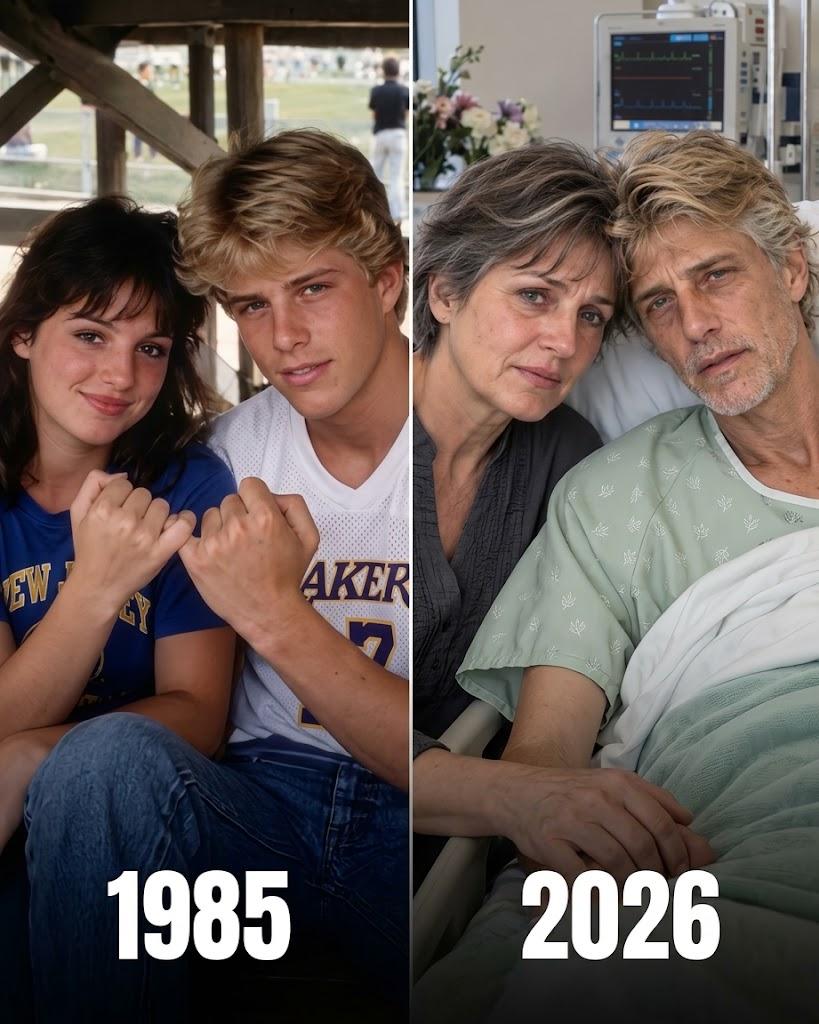

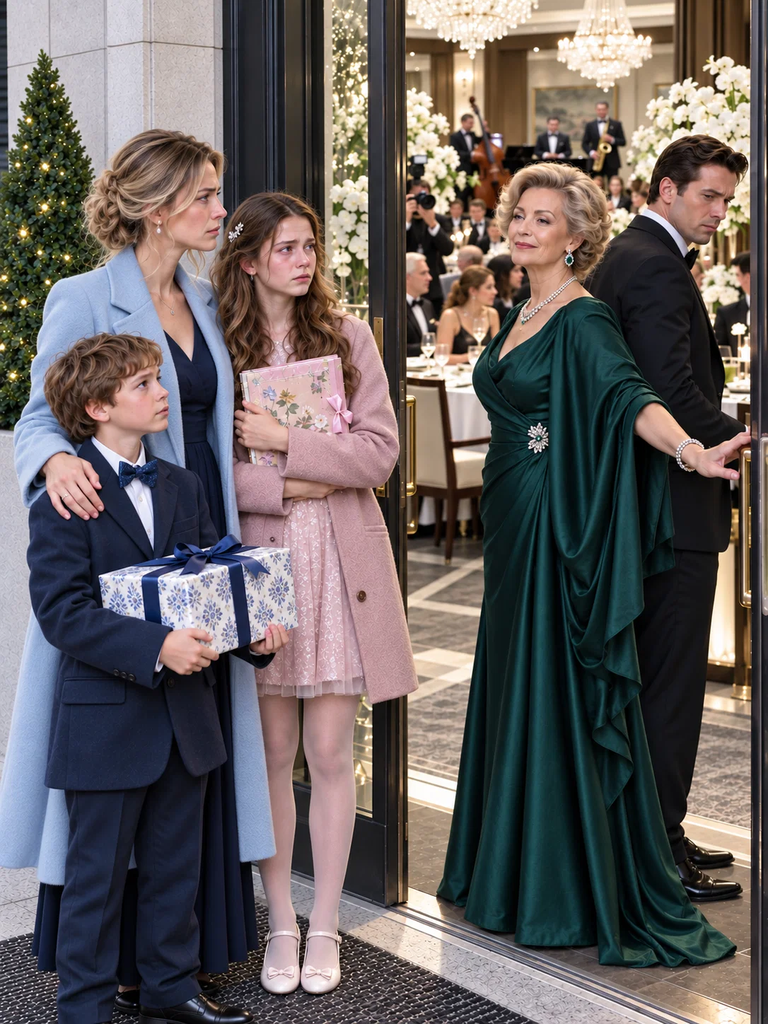
 ”
”