Category: Uncategorized

  • PART1: At my wedding, I caught my brother slipping something into my glass. I didn’t scream or panic. I quietly switched our drinks. Then he lifted his toast, smirked, and said, “Congrats, little sister. My surprise is coming soon.”

    PART1: At my wedding, I caught my brother slipping something into my glass. I didn’t scream or panic. I quietly switched our drinks. Then he lifted his toast, smirked, and said, “Congrats, little sister. My surprise is coming soon.”

    At my wedding, I saw my brother slipping something into my drink. I did not scream or lose control. I quietly traded our glasses. Then he raised his toast, smirked, and said, “Congrats, little sister. My surprise is coming soon.” I smiled while he drank it. Thirty minutes later, everyone saw the truth.
    Thirty minutes later, my brother’s smug smile had disappeared.
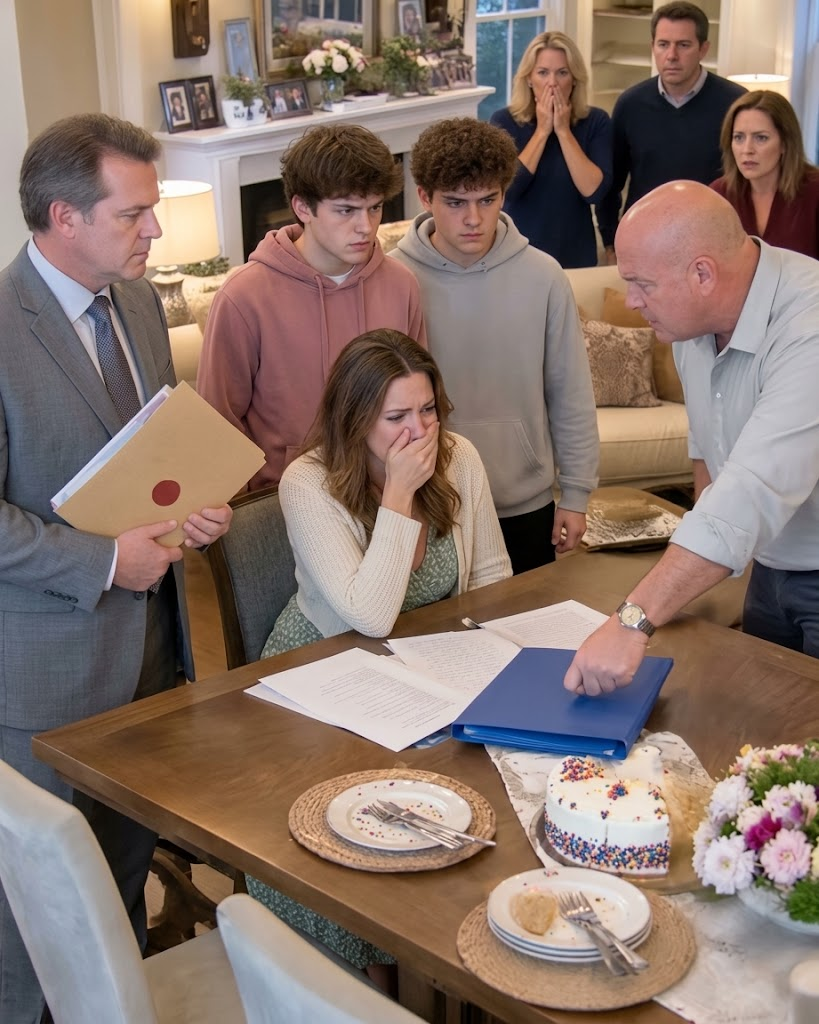
    Derek Caldwell stood near the champagne fountain with one hand braced against the table’s edge, his face fading to the shade of soaked paper. Around him, the ballroom of the Hawthorne Hotel in Chicago still glittered—gold chandeliers, white roses, violin music, a hundred guests laughing too loudly to notice the first fracture in his performance.
    But I noticed.
    I had been noticing everything from the second he bent over my glass during the speeches.
    Derek had always believed I was too gentle to suspect him. Too courteous. Too desperate to preserve peace in a family that had lived off my silence for years. He smiled as he blocked my view with his shoulder, pulled a small folded packet from his cuff, and tapped its contents into my champagne.
    At first, my stomach went icy.
    Then something older than fear took control.
    I laughed at something my husband, Daniel, said and deliberately reached for the wrong glass. Derek’s eyes darted toward my hand, but Aunt Meredith called his name and distracted him. By the time he looked back, I had already switched them.
    So when he lifted the tainted toast to his mouth and said, “Congrats, little sister. My surprise is coming soon,” I smiled like a bride posing for a picture.

    “Can’t wait,” I said.
    He drank every drop.
    Now, thirty minutes later, sweat shone across his forehead. He tugged at his tie. His wife, Vanessa, leaned close and whispered, “Derek, are you drunk?”
    “I’m fine,” he snapped, but his voice broke.
    My father, Richard Caldwell, noticed after that. He crossed the room with the rigid executive stride he used whenever he wanted to pretend nothing was happening. “Derek,” he said under his breath, “pull yourself together.”
    Derek tried to laugh. Instead, he gagged.
    The room started going quiet.
    My mother, Elaine, looked at me from the other side of the dance floor, her expression sharp with warning, as though I had somehow caused his collapse by simply existing. That was how it had always worked. Derek destroyed things; I apologized for the noise.

    Then Derek stumbled.

    A waiter rushed forward to catch him, but Derek pushed him away and knocked over a silver tray. Glass shattered. Champagne splashed across the white marble floor. The violinist stopped in the middle of a note.

    Daniel’s hand found mine. “Mara,” he whispered, “what’s happening?”

    I looked at my brother, then at the empty glass beside his place card.

    “I think,” I said softly, “Derek’s surprise arrived early.”

    Derek heard me.

    His eyes widened.

    For the first time in my life, he looked afraid of me.

    Then his knees gave out, and he fell to the floor in front of two hundred witnesses.

    PART 2

    The ballroom exploded into chaos.

    Someone screamed. Vanessa dropped beside Derek, slapping his cheek and pleading for him to respond. My father shouted for a doctor, even though three guests were already forcing their way through the crowd—Daniel’s cousin, an emergency physician; my college roommate, a nurse practitioner; and one of my clients, a cardiologist.

    I remained still in my wedding gown, my bouquet dangling from my fingers like it belonged to someone else.

    Daniel gently turned me toward him. His blue eyes searched my face. “Mara. Tell me what you know.”

    I wanted to say nothing. For twenty-eight years, nothing had been the safest language I knew. Nothing when Derek locked me in the basement during storms. Nothing when he forged my signature on a college loan application. Nothing when he convinced our parents I was unstable after I reported the missing money from our grandmother’s estate.

    But tonight, saying nothing could have killed me.

    I looked at Daniel and said, “He put something in my drink.”

    His face changed.

    Not dramatically. Daniel was not dramatic. His jaw tightened, his shoulders straightened, and the warmth in his expression sharpened into something exact and dangerous.

    “Did anyone else see?” he asked.

    “I don’t know. Maybe the photographer. Maybe the videographer.”

    Daniel turned at once. “Leo!”

    Our videographer, Leo Martinez, looked up from near the dessert table, still holding his camera.

    “Do not delete anything,” Daniel said. “Not one second.”

    Leo’s smile disappeared. “Understood.”

    On the floor, Derek groaned. His eyelids fluttered. The doctor checked his pulse and told someone to call 911. Vanessa cried even louder, but I noticed she did not seem surprised enough.

    My father came toward me with rage twisting his face. “What did you do?”

    I almost laughed.

    There it was.

    His son had collapsed after threatening me, and still the first accusation was aimed at me.

    Daniel stepped in front of me. “Richard, back up.”

    “This is a family matter,” my father snapped.

    “No,” Daniel said. “This is attempted poisoning at our wedding.”

    The words hit the room like a knife dropped onto marble.

    My mother gasped. “How dare you say that?”

    I lifted my hand and pointed toward the table. “My glass is there. Derek’s glass is beside his chair. He switched his own fate when he assumed I wouldn’t notice him.”

    My mother opened her mouth, then closed it again.

    For once, she had no ready sentence.

    Sirens cried outside five minutes later. Paramedics entered through the side doors, pushing a stretcher across the marble floor. Derek was conscious by then, but barely. He muttered something as they secured him.

    I leaned close enough for only him to hear.

    “You should have picked a different night.”

    His bloodshot eyes locked on mine. “You ruined everything,” he whispered.

    “No,” I said. “I finally stopped helping you hide it.”

    His expression changed.

    Not remorse. Never remorse.

    Recognition.

    He knew I had changed.

    As the paramedics wheeled him away, a police officer entered the ballroom. Behind him, Leo lifted his camera slightly.

    “I have the footage,” Leo said.

    Vanessa went pale.

    My father looked as though the floor had vanished beneath him.

    And I understood that Derek’s surprise had not been intended to end with a sick bride. It had been meant to begin something larger—something planned, recorded, and ready to destroy my marriage before it even started.

    PART 3

    The police asked to speak with me in a private room off the ballroom.

    It was called the Magnolia Room, though there were no magnolias inside—only beige walls, a long conference table, and a framed black-and-white photograph of Lake Michigan. I sat at the table in my wedding dress while my husband stood beside me, one hand resting lightly on the back of my chair.

    Officer Grant, a woman in her early forties with steady eyes and a notebook, asked me to begin at the start.

    So I did.

    I told her about Derek bending over my glass. About the packet hidden in his cuff. About the toast. About switching the glasses while pretending to laugh. I did not exaggerate. I did not cry. I had already cried enough over Derek Caldwell to last several lifetimes.

    When I finished, Officer Grant looked at Daniel. “You saw any of this?”

    “No,” Daniel said. “But I saw Derek’s toast. I heard the threat.”

    “It sounded like a joke?” she asked.

    “To everyone else, maybe,” Daniel replied. “Not to Mara.”

    Officer Grant nodded and wrote it down.

    Then Leo Martinez entered with his camera.

    He had been filming candid moments during cocktail hour and the speeches. At first, the footage showed ordinary wedding scenes: my mother fixing her pearls, Daniel’s grandfather wiping his eyes, bridesmaids laughing with champagne flutes in their hands.

    Then the screen showed me.

    I was talking to Daniel’s sister, Grace, with my glass sitting on the table behind me. Derek stepped into the frame, smiling, charming, handsome in the way people trusted far too easily. He touched my shoulder. I turned slightly. His other hand moved above my glass.

    The movement was quick.

    Not quick enough.

    Officer Grant asked Leo to play it again.

    On the second viewing, the folded white packet was visible.

    Daniel’s hand tightened on the back of my chair.

    I kept my eyes on the screen, forcing myself not to look away. Derek’s fingers tapped once. Something pale dropped into the champagne. Then he slipped the packet away and raised his own glass as though nothing had happened.

    A minute later, the video showed me switching the drinks.

    Officer Grant paused the footage. “You knowingly gave him the contaminated drink?”

    “No,” I said carefully. “I moved my glass away from myself. I didn’t know what he put in it. I didn’t know if it was dangerous. I only knew he had put something in mine.”

    “That distinction matters,” Daniel said.

    Officer Grant looked at him. “It does.”

    She collected both glasses as evidence. The hotel security team found the nearest hallway camera angle. It showed Derek entering the men’s restroom ten minutes before the toast and speaking with Vanessa outside the door afterward. Vanessa passed him something small from her clutch.

    When Officer Grant questioned Vanessa about it, we could hear her crying through the wall.

    “I don’t know what you mean,” she kept saying. “It was breath mints. It was just breath mints.”

    But breath mints did not make a man collapse.

    By midnight, the wedding was over.

    Not finished. Over.

    Guests were sent home with half-eaten cake and rumors thick enough to choke on. My parents left without speaking to me. Daniel and I did not go to our hotel suite overlooking the river. Instead, we spent the first night of our marriage in a police station, giving statements beneath fluorescent lights.

    At 3:12 in the morning, Officer Grant came back with an update.

    “Your brother is stable,” she said.

    I felt Daniel exhale beside me.

    I had not realized he had been holding his breath.

    “He ingested a strong sedative mixed with alcohol,” Officer Grant continued. “Potentially dangerous, especially with the dose and his body weight, but not fatal based on what we know now. Toxicology will confirm.”

    “A sedative,” I repeated.

    Officer Grant nodded. “Fast-acting. Disorienting. Could cause memory gaps.”

    Daniel’s expression darkened. “Why would he want Mara sedated at her own wedding?”

    I already knew.

    The answer sat heavy in my stomach like a stone.

    Officer Grant looked at me. “Mrs. Hayes, do you have any idea what his motive might have been?”

    Mrs. Hayes.

    For one tiny second, the name startled me.

    Then I remembered. I had married Daniel. Despite Derek. Despite my parents. Despite every person who thought my life belonged to them to control.

    “Yes,” I said. “Money.”

    The room fell silent.

  • They Kicked Me Out for My Sister—Now They’re “So Proud” I Bought a $12M Estate

    The email notification glowed on my phone screen like a warning flare. Subject line: “Family reunion.” Sender: Walter—my father, a man who hadn’t spoken to me in six years.

    I stood on the balcony of my Portland estate, raindrops pelting the glass railing as I read his message with trembling hands. “Valyria, we heard about your success. We are so proud. We are flying to Portland to see you. We need to talk about the future. Love, Dad and Mom.”

    The audacity nearly knocked the breath from my lungs. They were proud. They wanted to talk about the future. As if the past six years of absolute silence had never happened. As if I hadn’t stood on their Memphis doorstep in a downpour, homeless and heartbroken, while they locked the deadbolt and turned off the lights.

    Ezoic

    I should have been celebrating. I had just closed the biggest deal of my career, securing my tech company’s future for the next decade. Instead, I was spiraling back to that night—the night my family chose my older sister Sienna’s comfort over my existence, the night they handed me two hundred dollars and a suitcase and told me my presence made my sister physically ill.

    My phone buzzed again. This time it was Uncle Clark, my father’s brother and the only family member who had shown me genuine kindness when I needed it most.

    “Did you get the email?” His gruff voice was edged with concern.

    Ezoic

    “Yeah,” I managed.

    “You don’t have to let them in, Belle. You can call the police if they show up.”

    But something had shifted inside me. Maybe it was time. Maybe it was finally time for them to see exactly what they had thrown away when they chose Sienna’s manufactured hysteria over their younger daughter’s future.

    “I’m going to let them come,” I told Clark. “They need to see this.”

    Ezoic

    To understand why a simple email could resurrect such visceral pain, you need to understand what happened six years ago. You need to know that I wasn’t a troubled kid. I didn’t do drugs, didn’t steal, didn’t rebel. I was a nineteen-year-old computer science student working part-time at a diner, saving money for college, spending my free time coding in my small bedroom.

    But in my family, there was only one rule that mattered: keep Sienna happy.

    And six years ago, Sienna decided that my very existence was preventing her from achieving happiness.

    Ezoic

    My sister was twenty-two when she moved back home after her marriage imploded—a whirlwind romance turned disaster that left her bitter and looking for someone to blame. That someone became me. The atmosphere in our house shifted overnight into something toxic and suffocating. If I laughed while watching a video, Sienna would storm in with tears streaming down her face, screaming that I was mocking her pain. If I cooked dinner, she’d refuse to eat, claiming the smell triggered her nausea.

    My parents, terrified of her “fragile emotional state,” catered to her every demand. My mother would pull me aside with desperate whispers: “Valyria, please just be quieter. Your sister is going through trauma. Be the bigger person.”

    So I tried. I wore headphones constantly, ate my meals after everyone else finished, spent more time at the library than at home. But it was never enough. The real problem wasn’t what I did—it was who I was. I was in college, building a life, creating a future. Sienna had a failed marriage and mounting debt. My existence was a constant reminder of everything she lacked.

    Ezoic

    The breaking point came one evening when I was typing an essay on my laptop in the living room. Sienna appeared in the doorway wearing her bathrobe, looking like a tragic queen. She stared at me, then began breathing heavily, clutching her chest before releasing a scream that sounded like murder.

    My parents came running. Sienna pointed a shaking finger at me and declared that my aura was suffocating her, that looking at my face made her physically ill, that my toxic energy was preventing her from healing.

    I sat frozen, certain my parents would recognize the absurdity. Instead, my mother looked at me with cold eyes and ordered me to my room, accusing me of upsetting my sister deliberately.

    Ezoic

    That’s when I knew I was in real danger.

    Sienna had discovered the perfect weapon: her health. If she claimed I was making her sick, our parents would do anything to remove the sickness. And I was the disease they needed to eliminate.

    The escalation was terrifyingly rapid. Sienna committed fully to her performance, acting as if I were radioactive. If I entered the kitchen while she drank coffee, she’d gag and make loud retching sounds, screaming that my perfume triggered migraines—even though I wore no perfume. I stopped using any scented products, but it didn’t matter. She claimed she could smell my stress, that it gave her heart palpitations.

    Then she stole my work.

    I had spent months developing a scheduling app for freelancers called Task Flow. I’d written the backend code, designed the interface, recruited beta testers from my college classes. One afternoon, I left my laptop open while I went to the bathroom. When I returned, Sienna was on the couch reading a magazine, my laptop mysteriously closed.

    Ezoic

    A week later, Sienna announced to our parents that she’d had an epiphany—she was going to become a tech entrepreneur. As I sat there in stunned silence, she described my app feature for feature, word for word from my pitch deck, calling it Task Stream.

    When I exploded and accused her of theft, Sienna burst into instant tears, wailing that I was jealous and trying to sabotage her recovery because I was bitter and hateful. My mother looked at me with pure disgust, telling me I should be ashamed for not supporting my sister’s dreams. My father demanded I apologize.

    I refused. And I knew the clock was ticking. Sienna had stolen the idea but couldn’t execute it. She needed me gone before her fraud was exposed.

    Ezoic

    Three days later, the end came.

    I arrived home from my diner shift, exhausted and smelling like grease, wanting nothing more than a shower and sleep. The living room was dark. My parents sat on the couch with Sienna wrapped in a blanket between them, trembling. It looked like an intervention, and I was the addict they were cutting off.

    My mother spoke in a trembling but resolved voice. The tension in the house was too much. Sienna had suffered a severe panic attack because of my negative energy. She didn’t feel safe in her own home.

    When I begged them to give me one example of hostility, my father finally looked up with empty eyes. It didn’t matter what I did or didn’t do, he said. My presence was making my sister sick. They had to prioritize her health. She was fragile. I was strong. I could handle myself.

    Ezoic

    He told me I had to leave. Not for the night—permanently, and immediately.

    It was ten o’clock at night and pouring rain. When I asked where I was supposed to go, my mother handed me a suitcase. My suitcase, already packed. They had gone through my room while I was at work, deciding what I could keep. My father placed two hundred dollars in crumpled bills on the coffee table.

    I looked at Sienna. She wasn’t trembling anymore. She was watching me with predatory focus, a victor surveying her conquered territory.

    Ezoic

    “Do you love me at all?” I asked my mother.

    She looked away, unable to answer. That silence was the loudest sound I’d ever heard.

    I walked out into the rain, my thin waitress uniform soaking through instantly. As I turned back one final time, I saw Sienna through the window. She wasn’t hugging our parents. She was smiling—a wide, victorious smile.

    Ezoic

    Then the deadbolt clicked shut, that metallic sound echoing in my head for years to come.

    I was nineteen years old, alone, and my family had discarded me like garbage.

    I spent that first night in a Walmart parking lot, sitting in my rusting ten-year-old sedan, too ashamed to call anyone. How do you explain that your parents kicked you out because your sister claimed you made her sick? It sounded insane, like I must have done something terrible to deserve it.

    Ezoic

    By the third night, loneliness shattered me. Shivering in the dark, surviving on peanut butter and bread, I finally called my best friend McKenna. Twenty minutes later, she pulled up in her bright yellow Jeep, ripped open my car door, and pulled me into a crushing hug without asking a single question.

    Sleeping on McKenna’s couch that night, I finally felt safe enough to crash. When I woke fourteen hours later, she was waiting with coffee, and I told her everything. McKenna didn’t cry—she got angry, pacing her apartment and cursing my family with words I can’t repeat here.

    “They’re monsters,” she said flatly. “And Sienna is a sociopath.”

    Ezoic

    Having someone validate my reality was the first step in healing. I wasn’t crazy. I wasn’t toxic. I was a victim of a profoundly dysfunctional system.

    But I couldn’t stay on McKenna’s couch forever. That’s when I called Uncle Clark.

    He lived in Chattanooga, two hours away. He and my father hadn’t spoken in years because Clark had called my mother manipulative at a Christmas party. At the time, I thought he was being cruel. Now I realized he was the only one who saw the truth.

    Ezoic

    “Pack your bags, kid,” he said when I called. “I’ll leave the key under the mat.”

    Uncle Clark’s modest two-bedroom bungalow became my sanctuary. He showed me to the guest room and laid down one rule: don’t give up. That night over steaks, he laughed when I mentioned Sienna stealing my app.

    “Ideas are cheap, Belle. Execution is everything. She can’t code. She stole the blueprints but doesn’t know how to lay the bricks.”

    Ezoic

    I checked Sienna’s social media that night. She’d posted rambling statuses about her revolutionary startup, asking for investors—but there was no product, no prototype, just empty buzzwords.

    I closed the laptop and made a vow. I would disappear from their lives completely. Delete social media. Become a ghost. While they played pretend, I would build something real—an empire so undeniable that their rejection would become the biggest mistake of their lives.

    The first year in Chattanooga was a blur of exhaustion and determination. I woke at five to code, attended classes from nine to two, worked at the diner from four to eleven, then coded until my eyes blurred. I called it Project Phoenix—not just rebuilding Task Flow, but completely reimagining it with AI integration, creating an algorithm that didn’t just schedule tasks but predicted workload and automated invoicing.

    Ezoic

    There were nights I cried over my keyboard, days I wanted to call my mother and beg to come home. But every time I felt weak, I’d look at a screenshot I’d saved—Sienna complaining that being a CEO was so hard when people didn’t support your vision. Her startup had stalled. Seeing her fail gave me energy at three in the morning when my code wouldn’t compile.

    Uncle Clark was my rock, leaving fresh coffee on the counter before work, helping me practice my pitch. “Look them in the eye,” he’d say. “Make them believe you’re the smartest person in the room.”

    By senior year, I had a working beta version. Local freelancers used it for free in exchange for feedback. The response was electric—people said it saved them ten hours a week. Word spread rapidly.

    Ezoic

    I needed funding to scale. Wearing my one good thrift-store blazer that McKenna had tailored, I pitched to a venture capital firm in Nashville. Walking into that boardroom full of men twice my age, I was terrified. But when I showed them the demo, the fear evaporated. I knew my product was better than anything else out there.

    One skeptical investor asked if I had a co-founder. I thought of Sienna stealing my work, of my father handing me two hundred dollars.

    “No,” I said, meeting his eyes. “I built this brick by brick. I don’t need a co-founder. I need a check.”

    Ezoic

    He smiled and wrote it.

    That check changed everything. We launched publicly six months later and exploded—ten thousand users the first week, then fifty thousand, then a hundred thousand. Tech blogs called me the wunderkind of Chattanooga. I kept my head down, avoiding interviews, terrified that if I made too much noise, my family would find me before I was ready.

    Year four brought the turning point. A major software giant approached with a licensing deal worth millions. When the money hit my account, Uncle Clark and I stared at the screen full of zeros in disbelief.

    “You did it, kid,” he whispered. “You really did it.”

    JonBenét Ramsey: New Evidence

    Exclusive case files reveal shocking details. Dive into unsolved mysteries never seen.

    Ezoic

    I bought Clark the Ford truck he’d been eyeing for twenty years. He cried—the first time I’d ever seen it. I brought McKenna on as VP of operations. With her and Clark beside me, I realized I had a family—just not the one I was born into. It was the one I chose.

    Six months ago, I decided to stop hiding. I was tired of being small. I wanted to live somewhere beautiful, somewhere without Southern ghosts. I chose Portland and found an estate in the hills. Twelve million dollars. Excessive, grand, fortress-like.

    I bought it in cash and moved in with Clark and McKenna. Clark took the guest house by the pool, McKenna got the east wing. We were living the dream.

    Ezoic

    But secrets don’t stay buried, especially when you appear on Forbes 30 Under 30 lists.

    My mother’s sister Lydia called last week. She’s the family drama addict, the spy who thrives on chaos.

    “They know,” she whispered. “Your parents saw the Forbes article. They know about the company, the house. And honey, they’re furious.”

    Ezoic

    “Furious?” I laughed. “Why?”

    “Because they think you owe them. Sienna’s telling everyone you stole her idea and used family money to build it. They’re planning to visit. They want their cut.”

    “Let them come,” I told her. “Send me everything they’re saying—screenshots, texts, everything.”

    Which brings us back to today, standing on my balcony, staring at my father’s email.

    Ezoic

    I spent the days before their arrival preparing like it was a hostile corporate takeover. I hired private security—Davis and Miller, two imposing men in suits stationed at the gate and front door. McKenna and I made sure every luxury was on display: vintage wine stocked, infinity pool steaming, my sports car parked prominently by the fountain.

    Petty? Absolutely. But I wanted them to see exactly what “toxic energy” could buy.

    I also reviewed the evidence Aunt Lydia sent—a treasure trove of delusion. Group chat messages where Sienna called me a thief and parasite. Texts from my mother saying, “We should have gotten it in writing before we let her leave.” Let her leave, as if I’d had a choice.

    Ezoic

    The morning they arrived, rain fell in sheets. I wore a white power suit—sharp, tailored, spotless—wanting to look like the CEO I’d become, not the waitress they’d thrown out.

    The intercom buzzed at ten. “Ma’am, there’s a rental sedan at the gate. Three passengers.”

    “Let them in.”

    I stood in the grand foyer watching through the double-height glass doors as their cheap beige sedan pulled up the marble driveway. My father stepped out first, slumped and wearing an ill-fitting suit. My mother clutched her purse like a shield. Then Sienna emerged, trying to hide how poorly she’d aged, her face pinched with bitterness.

    Ezoic

    Her eyes went wide as she looked up at the house. I watched the calculation happen in real time—she was counting windows, estimating square footage. She wasn’t looking at her sister. She was looking at a bank vault.

    I opened the door but didn’t step out to greet them. “Hello, Ruth. Walter. Sienna.”

    The use of their first names hit like a slap. My mother dropped her outstretched arms.

    Ezoic

    “Shoes off,” I said, pointing to the custom rug. “This floor is imported Italian marble. It stains easily.”

    I led them into the main living room with its twenty-foot ceilings and panoramic city views. They tried to act unimpressed but failed miserably. Sienna ran her hand over a velvet armchair, checked the bottom of a crystal vase for brand names.

    “This is nice,” she said, dripping with envy. “A bit excessive for one person, don’t you think?”

    Ezoic

    “It’s perfect for me. Please sit.”

    They sat on the sofa. I took the single armchair opposite them, creating the atmosphere of a court hearing.

    My father cleared his throat. “We were so surprised to hear about your success. We always knew you were smart.”

    “Did you? I remember you thinking I was toxic and dangerous to Sienna’s health.”

    Ezoic

    My mother laughed nervously. “Oh honey, that was a misunderstanding. A stressful time. Families fight, but we forgive each other. That’s what family does.”

    “So you’re here to forgive me?”

    “We’re here to reconnect,” my father said carefully. “And discuss how we can move forward together.”

    Sienna leaned forward. “Let’s be honest, Belle—you didn’t do this alone. You used the foundation we gave you, the education Dad paid for. And we need to talk about the app.”

    Ezoic

    Here it came. The shakedown.

    “Everyone knows Task Stream—or Task Flow, whatever you call it—was my concept,” Sienna continued, clearly rehearsed. “I came up with it when I moved back home. You heard me talking about it. You took my idea and ran with it while I was too sick to work. I think fifty percent equity is fair, considering it was my intellectual property. Plus, Mom and Dad need a new house. Their mortgage is underwater. You could buy them a place here. We could all live together again. Like old times.”

    My mother nodded eagerly. “That would be wonderful. We miss you so much, Val. We could be a family again.”

    I looked at each of them—my father avoiding my eyes, my mother desperate for comfort, Sienna feeling entitled to my labor.

    Ezoic

    “Let me get this straight. You kicked me out into the rain with two hundred dollars. You left me homeless. You didn’t call for six years—not on my birthday, not on Christmas—and now you want to move in and take fifty percent of my company?”

    “We gave you tough love,” my father blurted. “It made you strong. You wouldn’t be here if we hadn’t pushed you out of the nest.”

    “Pushed me? You locked the door, Walter. You chose her over me because she said I made her sick.”

    Ezoic

    “I was sick,” Sienna snapped. “Your energy was dark. Look how selfish you are now. All this money and you won’t help your struggling parents. You’re a narcissist.”

    “That’s interesting coming from you.”

    “Stop being dramatic. Just write the check, Belle, or I’ll sue you. I have witnesses who heard me talking about the app idea before you built it.”

    “Witnesses? You mean Mom and Dad?”

    “Yes,” she smirked. “And a court will believe two parents over one bitter, estranged daughter.”

    Ezoic

    I stood slowly and walked to the wall, picking up a remote control. “I expected you to say that. So I prepared a presentation.”

    I pressed a button. A massive screen descended from the ceiling, curtains automatically closing to dim the room.

    “You see, I learned something valuable in tech. Always keep backups. Always have data.”

    The screen flickered to life, displaying a screenshot of a text message from six years ago. Sienna to her friend Jessica.

    I read it aloud: “I finally got the brat kicked out. I had to fake a panic attack and pretend to vomit at dinner, but it worked. Mom and Dad are so gullible. Now I have the house to myself.”

    Deathly silence.

    My mother gasped. “What is that?”

    Sienna went pale. “That’s fake. She photoshopped it.”

    “I didn’t. This is from your old cloud account. You logged into my laptop once, remember? You forgot to log out.”

    Ezoic

    Next slide. A LinkedIn post from Sienna one week after I was kicked out: “So excited to launch my new idea, Task Stream. A revolutionary way to organize closets.”

    “Closets?” I asked. “I thought you said it was a freelancer scheduling app. Seems you didn’t even understand the code you stole.”

    “I changed direction!” Sienna yelled, standing. “Stop this. This is invasion of privacy!”

    “Sit down.”

    My voice echoed off the marble walls. She sat.

    Next slide. A screenshot from the family group chat three days ago, provided by Aunt Lydia. My father’s message: “We just need to play nice until she signs over some assets. Once we have the money, we can put her in her place. She’s still the same ungrateful child.”

    My mother’s response: “I just hope she doesn’t expect us to stay long. I can’t stand her attitude. We get the money, buy the lake house, and leave.”

    I turned to face my parents. My father was pale, mouth opening and closing wordlessly. My mother cried, but I recognized her tears as mere defense mechanism.

    Ezoic

    “You played nice. You forgot that Aunt Lydia always hated how you treated me.”

    “Lydia is a liar!” my mother screeched. “She’s jealous!”

    “Jealous of what? Your underwater mortgage? Your failed golden child? Your broken morality?”

    I walked closer. “You didn’t come for me. You came for a payday. You thought you could guilt-trip me into funding your retirement. You thought I was still that scared nineteen-year-old begging for your love.”

    I leaned close to Sienna. “But I’m not her anymore. I’m the woman who built an empire while sleeping in a car. And I don’t owe you a single penny.”

    Sienna glared with pure hatred. “You think you’re special because you have money. You’re still alone. No one really loves you. They just love your wallet.”

    “Actually,” Uncle Clark’s voice came from the doorway. He stood there looking furious, McKenna beside him holding a phone, recording everything.

    Ezoic

    “Clark,” my father whispered.

    “Hello, Walter.” Clark walked over and stood next to me. “She’s not alone. She has a family. A real one. One that didn’t throw her away like trash.”

    “Get out,” I said.

    “Valyria, please,” my mother sobbed. “We can explain. Those texts were taken out of context—”

    “Get out. Now.”

    “We’re not leaving until we get what we deserve!” Sienna screamed, grabbing the crystal vase from the table and hurling it at the floor. It shattered into a million pieces. “Oops. My bad energy slipped.”

    I pressed the intercom button. “Miller. Davis. You’re up.”

    The front door opened instantly. My security guards stepped in, imposing and unsmiling.

    “Escort these trespassers off the property. If they resist, call the police.”

    “You wouldn’t,” my father said, shocked. “We’re your blood.”

    “You lost that right when you locked me out in the rain. Go before I charge you for the vase.”

    Miller and Davis didn’t need force—their presence was enough. Sienna screamed profanities the entire way out, calling me a witch, a thief, a lonely spinster. My mother wailed about giving birth to me. My father just shuffled to the door with his head down, defeated.

    I watched their beige rental car disappear down the driveway and through the iron gates.

    When they were gone, McKenna turned off her camera. “I got it all. Just in case they try to sue.”

    Ezoic

    “They won’t,” Clark said. “Walter is a coward. He knows he’s beaten.”

    I looked at the shattered crystal on the floor—a five-thousand-dollar vase that felt like a release, the last piece of their chaos expelled from my home.

    “Are you okay?” Clark asked, hand on my shoulder.

    I took a deep breath. For the first time in six years, the knot in my chest was gone. The nausea vanished. The voice telling me I was worthless fell silent.

    Ezoic

    “I’m better than okay. I’m free.”

    The aftermath was swift and satisfying. Aunt Lydia posted the screenshots on Facebook with a detailed account of what really happened six years ago and how the family tried to swindle me. The fallout was nuclear. Cousins expressed shock. Aunts and uncles sent apologies I mostly ignored. Sienna tried to spin it, posting videos claiming I’d doctored the images, but the internet is ruthless. People dug up her old posts, her failed ventures, her contradictions. She was ridiculed and eventually deleted all her accounts.

    My parents lost their standing in their church—people don’t like parents who abandon their children. They sold their house and downsized to a small condo. Through Lydia, I heard Sienna now lives with them, sleeping on their couch, still complaining the world is unfair. They’re miserable together, and they deserve each other.

    As for me, I’m still in Portland, still running my company, but I’ve started a scholarship fund for students estranged from their families. I want to make sure the next girl kicked out in the rain has somewhere to go besides a Walmart parking lot.

    I learned that family isn’t about DNA or shared last names. It’s about the people who show up when you have nothing—McKenna driving at two in the morning, Uncle Clark cooking steaks, the people who respect you rather than merely tolerate you.

    Standing on my balcony tonight as rain falls, I’m warm and safe. The door is locked—not to keep me out, but to keep the bad energy out.

    Some will say I was too harsh, that I should have forgiven them because you only get one set of parents. But I disagree. Toxic is toxic, whether it’s a stranger or your sister. Saving myself was the most important thing I ever did.

    Ezoic

    After everything they did—stealing my work, kicking me out, gaslighting me, returning only when they smelled money—I exposed them and cut them from my life forever. They got exactly what they deserved. And I finally got what I always needed: peace, success, and a family that actually loves me.

    The rain continues to fall, but from inside my fortress, it sounds less like betrayal and more like applause.

  • My Son Was Fired and Left on a Park Bench With a Baby—His Father-in-Law Forgot Who Paid His Salary

    The call came through on a Tuesday afternoon while I was reviewing quarterly reports in my corner office on the twenty-fifth floor. Eleanor Vance, that’s me—though most people in Chicago’s logistics industry know me simply as “the woman who turned one used truck into an empire worth hundreds of millions.” I built Vance Logistics over thirty years, starting with nothing but debts that would have broken most people and a stubborn refusal to stay poor.

    “Miss Ellie,” my head of security Luther said, his voice carrying that particular flatness that meant trouble, “I think you need to see something. I’m sending you a location pin.”

    I looked at my phone screen as the pin dropped—a small park near Lake Forest, about forty minutes from downtown. “What am I looking at, Luther?”

    Ezoic

    “Just come,” he said. “I’ll drive you myself.”

    Twenty minutes later, I was in the back of my Mercedes watching the city give way to the manicured lawns of Chicago’s wealthy suburbs. Luther drove in silence, which was unlike him. He usually filled quiet moments with updates about security protocols or minor issues that needed my attention. This silence felt heavy, deliberate, like he was giving me space to prepare for something he knew would hurt.

    We pulled into a small neighborhood park—the kind with wooden benches and old oak trees, designed for nannies with strollers and elderly couples taking afternoon walks. It was nearly empty on this gray autumn afternoon, just leaves skittering across the pathway in the wind.

    That’s when I saw him.

    My son Marcus sat hunched on a bench at the far edge of the park, his shoulders curved inward in the posture of total defeat. Next to him were three large suitcases—expensive leather, the kind I’d bought him when he graduated business school. And standing near the bench, kicking at fallen leaves with the unselfconscious energy of a child who doesn’t understand catastrophe, was my three-year-old grandson Trey in his bright blue jacket.

    Ezoic

    My heart did something complicated—dropped and hardened at the same time. I’d spent three years watching my son try to prove himself to people who would never respect him, three years biting my tongue during Sunday dinners while his father-in-law Preston Galloway lectured him about “proper breeding” and his wife Tiffany smiled coldly over her wine glass. I’d honored my son’s request not to interfere, to let him build his own reputation without his mother’s shadow.

    But seeing him on that bench with everything he owned piled beside him, I knew that experiment had failed spectacularly.

    “Stop the car,” I said quietly.

    I stepped out and walked toward him, my heels clicking against the gravel path with a rhythm that felt like a countdown. Marcus didn’t notice me until my shadow fell across him. When he looked up, his eyes were red—not from tears, because men in our family don’t cry in public, but from exhaustion and the kind of defeat that hollows you out from the inside.

    Ezoic

    “Mama,” he said, and just that one word carried so much weight it nearly broke my heart.

    I looked at the suitcases, at my grandson playing obliviously nearby, at my son’s empty wrist where his Patek Philippe watch should have been. That watch had been a gift for his thirtieth birthday, and Marcus never took it off. Its absence told me everything I needed to know about how desperate his situation had become.

    “Why are you here, Marcus?” I asked, keeping my voice level and businesslike. No hysteria. I needed information first. “Why aren’t you at the office where you’re supposed to be?”

    Ezoic

    He let out a laugh that sounded like broken glass. “I don’t have an office anymore, Mama. Preston fired me this morning. Said I was incompetent, that I was dragging the company down. And then Tiffany—” His voice cracked, and he had to stop to collect himself. “Tiffany packed my things and put them on the curb. Said she’s filing for divorce. That I’m a loser who’s embarrassing her family.”

    I stood very still, processing this information with the same cold clarity I used for hostile business negotiations. “What exactly did Preston say when he fired you? Word for word.”

    Marcus clenched his fists until his knuckles went white. “He said our blood doesn’t match. That I’m too ‘street’ for their high-end brand. That my presence was damaging their reputation with clients who expect a certain… pedigree.”

    Ezoic

    The wind picked up, tearing leaves from the trees and scattering them around our feet. I looked past Marcus toward the Galloway mansion visible through the trees in the distance—that ridiculous columned house they were so proud of, the one they thought represented their superiority.

    A smile spread across my face, and it wasn’t a kind one. It was the smile I wore in boardrooms right before I dismantled competitors who’d underestimated me.

    “Get in the car, baby,” I said, gesturing to Luther to collect the suitcases.

    Ezoic

    Marcus looked at me with confusion. “Mama, I don’t have anywhere to go. They blocked my corporate card. I don’t even have money for a taxi.”

    “I said get in,” I repeated softly, but in a tone that made argument impossible. “We’re going home. Your real home.”

    As Luther loaded the suitcases into the trunk and Marcus settled into the leather interior with Trey falling asleep against his shoulder, I took out my phone and opened a particular app that very few people knew existed—the one connected to the holding company that owned a majority stake in Midwest Cargo, the “family business” that Preston Galloway was so proud of running.

    Ezoic

    The same company I’d purchased three years ago through a complex chain of offshore accounts specifically to give my son a chance to prove himself without anyone knowing his mother owned everything.

    Preston Galloway had just made the mistake of his life. He’d humiliated my son, thrown him out like garbage, and done it all while standing on a foundation I’d built and paid for.

    Marcus had no idea that every dollar of Preston’s salary, every distribution check, every operational fund that kept Midwest Cargo running—all of it ultimately came from me.

    Ezoic

    But he was about to find out.

    And Preston Galloway was about to learn what happened when you confused my mercy for weakness.

    The drive back to my estate in Barrington Hills gave me time to think, to plan, to shift from mother mode into the cold, calculating strategist who’d built an empire from nothing. Marcus sat silently beside me, defeated and bewildered, while I opened my encrypted email and began issuing orders.

    “Luther,” I said, “I need a complete financial audit of Midwest Cargo for the last three years. Not the sanitized reports they file with the IRS—I want the real movement of funds. Every transaction, every contractor, every check over five thousand dollars.”

    Ezoic

    “Understood, Miss Ellie,” Luther replied from the driver’s seat, his eyes meeting mine in the rearview mirror.

    “And pull the documentation on the Lake Forest property. Full ownership history, including any liens and the current land lease status.”

    Marcus turned to look at me. “Mama, why do you need that? The land under their house is their family estate. Preston always said it came from old money.”

    Ezoic

    I almost laughed. Family estate. The property had been purchased in 1998 with money from a real estate deal that Preston had financed through one of my subsidiary banks—a transaction he’d never connected back to me because rich men rarely pay attention to the details of where their money actually comes from.

    “Son,” I said, covering his hand with mine, “Preston Galloway has told you many things. But documents have a way of telling a different story. Just rest. We’re going home.”

    While the car glided smoothly through the tree-lined streets, I worked. My tablet showed me the corporate structure I’d spent years building—layers of shell companies, offshore holding firms, carefully constructed veils that kept my name far from anything Preston might recognize.

    Ezoic

    Midwest Cargo was a subsidiary of Northern Logistics, which was owned by a Cayman Islands fund that ultimately belonged to me. Preston was listed as CEO, but his powers were strictly limited by a charter he’d apparently never bothered to read carefully. A charter that gave the parent company—me—the right to make any changes to leadership, operations, or assets whenever I deemed necessary.

    Then there was the land. The precious Lake Forest property that gave Preston such satisfaction, the address he loved to mention at cocktail parties. I pulled up the lease agreement and noted the expiration date: two months from now. And right there in the fine print was a clause about the lessor’s right to terminate early in cases of tenant “bad faith.”

    Bad faith. Such a useful phrase.

    By the time we reached my home, I’d already formulated the skeleton of my plan. Not revenge—revenge is emotional and sloppy. This would be justice, delivered with surgical precision.

    Ezoic

    Marcus carried his sleeping son into the guest room that had always been kept ready for them. I watched him settle Trey into bed, watched him stand there for a long moment just looking at his child’s peaceful face, and I saw the exact moment his shoulders straightened slightly. He was remembering why he had to keep fighting.

    “Mama,” he said when he came back downstairs, “I need to tell you something. The situation is worse than just being fired.”

    I poured him a whiskey—Macallan 18, his father’s favorite—and gestured for him to sit. “Tell me everything.”

    Ezoic

    Over the next hour, Marcus laid out a picture of systematic abuse that made my blood run cold. For the past six months, Preston and Tiffany had been setting him up for complete destruction. It started with small things—forged signatures on documents, manufactured complaints from “clients” who turned out to be Preston’s friends, deliberate sabotage of deals that Marcus had spent weeks putting together.

    “I thought I was going crazy,” Marcus said, his hands shaking slightly around his glass. “Projects I’d confirmed would suddenly fall through, and Preston would say I’d never followed up. Money I’d personally deposited would go missing from accounts, and the accountant would swear I’d never made the deposit. Tiffany started recording our arguments, provoking me until I lost my temper, then playing victim.”

    “Why didn’t you come to me?” I asked, though I already knew the answer.

    Ezoic

    “Because I wanted to prove I could handle it myself. That I didn’t need my mother to fight my battles.” He looked at me with eyes that held both shame and anger. “I wanted them to respect me for who I am, not because of who you are.”

    “And now?”

    “Now I realize they were never going to respect me no matter what I did. Because they don’t respect anyone, Mama. They just use people.”

    I stood and walked to the window, looking out over the grounds. The autumn sunset was painting everything in shades of gold and crimson, beautiful and ruthless.

    Ezoic

    “Marcus, I’m going to ask you one question, and I need you to think carefully before you answer. Are you ready to see this through to the end? Because once I start, there’s no going back. They will lose everything. Not just their pride—everything.”

    My son stood up, and when he spoke, his voice was harder than I’d ever heard it. “They threw me out like garbage while my son watched. They tried to destroy my reputation, my marriage, my entire life. So yes, Mama. I want to see them face consequences for once in their entitled lives.”

    I nodded. “Then go upstairs, take a shower, and get some sleep. Tomorrow, you start working for me directly at Vance Logistics. We’re going to rebuild your reputation the right way. As for Preston and Tiffany—”

    Ezoic

    I smiled that predator’s smile again.

    “Leave them to me.”

    The next morning, I called a meeting in my home office with Marcus, Luther, and my two best lawyers, Anne and Victor. The oak table was covered with documents, and I’d set up a whiteboard with a diagram of the Galloway family’s financial connections.

    “Before we begin,” I said, “I want everyone to understand the rules of engagement. We are not breaking any laws. We are simply exercising rights that we already possess and exposing truths that have been hidden. Is that clear?”

    Everyone nodded.

    “Good. Anne, let’s start with the credit situation. What did you find?”

    Ezoic

    Anne pulled out a thick folder. “It’s worse than Marcus described. In the past six months alone, someone has taken out twelve separate loans in Marcus’s name—everything from major bank loans to payday lenders. Total debt: approximately one point five million dollars.”

    Marcus went pale. “That’s impossible. I never—”

    “We know,” Victor interrupted gently. “We had a forensic handwriting expert examine the signatures. They’re forgeries. Very good ones, created using a digital plotter, but forgeries nonetheless.”

    “Here’s the clever part,” Anne continued. “For each of these loans, the guarantor was listed as Midwest Cargo, and the collateral was described as ‘personal property of the general director.’ On paper, it looks like Marcus borrowed money for personal use and Preston, as a generous father-in-law, vouched for him with company assets.”

    Ezoic

    I felt ice forming in my chest. “They were building a criminal case against him. Setting him up to take the fall for fraud while they pocketed the money.”

    “Exactly,” Victor confirmed. “We found the offshore accounts where the money was actually sent. Shell companies in the Caribbean, all ultimately controlled by Preston and Tiffany.”

    “Show me,” I said.

    The paper trail was damning. Month after month, they’d been systematically stealing from the company I owned, hanging the debt on my son, and preparing to destroy him completely when the time was right. They’d calculated every move, planned every detail.

    Ezoic

    They just hadn’t counted on me finding out.

    “There’s more,” Luther said, placing a tablet in front of me. “We accessed Tiffany’s cloud storage. She had a folder labeled ‘evidence.’”

    He pressed play, and I watched video after video of Tiffany deliberately provoking Marcus—questioning his competence, mocking his background, pushing him until he snapped and raised his voice, then immediately playing the victim. She was building a case to take Trey away in the divorce, to paint Marcus as unstable and dangerous.

    I watched my son’s face as we played the videos. His expression shifted from shock to recognition to something harder and colder.

    Ezoic

    “She was training me,” he said quietly. “Like a dog. She wanted me broken and desperate so I’d sign whatever they put in front of me.”

    “Yes,” I agreed. “But she made one critical mistake.”

    “What’s that?”

    “She underestimated your mother.”

    I closed the tablet and looked around the table at my team. “Here’s what we’re going to do. First, we’re buying out every single one of their debts. All of them—mortgage, car loans, credit cards, everything. I want to become their sole creditor.”

    “That’s going to be expensive,” Victor warned.

    “I don’t care. Do it. Second, we’re going to audit every transaction at Midwest Cargo for the past three years and document every instance of theft and fraud. Third—” I pulled up another document, “we’re going to exercise my right as majority shareholder to make immediate changes to company leadership.”

    Ezoic

    “You’re firing Preston,” Marcus said, and there was satisfaction in his voice.

    “Not yet. First, I want him to feel what you felt. I want him to experience his world slowly falling apart, piece by piece, until he understands exactly what he’s lost.”

    Over the next seventy-two hours, my team worked with the efficiency of a surgical strike unit. Every financial thread connected to the Galloways was pulled, examined, and documented. Every debt was acquired. Every fraudulent transaction was traced.

    Ezoic

    And then I made my first move.

    I suspended Midwest Cargo’s credit line—the million-dollar overdraft the company relied on to cover cash flow gaps, to pay suppliers, to make payroll. I did it through the bank’s security department with a vague bureaucratic notice about “routine counterparty verification.”

    From my office, I watched via security cameras as Preston paced his office, screaming at his accountant, calling his bank contact only to be told it was a “system glitch” that would be resolved soon.

    He believed it because men like Preston always believe their money and connections will protect them.

    Ezoic

    The glitch wasn’t going to be resolved. I was slowly tightening a financial tourniquet around his operation, cutting off blood flow until the rot became undeniable.

    Then Tiffany called Marcus.

    My son put the call on speaker as I’d instructed, and we recorded every word. Her voice dripped with false sweetness and barely concealed contempt.

    “Had enough yet?” she asked. “Ready to come crawling back?”

    Ezoic

    “What do you want, Tiffany?” Marcus asked, his voice flat.

    “Daddy’s willing to drop the police report about you stealing from the house—you know, all that silverware and jewelry you took? We’re not animals, Marcus. We understand you were desperate. So here’s the deal: come to the notary tomorrow, sign a simple confession saying you borrowed money from the company and you’ll pay it back. Just a hundred thousand. Do that, and the criminal charges disappear.”

    “And if I don’t?”

    “Then you go to jail, and I’ll make sure you never see Trey again. Daddy’s already found a suitable new father figure for him. Someone from our circle. Someone appropriate.”

    Best Day Hikes Death Valley

    Plan Best Day Hikes in Death Valley National Park: miles, seasons & safety.

    Ezoic

    Using my grandson as leverage. Threatening my son with prison for crimes he didn’t commit.

    That was the moment I stopped thinking of Tiffany as my daughter-in-law and started thinking of her as an enemy to be neutralized.

    “Think about it,” she continued. “You have until tomorrow morning.”

    Ezoic

    After she hung up, Marcus looked at me with something close to despair. “They have me trapped, Mama. If I don’t sign, they’ll pursue charges. If I do sign, I’m admitting to theft.”

    “You’re not doing either,” I said calmly. “Because tomorrow, you’re not going anywhere near that notary. Tomorrow, you’re going to start your new position at Vance Logistics, where you’ll be working on legitimate projects with people who will actually value your contributions.”

    “But the charges—”

    “Will evaporate. Trust me.”

    While Tiffany waited at the notary’s office the next morning, checking her watch and getting increasingly agitated, I was in a different office entirely—meeting with the chairman of Northern Capital Bank to finalize the purchase of every single debt the Galloways had.

    Ezoic

    “Eleanor, are you certain about this?” Paul asked, reviewing the paperwork. “This is a significant expenditure.”

    “I’ve never been more certain of anything in my life,” I replied, signing the final page. “And I need one more favor. Block all their accounts. Right now. Cite suspicious activity and change of creditor.”

    “That’s going to cause them significant distress.”

    “That’s the point.”

    Within minutes, it was done. I owned the Galloways’ financial lives completely. Every dollar they owed, every asset they’d leveraged, every bit of breathing room they thought they had—all of it now belonged to me.

    Ezoic

    And they had no idea.

    The charity gala that evening was perfect timing. The “Evening of White Knights” was being held at the Palmer House Hilton, and Preston Galloway was scheduled to receive the Entrepreneur of the Year award for his “innovative approach to logistics.”

    An innovative approach that consisted entirely of stealing from his mother-in-law.

    I arrived with Marcus, both of us dressed impeccably. We took seats in a private box overlooking the main floor, hidden behind velvet curtains but with a perfect view of the stage.

    Ezoic

    Preston stood in the center of the ballroom, resplendent in a Brioni tuxedo, accepting congratulations from Chicago’s elite. Tiffany hung on his arm in a scarlet dress, laughing at some banker’s joke, both of them glowing with the confidence of people who think they’ve won.

    That’s when I gave the signal.

    Luther pressed a button on his tablet, and Preston’s phone buzzed. I watched through binoculars as he pulled it out casually, glanced at the screen, and froze completely. His face drained of all color.

    The message was simple: “Your accounts have been seized. Access to all funds blocked. Please contact your new creditor immediately.”

    Ezoic

    He tried frantically to log into his banking app. Error. Error. Error.

    Across the room, Tiffany was having the same experience. Their credit cards had been declined for the evening’s catering bill.

    Preston looked around wildly, fear beginning to seep through his mask of arrogance, when the master of ceremonies announced: “And now, the moment we’ve all been waiting for—please welcome our Entrepreneur of the Year, Preston Galloway!”

    Ezoic

    Thin applause rippled through the crowd. Preston walked toward the stage on wooden legs, each step looking like it cost him everything.

    I nodded to my technical contact. On the enormous LED screen behind Preston’s back, instead of his company logo, a video began to play.

    Tiffany’s voice, amplified through the ballroom’s sound system, rang out clear as a bell: “The old fool bought it. The condo is ours. She signs tomorrow. And Marcus—let him sit in jail for a while. Teach him his place.”

    Ezoic

    The ballroom went silent. Preston spun around to see a giant screenshot of their text conversation displayed for everyone to see, along with forensic evidence of the forged signatures and expert testimony on the fraud.

    I stood up in my box. The spotlight found me, pulling me out of the darkness.

    “Good evening, Preston,” I said, my voice carrying across the stunned room. “I’m that old fool. And I’ve come to collect my debts.”

    Ezoic

    Every head turned to look at me, but I kept my eyes locked on Preston. On the man who’d called my blood inferior, who’d humiliated my son, who’d thought he was untouchable.

    “This is a lie!” Preston screamed into the microphone, his voice breaking. “This is all fabricated! This woman is insane—she’s trying to destroy me because we fired her talentless son! Security, remove her!”

    But security didn’t move. They knew who actually paid for this event.

    Ezoic

    I walked down from the box slowly, Marcus behind me, our footsteps echoing in the silence. When I reached the stage, Preston tried to block my path, but Marcus gently moved him aside.

    “Preston Galloway,” I said into the microphone, my voice even and cold, “you said our blood doesn’t match yours. That we’re too simple for your high-end brand. Well, I have good news—you’re about to be freed from any association with our simple blood entirely.”

    I pulled a folder from my bag and placed it on the podium in front of him.

    Ezoic

    “This is a notification of foreclosure. Your company is insolvent. All assets have been transferred to the primary creditor. Me. Additionally, the lease on your Lake Forest property has been terminated due to clause 4.2—bad faith conduct of the tenant. Stealing from your landlord qualifies, Preston.”

    His mouth opened and closed soundlessly, like a fish drowning in air.

    “And finally,” I said, gesturing to the screen where FBI documentation now glowed, “I’ve turned over all evidence of your fraud, forgery, and grand larceny to federal prosecutors. You wanted to send my son to prison on false charges. Congratulations—you’ve just secured your own cell.”

    Ezoic

    Preston’s legs gave out and he collapsed onto the stage floor, his expensive tuxedo crumpling around him.

    That’s when Tiffany snapped. She’d been standing frozen in shock, but suddenly she lunged at me with her fingers curved into claws, screaming, “I’ll kill you! You bitch! That’s MY money!”

    Luther materialized from the shadows and caught her wrist mid-air with professional ease. She dangled there, kicking wildly, her designer dress riding up and exposing the fact that she’d worn the wrong undergarments for such an outfit.

    Ezoic

    The final image of dignity shattered.

    Luther set her on her feet but didn’t release her arm. From his jacket he produced an official document and pressed it into her free hand.

    “Citizen Tiffany Galloway,” he said, his voice carrying across the silent ballroom, “this is an eviction notice. US Marshals are currently at the Lake Forest property removing your belongings. You have two hours to collect personal items from temporary storage. All jewelry, furs, and artwork have been seized for debt repayment.”

    Tiffany let out a wail that wasn’t quite human—the sound of someone whose entire world has collapsed in the space of ten minutes.

    I looked at them both—these people who’d thought they were superior, who’d measured worth in bloodlines and bank accounts and the right accent. They were nothing now. Just two people who’d built their lives on sand and arrogance.

    “Marcus,” I said quietly, “let’s go. We have nothing more to do here.”

    My son took my arm and we walked out of that ballroom together, heads high, while hundreds of Chicago’s elite watched in stunned silence.

    Behind us, Preston and Tiffany’s lives crumbled into dust and public shame.

    Three weeks later, I sat on the same park bench where I’d found Marcus, but everything was different now. Autumn had deepened into early winter, the trees bare against a brilliant blue sky. Trey ran through fallen leaves, chasing a fat pigeon and laughing with pure, uncomplicated joy.

    Marcus had thrown himself into work at Vance Logistics with an intensity that impressed even me. He’d fired corrupt managers, renegotiated bad contracts, and proven to everyone—but mostly to himself—that his competence had nothing to do with his last name and everything to do with his own abilities.

    Best Day Hikes Death Valley

    Plan Best Day Hikes in Death Valley National Park: miles, seasons & safety.

    Ezoic

    Preston was awaiting trial on multiple felony charges. His lawyers kept quitting because he couldn’t pay them. Tiffany had moved to a studio apartment in Gary, Indiana, where she was learning what it meant to live on a budget.

    I took no pleasure in their suffering. But I felt a deep, bone-deep satisfaction that justice had been served.

    My phone buzzed with a message from Marcus: “Mom, the Beijing contract came through. We’re expanding into Asian markets. Thank you for believing in me.”

    Ezoic

    I smiled and looked up at my grandson, who’d abandoned the pigeon and was now trying to climb onto the bench beside me.

    “Nana,” he said, pressing his cold little hands against my cheeks, “you happy?”

    “Yes, baby,” I said, pulling him onto my lap. “I’m very happy.”

    Ezoic

    Because I’d learned something important through all of this. Real power isn’t about the size of your bank account or the address on your house or the designer labels in your closet. Real power is having the strength to protect the people you love and the wisdom to know when mercy ends and justice begins.

    The Galloways had mistaken my patience for weakness and my silence for ignorance. They’d thought that because I didn’t announce my ownership of their world, it meant I didn’t own it.

    They’d learned differently.

    And my son had learned something even more valuable—that dignity isn’t inherited or purchased. It’s built through honest work, defended through courage, and passed down through actions, not words.

    Ezoic

    I held my grandson close and watched Marcus walk toward us across the park, his stride confident and sure. The weight of defeat had been replaced by the strength of someone who’d been tested and emerged stronger.

    “Ready to go home?” Marcus asked, reaching for Trey.

    “Ready,” I said.

    And as we walked toward the car together—three generations who’d survived betrayal and come out the other side intact—I realized that this was the real inheritance I was passing down. Not money or property or business holdings.

    But the knowledge that our blood, the blood Preston Galloway had called inferior, was actually made of something far more valuable than his ever would be.

    It was made of steel.

  • I Lost the Kids, the House, and the Life I Thought Was Secure—All I Had Left Was the One Place He Never Valued

    I lost everything in the divorce—the custody of my children, the mansion I’d called home for ten years, the furniture I’d carefully selected, the life I’d built. All I had left was my mother’s old country house, the Victorian farmhouse Richard had always dismissed as a pointless project not worth visiting. Standing in that courtroom watching Judge Morrison sign the papers awarding Richard full custody, I felt my entire world collapse into nothing.

    “Mrs. Hartwell, given your lack of employment history and current financial situation, the court finds it in the children’s best interest to remain with their father.”

    Emma’s face flashed in my mind—my eight-year-old daughter who still needed me to braid her hair every morning. Tyler, my six-year-old son who had nightmares only I could calm. My attorney touched my arm, silencing my protest. The decision was final.

    Ezoic

    Ten years. I’d given Richard everything while he built his construction empire. I’d managed our household, raised our children, organized his business dinners, convinced myself I was building something alongside him. The prenup I’d signed at twenty-four had come back to haunt me like a ghost I’d forgotten existed. Richard’s lawyer had painted me as an unemployable housewife who contributed nothing except spending his money. Never mind my economics degree. Never mind that I’d sacrificed my promising career at a financial planning firm to support his ambitions.

    Walking out of that courthouse felt like walking through a cemetery. Everything I’d been was buried in that room. Richard was already loading the children into his BMW when I reached the parking lot. Emma pressed her face against the window, tears streaming down her cheeks. Tyler didn’t even look at me. I mouthed “I love you” to Emma through the glass, but Richard pulled away before she could respond.

    Standing alone in that parking lot, clutching the keys to my Honda—the only thing Richard couldn’t take because it was in my name from before marriage—I realized I had exactly one place to go. The old country house my mother had left me three years ago. I’d never even spent a night there.

    Ezoic

    The drive took two hours through winding mountain roads. When I finally pulled into the overgrown driveway, my heart sank. The Victorian farmhouse looked worse than I remembered—paint peeling, shutters hanging crooked, weeds growing through the porch boards. But it was mine. Richard’s name was nowhere on the deed.

    Inside smelled like dust and memories. Mom’s furniture remained covered in white sheets like ghosts. The electricity barely worked. The water ran brown for several minutes before clearing. I stood in what used to be Mom’s kitchen, overwhelmed by the magnitude of starting over at thirty-four with nothing but a broken-down house and twelve hundred dollars in my checking account.

    That first night, I cried myself to sleep on Mom’s old couch, wrapped in a quilt she’d made before I was born. But when morning came, something had shifted inside me. The silence—no Richard criticizing, no kids fighting, no schedule demanding constant attention—let me think clearly for the first time in years. I had two choices: collapse under the weight of everything I’d lost, or figure out how to build something new.

    Ezoic

    I chose to fight, though I had no idea how much my mother had already prepared me for this battle.

    I started making the house livable—coaxing the ancient furnace to life, learning basic plumbing from YouTube videos, wielding cleaning supplies from the dollar store like weapons against years of neglect. Three days in, my neighbor Mrs. Henderson appeared with a casserole and memories of my mother.

    “She was proud of you,” Mrs. Henderson said over tuna noodle casserole. “Always talking about your college degree, how smart you were with numbers. She never liked that boy you married. Said he was the type to take credit for other people’s sunshine.”

    Ezoic

    The accuracy stung. How had Mom seen in minutes what I’d missed for years?

    That afternoon, I explored job opportunities in town. The results were depressing—most positions required recent experience I didn’t have. But the bank manager, Patricia Walsh, looked intrigued when I explained my economics background. We spent twenty minutes discussing market analysis and investment principles, and I surprised myself by remembering more than I’d expected.

    “I’ll give you a trial period,” Patricia finally said. “Three days a week, fifteen dollars an hour, helping with basic accounts and loans.”

    Ezoic

    It was a far cry from Richard’s six-figure income, but it felt like winning the lottery.

    Three days into cleaning the house, I noticed something strange—a section of siding that looked different from the rest, newer somehow though still weathered. Armed with a crowbar from Mom’s garden shed, I carefully pried at the edges. The wood came away easily, revealing not a window but a small door.

    Behind it was a hidden compartment built into the wall. My hands trembled as I shined my flashlight inside and found a metal box about the size of a shoebox—a small safe with a combination lock.

    Ezoic

    I tried Mom’s birthday. Nothing. My birthday. Nothing. Then I remembered something from childhood—Mom always said our family’s lucky number was the date she and Dad married, the twenty-third. With shaking fingers, I entered 0-8-2-3. The safe clicked open.

    Inside was an envelope with my name in Mom’s careful handwriting. Below it were documents I couldn’t immediately identify and what looked like jewelry boxes. But the envelope drew my attention. It felt thick, substantial.

    I opened it carefully and unfolded several pages. The first line made my hands shake: “My dearest Miranda, if you’re reading this, then you found your way home and discovered what I’ve been saving for you all these years.”

    Ezoic

    Mom’s letter explained everything I’d never known about my parents. They hadn’t been just librarians and teachers—they’d been brilliant with investments. Dad had started small, using his teacher’s salary to buy stocks everyone else overlooked. Mom had helped him research and analyze, gradually building a portfolio that grew beyond their wildest dreams.

    But they’d lived simply, deliberately, wanting me to understand the value of hard work and education rather than grow up entitled. They’d watched me fall in love with Richard and seen how he tried to control me. When I gave up my career to serve his ambitions, Mom knew she needed a different plan.

    “If something happened to us, if you ever found yourself alone and powerless, you would need resources he couldn’t touch or even know about,” she’d written.

    Ezoic

    I looked at the documents beneath the letter—stock certificates, bond records, bank account information. The numbers were staggering. Mom had left me assets worth well over two million dollars. Beneath the financial documents were jewelry boxes containing pieces I’d never seen her wear—diamonds, pearls, an expensive watch—and beneath those, an insurance policy with my name as beneficiary. The payout: $3.7 million.

    The last item was a key attached to a business card for a bank forty minutes away. “Safety deposit box 247. Everything else is there.”

    I spent the rest of the evening reviewing every document, trying to understand what Mom had built. She’d been methodical, careful, incredibly smart about hiding assets while staying completely legal. Every investment was documented, every transaction recorded.

    Ezoic

    Around midnight, I found myself laughing through tears at the sheer audacity. While Richard had been congratulating himself on his business empire, my supposedly simple mother had been quietly assembling an empire of her own—to make sure I would never be trapped or powerless.

    At the bottom of the letter, Mom had written: “Miranda, you have the knowledge to manage these assets, grow them, and build the life you deserve. Your father always said you had his mind for numbers and my patience for long-term planning. It’s time to prove him right.”

    The next morning, I drove to the county bank with the key. The safety deposit box contained additional stock certificates, real estate deeds for properties I’d never known existed, and detailed instructions for converting assets into working capital. Mom owned four rental properties, a small office building in town, and had mineral rights on over three hundred acres. The rental income alone would support a comfortable lifestyle.

    Ezoic

    She’d been quietly collecting wealth for thirty years while everyone thought she was just getting by on a teacher’s pension.

    Sitting in the bank’s private room, surrounded by evidence of my mother’s secret financial genius, I felt something shift inside me. The helpless woman who’d left that courthouse was gone. In her place was someone with resources, knowledge, and real power.

    Richard had no idea what was coming.

    I spent the next three days reviewing every document, every investment. My first priority was establishing immediate financial stability. I contacted the investment firm managing Mom’s accounts and met with Thomas Parker, who treated me with the respect that comes with having a substantial portfolio.

    Ezoic

    “Your mother was remarkable,” Thomas said. “She had an intuitive understanding of market patterns that most professionals lack.”

    Within a week, I had access to liquid funds. I paid off the tiny mortgage on the country house, upgraded the electrical and plumbing, made it truly livable. More importantly, I established new bank accounts Richard’s lawyers could never access or discover.

    But money was only part of the equation. I needed professional credentials that would impress a family court judge. My old supervisor from the financial planning firm was sympathetic when I called, connecting me with a certification program I could complete online in six months.

    Ezoic

    The children remained my biggest challenge. Richard allowed supervised weekly visits monitored by a court-appointed observer. Emma seemed confused and angry. Tyler was withdrawn but still climbed into my lap the moment he saw me.

    “Daddy says you can’t take care of us anymore,” Emma said during our third visit. “He says you don’t have a job or a house.”

    I chose my words carefully, knowing everything would be reported to Richard’s lawyers. “I have a house now, sweetheart—where Grandma used to live. And I’m starting a job helping people with their money, like I studied in college.”

    Ezoic

    Richard’s strategy was working—keeping me isolated while he built his case that I was unfit.

    That evening, I called my old college roommate Sarah, now a successful attorney. After I explained my situation, she gave me crucial advice.

    “Courts are reluctant to change custody quickly, but they will reconsider if you demonstrate significant improvement in circumstances. Document everything—income, housing, career development. And don’t let his lawyers know about your assets until you’re ready to reveal them.”

    Ezoic

    I would rebuild my professional reputation, establish myself as competent, and only then reveal my full resources. Let Richard think he’d left me powerless while I quietly assembled everything I needed.

    Three months into my new life, Patricia offered me expanded responsibilities at the bank. My success with customers—helping a young couple understand their first home loan, explaining debt-to-income ratios in plain English—had impressed several larger account holders.

    “Would you be interested in taking on more responsibility?” Patricia asked. The promotion came with substantial salary increase and flexible scheduling for my certification studies.

    Ezoic

    But the real surprise came when I reviewed my first-quarter investment returns. Following Mom’s strategies and applying my own analysis, I’d grown my portfolio by twelve percent in three months. I wasn’t just managing inherited wealth—I was actively building it.

    Richard had always told me I didn’t understand business, that I was too emotional for financial decisions. Watching the numbers prove him wrong felt profound.

    Six months after discovering Mom’s letter, I was unrecognizable. The certification program was nearly complete, and I’d begun taking independent clients. Word spread about the new financial adviser who actually listened and explained complex concepts clearly.

    Ezoic

    I purchased the office building Mom had secretly owned and renovated the ground floor into my own financial planning practice. The project connected me with local business owners who saw me as an up-and-coming professional rather than Richard’s discarded ex-wife.

    My supervised visits with the children had evolved into longer, less formal meetings. The court observer noted that both children seemed happy and secure during our time together. Emma asked questions about my new house and job. Tyler made plans for when Mommy has her own home again.

    Richard seemed increasingly frustrated by my transformation. His attempts to intimidate me fell flat against my newfound confidence.

    Ezoic

    The most satisfying moment came at Emma’s school conference. Her teacher commented on improvement in Emma’s mood and academic performance. “She talks about you constantly—your new job, your house, how proud she is that you help people. Whatever you’re doing, it’s having a positive impact.”

    That evening, reviewing financial statements in my renovated kitchen, I opened Mom’s letter again and read the final paragraph I’d memorized but still found meaningful: “Your real power comes from understanding your own worth and refusing to let anyone diminish it. Trust yourself.”

    Looking around at everything I’d accomplished in six months, I finally understood. The inheritance had given me opportunities, but the transformation came from rediscovering capabilities I’d abandoned to please Richard.

    Ezoic

    My attorney friend Sarah texted: “Ready to file the custody modification petition? Your documentation looks impressive.”

    I typed back: “Yes. It’s time.”

    The custody modification hearing was scheduled for a Tuesday morning in November, exactly one year after Richard had destroyed my life in the same courthouse. This time, I walked through those doors wearing a tailored navy suit I’d purchased with my own money, carrying a briefcase full of documentation that told a very different story.

    Sarah met me in the hallway, looking confident. “Remember, stay calm no matter what his lawyers try. Your transformation speaks for itself.”

    Ezoic

    Richard sat across the courtroom with his legal team, looking every bit the successful businessman. But something was different about his demeanor—the smug confidence replaced by wariness, like a man who suspected the game had changed but didn’t understand the new rules.

    Judge Morrison—the same judge who’d awarded Richard custody—reviewed our case files. “Mrs. Hartwell, I see you’ve requested a modification based on substantial changes in circumstances. Present your evidence.”

    Sarah methodically presented my case: employment history showing consistent advancement, client testimonials, documentation of completed certification, my growing independent practice, bank statements proving stable income, photos and inspection reports of my renovated home with separate bedrooms for each child.

    Ezoic

    But the real bombshell came when Sarah presented my investment portfolio statements.

    “Your honor, Mrs. Hartwell has not only achieved financial stability, she has demonstrated exceptional financial acumen. Her investment returns are in the top percentile of professional money managers.”

    I watched Richard’s face as the numbers were read. His expression shifted from confusion to shock to something approaching panic. He’d spent a year believing I was struggling on my bank salary. The reality devastated his narrative.

    Ezoic

    His attorney, Marcus Webb, requested a recess. Through the conference room’s glass door, I could see Richard gesticulating frantically while his lawyers tried to calm him.

    When they returned, Webb’s strategy was predictably desperate. “Your honor, we question the source of these alleged assets. Where did this money come from?”

    Sarah presented Mom’s death certificate, inheritance documentation, and proof that every asset had been legally transferred and properly reported. “Mrs. Hartwell inherited these assets from her late mother. Every transaction has been documented and verified.”

    Ezoic

    Webb tried another angle. “Sudden wealth doesn’t qualify someone to be a primary parent.”

    That’s when I asked to address the court directly. Judge Morrison nodded.

    “Your honor, a year ago I was a different person. I’d lost sight of my own capabilities. The divorce forced me to rediscover who I am and what I’m capable of achieving. I’m not asking for custody because I inherited money. I’m asking because I’ve proven I can build a stable, independent life that serves my children’s best interests.”

    Ezoic

    Judge Morrison asked pointed questions about my work schedule, childcare arrangements, long-term financial planning. I answered confidently, drawing on months of preparation and genuine expertise.

    But the most powerful testimony came from Ruth, the court-appointed supervisor. “Over the past year, I’ve observed significant positive changes in both children during their time with their mother. Mrs. Hartwell has demonstrated patience, emotional stability, and genuine engagement. The children consistently express happiness about their visits and excitement about spending time at their mother’s house.”

    When Webb suggested my financial success was suspicious or temporary, Judge Morrison cut him off. “Counselor, Mrs. Hartwell has presented comprehensive evidence of career advancement, professional certification, stable housing, and substantial resources. Unless you have specific evidence of wrongdoing, your client’s custody arrangement is not permanent simply because it was the original decision.”

    Ezoic

    The hearing concluded with final arguments. Judge Morrison announced he would review all evidence and render his decision within two weeks.

    As we left, Richard cornered me in the parking lot, his composure finally cracking. “I don’t know how you pulled this off, Miranda, but money doesn’t make you a better mother.”

    I looked at the man who’d once controlled every aspect of my existence and felt nothing but pity. “Richard, they’re my children too. And unlike you, I’m not trying to keep them from their other parent. I’m trying to give them a mother who knows her own worth.”

    Ezoic

    Two weeks later, Judge Morrison called me to his chambers. Richard and his attorney were already seated when Sarah and I arrived.

    “I’ve reviewed all evidence,” Judge Morrison began, “and I’m prepared to modify the custody arrangement. Mrs. Hartwell, you’ve demonstrated remarkable personal and professional growth. Your financial stability, career development, and housing situation clearly meet the court’s standards for primary custody.”

    The relief was overwhelming. After a year of supervised visits and legal battles, I was getting my children back.

    Ezoic

    But Judge Morrison continued: “However, I’m implementing a gradual transition schedule. For the next month, weekends with you. After that, assuming smooth transition, they’ll live with you during the week and spend alternate weekends with their father.”

    Richard’s attorney objected, but Judge Morrison’s mind was made up. “Your client argued Mrs. Hartwell was financially incapable. She has not only overcome that challenge but exceeded expectations. The children deserve meaningful relationships with both parents.”

    The first weekend went better than I dared hope. Emma spent Saturday organizing her new bedroom, chattering excitedly about sleepovers. Tyler was quieter but genuinely happy.

    Ezoic

    “Mommy, are we going to live here forever now?” Emma asked as I tucked her in.

    “As long as you want to, sweetheart. This is our home.”

    But Richard wouldn’t give up easily. The following week, Patricia called me about someone investigating my financial background, asking about my salary and client relationships. The harassment was beginning.

    Ezoic

    I called Sarah to discuss legal options. “This is actually good news,” she said. “If we can prove Richard’s behind this, we can file for sanctions.”

    But I needed a different strategy. I remembered something Mom had written about protecting yourself through community connections. I called a meeting with Patricia, my accountant, and local business owners I’d developed relationships with. I explained the situation honestly.

    “This kind of behavior is unacceptable,” said Janet, who owned the town’s real estate agency. “We’ve all seen how hard you’ve worked. Anyone trying to undermine that is attacking our entire business community.”

    Ezoic

    What emerged was an informal network of mutual protection. Business leaders would refer suspicious inquiries to Patricia, who would document them and report to Sarah. More importantly, they’d actively recommend my services.

    Richard’s harassment intensified over the next month, but it backfired. Instead of destroying my reputation, his transparent attempts generated sympathy and support. The breaking point came when he had someone impersonate a government official to one of my elderly clients. The impersonation crossed a legal line even his lawyers couldn’t protect.

    Sarah filed complaints with local police and the state attorney general’s office. “He’s gotten sloppy. Desperation makes people stupid.”

    Ezoic

    But I decided on a more direct solution. I’d learned enough about Richard’s business during our marriage to know his vulnerabilities. His construction company’s success came partly through relationships with city officials that involved arrangements skating close to ethical violations.

    I called my accountant and reviewed financial records from our marriage. We discovered that Richard’s charitable donations had primarily benefited a political action committee funding campaigns for local officials who subsequently awarded his company lucrative municipal contracts. While not illegal, the arrangement would be embarrassing if exposed.

    I scheduled a meeting with Richard at a neutral location. He arrived looking confident, probably expecting another opportunity to intimidate me. I opened my briefcase and removed copies of donation records, PAC reports, and contract awards.

    Ezoic

    “Richard, I’ve been reviewing our old tax returns. I found some interesting patterns in your charitable giving.”

    His expression shifted as he realized what I’d discovered and how damaging it could be if made public. His business reputation and political connections depended on relationships that couldn’t survive public scrutiny.

    “What do you want?” he asked, his voice tight with anger.

    Ezoic

    “I want you to stop harassing my clients and employees. I want you to cease all attempts to investigate or undermine my business. And I want you to accept that our custody arrangement is final and non-negotiable. In return, these documents remain private.”

    The silence stretched. Richard was realizing the powerless ex-wife he’d dismissed had become someone capable of destroying everything he’d built.

    “You’ve changed, Miranda,” he said finally, his voice carrying respect and resentment.

    Ezoic

    “Yes, I have. I’ve learned to value myself and protect what matters, including my children and my business.”

    He stood to leave, then paused. “I actually preferred you when you were weak and dependent.”

    “I know you did, Richard. That was always the problem.”

    Ezoic

    After he left, I sat processing what had happened. I’d successfully neutralized Richard’s harassment and established clear boundaries he wouldn’t dare cross. More importantly, I’d proven to myself that I could stand up to the man who’d once controlled every aspect of my life.

    The children’s transition to living with me full-time went smoothly. Emma threw herself into decorating her room and making friends. Tyler gradually came out of his shell. The real test came six weeks in when Tyler had a nightmare and called for me instead of his father.

    “I dreamed that Daddy took us away again and we couldn’t find you,” he whispered as I held him.

    Ezoic

    “That’s not going to happen, sweetheart. This is our home, and nobody can take you away from me anymore.”

    As I sat with Tyler until he fell asleep, I realized winning custody had been just the beginning. The real victory was creating an environment where my children felt safe, valued, and free to be themselves.

    My business continued flourishing. Word of mouth brought new clients weekly. I’d hired two part-time assistants. The office building housed not just my practice but a small accounting firm and legal aid clinic serving our rural community.

    Ezoic

    Several larger firms approached me about acquisition offers. The attention was flattering but overwhelming. When Regional Financial Partners offered a substantial sum, I consulted with Thomas Parker.

    “Acquisition offers are compliments, but they’re also challenges,” he said. “The question isn’t whether you can make money by selling. The question is whether selling serves your long-term goals.”

    I spent the weekend considering what I really wanted. Financial security was important, but I already had that. Professional recognition was gratifying, but I’d proven my competence. What I valued most was independence—the ability to make decisions based on what was right for my clients, my children, and myself.

    Ezoic

    Monday morning, I declined the acquisition offer. “I’ve built something here that serves my community in ways that might not survive corporate restructuring. I’m not ready to give up that control.”

    The most satisfying recognition came from Emma’s teacher. “Emma talks about you with such pride. She tells everyone her mom helps people with their money and owns her own business.”

    Hearing that my professional success contributed to my daughter’s self-esteem felt like the ultimate validation. I’d spent years believing Richard’s narrative that career ambition and good mothering were incompatible. Emma’s pride proved how wrong that assumption had been.

    That evening, helping Tyler with homework while Emma practiced piano, I felt deep contentment that had nothing to do with financial success or professional recognition. I’d built a life that honored all aspects of who I was—mother, businesswoman, daughter, community member.

    The most profound realization came during dinner when Emma asked about college planning. “Mom, when I go to college, will you help me pick classes like Grandma did for you?”

    The question revealed that my daughter saw education and career success as normal, expected parts of life rather than privileges she might have to sacrifice. I’d broken a cycle that had constrained women in my family for generations. Emma would grow up assuming she could be both professionally successful and devoted to family because she’d seen it lived out daily.

    Ezoic

    One year after the custody modification, I stood in my expanded office building’s conference room, looking at a view that never failed to inspire me. The business had grown—twelve employees, offices in three towns, a client base including the most successful individuals and businesses in our region.

    But the real measure wasn’t in financial statements. It was in the sound of Emma practicing violin in the next room while Tyler worked on homework at the desk I’d set up in my office. They’d adapted beautifully to spending afternoons at my workplace, treating it as an extension of our home.

    My phone buzzed with a text from Sarah: “Federal court just ruled on the Patterson case. Your testimony was cited in the decision. Congratulations on changing employment law in three states.”

    Ezoic

    The message referred to a discrimination case where I’d testified about the financial impact of forcing women to choose between career and family. The ruling would help other women challenge workplace policies that punished motherhood.

    Perhaps the most satisfying recognition had come from the state university’s business school inviting me to teach a graduate course in family financial planning, acknowledging my expertise in helping clients navigate the intersection of personal and professional goals.

    Richard had faded into the background, maintaining scheduled visitation but no longer attempting to control our arrangements. His business had struggled after city council members lost re-election, weakening the political connections that fueled his success. Meanwhile, my reputation for ethical practices made my firm the preferred choice for financial guidance in our region.

    Ezoic

    The children saw their father regularly and maintained a relationship with him, but they’d grown secure knowing their primary home was with me. Emma talked about studying business in college like Mom. Tyler showed an aptitude for mathematics that reminded me of my own childhood fascination with numbers.

    That evening at dinner, Tyler asked a question revealing how completely our lives had transformed. “Mom, why did Daddy used to say you couldn’t work? You’re really good at your job.”

    The innocent question from my eight-year-old captured the absurdity of everything I’d once accepted as truth. Richard’s narrative about my incompetence had been so thoroughly disproven that even a child could see through it.

    Ezoic

    “Some people believe that taking care of a family means you can’t do other important work too,” I explained. “But I’ve learned that being good at one thing often makes you better at other things. Taking care of you and Emma taught me skills I use in my business every day.”

    After the children went to bed, I sat in Mom’s old chair—now positioned in my home office—and reread the letter that had changed everything. Her words about trusting my education, understanding my worth, and building something true to myself had proven prophetic.

    But the most profound truth was one I’d discovered for myself: real security didn’t come from money or professional success, though both were valuable. Real security came from knowing I could create value, solve problems, and build relationships based on mutual respect rather than dependency or control.

    Ezoic

    I opened my laptop and began writing what would become my first article for the Harvard Business Review: “Beyond the Glass Ceiling: How Personal Transformation Drives Professional Innovation.” The piece would discuss how rebuilding my life had led to new approaches in financial planning that better served clients facing major life transitions.

    As I wrote, I realized my story wasn’t really about divorce or custody battles or even financial success. It was about discovering that the woman Richard had dismissed as unemployable and incompetent had always possessed the capabilities to build something meaningful and lasting.

    Mom had seen it. Mrs. Henderson had seen it. Patricia had seen it from our first conversation. The only person who hadn’t seen it was me—trapped in a narrative that defined my worth through someone else’s achievements and approval.

    Ezoic

    But narratives can be rewritten. Lives can be rebuilt. Sometimes losing everything is what it takes to discover what you’re actually capable of creating. In my case, losing the life I thought I wanted led me to build the life I was meant to live.

    The clock struck midnight as I finished the article. Tomorrow would bring new challenges, new opportunities, new chances to prove that the best revenge isn’t getting even—it’s becoming the person you were always meant to be.

    As I turned off the lights and headed upstairs to check on my sleeping children, I felt nothing but gratitude for the journey that had brought me home to myself. The safe behind the wall hadn’t just contained my mother’s inheritance. It had contained the truth she’d always known and waited patiently for me to discover: that I had everything I needed to build the life I deserved. The money was just a tool. My real power came from understanding my own worth and refusing to let anyone diminish it.

    And that was a legacy worth far more than any inheritance.

  • My Family Ignored My Hospital Emergency Until They Came Looking For My Credit Card

    They found my truck on the shoulder of Route 9 with the engine still running, the hazard lights blinking into the gray New Jersey afternoon, and coffee splashed across the dashboard like someone had thrown it in a hurry.

    A trucker was the one who called 911. Not my wife. Not my son. A stranger in a Peterbilt heading north saw my truck sitting crooked on the shoulder, my forehead resting against the steering wheel, and my horn giving out one long weak cry into the traffic. He pulled over, climbed down from his cab, and banged on my window until he realized I was not sleeping.

    By the time the paramedics arrived, I had been slumped there for nearly twenty minutes. They cut open my flannel shirt in the ambulance. They put oxygen over my face. Someone kept saying, “Stay with us, sir,” in a voice that sounded calm only because she had practiced being calm around dying men. Then the ceiling of Overlook Medical Center rushed above me as they wheeled me through the emergency entrance.

    Ezoic

    Severe heart attack. Possible blockage. Cath lab ready. Family notified.

    That last part was what I held on to. Family. After sixty-seven years of working, building, providing, fixing, paying, and forgiving, I thought at least one person in my own house would come running when the hospital called.

    My wife, Vivien, answered first. The nurse put her on speaker because I was still conscious, lying under a sheet with wires stuck to my chest and a doctor hovering near my shoulder.

    Ezoic

    “Mrs. Brennan,” the nurse said gently, “your husband has suffered a serious cardiac event. He is being prepared for emergency intervention. We need you here as soon as possible.”

    There was a burst of laughter in the background. Women’s voices. Glasses clinking. Then Vivien sighed. Not cried. Not gasped. Sighed.

    “Oh,” she said. “How serious is serious? Because Arthur does have a way of exaggerating discomfort.”

    Ezoic

    The doctor leaned toward the phone. “Mrs. Brennan, your husband’s right coronary artery appears to be almost completely blocked. The next few hours are critical.”

    A pause. Then my wife said, “I’m at Sandra’s book club. We just opened a very nice bottle of Sancerre, and I really cannot leave in the middle of the discussion.”

    Nobody in that hospital room moved. The heart monitor kept beeping, each sound suddenly louder than the last.

    Ezoic

    “Mrs. Brennan,” the nurse said, her voice thinner now, “your husband may not survive the night.”

    Vivien lowered her voice, as if the inconvenience embarrassed her more than my condition. “Well, he is already at the hospital. That is where sick people are supposed to be. Please just do what you need to do. And don’t keep calling me unless there is a real decision to make.”

    Then she hung up.

    I stared at the ceiling and felt one tear slide sideways into my ear.

    Ezoic

    I had known for years that my marriage had grown cold. Men know these things even when they pretend not to. You notice when your wife stops asking how your day went and only asks whether the AmEx bill has been paid. You notice when she laughs louder at country club dinners than she ever does in your kitchen. You notice when your presence becomes useful only when a signature or a checkbook is involved. But knowing a thing quietly is different from hearing it said out loud while you are fighting to stay alive.

    The nurse, Dolores, pressed her lips together, then looked down at my phone again.

    “Your son?” she asked softly.

    Derek was thirty-five. My only child. The one I had carried on my shoulders at Little League games, sent through private school and college, whose mistakes I had been cleaning up since he was old enough to make them expensive.

    Ezoic

    Dolores called him. He answered on the third ring with wind and waves in the background.

    “What’s up?”

    “Mr. Brennan, this is Overlook Medical Center. Your father has suffered a severe heart attack. He is being prepared for emergency surgery. He needs family here immediately.”

    Silence. For one second, I let myself hope. Then Derek said, “I’m in Cape May. It’s a three-hour drive, minimum. And we have dinner reservations tonight.”

    Ezoic

    “Your father may not survive the night,” Dolores said.

    Derek exhaled like a man being asked to cancel a tee time. “Dad is tough. He always pulls through. Tell him I’ll come by Monday or Tuesday when things settle down.”

    A gull screamed in the background. Then Derek added, “Actually, if he wakes up, tell him I need to talk to him about an investment opportunity. It’s time-sensitive.”

    The line went dead. Dolores stood there holding my phone like it had become something dirty. A minute later she called again. This time a woman answered. Megan. Derek’s fiancée.

    Ezoic

    “Please stop calling,” she said. “We’re trying to enjoy our weekend.”

    I closed my eyes.

    The pain in my chest was terrible, but it had competition now. There is a special kind of pain that comes when you realize the people you spent your life protecting would rather protect their dinner reservations. I had paid for Derek’s college, his condo, his cars, his golf trips, his business ideas. I had made him a vice president at Brennan Mechanical because he wanted the title, even though the men who could actually read blueprints had earned more respect in a single week than Derek had in his entire adult life.

    Dolores hesitated before making the last call. She had seen the name on my phone.

    Ezoic

    Frank Jr.

    He was not my son. He was my nephew. My brother Frank’s boy. Frank Sr. died eight years earlier from pancreatic cancer. Toward the end, when the disease had taken most of his strength but none of his pride, he squeezed my hand and said, “Look after my kid if you can.” I told him I would. I did more than look after Frank Jr. I brought him into Brennan Mechanical, put him on job sites, let him learn the business from the ground up. He started carrying pipe and sweeping floors. He never asked for special treatment. He never called from a resort with a small emergency involving money. He showed up early. He stayed late. He cared.

    Dolores called him. He answered before the first ring finished.

    “Uncle Art?”

    Dolores explained. I heard a chair scrape back so hard it hit something.

    Ezoic

    “I’m on my way,” Frank Jr. said. His voice broke once, but he did not waste time falling apart. “Tell him I’m coming. Please tell him I’m coming.”

    He made it in thirty-two minutes. When he rushed into that room, he still had drywall dust on his boots and a streak of grease on his forearm. His hair was a mess. His eyes were red. He looked terrified, and I loved him for it. He took my hand with both of his.

    “I’m here, Uncle Art. I’m not leaving.”

    The doctor came in with the consent forms. I signed them myself. Frank Jr. stood beside me, one hand on my shoulder, as they rolled me toward the operating room. The last thing I saw before the anesthesia pulled me under was Frank Jr. standing there in his work boots, refusing to look away.

    Ezoic

    I woke up two days later. My throat was raw. My chest felt like someone had opened it, rearranged the machinery, and closed it with a carpenter’s impatience. Triple bypass, the doctor said. He said I was lucky. I wanted to laugh, but laughing hurt.

    Frank Jr. was asleep in the vinyl chair beside my bed. Dolores told me he had not gone home. He ate vending machine sandwiches, drank coffee that looked like roofing tar, and slept in short miserable stretches whenever the nurses bullied him into resting.

    Vivien had not called. Derek had not called. Megan certainly had not. No flowers arrived. No balloons. Just Frank Jr., snoring softly in a chair designed by someone who hated the human spine.

    Ezoic

    When he woke and saw me looking at him, his face changed so fast it nearly broke me.

    “You scared the hell out of me,” he whispered.

    “Language,” I rasped.

    He laughed once, then wiped his eyes with the heel of his hand.

    On the third morning, when my head was clear and my anger had stopped shaking, I asked Frank Jr. to bring my laptop from the truck. He came back with the laptop, my phone charger, reading glasses, and coffee from a diner down the road because he said the hospital coffee tasted like hot pencil water.

    Ezoic

    I opened the laptop and saw a notification from our home security system. Motion detected at main residence. I clicked the camera feed and rewound.

    There was my dining room in Summit. Candles on the table. The good china. Fresh flowers in the center. A room full of Vivien’s country club friends, all dressed as if sorrow had been postponed for a better occasion. At the head of the table, in my chair, sat Derek. He was wearing my navy sport coat, too broad in the shoulders, too long in the sleeves, looking like a boy playing a grown man in a school play.

    Vivien moved through the room with a bottle in her hand. My bottle. A 2005 Opus One I had been saving for retirement, bought years ago after landing the largest contract Brennan Mechanical had ever won. I had told Vivien we would open it when I finally stepped back from the business. She had called it silly then. Now she was pouring it for Sandra from book club.

    Ezoic

    I turned up the volume.

    Vivien raised her glass. “Arthur is resting comfortably,” she said, in that bright social voice she used when she wanted people to admire her composure. “The hospital has everything under control. So tonight, for once, we can enjoy a peaceful dinner without him complaining about the thermostat.”

    The table laughed. Derek leaned back in my chair.

    “The best part,” he said, “is Dad can’t check the credit card statements from the hospital. I ordered new golf clubs this morning. Twelve grand.”

    More laughter. Megan swatted his arm. But she was smiling. Vivien took a sip of my wine and let out a soft sound of satisfaction.

    Ezoic

    Then she said the sentence that finally burned the last thread between us.

    “If the surgery doesn’t go well,” she said, lowering her voice just enough to make everyone lean in, “we would be taken care of. The insurance alone is substantial. And then there’s the business, the house, the investments.”

    Sandra murmured something. But she did not sound horrified. She sounded entertained. Derek lifted his glass. “I’d finally be able to run Brennan Mechanical without Dad breathing down my neck about invoices and payroll.”

    Ezoic

    “To freedom,” Megan said, half joking, half not.

    They laughed again. Vivien smiled.

    In that moment I understood something I should have understood years earlier. They were not waiting for me to get better. They were waiting to see what they could collect if I did not.

    I closed the laptop. Frank Jr. was watching me from the chair.

    “Call Raymond Costello,” I said.

    Raymond was my attorney. Not the kind who kept tissues on the desk and spoke gently about family harmony. Raymond Costello was the kind of lawyer other lawyers hired when they were afraid of losing. I had kept him on retainer for years, partly for business and partly because Derek had once forged my signature on a company check, and I had needed Raymond to scare him straight without sending my only son to jail. That was three years earlier. Derek cried in my office. Swore it would never happen again. I forgave him. But I also asked Raymond to prepare a contingency plan.

    Ezoic

    “What kind of contingency?” Raymond had asked.

    “The kind a man prepares when he realizes love has made him stupid,” I said.

    Now, from a hospital bed with a fresh scar down my chest and the taste of betrayal sharper than any medication, I called him. He arrived before noon with a leather briefcase, two paralegals, and a notary who looked like she had notarized documents in stranger places than a cardiac recovery room.

    Raymond listened to the recordings. He listened to the hospital call notes. He listened to Frank Jr. describe who had come and who had not. Then he removed his glasses and cleaned them.

    Ezoic

    “Arthur,” he said, “once we begin, this will not be a warning shot.”

    “I know.”

    “It will be complete separation. Financial access. Business authority. Estate directives. Medical decision-making. Property control. Everything that can be legally secured will be secured.”

    “Good.”

    He studied me for a long moment. “You are certain this is not pain talking?”

    Ezoic

    I looked at the hospital window. Outside, a helicopter lifted from the roof and thudded away into the gray sky. “No,” I said. “Pain was what kept me married. This is clarity.”

    That afternoon, I signed more papers than I had signed the day I bought my first building. Raymond moved fast but not carelessly. He had already built the structure years earlier. Now he activated it.

    My separate assets were transferred into the Brennan Legacy Trust, with me as lifetime beneficiary and Frank Jr. as successor trustee. The house in Summit, purchased before Vivien’s name ever touched a mortgage document. The cabin in the Poconos. Two rental properties in Hoboken. The commercial building in Elizabeth. My shares in Brennan Mechanical. My investment accounts. Every account Vivien could legally be removed from, she was removed from. Every card issued under my name or the company’s name was canceled. Vivien’s three cards. Derek’s two. Megan’s authorized-user card, which I had never personally approved and Raymond found interesting in a way that made his paralegal start typing faster.

    Ezoic

    Derek’s salary ended that day. His title ended with it. Vice President of Business Development. A title so inflated it should have come with a warning label. He had never developed anything except a talent for spending money he did not earn. The men who climbed ladders in February, who crawled through tight mechanical rooms, who answered emergency heat calls at midnight, had built Brennan Mechanical. Derek had wandered through the office twice a month with sunglasses on his head and a coffee in his hand, asking Gail in payroll whether his expense reimbursement had cleared. That stopped.

    Raymond snapped the last folder closed. “You have done what you can do from here.”

    “Good. Now get me out of here.”

    He had already arranged it. A private cardiac recovery center in Vermont. Quiet. Discreet. Good doctors. Better food. No Vivien arriving in sunglasses to perform concern once the cards stopped working.

    Ezoic

    Before I left Overlook, I wrote a letter. Not a long one. Long letters are for people still hoping to be understood. I only needed them to know I had heard them.

    Frank Jr. drove me north himself. He helped me into the passenger seat carefully, like I was made of old glass, then tucked a blanket around me despite my complaining. We crossed through New Jersey, into New York, then up toward Vermont, where the roads narrowed and the air began to smell cleaner. An old Johnny Cash song came on the radio. Frank Jr. reached to turn it down.

    “Leave it,” I said.

    My brother Frank had loved Johnny Cash. He used to sing off-key in the garage while trying to fix whatever junk car he had dragged home that month. Frank Jr. smiled. For the first time since Route 9, I felt something loosen in my chest that had nothing to do with surgery.

    Ezoic

    Six days passed before my wife and son came looking for me. Not because they missed me. Because Vivien’s platinum card was declined at Nordstrom.

    Vivien arrived at Overlook in a cream cashmere coat and irritation disguised as concern. Derek came behind her, checking his phone. Megan followed a few steps back, quieter than usual, perhaps because people who survive on borrowed status can smell danger before the owner of the status does.

    Vivien tapped one manicured nail on the nurses’ station counter. “I need to see my husband. Arthur Brennan. Room 412.”

    Ezoic

    Dolores looked up. “Mrs. Brennan, your husband was discharged three days ago.”

    Vivien blinked. “Discharged where?”

    “That information is not available to you.”

    “Excuse me?”

    “Mr. Brennan left instructions. You are no longer listed as an authorized contact for his medical information.”

    Derek’s head snapped up from his phone. “That’s ridiculous. I’m his son.”

    Ezoic

    Dolores looked at him the way only a nurse can look at a man who should be ashamed and is not. “I’m aware.”

    Vivien laughed once, sharp and nervous. “This is absurd. We have urgent banking issues.”

    “I’m sure you do,” Dolores said.

    Then she reached beneath the counter and handed Vivien a white envelope. Vivien tore it open in the hallway. Inside was Raymond’s formal notice first. Clean language. Cold language. The kind that sounds polite while closing every door. Then came my letter. Vivien read it once in silence. Derek took it from her and read it aloud because patience had never been his gift.

    Ezoic

    “You wanted a peaceful weekend without me. You got it. I heard every word at your dinner table. The wine was not yours to open. The chair was not yours to sit in. The company was not yours to inherit while I was still breathing. Do not call me. Do not look for me. Call Raymond Costello. He will explain what is left.”

    Derek’s face changed before he finished the last sentence. He opened his banking app. Then opened it again, as if the numbers might have been shy the first time.

    “Mom,” he said. “There’s one dollar.”

    She snatched her phone out of her bag. Checked one account, then another. Savings. Household. Brokerage access. Credit line. One dollar. One dollar. One dollar. Not zero. Raymond had left one dollar wherever legally possible because Raymond believed in poetry when the client’s pain justified it.

    Ezoic

    Vivien called the credit card company. Her voice started polished, then tight, then shrill. The representative informed her that every card connected to Arthur Brennan or Brennan Mechanical had been canceled. Derek called Gail at the company.

    “Gail,” Derek barked when she answered, “something’s wrong with my corporate card.”

    “No,” Gail said. “It was canceled.”

    “What do you mean canceled?”

    “Canceled means it no longer works.”

    “I know what canceled means. Put my father on the phone.”

    Ezoic

    “Mr. Brennan is unavailable.”

    “Then put me through to payroll.”

    “That won’t be necessary. Your employment has been terminated. All company property in your possession is to be returned. Interim operational authority has been assigned to Frank Brennan Jr. and the executive team pending restructuring.”

    “Frank?” Derek shouted. “Frank installs ductwork.”

    “Yes,” Gail said. “He also shows up.”

    Then she hung up.

    By the time Vivien and Derek reached the house in Summit, Raymond’s people were waiting. A black SUV in the driveway. Two men in suits on the porch with a locksmith and a clipboard. They were professional, polite, and absolutely uninterested in emotional arguments.

    The residence had been placed under trust control pending inventory and preservation of property. Vivien and Derek could collect clothing, medication, personal papers, and basic personal effects. Everything else remained.

    Ezoic

    Vivien stared. “This is my home.”

    “No, ma’am. It is a trust-controlled property.”

    They were given one hour. Vivien tried to take jewelry from her upstairs dressing room. The security team allowed her wedding band and personal documents. They stopped her at the diamond bracelet I had bought for our twentieth anniversary and the sapphire necklace from our trip to Charleston. Derek tried to take a television, a bottle of scotch, and the keys to the Lexus. No to all three. The Lexus was registered under Brennan Holdings.

    By the end of the hour, Vivien stood in the driveway with two suitcases, one garment bag, her medication, and a face she no longer knew how to arrange for an audience.

    That night they were in a motor lodge off Route 22, paid for with the last cash in Derek’s wallet. It is amazing how quickly people who laughed at your hospital bed discover the cost of ordinary life.

    Ezoic

    In Vermont, I recovered slowly. Real recovery is not dramatic. It is walking ten more steps than yesterday. It is learning how to sleep without rolling wrong. It is being proud of a lap around the garden like you just won a marathon.

    Frank Jr. stayed the first week, then drove back and forth between Vermont and New Jersey as the company stabilized. He called every night. Not to ask for money or discuss emergencies of his own making. Just to ask whether I had eaten, walked, slept, and behaved myself with the nurses.

    Once Raymond’s accountant started reviewing the company books, old suspicions became numbers. Unauthorized bonuses. Fake vendor invoices. Personal charges disguised as client development. Cash advances. Golf weekends. Hotel rooms. Gifts for Megan. A watch Derek had claimed he bought with savings, a word he used the way children use fairy tales. The total came to just over three hundred thousand dollars. A criminal referral went to the Essex County Prosecutor’s Office. Derek was questioned. He lied, then lied differently, then blamed Megan, then blamed me. Paperwork has a way of outlasting excuses. Derek was charged with fraud, embezzlement, and forgery.

    Ezoic

    He took a plea deal. Eighteen months in a minimum-security facility, restitution to be determined, probation after that. I did not celebrate. I did not cry. I simply read the update from Raymond and set it down. He is my son by blood. That fact no longer requires me to be his shelter.

    Vivien moved into a studio apartment in East Orange. She works part-time at a department store fragrance counter. The thought of Vivien standing behind glass bottles, smiling at women in cashmere, did not please me. It did not pain me either. It simply felt like gravity. For years she had wanted to live among surfaces, polished, scented, expensive, admired from a distance. Now she did.

    I sold the Summit house. I did not go back to walk through it one last time. Houses remember things, and I had no interest in hearing what that one had to say. I sold the cabin and the rental properties. Brennan Mechanical stayed, but I changed it. Frank Jr. became operations manager because he had earned the respect of the men who mattered. I hired a professional CEO for corporate growth and contracts. I moved myself into an advisory role.

    Ezoic

    The company did better. Much better. Funny thing about a business: when you remove the person draining money and morale from the middle of it, it breathes. The crews liked Frank Jr. because he knew their names and never asked anyone to do work he considered beneath him. Revenue rose. So did morale.

    I used part of the property sale proceeds to create the Frank Brennan Sr. Memorial Scholarship at Newark Technical High School. My brother would have loved that. He always said not every good life begins in a college lecture hall. Some begin in a shop class, with a kid learning how to fix what everyone else throws away.

    Then I bought a small house on the coast of Maine. Cedar shingles. Stone chimney. Narrow porch facing the Atlantic. A workshop out back with enough room for tools, trouble, and one old truck that had no intention of making things easy for me. It was not grand. That was why I loved it.

    Ezoic

    The first morning there, I made coffee and stood barefoot on the porch while the ocean beat itself against the rocks below. The sky was pale. The gulls screamed like unpaid creditors. The air smelled of salt, pine, and cold stone. For the first time in decades, no one asked me to fix anything before breakfast. No one needed my card. The silence was not empty. It was mine.

    I found a 1970 Ford Bronco in a barn two towns over. Rusted fenders. Bad transmission. Carburetor full of old problems. The seller told me it might not be worth saving. I bought it that afternoon. Some men take cruises after a near-death experience. I bought a truck that needed patience.

    Frank Jr. drove up every other weekend. He brought Sophie, his girlfriend, a veterinarian with kind eyes and a laugh that came easily. She asked real questions, not polite ones. How did you build the company? What was her father-in-law like as a kid? Can you teach me how to change oil? The first time she said father-in-law, she blushed because she and Frank were not married yet. Frank looked at her like she had hung the moon over my workshop. I pretended not to notice.

    Ezoic

    We ate lobster rolls from the shack down the road. We argued about whether the Bronco’s original paint was worth saving. Sometimes we sat in silence while the light changed over the water. That was when I learned the difference between loneliness and peace. Loneliness is sitting at the head of a full table where everyone wants something from you. Peace is sitting beside two people who would drive five hours just to help you wrestle with a rusted bolt.

    Last month, a letter arrived from Vivien at Raymond’s office. He scanned it and asked whether I wanted the original sent to Maine. I said yes. Curiosity is not forgiveness. It is just curiosity.

    The envelope arrived on a Thursday. Her handwriting looked smaller than I remembered. I opened it on the porch with coffee beside me and the Bronco’s carburetor soaking in cleaner inside the workshop. She said she was sorry. She said she had been frightened. She said the dinner party was misunderstood. She said she missed our life, not me exactly, our life. The house. The dinners. The ease. The soft landing of my work beneath her feet. Near the bottom of page two, her real voice returned. She needed help with rent.

    Ezoic

    There it was. The old invoice wearing a black dress to look like grief.

    I read the letter twice. Then I folded it carefully, took it inside, and placed it in the fireplace. I struck a match and watched the paper catch. The edges curled first. Then the ink darkened. Then thirty-eight years of explanations turned into ash.

    I did not feel triumphant. I felt clean.

    A week later, Frank Jr. and Sophie came up for the weekend. Sophie was quieter than usual. Frank kept picking up tools he did not need. He held a socket wrench for almost ten minutes before I finally said, “Frank, unless that wrench owes you money, put it down and tell me what’s going on.”

    Ezoic

    He laughed, but his eyes were wet.

    Sophie reached for his hand. “We’re having a baby,” she said.

    For a moment, the workshop blurred. Not like Route 9. There was no pain this time. Just a rush of something so large and warm it made me sit down on the fender of the Bronco.

    Frank cleared his throat. “And we wanted to ask if you’d be the godfather.”

    Ezoic

    I tried to make a joke. Something about not being reliable with diapers. Nothing came out. So I nodded. Then I said yes. Then I said it again because once did not feel like enough.

    Sophie cried. Frank cried. I pretended the dust in the workshop had gotten aggressive.

    That night we ate chowder at the kitchen table with the windows cracked open to the sound of the ocean. Frank talked about baby names. Sophie talked about not wanting a nursery that looked like a catalog. I talked about building a rocking chair, though none of us knew whether I had the patience for furniture fine enough for a baby.

    Ezoic

    Later, after they went to bed, I stood on the porch alone.

    The moon was bright over the water. My scar pulled a little when I breathed deep, the way old damage reminds you it still has a voice. I put one hand over my chest and felt my heart working under my palm.

    Still there. Still stubborn. Still mine.

    I thought about Route 9. The coffee. The trucker. The paramedics. Dolores standing over me with my phone in her hand. Vivien choosing wine. Derek choosing dinner. Megan telling the hospital to stop ruining their weekend.

    Ezoic

    Then I thought about Frank Jr. running into that hospital with drywall dust on his boots.

    I used to believe family was something declared. A name. A ceremony. A house full of framed photographs. A person at the other end of a holiday table.

    I was wrong.

    Family is not the person who waits to see whether your death will be convenient. Family is the person who shows up while your hands are cold, your machines are beeping, and nobody knows whether morning will come. Family is the one who brings bad coffee because it is better than no coffee. The one who sleeps in a vinyl chair. The one who learns the business from the floor up. The one who drives five hours to sit on your porch and say nothing because silence, with the right person, does not have to be filled.

    Ezoic

    My phone still rings sometimes with numbers I do not recognize. I let those calls ring. Then I set the phone down.

    There is always something better waiting in the workshop. A bolt that needs patience. A carburetor that needs cleaning. A piece of old metal that can still be saved if someone is willing to do the work.

    My name is Arthur Brennan. I am sixty-seven years old. I survived a heart attack, a cold marriage, and a son who mistook inheritance for love.

    Ezoic

    I lost the family I thought I had. Then I found the one that had been standing beside me all along.

    And if the best revenge is living well, then mine sounds like gulls over the Atlantic, a wrench turning in my hand, and a young man calling from the driveway on Saturday morning, saying, “Uncle Art, I’m here.”

    This time, I believe him.

    Because he always is.

  • My Sister Moved Into My Home While I Was 3000 Miles Away In London

    The first message arrived at 2:13 in the morning, London time, and the only reason I did not panic was because panic has never solved a risk event in its opening phase.

    The phone buzzed against the hotel nightstand with a violence that seemed personal. Outside my window, Canary Wharf was a grid of black glass, gold reflections, and rain-slicked streets. My laptop still glowed on the desk from the deck I had been reviewing before exhaustion dragged me into bed: geopolitical exposure models, supplier continuity simulations, and a slide marked in red, PRIMARY RISK: HUMAN DECISION FAILURE UNDER PRESSURE.

    That phrase would become funnier later.

    At the time, I only saw my sister’s name on the lock screen and felt the old reflex move through my body.

    Ezoic

    Victoria.

    The message was short. Give me the code or I break the lock. I know you’re ignoring me.

    I sat upright in the dark. A second message came. You’ve spent too long being selfish, Lauren. Now it’s time to contribute.

    I put on my glasses.

    My name is Lauren Morrison. I was twenty-nine years old then, though most people who worked with me assumed I was older because I had the calm, tired face of someone who had already seen too many expensive disasters caused by people who ignored plain warnings. I was a strategic risk consultant. Supply chain fragility. Regulatory exposure. Executive misconduct. Cybersecurity blind spots hiding behind user convenience. My job was to stare at a structure everyone else believed was stable and ask the rude question: What happens if the one person everyone trusts does exactly the wrong thing at exactly the worst time?

    Ezoic

    For twenty years in my family, that person had been Victoria.

    I opened the security app on my laptop. The live feed from the apartment hallway loaded and sharpened. There she was, standing outside the heavy oak door of the penthouse I had once called mine in Washington, D.C., wearing white jeans, an oversized camel coat, and the entitled expression she treated like a birthright. Around her were three rolling suitcases, two cardboard boxes, a child’s backpack shaped like a dinosaur, and a collapsible laundry basket overflowing with toys. A locksmith’s card was pinched between two fingers like a threat.

    Beside her, her two children leaned against the wall in pajamas and sneakers. Noah, six, half asleep and clutching a tablet. Emma, four, dragging the ear of a stuffed rabbit across the polished floor. They looked exhausted. That irritated me more than anything. Victoria never entered a crisis alone if she could make children part of the staging.

    Ezoic

    She was not visiting. She was moving in.

    Or rather, she thought she was.

    Another text appeared. Mom and Dad agree with me. You have that huge place and no kids. I’m done struggling while you play businesswoman overseas.

    I leaned back against the headboard and looked at the ceiling.

    The apartment had stopped being mine twenty-two days earlier at 11:04 a.m. Eastern, when the sale closed and the deed transferred to Ethan Vance, Deputy United States Marshal, former Army major, current member of a protective operations unit whose home address was not something anyone sane should invade. I had moved my belongings out three weeks before leaving for London and kept the transition quiet because I knew my family. If Victoria smelled an asset before it was gone, she would sprint toward it with a child on each hip and my mother behind her carrying moral justification in a casserole dish.

    Ezoic

    I had loved the penthouse for eight months. Not because I needed a view of the capital or marble counters. I bought it because, after years of turning chaos into spreadsheets for other people, I wanted one thing that made no apology for belonging entirely to me. Then I got a year-long international rotation, realized I would be gone more than home, and sold quickly when Vance made a cash offer through a quiet relocation firm that handled housing for federal personnel. The building’s digital system still showed my administrative account in transition because management had not finished migrating legacy vendor permissions. I had flagged it twice. They promised Monday.

    It was Saturday night in D.C.

    Of course Victoria chose Saturday.

    Last chance. Code or locksmith.

    I zoomed in on the camera feed. Victoria looked furious but not frightened. There was a difference. Frightened people scan exits. Furious people scan for witnesses. She looked into the camera, tilted her chin, and raised the locksmith’s card as if she were proving something to a jury she had already selected.

    I considered my options. If Victoria broke the lock, we had vandalism, trespass, possibly a confrontation with building security, and my name attached to the mess because the system had not fully removed me. She would claim I had refused emergency shelter or invented some agreement she believed tears could create retroactively. My parents would amplify. By sunrise, I would be on the phone with lawyers and my firm’s HR department because Victoria had learned years ago that my professional reputation was one of the few things I protected with visible intensity.

    Ezoic

    There was, however, a pending one-time vendor access slot I had created for a removal company that never showed. It was coded for discarded staging materials and minor cleaning, limited to twenty-four hours, non-residential, and tied to the building’s commercial liability terms. Anyone using that code would see a full-screen prompt requiring acceptance before the lock opened. The system recorded the user’s device ID, camera image, acceptance timestamp, and access classification.

    Victoria wanted entry. I wanted clarity.

    I typed back carefully. This is not my residence anymore. If you insist on entering, use code 9942. It is one-time service access only. You will be responsible for anything you remove, damage, or claim. Do you understand?

    Her reply came instantly. Finally. Don’t worry. I’ll handle your trash.

    Ezoic

    A smirk emoji followed.

    That was signature Victoria. Always careless enough to create evidence, always confident enough to believe evidence only hurt other people.

    On the camera feed, she bent toward the keypad. The screen beside the door lit up. The prompt appeared clearly:

    ONE-TIME COMMERCIAL SERVICE ACCESS
    NON-RESIDENTIAL ENTRY
    LIABILITY TERMS APPLY

    Victoria did not read it. She never read anything that interfered with momentum. She jabbed ACCEPT.

    Ezoic

    The door unlocked.

    She pushed it open with her hip like a queen entering a conquered province.

    In the building management log, the status change appeared.

    USER 9942 ENTRY ACCEPTED
    ACCESS TYPE: SERVICE VENDOR
    DURATION: 24 HOURS
    LIABILITY TERMS: ACCEPTED
    RESIDENCY STATUS: NONE

    Victoria walked into the penthouse like she owned it. She dropped her bags on the Persian rug I had left behind for staging and immediately began issuing orders to her children. Then she looked around and smiled. Not with relief. With possession.

    Ezoic

    That smile took me backward six months.

    Seattle. Midnight. Victoria at my door smelling of vodka, expensive perfume, and bad decisions. She wanted my car keys because she needed air. I said no. She called me controlling. While I was in the bathroom, she found the spare set in the junk drawer, took my sedan, and wrapped it around a light pole three blocks away. She walked away with a bruise. The car did not.

    At the hospital, my parents did not ask why Victoria had been drunk behind the wheel. They asked why I had kept spare keys where she could find them.

    “You knew she was upset,” my mother said. “You set her up to fail.”

    Ezoic

    My father added: “If she had gone to jail, that would have been on you.”

    In risk analysis, there is a concept called moral hazard. It happens when an entity is protected from consequences and therefore takes greater risks than it otherwise would. Insure a reckless actor against every loss, and the actor learns not caution but appetite. Victoria was not merely irresponsible. She was insured. By my parents. By guilt. By my childhood habit of cleaning up messes quickly because messes in our house had always migrated toward me.

    A GPS ping from Vance’s smart home integration showed his black SUV moving north along I-295. Forty minutes away. I had met him twice during the sale. He was tall, broad-shouldered, quiet in a way that came from training rather than shyness. He noticed exits before artwork. He had asked one question about camera blind spots that made me revise my opinion of him from “careful” to “professionally dangerous.” He was not a man anyone should surprise in his own bedroom. Especially not with children present.

    Ezoic

    I opened a secure email, forwarded the access logs to building management, copied the emergency property contact, and flagged the unauthorized occupation. Then I sat in my hotel room in London and watched my sister begin dismantling a home that was no longer mine.

    At first, it was almost boring in its predictability. She opened cabinets. She complained about the appliances. She declared the master bedroom hers while Noah asked where Aunt Lauren was. She started pulling down sheer curtains I had left for staging. She unplugged a floor lamp and dragged it across the wood without lifting it. She opened a wine cabinet and removed a bottle that did not belong to either of us.

    Then the elevator camera pinged.

    Ethan Vance had arrived.

    He stepped out carrying a black duffel in one hand, wearing dark jeans and a charcoal jacket, with the alert stillness of a man whose workday had not ended just because he came home. He noticed the door immediately. Not just open. Ajar. The tiny gap Victoria had failed to pull shut in her confidence.

    Ezoic

    Vance stopped. He set the duffel down silently. His right hand moved beneath his jacket. No drama. No flourish. Just a fluid transition from civilian arrival to threat response.

    My stomach tightened. Not because I was afraid for Victoria exactly. Because children were inside.

    He entered with the precision of a man who had cleared rooms where hesitation cost lives. He moved through the entry, checked the hall, cleared the corner near the kitchen, then angled toward the living room. Victoria was humming. She had moved on from curtains and was now trying to pry the wall-mounted television from its bracket. She never heard Vance behind her.

    Ezoic

    One moment she was tugging at the television mount. The next, she was face down on the hardwood floor, one arm pinned behind her back, Vance’s knee between her shoulder blades, his weapon angled toward the hallway.

    “Federal officer. Do not move.”

    Victoria screamed. Not pain. Shock. The scream of a woman who had spent her life discovering consequences only as rumors that happened to other people.

    “Get off me! I live here!”

    “State your name.”

    “Victoria Morrison! My sister lives here! I’m family!”

    He called out, controlled: “Children, stay where you are. Do not come into the hallway.”

    Ezoic

    Noah started crying in the other room. Emma cried because Noah cried. Victoria screamed louder because now she had an audience.

    Then the elevator chimed again.

    Of course.

    My parents arrived with two more bags and the satisfied urgency of people entering a plan at the part where they expected applause. Patricia and Gregory Morrison burst into the hallway, my father holding a garment bag, my mother clutching a tote of groceries. They must have been waiting in the lobby, giving Victoria time to get settled before helping her install herself fully. They had used the same code Victoria shared. The prompt appeared. They accepted without reading.

    SERVICE VENDOR ENTRY: SECONDARY USERS
    LIABILITY TERMS ACCEPTED

    They rushed inside and saw Victoria pinned to the floor by a man with a gun. They did not freeze. They did not apologize. My father charged forward. My mother looked at Victoria, looked at the gun, looked toward the camera, and made the fastest tactical decision of her life.

    Ezoic

    She became a victim.

    She dropped the grocery tote, pulled out her phone, and called 911. “My daughter is being attacked,” she sobbed. “There’s a man with a gun. He has her on the floor. He’s hurting her. Please, please send help!”

    Then she looked directly at the hallway camera. Her face changed.

    “You did this, Lauren,” she shouted. “You sick, twisted girl. You lured her here. You knew a violent man was waiting. You sent your mentally fragile sister into a trap.”

    Ezoic

    My skin went cold. Because that was not panic. That was narrative construction.

    She kept going. “You tried to get her killed!”

    Then she dialed a second number. The emergency line for my firm. I had given it to my parents years earlier after a client-site accident in São Paulo made me briefly unreachable. I had never imagined my mother would weaponize it.

    “This is Patricia Morrison. I need to report an employee. Lauren Morrison. She just tried to arrange a murder by police of her own sister. She is unstable. She is dangerous. You need to suspend her immediately.”

    Ezoic

    Vance looked toward the camera. He understood then. Not all of it. But enough. He realized he was not simply dealing with intruders. He was standing inside a story someone was already trying to write against him. And against me.

    Sirens began in the distance.

    D.C. officers flooded the hallway with the heavy-footed efficiency reserved for calls involving weapons and screaming. The penthouse filled quickly: uniforms, radios, commands layered over Victoria’s sobbing and my mother’s trembling accusations. Vance identified himself, provided credentials, and stepped back as much as the scene allowed.

    My father paced near the kitchen, already speaking in lawsuit language. “This is excessive force. She has a lease. She lives here.”

    Ezoic

    That last line caught my attention.

    Victoria had stopped crying the second she sensed the power balance shifting. She sat up, smoothed her hair, wiped under her eyes to preserve mascara, and reached into her designer bag.

    “He attacked me for no reason. I’m a tenant.”

    She pulled out a folded document. Standard D.C. lease template. Property address inserted. Monthly rent listed at a laughably below-market number. Move-in date: yesterday. Landlord signature at the bottom in blue ink.

    Lauren Morrison.

    My name. Not my signature. Not even close. But close enough for someone who wanted it to be true.

    Ezoic

    “My sister rented it to me. She changed her mind because Mom and Dad called her selfish. Now she sent this man to scare us.”

    The sergeant looked at the lease, then at Vance. “Major, if she has a signed lease”

    “Deputy Marshal,” Vance said through his teeth.

    “Deputy Marshal. If she has documentation, this may be civil.”

    Ezoic

    “It’s forged.”

    “D.C. tenant law is complicated. If she claims residency, we may not be able to remove her tonight without further process.”

    My father’s mouth twitched. Victory. Small, tight, smug. They thought they had done it again. They had found a gray zone, planted Victoria in the center of it, and wrapped her in enough confusion that everyone else would have to spend time, money, and credibility proving the obvious.

    That was when I connected the video call to the wall-mounted smart screen.

    Ezoic

    The penthouse screen flickered from idle art mode to live feed.

    My face appeared above the living room. Pale from hotel light. Hair pulled back. Glasses on. Calm.

    “Officer,” I said, my voice coming through the surround speakers clearly enough to silence the room, “before you accept that lease as evidence of tenancy, please check the entry log on the panel beside the door.”

    Ezoic

    Every head turned toward the screen.

    The sergeant’s eyes narrowed. “Who is this?”

    “I am Lauren Morrison. Former owner of the property. Current complainant in a forged lease matter. And the person whose name appears on that document.”

    Victoria shot to her feet. “You set me up!”

    “No,” I said. “I documented you.”

    “Officer, please read the access classification aloud.”

    He moved to the panel and tapped the log. His expression changed before his voice did.

    “Entry recorded. User code 9942. Access type: service vendor. Duration: twenty-four hours. Liability terms accepted. Residency status: none.”

    Ezoic

    I said, “Please scroll to the terms-accepted screen.”

    He tapped again. A copy of the agreement opened. He read the header aloud. “One-time commercial service access. Non-residential entry. Independent contractor liability waiver.”

    Victoria exploded. “I didn’t read that! It was a door code!”

    “You clicked accept,” I said. “The system records screen display, timestamp, device proximity, and camera capture. You did not enter as a tenant. You entered as a service vendor after acknowledging non-residential access.”

    Ezoic

    My father pointed at the screen. “She tricked her.”

    “I texted Victoria that the residence was no longer mine. I warned her that code 9942 was one-time service access only and that she would be responsible for anything removed or damaged. She replied, Don’t worry. I’ll handle your trash.”

    One officer’s eyebrows lifted. Victoria’s face went pale.

    “The lease is forged,” I continued. “I did not sign it. I did not receive cash. I did not grant tenancy. I sold this property three weeks ago. Deputy Marshal Vance is the owner of record. Building management has the deed transfer and closing packet.”

    Vance turned toward the sergeant. “My purchase documents are in the office safe and in my email. I can provide them now.”

    Ezoic

    The room shifted. Not fully. But enough. The lease was paper. The log was forensic. The paper began to lose.

    Victoria grabbed at the only argument she had left. “I have children. You can’t throw children into the street.”

    My mother picked it up instantly. “These babies need shelter. Lauren has always resented that Victoria has children.”

    Ezoic

    Noah was still crying in the bedroom. Emma had fallen asleep on the edge of a stranger’s bed, one shoe still on. For the first time that night, anger moved through me hot enough to threaten my composure. Not for myself. For those children. Victoria had dragged them into a felony-shaped tantrum and turned their exhaustion into a shield.

    I leaned slightly toward the camera. “Officer, please ask where the children’s overnight medication and school records are. If Victoria truly relocated as a lawful tenant, she should have basic essentials.”

    Victoria’s mouth opened. Nothing came out.

    An officer checked the bags near the entry. Clothes. Toys. Tablets. Victoria’s cosmetics. Two bottles of wine from the apartment’s cabinet. A framed print removed from the wall. Three sets of folded sheets from the linen closet.

    Ezoic

    No medication. No school materials. No moving company invoice.

    “Check the yellow bag,” I said.

    Victoria froze. Terrified now.

    The yellow bag sat half under the console table. I had watched her carry it in and disappear into the study for three minutes before Vance arrived. The officer opened it. Inside were children’s wipes, makeup, a pair of earrings that did not belong to Victoria, the bottle of wine, and a ruggedized black hard drive.

    Vance’s expression changed. Something colder than anger. “That is mine.”

    Victoria shook her head violently. “I was just borrowing it. It was out.”

    Ezoic

    “It was in a locked safe.”

    One officer moved toward the study. A minute later: “Safe door is open. Looks forced.”

    The sergeant looked at Victoria. The lease was dying. She knew it. So she turned on me.

    “You told me to clean out your trash!” she screamed at the screen. “You said handle everything inside! You wanted me to take it!”

    Ezoic

    I did not raise my voice. “That drive is not mine. The property is not mine. The safe is not mine. You entered after accepting non-residential access, removed property, and attempted to claim tenancy using a forged lease. Those are your decisions.”

    My mother stepped forward, eyes blazing. “You evil girl. You always wanted her punished.”

    “No,” I said. “I wanted her stopped.”

    The words landed harder than I expected. Even my father went quiet for half a second.

    Ezoic

    Vance looked at the sergeant. “That drive contains sensitive law enforcement material.”

    It did not, as I learned later. It was a decoy training drive, encrypted and tagged, placed in the safe as part of his security protocols. But Victoria had no way of knowing that.

    The sergeant’s voice changed. “Ma’am, step away from the bag.”

    Ezoic

    “I’m a tenant!”

    “No,” Vance said. “You’re an intruder who accepted vendor access, forged a lease, and stole secured property from a federal officer’s residence.”

    The word federal did what federal always does in a room full of people who thought they were playing neighborhood rules. It raised the ceiling and dropped the floor.

    My father took one step back.

    Victoria was still screaming when they turned her around.

    “You can’t arrest me! I have kids! Mom, tell them!”

    Ezoic

    My mother moved forward automatically. “Don’t touch her,” I said.

    Patricia stopped and looked at the screen.

    My voice came through the apartment speakers, low and precise. “You entered with the same access code after accepting the same non-residential terms. You participated in the unauthorized entry. You called my employer and falsely accused me of attempted murder while standing inside a residence you knew did not belong to Victoria. If you interfere with the arrest, you are not helping your daughter. You are becoming an accessory.”

    My mother’s face changed.

    Every family has a mythology about who sacrifices for whom. My mother’s mythology said she would throw herself in front of the world for Victoria. But mythology rarely survives the smell of prison.

    Ezoic

    She stepped back.

    Victoria saw it. The betrayal on her face was almost childish. “Mom?”

    Patricia began crying harder. “We didn’t know,” she said.

    Those three words. The emergency exit of cowards everywhere.

    They knew enough. They knew Victoria was not on the deed. They knew she had no legitimate lease because they had watched her demand a code. They knew they were forcing entry into a property they had not verified. They knew they were calling my employer before any facts existed because the point was never safety. It was control.

    But they did not know the law would notice. That was what my mother meant.

    Ezoic

    Vance after the police cleared: “Your family is a litigation hazard,” my firm’s general counsel told me.

    “I know.”

    “Do they often behave like this?”

    “Yes.”

    My firm placed the matter under review for approximately twelve minutes before deciding the allegations were not credible.

    After the police cleared the apartment, Vance stayed alone in the living room, looking up at the screen.

    Ezoic

    “I owe you an apology,” I said.

    His eyes narrowed. “For what?”

    “For the timing. For not calling you directly before entry.”

    He looked toward the hallway where officers had just taken my sister. “Would that have stopped her?”

    “No.”

    “Would it have stopped your parents?”

    “No.”

    “Then don’t apologize for their choices.”

    He rubbed one hand over his jaw. “The drive was empty.”

    Ezoic

    “I assumed it might be.”

    “Honeypot,” he said.

    “Yes.”

    A faint smile moved across his face, there and gone. “You’re very calm for someone whose family just tried to frame her.”

    “I get paid to model cascading failures.”

    “This one personal?”

    “Extremely.”

    “Still modeled it?”

    “Unfortunately.”

    Then he said, “Your sister’s children. Do they have somewhere safe?”

    The question struck hard. Because in all the chaos, beneath the legal victory and the icy satisfaction of seeing consequences arrive on time, there were still two children who had not chosen any of this.

    Ezoic

    “My parents,” I said, then corrected myself. “Which may or may not mean safe.”

    He nodded once. “Child services will be looped in because of the arrest circumstances.”

    “Good.”

    I meant it, though it hurt.

    The hotel room returned to silence.

    London rain tapped softly against the glass. My tea on the desk had gone cold. My laptop screen still showed the final police incident log, the building access record, my mother’s call timestamp to my firm, screenshots of Victoria’s texts, and a folder labeled FAMILY.

    Ezoic

    I sat very still. Then I let myself shake. Not loudly. My body simply released the adrenaline it had been holding in disciplined custody. My hands trembled first. Then my shoulders. Then something deep under my ribs that felt older than the night.

    The first time I remember being blamed for Victoria’s choices, I was nine. She had stolen twenty dollars from my mother’s purse to buy lip gloss and a cheap silver ring. When the money went missing, Victoria cried and said I had dared her. I had been reading in my room. But Victoria cried harder, and my mother turned to me with that exhausted, disappointed face.

    “Why do you provoke her?” she asked.

    I remember the confusion more than the punishment. Not anger. Confusion. I had not understood yet that in my family, truth was not determined by what happened. It was determined by what reduced Victoria’s distress fastest.

    Ezoic

    At thirteen, I was blamed when she skipped school because I had not reminded her about a test. At sixteen, I was blamed when she crashed my mother’s car because I had argued with her that morning and put her in a bad headspace. At twenty-one, I was blamed when she stole my credit card because I had made her feel judged for asking to borrow money.

    By twenty-five, I no longer expected fairness. I expected pattern continuation. But expectation does not make impact painless.

    Victoria pleaded down months later. The final charges were less dramatic than the night itself. Legal systems turn chaos into categories. Categories become negotiations. Negotiations become outcomes everyone finds partly unsatisfying. She avoided serious prison time but received probation, restitution obligations, mandated treatment, and a record she could no longer cry away. Child services remained involved long enough to force changes my parents could not fully control. Noah and Emma spent several weeks with their father’s sister in Maryland, a woman who seemed steady, unglamorous, and uninterested in Patricia’s performances.

    Ezoic

    Victoria blamed me publicly. On social media she posted vague quotes about betrayal, toxic sisters, women who forget where they came from, and family members who choose systems over blood. She did not mention the forged lease. She did not mention the vendor access log. She did not mention the hard drive.

    My parents withdrew for a while. That was their pattern when the story would not bend quickly. Silence as punishment. Distance as pressure. The expectation was that I would eventually miss them enough to reopen the door on their terms.

    Instead, I changed my emergency contacts.

    I removed Patricia and Gregory from every form, every HR record, every travel profile, every medical document. I replaced them with Avery Chen from my firm for professional emergencies and my friend Maya for personal ones. I updated beneficiaries. I locked down credit. I paid an attorney to send a formal no-trespass notice.

    Ezoic

    The last time my father contacted me directly was on New Year’s Day.

    No greeting. Just: Your mother misses you. This has gone on long enough.

    I read it while sitting in my apartment with coffee, wearing wool socks, watching snow dust the balcony rail. For once, I did not feel the old pull. No tightening in the throat. No guilt blooming under the ribs.

    Ezoic

    I typed back: I miss who I hoped you would be. That is not the same as access.

    Then I blocked him.

    On the anniversary of the penthouse incident, I was back in London. Rain again, because London is committed to atmosphere. I finished a client dinner early and walked along the river with my coat collar turned up.

    My phone buzzed. Unknown number.

    For once, I answered.

    Silence first. Then a small voice. “Aunt Lauren?”

    Noah.

    I stopped walking. “Hi, Noah.”

    “I’m not supposed to call from Grandma’s phone.”

    “Are you safe?”

    “Yes. I’m with Aunt Rachel.” His father’s sister. Good.

    “Okay.”

    He was quiet. Then: “Mom says you made police take her.”

    Ezoic

    Children ask questions like stepping stones over water. They do not know which ones are loose.

    “I did not make the police take her,” I said gently. “Your mom made some choices that were not okay, and the police were there because of those choices.”

    “Was the apartment yours?”

    “No. Not anymore.”

    “She said it was.”

    “I know.”

    Another pause. “Did you hate us?”

    The question nearly brought me to my knees on the wet pavement.

    Ezoic

    “No,” I said, and my voice almost broke. “No, sweetheart. I never hated you.”

    “Okay.”

    Such small trust. Such undeserved responsibility placed in the wrong hands.

    “Are you doing all right?” I asked.

    “Aunt Rachel says I’m doing better.”

    “That’s good.”

    “Emma lost Bunny.”

    Of course. The stuffed rabbit dragged through Vance’s hallway, probably left behind during the arrest.

    Ezoic

    “I remember Bunny,” I said. “I’ll see what I can do.”

    After we hung up, I stood by the river and let the rain dampen my hair. The next morning, I contacted Vance through the old email thread, apologizing for the strange request before making it. He replied three hours later.

    Found rabbit. Evidence release was possible. Mailing to address provided.

    Ezoic

    No commentary. No judgment. Just action.

    Emma got Bunny back a week later. Rachel sent a photo: a little girl asleep with the worn rabbit tucked under her chin. Noah sat beside her pretending not to be protective. I saved the photo in a folder that was not labeled FAMILY.

    It was labeled Kids.

    That boundary mattered too. I could refuse my parents access. I could refuse Victoria rescue. I could still care about Noah and Emma without letting that care become a door everyone else walked through. That is the hardest boundary of all: compassion without surrender. I am still learning it.

    My family thinks the story is about the night Victoria got arrested. It is not. The story began much earlier, every time a broken thing was placed in my hands because Victoria cried harder. It continued through every emergency framed as obligation, every dollar I paid to preserve peace, every apology I made for events I did not cause.

    Ezoic

    The night in the penthouse was not revenge.

    It was policy cancellation.

    That distinction matters. Revenge would have required me to create the danger. I did not. Victoria created the danger when she threatened to break a lock. My parents created the danger when they encouraged her entitlement. The forged lease created the danger. The theft created the danger. The false call to my employer created the danger.

    I created a record.

    That is what people like my family hate most. Not cruelty. Recordkeeping. Emotional manipulation thrives in fog. It needs confusion, urgency, tears, overlapping voices, old guilt, children crying, parents invoking sacrifice, and everyone agreeing to settle the matter privately before facts harden. Documentation turns on the lights. It says this happened at 9:42. This user accepted these terms. This message was sent. This signature is false.

    A lie can survive disagreement. It struggles against timestamps.

    I still travel constantly. London. Singapore. Frankfurt. São Paulo. My apartment in Arlington stays quiet while I am away, lights on timers, cameras monitored, access restricted. No one has the code except two people who have never once asked for it casually.

    Ezoic

    Sometimes, late at night in another hotel room, I still wake when my phone buzzes. My body remembers the old emergency system before my mind does. For half a second, I expect Victoria. My mother. My father. A message shaped like accusation.

    But now it is usually a client. A delayed flight. A calendar change. A friend sending a photo of her dog.

    Ordinary interruptions.

    Peace, I have learned, is not dramatic. It does not arrive with trumpets. It is the absence of certain vibrations in the body. The phone buzzes, and your stomach does not drop. A family holiday passes, and no one demands payment for being related to you. A lock turns only for the people authorized to enter.

    Ezoic

    That is enough.

    No, more than enough.

    It is wealth.

    Deputy Marshal Vance sent one email after the case settled.

    Ms. Morrison, building management has completed all access migration. No legacy credentials remain. Thank you for your cooperation during the investigation. I hope your new residence is secure.

    I replied: It is. I hope yours is quieter.

    He wrote back: It is now.

    That was the last I heard from him.

    I gave a keynote in Singapore some months later about institutional resilience. Behind me on a massive screen was a slide with one sentence:

    Ezoic

    A SYSTEM THAT CANNOT ENFORCE BOUNDARIES IS NOT COMPASSIONATE. IT IS UNSTABLE.

    I paused when I saw it. I had written that line for corporations. For boards. For compliance teams. Standing there under conference lights, I realized I had written it for myself years too late.

    “Boundaries,” I told the room, “are not punishments. They are structural truths. They define what belongs where, who has authority, what access means, and what happens when someone violates the system. Without boundaries, you do not get love. You get exposure.”

    Several people wrote that down. I almost laughed.

    After the talk, a woman approached me near the coffee station. Older than I was, maybe early fifties, with a calm face and exhausted eyes.

    “You made that sound corporate,” she said.

    “It was supposed to be.”

    She gave a faint smile. “But it wasn’t only corporate, was it?”

    I looked at her for a moment. “No,” I said. “It wasn’t.”

    Ezoic

    She nodded once, as if confirming something to herself, then walked away.

    That is the thing about truth. When you finally say it plainly, other people recognize their own lives inside it.

    People imagine boundaries as walls built in anger. Sometimes they are. But the best boundaries are more like well-designed systems. Clear access. Clear terms. Clear consequences. No hidden doors for guilt. No master key labeled family.

    Victoria thought she was entering my home. She was entering the truth.

    My parents thought they could force me back into the role I had played since childhood: insurer, scapegoat, emergency fund, cleanup crew. They thought they could weaponize children and tears faster than I could document reality. They thought my distance made me weak.

    They forgot what I do for a living.

    I predict worst-case scenarios. Then I remove the loose screw.

    And when the investment only generates losses, I liquidate.

    For the first time in my life, the return was peace.

  • Sometimes one call can fix what years of silence couldn’t.

    Sometimes one call can fix what years of silence couldn’t.

    “…Where are you?”

    I froze, my breath fogging up the windshield. His voice hadn’t changed—steady, calm, like the years between us were nothing more than a bad dream.

    “Outside your building,” I said quietly.

    There was a pause. Not awkward—just heavy, like something unspoken was finally finding its way to the surface.

    “Stay there,” he replied. “I’m coming down.”

    I almost hung up. My fingers hovered over the screen, heart pounding harder than it should. Three years of silence… and now this? It felt too easy. Too sudden.

    But I stayed.

    A few minutes later, I saw him. Same walk. Same jacket style. Just… older. Tired, maybe. Or maybe that was just me seeing what I felt.

    He knocked on the window.

    For a second, I couldn’t move. Then I unlocked the door.

    “Hey,” he said.

    “Hey.”

    That was it. No dramatic apology. No shouting. Just one small word carrying years of regret.

    He popped the hood, like nothing had ever changed. Like we were kids again, messing around with Dad’s old car. I stepped out, the cold biting through my coat, but I barely noticed.

    “You still ignore warning lights?” he asked, a faint smirk forming.

    I let out a small laugh. “Some things don’t change.”

    He glanced at me then—really looked. “Yeah… some things don’t.”

    Silence again. But this time, it wasn’t empty.

    “I missed you,” I blurted.

    He didn’t hesitate. “Me too.”

    That was all it took.

    No big speeches. No perfect timing. Just two people, standing in the cold, finally choosing each other again.

    The car started a few minutes later.

    But something else started too.

  • He didn’t bring anger to the door—he brought a chance to heal three generations.

    He didn’t bring anger to the door—he brought a chance to heal three generations.

    He slowly reached into his backpack and pulled out a small, worn photo album.

    My breath caught. I recognized it instantly—it was the one I had started when he was a baby. I thought I’d lost it years ago.

    My son opened it carefully and held it out to my father.
    “These are all the moments you missed,” he said, his voice steady but firm. “My first steps. My first day of school. Birthdays. Everything.”

    My father didn’t say a word at first. He just stared at the pages, his hands trembling slightly as he turned them. Each photo seemed to weigh heavier than the last.

    “I grew up without you,” my son continued. “Not because you were gone… but because you chose to be.”

    I gripped the steering wheel, my heart pounding. I had never heard him speak like that—so calm, so certain.

    My father finally looked up, his eyes glassy. “I… I didn’t know how to fix what I did,” he whispered.

    My son nodded. “You can’t fix the past. But you can decide what you do now.”

    There was a long silence. The kind that stretches, heavy with everything unsaid.

    Then my son did something that shocked me even more—he stepped forward and gently placed the album in my father’s hands.

    “I didn’t come here for an apology,” he said. “I came to see if you wanted to be part of what’s next.”

    From the car, tears blurred my vision. For years, I had carried anger, hurt, and questions. But in that moment, my son stood there—not with bitterness, but with strength I didn’t know he had.

    My father swallowed hard. “I do,” he said quietly. “If you’ll let me.”

    My son gave a small nod. Not a full forgiveness. Not yet. But a beginning.

    When he finally came back to the car, he sat down beside me and exhaled.

    “What happened?” I asked softly.

    He looked ahead, a faint smile on his face.
    “I think… we just changed the ending of your story.”

  • My Daughter Needed An Endoscopy Until The Doctor Saw Something Impossible

    The first thing I noticed was how quiet the waiting room was, like the hospital had decided to hold its breath with us.

    Mia lay on the gurney in a gown that swallowed her small shoulders. Her stuffed rabbit, Mr. Buttons, was tucked beneath her arm, its ear damp from where she’d been chewing it. She tried to be brave, but every time she swallowed, her eyes squeezed shut and her chin quivered.

    “We’re going to take a little nap,” the nurse told her gently. “And when you wake up, your tummy and throat will feel better.”

    Ezoic

    Mia nodded like she understood, even though she was six and most of her understanding of hospitals came from cartoons. She reached for my hand, fingers cold and slightly sticky from the popsicle the ER nurse had given her to keep her calm.

    “I’m sorry, Daddy,” she whispered.

    “For what, peanut?”

    “For swallowing it.”

    My wife Laura stood on the other side of the bed, smoothing Mia’s hair with careful strokes. She’d been doing that all evening, touching, arranging, fixing, like she could soothe the situation into a different outcome.

    I was only thinking about my daughter’s throat and the way she’d started coughing during dinner, face turning crimson, little hands clawing at her own neck. At first I’d assumed it was a grape, or a piece of chicken, the kind of thing parents joke about later in the relief of it all. But Mia had finally coughed and gulped and gasped, and then she said, in a tiny voice that made my blood run cold, “I swallowed something hard.”

    Ezoic

    “What did you swallow?” Laura had asked, smiling like it was a game.

    Mia’s eyes darted to the side. “I don’t know.”

    That was the problem. Not knowing.

    The X-ray tech had been brisk and kind, moving Mia’s arms with practiced ease, talking her through every step in a singsong voice meant for children half her age but that Mia, frightened, did not seem to mind. The physician assistant had frowned at the image, then excused himself, then came back with a doctor who spoke in that calm-but-serious tone medical professionals use when they’re trying not to scare you but still need to communicate urgency.

    “It’s lodged,” he’d said. “Not in the airway. But it’s in the esophagus, and it’s not going down on its own.”

    Ezoic

    “Is it a coin?” I asked, because kids swallow coins.

    “It’s ring-shaped,” the doctor said slowly. “Metallic. It looks like it could have an engraving.”

    Laura’s hand had gone to her mouth. She’d made a small sound, almost like a laugh that couldn’t find its way out.

    Ezoic

    I should have noticed that. Instead, I squeezed Mia’s fingers and nodded like I had control over something.

    Now, hours later, we were outside the operating room. Dr. Patel, the gastroenterologist, had explained the endoscopy in terms designed to reassure. A camera. A small scope. Minimal risk. We’d signed forms with shaking hands and told ourselves that tomorrow morning this would be a story we told at family gatherings.

    They rolled Mia away. Her rabbit’s ear dragged off the edge of the gurney, and Laura snatched it up at the last second, pressing it to her chest as though it could keep Mia tethered to us.

    Ezoic

    We waited and watched the clock. I stared at the family photos on the wall, smiling children with bandages on their arms, triumphant parents giving thumbs up, as if the people in those photos could lend us their luck.

    Then a door opened, and a surgical tech leaned out. “Mr. and Mrs. Mercer?”

    We stood so fast my knees protested.

    Dr. Patel was inside, half turned toward a monitor. Mia lay on her side, already asleep, a small mound under warm blankets. His face was tight in a way it hadn’t been before.

    Ezoic

    “We’re still in the esophagus,” he said, voice lower than before. “We’ve visualized the object.”

    “So you’ll remove it?”

    He didn’t answer immediately. On the monitor, Mia’s throat was an alien tunnel, pink, slick, faintly pulsing. The camera’s light made everything gleam. Then, as the scope advanced, something appeared.

    Metal. Not the dull gray of a coin. Smooth, circular, catching the light in a way that made it look almost alive. For a split second I couldn’t understand what I was seeing, because my brain refused to connect the object inside my daughter with the object that had sat on my finger for ten years.

    Ezoic

    But it was a ring.

    My ring.

    I recognized the tiny scratches on the outer band from when I’d scraped it on a doorframe moving furniture. The faint nick along the edge from when I’d tried to open a bottle in college like an idiot and Laura had laughed and called me a caveman.

    Dr. Patel’s breath caught. “This is impossible.”

    “What do you mean?” Laura asked, her voice thin as paper.

    He turned the monitor slightly so we could see the engraving more clearly.

    Ezoic

    Forever. L.

    “That’s my wedding band,” I said, half gasp, half laugh.

    Laura’s hand, which had been gripping Mr. Buttons’ ear, started to shake. Not a subtle tremor. A visible, uncontrollable shiver.

    Dr. Patel looked at her, then back at me. His jaw tightened. “How long has this been missing?”

    Ezoic

    “Months,” I said.

    Laura spoke too fast, too bright. “We thought the maid misplaced it. This is crazy.”

    Dr. Patel didn’t look convinced. He lifted his gaze toward a nurse. “Bag and label it as recovered foreign body.” Then, without taking his eyes off us, “And call security.”

    “Security? Why would” Laura started.

    “Because,” Dr. Patel said, voice steady, “we have a child with an adult’s wedding ring lodged inside her esophagus. And we need to understand how that happened.”

    Ezoic

    The words landed in the room like a weight. I stared at the screen, at the ring inside my daughter, and something deeper than fear opened in me, jagged and old, like a crack forming under pressure.

    Security arrived within minutes, along with a patient advocate named Diane, soft-spoken and watchful in equal measure. They guided us to a small consultation room with a table and two chairs, the kind of room built for delivering bad news gently. Officer Reynolds, polite to the point of careful, asked the basics. Mia’s age. Any developmental delays. Any history of pica, the medical term, he explained, for children who eat things they shouldn’t.

    “No,” I said. “She’s just a kid. She puts things in her mouth sometimes. But not this.”

    Ezoic

    “Can you explain the ring? When did it go missing?”

    “Maybe four months ago,” I said, feeling Laura stiffen beside me. “I took it off to wash my hands while cooking. Later it was gone.”

    “Did you file a police report?”

    “No. I looked everywhere. Laura said maybe the cleaner knocked it into the trash.”

    Ezoic

    “That’s what happened,” Laura said brightly, leaning forward. “We had a maid service for a while. Things got misplaced sometimes. It was horrible luck, but”

    Reynolds held up a hand gently and wrote without comment. “What did Mia say tonight? Before the choking started?”

    “She said she swallowed something hard.”

    “And did she say where she found it?”

    “No,” Laura cut in quickly. “She was scared. She didn’t know.”

    Ezoic

    I turned to look at Laura, because the way she said it, so confident, so absolute, didn’t match the reality of our daughter. Mia always knew. Mia could describe the exact location of a missing crayon from three weeks ago. I had watched her find a single missing puzzle piece under the radiator after a full week of searching, simply because she remembered where she’d last been sitting.

    A silence settled, heavy and awkward. My mind kept looping back to the monitor. The ring had been missing for months. Where had it been? In a drawer? On a shelf? In a pocket? If it was in our house, why hadn’t it turned up sooner during all those weeks of searching? Why hadn’t Mia swallowed it months ago, the very first day it went missing?

    Unless it hadn’t been in the house at all. Unless it hadn’t been missing in the way we’d told ourselves it was missing. Unless it had simply been elsewhere, traveling a path I hadn’t yet let myself imagine.

    Ezoic

    When Dr. Patel finally appeared, mask down, face tired, I stood so abruptly my chair scraped the floor. “Is she okay?” “She’ll have a sore throat. We’ll keep her overnight for observation. But she did well.” Laura let out a sound that was almost a sob and pressed a hand to her mouth.

    A nurse held a small clear bag. Inside, on white gauze, was my ring, cleaned but still wet, the metal dull under fluorescent light. For a second my body relaxed at the sight of it. Then Dr. Patel spoke again.

    “We have to document this,” he said. “I’m required to report unusual findings involving a minor. Children don’t typically swallow adult wedding bands by accident. Usually there’s a story behind it.”

    Ezoic

    The second officer stepped forward. “Mrs. Mercer, we need to speak to you alone for a few minutes.”

    Laura’s face drained. In the look she gave me before they led her away, I saw something that didn’t belong in a mother’s eyes right after her child survived a medical scare.

    Not relief.

    Calculation.

    I walked into Mia’s recovery room alone. A few minutes later her eyelids fluttered. “Daddy?” she croaked.

    Ezoic

    “I’m here, peanut. You did great.”

    “It hurts.”

    “I know. Mia, can you tell me something? Where did you find the thing you swallowed?”

    Her eyes shifted toward the window. A classic kid move. Hiding.

    “It’s okay,” I said softly. “You’re not in trouble. I just need to know.”

    Ezoic

    Her lower lip trembled. “Mommy said not to tell.”

    The room tilted.

    “What did Mommy say?”

    Mia squeezed my fingers, and for a moment she looked older than six. “She said it was a grown-up thing. And if I told, you’d leave.”

    My chest tightened so hard it hurt.

    Months earlier, before any of this, I’d thought the biggest danger to our marriage was time. Not betrayal. Just the slow erosion that happens when life gets busy and you assume love will hold its own shape without maintenance. I worked in commercial real estate, the kind of job that turns your phone into a leash. Deals didn’t respect dinner. Clients didn’t care about bedtime routines. I traveled enough that Mia called my suitcase a Daddy box. Laura had quit her marketing job when Mia was born, partly by choice, partly because it made sense on paper.

    For a while it worked. Then Mia started kindergarten, and Laura seemed to float without a schedule. She found new routines. Pilates. A book club. Volunteer shifts at the school. I tried to be present. I made pancake Saturdays when I was home. I read Mia stories in silly voices. But there were nights I came home after Mia was asleep and found Laura on the couch scrolling her phone, the screen angled slightly away from me.

    Ezoic

    “What are you reading?” I’d ask.

    “Nothing. Just stuff,” she’d say.

    Stuff.

    Around the same time, she started wearing perfume again, the kind she’d only worn on dates. She took walks after dinner, phone in hand, returning with cheeks flushed and hair slightly damp. She kept her phone face down on the counter and laughed at texts she didn’t share. When I’d ask who it was, she’d say, just the moms. But the laughter didn’t sound like mom-group laughter. It sounded like something private.

    Four months before the endoscopy, the ring disappeared. I’d taken it off to knead meatballs, set it by the sink, and later it was gone. We searched everywhere. Laura called the maid service, said they’d found nothing, suggested it had been swept into the trash. I kept looking. She told me to stop obsessing. Eventually I did, sort of. I stopped looking. I didn’t stop feeling the absence.

    Around the same time, Mia’s pediatrician changed. Dr. Caleb Wren was younger, calm, the kind of man who crouched to a child’s level and made her feel like a person instead of a problem. Mia loved him. Laura loved him too, though she wouldn’t have said it that way. She started scheduling every appointment herself, coming home unusually energized.

    Ezoic

    “He actually listens,” she said once, the emphasis landing like a small blade.

    I met him only once before the hospital. “Laura’s told me a lot about you,” he said, shaking my hand. “She’s proud of you.” It was a strange thing for a pediatrician to say. Laura looked down at her purse, lips pressed tight, something passing between them like a joke I wasn’t in on.

    I didn’t push. I wanted to believe the best, because believing the best was easier than admitting how fragile things had become.

    Ezoic

    After the hospital, sleep became impossible. Laura talked about logistics, the rug in the living room, the school fundraiser, anything except the question that screamed in my own skull. How did my wedding ring end up inside our daughter?

    I asked her once, quietly, at three in the morning. “Kids do dumb stuff,” she said, not looking up from her phone.

    “It was missing for months. It didn’t just materialize in her throat.”

    Ezoic

    “Ethan, please. Not now.”

    “She said you told her not to tell,” I said, watching her face.

    For a fraction of a second, her expression slipped. Then she recovered. “She’s confused. Groggy from anesthesia.”

    I heard the lie like a crack.

    That night, after Mia fell asleep on the couch, I did something I had never done in our marriage. I checked Laura’s phone.

    GBS in Pregnancy Guide

    Learn GBS in Pregnancy: testing, labor antibiotics & newborn monitoring.

    Ezoic

    It wasn’t unlocked easily. Laura had changed her passcode. That, more than anything, made my hands shake. People don’t change passcodes for no reason. I tried Mia’s birthday. Wrong. I tried our anniversary. Wrong. I tried Laura’s birthday. Wrong. My chest tightened. I set the phone down and stared at it like it was a sleeping animal that might bite me if I got too close.

    Then I remembered something Mia had said a week earlier, singing nonsense to herself in the kitchen. “Six, four, two, nine. My secret line.” It had sounded like a kid rhyme, a silly tune.

    I typed 6429.

    The phone opened.

    I didn’t feel triumphant. I felt sick.

    At first the texts looked harmless. Then I found a contact saved as Client Support. The messages were short, often deleted, but enough remained. Miss you. Is he gone? Tonight? Your hair smelled like summer. And, near the top, from earlier that week: She swallowed it. Laura, what now?

    Ezoic

    The sender was Dr. Caleb Wren.

    Call logs showed calls lasting seven, fourteen, twenty-one minutes, always when I’d been traveling. A photo of two wine glasses on a small table. A man’s forearm with a watch I recognized from the clinic. A selfie of Laura in a bathroom I didn’t recognize, a ring glinting on her finger.

    My ring.

    I sat on the edge of the bed afterward and stared at the wall, the room suddenly too small for my breath. Behind me Laura slept facing the wall, phone tucked beneath her pillow like a secret she needed close to her skin. In the morning I acted like nothing was different. I made Mia oatmeal. I kissed Laura’s cheek. I packed Mia’s backpack for school. Then, after dropping her off, I drove to the hospital and showed Officer Reynolds the screenshots.

    “This may become a family services matter,” he said.

    “My wife is having an affair with our pediatrician. My daughter swallowed my wedding ring. That’s more than a matter.”

    Ezoic

    “You did the right thing bringing this forward.”

    I drove to the pediatric clinic. I sat in my car for twenty minutes before going inside.

    “Ethan,” Dr. Wren said when I walked into his office. “How’s Mia doing?”

    I closed the door and put my phone on his desk, the screenshot visible.

    Ezoic

    His smile died. “It wasn’t supposed to go this far.”

    “It already went far. It’s inside my kid’s throat far.”

    He told me everything in pieces, ashamed, his composure unraveling. Laura had taken the ring months earlier. Wearing it made her feel, in her words, like she was being honest. She’d worn it to see him once, called it a dare. She left it at our house one night when I was traveling. Mia must have found it. Laura panicked, told her it was a grown-up thing she couldn’t tell me about, because I’d leave.

    Ezoic

    Then Mia swallowed it. Laura called him in a panic, asking what to do.

    “I’m sorry,” he said, voice breaking.

    “You already told me everything,” I said. “You just didn’t realize it.”

    I drove home. Laura was waiting in the kitchen, too clean, too composed. I placed a printed photo of the ring on the table.

    Ezoic

    “I talked to Dr. Wren,” I said.

    Her face went blank, the way a screen goes blank when the power cuts.

    “He had no right,” she said.

    “Rights. That’s your angle?”

    She tried, briefly, to claim Mia had simply found it. Then the story collapsed under its own weight.

    “I was lonely,” she said. “You were never here.”

    “I was working.”

    “For who? You were gone all the time. And when you were here, you were on your phone. You were somewhere else.”

    Ezoic

    “And so you went somewhere else too. With our child’s doctor.”

    She started to cry, and for a moment some old part of me wanted to reach for her out of habit. Then I pictured Mia’s face in the hospital, turning toward the wall when Laura entered, and the habit died.

    “I didn’t mean for Mia to get involved,” she whispered. “I never thought she’d swallow it.”

    Ezoic

    “But she did. Because you taught her what secrets are.”

    A knock at the door interrupted us. Officer Reynolds, hat in hand, asked to follow up. He told us a temporary safety plan would likely include supervised contact until family services cleared the case.

    After the officers left, I pulled a suitcase from the closet.

    Ezoic

    “What are you doing?” Laura asked, panic rising.

    “Packing. For Mia and me.”

    “You can’t take her.”

    “I can. And I am. Tonight.”

    I picked Mia up from school early. “Are we going on a trip?” she asked, looking at the suitcase in the backseat.

    “Just for a little while, peanut.”

    “Is Mommy coming?”

    “Not right now.”

    After a long silence, she whispered, “Did I make you leave?”

    “No,” I said. “You didn’t make anything happen. You’re not responsible for grown-up choices.”

    Ezoic

    When we got home, Laura stood by the doorway, hands shaking, that same trembling from the operating room.

    “Sweetie, please. I love you,” she said to Mia.

    Mia hesitated, then walked to me instead and grabbed my hand.

    I placed the ring, sealed in its hospital bag, on the table.

    Ezoic

    “Keep it,” I said. “It fits you better now.”

    I led Mia out the door.

    The weeks that followed blurred into paperwork, court dates, and small aching routines. We stayed in a short-term rental across town. Mia healed physically fast. Her throat soreness faded within days. Her appetite returned, demanding grilled cheese and cartoons, complaining about socks like the world hadn’t shifted beneath her. Emotionally, the healing was stranger. Some mornings she was cheerful, asking if we could make pancakes. Other nights she crawled into my bed silently and curled against my side without a word, and I let her stay, asking nothing, offering only the steadiness of my own breathing in the dark.

    Family services followed through with their recommendations. Laura’s contact became supervised at first, then gradually eased as therapy progressed and a pattern of consistency emerged. I filed a complaint with the state medical board against Dr. Wren. The clinic placed him on administrative leave pending investigation. He left one voicemail, apologizing, begging me not to ruin his life. I deleted it without listening twice.

    The hardest moments were the quiet ones. One afternoon at homework, Mia’s pencil snapped and she froze like she expected me to explode.

    GBS in Pregnancy Guide

    Learn GBS in Pregnancy: testing, labor antibiotics & newborn monitoring.

    Ezoic

    “It’s okay,” I said quickly. “It’s just a pencil.”

    “Mommy says when things break, people leave,” she said.

    I crouched beside her chair. “People don’t leave because pencils break. People leave because grown-ups make choices. Those choices aren’t your fault.”

    “Did Mommy make a bad choice?”

    “Mommy made a confusing choice,” I said carefully. “And it hurt people. But Mommy still loves you.”

    Family therapy helped. Mia placed a small plastic ring in a sand tray, buried it, and told the therapist, “The ring is the secret. It stays outside.”

    Ezoic

    A year after the endoscopy, the divorce was final. It happened on a rainy Tuesday, the universe’s idea of a joke. I sat in the courtroom with my lawyer beside me, Laura across the aisle with hers. We didn’t look at each other much. When we did, it felt like making eye contact with someone from a past life. The judge reviewed the agreement: shared legal custody, my primary physical custody, a visitation schedule, the requirement that Laura continue individual therapy and co-parenting sessions. It wasn’t a triumphant victory. It was a document outlining the shape of our new normal.

    Outside the courthouse, in the rain, Laura approached me.

    “I’m not asking you to forgive me,” she said. “I just want you to know I’m trying to be better for her.”

    “Be better,” I said. “That’s all.”

    “Do you still have it?” she asked, meaning the ring.

    Ezoic

    “Yes.”

    “I don’t want it.”

    We parted without drama, which felt like progress and sadness at the same time.

    In the car, Mia asked if this meant Laura and I could never live together again.

    “That’s right.”

    “Is that because of the ring?”

    I’d promised myself I wouldn’t lie to her the way Laura had. “It’s because Mommy and Daddy stopped trusting each other,” I said. “And trust is important.”

    Ezoic

    “Like when you trust me to tell the truth.”

    “Exactly.”

    “I didn’t like the secret,” she said.

    “I know. I’m sorry you had to carry it.”

    She patted my arm. “It’s okay. Secrets are heavy. But I’m strong.”

    We moved into a small house with a backyard where Mia could run barefoot and a kitchen big enough for pancake Saturdays. Laura’s visits stabilized. She stopped trying to bribe Mia with gifts and started simply showing up, consistently, which turned out to matter more than any gift ever could. Mia warmed to her slowly, cautiously, like a cat approaching a hand after being startled.

    Dr. Wren’s license was eventually suspended, then revoked pending a long rehabilitation period. The clinic settled a complaint quietly, with a vague apology and a statement about taking ethics seriously. I didn’t care about money. I cared that he wouldn’t sit across from another family and play the role of trusted healer while hiding a rot inside.

    Ezoic

    When Laura called to tell me his career was over, her voice was small. “It’s done,” she said. “His career. It’s gone.” Then, quieter, “I ruined so much.”

    “You damaged things,” I said. “But Mia is still here. That matters.”

    “Do you hate me?” she asked.

    I thought about hate. Hate was an easy story. Hate was simple. “No,” I said honestly. “But I don’t trust you. And I won’t pretend I do.”

    “That’s fair,” she said quietly, and hung up, the call ending the way most of our conversations did now, not in anger but in a kind of mutual, exhausted honesty neither of us had managed while we were married.

    I kept the ring in a drawer for a long time. Eventually I took it to a jeweler and had it reshaped into a small charm, the engraving softened to a single word.

    Forever.

    Not Forever, L. Just forever.

    I kept the charm in a wooden box, waiting for a day when Mia might want it.

    Five years later, Mia was eleven, obsessed with mysteries, carrying a notebook labeled Case Files. The ring rarely came up directly. I started dating again, eventually meeting Kara, a middle school counselor whose steadiness didn’t feel like performance. Mia liked her cautiously, then more openly.

    “Do you have secrets?” Mia asked me once, about Kara.

    “Everyone has private thoughts,” I said. “But secrets that hurt people, those aren’t okay. If anyone ever asks you to hold a secret that makes you scared, you tell me.”

    Ezoic

    “No more swallowing secrets,” Mia said.

    “No more.”

    Years passed in the ordinary way years do. Laura rebuilt a steady life: a job at a nonprofit, an apartment with bright windows and too many houseplants, a quiet boyfriend named Ben who worked in IT and never tried to take up space. Co-parenting became a slow, imperfect negotiation of boundaries and pride, missed pickups and forgotten homework folders, but also moments of strange partnership, like the time Mia got the flu and Laura and I sat on opposite ends of the couch with her stretched between us, reading her favorite book in alternating chapters until she fell asleep.

    “Thank you for not letting me disappear from her life,” Laura said quietly once, after Mia had drifted off.

    I didn’t know how to answer, because part of me had wanted to let her disappear, not out of spite but out of fear that her instability would keep infecting Mia. But Laura had done the work. Not perfectly. Consistently.

    Ezoic

    Years rolled forward. Mia turned fourteen, then a teenager with opinions about everything and a quiet steadiness underneath that reminded me, more than I wanted to admit, of her mother before everything cracked. Kara stayed through it all, never trying to replace Laura, never competing, simply an additional safe adult in Mia’s world, which turned out to be the best kind of presence anyone could offer.

    When Mia was eighteen, she asked me to tell her the whole story, the real one, not the softened version I’d given her as a child. We sat on the back porch of the house I’d bought after the divorce, the same porch where she’d once chased fireflies as a little girl.

    “I’m not afraid of the truth,” she said.

    So I told her everything. The monitor. The text message. Confronting Dr. Wren. Laura’s lies and my choices.

    Ezoic

    When I finished, she said quietly, “I swallowed it because I thought I could fix it. I remember Mom crying before dinner. She said, this is a grown-up thing. I thought if I could make the ring disappear, the grown-up thing would disappear too.”

    “You couldn’t have fixed it,” I said. “You were a kid.”

    “I know. But you leaving was the scariest part.”

    “For me too.”

    “Do you hate Mom?” she asked, the question landing differently than it had when she was a child.

    Ezoic

    “No,” I said. “I don’t trust her the way I once did. But hate isn’t useful. It would keep me tied to that night forever.”

    She told me she was getting engaged, the announcement landing like sunlight through clouds, sudden and bright.

    “Eli asked last week,” she said, laughing through tears. “I said yes.”

    Ezoic

    My heart swelled with pride and fear all at once. “That’s wow. That’s fast.”

    “We’ve been together two years,” she pointed out, rolling her eyes in a very Laura-like way. “And he’s good. He’s honest.”

    The word honest tightened my throat.

    “I’m happy for you,” I said, and meant it.

    Then she pulled a small velvet pouch from her bag. “I found this in your desk drawer. I think it’s mine.”

    Inside was the charm, the metal warm from being carried close to her body all day. She held it in her open palm for a long moment before looking up.

    “Did you make this from the ring?” she asked.

    “Yes. I wanted it to stop being a weapon and start being something you could own.”

    “I don’t want it as a reminder of what Mom did,” she said. “I want it as a reminder of what you did. You told the truth. You protected me. You built a life that was safe.”

    Ezoic

    A week later, at her request, we had dinner together, all of us, Laura and Ben, Kara and me, sitting at the same table like adults, she said. She wanted the past acknowledged, not buried, the way our family had once buried everything that mattered.

    “I know what happened,” Mia said partway through dinner. “Dad told me everything.”

    Laura’s face crumpled. “Mia.”

    “I’m not saying it to hurt you,” Mia said gently. “I’m saying it because I don’t want us to pretend anymore. Pretending is what made everything worse.” She paused. “I forgive you. But I don’t forget. And I don’t keep secrets.”

    Laura sobbed quietly. Ben placed a steady hand on her back.

    Afterward, in the parking lot, Laura asked if I ever regretted leaving.

    “No,” I said. “I regret what it took for me to leave. But not leaving.”

    At Mia’s engagement party, held in a backyard strung with warm lights, she wore the charm on a thin chain around her neck, catching the glow whenever she turned to laugh at something. Kara stood beside me, her hand finding mine, as Mia raised a glass and made a toast about honesty, about doing the hard work of staying true to the people you love even when the truth costs something.

    I watched my daughter, my brave, once-secret-swallowing girl, stand in a room full of people who loved her and speak the truth in a clear, steady voice, unafraid of what it might cost her to say it out loud.

    And in that moment, the old image from the endoscope monitor finally shifted in my mind. It wasn’t just the glint of metal lodged in flesh. It was proof that secrets can choke you, that lies don’t stay hidden forever, and that the only way to survive some things is to pull the truth into the light, even when it hurts, even when it changes everything.

    Forever, I realized, was never supposed to mean staying no matter what.

    Forever was supposed to mean being real.

    And finally, we were.

  • I Got A Message To Fly Home Until An Attorney And Two Investigators Revealed The Truth

    I was in Florida with my cousins when the message arrived.

    We had spent the morning acting like we were children again, barefoot in the sand, sunscreen smeared across our noses, laughing far too loudly over shaved ice and terrible vacation pictures. I was twenty-three, old enough to pay rent for my own place in Seattle, but still young enough that one week with my cousins felt like escaping my actual life.

    My phone vibrated on the towel beside me. The message came from my father’s older sister, Aunt Rebecca.

    Ezoic

    Get on a plane home. Don’t tell your parents you’re coming.

    I stared at the screen until the words barely looked real anymore. My cousin Emma bent closer. “Everything okay?”

    I typed back: What happened?

    Three dots appeared. Vanished. Then appeared again. I can’t explain by text. Your ticket is at the counter. Use your passport. Go now, Claire. Please.

    Ezoic

    That was the part that made my stomach twist. Aunt Rebecca never used the word please unless someone had died.

    By sunset, I was sitting on a flight to Seattle, my wet swimsuit shoved into my carry-on. My thumb hovered over my mother’s contact until the plane rose above the clouds and the signal disappeared.

    When I landed, I expected to see Aunt Rebecca. Instead, two men and one woman stood near baggage claim, holding a paper sign with my full name. CLAIRE ELLISON.

    Ezoic

    The woman’s silver hair was twisted into a knot, and she held a leather briefcase beneath one arm. “Claire?” she asked softly.

    “Yes.”

    “My name is Margaret Shaw. I’m an attorney.” She nodded toward the men beside her. “This is Investigator Daniel Price and Investigator Luis Ortega. We need to speak somewhere private.”

    My mouth went dry. “Is this about my parents?”

    Margaret’s face shifted just enough to answer before her words did. “It is.”

    Ezoic

    Inside a small airport conference room, Daniel set a folder on the table. Inside were photographs. Bank statements. Copies of birth certificates. A newspaper clipping from twenty-one years earlier.

    Margaret folded her hands together. “Claire, the people who raised you, Martin and Elaine Ellison, are not your biological parents.”

    I laughed once, because my mind could not process that sentence any other way.

    Ezoic

    Then Daniel pushed the newspaper clipping toward me.

    LOCAL COUPLE KILLED IN HIGHWAY COLLISION. INFANT DAUGHTER MISSING FROM WRECKAGE.

    A baby photo was printed beneath the headline. My face. Smaller and rounder, but still mine.

    “Your birth name is Natalie Pierce,” Margaret said. “Your parents were David and Laura Pierce. They died in a crash outside Tacoma. You were reported missing from the scene.”

    Ezoic

    The room seemed to tilt sideways.

    Luis said, “We believe Martin Ellison was one of the first officers to arrive.”

    “My dad?” I whispered.

    Daniel opened another photograph. My father, younger and in uniform, standing beside the wrecked vehicle. “He never reported finding you,” Margaret said.

    I tried to stand, but my knees gave out before I was even fully upright.

    Ezoic

    When I came back to myself, Margaret was kneeling beside me and Daniel held a paper cup of water with the concentration of someone terrified of spilling it. I pushed myself up slowly.

    “My parents,” I said, and suddenly the word felt dangerous, like stepping onto thin ice. “Martin and Elaine. Do they know I’m back?”

    “No,” Luis answered. “And for your safety, we’d like to keep it that way for now.”

    Ezoic

    Safety. That word made everything feel sharper.

    I looked at Margaret. “Are you saying they kidnapped me?”

    She did not answer right away. That frightened me more than anything. “We’re saying there is enough evidence to reopen the case of Natalie Pierce’s disappearance,” she said. “And enough evidence to believe Martin and Elaine Ellison knowingly raised a child who was not theirs.”

    The sentence broke something inside me.

    I thought about my mother showing me how to braid my hair before my first school play. My father clapping too loudly at my high school graduation, embarrassing me in front of everyone. Christmas mornings, skinned knees, homework fights, the smell of his coffee, her lavender lotion. I thought about her voice reading aloud to me at night, and his hands on my shoulders when I was afraid, and the way they both looked at me with the particular pride of parents who believe you are specifically, irreplaceably theirs.

    Ezoic

    None of it felt false. That was the worst part. The love had been real. I had no doubt of that, sitting in that airport conference room with the overhead lights too bright and Daniel Price’s paper cup trembling in his careful hands. The love had been real, and the crime had been real, and I did not yet know how to hold both of them at once.

    “How did this happen now?” I asked.

    “Your aunt Rebecca contacted me three months ago,” Margaret said. “She found an old storage box belonging to your grandfather after he passed away. Inside were letters from Martin, written shortly after the Pierce crash.”

    Daniel placed a copy in front of me. The handwriting belonged to my father.

    Ezoic

    Elaine says this is God’s answer. No one has asked about the child yet. If we leave now, it can still work.

    My throat closed.

    “Rebecca also found a hospital bracelet with the name Natalie Pierce on it,” Luis said. “She didn’t go to the police immediately. Martin has friends in the department, retired but still connected. She came to me first because I had handled a civil case involving the Pierce family years ago.”

    “The Pierce family?” I said.

    Margaret’s face softened. “Your maternal grandfather is alive. Thomas Whitaker. He has spent twenty-one years believing his granddaughter was dead or lost forever.”

    Ezoic

    “He knows?” I whispered.

    “He knows we found a strong possibility. We wanted to speak to you first.”

    I stood. “I need to see them.”

    “Claire”

    “I need to look at Martin and Elaine and ask them what they did.”

    Daniel and Luis exchanged a glance.

    “We can arrange it safely,” Daniel said. “Not at their house.”

    Ezoic

    I shook my head. “If they see investigators, they’ll lie. They’ll destroy whatever is left. I know that house. I know where my dad keeps documents. I know my mother’s tells when she lies. And they don’t know I know anything.”

    Margaret’s jaw tightened. “That is risky.”

    “My whole life was risky. I just didn’t know it.”

    Luis slid a tiny recording device across the table. “If you do this, you keep this on you. You ask simple questions. You leave when we tell you to leave.”

    Ezoic

    “And we’ll be outside,” Daniel added. “The entire time.”

    I picked up the recorder. It was smaller than my palm. It felt heavier than the truth.

    The house I grew up in sat at the end of a quiet street in Bellevue, behind two maple trees my father planted when I was seven. He used to tell me they would grow up with me. In every first-day-of-school photo, they stood behind me, thin at first, then taller, then wide enough to shade the driveway.

    Daniel parked two blocks away. “You don’t have to do this.”

    Ezoic

    I stared at the warm kitchen light glowing behind the curtains. My mother always switched it on before making dinner.

    “Yes,” I said. “I do.”

    Luis handed me the recorder, already running. If I said the phrase “I forgot my blue sweater,” Daniel and Luis would come inside. I tucked the recorder into my jacket pocket and walked toward the house.

    Every step felt stolen.

    The key still worked. When I opened the front door, the smell reached me first: garlic, lemon cleaner, old wood. It nearly broke me.

    Ezoic

    “Mom?” I called.

    Elaine hurried into the hallway wearing an apron over a blue blouse. Her expression shifted from surprise to joy to concern in less than a second.

    “Claire? Honey, what are you doing here? I thought you were in Florida.”

    “I came back early. I wasn’t feeling great.”

    She touched my forehead with the back of her hand, just like she had my whole life. “You’re not warm. Did something happen?”

    Ezoic

    “I just wanted to be home.”

    Her eyes softened. “Oh, sweetheart.” She hugged me. I stood stiffly in her arms, trying to connect the woman holding me with the woman who may have taken me from a wrecked car while my real parents lay dead only yards away.

    My father came in through the garage twenty minutes later. Martin Ellison was sixty-one, broad-shouldered, gray at the temples, with the controlled calm of a man who had once worn a badge. He smiled when he saw me. “There’s my girl.”

    The words hit like a slap.

    Dinner was unbearable. Elaine made pasta and asked about my cousins and told me a long story about a neighbor’s dog. Martin complained about traffic, complained about a bill that had come in wrong, poured himself a second glass of wine, looked at me across the table with a warmth that had never felt like anything but real.

    Ezoic

    I answered just enough to sound tired. All the while I studied them: his hands around his fork, her eyes every time I said something that landed wrong, the small silences between them that married people fill without noticing and that I now heard as something else entirely.

    After dinner, Elaine washed dishes while Martin poured coffee. I stood in the doorway and said, “Can I ask you something strange?”

    My father looked up. “Strange how?”

    I forced a small laugh. “Medical history stuff. Emma was doing one of those ancestry DNA kits for fun, and it made me realize I don’t know much about our family health history. I was thinking maybe I should do a DNA test too.”

    Ezoic

    Elaine dropped a spoon. It struck the sink with a sharp metallic crack.

    Martin’s eyes flicked to her, then back to me. “Those tests are garbage. They sell your information.”

    “I know. But it could still be interesting.”

    “It’s not worth it.” His tone was no longer fatherly. It was an order.

    Ezoic

    Elaine dried her hands slowly. “Claire, why is this coming up now?”

    I shrugged. “No reason.”

    Martin stepped closer. “Did someone talk to you?”

    There it was. Not confusion. Fear.

    I felt my heartbeat in my throat. “Who would talk to me?”

    He did not answer. Elaine whispered his name. He shot her a look so sharp she lowered her eyes. That look told me more than any document had.

    Ezoic

    I took one step back. “Why would you ask me that?”

    “Because your aunt Rebecca has been acting unstable since your grandfather died.”

    “Unstable how?”

    “She’s grieving. She’s angry. She’s inventing things.”

    Elaine gripped the counter’s edge.

    “What things?” I asked.

    Martin smiled, but there was no warmth behind it. “You tell me.”

    Ezoic

    I turned to Elaine. “Mom?”

    Tears filled her eyes. Martin snapped, “Elaine, don’t.”

    I flinched.

    Elaine began crying silently, one hand pressed over her mouth. My father moved toward me. “Claire, listen to me. Families are complicated. People outside this house don’t understand what we did for you.”

    “What you did for me?” I repeated.

    His face shifted. He heard his mistake.

    “What did you do for me, Dad?”

    Elaine let out one sob. Martin pointed toward the living room. “Sit down.”

    “No.”

    “Claire.”

    “No. Tell me here.”

    He stared at me, and for the first time in my life, I was afraid of him.

    Ezoic

    Then Elaine broke. “She was crying,” she whispered.

    Martin turned on her. “Stop.”

    “She was crying in the back seat,” Elaine said, her voice shaking. “You brought her home wrapped in that yellow blanket. You said there was no one left.”

    My lungs stopped. Martin slammed his palm onto the counter. “Enough!”

    Elaine shook her head, tears streaming. “I wanted to call someone. I did. But he said she would go into the system. He said nobody would love her like we could.”

    Ezoic

    I backed into the wall. “You knew?” I whispered.

    Elaine looked at me, destroyed. “I knew after. Not at first. Not until the news said a baby was missing.”

    “And you kept me?”

    She covered her face. Martin’s voice dropped low. “We saved you.”

    I looked at him. “My name was Natalie.”

    He froze.

    I saw it then, the final collapse of the lie. They knew exactly who I was.

    Ezoic

    Martin moved toward me. “Who told you that?”

    I reached into my jacket and touched the recorder, needing to feel it still there.

    “Was it true?” I asked. “Were my parents alive when you found me?”

    His expression hardened into something I almost did not recognize. “That crash was a nightmare. Your mother was dead. Your father was dying. There was smoke everywhere. I pulled you out.”

    Ezoic

    “My father was alive?”

    Martin said nothing. I tasted metal.

    “What did he say?”

    “Claire”

    “What did he say?”

    Martin’s face twitched. Elaine whispered his name, a plea.

    He looked at me with twenty-one years of buried panic burning behind his eyes. “He said her name,” Martin said. “He said, Natalie. Help Natalie.”

    My entire body went numb. “He asked you to help me,” I said. “And you stole me.”

    Martin’s eyes flashed. “I had just lost a son.”

    The sentence hit the room like thrown glass. I knew the story. My parents had a baby before me, a boy named Adam, who died at six months old. I had seen the framed photo in their bedroom, the tiny urn on the shelf, the grief that never fully left the house.

    Ezoic

    Elaine slid down against the cabinet, sobbing.

    Martin’s voice grew rough. “Elaine was gone after Adam died. Empty. She wouldn’t eat. Wouldn’t speak. Then I found you. You were alive. You needed someone. We needed”

    “You needed a replacement.”

    “No.”

    “Yes.”

    “I loved you.”

    “That doesn’t change what you did.”

    He stepped closer. “You had a good life.”

    I stared at him, stunned by the cruelty of that excuse. “You erased my life.”

    Elaine reached toward me from the floor. “Claire, I am so sorry.”

    Ezoic

    I looked at her hand and remembered it holding mine across parking lots, cooling fevers, clapping after piano recitals, packing lunches with tiny notes tucked inside. Then I imagined another woman’s hand. Laura Pierce. A woman I never got to know. A woman whose dying husband had begged a police officer to save their daughter.

    My daughter. Natalie.

    I whispered, “I forgot my blue sweater.”

    Martin blinked. “What?”

    The front door opened.

    Daniel and Luis entered quickly, badges out, voices firm. “Martin Ellison, step away from her.”

    Martin went pale. Elaine screamed his name as Luis moved between us. Daniel guided me toward the hallway, but I could not look away. My father, my kidnapper, my protector, my destroyer, stood in the kitchen with both hands raised, suddenly smaller than he had ever looked.

    Ezoic

    “You don’t understand,” he said to the investigators. “I raised her.”

    Daniel’s voice was cold. “You abducted her from a fatal accident scene and falsified records for more than two decades.”

    Martin looked at me. “Claire,” he pleaded.

    The name sounded wrong now. I did not answer.

    Police lights washed the maple trees in red and blue. Neighbors stood on their lawns in bathrobes. Elaine was taken away separately from Martin. I sat in Daniel’s car with a blanket around my shoulders, watching uniformed officers carry boxes out of the house. One held my childhood drawings. Another held documents. A third, smaller box was sealed inside an evidence bag.

    Ezoic

    Later I found out what was inside: my original hospital bracelet, the yellow blanket from the crash, newspaper clippings about the Pierce family, and a photograph taken before the accident. On the back, in Laura Pierce’s handwriting:

    Natalie Rose, five months old. Smiles at everything.

    That was the sentence that finally made me cry. Not the crime. Not the arrest. Not the lies.

    Smiles at everything.

    The next morning, Margaret took me to meet Thomas Whitaker. He lived in a modest house in Tacoma with wind chimes on the porch and framed family photos covering nearly every wall. When he opened the door, he looked at me for one second and then gripped the doorframe like he might collapse. He was seventy-four, tall but slightly bent, with white hair and eyes exactly like mine.

    Ezoic

    “Natalie?” he said.

    I did not know how to respond. So I said the only true thing I had. “I’m sorry I don’t remember you.”

    His face crumpled. Then he stepped forward and hugged me carefully, like he was afraid I might disappear.

    “You don’t have to remember,” he whispered. “You came home.”

    Ezoic

    Inside, he showed me photographs. My mother, Laura, laughing in a red coat. My father, David, holding a fishing rod and grinning. Their wedding, a small afternoon ceremony at a botanical garden. My nursery, a yellow room with a painted animal border along the walls. A birthday card written in the looping script of a young woman who was excited and did not know what was coming, addressed to a daughter who was not yet born.

    Thomas told me stories gently, without drowning me in them. He did not demand that I call him anything. He did not ask me to hate Martin and Elaine, or to mourn my birth parents on a schedule that suited him, or to feel any particular way about any of it. He simply handed me fragments of a life that had been locked away from me for twenty-one years, and he let me hold them at whatever distance I needed.

    “My daughter wanted three children,” he said, touching Laura’s photograph. “David wanted a dog first. They argued about it constantly. Laura said a dog would smell up the furniture. David said children would too, and at least the dog would learn to be quiet.”

    Ezoic

    I laughed, and then I cried, and then I laughed again, and the feeling of not knowing which was appropriate felt like the most honest thing I had experienced in days.

    The legal process moved faster than I expected and slower than I could stand. Martin was charged with kidnapping, obstruction, falsifying official records, evidence tampering, and misconduct connected to his role as a responding officer. Elaine was charged with unlawful concealment, conspiracy, and identity fraud.

    The story reached local news within forty-eight hours. I saw the headline on my phone while I was still in the guest apartment, still wearing the same clothes from the night before. RETIRED OFFICER ARRESTED IN 1990s INFANT DISAPPEARANCE CASE. Beneath it, my parents’ names, their address, a photograph of the house I grew up in taken from the street.

    Ezoic

    Strangers online argued about whether Martin and Elaine were monsters or grieving parents who made one terrible choice that snowballed out of control. They debated whether the legal system was equipped to handle a case like this, whether twenty-one years of loving care mitigated anything, whether grief was an excuse or an explanation. I read about six comments before I put the phone face-down on the nightstand.

    None of those people had to wake up in the middle of the night and realize they did not know their own name. None of them had to decide which memories they were allowed to keep. None of them had to figure out what to do with the photograph of a man who stole you and also taught you how to drive.

    Aunt Rebecca came to see me in the quiet guest apartment where I had retreated. She looked older than I remembered, her face pale with guilt.

    “I should have known sooner,” she said.

    “Did you suspect?”

    She looked down at her hands. “Once. Years ago. Your father came to Thanksgiving drunk. He said, Blood doesn’t make a child yours. I thought he was talking about adoption. When I asked Elaine, she cried and said never to bring it up again.” She paused. “Martin called me the morning I sent you that text. He knew I had gone through Dad’s storage boxes. He asked what I found. I lied, but I could hear it in his voice. Then he said maybe you should stay away from Seattle for a while.”

    A chill moved through me. “He would have warned them,” I said.

    She nodded. “Or convinced you I was crazy before anyone could reach you.”

    Ezoic

    I wanted to forgive her instantly because she had saved me. I also wanted to scream because it felt like every older person around me had carried one piece of the truth while I had carried none of it.

    For weeks I did not hear from Elaine directly. Her attorney had advised against contact, and Margaret had filed motions that made the question of communication complicated. Then a letter arrived. Handwritten. Eight pages.

    Elaine wrote that she had been broken after Adam died, that when Martin brought me home she believed, for one impossible hour, that I had been abandoned. Then the news came on. A missing baby. Natalie Pierce. She wrote that she begged Martin to turn me in. He told her they would both go to prison, that she would lose another child. She chose silence. Every day after that, she chose it again.

    Her final line read: Being your mother was the greatest gift of my life, and the greatest theft of yours.

    I folded the letter and put it in a drawer. I did not answer.

    Six months later, Martin accepted a plea deal. Elaine accepted one as well. His sentence was long enough that he would probably die in prison. Hers was shorter, with the possibility of parole after several years.

    Ezoic

    At sentencing, I gave a statement. I stood before the court with Thomas behind me and Margaret beside me. My hands trembled, but my voice did not.

    “My name is Claire Ellison,” I said, then stopped.

    The courtroom waited.

    I looked at Martin and Elaine.

    “My name is Natalie Rose Pierce,” I continued. “For twenty-one years, I was raised as Claire Ellison. I am not here to explain which name feels real. They both do. That is part of what was taken from me.”

    Elaine covered her mouth. Martin stared straight ahead.

    “You gave me a childhood,” I said. “But you stole my family, my history, my parents’ last act of love, and my right to know who I was. I have memories with you that I still love. I also have a grief you created. Both things are true.”

    My voice cracked once, but I kept speaking. “I do not know how long it will take me to rebuild my life. I only know that it will be built on truth.”

    When it was over, Martin asked to speak to me. I nearly said no. Then I turned and looked at him from across the courtroom. For a moment I saw the man who taught me to ride a bike, running behind me with one hand hovering near the seat. I saw him sleeping in a hospital chair when I had pneumonia at fifteen.

    Then I saw the wrecked car. David Pierce dying beside the road. Thomas Whitaker spending twenty-one years with an empty chair at every holiday.

    I answered quietly: “I was never only yours.”

    That was the last thing I ever said to him.

    A year later, I legally changed my name to Natalie Claire Pierce. I kept Claire because I had lived as her. I chose Natalie because she had been waiting for me.

    I moved to Tacoma for a while to be close to Thomas. Not permanently, not right away, but for long enough to learn the rhythms of his house, the way he took his tea, the route he walked each morning past the elementary school two blocks over. We learned each other slowly and without pressure. He taught me how my mother made pancakes with cinnamon, the recipe written in her handwriting on a card he had laminated at some point because he was afraid of losing it. I learned my father hated olives but pretended to like them because Laura loved them, and that my father could not carry a tune but sang anyway, particularly in the car, particularly off-key. I learned that I have my grandmother’s hands and my grandfather’s way of going quiet when I am thinking hard.

    Ezoic

    Thomas gave me my parents’ wedding rings when I had been there about two months. Not to wear, only to keep. He placed them in a small cloth pouch and set them on the table between us without ceremony. “They should be yours,” he said. “They always should have been.”

    I held the pouch for a long time before I opened it.

    On the anniversary of the crash, we drove together to the highway memorial. There was no dramatic storm, no perfect sign from the sky. Only traffic rushing by, weeds growing near the guardrail, and a small plaque with two names.

    Ezoic

    David Pierce. Laura Pierce.

    I placed yellow roses beneath it. Thomas stood beside me, his hand resting lightly on my shoulder.

    “I don’t know how to mourn people I don’t remember,” I said.

    He looked at the road for a long time. “Start by knowing they loved you. The rest can come later.”

    I still have nightmares. In most of them, I am in two places at once, the house in Bellevue and a road I have never seen, and I cannot figure out which is real. I wake up with two names in my mouth and have to lie still for a moment, deciding which one to answer to.

    I still miss Elaine’s voice sometimes, especially when I am sick. She used to sing just a little when she thought I was asleep. Not songs, just wordless things, low and quiet. I have not told Thomas this. Some things belong to the particular shape of grief they came from.

    I still hear Martin saying, there’s my girl, and I hate myself a little for grieving him. For missing the father he was while knowing what else he was. For understanding, in the most painful possible way, that a person can be your whole world and someone else’s crime at the same time.

    Ezoic

    But grief is not loyalty. Love is not proof of innocence. And truth, once uncovered, does not ask whether you are ready. It does not ask whether you have found a way to hold all of it, the love and the loss and the anger and the strange guilt of missing people who did something unforgivable to you. It does not care that there is no version of this that doesn’t leave a mark.

    It simply stands there, waiting for you to call it by its real name.

    Mine is Natalie Claire Pierce. I chose both. I kept the name I lived as because to erase it would feel like erasing myself. I took back the name I was given because she deserved to be remembered.

    And I am still learning how to answer to both of them at once.