Category: Uncategorized

  • My sister’s son spit into my plate at dinner and said, “Dad says you deserve it.” Everyone laughed. I quietly got up and left. That night,

    My sister’s son spit into my plate at dinner and said, “Dad says you deserve it.” Everyone laughed. I quietly got up and left. That night,

    My sister’s son spit directly into my dinner plate and said, “Dad says you deserve it.” Everyone at the table laughed. I quietly stood up and walked out. That night, Mom texted: “Don’t contact us again.” My brother reacted with a thumbs-up emoji. I replied, “Understood. Mortgage auto-pay ends tomorrow.” By 11:42 PM, the  family chat exploded…

    My name is Rachel Whitman, and I was thirty-six years old the night my family finally showed me exactly what I meant to them.

    It happened at my mother’s dining table in a quiet suburb outside Columbus, Ohio, beneath a chandelier I personally paid to repair two winters earlier. My sister Lauren sat across from me beside her husband Derek and their twelve-year-old son Mason. My brother Eric lounged beside my father like he owned the house, scrolling through his phone while Mom carried out roast chicken.

    I came because Mom told me Dad’s blood pressure had gotten worse and “family needed to stay close.” I believed her.

    I always believed her.

    For three years, I had been secretly covering my parents’ mortgage after Dad’s construction company collapsed. Twenty-four hundred dollars every month automatically withdrawn from my account while Mom told the rest of the family they were “doing just fine.” I never corrected her because I didn’t want Dad humiliated.

    Then Mason dragged his fork through mashed potatoes, looked directly at me, and spit onto my plate.

    The sound was small.

    Wet.

    Disgusting.

    For one long second, nobody moved.

    Then Mason smirked and said, “Dad says you deserve it.”

    I looked directly at Derek.

    He smiled into his drink.

    Lauren gave a tiny uncomfortable laugh—the kind people use when cruelty embarrasses them just enough to notice but not enough to stop.

    “Mason,” I said quietly, “why would you do that?”

    He shrugged casually. “Because you act rich and better than everybody.”

    My father cleared his throat but stayed silent.

    My mother sighed dramatically like somehow I caused the problem. “Rachel, don’t make a scene. He’s just a  child.”

    “He spit in my  food,” I said.

    Eric laughed openly. “Honestly, you do walk in here like you’re the queen of the family.”

    I looked around the table.

    These were the same people whose utility bills I paid.

    The same people whose car insurance I covered when Dad’s truck nearly got repossessed.

    The same people who cashed my checks while mocking the career that made those checks possible.

    Slowly, I pushed my chair back.

    Mom’s face tightened immediately. “Sit down. You’re being dramatic.”

    I placed my napkin neatly beside the ruined plate. “No.”

    Derek muttered under his breath, “There goes Rachel again. Always the victim.”

    I walked toward the front door while laughter followed me down the hallway.

    Nobody called my name.

    At 9:18 that night, Mom sent a message into the family group chat.

    Don’t contact us again. We’re tired of your attitude.

    Eric reacted with a thumbs-up emoji.

    I stared at the screen for a very long time.

    Then I typed a single sentence.

    Understood. Mortgage auto-pay ends tomorrow.

    By 11:42 p.m., the family chat exploded.

    Part 2

    The first call came from my mother.

    I ignored it.

    Then my father called.

    Then Lauren.

    Then Eric—the same brother who never contacted me unless he needed money, a favor, or someone to blame.

    I stood barefoot in my dark kitchen watching my phone light up over and over against the counter while the smell of roast chicken still clung to my sweater. For years, I imagined some dramatic moment where my family finally realized everything I sacrificed for them. I thought maybe they would apologize. Maybe cry. Maybe admit I was the one quietly holding everything together while they treated me like an outsider.

    Instead, the messages arrived like shattered glass.

    Mom: Rachel, don’t be ridiculous. Everyone was upset.

    Lauren: You’re seriously going to make Mom and Dad homeless because Mason made one dumb joke?

    Eric: You always use money to control people. That’s why nobody likes you.

    Derek: Real classy. Punishing your parents over dinner drama.

    I didn’t respond.

    At 11:03, Dad finally texted.

    Your mother is crying. Call me.

    That one nearly worked.

    Dad had always been my weak spot. When his business collapsed, he never directly asked for help. He sat in my apartment staring at the floor, twisting his wedding ring while quietly saying, “I don’t know how to tell your mother we might lose the house.”

    So I offered.

    At first, it was supposed to last three months.

    Then six.

    Then “just until business improves.”

    Three years later, I had paid over eighty-six thousand dollars toward a home where I was still treated like an unwanted guest.

    At 11:19, Mom sent a voice message.

    I listened once.

    Her voice shook—but not from guilt.

    “How could you embarrass us like this? After everything we’ve done for you? You think making good money means you can hold us hostage? Your father gave you a roof. I gave you life. And this is how you repay us? By threatening our home?”

    Crafts

    I almost laughed.

    Their home.

    Not the home I protected.

    Not the home where my name existed nowhere.

    Not the home they used to host Sunday dinners where everyone except me received respect.

    Then Lauren sent a longer message.

    Mason is crying now because he thinks Grandma and Grandpa will lose the house. I hope you’re proud of yourself. He’s twelve, Rachel. You’re a grown woman.

    That was when I finally replied.

    Mason is crying because adults taught him cruelty has no consequences. That is not my responsibility.

    The group chat fell silent for almost two minutes.

    Then Eric typed:

    You’re insane.

    I opened my banking app. My hands stayed perfectly steady. I located the automatic payment scheduled for the next morning and canceled it.

    Then I took screenshots.

    Every mortgage payment.

    Every utility bill.

    Every emergency transfer.

    Every message from Mom saying, “Please don’t tell your siblings. They’ll judge your father.”

    Pregnancy& Maternity

    At exactly 11:42, I dropped every screenshot into the  family chat.

    Eighty-six thousand four hundred dollars.

    Three years of silence.

    Three years of pretending.

    Then I sent one final message.

    I didn’t make you dependent on me. I only stopped allowing you to insult me while I paid for the privilege.

    This time, nobody reacted with a thumbs-up.

    Part 3

    The next morning, my mother showed up at my office.

    I worked downtown as a senior financial analyst for a medical equipment company, and Mom had never visited before. She hated telling people what I actually did because it contradicted the version of me she preferred: selfish, cold, difficult, too proud.

    Pregnancy& Maternity

    She stood in the lobby wearing a beige coat and the expression of a woman expecting public tears to become leverage.

    “Rachel,” she said when I came downstairs. “We need to talk.”

    “No,” I answered calmly. “We needed to talk three years ago.”

    Her mouth tightened. “Not here.”

    “Exactly,” I replied. “Not here.”

    She lowered her voice. “Your father didn’t sleep. The mortgage company already called. The payment didn’t process.”

    “I know.”

    “You can’t suddenly stop paying.”

    “I can.”

    For a brief second, the fragile mother disappeared and the woman from the dinner table returned.

    Pregnancy& Maternity

    “So this is revenge.”

    “No,” I said calmly. “Revenge would be telling everyone at your church that Dad didn’t save the house. I did. Revenge would be explaining to Lauren that all those vacations she mocked me for missing happened because I was paying your bills instead. Revenge would be letting Mason keep believing cruelty is funny until life teaches him harder than I ever could.”

    Mom just stared at me.

    “This isn’t revenge,” I continued. “This is the end of a financial arrangement you never respected.”

    She began crying then.

    Quietly.

    Carefully.

    The way people cry when they still believe they might win.

    “What are we supposed to do now?”

    “You and Dad will call the bank. You’ll discuss refinancing, downsizing, selling the house, or charging Eric rent since he still lives in your basement at thirty-four.”

    Parenting

    Her face reddened instantly. “Your brother is between jobs.”

    “Your brother has been between jobs since 2021.”

    She flinched like I slapped her.

    And for the first time in years, I felt absolutely no guilt.

    That evening, Dad called again.

    This time I answered.

    He sounded smaller somehow.

    “Rachel,” he whispered, “I’m sorry.”

    I stayed quiet.

    He breathed heavily into the phone. “Not just about dinner. About all of it. I let your mother pretend we didn’t need you because I was ashamed. Then I let everyone treat you like the problem because admitting you were the one keeping us afloat was harder.”

    His voice cracked.

    “I should’ve stopped Mason. I should’ve stopped Derek. I should’ve stopped your brother years ago.”

    Rain streaked down my apartment windows while I listened.

    “Why didn’t you?” I finally asked.

    Silence stretched between us.

    Then he answered quietly.

    “Because I was weak.”

    It was the first truly honest thing anyone in my family said in years.

    The ending wasn’t clean or beautiful. Real  families rarely break neatly.

    Four months later, my parents sold the house. Not because I forced them, but because the numbers finally exposed the truth everyone avoided. They moved into a smaller condo twenty minutes away. Dad took a part-time job managing supplies for a local contractor. Mom stopped hosting Sunday dinners because without the old house, there was no stage left for pretending.

    Parenting

    Eric moved out only after Dad demanded rent. He blocked me for six weeks, then eventually unblocked me just to ask if I knew anyone hiring. I never replied.

    Lauren sent one apology through email. It was stiff, defensive, and mostly blamed Mason being “influenced by adults.” I responded once.

    Then become a better adult.

    A month later, Mason mailed me a handwritten apology. He admitted his father told him spitting in my  food would be funny. I believed he was sincere, but I also understood repairing what his parents taught him wasn’t my responsibility.

    I never restarted the mortgage payments.

    I did help Dad once privately—with a budgeting spreadsheet after he respectfully asked and showed me every account honestly. No guilt. No manipulation. No insults disguised as  family loyalty.

    Parenting

    As for me?

    I started spending money on my own life.

    I vacationed in Maine.

    Bought myself a better car.

    Adopted a gray rescue cat named Winston who never once made me earn affection.

    The last text Mom ever sent me read:

    I miss when we were a family.

    I answered:

    I miss when I thought we were one.

    Then I placed my phone face down, made dinner for myself, and ate every single bite in peace.

  • My family left for Europe leaving me with Grandpa—a week later, they came back screaming

    My family left for Europe leaving me with Grandpa—a week later, they came back screaming

    Facebook
    X
    Pinterest
    WhatsApp

    – Advertisement –

    Discover more
    parents
    Men’s Clothing
    Family photo albums


    A couple of years ago, I went back to Connecticut during Christmas time. I was carrying my luggage in six inches of snow, knowing for sure what I was going to face, a stressed out mother worried about the timings for cooking dinner, a father trying to fix Christmas tree lights, and my little brother Caleb acting like he was above all presents.

    What I saw upon entering the house was complete darkness.

    There were only two sources of light, an unlit house and a lamp standing in the living room. My eighty-two-year-old grandfather Theodore was sitting in his rocking wooden chair near the fireplace. His body was as thin as paper, and he was holding a silver cane. The note my mother had left on the coffee table read: “We went to Europe for Christmas. You stay here and help Grandpa with his medications and appointments. We will come back after New Year’s. And yes, please don’t make big deal out of this.”

    I just couldn’t believe what I was reading. Trust me when I tell you I had read that piece of paper like more than five times. They begged me to come home for the holiday, cried how they missed me, and then ditched me just like that. It wasn’t hard to realize they did all that because they needed an unpaid round-the-clock help for the poor old man they left behind.

    “Shall we begin?” my grandpa asked.

    I was so mad at my family that my first thought was to call an Uber and get myself right back to the airport, but I just nodded at my grandpa’s question.

    This was where we started from. Within two days, grandpa had quit pretending to be an old, helpless man and was brewing his own coffee and walking perfectly well without even using his cane, especially whenever he thought that I wasn’t watching. By the third night, I found him rummaging through a locked filing cabinet in my father’s office.

    This keeps your exact pacing and style, but flows perfectly! Where does the story go from here? What is he looking for in the cabinet?

    Well, what’s more, he didn’t try to excuse himself either. He just told me to shut the door because he wanted to show me what he’d discovered. It turned out that my father had been running an entire paper scam from the funds of my grandfather’s pension account, in which my parents had been signing fraudulent papers and checks to his consulting company.

    My parents had robbed my grandfather for decades, making everyone think that he was going senile to have him officially declared insane.

    So, my grandfather explained to me that my parents only left me to take care of him because they didn’t really think I was the smartest one, so I wouldn’t realize what they had been doing.

    That week we were busy undoing all their plans. I drove him to his lawyer’s office in Hartford. We changed his will, transferred the house into a trust and froze all his assets.

    – Advertisement –

    Discover more
    family
    Family
    Father’s Day gifts


    By the time their family holiday ended, my parents were furious. All their cards had been declined, and they tried to put the blame on me. I didn’t even blink. And why would I? It wasn’t me who was taking advantage of an old man.

    Instead, I told them I was well aware of what they were up to. As expected, they accused me of making up false stories, and my father even told me I shouldn’t stick my nose into other people’s business. But it was my business because it was my grandfather whom they were stealing from.

    When the police officers that my grandpa called finally arrived, my own mother tried to portray me as mentally unstable. “Officer, she’s making up stories because we didn’t take her to Europe with us.”

    Honestly, I never thought she could go that far, although I knew she was capable of much worse than that.

    Luckily for my grandpa and I, we had everything documented.

    To make matters worse for them, I had found an email on my dad’s laptop proving they planned to dump Grandpa in assisted living by February, sell the house, and completely screw over Caleb, after promising him he could live in the guesthouse. Caleb realized right then and there that his parents had been using him as a pawn, too.

    Grandpa gave my parents exactly one hour to pack their bags and get out.

    The next few months were a mess of lawyers, police interviews, and paperwork. My dad ended up losing his career and pleading guilty to financial elder abuse and forgery. My mom took a lighter plea deal. As for Caleb, grandpa cut off all his financial support, leaving him to fend for himself.

    – Advertisement –

    Discover more
    Educational Resources
    Dictionaries & Encyclopedias
    Stress relief tools


    I moved my remote Boston job back into my old bedroom to stick around grandpa. Of course, it was far from an ideal solution. We argued a lot. He was incredibly stubborn, and caring for him was exhausting. There were nights when I just sat crying in my car in the driveway because of the sheer tension of those days. However, grandpa really saw how much I was struggling, and he started being more polite and even apologized for making things difficult at times.

    Everything remained peaceful until the following Christmas. We had a small, slightly lopsided tree and some soup simmering on the stove. At eight o’clock on Christmas Eve, the doorbell rang.

    It was Caleb. He’d gotten thinner, his hair was overgrown, and he was wearing his old high school varsity jacket. He quickly made it clear that he wasn’t there to beg for anything. He’d found a warehouse job, was paying his own rent, and had just come by to apologize.

    Grandpa eventually decided to forgive my brother.

  • I Found a Newborn in My Ex-Wife’s Home on Christmas Eve, Then the Truth Came Knocking

    The three knocks echoed through Emily’s little blue house like a warning.

    For one breath, nobody moved.

    Noah slept on, his tiny mouth slightly open, one fist curled against the blanket near his cheek. The Christmas lights along the window blinked softly red and gold, their glow falling across the bottles on the coffee table, the folded burp cloths, the half-empty mug of tea going cold beside the couch.

    But Emily had changed completely.

    A moment ago she had been exhausted and tearful. Now she looked cornered.

    “Emily,” I said quietly. “Who is that?”

    She didn’t answer.

    The knocking came again. Three hard strikes. Controlled, not frantic. Whoever stood out there was not guessing. They knew someone was home.

    Emily backed toward the hallway with Noah pressed against her chest. “Don’t open it.”

    The fear in her voice cut straight through the anger I had arrived with. Whatever jealousy had driven me to her door, whatever wounded pride had pushed me into this house, all of it vanished the instant I saw the way she held our son, as though the world itself had come to take him.

    “Tell me who it is,” I said.

    Her lips parted, but only a whisper came out. “Please, Gavin.”

    A voice called from the porch. “Emily? I know you’re in there.”

    A woman’s voice. Older. Firm.

    Emily closed her eyes. Recognition flickered across her face, but it wasn’t relief.

    I walked toward the door.

    “Gavin, no.”

    I stopped with my hand above the lock and looked back at her. Five months ago we had stood in a courthouse hallway with lawyers between us and a silence stretching wider than the life we had lost. I remembered thinking her calmness meant she no longer cared.

    Now I wondered how much of that calmness had been survival.

    “I’m not letting anyone frighten you in your own house,” I said.

    Her eyes filled. “You don’t understand.”

    “Then help me understand.”

    Outside, the third knock came, slower.

    I opened the door.

    Cold air swept in, carrying snowflakes and the smell of pine from the wreath Emily had hung. On the porch stood a woman in a charcoal wool coat with a red scarf wrapped neatly at her throat. Late fifties, maybe older, silver-blonde hair tucked beneath a hat, sharp blue eyes that took in everything at once.

    Her gaze landed on me. Surprise flashed across her face.

    “Gavin Rowan,” she said.

    I frowned. “Do I know you?”

    “No.” She looked past me into the house. “But I know Emily.”

    Emily stepped into view, still holding Noah. Her voice was fragile. “Margaret.”

    The woman’s expression softened for half a second at the sight of the baby, then tightened again. “Thank God you’re here. We need to talk.”

    “You shouldn’t have come,” Emily said.

    “I waited as long as I could.”

    I looked between them. “Someone had better explain what’s going on.”

    Margaret’s eyes shifted to me. “I’m Dr. Margaret Vale. I was Emily’s obstetrician.”

    That should have eased something in me. Instead it made the room colder. Emily had gone through an entire pregnancy with this woman beside her while I knew nothing at all.

    “I see,” I said, though I saw nothing.

    Margaret stepped closer to the threshold. “May I come in? This isn’t a porch conversation.”

    Emily hesitated.

    I wanted to say no. I wanted to shut the door and turn to my ex-wife and demand the truth that had been interrupted twice already. But Noah stirred then, making a sound barely more than a sigh, and Emily immediately lowered her chin to soothe him.

    That small movement decided it.

    I stepped aside.

    Margaret came in, brushing snow from her shoulders, removing her gloves slowly as though choosing her words while the warmth thawed her fingers. Emily moved toward the couch but didn’t sit. She stayed standing, swaying gently with the baby.

    I closed the door. “Start talking.”

    Margaret looked at Emily. “Does he know?”

    Emily’s face tightened. “He knows Noah is his,” she whispered.

    Something sharp passed through me at hearing it said out loud. Noah is his. My son. The words still didn’t feel real enough to touch.

    Margaret exhaled. “Then he needs to know the rest.”

    “The rest of what?”

    Emily looked down at the baby. Her lashes trembled. “I tried to tell you. So many times.”

    I almost snapped back that she hadn’t tried hard enough. The words rose easily, fed by months of hurt and the raw shock of the last hour. But then I saw her hands. They were shaking.

    So I made myself be quiet.

    Margaret sat on the edge of the armchair beside the tree. “Emily found out she was pregnant shortly after you separated.”

    The room seemed to press inward. “Shortly after?”

    “Three weeks after you left,” Emily said.

    I remembered that week with cruel clarity. The signed separation agreement. The box of her books she refused to take from the penthouse. The way she had stood by the elevator with red eyes while I pretended to read an email, because looking at her felt like looking at the only failure my money couldn’t fix.

    “You should have told me,” I said, my voice rough.

    “I was going to.”

    “When?”

    Her eyes lifted. “The day you announced the Singapore expansion.”

    I went still.

    Four months ago. A black-tie event. Cameras, investors, applause. I had stood on a stage and talked about vision and discipline and the future of Rowan Technologies. Emily had been there because my mother invited her, saying appearances mattered until the divorce was final in the eyes of society.

    I remembered seeing her near the terrace doors. Pale. Nervous. Waiting.

    I also remembered my assistant pulling me away because a board member wanted a word.

    “I waited for you in that hallway for almost an hour,” Emily said. “When you finally came out, you were with Vivian.”

    Vivian Cole. My chief financial officer. Brilliant, ambitious, polished. The kind of woman business magazines loved to photograph beside me because together we looked like power that had learned to smile.

    “We were discussing a deal,” I said.

    Emily gave a faint, sad smile. “She was touching your arm. Laughing. Then she looked straight at me and said you were unavailable.”

    I swallowed. The memory sharpened. Vivian had been unusually insistent that night, pulling me into conversations, steering me away from the edges of the room. At the time I assumed she was managing investors.

    Now unease crawled through me.

    “I called you the next morning,” Emily said.

    I reached for my phone by instinct, though it was in my coat pocket and the past could not be retrieved so easily. “I never got a call.”

    “I left a voicemail.”

    “No, you didn’t.”

    “Yes,” she said, and there was no anger in it, only a tired certainty that hurt far worse. “I said I needed to see you. That it was important. You never called back.”

    I stared at her.

    For years I had built my life on systems. Calendars, alerts, encrypted servers, assistants who filtered every human interruption until only the profitable ones survived. Nothing reached me unless someone decided it should.

    “Who managed your personal messages then?” Margaret asked.

    I turned to her slowly. “Vivian.”

    The name changed the atmosphere in the room.

    Emily hugged Noah closer.

    Margaret nodded once, as though confirming a suspicion she had carried alone for too long. “There’s more.”

    Emily looked at her fast. “Margaret.”

    “He deserves to know.”

    “No,” Emily said, voice breaking. “Not like this.”

    “Emily,” I said. “Please.”

    The word felt strange in my mouth. I had used commands for so long that gentleness had become a language I’d forgotten.

    She looked at me, and for the first time that night I saw not only fear but an exhaustion so deep it had become part of her. She had carried our son alone through winter mornings, doctor appointments, sleepless nights, and whatever secret now sat between us like a closed door.

    Finally she sank onto the couch.

    Noah stirred again. His small face wrinkled, then relaxed when she touched her lips to his forehead.

    “I didn’t keep him from you because I wanted to punish you,” she said. “I need you to believe that.”

    “I don’t know what to believe.”

    “That’s fair.”

    The quiet honesty of it disarmed me completely.

    She took a breath. “After the voicemail, I tried emailing you. Twice. Both messages bounced back.”

    “That’s impossible.”

    “I thought so too. Then an envelope arrived at my house.”

    “What envelope?”

    She glanced at the drawer of the side table.

    I crossed the room, opened it, and found a cream envelope beneath a stack of hospital pamphlets. My name was handwritten on the front. Or a version of it.

    Gavin R.

    Inside was a single sheet of paper. No letterhead. No signature. Four typed lines.

    Stay away from Gavin Rowan.
    He has chosen his future.
    Any child you claim is his will be challenged.
    Do not test people who can bury you in court.

    The room blurred at the edges.

    “That didn’t come from me,” I said.

    Emily’s eyes glistened. “I know that now.”

    “Now?”

    “At the time, I didn’t.”

    I read it again. Each sentence cold, legalistic, cruel in its precision. Not emotional. Not impulsive. Written by someone who understood fear and reputation and leverage.

    Someone who understood my world.

    “I would never threaten you,” I said.

    “I wanted to believe that.”

    “But you didn’t.”

    Her silence answered.

    It should have made me angry. Instead it hollowed me out. What kind of husband had I been that a typed threat could sound like something I might permit? What kind of man had I become that the woman who once slept beside me believed power mattered to me more than truth?

    I lowered the letter. “I’m sorry.”

    Emily’s eyes widened slightly, as though she had braced for denial and gotten something else entirely.

    “I’m sorry I made it possible for you to believe this,” I said. “I’m sorry I left you alone long before I walked out.”

    For a moment the only sound was the hum of the heater and wind brushing snow against the glass.

    Margaret rose. “There’s another reason I came tonight.”

    Emily’s face tightened again. “The records?”

    Margaret nodded.

    “What records?” I asked.

    She reached into her purse and removed a manila folder, the kind that made my stomach tighten on sight because it belonged in offices and courtrooms, places where lives turn into paperwork.

    “I shouldn’t have brought these,” she said. “Technically I shouldn’t even be here. But something happened at the clinic this afternoon.” She opened it. “Someone requested Noah’s birth records.”

    I stepped forward. “Who?”

    “That’s the problem. The request came through an internal administrative channel. Marked as authorized by Emily.”

    Emily shook her head. “I didn’t authorize anything.”

    “I know. That’s why I came.” Margaret handed me a copy of the form. “The signature isn’t hers.”

    Emily took one look and whispered, “That’s not even close.”

    I scanned the page. The forgery was clumsy, but the attached release had been processed anyway.

    “Who received the records?”

    Margaret’s mouth pressed into a line. “The destination was hidden behind a legal services firm. Barton, Keel and West.”

    I knew the firm.

    Not because Rowan Technologies used them. Because my mother did.

    A chill that had nothing to do with the weather moved through me. I looked toward the mantel, where Emily had hung three stockings. One with her name. One tiny one with Noah stitched in blue thread.

    The third was blank.

    My throat tightened.

    “Gavin?” Emily said.

    I folded the paper carefully, buying myself a second. “My mother uses that firm.”

    Emily’s face shifted with an emotion I couldn’t quite read. Not surprise. More like the confirmation of something she had feared and refused to say aloud.

    “Why would your mother want Noah’s records?” Margaret asked.

    I knew the answer before I wanted to.

    Because Helena Rowan believed the family name was a dynasty, not a family. Because she saw marriage as strategy, children as legacy, and vulnerability as an illness to be treated with control. Because Emily had never been enough in her eyes. Not wealthy enough, not connected enough, not easily managed.

    And because a secret grandson changed everything.

    “I don’t know,” I lied.

    Emily looked at me. She knew I was lying.

    That hurt most of all.

    My phone buzzed in my coat. All three of us turned toward the sound.

    Mother.

    Her name glowed on the screen with the confidence of someone who expected to be answered. I stared at it until the call ended.

    Then a message arrived.

    Christmas Eve or not, I expect you at dinner by eight. We need to discuss the Carter situation.

    The Carter situation. Not Emily. Not Noah. A situation.

    My hand tightened around the phone.

    Emily read my expression. “She knows.”

    I nodded slowly.

    The baby woke then, as though reacting to the tension that had filled the room. His eyes opened, unfocused and green, and his face crumpled with a tiny hungry cry.

    Emily shifted him immediately. “It’s okay, sweetheart. I know.”

    The sound went through me like something sharp. I had negotiated billion-dollar mergers without my pulse changing. I had faced lawsuits, hostile investors, two market crashes.

    My son’s cry undid me completely.

    “Can I—” My voice failed.

    Emily looked at me.

    I held out my hands uncertainly, suddenly terrified of doing it wrong. “Can I hold him?”

    For the first time that night, she smiled. Small and tired, but real. “Sit down first.”

    I obeyed without thinking.

    She placed Noah in my arms carefully, guiding my hand beneath his head. He was impossibly light. Warm. Real in a way nothing in my life had been real for years. His cries softened as he blinked up at me, his tiny mouth rooting against the blanket.

    “He’s hungry,” Emily said. “But he’s curious.”

    “About me?”

    “Maybe.”

    I looked down at him and something in my chest cracked open. Not violently. Like ice giving way under spring sun.

    “Hi, Noah,” I whispered.

    His fingers opened and brushed the edge of my thumb.

    I nearly broke.

    Emily looked away, wiping quickly beneath one eye.

    Margaret gave us a moment. Then, softly: “Emily, I need to know where you want to be tonight.”

    Emily’s shoulders stiffened. “Where I want to be?”

    “I don’t think you should stay here if someone is trying to access records without your permission.”

    “I’m not running.”

    “You wouldn’t be running. You’d be protecting your peace until you know what’s happening.”

    I looked up. “She can come with me.”

    Emily shook her head instantly. “No.”

    The refusal was immediate, and I deserved it.

    “Not the penthouse,” I said. “There’s another place. My father’s old house on Bainbridge. No staff. No press. Nobody uses it.”

    “I can’t just disappear with a newborn.”

    “You wouldn’t be disappearing. You’d be resting somewhere warm while I find out who forged that request.”

    “And then what?” Her voice sharpened, not with anger but with fear. “You walk into a boardroom, make some calls, solve everything the way you always do?”

    I looked at Noah, then back at her.

    “No,” I said. “This time I ask before I decide.”

    The words settled between us.

    Emily studied me for a long moment, as though searching for the man she once loved beneath the one who had disappointed her.

    Margaret closed the folder. “For tonight, I agree with Gavin. Not because of his money. Because whoever requested those records expected Emily to be alone.”

    Emily’s face changed at that.

    Alone. The word seemed to land in the deepest part of her.

    She looked around the room. At the laundry basket of baby clothes. At the tree with its mismatched ornaments. At the tiny stocking on the mantel. At the quiet home she had built out of the ruins of our marriage.

    Then she looked at me holding our son.

    “What about my things?” she asked softly.

    “We’ll pack what Noah needs,” I said. “And whatever you need. Nothing else matters tonight.”

    She hesitated, then nodded.

    The next hour passed in a strange hushed rhythm. Margaret made tea she barely drank. Emily packed diapers and blankets and bottles and tiny clothes with careful precision. I moved through the house feeling accused by every object in it.

    The rocking chair by the window, worn from use. The stack of parenting books on the kitchen counter. The calendar on the refrigerator marked with appointments I had missed. Ultrasound. Glucose test. Pediatric visit.

    One square stopped me.

    December 18. Noah born. 3:12 a.m.

    Six days ago.

    I touched the square with two fingers.

    Emily came up quietly behind me. “He was early.”

    I turned. “Was it hard?” The question felt painfully inadequate even as I said it.

    She leaned against the counter. “Yes.”

    “Were you alone?”

    “No.” She glanced toward the living room. “Margaret was there for most of it. And my neighbor Ruth drove me to the hospital.”

    Not me. The answer hung unspoken between us.

    I nodded, swallowing against the ache in my throat.

    “I kept thinking you’d walk in,” she admitted. “Which was foolish, because you didn’t know. But when things got scary, my mind kept going to you.”

    “Things got scary?”

    She looked down. “He had trouble breathing at first. Just briefly. They took him across the room and I couldn’t see him clearly. I remember begging them to tell me if he was okay.”

    The kitchen blurred again.

    “I should have been there.”

    “Yes,” she said.

    No cruelty in it. No comfort either. Just the truth.

    I took it, because it was mine to carry.

    When the bags were packed I carried them out to the Aston Martin while snow collected on my shoulders. The car suddenly seemed absurd. A sleek machine built for speed and image, not car seats and midnight feedings.

    Emily stood beside it with Noah bundled against the cold. “We need a car seat.”

    I looked at the passenger seat like an idiot.

    For the first time all night she almost laughed. “It’s already in mine. We’ll take my car.”

    Her car was an aging silver Subaru with a dent near the rear bumper and a pine air freshener hanging from the mirror. I moved the bags while she secured Noah with practiced gentleness, and I stood there uselessly watching every strap and buckle.

    “You’ll learn,” she said without looking up.

    Those two words did something dangerous. They gave me hope.

    Margaret followed us partway before turning off toward her own house, after making Emily promise to call if anything felt wrong.

    The ferry crossing was quiet. Emily sat in the back with Noah. I stood outside the car for most of it, watching dark water fold beneath the ferry lights. Seattle glittered behind us, sharp and distant. For years I had believed that city belonged to me because my name was on buildings and my company shaped its skyline.

    Now, with my newborn son asleep in the back of a Subaru, I understood how little I had ever actually possessed.

    Emily came out halfway across, arms wrapped around herself beneath her coat. “He’s asleep.”

    “Good.”

    Snow drifted over the railing and dissolved when it touched the black water.

    For a while neither of us spoke. Then she said, “I didn’t name him Carter to hurt you.”

    I turned toward her.

    “I gave him my last name because I didn’t know what would happen,” she said. “I didn’t know if you’d believe me. I didn’t know if your family would try to take over. I just wanted one thing that made him feel safely mine.”

    “I understand.”

    She searched my face. “Do you?”

    “I’m trying to.”

    Her expression softened in the dim light. “I used to wish you’d fight for me,” she said. “Then by the end, I just wished you’d notice me.”

    The words were quiet, but they landed harder than shouting would have.

    “I noticed,” I said. “I just didn’t know how to stop failing you.”

    “That’s not the same thing.”

    “No. It isn’t.”

    She looked back toward the car. “You always came home with your body exhausted and your mind somewhere else. I’d tell you about my day and you’d nod, but I could see you solving problems behind your eyes. After a while, I stopped telling you things.”

    I remembered the silence at dinner. The way I had mistaken it for peace.

    “I thought giving you everything meant providing everything,” I said.

    She gave a sad little smile. “I never needed everything.”

    “What did you need?”

    “For you to come home and actually be there.”

    The ferry horn sounded low across the water. I had no defense.

    “I don’t know how to fix five years of becoming someone you couldn’t reach,” I said.

    She looked at me a long moment. “Maybe you don’t fix it. Maybe you just tell the truth and see what’s left.”

    We reached the Bainbridge house a little before ten.

    My father bought the property when I was a boy, back before Rowan was a name people said with calculation. The house sat well back from the road among tall evergreens, windows dark, roof powdered with snow. It smelled of cedar and dust and old memories when we stepped inside.

    I turned on the lights.

    Emily paused in the entryway. “It’s beautiful.”

    I looked around, seeing it through her eyes. Wood beams. Stone fireplace. Bookshelves my father built by hand. Wide windows facing the water. Not grand. Not cold. Just quiet.

    “My father loved it here,” I said.

    “You never brought me.”

    “I know.”

    “Why?”

    The answer surprised me with how simple it was. “Because this place mattered. And I was afraid that if I shared it, I’d have to admit how much I still missed him.”

    Her face softened.

    My father had died two years into our marriage. After the funeral I was back at work within forty-eight hours. Emily had begged me to slow down and I told her the company needed me. Maybe I had needed the company, because grief has no quarterly report, no action plan, no measurable victory.

    She carried Noah into the living room while I built a fire badly enough that she eventually had to take over.

    “You’re a billionaire who can’t light kindling,” she said.

    “I outsource selectively.”

    This time she laughed. The sound was small but bright, and for a second the years between us thinned to almost nothing.

    We settled Noah in a portable bassinet. He made tiny sleeping sounds, each one pulling my attention like gravity. I sat near him far longer than necessary, half afraid he’d disappear if I looked away.

    Emily watched from the couch, wrapped in a blanket. “You can touch him.”

    I brushed one finger over his hand. He curled around it reflexively.

    My heart stumbled. “I missed so much.”

    “Yes.”

    I glanced up. “You’re not going to make that easier for me, are you?”

    “No,” she said softly. “But I’m not trying to make it harder either.”

    Fair enough.

    Around midnight, after she finally ate some soup from a can I found in the pantry, I stepped outside to call my mother.

    She answered on the first ring. “Gavin. Where are you?”

    “Why did your law firm request Noah’s birth records?”

    Silence. Not confusion. Calculation.

    “I see Emily has been busy,” she said.

    Something cold moved through me. “Answer the question.”

    “I was protecting you.”

    “From my son?”

    “From uncertainty.”

    “There is no uncertainty.”

    “You saw the child for one evening.”

    “He’s mine.”

    “You don’t know that legally.”

    “I know it as his father.”

    She sighed, as though I were being emotional in a board meeting. “Gavin, listen carefully. Emily Carter concealed a pregnancy throughout a divorce. That alone raises questions.”

    “She was frightened.”

    “By whom?”

    The question was too clean. Too rehearsed.

    I gripped the phone. “Did you send her a letter?”

    “What letter?”

    “The one warning her to stay away from me.”

    Another pause. “I did no such thing.”

    I believed she hadn’t typed it herself. That is not the same as innocence.

    “Did Vivian?”

    Her voice sharpened. “Vivian has been loyal to this family and this company in ways Emily never understood.”

    There it was. Not an answer. Something worse.

    “Stay away from Emily and Noah,” I said.

    “Don’t be foolish. A Rowan child cannot be raised in hiding by a woman who has already demonstrated poor judgment.”

    “He’s not a company asset.”

    “He is your heir.”

    “He is six days old.”

    “And already vulnerable, because you are thinking with guilt instead of reason.”

    I looked through the window. Inside, Emily sat beside the fire with her head bowed and one hand resting on the edge of Noah’s bassinet. The scene was so gentle that my mother’s words felt obscene by comparison.

    “My family is not your strategy,” I said.

    For the first time, her tone lost its polish. “You have no idea what Emily is capable of.”

    I went still. “What does that mean?”

    “It means you married a woman you never bothered to truly investigate.”

    “What are you talking about?”

    Her voice lowered. “Ask her about the settlement she refused. Ask her why she never touched a cent of the trust your father established for future Rowan grandchildren. Ask her why she visited him three weeks before he died.”

    The world narrowed to a point.

    “Emily visited my father?”

    “You didn’t know?” she said, almost satisfied. “How interesting.”

    The line went dead.

    I stood in the snow with the phone still against my ear.

    My father had been sick for months before he died, but Emily had never once mentioned seeing him privately. Why wouldn’t she? And what trust? My father’s estate had been complicated, but I had signed whatever my mother and the attorneys put in front of me because I was drowning in grief and hiding inside work.

    Through the window, Emily looked up. She saw my face and slowly stood.

    I came back inside.

    “What happened?” she asked.

    I removed my coat, buying a few seconds, but there was no gentle way to ask it. “My mother said you visited my father before he died.”

    Her hand tightened on the blanket.

    So it was true.

    “Yes,” she said.

    “Why didn’t you tell me?”

    “Because he asked me not to.”

    The fire cracked softly.

    I stared at her. “My father asked you to keep a secret from me?”

    She nodded.

    “What secret?”

    Emily looked toward Noah, then back at me. “Gavin, I think you should sit down.”

    “I’ve done enough sitting tonight.”

    She flinched slightly and I hated myself for the edge in my voice. I softened it. “Please. Tell me.”

    She walked to her bag and unzipped the front pocket. From inside she took a small envelope, worn at the edges, sealed long ago and reopened more than once.

    “I’ve carried this for two years,” she said. “I almost gave it to you a dozen times.”

    My name was on the front in my father’s handwriting.

    Gavin.

    My knees weakened. I took it like it might burn me.

    Inside was a letter. The paper smelled faintly of cedar and age. His handwriting was thinner than I remembered, but unmistakable.

    Gavin,

    If you are reading this, then I failed to say what I should have said while I still had the strength. Your mother will tell you that love makes men weak. She is wrong. Fear makes men weak. Pride makes men lonely. I see too much of both in you, because I put too much of both in myself.

    Emily came to see me today. Not for money. Not for influence. She came because she is worried about you, and because she loves you enough to risk my disapproval. That makes her braver than anyone in our family has been in years.

    There are things about Rowan Technologies and the family trust that you do not know. I made choices I regret. Helena made choices I allowed. Someday those choices may reach your marriage.

    Trust Emily when that day comes.

    She sees the man beneath the name.

    Don’t lose her trying to protect the name.

    Dad

    I read it once. Then again. The words blurred.

    My father, who had rarely spoken of feelings in his life, had left me the one thing I needed most, and I had never received it, because Emily had been carrying it like a fragile flame through the collapse of our marriage.

    “Why didn’t you give it to me?” I asked.

    Her eyes shone. “At first because he told me to wait until you were ready.”

    “And later?”

    “Because by then, every time I tried to reach you, someone was standing in between. Your mother. Vivian. Your schedule. Your anger. My hurt.” She wiped at her cheek. “Then after the divorce, I told myself the letter would only reopen wounds.”

    I looked down at the page. Trust Emily.

    I had done precisely the opposite.

    “What choices was he talking about?” I asked.

    She shook her head. “I don’t know everything.”

    “But you know something.”

    She hesitated.

    Then Noah began to fuss, and the timing felt almost merciful.

    She lifted him gently, changed him with efficient tenderness, prepared a bottle. I watched, trying to reconcile the woman in front of me with the secrets now unfolding around us. She wasn’t mysterious in the way my mother had implied. She was simply someone who had carried too much alone because everyone around her had made honesty expensive.

    When Noah was fed, she handed him to me. “He needs to be burped.”

    I stared at her. “Me?”

    “You’re his father.”

    So I held him against my shoulder while she showed me how to support him. His warm little body rested against my chest. I patted his back as gently as I could, terrified of being too firm or too careless or too late.

    After a minute, he burped.

    Emily smiled. “There.”

    Pride hit me with ridiculous force. “I did something.”

    “You did.”

    For a few minutes the mystery receded entirely. There was only firelight and a sleepy newborn and two people learning how to stand in the same room without bleeding on old wounds.

    Then the house phone rang.

    I had forgotten the old landline still worked. The sound startled both of us. Nobody had that number except family.

    I placed Noah in Emily’s arms and crossed to the kitchen wall. The caller ID read UNKNOWN.

    I answered.

    Static for a moment. Then a man’s voice. “Mr. Rowan?”

    “Yes.”

    “My name is Daniel Price. I was your father’s attorney.”

    I gripped the receiver. “How did you get this number?”

    “Your father gave it to me years ago. He instructed me to use it only under specific circumstances.”

    Emily appeared in the doorway, Noah asleep against her shoulder.

    “What circumstances?” I asked.

    Price exhaled. “The birth of your first child.”

    My eyes locked with Emily’s. “How do you know about Noah?”

    “Because a notification triggered when someone accessed records tied to the Rowan family trust.”

    The floor seemed to tilt. “What trust?”

    “Your father created it before he died,” Price said. “He believed there might come a time when your mother attempted to control the family through inheritance, company shares, or custody pressure. The trust was designed to prevent exactly that.”

    “My mother said Emily refused money from it.”

    “That is not accurate. Mrs. Carter never had access to the trust. She was named as a protector.”

    Emily’s lips parted.

    “She didn’t know?” I said.

    “Your father asked me not to involve her unless it became necessary. Tonight it became necessary.”

    I pressed a hand flat against the counter. “What does protector mean?”

    “It means that if you had a child, and if anyone attempted to use Rowan assets or influence to separate that child from either parent without cause, control of a significant voting block in Rowan Technologies would temporarily shift.”

    “To whom?”

    A pause.

    “To Emily Carter.”

    The kitchen went silent.

    Emily stared at me, horrified. “I don’t want that,” she whispered.

    I repeated into the phone, “To Emily?”

    “Yes. Your father trusted her judgment. He did not entirely trust yours at the time, and he trusted your mother’s even less.”

    A laugh almost escaped me and caught in my throat instead.

    My father had seen all of us more clearly than we had ever seen ourselves.

    “Why tell me now?” I asked.

    “Because someone attempted to access Noah’s records with forged authorization, which activated a review. Mr. Rowan, there’s something else.”

    I closed my eyes. Of course there was. “What?”

    “The trust file was opened earlier this evening from inside Rowan Technologies’ executive system.”

    “By whom?”

    “I can’t confirm from my end. But the access credential belonged to the office of the chief financial officer.”

    Vivian.

    “Gavin?” Emily said.

    I couldn’t answer her yet.

    Price continued, his voice careful. “There is one final matter. Your father left a recorded statement to be delivered when the trust activated.”

    “When can I see it?”

    “I can send it now. But Mr. Rowan.” He hesitated, and the hesitation chilled me. “You should watch it with Mrs. Carter. Your father was very specific about that.”

    Five minutes later my laptop sat open on the kitchen table. Emily stood beside me with Noah in her arms. A video file appeared in my inbox. The subject line read: For Gavin and Emily.

    My hand hovered above the trackpad.

    “You don’t have to,” she said quietly.

    “Yes,” I said. “I do.”

    I clicked play.

    My father appeared, seated in his study in this very house. Thinner than I remembered. His eyes were still steady.

    “Gavin,” he began, his voice rough. “Emily. I hope this message never becomes necessary. If it has, then I imagine fear has already done its damage in our family.”

    Emily’s breath caught.

    “I built Rowan Technologies with ambition, but I allowed ambition to invite people into our lives who valued control over loyalty. Helena believed she was protecting the family. Perhaps she still believes that. But protection without love becomes possession.”

    I sat frozen.

    “There are documents Daniel Price will provide. They concern voting shares, a private agreement, and decisions I made when Gavin was young. Some of those decisions were mistakes. Some were compromises.” He paused. “One was a lie.”

    My pulse pounded in my ears.

    He leaned closer to the camera. “Gavin. Before you confront your mother, before you trust Vivian Cole, before you sign anything anyone places in front of you, ask Daniel for the sealed blue file.”

    The video crackled slightly.

    Then he said the sentence that emptied the room of air.

    “It contains the truth about why I chose Emily to protect the trust. And why Noah may not be the first Rowan child they tried to hide.”

    The video ended.

    For several seconds neither of us moved. Outside, snow kept falling over the dark water, soft and silent, covering every road back to the life I thought I understood.

    Then Noah opened his eyes. Green, like mine. Like my father’s.

    And a new email arrived from Daniel Price with one attachment.

    THE BLUE FILE.

    The attachment sat unopened on the screen, and those two words managed to make every small sound in that kitchen feel sharper. The fire settling in the next room. The hum of the refrigerator. Wind moving through the evergreens. Noah’s tiny breaths against Emily’s shoulder.

    Noah may not be the first Rowan child they tried to hide.

    Emily stood across from me with one hand cupping the back of Noah’s head, the other pressed lightly against his blanket as though she needed to feel him breathing.

    “Gavin,” she whispered. “What does that mean?”

    “I don’t know.”

    It was the most honest answer I had given anyone in years.

    For a long time I had believed uncertainty was something to be defeated. In business I hunted missing numbers, unreliable partners, hidden clauses. I built systems to keep surprises out. But this was not a forecast or a failed deal. This was my family. My father. My mother. My newborn son asleep in a house I had avoided for two years because grief had made a coward of me.

    “Are you going to open it?” Emily asked.

    My hand hovered over the trackpad.

    Everything in me wanted to click. Another part wanted to shut the laptop and protect the fragile peace we had barely begun to build. Only hours earlier I had walked into her house as a jealous ex-husband certain I had been replaced. Now I stood in my father’s kitchen with the mother of my child, one click from learning that my family’s history might be built on something far worse than distance.

    I looked at her. Her eyes were exhausted, but steady. She had been frightened all evening. Hurt. Overwhelmed.

    She had not once run from the truth.

    Neither could I.

    “We open it together,” I said.

    Something softened in her expression. A small thing, but I saw it.

    Together. Not I’ll handle it. Not stay out of this. Not trust me while I make all the decisions.

    She nodded.

    I clicked.

    A password prompt appeared.

    “What password?” Emily asked.

    I let out a humorless breath. “Of course.”

    Below the prompt was a hint. THE PLACE WHERE GAVIN FIRST LEARNED TO LISTEN.

    Emily looked at me. “Do you know?”

    I almost said no. Then a memory rose, sudden and complete.

    I was nine years old, sitting on the dock behind this house, furious because my father had refused to replace the sailboat I’d wrecked by ignoring his instructions. He sat down beside me and said nothing for an hour. Finally I snapped, “Aren’t you going to lecture me?”

    And he said, “Not until you stop arguing with the lake.”

    At nine it made no sense to me. At thirty-eight I understood exactly.

    “The dock,” I said, and typed it.

    Incorrect password.

    Emily leaned closer. “Maybe not the place. Maybe what he called it.”

    I searched the memory again. My father had a name for everything. The old cedar bench was the judge. The sagging guest room was the cave. And the dock was—

    “The listening place,” I murmured.

    I typed LISTENINGPLACE.

    The file opened.

    Inside were scanned documents, handwritten notes, photographs, and one audio file. At the top sat a letter from Daniel Price.

    Mr. Rowan and Mrs. Carter,

    Per your father’s instructions, this file is now available due to the triggering event involving unauthorized access to records connected to Noah James Carter.

    Review carefully. Do not forward electronically. Do not sign any new corporate, personal, or custody-related documents until we meet in person.

    There are details here that may be incomplete. Your father believed the truth was divided among several people, and that no single document would explain everything.

    I can come to Bainbridge tomorrow morning.

    Emily read it twice. “The truth was divided among several people,” she said softly.

    The phrasing sounded exactly like him. Careful. Burdened.

    The first scanned document was a trust summary, signed two months before his death. The language was dense and legal, but the meaning surfaced piece by piece. A portion of Rowan Technologies voting shares had been set aside in a protected instrument. If a child of mine was born, and if anyone attempted to manipulate custody, inheritance, medical records, or identity documents without the consent of both parents, temporary oversight transferred to an independent protector.

    Emily Carter.

    She read beside me in silence, her face tightening with every page.

    “I didn’t know,” she said. “Gavin, I swear I didn’t know.”

    “I believe you.”

    The answer came without any struggle at all.

    She looked at me as though she had braced for doubt.

    “I believe you,” I said again.

    Her eyes filled, but she blinked it back. “Thank you.”

    Those two words carried five years of marriage, five months of divorce, and one night of beginning again.

    The next document was stranger. An old memorandum from a private investigator my father had hired. Names blacked out. Dates circled. Several lines referring to H.R. and V.C.

    I did not need a lawyer to fill in those initials.

    Then we reached a photograph.

    A young woman standing outside a hospital entrance, holding an infant carrier. The image was grainy, taken from a distance. Dark hair, large sunglasses, a scarf pulled up around her chin. Beside her stood my father, older but unmistakable, one hand on the handle of the carrier.

    Emily leaned in. “Who is that?”

    “I don’t know.”

    But something about the woman pulled at me. Not recognition, exactly. More like the echo of a memory I had never been permitted to keep.

    I opened the audio file.

    My father’s voice filled the kitchen, older and weaker than in the video.

    “Daniel, if Gavin is hearing this, then one of two things has happened. Either he has become a father and danger has followed the child, or I waited too long to repair what I helped break.”

    A pause. The rustle of paper.

    “I did not know everything Helena did. That is not an excuse. A man who chooses not to see still bears responsibility for what happens in the dark.”

    Emily lowered herself into the nearest chair, still holding Noah.

    “Years ago,” my father said, “before Gavin married Emily, there was another young woman connected to our family. Her name was Claire.”

    My breath stopped.

    Claire.

    The name went through me like a key turning in a lock I had welded shut fifteen years ago.

    For one second I was twenty-three again, standing outside a café near the university, laughing with a girl who had paint on her sleeve and rain in her hair.

    Emily saw my face change. “You know her.”

    I couldn’t answer.

    The recording went on. “Gavin believed Claire left him without explanation. That was not the whole truth. I learned too late that pressure had been applied. Money. Legal threats. Family influence. By the time I understood the scale of it, Claire was gone.”

    The kitchen tilted around me.

    “Gavin?” Emily whispered.

    I gripped the edge of the table.

    Claire Morgan. My first real love. The girl I never spoke about, because the wound had long since hardened into pride. We met before Rowan Technologies became a public empire, before my name opened rooms without knocking. She had been studying art restoration. I had been pretending not to care that my entire future had already been planned for me.

    For eight months I was someone lighter with her.

    Then one day she was simply gone. A note arrived at my apartment, cold and brief.

    Gavin, this life is not for me. Please don’t contact me. Claire.

    I had believed it, because believing otherwise would have required admitting I was powerless.

    My father’s voice lowered. “I do not know whether the child was Gavin’s. I only know Claire was pregnant when she disappeared.”

    Emily gasped softly.

    Noah made a tiny sound in his sleep.

    “I found evidence after the fact,” he continued. “Receipts. A sealed agreement. A medical note. Helena denied direct involvement. Vivian, who had recently joined the finance department, had handled several transfers connected to a private account. I failed to act with courage. I told myself Gavin was young, that the company was fragile, that scandal would destroy what we’d built. In truth, I was afraid of losing control of my own family.”

    I stepped away from the table. The air felt too thin to breathe.

    Emily rose carefully with Noah still in her arms. “Gavin. Sit down.”

    I shook my head. “I might have a child.”

    The words sounded impossible, and yet they had been waiting in that room long before I said them out loud.

    Her face softened with pain. Not jealousy. Not anger. Compassion.

    “Or you might not,” she said gently. “Your father said he didn’t know.”

    “But someone knew.”

    My mother. Maybe Vivian. Maybe my father, more than he admitted even at the end.

    I looked toward the dark windows. Somewhere across the water Seattle was glittering with Christmas Eve parties and locked offices and people who believed the Rowan name meant certainty.

    I had never felt less certain about anything.

    The recording ended with one last instruction.

    “If Gavin has a child with Emily, protect them both. If the old secret rises, do not let Helena frame truth as betrayal. Sometimes the past returns not to punish us, but to ask whether we have finally become brave enough to face it.”

    Silence.

    Emily walked to me and, without asking permission, placed her free hand over mine.

    The gesture nearly broke me.

    “I’m sorry,” she said.

    “Why are you sorry?”

    “Because this hurts.”

    That was Emily. Even after everything, she could still recognize pain without turning it into a weapon.

    I covered her hand with mine. The warmth of her fingers steadied me.

    “I spent years thinking people left because I wasn’t enough without the company,” I said. “Claire left. Then you left. I told myself love was unreliable and work wasn’t.”

    Her eyes glistened. “I didn’t leave because you weren’t enough. I left because I couldn’t reach you anymore.”

    I nodded, even though it hurt.

    “And Claire may not have left at all,” I whispered.

    Noah stirred between us, his face wrinkling.

    Emily adjusted him. “Whatever happened then, this is now. Noah needs you steady tonight.”

    Noah needs you.

    Not the board. Not my mother. Not the family name.

    My son.

    I took a long breath. “You’re right.”

    “I know.”

    Despite everything, a small laugh escaped me, and it surprised us both.

    We spent the next hour reading only enough of the file to understand the shape of the danger without drowning in it. References to a private settlement account. A birth clinic in Oregon. A forwarding address in Vermont, crossed out by hand.

    No final proof. No birth certificate. No name of a child.

    Just fragments, each one suggesting that Claire had not simply walked away.

    By two in the morning Emily could barely keep her eyes open.

    “You need sleep,” I said.

    “So do you.”

    “I don’t think I can.”

    “You can try.”

    It was such a practical, motherly answer that I almost smiled.

    I carried her bags up to the guest room with the best view of the water. She followed slowly with Noah, moving with the careful exhaustion of someone still healing. At the doorway she paused.

    “You can use your father’s room.”

    I looked down the hall toward the closed door. “I haven’t slept in there since he died.”

    “Maybe tonight isn’t the night.”

    She understood without making me explain.

    “I’ll take the couch.”

    “Gavin, that couch looks like it was designed by someone with a grudge against spines.”

    “My spine deserves consequences.”

    This time her smile lasted longer. Then her expression grew serious.

    “Before I sleep, I need to say something.” She waited until I looked at her. “I’m still hurt. About the divorce. About being alone. About the fact that I believed, even for a little while, that you might choose your family’s reputation over our child.”

    “I know.”

    “I don’t know what happens to us.”

    “I don’t either.”

    “But tonight, you listened.” Her voice softened. “That matters.”

    I swallowed. “It mattered that you let me hold him.”

    She looked down at Noah. “He deserves to know his father.”

    “And his mother deserves not to feel alone.”

    Her eyes lifted to mine, and for one fragile second the past and the future stood very still between us.

    Then Noah made a squeaky little sound and she smiled down at him. “He has opinions.”

    “He gets that from you.”

    She gave me a look.

    “Possibly from both sides,” I amended.

    I made sure the room was warm, brought her water, found extra blankets, and stood awkwardly near the door while she settled Noah into the bassinet.

    “Gavin?”

    “Yes?”

    “Don’t call your mother again tonight.”

    “I won’t.”

    “And don’t call Vivian.”

    “I won’t.”

    She studied me to make sure I meant it.

    “For once,” I said, “I’m not going to react first and understand later.”

    I went downstairs but did not sleep. I sat by the dying fire with my father’s letter in one hand and the blue file open on the coffee table. Snow fell all night, covering the deck and the dock and the steps down to the water.

    I thought about Claire Morgan’s laugh. About Emily’s lonely calendar. About Noah’s hand closed around my thumb.

    I thought about my father saying that fear makes men weak.

    Near dawn my phone buzzed. Vivian.

    Gavin, I heard you left the city unexpectedly. Helena is concerned. We need to meet before you do anything irreversible.

    Then a second message.

    Emily is not telling you everything.

    For the first time in my adult life, I did not immediately chase the accusation.

    I turned the phone face down.

    At seven the house began to wake. Noah cried first, then I heard Emily’s soft voice upstairs, calm and soothing despite her exhaustion. I made coffee, burned toast, and somehow produced oatmeal under instructions shouted gently from the second-floor landing.

    When she came down, her hair was loose around her shoulders and Noah was tucked against her in a wrap. She looked at the blackened toast.

    “Breakfast?”

    “An apology to breakfast.”

    She laughed, and the sound filled the kitchen with something almost like morning.

    For twenty minutes we were not solving a family conspiracy. We were two tired parents negotiating coffee and baby socks and the strange intimacy of shared exhaustion. She showed me how to warm a bottle properly. I learned Noah preferred being held upright after eating. I discovered that newborn socks are engineered to vanish even while being worn.

    At eight-thirty, headlights swept the front window.

    Emily stiffened.

    I stepped toward the door and then stopped myself.

    Ask before deciding.

    “It should be Daniel Price,” I said. “Do you want to stay in the kitchen, or come with me?”

    “I’ll come.”

    We opened the door together.

    Daniel Price was a thin man in his seventies with careful posture, a navy overcoat, and eyes that had spent a lifetime reading what people tried not to say. He carried a leather briefcase worn soft at the corners.

    “Mr. Rowan.” Then, turning, “Mrs. Carter.”

    Emily adjusted Noah. “Emily is fine.”

    His expression softened at the baby. “And this is Noah.”

    “Yes.”

    Something moved across Daniel’s face that he quickly contained. “Your father would have been very moved.”

    The words struck harder than I expected.

    We sat in the dining room. He set the briefcase on the table but did not open it.

    “I want to begin by saying I’m sorry,” he said. “To both of you. There were safeguards in place, but safeguards are not the same thing as truth spoken at the right time.”

    “Why didn’t my father tell me about Claire?” I asked.

    He folded his hands. “Because by the time he had enough evidence to suspect what had happened, he was already ill. He feared that confronting Helena without proof would only make it easier for her to destroy what little trail remained.”

    “And Vivian?”

    “Vivian was young then, but already close to your mother’s circle. She handled financial details that others preferred not to touch. Your father believed she knew where Claire went.”

    “Do you?”

    Daniel hesitated.

    Emily caught it immediately. “You know something.”

    “I know Claire was alive three years ago,” he said.

    The words hit me like cold water.

    Alive. Not a memory. Not a sealed wound.

    “How?” I asked.

    “She contacted your father’s old investigator after seeing news of his death online. She asked whether certain protections still existed.”

    “What protections?”

    Daniel looked at Emily, then at Noah. “For a child.”

    Emily’s hand moved instinctively to Noah’s back.

    I pushed away from the table and stood. The room seemed too small. “A child.”

    “She did not provide a name. She did not confirm paternity. She only asked whether the Rowan family could still reach her.”

    “And what did the investigator say?”

    “That your father was gone, but that Daniel Price could be trusted.”

    I stared at him. “Then why didn’t she come to you?”

    “She disappeared again before we could arrange contact.”

    Of course she did. Every answer was another locked door.

    Emily spoke gently. “Was she afraid?”

    Daniel’s expression was grave. “Very.”

    I turned toward the window, looking out at the snow-covered dock. Claire had been alive three years ago. There might be a child somewhere. Mine, or not. But even the possibility changed something structural inside me. It expanded the night’s shock into a deeper and much older grief.

    Behind me, Noah fussed. Emily murmured to him.

    That sound brought me back.

    I returned to the table. “Tell me what we can prove.”

    Daniel opened the briefcase. “We can prove unauthorized access to Noah’s records. We can prove the trust has activated. We can prove your father created protections for Emily and any child of yours. And we can prove that Vivian Cole’s office accessed the trust file last night.”

    “And my mother?”

    “We must be careful. Your mother rarely leaves fingerprints.”

    That sounded exactly like Helena Rowan.

    Emily leaned forward. “What happens now?”

    “Now you both make no sudden legal decisions. Emily, as protector, you have temporary oversight authority regarding the trust shares. Gavin, you remain Noah’s father, but paternity documentation should be handled properly and peacefully. No dramatic filings. No public statements. No confrontations that would allow anyone to portray either of you as unstable.”

    I almost smiled. “You knew my father well.”

    “I knew what frightened him near the end.”

    “What was that?”

    He looked directly at me. “That you would become powerful enough to be isolated, and lonely enough not to notice.”

    The words landed with quiet force.

    Emily looked down, giving me privacy she did not need to give.

    I reached under the table and found her hand. She let me hold it.

    That small permission felt like more than I deserved.

    The meeting lasted nearly two hours. Daniel explained the immediate steps: secure Noah’s records, document the forgery, place a hold on internal Rowan Technologies action related to the trust, and quietly request access logs before Vivian could bury them in procedure.

    Then he gave us one item from the blue file that had not been scanned.

    A small photograph.

    Claire Morgan, older than when she left me, standing in front of a red covered bridge. Beside her stood a child of about ten or eleven, turned partly away from the camera. Dark hair. A navy coat. One hand raised as if to block the photographer.

    On the back, in my father’s handwriting, three words.

    Find them gently.

    Emily stared at the photo. I couldn’t stop looking at the child.

    “Is there a date?” I asked.

    “Three years ago.”

    The age matched too well. If Claire had been pregnant when she disappeared, that child would be around fourteen now.

    Fourteen. A whole childhood.

    I pressed my fingers against my eyes.

    “Gavin,” Emily said softly.

    “I’m here.”

    And I was. Not calm. Not okay. But present.

    That, for one day, was something.

    After Daniel left, Emily and I stood in the entryway while Noah slept nearby.

    “I need to ask you something difficult,” she said.

    I nodded.

    “If Claire has a child, and if that child is yours—”

    “They matter,” I said.

    Her eyes filled with relief and something more complicated. “Yes,” she whispered. “That’s what I hoped you’d say.”

    “But so do you,” I added. “And Noah. I’m not going to chase the past by abandoning the present.”

    She looked at me a long moment. “That sounded like the man I married.”

    The words nearly undid me. “I’d like to become him again. Maybe better, if that’s possible.”

    She smiled faintly. “Better would be nice. He forgot anniversaries.”

    “He was underdeveloped.”

    “He also bought apology jewelry instead of apologizing.”

    “He was poorly trained.”

    “Very.”

    The warmth between us returned quietly, cautiously, the way sunlight finds its way through heavy cloud.

    That afternoon, while Noah slept and Daniel worked from town, we walked down to the dock. The snow had stopped. The world was white and still, the water dark beneath a silver sky. Emily wore one of my old coats over her sweater, the sleeves covering half her hands.

    “This is the listening place?” she asked.

    I nodded. “My father brought me here when I was too angry to hear anything.”

    “Did it work?”

    “Eventually.”

    She stood beside me looking out over the water. “I was angry too. For a long time.”

    “You had reason.”

    “So did you, maybe. Not for everything. But for some things.” She glanced at me. “We were both hurt. We both made assumptions. Mine were just quieter.”

    “I should have asked more questions.”

    “I should have found another way to tell you about Noah.”

    I turned to her. “You were scared.”

    “I was.” She looked down at her hands. “But fear still made choices for me.”

    My father’s words came back. Fear makes men weak.

    Maybe fear makes everyone smaller than they were meant to be.

    I reached for her hand slowly enough that she could refuse.

    She didn’t.

    “I don’t know what we become,” I said. “Co-parents. Friends. Something more someday. Or not. But I want to earn trust instead of demanding it.”

    Her fingers tightened slightly around mine. “That’s a beginning.”

    Behind us, from inside the house, Noah began to cry.

    We turned at the same moment.

    Emily smiled. “Your son is summoning us.”

    “Our son,” I said.

    Her eyes met mine. “Our son.”

    For the first time since I walked into her house on Christmas Eve, the words did not feel like a secret or a wound. They felt like a promise.

    Inside, my phone was buzzing on the kitchen counter. Not my mother this time. Not Vivian.

    Marcus Hale, head of security at Rowan Technologies.

    I answered on speaker so Emily could hear.

    “Gavin,” Marcus said, his voice low. “Sorry to bother you on Christmas Day, but you asked me months ago to flag unusual executive access if it involved personal archives.”

    “I did.”

    “At 11:42 last night, someone using Vivian Cole’s credentials opened a sealed legacy folder.”

    “The trust file.”

    “That too. But not only that.”

    Emily went very still beside me.

    “They also accessed an old personnel archive connected to a woman named Claire Morgan.”

    My pulse sharpened. “What did they do?”

    “Copied a file, then deleted the original access trail. We recovered part of it.”

    “What part?”

    A pause. “An address.”

    Emily gripped the back of a chair.

    “Where?” I asked.

    “Vermont. A small town called Bellweather Falls.” He hesitated. “But Gavin. The address isn’t registered to Claire Morgan anymore.”

    “Who is it registered to?”

    Paper shifted on his end.

    “A minor,” Marcus said carefully. “Fourteen years old. Name listed as Eli Morgan.”

    The kitchen blurred.

    Emily covered her mouth.

    Eli. A child carrying Claire’s last name. Fourteen years old.

    I leaned one hand on the counter to steady myself.

    Marcus wasn’t finished. “There’s something else. The emergency contact attached to the school record isn’t Claire.”

    I forced the words out. “Who is it?”

    He took a breath.

    “Helena Rowan.”

    The room went completely silent.

    Upstairs, Noah cried again, small and urgent, calling us back to the life already in our arms while another life, hidden and distant and impossibly connected, waited somewhere beyond the snow.

    Emily reached for my hand.

    This time, I held on first.

  • He Paid Rent to His Parents, but They Still Tried to Double It

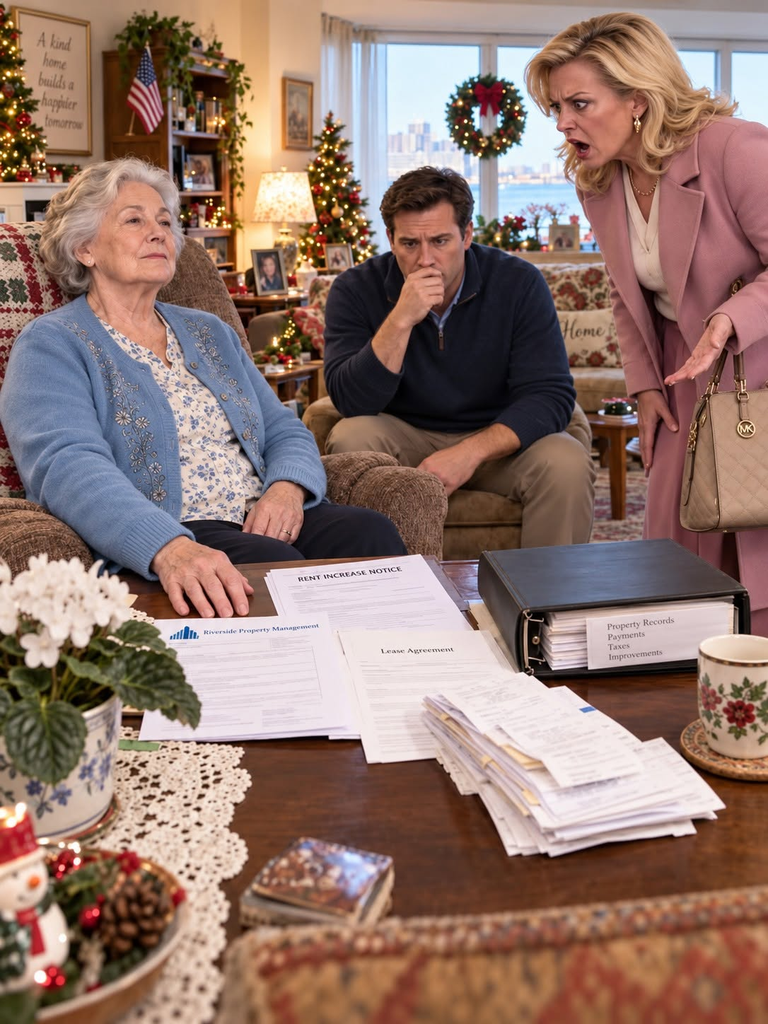
    At 6:03 on a Tuesday morning, Adam learned exactly how little his stability was worth to the people who had been living off it.

    The knocking came before the coffee had even finished brewing. Sharp, loud, and entirely intentional, the kind of knock that isn’t asking whether it’s a good time.

    He was standing in the kitchen of the apartment above his parents’ garage with one sock on and the other still in his hand when the door opened and his sister Chloe walked in carrying two duffel bags and wearing the kind of smile that had always meant trouble for somebody who wasn’t her.

    She said she was moving in.

    His mother, standing on the patio below in her robe with a coffee cup held in both hands, called up that it was fine.

    His father didn’t bother pretending to be neutral about it.

    And when Adam reminded them, evenly, that the apartment was his space and that he paid for it every single month, his mother told him they were doubling his rent.

    That was the moment the whole arrangement stopped being a family favor and started looking like what it actually was.

    Adam had spent six years being the dependable one.

    He paid every month in cash, on the first, without being asked. He fixed the sink himself when it leaked instead of bothering his father about it. He replaced the microwave when the old one died. He bought the couch, the bed, the shelves, the lamps, the little table by the window, and the rug that still had a bleach stain in one corner from the summer he’d tried to get a wine spill out of it.

    He had made that apartment livable. Not luxurious. Livable.

    That mattered to him in a way he had never quite explained to anyone, because it was the first place he had ever paid for with his own money and still felt like he could breathe inside.

    The problem with being the reliable one is that eventually people begin to confuse reliability with surrender.

    Chloe knew that. His mother knew it. His father knew it well enough to use it without ever having to say the quiet part out loud.

    So when Adam said, very calmly, that if the rent was going up then he would be moving out, all three of them smirked like he had walked directly into a trap they’d set that morning.

    What none of them understood was that the apartment was full of his property.

    And Adam had kept every receipt.

    He stood there in his kitchen for a moment after they’d said their piece, one sock still in his hand, and he looked around the room.

    Every single thing in it that made it a home instead of a storage space had his name on it in one way or another.

    The couch had gone on a credit card he’d paid off himself over eleven months. The bed frame came from a warehouse sale on a Saturday he’d skipped a friend’s birthday to work a double instead. The microwave was a replacement he’d bought out of pocket after the original one shorted out and his father had shrugged and said that’s what happens with old appliances. The lamps had been picked up one at a time, over two years, because the apartment had come with a single bare bulb in the ceiling and felt like a basement.

    He had not rented a room from his parents.

    He had built one.

    That was why what happened next turned into a reckoning instead of an argument.

    He called a friend with a box truck before noon.

    By midmorning the driveway was full of the sound of metal bed rails coming apart, furniture sliding across floorboards, and the back gate of a rental truck banging open and shut.

    Chloe was the first one to understand that he was serious.

    At first she assumed he was making a point. People in that family made points constantly. Everybody made points and nobody ever followed through, because following through would have required somebody to actually accept a cost.

    Then she watched the couch come down the outside stairs.

    Then the bed frame, disassembled and stacked against the tailgate.

    Then the table.

    Then the microwave, wrapped in a bath towel like it was fragile, because to him it was.

    Her face changed in the middle of that yard. He watched it happen in stages. The smugness went first. Then the confidence. Then it settled into the particular panicked offense that people get when they discover that consequences are not a theoretical concept invented to frighten them.

    His mother started in on guilt. His father tried authority. Chloe went to tears.

    Adam kept loading.

    That was the part none of them could handle.

    He did not raise his voice. He did not curse at anybody. He did not stand in the yard explaining himself or demanding that they understand what they had done to him.

    He just kept walking his things down those stairs and putting them in the truck while his parents stood on the patio and watched the space behind him get emptier and emptier.

    A neighbor slowed down at the mailbox to see what was going on. Another one looked up toward the garage apartment window and saw the bare floor where the couch had been for six years.

    That was what made it worse for his parents. Not the fight itself.

    The witnessing.

    People can survive private cruelty indefinitely by agreeing among themselves that it never happened. What they struggle with is somebody outside the house seeing it.

    Chloe eventually sat down on the bottom step with her duffel bags still beside her, and she asked the question that gave the whole thing away.

    “You can’t really leave us with nothing.”

    Adam almost laughed, and only stopped himself because he understood how completely that sentence explained the last six years.

    For all that time, he had been the one leaving himself with nothing so that everyone else could stay comfortable. That was the family balance sheet, and it had always balanced in exactly one direction.

    His time. His money. His patience. His furniture.

    All of it treated as communal property right up until the moment he wanted any of it back.

    Then it became selfish.

    And then his father made the mistake that men like his father always make when a bluff collapses.

    He threatened the future.

    He told Adam that if he walked out that door, he shouldn’t expect anyone to be there when he needed help down the road.

    It was supposed to make him fold. It had worked on Adam at twenty-two and at twenty-five and probably would have worked at twenty-seven.

    Instead it gave him the clearest thought he’d had all morning.

    He did not need help from people who only remembered they were family when they wanted something from him. He had already been paying, in cash, monthly, for the privilege of being treated this way.

    By the time the truck was loaded, the apartment looked like somewhere nobody had ever lived.

    No couch. No bed. No lamps. No table. Just bare floor and open corners and the shape of a room that had been mistaken for a favor for six years.

    Adam left that afternoon with a duffel bag of clothes, a folder of important papers, and the quiet steady feeling that arrives when a person finally stops asking to be treated fairly and simply removes himself from the arrangement instead.

    The fallout did not arrive all at once.

    First came rage. Then phone calls. Then, eventually, bargaining.

    His mother offered to reduce the rent back to what it had been. His father said Adam had made his point and it was time to be reasonable. Chloe texted three separate times with the kind of apology that somehow left him feeling like the villain for having read it.

    But by then the truth had settled all the way down.

    They had not offered him a home. They had offered him a bill, and then dressed up his compliance as gratitude, and expected him to keep thanking them for the arrangement.

    Adam moved into a small rental on the north side of town. Nothing fancy. Just quiet.

    He slept on a borrowed air mattress for a week, then bought a bed. He bought a cheap couch. A lamp. A table.

    Every time he unpacked a box, he felt less like a man starting over and more like one getting his own life back into his own hands.

    The apartment above the garage stayed empty for a long while.

    That was the part his mother hated most. Not the argument. Not what the neighbors thought.

    The silence.

    Because once Adam took the furniture out of it, the place stopped looking like his contribution to the family and started looking like exactly what it had always been. A room they had used to keep him close enough to draw from.

    The first three weeks in the new place were defined by a quiet Adam had to learn how to live inside.

    It was a second-floor unit above a bakery. Early in the morning, long before his alarm, he could hear the low rhythmic thrum of the dough mixers coming up through the floorboards and smell rye and sugar working their way through the vents.

    It was not his parents’ house. It was not the garage apartment, where every creak overhead meant his mother was crossing her kitchen and every slammed car door meant his father was home and looking for something to fix or somebody to blame for it not being fixed already.

    Here, nobody called him down to move a lawnmower. Nobody knocked on his door at dawn to announce a change in the family arrangement.

    For the first few days his phone was an instrument of pure vibrating anxiety.

    His mother left voicemails that cycled through four distinct stages. Anger first. Then victimhood. Then panic. And finally a fragile, performative sweetness that felt considerably more manipulative than the anger had.

    Adam, your sister is sleeping on an air mattress in that freezing room.

    Adam, your father hurt his back trying to carry an armchair up from the basement.

    Adam, it’s been two weeks. People are asking why you weren’t at Sunday dinner. What are we supposed to tell them?

    He didn’t answer. He listened to each one exactly once, moved them into a folder on his phone the way you’d file evidence, and put the device face down on the counter.

    The truth, which took him about a month to see clearly, was that Chloe had never actually wanted that apartment.

    She had wanted the idea of it. A warm, furnished, finished space where she could perform adulthood without paying the price of admission to it. Without his couch, without his lamps, without the microwave he had wiped down every Sunday for six years, the room above the garage was just a cold concrete box with exposed pipes running along one wall.

    It turns out that when you remove the person holding an illusion together, the illusion comes down under its own weight almost immediately.

    By the end of that first month the story inside the family had started to shift. With Adam gone, there was nobody left to absorb the blame, so his parents turned their attention to the child who remained.

    Chloe had spent her entire life as the protected one. Now she found herself under a microscope she had never once had pointed at her.

    Because without Adam’s rent, money that had quietly been covering his parents’ rising property taxes and a good portion of his father’s weekend habits, they discovered that Chloe’s temporary stay was a luxury they could not actually afford.

    The doubled rent had never been a punishment. It had been a cash grab, and a desperate one.

    And now the bill had come due with nobody left to hand it to.

    The first crack in their united front came on a rainy Thursday. Adam was sitting at his new kitchen table, a sturdy oak thing he’d found at an estate sale for sixty dollars, when his phone rang.

    It wasn’t his mother or father.

    It was Chloe.

    He let it ring three times before he answered.

    “Hello?”

    Silence on the other end, then the wet jagged sound of somebody trying not to cry directly into a speaker.

    “Adam?” Her voice was small. Truncated. Entirely stripped of the smugness she’d carried into his kitchen at 6:03 in the morning five weeks earlier. “They’re changing the locks on the main house.”

    He leaned back in his chair and watched rain streak down the window. “Why?”

    “Dad says if I can’t pay six hundred a month for the garage, I can’t keep my stuff in the basement either.” She was crying properly now. “He said I’m a drain on them. Mom wouldn’t even look at me. She just stood there holding her coffee cup.”

    Adam felt something cold settle in his chest, and it took him a second to identify it, because it wasn’t triumph and it wasn’t satisfaction.

    It was the bitter validation of a man watching a fire he did not start burn down a house he used to live in.

    “They needed a tenant, Chloe,” he said, and his voice came out gentler than he expected. “They didn’t need a daughter and they didn’t need a son. They needed somebody to pay a bill.”

    “Can I bring a bag over to your place?” she whispered. “Just for a few days. Until I figure something out.”

    Adam looked around his small quiet living room. At the lamp he’d bought with his own money. At the floor he’d swept that morning. At the peace he had paid for in bruised feelings and severed ties and a truck rental he was still paying off.

    He took a slow breath.

    “No, Chloe. You can’t.”

    The refusal was not revenge. He knew that even as he said it, and he’d need to keep knowing it for the next several months.

    It was preservation.

    Adam understood the mathematics of his family too well by then. If he let one bag come through his door, the chaos would follow it in. Then the excuses. Then the late nights and the borrowed money and the friends he’d never met asleep on his couch. And within a month his parents would be standing at his new doorstep to lecture him about how he was treating his sister.

    The cycle would restart. Only the address would have changed.

    “You’re cold,” Chloe sobbed. “You’re just like them.”

    “No,” Adam said. “If I were like them, I’d charge you double to sleep on my couch and then call it family love.” He paused. “I’m letting you figure it out. The same way I had to.”

    He hung up and set the phone back down on the table and sat there for a long while, listening to the rain and the mixers running downstairs.

    Two months after that, the story reached its natural conclusion.

    Without Adam’s rent and without Chloe there to serve as a distraction from the arithmetic, his parents were finally forced to look directly at their own finances. They put the house on the market in September. The garage apartment was listed as a selling feature.

    The neighborhood gossiped, of course. But the neighbors who had stood at their mailboxes on a Tuesday morning and watched a young man carry his own furniture down a set of exterior stairs put two and two together without much difficulty.

    They understood that the unfilial son had not abandoned his family.

    He had simply stopped holding up a structure that had already rotted through.

    The house sold in late autumn. His parents moved into a two-bedroom condo three towns over. Chloe found a roommate through an online listing and took a full-time job at a logistics firm out by the interstate, which was, as far as anyone could determine, the first full-time job she had held past four months.

    Adam did not go to the family moving day. He did not offer his truck. He did not offer his back.

    He spent that Saturday on the small balcony above the bakery, drinking a cup of coffee that was still hot when he finished it, reading a book without once listening for footsteps on the stairs.

    A year after the morning his sister walked into his apartment with two duffel bags, Adam ran into his father in a hardware store on the edge of town.

    His father looked older than a year should have made him. The sharp dismissive edge in his eyes had been dulled by the quiet indignity of downsizing. He was holding a can of paint and a cheap brush, and he stood there in the aisle between the screws and the power tools with the weight of everything that had been said and everything that had been taken sitting silent between them.

    “You look well,” his father said. His voice had lost the iron authority it used to carry so easily.

    “I am,” Adam said.

    His father looked down at the paint can and tapped his thumb against the lid. “Your mother still talks about that couch, you know. She still tells people you took the light fixtures out of the ceiling.”

    Adam gave him a small quiet smile. The kind that belongs to a man who no longer has anything he needs to prove to anyone in the aisle.

    “I took what belonged to me, Dad,” he said. “Nothing more. Nothing less.”

    His father opened his mouth as though to argue, as though to reach for the old script about obligation and family and what a son owes, and the words seemed to dry up somewhere in his throat before they got out.

    There were no leverage points left. No cheap rent to dangle. No garage apartment to hold over anybody’s head. No guilt with any purchase left on it.

    Adam was, standing there in a hardware store aisle, a man who owed him absolutely nothing.

    “Take care of yourself, Adam.”

    “You too, Dad.”

    He watched him push his cart toward the registers, and he found that he didn’t feel hatred, and he didn’t feel regret either. What he felt was the light weightless sensation of a boat that has finally cut its last line to a rocky shore.

    He bought his painter’s tape and walked out into the cool afternoon and drove home.

    When he unlocked his own front door, the sun was going down, throwing long gold squares of light across the floorboards.

    The apartment was full of his things. His couch. His bed. His table. His lamps.

    Every item in that room was paid for. Every corner of it was quiet.

    And for the first time in his life, when Adam walked through his own door, he understood that he was actually home.

  • At 77, I dressed for my son’s 7 p.m. townhouse dinner after covering $93,600 of his life that year alone — then his second text said, “You weren’t invited. My wife doesn’t want you there.” By sunrise, 174 payments were gone.

    At 77, I dressed for my son’s 7 p.m. townhouse dinner after covering $93,600 of his life that year alone — then his second text said, “You weren’t invited. My wife doesn’t want you there.” By sunrise, 174 payments were gone.

    Serena’s hand froze halfway between the brass door knocker and her cream coat. Wesley saw the folder first. Not the porch light. Not my face. Not the cup of tea I had set carefully on the little table beside the door. The folder.It sat tucked under Lydia’s arm, thick enough to bend the corner of her navy blazer. My son’s name was printed across the tab in my handwriting, the same handwriting that had signed his school permission slips, college checks, car insurance forms, mortgage guarantees, and every rescue he had learned to call temporary.
    WESLEY.

    Serena’s eyes moved from the folder to Lydia’s face. “Why is she here?” she asked. Her voice was low and clean. No panic yet. Serena always reached for control before she reached for truth. Lydia did not answer. She stood on my porch with rain beading on her shoulders, her gray-streaked hair pinned at the nape of her neck, one hand steady around the file. Wesley swallowed. “Mom,” he said, “this got out of hand.” I looked at him. At forty-eight, he still had Arthur’s eyes when he was frightened. That was the cruel part. A mother can look at a grown man and still see the child who once cried because his kite tore in the wind. But that child had become a man who let his wife remove me from a dinner I helped make possible. I stepped back from the doorway.

    “Come in.”  Serena moved first, brushing past the threshold as if accepting an invitation she had been owed all along. Her perfume carried into the hall, sharp and expensive, mixing with the smell of lemon polish and rain-damp wool. Wesley followed more slowly. Lydia came last. I closed the door.
    The sound was soft, but Wesley flinched. In the sitting room, Arthur’s photograph still watched from the mantel. The grandfather clock ticked beside the bookcase. Three wet coats shifted and settled in the quiet. Serena did not sit.

    “This is a family matter,” she said to Lydia. Lydia placed the folder on my coffee table. “It became a banking matter at 8:11 this morning.” Wesley rubbed the back of his neck. “Mom, we were going to call you.” “At 6:18 last night,” I said, “you did.” His face tightened.  Serena turned toward him. “You sent the second text?”

    He didn’t answer fast enough. That was answer enough.

    Her cream coat looked too bright against my old green chair. One rain droplet slid from her sleeve to the hardwood floor.

    I picked up my teacup and set it on a coaster.

    No shaking.

    No raised voice.

    No begging.

    That alone seemed to unsettle them.

    “Mom,” Wesley said, “Serena was upset. The coworkers came over last minute. It wasn’t personal.”

    I nodded once.

    “You weren’t invited. My wife doesn’t want you there,” I said.

    His mouth opened, then closed.

    Serena’s chin lifted. “It was one dinner.”

    Lydia opened the folder.

    Paper shifted against paper. Receipts. Printed authorizations. Bank summaries. Canceled drafts. Each page made a dry whisper, like leaves scraping concrete.

    “It was not one dinner,” Lydia said.

    Serena looked at her sharply. “You have no right to discuss our finances.”

    “My finances,” I said.

    The room stilled.

    Outside, a car passed slowly through the wet street. Its tires hissed against the pavement.

    Serena turned to me with the small smile she used in restaurants when a server made a mistake.

    “Margaret, I understand you’re embarrassed.”

    I almost laughed.

    Not because it was funny.

    Because embarrassment had kept me obedient for years.

    Embarrassed to ask why I was never in family photos unless I was holding the camera.

    Embarrassed to admit I paid for things no one thanked me for.

    Embarrassed to feel hurt by little exclusions dressed up as scheduling conflicts.

    Lydia pulled the first page free.

    Wesley’s eyes followed it.

    “Please,” he said.

    That was the first honest sound he had made since entering my house.

    Serena glanced at him. “Please what?”

    He whispered, “Don’t.”

    I sat down in Arthur’s chair.

    The leather was cool under my palms.

    “Read it,” I said.

    Lydia adjusted her glasses.

    “Mortgage assistance draft,” she began. “Monthly amount: $4,850. Originating account: Margaret Hale Living Trust. Beneficiary household: Wesley and Serena Hale. Active for thirty-one months.”

    Serena blinked.

    “That’s not—”

    Lydia turned the page.

    “Private school tuition support. Monthly amount: $2,800. Active for eighteen months.”

    Wesley stared at the carpet.

    Serena’s lips parted.

    “Wesley told me that was from his bonus structure.”

    I watched my son’s shoulders rise, then sink.

    Lydia continued.

    “Homeowners insurance. Two vehicles. Country club family membership. Emergency repairs listed under residential improvement. Business line tied to an entity called Hale Strategy Group.”

    At that, Serena’s face changed.

    Not guilt.

    Alarm.

    “What business line?” she asked.

    Wesley pressed his fingers to his forehead.

    “Serena,” he said quietly.

    “What business line?”

    Lydia looked at me for permission.

    I gave a small nod.

    She slid a page across the coffee table.

    Serena snatched it up.

    Her manicured thumb trembled against the corner.

    The page showed $1,950 a month, withdrawn from my account for twenty-six months, marked as business telecommunications and client management software.

    Serena read the company name once.

    Then again.

    “Hale Strategy Group,” she said.

    Her voice had lost its polish.

    Wesley looked toward the mantel, not at her.

    I had never heard of that company until Lydia turned the screen toward me that morning. It had been one of the lines buried between utilities and membership fees, quiet and patient, waiting for daylight.

    Serena lowered the page.

    “You told me the firm paid for that.”

    Wesley rubbed both hands over his face.

    “I was going to fix it.”

    “Fix what?”

    He said nothing.

    The house seemed to grow smaller around us. The clock ticked. Rain tapped the windows. Somewhere in the kitchen, the refrigerator hummed steadily, indifferent to the collapse taking place ten feet away.

    Lydia removed another sheet.

    “This is the notice generated today when access was revoked. Mr. Hale is no longer authorized to initiate transfers, create payment instructions, or use Margaret Hale’s trust account for any household or business-related charge.”

    Serena stared at Wesley.

    “You had access?”

    His face reddened.

    “For emergencies.”

    “For years,” I said.

    He turned to me. “You gave it to me.”

    “I did.”

    The words came out calm.

    That mattered.

    I had given it to him after Arthur died, when Wesley was grieving too, when he said the mortgage company needed a quick bridge and Serena was overwhelmed and the baby’s expenses had doubled.

    I gave him access because I mistook trust for closeness.

    Then I kept giving because stopping would have forced me to see what I had become to them.

    A safety net with a pulse.

    Serena folded the page slowly.

    Her eyes moved over my sitting room for the first time, really seeing it. The worn rug. The framed photo of Arthur. The quilt over the arm of the sofa. The good porcelain cup beside my chair.

    All the things she had dismissed as old.

    All the things that had funded her new.

    “Wesley,” she said, “how much?”

    He shook his head.

    Lydia answered because numbers do not protect anyone’s pride.

    “In the past calendar year, $93,600.”

    Serena took one step back.

    Her heel struck the leg of the coffee table.

    The folder shifted.

    A few papers slid loose, spreading across the table like white cards in a losing hand.

    “Mom,” Wesley said, and his voice cracked on that single word.

    I waited.

    For once, I did not rush to save him from discomfort.

    He looked older than he had the night before. The skin beneath his eyes sagged slightly. His expensive sweater was damp at the collar. His phone kept buzzing in his hand.

    Declined charge.

    Declined charge.

    Declined charge.

    Each vibration sounded small and ugly in the room.

    Serena’s eyes snapped to the phone.

    “What is that?”

    Wesley looked down.

    He did not speak.

    She took the phone from his hand.

    I saw the screen glow against her face.

    The color drained from her cheeks.

    “Club dining account declined,” she read. “Preschool payment failed. Auto renewal failed. Mortgage draft returned pending review.”

    Her breath came through her nose in sharp little pulls.

    Then she looked at me.

    Not like a daughter-in-law.

    Not like a woman who had excluded an old widow from a dinner.

    Like someone seeing the locked door behind the person she had pushed too far.

    “You can’t do this,” she said.

    I folded my hands in my lap.

    “My name is on the accounts.”

    “It affects the child.”

    There it was.

    The word she saved for leverage.

    Child.

    My granddaughter. The little girl who had texted me at 6:47 p.m. asking if I was still coming. The one who still pressed stickers onto my envelopes and called Arthur’s picture Grandpa Star.

    My throat tightened.

    But I did not move.

    “I have already arranged a separate education account for her,” I said. “One neither of you can touch.”

    Wesley lifted his head.

    Serena went still.

    Lydia placed one final document on top of the folder.

    “This was completed at 9:32 this morning,” she said. “A custodial education trust. Direct school payments only. No parental withdrawal access.”

    Serena stared at the paper.

    For the first time since she entered my house, she had no immediate sentence ready.

    The silence was not empty.

    It was full of every dinner I had missed, every bill I had paid, every thank-you that had become an expectation.

    Wesley stepped toward me.

    “Mom, I’m sorry.”

    His eyes were wet.

    A younger version of me would have stood. Touched his face. Told him we would talk. Told him I understood. Told him Serena pressured him, life was hard, marriage was complicated, money made people afraid.

    A younger version of me would have turned his apology into my responsibility.

    I stayed seated.

    “What are you sorry for?” I asked.

    He blinked.

    “For the text.”

    I waited.

    “For letting it happen.”

    I waited again.

    “For using the accounts.”

    Serena made a sound under her breath.

    He looked at her then back at me.

    “For lying.”

    That one landed.

    Not beautifully.

    Not enough to mend anything.

    But it landed.

    Serena straightened. “We should discuss this privately.”

    “We are,” I said.

    Her eyes cut toward Lydia.

    “Without the banker.”

    Lydia closed the folder with both hands.

    “I’m here because Mrs. Hale requested a witness for the receipt of account revocation and notice of independent trust protection.”

    Serena’s mouth tightened.

    “A witness.”

    “Yes,” Lydia said.

    Her voice remained even.

    That made Serena angrier than shouting would have.

    Wesley sank onto the edge of the sofa without asking. His knees looked weak. His wet shoes left dark marks on the rug.

    Arthur would have hated that rug being marked.

    Then again, Arthur would have hated what his son had become far more.

    Serena remained standing.

    “You’re punishing us because of one awkward dinner,” she said.

    I picked up the townhouse brochure from the side table. I had left it there on purpose.

    The pages still showed the brick walkway, the staged lamps, the smiling kind of emptiness real estate photographers sell as home.

    I opened to the page with the kitchen.

    The one Serena had called perfect.

    The one Wesley had said was for me too.

    I placed it on top of the folder.

    “I paid part of the down payment on a house where I was not welcome for dinner,” I said.

    Serena’s gaze dropped to the glossy page.

    For a moment, her face looked almost naked.

    Not sorry.

    Exposed.

    Wesley covered his eyes with one hand.

    “I didn’t think you’d actually stop everything,” he said.

    That sentence told the whole truth.

    Not that he loved me.

    Not that he forgot.

    Not that he was trapped.

    He simply believed I would absorb the wound and keep paying.

    My fingers tightened once around the armrest.

    Then relaxed.

    At 77, the body teaches you what the heart refuses. Tightness hurts. Release hurts less.

    “I know,” I said.

    Serena’s phone rang.

    She looked down and silenced it.

    It rang again immediately.

    Then Wesley’s buzzed.

    Then hers again.

    Their life, built on automatic yes, had begun asking manual questions.

    Serena glanced toward the front door.

    “Wesley,” she said, “we need to go.”

    But he did not stand.

    He looked at me like a boy waiting outside the principal’s office, hoping his mother would come and make the consequences softer.

    I had done that too many times.

    Lydia gathered the loose pages back into order. Her hands were calm, professional, careful. She clipped the folder shut and passed me a receipt copy.

    “The revocations are complete,” she said. “The trust protections are active. The business authorization has been flagged for review.”

    Wesley’s head snapped up.

    “Flagged?”

    Lydia looked at him.

    “Mrs. Hale did not recognize the business expenses. That required notation.”

    Serena turned slowly toward Wesley.

    The room sharpened.

    There are moments when a marriage does not break loudly. No thrown glass. No screaming. Just one spouse realizing the other has been lying in a direction they never bothered to check.

    “What review?” Serena asked.

    Wesley stood.

    “Not now.”

    “Yes,” she said. “Now.”

    I rose from Arthur’s chair.

    Not quickly. My knees complained. My hand found the armrest first, then the air, then balance.

    All three of them watched me.

    I walked to the mantel and touched Arthur’s frame.

    The silver was cool.

    “You should leave,” I said.

    Wesley took one step toward me. “Mom, please.”

    I looked at my son.

    His face blurred slightly at the edges, but I did not let the tears fall.

    “You may call me when you are ready to speak without needing something.”

    He stopped.

    Serena pulled her coat closed, though the room was warm.

    Lydia lifted the folder.

    “No,” I said softly.

    She paused.

    I held out my hand.

    She gave it to me.

    The folder was heavy.

    Heavier than paper should be.

    Wesley looked at it as if it were alive.

    I walked to the front door and opened it.

    Cold damp air slipped into the hall. The porch light caught the rain in thin silver threads.

    Serena stepped out first, fast now, her heels sharp against the boards.

    Wesley lingered.

    “Did you ever love me without the money?” he asked.

    The question struck harder than I expected.

    I held the folder against my chest.

    “Yes,” I said. “That was the problem.”

    His face folded.

    For one second, I saw the little boy with the torn kite.

    Then I saw the man who had written, You weren’t invited.

    He stepped onto the porch.

    I closed the door.

    This time, he was on the other side of it.

    The house settled around me.

    No applause. No victory music. No clean happiness.

    Just the clock, the rain, and my own breathing.

    Lydia stood beside the sitting room archway, quiet as a witness in a church.

    “Are you all right?” she asked.

    I looked at the good teacup on the table. The tea had gone cold.

    “I will be.”

    Through the window, I saw Serena and Wesley standing beside their car. She was speaking fast. He kept looking back at the house.

    Then Serena opened the passenger door and stopped.

    Because another car had turned into my driveway.

    A small blue sedan.

    My granddaughter climbed out holding a backpack against her chest.

    Behind her, her teacher stepped into the rain with one hand raised, uncertain.

    I moved to the window.

    My granddaughter looked past her parents, straight at my door.

    Her small face was pale.

    Then she lifted her phone.

    A message arrived on my screen.

    Grandma, Mom said you ruined everything. Can I come inside?

    I opened the door before the second buzz.

    This time, I did not ask anyone’s permission.

  • They Told Me to Pay Rent in My Own House. By New Year’s Eve, They Discovered They Had Been Living on a Lie.008

    They Told Me to Pay Rent in My Own House. By New Year’s Eve, They Discovered They Had Been Living on a Lie.008

    The crystal glass beside my plate was still trembling when I realized my son had been waiting years for the courage to humiliate me.

    Daniel Whitaker stood at the head of my Christmas table, his palm flattened against the polished walnut as though he had just claimed the house by force.

    “Pay the rent or get out!”

    His voice struck harder than his hand.

    Twenty-two people stopped breathing.

    My sisters sat frozen beneath the chandelier. Their husbands stared into their plates. Daniel’s cousins suddenly found the centerpiece fascinating. Three teenagers lowered their phones. My youngest grandson, Noah, held a forkful of mashed potatoes halfway to his mouth, while his older brother, Ethan, looked at his father with an expression I could not yet name.

    It was not surprise.

    It was shame.

    Outside, snow tapped gently against the tall windows of the home where I had celebrated thirty-one Christmases. The tree beside the fireplace glowed with gold ribbon and white lights. Robert’s old wooden angel stood at the top, one wing slightly crooked because Daniel had dropped it when he was eight.

    The turkey had been carved.

    The candles were burning.

    My dead husband’s chair was empty beside me.

    And my only son had just ordered me out of my own house.

    “Daniel,” I said, folding my napkin with deliberate care, “sit down.”

    “No.”

    His cheeks were dark with anger. He had removed his suit jacket before dinner, and his burgundy tie hung loose beneath his open collar. At forty-three, he had Robert’s height but none of his stillness. Robert could command a room without raising his voice. Daniel had learned to mistake volume for authority.

    “You sit there acting like some wounded queen,” he continued, “but this is real life. Melissa and I can’t keep floating you.”

    A chair creaked somewhere near the far end of the table.

    Floating me.

    For one wild second, I wondered whether I had misheard him.

    I looked toward my daughter-in-law.

    Melissa sat with one arm resting across the back of her chair, her red lips curved into a patient, pitying smile. She wore the black dress I had bought her for her fortieth birthday, along with diamond earrings I had given her after she cried about feeling invisible next to the younger mothers at her sons’ school.

    “Daniel is right,” she said. “This situation has gone on long enough.”

    “What situation?” my sister Linda asked.

    Melissa turned toward her as though addressing a confused child.

    “Margaret living here without contributing.”

    A low sound escaped my brother-in-law Frank. It might have been disbelief. It might have been a laugh he had swallowed too late.

    Daniel’s eyes moved toward him.

    “Something funny?”

    Frank looked at me, then at Daniel. “I’m trying to understand what you’re saying.”

    “I’m saying Mom needs to start paying her share.”

    “Her share of what?” Frank asked. “Her own house?”

    Daniel’s jaw tightened.

    Melissa gave another slow smile. “It may be in Margaret’s name, technically, but Daniel handles everything. The taxes, maintenance, bills, repairs—”

    “I paid the property taxes in October,” I said.

    Melissa’s smile flickered.

    “I also paid for the new furnace in February,” I continued. “And the roof three years ago. And the plumbing repair after Daniel’s friend installed the upstairs bathroom incorrectly.”

    Daniel’s hand curled against the table.

    “This isn’t about keeping score.”

    “No,” I agreed. “It rarely is when the score becomes inconvenient.”

    My sister Linda whispered, “Margaret…”

    I looked at her.

    She was sixty-eight, four years younger than me, with the same pale eyes our mother had possessed. Her face seemed strangely tense. She had opened her mouth once already, just after Daniel’s outburst, but I had raised a finger.

    At the time, I thought I was protecting her from being drawn into ugliness.

    Later, I would understand that Linda had not been preparing to defend me.

    She had been afraid Daniel might say too much.

    Melissa lifted her wineglass.

    “You see?” she said to the table. “This is what we deal with. Every conversation becomes a performance.”

    My grandson Ethan shifted in his chair.

    “Mom, stop.”

    Melissa turned toward him. “Excuse me?”

    He stared at his plate.

    Daniel pointed down the hallway.

    “You have until New Year’s, Mom. Start paying rent, or find somewhere else to be dramatic.”

    The room seemed to tilt.

    I heard the fire crackle behind me. I heard Noah place his fork down carefully. I heard wind press snow against the windows.

    Then Melissa laughed softly.

    “Let’s see how you survive,” she said. “You don’t even understand online banking without Daniel.”

    That was when the pain changed.

    Until then, I had felt wounded.

    Afterward, I felt awake.

    For six years, I had paid the mortgage on Daniel and Melissa’s townhouse after his construction company supposedly collapsed. I covered their car insurance and Noah’s dental surgery. I paid Ethan’s school fees, soccer uniforms, music lessons, summer camps, and the credit card debt that appeared every January like an annual illness.

    When Melissa’s mother needed a new refrigerator, I bought it.

    When Daniel said he required a truck to restart the business, I signed the check.

    When they took the boys to Florida because the children “needed something normal after all the stress,” I paid for the flights without being asked directly. Daniel had simply left the travel website open on my kitchen computer and sighed until I offered.

    I had spent years confusing rescue with love.

    But I was not confused anymore.

    I pushed my chair back.

    The wooden legs scraped across the floor with a sound so sharp that several people flinched.

    At seventy-two, I was expected to collapse gracefully. I was supposed to cry, plead, tremble, remind Daniel of sacrifices he had already chosen to forget.

    Instead, I walked to the coat closet.

    “Where are you going?” he demanded.

    I removed my dark wool coat from its hanger and slipped my hand into the pocket.

    My fingers closed around a small brass key.

    Not to this house.

    To another one.

    A single-story brick home in Lancaster, Pennsylvania, with a red front door, a stone fireplace, three bedrooms, and a garden that would bloom with white hydrangeas in spring. I had purchased it three months earlier using part of Robert’s life-insurance money and savings Daniel believed had disappeared into medical bills.

    Only two people knew.

    My attorney, Claire Reeves.

    And my grandson Ethan.

    I returned to the dining room and held up the key.

    “I won’t wait until New Year’s,” I said.

    Daniel frowned. “What are you talking about?”

    “I’ll leave tonight.”

    Melissa’s smile returned, but it looked less certain.

    “With what?” she asked. “Your pension check?”

    I looked at her.

    “With my name on every account you’ve been living from.”

    Silence fell so completely that I heard wax dripping down one of the candles.

    Daniel’s face changed first.

    Not much.

    Just enough.

    A small loss of color. A tightening around the mouth. His eyes flicking toward Melissa before returning to me.

    That glance told me everything.

    They had never believed I would say no.

    I walked upstairs and packed two suitcases.

    I took my medicine, my jewelry box, Robert’s framed photograph, six sweaters, three pairs of trousers, and the blue ceramic bird Noah had made for me in second grade.

    Nobody helped.

    Nobody stopped me.

    When I came downstairs, the guests were still seated around the table. Some stared openly. Others pretended to eat. Frank stood as if to carry my bags, but I shook my head.

    Daniel waited near the front door.

    “This is ridiculous,” he said. “You’re proving my point.”

    “What point is that?”

    “That you’re unstable.”

    The word landed softly.

    Too softly.

    Prepared words often did.

    Melissa appeared behind him, arms folded.

    “You shouldn’t be driving in this weather,” she said. “At your age.”

    “At my age, I know how to slow down when the road is dangerous.”

    I met Daniel’s eyes.

    “And how to stop when the people beside me are worse.”

    Ethan followed me onto the porch without his coat.

    Snow caught in his dark hair.

    “Grandma.”

    Daniel called from inside. “Ethan, get back in here.”

    The boy ignored him.

    At seventeen, Ethan was already nearly as tall as his father, but he had Robert’s quiet way of standing. He held himself carefully, as though every movement might reveal too much.

    “Did you bring it?” I asked.

    His face went pale.

    “Not here.”

    I nodded once.

    He hugged me quickly, fiercely, then stepped away.

    Into my gloved hand, he pressed a small black flash drive.

    “Don’t trust Aunt Linda,” he whispered.

    The front door opened behind him.

    Ethan turned and went inside before Daniel could see what he had given me.

    I stood on the porch with snow gathering on my shoulders, the flash drive hidden in my fist.

    Then I looked through the glass at my family.

    Daniel beside the tree.

    Melissa behind him.

    Linda at the dining table, watching me with fear in her eyes.

    By nine-thirty that night, I was driving toward Lancaster.

    By midnight, I had changed every password.

    By morning, I had canceled every automatic payment, every favor, and every dollar they had ever received from me.

    And before noon on December twenty-sixth, my son had called thirty-seven times.


    1

    The new house smelled of cedar, fresh paint, and emptiness.

    I arrived shortly after eleven that night. Snow covered the front path, but someone had salted the steps. Claire had arranged for the heat to be turned on and groceries placed in the refrigerator. A lamp glowed in the front window, casting a soft amber circle across the living-room floor.

    For the first time since Robert died, I entered a house where no memory was waiting to ambush me.

    There was no dent in the hallway wall from Daniel’s bicycle.

    No mark on the kitchen doorway measuring Ethan’s height.

    No worn patch beside the fireplace where Robert’s chair had stood.

    I should have felt homeless.

    Instead, I felt as though I had been holding my breath for six years and had finally remembered how to release it.

    I placed Robert’s photograph on the mantel.

    In it, he was sixty-five and laughing at something beyond the camera. His hair had gone silver at the temples, and his blue shirt was open at the collar. The picture had been taken during our last summer at Cape May, eight months before the stroke.

    “What did I miss?” I asked him.

    His smile offered no answer.

    I made tea, opened my laptop, and began.

    The first call was to the bank’s emergency line.

    The second was to the insurance company.

    The third was to the credit-card provider.

    By 12:43 a.m., Daniel no longer had authorized access to my primary checking account.

    At 12:51, Melissa’s supplemental card was frozen.

    At 1:06, the automatic payment for their townhouse mortgage was canceled.

    At 1:12, the insurance payment for Daniel’s truck was stopped.

    At 1:19, the monthly transfer into their household account disappeared from my schedule.

    At 1:34, I removed Daniel as emergency financial contact and replaced him with Claire.

    Then I opened the folder where I had recorded every dollar I had given them since Robert’s death.

    The total sat at the bottom of the spreadsheet.

    $486,220.17.

    I stared at the number until it blurred.

    That amount did not include gifts for the boys.

    It did not include Christmases, birthdays, meals, or the smaller emergencies that came wrapped in phrases like We hate to ask and Just until next month.

    Nearly half a million dollars.

    Robert and I had built our savings slowly. He taught high-school history for thirty-eight years. I managed payroll for a medical-supply company. We lived carefully, paid debts early, and never bought a car we could not keep for a decade.

    Daniel knew this.

    He had watched us save.

    He had also watched me become lonelier after Robert died.

    Loneliness, I had learned, was visible to people who intended to use it.

    My phone vibrated across the table.

    DANIEL.

    I let it ring.

    A message appeared.

    Where are you?

    Then another.

    This has gone too far.

    Then:

    The mortgage payment didn’t go through.

    I almost laughed.

    Not Are you safe?

    Not I’m sorry.

    Not even Merry Christmas.

    The mortgage payment.

    My tea had gone cold by the time I inserted Ethan’s flash drive into the computer.

    There were seven folders.

    BANK.

    HOUSE.

    COMPANY.

    MELISSA.

    LINDA.

    RECORDINGS.

    READ FIRST.

    I opened the final one.

    Inside was a single document.

    Grandma, I’m sorry I didn’t tell you sooner. I didn’t understand at first. Dad said he was helping with your bills because you were forgetting things. Mom said the house would be ours soon and you had agreed. I heard them talking about having you declared unable to manage money. Aunt Linda is helping them.

    My hands went cold.

    I continued reading.

    Three months ago, Mom asked me to print papers from Dad’s email. One document had your signature, but it didn’t look right. It said you were transferring the house to a company called Whitaker Residential Holdings. I searched the company. Mom owns it.

    A humming sound filled my ears.

    I opened the HOUSE folder.

    There it was.

    A quitclaim deed.

    My name appeared at the bottom.

    Margaret Anne Whitaker.

    The signature was close.

    Very close.

    But whoever had copied it had made the final r too sharp. My hand had curved that letter the same way since I was nineteen.

    The document was dated September 14.

    On September 14, I had been in the hospital overnight after a minor cardiac procedure.

    Daniel had driven me there.

    Melissa had stayed at my house “in case I needed anything.”

    My breath shortened.

    I opened another file.

    A petition draft seeking emergency financial guardianship.

    The petitioner was Daniel Robert Whitaker.

    The supporting witness was Linda Carol Mercer.

    My sister.

    The woman who had sat at my Christmas table and nearly spoken.

    The document described me as confused, forgetful, financially reckless, and vulnerable to scams. It claimed I had repeatedly lost bank cards, left the stove on, and transferred large sums to unknown individuals.

    Every allegation was false.

    Except one.

    I had transferred a large sum three months earlier.

    To purchase the Lancaster house.

    They had discovered the withdrawal but not the destination.

    Their plan was suddenly visible.

    They would portray the purchase as proof of mental decline. They would gain control of my finances, transfer the old house to Melissa’s company, and place me somewhere “safe.”

    Somewhere inexpensive.

    Somewhere out of the way.

    My phone rang again.

    This time, Linda’s name appeared.

    I watched it until the screen went dark.

    Then I called Claire.

    She answered on the fourth ring, her voice thick with sleep.

    “Margaret?”

    “They forged my signature.”

    Silence.

    “Are you safe?”

    “Yes.”

    “Is Ethan safe?”

    “I don’t know.”

    That woke her completely.

    “What do you have?”

    “A deed. A guardianship petition. Recordings. Bank documents.”

    “Do not email anything. Make two copies of the drive. Put the original somewhere secure.”

    “Claire.”

    “Yes?”

    “My sister is involved.”

    Her pause was brief but heavy.

    “I’m sorry.”

    The simple kindness almost broke me.

    I pressed my fingers against my eyes.

    “What do we do?”

    “We stop them,” Claire said. “But first, we find out how far they’ve gone.”


    2

    At eight the next morning, Daniel left a voicemail.

    His tone had changed.

    “Mom, this is getting out of hand. Nobody was trying to upset you. Emotions were high. You misunderstood what I meant about rent.”

    At eight-fifteen, he called again.

    “We need to discuss the automatic payments. You can’t just cancel obligations without notice.”

    At nine, Melissa sent a text.

    The boys are devastated. I hope proving a point is worth hurting your grandchildren.

    That one found its target.

    I sat at the kitchen island and read it three times.

    Then I imagined Ethan standing barefoot in the snow, pressing the flash drive into my hand.

    I imagined Noah at the table, his fork suspended, his eyes moving between adults who had forgotten children absorb every cruelty spoken near them.

    I typed a response.

    My relationship with my grandsons is separate from your access to my money.

    Before I could send it, another message appeared.

    We may have to take steps for your own protection.

    I deleted my reply.

    At ten, Claire arrived with two coffees, a portable scanner, and a man named Marcus Bell.

    Marcus was a forensic accountant in his late fifties, with rimless glasses and the habit of becoming very still when interested.

    He shook my hand.

    “Mrs. Whitaker, Claire says you have documents.”

    “I have years of documents.”

    “Good.”

    He said it with such calm satisfaction that I almost pitied Daniel.

    We worked at the dining table for six hours.

    Marcus reviewed bank statements, transfers, canceled checks, tax records, and payment histories. He asked precise questions without judgment.

    “Did you authorize this transfer?”

    “Yes.”

    “This one?”

    “Yes.”

    “This payment to Larkspur Development?”

    “I don’t recognize it.”

    He marked it.

    There were many I did not recognize.

    Small amounts at first.

    Eight hundred dollars.

    Twelve hundred.

    Two thousand.

    Most were hidden beneath descriptions that resembled legitimate expenses: property repair, insurance adjustment, school tuition, vehicle maintenance.

    Over four years, they totaled $78,400.

    All had been transferred through an account Daniel helped me create after Robert died.

    All led, Marcus discovered, to a company called Larkspur Development Partners.

    “Who owns it?” I asked.

    “We’ll confirm,” he said.

    Claire was reading the forged deed.

    “This hasn’t been recorded yet,” she said. “That’s good.”

    “Why wouldn’t they record it immediately?”

    “They may have been waiting until they had guardianship. Or waiting for you to leave the property voluntarily.”

    “Christmas,” I said.

    Claire looked up.

    “They wanted witnesses,” I continued. “They wanted people to see me become emotional.”

    “And you didn’t,” she said.

    “No.”

    “You left calmly.”

    “Yes.”

    “With luggage?”

    “Two suitcases.”

    “Did anyone record the argument?”

    I thought of the teenagers’ lowered phones.

    “Probably half the table.”

    Claire smiled without humor.

    “They may have created evidence,” she said. “Just not the evidence they intended.”

    At four, Marcus turned his laptop toward me.

    Larkspur Development Partners had two registered managers.

    Melissa Whitaker.

    And Linda Mercer.

    For several seconds, I did not understand the names on the screen.

    My mind rejected them the way the body rejects a transplanted organ.

    “Linda has never worked in property development.”

    Marcus leaned back.

    “Does she own property?”

    “A small home in West Chester. She and Frank paid it off years ago.”

    “Any connection to Daniel’s former construction company?”

    “Not that I know.”

    He clicked another document.

    Larkspur had purchased two rental properties during the same period Daniel claimed his company was collapsing. One was in York. The other was outside Harrisburg.

    Both had recently been renovated.

    The contractor listed on the permits was D.R. Whitaker Construction Consulting.

    Daniel.

    I stared at the records.

    “His company didn’t collapse.”

    “His original company did,” Marcus said. “But several months later, he began operating under a different structure.”

    “Why pretend he had nothing?”

    Marcus glanced at Claire.

    She answered.

    “Because people don’t give money to a man who owns two rental properties.”

    The betrayal was so methodical that it became almost impressive.

    Daniel had not merely accepted help.

    He had built a second life behind my generosity.

    While I paid his mortgage, he acquired property.

    While I covered his children’s school costs, he renovated rental houses.

    While I lay awake wondering whether my son might lose his home, he collected rent from tenants.

    And my sister had helped him.

    “Why Linda?” I whispered.

    Neither of them answered.

    At dusk, Frank called.

    I considered letting it ring, then answered.

    “Margaret.”

    His voice sounded strained.

    “Are you all right?”

    “I’m safe.”

    “Linda’s been trying to reach you.”

    “I know.”

    “She says Daniel is worried.”

    “Is he?”

    Frank exhaled.

    “I don’t know what happened last night. I’ve never seen him behave that way.”

    “What has Linda told you?”

    “That there was an argument. That you’ve been making unusual financial decisions. That Daniel is concerned you’re being influenced by someone.”

    “Who?”

    “She wouldn’t say.”

    I looked at Claire.

    She shook her head slightly.

    “Frank,” I said, “did you know Linda owns part of a company called Larkspur Development Partners?”

    The silence lasted long enough to answer.

    “What?”

    “Did you know?”

    “No.”

    “Did you know she has been receiving money from my accounts?”

    His breathing changed.

    “That’s impossible.”

    “I have records.”

    “No. Linda would have told me.”

    “Would she?”

    He did not answer.

    In the background, I heard a door close.

    Then Linda’s voice.

    “Who are you talking to?”

    Frank lowered his voice.

    “I have to go.”

    The call ended.

    Ten minutes later, Linda called me.

    This time, I answered.

    “You spoke to Frank,” she said.

    No greeting.

    No question about my safety.

    “Yes.”

    “You had no right to drag him into this.”

    “Into what?”

    “You know exactly what.”

    “I know your name is attached to a company receiving my money.”

    “That isn’t what it looks like.”

    “What does it look like?”

    She became quiet.

    Then her voice softened.

    “Margaret, please. We need to talk in person.”

    “You had all of Christmas dinner.”

    “I was trying to protect you.”

    “From whom?”

    Another silence.

    “From what Daniel might say.”

    There it was.

    Not from what Daniel might do.

    From what he might say.

    “What does Daniel know?” I asked.

    Linda inhaled sharply.

    “You’re tired. We should speak tomorrow.”

    “No.”

    “Margaret—”

    “What does my son know?”

    She ended the call.


    3

    The first consequence arrived on December twenty-seventh.

    Daniel’s townhouse mortgage payment failed.

    The second arrived three hours later when Melissa tried to use her supplemental card at a luxury department store.

    The third came that afternoon when their car insurer notified them that the monthly premium had not been received.

    At 2:17 p.m., Daniel appeared at my new house.

    I watched him through the small camera beside the front door.

    He wore jeans, boots, and the green winter coat I had bought him two Christmases earlier. Snow clung to his shoulders. His hands were empty.

    Claire had warned me not to let him inside.

    I opened the inner door but left the storm door locked.

    “How did you find me?”

    His expression shifted.

    “You’re my mother.”

    “That isn’t an answer.”

    “Ethan saw the address.”

    A lie.

    Ethan had been careful.

    Daniel must have accessed something else—insurance records, perhaps, or the location data on my old phone before I changed the password.

    “You need to come home,” he said.

    “I am home.”

    “Stop doing this.”

    “Doing what?”

    “Punishing everyone because you got embarrassed.”

    I almost admired the rearrangement.

    He had humiliated me, but my embarrassment was now an act of aggression against him.

    “You ordered me out.”

    “I was angry.”

    “You told twenty-two people that you were supporting me.”

    “We have supported you emotionally.”

    I stared at him.

    He pushed one hand through his hair.

    “Look, things came out wrong.”

    “Did the forged deed come out wrong too?”

    His face emptied.

    It happened so quickly that another person might have missed it.

    I did not.

    “What deed?”

    “The one transferring my house to Melissa’s company.”

    “I don’t know what you’re talking about.”

    “Then you won’t mind explaining that to my attorney.”

    He stepped closer to the glass.

    “Why are you talking to an attorney?”

    “Why were you preparing to have me declared incompetent?”

    Color returned to his face in a rush.

    “That wasn’t—”

    “So there is a petition.”

    His mouth closed.

    I watched him understand his mistake.

    “Mom,” he said finally, “we were worried.”

    “About my health?”

    “Yes.”

    “What is the name of my cardiologist?”

    He blinked.

    “What?”

    “The cardiologist you claim to be worried about. What is her name?”

    “That’s not the point.”

    “What medication do I take in the morning?”

    “You know I’m bad with names.”

    “When was my last appointment?”

    He looked away.

    “Melissa handles those details.”

    “No. I handle them.”

    “You’ve been making reckless decisions.”

    “Such as?”

    “Buying this place.”

    “With my money.”

    “Without telling your family.”

    “I told the people who needed to know.”

    His eyes sharpened.

    “Ethan.”

    I said nothing.

    “You involved my son in this?”

    “He came to me.”

    “He’s a child.”

    “He is seventeen.”

    “He doesn’t understand finances.”

    “He understands forgery.”

    Daniel’s fist struck the wooden frame beside the door.

    Not the glass.

    Not me.

    But close enough that the sound echoed through the entryway.

    “Do not turn Ethan against us.”

    “I didn’t need to.”

    His breathing grew heavy.

    For the first time, I saw something beneath his anger.

    Fear.

    Not fear of losing me.

    Fear of what I knew.

    “You need to restore the payments,” he said.

    “No.”

    “We have obligations.”

    “So do I.”

    “You promised to help until I got back on my feet.”

    “You have two rental properties.”

    His body went completely still.

    I continued.

    “York and Harrisburg. Both renovated through your consulting company.”

    “Who told you?”

    “The records.”

    “It’s complicated.”

    “It usually is when the simple version is fraud.”

    His eyes moved toward the camera above the door.

    He lowered his voice.

    “You have no idea what’s happening.”

    “Then explain it.”

    “I can’t do that standing outside.”

    “You aren’t coming in.”

    “I’m your son.”

    “And this is my house.”

    He flinched.

    Perhaps he remembered saying the same thing at Christmas.

    Or perhaps, for the first time, he understood that parenthood did not grant him permanent access to me.

    “Linda said you’d do this,” he muttered.

    “What did Linda say?”

    He looked toward his car.

    “Ask her.”

    “I am asking you.”

    He gave a bitter laugh.

    “You want the truth? Fine. Ask Linda why Dad left you everything. Ask her why she spent her whole life watching you get what belonged to someone else.”

    Then he walked away.

    I stood behind the locked door, listening to the fading crunch of his boots.

    Robert had left me everything because I was his wife.

    Our accounts were joint. The house belonged to both of us. His life-insurance policy named me. His modest retirement funds transferred according to documents we had signed together.

    There had never been a question of something belonging to Linda.

    Unless Daniel was referring to something other than money.

    I called Claire.

    She answered immediately.

    “What happened?”

    I told her.

    When I finished, she said, “Do you know where your birth certificate is?”

    The question startled me.

    “In a document box.”

    “Marriage certificate?”

    “Yes.”

    “Daniel’s birth certificate?”

    “In the safe-deposit box, unless he removed it.”

    “Who has access?”

    “Only me. Robert did before he died.”

    “Good. We’re going to the bank tomorrow.”

    “Why?”

    “Because when family disputes begin circling around words like belonged, I prefer documents to memories.”


    4

    The safe-deposit box contained forty-one years of paper.

    Robert had trusted paper more than computers. Deeds, policies, certificates, letters, photographs, and receipts lay in labeled envelopes written in his precise teacher’s handwriting.

    Our marriage certificate.

    Daniel’s original birth certificate.

    His adoption decree.

    I had not touched the document in more than four decades.

    Claire sat beside me in the small private viewing room as I unfolded it.

    Daniel had been born Daniel James Mercer.

    Mother: Linda Carol Mercer.

    Father: Unknown.

    Adoptive parents: Robert Alan Whitaker and Margaret Anne Whitaker.

    The court had finalized the adoption when Daniel was six months old.

    I closed my eyes.

    There are secrets hidden because people are ashamed.

    Others are hidden because they are sacred.

    Daniel’s birth had been both.

    Linda was sixteen when she became pregnant. Our father was a church deacon, our mother terrified of public disgrace. Linda refused to identify the father. She wanted to keep the baby at first, but after Daniel was born, she sank into a darkness none of us understood. She would not hold him. She would not feed him. Some days, she would not leave her bed.

    Robert and I had been married for three years and had already learned that I could not carry a pregnancy to term.

    Taking Daniel had not felt like charity.

    It had felt like the answer to a prayer I had become afraid to speak.

    The original arrangement was supposed to be temporary.

    Then Linda left Pennsylvania to stay with an aunt in Ohio. Months passed. She wrote that she could not return if everyone knew. Our parents asked whether Robert and I would adopt the baby permanently.

    We agreed.

    Linda signed the documents.

    When she returned two years later, she wanted to be introduced as his aunt. She married Frank, had no more children, and built a life ten miles from ours.

    Robert and I planned to tell Daniel when he turned eighteen.

    Then, on the week of his eighteenth birthday, Linda begged us not to.

    She said it would destroy her marriage.

    She said Frank did not know.

    She said Daniel would feel rejected.

    I allowed fear to disguise itself as kindness.

    We waited.

    Then college came.

    Then Daniel’s wedding.

    Then Ethan was born.

    There was always another reason to postpone the truth.

    Robert died before we found the courage.

    I placed the adoption decree on the table.

    “He knows,” I said.

    Claire nodded.

    “Linda told him.”

    “But why tell him now?”

    “To change the story before you could.”

    A sealed envelope lay beneath the adoption documents.

    My name was written on the front.

    MARGARET—IF LINDA EVER TELLS HIM FIRST.

    The room seemed to narrow.

    Robert’s handwriting.

    My husband had been dead six years, yet in that moment I felt him standing behind me.

    My fingers shook as I opened the envelope.

    Inside were four handwritten pages.

    My dearest Margaret,

    If you are reading this, then I was right to worry and wrong not to act sooner.

    I swallowed.

    Claire looked away, giving me what privacy she could inside a locked room.

    Linda asked me for money twice this year. The first time, she said Frank had made a poor investment. The second time, she said Daniel deserved to know that we had built our life using something taken from her.

    I told her Daniel was never taken. She signed the adoption willingly, and we never prevented her from being part of his life.

    She said willingness given by a frightened girl does not count.

    Perhaps she is right about some of that. We were all young, and our parents cared too much about appearances. But she also said something that frightened me. She said that one day Daniel would understand which mother owed him.

    I stopped reading.

    A tear landed on the paper.

    I have updated my estate plan. You remain my sole beneficiary. Daniel’s future inheritance will remain protected through you. If Linda tells him the truth, please give him the enclosed letter. He deserves to know that we loved him from the first night he slept in our home.

    But Margaret, be careful.

    Guilt makes generous people easy to control.

    You have spent your life trying to repay a debt that never existed.

    Daniel is our son because we raised him, not because Linda lost him.

    Do not let either of them turn love into an invoice.

    I covered my mouth.

    Robert had seen it.

    Not the entire scheme.

    Not the forged deed.

    But the shape of the danger.

    Beneath his letter was another envelope addressed to Daniel.

    I did not open it.

    Claire spoke softly.

    “There’s more.”

    At the bottom of the box lay a slim blue folder.

    Inside was a signed promissory note dated seven years earlier, shortly before Robert’s death.

    Borrower: Daniel Robert Whitaker.

    Lender: Robert and Margaret Whitaker.

    Principal amount: $220,000.

    Collateral: Daniel and Melissa’s townhouse and any future proceeds from D.R. Whitaker Construction.

    I stared at the page.

    “I never signed this.”

    Claire examined the signatures.

    “You did.”

    Then I remembered.

    Robert had brought a folder to the hospital during his final recovery. He told me the papers concerned emergency planning and asked me to sign several places. I had trusted him.

    “Daniel borrowed money from us?”

    “The document says he did.”

    “I thought his business failed after Robert died.”

    Claire turned the page.

    The note included an unusual clause.

    If Daniel made any attempt to obtain control over either lender’s property through fraud, coercion, misrepresentation, or legal incapacity proceedings, the entire balance would become immediately due.

    If unpaid, the lenders could enforce the collateral.

    Claire read it twice.

    Then she looked at me.

    “Your husband was a careful man.”

    “He was a history teacher.”

    “Apparently one who understood contracts.”

    A final document revealed that the loan proceeds had been used to settle claims against Daniel’s first construction company.

    Robert had saved him before I even knew he needed saving.

    Daniel had allowed me to spend six years believing my own support was the only thing preventing his ruin.

    He had already received more than two hundred thousand dollars from his father.

    Combined with what I had paid afterward, his parents had given him over seven hundred thousand dollars.

    And he had stood at my Christmas table and accused me of being carried.

    The grief that passed through me was not loud.

    It was deeper than anger and colder than tears.

    My son had not simply taken my money.

    He had rewritten our entire family history so he could call himself the victim.


    5

    Linda came to Lancaster the next afternoon.

    She arrived alone in a beige coat, carrying a tin of Christmas cookies as though we were meeting after a minor disagreement.

    I let her inside because some doors must be opened before they can be closed forever.

    She stood in the living room and looked around.

    “So this is where the money went.”

    Not What a lovely house.

    Not Are you comfortable?

    The money.

    I took the cookie tin from her and placed it unopened on the counter.

    “Daniel knows.”

    Her face tightened.

    “I assumed he told you.”

    “He mentioned that Robert left me something that belonged to someone else.”

    Linda removed her gloves finger by finger.

    “Robert always did enjoy dramatic language.”

    “He’s dead, Linda.”

    “Yes. I’m aware.”

    I looked at the woman who shared my childhood. We had slept in the same narrow room beneath a sloped ceiling. I had braided her hair before school. When our father shouted, she crawled into my bed. When she became pregnant, I lied to our mother so Linda could attend medical appointments without being followed.

    For decades, I had believed secrecy was the sacrifice I made for her.

    Now I wondered whether she had seen it as evidence of my guilt.

    “When did you tell Daniel?” I asked.

    “Two years ago.”

    “Why?”

    “Because he asked.”

    “How would he know to ask?”

    She looked toward the window.

    “People notice things.”

    “No. People are told things.”

    Linda walked to the fireplace and studied Robert’s photograph.

    “He deserved the truth.”

    “Yes.”

    She turned, surprised by my agreement.

    “He deserved it from Robert and me,” I continued. “Years ago. We were wrong to wait.”

    “You were afraid he would choose me.”

    The cruelty of it was quiet.

    “Was that what you wanted?”

    “I wanted him to know I didn’t abandon him.”

    “You signed the adoption.”

    “I was sixteen.”

    “You refused to hold him.”

    “I was ill.”

    “I know. That’s why I never blamed you.”

    “But you took him.”

    “Our parents asked us to.”

    “You wanted a baby.”

    “Yes,” I said. “And then I loved him.”

    Her eyes filled, but her expression hardened.

    “You got everything. Robert. The house. The child. The respectable life.”

    I felt something inside me finally settle.

    This was not about justice.

    It was about an old wound Linda had polished until it became an identity.

    “What does any of that have to do with stealing from me?”

    “I never stole.”

    “You own Larkspur Development.”

    Her face changed.

    Only for an instant.

    Then she recovered.

    “Daniel needed help rebuilding.”

    “So you helped him hide property while I paid his bills.”

    “We were protecting his investments.”

    “From me?”

    “From your control.”

    I laughed once.

    “My control funded them.”

    “You always attach strings.”

    “Name one.”

    “You wanted him dependent.”

    “I wanted him housed.”

    “You wanted him grateful.”

    “I wanted him honest.”

    “You wanted to be his real mother.”

    The words hung between us.

    There are moments when a lifetime rearranges itself.

    I remembered Linda volunteering for every school event after Ethan was born, then criticizing how I handled the boys. I remembered her urging me to “help Daniel while he recovers.” I remembered how often she praised Melissa for allowing me to feel needed.

    She had not merely watched the dependence grow.

    She had cultivated it.

    “Did you forge my signature?” I asked.

    “No.”

    “Did Melissa?”

    “I don’t know.”

    “Did you help prepare the guardianship petition?”

    She crossed her arms.

    “We were concerned.”

    “You swore I was confused.”

    “You bought a house in secret.”

    “That is not confusion.”

    “You moved nearly three hundred thousand dollars without telling your son.”

    “My son is not my financial supervisor.”

    “He should have been consulted.”

    “Why?”

    “Because someday this will all be his.”

    I stared at her.

    There it was.

    The belief beneath everything.

    My life was only the waiting room for Daniel’s inheritance.

    “You thought the house belonged to him already,” I said.

    “It should.”

    “Because he is your biological son?”

    “Because it was built with a family’s sacrifice.”

    “Robert and I bought that house.”

    “You could only afford it because you didn’t have to endure what I did.”

    My voice became very calm.

    “You believe I owe you for raising the child you could not raise.”

    Her chin trembled.

    “I believe you owe Daniel the truth.”

    “The truth does not include my bank account.”

    “He lost everything.”

    “No. He owns two rental properties.”

    “He built those himself.”

    “With money taken from me.”

    “You gave him money.”

    “I did not give you permission to hide transfers through my account.”

    Her face went pale.

    I stepped closer.

    “Did you know Robert had already loaned Daniel two hundred and twenty thousand dollars before he died?”

    Linda said nothing.

    That was answer enough.

    “Daniel told you.”

    “He said Robert helped settle some business matters.”

    “Did he mention the promissory note?”

    She looked toward the door.

    “What note?”

    “The one secured by his townhouse and business proceeds.”

    For the first time since she arrived, Linda looked frightened.

    “You’re bluffing.”

    “Robert included a fraud clause.”

    Her lips parted.

    “If Daniel tries to take control of my property through coercion, forgery, or an incapacity petition, the full balance becomes due.”

    “You wouldn’t.”

    I looked at her.

    “Wouldn’t what?”

    “Take his home.”

    “You were willing to take mine.”

    “That’s different.”

    “Because he is your son?”

    Her eyes filled with tears.

    “He is yours too.”

    “Yes,” I said. “Which is why this hurts enough to kill something in me.”

    Linda began to cry.

    Once, that would have ended the argument. I had protected her from consequences all our lives because her tears awakened the older sister I had been at twelve.

    But I was no longer twelve.

    And she was no longer helpless.

    “Tell Daniel to withdraw the guardianship petition,” I said. “Tell Melissa to destroy every forged document and provide a full accounting of my money.”

    “You’re threatening us.”

    “No. I am describing the narrowest path out.”

    “And if they don’t?”

    “I enforce the note. I report the forgery. I recover every dollar taken without authorization.”

    Linda wiped her cheeks.

    “You’ll lose him.”

    The sentence should have terrified me.

    Instead, it clarified everything.

    “I lost him long before Christmas,” I said. “I just didn’t know he had left.”


    6

    The petition arrived on December twenty-ninth.

    Daniel filed it despite my warning.

    He requested temporary authority over my finances, alleging that I was suffering from “rapid cognitive deterioration” following Robert’s death.

    Robert had been dead six years.

    Apparently, my decline had waited patiently until I stopped paying Daniel’s mortgage.

    The petition included statements from Melissa and Linda.

    Melissa claimed I had forgotten Noah’s birthday twice, confused the boys’ names, and nearly caused a fire by leaving a burner on.

    Linda described my Lancaster purchase as evidence of “impulsive financial behavior” and claimed I had become paranoid about family members stealing from me.

    Daniel’s statement was the longest.

    He wrote that he had managed my finances for years because I could not understand electronic banking. He said I depended on him for household maintenance and decision-making. He claimed the Christmas incident began when he gently suggested hiring in-home assistance, causing me to become irrational and flee during dangerous weather.

    He never mentioned rent.

    He never mentioned Melissa’s mockery.

    He never mentioned his hand striking the table.

    But three people had recorded it.

    My niece Paige sent Claire the clearest video.

    It began several seconds before Daniel’s outburst.

    In it, Melissa could be heard saying, “Once she agrees to the monthly amount, we’ll finally have a record that she acknowledges this is our property.”

    Then Daniel slammed his palm down.

    “Pay the rent or get out!”

    My own voice followed, quiet and distinct.

    “With my name on every account you’ve been living from.”

    The recording captured every face around the table.

    Most importantly, it captured Linda.

    When Daniel said the word rent, Linda did not look surprised.

    She looked terrified that the plan had been spoken too bluntly.

    Claire filed our response within hours.

    Attached were the Christmas video, my medical evaluation, banking records, the forged deed, the draft petition Ethan had found, and evidence that the guardianship documents had been prepared before Christmas.

    The hearing was set for January third.

    Until then, the court declined to grant Daniel temporary control.

    His plan had failed at the first door.

    But frightened people rarely stop at one door.

    That evening, Ethan called from a number I did not recognize.

    “Grandma?”

    “Where are you?”

    “At Tyler’s house.”

    “Are you safe?”

    “Yes.”

    “Does your father know you called?”

    “No.”

    His voice shook.

    “They know I gave you the drive.”

    My grip tightened around the phone.

    “How?”

    “They checked my laptop. Dad found the copies.”

    “Did he hurt you?”

    “No.”

    The pause was too long.

    “Ethan.”

    “He grabbed my arm. That’s all.”

    “That is not all.”

    “He was angry.”

    “Where is Noah?”

    “At home.”

    “What’s happening there?”

    He breathed out slowly.

    “Everything’s falling apart.”

    In the background, I heard another boy speaking softly.

    Ethan continued.

    “The mortgage company called. Mom’s card didn’t work. Dad and Aunt Linda were yelling about some loan Grandpa made.”

    “Did you hear anything else?”

    “Yes.”

    He hesitated.

    “Mom said the old house was already promised to a buyer.”

    My heart kicked hard.

    “What buyer?”

    “I don’t know. Someone named Harrow.”

    “Did she say when?”

    “New Year’s Eve. She said once you were declared incompetent, Dad could complete the transfer and sell it.”

    “They scheduled a sale before filing the petition?”

    “I think so.”

    That meant there was more than a forged deed.

    There was a buyer.

    A purchase contract.

    Possibly a deposit.

    Fraud was no longer being considered.

    It was underway.

    “Ethan, listen to me. Do not confront them. Do not search for more documents. Stay at Tyler’s tonight.”

    “What about Noah?”

    “I’ll handle Noah.”

    “How?”

    I did not know.

    But grandparents, like mothers, sometimes promise certainty because children need to hear it before adults can create it.

    “I’ll handle it.”

    He went quiet.

    Then he said, “Grandma, there’s something else.”

    “What?”

    “Dad knows you found out about Aunt Linda.”

    “I know.”

    “No. I mean he knows she’s his mother.”

    “Yes.”

    “He said you stole him from her.”

    The words entered slowly.

    “What did you say?”

    “I told him that didn’t make sense.”

    “Why?”

    “Because Aunt Linda hates kids.”

    Despite everything, a laugh almost escaped me.

    Ethan continued.

    “She barely talks to Noah. She never came to my games unless you were there. She doesn’t act like someone who lost a son.”

    Children often see what adults bury beneath history.

    “Your aunt was very young,” I said. “And very unwell.”

    “Do you still love Dad?”

    The question broke something open.

    “Yes.”

    “Even now?”

    “Love does not disappear just because trust does.”

    “Then why is he doing this?”

    I looked at Robert’s photograph across the room.

    “Because some people would rather believe they were cheated than admit they have been given more than they deserved.”


    7

    The buyer’s name was not Harrow.

    It was Harrow Residential Group, a private investment company purchasing older homes for redevelopment.

    Marcus found the pending transaction through emails on the flash drive. Melissa had negotiated the sale for $1.4 million.

    My house was worth perhaps nine hundred thousand.

    The inflated price puzzled us until Claire studied the proposed plans.

    The property sat on nearly two acres in an area where zoning had recently changed. Harrow intended to demolish the house and build six luxury townhomes.

    Melissa had signed a letter of intent as managing member of Whitaker Residential Holdings—the company named on the forged deed.

    She had accepted a $100,000 advance.

    Half had been transferred to Larkspur.

    The other half had paid down personal credit cards and a private-school tuition balance.

    “They sold a house they don’t own,” I said.

    “They attempted to,” Claire corrected. “The closing requires title transfer.”

    “Could they complete it?”

    “Not now. We’ve filed a fraud notice with the county and notified the buyer.”

    “What happens to the deposit?”

    “Harrow will demand it back.”

    “And when Daniel and Melissa can’t repay it?”

    “They may sue.”

    Marcus looked up from his laptop.

    “That may be the least of their problems.”

    He had found where the unauthorized transfers from my account went.

    Some paid renovation costs.

    Some covered property taxes.

    But $31,000 had been transferred into a college account in Ethan’s name.

    I felt a momentary, foolish relief.

    “At least they saved something for him.”

    Marcus’s expression stopped me.

    “It was withdrawn six weeks ago.”

    “By whom?”

    “Daniel.”

    “For what?”

    He rotated the screen.

    The money had gone to Harrow Residential Group as part of a performance guarantee connected to the sale.

    Daniel had emptied his son’s college account to support the fraudulent transfer of my home.

    I thought I had reached the bottom of what he could do.

    But betrayal has no bottom.

    Only new rooms.

    That afternoon, Noah called me from his tablet.

    He was nine and still young enough to speak before deciding whether the truth was convenient.

    “Grandma, are you mad at me?”

    “No, sweetheart.”

    “Dad said you don’t want us anymore.”

    “That isn’t true.”

    “Mom said you shut off our house.”

    “I stopped paying some bills that belong to your parents.”

    “Are we going to be homeless?”

    I closed my eyes.

    “No.”

    It was not a promise I could control.

    But I knew I would not let Noah suffer for his parents’ choices.

    “Why did Dad yell at you?”

    “I think he was afraid.”

    “Of what?”

    “Of having to fix problems he created.”

    Noah considered this.

    “Mom is crying a lot.”

    “I’m sorry.”

    “Ethan won’t come home.”

    “I know.”

    “Can I come to your new house?”

    The words struck with unexpected force.

    “Yes.”

    “Today?”

    “Your parents need to agree.”

    “They won’t.”

    “Then not today.”

    He sniffed.

    “I liked Christmas before dinner.”

    “So did I.”

    “Did you take Grandpa’s picture?”

    “Yes.”

    “Good. Dad was going to put it in the basement.”

    After the call, I sat alone for a long time.

    Then the doorbell rang.

    Frank stood outside holding Linda’s laptop.

    His face looked ten years older than it had at Christmas.

    “I think you need this,” he said.

    I let him inside.

    He placed the computer on the table.

    “Linda left last night,” he said. “She said she was staying with Melissa.”

    “Did she tell you why?”

    “She said I betrayed her by speaking to you.”

    “I asked whether you knew about Larkspur.”

    “I didn’t.”

    He lowered himself into a chair.

    “We’ve been married forty-four years. She has a separate bank account. She told me it was money from your mother’s jewelry.”

    “Our mother had no money.”

    “I know that now.”

    He pushed the laptop toward me.

    “I found emails.”

    Claire had warned me not to open unknown devices without preserving evidence, so I called her. Within an hour, she and Marcus arrived.

    The laptop contained years of correspondence.

    At first, Linda’s messages to Daniel were emotional.

    You deserve to know what was taken from us.

    Margaret always needs to be the savior.

    She uses money to make people loyal.

    Then the messages became strategic.

    Let her pay the mortgage. Keep your assets separate.

    Don’t tell her about York.

    She feels useful when there’s a crisis.

    The more she pays, the more guilty she’ll feel about saying no.

    Melissa joined the emails later.

    We need the house transferred before she changes the will.

    Daniel can raise the concern about memory issues.

    Christmas gives us witnesses.

    Then a message from Linda, dated December twentieth:

    Do not make it sound like an eviction. Frame it as a contribution to expenses. If she becomes emotional, stay calm.

    Daniel had ignored that instruction.

    Perhaps cruelty had finally outrun strategy.

    Frank read the emails beside us.

    When he reached the end, he removed his glasses and covered his face.

    “I lived with her,” he whispered. “I slept beside her.”

    I knew the feeling.

    Betrayal often makes people ashamed of having trusted.

    But trust is not the sin.

    The abuse of it is.

    “There’s one more folder,” Marcus said.

    It was encrypted.

    The password hint read: His real father.

    Frank looked at me.

    “You don’t know?”

    “No.”

    He tried Linda’s childhood address.

    Nothing.

    Her birthday.

    Nothing.

    Daniel’s original surname.

    Nothing.

    Then I remembered a name Linda had once spoken while feverish after giving birth.

    A boy our father had forbidden her to see.

    “Try Caldwell,” I said.

    The folder opened.

    Inside were scanned letters from a man named Thomas Caldwell.

    And a DNA report dated eighteen months earlier.

    Marcus read it first.

    His eyebrows rose.

    “What?” I asked.

    He turned the screen toward me.

    The report compared Daniel Whitaker and Thomas Caldwell.

    Probability of paternity: 0.00%.

    Daniel was not Thomas Caldwell’s son.

    A second report compared Daniel to another man.

    Robert Alan Whitaker.

    Probability of paternity: 99.98%.

    For several seconds, nobody moved.

    The letters on the screen stopped being language.

    Robert.

    My husband.

    Linda.

    My sister.

    Daniel.

    My son.

    My husband’s son.

    Biologically.

    The room tilted beneath me.

    Frank made a sound like a man struck in the chest.

    “No,” he said.

    I could not breathe.

    The dates assembled themselves without mercy.

    Linda had become pregnant during the third year of my marriage.

    Robert and I had been trying desperately for a child.

    He had comforted me through two miscarriages.

    And sometime during that same year, he had fathered my sister’s baby.

    The child we adopted.

    The child I raised.

    The secret Robert had never confessed.

    Suddenly, Daniel’s adoption was no longer an act of generosity between sisters.

    It was a structure built around an affair.

    My husband had not simply agreed to raise Linda’s child.

    He had brought his own son into our marriage and allowed me to believe fate had delivered him.

    I stood too quickly.

    The chair fell behind me.

    Claire reached for my arm, but I pulled away.

    “No.”

    “Margaret—”

    “No one touches me.”

    I walked to the fireplace.

    Robert’s photograph smiled from the mantel.

    The same open face.

    The same familiar eyes.

    Daniel’s eyes.

    How had I never seen it?

    Because love teaches us to recognize what we expect.

    I picked up the photograph.

    For six years, I had spoken to it.

    Asked it questions.

    Missed it.

    Defended the man inside it as the measure by which all other men failed.

    “You knew,” I whispered.

    The photograph kept smiling.

    A fury unlike anything I had felt at Christmas rose through me.

    Daniel had betrayed me for money.

    Linda had betrayed me from resentment.

    But Robert had betrayed the entire shape of my life.

    And then he had died beloved.

    I hurled the photograph into the fireplace.

    The glass shattered against the stone.

    Frank flinched.

    The wooden frame landed beside the flames but did not catch.

    I stared at it.

    Then something white slipped from the torn paper backing.

    An envelope.

    Small.

    Folded flat.

    Hidden behind the photograph.

    My name was written across it.

    Not in Robert’s handwriting.

    In Ethan’s.


    8

    I pulled the envelope from the hearth before the edge could burn.

    Inside was a note written three months earlier.

    Grandma, I found the DNA report on Aunt Linda’s computer. I didn’t know how to tell you. I put a copy behind Grandpa’s picture because you always take it with you when you travel. I thought you would find it when you moved.

    Beneath the note was another flash drive.

    The first drive had contained financial records.

    This one contained truth.

    There was a video file.

    Linda sat in her kitchen, unaware she was being recorded. Melissa stood across from her. The camera angle was low, likely from Ethan’s phone positioned on a counter.

    Melissa spoke first.

    “Daniel thinks Robert knew.”

    “He did know,” Linda replied.

    “About the DNA test?”

    “Robert knew from the beginning.”

    My hands shook.

    Melissa poured wine.

    “Then why did he adopt Daniel?”

    Linda laughed bitterly.

    “Because Margaret couldn’t have children, and Robert was terrified she would leave if she discovered what happened.”

    “What exactly did happen?”

    Linda’s expression changed.

    For the first time, I saw not resentment but shame.

    “I was sixteen. Robert was twenty-eight.”

    Frank stood abruptly.

    “What?”

    On the video, Linda continued.

    “He said Margaret was falling apart after the miscarriage. He came to check on me while our parents were away. I had been drinking. He had too.”

    Melissa stared at her.

    “You told Daniel it was a love affair.”

    “I told Daniel what he needed to hear.”

    My stomach turned.

    “Did Robert force you?” Melissa asked.

    Linda looked down.

    “No. Not exactly.”

    “Not exactly?”

    “I wanted him to love me. I had wanted that for years. He was kind to me. Kinder than anyone.”

    Frank walked out of the room.

    The front door closed behind him.

    The video continued.

    Linda said, “Afterward, Robert told me it could never happen again. When I became pregnant, he begged me not to tell Margaret. He offered money. Our parents arranged the adoption. Everyone believed the father was some boy from school.”

    “So Margaret never knew.”

    “No.”

    “And Robert left her everything.”

    “He left our son nothing directly.”

    “He left Daniel a mother who paid every bill.”

    “That’s not the same.”

    Melissa leaned toward her.

    “If the guardianship works, Daniel gets control. You get your share. We all win.”

    Linda’s face hardened.

    “I don’t want a share.”

    Melissa smiled.

    “You own half of Larkspur.”

    “That was temporary.”

    “Nothing is temporary once it has your signature.”

    The recording ended.

    The room remained silent.

    Claire reached over and closed the laptop.

    I sat slowly.

    The truth was more complicated than the first shock.

    Robert had betrayed me.

    Linda had been young, vulnerable, and trapped inside a family that prized reputation over honesty.

    Yet decades later, she had chosen to weaponize that history.

    She told Daniel not that Robert had used fear and secrecy, but that I had stolen him.

    She converted pain into entitlement.

    And Daniel had accepted the version that made him owed.

    “Does he know Robert was his father?” I asked.

    Marcus nodded toward the DNA report.

    “Linda likely showed him.”

    “Ethan said Daniel called himself stolen.”

    Claire’s voice was quiet.

    “He may believe the house is his paternal inheritance.”

    The final pieces clicked into place.

    Daniel did not merely think I was a dependent old woman occupying his future property.

    He believed I had lived in a house financed by his father while denying him his rightful place.

    But Robert and I had purchased that house together.

    My income had paid nearly half the mortgage.

    My labor had built the life inside it.

    And whatever guilt Robert carried did not transfer ownership of me to Daniel.

    I looked toward the empty mantel.

    For the first time, Robert’s absence did not feel like loss.

    It felt like space.

    “What happens now?” Marcus asked.

    I wiped my face.

    “Now we tell the truth.”

    Claire studied me.

    “All of it?”

    “All of it.”

    “To the court?”

    “To Daniel first.”

    “That may not be wise.”

    “Perhaps not.”

    “Then why?”

    “Because I will not do what Robert and Linda did. I will not hide a truth because I’m afraid of what someone will become after hearing it.”

    Claire nodded slowly.

    “We can arrange a controlled meeting.”

    “New Year’s Eve,” I said.

    Marcus frowned. “Why then?”

    “Because that is when they planned to sell my house.”


    9

    Daniel agreed to meet because he believed I was surrendering.

    Claire’s office occupied the second floor of a restored stone building near Lancaster’s courthouse. On New Year’s Eve, the streets were wet with melting snow, and silver decorations hung in shop windows.

    We arranged the conference room carefully.

    Claire and Marcus sat beside me.

    Frank sat at the far end, pale and silent.

    Ethan had chosen to attend. He sat near the door, his hands clasped tightly.

    Noah remained with a trusted family friend.

    At three o’clock, Daniel entered with Melissa and Linda.

    Daniel wore a dark suit. Melissa carried a leather folder. Linda did not look at Frank.

    For one strange second, we resembled a family gathering for some respectable purpose.

    Then Melissa saw Marcus.

    “Why is the accountant here?”

    “To discuss the accounts,” I said.

    Daniel pulled out a chair.

    “Mom, before we begin, you need to understand that the guardianship petition isn’t punishment.”

    “I understand exactly what it is.”

    “We can withdraw it if you agree to reasonable safeguards.”

    “What safeguards?”

    “Shared financial authority. A monthly household contribution. A plan for the properties.”

    “Which properties?”

    He hesitated.

    Melissa answered.

    “The family home and Daniel’s investments.”

    “Larkspur’s investments,” Marcus corrected.

    Linda looked at him sharply.

    Daniel placed both hands on the table.

    “We’re willing to resolve this privately.”

    “So am I.”

    His shoulders relaxed.

    I continued.

    “You will withdraw the petition. Melissa will return the Harrow deposit. Larkspur will provide full financial records. Every unauthorized transfer will be repaid. You will sign a written admission that the deed bearing my signature was invalid.”

    Melissa laughed.

    “That’s not a resolution.”

    “It is the gentlest one available.”

    “You can’t prove who signed anything.”

    Ethan spoke from the door.

    “I can.”

    Melissa turned.

    He placed his phone on the table.

    “I recorded you practicing Grandma’s signature.”

    The color left her face.

    Daniel looked at his son.

    “You said you deleted that.”

    The room went still.

    Melissa slowly turned toward her husband.

    “You knew?”

    Daniel realized too late what he had admitted.

    Claire wrote something on the legal pad before her.

    I looked at him.

    “You knew she forged it.”

    His jaw tightened.

    “I knew she was preparing documents.”

    “You watched her copy my signature.”

    “We were trying to protect what belonged to me.”

    “Because Robert was your father.”

    Daniel froze.

    Linda closed her eyes.

    Melissa whispered, “You said she didn’t know.”

    “I didn’t,” I said.

    Daniel stared at Linda.

    “You told me she knew.”

    Linda’s lips parted.

    “You said she and Robert took me together,” Daniel continued. “You said she couldn’t have children, so she convinced him to keep me and pushed you out.”

    “That is not what happened,” I said.

    He looked at me with something close to hatred.

    “You expect me to believe you?”

    “No. I expect you to watch.”

    Claire turned the laptop toward them and played the recording.

    Linda’s voice filled the conference room.

    I was sixteen. Robert was twenty-eight.

    Daniel’s expression changed.

    I told Daniel what he needed to hear.

    He looked at Linda.

    The recording continued.

    If the guardianship works, Daniel gets control. You get your share. We all win.

    When the screen went dark, nobody spoke.

    Daniel’s face seemed to have collapsed inward.

    “You lied,” he said.

    Linda began crying.

    “I was trying to make you understand.”

    “Understand what?”

    “That you were loved.”

    “You told me she stole me.”

    “I gave birth to you.”

    “You told me Robert wanted us to be a family.”

    “He cared about you.”

    “He hid me.”

    “He raised you.”

    “No,” Daniel said, pointing toward me. “She raised me.”

    The word she should have hurt.

    Instead, it sounded like the first honest sentence he had spoken in months.

    Linda reached for him.

    He pulled away.

    “You used me.”

    Her tears came harder.

    “I lost everything.”

    “You had forty years to tell me the truth.”

    “I was ashamed.”

    “So you made me hate her?”

    Linda looked at me.

    “You had him.”

    I stood.

    “No, Linda. I loved him. There is a difference.”

    She shook her head.

    “You got to be his mother.”

    “Because every day, I did the work of being one.”

    “I gave him life.”

    “And then you helped him destroy his.”

    Daniel flinched.

    I turned toward him.

    “Your father betrayed both of us.”

    His eyes filled.

    “You knew he was my father?”

    “I learned two days ago.”

    “You expect me to believe that?”

    “I have spent forty-three years believing you were another man’s child. It never changed how I loved you.”

    He looked toward Ethan.

    His son’s expression was closed.

    “What did Grandpa say?” Daniel asked.

    I placed Robert’s sealed letter on the table.

    “This is addressed to you.”

    Daniel took it.

    His fingers shook as he opened the envelope.

    He read silently.

    Halfway through, he sat down.

    At the end, he covered his mouth.

    I did not ask what Robert had written.

    That letter belonged to him.

    For several minutes, the only sound was Linda crying.

    Then Daniel looked at me.

    “He says you saved me.”

    “We raised you.”

    “He says you were the first person to hold me all night.”

    I remembered.

    Daniel had been three days old. Linda refused to see him. He cried for hours, his tiny face red with fury. I sat in a borrowed rocking chair until dawn, terrified he would stop breathing if I closed my eyes.

    “You had colic,” I said.

    A broken laugh escaped him.

    Then his face hardened again.

    “Why didn’t you tell me?”

    “Cowardice.”

    The answer surprised him.

    I continued.

    “We called it protection. It was cowardice. You deserved the truth long ago.”

    “So everyone lied.”

    “Yes.”

    “You too.”

    “Yes.”

    The room absorbed the admission.

    I could have defended myself.

    I could have blamed Linda, our parents, Robert, the time in which we lived.

    All would have been partly true.

    But partial truths had built this disaster.

    “I am sorry,” I said. “Not because I raised you. Never for that. I am sorry because I let fear decide when you were old enough to know who you were.”

    Daniel’s eyes filled with tears.

    For a moment, I saw the boy who had once climbed into my bed during thunderstorms.

    Then Melissa placed a hand on his arm.

    “Daniel, don’t let her turn this around. We’re here because she cut off the family.”

    He looked down at her hand.

    Slowly, he removed it.

    “You forged her signature.”

    “For us.”

    “You took Ethan’s college money.”

    “To secure the Harrow agreement.”

    “You said it was temporary.”

    “It was.”

    “Harrow wants the deposit back,” Claire said.

    Melissa glared at her.

    Daniel turned toward Marcus.

    “How much do we owe?”

    Marcus opened a folder.

    “With the promissory note, unauthorized transfers, misused college funds, and related obligations, the immediate exposure is approximately three hundred and seventy-nine thousand dollars, excluding penalties and legal costs.”

    Daniel looked at me.

    “Promissory note?”

    I placed a copy before him.

    His eyes moved down the page.

    When he saw his own signature, he leaned back.

    “Dad said he destroyed this.”

    “He did not.”

    “He told me it was a family gift.”

    “The document says otherwise.”

    “He wouldn’t enforce it.”

    “He included an enforcement clause.”

    Daniel read it.

    His face went pale.

    Melissa snatched the document.

    “This cannot be valid.”

    “It is,” Claire said.

    “You can’t take our house.”

    I looked at her.

    “You tried to take mine.”

    “We have children.”

    “So did I when Robert and I spent years paying for that home.”

    “This is cruel.”

    “No. Cruel was making a seventy-two-year-old woman believe she was a burden while you lived on her money.”

    Daniel pushed the document away.

    “What do you want?”

    The question held no challenge now.

    Only exhaustion.

    “I wanted a son who loved me more than he loved my accounts.”

    He closed his eyes.

    “That isn’t what I meant.”

    “You said exactly what you meant at Christmas.”

    “I was angry.”

    “You filed a guardianship petition two days later.”

    “Linda said—”

    “No.”

    My voice stopped him.

    “You do not get to place every choice into another person’s hands. Linda lied to you. Melissa manipulated you. Robert deceived you. I failed to tell you the truth. All of that is real.”

    I leaned forward.

    “But you stood at my table. You ordered me out. You knew about the forged signature. You allowed your son’s college fund to be emptied. Those choices belong to you.”

    Daniel looked toward Ethan.

    His son did not look away.

    “What happens to us?” Daniel whispered.

    “That depends on what you do next.”

    Melissa stood.

    “We’re leaving.”

    “No,” Daniel said.

    She stared at him.

    “What?”

    He looked at the forged deed, the promissory note, and the unopened folder of financial evidence.

    Then at me.

    “What are the terms?”

    Melissa’s face twisted.

    “You cannot be serious.”

    Daniel turned to her.

    “You forged my mother’s name.”

    “You agreed.”

    “I agreed to move the house into a company.”

    “You agreed to all of it.”

    “Not the college account.”

    “You signed the withdrawal.”

    “Because you said it was a short-term transfer.”

    Melissa laughed sharply.

    “Do you hear yourself? You’re blaming me because the old woman finally found a lawyer?”

    Ethan stood.

    “Don’t call her that.”

    Melissa turned toward him.

    “Sit down.”

    “No.”

    The single word carried Robert’s stillness.

    Daniel stared at his son.

    Ethan continued.

    “You both told Noah and me that Grandma couldn’t manage anything. But she paid for everything. You said she forgot our birthdays. She never did. You said she was confused, but you were the ones hiding money.”

    Melissa’s expression hardened.

    “You have no idea what adults do to keep a family afloat.”

    Ethan looked at the table.

    “Grandma did.”

    No one answered.

    The clock on the wall clicked toward four.

    Outside, bells from a nearby church began ringing.

    New Year’s Eve.

    The moment when Melissa and Daniel had planned to sell my home.

    Instead, they sat beneath fluorescent office lights while their lies collapsed around them.

    I presented the agreement Claire had prepared.

    Daniel and Melissa would withdraw the guardianship petition immediately.

    They would surrender management interests in Larkspur’s two rental properties into a court-supervised repayment arrangement.

    The Harrow deposit would be returned.

    The forged deed would be formally disavowed.

    Ethan’s college fund would be restored first.

    Daniel would sign a confession of judgment on the promissory note but receive a structured repayment plan that allowed him to keep the townhouse if he complied.

    Melissa would provide full records and relinquish access to every account connected to me.

    Linda would transfer her interest in Larkspur and repay what she had received.

    If any of them refused, we would pursue civil claims and refer the evidence for criminal investigation.

    Melissa read the agreement.

    “You planned this.”

    “Yes.”

    “You’re enjoying it.”

    “No.”

    And I meant it.

    Victory is not joyful when the people defeated are people you once prayed for.

    Daniel picked up the pen.

    Melissa grabbed his wrist.

    “If you sign, you admit everything.”

    “I did everything.”

    “We can fight.”

    “With what money?”

    Her hand dropped.

    He signed.

    Linda signed next, sobbing silently.

    Melissa refused for nearly twenty minutes.

    Then Claire placed the Christmas video, signature recording, and Harrow documents in front of her.

    Melissa signed.

    When it was done, Daniel remained seated.

    “Can I speak to you alone?” he asked.

    I considered it.

    Then nodded.

    Everyone left except the two of us.

    For the first time since Christmas, my son and I were alone.

    He stared at Robert’s letter.

    “I hated you,” he said.

    “I know.”

    “Linda told me you knew who my father was. She said you kept me because it made you look generous.”

    “I did not.”

    “She said Dad wanted to leave the house to me, but you changed everything after he died.”

    “Robert’s will was signed four years before his death.”

    “I never checked.”

    “No.”

    “I wanted to believe her.”

    That was the first thing he said that sounded completely true.

    “Why?”

    “Because then my failures weren’t mine.”

    The honesty stunned me.

    He looked down.

    “If you stole my life, then I didn’t waste it. If Dad owed me, then the money wasn’t charity. If the house was mine, then I wasn’t taking anything.”

    He rubbed both hands over his face.

    “Melissa said I had spent my whole life begging from a woman who had already been paid with my childhood.”

    I felt sick.

    “And you believed that?”

    “I believed whatever made me feel less ashamed.”

    Outside the conference-room window, pedestrians moved along the wet pavement carrying silver hats and bottles of champagne.

    Life continued with offensive normality.

    “Do you remember when your construction company first failed?” I asked.

    He nodded.

    “You came to my house at two in the morning. You sat on the kitchen floor and cried because you thought Ethan would lose respect for you.”

    Daniel’s face crumpled.

    “I told you losing money did not make you a failure.”

    “I remember.”

    “But you decided needing help made you weak. So instead of accepting help honestly, you turned it into something you were owed.”

    He looked at me.

    “Can you forgive me?”

    The question might once have controlled me.

    I would have rushed to ease his pain, because mothers are trained to experience a child’s suffering as an emergency.

    But forgiveness given too quickly is often another form of dishonesty.

    “Not today.”

    He nodded, tears running down his face.

    “Will you someday?”

    “I don’t know.”

    He closed his eyes.

    I continued.

    “I love you. That is not the same as trusting you. It is not the same as funding you. It is not the same as protecting you from consequences.”

    “What do I do?”

    “You tell the truth when lying would be easier. You repay what you took. You rebuild your relationship with your sons without using me as the villain. You learn who you are without an inheritance.”

    He looked toward the door.

    “What about Melissa?”

    “That is your marriage.”

    “She’ll leave.”

    “Perhaps.”

    “I’ll lose everything.”

    “No,” I said. “You are about to discover what remains when everything purchased by deception is gone.”

    He stood.

    At the door, he paused.

    “Were you happy with him?”

    Robert.

    The question pierced more deeply than I expected.

    “Yes,” I said. “And now I have to decide what that means.”

    Daniel nodded and left.

    I sat alone in the conference room until darkness covered the windows.

    At midnight, fireworks rose above Lancaster.

    I watched them from my new living room with Ethan and Noah beside me.

    Daniel had agreed the boys could stay for several days while he and Melissa decided what came next.

    Noah fell asleep before twelve, curled beneath Robert’s old plaid blanket.

    Ethan stood at the window.

    “Are you sad?” he asked.

    “Yes.”

    “Are you happy?”

    “Yes.”

    “How can you be both?”

    I slipped an arm around his shoulders.

    “Most freedom is like that.”

    The sky flashed white, blue, and gold.

    Behind us, my phone rang.

    Daniel.

    I let it ring twice before answering.

    “Happy New Year, Mom,” he said.

    His voice sounded small.

    “Happy New Year, Daniel.”

    “Melissa left.”

    “I’m sorry.”

    “I’m not sure I am.”

    We were silent.

    Then he said, “I found something in Dad’s letter.”

    “What?”

    “A key.”

    My body went still.

    “What kind of key?”

    “Small. Brass.”

    Like the key to my new house.

    “There’s an address written beneath it,” he said. “A storage facility in Philadelphia.”

    Robert had hidden enough truth for one lifetime.

    “What does the note say?”

    Daniel breathed slowly.

    “It says, ‘For Margaret. Only when she knows everything.’”


    10

    We went to Philadelphia on January second.

    Daniel drove separately. Claire insisted on joining us.

    The storage facility stood in an industrial neighborhood near the river, surrounded by chain-link fencing and warehouses. The key opened a small unit on the third floor.

    Inside were twelve archive boxes, a wooden desk, and a metal filing cabinet.

    No furniture.

    No valuables.

    Only records.

    Robert had rented the unit eight years before his death.

    Every payment had been made from an account I never knew existed.

    Daniel stood in the doorway.

    “What was he hiding?”

    I stepped inside.

    The first box contained correspondence with attorneys.

    The second held records from Daniel’s original construction company.

    The third contained photographs and letters from Linda.

    The fourth held copies of checks Robert had written to her over twenty years.

    Not romantic gifts.

    Payments.

    Some small.

    Some enormous.

    Each memo line contained only an initial.

    L.

    The total exceeded $300,000.

    Robert had been paying Linda for decades.

    Daniel looked sick.

    “She blackmailed him.”

    Claire opened another file.

    “It appears so.”

    Letters confirmed it.

    Whenever Linda needed money, she threatened to tell me and Daniel the truth. Robert paid to preserve the life he had built.

    His guilt financed her resentment.

    Her resentment later financed Daniel’s entitlement.

    The poison had circulated through our family for forty years, changing containers but never disappearing.

    In the final box, we found a recorded statement.

    Robert appeared on a small digital camera, older and thinner than I remembered him before the stroke.

    He looked directly into the lens.

    “Margaret, if you are watching this, then I failed to repair what I broke.”

    I sat at the wooden desk.

    Daniel remained standing behind me.

    Robert continued.

    “I will not ask forgiveness in advance. That would be another theft.”

    His voice shook.

    “What happened with Linda was wrong. She was young. I was an adult, married to her sister, and responsible for maintaining boundaries she did not yet understand. Whatever willingness she showed does not erase the imbalance between us.”

    Linda had not described it that way.

    Neither had I allowed myself to.

    “I was afraid of losing you,” Robert said. “So I agreed when your parents proposed the adoption. I told myself I was protecting Daniel. In truth, I was protecting myself.”

    Tears blurred the screen.

    “When you held him, you loved him without condition. Every decent part of his childhood came from you. Every lie beneath it came from me.”

    Daniel made a broken sound behind me.

    Robert looked down, gathering himself.

    “Years later, Linda began asking for money. I paid because I believed it was the price of keeping the family intact. I was wrong. Secrets do not preserve families. They preserve the power of whoever knows them.”

    Claire stood quietly near the filing cabinet.

    “I created this archive because I feared Linda would one day tell Daniel a version that made you responsible. I also feared he would believe it, because guilt has made us too generous with him.”

    Robert explained the promissory note.

    He had discovered that Daniel’s company was failing due not only to market conditions but to concealed withdrawals and reckless expansion. He structured the loan because he wanted Daniel accountable.

    Then Robert became ill.

    Daniel told me the company failed later.

    The lie continued.

    “I have asked Claire Reeves to protect your interests if Daniel ever attempts to use my wrongdoing against you.”

    Claire looked startled.

    “You knew him?” I asked.

    She nodded slowly.

    “He consulted me once, years before you became my client. He never told me the full context.”

    Onscreen, Robert leaned closer.

    “The house belongs to you, Margaret. The savings belong to you. The life we built belongs to you—not because I was faithful enough to deserve it, but because you worked for every part of it.”

    He paused.

    “There is one final matter.”

    My chest tightened.

    “I purchased a property in Lancaster.”

    I stopped breathing.

    Daniel gripped the back of a chair.

    Robert named the address of my new house.

    The home I believed I had purchased three months earlier.

    The home Claire had helped me close on using what I believed was my money.

    I turned toward her.

    She looked as stunned as I felt.

    Robert continued.

    “It is held through a trust. Margaret may purchase it from the trust at any time for the amount remaining on its original loan. If she has already done so, then she has unknowingly returned the money to herself.”

    I looked at Claire.

    “How?”

    She shook her head.

    “The seller was a holding company. I didn’t know.”

    Robert’s image flickered.

    “I chose the house because Margaret once pointed to it during a drive and said she could imagine growing old there, somewhere no one expected her to remain useful.”

    I remembered.

    It had been twelve years earlier.

    We passed Lancaster after visiting friends. The brick house had a sale sign in front. White hydrangeas lined the path.

    I had forgotten the conversation.

    Robert had not.

    A sob rose into my throat.

    The new house was not an escape I invented after his death.

    It was an apology he had prepared before it.

    But the recording was not finished.

    “Daniel,” Robert said, “if you are watching beside her, then you have likely done something that placed you there.”

    Daniel lowered his head.

    “You are my son. Biologically and in every other way. But Margaret is the person who made you whole. If you punish her for my cowardice, you will become the worst consequence of my life.”

    Daniel began to cry.

    “You may believe I owe you an inheritance. I do. But the debt is not money. The debt is truth, and I have paid it too late.”

    Robert lifted a document.

    “I created a separate trust for Ethan and Noah. It was funded with the remaining proceeds from an insurance policy Daniel does not know about and the repayment of several investments.”

    Daniel looked at me.

    I shook my head. I had known nothing.

    “The trust cannot be accessed by Daniel, Melissa, Linda, or Margaret. It belongs solely to the boys for education and housing when they reach adulthood.”

    Relief passed through me.

    Whatever happened to the adults, the children had not been forgotten.

    Then Robert said the sentence none of us expected.

    “There is a third beneficiary.”

    He looked directly into the camera.

    “Frank Mercer.”

    Daniel frowned.

    Claire stepped closer.

    Robert explained that Frank had unknowingly raised the consequences of Robert’s betrayal alongside him for decades. Though Daniel had never been presented as Frank’s child, Frank had built a marriage around a secret he did not know existed. Robert had created a modest retirement account in Frank’s name, payable only if the truth emerged.

    It was not enough to repair forty-four years of deception.

    Nothing could be.

    But it was acknowledgment.

    The recording ended.

    For several minutes, none of us spoke.

    Then Daniel sat beside me.

    “I don’t know who he was.”

    “Yes, you do,” I said.

    He looked at me.

    “He was the man who taught you to ride a bicycle. The man who betrayed his wife. The teacher who stayed late for students. The man who lied for forty years. The father who tried to protect you. The coward who created this mess.”

    I looked at the dark screen.

    “People are rarely only the worst thing they have done. Or only the best.”

    “Do you forgive him?”

    I thought of the hidden payments.

    The adoption.

    The house in Lancaster.

    The years of love built over rot.

    “No,” I said. “But I understand him more clearly.”

    Daniel nodded.

    Then he asked, “Does understanding help?”

    “Sometimes it helps you stop becoming them.”


    11

    The guardianship petition was formally withdrawn on January third.

    The court accepted the settlement framework but appointed an independent administrator to oversee the repayment plan.

    Harrow received its deposit within thirty days after Larkspur sold the York property.

    Ethan’s college fund was restored first.

    Melissa moved into her mother’s house and filed for legal separation. She claimed Daniel had controlled the finances and misled her about ownership of my home.

    The recordings made that argument difficult.

    Prosecutors reviewed the forged deed but considered the settlement, repayment, and lack of completed transfer when deciding how to proceed. Melissa eventually entered a diversion agreement involving restitution, probation, and community service.

    Daniel lost his contracting license for a period and took a salaried position with another builder.

    For the first time since his twenties, he worked for someone who did not love him enough to excuse lateness, poor decisions, or pride.

    Linda returned to Frank’s house once.

    He did not let her inside.

    Their marriage ended quietly.

    She sold her interest in Larkspur and moved to Ohio, where one of our elderly cousins agreed to rent her an apartment.

    She wrote me three letters.

    I read them.

    I answered none.

    Not because I hated her.

    Hatred is a form of attachment, and I had spent enough of my life tied to Linda’s pain.

    The old family house sold in March.

    Not to Harrow.

    I refused to watch it be demolished.

    Instead, I accepted a lower offer from a nonprofit organization that converted large homes into temporary housing for older women facing financial exploitation or displacement by relatives.

    The director asked what they should name it.

    I considered Robert House.

    Then I said no.

    The house had carried enough of his name.

    They called it The Margaret Project.

    I donated the dining table.

    For months, I imagined other women sitting around it—women who had been told they were burdens by children living from their labor, women who had signed documents they did not understand, women who had mistaken dependence for affection.

    The first resident moved in before Easter.

    She was seventy-six and had been evicted by a nephew who persuaded her to transfer her condominium.

    When she called to thank me, I cried after hanging up.

    Not from sadness.

    From the strange realization that something used to humiliate me had become shelter for someone else.

    Daniel visited Lancaster twice a month.

    At first, our conversations were stiff.

    He brought receipts from the repayment administrator as though presenting homework.

    I served coffee.

    We discussed the boys.

    We did not hug.

    Trust returned in fractions too small to see.

    One afternoon in May, he arrived wearing work boots and asked whether I wanted help repairing the garden fence.

    “I can hire someone,” I said.

    “I know.”

    “Are you offering because you think you owe me?”

    “Yes.”

    “Then no.”

    He looked disappointed.

    I continued.

    “Offer because you want to spend the afternoon with me.”

    He swallowed.

    “I want to spend the afternoon with you.”

    So we repaired the fence.

    He measured twice before cutting each board. Robert had taught him that.

    At sunset, we sat on the back steps.

    White hydrangeas had begun opening along the path.

    “I start therapy next week,” he said.

    I looked at him.

    “Good.”

    “Ethan says I need it.”

    “Ethan is often right.”

    Daniel smiled faintly.

    “Melissa wants to reconcile.”

    “What do you want?”

    “I don’t know.”

    “That is at least an honest answer.”

    He picked at a splinter in the step.

    “I keep thinking about Christmas.”

    “So do I.”

    “I wanted everyone to see me as strong.”

    “And did you feel strong?”

    “No.”

    He looked toward the garden.

    “I felt like a little boy screaming because no one would admit what I was owed.”

    “What do you believe you were owed?”

    “The truth.”

    “Yes.”

    “Not the money.”

    “No.”

    “I know that now.”

    We sat quietly.

    Then he said, “I’m sorry, Mom.”

    He had apologized before—in Claire’s office, in letters, through repayment.

    This time, he said it without asking what the apology would purchase.

    I reached for his hand.

    “I believe you are sorry.”

    He began to cry.

    I did not tell him everything was forgiven.

    It was not.

    But I held his hand until the light faded.

    Sometimes reconciliation is not a bridge rebuilt in one heroic act.

    Sometimes it is two people sitting on opposite sides of a broken place, choosing not to widen it.


    12

    On Christmas Eve the following year, snow began falling before noon.

    I had invited eight people to Lancaster.

    Frank came first, carrying a pecan pie and looking healthier than he had in years.

    Claire arrived with wine.

    Marcus brought a calculator-shaped ornament that he insisted was tasteful.

    Ethan came home from his first semester at college with longer hair and a confidence that made me proud.

    Noah carried the blue ceramic bird he had made years before.

    “I thought your new tree needed it,” he said.

    Daniel arrived last.

    He stood on the porch holding a covered dish.

    “I made potatoes.”

    I raised an eyebrow.

    “From a box?”

    “Only partially.”

    He smiled nervously.

    I stepped aside.

    “Come in.”

    The dining table in my new house was smaller than the old one. There were no crystal glasses. No expensive centerpiece. No twenty-two witnesses waiting to choose sides.

    Only people who knew enough truth to be gentle with one another.

    Before dinner, Daniel asked if he could say something.

    The room became quiet.

    He stood beside his chair.

    A year earlier, that sight would have tightened my chest.

    Now I waited.

    “Last Christmas,” he said, “I treated my mother as though her worth depended on what she paid for.”

    He looked at Ethan and Noah.

    “I lied to my children. I blamed other people for decisions I made. I tried to take a home that wasn’t mine.”

    His voice trembled.

    “I can’t undo that. But I want both of you to hear me say this in front of the people who know the truth.”

    He turned toward me.

    “Mom, you never owed me your house. You never owed me your money. And you never had to earn the right to be my mother.”

    Noah began crying first.

    Then Ethan.

    I stood and embraced my son.

    The hug did not erase the year.

    It did not return the missing money, restore Robert’s innocence, repair Linda’s marriage, or make trust simple.

    But it was real.

    That was enough.

    After dinner, we exchanged gifts.

    Daniel handed me a small box.

    Inside was the brass key I had held at the previous Christmas dinner.

    The key to Lancaster.

    He had mounted it in a simple wooden frame.

    Beneath it, on a small metal plate, were the words:

    THE NIGHT YOU CHOSE YOURSELF.

    I ran my thumb across the key.

    “Do you like it?” he asked.

    “Yes.”

    Then Ethan walked toward the tree carrying a final envelope.

    “This came for you yesterday,” he said.

    There was no return address.

    My name was written in unfamiliar handwriting.

    Inside was a single photograph.

    Linda at sixteen, holding newborn Daniel in a hospital bed.

    I had never seen it.

    In every version of the story I remembered, Linda had refused to hold him.

    Yet there she was.

    Her hair damp against her face.

    Her eyes swollen from crying.

    Daniel asleep against her chest.

    On the back, she had written:

    I held him for eleven minutes.

    You were the one who told me I was allowed to let go.

    Beneath that was a recent message.

    I spent forty-three years turning those eleven minutes into proof that you stole a lifetime from me.

    The truth is that you gave him one.

    I am sorry.

    No request.

    No excuse.

    No plea for forgiveness.

    Only truth.

    I passed the photograph to Daniel.

    He stared at it for a long time.

    “Are you going to call her?” he asked.

    “Not tonight.”

    “Someday?”

    “Perhaps.”

    He nodded.

    Outside, snow gathered across the garden.

    Inside, Noah placed the ceramic bird near the top of the tree. Frank cut the pecan pie. Marcus argued with Claire about the correct amount of whipped cream. Ethan laughed. Daniel stood beside me, holding the photograph of two mothers who had both loved him imperfectly.

    I looked around the room.

    For years, I believed family was something preserved by sacrifice.

    Then I believed it was something destroyed by betrayal.

    I understood now that both ideas were incomplete.

    Family was not the house.

    It was not the bloodline.

    It was not the money transferred each month, the secrets protected, or the apologies demanded.

    Family was the truth people were willing to remain present for after the lies were gone.

    At midnight, after everyone had gone to bed, I stood alone before the fireplace.

    Robert’s photograph was no longer on the mantel.

    I kept it in a drawer upstairs.

    Not hidden.

    Not displayed.

    Some memories need neither worship nor destruction.

    The framed brass key stood in its place.

    I touched it gently.

    A year earlier, Daniel had shouted, “Pay the rent or get out!”

    He believed he was forcing me into fear.

    Instead, he had opened the only door I had been too loyal to open for myself.

    I had walked through it carrying two suitcases, a photograph, and a lifetime of misplaced guilt.

    On the other side, I found a home.

    I found the truth about my husband.

    I found the limits of a mother’s responsibility.

    I found that love could survive without obedience, forgiveness could exist without forgetting, and generosity meant nothing unless it included oneself.

    Most of all, I found the woman I had been before everyone decided they were entitled to pieces of her.

    The house settled quietly around me.

    Snow brushed the windows.

    Somewhere upstairs, my grandsons slept safely.

    I turned off the Christmas lights and stood for a moment in the darkness, feeling no fear at all.

    Because the greatest surprise was not that my son had tried to take everything.

    It was that after cutting off every expense, every favor, and every dollar, I discovered the one thing they had never managed to take from me.

    My life still belonged to me.

    My Husband Hit Me Because I Refused to Surrender My House to His Mother, Then Ordered Me to Hide the Bruises Before Lunch—But When They Walked In Smiling, the Man Waiting in My Living Room Made Both of Them Realize I Had Been Quiet for a Reason 027

  • My Son Told Me to Pay Rent or Disappear at Christmas Dinner — So I Left and Took Every Dollar With Me

    My Son Told Me to Pay Rent or Disappear at Christmas Dinner — So I Left and Took Every Dollar With Me

    Evelyn Whitaker’s son slammed his hand on the Christmas table, silencing the room. Snow fell outside, candles flickered, and twenty-two relatives froze mid-bite. “Pay the rent or leave,” Daniel demanded.

    His wife, Melissa, leaned back with a satisfied smile, adding that Evelyn couldn’t manage without their help. The room waited for her to argue, apologize, or break.

    Instead, Evelyn calmly stood. At seventy-two, she folded her napkin, walked to the closet, and took out her coat. “I won’t wait,” she said. “I’ll leave tonight.”

    For years, Evelyn had quietly supported Daniel’s life. After his business failed, she covered mortgages, bills, school costs, and debts that never seemed to end.

    She had survived loss, illness, and decades of hard work, yet she was treated like a burden. What no one knew was that she had already made a decision.

    Months earlier, Evelyn had bought a small house using savings and insurance money. That night, she packed only what mattered and left without looking back.

    By morning, she had cut all financial ties. Accounts were closed, payments stopped, and access removed. The support they depended on was gone.

    Daniel called repeatedly, angry and desperate. Evelyn answered once, making it clear she would no longer fund their lives. Later, she updated her will, secured her future, and protected her grandsons through a trust.

    When pressure turned into threats, even involving authorities, Evelyn stood firm. For the first time, she understood the truth—control disguised as care is still control. And walking away wasn’t weakness; it was freedom.

  • On my way to pick up my husband, his cold secretary blocked me. “His wife and son are inside.” I covered my daughter’s ears and called my third brother who rules the mob and cops. “Wreck that house!”

    On my way to pick up my husband, his cold secretary blocked me. “His wife and son are inside.” I covered my daughter’s ears and called my third brother who rules the mob and cops. “Wreck that house!”

    Advertisement


    Marriage

    “My goodness, Vivienne. What are you doing here?” Chloe drawled, evaluating my off-the-rack  coat with undisguised contempt. “The gala is strictly restricted to invited corporate guests and legitimate  family.”

    “I brought Sophia down to surprise Dominic,” I replied, holding my six-year-old daughter’s hand tightly. She was clutching a handmade paper necklace she had spent all afternoon coloring for her father.

    Chloe’s laughter was a brittle, ugly sound.

    “Surprise him? Your presence here is a massive liability, Vivienne. The executive vice president’s real family is already networking upstairs. His gorgeous fiancée, his brilliant young son, and his future in-laws.”

    The air in my lungs turned to ash.

    “Having you loitering down here is extremely distasteful,” she projected loudly to the staring socialites in the lobby. “Leave before I call security to escort you out.”

    “Mommy, where’s Daddy?” Sophia whimpered, burying her face in my coat.

    Her trembling voice severed my paralyzing shock. A dormant, tectonic rage began to rumble deep within my chest. I dropped to one knee to gently cover Sophia’s  ears, then stood back up, locking my gaze onto Chloe’s smirk with a clarity so freezing it could shatter glass.

    Dictionaries & Encyclopedias

    I pulled out my phone and dialed the private, encrypted line of the most dangerous fixer on the eastern seaboard.

    “Who are you calling?” Chloe sneered. “Your poor mother in the suburbs to cry about it?”

    She had absolutely no idea that my maiden name was Sterling. Vivienne Sterling.

    In the United States, anyone operating within high finance, federal politics, or elite commercial real estate spoke the Sterling name with hushed, absolute reverence. We were an old-money empire. I was the youngest sibling to three titans: Arthur Sterling, a prominent U.S. Senator; Edward Sterling, Executive VP of Sovereign Heritage Trust; and Victor Sterling, the CEO of Sterling Capital and the undisputed shadow-king of corporate fixers.

    I had hidden my lineage from Dominic to ensure he loved me for me, not my father’s bank accounts. My brothers had furiously opposed our marriage but ultimately respected my stubbornness, secretly subsidizing Dominic’s failing firm behind the scenes so he could play the part of the successful provider.

    The dial tone rang once. A click echoed through the earpiece.

    “Viv?” Victor’s deep, razor-sharp voice materialized, instantly detecting the abnormal silence on my end. “What’s wrong?”

    Family

    I stared at Chloe, the storm brewing in my eyes matching the hurricane raging outside.

    PART 2: Calling the Empire
    I stroked Sophia’s damp hair, keeping my voice distinct and completely devoid of any tremor as I delivered my report to the underworld kingpin of New York finance.

    “Victor, I am standing in the ground-floor lobby of Vanguard Horizon. Sterling Capital holds the primary shadow stake in this firm, correct?”

    A subtle shift occurred in the static of the cellular connection. “We do,” Victor murmured, his tone dropping a fraction of an octave into something lethal. “What happened there, Viv?”

    “Dominic brought another woman to his corporate gala. He is parading her around as his wife. His secretary just threatened to have security drag us out into the freezing rain. Sophia is crying, Victor. Her heart is broken.”

    An absolute, terrifying silence radiated from the other end of the line. I knew the protective older brother had just evaporated, replaced entirely by the cold-blooded executioner.

    “I see,” Victor said softly. “That arrogant little nobody has forgotten his exact place in the food chain. What do you require from your brothers, Viv?”

    Anatomy

    I looked up at the opulent crystal chandelier hanging above the marble floor. “I want you to obliterate him, his new mistress, and every single executive who enabled this. Rip away every dime, every title, and every piece of status they believe they own. Strip them to the bone.”

    “Understood. The operation initiates now,” Victor stated. “Take Sophia and leave the building.”

    “No,” I replied, my voice hard as flint. “I am going to watch the end of their world with my own two eyes.”

    “Give me exactly three minutes,” Victor said.

    The line went dead. I slid the phone into my pocket and straightened my spine, pulling my shoulders back. The sudden, regal shift in my physical posture caused Chloe to flinch involuntarily.

    “I don’t know what kind of cheap bluff you’re running,” Chloe mocked, recovering her haughty facade. “Our corporate defense attorneys will squash an amateur like you like a bug.”

    Before I could answer, the polished brass doors of the private VIP elevator chimed.

    PART 3: The Ascent
    The polished brass doors slid open with a soft, expensive hum. Instead of the building’s standard security guards arriving to throw me out, the security manager of Vanguard Horizon stepped out of the cabin, flanked by two armed executive escorts. His face was entirely devoid of its usual corporate smugness; he looked like a man who had just received a direct phone call from a firing squad.

    Luxury Goods

    He didn’t look at Chloe. He bypassed her completely and bowed his head slightly toward me.

    “Ms. Sterling,” he said, his voice dropping into a register of absolute panic. “We were just notified of your arrival. Please accept our profoundest apologies for the delay. The private express car has been secured for you. Your brother, Mr. Victor Sterling, requested that we escort you directly to the penthouse suite.”

    Chloe’s jaw dropped so fast her pearl earrings rattled against her collarbone. “Excuse me? What did you just call her? This woman is Vivienne Vance. She’s the wife of our Executive VP. She doesn’t even have an invitation to the main floor!”

    The security manager turned a deadly, glacial glare onto Chloe. “Her legal name is Vivienne Sterling. And if you speak another single word in her presence, I will personally ensure you are banned from entering any commercial property in the tri-state area before the sun sets.”

    I didn’t offer Chloe a parting glance. I didn’t need to. Her face had shifted from a mask of elitist arrogance to a ghostly, translucent white.

    I picked up Sophia, resting her head gently against my shoulder, and stepped into the private elevator. The doors closed, sealing out the lobby, and the car accelerated toward the ninety-fifth floor with a silent, breathless speed.

    Coats & Jackets

    When the elevator chimed at the top, the doors opened directly into the grand ballroom of Vanguard Horizon. The penthouse was a monument to old-money excess: soaring glass walls overlooking a rain-slicked Manhattan skyline, hundreds of wealthy investors in black-tie attire sipping champagne, and a live orchestra playing soft Vivaldi melodies.

    Right in the center of the room stood Dominic.

    He looked immaculate in a custom-tailored Tom Ford tuxedo, a sparkling diamond cufflink catching the light as he laughed. Clinging tightly to his arm was a younger woman clad in a backless, emerald-green silk gown. Sitting next to them at the VIP table were my in-laws, looking smugly at a group of city council members, alongside a nine-year-old boy who wore a miniature tuxedo that matched Dominic’s exactly.

    Dominic was raising his glass, gesturing toward the woman on his arm. “To the new matriarch of Vanguard’s future,” he projected proudly to his inner circle.

    I stepped out of the elevator vestibule, my off-the-rack winter  coat swinging around my boots, holding my daughter. Sophia’s small hands clutched the handmade paper necklace tightly against her chest.

    As I walked down the center aisle of the ballroom, a heavy, suffocating silence began to ripple through the crowd. It started at the back and moved forward like a shockwave. Executives paused with their glasses halfway to their mouths. Investors turned around, murmuring in confusion at the sight of a woman in a wet coat infiltrating their inner sanctuary.

    Pregnancy & Maternity

    Dominic turned casually to see what was causing the disruption.

    The moment his eyes landed on my face, his confident smile vanished so fast it looked as though his features had been frozen in stone. His glass slipped slightly in his hand, champagne sloshing over his knuckles.

    “Vivienne?” he stammered, his voice carrying across the silent ballroom. “What… what are you doing here? Who let you up to this floor?”

    The woman in the green dress looked at me with open disgust. “Dominic, darling, who is this unkempt woman? Is this the unstable stalker ex you told my father about?”

  • The Day I Cut the Line—and Watched Everything Collapsse”

    The Day I Cut the Line—and Watched Everything Collapsse”

    PART 3
    He had noticed the laptop.

    He was staring directly at the live camera, realizing—too late—that the “empty, broken ex-wife” narrative he sold to the locksmith… was collapsing in real time.

    And then he saw me.

    Getting Rid of Moles and Skin Tags Has Never Been This Simple Before!

    Surgeons: This Simple Trick Will End Knee Pain & Arthritis Quickly (Try It)

    Mds: The #1 Sign of Alzheimer’s is When You Can’t Remember This Word

    Endocrinologist: If You Have Diabetes, Read This Before It’s Removed!

    Health Weekly

    Honey: The Greatest Enemy of Memory Loss (See How to Use It)

    Health Weekly

    Say Goodbye to Sagging Breasts? Women Over 50 Love This Bra

    Sitting calmly.

    Watching him.

    “Olivia?” Daniel’s voice tightened. “Did they see you?”

    “Yes,” I said.

    A long silence.

    Then Daniel spoke in a lower, more controlled tone. “Good. Don’t move. Don’t engage them physically. I’m calling this in right now. Police will be back at your location within minutes. But Olivia—listen to me carefully.”

    “I’m listening.”

    “If they leave before police arrive, we still have them for illegal entry, fraud, and false medical representation. If they stay…” He paused. “We may be able to add conspiracy and coercion. Do not give them a reason to claim you escalated anything.”

    I didn’t answer.

    Because at that exact moment, Brandon started walking toward the camera.

    Slowly.

    Like he was trying to regain control of the story by stepping into it.

    “You think you’re smart?” he said, his voice cracking between rage and desperation. “You think you can just erase my family from your life and keep everything?”

    Margaret moved behind him, whispering something urgent—something I couldn’t hear through the feed.

    Brandon ignored her.

    He leaned closer to the camera.

    And smiled.

    “I hope your little board meeting enjoyed the show,” he said. “Because you just embarrassed my mother in front of your billionaire friends.”

    That was when Daniel cut in again, faster now. “Olivia, whatever he’s doing—don’t react. Police are en route. I need you to stay—”

    But I wasn’t listening anymore.

    Because I finally understood something important.

    This wasn’t about humiliation.

    It was about control.

    And Brandon wasn’t here just to break into my home.

    He was here to reclaim the narrative before the consequences caught him.I stood up from my chair slowly.

    For the first time since the divorce, I felt something cold settle in my chest—not fear, not anger.

    Clarity.

    I turned the camera audio on.

    And spoke directly into the live feed.

    “Brandon,” I said calmly, “you just committed multiple felonies on a recorded corporate security system that is mirrored in three separate legal jurisdictions.”

    His smile faltered slightly.

    I continued.

    “And right now, you are still inside my home, which means every second you stay increases the sentencing exposure you’re about to face.”

    Margaret’s face changed instantly. Panic. Real panic.

    But Brandon forced a laugh. “You’re bluffing.”

    I tilted my head slightly.

    “No,” I said. “I’m documenting.”

    That was the moment the building security alarm finally triggered—delayed backup protocol I had installed after the divorce became messy.

    A sharp, rising siren filled the penthouse.

    Red lights began flashing across the hallway.

    And then—

    From the speaker system, a calm automated voice spoke:

    “Unauthorized entry detected. Authorities notified.”

    Brandon’s expression shifted.

    Not anger now.

    Not arrogance.

    Recognition.

    The first crack in certainty.

    And then—

    The elevator pinged.

    Arrived.

    Upstairs.

    Daniel came through again, urgency now fully unleashed. “Olivia, police are at the building. Do NOT let them manipulate you into opening the door or engaging. They will try anything now.”

    But I wasn’t looking at the door.

    I was looking at Brandon.

    Because for the first time…

    He looked unsure what came next.

    And that’s when my building intercom buzzed with a new voice.

    “Ma’am,” a police officer said. “We are outside your unit. We have suspects inside your residence.”

    A pause.

    Then the officer added something that made the entire room shift in weight:

    “And ma’am… one of them is claiming you invited them in.”

    Silence fell.

    Brandon slowly turned toward the hallway.

    Margaret whispered, barely audible now:

    “Brandon… what did you do?”

    And in that moment, I realized—

    The worst part of this wasn’t what they had already done.

    It was what they were still trying to do.

    And the police were about to walk into a version of the story that Brandon had been preparing long before that drill ever touched my door…

    PART 4
    Brandon straightened his jacket like that would somehow reset reality.

    “That’s not true,” he called out toward the hallway, voice suddenly smooth again. “There’s been a misunderstanding. My ex-wife is unstable. She’s been threatening my mother for months. We came here because we were worried about her.”

    Margaret, still shaken, quickly latched onto his tone like it was a lifeline. “Yes—yes, exactly. We were concerned. We thought she might hurt herself.”

    I almost laughed.

    The same woman who called me “a temporary mistake in her son’s life” was now performing concern like it was rehearsed.

    The intercom crackled again. “Ma’am, we need confirmation: are you requesting assistance?”

    Every instinct in Brandon’s body was now focused on one thing—getting me to speak in a way he could twist.

    He took a step closer to the camera again, lowering his voice.

    “Olivia,” he said softly, “just tell them we were invited. We can fix this. No one has to get arrested. Think about your reputation. Your firm. Your investors watching this. Do you really want this kind of scandal tied to your name?”

    That was the mistake.

    Not breaking in.

    Not lying.

    This.

    He brought my professional life into it—like he still had access to it.

    I leaned slightly toward the camera.

    And answered the intercom instead of him.

    “This is Olivia Harrington,” I said clearly. “I did NOT invite them. They broke into my residence by force under false medical pretenses. I am safe. I do NOT consent to their presence in my home.”

    There was a beat of silence on the line.

    Then the officer responded immediately.

    “Copy that, ma’am. Do not open the door. Units are entering the building now.”

    The moment those words landed, everything changed.

    Brandon’s face tightened.

    Not fear yet.

    But urgency.

    He turned sharply toward the locksmith. “We need out. Now.”

    The locksmith backed away fast. “No—no, I’m done. I was told this was a family welfare check. I’m not involved in this.”

    He dropped his tools right there in my hallway and moved toward the stairwell without looking back.

    Margaret grabbed Brandon’s arm. “We should go, Brandon. This is wrong. This is—this is going to court.”

    But Brandon shook her off.

    “No,” he snapped. “We’re not leaving like criminals. We came here to fix this.”

    Fix this.

    As if my life was a broken appliance.

    He turned back toward the camera one last time.

    And something in his expression shifted—calculation replacing panic.

    “You think this ends with police?” he said. “You think they’re just going to believe your fancy video and your billionaire friends?”

    I didn’t respond.

    Because I already knew that look.

    It was the look of someone realizing they’re losing control—and deciding to burn everything down on the way out.

    He pulled out his phone.

    And pressed something.

    Then he smiled faintly.

    “I recorded everything too,” he said. “Let’s see what version of this story survives.”

    A cold silence dropped into the room.

    Margaret froze. “Brandon… what did you just do?”

    But he wasn’t looking at her anymore.

    He was looking at me like this was now a war.

    And then—

    The building’s fire alarm suddenly went off.

    Loud.

    Violent.

    Every light in the hallway switched to emergency red.

    I stood up immediately.

    Not because I was scared.

    Because I understood what he was doing.

    Daniel’s voice came through my earpiece instantly, sharp as glass.

    “Olivia—he triggered the fire system. That’s not an accident. That’s a diversion. He’s trying to force evacuation procedures.”

    On the intercom, chaos began.

    “Unit 42 fire alarm triggered. Evacuate immediately.”

    And right on cue—

    Brandon moved.

    He grabbed Margaret’s wrist. “Now. We go with the crowd. They can’t arrest us in evacuation chaos.”

    They started toward the stairwell.

    Fast.

    Confident again.

    Because now the situation wasn’t about legality anymore—it was about confusion.

    Outside my unit, I heard heavy footsteps rushing in the hallway.

    Police arriving.

    But the fire alarm was drowning everything in urgency, noise, movement.

    Exactly what Brandon wanted.

    Daniel spoke fast. “Olivia, he’s trying to blend into evacuation traffic. If he gets into the stairwell with residents, it becomes a nightmare to isolate him.”

    I looked at the camera feed.

    At Brandon.

    At the way he was already rehearsing his next lie in his head.

    And I made a decision.

    Quietly, I said:

    “Daniel. Lockdown protocol B.”

    There was a pause.

    “You’re sure?” he asked.

    “Yes.”

    A second later, the hallway doors at both ends of my unit clicked.

    Locked.

    Magnetic seals engaged.

    Brandon jerked as the stairwell door didn’t open.

    “What the—” he snapped, pushing harder.

    Margaret started panicking. “It’s locked! Brandon, it’s locked!”

    And then—

    The police arrived at the end of the corridor.

    Shields up.

    Weapons lowered but ready.

    “Hands where we can see them!” one officer shouted.

    Brandon froze mid-turn.

    For the first time since this started…

    He had nowhere left to move.

    And nowhere left to lie his way out.

    The fire alarm still screamed.

    The red lights still flashed.

    But in the center of all that chaos—

    Silence fell between me and him.

    And I knew, as he slowly raised his hands…

    This wasn’t the ending of the story.

    This was the moment everything he built started collapsing all at once.

    PART 5
    Brandon’s hands rose slowly, but his eyes were still moving—searching, calculating, refusing to accept the moment as final.

    “This is insane,” he said loudly over the fire alarm. “She locked us in here! She’s the one controlling everything!”

    One of the officers stepped forward, weapon still lowered but voice firm. “Sir, on your knees. Now.”

    Margaret let out a sharp, broken sound. “Brandon, stop… just stop talking.”

    But he couldn’t.

    People like Brandon don’t stop when things collapse—they talk louder, as if volume can rebuild reality.

    “She’s manipulating you!” he insisted. “She’s a high-powered investor—she has access to systems, she can—”

    “On your knees,” the officer repeated, colder now.

    A second officer moved behind him.

    That was the shift.

    The moment his confidence finally cracked.

    Brandon hesitated—just half a second too long.

    And that was all it took.

    He was forced down.

    Hands behind his back.

    Metal cuffs clicked shut.

    The sound was small, but in my apartment it felt like something snapping into place after years of tension.

    Margaret immediately started crying.

    Not loudly. Not dramatically.

    Just the quiet, collapsing kind of crying that happens when someone realizes the story they’ve been living inside is over.

    “I didn’t know,” she whispered. “I didn’t know it would go this far…”

    No one answered her.

    Because the officers were already moving through my unit, checking rooms, confirming entry points, documenting damage from the forced lock.

    And Brandon—still trying one last time—twisted his head toward me as they lifted him up.

    “This isn’t over,” he said, voice low now. “You think this ends with me in cuffs? You think your life goes back to normal after this?”

    I walked closer to the camera feed so he could see me clearly.

    The fire alarm was still screaming.

    The red lights still pulsing.

    But my voice was steady.

    “It already went back to normal,” I said. “The moment I stopped paying for your family’s chaos.”

    Something flickered in his eyes.

    Not anger this time.

    Something worse.

    Understanding.

    Because he realized I wasn’t emotional anymore.

    I wasn’t reactive.

    I wasn’t the person he had spent years pushing into exhaustion and silence.

    I was done.

    The officers escorted him out.

    Margaret followed behind, stumbling, still trying to explain herself to people who weren’t listening anymore.

    And then—

    Silence.

    Just the fire alarm fading into a steady beep as systems reset.

    Daniel’s voice came through my earpiece again, softer now.

    “It’s over on your end. Units will take statements. We’ll handle restraining orders, criminal charges, and damages filings. Olivia… they just handed us everything.”

    I sat back down slowly.

    My hands were steady.

    That surprised me more than anything.

    Because I expected shaking.

    Or anger.

    Or relief crashing in like a wave.

    But instead, there was just clarity again.

    For the first time in years, no one was pulling on me.

    No one was draining me.

    No one was rewriting my reality while I financed it.

    Two weeks later, the headlines were exactly what Brandon feared.

    “Tech Investor Survives Coordinated Home Invasion by Ex-Husband”
    “Attempted Forced Entry Under False Medical Claims Leads to Arrests”
    “Luxury Charity Incident Triggers Legal Fallout for Prominent Family”

    His mother’s name appeared in smaller print—but it was enough.

    Her social standing collapsed almost overnight.

    The charity board quietly removed her.

    Her “embarrassment” at the necklace auction suddenly looked very different in the light of a criminal investigation.

    And Brandon?

    He stopped calling.

    Because there was nothing left to negotiate.

    No version of events where he wasn’t inside my home without permission.

    No spin that survived security footage, building logs, police reports, and a live recorded corporate feed that half my firm had already archived for legal protection.

    The case moved fast.

    Too fast for people who rely on control.

    And one morning, Daniel called me again.

    “Final hearing date is set,” he said. “There’s something else you should know.”

    I leaned back in my chair. “Go on.”

    He hesitated.

    Then: “Brandon’s legal team tried to argue temporary insanity. Stress from divorce. Emotional distress.”

    I let out a short, quiet breath. “And?”

    “It didn’t hold,” Daniel said. “Because of one thing.”

    I already knew what he was going to say before he said it.

    “The recorded footage from your apartment,” he confirmed. “The moment he admitted staging the emergency. That destroyed their entire defense strategy.”

    There was a pause.

    Then he added something softer.

    “You didn’t just defend yourself, Olivia. You documented the truth so cleanly they couldn’t distort it.”

    After the call ended, I sat for a long time without moving.

    Not thinking about Brandon.

    Not thinking about Margaret.

    Thinking about how long I had mistaken chaos for responsibility.

    And how strange it was that silence didn’t feel empty anymore.

    It felt like space.

    Months later, the final ruling came.

    Restraining order granted.

    Civil damages awarded.

    Criminal sentencing pending for Brandon, with multiple counts upheld.

    Nothing dramatic happened when it was announced.

    No celebration.

    No cinematic closure.

    Just a quiet confirmation that the system had done what it was supposed to do—after a long delay, and a lot of noise.

    That evening, I walked through my penthouse for the first time without checking cameras.

    The locks were still new.

    But I didn’t think about them anymore.

    Instead, I opened the balcony doors.

    The city air came in, warm and steady.

    And for the first time in a long time, I wasn’t waiting for anything to break.

    I wasn’t preparing for impact.

    I wasn’t managing someone else’s chaos.

    I just stood there.

    And let my life be mine again.

  • During breakfast, my husband hurled a mug of hot coffee

    During breakfast, my husband hurled a mug of hot coffee

    During breakfast, my husband threw a mug of hot coffee toward me because I refused to give my bank card to his sister. Then he stared at me without emotion and said, “You either obey or you leave.” I went to the hospital, saved the medical report, returned home, and silently placed my wedding ring on the table.

    That morning, my husband, Daniel Whitmore, lost control and hurled a mug of hot coffee at me after I refused to hand my bank card to his sister.
    The mug struck the corner of the kitchen island first, splitting with a sharp crack before the coffee splashed across one side of my face, neck, and blouse. For one frozen second, I could not speak. All I heard was Daniel’s chair scraping against the tile and hot liquid dripping onto the floor.
    Across the table, his sister, Megan, stopped with a piece of toast halfway to her mouth.
    Daniel offered no apology.
    He did not even appear shocked by what he had done.
    He only said, “You either obey or you leave.”

    My hands trembled so violently that I knocked over my water glass while trying to cool my skin. The pain quickly became unbearable, spreading from my cheek toward my collarbone. Daniel remained there in his navy work shirt, jaw clenched, acting as though my reaction was the real embarrassment.
    “I’m not giving Megan access to my account,” I said, forcing my voice to remain steady.
    Megan dropped her toast onto the plate.
    “It’s not access. It’s one card. For emergencies.”
    “You spent eight thousand dollars on Daniel’s credit line last year.”
    Her face flushed.
    Daniel moved closer.
    I grabbed my purse before he could reach the hallway. He followed me toward the front door and lowered his voice so Megan would not hear.
    “Come back when you’re ready to act like a wife.”
    At Mercy General, the nurse asked twice whether I felt safe returning home.
    The first time, I lied.

    The second time, as she carefully recorded my injuries and documented what had happened, I cried in silence.
    I saved the medical report.
    I saved the discharge documents.
    I kept every piece of evidence.
    When I returned to our house in Arlington, Virginia, Daniel’s truck was gone. The kitchen still carried the smell of coffee and scorched fabric. Megan’s lipstick-marked mug remained in the sink.

    I went upstairs, packed a single suitcase, and took off my wedding ring.
    For six years, I had worn it through apologies, locked doors, vanished paychecks, and Daniel’s endless insistence that his family came first because “blood doesn’t walk away.”
    I placed the ring in the middle of the kitchen table.
    Next to it, I left the hospital report.
    Then I walked away, never guessing that when Daniel returned, what he discovered beneath that ring would destroy the flawless life he had hidden from everyone.

    Part 2

    I did not go to my mother’s house.

    Daniel would search there first, and my mother would answer the door with shaking hands, still convinced that every marriage could be repaired through patience and prayer.

    Instead, I drove to a hotel near Reagan National Airport and paid cash for two nights. My left cheek was swollen, coated with ointment, and partly concealed beneath a loose scarf.

    The woman at reception noticed.

    She looked at my face, then at my bare ring finger, and quietly placed a card for a nearby women’s legal clinic beside my room key.

    Once inside the room, I locked the door, fastened the chain, pushed the desk chair beneath the handle, and finally opened the folder I had taken from our home office.

    The medical report was not what would destroy Daniel.

    The real danger was what I had discovered three weeks earlier.

    Daniel mistook my silence for obedience.

    He never understood that staying quiet gave me time to observe.

    When he took calls in the garage, I remembered names. When documents were left inside his briefcase, I memorized the headings. When he joked with Megan about “moving money before Lauren gets emotional,” I began photographing every paper he failed to destroy.

    My name appeared on two business loans I had never signed.

    My Social Security number had been used to create a corporate credit account for Whitmore Property Solutions, Daniel’s collapsing real estate company.

    And Megan, unemployed but always carrying designer bags and driving a new Lexus, was listed as a paid “consultant.”

    I had discovered the folder behind several paint cans in the basement. Inside were falsified signatures, bank records, tax forms, and a notarized statement claiming that I had authorized Daniel to use our house as collateral.

    Our house.

    The only property I had owned before marrying him.

    I had inherited it from my father, and Daniel had spent years trying to persuade me to place his name on the deed.

    I refused every time.

    That morning, when Megan demanded my bank card, I finally understood the reason.

    They did not need money for groceries.

    They needed access before the fraud became impossible to conceal.

    At 8:14 p.m., my phone began vibrating.

    Daniel called eleven times.

    Then Megan called.

    Then Daniel again.

    Finally, a message appeared.

    Where are you?

    I watched the screen until another text arrived.

    What did you put on the table?

    For the first time that day, I managed to breathe without pain.

    Under my wedding ring, I had placed one photocopied page from the folder.

    Not the original documents.

    Not even the most damaging page.

    Only a loan agreement for $312,000 bearing Daniel’s forged version of my signature.

    At 8:27 p.m., another message appeared.

    Lauren. Come home. We need to talk before you do something stupid.

    I turned the phone facedown.

    Then I called the number printed on the legal clinic card.

    By morning, Daniel would discover that copies had already been delivered to an attorney, a forensic accountant, and the loan officer whose name appeared on the fraudulent documents.

    By noon, he would understand that the bank card he wanted was the least valuable thing I controlled.

     Part 3

    The attorney was named Rebecca Sloan, and her voice was calmer than any I had ever heard.

    She did not react dramatically when I described the coffee.

    She did not interrupt while I explained the forged signatures.

    She never asked why I had stayed, why I had waited to report Daniel, or why I had allowed his sister to occupy my breakfast table every weekend like another wife with greater privileges.

    She simply said, “Lauren, listen carefully. Do not meet him alone. Do not answer his calls. Save every message. Photograph your injuries again today in natural light. And bring me every document you have.”

    At nine the following morning, I sat opposite her in a modest Alexandria office, my scarf folded in my lap and the injured skin on my face uncovered.

    Rebecca looked at my cheek briefly, then opened the file.

    That was when her expression shifted.

    The change was subtle.

    Someone else might not have noticed.

    I did.

    She examined one page, then another.

    Her pen became still.

    “Where did you get these?”

    “Basement,” I said. “Behind paint cans.”

    Rebecca leaned back in her chair.

    “Your husband was not just hiding debt from you. He was building a paper trail to make it look like you participated.”

    My stomach tightened.

    She pointed toward a document printed on Daniel’s company letterhead.

    “This says you authorized the transfer of home equity funds into his business operating account. This one says you personally guaranteed repayment. This one lists Megan Whitmore as a financial consultant receiving monthly payments.”

    “She has no qualifications.”

    “No,” Rebecca said. “But she received money. That matters.”

    I pictured Megan’s Lexus, her expensive handbags, and the way she called me selfish while wearing things I would never have allowed myself to purchase.

    Rebecca continued.

    “The strongest thing you did was keep the original deed in your name. The second strongest thing you did was leave.”

    For the next four hours, my life became a trail of statements, signatures, copies, and phone calls.

    Rebecca reached a bank fraud investigator. I signed an affidavit confirming that I had never approved the loans. The hospital forwarded digital copies of my medical report. A forensic handwriting specialist agreed to examine the signatures.

    At 1:36 p.m., Daniel sent another message.

    You’re making this worse.

    Rebecca read it and gave a humorless smile.

    “He knows.”

    By late afternoon, I had twenty-seven missed calls.

    Daniel changed his approach every hour.

    First came anger.

    You think anyone will believe you?

    Then self-pity.

    I’m under pressure. Megan pushed me. I didn’t mean for it to happen.

    Then affection.

    You’re my wife. Don’t let strangers poison what we built.

    Finally came the threat.

    If I go down, you go down too.

    Rebecca preserved every message.

    That evening, I stayed in a guesthouse owned by an old friend in Fairfax.

    Her name was Emily Carter, a nurse I had known years earlier, before Daniel began accusing my friends of “influencing” me.

    Emily opened the door, saw my injuries, and embraced me so gently that I nearly collapsed.

    “You can stay as long as you need,” she said.

    For the first time in years, no one demanded that I earn the right to feel safe.

    Two days later, Daniel received a protective order at his office.

    By that point, he had already made his first serious mistake.

    He went to my house.

    The security cameras Daniel had demanded after a neighbor’s vehicle was broken into recorded him arriving at 11:42 p.m. with Megan sitting beside him.

    They did not knock.

    Daniel used his key even though the protective order had already been filed and he had been warned not to enter the property.

    Inside, he emptied drawers, opened cabinets, pulled boxes from the office closet, and shouted loudly enough for the cameras to capture everything.

    “Where are the originals?”

    Megan’s voice answered, strained and panicked.

    “She couldn’t have all of them. You said you handled it.”

    “I did handle it.”

    “You forged her name, Daniel.”

    Silence followed.

    Then Daniel said, “You cashed the checks.”

    The kitchen camera recorded Megan backing away from him, her face drained of color.

    The footage proved far more than unlawful entry.

    It confirmed a conspiracy.

    Rebecca viewed the recording three times.

    During the third replay, she stopped it precisely when Megan said “forged.”

    “Well,” she said, “that saves us some time.”

    Daniel was arrested the following Monday.

    It did not happen quietly.

    He was taken from the lobby of Whitmore Property Solutions in front of two employees, a delivery driver, and a client whose renovation deposit had apparently vanished into the same financial disaster Daniel had attempted to place in my name.

    Megan was arrested four hours later while attempting to withdraw twelve thousand dollars from a business account that had already been flagged.

    I expected satisfaction.

    Instead, I felt only fatigue.

    There is an unfamiliar emptiness after fear finally disappears.

    At first, it does not resemble victory.

    It feels like standing inside a house after a storm has ripped away the roof. The danger has passed, but everything remains exposed.

    The divorce process moved quickly.

    Daniel’s lawyer attempted to portray me as emotional, revengeful, and unstable. He suggested that I lacked the knowledge to understand the company’s finances. He implied that my injuries had been accidental and that I had used the coffee incident to avoid financial obligations.

    Then Rebecca placed the hospital photographs on the table.

    Beside them, she placed the forged loan documents.

    Then she played the kitchen recording.

    Daniel’s attorney stopped interrupting.

    The bank launched a separate investigation.

    The IRS began examining Megan’s “consulting income.”

    Two former customers came forward, alleging that Daniel had taken deposits for remodeling projects he never completed.

    An employee at a title company admitted that she had notarized one of the papers without seeing me because Daniel was “a trusted local businessman.”

    Trusted.

    I kept thinking about that word.

    People believed Daniel because he wore perfectly pressed shirts, remembered birthdays, opened doors in public, and spoke gently to elderly women at church.

    They believed him because I had trained myself to smile beside him.

    They believed him because men like Daniel do not need to raise their voices outside the home when they reserve their cruelty for private rooms.

    But paperwork does not care about status.

    Cameras do not respond to charm.

    Burns do not disappear because of apologies.

    Three months after I left my ring on the table, I sat inside a county courtroom while Daniel accepted a plea agreement involving fraud, unlawful entry, and assault.

    Megan accepted a separate deal after her lawyer persuaded her that blaming Daniel would not erase her own financial records.

    Daniel avoided looking at me until the judge asked whether I wished to speak.

    I stood with my hands folded before me.

    The scar had faded, though a pale mark still appeared near my jaw under certain light.

    For years, Daniel had conditioned me to choose my words carefully.

    He preferred short replies, lowered eyes, and apologies offered before accusations.

    That day, I gave him none.

    “I used to think leaving would be the hardest part,” I said. “It wasn’t. The hardest part was understanding that I had mistaken endurance for love. I had mistaken silence for peace. I had mistaken being useful for being safe.”

    Daniel stared down at the table.

    I continued.

    “You told me I could obey or leave. I left. And when I left, I took the truth with me.”

    The courtroom became completely still.

    I did not cry until I returned to my seat.

    After the hearing, Rebecca accompanied me outside.

    The afternoon was cold and bright. Reporters waited near the courthouse steps because Daniel’s case had become larger than our marriage.

    It was now a public scandal: the respected contractor, the falsified loans, the sister receiving company money, and the wife injured during breakfast.

    I refused to speak to the reporters.

    I went home.

    My home.

    The locks had been replaced.

    The kitchen table remained, although Emily had helped sand away the coffee stain because I could no longer bear to see it.

    Daniel’s chair was gone.

    Megan’s mug was gone.

    The rooms smelled of lemon cleaner and fresh air from open windows.

    For several minutes, I stood at the kitchen entrance.

    Then I approached the table and rested my hand over the place where the ring had once been.

    I used to believe a marriage ended in one dramatic instant—a door slammed shut, a final sentence, a legal document signed.

    Mine ended gradually.

    It ended when Daniel chose to harm me rather than listen.

    It ended when Megan saw my injured face and cared more about gaining access to my bank card.

    It ended when I realized that the basement folder was not merely proof of financial fraud, but proof of how long Daniel had intended to turn my life into collateral.

    Six months later, the divorce became final.

    I kept the house.

    Daniel was ordered to pay restitution.

    Megan sold her Lexus.

    Whitmore Property Solutions shut down, and its sign was pulled from the office window and abandoned in a dumpster behind the building.

    I returned to full-time work at a nonprofit housing organization, where I helped families understand leases, lending agreements, and tenant protections.

    The irony was impossible to miss.

    For years, I had helped strangers understand fine print while refusing to acknowledge the warnings covering my own life.

    One Friday afternoon, a woman entered the office wearing sunglasses that nearly concealed her face and holding a folder tightly against her chest.

    She sat across from me and whispered, “I don’t know if this counts as abuse.”

    I did not pressure her.

    I did not instruct her to leave.

    I moved a box of tissues closer and said, “Start wherever you can.”

    That evening, I drove through Arlington while the sunset turned the sky pink above the rooftops.

    The house was quiet when I entered, but it was not the silence I had once known.

    It was not the quiet of listening for footsteps, waiting for keys in the door, or hiding financial documents.

    This silence belonged to me.

    On the kitchen counter beside the window sat a small ceramic dish.

    My wedding ring rested inside it.

    I had not sold it.

    I had not thrown it away.

    I kept it there not because I missed Daniel or wanted my marriage back.

    I kept it because it reminded me of the morning he offered me a choice he believed would frighten me.

    Obey or leave.

    He never believed I would choose the second option.

    He never imagined that beneath the ring, I would place the first piece of evidence.

    And he never understood that the woman he believed he had imprisoned had already been quietly building an exit.