Category: Uncategorized

  • My Husband Mocked My Body at His Promotion Gala. Hours Later, the Bank Froze His Cards—and He Didn’t Know Why.

    The zipper on my dress caught halfway up my back, the teeth snagging on fabric that used to flow like water but now pulled tight across my body. I stood in front of the mirror in our bedroom, struggling with the navy silk gown while behind me, in matching bassinets by the window, Noah and Emma created their evening symphony—Noah’s sharp, rhythmic wails harmonizing with Emma’s softer, hiccupping cries. Four months old and already they had perfected the art of tag-team crying, ensuring that silence was a luxury I could no longer afford.

    My fingers fumbled with the zipper again, and I felt the familiar throb of my C-section scar, still healing, still reminding me that my body had been sliced open to bring two humans into the world. The dress was a size larger than I used to wear, but even that wasn’t enough. The fabric strained across hips that had widened, pulled tight over a stomach that still carried the softness of pregnancy.

    “Are you really wearing that?”

    Liam’s voice cut through the crying. He stood in front of the full-length mirror across the room, adjusting onyx cufflinks that caught the light. At thirty-four, he was the picture of success—jawline sharp enough to cut glass, hair perfectly styled, wearing a tuxedo that cost more than most people’s monthly rent. He looked at my reflection in the mirror, his upper lip curling in that expression I’d come to know too well. Distaste. Pure, unfiltered distaste.

    I froze, my hand still on the zipper. “It’s the only formal dress that fits right now, Liam. And barely.”

    He turned, his eyes scanning me from head to toe. They didn’t linger on my face, didn’t see the dark circles under my eyes that makeup couldn’t quite hide, didn’t notice the exhaustion etched into every line of my expression. His gaze fixed on my waist. On the softness of my arms. On the way the dress clung to my post-partum body, refusing to lie.

    “It looks like a tent,” he said, reaching for a bottle of cologne. “Can’t you wear Spanx? A girdle? Something? The Board is going to be there tonight. The investors. I need you to look like a CEO’s wife, Ava. Not like…” He paused, spraying the expensive, woody cologne around his neck. “Not like a dairy cow.”

    The words landed like a physical blow. I looked down at my hands, at fingers that had held his through five years of marriage, through struggles and successes I’d orchestrated from the shadows. “I gave birth four months ago, Liam. To two humans. Twins. My body hasn’t recovered.”

    “Everyone has kids, Ava.” He sighed like I was being deliberately difficult. “Not everyone lets themselves go like this. Look at Chloe from Marketing. She had a kid last year and she’s running marathons now.”

    “Chloe has a night nanny and a personal trainer,” I whispered, my voice barely audible over Emma’s escalating cries. “I have… me.”

    “Excuses.” He checked his watch—a vintage Patek Philippe I’d bought him for our fifth anniversary, back when I still believed in grand gestures. “Just try to stand in the back tonight. Don’t hover near me when I’m talking to the press. I don’t want the Mysterious Owner to see you and think I make bad decisions.” He adjusted his bow tie with the precision of a man who understood that every detail mattered. “Aesthetics matter, Ava. Perception is reality.”

    I looked at him, really looked at him, and felt a cold clarity wash over me like ice water. The Mysterious Owner. He spoke about them—about me—with a mixture of fear and reverence that he’d never shown the woman standing before him. He had never met the owner of Vertex Dynamics. All he knew was that they were a reclusive majority shareholder who had hand-picked him for the CEO role two years ago, plucking him from middle management and elevating him to a position he’d never dreamed possible.

    He spent every waking moment trying to impress this ghost. He curated his Instagram feed, rehearsed his speeches, selected his suits, all for an audience of one. An audience who was currently struggling to zip up a dress while their babies cried and their husband complained about aesthetics.

    If only you knew, I thought, watching him preen in the mirror. The Mysterious Owner is the one changing the diapers you refuse to touch. The Mysterious Owner is the one whose body you just compared to livestock.

    I had inherited Vertex Dynamics from my father seven years ago, when cancer took him far too young. I kept my ownership silent, hidden behind a labyrinth of trusts and holding companies, because I wanted something simple. I wanted to be loved for Ava, not for the billions attached to my name. When I met Liam at a charity fundraiser, he was a hungry, ambitious junior executive with fire in his eyes and dreams bigger than his paycheck. I thought his drive was passion. I thought his hunger for success meant he understood hard work.

    I didn’t realize it was just hunger. Empty, consuming, never satisfied.

    I promoted him from the shadows. I gave him opportunities, opened doors, paved his path with gold. I thought we would build something together, a partnership of equals. Instead, he climbed the ladder I’d built and then pulled it up behind him, leaving me standing at the bottom, holding his children.

    “The limo is here,” Liam announced, grabbing his phone. “Don’t make me wait. And do something about…” He gestured vaguely at my face, at the exhaustion I couldn’t hide. “You look like death. It’s depressing.”

    He walked out without looking back, his footsteps confident on the hardwood floors we’d had installed last year—floors I’d paid for, in a house I owned, in a life I’d financed.

    I stood there for a moment, the twins’ cries filling the silence he left behind. I picked up Noah, rocking him against my chest, feeling his tiny body relax into mine. His crying quieted to soft hiccups.

    “It’s okay,” I whispered, kissing his soft head that still smelled like baby shampoo and milk. “Daddy didn’t mean it. Daddy is just… confused.”

    But that was a lie. He wasn’t confused. He was cruel. And cruelty, unlike exhaustion, wasn’t something you could fix with a good night’s sleep.

    I settled Noah back into his bassinet and picked up my phone. My fingers moved with muscle memory, pulling up the encrypted messaging app I used for sensitive company business. I sent a text to Mr. Henderson, the Chairman of the Board and the only person at Vertex who knew my true identity.

    Is the severance package for executive termination ready for execution?

    The three dots appeared instantly. Henderson was always prepared.

    Ready on your command, Ma’am. Just give the word.

    I put the phone in my purse—a designer bag Liam had bought with my money, telling me it would “elevate my image”—and smoothed the fabric of my “tent.” I followed my husband to what he thought was his coronation, but what would actually be his execution.

    The Vertex Dynamics Annual Gala was held at the Grand Continental Hotel, a property I’d acquired three years ago through one of my holding companies. The ballroom was a cathedral of crystal and light, with gold leaf on the ceiling and white roses climbing up every column. It smelled of truffle oil, champagne, and the particular scent of ambition that comes from putting too many executives in one room.

    We arrived to a flash of cameras. Liam stepped out of the limousine first, his practiced smile dazzling in the strobe of flashbulbs. He buttoned his jacket with one smooth motion, waved to the photographers like a politician, and strode toward the red carpet as if he owned it.

    I struggled out of the car behind him, managing the oversized diaper bag I’d disguised as a designer tote, wrestling with the double stroller that the valet had to help me unfold. My heel caught on the door frame and I stumbled slightly, catching myself before I fell.

    “Mr. Sterling! Over here! A photo with your wife?”

    A reporter’s voice cut through the noise. Liam hesitated, looking back at me. I was still fighting with a strap on the stroller, my hair slightly mussed from the wind, a far cry from the polished executive wives posing gracefully on the red carpet. I saw the calculation in his eyes, the rapid cost-benefit analysis that had become his default expression. Does this help the brand? Does she add value or subtract it?

    “Maybe later,” Liam called out, his smile never faltering. He stepped in front of me, blocking the camera’s view. “Ava is feeling a bit under the weather tonight. Let’s focus on the Q3 earnings, shall we? Vertex just had its best quarter in company history.”

    He ushered me quickly past the press line and into the venue, his hand on my elbow firm enough to leave marks.

    “Jesus, Ava,” he hissed as we entered the lobby, his voice low but sharp. “You’re clumsy. You almost tripped over the stroller. Can’t you be graceful for one hour? One single hour?”

    “I’m carrying thirty pounds of baby gear, Liam. You could help.”

    “I’m the CEO,” he snapped, straightening his jacket. “I’m not a pack mule. Go find a corner. Stay there. Try not to draw attention to yourself.”

    I found a spot near the buffet, partially hidden by a massive floral arrangement that probably cost more than most people’s cars. I rocked the stroller back and forth, back and forth, the motion automatic after months of practice. Emma was asleep, her tiny face peaceful, but Noah was fussy, making the small sounds that I knew would escalate into full crying if I didn’t address them soon.

    I picked him up, bouncing him gently against my shoulder, murmuring soft reassurances. He let out a loud, wet burp, and a small amount of spit-up landed on the shoulder of my navy dress. I watched the wet spot spread across the silk, darkening the fabric.

    “Great,” I muttered, grabbing a burp cloth and frantically trying to wipe it away. The stain remained, a mark of my reality in a room full of illusions.

    “Is there a problem here?”

    Liam materialized out of the crowd like a shark sensing blood in the water. He wasn’t alone. He was flanked by two board members and a potential investor from Dubai, all of them in immaculate tuxedos, all of them looking at me. At the stain. At the crying baby. At the mess I represented in their perfect evening.

    Liam’s face turned a shade of red I had rarely seen. It wasn’t anger—I knew his anger, had weathered it before. This was mortification. Pure, unadulterated shame.

    “Excuse us for a moment, gentlemen,” Liam said, his smile tight and brittle like thin ice. “Just a small domestic matter.”

    He grabbed my elbow, his grip hard enough to hurt, pinching the soft flesh of my arm. He marched me away from the group, away from the crystal chandeliers and the jazz quartet, toward the emergency exit near the kitchens.

    “Liam, you’re hurting me,” I whispered.

    He didn’t loosen his grip. He cornered me by the swinging doors, next to a stack of empty crates and garbage bins. The smell of the alley wafted through—rotting food and exhaust fumes, a stark contrast to the truffle oil and roses inside.

    “What is wrong with you?” His voice trembled with rage, each word a barely controlled explosion. “I told you to keep them quiet! I told you to stay hidden!”

    “He spit up, Liam! He’s four months old! It happens!”

    “Not to my wife!” He lowered his voice only when a server pushed through the doors, glancing at us curiously. “Look at you. You have vomit on your shoulder. Your hair is a disaster. You look…” He searched for the right word, the perfect insult. “You look disgusting.”

    The air left my lungs. “Disgusting?”

    His eyes traveled over me, taking inventory of everything he found lacking. My stomach, still round and soft. The dark circles under my eyes. The way my dress pulled tight across my body. The crying child in my arms that he looked at with zero affection, only annoyance.

    “You’re bloated,” he said, the words dripping like poison. “You look like a mess. You ruin the image, Ava. I am trying to build an empire here, and you look like you just crawled out of a Walmart. Do you understand what’s at stake tonight? The Mysterious Owner is supposed to be observing me. Evaluating me. And here you are, looking like trailer trash with baby vomit on your designer dress.”

    He pointed to the exit door, his hand shaking with the force of his conviction.

    “Go hide in the car. Or better yet, go home. I can’t look at you right now. You’re a liability. You’re embarrassing me. Just… leave.”

    Something inside me snapped. Not a loud snap, like a bone breaking. But a quiet, final severance. Like a rope that’s been holding up a bridge for years, fraying thread by thread until one day it just… gives. The bridge doesn’t explode. It just collapses, quiet and inevitable.

    The bridge between us collapsed.

    I looked at him—really looked at him—and saw him clearly for the first time in years. I saw the fear in his eyes, the terror of being ordinary, of being seen as anything less than perfect. And I realized with crystalline clarity that his perfection was entirely subsidized by my patience.

    “Go home?” I repeated, my voice soft.

    “Yes! Get out! Before someone important sees you and wonders why I married such a slob.”

    I didn’t cry. The tears I’d been fighting all night evaporated, replaced by something cold and hard and diamond-bright.

    “Okay, Liam,” I said. “I’m leaving.”

    I put Noah back in the stroller, tucking the blanket around him with care. I turned and pushed the heavy cart through the emergency exit, out into the cool night air of the alley. Behind me, the door swung shut with a final, heavy thud.

    Liam didn’t watch me go. He was already checking his reflection in the glass of the door, smoothing his lapels, preparing to re-enter the fantasy he thought he owned.

    The valet brought my car around—the Range Rover Liam insisted on driving to work because it looked “executive,” even though it was titled in my name, even though I’d paid for it in cash. I strapped the babies into their car seats, Noah already calming down now that we were away from the noise and tension, Emma still sleeping peacefully.

    “We’re going on an adventure,” I told them, kissing each of their foreheads.

    I sat in the driver’s seat, keys in hand, but I didn’t drive home. Home was contaminated. Home was where Liam lived, where his presence had infected every room with his expectations and disappointments.

    Instead, I drove three blocks to the Grand Continental’s main entrance—the hotel side, not the event space. As the owner of the hotel chain, I kept a permanent Presidential Suite on reserve for emergencies and late-night business meetings. This qualified as both.

    I handed the keys to the valet, a young man who recognized me and snapped to attention. “Keep it close,” I said. “And if a Mr. Liam Sterling asks for it later… tell him it’s been impounded.”

    Up in the suite, I settled the twins into the luxurious hotel cribs that housekeeping brought up within minutes. I ordered room service—a club sandwich, truffle fries, and a glass of the most expensive red wine on the menu. Not because I needed expensive wine, but because I could, and because it tasted like autonomy.

    I kicked off my heels, letting them fall to the plush carpet, and opened my laptop on the marble dining table. The screen cast a blue glow across the room, illuminating my reflection in the window—a woman in a stained dress, sitting in a hotel suite she owned, about to dismantle a life she’d built.

    It was time to work.

    Back at the Gala, Liam was on top of the world. Without Ava there to drag him down, he felt lighter, invincible. He raised a glass of champagne to the investors, his smile dazzling. “To the future!” he beamed. “To Vertex Dynamics!” The crowd applauded. Someone clapped him on the back. He felt like a king.

    He walked to the bar, still riding the high of the moment. “A round of the 25-year Macallan for my table,” he told the bartender with the casual confidence of a man who never checked price tags. “On me.”

    He slapped his sleek, black American Express Centurion card on the mahogany counter. The Black Card. The card with no limit. The card that separated men from boys.

    The bartender swiped it through the terminal. He frowned. He swiped it again, slower this time.

    “I’m sorry, Mr. Sterling,” the bartender whispered, leaning in close to avoid embarrassing him. “It’s declined.”

    “Don’t be ridiculous,” Liam laughed, loud enough for the nearby board members to hear. “It’s a Black Card. There is no limit. Try it again.”

    “I did, sir. Multiple times. The terminal says ‘Code 404: Account Frozen by Primary Holder’.”

    Liam frowned. Primary Holder? He was the primary holder. He’d been using this card for years. He’d forgotten, in his arrogance and assumption, that the card was a supplementary account attached to my trust, that he’d never actually qualified for a Centurion card on his CEO salary alone.

    “Use the Visa,” Liam snapped, his voice tight as he handed over another card from his wallet, this one platinum and equally impressive.

    The bartender swiped it. “Declined. The system says ‘Reported Lost or Stolen by Primary Account Holder’.”

    Sweat began to bead on Liam’s forehead. He felt the eyes of the investors on him, felt the shift in the room’s energy from celebration to speculation. His hands shook as he reached for a third card.

    “Just… put it on my corporate account,” he muttered. “Room charges. Bill it to my suite.”

    The bartender consulted his computer, clicking through screens. “You don’t have a room reserved here, sir. And the corporate account has been…” He squinted at the screen. “Suspended as of fifteen minutes ago.”

    Meanwhile, two miles away in the Presidential Suite, I took a bite of my club sandwich. It tasted like freedom—bacon, crispy lettuce, perfectly toasted bread. I washed it down with the wine, rich and full-bodied, and opened the smart home app on my phone.

    The house—our house, though legally it had always been mine—appeared on the screen in blueprint form. Every lock, every camera, every system at my fingertips.

    Front Door: Biometric Lock Updated. User ‘Liam Sterling’ deleted. Passcode changed to: [NEW SECURE CODE]

    Garage Door: Locked. Vehicle Bay: Secured. Security System: Armed. Mode: Hostile Intruder.

    I opened the Tesla app next. Liam’s personal car—the Model S Plaid he’d insisted on, the one with ludicrous acceleration he loved to show off—was parked in the hotel garage for his planned late-night “getaway” after the party.

    I tapped through the screens with the efficiency of someone who’d been managing complex systems for years.

    Remote Access: Revoked. Speed Limit Mode: Set to 5 MPH. Valet Mode: Activated. PIN Required for All Functions.

    Finally, I opened the HR portal for Vertex Dynamics, using my owner credentials that bypassed every firewall and security protocol. I navigated to the Executive Organizational Chart, a beautiful tree diagram showing the hierarchy of power. At the top, in the largest box, sat one name: Chief Executive Officer – Liam Sterling.

    I hovered my cursor over the button marked Terminate Employment.

    Not yet. I wanted him to feel the cold first. I wanted him to realize he was naked before I took away the roof.

    Back at the hotel bar, Liam stood frozen, his fourth credit card declined. The bartender had moved on to serve other customers, leaving Liam stranded with his handful of useless plastic. He checked his phone, trying to call the bank. Your call cannot be completed at this time. He tried his assistant. No answer. He tried his bank’s mobile app. Account Locked. Please Contact Customer Service.

    He tried to call me. In the suite above him, I watched my phone buzz on the coffee table, his name flashing on the screen. Husband Calling. I let it ring. I let it go to voicemail. I took another sip of wine.

    Liam decided to leave the party early. Something was wrong. The air in the room felt thin, like the oxygen had been sucked out. He walked to the valet stand, his stride brisk, trying to maintain the illusion of control even as panic began to claw at his throat.

    “The Tesla,” he barked at the valet, his voice sharp. “Ticket 409.”

    The valet, a different one than earlier, looked uncomfortable. He shifted his weight from foot to foot, glancing at his tablet.

    “Mr. Sterling?” The valet’s voice was apologetic. “The Tesla… it won’t start. The system has been locked down.”

    “What do you mean it won’t start? It’s electric. It doesn’t need to start. Just bring it around.”

    “The entire vehicle has been reported as ‘Unauthorized Use’ by the registered owner. It’s in full security lockdown mode. I can’t even move it.”

    Liam stared at the young man, his mind racing. “I am the owner! I drive that car every day!”

    The valet shook his head, holding up the tablet so Liam could see the screen. “Not according to the registration, sir. The title is listed under… The Ava Vance Trust.”

    Liam froze. The name hit him like cold water. Vance. My maiden name. The name I hadn’t used since we got married. The name he’d encouraged me to drop because “Sterling sounds better. More powerful.”

    He pulled out his phone with shaking hands and dialed my number again. Voicemail. He sent a text, his fingers trembling so badly he had to retype it twice.

    The bank froze my cards. The car is locked. Why can’t I get into the accounts? Ava, please, pick up. What is going on? CALL ME.

    In the suite, I read the text. I took another sip of wine. I turned off my phone.

    Liam stood on the curb outside the Grand Continental, the November air biting through his tuxedo. Other guests were filtering out now, calling for their cars, laughing about the party. A few glanced his way, recognizing the CEO standing alone on the sidewalk.

    “Trouble with the ride, Liam?” Mr. Henderson, the Chairman of the Board, asked as he waited for his Bentley, his white hair gleaming under the streetlights.

    “Just a glitch,” Liam said, his voice tight with forced casualness. “Technology, right? Always when you least expect it.”

    “Indeed,” Henderson said, his expression unreadable. He checked his watch, a vintage piece that had been his father’s. “You should check your email, Liam. The Board just sent out a priority communication. From the Majority Shareholder.”

    Liam’s heart hammered against his ribs. The Mysterious Owner. The ghost he’d been trying to impress all night, all year, his entire tenure as CEO.

    He pulled out his phone with numb fingers. A notification was flashing red at the top of his screen, impossible to miss.

    Subject: URGENT: CORPORATE RESTRUCTURING ANNOUNCEMENT From: Majority Shareholder Priority: CRITICAL

    He opened it with shaking hands. It wasn’t a memo. It wasn’t a text document. It was a video file, high-resolution, professionally shot.

    He pressed play, and the world as he knew it ended.

    The video opened on a familiar scene. A mahogany desk, simple but elegant, with a view of the city skyline behind it—lights twinkling in the darkness. He recognized the view instantly. It was the view from the home office, the room he never entered because Ava had claimed it for “managing household finances.”

    Hands came into the frame—soft, feminine hands with short, practical nails. Hands he recognized. Hands that wore a simple gold wedding band he’d bought five years ago when they were happy, when he was nobody and she was everything.

    A voice spoke, clear and strong despite the exhaustion underlying it. A voice he heard every day but had stopped truly listening to years ago.

    “To the Board of Directors, Stakeholders, and Employees of Vertex Dynamics.”

    Liam’s breath caught in his throat. No. No, this wasn’t possible.

    The camera panned up slowly, dramatically, revealing the speaker.

    It was Ava.

    She was wearing the navy dress—the “tent” he’d mocked only hours ago. She was holding Emma on her hip, the baby awake and looking curiously at the camera. The spit-up stain was still there on her shoulder, a badge of her reality. She looked exhausted. Her hair wasn’t perfectly styled. Her makeup was minimal. She looked beautiful. She looked terrifying. She looked powerful.

    “Effective immediately,” Ava said, her voice steady and clear, “Liam Sterling is relieved of his duties as Chief Executive Officer of Vertex Dynamics.”

    The words didn’t compute. Liam stared at the screen, his mind refusing to process what he was seeing, what he was hearing.

    “The termination is for cause,” Ava continued, shifting Emma to her other hip with practiced ease. “Specifically: conduct incompatible with the company’s core values. Vertex Dynamics was built on integrity, respect, and vision. My father built this company believing that how you treat people when they’re vulnerable defines your character. Tonight, Mr. Sterling demonstrated a fundamental lack of all three principles.”

    She paused, and in that pause, Liam felt his entire world crumbling.

    “You wanted me to hide, Liam,” the video Ava said, her voice dropping to a whisper that somehow felt like a shout. “You told me I ruined the image. You told me to go home because I was bloated, disgusting, an embarrassment to the empire you thought you were building.”

    She leaned forward, her eyes looking directly into the camera, directly into his soul.

    “So I went home. And I realized something important. It’s my home. It’s my company. It’s my image. My father left me this legacy, and I’ve been hiding from it, trying to be small enough to fit into your idea of what a wife should be. I promoted you. I elevated you. I gave you every opportunity you have.”

    She stood up, still holding Emma, and walked to the window. The city stretched out behind her, her city, her empire.

    “And frankly?” She turned back to the camera. “You don’t fit the aesthetic anymore.”

    The video ended with the Vertex Dynamics logo and a signature in elegant script: Ava Vance, Majority Shareholder and Chairman of the Board.

    Liam dropped the phone. It hit the pavement with a crack, the screen spider-webbing into fractured glass that mirrored his fractured reality.

    He looked up, his vision blurring. The giant LED screen on the side of the hotel—the one usually reserved for advertisements and event notices—flickered. The press release was already live, crawling across the screen in letters ten feet tall.

    BREAKING: Vertex Dynamics CEO Liam Sterling Ousted by Wife and Owner Ava Vance. Full Statement at VertexDynamics.com

    The paparazzi who had been packing up their gear stopped. They saw the screen. They saw Liam standing on the curb, his face pale, his hands shaking. This was a bigger story than any gala.

    Flashbulbs erupted around him like artillery fire.

    “Mr. Sterling! Mr. Sterling! Did you know your wife owned the company?”

    “Is it true she’s filing for divorce?”

    “How does it feel to be fired by your own wife?”

    This time, he didn’t smile. He didn’t pose. He put his hands over his face, hiding from the light he had craved so desperately, and ran.

    The next morning, Liam woke up on his brother’s couch in Newark, his neck stiff from the awkward angle, still wearing his wrinkled tuxedo trousers and dress shirt that smelled of sweat and defeat. He reached for his wallet. The credit cards that had defined his lifestyle were there, but they were just plastic now. Worthless.

    He reached for his phone. The cracked screen barely worked, but it functioned enough to show him the notifications. Hundreds of them. TMZ. Wall Street Journal. Forbes. Financial Times. The headline was everywhere, variations on the same theme: “The Bloated Empire: How One Insult Cost a CEO Everything.” “Billionaire’s Secret: Wife Owned It All.” “From Corner Office to Curb: The Fall of Liam Sterling.”

    He felt physically sick. He made it to his brother’s bathroom just in time.

    He had no car. His brother, who’d never liked him much, wasn’t offering one. He had to take a bus—a bus!—back toward the neighborhood where he thought he lived. He sat in the back, wearing yesterday’s tuxedo, feeling the stares of other passengers who half-recognized him from the news, their expressions mixing pity and schadenfreude.

    He walked the last two miles to the house, his dress shoes not meant for hiking, blisters forming on his heels. The gates to the estate loomed ahead, wrought iron and imposing. He’d driven through them a thousand times, never once appreciating that they were keeping him in, not keeping others out.

    The gates were closed. He punched his code into the keypad. Error. Invalid Code.

    He punched it again, harder, as if force would make it work. Access Denied.

    A security guard stepped out of the booth. It wasn’t Old Joe, the sleepy guard Liam usually ignored, who let him come and go at all hours. This was someone new. Someone young, fit, and carrying a weapon on his hip that wasn’t just for show.

    “Mr. Sterling,” the guard said, his voice professional and distant. “You need to step back from the gate.”

    “This is my house!” Liam shouted, grabbing the iron bars like a prisoner grabbing cell bars in a movie. “Let me in! My wife is in there! My children are in there!”

    “The locks have been changed by order of the property owner,” the guard said, pulling a clipboard from the booth. “I also have a copy of a Temporary Restraining Order filed yesterday evening. You are barred from coming within five hundred feet of this property or Ms. Ava Vance.”

    “Restraining order? On what grounds? I haven’t done anything!”

    The guard consulted his clipboard, reading from the legal document. “Financial abuse. Emotional cruelty. Harassment. Verbal assault.” He looked up, his expression neutral. “Ms. Vance’s legal team was very thorough.”

    “This is insane!” Liam’s voice cracked. “I built this life! That house, the cars, everything—I earned it!”

    “No, sir,” the guard corrected him, his tone final. “Property records show this estate belongs to the Noah and Emma Sterling Trust, with Ms. Vance as trustee. The vehicles are all titled to her various trusts. You don’t live here, Mr. Sterling. According to the documentation, you were just a guest. And your invitation has been revoked.”

    “A guest?” Liam whispered, the word hollow. “I built this life. I was the CEO. I had an empire.”

    “You were the CEO,” the guard agreed. “Past tense. Now you’re unemployed. I suggest you leave before I have to call the local police. Ma’am has made it very clear she doesn’t want any drama.”

    Liam slumped against the gate. His legs gave out and he slid down until he hit the pavement, sitting on the ground like a child. He looked at the house on the hill—the mansion he’d shown off in magazine profiles, the symbol of his success, the backdrop for his carefully curated Instagram life. It stood silent and imposing, a fortress he’d been exiled from.

    He realized then that his empire had actually been a sandcastle built in Ava’s sandbox. And the tide had just come in.

    Six months later, I walked into the Vertex Dynamics boardroom wearing a cream-colored suit tailored specifically for my body—not the body I used to have, not the body magazines told me I should have, but the body I actually had. The body that had created life. The body that was strong.

    The morning sun streamed through the floor-to-ceiling windows, illuminating the conference table where fourteen board members stood as I entered.

    “Good morning, Ms. Vance,” Mr. Henderson said, bowing his head with genuine respect.

    “Good morning, everyone,” I said, taking the seat at the head of the table. The seat Liam used to occupy. The seat that had always been mine. “Let’s get to work.”

    The meeting was productive, focused on real growth rather than the appearance of growth. We discussed product development, employee retention, sustainable practices. The things that mattered beyond quarterly earnings and press releases.

    After the meeting, I walked out of the building into crisp fall air. I saw a man across the street, wearing an ill-fitting suit, carrying a lunch in a paper bag. He looked like Liam. It was Liam.

    He’d heard rumors—the city was small for people in our circles. He was working as a mid-level sales manager for a logistics company, renting a one-bedroom apartment in Queens, driving a used Honda Civic. He’d stopped fighting the divorce when he realized the prenuptial agreement he’d signed without reading—thinking he was the one with assets to protect—actually protected my inheritance from his claims.

    He was finally living the life he could actually afford.

    He stopped when he saw me. He looked at the building, at the Vertex logo gleaming in the sun. Then he looked at me. There was no sneer on his face anymore. No contempt. Just regret and something that might have been shame.

    He looked away first. He turned up his collar against the wind and hurried down the street, disappearing into the crowd of ordinary people he’d spent his life trying to rise above.

    I watched him go. I didn’t feel angry. I didn’t feel sad. I felt light, like I’d been carrying something heavy for years and had finally set it down.

    I put on my sunglasses and stepped into the waiting car where my driver, Marcus, greeted me with a warm smile.

    “Home, Ms. Vance?”

    I checked the baby monitor app on my phone. Noah and Emma were napping peacefully in the nursery, watched over by their grandmother—my mother, who’d flown in to help and who actually wanted to be there.

    “Yes, Marcus,” I smiled. “Home.”

    As we pulled away from the curb, I looked in the rearview mirror. The street behind me was clear. No obstacles. No dead weight. Just the road ahead, wide open and shining in the afternoon sun, leading me toward a life I’d built myself, for myself, with people who actually mattered.

    The weight of diamonds, I’d learned, wasn’t in wearing them. It was in knowing when to take them off. And I’d never felt lighter.

    Sophia Rivers is an experienced News Content Editor with a sharp eye for detail and a passion for delivering accurate and engaging news stories. At TheArchivists, she specializes in curating, editing, and presenting news content that informs and resonates with a global audience.

    Sophia holds a degree in Journalism from the University of Toronto, where she developed her skills in news reporting, media ethics, and digital journalism. Her expertise lies in identifying key stories, crafting compelling narratives, and ensuring journalistic integrity in every piece she edits.

    Known for her precision and dedication to the truth, Sophia thrives in the fast-paced world of news editing. At TheArchivists, she focuses on producing high-quality news content that keeps readers informed while maintaining a balanced and insightful perspective.

    With a commitment to delivering impactful journalism, Sophia is passionate about bringing clarity to complex issues and amplifying voices that matter. Her work reflects her belief in the power of news to shape conversations and inspire change.

  • She Tried To Shame Me With A $347,000 Bill Sent To The Whole Family. I Didn’t Defend Myself — I Sent Proof, And Watched Her Inheritance Vanish.

    My name is Bianca Moore, and the last Mother’s Day I ever spent with my family began with a bill for $347,000.

    It hit my inbox at 6:02 a.m. while I was still half-asleep in my Somerville apartment, forehead stuck to the couch cushion after running client numbers half the night. My phone buzzed against my cheek. I cracked one eye open, expecting a calendar reminder or promotional email.

    Instead: From: Linda Moore. Subject: The cost of raising a disappointment.

    There’s a special kind of dread that comes from seeing your mother’s name before your feet hit the floor. I hesitated, thumb hovering, then opened it.

    Attached was a PDF titled “Bianca_Cost_Breakdown.xlsx – FINAL.” She had CC’d every relative we had: aunts, uncles, cousins, in-laws, people I hadn’t seen since I wore braces. All forty-eight of them.

    In the body, one line: You may never repay me emotionally, but you can at least understand the numbers.

    Below that, a neat list:

    Hospital birth – $12,400 Diapers (0–2 years) – $2,800 Clothing (0–18 years) – $15,600 Braces – $8,000 Cell phone bills – $8,400 College room & board – $48,000

    Row after row. By the time I reached “Miscellaneous support – $49,500” and “Total cost of raising a disappointment – $347,000,” my hands had gone cold.

    Every relative. Every person who’d ever heard my mother laugh and thought she was charming. Every person who’d nodded politely while she made tiny cuts at me over holiday dinners. She’d finally done it—turned my very existence into a line item in front of an audience.

    For a moment I just lay there, listening to the refrigerator hum, the distant garbage truck, my own heartbeat. I expected to cry. For most of my life, this would have sent me spiraling for days.

    But instead—stillness.

    Numbers don’t lie. That’s why I chose finance. Numbers don’t play favorites, don’t decide one daughter is “special” and the other is “difficult.” They don’t rewrite history. They just sit there, clear and precise, waiting for you to add them up.

    Somewhere beneath the shock, something else stirred. Not pain. Not fear. A kind of quiet, cold clarity.

    My mother thought this email would humiliate me—scare me, corner me, force me to apologize in front of the whole family. She had no idea how much she’d cost me.

    The family group chat flickered. Already messages poured in. “What is this?” “Is this a joke?” A thumbs-up from my older sister Vicki, because of course.

    I closed the email. Then I opened another app, scrolled past photos until I found the folder at the bottom of my gallery: Insurance. Three files I’d spent three years collecting. Evidence I prayed I’d never have to use.

    My mother had just given me permission.

    I sent a reply. No words. No explanation. Just a single photograph.

    Then I put the phone face-down and went to make coffee, because if this day was going the way I suspected, I’d need caffeine and a very steady hand.

    The photo was of a framed document on my wall. Not a degree. Not a promotion. A bank statement. One line circled in red: an $89,000 transfer out of a trust account in my name and into an account belonging to Linda Moore. The memo line: EDUCATION FUND – FULL WITHDRAWAL.

    She wanted to talk about what I’d cost her? Fine. We were going to talk about all of it.

    To understand how we got there, you have to understand my mother, my sister, and numbers. I was twenty-eight that year, working as a financial analyst at a mid-sized accounting firm in Boston. Spreadsheets make sense. Ledger entries make sense. Nothing hides forever when you know how to read the patterns.

    People, especially my family, never made sense.

    My apartment was 600 square feet in Somerville. The lease had my name on it, and every scratch on the hardwood floor was something I’d paid for myself. No one had ever co-signed. No one had ever helped with the deposit. No one offered.

    My sister Vicki owned a four-bedroom colonial in Wellesley, complete with lawn service and a kitchen island large enough to land a helicopter on. The down payment—an $80,000 “gift” from our parents—had appeared on closing day. I learned about it through Instagram: Couldn’t have done it without Mom & Dad. #blessed

    Our mother commented: “We are so proud of you.” Full stop. No exclamation point. My mother is stingy with punctuation the way some people are stingy with cash.

    When I graduated Boston University magna cum laude, it took her three weeks to text: “Congratulations.” No period. No exclamation point. Nothing else.

    Vicki’s graduation had been an event—extended family flown in, hall rented, champagne tower, video tribute narrated by our mother herself.

    When I took a photo with my diploma, Dad came alone, stiff in his suit, waving from the crowd. The seat next to him was empty. “Your mother woke up with a terrible migraine,” he’d said. “She feels awful about missing it.”

    He’d said the same thing on other days too. Your mother means well. Your mother is under stress. You know how your mother is.

    Growing up, we had roles. Vicki was “my future attorney”—every report card framed, praised, paraded on Facebook. I was “the challenging one.” If Vicki got an A, it was triumph. If I got an A: “Well, of course. Why wasn’t this one an A+?”

    Where she got gentle correction, I got weaponized disappointment. “Why can’t you be more like your sister?” was less question, more background soundtrack.

    Dad tried, in his quiet, fragile way. A pat on the shoulder, a “good job, kiddo.” He’d hover at the edge of my mother’s storms, offering napkins and soft jokes. He never stopped her. Never confronted her. He was the cleanup crew after emotional hurricanes he never prevented.

    When we were kids, my grandparents Eleanor and George had set up education trusts for both of us. Equal amounts, they’d told my parents. Equal start.

    Vicki graduated law school without debt. I graduated college with $67,000 in loans.

    When I’d asked my mother about it, she’d sighed dramatically and told me my trust had “run out faster” because of all the tutoring and “extra help” I’d needed. SAT prep. Summer programs. “You know how much those things cost, Bianca. Your sister didn’t need as much.”

    I’d felt guilty for not being as naturally perfect as Vicki and let it go. I didn’t know, back then, how to pull a trust statement or read a wire transfer. I believed the person supposed to be on my side.

    Working in finance changes how you see the world. You learn that if something doesn’t add up, there’s a reason.

    It started with an envelope from the IRS. Two years after graduation, a letter arrived about “discrepancies” in returns I hadn’t filed. Numbers that made no sense—income I hadn’t earned, deductions I’d never claimed.

    The woman on the phone confirmed my information, then: “We’ve received multiple returns listing you as a dependent in the past few years.”

    “That’s not possible,” I’d said. “I’ve been on my own since I was twenty-two. I file my own taxes.”

    “There appears to be more than one filing using your information.”

    When I called my mother, she did what she always did—turned my confusion into overreaction. “Oh, for heaven’s sake, Bianca. They mess those things up all the time. You probably filled something out wrong. Just send them what they need and stop panicking.”

    I wanted to believe her. So I tried to fix it myself. I pulled my credit report for the first time, expecting a clean slate.

    I got three credit cards I’d never opened. Accounts from banks I’d never used, all in my name, all opened when I was barely eighteen, all with balances near their limits. Missed payments on statements I’d never seen. An ugly, blunt number at the top: credit score of 520.

    I’d never missed a payment in my life. I’d never even had a credit card. My first apartment application had been rejected because of that score.

    I wasn’t hiding anything. Somebody else was.

    Once you start asking questions, it’s hard to stop. That’s how the folder started. One screenshot. Then another. A PDF. A spreadsheet. At first, just trying to make sense of chaos. By the time my mother announced the “big family reunion” at Grandma Eleanor’s farmhouse for Mother’s Day, the folder wasn’t an accident anymore. It was a case file.

    Nine days later, I stood in my grandmother’s kitchen at seven in the morning, sliding roasted vegetables into the oven. The farmhouse smelled like coffee and lemon oil. By noon, the house was full—aunts in perfume and hairspray, uncles in cologne, cousins with toddlers weaving between legs.

    There were hugs, exclamations. “Oh, Bianca, you look so…grown.” “Still working with numbers, right? Good for you.”

    It all slid over me like water. This was the role I knew: helpful background daughter, holding platters, refilling drinks, staying out of photos.

    “Family picture!” my mother called after lunch, arranging people on the porch like props. She put Vicki directly beside her, one hand on her shoulder. When I stepped onto the porch, Mom glanced at me. “Bianca, honey, stand in the back. You’re taller—you’ll block everyone.”

    I stepped back without arguing. The camera clicked.

    That’s when I felt a hand on my elbow. Grandma Eleanor had appeared beside me. Her fingers squeezed my arm. “Whatever happens today,” she said under her breath, “hold your ground.”

    I turned to look at her profile. There was something I couldn’t quite read. Not fear. Not confusion. Resolve.

    After dishes were cleared, adults migrated to the dining room with fresh wine glasses. Uncle Robert stood, raising his glass toward my mother. “To Linda. The heart of this family. You bring us all together.”

    Murmurs of agreement. Soft clinking. One by one, relatives stood offering gratitude, admiration, stories of Linda’s help.

    Then my mother rose. Her lavender dress smoothed with a sweep of her palms. She lifted her glass, smiled that performance smile.

    “Being a mother is the most rewarding job in the world,” she began, “but it’s also the hardest. I’ve been blessed with two daughters. Two very different daughters.”

    Low chuckle from somewhere.

    “One who has made me proud every single day,” she smiled at Vicki, “and one who has…tested me.”

    The air changed. Eyes shifted toward me.

    “I’ve thought long and hard about how to show what motherhood costs,” she continued. “The sacrifices. The financial burden.”

    She pulled out her phone. Around the table, phones began buzzing. Ding ding ding.

    “I want everyone to see exactly what it cost,” she said, gaze locking onto mine, “to raise a disappointment.”

    The word hung there, heavy. My pulse hammered in my throat. For a moment, a small, frightened part of me considered walking out.

    But something else rose up. Enough.

    I imagined everyone seeing their screens: the subject line, the itemized list, the total. The mixture of discomfort and voyeuristic interest.

    “And I’ve even had it framed,” she said cheerfully, lifting a gilded frame. “So we can remember what it takes to raise a child who doesn’t appreciate anything.”

    She hung it beside the fireplace. “A reminder for all of us.”

    For almost three decades, every time my mother humiliated me, I’d played my part. Laughed weakly, made self-deprecating jokes, or gone quiet. I’d apologized for making her feel unappreciated.

    But unlike all those other times, I wasn’t empty-handed now. I had numbers of my own.

    “Mom,” I said.

    My voice cut through like someone had opened a window. Forty-eight faces turned.

    “Since we’re sharing numbers today,” I said, “I have some of my own.”

    The smirk on her face faltered. “What are you doing?”

    “Balancing the books,” I said.

    I stood slowly, chair scraping. “Keep your phones handy. I’m about to send you something too.”

    “Bianca, this isn’t the time—”

    “Actually, it’s the perfect time.”

    I walked toward her, heels loud in the silence. I pulled out my phone, selected the same forty-eight recipients, attached three files, and hit send.

    The room filled with notification dings like mechanical birds taking off.

    “What did you just do?” Mom demanded.

    “Told the truth,” I said.

    Uncle Robert’s expression shifted as he opened the email. Softness drained from his face. “Linda, what is this?”

    I turned my phone so people could see. “Mom, you included my college room and board in your bill. You billed me for ‘support’ during those years. But there’s one problem. When I graduated, I had $67,000 in student loans because, according to you, my college fund ran out.”

    I tapped the screen. “Except I work in finance now. I know how to trace money. Grandma and Grandpa set up education trusts for Vicki and me. Equal amounts. Eighty-nine thousand dollars each.”

    I let that number hang.

    “Vicki used hers and graduated debt-free. My trust was withdrawn in full on August 3rd, 2016, one month before I started college. The money was transferred into an account belonging to Linda Moore.”

    Someone gasped.

    “That money was for family expenses,” my mother snapped. “You have no idea what we were dealing with.”

    “Really? Because two weeks after that transfer cleared, you bought a brand-new Lexus. Cash. The dealership records are attached.”

    Uncle George leaned forward. “Cash,” he said quietly.

    “Eighty-nine thousand dollars,” I repeated. “Stolen from your child’s education fund.”

    Dad stood slowly, face suddenly older. “Linda, is this true?”

    My mother’s mouth opened, then closed. Her gaze searched for a friendly face. No one spoke.

    “That’s just the beginning,” I said, voice calm, steady. “For the past two years, I’ve been getting letters from the IRS about discrepancies in tax returns I didn’t file.”

    I showed the spreadsheet. “From 2018 to 2024, my mother filed federal taxes listing me as a dependent. I was twenty-two in 2018. Living in my own apartment. Paying my own rent, insurance, everything.”

    Low rumble around the room.

    “Each year, she claimed between four and six thousand dollars in tax benefits. Totaling approximately thirty-two thousand dollars. That’s thirty-two thousand dollars in tax fraud using my name and social security number.”

    “You’re blowing this out of proportion,” Mom said. “It was just a technicality.”

    “It wasn’t a technicality when I had to pay thirty-four hundred dollars for a CPA to clean it up,” I replied.

    Dad’s knuckles were white gripping his chair. “You told me she agreed to that arrangement.”

    I swiped to the third file. “This one is my favorite. When I applied for my first apartment after college, my credit score was 520. Catastrophic for a twenty-two-year-old who’d never missed a payment. So I pulled my full credit report.”

    I read off the accounts. “Three credit cards opened in 2016, 2017, and 2018. All in my name. All using my social security number. All maxed out. Forty-seven thousand dollars in debt I never agreed to, for purchases I never made.”

    “This is identity theft,” Uncle George said flatly. “Linda, this is a crime.”

    “And because crimes are rarely committed alone,” I said, looking at Vicki, “one of those cards had its statements shipped to your condo. For three years. Your address. Your signature on delivery confirmations. Designer handbags. Jewelry. An engagement ring—eight thousand four hundred dollars, charged to a card in my name, sent to your address.”

    Derek stared at Vicki’s ring. “Is that the ring?”

    She burst into tears. “Mom said it was an emergency. She said Bianca would never notice—”

    “So you helped her steal from me,” I said coldly. “Because Mom said I’d never check.”

    “You’re a lawyer,” I said. “You understood.”

    The room had shifted. Not necessarily on my side yet, but the axis had moved. The carefully curated image of Linda Moore: Perfect Mother had cracked.

    I slid the phone into my pocket, letting silence swell. “There is one more thing. But this one isn’t about what you took from me.”

    Something in my mother’s expression shifted. Fear. Real fear.

    “There are things you don’t understand,” she said quickly. “Things that happened before you were born. Things that would change everything—”

    “There are things I didn’t understand,” I corrected. “Until three years ago.”

    “What are you talking about?”

    “Three years ago, I was in Vicki’s condo. She left her phone on the counter. A text came in. Your name. The preview said, ‘He can never know she isn’t his or he’ll leave me.’”

    Vicki’s hand flew to her mouth.

    Mom stepped closer, voice dropping to a hiss. “Delete that. Right now.”

    “I didn’t delete it,” I said. “I took a screenshot.”

    “You had no right—”

    “It popped up. Like this.” I pulled out my phone, opened that final file. The words stark and devastating:

    This one isn’t Richard’s biological child. Don’t tell anyone. If he finds out, he’ll divorce me and I’ll lose everything.

    Linda Moore, in a text thread with Victoria Moore. Dated three years earlier.

    “I told myself I would never use this,” I said softly. “That I’d take it to my grave if I had to.”

    “Then keep it there,” she whispered. “Bianca, please. You don’t understand what you’re about to do.”

    “Do you know what you’ve been doing for twenty-eight years?”

    My thumb hovered, then I forwarded it to the same forty-eight contacts and pressed send.

    The dings sounded different this time.

    My mother lunged. “Delete it! Make them delete it!”

    Uncle Robert caught her arm. “Linda, stop.”

    People stared at phones. Then up at me. Then at my mother.

    Dad was very still. “Linda,” he said, voice so quiet, “what is this?”

    “It’s…taken out of context,” she stammered. “It’s not what it looks like.”

    “It’s exactly what it looks like,” Vicki said hoarsely. “You texted me because you were panicking. You said you were terrified Bianca would find out.”

    Dad’s head turned toward her. “Victoria, is this true?”

    “Yes,” she whispered. “I’m so sorry.”

    He looked back at my mother. “Is she mine?”

    Silence. Then calculation fighting desperately with reality on Mom’s face.

    “Yes, of course she’s yours. Richard, don’t be ridiculous—”

    “Is she mine?” he repeated.

    In the smallest voice I’d ever heard from her: “No.”

    The word dropped like a stone into still water. Ripples immediate.

    Suddenly, all of it made sense. The relentless comparisons. The inexplicable hostility. The way she looked at me like I was an intruder.

    I wasn’t a disappointment. I was evidence.

    “You spent twenty-eight years punishing me,” I said, voice far away, “not because I wasn’t good enough, but because every time you looked at me, you saw your own mistake.”

    Real tears now, hot and ugly. “I was seventeen. I was stupid. It was one time.”

    “You let him believe a lie for nearly three decades,” Grandma said, her voice ice. She walked to stand in front of my mother. “I suspected something was wrong. The way you treated that girl. I never imagined this.”

    Dad made a broken, animal sound. He stumbled backward and turned toward the door.

    “Dad,” I said, half-rising.

    He stopped, looked back, and in his eyes I saw everything—hurt, confusion, love, grief. Then he shook his head and kept walking.

    The front door opened. Closed. A car engine turned over, then faded.

    Chaos erupted. Voices rising. Chairs scraping. Some relatives left without goodbye. Others stayed, faces pale, unable to look away.

    My mother sank onto the couch, sobbing, trying to reorder the narrative. No one moved to comfort her.

    Through it all, I stood in the center, feeling hollowed out. I’d spent half my life imagining this moment—the day everyone would see what she’d done. Now that it was here, it didn’t feel like victory. It felt like surgery. Necessary. Bloody. Devastating.

    Grandma touched my shoulder. “Come on. Let’s get you some air.”

    She led me outside. Down the driveway, Dad’s car was parked beyond the old maple. He was sitting in the driver’s seat, hands on the wheel, staring straight ahead.

    “Go,” Eleanor said, pushing my shoulder. “He needs you.”

    I walked toward his car, gravel crunching. My heart hammered. I tapped the passenger window. He blinked, reached over to unlock the door.

    We sat in silence, cicadas filling the spaces between breaths.

    “I’m sorry,” I said at last.

    He turned slowly. “Don’t you dare apologize. You didn’t do anything wrong.”

    “I didn’t want you to find out like that.”

    He let out a breath that might have been a laugh if it hadn’t sounded so broken. “I’ve spent twenty-eight years loving you. Changing your diapers. Teaching you to ride a bike. No text message changes that.”

    My throat tightened. “You’re still my dad.”

    “And you’re still my daughter,” he replied, daring the universe to argue. He squeezed my hand hard. “It’s the only thing I’m sure of right now.”

    Tears came. He pulled me into an awkward hug across the console. “You were braver than me today. Braver than I’ve ever been.”

    The next morning, Grandma called me to her study. A man in a gray suit stood beside her—Thomas, the family lawyer.

    “Sit down, dear,” Eleanor said.

    Papers spread before her. “I didn’t block your mother last night. Do you want to know why?”

    “Because you’re stronger than the rest of us?”

    “Because blocking her would have been a kindness. What I did instead is permanent.” She slid a document toward me. “At 2:17 a.m., I called Thomas and woke him up. By four o’clock, we had finalized this. My updated will.”

    My throat closed.

    “Your mother was originally set to receive thirty-five percent of my estate. That’s been reduced to five percent. Your share has increased from ten percent to thirty. Your father’s portion remains the same. He is as much a victim as you are.”

    “I didn’t…I wasn’t expecting…”

    “I know. That’s precisely why you deserve it.”

    She opened a drawer, pulled out a cream envelope. My name in her handwriting. “This is the graduation gift I tried to give you six years ago. Linda intercepted it. Said you didn’t want it.”

    My fingers shook opening it. A check dated 2020, written to me for $50,000. Behind it, a note: To my granddaughter Bianca, may your future be brighter than anyone expects. You’ve always been special. Love, Grandma.

    Tears blurred the words. “I’m so sorry. I believed her when she said you refused. I will not make that mistake again.”

    Two months later, my life looked nothing like it had the day that bill landed in my inbox. My credit score climbed steadily. My student loans, thanks to Grandma’s gift, shrank to manageable. Marcus and I signed a lease on a new apartment in Cambridge with actual counter space and afternoon sunlight.

    Dad came over on moving day with a potted plant and wine. “We’re domesticated now,” he joked, setting the plant on the windowsill. His eyes were still tired, but his shoulders had lightness that hadn’t been there before.

    We made a habit of Sunday dinners after that. Simple meals, long talks. No walking on eggshells.

    Grandma called every Wednesday at eight. “Just checking in on my favorite granddaughter.”

    “I’m your only granddaughter.”

    “Don’t ruin my patter.”

    Then, three weeks after the move, an envelope arrived. No return address. Inside, a typed letter:

    Dear Ms. Moore, I recently received DNA test results and discovered we share a significant biological connection. My name is Michael. I believe I may be your biological father. I am not seeking anything from you. I have a full life in Ohio. But when I learned of your existence, I felt it would be wrong not to let you know. If you ever wish to talk, I would be open to that. If not, I understand completely. Sincerely, Michael Carter

    I stared at it for three days before showing Marcus.

    “That’s…a lot,” he said carefully.

    “I spent twenty-eight years with one father. Now there might be two.”

    “He’s not asking to be your dad. Richard is your dad. This guy knows that.”

    “Part of me is angry he existed this whole time. Part of me understands he might not have known either. Part of me is curious.”

    “Then be curious. On your terms.”

    I wrote back: Thank you for reaching out with care and respect. This is a lot to process. I’m not ready to talk or meet now. I need time. But I appreciate how you approached this and don’t see you as the villain in this story. If and when I’m ready, I’ll reach out. For now, thank you for letting me know you exist. Best, Bianca

    Not every question has to be answered at once.

    A week later, leaving my office, I saw her. Standing near the entrance, looking small against the glass. No designer dress. Just jeans and a blouse, hair pulled back, face bare.

    For a second, my brain refused to process. My body went cold, then hot.

    “Bianca,” she said, stepping forward. “I’ve been trying to reach you. You blocked my number.”

    “That’s intentional.”

    “I know. I just…I’ve been thinking. About everything. About what I did. I wanted to say I’m sorry. Really, truly sorry.”

    “Stop.”

    She blinked.

    “You don’t get to show up at my workplace and ambush me for a reconciliation scene. That’s not how boundaries work.”

    “I’m your mother.”

    “You’re the woman who stole my college fund. Who opened credit cards in my name. Who committed tax fraud using my identity. Who spent twenty-eight years emotionally abusing me because you couldn’t live with your own guilt.”

    People drifted past us on the sidewalk.

    “We are not having coffee. We are not doing therapy in the lobby. We are not hugging it out because you’re having a regretful afternoon.”

    Her shoulders sagged. “You can’t just cut me out forever.”

    “I’m not cutting you out forever. I’m cutting you out until I believe you understand what you did and what I’m owed. That might be never. That’s your consequence to live with.”

    Her eyes filled with tears. “I have nightmares. Every night. About that day.”

    I thought about all the nights I’d cried myself to sleep because of something she’d said. All the times I’d stared at the ceiling, wondering why I wasn’t enough.

    “Good,” I said softly. “You should sit with that.”

    She flinched.

    “I don’t hate you. I don’t have the energy. But I don’t trust you. And until that changes, my answer is no.”

    “No to what?”

    “No to anything. No to calls. No to visits. No to public scenes outside my office. No to using tears as a crowbar to pry your way back into my life.”

    She stared, searching my face for the daughter she used to guilt into anything.

    “Goodbye, Mom,” I said.

    I walked past her to my car. She didn’t follow. In the rearview mirror, she stood on the sidewalk, looking like someone who’d finally realized the bill for her choices had come due and there was no installment plan.

    My hands on the steering wheel were steady. That’s what freedom feels like.

    If there’s one thing I’ve learned, it’s that you can spend your whole life believing you are what someone else calls you. Difficult. Ungrateful. Disappointment. You contort yourself to be easier, quieter, better. You rack up accomplishments like proof you’re worth the space you take up.

    But it was never my job to be easy to love for someone who didn’t know how to love honestly.

    My mother sent me a bill for $347,000, itemizing every diaper, medical bill, textbook. She thought the sum total of my life could be fitted into neat rows.

    She never calculated what she’d cost me. The years wondering why I was never enough. The nights lying awake replaying interactions. The opportunities stolen when she took money meant for my education. The credit score she trashed. The way my shoulders still tense when someone says, “We need to talk.”

    There is no spreadsheet for that. No line item for the moment you realize the person who gave you life has also been quietly draining it.

    People ask if I regret what I did that day. If I wish I’d kept it private. If it was too cruel to expose everything in front of forty-eight people.

    Here’s the truth: privacy is a luxury abusers claim for themselves. My mother counted on me protecting the family image more than myself.

    Walking into that dining room and blowing up the narrative wasn’t cruel. It was self-defense.

    I don’t know what will happen in ten years. I don’t know if I’ll call Michael in Ohio. I don’t know if my mother will understand the difference between regret and accountability.

    I do know this: Sunday evenings, I set an extra plate for Dad. He shows up with groceries and random plants. We cook, talk, don’t walk on eggshells.

    Every Wednesday, Grandma’s name lights up my screen. We discuss everything from probate law to the neighbor’s dog.

    In my jewelry box is a small velvet pouch. Inside, a ring Marcus gave me after we spent an afternoon in a little shop, hands linked, arguing cheerfully about cuts and settings. He got down on one knee in our kitchen that night, flour on his cheek, pasta water boiling over.

    “Bianca, will you marry me?”

    I said yes. Not because I needed someone to save me. But because I’d finally learned how to save myself.

    My mother’s bill is still in my possession. I took it down from the farmhouse fireplace that day. Sometimes I pull it out and look at those numbers lined up like a case file. Then I flip it over and start writing my own list on the blank side.

    Not the cost of diapers and braces. The value of boundaries. The price of truth. The worth of peace.

    There’s no total at the bottom of that list. There doesn’t need to be.

    Because for the first time in my life, I’m not measuring myself in what I owe someone else. I’m measuring my life in the only currency that ever really mattered.

  • I Wrote A $500,000 Check For My Son’s Wedding But His Pregnant Bride Was Looking At Someone Else

    What They Forgot About Quiet Men

    Tony Russo had managed The Gilded Oak for a decade, long enough to have handled weeping brides, intoxicated senators, and billionaires who believed good manners were optional for men of their income. Tony did not rattle easily. That was one of the things I had always respected about him. So when his voice came through the receiver hushed and unsteady, a cold thing settled in my stomach before he had finished his first sentence.

    “Mr. Sterling.” He was whispering. The background was completely dead, which meant he had found somewhere to hide. “Please. You need to come here right now. Alone. Whatever you do, don’t bring your wife.”

    I was sitting at my kitchen island with my second coffee of the morning. Across the room, Eleanor was trimming white hydrangeas at the farmhouse sink, her silver-threaded hair catching the light through the window in a way that had always made me think of Sunday mornings and peace. She moved with the deliberate care she brought to beautiful things, which was one of the first qualities I had ever loved about her.

    “I’ll be there in twenty minutes,” I said, keeping my voice professional, the voice I used in boardrooms.

    Eleanor paused her shears. She did not turn around immediately, but the angle of her head changed. “Who was that, Richard?”

    “The pharmacy,” I said. “Backorder on my blood pressure prescription. I need to go sort it out.”

    She turned then. Her eyes narrowed for a fraction of a second. Yesterday, I would have read that as concern about my health. That morning, something about the way Tony’s voice had sounded made me look at the narrowing differently. It had the quality not of worry but of calibration.

    “Don’t stress yourself, darling,” she said, returning to her flowers. “You know what the doctor said about your heart.”

    “I’ll be fine,” I said, and picked up my keys.

    Tony met me at the service entrance of the restaurant, bypassing the lobby entirely. He led me down through the building into the basement security room, which smelled of stale grease and cleaning solution and the particular kind of institutional air that has never seen natural light. His face was the color of old paper.

    “If I show you this,” he said, his hand above the mouse but not yet touching it, “I need your word you won’t do anything immediate. This isn’t a family argument. It’s something else.”

    “Show me,” I said.

    The screen was the security feed from the VIP bridal lounge, time-stamped two evenings ago, the night of my son’s wedding reception.

    The door opened and Eleanor walked in.

    She was not using the elegant silver-handled cane she relied on at church and charity lunches. Her stride was even and purposeful, free of the slight favoring she performed for audiences. A moment later, Harper came in behind her, trailing Vera Wang tulle across the floor.

    Eleanor went to the wet bar and poured two glasses of champagne. She handed one to the bride without looking at her directly.

    Harper raised her glass.

    “To the stupidest man in Chicago,” she said.

    Eleanor laughed. A genuine laugh, the kind I had not heard from her in years, full and unguarded, belonging to someone who felt entirely safe.

    “To Richard,” Eleanor replied, touching her glass to Harper’s. “The goose that lays the golden eggs.”

    My hands went to the edge of the metal desk. I heard my knuckles make a sound.

    I stood in that damp basement room for the next forty minutes and watched my wife and my new daughter-in-law dismantle every structure I had spent four decades building. They discussed selling the lake house I had just deeded to my son, redirecting the proceeds to cover Harper’s hidden credit card debts and a condominium in Aspen she had apparently been purchasing on the side. They talked about the Sterling Family Trust, which I had constructed to release the bulk of my estate upon the birth of a biological grandchild. They talked about it the way people talk about a problem they have already solved.

    Harper placed one manicured hand on her flat stomach and smiled with her teeth.

    “Preston actually thinks the baby is his,” she said. “He doesn’t even know how to do the math.”

    “Just make sure he never figures it out,” Eleanor said. “And don’t let Richard demand a paternity test. He’s sentimental, but he’s not stupid.”

    Then Harper asked when I was going to retire permanently, rolling her eyes at the phrase as though it were something tiresome she had been asked to say too many times.

    Eleanor set her champagne down. Her face was completely calm.

    “Soon,” she said. “I swapped his heart medication three weeks ago. I’ve been adding digoxin to his morning smoothies. It mimics a gradual cardiac decline. One day, very soon, he’ll fall asleep in his armchair and not wake up. Then we control the board. We own everything.”

    Tony put his hand on my shoulder. I could not feel it.

    Forty years. Forty years of the same woman’s face across the breakfast table. Forty years of her hand in mine at surgical recoveries, at gravesides, at the milestones that define a life. Every single morning for the past month, she had looked me in the eye and handed me poison.

    Then Harper sighed, leaning against the vanity.

    “God, Preston is so gullible,” she said. “He gets it from his father.”

    Eleanor smiled. The particular thin smile of a woman whose amusement has no warmth in it.

    “Richard?” she said. “No. Preston isn’t Richard’s. He’s Marcus’s son.”

    Reverend Marcus Thorne.

    My closest friend for thirty years. My golf partner. The man who had baptized the boy I raised. The man who ate Sunday dinner at my table and had sat beside me through every public and private moment of consequence in my adult life, performing moral authority in a clerical collar while sleeping with my wife.

    A sound came up from somewhere inside me that I do not have a word for. I moved toward the monitor.

    Tony threw his full weight against me.

    “Richard,” he said, his voice tight. “If you destroy this footage, you destroy your only leverage. If you go home screaming, she’ll call her doctors and tell them the medication has you confused. She will have you committed, and she will win.”

    The part of me that had built an empire from a single commercial property and forty years of discipline reasserted itself through the noise.

    I straightened my jacket. “Does this exist on anything else?”

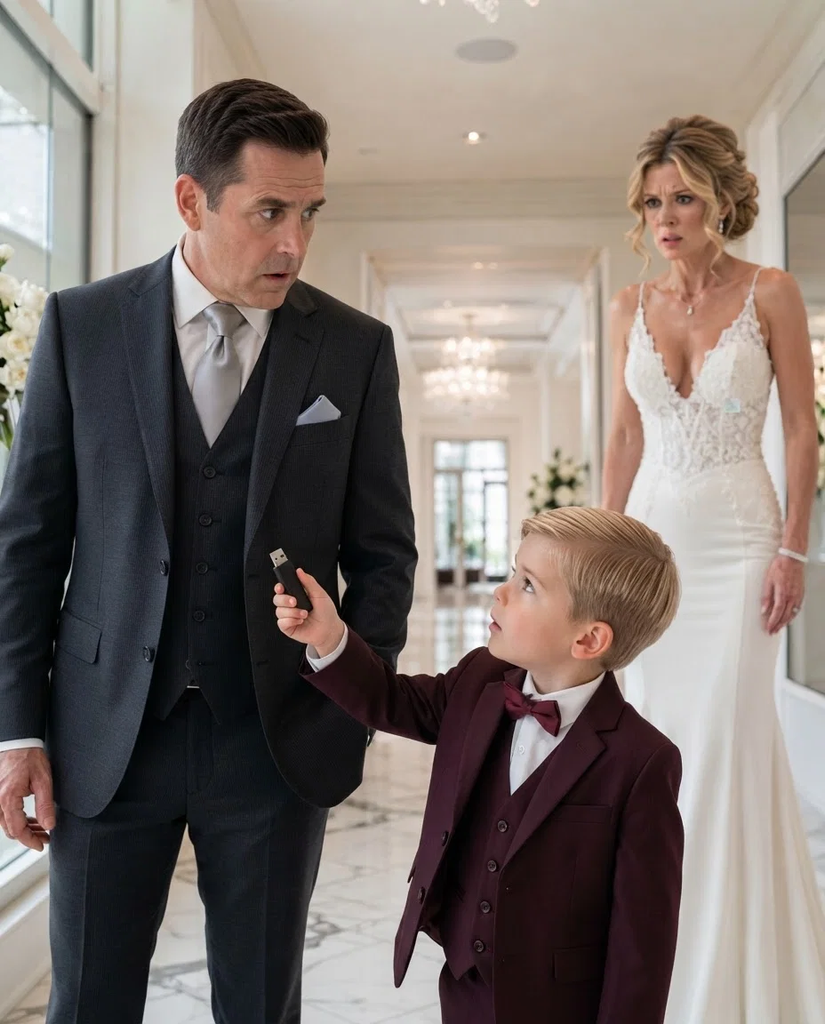
    Tony opened his hand. A black flash drive sat in his palm. “Already done.”

    I sat in my car in the alley for a long time before I called my attorney. Ms. Sterling had handled my affairs for eleven years, and in those eleven years, she had never asked me an unnecessary question.

    I told her to open a classified file, freeze the offshore accounts, prepare to lock all properties and suspend trust access, and find me a toxicologist who was discreet and fast.

    “What’s the timeline?” she asked.

    “Short,” I said. “I have to go home and drink poison.”

    The true weight of it did not land in the basement. It landed that night, lying in the dark beside Eleanor, listening to her breathe in the even rhythm of someone who has no trouble sleeping. The scent of her lavender cream, which had meant safety and home for four decades, turned my stomach. I lay rigid and looked at the ceiling and understood, with the particular clarity that arrives when everything familiar becomes strange simultaneously, that the woman eight inches from me had been measuring the remaining length of my life and finding it acceptable.

    The next seven days were the most precise performance of my life.

    Every morning, Eleanor placed the thick green ginger smoothie on my desk with the specific care of someone who wants to observe the consumption.

    “Drink all of it,” she would say. “You need your strength.”

    I would wait until her heels clicked down the hallway. Then I would pour the contents into the soil of the large Meyer lemon tree in the corner of my study, a plant she had given me for our anniversary four years prior. I buried the liquid under the decorative moss and wiped the rim of the glass and left a small sip at the bottom.

    By the fourth day, the lemon tree’s leaves had begun to curl. By the sixth day, they were yellow at the edges with the specific necrosis of something that has been absorbing a substance its biology cannot process. The poison was concentrated enough to kill a six-foot plant in six days.

    I noticed Eleanor watching me with particular attention. She remarked on my fatigue with an expression of concern that was a perfect performance of concern. She began making small adjustments around the house: measuring wall space in my study, making a phone call about the transferability of club memberships “in the event of a sudden passing,” rearranging things in ways that did not yet make sense but would once the desk was cleared.

    While she arranged her future, I arranged her ruin.

    Through late meetings in empty parking garages and messages on devices that existed for no other purpose, Ms. Sterling moved my assets into structures that could not be reached without my direct authorization. A toxicologist confirmed the presence of digoxin in residue I had carefully transported in a thermos. I submitted DNA samples from myself and from a hair lifted from a coffee cup Marcus had left behind after Wednesday’s visit. A private laboratory returned results in five days.

    The hardest part of that week was sitting across from Preston at dinner.

    He talked about startup ideas and travel plans with the ease of a young man who believes his path forward is clear. I watched his face across the table and searched for my own reflection in the architecture of it. I found nothing of myself. I found the arrogant brow and the set of the jaw that I had sat beside in church for thirty years calling a friend.

    He was not guilty of knowing about the poison. I was certain of that. He was guilty of other things I had not yet fully learned.

    On the seventh day, the lemon tree was completely dead. I knew Eleanor would notice it soon, and I knew that when she did, she would understand that the smoothies were not being consumed. I needed to accelerate the timeline before she changed her method.

    I needed to give her what she was waiting for.

    It happened on a Tuesday afternoon with rain against the windows. Eleanor was reading by the fireplace. I sat in my armchair with the glass. I let it tip from my hand. It shattered on the Persian rug and spread green liquid across the pattern.

    I grabbed my chest, pitched forward, and hit the floor hard enough to feel it genuinely, taking the impact on my shoulder. I let everything go slack. I fixed my eyes on a loose thread in the carpet and slowed my breathing to almost nothing using a technique I had not employed since a period of significant pressure in my thirties.

    Eleanor’s pages stopped turning.

    Slow footsteps approached.

    She stood over me. Her shadow crossed my face.

    “Richard?” she said. Her voice was conversational. Not frightened. Conversational.

    I did not move.

    She nudged my ribs with the toe of her shoe. Hard enough to register as deliberate, not accidental. I remained completely still.

    “Wake up, old man,” she whispered.

    When I did not move, I heard her purse open. Something cold pressed under my nose. She was using her compact mirror to check for breath condensation. I held the last of my air until my lungs burned and released only the thinnest possible wisps.

    She appeared satisfied. She knelt beside me. I felt her nails against my left hand, gripping my wedding ring, the one she had placed on my finger forty years ago with a vow she had apparently never fully intended to keep. She worked it off roughly, tearing the skin of my knuckle.

    “Better get this off now,” she murmured to herself. “Fingers always swell when the heart stops.”

    She stood and made a phone call.

    “Harper. It’s done. He’s on the floor. Bring the blue binder from the safe. We need the medical power of attorney and the DNR on the table before anyone calls the paramedics.”

    Fifteen minutes passed. The front door opened. Preston’s footsteps crossed the entry hall at a run.

    “Dad.” He dropped beside me, his hands on my shoulders. “Mom, what happened? Call 911!”

    The warmth that moved through me at his voice was involuntary. He was terrified. Whatever else was true, the fear in his voice was not a performance.

    Harper’s voice cut through the room before he could reach his phone.

    “Don’t touch that phone, Preston. Put it down.”

    He froze.

    “He’s having a heart attack,” he said.

    “He is supposed to be having a heart attack,” Eleanor said, stepping into his line of sight. “He signed a DNR last year. We have to respect his wishes.”

    I had never signed any such document.

    I heard the silence in which Preston understood what was happening. I heard him look down at me. I heard the documents being spread on the coffee table.

    Then my phone rang from my breast pocket. The screen would show Ms. Sterling’s name.

    Preston reached in and pulled it out. I know because I felt it go. The phone rang in his hand. He looked at the screen, at my face, at the room.

    He pressed the power button. He turned the phone off and put it in the credenza drawer.

    “Okay,” he said. His voice was shaking. “We wait.”

    Something that had lived in me for thirty-two years broke apart cleanly and without drama. Not the love itself, because you cannot stop loving someone through force of will at the moment of their betrayal. But the faith did. The faith in who he was beneath the person I had raised him to be. He was not a passive bystander who had been deceived. He was a man who had looked at the phone that would have saved my life and made a choice.

    They stood around me. I listened to them coordinate their account for the police. Harper opened the binder and pointed to a signature line.

    I took the largest breath I could manage and coughed violently.

    The silence that followed was so complete that I could hear the rain on the windows from across the room.

    I blinked, looking up at three faces that had gone the color of plaster.

    “What happened?” I rasped, pressing one hand to my chest.

    Eleanor recovered first. She threw herself down and wrapped her arms around me. “Thank God. Richard. You collapsed. We were just about to call someone.”

    “Takes more than a dizzy spell to put me down,” I muttered, accepting their help to the sofa.

    I played the confused and shaken patriarch for the next hour. I let them bring me water and blankets. I let them watch me.

    Then I said I had been thinking about our anniversary. Forty years was a milestone that deserved acknowledgment. I wanted to mark it properly, with the people who had been part of our lives. I had already arranged the grand ballroom at the St. Regis. I wanted to announce the Sterling Family Foundation and step back formally from the company.

    I said I wanted everyone to be there.

    I said I wanted everyone to get exactly what they deserved.

    Eleanor smiled. Preston exhaled. Harper exchanged one quick glance with my wife across the room that I was not supposed to see and did.

    The week before the gala, Ms. Sterling and I met every afternoon in a secured conference room downtown while Eleanor believed I was napping. The forensic accounting she placed in front of me went well beyond what had been discussed in the bridal lounge video.

    Eleanor had been extracting money from the estate for years in amounts and through structures designed to be invisible without a forensic audit. But it was the next folder that required me to sit very still for a moment before I could speak.

    Reverend Marcus Thorne had been using the church’s charitable outreach fund as a personal account. Over five years, nearly four million dollars designated for community services had been routed through a shell company in the Cayman Islands. The money had been used to pay off Preston’s gambling debts. Not recreational gambling. Illegal betting syndicates, the kind that send men to collect when payments are late.

    Marcus had been protecting Preston from the consequences of a problem Preston had presumably never told me about, using money that belonged to people who had put it in a collection plate because they believed in something.

    I had built a life on the premise that the people closest to me were who they presented themselves to be.

    I sat in that conference room and understood that I had been performing a friendship for thirty years to someone who had fathered my supposed son, corrupted my charitable giving, and funded my child’s criminal debt out of what appeared to be a sustained and organized effort to remain embedded in the center of my life.

    The ballroom at the St. Regis was everything an occasion of this size required. Three hundred people in formal attire, the entire upper register of Chicago society, politicians, board members, old friends, people who genuinely believed they had come to witness a milestone.

    Eleanor stood at the podium in a cream silk gown that she had spent several weeks selecting. Preston stood to her left in a tailored suit that I had paid for, wearing the expression of a man preparing to receive an inheritance. Harper sat in the front row in emerald green cut to suggest a pregnancy that did not exist. Marcus Thorne stood to the right of the podium in his clerical collar, looking serene.

    I walked down the center aisle and accepted the standing ovation with the nods and handshakes of a man in his final chapter. I climbed the stage. Eleanor came forward and embraced me, saying something warm for the microphones.

    I stepped to the podium.

    I thanked the room for being present. I said that many of them believed they were witnessing a transfer of power, and they were. But that before we discussed the future, I thought it was worth reflecting on the foundation on which the Sterling family had been built. I said that people had often asked me what the secret was to forty years of marriage. How to maintain loyalty and devotion in a world full of competing interests.

    I looked at Eleanor.

    Her smile shifted by one millimeter. She felt something change.

    “Tonight,” I said, “I decided to show you.”

    I pressed the button in my pocket.

    The ballroom lights went off.

    Behind me, the thirty-foot screen that had been displaying our monogram filled instead with the security footage from The Gilded Oak, in high definition, with the audio running through the speakers that had been designed for concert quality.

    The ballroom held approximately three hundred people.

    In twelve seconds, it went completely silent.

    Eleanor’s voice filled the room explaining the digoxin in my morning smoothies. Harper’s sneer about Preston’s gullibility echoed off the crystal chandeliers. The plot about the lake house and the fake pregnancy and the controlled board and the timed death hung in the air of a room full of the most well-connected people in the city.

    Eleanor lunged toward the podium. “Turn this off. The system has been hacked.”

    I stepped in front of her. “The presentation isn’t finished.”

    I let the room see the rest of it. I let them hear Harper’s recorded voice from a separate café encounter, in which she had threatened to go to the press with fabricated accusations unless I signed a medical power of attorney. I watched the women nearest Harper physically move their chairs back from her.

    Preston ran up the stage steps with tears on his face, reaching for me, saying he had not known about the poison, which I believed, and which did not cover what he had done.

    “I know what you didn’t know,” I said quietly, with the microphone carrying every word. “I also know what you did when you found me on the floor and my attorney’s number was on your screen.”

    His face collapsed.

    I said it plainly. I told the room what my son had done. I told them he had turned off the phone and put it in a drawer and said we wait.

    Preston could not speak.

    “That brings me to the final part of the presentation,” I said.

    The screen changed. DNA results. My name and Preston’s name. Probability of paternity: zero percent. The room absorbed this. Then the second result: Preston Sterling and Reverend Marcus Thorne. Probability of paternity: 99.9 percent.

    Three hundred heads turned toward the man in the clerical collar.

    Marcus gripped the back of a chair. His face had gone gray. His mouth opened and closed without producing language.

    I addressed him directly.

    “I could have found a way to forgive a moment of weakness forty years ago,” I said. “A man confesses and repents and I might have found my way through it. What I cannot forgive is what you did to my company, and to those people.”

    The bank statements appeared on the screen. The arrows tracing four million dollars from the church’s charitable fund through offshore structures to pay illegal gambling debts. The amounts. The dates. The beneficiary.

    “The FBI received the unredacted files this morning,” I said. “The officers outside are waiting to speak with you.”

    Marcus dropped to his knees.

    The room had gone beyond noise. It had reached the specific silence that follows a thing too large to immediately process.

    Preston was still on the stage. He reached toward me.

    I looked at him for a long moment. I remembered teaching him to ride a bicycle on the long driveway of our first real house. I remembered his first day of school and his last day of school and every recital and game and dinner in between. I remembered all of it clearly.

    I also remembered the sound of a phone being turned off.

    “A son protects his father,” I said. “He doesn’t choose the inheritance over the man.”

    I took the certified check from my breast pocket. I held it where the cameras at the back of the room could see it.

    Twenty-five million dollars. Every liquid asset I had pulled from the frozen accounts, redirected from the trusts, moved that morning into a final disposition. The will had been rewritten. The estate was no longer theirs.

    Eleanor looked up from where she had backed against the podium. For one moment, her eyes held a hope so delusional it was almost unbearable to witness.

    “I’m donating it entirely to the Westside Children’s Foundation,” I said. “Because they are the only children in this city who have genuinely demonstrated what it means to be family.”

    I set the check on the podium.

    I turned and walked down the stage steps and up the center aisle. The crowd parted without any instruction, simply moved aside the way people move when something has happened that they are still trying to understand.

    I walked through the lobby of the St. Regis and out through the glass doors into the Chicago night.

    The valet came forward and I waved him off. I wanted to walk.

    Behind me, the sirens started within a few minutes, converging on the hotel to collect Marcus Thorne and to begin the formal processing of the attempted murder charges Ms. Sterling had already filed with the documentation she had been holding.

    Michigan Avenue at night has a particular quality of light, the towers reflecting each other in ways that make the city look like it exists in two dimensions simultaneously. I walked with my hands in my pockets and the cool air on my face and took stock of what I had.

    What I had was a company I would need to rebuild. A son who was not my son, whom I had loved completely and who had elected to let me die on a living room floor. A best friend who had not been a friend. A wife who had been poisoning me for at least three weeks.

    What I also had was that my chest did not hurt. Not the tightness I had felt every morning when I handed back the empty smoothie glass. Not the dull pressure behind my sternum that I had been attributing to stress and age and too much coffee. My mind was clear in a way it had not been in weeks, possibly longer. The digoxin had been doing its quiet work on my heart, and now it was not.

    I turned up my collar against the wind and kept walking.

    A quiet man is not a weak man. Eleanor had understood me as sentimental. She had used that word with a specific contempt, as though sentiment were a deficiency in someone otherwise rational. What she had not understood, and what Marcus had not understood, and what neither of them had asked about in forty years of proximity to me, was that a man can be sentimental and patient and precise simultaneously. Those qualities do not cancel each other. They compound.

    I had built an empire from a single commercial property. I had done it quietly, over decades, without requiring an audience for each transaction. I had lost more and recovered more than anyone in that ballroom knew, because I did not perform my losses for sympathy or my recoveries for admiration.

    What Eleanor had mistaken for the compliant patience of a man growing old was the practiced discipline of a man who had spent his life not moving until he knew exactly where to go.

    I had given them time to finish building the structure.

    Then I had brought it down in one evening in front of three hundred witnesses.

    I stopped on the bridge and looked at the river. The lights from the buildings lay across the surface of the water in long broken columns. The cold came off the water the way it does in October in this city, direct and without apology.

    Forty years.

    It was a long time to be wrong about someone. I did not minimize that. It was real and it would take time to live with, the way any real thing takes time. But the alternative was continuing to be wrong, and I was not built for that.

    I stood on the bridge for a few minutes, and then I walked on.

    Tomorrow I would begin rebuilding. I would meet with the board members who had been in that ballroom and seen what they had seen. Some would stay and some would not. The company would be smaller for a while and then larger. That was a pattern I had been through before and knew how to navigate.

    Tonight I was just a man walking over a river in a city he had spent his life in, with cold air in his lungs and the truth in his pocket and the particular freedom that comes from having said the thing that most needed to be said in front of the people who most needed to hear it.

    It was enough for tonight.

    The city was loud around me, indifferent and continuous, the way cities are, not knowing or caring what had just occurred in one ballroom in one hotel on one of its ten thousand streets.

    I turned up my collar again and walked toward the far bank.

    The rest of it would come in time.

  • I Wrote A $500,000 Check For My Son’s Wedding But His Pregnant Bride Was Looking At Someone Else

    What They Forgot About Quiet Men

    Tony Russo had managed The Gilded Oak for a decade, long enough to have handled weeping brides, intoxicated senators, and billionaires who believed good manners were optional for men of their income. Tony did not rattle easily. That was one of the things I had always respected about him. So when his voice came through the receiver hushed and unsteady, a cold thing settled in my stomach before he had finished his first sentence.

    “Mr. Sterling.” He was whispering. The background was completely dead, which meant he had found somewhere to hide. “Please. You need to come here right now. Alone. Whatever you do, don’t bring your wife.”

    I was sitting at my kitchen island with my second coffee of the morning. Across the room, Eleanor was trimming white hydrangeas at the farmhouse sink, her silver-threaded hair catching the light through the window in a way that had always made me think of Sunday mornings and peace. She moved with the deliberate care she brought to beautiful things, which was one of the first qualities I had ever loved about her.

    “I’ll be there in twenty minutes,” I said, keeping my voice professional, the voice I used in boardrooms.

    Eleanor paused her shears. She did not turn around immediately, but the angle of her head changed. “Who was that, Richard?”

    “The pharmacy,” I said. “Backorder on my blood pressure prescription. I need to go sort it out.”

    She turned then. Her eyes narrowed for a fraction of a second. Yesterday, I would have read that as concern about my health. That morning, something about the way Tony’s voice had sounded made me look at the narrowing differently. It had the quality not of worry but of calibration.

    “Don’t stress yourself, darling,” she said, returning to her flowers. “You know what the doctor said about your heart.”

    “I’ll be fine,” I said, and picked up my keys.

    Tony met me at the service entrance of the restaurant, bypassing the lobby entirely. He led me down through the building into the basement security room, which smelled of stale grease and cleaning solution and the particular kind of institutional air that has never seen natural light. His face was the color of old paper.

    “If I show you this,” he said, his hand above the mouse but not yet touching it, “I need your word you won’t do anything immediate. This isn’t a family argument. It’s something else.”

    “Show me,” I said.

    The screen was the security feed from the VIP bridal lounge, time-stamped two evenings ago, the night of my son’s wedding reception.

    The door opened and Eleanor walked in.

    She was not using the elegant silver-handled cane she relied on at church and charity lunches. Her stride was even and purposeful, free of the slight favoring she performed for audiences. A moment later, Harper came in behind her, trailing Vera Wang tulle across the floor.

    Eleanor went to the wet bar and poured two glasses of champagne. She handed one to the bride without looking at her directly.

    Harper raised her glass.

    “To the stupidest man in Chicago,” she said.

    Eleanor laughed. A genuine laugh, the kind I had not heard from her in years, full and unguarded, belonging to someone who felt entirely safe.

    “To Richard,” Eleanor replied, touching her glass to Harper’s. “The goose that lays the golden eggs.”

    My hands went to the edge of the metal desk. I heard my knuckles make a sound.

    I stood in that damp basement room for the next forty minutes and watched my wife and my new daughter-in-law dismantle every structure I had spent four decades building. They discussed selling the lake house I had just deeded to my son, redirecting the proceeds to cover Harper’s hidden credit card debts and a condominium in Aspen she had apparently been purchasing on the side. They talked about the Sterling Family Trust, which I had constructed to release the bulk of my estate upon the birth of a biological grandchild. They talked about it the way people talk about a problem they have already solved.

    Harper placed one manicured hand on her flat stomach and smiled with her teeth.

    “Preston actually thinks the baby is his,” she said. “He doesn’t even know how to do the math.”

    “Just make sure he never figures it out,” Eleanor said. “And don’t let Richard demand a paternity test. He’s sentimental, but he’s not stupid.”

    Then Harper asked when I was going to retire permanently, rolling her eyes at the phrase as though it were something tiresome she had been asked to say too many times.

    Eleanor set her champagne down. Her face was completely calm.

    “Soon,” she said. “I swapped his heart medication three weeks ago. I’ve been adding digoxin to his morning smoothies. It mimics a gradual cardiac decline. One day, very soon, he’ll fall asleep in his armchair and not wake up. Then we control the board. We own everything.”

    Tony put his hand on my shoulder. I could not feel it.

    Forty years. Forty years of the same woman’s face across the breakfast table. Forty years of her hand in mine at surgical recoveries, at gravesides, at the milestones that define a life. Every single morning for the past month, she had looked me in the eye and handed me poison.

    Then Harper sighed, leaning against the vanity.

    “God, Preston is so gullible,” she said. “He gets it from his father.”

    Eleanor smiled. The particular thin smile of a woman whose amusement has no warmth in it.

    “Richard?” she said. “No. Preston isn’t Richard’s. He’s Marcus’s son.”

    Reverend Marcus Thorne.

    My closest friend for thirty years. My golf partner. The man who had baptized the boy I raised. The man who ate Sunday dinner at my table and had sat beside me through every public and private moment of consequence in my adult life, performing moral authority in a clerical collar while sleeping with my wife.

    A sound came up from somewhere inside me that I do not have a word for. I moved toward the monitor.

    Tony threw his full weight against me.

    “Richard,” he said, his voice tight. “If you destroy this footage, you destroy your only leverage. If you go home screaming, she’ll call her doctors and tell them the medication has you confused. She will have you committed, and she will win.”

    The part of me that had built an empire from a single commercial property and forty years of discipline reasserted itself through the noise.

    I straightened my jacket. “Does this exist on anything else?”

    Tony opened his hand. A black flash drive sat in his palm. “Already done.”

    I sat in my car in the alley for a long time before I called my attorney. Ms. Sterling had handled my affairs for eleven years, and in those eleven years, she had never asked me an unnecessary question.

    I told her to open a classified file, freeze the offshore accounts, prepare to lock all properties and suspend trust access, and find me a toxicologist who was discreet and fast.

    “What’s the timeline?” she asked.

    “Short,” I said. “I have to go home and drink poison.”

    The true weight of it did not land in the basement. It landed that night, lying in the dark beside Eleanor, listening to her breathe in the even rhythm of someone who has no trouble sleeping. The scent of her lavender cream, which had meant safety and home for four decades, turned my stomach. I lay rigid and looked at the ceiling and understood, with the particular clarity that arrives when everything familiar becomes strange simultaneously, that the woman eight inches from me had been measuring the remaining length of my life and finding it acceptable.

    The next seven days were the most precise performance of my life.

    Every morning, Eleanor placed the thick green ginger smoothie on my desk with the specific care of someone who wants to observe the consumption.

    “Drink all of it,” she would say. “You need your strength.”

    I would wait until her heels clicked down the hallway. Then I would pour the contents into the soil of the large Meyer lemon tree in the corner of my study, a plant she had given me for our anniversary four years prior. I buried the liquid under the decorative moss and wiped the rim of the glass and left a small sip at the bottom.

    By the fourth day, the lemon tree’s leaves had begun to curl. By the sixth day, they were yellow at the edges with the specific necrosis of something that has been absorbing a substance its biology cannot process. The poison was concentrated enough to kill a six-foot plant in six days.

    I noticed Eleanor watching me with particular attention. She remarked on my fatigue with an expression of concern that was a perfect performance of concern. She began making small adjustments around the house: measuring wall space in my study, making a phone call about the transferability of club memberships “in the event of a sudden passing,” rearranging things in ways that did not yet make sense but would once the desk was cleared.

    While she arranged her future, I arranged her ruin.

    Through late meetings in empty parking garages and messages on devices that existed for no other purpose, Ms. Sterling moved my assets into structures that could not be reached without my direct authorization. A toxicologist confirmed the presence of digoxin in residue I had carefully transported in a thermos. I submitted DNA samples from myself and from a hair lifted from a coffee cup Marcus had left behind after Wednesday’s visit. A private laboratory returned results in five days.

    The hardest part of that week was sitting across from Preston at dinner.

    He talked about startup ideas and travel plans with the ease of a young man who believes his path forward is clear. I watched his face across the table and searched for my own reflection in the architecture of it. I found nothing of myself. I found the arrogant brow and the set of the jaw that I had sat beside in church for thirty years calling a friend.

    He was not guilty of knowing about the poison. I was certain of that. He was guilty of other things I had not yet fully learned.

    On the seventh day, the lemon tree was completely dead. I knew Eleanor would notice it soon, and I knew that when she did, she would understand that the smoothies were not being consumed. I needed to accelerate the timeline before she changed her method.

    I needed to give her what she was waiting for.

    It happened on a Tuesday afternoon with rain against the windows. Eleanor was reading by the fireplace. I sat in my armchair with the glass. I let it tip from my hand. It shattered on the Persian rug and spread green liquid across the pattern.

    I grabbed my chest, pitched forward, and hit the floor hard enough to feel it genuinely, taking the impact on my shoulder. I let everything go slack. I fixed my eyes on a loose thread in the carpet and slowed my breathing to almost nothing using a technique I had not employed since a period of significant pressure in my thirties.

    Eleanor’s pages stopped turning.

    Slow footsteps approached.

    She stood over me. Her shadow crossed my face.

    “Richard?” she said. Her voice was conversational. Not frightened. Conversational.

    I did not move.

    She nudged my ribs with the toe of her shoe. Hard enough to register as deliberate, not accidental. I remained completely still.

    “Wake up, old man,” she whispered.

    When I did not move, I heard her purse open. Something cold pressed under my nose. She was using her compact mirror to check for breath condensation. I held the last of my air until my lungs burned and released only the thinnest possible wisps.

    She appeared satisfied. She knelt beside me. I felt her nails against my left hand, gripping my wedding ring, the one she had placed on my finger forty years ago with a vow she had apparently never fully intended to keep. She worked it off roughly, tearing the skin of my knuckle.

    “Better get this off now,” she murmured to herself. “Fingers always swell when the heart stops.”

    She stood and made a phone call.

    “Harper. It’s done. He’s on the floor. Bring the blue binder from the safe. We need the medical power of attorney and the DNR on the table before anyone calls the paramedics.”

    Fifteen minutes passed. The front door opened. Preston’s footsteps crossed the entry hall at a run.

    “Dad.” He dropped beside me, his hands on my shoulders. “Mom, what happened? Call 911!”

    The warmth that moved through me at his voice was involuntary. He was terrified. Whatever else was true, the fear in his voice was not a performance.

    Harper’s voice cut through the room before he could reach his phone.

    “Don’t touch that phone, Preston. Put it down.”

    He froze.

    “He’s having a heart attack,” he said.

    “He is supposed to be having a heart attack,” Eleanor said, stepping into his line of sight. “He signed a DNR last year. We have to respect his wishes.”

    I had never signed any such document.

    I heard the silence in which Preston understood what was happening. I heard him look down at me. I heard the documents being spread on the coffee table.

    Then my phone rang from my breast pocket. The screen would show Ms. Sterling’s name.

    Preston reached in and pulled it out. I know because I felt it go. The phone rang in his hand. He looked at the screen, at my face, at the room.

    He pressed the power button. He turned the phone off and put it in the credenza drawer.

    “Okay,” he said. His voice was shaking. “We wait.”

    Something that had lived in me for thirty-two years broke apart cleanly and without drama. Not the love itself, because you cannot stop loving someone through force of will at the moment of their betrayal. But the faith did. The faith in who he was beneath the person I had raised him to be. He was not a passive bystander who had been deceived. He was a man who had looked at the phone that would have saved my life and made a choice.

    They stood around me. I listened to them coordinate their account for the police. Harper opened the binder and pointed to a signature line.

    I took the largest breath I could manage and coughed violently.

    The silence that followed was so complete that I could hear the rain on the windows from across the room.

    I blinked, looking up at three faces that had gone the color of plaster.

    “What happened?” I rasped, pressing one hand to my chest.

    Eleanor recovered first. She threw herself down and wrapped her arms around me. “Thank God. Richard. You collapsed. We were just about to call someone.”

    “Takes more than a dizzy spell to put me down,” I muttered, accepting their help to the sofa.

    I played the confused and shaken patriarch for the next hour. I let them bring me water and blankets. I let them watch me.

    Then I said I had been thinking about our anniversary. Forty years was a milestone that deserved acknowledgment. I wanted to mark it properly, with the people who had been part of our lives. I had already arranged the grand ballroom at the St. Regis. I wanted to announce the Sterling Family Foundation and step back formally from the company.

    I said I wanted everyone to be there.

    I said I wanted everyone to get exactly what they deserved.

    Eleanor smiled. Preston exhaled. Harper exchanged one quick glance with my wife across the room that I was not supposed to see and did.

    The week before the gala, Ms. Sterling and I met every afternoon in a secured conference room downtown while Eleanor believed I was napping. The forensic accounting she placed in front of me went well beyond what had been discussed in the bridal lounge video.

    Eleanor had been extracting money from the estate for years in amounts and through structures designed to be invisible without a forensic audit. But it was the next folder that required me to sit very still for a moment before I could speak.

    Reverend Marcus Thorne had been using the church’s charitable outreach fund as a personal account. Over five years, nearly four million dollars designated for community services had been routed through a shell company in the Cayman Islands. The money had been used to pay off Preston’s gambling debts. Not recreational gambling. Illegal betting syndicates, the kind that send men to collect when payments are late.

    Marcus had been protecting Preston from the consequences of a problem Preston had presumably never told me about, using money that belonged to people who had put it in a collection plate because they believed in something.

    I had built a life on the premise that the people closest to me were who they presented themselves to be.

    I sat in that conference room and understood that I had been performing a friendship for thirty years to someone who had fathered my supposed son, corrupted my charitable giving, and funded my child’s criminal debt out of what appeared to be a sustained and organized effort to remain embedded in the center of my life.

    The ballroom at the St. Regis was everything an occasion of this size required. Three hundred people in formal attire, the entire upper register of Chicago society, politicians, board members, old friends, people who genuinely believed they had come to witness a milestone.

    Eleanor stood at the podium in a cream silk gown that she had spent several weeks selecting. Preston stood to her left in a tailored suit that I had paid for, wearing the expression of a man preparing to receive an inheritance. Harper sat in the front row in emerald green cut to suggest a pregnancy that did not exist. Marcus Thorne stood to the right of the podium in his clerical collar, looking serene.

    I walked down the center aisle and accepted the standing ovation with the nods and handshakes of a man in his final chapter. I climbed the stage. Eleanor came forward and embraced me, saying something warm for the microphones.

    I stepped to the podium.

    I thanked the room for being present. I said that many of them believed they were witnessing a transfer of power, and they were. But that before we discussed the future, I thought it was worth reflecting on the foundation on which the Sterling family had been built. I said that people had often asked me what the secret was to forty years of marriage. How to maintain loyalty and devotion in a world full of competing interests.

    I looked at Eleanor.

    Her smile shifted by one millimeter. She felt something change.

    “Tonight,” I said, “I decided to show you.”

    I pressed the button in my pocket.

    The ballroom lights went off.

    Behind me, the thirty-foot screen that had been displaying our monogram filled instead with the security footage from The Gilded Oak, in high definition, with the audio running through the speakers that had been designed for concert quality.

    The ballroom held approximately three hundred people.

    In twelve seconds, it went completely silent.

    Eleanor’s voice filled the room explaining the digoxin in my morning smoothies. Harper’s sneer about Preston’s gullibility echoed off the crystal chandeliers. The plot about the lake house and the fake pregnancy and the controlled board and the timed death hung in the air of a room full of the most well-connected people in the city.

    Eleanor lunged toward the podium. “Turn this off. The system has been hacked.”

    I stepped in front of her. “The presentation isn’t finished.”

    I let the room see the rest of it. I let them hear Harper’s recorded voice from a separate café encounter, in which she had threatened to go to the press with fabricated accusations unless I signed a medical power of attorney. I watched the women nearest Harper physically move their chairs back from her.

    Preston ran up the stage steps with tears on his face, reaching for me, saying he had not known about the poison, which I believed, and which did not cover what he had done.

    “I know what you didn’t know,” I said quietly, with the microphone carrying every word. “I also know what you did when you found me on the floor and my attorney’s number was on your screen.”

    His face collapsed.

    I said it plainly. I told the room what my son had done. I told them he had turned off the phone and put it in a drawer and said we wait.

    Preston could not speak.

    “That brings me to the final part of the presentation,” I said.

    The screen changed. DNA results. My name and Preston’s name. Probability of paternity: zero percent. The room absorbed this. Then the second result: Preston Sterling and Reverend Marcus Thorne. Probability of paternity: 99.9 percent.

    Three hundred heads turned toward the man in the clerical collar.

    Marcus gripped the back of a chair. His face had gone gray. His mouth opened and closed without producing language.

    I addressed him directly.

    “I could have found a way to forgive a moment of weakness forty years ago,” I said. “A man confesses and repents and I might have found my way through it. What I cannot forgive is what you did to my company, and to those people.”

    The bank statements appeared on the screen. The arrows tracing four million dollars from the church’s charitable fund through offshore structures to pay illegal gambling debts. The amounts. The dates. The beneficiary.

    “The FBI received the unredacted files this morning,” I said. “The officers outside are waiting to speak with you.”

    Marcus dropped to his knees.

    The room had gone beyond noise. It had reached the specific silence that follows a thing too large to immediately process.

    Preston was still on the stage. He reached toward me.

    I looked at him for a long moment. I remembered teaching him to ride a bicycle on the long driveway of our first real house. I remembered his first day of school and his last day of school and every recital and game and dinner in between. I remembered all of it clearly.

    I also remembered the sound of a phone being turned off.

    “A son protects his father,” I said. “He doesn’t choose the inheritance over the man.”

    I took the certified check from my breast pocket. I held it where the cameras at the back of the room could see it.

    Twenty-five million dollars. Every liquid asset I had pulled from the frozen accounts, redirected from the trusts, moved that morning into a final disposition. The will had been rewritten. The estate was no longer theirs.

    Eleanor looked up from where she had backed against the podium. For one moment, her eyes held a hope so delusional it was almost unbearable to witness.

    “I’m donating it entirely to the Westside Children’s Foundation,” I said. “Because they are the only children in this city who have genuinely demonstrated what it means to be family.”

    I set the check on the podium.

    I turned and walked down the stage steps and up the center aisle. The crowd parted without any instruction, simply moved aside the way people move when something has happened that they are still trying to understand.

    I walked through the lobby of the St. Regis and out through the glass doors into the Chicago night.

    The valet came forward and I waved him off. I wanted to walk.

    Behind me, the sirens started within a few minutes, converging on the hotel to collect Marcus Thorne and to begin the formal processing of the attempted murder charges Ms. Sterling had already filed with the documentation she had been holding.

    Michigan Avenue at night has a particular quality of light, the towers reflecting each other in ways that make the city look like it exists in two dimensions simultaneously. I walked with my hands in my pockets and the cool air on my face and took stock of what I had.

    What I had was a company I would need to rebuild. A son who was not my son, whom I had loved completely and who had elected to let me die on a living room floor. A best friend who had not been a friend. A wife who had been poisoning me for at least three weeks.

    What I also had was that my chest did not hurt. Not the tightness I had felt every morning when I handed back the empty smoothie glass. Not the dull pressure behind my sternum that I had been attributing to stress and age and too much coffee. My mind was clear in a way it had not been in weeks, possibly longer. The digoxin had been doing its quiet work on my heart, and now it was not.

    I turned up my collar against the wind and kept walking.

    A quiet man is not a weak man. Eleanor had understood me as sentimental. She had used that word with a specific contempt, as though sentiment were a deficiency in someone otherwise rational. What she had not understood, and what Marcus had not understood, and what neither of them had asked about in forty years of proximity to me, was that a man can be sentimental and patient and precise simultaneously. Those qualities do not cancel each other. They compound.

    I had built an empire from a single commercial property. I had done it quietly, over decades, without requiring an audience for each transaction. I had lost more and recovered more than anyone in that ballroom knew, because I did not perform my losses for sympathy or my recoveries for admiration.

    What Eleanor had mistaken for the compliant patience of a man growing old was the practiced discipline of a man who had spent his life not moving until he knew exactly where to go.

    I had given them time to finish building the structure.

    Then I had brought it down in one evening in front of three hundred witnesses.

    I stopped on the bridge and looked at the river. The lights from the buildings lay across the surface of the water in long broken columns. The cold came off the water the way it does in October in this city, direct and without apology.

    Forty years.

    It was a long time to be wrong about someone. I did not minimize that. It was real and it would take time to live with, the way any real thing takes time. But the alternative was continuing to be wrong, and I was not built for that.

    I stood on the bridge for a few minutes, and then I walked on.

    Tomorrow I would begin rebuilding. I would meet with the board members who had been in that ballroom and seen what they had seen. Some would stay and some would not. The company would be smaller for a while and then larger. That was a pattern I had been through before and knew how to navigate.

    Tonight I was just a man walking over a river in a city he had spent his life in, with cold air in his lungs and the truth in his pocket and the particular freedom that comes from having said the thing that most needed to be said in front of the people who most needed to hear it.

    It was enough for tonight.

    The city was loud around me, indifferent and continuous, the way cities are, not knowing or caring what had just occurred in one ballroom in one hotel on one of its ten thousand streets.

    I turned up my collar again and walked toward the far bank.

    The rest of it would come in time.

    It always did.

  • My Husband Mocked My Body at His Promotion Gala. Hours Later, the Bank Froze His Cards—and He Didn’t Know Why.

    The zipper on my dress caught halfway up my back, the teeth snagging on fabric that used to flow like water but now pulled tight across my body. I stood in front of the mirror in our bedroom, struggling with the navy silk gown while behind me, in matching bassinets by the window, Noah and Emma created their evening symphony—Noah’s sharp, rhythmic wails harmonizing with Emma’s softer, hiccupping cries. Four months old and already they had perfected the art of tag-team crying, ensuring that silence was a luxury I could no longer afford.

    My fingers fumbled with the zipper again, and I felt the familiar throb of my C-section scar, still healing, still reminding me that my body had been sliced open to bring two humans into the world. The dress was a size larger than I used to wear, but even that wasn’t enough. The fabric strained across hips that had widened, pulled tight over a stomach that still carried the softness of pregnancy.

    “Are you really wearing that?”

    Liam’s voice cut through the crying. He stood in front of the full-length mirror across the room, adjusting onyx cufflinks that caught the light. At thirty-four, he was the picture of success—jawline sharp enough to cut glass, hair perfectly styled, wearing a tuxedo that cost more than most people’s monthly rent. He looked at my reflection in the mirror, his upper lip curling in that expression I’d come to know too well. Distaste. Pure, unfiltered distaste.

    I froze, my hand still on the zipper. “It’s the only formal dress that fits right now, Liam. And barely.”

    He turned, his eyes scanning me from head to toe. They didn’t linger on my face, didn’t see the dark circles under my eyes that makeup couldn’t quite hide, didn’t notice the exhaustion etched into every line of my expression. His gaze fixed on my waist. On the softness of my arms. On the way the dress clung to my post-partum body, refusing to lie.

    “It looks like a tent,” he said, reaching for a bottle of cologne. “Can’t you wear Spanx? A girdle? Something? The Board is going to be there tonight. The investors. I need you to look like a CEO’s wife, Ava. Not like…” He paused, spraying the expensive, woody cologne around his neck. “Not like a dairy cow.”

    The words landed like a physical blow. I looked down at my hands, at fingers that had held his through five years of marriage, through struggles and successes I’d orchestrated from the shadows. “I gave birth four months ago, Liam. To two humans. Twins. My body hasn’t recovered.”

    “Everyone has kids, Ava.” He sighed like I was being deliberately difficult. “Not everyone lets themselves go like this. Look at Chloe from Marketing. She had a kid last year and she’s running marathons now.”

    “Chloe has a night nanny and a personal trainer,” I whispered, my voice barely audible over Emma’s escalating cries. “I have… me.”

    “Excuses.” He checked his watch—a vintage Patek Philippe I’d bought him for our fifth anniversary, back when I still believed in grand gestures. “Just try to stand in the back tonight. Don’t hover near me when I’m talking to the press. I don’t want the Mysterious Owner to see you and think I make bad decisions.” He adjusted his bow tie with the precision of a man who understood that every detail mattered. “Aesthetics matter, Ava. Perception is reality.”

    I looked at him, really looked at him, and felt a cold clarity wash over me like ice water. The Mysterious Owner. He spoke about them—about me—with a mixture of fear and reverence that he’d never shown the woman standing before him. He had never met the owner of Vertex Dynamics. All he knew was that they were a reclusive majority shareholder who had hand-picked him for the CEO role two years ago, plucking him from middle management and elevating him to a position he’d never dreamed possible.

    He spent every waking moment trying to impress this ghost. He curated his Instagram feed, rehearsed his speeches, selected his suits, all for an audience of one. An audience who was currently struggling to zip up a dress while their babies cried and their husband complained about aesthetics.

    If only you knew, I thought, watching him preen in the mirror. The Mysterious Owner is the one changing the diapers you refuse to touch. The Mysterious Owner is the one whose body you just compared to livestock.

    I had inherited Vertex Dynamics from my father seven years ago, when cancer took him far too young. I kept my ownership silent, hidden behind a labyrinth of trusts and holding companies, because I wanted something simple. I wanted to be loved for Ava, not for the billions attached to my name. When I met Liam at a charity fundraiser, he was a hungry, ambitious junior executive with fire in his eyes and dreams bigger than his paycheck. I thought his drive was passion. I thought his hunger for success meant he understood hard work.

    I didn’t realize it was just hunger. Empty, consuming, never satisfied.

    I promoted him from the shadows. I gave him opportunities, opened doors, paved his path with gold. I thought we would build something together, a partnership of equals. Instead, he climbed the ladder I’d built and then pulled it up behind him, leaving me standing at the bottom, holding his children.

    “The limo is here,” Liam announced, grabbing his phone. “Don’t make me wait. And do something about…” He gestured vaguely at my face, at the exhaustion I couldn’t hide. “You look like death. It’s depressing.”

    He walked out without looking back, his footsteps confident on the hardwood floors we’d had installed last year—floors I’d paid for, in a house I owned, in a life I’d financed.

    I stood there for a moment, the twins’ cries filling the silence he left behind. I picked up Noah, rocking him against my chest, feeling his tiny body relax into mine. His crying quieted to soft hiccups.

    “It’s okay,” I whispered, kissing his soft head that still smelled like baby shampoo and milk. “Daddy didn’t mean it. Daddy is just… confused.”

    But that was a lie. He wasn’t confused. He was cruel. And cruelty, unlike exhaustion, wasn’t something you could fix with a good night’s sleep.

    I settled Noah back into his bassinet and picked up my phone. My fingers moved with muscle memory, pulling up the encrypted messaging app I used for sensitive company business. I sent a text to Mr. Henderson, the Chairman of the Board and the only person at Vertex who knew my true identity.

    Is the severance package for executive termination ready for execution?

    The three dots appeared instantly. Henderson was always prepared.

    Ready on your command, Ma’am. Just give the word.

    I put the phone in my purse—a designer bag Liam had bought with my money, telling me it would “elevate my image”—and smoothed the fabric of my “tent.” I followed my husband to what he thought was his coronation, but what would actually be his execution.

    The Vertex Dynamics Annual Gala was held at the Grand Continental Hotel, a property I’d acquired three years ago through one of my holding companies. The ballroom was a cathedral of crystal and light, with gold leaf on the ceiling and white roses climbing up every column. It smelled of truffle oil, champagne, and the particular scent of ambition that comes from putting too many executives in one room.

    We arrived to a flash of cameras. Liam stepped out of the limousine first, his practiced smile dazzling in the strobe of flashbulbs. He buttoned his jacket with one smooth motion, waved to the photographers like a politician, and strode toward the red carpet as if he owned it.

    I struggled out of the car behind him, managing the oversized diaper bag I’d disguised as a designer tote, wrestling with the double stroller that the valet had to help me unfold. My heel caught on the door frame and I stumbled slightly, catching myself before I fell.

    “Mr. Sterling! Over here! A photo with your wife?”

    A reporter’s voice cut through the noise. Liam hesitated, looking back at me. I was still fighting with a strap on the stroller, my hair slightly mussed from the wind, a far cry from the polished executive wives posing gracefully on the red carpet. I saw the calculation in his eyes, the rapid cost-benefit analysis that had become his default expression. Does this help the brand? Does she add value or subtract it?

    “Maybe later,” Liam called out, his smile never faltering. He stepped in front of me, blocking the camera’s view. “Ava is feeling a bit under the weather tonight. Let’s focus on the Q3 earnings, shall we? Vertex just had its best quarter in company history.”

    He ushered me quickly past the press line and into the venue, his hand on my elbow firm enough to leave marks.

    “Jesus, Ava,” he hissed as we entered the lobby, his voice low but sharp. “You’re clumsy. You almost tripped over the stroller. Can’t you be graceful for one hour? One single hour?”

    “I’m carrying thirty pounds of baby gear, Liam. You could help.”

    “I’m the CEO,” he snapped, straightening his jacket. “I’m not a pack mule. Go find a corner. Stay there. Try not to draw attention to yourself.”

    I found a spot near the buffet, partially hidden by a massive floral arrangement that probably cost more than most people’s cars. I rocked the stroller back and forth, back and forth, the motion automatic after months of practice. Emma was asleep, her tiny face peaceful, but Noah was fussy, making the small sounds that I knew would escalate into full crying if I didn’t address them soon.

    I picked him up, bouncing him gently against my shoulder, murmuring soft reassurances. He let out a loud, wet burp, and a small amount of spit-up landed on the shoulder of my navy dress. I watched the wet spot spread across the silk, darkening the fabric.

    “Great,” I muttered, grabbing a burp cloth and frantically trying to wipe it away. The stain remained, a mark of my reality in a room full of illusions.

    “Is there a problem here?”

    Liam materialized out of the crowd like a shark sensing blood in the water. He wasn’t alone. He was flanked by two board members and a potential investor from Dubai, all of them in immaculate tuxedos, all of them looking at me. At the stain. At the crying baby. At the mess I represented in their perfect evening.

    Liam’s face turned a shade of red I had rarely seen. It wasn’t anger—I knew his anger, had weathered it before. This was mortification. Pure, unadulterated shame.

    “Excuse us for a moment, gentlemen,” Liam said, his smile tight and brittle like thin ice. “Just a small domestic matter.”

    He grabbed my elbow, his grip hard enough to hurt, pinching the soft flesh of my arm. He marched me away from the group, away from the crystal chandeliers and the jazz quartet, toward the emergency exit near the kitchens.

    “Liam, you’re hurting me,” I whispered.

    He didn’t loosen his grip. He cornered me by the swinging doors, next to a stack of empty crates and garbage bins. The smell of the alley wafted through—rotting food and exhaust fumes, a stark contrast to the truffle oil and roses inside.

    “What is wrong with you?” His voice trembled with rage, each word a barely controlled explosion. “I told you to keep them quiet! I told you to stay hidden!”

    “He spit up, Liam! He’s four months old! It happens!”

    “Not to my wife!” He lowered his voice only when a server pushed through the doors, glancing at us curiously. “Look at you. You have vomit on your shoulder. Your hair is a disaster. You look…” He searched for the right word, the perfect insult. “You look disgusting.”

    The air left my lungs. “Disgusting?”

    His eyes traveled over me, taking inventory of everything he found lacking. My stomach, still round and soft. The dark circles under my eyes. The way my dress pulled tight across my body. The crying child in my arms that he looked at with zero affection, only annoyance.

    “You’re bloated,” he said, the words dripping like poison. “You look like a mess. You ruin the image, Ava. I am trying to build an empire here, and you look like you just crawled out of a Walmart. Do you understand what’s at stake tonight? The Mysterious Owner is supposed to be observing me. Evaluating me. And here you are, looking like trailer trash with baby vomit on your designer dress.”

    He pointed to the exit door, his hand shaking with the force of his conviction.

    “Go hide in the car. Or better yet, go home. I can’t look at you right now. You’re a liability. You’re embarrassing me. Just… leave.”

    Something inside me snapped. Not a loud snap, like a bone breaking. But a quiet, final severance. Like a rope that’s been holding up a bridge for years, fraying thread by thread until one day it just… gives. The bridge doesn’t explode. It just collapses, quiet and inevitable.

    The bridge between us collapsed.

    I looked at him—really looked at him—and saw him clearly for the first time in years. I saw the fear in his eyes, the terror of being ordinary, of being seen as anything less than perfect. And I realized with crystalline clarity that his perfection was entirely subsidized by my patience.

    “Go home?” I repeated, my voice soft.

    “Yes! Get out! Before someone important sees you and wonders why I married such a slob.”

    I didn’t cry. The tears I’d been fighting all night evaporated, replaced by something cold and hard and diamond-bright.

    “Okay, Liam,” I said. “I’m leaving.”

    I put Noah back in the stroller, tucking the blanket around him with care. I turned and pushed the heavy cart through the emergency exit, out into the cool night air of the alley. Behind me, the door swung shut with a final, heavy thud.

    Liam didn’t watch me go. He was already checking his reflection in the glass of the door, smoothing his lapels, preparing to re-enter the fantasy he thought he owned.

    The valet brought my car around—the Range Rover Liam insisted on driving to work because it looked “executive,” even though it was titled in my name, even though I’d paid for it in cash. I strapped the babies into their car seats, Noah already calming down now that we were away from the noise and tension, Emma still sleeping peacefully.

    “We’re going on an adventure,” I told them, kissing each of their foreheads.

    I sat in the driver’s seat, keys in hand, but I didn’t drive home. Home was contaminated. Home was where Liam lived, where his presence had infected every room with his expectations and disappointments.

    Instead, I drove three blocks to the Grand Continental’s main entrance—the hotel side, not the event space. As the owner of the hotel chain, I kept a permanent Presidential Suite on reserve for emergencies and late-night business meetings. This qualified as both.

    I handed the keys to the valet, a young man who recognized me and snapped to attention. “Keep it close,” I said. “And if a Mr. Liam Sterling asks for it later… tell him it’s been impounded.”

    Up in the suite, I settled the twins into the luxurious hotel cribs that housekeeping brought up within minutes. I ordered room service—a club sandwich, truffle fries, and a glass of the most expensive red wine on the menu. Not because I needed expensive wine, but because I could, and because it tasted like autonomy.

    I kicked off my heels, letting them fall to the plush carpet, and opened my laptop on the marble dining table. The screen cast a blue glow across the room, illuminating my reflection in the window—a woman in a stained dress, sitting in a hotel suite she owned, about to dismantle a life she’d built.

    It was time to work.

    Back at the Gala, Liam was on top of the world. Without Ava there to drag him down, he felt lighter, invincible. He raised a glass of champagne to the investors, his smile dazzling. “To the future!” he beamed. “To Vertex Dynamics!” The crowd applauded. Someone clapped him on the back. He felt like a king.

    He walked to the bar, still riding the high of the moment. “A round of the 25-year Macallan for my table,” he told the bartender with the casual confidence of a man who never checked price tags. “On me.”

    He slapped his sleek, black American Express Centurion card on the mahogany counter. The Black Card. The card with no limit. The card that separated men from boys.

    The bartender swiped it through the terminal. He frowned. He swiped it again, slower this time.

    “I’m sorry, Mr. Sterling,” the bartender whispered, leaning in close to avoid embarrassing him. “It’s declined.”

    “Don’t be ridiculous,” Liam laughed, loud enough for the nearby board members to hear. “It’s a Black Card. There is no limit. Try it again.”

    “I did, sir. Multiple times. The terminal says ‘Code 404: Account Frozen by Primary Holder’.”

    Liam frowned. Primary Holder? He was the primary holder. He’d been using this card for years. He’d forgotten, in his arrogance and assumption, that the card was a supplementary account attached to my trust, that he’d never actually qualified for a Centurion card on his CEO salary alone.

    “Use the Visa,” Liam snapped, his voice tight as he handed over another card from his wallet, this one platinum and equally impressive.

    The bartender swiped it. “Declined. The system says ‘Reported Lost or Stolen by Primary Account Holder’.”

    Sweat began to bead on Liam’s forehead. He felt the eyes of the investors on him, felt the shift in the room’s energy from celebration to speculation. His hands shook as he reached for a third card.

    “Just… put it on my corporate account,” he muttered. “Room charges. Bill it to my suite.”

    The bartender consulted his computer, clicking through screens. “You don’t have a room reserved here, sir. And the corporate account has been…” He squinted at the screen. “Suspended as of fifteen minutes ago.”

    Meanwhile, two miles away in the Presidential Suite, I took a bite of my club sandwich. It tasted like freedom—bacon, crispy lettuce, perfectly toasted bread. I washed it down with the wine, rich and full-bodied, and opened the smart home app on my phone.

    The house—our house, though legally it had always been mine—appeared on the screen in blueprint form. Every lock, every camera, every system at my fingertips.

    Front Door: Biometric Lock Updated. User ‘Liam Sterling’ deleted. Passcode changed to: [NEW SECURE CODE]

    Garage Door: Locked. Vehicle Bay: Secured. Security System: Armed. Mode: Hostile Intruder.

    I opened the Tesla app next. Liam’s personal car—the Model S Plaid he’d insisted on, the one with ludicrous acceleration he loved to show off—was parked in the hotel garage for his planned late-night “getaway” after the party.

    I tapped through the screens with the efficiency of someone who’d been managing complex systems for years.

    Remote Access: Revoked. Speed Limit Mode: Set to 5 MPH. Valet Mode: Activated. PIN Required for All Functions.

    Finally, I opened the HR portal for Vertex Dynamics, using my owner credentials that bypassed every firewall and security protocol. I navigated to the Executive Organizational Chart, a beautiful tree diagram showing the hierarchy of power. At the top, in the largest box, sat one name: Chief Executive Officer – Liam Sterling.

    I hovered my cursor over the button marked Terminate Employment.

    Not yet. I wanted him to feel the cold first. I wanted him to realize he was naked before I took away the roof.

    Back at the hotel bar, Liam stood frozen, his fourth credit card declined. The bartender had moved on to serve other customers, leaving Liam stranded with his handful of useless plastic. He checked his phone, trying to call the bank. Your call cannot be completed at this time. He tried his assistant. No answer. He tried his bank’s mobile app. Account Locked. Please Contact Customer Service.

    He tried to call me. In the suite above him, I watched my phone buzz on the coffee table, his name flashing on the screen. Husband Calling. I let it ring. I let it go to voicemail. I took another sip of wine.

    Liam decided to leave the party early. Something was wrong. The air in the room felt thin, like the oxygen had been sucked out. He walked to the valet stand, his stride brisk, trying to maintain the illusion of control even as panic began to claw at his throat.

    “The Tesla,” he barked at the valet, his voice sharp. “Ticket 409.”

    The valet, a different one than earlier, looked uncomfortable. He shifted his weight from foot to foot, glancing at his tablet.

    “Mr. Sterling?” The valet’s voice was apologetic. “The Tesla… it won’t start. The system has been locked down.”

    “What do you mean it won’t start? It’s electric. It doesn’t need to start. Just bring it around.”

    “The entire vehicle has been reported as ‘Unauthorized Use’ by the registered owner. It’s in full security lockdown mode. I can’t even move it.”

    Liam stared at the young man, his mind racing. “I am the owner! I drive that car every day!”

    The valet shook his head, holding up the tablet so Liam could see the screen. “Not according to the registration, sir. The title is listed under… The Ava Vance Trust.”

    Liam froze. The name hit him like cold water. Vance. My maiden name. The name I hadn’t used since we got married. The name he’d encouraged me to drop because “Sterling sounds better. More powerful.”

    He pulled out his phone with shaking hands and dialed my number again. Voicemail. He sent a text, his fingers trembling so badly he had to retype it twice.

    The bank froze my cards. The car is locked. Why can’t I get into the accounts? Ava, please, pick up. What is going on? CALL ME.

    In the suite, I read the text. I took another sip of wine. I turned off my phone.

    Liam stood on the curb outside the Grand Continental, the November air biting through his tuxedo. Other guests were filtering out now, calling for their cars, laughing about the party. A few glanced his way, recognizing the CEO standing alone on the sidewalk.

    “Trouble with the ride, Liam?” Mr. Henderson, the Chairman of the Board, asked as he waited for his Bentley, his white hair gleaming under the streetlights.

    “Just a glitch,” Liam said, his voice tight with forced casualness. “Technology, right? Always when you least expect it.”

    “Indeed,” Henderson said, his expression unreadable. He checked his watch, a vintage piece that had been his father’s. “You should check your email, Liam. The Board just sent out a priority communication. From the Majority Shareholder.”

    Liam’s heart hammered against his ribs. The Mysterious Owner. The ghost he’d been trying to impress all night, all year, his entire tenure as CEO.

    He pulled out his phone with numb fingers. A notification was flashing red at the top of his screen, impossible to miss.

    Subject: URGENT: CORPORATE RESTRUCTURING ANNOUNCEMENT From: Majority Shareholder Priority: CRITICAL

    He opened it with shaking hands. It wasn’t a memo. It wasn’t a text document. It was a video file, high-resolution, professionally shot.

    He pressed play, and the world as he knew it ended.

    The video opened on a familiar scene. A mahogany desk, simple but elegant, with a view of the city skyline behind it—lights twinkling in the darkness. He recognized the view instantly. It was the view from the home office, the room he never entered because Ava had claimed it for “managing household finances.”

    Hands came into the frame—soft, feminine hands with short, practical nails. Hands he recognized. Hands that wore a simple gold wedding band he’d bought five years ago when they were happy, when he was nobody and she was everything.

    A voice spoke, clear and strong despite the exhaustion underlying it. A voice he heard every day but had stopped truly listening to years ago.

    “To the Board of Directors, Stakeholders, and Employees of Vertex Dynamics.”

    Liam’s breath caught in his throat. No. No, this wasn’t possible.

    The camera panned up slowly, dramatically, revealing the speaker.

    It was Ava.

    She was wearing the navy dress—the “tent” he’d mocked only hours ago. She was holding Emma on her hip, the baby awake and looking curiously at the camera. The spit-up stain was still there on her shoulder, a badge of her reality. She looked exhausted. Her hair wasn’t perfectly styled. Her makeup was minimal. She looked beautiful. She looked terrifying. She looked powerful.

    “Effective immediately,” Ava said, her voice steady and clear, “Liam Sterling is relieved of his duties as Chief Executive Officer of Vertex Dynamics.”

    The words didn’t compute. Liam stared at the screen, his mind refusing to process what he was seeing, what he was hearing.

    “The termination is for cause,” Ava continued, shifting Emma to her other hip with practiced ease. “Specifically: conduct incompatible with the company’s core values. Vertex Dynamics was built on integrity, respect, and vision. My father built this company believing that how you treat people when they’re vulnerable defines your character. Tonight, Mr. Sterling demonstrated a fundamental lack of all three principles.”

    She paused, and in that pause, Liam felt his entire world crumbling.

    “You wanted me to hide, Liam,” the video Ava said, her voice dropping to a whisper that somehow felt like a shout. “You told me I ruined the image. You told me to go home because I was bloated, disgusting, an embarrassment to the empire you thought you were building.”

    She leaned forward, her eyes looking directly into the camera, directly into his soul.

    “So I went home. And I realized something important. It’s my home. It’s my company. It’s my image. My father left me this legacy, and I’ve been hiding from it, trying to be small enough to fit into your idea of what a wife should be. I promoted you. I elevated you. I gave you every opportunity you have.”

    She stood up, still holding Emma, and walked to the window. The city stretched out behind her, her city, her empire.

    “And frankly?” She turned back to the camera. “You don’t fit the aesthetic anymore.”

    The video ended with the Vertex Dynamics logo and a signature in elegant script: Ava Vance, Majority Shareholder and Chairman of the Board.

    Liam dropped the phone. It hit the pavement with a crack, the screen spider-webbing into fractured glass that mirrored his fractured reality.

    He looked up, his vision blurring. The giant LED screen on the side of the hotel—the one usually reserved for advertisements and event notices—flickered. The press release was already live, crawling across the screen in letters ten feet tall.

    BREAKING: Vertex Dynamics CEO Liam Sterling Ousted by Wife and Owner Ava Vance. Full Statement at VertexDynamics.com

    The paparazzi who had been packing up their gear stopped. They saw the screen. They saw Liam standing on the curb, his face pale, his hands shaking. This was a bigger story than any gala.

    Flashbulbs erupted around him like artillery fire.

    “Mr. Sterling! Mr. Sterling! Did you know your wife owned the company?”

    “Is it true she’s filing for divorce?”

    “How does it feel to be fired by your own wife?”

    This time, he didn’t smile. He didn’t pose. He put his hands over his face, hiding from the light he had craved so desperately, and ran.

    The next morning, Liam woke up on his brother’s couch in Newark, his neck stiff from the awkward angle, still wearing his wrinkled tuxedo trousers and dress shirt that smelled of sweat and defeat. He reached for his wallet. The credit cards that had defined his lifestyle were there, but they were just plastic now. Worthless.

    He reached for his phone. The cracked screen barely worked, but it functioned enough to show him the notifications. Hundreds of them. TMZ. Wall Street Journal. Forbes. Financial Times. The headline was everywhere, variations on the same theme: “The Bloated Empire: How One Insult Cost a CEO Everything.” “Billionaire’s Secret: Wife Owned It All.” “From Corner Office to Curb: The Fall of Liam Sterling.”

    He felt physically sick. He made it to his brother’s bathroom just in time.

    He had no car. His brother, who’d never liked him much, wasn’t offering one. He had to take a bus—a bus!—back toward the neighborhood where he thought he lived. He sat in the back, wearing yesterday’s tuxedo, feeling the stares of other passengers who half-recognized him from the news, their expressions mixing pity and schadenfreude.

    He walked the last two miles to the house, his dress shoes not meant for hiking, blisters forming on his heels. The gates to the estate loomed ahead, wrought iron and imposing. He’d driven through them a thousand times, never once appreciating that they were keeping him in, not keeping others out.

    The gates were closed. He punched his code into the keypad. Error. Invalid Code.

    He punched it again, harder, as if force would make it work. Access Denied.

    A security guard stepped out of the booth. It wasn’t Old Joe, the sleepy guard Liam usually ignored, who let him come and go at all hours. This was someone new. Someone young, fit, and carrying a weapon on his hip that wasn’t just for show.

    “Mr. Sterling,” the guard said, his voice professional and distant. “You need to step back from the gate.”

    “This is my house!” Liam shouted, grabbing the iron bars like a prisoner grabbing cell bars in a movie. “Let me in! My wife is in there! My children are in there!”

    “The locks have been changed by order of the property owner,” the guard said, pulling a clipboard from the booth. “I also have a copy of a Temporary Restraining Order filed yesterday evening. You are barred from coming within five hundred feet of this property or Ms. Ava Vance.”

    “Restraining order? On what grounds? I haven’t done anything!”

    The guard consulted his clipboard, reading from the legal document. “Financial abuse. Emotional cruelty. Harassment. Verbal assault.” He looked up, his expression neutral. “Ms. Vance’s legal team was very thorough.”

    “This is insane!” Liam’s voice cracked. “I built this life! That house, the cars, everything—I earned it!”

    “No, sir,” the guard corrected him, his tone final. “Property records show this estate belongs to the Noah and Emma Sterling Trust, with Ms. Vance as trustee. The vehicles are all titled to her various trusts. You don’t live here, Mr. Sterling. According to the documentation, you were just a guest. And your invitation has been revoked.”

    “A guest?” Liam whispered, the word hollow. “I built this life. I was the CEO. I had an empire.”

    “You were the CEO,” the guard agreed. “Past tense. Now you’re unemployed. I suggest you leave before I have to call the local police. Ma’am has made it very clear she doesn’t want any drama.”

    Liam slumped against the gate. His legs gave out and he slid down until he hit the pavement, sitting on the ground like a child. He looked at the house on the hill—the mansion he’d shown off in magazine profiles, the symbol of his success, the backdrop for his carefully curated Instagram life. It stood silent and imposing, a fortress he’d been exiled from.

    He realized then that his empire had actually been a sandcastle built in Ava’s sandbox. And the tide had just come in.

    Six months later, I walked into the Vertex Dynamics boardroom wearing a cream-colored suit tailored specifically for my body—not the body I used to have, not the body magazines told me I should have, but the body I actually had. The body that had created life. The body that was strong.

    The morning sun streamed through the floor-to-ceiling windows, illuminating the conference table where fourteen board members stood as I entered.

    “Good morning, Ms. Vance,” Mr. Henderson said, bowing his head with genuine respect.

    “Good morning, everyone,” I said, taking the seat at the head of the table. The seat Liam used to occupy. The seat that had always been mine. “Let’s get to work.”

    The meeting was productive, focused on real growth rather than the appearance of growth. We discussed product development, employee retention, sustainable practices. The things that mattered beyond quarterly earnings and press releases.

    After the meeting, I walked out of the building into crisp fall air. I saw a man across the street, wearing an ill-fitting suit, carrying a lunch in a paper bag. He looked like Liam. It was Liam.

    He’d heard rumors—the city was small for people in our circles. He was working as a mid-level sales manager for a logistics company, renting a one-bedroom apartment in Queens, driving a used Honda Civic. He’d stopped fighting the divorce when he realized the prenuptial agreement he’d signed without reading—thinking he was the one with assets to protect—actually protected my inheritance from his claims.

    He was finally living the life he could actually afford.

    He stopped when he saw me. He looked at the building, at the Vertex logo gleaming in the sun. Then he looked at me. There was no sneer on his face anymore. No contempt. Just regret and something that might have been shame.

    He looked away first. He turned up his collar against the wind and hurried down the street, disappearing into the crowd of ordinary people he’d spent his life trying to rise above.

    I watched him go. I didn’t feel angry. I didn’t feel sad. I felt light, like I’d been carrying something heavy for years and had finally set it down.

    I put on my sunglasses and stepped into the waiting car where my driver, Marcus, greeted me with a warm smile.

    “Home, Ms. Vance?”

    I checked the baby monitor app on my phone. Noah and Emma were napping peacefully in the nursery, watched over by their grandmother—my mother, who’d flown in to help and who actually wanted to be there.

    “Yes, Marcus,” I smiled. “Home.”

    As we pulled away from the curb, I looked in the rearview mirror. The street behind me was clear. No obstacles. No dead weight. Just the road ahead, wide open and shining in the afternoon sun, leading me toward a life I’d built myself, for myself, with people who actually mattered.

    The weight of diamonds, I’d learned, wasn’t in wearing them. It was in knowing when to take them off. And I’d never felt lighter.

    Sophia Rivers is an experienced News Content Editor with a sharp eye for detail and a passion for delivering accurate and engaging news stories. At TheArchivists, she specializes in curating, editing, and presenting news content that informs and resonates with a global audience.

    Sophia holds a degree in Journalism from the University of Toronto, where she developed her skills in news reporting, media ethics, and digital journalism. Her expertise lies in identifying key stories, crafting compelling narratives, and ensuring journalistic integrity in every piece she edits.

    Known for her precision and dedication to the truth, Sophia thrives in the fast-paced world of news editing. At TheArchivists, she focuses on producing high-quality news content that keeps readers informed while maintaining a balanced and insightful perspective.

    With a commitment to delivering impactful journalism, Sophia is passionate about bringing clarity to complex issues and amplifying voices that matter. Her work reflects her belief in the power of news to shape conversations and inspire change.

  • Daughter Told Her Teacher My Husband Counted Her Bones at Night—What Happened Next Terrified Me

    The officer’s expression changed.

    He looked at my daughter.

    Then back at me.

    And quietly said:

    “Ma’am, based on what your daughter described, your husband has been monitoring a medical condition.”

    I blinked.

    “What?”

    Nothing made sense.

    The counselor looked just as confused as I felt.

    The officer knelt beside my daughter.

    “Sweetheart, can you show me exactly what he does?”

    She nodded.

    Then wrapped her arms around herself and pressed gently along her ribs.

    “Like this.”

    The officer asked:

    “Anywhere else?”

    She shook her head.

    “No.”

    “Does he ask you to keep it secret?”

    “No.”

    “Why does he do it?”

    My daughter answered immediately.

    “To make sure I’m getting better.”

    The room fell silent.

    Then something clicked in my brain.

    Three years earlier, my daughter had nearly died.

    A rare digestive disorder.

    Months of hospital visits.

    Feeding tubes.

    Weight loss.

    There was a period when every rib was visible.

    Every bone.

    Every doctor visit felt terrifying.

    My husband had been there through all of it.

    Every appointment.

    Every medication.

    Every sleepless night.

    Then I remembered something.

    One pediatric specialist had taught us how to monitor her weight loss at home.

    Part of that involved checking the prominence of her ribs and collarbones.

    My husband had turned it into a game.

    The “bone-counting game.”

    A silly bedtime ritual meant to reassure her she was getting healthier.

    Then the officer asked my daughter:

    “What does he say when he counts them?”

    She smiled.

    “He says every bone means I’m stronger than yesterday.”

    My eyes filled with tears.

    Because suddenly the horrifying picture in my mind shattered.

    Then my daughter added:

    “And when I have all my superhero bones back, we’ll get ice cream.”

    The counselor covered her mouth.

    The officer exhaled.

    And for the first time in twenty minutes, I could breathe.

    But the investigation still happened.

    It had to.

    Teachers are mandatory reporters.

    Counselors are mandatory reporters.

    Police investigate concerns involving children.

    That’s how it should work.

    Over the next few days, interviews were conducted.

    Doctors were consulted.

    Records were reviewed.

    Every question was asked.

    Every concern was taken seriously.

    Then the findings came back.

    No abuse.

    No inappropriate behavior.

    No criminal conduct.

    Just a frightened child’s description of a medical routine.

    When my husband finally learned what had happened, he sat quietly for a long time.

    Then he cried.

    Not because he was angry.

    Because he realized how close he’d come to losing everything over a misunderstanding.

    A week later, we met with the counselor.

    She apologized repeatedly.

    But my husband stopped her.

    “You don’t owe me an apology.”

    She looked surprised.

    Then he smiled sadly.

    “If a child says something that sounds dangerous, you have to act.”

    The officer had done his job.

    The teacher had done her job.

    The counselor had done her job.

    And honestly?

    As terrifying as it was, I’d rather have people investigate a misunderstanding than ignore a real danger.

    That night my daughter climbed into my husband’s lap.

    “Are you mad at me?”

    His face immediately softened.

    “No, sweetheart.”

    “Promise?”

    “Promise.”

    Then she asked:

    “Can we still count bones?”

    He laughed.

    Then shook his head.

    “No.”

    She frowned.

    “Why not?”

    He smiled.

    “Because from now on we’re calling it the superhero health check.”

    My daughter grinned.

    And for the first time all week, everyone else did too.

    Sometimes children tell the truth.

    They just tell it through the eyes of a five-year-old.

    And sometimes the scariest moments in life end with a lesson nobody forgets:

    Listen carefully.

    Protect children.

    And never stop looking for the full story. ❤️


  • A Christmas Dinner Insult Exposed The Letter Grandma Hid-olweny

    On Christmas, my mother humiliated my baby in front of the whole table, and for a few seconds, everyone let her.

    That was the part I could not stop replaying later.

    Not just what she said.

    Image

    The silence after it.

    My daughter was eight months old that Christmas, still soft in that impossible baby way, all warm cheeks and tiny fingers and sleepy trust.

    I had dressed her in a red Christmas onesie with little white cuffs, because I wanted one picture of her first real holiday that did not have my exhaustion in the background.

    My apartment had been cold that morning.

    The kind of cold that sneaks under the door and makes the kitchen floor feel mean under bare feet.

    The dryer downstairs had been thumping since dawn, and the hallway smelled faintly like someone else’s detergent and burnt coffee.

    I wrapped her presents after midnight the night before because that was the only time I had.

    One soft cloth book.

    One stuffed bunny.

    Two uneven boxes filled with little things I had bought from the grocery store after work and wrapped with red paper that kept tearing at the corners.

    They were not expensive gifts.

    They were what I could manage.

    After my divorce, almost everything in my life had become a calculation.

    Diapers or gas.

    Formula or my phone bill.

    A new coat for me or another month of making the old one look clean enough.

    My mother knew that.

    She knew it because I had made the mistake of telling her when I was scared.

    That was the thing about my mother.

    She collected your weak spots like recipes.

    Then she served them back to you in front of people.

    Still, I went to her house that Christmas because I was tired of being the daughter who caused trouble.

    I was tired of explaining why I skipped dinners, why I answered texts late, why I did not bring my baby around as often as she wanted.

    I told myself one quiet holiday would not hurt us.

    I told myself I could sit at the table, let my daughter be passed to safe arms, eat enough turkey to be polite, and leave before the baby got fussy.

    By 6:15 p.m., my car was parked behind my uncle’s pickup in my mother’s driveway.

    The porch light was on.

    A little American flag sat in a blue ceramic vase on the hallway table, tucked between a basket of Christmas cards and a glass dish full of peppermint candies.

    My mother had always liked small decorations that made her house look warmer than it felt.

    Inside, everything was polished.

    The glasses shined.

    The silverware matched.

    The turkey steamed under the chandelier.

    The cranberry sauce was in the good bowl, the one we were never allowed to touch as kids unless company was coming.

    Cinnamon candles burned along the sideboard, trying too hard to make the room feel soft.

    My daughter blinked at the Christmas tree like the lights were stars someone had hung just for her.

    For a little while, I let myself believe we might get through it.

    My sister smiled at the baby and handed me a small gift bag with tissue paper sticking out.

    My aunt kissed my daughter’s forehead and said she looked like a doll.

    My uncle made the same joke he made every year about carving the turkey like a professional, even though he always hacked one side into pieces.

    The kids at the folding table wore paper crowns and argued over who got the roll with the most butter.

    It almost felt normal.

    Almost.

    At 6:42 p.m., my phone buzzed inside the diaper bag.

    It was a reminder from the pediatric portal about my daughter’s eight-month checkup notes.

    I saw the little notification on the screen and pushed it away.

    I had already filled out the intake form that morning while my daughter sat in her bouncy seat chewing on one sock.

    I had written down her feeding schedule, her naps, the rash that had come and gone behind one knee, and the way she had started reaching for my face when she wanted comfort.

    I had folded the insurance card back into my wallet.

    I had done every practical thing I could do.

    I did not know my mother had been doing something practical too.

    I did not know hers involved paper.

    A letter.

    A plan.

    A room full of witnesses.

    Dinner started with small talk.

    My cousin talked about work.

    My sister’s husband described some problem with their furnace.

    My aunt asked whether I was sleeping, then immediately looked sorry for asking because the answer was all over my face.

    My mother watched me from the head of the table with that neat little expression she wore when she wanted everyone to notice how much restraint she was showing.

    She had been like that for as long as I could remember.

    In high school, she told me my dress was too tight in front of my prom date.

    At my college graduation, she said my major was useful only if I married someone with ambition.

    When my marriage ended, she told the family I had “never learned how to keep a home,” as if vows came apart because I had not folded towels correctly.

    Then I had my daughter.

    For one brief month, I thought becoming a grandmother might soften her.

    She brought a casserole to my apartment.

    She folded tiny sleepers while I nursed.

    She sat with the baby for twenty minutes so I could shower without hearing phantom crying through the water.

    I let myself trust her with small things.

    My grocery list.

    My fears about being a single mother.

    My daughter’s appointment dates.

    My exhaustion.

    That was my mistake.

    Trust is not always a door you open once.

    Sometimes it is a drawer you leave unlocked because you cannot imagine someone loving you badly enough to search through it.

    My mother set down her fork halfway through dinner.

    The sound was small.

    Metal against china.

    Clean.

    Deliberate.

    “She looks… off,” she said.

    The room did not understand her at first.

    Or maybe it did and simply needed one extra second to pretend it had not.

    I looked down at my daughter.

    She was sitting against my chest, cheeks warm, fist curled in my sweater, her eyes following the chandelier light.

    My mother tilted her head.

    “Are you sure that baby is even healthy?”

    My cousin stopped chewing.

    My aunt stared straight into her casserole.

    My sister’s husband folded his napkin once, then twice, like cloth could save him from choosing a side.

    Even the kids at the folding table went quiet.

    My baby did not understand the insult.

    She only felt me go still.

    I waited for my mother to laugh.

    That was her old trick.

    She would say something sharp enough to cut skin, then laugh just late enough to make you seem foolish for bleeding.

    But she did not laugh this time.

    She lifted her wineglass instead.

    “I’m just saying what everyone is thinking,” she said. “Some babies are not… normal.”

    My sister whispered, “Mom, stop.”

    It was barely a sentence.

    More like a breath with guilt inside it.

    My mother ignored her.

    She kept looking at my daughter with a cold, assessing expression, as if my baby were a dented item at a store and she was deciding whether to ask for a discount.

    Something inside me shifted.

    For years, I had let her talk to me that way.

    My clothes were wrong.

    My job was disappointing.

    My apartment after the divorce was too small.

    My voice was too tense.

    My feeding schedule was too soft.

    My boundaries were dramatic.

    She called it advice.

    I called it peace because I was tired.

    But peace should not cost a child her dignity.

    My daughter’s fingers tightened in my sweater.

    That tiny grip did what years of therapy books and late-night promises had not done.

    It made the decision simple.

    I stood up.

    The chair legs scraped across the hardwood floor.

    Everyone looked up.

    The sound seemed to slice through the chandelier light, through the turkey steam, through the fake warmth of the candles.

    I tucked my daughter tighter against my side and reached for the diaper bag near the china cabinet.

    My mother blinked.

    “What are you doing?”

    I did not answer.

    I walked to the Christmas tree.

    My daughter’s presents were still where I had placed them, low under the branches, almost hidden.

    The smallest pile.

    The soft cloth book from my sister.

    The stuffed bunny from my aunt.

    The two crooked red boxes from me.

    I picked them up one by one.

    The room froze around me.

    Forks hung halfway above plates.

    A wineglass caught the chandelier light and held it without trembling.

    A candle flame leaned beside the cranberry sauce.

    A thin line of gravy slid down the lip of the boat while my uncle kept both hands locked around his coffee mug.

    My aunt looked at her napkin.

    My cousin looked at the wall.

    No one defended me.

    But no one defended her either.

    For my mother, that was worse.

    She pushed back from the table.

    “Don’t be dramatic,” she said. “I didn’t mean it like that.”

    I zipped the diaper bag.

    That little sound felt final.

    I turned with my daughter on my hip and the presents under my arm.

    My hand was shaking.

    My voice was not.

    “This is her last Christmas here.”

    My mother’s face changed.

    Not enough for everyone to notice, maybe.

    But I knew her.

    I knew the exact instant she realized the room was not moving in her favor.

    Her eyes jumped from my aunt to my uncle to my sister, searching for the person who would call me sensitive, emotional, difficult.

    My aunt looked down.

    My uncle looked away.

    My sister stared at our mother with one palm flat on the table.

    Her wedding ring flashed in the candlelight.

    No one rescued her.

    I walked toward the hallway.

    My daughter pressed her warm cheek into my neck.

    I could smell baby shampoo and milk and the faint powdery scent of her clean onesie.

    I put my hand on the doorknob.

    For one ugly heartbeat, I wanted to turn around and throw every old sentence back at my mother.

    Every insult.

    Every dinner where she made me smaller.

    Every phone call where I apologized for needing comfort.

    I did not.

    A child learns safety from the first adult who refuses to negotiate it.

    I was late.

    But I was there.

    Then my sister whispered behind me.

    “Mom… you didn’t tell her about the letter, did you?”

    The whole house seemed to stop breathing.

    I turned slowly.

    “What letter?”

    My mother’s color drained so fast it frightened even her.

    Not embarrassed pale.

    Caught pale.

    My sister covered her mouth like the words had escaped before she could trap them.

    My mother’s hand slid toward the pocket of her cardigan.

    There was something inside it.

    Something folded.

    Something waiting.

    That was when I understood this was not a Christmas insult that had gone too far.

    It had been prepared.

    I looked at my mother’s hand.

    “Give it to me,” I said.

    She shook her head once.

    “This is not the time.”

    My sister stood so quickly her chair bumped the wall.

    “It was dated last Tuesday,” she said.

    My mother snapped, “Sarah.”

    My sister flinched, but she did not sit down.

    “It had the baby’s name on it,” she whispered.

    My knees went weak.

    Not my name.

    My daughter’s.

    The room changed again.

    My uncle lowered his mug.

    My aunt looked up.

    My cousin whispered something under his breath.

    The children at the folding table stared with wide eyes, too young to understand the words but old enough to understand that adults had stopped pretending.

    My mother pulled the envelope halfway out of her cardigan pocket.

    The paper crackled.

    There was a printed return label at the top, folded under her thumb.

    A yellow sticky note clung to the front in her blocky handwriting.

    I could not read the whole thing from where I stood.

    I saw only two words.

    “After dinner.”

    My sister made a sound like someone had taken the air out of her.

    “Mom,” she said. “You were going to read that at the table?”

    My mother’s mouth tightened.

    “I was going to handle a concern privately.”

    “Privately?” my sister said. “In front of twelve people?”

    My baby lifted her head from my shoulder.

    She looked straight at my mother.

    It was not meaningful in the way adults make meaning.

    She was a baby.

    She saw movement, light, a familiar face.

    But the timing of it made the whole room go colder.

    My mother looked away first.

    That was the first time I had ever seen her look away from someone she had decided was weaker than her.

    I shifted my daughter higher on my hip and held out my hand.

    “Read it,” I said.

    “No.”

    “Then give it to me.”

    My mother’s fingers tightened until the envelope bent.

    The paper made a small white crease near the corner.

    My sister came around the table, slowly, like sudden movement might make everything worse.

    “Mom,” she said, softer now. “Tell her what you did.”

    My mother stared at her.

    There are moments when a family stops being a family and becomes a witness stand.

    No judge.

    No oath.

    Just faces turned toward the person who thought love meant never being held accountable.

    My mother finally unfolded the page.

    Her hands were not steady.

    That scared me more than anything.

    My mother had steady hands when she criticized.

    Steady hands when she poured coffee after ruining someone’s morning.

    Steady hands when she buttoned a coat and said something unforgivable in the same breath.

    Now the paper trembled.

    She read the first line silently.

    Then she stopped.

    My sister sat down hard.

    “Oh my God,” she whispered. “Mom, what did you do?”

    I crossed the hallway in three steps and took the paper from my mother’s hands.

    She did not fight me.

    That was how I knew it was bad.

    The letter was not from a doctor.

    It was not from any pediatric office.

    It was not a report, not an evaluation, not anything official enough to justify the way she had spoken about my daughter.

    It was a typed letter my mother had written herself.

    At the top was my daughter’s full name.

    Below it was a paragraph addressed to me, accusing me of ignoring “obvious developmental concerns,” of being unstable after my divorce, and of refusing “family support.”

    Near the bottom, my mother had written that she believed my daughter would be safer if major decisions were not left to me alone.

    My hand went cold.

    “You wrote this?” I asked.

    My mother lifted her chin.

    “I wrote down what everyone has been afraid to say.”

    “No,” my sister said.

    It came out sharp.

    Everyone looked at her.

    “No,” she repeated. “Do not put that on us.”

    My mother’s face hardened.

    “You saw the way she is struggling.”

    “I saw a tired mother,” Sarah said. “I saw you circle her like you were waiting for proof she would fail.”

    My aunt covered her mouth.

    My uncle muttered my mother’s name, low and warning.

    I kept reading.

    Halfway down the page, I saw the line that made my stomach turn.

    My mother had planned to ask me to sign a “family care agreement.”

    The phrase was typed in bold.

    There was no legal letterhead.

    No county office.

    No attorney.

    Just my mother dressing control up in official-sounding words.

    I almost laughed.

    Not because it was funny.

    Because the alternative was breaking apart in front of her.

    “You made a form?” I asked.

    “It was a starting point,” she said.

    “A starting point for what?”

    My mother looked at my daughter instead of me.

    That was the second mistake.

    I stepped between them.

    “For what?” I repeated.

    She swallowed.

    “For getting you help.”

    My sister reached for the second page on the table.

    I had not even noticed it.

    It must have slipped out when my mother unfolded the first one.

    Sarah picked it up and read quickly.

    Then her face collapsed.

    There is no softer word for it.

    She did not cry prettily.

    She folded.

    Her shoulders dropped, her mouth opened, and all the color went out of her cheeks.

    “She made signature lines,” Sarah said.

    My aunt whispered, “What?”

    Sarah turned the page around.

    At the bottom were two lines.

    One for me.

    One for a witness.

    My mother had placed herself on the witness line.

    The room erupted then.

    Not loudly at first.

    More like a table of people waking up too late.

    My uncle said, “That is enough.”

    My aunt said my mother’s name again and again, like repetition could pull her back from what she had done.

    My cousin pushed his chair away from the table.

    My sister looked at me and said, “I didn’t know it was that.”

    I believed her.

    Not because I wanted to.

    Because guilt looks different from calculation.

    My sister looked guilty.

    My mother looked interrupted.

    I folded the pages once.

    Then again.

    I put them into the diaper bag beside the pediatric intake form, the insurance card, and the tiny extra socks I always packed because my daughter kicked one off every time we left the house.

    My mother watched me.

    “What are you doing?” she asked.

    “Documenting,” I said.

    The word landed harder than I expected.

    Maybe because she understood it.

    Maybe because for once, I was using her own method against her.

    She liked paper.

    Notes.

    Lists.

    Concerns.

    Records.

    So I kept the record.

    I took a picture of the envelope on the hallway table.

    I took a picture of the yellow sticky note.

    I took a picture of the signature lines.

    Then I texted the images to myself and to my sister while everyone watched.

    My mother said, “You are making this ugly.”

    I looked at her.

    “No,” I said. “You made it ugly when you used my child as a prop for your control.”

    She flinched.

    It was small, but I saw it.

    My daughter began to fuss then, one tired little sound against my shoulder.

    That sound brought me back to the only person in the room who mattered.

    I tucked the gifts more securely under my arm and opened the front door.

    Cold air rushed in.

    The porch light shone over the driveway.

    My car sat behind my uncle’s pickup, its windshield silvered with frost.

    My sister followed me out without a coat.

    She carried the stuffed bunny I had dropped near the tree.

    “I’m sorry,” she said.

    I wanted to say it was okay.

    That old reflex rose in my throat, polished from years of use.

    But it was not okay.

    So I did not lie.

    “I know,” I said.

    She nodded, crying now.

    “I should have stopped her sooner.”

    “Yes,” I said.

    That was the whole sentence.

    It hurt both of us.

    It was still true.

    My mother stood in the doorway behind her.

    For once, she did not call after me.

    She did not say I was overreacting.

    She did not say I would regret this.

    Maybe she finally understood that some lines do not become smaller because you call them concern.

    Maybe she was only afraid of the pictures on my phone.

    I did not stay to find out.

    I buckled my daughter into her car seat with shaking hands.

    Her little socks were mismatched.

    One white.

    One red.

    I stared at them for a second and felt something in me almost break.

    Not from the insult.

    Not from the letter.

    From the fact that she was still just a baby, still warm and sleepy and trusting, while adults had built a battlefield around her high chair.

    My sister stood beside the car until I closed the door.

    Then she pressed the stuffed bunny through the open window.

    “For her,” she said.

    I took it.

    My daughter grabbed one ear immediately and pulled it to her chest.

    That was when I finally cried.

    Not loudly.

    Not the way people cry in movies.

    Just enough that my vision blurred and the Christmas lights on my mother’s porch turned into red and green streaks.

    I drove home slowly.

    At a stoplight, my phone buzzed.

    A message from my mother.

    You embarrassed me in my own home.

    I looked at it until the light turned green.

    Then I put the phone face down.

    When I got back to my apartment, the hallway smelled like detergent again.

    The dryer was still thumping downstairs.

    My daughter fell asleep before I got her out of the car seat.

    I carried her inside, laid her in her crib, and placed the soft book and the bunny beside the little stack of gifts under our small plastic tree.

    The tree leaned slightly to the left.

    Half the lights did not work unless the cord sat at exactly the right angle.

    It was still the warmest room I had been in all day.

    At 9:18 p.m., my sister called.

    I almost did not answer.

    Then I thought about the way she had said, “It had the baby’s name on it,” and I picked up.

    “She’s still yelling,” Sarah said.

    “I’m not surprised.”

    “She told everyone she was only trying to help.”

    “I’m sure she did.”

    Sarah was quiet for a moment.

    Then she said, “I found another copy.”

    My hand tightened around the phone.

    “What?”

    “In the printer tray,” she said. “She printed three.”

    I sat down on the floor beside my daughter’s crib.

    The carpet was rough under my palm.

    My daughter breathed softly through her nose, one tiny hand open beside her cheek.

    Three copies.

    One for the table.

    One for me.

    One for whatever came next.

    My sister said, “I took them.”

    I closed my eyes.

    “Thank you.”

    It was the first time all night I felt someone had actually stepped between my child and harm.

    The next morning, I made a folder.

    Not because I wanted a war.

    Because I wanted a record.

    I saved the photos.

    I saved the text message.

    I wrote down the time dinner started, the exact words my mother used, the names of the relatives present, and the moment my sister mentioned the letter.

    I put the pediatric portal reminder in the folder too.

    Not because it proved anything dramatic.

    Because ordinary facts matter when someone tries to make you look unstable.

    The checkup was two days later.

    My daughter smiled at the nurse.

    She grabbed the paper on the exam table and kicked both feet so hard the crinkle made her laugh.

    The pediatrician read her measurements, asked questions, checked her reflexes, and said she looked healthy.

    Not perfect.

    Not anyone’s symbol.

    Healthy.

    A baby growing at her own pace.

    I cried in the parking lot after that appointment.

    Then I called my sister.

    She answered on the first ring.

    “She’s okay,” I said.

    Sarah exhaled so hard it sounded like she had been holding her breath for two days.

    “I know,” she said. “I knew she was.”

    But knowing and documenting are different things.

    That Christmas taught me that.

    It taught my sister too.

    Over the next few weeks, relatives called.

    Some apologized.

    Some explained why they had frozen.

    Some tried to soften my mother’s behavior into worry, habit, stress, loneliness, anything except what it was.

    I listened to very little of it.

    My boundary was simple.

    My mother would not see my daughter without a real apology, and she would never again be alone with her.

    Not for five minutes.

    Not in a kitchen.

    Not in a living room full of people who had already shown me silence was their first instinct.

    My mother refused at first.

    She sent long texts.

    She said I was punishing her.

    She said grandparents had rights.

    She said I had turned everyone against her.

    I did not argue.

    I sent one message.

    Do not contact me about my daughter again unless you are ready to take responsibility for what you wrote and what you said.

    Then I muted her.

    The quiet that followed felt strange.

    Not peaceful at first.

    More like standing outside after a fire alarm stops.

    Your ears keep waiting for the noise.

    But little by little, my apartment became ours again.

    My daughter learned to crawl toward the laundry basket and pull out socks one by one.

    She slapped her hands against the kitchen floor when she was happy.

    She fell asleep with the stuffed bunny under one arm.

    The soft cloth book became her favorite, mostly because she liked chewing the corner.

    Our tree came down in January.

    I kept one Christmas card.

    Not from my mother.

    From my sister.

    Inside, she had written, I should have stood up sooner. I will next time.

    I believed her because she did.

    At Easter, when my mother tried to corner me through a cousin, Sarah shut it down before the message reached me.

    At my daughter’s first birthday, Sarah came early, carried grocery bags up the apartment stairs, and taped streamers to the wall while my daughter banged a spoon against her high chair.

    No chandelier.

    No polished glasses.

    No perfect table.

    Just cupcakes, paper plates, and people who knew my child was not a prop in someone else’s performance.

    Near the end of the party, my daughter grabbed frosting with both hands and smeared it across her red cheeks.

    Everyone laughed.

    A real laugh.

    The kind that does not need a victim.

    I looked at her messy little face and thought again about that Christmas sentence.

    Peace should not cost a child her dignity.

    That day, it did not.

    And my daughter, too young to remember the table where everyone went silent, reached for me with frosting-covered hands like she had always known I would come when she needed me.

    I was late once.

    I have not been late since.

  • I Let My Son’s In Laws Stay at My Lake House Until They Started Acting Like It Belonged to Them

    I retired on a Tuesday, not because Tuesday meant anything special, but because that was the day my last shift ended at the old manufacturing plant outside Grand Rapids.

    By Wednesday morning, I was sitting on the back porch of my house on the Lake Michigan shoreline with a mug of tea cooling between my hands, watching the pale sun lift over the dunes. A neighbor’s flag tapped softly against a porch post in the morning breeze. Somewhere down the road, a pickup truck started, then faded toward town. For the first time in more than forty years, I had nowhere to be before sunrise.

    I remember thinking: this is it. This is what I worked for.

    My name is Graham Ashford. I was sixty-three years old then, a retired boilermaker, a widower, and a man who had spent most of his adult life believing that if you worked hard, kept your word, and did not make trouble for other people, life would mostly return the favor.

    My wife, Margaret, had passed four years before I retired. Ovarian cancer. Fourteen months from diagnosis to the end.

    I will not talk too much about that, because this story is not really about grief. But grief is stitched through every choice I made after she died. It was in every room I entered alone, every meal I ate standing at the kitchen counter because sitting at the table for one felt wrong, every Saturday morning when I woke before six and had nobody beside me to pretend I was making too much noise.

    The house by the lake had been ours.

    Margaret and I bought it in 1998 as a weekend place, back when our son Brendan was twelve and still believed that a family drive with a cooler in the back seat qualified as adventure. It was not fancy then. The porch sagged on one side, the kitchen cabinets stuck in humid weather, and the furnace made a sound every winter like it was clearing its throat before giving up. But Margaret loved it from the moment she stepped inside.

    “This one has bones,” she said, standing in the narrow hallway with her hands on her hips.

    I told her houses did not have bones. They had joists and beams and problems.

    She said, “Exactly. Bones.”

    So we bought it.

    For years, we drove up from Grand Rapids every school break, every long weekend we could manage, every Fourth of July when the traffic was bad enough to test a marriage. We ate fried perch from paper baskets near the marina. We watched kids jump off the pier when they were not supposed to. We argued about whether to paint the back fence white or leave it weathered gray. We planted a small jacaranda tree near the front walk, even though everyone told Margaret it was a foolish choice for Michigan weather.

    “It’ll learn,” she said.

    Somehow, it did.

    It grew taller than either of us expected, stubborn and beautiful, and eventually one of its branches knocked a section of gutter loose. I had to get up on a ladder at sixty-one to fix it, cursing under my breath while Margaret’s memory laughed at me from every corner of the yard.

    When Margaret died, I could not sell the lake house. I could not sell the Grand Rapids house either, not at first. Packing away the life we had built felt like betraying her twice.

    But eventually, the Grand Rapids house became too full of the wrong kind of quiet. The laundry room where she folded towels while listening to old country songs. The dining room where she stacked coupons she never remembered to use. The bedroom where the machines had hummed near the end.

    So I sold it.

    I took what I had saved, packed what mattered, and moved to the lake house permanently. I repainted every room myself, sanded the kitchen cabinets, replaced the back steps, and built a workshop behind the garage. I joined a lawn bowling club I never expected to enjoy until I discovered I was actually good at it. For two years, life was quiet in a way I could live with.

    Then Brendan called.

    Brendan was thirty-one. He worked in software sales in Chicago, though he traveled enough that I was never entirely sure where he was from week to week. He had married a woman named Kylie three years earlier. I liked Kylie well enough at the wedding. She was energetic, pretty, confident, and talked quickly, as if silence made her nervous. Her family came from Lansing. Her parents were Ray and Cheryl. Her younger sister was Tamsin.

    They were loud at the reception. Not cruel, not unpleasant exactly, just the kind of people who entered a room and immediately adjusted its temperature. Ray told stories at a volume that assumed everyone within range wanted to hear them. Cheryl corrected the wedding coordinator twice and acted as if she had rescued the event. Tamsin spent half the night taking photographs of herself near the bar.

    I remember thinking they took up a lot of space.

    But I did not think much more of it than that.

    Brendan and I had always been close, or I believed we had. After Margaret died, he came up every few months. We fished off the pier. We grilled burgers in the backyard. We watched the Lions on Sundays and acted surprised when they disappointed us in ways that were becoming familiar. It was not a relationship full of speeches, but it was steady. The kind a father and son can have when both men love each other but do not always know how to say so.

    When he called that Thursday evening in March, I was in the workshop sanding a bookshelf I was building for the spare room. The radio was low. The air smelled of pine dust and the last of the daylight was laying a thin gold stripe across the concrete floor.

    I wiped my hands on my jeans and answered.

    “Dad,” he said. “Kylie’s pregnant.”

    I sat down on the workbench stool. Something warm and unexpected moved through my chest. I was going to be a grandfather. Margaret should have been there to hear it. She would have been standing beside me, one hand over her mouth, already talking about baby blankets and names and whether the nursery should have ducks or bears.

    “That’s wonderful, Brendan,” I said.

    “Yeah,” he said.

    But something in his voice was not quite right.

    “Look, Dad,” he said. “There’s something else.”

    I waited.

    “Kylie’s had a rough first trimester. She’s not coping well with the heat in the city, and the doctor says she needs rest. Somewhere quieter. Her mom wants to be close to help.”

    I looked toward the little window above my workbench. Outside, the backyard was darkening around Margaret’s vegetable patch.

    “We were thinking,” Brendan said carefully, “maybe we could come up and stay at your place for a bit. Just while she gets through the worst of it.”

    “Of course,” I said. “Come up. I’ll set up the spare room.”

    There was a pause.

    “Right,” he said. “The thing is, Cheryl and Ray would come too. And Tamsin. She’s between jobs at the moment.”

    I counted the rooms in my head. Three bedrooms. One bathroom upstairs, one powder room downstairs. Enough space for guests. Not enough space for a second household.

    “That’s a lot of people, Bren.”

    “It would only be temporary,” he said quickly. “A few weeks. Maybe two months.”

    Two months.

    I told myself two months was manageable. I told myself it was for my grandchild. I told myself Margaret would have opened the door without hesitation. I told myself a good father does not make his pregnant daughter-in-law feel like a burden.

    “All right,” I said. “Two months. But we sort out the sleeping arrangements properly, and I keep the workshop off limits. There are tools and chemicals in there that aren’t safe.”

    “Of course, Dad. Thank you.”

    He hung up before I could say anything else.

    They arrived three weeks later on a Saturday morning.

    I had cleaned the house from top to bottom, bought extra groceries, changed the sheets, cleared dresser drawers, and stocked saltines and ginger ale because I remembered Margaret saying those had helped when she was pregnant with Brendan. I had moved boxes out of the study to make room for a second bed I borrowed from my neighbor Ed.

    Kylie looked tired when she stepped out of Brendan’s SUV but genuinely grateful. Her face had softened with pregnancy. She wore a loose blue cardigan and held one hand against her stomach like she was guarding something. I gave her a proper hug and meant every inch of it.

    “I’m glad you’re here,” I said.

    “Thank you, Graham,” she whispered. “Really.”

    Then I met the rest of them properly.

    Ray was a large man in his mid-sixties, broad through the shoulders, with a red face and the loud cheerfulness of someone who had decided in advance that everyone liked him. He shook my hand hard, clapped me on the shoulder, then walked past me into the kitchen and opened my refrigerator.

    “Bit low on supplies, Graham,” he said.

    Not as a joke.

    Cheryl came in behind him, already on her phone, sunglasses still on her head.

    “The living room’s smaller than I expected,” she said to no one in particular.

    Tamsin was twenty-six, with wireless earbuds in both ears and the bored expression of someone at a museum on a forced visit. She glanced around the foyer, gave me a small nod, and went back to her phone.

    By that afternoon, Ray was in my armchair watching my television with the volume turned up past where I could stand it. I was sitting on a kitchen stool, drinking lukewarm tea, telling myself it was fine.

    Temporary disruption for a good reason.

    That became the sentence I repeated whenever something bothered me.

    When Ray left his boots at the front door where Margaret’s little cedar bench stood, I said nothing.

    When Cheryl rearranged the pantry because she said pregnant women needed cleaner food choices, I said nothing.

    When Tamsin left a wet towel on the hallway floor, I picked it up myself.

    The second week, I began to notice changes that felt less like accidents.

    A new set of bath towels appeared in the upstairs bathroom. Thick, monogrammed with a K. Mine had been moved to the bottom shelf of the linen closet, folded carelessly, as if whoever had moved them did not believe they mattered.

    My coffee maker was unplugged and pushed to the back of the counter, replaced by a large silver pod machine I did not recognize.

    When I asked Cheryl about it, she said Kylie could not stand the smell of filter coffee while pregnant. The pod machine was more neutral. She said this pleasantly, as if she were explaining something obvious to someone slow.

    I stood looking at my coffee maker shoved into the corner. That morning I made coffee in a saucepan on the stove rather than touch the machine they had installed in my kitchen.

    Then one morning I came outside and found Ray sitting on the step beside the workshop, smoking.

    “Ray,” I said. “I’d prefer you not smoke near the workshop. There’s lumber, solvents, and old rags in there.”

    He looked at me as if I had said something unusual.

    “I’m outside, Graham. Hardly indoors.”

    “I’d still appreciate it.”

    He stared at me for a moment, then stubbed the cigarette out on the porch rail. He left the butt on the rail and walked back inside without another word.

    I picked it up and stood there looking at the small black burn mark he had left in the painted wood. Margaret and I had painted that rail together one summer. She had worn an old Tigers cap and gotten white paint on her cheek. I could still see her there if I let myself.

    That evening, Brendan found me in the kitchen.

    “Dad,” he said, “I appreciate what you’re doing. Kylie really needed this.”

    “Of course,” I said. “How is she feeling?”

    “Better. The lake air is helping.”

    I nodded. I wanted to mention the coffee maker. I wanted to mention Ray smoking beside the workshop. I wanted to mention Tamsin’s dishes in the sink and Cheryl’s comments about my furniture and the way my house had begun to feel as though I were a guest in it. Instead, I said the week had been quiet.

    But I had already started writing things down.

    I want to be clear about that, because it matters.

    I spent forty-one years working around machines that could kill a man if someone ignored a small warning sign. I worked with contracts, safety procedures, and inspection logs. I worked alongside men who smiled while saying one thing and did another. A quiet instinct had developed in me over those decades. When something felt wrong, I documented it.

    At the end of the first week, I opened a black notebook in the workshop and wrote the date. Then I wrote what had happened. At first it felt foolish. A grown man writing down towels and coffee machines. But by the third entry I no longer felt foolish. I wrote about the pod machine. The towels. Ray’s cigarette and the burn mark on the rail. The morning I found Tamsin had moved my books off the study shelf and stacked them on the floor to use the shelf for her folded clothes.

    Then I wrote about the evening I heard Ray and Cheryl in the living room after they thought I had gone to bed.

    “This place just needs updating,” Ray said.

    “A lighter paint color would do wonders,” Cheryl answered. “And that old shed in the back is an eyesore.”

    I stood in the hallway in my socks, my hand against the wall, listening to strangers discuss my home as though it were a project they had already accepted.

    The next day I called Patricia Mason from my truck in the bowling club parking lot. Patricia had handled Margaret’s estate and she was the kind of lawyer who never wasted words.

    I told her the situation.

    “Are they paying rent?” she asked.

    “No.”

    “Is there anything in writing?”

    “Only texts saying it was temporary.”

    “How long did you agree to?”

    “Two months.”

    “Do they have keys?”

    “My son has one. He gave his wife one. I believe he may have given her parents a copy.”

    A pause.

    “Graham, change the locks.”

    I leaned back and looked through the windshield at the gray March sky.

    “Isn’t that a bit much?”

    “No. Michigan has occupancy rules that become complicated if someone decides to argue they live somewhere. You don’t want that in ninety days. You want this addressed now. Keep your notes, communicate in writing where possible, and send me copies of anything that seems significant.”

    I did not let it drift.

    That weekend, while everyone was at the beach, I had the locks changed. I cut three keys: one for me, one for Brendan, and one spare for a lockbox outside. I did not give Ray, Cheryl, or Tamsin a key.

    That evening I told Brendan what I had done.

    He looked at me for a long moment.

    “Dad,” he said slowly. “It’s your house.”

    “Yes,” I said. “It is.”

    Something shifted in his expression. Not anger. A discomfort that looked like a man finally looking at a fact he had been carefully avoiding.

    During the fourth week, Cheryl asked me about the garden.

    She was at the kitchen window, looking out at the backyard. Margaret’s vegetable patch sat beyond the patio, bordered by old stones we had hauled from a landscaping yard years earlier. I had kept it going after Margaret died. Tomatoes, spinach, basil, thyme, and whatever else I could manage without her better instincts.

    “Kylie’s been reading about how important fresh vegetables are during pregnancy,” Cheryl said.

    “That’s true enough.”

    “We were thinking of extending the garden. Maybe removing that old shed to make more room.”

    I set down my mug.

    The shed stood near the back fence, painted pale green, with a crooked little window and a roof Margaret had insisted we could repair ourselves. She had built most of it over a long weekend in 2009, swearing and laughing in equal measure, her hair tied back, sawdust on her shirt, refusing help until the door would not hang straight.

    “That shed was built by my wife,” I said. “I’m not removing it.”

    Cheryl looked at me with the expression I had come to recognize: part surprise, part the offense of someone encountering a door they expected to open.

    “It’s just a shed, Graham.”

    “No,” I said. “It isn’t.”

    There was a silence.

    “Right,” she said. “Well, we’ll think of something else.”

    She walked out of the kitchen as if the matter were still pending.

    That night I sat in the workshop for a long time. The air smelled of cedar and machine oil and the cold dampness that came off the lake after dark. I looked at the tools on the wall, the old radio, the half-finished bookshelf on the bench. I thought about Margaret building that shed, laughing so hard when the window frame slipped that she had to sit in the grass.

    I knew exactly what she would have thought of all this.

    She would have used stronger language than I was using, and she would have been right to use it.

    I opened my notebook and wrote everything down.

    The fifth week, Ray raised the subject of improvements at dinner. Cheryl had cooked a lamb roast, which I will admit was decent, though she had somehow made the meal feel as if she were hosting it in her own house. She put the platter in the center of the table, asked Brendan to carve, and told me to sit and relax as though I were a guest who had come early.

    Ray put down his fork and leaned back.

    “Graham,” he said, “I’ve been thinking that back porch is in rough shape. Some boards need replacing. I know a guy who does decking. Good work. Reasonable price. Might be worth getting him in.”

    I looked at Brendan.

    Brendan was looking at his plate.

    “The porch is fine,” I said.

    “I’m just saying. A few boards are soft.”

    “I know every board on that porch.”

    Ray gave a short laugh that was not really a laugh.

    “Right, right. Just trying to help.”

    “I appreciate that. But no work is to be done on this house without my say-so. That is not a discussion.”

    The table went quiet.

    Kylie looked down at her hands. Tamsin had one earbud in again. Cheryl’s face could have cut stone.

    Later that night, Brendan knocked on my bedroom door.

    I was reading in the chair by the window. I put the book down.

    He sat on the end of the bed the way he used to as a teenager when he had something difficult to say. For one second I saw him at twelve, sitting at the foot of our bed in Grand Rapids, telling me he had broken a neighbor’s window with a baseball and did not know what to do about it.

    “Dad,” he said. “I need to tell you something.”

    I waited.

    “Ray has been talking about this house. Not just the porch. He’s been talking about a longer arrangement. About how it’s too large for one person.”

    I looked at him.

    “How long has this been the plan, Brendan?”

    He did not answer right away.

    That was answer enough.

    “Did you know when you called me in March?”

    “No,” he said quickly. “Not exactly. But Kylie mentioned her parents were having trouble with their place in Lansing. Rent going up. Ray’s hours being cut. I said maybe they could come for a while, and then it sort of became…” He rubbed his hands together. “I didn’t plan it. But I didn’t stop it either. And I should have.”

    I nodded slowly.

    “Did Patricia say anything useful?” he asked.

    I looked at him.

    “How did you know about Patricia?”

    His face changed. He had the grace to look ashamed.

    “Kylie found a letter on your desk. She told me. I’m sorry. That was wrong.”

    I stood and walked to the window.

    Outside, the jacaranda was lit by the streetlamp, its branches moving slowly in the night wind.

    “You read my mail,” I said.

    Not with anger. With something heavier than anger.

    “Dad,” he started.

    “I’d like you to go to bed. We’ll talk more tomorrow.”

    He stood there a moment, then left.

    The next morning I made coffee in my own coffee maker, which I had returned to its proper place the previous week. I sat at the kitchen table and waited.

    The house woke in stages. Cheryl first, already dressed and already irritated by something on her phone. Then Ray, yawning through an old Michigan State sweatshirt. Then Tamsin, barefoot and barely present. Then Kylie, pale but composed, holding a cup of tea. Last came Brendan, who did not meet my eyes.

    When they were all seated, I spoke.

    “I want to tell you all something, and I would ask that you let me finish before anyone responds.”

    The table went still.

    “This house belongs to me. It was mine and my wife’s, and now it is mine alone. I invited you here for two months as an act of goodwill because Kylie is carrying my grandchild and I wanted to support that. That offer stood as long as it was treated in the spirit it was given.”

    Ray opened his mouth.

    “I asked you to let me finish,” I said quietly.

    He closed it.

    “Over the past five weeks, certain things have happened in this house that have made clear to me that some of you came with a different understanding of the situation than I had offered. I am not willing to continue accommodating that.”

    I took a breath.

    “Several weeks ago, I had the locks changed. I also placed a formal letter with my attorney documenting your stay, its conditions, and the agreed end date. That letter was logged on March thirtieth. It states that this is a temporary, rent-free guest arrangement with no security of tenancy, and that the property is to be vacated by the agreed date. I also notified my insurance agent and the township office of the temporary occupancy, and I have kept a written record of every modification made to this house without my consent.”

    Cheryl’s face became very still.

    “The agreed date is June fourteenth,” I said. “That date has not changed. I will help with transport or accommodation if needed. But on June fifteenth, I will be the only person in this house.”

    Tamsin took out both earbuds.

    That was how I knew it had landed.

    Kylie had tears on her face. I felt my voice soften, because she was the only person in that room I believed had come without a plan. She was pregnant and tired and had wanted her mother nearby. Her mother had taken a mile from an inch, and she was sitting in the crossfire of it.

    “Kylie,” I said, “you and Brendan are welcome here anytime. My grandchild is welcome in this house for as long as you like. But the arrangement we have now ends on the fourteenth.”

    Ray pushed back his chair.

    “This is outrageous,” he said. “We’ve been contributing to this household.”

    “You’ve been living here rent-free in a home that isn’t yours while making plans about property that doesn’t belong to you. I don’t call that contributing.”

    He stood.

    “We have rights.”

    “You have the rights of guests whose invitation ends on June fourteenth.”

    His face flushed deeper.

    “You think you can throw family out?”

    “I think family should know better than to confuse kindness with weakness.”

    Nobody spoke.

    Ray walked out. Cheryl followed. Tamsin looked at Brendan, then at me, then left too.

    Brendan and I sat with Kylie between us. She was crying quietly.

    “I’m sorry, Graham,” she said. “My mom just…”

    “I know,” I said. And I did.

    I was not angry at Kylie. I was sad. Sad that the first months of her pregnancy had been entangled in this. Sad that my son had allowed himself to be pulled between two families without knowing how to be straight with either one. Sad that Margaret was not there, because she would have seen the shape of the problem in the first week and named it plainly.

    “Dad,” Brendan said. “I’m sorry. I should have handled this differently from the start.”

    “You should have,” I said.

    He flinched but did not argue.

    “Are we okay?” he asked.

    I thought about the boy who had come to me with a broken window because he could not stand carrying guilt. I thought about the man that boy had become: not bad, not cruel, but conflict-avoidant, too easily led by stronger voices. I thought about what Margaret always said, that Brendan’s heart was good, but his spine needed practice.

    “We will be,” I told him. “It’s going to take some time. But yes.”

    Ray and Cheryl left two days later. They did not say goodbye to me. I stood in the workshop and heard their car reverse out of the driveway. I expected relief to arrive bright and clean. Instead, I felt tired. Sad, too. But underneath both, something steadier. The feeling of a man who has been quietly bracing against a pressure that has finally stopped.

    Tamsin stayed until the eleventh. She stripped her bed, folded the borrowed blanket, and left the study cleaner than I had expected. I will give her that.

    Brendan and Kylie left on the fourteenth, as agreed.

    The morning was cool and bright. The kind Margaret used to call postcard weather. I helped carry their bags to the car. Kylie moved slowly, one hand on her stomach.

    At the car, she held me for a long time.

    “I want the baby to know you,” she said.

    “The baby will know me,” I told her. “I promise that.”

    Brendan and I stood on the sidewalk after she got in. The jacaranda was dropping blossoms onto the lawn, purple against green. A thought crossed my mind about raking later, and I caught myself and smiled, because after everything, that was still the kind of thing my mind held onto first.

    “I’m going to do better,” Brendan said.

    He looked younger in that moment. Humbled in a way I had not wanted for him but which he had probably needed.

    “I know you will,” I said.

    He drove away.

    I stood there until the car turned the corner.

    Then I went inside.

    The house was silent.

    Not empty. Silent.

    Empty is what a house feels like when something has been taken from it. Silent is what it feels like when it has been returned to itself.

    I walked to the kitchen, unplugged the pod machine, and carried it to the garage. I wiped the counter, put my coffee maker back where it belonged, and made a full pot of filter coffee in my own kitchen on a quiet Saturday morning.

    Then I sat on the back porch and looked toward the water.

    The lake was gray-blue under the morning light. A gull moved over the dunes. Somewhere nearby, a lawn mower started up. On the porch rail, the burn mark from Ray’s cigarette was still visible. I would sand and repaint it. Not to erase what had happened, but because this house deserved care from hands that respected it.

    I thought about what I had learned.

    Not just in those five weeks, but in the years since Margaret died.

    Loneliness can make a man say yes too quickly.

    Love can make a father overlook the first small signs that something is wrong.

    Grief can turn a house into the last living witness of a marriage, and that makes protecting it feel both necessary and impossible to explain.

    I had wanted to be generous. I had wanted to be useful. I had wanted my son to know he could still call me when life got complicated. None of those wants were wrong.

    But generosity without clear limits becomes an invitation to people who do not know when to stop.

    I have spoken to a lot of men my age since then. Retired men. Widowers. Men living alone in houses they built or bought or repaired or inherited. Men with adult children who love them but sometimes forget that love does not confer ownership of what a person spent a lifetime building.

    I have noticed something about men like us.

    We are often the last to ask for help and the first to give ground we should keep.

    We were raised to accommodate. To not make a fuss. To keep the peace. To step aside, give up the comfortable chair, swallow the comment, pay the bill, say it is fine when it is not fine.

    But peace that requires you to disappear inside your own life is not peace. It is surrender with good manners.

    I am not saying become hard. I am not saying stop loving your children. I am not saying every request is a trap.

    I am saying know the difference between being generous and being used. Know it early. Name it plainly. Write it down if you have to.

    Call the attorney before you think you need one. Change the locks before extra keys become assumptions. Move your coffee maker back to where it belongs. Tell a grown man not to smoke beside your workshop. Say no to the removal of the shed your wife built with her own hands on a long weekend in 2009, laughing so hard she had to sit in the grass when the door would not hang straight.

    Because your home is not just a building.

    It is the container of your life. It is where someone you loved touched the walls and planted things in the ground and chose paint colors and burned toast and laughed in the hallway and left marks no one else can see unless you show them.

    You are allowed to protect that.

    You are allowed to say no.

    You are allowed to sit in your workshop with a black notebook gathering your thoughts, your evidence, and your nerve until the right moment comes.

    Not out of coldness.

    Not out of bitterness.

    But out of a clear-eyed love for the life you built and the right to finish living it on your own terms.

    The jacaranda is flowering again this year.

    Against all common sense, against Michigan winters, against every neighbor who told Margaret it would never last in this climate, it is still standing. Still dropping purple blossoms on the lawn every spring. Still knocking the gutters loose every few years and requiring me to get up on a ladder, cursing, while the memory of her laughs from the yard.

    Margaret would be glad to know that.

    And when my granddaughter visits now, Brendan brings her up the front walk himself. Kylie carries the diaper bag, apologizes if they are late, and always asks before she moves anything in the kitchen. Brendan makes the coffee. He uses my coffee maker. He knows where the mugs live.

    Sometimes, when the baby naps, he and I sit on the back porch without saying much. We watch the light move across the yard. We listen to the lake wind move through the jacaranda Margaret planted despite everyone’s advice.

    It is not the same as before.

    Nothing ever is after trust has been bent and straightened.

    But it is honest now. It is slower and more deliberate and it has clearer edges.

    That, I have learned, is not a loss.

    Sometimes clear edges are exactly what allow love to stay.

    Sophia Rivers is an experienced News Content Editor with a sharp eye for detail and a passion for delivering accurate and engaging news stories. At TheArchivists, she specializes in curating, editing, and presenting news content that informs and resonates with a global audience.

    Sophia holds a degree in Journalism from the University of Toronto, where she developed her skills in news reporting, media ethics, and digital journalism. Her expertise lies in identifying key stories, crafting compelling narratives, and ensuring journalistic integrity in every piece she edits.

    Known for her precision and dedication to the truth, Sophia thrives in the fast-paced world of news editing. At TheArchivists, she focuses on producing high-quality news content that keeps readers informed while maintaining a balanced and insightful perspective.

    With a commitment to delivering impactful journalism, Sophia is passionate about bringing clarity to complex issues and amplifying voices that matter. Her work reflects her belief in the power of news to shape conversations and inspire change.

  • My Granddaughter Said My Son’s Car Felt Strange So I Took a Taxi Home and Everything Changed

    I picked up my eight-year-old granddaughter in my son’s car because it seemed the most practical thing to do that afternoon.

    That was what I kept telling myself as I waited in the line of cars in front of the ballet academy, the sun pressing down on the windshields, a slow procession of mothers and grandmothers and older siblings waiting for girls in pink backpacks with half-undone buns. Daniel had left the car at my house in the morning and taken the bus to a client meeting. He would collect it later, or I would drop it somewhere convenient. It was a simple errand in a straightforward day.

    Daniel’s car was clean on the outside. On the inside, it had the smell of something being covered rather than cleaned. Not unpleasant exactly. Just too sweet, in the way of vanilla layered over something wet and closed-in, the way a room smells when the windows have been shut too long.

    I did not think about it then.

    My granddaughter came out of the academy with her sneakers hanging from one hand and her backpack over one shoulder. Her bun was loose and her cheeks were flushed from the heat and from movement. She smiled when she saw me raise my hand, and that smile always made me feel useful, even now at sixty-three, even when the world had largely reorganized itself to no longer require me.

    I hugged her carefully so as not to crush the ballet ribbons, tucked a strand of hair back behind her ear, and asked how class had been.

    “Good,” she said.

    Nothing else.

    That was unusual. She ordinarily came out of ballet talking continuously, about her teacher, about the girl who could not follow the steps, about a song she liked, about the ache in her toes from standing on them incorrectly. That afternoon she looked at Daniel’s car and went quiet.

    “Your mom is coming for you later,” I told her. “We’ll go to my house in the meantime.”

    She nodded.

    She did not ask about cookies. She did not ask about cartoons. She simply opened the back door, climbed in, fastened her seatbelt, and looked around at the interior with an expression I could not name then but would be able to name later.

    I started the engine and checked the mirrors. The radio was off. The clock read five thirty-eight. There was a half-empty water bottle in the cup holder that was not mine. A corner of a receipt jutted from the glove compartment. I registered these things the way one registers unimportant details, filing them in the back of the mind where things go when there is no reason yet to look at them directly.

    We had barely turned the first corner when I noticed she was not moving.

    Not the normal stillness of a tired child. Tired children slump, scratch themselves, look for things in their bags, or ask how much longer. My granddaughter was doing none of that. She was looking at the floor mat with both hands pressing her backpack against her chest as though someone were about to take it.

    “Are you all right, my love?” I asked.

    She did not answer immediately.

    In the rearview mirror I watched her eyes move from the floor to the back door beside her, and there was something in her face I did not want to interpret.

    “Grandma,” she said finally, very quietly. “This car feels strange.”

    I smiled, which is what adults do when they want the world to remain ordinary.

    “Strange how?” I asked.

    She swallowed.

    “Like I’ve been here before.”

    “Of course you have,” I told her. “It’s your dad’s car.”

    The answer came out automatically, the kind of response people give to end a question rather than pursue it. But she shook her head, and the denial was not hesitant. It was firm.

    “Not with Dad.”

    Something small and cold settled in my chest.

    I kept my eyes on the road but let the car slow down.

    “Then with whom?”

    She looked at the floor mat again.

    “I don’t know.” Her voice had become very small. “But there was a lady crying here.”

    The car kept moving forward. I felt as though it had stopped.

    “What lady?” I asked carefully.

    “I don’t know.” She leaned slightly away from the door, as if the space beside her had weight. “But I was scared.”

    I looked at her in the mirror. She was eight years old, and she did not look like a child making a scene. She looked like someone trying not to remember something that was pressing in anyway.

    I said perhaps she had heard something on television. Perhaps she had dreamed something. She shook her head again.

    “No, Grandma. It smelled the same here.”

    I did not ask what she meant by the same. I think part of me already knew I did not want the answer yet.

    I pulled over beside a pharmacy, turned on the hazard lights, and cut the engine.

    The silence inside the car was too complete. She already had one hand on her seatbelt before I said anything.

    I helped her out. When her feet found the sidewalk, she took two quick steps toward me and pressed against my side. I locked the car, and the click of the lock made me jump in a way I could not account for. I looked around at the ordinary afternoon, the people going in and out of the pharmacy, a delivery person arranging a box, a man talking into a phone beside a parked motorcycle. Everything was exactly as it should be.

    I ordered a taxi from my phone. Arrival in six minutes.

    “My love,” I said while we waited, “do you want to tell me what you felt in there?”

    She held her backpack against her chest.

    “I don’t want to get back in,” she said.

    “We’re not getting back in.”

    “Promise?”

    “I promise.”

    She looked at me with the careful attention of a child who has learned that adults frequently promise things they mean at the time and then reconsider. I held her gaze until she seemed satisfied.

    The taxi arrived. The driver asked my name, then looked past us at Daniel’s car parked a few meters back.

    “Did it break down?” he asked.

    I said yes, something like that. My granddaughter got into the taxi without waiting for me to fully open the door, and she positioned herself on the side of the seat facing away from the parked car.

    I sat beside her and closed the door.

    During the first part of the ride, no one spoke. The city moved past the windows with its customary indifference. I could feel the weight of Daniel’s car keys in my bag, heavier than keys should be, or perhaps it was only that I had started paying attention to them.

    I tried calling Daniel once. The phone rang until voicemail. I did not leave a message.

    I looked at my granddaughter.

    “Do you want to call your mom?” I asked.

    “No.”

    “Why not?”

    She took a moment.

    “Because if Mom worries, Dad gets angry.”

    I turned to look at her properly.

    “Your dad gets angry when your mom worries?”

    She looked down at her backpack.

    “Sometimes.”

    It was not an accusation. It was a description, offered without drama, the kind of statement a child makes when a pattern has simply become part of the furniture of their world. That was why it went through me the way it did. Not because of what it said about Daniel’s temper, which I was not entirely unprepared for, but because of what it said about my granddaughter: that she already knew, at eight years old, how to account for the moods of adults when deciding what to say and to whom.

    Daniel was my son. The boy I had nursed through fevers and scraped knees and the particular terror of nighttime thunderstorms. You raise a child believing that love makes you expert in them. It does not. Sometimes love only makes you slower to see what others see sooner, because seeing it clearly requires admitting things that the love has spent years making comfortable to avoid.

    When the taxi turned onto my street, the evening light was settling over the houses in a way that made everything look calmer than it was. My granddaughter took my hand as we walked to the door. Her fingers were cold despite the warm evening.

    My husband Gerardo was home. I could tell before I rang the bell, because the living room curtain moved in the particular way it always moved when he checked who was coming. In forty-one years, he had never stopped doing that. I found it endearing most of the time.

    He opened the door in an old shirt with his reading glasses hanging around his neck. I was about to say something about being late, one of the small jokes we had traded so many times they had become a kind of language between us.

    But he said nothing.

    He looked at me. Then at my granddaughter. Then past us at the street, at the empty space where Daniel’s car was not.

    His face changed.

    I have had forty-one years to study my husband’s face, and I know the difference between surprise and recognition. What crossed his expression was not surprise. It was recognition of a kind that contained dread, the look of someone who has been anticipating a thing they hoped would never arrive and now understands that it has.

    “Where is Daniel’s car?” he asked.

    His voice came out low and measured, the voice he used when he was controlling himself.

    I told him I had left it near the pharmacy.

    “Alone?” he asked.

    The word came out as though the car were a person. As though what was inside it might disappear.

    My granddaughter moved behind my leg.

    I watched Gerardo look at her, and in that brief look I saw that her fear did not surprise him either. Something in his shoulders acknowledged it, the way a person’s body acknowledges a thing the mouth has not yet admitted.

    “What do you know?” I asked him.

    He looked at my bag.

    “Do you have the keys?”

    I did not extend my hand.

    In four decades of marriage, a person learns the difference between practical urgency and panic with a practical face.

    “Tell me first,” I said.

    He swallowed.

    Behind him the room was lit warmly, a cup of coffee on the side table, the evening news running silently on the television. Everything around us looked like an ordinary evening.

    “Not here,” he said.

    “Yes, here.”

    My granddaughter pressed against my dress.

    “Grandma,” she whispered. “Don’t give him the keys.”

    Gerardo closed his eyes.

    He closed them slowly, the way a person closes their eyes when five words have just confirmed something they have been denying for a long time.

    My phone vibrated.

    Daniel’s name on the screen.

    Gerardo saw it, and he took one step back. Not much, just one step. But it was enough to tell me that he was not afraid of the call itself. He was afraid of what Daniel might say before he could redirect it.

    I answered.

    “Daniel.”

    No greeting on the other side. Just breathing. Then his voice, low and pulled tight.

    “Mom. Where’s my car?”

    He did not ask about his daughter. He did not ask whether we were safe.

    He asked about the car.

    Gerardo put a hand over his mouth.

    My granddaughter went still.

    “I left it parked near a pharmacy,” I said carefully. “Your daughter got frightened.”

    The silence that followed had mass to it. I could hear the refrigerator in the kitchen.

    “What did she say?” Daniel asked.

    “She said the car felt strange.” I kept my voice even. “She said there was a woman crying there.”

    Something on his end of the line struck a hard surface. A glass, perhaps, or the phone itself against a table.

    Gerardo said my name quietly, not to calm me but to warn me.

    Daniel spoke again. His voice had changed. It was smaller now.

    “Did she say anything else about the woman?”

    My granddaughter made a small broken sound, as though one part of her had been waiting to hear that question confirmed and another part had been praying not to.

    I looked at Gerardo.

    “What woman, Daniel?” I asked.

    Neither of them answered.

    The whole house seemed to lean toward that silence.

    “Daniel,” I said, “I am going to ask you once. What happened in that car?”

    He breathed as if he had been running.

    “Mom, I need you to tell me exactly where you left it.”

    “No.”

    The word came out before I had decided on it.

    Gerardo looked at me.

    For the first time in what felt like a very long time, I was not speaking as Daniel’s mother. I was speaking as the grandmother of the child pressed against my side.

    “Before I tell you anything, you are going to tell me why your daughter is afraid of your car.”

    A long pause.

    “It wasn’t supposed to be remembered,” he said.

    The room went cold around me.

    My granddaughter lifted her face.

    Gerardo lowered himself into the chair by the entrance as if his legs had decided on it without consulting him.

    “Remember what?” I asked.

    Then Gerardo’s phone rang. It was on the small table in the entryway beside the house keys. The screen lit up with a single initial.

    M.

    My granddaughter pointed at it, and her finger was trembling.

    “That voice was in the car,” she said.

    I told Daniel to hold on and I looked at my husband.

    “Pick it up,” I said.

    He shook his head.

    “Gerardo. Pick it up.”

    He looked at the phone the way a person looks at something they have been rehearsing for.

    He answered it on the fourth ring. I watched his face. He said hello once, and then he said yes, and then he said she’s here with me. His eyes came to my granddaughter when he said it, and then he said I know, and then he was quiet for a long time, listening.

    When he hung up, he sat with the phone in both hands.

    “Tell me,” I said.

    He set the phone on the side table. He removed his glasses from around his neck and placed them beside the phone. Then he looked at my granddaughter and said, very gently, if she could go to the kitchen and pour herself a glass of juice. She looked at me, and I nodded, and she went.

    Gerardo waited until we heard the soft click of the kitchen door.

    Then he told me.

    Her name was Mónica. She was twenty-nine years old. She had been seeing Daniel for fourteen months, a relationship that had begun as something neither of them had planned and had become something Daniel could not find a way to end. Three weeks earlier, in Daniel’s car, parked at the edge of a neighborhood neither of them lived in, the relationship had ended badly. Not violently, but badly enough. Mónica had wept for a long time in that car. Daniel had driven home afterward and left the car in front of my house because he could not stand being inside it.

    And Gerardo had known.

    Not because Daniel had told him. Because Daniel had called him the morning after and asked him to talk to Mónica, who was threatening to call my son’s wife, who was my daughter-in-law, who was my granddaughter’s mother. Gerardo had spoken to Mónica, not once but several times in the three weeks since. He had listened to her and he had tried to help manage the situation, he said. He used those words. Manage the situation. He had tried to manage the situation so that Daniel’s family would not come apart.

    He looked at me when he finished speaking.

    I did not say anything for a moment.

    “Manage the situation,” I said finally.

    He looked at his hands.

    “Forty-one years,” I said. “You knew for three weeks and you said nothing.”

    “I was trying to protect the family.”

    “Which part of the family?”

    He did not answer that.

    I thought about my granddaughter in that car, her hands pressing her backpack to her chest, her eyes moving to the door as though something in the air of that closed space had found her. I thought about her saying the car felt like somewhere she had been before. I thought about her saying please, with a tone that had nothing to do with whims and everything to do with a child’s bone-deep understanding that some places are wrong.

    Children are not psychic. But they read rooms. They read tension. They read the particular quality of the silence of adults who are carrying things they have not named, and something in them responds to the residue of those silences even when the adults believe nothing has been left behind.

    My granddaughter had not sensed a ghost. She had sensed a secret. And a secret, when it has been carried by people you love, leaves a specific kind of residue.

    I went to the kitchen.

    My granddaughter was at the table with her glass of juice, drawing small shapes on the tablecloth with one finger. She looked up when I came in.

    “Are you and Grandpa fighting?” she asked.

    “No,” I said. “We’re talking about some grown-up things.”

    She considered this.

    “Is Dad in trouble?”

    I pulled out the chair across from her and sat down.

    “Your dad made some mistakes,” I said. “Grown-ups do that sometimes.”

    “Will Mom be upset?”

    “I don’t know yet.” I folded my hands on the table. “But I want you to know something.”

    She waited.

    “What you felt today in the car, whatever it was you sensed, that was real. You were not imagining it. And you were right to tell me.”

    She looked at me carefully.

    “Is the lady okay?”

    The question sat between us.

    I thought about Mónica, whom I had never met, who had wept in a car for a long time and whose initial was sitting on a phone in my entryway. I thought about her calling Gerardo, and about what it means to be twenty-nine years old and have no one to call but the father of the man who has made you feel small and discarded.

    “I don’t know yet,” I said. “But I’m going to find out.”

    My granddaughter nodded as though this was an acceptable answer, which perhaps it was.

    I went back to the entryway.

    Gerardo was still in the chair.

    “I’m going to call her,” I said. “Mónica.”

    He looked startled.

    “Elena.”

    “If she has been calling you for three weeks, she needs someone to talk to. Not someone who is managing a situation. Someone who actually listens to her.”

    “What are you going to say to her?”

    “I don’t know yet.” I picked up his phone from the side table and found the number. “But I know what I am not going to say. I am not going to tell her to be quiet. I am not going to ask her to keep protecting Daniel’s comfort.”

    He opened his mouth and then closed it.

    I called the number.

    She answered on the second ring, and her voice was careful, the voice of someone who has been waiting for a call and is not sure whether to be relieved or more afraid.

    “Mónica,” I said. “This is Elena. Daniel’s mother.”

    A silence.

    “I am not calling to threaten you,” I said. “I am not calling to ask you to stay quiet or to protect anyone. I am calling because my granddaughter sat in that car today and was frightened by something she did not have words for, and I think you deserve to know that what happened to you in that car was real enough to leave a trace. And I think you deserve to have someone say that to you plainly.”

    A longer silence.

    Then she started crying, quietly, with the particular sound of someone who has been waiting to cry in front of someone who was not going to use it against them.

    I sat down on the bottom step of the staircase.

    She talked for a long time.

    I listened.

    Not everything she said was comfortable to hear. Some of it was about my son, about things he had said and not said, about the gap between the person he presented to the world and the person he had been to her. I did not defend him. I did not interrupt to offer context or repair. I let her finish.

    When she was done, I said that I was sorry she had been treated as a secret.

    She said she was sorry, too, for the situation, for the family.

    I told her that she did not owe anyone an apology for having been involved with someone who had not told her the truth about his life.

    She was quiet for a moment.

    Then she said thank you.

    After I hung up, I sat on the step for a while.

    Gerardo was watching me from the chair.

    “What are you going to do?” he asked.

    “I’m going to call Lucía,” I said. Lucía was Daniel’s wife. My daughter-in-law. My granddaughter’s mother.

    “Elena,” he said.

    “She has a right to know.”

    “It will destroy their marriage.”

    “Their marriage may already be what it is,” I said. “What I know is that my granddaughter should not have to sit in cars that smell of secrets and wonder why she is frightened. She should not have to learn, at eight years old, to hold her mother’s worry hostage to her father’s anger. That is what I know.”

    Gerardo looked at his hands again.

    He was a good man. He had been a good husband in most of the ways that mattered. He had loved me steadily and without performance for four decades. He had also just spent three weeks participating in a quiet conspiracy that was meant to protect his son and had instead been building a structure of concealment around a small child who was already learning the weight of the things adults pretended had no weight.

    “I’m not angry with you,” I said. “But I am not going to manage this situation. That is not the same thing.”

    He nodded.

    I called Lucía.

    That conversation was harder than the one with Mónica, and longer, and there were moments in it that I would not choose to revisit. Lucía was not surprised in the way that completely unprepared people are not surprised. She was surprised in the way that people are surprised when the thing they have feared is confirmed, when the evidence they have been collecting internally finally has a name.

    She cried. She asked questions. She asked about our granddaughter, about what the child had said and whether she was all right. That was the first question she asked, before any question about Daniel, before any question about Mónica or what had happened. She asked about her daughter.

    That told me what I needed to know about Lucía.

    When we finished talking, I sat in the kitchen with my granddaughter for a while. She had fallen asleep at the table with her head on her arms, which was something she had done since she was very small, finding sleep in the middle of things without ceremony. I sat across from her and watched her breathe.

    Children carry more than they should.

    They carry what the adults in their lives have not found a way to put down, and they carry it in the way water carries salt, dissolved and invisible until someone boils it away.

    My granddaughter would not carry this.

    Not if I had anything to say about it.

    Daniel arrived at eleven that night.

    He came alone. He had left the pharmacy where I had abandoned his car and taken a bus, which seemed fitting. He rang the bell and Gerardo let him in and they looked at each other in the entryway with the particular awkwardness of men who have been collaborating on something they cannot now discuss in front of the relevant person.

    I was in the kitchen.

    Daniel came and stood in the doorway.

    He looked like my son. He also looked like someone who had spent several hours understanding that the thing he had been managing had stopped being manageable.

    “I spoke to Lucía,” I said.

    He closed his eyes briefly.

    “I know.” He pulled out a chair and sat down. “She called me.”

    We were quiet for a moment.

    “I’m not going to tell you what to do next,” I said. “You’re a grown man. But I want you to hear something.”

    He looked at me.

    “Your daughter sat in your car today and was frightened by something she could not name. She pressed herself against my side on a sidewalk and begged me to promise we would not get back in. She told me, on the way to my house, that she does not tell your mother things because if your mother worries, you get angry.”

    Daniel’s jaw worked.

    “She is eight years old,” I said. “She should not know how to protect herself from your anger. She should not be absorbing the residue of what you carry. Whatever you decide to do about your marriage, about Lucía, about all of it, your daughter does not deserve to be the container for the things you cannot face.”

    He was crying.

    Quietly, with his hands flat on the kitchen table and his face not trying to control itself the way it usually did.

    I recognized something in it. He had cried like that as a boy, when he was genuinely undone rather than simply frustrated.

    “I know,” he said.

    “Knowing is not the same as doing.”

    “I know that too,” he said.

    We sat for a while longer.

    My granddaughter slept on in the next chair, her breathing steady and even, her ballet ribbons still wound around her wrist where she had tied them herself at some point in the afternoon and forgotten.

    I did not have an answer for what the weeks ahead would look like. I did not know whether Daniel and Lucía’s marriage would survive, or whether it deserved to, or what repair looked like for a family that had been organized around a silence. I did not know whether my granddaughter would carry anything from that afternoon in the car for the rest of her life or whether children’s bodies release what they have sensed when the adults around them finally stop asking them to hold it.

    What I knew was this.

    The secret was out of the car.

    And whatever came next would be faced in the open air, where things could be named and where my granddaughter would not have to wonder why she was frightened.

    That would have to be enough for tonight.

    I got up and made tea, because that was something I could do, and the sound of the kettle and the warm smell of the kitchen felt like the most honest things available to me. Daniel sat at the table. Gerardo came in and sat down without being asked. My granddaughter slept.

    Outside, the city went on with its customary indifference, cars and voices and the ordinary machinery of other people’s lives moving past the windows.

    And inside my kitchen, for the first time since five thirty-eight that afternoon, the air felt clean.

  • I returned home from my trip without warning—and found my wife alone in the living room, crying

    I returned home from my trip without warning—and found my wife alone in the living room, crying

    The Unannounced Arrival: When Family Business Turns Into a Crime Scene

    I came home two days earlier than planned, a bottle of red wine and a box of pastries lying haphazardly on the passenger seat and the carpet. That was the kind of surprise I thought I’d bring home. A small one.

    The transportation conference had ended earlier than expected. Instead of staying alone in the hotel room for two more nights, I changed my ticket and took the first flight home. I didn’t call Sarah. I didn’t text Michael. I didn’t tell anyone, because after more than twenty years of marriage, I still loved the feeling of seeing my wife’s expression change when I walked into the room she thought would be empty until Sunday.

    At 5:18 p.m. that Friday, I drove into the yard and saw Michael’s SUV parked by the curb. That should have made me smile. It didn’t.

    There are little things you notice before your mind lets you grasp the bigger picture. The porch lights were still on even though the sun hadn’t set. The front door wasn’t fully latched. The house smelled of lemon-scented floor cleaner, warm carpet, and something sharp underneath.

    Copper.

    Two Truths in One House

    I pushed the door open with my shoulder, one hand holding a bottle of wine, the other a box of pastries. Then I saw my wife lying on the floor.

    Sarah was sitting up against the beige sofa, one hand on her right eyebrow. Blood had trickled down her temple and soaked into the collar of her cream-colored shirt. It had dripped onto the rug we bought for our 20th wedding anniversary—the rug she always made me step over whenever my shoes got wet. Her knees were pressed together and her shoulders were hunched forward. She looked as if she were trying to take up as little space as possible in the living room she had spent half her adult life making cozy for everyone.

    The bottle slipped from my hand onto the entryway table, but thankfully didn’t break. The box of cookies fell to the floor. Sarah looked at me, her mouth agape as if to explain before I could ask anything.

    That was the first thing that broke my heart. It wasn’t the blood; it was the look of deep remorse etched on her face. I knelt beside her.

    “Sarah, what happened?”

    She tried to shake her head, then grimaced.

    Right then, laughter came from the kitchen. My son’s laughter. Michael had a loud laugh, the kind that used to echo through our garage when he was sixteen and pretended to know more about carburetors than I did. I heard Olivia’s soft chuckle beneath his, followed by David’s voice, deep and satisfied. Then Jessica said something I couldn’t quite make out, and another wave of amusement erupted from the table.

    A house can hold two truths at once, and sometimes that’s what makes it unbearable. In the same room, a woman can be hurt and humiliated, while feet away, everyone can still laugh because they’ve decided her pain doesn’t matter.

    The Price of an Inheritance

    I gently touched Sarah’s wrist. “Who did this?”

    She swallowed, her gaze drifting toward the kitchen. That was all the answer I needed, but she still whispered the rest. “I tried to get rid of them. I won’t sign.”

    It was then that I noticed the stack of documents on the coffee table, left open beside a black pen. These papers weren’t bills or family photos. They were ownership transfer forms: a county recorder cover sheet, a notary acknowledgment page, and a draft packet for the little beach house Sarah’s mother had left her.

    That house had been a sore spot for weeks. Michael had started by asking politely. He said David’s restaurant only needed a little bridge money, that selling the beach house made more sense than letting it sit half the year, and that Sarah was just being emotional because the place had belonged to her mother.

    I said no. Sarah said no.

    Michael had acted wounded, as if a parent’s boundary were a betrayal. After that, the calls got shorter and the messages got colder. Olivia stopped sending Sarah photos from Sunday dinners. David began calling the house an “asset,” which told me everything I needed to know about how he saw my wife’s inheritance.

    Sarah had given Michael more chances than he deserved because he was our son. She remembered him as a boy with scraped knees and a crooked grin. She remembered school pickup lines, baseball practices, late-night fevers, and the summer he slept on our floor after his first bad breakup because he didn’t want to be alone.

    That was the trust signal he had counted on: a mother’s memory. He had walked into her living room with papers because he believed she would rather bleed quietly than make him feel ashamed.

    “He grabbed my arm,” Sarah said, her voice sounding embarrassed. “I pulled away. I hit the table.”

    I saw the corner of the coffee table then—a small smear where her eyebrow must have struck.

    Anger is Easy, Evidence is Harder

    Behind me, the kitchen erupted again. David laughed like a man who thought pressure was just negotiating with better posture. For one ugly heartbeat, I wanted to become the kind of man who solved things with his hands. I wanted to walk into that kitchen and make every person at that table feel one-tenth of what Sarah had felt on the floor.

    Instead, I took out my phone. Anger is easy. Evidence is harder. Evidence is what stays when liars start practicing their voices.

    I took three photos first: Sarah’s injury, the blood on the rug, and the open folder with the county recorder form and the notary page visible. The phone recorded the time automatically: 5:20 p.m.

    Then, keeping my voice low, I called 911. I gave the dispatcher our address, stated that my wife had a head injury, that there had been an argument over property documents, and that the people involved were still inside the house.

    The dispatcher told me to stay on the line. I said I would.

    Sarah caught my sleeve when I started to stand. For a second, I thought she was trying to stop me, but instead she whispered, “Don’t let them take it.”

    Not “don’t let them hurt me.” Not “don’t make a scene.” Simply: “Don’t let them take it.”

    That was when I understood how long they must have been wearing her down before I opened that door. I squeezed her hand once. “They won’t.”

    Confrontation in the Kitchen

    I stood up. The doorway between the living room and kitchen was wide enough that I could see the edge of the table before they saw me. There were plates out, glasses, and a twisted napkin near Michael’s elbow. Olivia had her phone facedown beside her fork. David sat in my chair—a small detail that almost set me off more than it should have.

    When I stepped into the kitchen, Michael looked up with a grin still on his face. It disappeared slowly.

    That is the moment I will remember longer than the blood. Not because I enjoyed seeing fear in my son, but because I saw recognition arrive. He knew I was not supposed to be there. He knew his mother was supposed to have time to clean herself up, hide in the bedroom, or swallow whatever story they had planned to tell me.

    Olivia’s fork stopped halfway to her mouth. Jessica’s fingers tightened around the stem of her glass. David leaned back, trying to decide whether to be friendly or offended.

    I put my phone faceup on the counter, the active 911 call filling the screen.

    “Nobody moves,” I said.

    Nobody did. David tried first, because men like that always mistake age and volume for authority. “Now hold on,” he said. “This is family business.”

    I looked at him. “Sit down.”

    Something in my voice made him obey before his pride could catch up. Michael stood halfway up. “Dad, you’re overreacting.”

    The dispatcher’s voice came through the phone speaker, asking whether everyone was safe. I didn’t take my eyes off my son. “My wife is injured,” I told the line. “The people who were pressing her to sign property papers are in front of me.”

    Olivia started to cry then, but it was not the kind of crying that comes from compassion. It was panic. There is a difference. Panic looks for exits; compassion looks toward the person on the floor.

    From the living room, Sarah’s hoarse voice cut through the tense silence. “Check the second page.”

    The entire energy of the kitchen shifted instantly. Michael’s eyes snapped toward the living room folder, and Olivia muttered his name once under her breath.

    I walked back to the coffee table slowly, controlling the urge to move fast. Beneath the deed draft was a clipped witness page—with Olivia’s name already typed neatly beside a blank signature line.