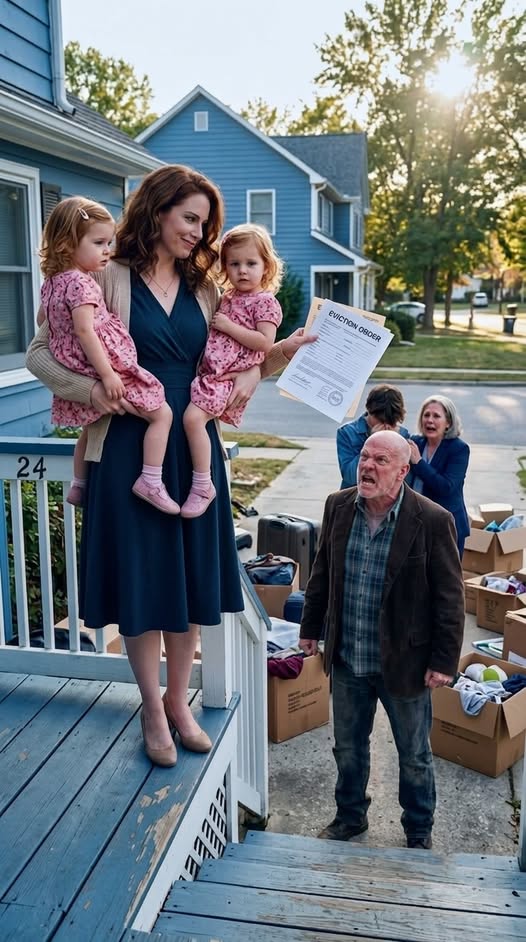
• Right after my husband’s funeral, my in-laws locked my children and me out. They never knew what he’d left behind

    Right after my husband’s funeral, my in-laws locked my children and me out. They never knew what he’d left behind

    The morning we buried my husband, David Hayes, the sky was a bruised, unyielding gray. A fine mist hung in the air, clinging to the wool of my dark coat like liquid ash. I stood in the foyer of the sprawling Oakridge Funeral Home, my fingers intertwined with those of my sixteen-year-old son, Ethan, and my nine-year-old daughter, Maya. My heart felt as if a fault line had cracked open right through the center of my chest, leaving nothing but a hollow, echoing void.

    David had fought the leukemia for three agonizing years. I had watched the man who used to carry Maya on his shoulders across the beach slowly fade into the sterile white sheets of a hospice bed. But even in his final days, his eyes had held a fierce, protective fire.

    I thought the worst pain of my life was saying goodbye to him. I was wrong. The true nightmare began an hour before the service, right there in the hushed, velvet-lined hallway of the funeral home.

    The funeral director, a soft-spoken man named Mr. Abernathy, approached me with an apologetic wince. “Mrs. Hayes, I am so deeply sorry to disturb you at this moment. However, the final payment for the transport and the plot… your primary bank card was declined. I tried the secondary one as well. The accounts appear to be frozen.”

    A cold dread coiled in my gut. “Frozen? That’s impossible. David and I made sure everything was funded last week.”

    “I assure you, ma’am, the bank cited a freeze placed by the primary corporate account holder.”

    My blood ran like ice water. The corporate account. David’s family owned Hayes Manufacturing, a regional empire his father, Arthur Hayes, ruled with an iron fist. David had been a junior partner, but our personal finances were supposed to be completely separate.

    Before I could speak, a shadow fell over us. It was my mother-in-law, Beatrice, dressed in impeccable, expensive black silk, smelling of heavy gardenia perfume. Arthur stood half a step behind her, his face a mask of sculpted stone.

    “Is there a problem, Mr. Abernathy?” Arthur asked, his voice booming slightly too loud for a house of mourning.

    “Just a minor billing issue, Mr. Hayes. Mrs. Hayes’s cards seem to be… unavailable.”

    Beatrice smiled. It was a terrifying, razor-thin expression. “Of course they are. Arthur had the bank lock down all family assets this morning. We cannot have company funds bleeding out into the ether, especially now that David is no longer here to oversee his charities.”

    Charities. She meant me. She meant my children.

    “Beatrice,” I whispered, acutely aware of the gathering crowd of mourners—distant cousins, business associates, neighbors—who were beginning to stare. “This is David’s funeral. Please. Let me handle this later.”

    “Handle what?” Beatrice’s voice rose, designed to carry. She stepped into my personal space, her eyes dropping to my left hand. “Handle the money you were siphoning off while my son was dying? Did you think we were blind, Claire? We know about the missing funds.”

    “There are no missing funds!” Ethan stepped forward, his voice cracking with adolescent outrage. “Leave my mom alone!”

    Arthur placed a heavy, manicured hand on my son’s chest, shoving him back just hard enough to send him stumbling into a floral arrangement. “Learn your place, boy.”

    I gasped, pulling Ethan behind me. “Don’t you ever touch him.”

    Beatrice lunged forward. Her manicured fingers clamped down on my left hand with the strength of a vice. Before I could pull away, she violently twisted and yanked my wedding ring off my finger. The platinum band, set with a stunning vintage diamond, scraped painfully over my knuckle.

    “This is a Hayes family heirloom,” she hissed loudly, ensuring the silent, watching crowd caught every word. “It belongs to this family. Not to a woman who was planning to pawn it and run off with her little friends the moment the monitor flatlined. You disgust me.”

    The whisper network in the room ignited instantly. The humiliation was a physical weight, pressing down on my lungs. I was a grieving widow, standing beside my husband’s casket, being painted as a gold-digging traitor in front of everyone I knew. I had no money to pay the undertaker. I had no ring. I had nothing but the terrified grip of my children’s hands.

    Somehow, I survived the service. I sat numbly, staring at the polished mahogany box, ignoring the judgmental glares burning into the back of my neck.

    By four o’clock that afternoon, the rain had turned into a steady downpour. I drove us back to our suburban home—the house David and I had bought ten years ago, the house where Maya took her first steps. I just wanted to lock the doors, collapse onto David’s side of the bed, and weep until I vanished.

    But as I pulled into the driveway, I slammed on the brakes.

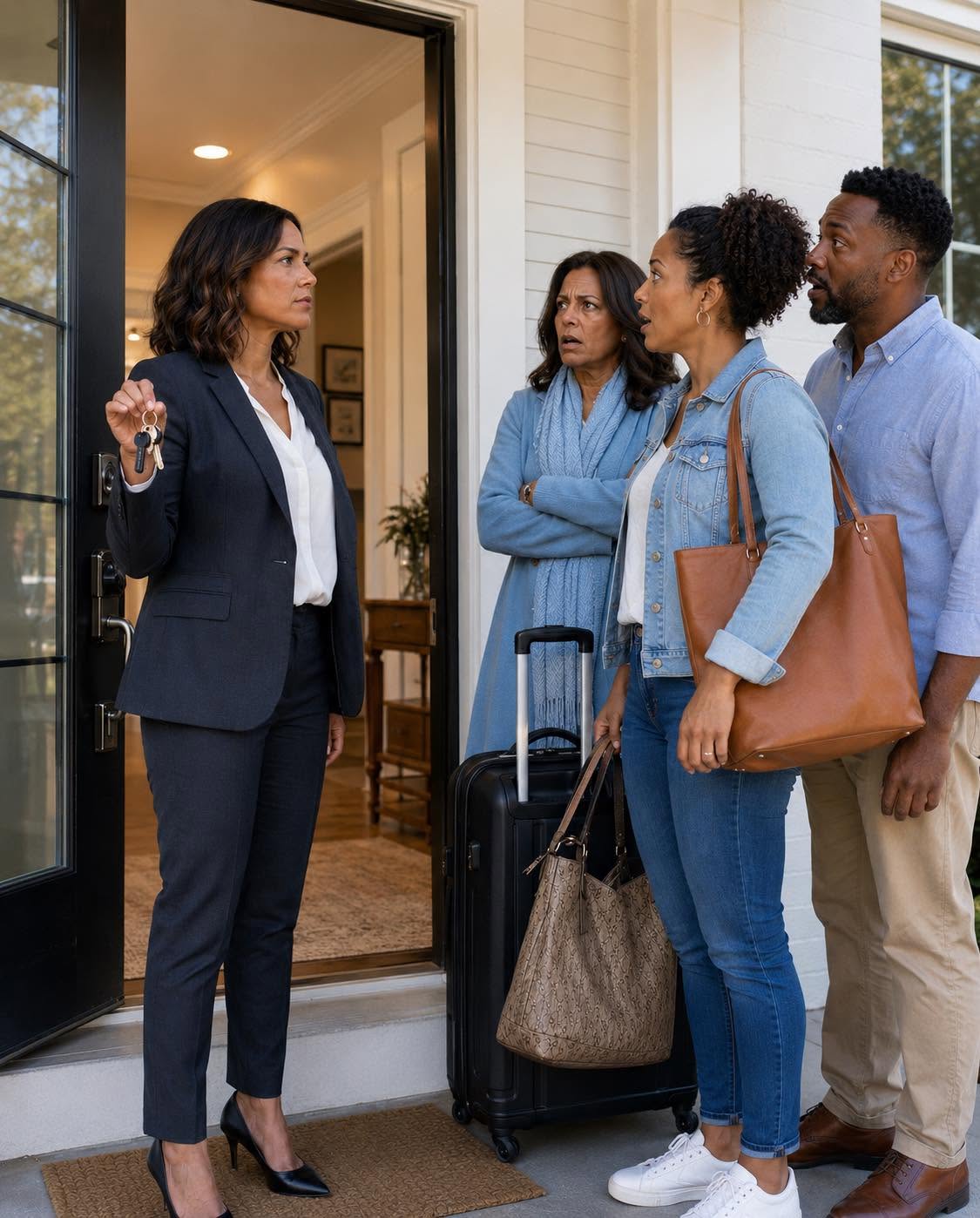
    Arthur’s black SUV was parked on the lawn. Arthur and Beatrice stood on our front porch. The front door was wide open, and two burly men in matching uniforms were changing the deadbolt.

    I threw the car into park and leaped out into the rain, Ethan and Maya scrambling after me. “What are you doing? Get out of my house!”

    Arthur descended the steps, holding a shiny new brass key up to the gray light. “Your house? Check the original deed, Claire. David bought this property before you were married. It’s titled under the Hayes Corporate Trust. And as the head of the trust, I am reclaiming company property.”

    “He was your son!” I screamed over the rain, the sheer injustice tearing at my throat. “These are his children!”

    “And you,” Beatrice spat from the porch, “are a liability. You can take your brats to your sister’s cramped little apartment. You will not get a single dime of Hayes money. The locks are changed. The alarm is set to a code you don’t know.”

    I stepped forward, my fists clenched, but Arthur stepped into my path, pulling a cell phone from his tailored coat.

    “Take another step, Claire, and I make a phone call,” Arthur said, his voice terrifyingly calm. “You have no money. You have no home. You look unstable, hysterical, and frankly, unfit to care for minors. One call to Child Protective Services, with my lawyers backing it up, and Ethan and Maya will be in foster care by dinnertime. Is that what you want?”

    My breath hitched. The rain soaked through my thin dress, chilling me to the bone. They had taken my husband, my dignity, my ring, my home, and now, they were threatening to take my children. I was entirely backed into a corner, staring into the eyes of a monster who held all the cards.

    Or so he thought.


    Arthur’s threat hung in the damp air, paralyzing me. Maya was sobbing quietly against my hip, hiding her face in my wet coat. Ethan was vibrating with rage, his fists balled so tightly his knuckles were white, but he stayed rooted, terrified by the mention of foster care.

    “Get back in your rusted car, Claire,” Arthur sneered, pocketing the new key. “And don’t ever think about challenging us. You are outmatched.”

    I took a trembling breath, forcing myself to look away from the house I loved. I guided my children back into our aging sedan. The doors slammed shut, sealing us in the cold, damp interior.

    “Mom?” Ethan’s voice trembled. “What do we do? We can’t let them take everything.”

    “I know, baby. I know.” My mind was racing, scrambling for a lifeline. I rested my forehead against the cold steering wheel, closing my eyes.

    Think, Claire. Think.

    My thoughts drifted back to a Tuesday afternoon, two months ago. The hospice room had smelled of antiseptic and fading hope. David had been unusually lucid that day. He had pulled my ear down to his dry lips, his breath rattling in his chest.

    “Claire,” he had whispered, his grip on my hand surprisingly strong. “My father is a shark. He only knows how to smell blood. When I’m gone, he will try to erase you. He will try to take it all back.”

    “Don’t talk like that, David,” I had cried.

    “Listen to me,” he had commanded gently. “Do not fight him. Let him think he’s won. But when he makes his move, look beneath the passenger side. Exactly where you dropped your cherry lipstick on our very first date. You’ll find what you need. And Claire? When you find it… give the signal.”

    I snapped my eyes open.

    “Ethan,” I whispered, my voice suddenly steady. “Get out of the front seat. Move to the back with Maya.”

    Ethan frowned but climbed over the center console without a word.

    I scrambled over into the passenger seat. My hands shook as I reached down, blindly feeling the dirty floorboard. Our first date had been at a drive-in movie. I had been so nervous I dropped my lipstick, and it had rolled… where? Under the seat track? No, further up. Under the dashboard casing.

    I jammed my fingers under the plastic molding of the glovebox, feeling along the dusty, unseeable crevices. Arthur was still standing on the porch, watching my car with a smug, victorious smile, likely waiting for me to drive away in defeat.

    My fingernail caught on a piece of heavy-duty tape.

    I pulled. A small, flat, waterproof pouch dropped into my hand.

    My heart hammered a frantic rhythm against my ribs as I ripped the pouch open. Inside was a single, sealed brown envelope. I tore it open, pulling out a thick stack of folded documents and a small handwritten note on top. The handwriting was David’s—shaky, written during his final weeks, but unmistakable.

    My brave Claire,

    If you are reading this, it means my father has shown his true colors. I am so sorry I cannot be there to stand in front of you. But I promised to protect you for the rest of your life, and I meant it. Everything in this envelope is yours. The house. The trust. The leverage. I planned this for months. Do not let them see you cry. Do exactly as I say.

    Turn the car key to accessories. Flash the high beams three times. Then, wait.

    I stared at the note, my breath catching in my throat. I looked up. Through the rain-streaked windshield, I saw Arthur pulling his phone back out, a frown forming on his face as he realized I wasn’t leaving. He began dialing. He was going to call CPS. He was going to take my kids.

    I scrambled back into the driver’s seat. I shoved the key into the ignition, turning it just enough to power the battery.

    I gripped the indicator stalk.

    Click. Click. (One).

    Click. Click. (Two).

    Click. Click. (Three).

    The bright beams cut through the fading evening gloom, illuminating Arthur and Beatrice on the porch like actors caught on a stage. Arthur shielded his eyes, shouting something I couldn’t hear over the rain.

    I sat back, my hands gripping the steering wheel, my heart pounding so hard I felt dizzy. Ten seconds passed. Then twenty. The rain drummed relentlessly on the metal roof. Arthur was aggressively marching down the porch steps, phone pressed to his ear, his face twisted in fury. He was coming to drag us out of the car.

    “Mom, he’s coming!” Maya shrieked.

    Suddenly, the roar of a high-performance engine drowned out the rain.

    Headlights flared in my rearview mirror. A sleek, black luxury sedan swerved into our driveway, its tires violently kicking up gravel as it blocked Arthur’s SUV perfectly, trapping it.

    The driver’s side door swung open, and a pair of stiletto heels stepped into the puddles. A woman emerged. She wore a tailored crimson trench coat that stood out vividly against the drab gray world. She held a large black umbrella and carried a thick leather briefcase.

    Arthur stopped in his tracks, his phone dropping slowly from his ear. The color drained entirely from his face.

    The woman didn’t even look at him. She walked directly to my window and tapped twice on the glass. I rolled it down, shivering as the cold air rushed in.

    She looked at me, her eyes sweeping over my tear-stained face, then to the terrified children in the back. A dangerous, brilliant smile touched her lips.

    “Hello, Claire. I’m Eleanor Vance,” she said, her voice smooth and sharp as obsidian. “David hired me six months ago. I hear you have a pest problem on your property.”


    Before I could even process her words, the wail of sirens pierced the suburban quiet. Two police cruisers turned onto our street, their red and blue lights painting the wet pavement in frantic bursts of color. They parked directly behind Eleanor’s car, boxing everyone in.

    Arthur’s arrogant posture crumpled. Beatrice rushed down the stairs to stand beside him, clutching her silk coat around her neck.

    Eleanor Vance turned slowly, resting both hands on her briefcase. She looked like a predator assessing a very slow, very stupid meal. “Stay in the car, Claire,” she instructed softly. “Let me do my job.”

    I watched in stunned silence as Eleanor walked toward my in-laws, flanked by three uniformed police officers who had just stepped out of their cruisers.

    “Arthur Hayes,” Eleanor called out, her voice cutting through the rain with practiced authority. “You and your wife are currently trespassing on private property.”

    Arthur let out a booming, forced laugh, though his eyes darted nervously to the police. “Trespassing? This is Hayes property. I hold the original deed, and you, whoever you are, are interfering with family business.”

    Eleanor didn’t flinch. She popped open the golden clasps of her briefcase, extracting a thick, blue-backed legal document wrapped in a plastic sleeve to protect it from the rain.

    “You hold a voided deed, Arthur,” Eleanor corrected, holding the document up. “Five months ago, recognizing his declining health and your… predictable nature, David Hayes legally transferred this property, the lake house in Michigan, and his entire thirty percent voting share of Hayes Manufacturing into an Irrevocable Marital Trust.”

    Beatrice gasped, taking a step back. “That’s a lie! David would never—”

    “I have the notarized documents right here,” Eleanor interrupted, handing a copy to the lead police officer. “Claire Hayes is the sole trustee and primary beneficiary. You two have absolutely no legal standing here. In fact, you just unlawfully changed the locks on a home you do not own, which is a criminal offense.”

    The lead officer, a stern-looking woman with a tight bun, reviewed the document. She looked up at Arthur. “Sir, this documentation is ironclad. You have no rights to this property.”

    “He was sick!” Arthur roared, a vein throbbing in his forehead. “He was on heavy medication! He didn’t know what he was signing! I will have this thrown out in court by Monday morning!”

    “You can certainly try,” Eleanor said, her smile widening. “But right now, it is Friday evening. And right now, you are trespassing.” She turned to the officer. “Officer, my client wishes to press charges for trespassing, harassment, and the theft of a high-value piece of personal jewelry.”

    Beatrice’s hand instinctively flew to her coat pocket.

    “The ring,” I whispered to myself inside the car.

    Eleanor’s eyes zeroed in on Beatrice’s movement. “According to the trust addendum, all of David’s personal gifts to his wife, specifically including the vintage diamond engagement ring originally belonging to his grandmother, were legally gifted to Claire six years ago. It is her exclusive, legal property.” Eleanor stepped closer to Beatrice, her voice dropping to a terrifying whisper. “Hand it over, Beatrice. Or the officer will search you, arrest you for grand larceny, and you will spend the night of your son’s funeral in a holding cell wearing that expensive silk.”

    Beatrice looked at Arthur for help, but Arthur was staring at the legal documents in the officer’s hand, utterly defeated by the sudden, brutal ambush.

    Trembling, her face twisted in a mixture of hatred and humiliation, Beatrice reached into her pocket. She pulled out my ring. The officer took it from her and walked over to my car, handing it through the window.

    I took the cold metal in my palm. It didn’t feel like a victory. It felt like a message from David, reaching across the veil, telling me I was safe.

    “Now,” Eleanor commanded, her voice ringing out. “You will surrender the new keys to the house. You will get in your vehicle. And you will leave this property. If you ever come within five hundred feet of Claire or these children again, I will personally see to it that the restraining order is the least of your worries.”

    Arthur threw the new keys into the wet grass. He grabbed Beatrice by the arm, and together they marched to their SUV. The police made them wait until they verified I had access to the house, forcing Arthur to endure the indignity of sitting in his car while the neighbors peeked through their blinds, watching the great Arthur Hayes be treated like a common criminal.

    Eleanor walked back to my car, her umbrella sheltering us. “Let’s get you and the kids inside, Claire. The locksmith is already on his way to change them back.”

    That night, after the kids were finally asleep in their own beds, I sat at the kitchen island with Eleanor. She explained everything. David had known about his parents’ plans to bleed me dry. He had spent his last ounces of energy working with Eleanor in secret, securing our future, tying up his company shares in a way that would force Arthur to pay me dividends for the rest of my life.

    “He loved you fiercely, Claire,” Eleanor said, sipping a cup of tea. “He wanted to leave you freedom.”

    For the first time since the hospital monitors had gone flat, I broke down. I cried until my vision blurred and my chest ached, mourning the brilliant, loving man who had fought for me even as he was dying.

    But the war wasn’t over.

    Three weeks later, the doorbell rang. It was a process server. Arthur had made good on his threat. He was suing to invalidate the trust, claiming David was mentally incapacitated.

    I called Eleanor in a panic. She arrived an hour later, reading over the summons. Her face was unusually grave.

    “They have a sworn affidavit from Dr. Aris, one of David’s attending physicians,” Eleanor said, tracing the signature with her perfectly manicured nail. “He claims David was suffering from severe delirium the week the trust was signed. They are presenting an alternate will, allegedly signed by David two days before he died, leaving everything to Arthur.”

    “That’s a forgery!” I yelled. “David was barely conscious those last two days!”

    “I know,” Eleanor said quietly. She looked up at me, her eyes filled with a strange, somber intensity. “I can win this, Claire. But to do it, I have to play a card I was hoping to never show you. It’s going to break your heart all over again.”


    The weeks leading up to the trial were a suffocating purgatory. Grief is never a straight line; it is a labyrinth with invisible walls. Maya wore David’s old oversized flannel shirt everywhere, drowning in the scent of his faded cologne. Ethan withdrew into a silent, simmering anger, spending hours punching a heavy bag in the garage until his knuckles bled. I spent my nights staring at the ceiling, haunted by Eleanor’s warning.

    What card? What could possibly break my heart more than it already was?

    Arthur Hayes didn’t just wait for the court date; he waged a psychological shadow war. My tires were mysteriously slashed in the grocery store parking lot. Strange, silent phone calls came at 3:00 AM. Former friends from our country club circle suddenly stopped returning my calls, infected by the poisonous rumors Beatrice was spreading about my supposed “infidelities.”

    They were trying to break my spirit. They wanted me to settle, to take a meager payout and walk away, surrendering the house and the company shares.

    But every time I felt like collapsing, I twisted the diamond ring on my left hand. David had believed in my strength. I would not let him down.

    The morning of the hearing, the courthouse smelled of lemon polish, old paper, and palpable anxiety. The courtroom was vast, lined with dark oak paneling that seemed to press inward. I sat at the plaintiff’s table beside Eleanor, wearing the same dark suit I wore to the funeral.

    Arthur and Beatrice sat across the aisle. Arthur looked incredibly smug, wearing a tailored navy suit, chatting amiably with his high-priced corporate defense team. Beatrice refused to look at me, her chin tilted upward in arrogant defiance.

    Judge Robert Vance—no relation to Eleanor, but a man known for his strict, no-nonsense demeanor—banged his gavel.

    “Alright,” Judge Vance rumbled. “Let’s get to it. Mr. Hayes’s counsel asserts that the Irrevocable Trust created five months ago is invalid due to mental incapacitation, and presents a superseding Last Will and Testament dated October 12th. Counsel, proceed.”

    Arthur’s lawyer, a slick man named Mr. Sterling, stood up. He painted a tragic picture of a dying son, heavily medicated, manipulated by a scheming wife (me) and a rogue lawyer (Eleanor). Then, he called their star witness: Dr. Aris.

    Dr. Aris took the stand. He avoided my gaze. Under oath, he testified that the pain medication David was on five months ago caused severe hallucinations and cognitive decline. He then testified that on October 12th, David had a “moment of profound clarity” where he supposedly realized his mistake and signed the new will, handing everything back to his father.

    My blood boiled. It was a complete, fabricated lie. I had been by David’s side on October 12th. He hadn’t been able to lift a pen, let alone read a complex legal document.

    “Your Honor,” Mr. Sterling concluded, “the timeline is clear. The deceased corrected a grave error in his final moments of lucidity. We ask that the new will be validated, and the trust dissolved.”

    Arthur smirked at me across the room. It was the look of a man who believed money could buy any truth.

    Judge Vance turned to our table. “Ms. Vance. Cross-examination?”

    Eleanor stood up slowly. She didn’t carry a notepad. She didn’t look flustered. She walked to the center of the room, the click of her heels echoing like gunshots in the silent courtroom.

    “Dr. Aris,” Eleanor began, her tone conversational. “You stated David Hayes had a moment of profound clarity on October 12th. Is that correct?”

    “Yes,” Dr. Aris replied, shifting uncomfortably.

    “Fascinating,” Eleanor said. “Because my client, Mrs. Hayes, was with her husband for twenty-two hours that day. The only two hours she left were to go home and shower. Between 2:00 PM and 4:00 PM.”

    “That is when the… the new will was signed,” Dr. Aris stammered.

    “I see.” Eleanor turned to the judge. “Your Honor, I have no further questions for this perjuring witness. Instead, I would like to introduce Defense Exhibit A. A video recording.”

    Mr. Sterling jumped up. “Objection! We were not provided any video in discovery!”

    “Because it wasn’t discovered until yesterday, Your Honor,” Eleanor countered smoothly. “My client found a hidden flash drive inside a locked safe behind a wall in her home. It is direct, time-stamped evidence of the events of October 12th.”

    Judge Vance narrowed his eyes. “I’ll allow it. But this better be good, Counselor.”

    A bailiff rolled a large television monitor into the center of the courtroom. Eleanor plugged in a small USB drive.

    My heart hammered against my ribs. I looked at Eleanor, terrified. Is this the card?

    The screen flickered to life.

    It was silent, grainy, black-and-white security footage. But the angle was unmistakable. It was David’s hospice room. The camera had been hidden high up, likely disguised in the smoke detector.

    On the screen, David lay in the bed, motionless, hooked up to dozens of wires. The time stamp read October 12th, 2:15 PM.

    The door opened. Arthur and Beatrice Hayes walked in. They didn’t look sad. They looked hurried.

    A collective gasp echoed through the courtroom as the silent horror unfolded on the screen.


    The courtroom was so quiet you could hear the hum of the air conditioning vents. Every eye was glued to the monitor.

    On the screen, Arthur pulled a sheaf of papers from his briefcase—the fabricated will. He approached the bed. Beatrice stood by the door, acting as a lookout.

    David didn’t move. He was completely unresponsive, trapped in the deep, medically induced coma of his final days.

    We watched in horrifying high-definition as Arthur Hayes, the patriarch of the family, grabbed his dying son’s limp, fragile hand. Arthur aggressively pressed David’s thumb onto a black ink pad he had brought with him.

    David’s body jerked slightly from the rough handling, his head lolling to the side.

    I clamped a hand over my mouth, a sob tearing from my throat. It was a brutal, physical violation of my husband’s dying body. This was the secret Eleanor warned me about. David hadn’t just suspected they would forge a document; he had installed a hidden nanny-cam in his own room weeks prior to catch them in the act if they tried. He had endured this violation, knowing it would be the ultimate weapon to protect me.

    On the screen, Arthur slammed David’s inked thumb down onto the signature line of the forged will. He wiped his son’s hand with a tissue, tossed the tissue in the trash, and quickly left the room with Beatrice.

    The video ended, freezing on the image of David, alone and violated in his bed.

    The silence in the courtroom shattered.

    Pandemonium erupted. Mr. Sterling, Arthur’s lawyer, physically backed away from his own client, his face pale with shock and sudden professional terror. Dr. Aris buried his face in his hands, realizing he was going to lose his medical license and likely face prison time.

    Arthur sat frozen, his jaw slack, staring at the black screen as if it were a ghost. Beatrice was hyperventilating, clutching her chest.

    Bang! Bang! Bang! Judge Vance struck his gavel with such force I thought the wood might splinter. His face was purple with absolute fury.

    “Order! Order in this court!” The judge pointed a trembling finger at Arthur Hayes. “Mr. Hayes, in my thirty years on the bench, I have never witnessed an act of such depraved, ghoulish fraud. Not only is this fabricated document dismissed entirely, but I am ordering the bailiff to take Arthur and Beatrice Hayes into custody immediately pending charges of elder abuse, forgery, perjury, and conspiracy to commit fraud.”

    “No!” Beatrice screamed as two armed bailiffs advanced on their table. “We are the Hayes family! You can’t do this!”

    Arthur tried to stand, his arrogance finally fracturing into pure panic. “Sterling, do something!”

    “I no longer represent you, Mr. Hayes,” Mr. Sterling said coldly, snapping his briefcase shut and walking rapidly away from the table.

    I stood up, my legs shaking, as the bailiffs forced Arthur’s hands behind his back, securing them in steel handcuffs. The satisfying click echoed loudly. Beatrice was weeping hysterically as cuffs were slapped onto her wrists as well.

    As they were marched down the center aisle, Arthur caught my eye. There was no power left in him. Only the terrified realization that the woman he thought was a helpless pawn had just utterly destroyed him.

    I didn’t smile. I didn’t gloat. I simply looked at him, touched the vintage diamond on my left hand, and turned my back.

    The aftermath was a swift, brutal dismantling of the Hayes empire. Dr. Aris confessed to accepting a massive bribe to lie under oath. With Arthur and Beatrice facing years in federal prison, the board of Hayes Manufacturing panicked. As the trustee of David’s 30% voting bloc, I suddenly held the swing vote. Under Eleanor’s ruthless guidance, we forced a restructuring. I didn’t want to run a company; I just wanted peace. We negotiated a massive, eight-figure buyout of our shares.

    Noah’s bruised knuckles finally healed. Maya stopped wearing the flannel shirt every single day, slowly learning to sleep through the night again.

    I learned that grief never truly leaves you. It doesn’t disappear; it just changes shape. Some mornings, it looks like a quiet cup of coffee while staring at an empty chair. Some nights, it is a sudden, sharp intake of breath when a song plays on the radio.

    But we survived. We were safe.

    That spring, exactly one year after the funeral, I drove Ethan and Maya up to the lake cabin in Michigan—the one David had secured for us. The air was crisp, smelling of pine needles and fresh water.

    We opened every window, letting the breeze chase away the stagnant air. Maya ran down to the dock, laughing as Ethan chased her with a bucket of freezing lake water.

    I stood on the porch, holding a mug of tea, watching them. I looked down at my left hand. The vintage diamond caught the afternoon sunlight, scattering tiny rainbows across the wooden railing.

    I didn’t wear the ring because it proved I belonged to the Hayes family. I wore it because David had chosen me. When everyone else expected me to break, fold, and disappear, he had reached out from the dark, handed me the sword, and trusted me to fight.

    And I never lost.

  • I was fired by email while attending my mother’s funeral. Five years of loyalty meant nothing.

    I was fired by email while attending my mother’s funeral. Five years of loyalty meant nothing.

    “Terminated for attending my mother’s funeral.” After five years of devotion, I was dismissed by email while I was still mourning. As I packed my belongings, my boss Greg said it “could have been more discreet.” I looked him straight in the eyes and promised he would remember that moment. Then their empire collapsed without a sound.

    I sat in the gray break room at Halden & Price Logistics, still wearing my black dress, which faintly smelled of rain, lilies, and the old church where I had kissed my mother’s cold forehead for the last time. Five years of perfect attendance. Five years of skipped birthdays, late nights, emergency weekend calls, and covering for managers who missed their own deadlines.

    And this was what I got.

    My access badge had already been disabled.

    I read the words again, hoping somehow they would rearrange themselves into something less cruel.

    Violation of attendance policy. Unapproved absence. Effective immediately.

    My mother died on a Tuesday. Her funeral was Friday. I had sent three emails, left two voicemails, and texted my boss, Greg Whitman, directly.

    He had replied with one sentence.

    “We’ll discuss when you return.”

    I came back Monday morning and found my desk already packed into boxes.

    The office had fallen into that unnatural silence people create when they are witnessing something awful but do not want to become part of it. I felt eyes on my back as I placed the framed photo of Mom into a cardboard box. In the picture, she was smiling in her blue cardigan, standing on the porch of the house she had spent forty years fighting to keep.

    Greg appeared beside my cubicle with both hands in his pockets.

    He was forty-eight, polished, soft around the jaw, with the practiced look of a man who believed consequences belonged to other people.

    “This could have been more discreet, Claire,” he said.

    I looked up slowly.

    “Discreet?”

    He lowered his voice. “You made it uncomfortable for the team. HR sent the notice. It wasn’t personal.”

    Something inside me became very still.

    Not empty. Not shattered.

    Still.

    I placed the final folder into my box, then turned fully toward him.

    “You fired me for attending my mother’s funeral.”

    Greg sighed, annoyed by the inconvenience of my grief. “You failed to follow procedure.”

    “I followed procedure. I documented everything.”

    His mouth tightened. “That’s not how leadership sees it.”

    I nodded once.

    Then I picked up the small black flash drive from beneath my keyboard.

    Greg’s eyes moved toward it.

    He did not recognize it.

    He should have.

    For three years, I had been the senior compliance coordinator nobody paid attention to. I processed vendor contracts, checked billing discrepancies, archived shipment records, and prepared internal audits. I knew which invoices had been padded. I knew which safety violations had been buried. I knew which subcontractors were paid through shell companies. I knew whose signatures had been copied and pasted.

    Most important, I knew where Greg kept the proof.

    He had made one mistake.

    He thought quiet meant powerless.

    I looked directly into his eyes, my voice dangerously calm.

    “Remember this moment, Greg. I promise you will.”

    His smile weakened.

    No one understood the storm I was about to release.

    Their empire fell silently.

    PART 2

    By noon, I was sitting in my car in a strip mall parking lot ten miles away, my mother’s photo on the passenger seat and my laptop balanced across my knees.

    I had not originally planned to destroy Halden & Price.

    Not at first.

    For years, I had repeated the same thing most people tell themselves when they work inside a rotten system: keep your head down, do your work, collect your paycheck, survive. I had a mortgage. I had medical bills from my mother’s treatments. I had student loans that still seemed impossible to kill.

    So when I found the first irregularity, I documented it and stayed quiet.

    It was a freight invoice from a company named Marwick Distribution, charging Halden & Price for routes that had never been completed. The amounts were small enough to disappear inside quarterly reports: eight thousand here, twelve thousand there. Then I saw Marwick listed again under a different tax ID. Same address. Same phone number. Different name.

    I flagged it to Greg.

    He told me to “stay in my lane.”

    A month later, my annual review said I needed to become “less resistant to leadership direction.”

    After that, I stopped bringing problems to Greg.

    I started saving them.

    Not stealing. Not hacking. Nothing dramatic. I simply kept copies of documents I was already allowed to access: altered delivery logs, duplicate vendor profiles, internal emails, safety reports marked “defer until after audit,” and payment approvals that passed through Greg’s private assistant before reaching finance.

    The real pattern appeared during the Bedford chemical spill.

    A Halden & Price subcontractor had been carrying industrial cleaning solvents in a truck that should have been removed from service. The brake inspection had failed twice. The driver had reported steering issues. Those reports vanished from the compliance dashboard two days before the shipment.

    When the truck overturned outside Bedford, Ohio, three people were hospitalized, and the company’s official statement blamed “unexpected weather conditions.”

    There had been no storm that morning.

    I had the maintenance reports.

    I had the driver’s complaint.

    I had the internal memo where Greg wrote, “Do not escalate before renewal. We cannot risk the Miller contract.”

    The Miller contract was worth $42 million.

    My mother had still been alive then, sitting in her recliner with a blanket over her knees, watching old game shows while I worked late at her kitchen table. One night, she looked at me over her glasses and said, “Claire, people like that count on decent people being tired.”

    I remembered giving a weak laugh.

    “I am tired, Mom.”

    “I know,” she said. “But tired is not the same as helpless.”

    Now she was gone.

    And Greg had fired me because I buried her.

    I opened a new email draft to my attorney, Dana Moretti, a labor lawyer my mother had once known through church. I attached the termination email, the funeral notice, screenshots of my leave requests, Greg’s text, and the employee handbook section showing the bereavement leave policy.

    Then I created a second encrypted folder.

    That one went to Dana as well, with a separate message.

    I need whistleblower counsel. Urgent. Evidence of fraud, falsified safety records, retaliation, and possible public endangerment.

    My finger hovered over the trackpad.

    For five years, I had lived afraid.

    Afraid of losing my job. Afraid of missing bills. Afraid of being labeled difficult. Afraid of men like Greg, who smiled while rearranging people like furniture.

    Then I looked at my mother’s picture.

    Her smile almost seemed amused.

    I clicked send.

    Within six minutes, Dana called.

    “Claire,” she said, her voice sharp and fully awake, “do not speak to anyone at Halden & Price. Do not answer Greg. Do not sign anything. Come to my office now.”

    I stared through the windshield at traffic moving past, ordinary and indifferent.

    For the first time since I had read that email, I stopped crying.

    “Dana,” I said, “there’s more.”

    There was a pause.

    “How much more?”

    I looked at the flash drive in my palm.

    “Enough to bury them.”

    PART 3

    Dana Moretti’s office sat on the fourth floor of an old brick building in downtown Columbus, squeezed between a tax accountant and a dentist advertising emergency root canals. It did not look like the kind of place where corporations went to die.

    That was the first thing I liked about it.

    Dana was fifty-six, short, silver-haired, and calm in the way only dangerous people know how to be calm. She wore no jewelry except a simple wedding band and used a yellow legal pad instead of a tablet. When I arrived, she looked once at my black dress, my swollen eyes, and the cardboard box in my arms.

    “Your mother’s funeral was Friday?” she asked.

    “Yes.”

    “And they fired you this morning?”

    “Yes.”

    “Did they give you severance?”

    “No.”

    “Did they ask you to sign a release?”

    “HR said they would email paperwork.”

    Dana’s face did not change, but she wrote something down.

    “Good. Do not sign it.”

    I placed the flash drive on her desk.

    “That contains company documents,” I said. “Documents I had access to as part of my job. I didn’t break into anything. I didn’t use anyone else’s login. I didn’t take client lists or trade secrets. But it shows what they’ve been doing.”

    Dana did not pick up the drive right away.

    “Before I open that,” she said, “I need you to understand something. Whistleblower cases are not revenge fantasies. They are slow, ugly, and expensive. The company will try to make you look unstable. They will say you are grieving, bitter, incompetent, dishonest, or all four. They may sue. They may threaten criminal complaints. They may send letters designed to scare you into silence.”

    I swallowed.

    “Can they win?”

    “They can hurt you,” Dana said. “That is different.”

    I looked down at my mother’s photo, still tucked against the side of the box.

    “She spent the last ten years fighting insurance companies and hospital billing departments,” I said. “She kept every receipt. Every letter. Every name. Every date. She taught me how to document pain.”

    Dana’s eyes softened for half a second.

    Then she put on a pair of reading glasses.

    “All right,” she said. “Show me.”

    For the next four hours, we built a timeline.

    Not a story.

    A timeline.

    Dana insisted the difference mattered.

    Stories could be attacked. Timelines were harder to destroy.

    March 3: Marwick Distribution added as vendor.

    March 18: First duplicate invoice approved.

    April 2: Same bank routing number used by Marwick and Northline Carrier Services.

    June 11: Driver complaint filed on Unit 704B.

    June 13: Maintenance failure logged.

    June 14: Failure log removed from active audit queue.

    June 16: Greg Whitman email: “Hold all non-critical defects until after Miller renewal.”

    June 21: Bedford spill.

    June 22: Company statement blaming weather.

    July 8: Internal insurance memo estimating exposure.

    September 5: Compliance inquiry from state transportation office.

    September 6: Greg email to regional managers: “Keep answers narrow. Do not volunteer internal review notes.”

    The more Dana read, the quieter she became.

    By evening, she had called in two people: her paralegal, Luis Calderon, and a former federal investigator named Martin Vale, who now consulted on corporate fraud cases. Martin was in his early sixties, thin, with tired eyes and the posture of someone who had spent his life listening to lies professionally.

    He reviewed the vendor files first.

    “This is not sloppy accounting,” he said after twenty minutes. “This is structured.”

    Dana tapped her pen once on the desk. “Explain.”

    “These shell vendors are probably being used to skim from inflated freight costs. The payments are split below internal review thresholds. Whoever designed this knew the approval system.”

    “Greg?” I asked.

    Martin looked at me. “Maybe Greg. Maybe Greg plus finance. Maybe someone above him. Middle managers do not usually build fraud this clean unless someone protects them.”

    I went cold.

    Above Greg meant the executive floor.

    Above Greg meant Halden & Price was not a decent company with one corrupt manager.

    It was a machine.

    Dana turned to me. “Claire, did you ever raise concerns in writing?”

    “Yes.”

    “Do you have responses?”

    “Yes.”

    “Did anything happen to you after that?”

    I laughed once.

    “My workload doubled. I was excluded from vendor meetings. Greg told me I had an attitude problem. My performance review changed from ‘exceeds expectations’ to ‘needs alignment’ in six months.”

    Luis looked up from his laptop. “That phrase appears in three other HR files.”

    We all turned toward him.

    He adjusted his glasses. “I’m checking public court records and prior employment complaints. Two former employees sued Halden & Price in 2022. Both alleged retaliation after reporting billing irregularities. Both cases settled.”

    Dana smiled faintly.

    It was not a happy smile.

    It was the smile of a hunter finding tracks in fresh mud.

    “Now we know where to dig,” she said.

    When I left her office, the sky had turned dark and city lights blurred across the wet pavement. My phone showed seventeen missed calls.

    Seven from Greg.

    Four from HR.

    Three from an unknown number.

    Two from my former coworker, Natalie.

    One from Halden & Price’s general counsel.

    Dana had taken my phone, photographed the call log, and instructed me to send only one message.

    Please direct all further communication to my attorney, Dana Moretti.

    Greg replied in under a minute.

    You’re making a mistake.

    Then:

    Whatever you think you have, you don’t understand it.

    Then:

    Call me before this gets worse.

    I did not respond.

    Instead, I drove home to the small ranch house my mother had left me, parked in the driveway, and sat with both hands on the steering wheel. The porch light was still on. I had forgotten to turn it off the morning of the funeral.

    For a moment, grief rose so sharply I could barely breathe.

    I wanted to call her.

    I wanted to hear her say, “Make tea first. Panic after.”

    But the house was silent.

    So I made tea.

    Then I opened my laptop again.

    At 7:42 the next morning, Dana filed a wrongful termination and retaliation complaint with the proper state and federal agencies. She also sent preservation letters to Halden & Price, warning them not to destroy emails, audit logs, vendor records, maintenance reports, HR files, or internal communications tied to my employment and the Bedford spill.

    At 8:15, Halden & Price revoked my employee portal access.

    Too late.

    At 8:32, Greg called again.

    At 9:10, Dana received a letter from Halden & Price’s general counsel accusing me of holding confidential business records and demanding their immediate return.

    Dana’s response was only six sentences.

    It stated that the documents were evidence of unlawful conduct, that my possession was lawful under whistleblower protections, and that any attempt to intimidate me would be added to the retaliation record.

    At 11:03, Natalie called from her personal phone.

    “Claire,” she whispered, “what did you do?”

    I stood in my kitchen, watching steam rise from my mug.

    “What happened?”

    “Everyone’s locked out of the vendor archive. IT is imaging laptops. Greg’s office door is closed, and two people from legal are with him. Finance looks like a funeral home.”

    I almost smiled.

    Almost.

    “Natalie, don’t use your work phone to call me.”

    “I know. I’m not stupid.”

    “You need to be careful.”

    There was a pause.

    Then her voice cracked.

    “I have things too.”

    My hand tightened around the mug.

    “What kind of things?”

    “Emails. Screenshots. Greg asked me to change dates on a safety training report last year. I thought it was just paperwork. But after Bedford…” She inhaled shakily. “I didn’t know who to tell.”

    “Tell Dana.”

    By the end of the week, three more employees had contacted my attorney.

    By the end of the month, there were eight.

    The company tried to contain the damage quietly. That was their first mistake.

    They offered me a settlement two weeks after firing me. The figure was large enough to make my hands tremble when Dana slid the paper across the desk.

    Three hundred thousand dollars.

    Confidentiality required. No admission of wrongdoing. Return all documents. Withdraw complaints. Non-disparagement clause.

    Dana watched my expression.

    “That is more than nuisance value,” she said. “They are scared.”

    I thought about my mother’s hospital bed in the living room. I thought about how she apologized every time I paid for another prescription. I thought about sitting beside her at night, answering Greg’s emails while she slept because I was terrified of losing the insurance that helped keep her alive.

    Three hundred thousand dollars would have changed everything for me.

    A year earlier, I might have accepted it.

    But then I remembered Greg beside my cubicle.

    This could have been more discreet.

    I pushed the paper back.

    “No.”

    Halden & Price raised the offer to half a million.

    Then seven hundred fifty thousand.

    Then one million, delivered quietly through attorneys with polished voices and careful wording.

    Every offer came with silence attached.

    Every offer required the Bedford families to never learn that the maintenance reports had been altered before the crash.

    That was the part I could not swallow.

    My mother had not raised me to be fearless.

    She had raised me to be precise.

    So Dana and Martin did what precise people do.

    They organized.

    They authenticated every file. They matched email headers to server metadata obtained through legal channels. They compared vendor payments with state corporate registrations. They discovered that three shell companies shared a mailing address with property owned by Greg’s brother-in-law. They found consulting payments routed to an LLC connected to the vice president of operations, Leonard Price Jr., grandson of one of the company founders.

    That name changed everything.

    Leonard Price Jr. was not middle management. He was family. He was boardroom level. He gave speeches at charity luncheons about integrity in American logistics. He appeared in trade magazines wearing navy suits and modest smiles.

    He had also approved contract renewals after being warned about safety violations.

    When regulators opened a formal investigation, Halden & Price released a statement calling the allegations “baseless claims from a former employee terminated for cause.”

    Dana read it aloud in her office.

    Then she looked at me.

    “They just defamed you.”

    I leaned back in the chair.

    “Does that help us?”

    Her smile returned.

    “Oh, Claire. Tremendously.”

    The lawsuit grew.

    Wrongful termination. Retaliation. Defamation. Fraudulent concealment. Evidence involving public safety violations. Coordination with federal and state transportation authorities. Potential insurance fraud.

    Halden & Price stopped offering settlements.

    Then the subpoenas began to move.

    That was when Greg finally understood.

    Not when I left with my box.

    Not when he saw the attorney letter.

    Not when his phone was seized for forensic imaging under corporate counsel’s supervision.

    He understood during his deposition.

    I was not in the room, but Dana told me afterward.

    Greg arrived with two attorneys and the same irritated expression he used whenever employees asked for vacation days. At first, he claimed not to remember certain emails. Then Dana placed them in front of him one by one.

    His words.

    His approvals.

    His instructions.

    His forwarded messages to Leonard Price Jr.

    At hour two, he blamed finance.

    At hour three, he blamed compliance.

    At hour four, he blamed me.

    Dana let him.

    Then she showed him the email he had sent to HR three days before my termination.

    Claire Bennett has become a documentation risk. We need to move before she creates exposure. Use attendance if possible.

    He stopped speaking.

    For the first time, silence worked against him.

    Six months after I was fired, Halden & Price Logistics appeared on the evening news.

    Not for expansion.

    Not for innovation.

    Not for another ribbon-cutting ceremony beside local politicians.

    The headline was simple:

    MAJOR LOGISTICS FIRM UNDER INVESTIGATION FOR FRAUD AND SAFETY COVER-UP

    The Bedford families filed suit.

    The company’s stockholders filed suit.

    Two executives resigned.

    Leonard Price Jr. took “temporary leave,” then permanent leave, then became the target of a criminal inquiry.

    Greg was fired without severance.

    I learned it from Natalie, who sent me a message containing only five words:

    They walked him out today.

    I stared at the text for a long time.

    I expected happiness.

    Instead, I felt something quieter.

    A door closing.

    The final settlement arrived almost a year after my mother’s funeral.

    By then, Halden & Price had lost two major contracts, paid regulatory penalties, and agreed to independent compliance monitoring. The Bedford victims received compensation through separate litigation. Several former employees received settlements for retaliation. Dana made sure mine included no confidentiality clause preventing me from speaking about the facts.

    The amount was enough to pay off the house, clear my debts, and begin again.

    But the true ending did not happen in court.

    It happened in a grocery store.

    I was standing in the produce aisle one Saturday morning, choosing apples because my mother had always insisted the firm ones made the best pie, when I heard someone say my name.

    “Claire.”

    I turned.

    Greg Whitman stood ten feet away.

    He looked older. Smaller. His expensive haircut had grown out badly, and shadows sat beneath his eyes. He held a basket with milk, bread, and a frozen dinner inside.

    For a second, neither of us moved.

    The last time I had seen him, I was holding a cardboard box.

    Now he was the one who looked like he wanted to vanish.

    His mouth opened, then closed.

    Finally, he said, “You ruined my life.”

    I looked at him carefully.

    There was a time when those words would have shaken me. A time when I might have explained, defended myself, softened the truth, or apologized for its sharp edges.

    But that woman had been buried beside her mother.

    “No, Greg,” I said. “I documented it.”

    His face tightened.

    I picked up four apples and placed them in a bag.

    Then I walked past him.

    Outside, the air was cold and clean. I loaded the groceries into my car and sat for a moment before starting the engine. My mother’s house key hung from the ignition ring, worn smooth from decades of use.

    For the first time in a long time, I did not feel like I was surviving someone else’s choices.

    I drove home, opened the windows, and baked the pie.

    The crust came out uneven.

    The filling bubbled over.

    Mom would have teased me without mercy.

    I laughed when I saw it.

    Then I cried.

    Not because I had lost.

    Not because they had won.

    Because the quiet had finally come back to me, and this time, it was mine.

  • My Father Signed a DNR to Save Money While I Was Unconscious in the ICU — He Didn’t Expect Me to Wake Up

    The voicemail from the hospital billing department arrived three weeks after I opened my eyes. I was sitting in my friend Deborah’s apartment, still moving carefully because my ribs protested every deep breath, when the automated message played through my phone speaker.

    “This is St. Catherine’s Hospital regarding outstanding balances for patient Wendy Thomas. Please contact our billing department at your earliest convenience to discuss payment arrangements for services rendered.”

    I set the phone down and stared at it for a long moment. Services rendered. That was one way to describe the surgery that had saved my life—the surgery my father had explicitly refused to authorize, the surgery he’d signed a Do Not Resuscitate order to prevent, the surgery that happened anyway because a nurse named Pat Walsh had looked harder at my employee file than my own father had ever looked at me.

    Ezoic

    My name is Wendy Thomas. I’m twenty-nine years old, and I’m a registered nurse at St. Catherine’s Hospital near Philadelphia. For three weeks, I was also a patient there, lying in a coma while my father made calculations about whether saving my life was worth the cost. He decided it wasn’t. What he didn’t know was that I’d wake up, discover everything he’d done, and within twenty-four hours, dismantle his entire life with the same cold efficiency he’d used to try to end mine.

    But I’m getting ahead of myself. To understand what happened in that hospital room, you need to understand the twenty-nine years that led up to it.

    I was born with a ventricular septal defect—a hole in my heart. At four years old, I underwent open-heart surgery that lasted eleven hours and cost my parents over two hundred thousand dollars even after insurance. It was a debt that defined my childhood, though not in the way you might think. The surgery saved my life, but in my father’s eyes, it created an obligation I could never fully repay.

    Ezoic

    “You know how much you cost this family, Wendy?” I was eight years old the first time he said it. I’d asked for new sneakers because mine had a crack along the sole that let water soak through to my socks every time it rained. He was sitting at the kitchen table with a stack of medical bills spread before him like evidence in a trial. “Two hundred fourteen thousand dollars. That’s what you cost.”

    I didn’t get the sneakers. More importantly, I learned that my existence had a price tag, and that price was always being calculated against what I could provide in return.

    My older sister Meredith never had to learn that particular math. She got a new Volkswagen Jetta for her sixteenth birthday, delivered with a red bow on top. I got Mom’s old Toyota Camry when I turned sixteen—handed down reluctantly, with a broken air conditioner and a passenger window that wouldn’t roll all the way up. When Meredith wanted to redecorate her bedroom at seventeen, she got five thousand dollars to hire an interior designer. When I asked Dad to fix the leak in my ceiling that dripped every time it rained, he said he’d get to it eventually. He never did. I positioned a plastic bucket under the drip and emptied it every morning before school, the steady drip-drip-drip becoming the soundtrack to my teenage years.

    Ezoic

    The pattern was so consistent I started to think of it as normal, just the way our family worked. Meredith got a fully funded education at a private liberal arts college, complete with dorm fees, monthly spending money, and sorority dues. I got student loans and the encouraging words, “You’re so smart, Wendy. You’ll have no trouble getting scholarships.”

    I worked three jobs through college. I was a barista from five in the morning until nine, a tutor from three in the afternoon until six, and a freelance coder whenever I could find the hours, usually late into the night. I slept about four hours a night for three years straight and graduated summa cum laude with a nursing degree and eighty thousand dollars in debt.

    The only person who never mentioned what I cost was my grandmother, Lillian Price. She lived alone in a small brick house on Elm Street in Norristown, Pennsylvania—two bedrooms, one bathroom, a porch swing that creaked in the wind. I started visiting her every Saturday when I was twenty-three, driving forty minutes each way to bring groceries, check her blood pressure, and sit on that swing while she talked about everything and nothing.

    Ezoic

    She never once said I owed her anything. Instead, she’d ask, “Tell me about your week, sweetheart. Did you eat today?”

    And once, near the end, when her hands shook and her voice had faded to a whisper, she said something I didn’t understand at the time.

    “I’ve taken care of things for you, Wendy. When the time comes, a man named Kesler will find you.”

    Ezoic

    I smiled and squeezed her hand, thinking the medication was making her confused. She died on a Thursday in March, quietly in her sleep. My father organized a small, quick funeral and didn’t let me read a eulogy. “Keep it short,” he’d said. “We’re not making a spectacle.”

    Three months after Lillian’s funeral, I was driving home from a twelve-hour overnight shift at the hospital. It was four-seventeen in the morning on Route 202, light rain falling, and I was calculating how many hours of sleep I could get before my next shift when a pickup truck ran a red light at fifty miles per hour and hit the driver’s side of my car so hard the frame folded inward like paper.

    I don’t remember the sound of impact. I don’t remember the glass shattering. The paramedics later told me I was conscious for about ninety seconds—long enough to say my name—then nothing. Traumatic brain swelling, four broken ribs, internal hemorrhaging. The emergency room team at St. Catherine’s, my own hospital where I’d worked for six years, opened me up within the hour. But the bleeding wouldn’t stop. They needed a second surgery, a specialist, more time in the OR, and someone had to authorize it.

    Ezoic

    The emergency contact on my hospital file was the name that had been there since I was eighteen: Gerald Thomas, my father. Next of kin.

    They called him at ten-thirty that night. He arrived at ten-forty-seven—the front desk logged it. But he didn’t go to my room first. He didn’t ask the nurse how I was doing or if I was in pain or if I’d woken up even once. He walked straight to the billing department and asked one question: “How much is this going to cost?”

    I learned what happened next from Pat Walsh, our head nurse. She was at the nurse’s station when my father walked out of billing and found Dr. Richard Hail, the surgeon managing my case. She heard every word.

    Ezoic

    The second surgery, Dr. Hail explained, would cost between one hundred eighty and two hundred forty thousand dollars depending on complications. Insurance would cover part of it, but there would be significant out-of-pocket expenses, especially because my father was co-signer on some of my old medical accounts from childhood.

    My father didn’t blink. “She doesn’t have a healthcare proxy,” he said. “I’m her father. I’m the decision maker here.”

    That’s protocol when no proxy is on file. Next of kin steps in.

    Ezoic

    And then my father said the words that Pat would later repeat to me in a voice shaking with controlled rage: “Let her go. We won’t pay for the surgery. She’s been a financial drain her whole life.”

    He signed the Do Not Resuscitate form at eleven-eighteen on a Tuesday night. His hand was steady. He put the pen down, asked if there was anything else he needed to sign, and walked toward the elevator without visiting my room. He didn’t look through the glass at his daughter lying unconscious with tubes in her throat and machines keeping her heart beating. He simply left.

    Pat stood behind the nurse’s station, gripping the counter so hard her knuckles turned white. She wanted to scream, she told me later. Instead, she did something better. She opened my employee file.

    Ezoic

    Every nurse at St. Catherine’s fills out an emergency packet during onboarding—contact information, insurance, allergies, and a healthcare proxy designation. Most people skip that last section. I hadn’t. Three years earlier, I’d signed my healthcare proxy over to Deborah Owens, my best friend from nursing school who lived forty-five minutes away in Cherry Hill, New Jersey. Her name was listed clearly on my file with her phone number and relationship.

    Pat found it in under two minutes. She called Deborah at eleven-fourteen. Deborah picked up on the second ring.

    Pat explained everything—the accident, the coma, the surgery that needed authorization, and the father who had just signed an order to let his daughter die. Deborah said three words: “I’m leaving now.”

    Ezoic

    She drove through rain for ninety minutes and walked into St. Catherine’s at twelve-fifty-one in the morning with her driver’s license and a copy of the proxy form she’d kept in her filing cabinet for three years. She revoked the DNR. She authorized the surgery. Dr. Hail scrubbed in within the hour.

    My father was already home by then, asleep, believing the machines would stop and the hospital would call him in the morning with news of my death. Instead, Pat did one more thing before her shift ended. She opened an internal incident report—the kind that gets filed when a staff member witnesses a protocol concern. She documented every word my father had said, the timestamps, the DNR signature, and the fact that he had falsely claimed I had no healthcare proxy.

    Gerald Thomas went home that night believing his daughter would be dead by morning. He slept soundly. And the next day, he made his second mistake—the one that would cost him everything he owned.

    Ezoic

    My father woke up Wednesday morning expecting a phone call from the hospital with a time of death. The call didn’t come, but rather than drive down to check on his daughter, rather than call to see if I was still alive, Gerald Thomas spent that morning doing something else entirely. He went to steal my house.

    What I didn’t know at the time was that my grandmother Lillian had transferred her house into my name before she died. The deed was handled through her personal attorney, notarized by his staff, filed with the county. It was clean, legal, and completely unknown to my father. What he did know was that Lillian was gone, the house was sitting empty, and someone was going to claim it. He made sure that someone was him.

    He had a power of attorney document with my signature on it—except I’d never signed it. He’d traced my handwriting from old medical consent forms, documents from when I was barely eighteen and didn’t know better. He brought the forged POA to a notary he knew, a man named Carl who owed him a favor and didn’t ask questions. Carl stamped it. Gerald filed the deed transfer at the county recorder’s office that afternoon.

    Ezoic

    By Friday, he’d walked into a bank and taken out a mortgage against the property—two hundred eighty thousand dollars cash in hand. The money didn’t go toward my medical bills or into savings. It went to pay off gambling debts that nobody in our family knew existed. He didn’t know the house was already in my name. He didn’t know about Lillian’s attorney. And he certainly didn’t know that somebody was about to look very, very closely at his forged signature.

    I opened my eyes on a Tuesday, three weeks after the accident. The light was that peculiar blue-white that only exists in hospitals—too bright, too flat, no warmth. I knew that light. I’d worked under it for six years, but I’d never been on this side of it before.

    My throat was raw where the breathing tube had been. My ribs ached with every breath. My left arm was in a soft cast. Everything felt heavy, even the simple act of blinking. The first face I saw was Pat’s. Not my father’s. Not my sister’s. Pat.

    Ezoic

    She was standing by the window with her arms crossed, watching my monitors. When she saw my eyes open, she didn’t gasp or rush over. She pulled a chair to my bedside, sat down, and took my hand with a firm, warm grip.

    “You’re safe,” she said. “I need to tell you some things. Not now. When you’re ready.”

    I tried to speak. My voice came out cracked, barely audible. “How long?”

    Ezoic

    “Three weeks. Surgery went well. You’re going to be fine.”

    My father arrived at two-seventeen that afternoon. I watched his face carefully when he walked through the door. There was something there—a flicker, half a second—before his expression rearranged itself into something softer, something practiced. I’ve read a thousand faces in the ICU. Fear of losing someone looks different from fear of being caught.

    He rushed to my bedside, grabbed my hand, and tears streamed down his cheeks. “Oh, sweetheart. We were so scared. Thank God you’re okay.”

    Ezoic

    “Hi, Dad,” I said quietly.

    Two days later, when I could sit up on my own, Pat closed the door to my room and told me everything. She told me about the billing department, the DNR, my father’s exact words. She told me about finding my proxy and calling Deborah. She told me about the incident report she’d filed, timestamped and documented.

    “Is it on record what he did?” I asked.

    “Every word,” Pat said.

    I stared at the ceiling for a long moment, then looked at her. “Get me my phone.”

    I scrolled past thirty-two missed calls from my father and eleven from Meredith. I found a name I hadn’t called in months, a name my grandmother had given me before she died: Kesler.

    Ezoic

    The phone rang twice. “This is Donald Kesler.”

    The voice was calm, measured—the kind of voice that has read ten thousand documents and is surprised by none of them.

    “Mr. Kesler, my name is Wendy Thomas. I think my grandmother—”

    “Miss Thomas,” he cut me off gently. “I’ve been trying to reach you for four months.”

    Ezoic

    He explained everything. Lillian had come to his office two years before she died and created a will. Simple and clear: the house on Elm Street to Wendy Marie Thomas solely, and a trust account containing eighty-five thousand dollars to Wendy Marie Thomas solely. No other names. No conditions.

    “It was probated five months ago,” Kesler said. “The court confirmed it. The deed transfer was filed. I sent certified letters to your address. They were returned. I called your phone number. Someone told me you’d moved out of state.”

    My father. That was my father’s voice lying to Lillian’s attorney.

    Ezoic

    “I’m in the hospital, Mr. Kesler. I was in a car accident. I’ve been in a coma for three weeks.”

    A pause. “I’m very sorry to hear that, Miss Thomas.”

    “The house,” I said. “Is it still in my name?”

    Ezoic

    “Let me pull the current deed records. I’ll call you back within the hour.”

    Fifty-three minutes later, the phone rang. Kesler’s voice had changed—still measured, but with an edge beneath it, controlled tension.

    “The deed was transferred out of your name three weeks ago. To Gerald Thomas. Your father. Using a power of attorney.”

    Ezoic

    I counted the drops from my IV. One. Two. Three.

    “I never signed a power of attorney, Mr. Kesler.”

    “I know you didn’t. And there’s more. A mortgage was recorded against the property six days ago. Two hundred eighty thousand dollars.”

    “He leveraged the house,” I said.

    “He did.”

    I reached for the pen on my bedside table. My hand wasn’t shaking. “What are my options?”

    Ezoic

    “Do you want to press charges?”

    “Not yet. I want to see how deep this goes first.”

    “There’s one more thing,” Kesler said. “Your grandmother left you a letter. Sealed. She asked me to deliver it to you in person.”

    “When can you come to the hospital?”

    “Tomorrow morning. Nine o’clock.”

    That night, my father visited again with yellow roses and banana bread Meredith had baked. He kissed my forehead and sat down with the sigh of a man carrying an enormous burden. He was good at this performance. I’d watched it my entire life.

    Ezoic

    “The doctors say you’ll be out in a week,” he said, squeezing my hand. “We’ll take care of everything.”

    “Thank you, Dad.”

    “Don’t worry about the medical bills, sweetheart. We’ll figure it out as a family.”

    I squeezed his hand back. I smiled. He smiled too, satisfied. He thought the script was working. He had no idea I already knew everything.

    Ezoic

    Donald Kesler arrived the next morning—a quiet man in a gray suit with silver-rimmed glasses and a leather briefcase that had seen decades of use. He handed me a sealed envelope with my grandmother’s handwriting on the front. Just my name: Wendy.

    Inside was a single sheet of paper, folded twice.

    Wendy, I know your father will try to take everything. He already has over the years. My pension. My savings. Things I never told you because I didn’t want to break the family apart. That was my mistake. Don’t make it yours. The house is yours. The money is yours. Mr. Kesler has all the paperwork. Don’t let anyone take what’s yours. Not even your father. Especially your father. You are stronger than me, sweetheart. You always have been. I’m sorry I didn’t say this while I could still hold your hand.

    I cried for the first time since waking up—not from weakness, but because my grandmother had seen me, truly seen me, and planned for this moment with the kind of love that didn’t need applause.

    Ezoic

    Kesler set a thick folder on the blanket beside me: the original will, probate records, the deed transfer in my name, and the lien search showing my father’s mortgage. “You have everything you need,” he said. “What do you want to do?”

    I wiped my face and sat up straighter, ignoring the protest from my ribs. “I want to do this right. I want to do this publicly. And I want it done before Sunday.”

    “What’s Sunday?”

    “Our church holds its monthly community gathering. My father’s a deacon. He never misses it.”

    Ezoic

    Five days later, they discharged me from the hospital. My father arrived to pick me up with a suitcase. “You’re staying with us until you recover,” he announced.

    “That’s kind, but Deborah’s picking me up. She has a spare room.”

    His face changed—not dramatically, but I saw it. The corners of his mouth tightened. “You’d rather stay with a stranger than your own family?”

    Ezoic

    “She’s not a stranger. She’s been my emergency contact for three years.”

    That evening at Deborah’s apartment, I sat at her kitchen table and called Kesler. We went over the timeline, confirmed the filings. Court motion to void the fraudulent deed. Police report for forgery. Notification to the mortgage lender about the disputed title.

    “Sunday,” I said.

    “Sunday,” he agreed.

    First Grace Community Church sits on a tree-lined road west of Philadelphia. White steeple, red brick, parking lot that fills up every Sunday by nine-forty-five. About one hundred twenty people attend weekly—families, retirees, small business owners. Gerald Thomas had been a deacon there for fifteen years. He read scripture, organized the men’s breakfast, fixed furnaces for free in winter. Pastor David mentioned him in sermons as “a man of faith and sacrifice.”

    Ezoic

    Every first Sunday of the month, the church held a community potluck in the fellowship hall. Folding tables, casserole dishes, a standing microphone where people shared blessings and prayer requests. Gerald always spoke about gratitude, about family, about giving without expecting anything in return. One hundred twenty people believed every word.

    Sunday morning, I woke at seven and stood in Deborah’s bathroom mirror. The bruise on my jawline had faded. I put on a white button-down shirt and black slacks, pulled my hair back, no makeup except the small silver studs Lillian had given me on my twenty-first birthday. I picked up the manila folder from the kitchen table and slid it into my bag.

    Deborah drove. We parked near the back of the lot at eleven-twenty. Kesler was already there, standing by the flagpole in his gray suit with his leather briefcase. He saw me and gave a single nod.

    Ezoic

    I walked through the front doors and slipped into the last pew. My father was in the front row. He turned at the sound of the door, saw me, and his face lit up. The proud father. He raised his hand and waved. I waved back.

    After the service, the congregation filed into the fellowship hall. Gerald stood beside the microphone, waiting for the room to settle. He tapped the mic.

    “Good afternoon, everyone. I want to start with something personal today. As many of you know, my youngest daughter Wendy was in a serious car accident last month. She was in a coma for three weeks. The doctors weren’t sure she’d make it.”

    Ezoic

    He paused—he was good at pauses. “But God is faithful. And today, Wendy is here with us.”

    He gestured toward me standing near the back. The room turned. Warm, genuine applause filled the space.

    “As a father,” Gerald continued, his voice cracking at exactly the right moment, “there is nothing more terrifying than almost losing your child. I prayed every single night. I never left her side.”

    Ezoic

    I felt the words land in my chest. Not like a wound. Like a key turning in a lock.

    “Family is everything,” he said. “That’s what I’ve always taught my girls.”

    He looked at me. He smiled. He opened his arms slightly—the universal gesture of a father expecting an embrace.

    Ezoic

    I smiled back. I walked toward him. The room watched with soft, expectant eyes.

    “Dad,” I said, loud enough for the first three rows to hear. “Can I say a few words?”

    He couldn’t refuse—not in front of one hundred twenty people who’d just heard him call me his miracle. “Of course, sweetheart.”

    Ezoic

    He handed me the microphone. His smile was wide, confident.

    I wrapped my fingers around it. I didn’t look at him. I looked at the room.

    “Thank you all for your prayers. I’m truly grateful to be standing here. But I need to correct something my father just said.”

    Ezoic

    The room went still. Gerald’s smile faded by one degree.

    “My father didn’t pray by my bedside. He was at the hospital once—the night of the accident. He went to the billing department first. Then he spoke to my surgeon and asked how much the surgery would cost. When they told him, he said—and these are his exact words, documented in a hospital incident report—’Let her go. We won’t pay for the surgery. She’s been a financial drain her whole life.’”

    Silence pressed against the walls. Someone in the middle of the room inhaled sharply.

    Ezoic

    “Then he signed a Do Not Resuscitate order. I’m alive because a colleague found my healthcare proxy and called my friend in the middle of the night. My friend drove ninety minutes in the rain to authorize the surgery. Not my father. A friend.”

    Gerald stepped forward. “Wendy, stop. You don’t know—”

    “I have the hospital records right here.” I held up the folder.

    The room didn’t move. Nobody reached for water. Nobody checked their phone.

    Ezoic

    The side door opened. Donald Kesler walked in—gray suit, leather briefcase—unhurried. He walked directly to the front, set his briefcase on the nearest table, and stood beside me.

    My father saw him, and for the first time in my life, I watched Gerald Thomas look genuinely afraid.

    “This is Mr. Donald Kesler,” I said into the microphone. “He was my grandmother Lillian’s attorney. My grandmother left me her house and her savings in a will—notarized, probated five months ago. My father knew nothing about it because my grandmother didn’t trust him with it.”

    Ezoic

    A murmur passed through the room.

    “While I was in a coma, my father forged my signature on a power of attorney. He transferred the house into his name and took out a two-hundred-eighty-thousand-dollar mortgage against it.”

    Someone gasped. A dish clattered to the floor.

    Gerald’s voice came out strained. “That’s a lie. She left that house to the family.”

    Kesler opened his briefcase and lifted the original will, holding it so the front rows could see the notary seal. “I have the original will right here, Mr. Thomas. Solely to Wendy Marie Thomas. Your name does not appear anywhere.”

    Ezoic

    I lowered the microphone and spoke directly to my father. “I’m not here to humiliate you, Dad. I’m here because you tried to let me die. And when that didn’t work, you robbed me.”

    Gerald turned to the room, his voice tight. “She’s on heavy medication. She doesn’t know what she’s saying.”

    A voice from the back row: “Then why is there a lawyer here, Gerald?”

    Ezoic

    Pastor David spoke quietly from near the coffee table. “Gerald, I think we should all hear this out.”

    Gerald changed tactics, softening his shoulders, letting his voice break. “I’ve sacrificed everything for this family. I did what I thought was best.”

    “You did what was cheapest, Dad. There’s a difference.”

    Meredith stood up, her face white. “Dad, stop talking.”

    Gerald grabbed her arm. “Tell them, Meredith. Tell them I was trying to protect the family.”

    Ezoic

    She pulled free. “I can’t do this.” She walked toward the door, and as she passed me, she whispered six words: “I should have called Deborah myself.”

    I turned back to the congregation. “I’m not telling you this to destroy my father. I’m telling you because for fifteen years, he has stood at this microphone and told you who he is. I think you deserve to know the truth.”

    Then I addressed my father directly. “Here’s what’s going to happen. Mr. Kesler filed a motion yesterday to void the deed transfer because it’s based on forgery. The bank has been notified that the title is disputed. The loan is frozen. I filed a police report Friday. Forgery and fraud. You will be required to return the full amount, or you will face criminal charges.”

    Ezoic

    Gerald’s voice came out raw. “You’d send your own father to jail.”

    I looked at him without flinching. “You signed a paper to let your own daughter die.”

    “I’m not sending you anywhere, Dad. I’m giving you a chance to make it right. That’s more than you gave me.”

    Ezoic

    Kesler closed his briefcase with a soft click. “The filings are already with the court, Mr. Thomas. This isn’t a negotiation.”

    Gerald looked around the room one last time—at Jim Callahan whose pipes he’d fixed, at Susan Merritt who brought him coffee, at Robert Dill who’d stood beside him at every fundraiser. They all looked back at him. None of them looked away. And none of them moved toward him.

    Robert walked over and put a hand on Gerald’s shoulder—firm, not tender. “Gerald, I think you should leave.”

    Ezoic

    My father stood and walked toward the door. At the threshold, he turned and looked at me. His eyes were red. His mouth opened like he wanted to say something. Nothing came out. He left.

    Within twenty-four hours, everything collapsed. The bank froze the mortgage Monday morning. The county court accepted Kesler’s motion to void the deed. Gerald was served with a summons at his home that afternoon. The police opened a formal investigation. The notary was cooperating with investigators.

    Gerald was asked to step down as deacon by unanimous vote Tuesday evening. His plumbing clients started leaving—most of them church members. He called me at ten that night.

    Ezoic

    “You destroyed me,” he said, his voice flat, emptied out.

    “No, Dad. You destroyed yourself. I just stopped covering for you.”

    He hung up.

    One more thing surfaced that week. Kesler found it during a records check. Three years earlier, Gerald had changed the beneficiary on my life insurance policy from Deborah to himself. My signature was on the form. I never signed it. He had a plan for every version of my death, and none of them included saving me.

    Ezoic

    Meredith called three days later, her voice thick from crying. “I knew about the DNR. I was in the waiting room when Dad went to talk to the doctor. He told me what he was going to do. I didn’t stop him. And the house—I knew about that too. He promised me eighty-five thousand if I kept quiet.”

    “While I was in a coma.”

    “Yes.” Her voice cracked. “I was scared of him, Wendy. I know that’s not an excuse.”

    “It’s not.”

    “I’m not asking you to forgive me. I know I don’t deserve it.”

    Ezoic

    “You’re right. You don’t. Not right now. But I’m not going to pretend you don’t exist, Meredith. If you want to rebuild something with me, you know where to find me.”

    A long pause. “Grandma Lillian sent me a letter too. She wrote, ‘I love you, Meredith, but you are too much like your father. Choose differently.’”

    “Did you?” I asked.

    She didn’t answer. We both already knew.

    One month later, the deed was back in my name. Gerald faced criminal charges and accepted a plea deal—probation, full restitution, no prison time if he cooperated. He sold his house to cover the debt. It wasn’t enough. He moved in with his brother in Allentown.

    Ezoic

    I went back to work part-time. Pat rearranged the schedule and handed me the new rotation without making a big deal about it. “Welcome back, Thomas,” she said.

    On a Saturday in late October, I drove to Norristown and walked up to the brick house with the creaking porch swing. I turned my key in my door and stepped inside. Lavender. That’s what I smelled first—Lillian’s sachets tucked into every drawer. Her photo sat on the mantle: the two of us on the porch swing, squinting into the sun.

    I sat in her rocking chair and just breathed. For the first time, I was in a house that was mine—not because I’d earned anyone’s approval, but because someone had loved me enough to make sure I’d be okay.

    Ezoic

    I used to believe that being a good daughter meant absorbing whatever my family threw at me, taking every insult and guilt trip with grateful silence. I was wrong. Setting a boundary isn’t revenge. It’s survival. And sometimes survival looks like a quiet man in a gray suit, a stack of notarized papers, and the courage to stand in front of one hundred twenty people and say, “This is what actually happened.”

    I don’t hate my father. Hating him would mean he still controls how I feel. He doesn’t. Not anymore. He is a man who made terrible choices, and that doesn’t excuse what he did, but it does explain why I don’t need to carry his weight anymore.

    My grandmother Lillian taught me that—not with lectures or shouting, but with a letter, a house, and a lawyer named Kesler.

    I still go to church, by the way. Different church, same God. Smaller congregation, friendlier coffee. And I sit in the front row. Not because I need to be seen, but because I’m done hiding in the back.

    Ethan Blake is a skilled Creative Content Specialist with a talent for crafting engaging and thought-provoking narratives. With a strong background in storytelling and digital content creation, Ethan brings a unique perspective to his role at TheArchivists, where he curates and produces captivating content for a global audience.

    Ethan holds a degree in Communications from Zurich University, where he developed his expertise in storytelling, media strategy, and audience engagement. Known for his ability to blend creativity with analytical precision, he excels at creating content that not only entertains but also connects deeply with readers.

    At TheArchivists, Ethan specializes in uncovering compelling stories that reflect a wide range of human experiences. His work is celebrated for its authenticity, creativity, and ability to spark meaningful conversations, earning him recognition among peers and readers alike.

    Passionate about the art of storytelling, Ethan enjoys exploring themes of culture, history, and personal growth, aiming to inspire and inform with every piece he creates. Dedicated to making a lasting impact, Ethan continues to push boundaries in the ever-evolving world of digital content.

  • I Gave My Last $20 to a Hungry Mother During a Pizza Delivery… Two Days Later, She Changed My Life Forever

    My stomach dropped the second I saw the security footage paused on the screen.

    It was me.

    Standing outside that apartment two nights earlier in the rain.

    Handing the woman money.

    For one horrifying second, I thought I was about to get fired.

    My manager crossed his arms awkwardly and sighed.

    “You gave a customer cash during a delivery?”

    I looked between him and the woman nervously.

    “I… I’m sorry if that breaks company policy.”

    The woman instantly shook her head.

    “No, no—please don’t apologize.”

    Her eyes were already filling with tears again.

    My manager rubbed the back of his neck uncomfortably.

    “That’s not actually the issue.”

    I frowned.

    “Then what is?”

    The woman slowly stood up from the chair.

    And that’s when I noticed she looked completely different from the night I met her.

    Cleaner clothes.
    Hair brushed.
    Still exhausted…

    but lighter somehow.

    She held something carefully in both hands.

    A photograph.

    “I came here because I needed to ask you something,” she whispered.

    My confusion deepened.

    “What?”

    Her hands trembled as she held the photo toward me.

    The second I looked at it…

    my entire body went numb.

    It was a picture of my father.

    My dead father.

    I physically stopped breathing.

    No.

    That wasn’t possible.

    The photograph was old and worn around the edges, but unmistakable.

    Same crooked smile.
    Same leather jacket he always wore before cancer took him when I was twelve.

    My voice barely worked.

    “Where did you get that?”

    The woman’s lip trembled violently.

    Then she whispered the sentence that changed my life forever.

    “Because twenty years ago… your father saved me the same way you saved my children.”

    The room tilted.

    I grabbed the edge of the desk to stay standing.

    “What?”

    Tears rolled down her face freely now.

    “I recognized your last name on the receipt immediately.”

    My chest tightened painfully.

    “My dad knew you?”

    She nodded.

    “When I was sixteen, I was homeless.”

    I stared at her silently.

    “I used to sleep behind a laundromat near the bus station. One winter night, your father found me there half-frozen.”

    My throat closed instantly.

    “He brought me food. Bought me socks. Took me to a shelter.”

    She smiled shakily through tears.

    “And every week after that, he kept checking to make sure I was still okay.”

    I couldn’t move.

    Because suddenly I remembered.

    Dad disappearing some nights saying he was “helping somebody.”

    Mom teasing him for constantly giving money away even when we barely had enough ourselves.

    The woman laughed softly while wiping her eyes.

    “He used to say something over and over again.”

    My heart already knew before she spoke.

    “When you’ve suffered before,” she whispered, “you recognize hunger in other people’s eyes.”

    That was him.

    That was exactly him.

    I felt tears burning hard behind my eyes now.

    The woman looked at me carefully.

    “The second I saw you at my apartment… I knew.”

    I shook my head weakly.

    “Knew what?”

    “That kindness survives people.”

    That broke me completely.

    I sat down hard in the chair because my knees suddenly refused to work.

    For years after Dad died, I was terrified I’d forget him.

    The sound of his laugh.
    The way he smelled like sawdust after work.
    The little sayings he repeated constantly.

    But somehow…

    without realizing it…

    I had carried part of him anyway.

    The woman sat back down slowly.

    “I wanted to tell you something else too.”

    I looked up.

    “The twenty dollars you gave me…”

    Her voice cracked.

    “…was the exact amount I needed to keep my electricity from being shut off that morning.”

    Goosebumps spread across my entire body.

    Because I almost didn’t give it to her.

    That was the terrifying part.

    It was my last twenty dollars.

    Gas money.
    Lunch money.
    Everything.

    I remembered standing in the rain afterward checking my wallet and panicking slightly about how I’d get through the week.

    But then I saw her children eating pizza through the apartment window…

    and something told me they needed it more.

    The woman reached into her purse slowly.

    Then placed an envelope on the desk in front of me.

    “What’s this?” I asked quietly.

    “A thank you.”

    I immediately shook my head.

    “No, I can’t take—”

    “Please.”

    Her eyes filled again.

    “You don’t understand.”

    She smiled weakly.

    “That night after you left… was the first night in months my kids fell asleep full.”

    I swallowed hard.

    She continued softly:

    “And the first night I stopped thinking maybe they’d be better off without me.”

    The room went dead silent.

    My manager looked emotional now too.

    The woman pushed the envelope closer.

    “I started a small cleaning business a few years ago. It’s finally doing well.”

    I stared at the envelope but didn’t touch it.

    “I don’t want your money.”

    “I know,” she whispered.

    “That’s why you deserve it.”

    My hands shook opening it.

    Inside was a check.

    $20,000.

    I nearly dropped it.

    “No.”

    She smiled through tears.

    “It’s not charity.”

    I looked at her in complete shock.

    “Then what is it?”

    Her answer shattered me.

    “It’s what happens when kindness comes home.”

    I cried right there in my manager’s office.

    Not because of the money.

    Because suddenly my father didn’t feel gone anymore.

    He was there.

    In choices.
    In moments.
    In me.

    The woman stood slowly and looked at me one last time before leaving.

    Then she said something I’ll never forget for the rest of my life.

    “Your father saved me when nobody could see my worth.”

    She smiled softly.

    “And you did the exact same thing for my children.”

  • Daughter Told Her Teacher My Husband Counted Her Bones at Night—What Happened Next Terrified Me


    Then back at me.

    Promoted Content


    “Ma’am, based on what your daughter described, your husband has been monitoring a medical condition.”

    Nothing made sense.

    The counselor looked just as confused as I felt.

    The officer knelt beside my daughter.

    “Sweetheart, can you show me exactly what he does?”

    She nodded.

    Then wrapped her arms around herself and pressed gently along her ribs.

    “Like this.”

    The officer asked:

    “Anywhere else?”

    She shook her head.

    “No.”

    “Does he ask you to keep it secret?”

    “No.”

    “Why does he do it?”

    My daughter answered immediately.

    “To make sure I’m getting better.”

    The room fell silent.

    Then something clicked in my brain.

    Three years earlier, my daughter had nearly died.

    A rare digestive disorder.

    Months of hospital visits.

    Feeding tubes.

    Weight loss.

    There was a period when every rib was visible.

    Every bone.

    Every doctor visit felt terrifying.

    My husband had been there through all of it.

    Every appointment.

    Every medication.

    Every sleepless night.

    Then I remembered something.

    One pediatric specialist had taught us how to monitor her weight loss at home.

    Part of that involved checking the prominence of her ribs and collarbones.

    My husband had turned it into a game.

    The “bone-counting game.”

    A silly bedtime ritual meant to reassure her she was getting healthier.

    Then the officer asked my daughter:

    “What does he say when he counts them?”

    She smiled.

    “He says every bone means I’m stronger than yesterday.”

    My eyes filled with tears.

    Because suddenly the horrifying picture in my mind shattered.

    Then my daughter added:

    “And when I have all my superhero bones back, we’ll get ice cream.”

    The counselor covered her mouth.

    The officer exhaled.

    And for the first time in twenty minutes, I could breathe.

    But the investigation still happened.

    It had to.

    Teachers are mandatory reporters.

    Counselors are mandatory reporters.

    Police investigate concerns involving children.

    That’s how it should work.

    Over the next few days, interviews were conducted.

    Doctors were consulted.

    Records were reviewed.

    Every question was asked.

    Every concern was taken seriously.

    Then the findings came back.

    No abuse.

    No inappropriate behavior.

    No criminal conduct.

    Just a frightened child’s description of a medical routine.

    When my husband finally learned what had happened, he sat quietly for a long time.

    Then he cried.

    Not because he was angry.

    Because he realized how close he’d come to losing everything over a misunderstanding.

    A week later, we met with the counselor.

    She apologized repeatedly.

    But my husband stopped her.

    “You don’t owe me an apology.”

    She looked surprised.

    Then he smiled sadly.

    “If a child says something that sounds dangerous, you have to act.”

    The officer had done his job.

    The teacher had done her job.

    The counselor had done her job.

    And honestly?

    As terrifying as it was, I’d rather have people investigate a misunderstanding than ignore a real danger.

    That night my daughter climbed into my husband’s lap.

    “Are you mad at me?”

    His face immediately softened.

    “No, sweetheart.”

    “Promise?”

    “Promise.”

    Then she asked:

    “Can we still count bones?”

    He laughed.

    Then shook his head.

    “No.”

    She frowned.

    “Why not?”

    He smiled.

    “Because from now on we’re calling it the superhero health check.”

    My daughter grinned.

    And for the first time all week, everyone else did too.

    Sometimes children tell the truth.

    They just tell it through the eyes of a five-year-old.

    And sometimes the scariest moments in life end with a lesson nobody forgets:

    Listen carefully.

    Protect children.

    And never stop looking for the full story. ❤️


  • My family never helped me buy a single thing, but the moment they saw my new house, they treated it like a family property.

  • Widowed Mother Cut Off 174 Payments After Her Son Uninvited Her From Dinner

    Serena’s hand froze halfway between the brass door knocker and her cream coat.

    Wesley saw the folder first.

    Not the porch light. Not my face. Not the cup of tea I had set carefully on the little table beside the door. The folder. It sat tucked under Lydia’s arm, thick enough to bend the corner of her navy blazer. My son’s name was printed across the tab in my own handwriting, the same handwriting that had signed his school permission slips, college checks, car insurance forms, mortgage guarantees, and every rescue he had learned to call temporary.

    WESLEY.

    Serena’s eyes moved from the folder to Lydia’s face. “Why is she here?” Her voice was low and clean. No panic yet. Serena always reached for control before she reached for truth.

    Lydia did not answer. She stood on my porch with rain beading on her shoulders, her gray-streaked hair pinned at the nape of her neck, one hand steady around the file.

    Wesley swallowed. “Mom,” he said, “this got out of hand.”

    I looked at him.

    At forty-eight, he still had Arthur’s eyes when he was frightened. That was the cruel part. A mother can look at a grown man and still see the child who once cried because his kite tore in the wind, because his team lost, because the cat knocked his birthday cake off the counter and he could not understand why the world allowed such unfairness. I had spent decades being undone by those eyes. They had cost me more than any number Lydia carried in her folder.

    But that child had become a man who let his wife remove me from a dinner I helped make possible.

    I stepped back from the doorway. “Come in.”

    Serena moved first, brushing past the threshold as if accepting an invitation she had been owed all along. Her perfume carried into the hall, sharp and expensive, mixing with the smell of lemon polish and rain-damp wool. Wesley followed more slowly. Lydia came last. I closed the door.

    The sound was soft, but Wesley flinched.

    In the sitting room, Arthur’s photograph still watched from the mantel. The grandfather clock ticked beside the bookcase. Three wet coats shifted and settled in the quiet. Arthur had wound that clock every Sunday evening for thirty-four years. The week after he died, it ran down and I let it stay silent for almost a month before I could bring myself to open the glass case again. Now it kept time so precisely that Lydia once asked if I had it serviced. I told her no. Some things run best when someone simply refuses to let them stop.

    Serena did not sit. She never sat willingly in my house. I had noticed that years ago, the way she kept herself upright and angled as if my furniture were borrowed, as if staying on her feet preserved some distinction between visiting and arriving.

    “This is a family matter,” she said to Lydia.

    Lydia placed the folder on my coffee table. “It became a banking matter at 8:11 this morning.”

    Wesley rubbed the back of his neck. “Mom, we were going to call you.”

    “At 6:18 last night,” I said, “you did.”

    His face tightened.

    Serena turned toward him. “You sent the second text?”

    He did not answer fast enough. That was answer enough.

    Her cream coat looked too bright against my old green chair. One rain droplet slid from her sleeve to the hardwood floor. I picked up my teacup and set it on a coaster. No shaking. No raised voice. No begging. That alone seemed to unsettle them both.

    Let me tell you about the text.

    It arrived the night before at 6:18 p.m., while I was sitting in this same chair with a bowl of soup and the kind of quiet that sometimes feels like peace and sometimes feels like absence depending on which way you turn your head. The message was from Wesley, though it did not read like Wesley. It read the way Wesley wrote when Serena was in the room and he was choosing her version of the words.

    You weren’t invited. My wife doesn’t want you there.

    I had known something was wrong before that. I had known the way you know weather before the rain actually arrives. The signs had been accumulating for months. A family dinner I was told was canceled, then saw photographs from on my granddaughter’s tablet screen two days later. An invitation to the school’s spring performance that somehow never came, though Serena was photographed front and center in the row I would have occupied. A birthday gathering for Wesley’s work colleagues where I was described, later and offhandedly, as not really that kind of crowd.

    Not really that kind of crowd.

    Seventy-seven years old, widowed three years earlier, co-signer on their mortgage, quiet funder of their country club membership and their daughter’s private school education and their kitchen renovation and the business equipment charges I had not yet traced to their source. Not really that kind of crowd.

    But the text was different. The text put the door in writing.

    I read it twice, ate the rest of my soup, washed the bowl, dried it, put it back in the cabinet, and called Lydia.

    Lydia Marsh had been my financial advisor for eleven years. She had the particular steadiness of a person who had heard every possible human combination of fear and greed and still managed to show up Monday morning without cynicism. When I told her I needed to see every outgoing transfer from my trust account for the past three years, she did not ask why. She said she would have the report ready by morning.

    She arrived at my door at seven forty-five with rain on her shoulders and a folder thick enough to tell its own story.

    Now she opened it.

    “Mortgage assistance draft,” Lydia began. “Monthly amount: $4,850. Originating account: Margaret Hale Living Trust. Beneficiary household: Wesley and Serena Hale. Active for thirty-one months.”

    Serena blinked. “That’s not”

    Lydia turned the page.

    “Private school tuition support. Monthly amount: $2,800. Active for eighteen months.”

    Wesley stared at the carpet.

    Serena’s lips parted. “Wesley told me that was from his bonus structure.”

    I watched my son’s shoulders rise, then sink. The gesture of a man who has run out of road.

    Lydia continued. “Homeowners insurance. Two vehicles. Country club family membership. Emergency repairs listed under residential improvement. Business line tied to an entity called Hale Strategy Group.”

    At that, Serena’s face changed. Not guilt. Alarm. “What business line?” she asked.

    Wesley pressed his fingers to his forehead.

    “What business line?”

    Lydia looked at me for permission. I gave a small nod. She slid a page across the coffee table. Serena snatched it up. Her manicured thumb trembled against the corner. The page showed $1,950 a month, withdrawn from my account for twenty-six months, marked as business telecommunications and client management software.

    Serena read the company name once. Then again. “Hale Strategy Group,” she said. Her voice had lost its polish.

    Wesley looked toward the mantel, not at her.

    “You told me the firm paid for that.”

    He rubbed both hands over his face. “I was going to fix it.”

    “Fix what?”

    He said nothing. The house seemed to grow smaller around us. The clock ticked. Rain tapped the windows. Somewhere in the kitchen, the refrigerator hummed steadily, indifferent to the collapse taking place ten feet away.

    I had never heard of Hale Strategy Group until Lydia turned the screen toward me that morning. It had been one of the lines buried between utilities and membership fees, quiet and patient, waiting for daylight. Twenty-six months. I had been paying for a business I did not know existed for over two years. Whether it was a real operation or a vanity project or something more deliberate than either, I did not yet know. What I knew was that my name was on the account and my knowledge had not been required.

    That was the pattern, wasn’t it. My name, but not my knowledge. My money, but not my presence. My generosity, but not my company.

    Lydia removed another sheet. “This is the notice generated today when access was revoked. Mr. Hale is no longer authorized to initiate transfers, create payment instructions, or use Margaret Hale’s trust account for any household or business-related charge.”

    Serena stared at Wesley. “You had access?”

    His face reddened. “For emergencies.”

    “For years,” I said.

    He turned to me. “You gave it to me.”

    “I did.”

    The words came out calm. That mattered. I had given him access two months after Arthur died, when Wesley was grieving too, when he said the mortgage company needed a quick bridge and Serena was overwhelmed and the baby’s expenses had doubled and he sounded so much like the boy who used to stand in the kitchen doorway asking if everything would be okay.

    I gave him access because I mistook trust for closeness. Then I kept giving because stopping would have forced me to see what I had become to them.

    A safety net with a pulse.

    Arthur would have stopped it sooner. He had a way of saying the quiet uncomfortable true thing without making it sound like an attack. He would have poured a cup of coffee and sat down with Wesley and said something like, “Son, I think we need to look at some numbers,” and somehow made it feel like kindness rather than accusation. I never had that gift. I expressed love through provision, through showing up, through making problems smaller before anyone else noticed them. It had served our family well for decades. Then Arthur died, and without him to balance the ledger of closeness, my way of loving became an open account with no ceiling.

    Serena folded the page slowly. Her eyes moved over my sitting room for the first time, really seeing it. The worn rug Arthur and I had bought at an estate sale in 1991, arguing cheerfully about the color in the parking lot. The framed photo on the mantel from our thirty-fifth wedding anniversary, the one where we were both laughing at something outside the frame that I could no longer remember and did not need to. The quilt over the arm of the sofa, made by Arthur’s mother, handed down to me because she said I was the one who would keep it. The good porcelain cup beside my chair.

    All the things she had dismissed as old.

    All the things that had funded her new.

    “Wesley,” she said, “how much?”

    He shook his head.

    Lydia answered because numbers do not protect anyone’s pride. “In the past calendar year, $93,600.”

    Serena took one step back. Her heel struck the leg of the coffee table. The folder shifted. A few papers slid loose, spreading across the table like white cards in a losing hand.

    “Mom,” Wesley said, and his voice cracked on that single word.

    I waited. For once, I did not rush to save him from discomfort. I sat in Arthur’s chair and watched my son stand in the middle of the room he had grown up visiting, the room where he had opened Christmas presents and celebrated birthdays and brought his daughter to meet her grandfather just in time for Arthur to hold her once before he got too sick to hold anything.

    He looked older than he had the night before. The skin beneath his eyes sagged slightly. His expensive sweater was damp at the collar. His phone kept vibrating in his hand.

    Declined charge.

    Declined charge.

    Declined charge.

    Each vibration sounded small and ugly in the room.

    Serena’s eyes snapped to the phone. “What is that?”

    Wesley looked down. He did not speak. She took the phone from his hand. I saw the screen glow against her face. The color drained from her cheeks.

    “Club dining account declined,” she read. “Preschool payment failed. Auto renewal failed. Mortgage draft returned pending review.”

    Her breath came through her nose in sharp little pulls. Then she looked at me. Not like a daughter-in-law. Not like a woman who had excluded an old widow from a dinner. Like someone seeing the locked door behind the person she had pushed too far.

    “You can’t do this,” she said.

    I folded my hands in my lap. “My name is on the accounts.”

    “It affects the child.”

    There it was. The word she saved for leverage. Child. My granddaughter. The little girl who had texted me at 6:47 the previous evening, seven minutes after Wesley’s message, asking if I was still coming. She had not been told I was not invited. She had found out the way children find out the things adults try to manage around them, in pieces, from the wrong direction, too late to make sense of and too early to understand. She still pressed stickers onto my envelopes and called Arthur’s picture Grandpa Star because when she was three and learning to talk, she asked where he was and I pointed at the frame and said he was up in the stars and she looked at the photograph and then at the ceiling and back at me and said grandpa star and that was that, the name settled into her language and refused to leave.

    My throat tightened. But I did not move.

    “I have already arranged a separate education account for her,” I said. “One neither of you can touch.”

    Wesley lifted his head. Serena went still. Lydia placed one final document on top of the folder.

    “This was completed at 9:32 this morning,” she said. “A custodial education trust. Direct school payments only. No parental withdrawal access.”

    Serena stared at the paper. For the first time since she entered my house, she had no immediate sentence ready. The silence was not empty. It was full of every dinner I had missed, every bill I had paid, every thank-you that had become an expectation and every expectation that had become invisible to the people it benefited.

    I want to be precise about something. I did not cut off the accounts because of the text. One sentence does not undo thirty years of love, even a sentence like that one. I cut them off because the text was a door opening onto a room I had not been willing to enter, and once the door was open, I had no choice but to look at what was inside.

    What was inside was a version of my life I had arranged carefully so I would not have to see it directly. A version where I was useful but not central. Present but not necessary. Generous but not, apparently, fit for a Tuesday dinner with coworkers who had not earned the right to know my face. I had done what mothers of my generation were trained to do. I had made myself small enough that the people around me could feel large. I had mistaken disappearance for love.

    Arthur used to say, “Maggie, you give people so much room they forget you’re in the house.” I used to think he was teasing me. He was not.

    Wesley stepped toward me. “Mom, I’m sorry.”

    His eyes were wet. A younger version of me would have stood. Touched his face. Told him we would talk. Told him I understood. Told him Serena pressured him, life was hard, marriage was complicated, money made people afraid. A younger version of me would have turned his apology into my responsibility. I stayed seated.

    “What are you sorry for?” I asked.

    He blinked. “For the text.” I waited. “For letting it happen.” I waited again. “For using the accounts.”

    Serena made a sound under her breath. He looked at her, then back at me.

    “For lying.”

    That one landed. Not beautifully. Not enough to mend anything. But it landed in the right place, which is the first requirement for landing at all.

    Serena straightened. “We should discuss this privately.”

    “We are,” I said.

    Her eyes cut toward Lydia. “Without the banker.”

    Lydia closed the folder with both hands. “I’m here because Mrs. Hale requested a witness for the receipt of account revocation and notice of independent trust protection.”

    Serena’s mouth tightened. “A witness.” The word sounded like something she wanted to drop on the floor.

    “Yes,” Lydia said. Her voice remained even. That made Serena angrier than shouting would have.

    Wesley sank onto the edge of the sofa without asking. His knees looked weak. His wet shoes left dark marks on the rug. Arthur would have hated that rug being marked. Then again, Arthur would have hated what his son had become far more.

    Serena remained standing. “You’re punishing us because of one awkward dinner,” she said.

    I picked up the townhouse brochure from the side table. I had left it there on purpose, placed it the previous morning when I was still deciding whether to go through with any of this, when some part of me hoped the folder would tell a different story and I could put the whole thing down and go back to being the woman who made space. The pages showed the brick walkway, the staged lamps, the smiling kind of emptiness real estate photographers sell as home.

    I opened to the page with the kitchen. The one Serena had called perfect the night she showed it to me, her voice bright with the warmth she used exclusively when she needed something. The one Wesley had said was for me too, which I understood even then was not entirely true but wanted badly enough to not examine.

    I placed it on top of the folder. “I paid part of the down payment on a house where I was not welcome for dinner,” I said.

    Serena’s gaze dropped to the glossy page. For a moment, her face looked almost naked. Not sorry. Exposed. The difference between those two states is larger than people imagine.

    Wesley covered his eyes with one hand. “I didn’t think you’d actually stop everything,” he said.

    That sentence told the whole truth. Not that he loved me. Not that he forgot. Not that he was trapped by Serena’s demands or his own weakness or the complicated arithmetic of a marriage. He simply believed I would absorb the wound and keep paying. He believed it the way people believe in gravity, not because they have tested it recently but because it has always been true and they have stopped noticing it is a law rather than an inevitability.

    My fingers tightened once around the armrest. Then relaxed. At seventy-seven, the body teaches you what the heart refuses. Tightness hurts. Release hurts less.

    “I know,” I said.

    Serena’s phone rang. She looked down and silenced it. It rang again immediately. Then Wesley’s buzzed. Then hers again. Their life, built on automatic yes, had begun asking manual questions. The machinery of assumption was grinding without its fuel.

    Serena glanced toward the front door. “Wesley, we need to go.” But he did not stand. He looked at me like a boy waiting outside the principal’s office, hoping his mother would come and make the consequences softer. I had done that too many times. Gone in. Smoothed it over. Come home with the problem still mine.

    Lydia gathered the loose pages back into order, clipped the folder shut, and passed me a receipt copy. “The revocations are complete,” she said. “The trust protections are active. The business authorization has been flagged for review.”

    Wesley’s head snapped up. “Flagged?”

    Lydia looked at him. “Mrs. Hale did not recognize the business expenses. That required notation.”

    Serena turned slowly toward Wesley.

    There are moments when a marriage does not break loudly. No thrown glass. No screaming. Just one spouse realizing the other has been lying in a direction they never bothered to check, that the ground they were standing on was borrowed without disclosure, that the version of the story they believed had an entire chapter missing.

    “What review?” Serena asked.

    Wesley stood. “Not now.”

    “Yes,” she said. “Now.”

    I rose from Arthur’s chair. Not quickly. My knees complained. My hand found the armrest first, then the air, then balance. All three of them watched me rise in that way people watch older women move, waiting to see whether assistance will be needed, ready to offer it and equally ready to use the moment as evidence of diminishment. I did not need assistance. I had not needed it for the three years since Arthur died, through every difficult morning and every harder evening and every decision I had made alone in this house without anyone asking whether I was managing.

    I walked to the mantel and touched Arthur’s frame. The silver was cool. “You should leave,” I said.

    Wesley took one step toward me. “Mom, please.”

    I looked at my son. His face blurred slightly at the edges, but I did not let the tears fall. “You may call me when you are ready to speak without needing something.”

    He stopped.

    Serena pulled her coat closed, though the room was warm. Lydia lifted the folder. “No,” I said softly. She paused. I held out my hand. She gave it to me. The folder was heavy. Heavier than paper should be, heavier than the simple weight of its contents could explain.

    I walked to the front door and opened it. Cold damp air slipped into the hall. The porch light caught the rain in thin silver threads.

    Serena stepped out first, fast now, her heels sharp against the boards. Wesley lingered in the doorway for a moment with the particular hesitation of a person who has just understood that the version of things he has been living in was built on someone else’s silence and is not certain what the structure looks like now that the silence has ended.

    “Did you ever love me without the money?” he asked.

    The question struck harder than I expected.

    I held the folder against my chest. “Yes,” I said. “That was the problem.”

    His face folded. For one second, I saw the little boy with the torn kite standing in the yard looking at the broken thing in his hands like it had betrayed him. Then I saw the man who had written, You weren’t invited, and sent it from a house I had helped him buy on a street I would not have chosen for him but supported anyway because it was what he wanted and I had taught myself that what he wanted was the same as what I wanted for him.

    He stepped onto the porch. I closed the door. This time, he was on the other side of it.

    The house settled around me. No applause. No victory music. No clean happiness. Just the clock, the rain, and my own breathing, which was steadier than I had expected and shakier than I wished.

    Lydia stood beside the sitting room archway, quiet as a witness in a church. “Are you all right?” she asked.

    I looked at the good teacup on the table. The tea had gone cold.

    “I will be.”

    Through the window, I saw Serena and Wesley standing beside their car. She was speaking fast, her hands moving in the particular way they moved when she was managing rather than communicating. He kept looking back at the house, at the lit window where my shape was probably visible through the glass.

    Then Serena opened the passenger door and stopped.

    Because another car had turned into my driveway.

    A small blue sedan.

    My granddaughter climbed out holding a backpack against her chest. Behind her, her teacher stepped into the rain with one hand raised, uncertain, the expression of someone who has delivered a child somewhere and is not entirely sure the delivery is welcome.

    I moved to the window.

    My granddaughter looked past her parents, straight at my door. She was nine years old and small for her age, with Arthur’s coloring and my stubbornness and a habit of chewing the end of her pencil when she was trying to say something she was not sure she had the words for yet. Her small face was pale.

    Then she lifted her phone. The screen lit briefly. A message arrived on my screen.

    Grandma, Mom said you ruined everything. Can I come inside?

    I opened the door before the second buzz.

    She ran across the wet driveway without looking at her parents, her backpack swinging, her sneakers splashing through the shallow puddle at the base of my porch steps, and she came through my door and into my arms with the uncomplicated urgency that belongs exclusively to children who trust you completely and do not know yet how unusual that is.

    I held her.

    Over her head, I could see Wesley standing in the rain. He was not looking at Serena. He was looking at his daughter in my arms, and his face was doing something I had not seen it do in years.

    Not guilt exactly.

    Not calculation.

    Something older and more honest than either.

    I did not hold the door open for him. I did not wave him in or signal any kind of conclusion. There were things that would need to be said between us, real things, the kind that required him to come without needing anything and stay without expecting rescue. That was not a conversation for a rainy driveway on a day when everything had just been overturned.

    But it was a conversation that might happen. That possibility was new.

    My granddaughter pulled back and looked at me. She had rain on her eyelashes.

    “Were you crying?” she asked.

    “A little,” I said.

    “Why?”

    I looked at her face, at the earnest worried nine-year-old attending closely to my answer, at the child who texted her grandmother at 6:47 p.m. asking if she was still coming because nobody had thought to tell her in advance that she was not wanted at the table.

    “Because some things that were wrong are being made right,” I said. “And that always costs something.”

    She considered this with the seriousness she brought to difficult questions. Then she nodded. She accepted imperfect explanations with more grace than most adults I had known.

    “Can I have tea?” she asked.

    “Yes,” I said.

    I closed the door.

    Lydia caught my eye from the sitting room. She gave one quiet nod. Then she gathered her coat and her umbrella and let herself out through the kitchen door, the way she always left when she understood that her part was finished and the rest belonged to someone else.

    The kettle was still warm. I filled two cups. My granddaughter dropped her backpack in the hall where Arthur used to drop his briefcase and climbed into the green chair with her knees up, making herself comfortable in my house with the ease of someone who had never needed to think about whether she was welcome there.

    She looked at Arthur’s photograph on the mantel.

    “Hi, Grandpa Star,” she said.

    The clock ticked.

    The rain kept on.

    I set the cups on the table, sat in my chair, and watched my granddaughter pick up her tea with both hands.

    Some things had ended that afternoon. Some had not yet begun. The space between those two facts was where real life usually happened, not in the large confrontations or the dramatic moments but in the quiet afterwards, in the ordinary room, in the cups on the table, in the small person across from you who does not yet understand everything that has just changed but trusts that you do and trusts that you will say so when the time comes.

    I drank my tea.

    It was the right temperature this time.

    For the first time in as long as I could remember, so was everything else.

    Ethan Blake is a skilled Creative Content Specialist with a talent for crafting engaging and thought-provoking narratives. With a strong background in storytelling and digital content creation, Ethan brings a unique perspective to his role at TheArchivists, where he curates and produces captivating content for a global audience.

    Ethan holds a degree in Communications from Zurich University, where he developed his expertise in storytelling, media strategy, and audience engagement. Known for his ability to blend creativity with analytical precision, he excels at creating content that not only entertains but also connects deeply with readers.

    At TheArchivists, Ethan specializes in uncovering compelling stories that reflect a wide range of human experiences. His work is celebrated for its authenticity, creativity, and ability to spark meaningful conversations, earning him recognition among peers and readers alike.

    Passionate about the art of storytelling, Ethan enjoys exploring themes of culture, history, and personal growth, aiming to inspire and inform with every piece he creates. Dedicated to making a lasting impact, Ethan continues to push boundaries in the ever-evolving world of digital content.

  • My Son Got Married Without Inviting Me Until I Closed The Account He Thought Would Never Stop

    My son got married without inviting me.

    Then three days later, his new wife called and asked me for $4,000.

    Not a small favor until payday. Not a car repair. Four thousand dollars on top of the $2,200 I had already been sending him every month for years.

    When I asked my son why I had not been welcome at his wedding, he said, “We wanted it to be among our peers.”

    Among our peers.

    I was sitting in my truck at the edge of a cracked parking lot outside a half-empty strip mall when he said it. The property manager had just walked me through a vacant storefront where the roof leaked over the old pharmacy counter and the breaker panel still had masking tape labels from 1998. That was the kind of work I understood. Ugly buildings. Honest problems. Water damage and bad wiring and county permits and insurance adjusters who never called back unless you called them first.

    I had spent thirty-one years in commercial real estate, but not the kind that gets written up in glossy magazines. I was not the man standing in front of glass towers with a television smile. I bought buildings other people were tired of looking at. Small warehouses outside Dayton. A medical office with foundation cracks in Akron. A laundromat plaza near Columbus with a roof so patched it looked like a quilt. I fixed them slowly, leased them carefully, and held on through the seasons and the interest rates and the tenants who vanished owing three months’ back rent. It was not glamorous. It was steady. By the time I turned sixty-two, I owned four commercial buildings outright and a handful of residential units that paid better than they looked. I still drove a twelve-year-old Ford pickup because it started every morning and I had no interest in paying for something I did not need. I still bought my work boots from the same store near the interstate because the owner knew my size and did not waste my time.

    My son, Liam, used to laugh about that.

    “Dad, you own buildings and dress like you’re here to fix the sink.”

    “Sometimes I am here to fix the sink.”

    He never understood that as much as I wished he had.

    My wife Anne understood. She could read a balance sheet, patch a pair of jeans, and make a room feel warm just by carrying a laundry basket through it. We met when I had one duplex and too much confidence. She married me anyway.

    When Anne died of pancreatic cancer, Liam was nineteen. Eight months from diagnosis to the morning I sat beside her hospital bed and felt her fingers loosen in mine. Eight months of chemo chairs and pharmacy receipts and casseroles from church ladies and quiet drives home and my son standing in the kitchen looking like somebody had removed the floor from under him.

    After she died, it was just the two of us.

    That was when I made the mistake that took me more than a decade to recognize. I tried to become both parents. That sounds noble when you say it fast. It was not. It was fear dressed up as devotion.

    If Liam’s grades slipped, I hired tutors. If college became hard, I told him to take a semester off. When one semester became two became three, I did not push. I told myself he was grieving. When he dropped out completely, I told myself everybody had a different path. When he was twenty-five and still figuring things out, I started sending monthly support. Eight hundred dollars, rent help he called it, temporary I told myself. Then came a car repair, then a course for project management, then dental work, then a deposit on an apartment with his girlfriend, then a bigger apartment because the first one felt depressing.

    By the time Liam turned thirty, the monthly support had quietly grown to $2,200.

    Quietly is the important word. Entitlement rarely announces itself. It does not kick the door down. It walks in carrying a reasonable explanation, then another, then another, until one day it has its own chair at the kitchen table.

    Adrienne came into Liam’s life when he was twenty-six. She was polished in a way that made people straighten their backs around her. Always neat. Always calm. Hair smooth, nails pale, clothes expensive without looking loud. She worked in marketing for a boutique firm and spoke in the language of people who say aesthetic when they mean status.

    The first time Liam brought her to my house, she walked through the front door, looked around my living room, and said, “This is so cozy, Garrett.” Garrett. Not Mr. Whitaker. I let it go. You let a lot go when your only child seems happy. She complimented my house the way a realtor compliments a property she has already decided needs staging. She said she loved that I kept it so original, touching the edge of the brick fireplace Anne and I had built our first winter there. Original. A word people use when they mean old but want credit for being polite.

    At dinner that night, Adrienne stood by the sink holding one glass while I loaded the dishwasher.

    “You’ve done really well for yourself,” she said.

    “Can’t complain.”

    “It must be nice, having assets that just sort of work for you now.”

    “Buildings don’t work for you unless you work for them first.”

    She smiled and said of course. But her eyes had already moved past me, out the kitchen window toward the backyard, where the oak tree Anne had planted twenty-six years earlier spread wide across the grass. The oak tree was the first thing Anne bought when we closed on that house. Not curtains. Not a sofa. A tree. “We need something that will outlive our bad decisions,” she had said.

    For four years, Adrienne remained pleasant enough. She sent thank-you texts after holiday dinners and brought candles that smelled like hotels and kissed my cheek at Christmas while her eyes skimmed the room like she was updating a private estimate. Meanwhile, Liam changed around her. He became more embarrassed by ordinary things. My truck. My boots. The way I paid cash at the farmers market. The fact that I still went to the same barber who had cut his hair when he was seven and hated sitting still.

    The February before everything happened, I noticed something while reviewing my monthly accounts.

    The automatic transfer I had set up for Liam was no longer going into his personal checking account. It was going into a joint account. I stared at the routing information. I remembered then. Liam had called while I was distracted at a tenant meeting, said his bank was giving him trouble, needed the transfer updated. I told him to email the information. He did. I signed. When I mentioned it later, he said, “It’s just simpler, Dad.” Adrienne’s voice floated in the background. “Tell him we appreciate it.”

    We.

    That word bothered me. Not enough to stop anything. Just enough to sit quietly in the corner of my mind and wait.

    That spring, I called Liam on the drive back from inspecting a warehouse up north. On the way back, I called him. We talked twice a week, usually short calls, nothing deep. Men like me sometimes mistake check-ins for closeness because nobody teaches us the difference until too late. He sounded distracted. I asked if everything was all right. “Yeah,” he said. “Great, actually. Dad, there’s something we’ve been meaning to tell you.”

    For one second, my heart lifted. I thought maybe they were expecting a baby. Anne had wanted grandchildren badly. She used to say she was going to be the grandmother who kept snacks in her purse and pretended not to spoil them.

    Then Liam said, “Adrienne and I got married three weeks ago.”

    The highway hummed beneath my tires.

    “Married?”

    “Yeah. Small ceremony. Close friends only. We wanted it private.”

    I asked how many people were there.

    He paused. That pause was the truth walking into the room before he could dress it.

    “Maybe 150,” he said.

    One hundred and fifty people. Small ceremony. Close friends only. Private. I watched a semi merge in front of me and let it. I thought, very clearly, Anne should have been there.

    Then I asked the question I already knew would hurt. “Why wasn’t I invited?”

    Silence. Not bad connection. Not traffic noise. Silence. Then my son said, “It just wasn’t that kind of event, Dad. We wanted it to be among our peers.”

    Among our peers.

    What could I say? That I had held him in a hospital hallway the night his mother died while he sobbed into my shirt until there were wet patches on the flannel? That I had signed tuition checks, rent checks, dental checks, car checks, checks for ideas he abandoned the moment they became hard? That my hands, the ones Adrienne probably thought looked too rough for their wedding photographs, had carried every uncomfortable thing he had not wanted to touch?

    Peers.

    I was not his peer. I was his father. Apparently that ranked lower.

    I swallowed and said, “Congratulations.” He thanked me, relieved too quickly. He had mistaken quiet for permission. I told him I would call later in the week, then hung up and drove forty minutes without turning on the radio.

    At home, I parked in the driveway and sat there until the engine ticked itself cool. The oak tree moved in the wind.

    When Liam was eight, Anne and I sat under that tree on an August night after he finally fell asleep. There were fireflies in the yard and mosquito bites on my ankles. Anne leaned her head on my shoulder and said, “Promise me something.”

    “What?”

    “If anything ever happens to me, don’t make guilt your parenting style. Let him be uncomfortable sometimes. Don’t fix everything. Boys need consequences too.”

    “I promise,” I said.

    And I meant it. Then she died, and I broke that promise so thoroughly it became the architecture of our lives.

    Three days after Liam told me about the wedding, Adrienne called. Not Liam. Adrienne. I was at the kitchen table with a mug that said World’s Best Dad in faded blue letters, a Father’s Day gift from when Liam was ten. The handle had a crack I kept meaning to glue.

    “Garrett,” Adrienne said warmly, “I wanted to reach out personally. I know Liam told you about the wedding, and I hope you’re not upset. We really did keep it very small. Only the people who fit the vibe we were going for.” She cleared her throat. “Anyway, I’m actually calling because we’re a little short this month. The wedding costs ran over, and rent is coming up. I was hoping you could transfer a little extra. Maybe $4,000 on top of the usual. We’ll get back on track. It’s just a one-time thing.”

    I looked at the mug. World’s Best Dad.

    “Four thousand,” I said. “On top of the $2,200.”

    “Well, yes. Just this once.”

    “Adrienne, did you and Liam discuss whether it might be uncomfortable to ask me for money three days after telling me I wasn’t welcome at your wedding?”

    She laughed softly. Not meanly. Worse. Confidently. “I don’t think it has to be uncomfortable,” she said. “It’s family.”

    Family. The word sat between us like a door that only opened from their side.

    “I’ll think about it,” I said.

    “Of course. We appreciate you.”

    Not we love you. Not I’m sorry. Not that must have hurt. Just appreciation, the kind printed at the bottom of a receipt.

    After we hung up, I sat there until the coffee turned cold enough to taste like metal. Then I did something I should have done years earlier. I called Carol, my accountant. Then I called my attorney, Martin Reyes, who had handled my property purchases for twenty years and had the steady patience of a man who had seen every kind of family mistake money could reveal.

    “Is this about Liam?” Martin asked when I reached him.

    “Yes.”

    He did not sound surprised. That hurt more than I expected.

    The next morning, Carol and Martin helped me put the real picture together. Over six years, I had sent Liam nearly $94,000. That did not include birthday gifts, Christmas checks, dinners, travel, insurance I had quietly covered, or the time I paid Adrienne’s dental bill because Liam said the infection was serious and they did not have coverage.

    The number sat on the page like a verdict.

    Carol, who had known Anne, pressed her lips together and tapped the paper once. “She would have told you to stop by now.”

    “She did tell me,” I said.

    Martin opened my estate folder. Years earlier, when Liam was young enough for me to believe time would straighten him out, I had named him secondary beneficiary on two properties and successor manager of my holding company if something happened to me. Now I looked at those papers and felt like a man reading a love letter addressed to someone who no longer lived at that address.

    Martin slid one page toward me. Successor management rights. Access authority in case of incapacity. Emergency distribution provisions. A line that might allow Liam, under certain circumstances, to draw income from one property if I were medically unable to object.

    “Could Adrienne get near this?” I asked.

    “Not directly. But through Liam, if he were pressured, careless, or if he signed documents without understanding them.”

    I thought about Liam asking me to change the routing number. I thought about Adrienne’s polished voice saying family.

    “Change it,” I said. “Everything that assumes Liam can handle responsibility he has not earned.”

    Martin nodded. “We can do that.”

    I did not send the extra $4,000. I did not send the regular $2,200 either. Instead, I sent Liam one short text: I’m going through some financial reorganization and will be in touch when things are clearer. He did not respond for three days. When the reply finally came, it said: Is everything okay? Adrienne said you sounded weird on the phone. I placed the phone facedown on the table and went outside to sweep the garage.

    Then came the envelope.

    It arrived on a Thursday, forwarded from Martin’s office. Inside was a printed email Adrienne had sent two months before the wedding to a financial planner I had used once and barely remembered. She introduced herself as Liam’s fiancée and said they were trying to understand future family asset flow because they wanted to make responsible long-term decisions. Martin had highlighted one sentence: Would Liam have access to rental income if Garrett becomes unable to manage the properties, and is there a way to structure that before the wedding?

    I read that line until the words lost shape.

    I did not know if Liam had asked her to send it. I did not know if he even knew. But I had learned something I should have applied at home long before: when someone keeps asking where the exits are, believe they are thinking about leaving with something.

    That afternoon I signed the revised documents. Liam was removed as successor manager. The emergency distribution language was gone. The two properties where he had been named secondary beneficiary were moved into a managed trust with strict conditions. He would not receive control. He would receive structure.

    I also added something new. The Anne Whitaker Skilled Trades Fund, to provide scholarships for trade school students, especially those who had lost a parent young and had been handed the same lesson I had given Liam, that grief excused a person from having to stand on their own. I wanted the fund to say something different. That loss was real, and so was the work waiting on the other side of it. When I signed that page, I had to stop for a moment. Martin pretended to review another document while I wiped my eyes.

    The confrontation came on a Sunday afternoon in my driveway. It was the kind of bright autumn morning that made the neighborhood look like a photograph, too orderly and clean, before you looked at the faces. I was trimming low branches from the oak tree when a silver SUV pulled up fast and stopped behind my truck. Adrienne got out first. Designer sunglasses, beige coat, phone in hand. Liam got out slower. He looked tired. Tired was good. Tired meant life was finally asking him questions.

    “Garrett, we need to talk.”

    “No, Adrienne. You want to talk. There’s a difference.”

    She wanted to go inside. I said no. People who are used to controlling tone do not like driveways. Too open. Too hard to perform intimacy.

    She removed her sunglasses. “You’re punishing Liam because your feelings were hurt.”

    “My feelings were hurt. But that is not why the money stopped.”

    “Then why?”

    “Because I confused support with love for too long.”

    Her eyes flicked toward Liam. “That sounds like something a therapist would say.”

    “It’s something a father says when he finally wakes up.”

    She pressed forward. “You can’t just change everything without discussing it. Liam’s security.”

    Not our relationship. Not your hurt. Liam’s security.

    I looked at my son. “Did you know she emailed a financial planner about access to my rental income before the wedding?”

    His face changed. Adrienne’s changed faster.

    Liam turned to her. “You did what?”

    She opened her mouth, then closed it. For the first time since I had met her, Adrienne did not have a smooth answer ready.

    “It was planning,” she said. “Married people plan.”

    “You weren’t married yet,” I said.

    She looked at me with cold eyes. “We were building a life.”

    “No. You were pricing one.”

    Liam stared at her. “Adrienne?”

    She snapped: “Your father has properties, Liam. He has income. He lets you struggle while sitting on all of this, and you think I’m wrong for asking questions?”

    Something inside me settled. Not triumph. Certainty. I had spent months wondering how much of this was her and how much was him. Standing in the driveway, I understood the answer did not matter as much as I had wanted it to. She revealed what was useful. He revealed what he allowed. Both had consequences.

    Adrienne turned back to me. “If you cut him off completely, you’re going to lose him.”

    I looked toward the oak tree. The lowest branch was gone now. Sunlight reached the grass beneath it.

    “If money was the only way to keep my son, then I lost him years ago and was paying not to notice.”

    Liam looked at me then. Really looked. Not angry. Just stunned, like a man seeing the room without furniture for the first time.

    Adrienne’s lips pressed together. “This is cruel.”

    “Cruel was taking wedding money from a man you did not invite. Cruel was calling him three days later and saying family when you needed a transfer. Cruel was making my son believe adulthood could be outsourced.”

    Liam said quietly, “Adrienne, get in the car.”

    She stared at him. He said it again, voice shaking but present. She laughed, put her sunglasses back on, and walked to the SUV. The passenger door slammed.

    Liam stayed.

    For a long moment, neither of us spoke. The neighborhood was quiet except for a lawn mower down the street and the faint squeak of a basketball hoop from somebody’s driveway.

    Finally, Liam said, “I didn’t know about the email.”

    “I believe you. Not because you couldn’t have known. Because knowing would have required paying attention.”

    He nodded slowly. “I’m sorry.”

    It was the first time he had said it. Not perfectly. Not enough. But not nothing.

    “For what?” I asked.

    His eyes watered. I could see him searching for an easy answer and not finding one.

    “For the wedding,” he said. “For letting her call you. For acting like your money was just there. And for saying that thing.”

    “What thing?”

    He knew I knew. I made him say it anyway.

    “Among our peers.”

    The words sounded smaller in his mouth now.

    He wiped his face quickly with the heel of his hand. “I don’t know why I said that.”

    “Yes, you do.”

    He looked at me.

    “You said it because a part of you believed it. Maybe not all of you. Maybe not forever. But enough to hurt me with it.”

    Liam stared at the driveway. “I hate that.”

    “You should.”

    I expected him to leave. Instead he said, “What do I do now?”

    There it was. The question I had been answering for him since he was nineteen.

    The old me would have stepped in with a plan. Call this person. Apply here. I’ll cover one month. Instead, I took off my work gloves and set them on the hood of the truck.

    “You go home,” I said. “You look at your bills. You look at your marriage. You look at your own choices without asking me to make them smaller. Then you make one honest decision. Then another.”

    “That’s it?”

    “That’s adulthood.”

    He gave a broken little laugh. “It sounds terrible.”

    “It often is.”

    For the first time in a long time, we both smiled. Not because anything was fixed. Because something false had finally been removed.

    Adrienne honked once from the SUV. Liam flinched, then looked ashamed of flinching. He walked to his car. Before he got in, he turned back.

    “Dad, did Mom really tell you not to fix everything?”

    The question caught me in the chest. I nodded.

    He looked toward the oak tree. “I wish she was here.”

    “So do I.”

    He got in the SUV. They drove away. I stood in the driveway until the taillights disappeared around the corner. Then I picked up the pruning saw and went back to work.

    Liam and Adrienne separated in July. Not because of me, though I am sure she blamed me first. Their marriage had been built on appearances, assumptions, and a budget that included my silence. Once the money stopped and the questions started, the walls did not hold. He moved into a small one-bedroom apartment over a hardware store in a town thirty minutes from me. No lake view. No vibe. Just a narrow staircase, old radiators, and a landlord named Pete who expected rent by the fifth.

    Liam got a job managing inventory for a construction supply company. The first month, he called me from the parking lot after work.

    “I’m exhausted,” he said.

    “Work does that.”

    “My feet hurt.”

    “Buy better boots.”

    He laughed. Then got quiet. “Can I ask what kind?”

    I told him. Same brand I had worn for fifteen years. Two weeks later, he sent me a photo of his new boots beside the apartment door. No caption. Just the picture. I stared at it longer than necessary. Then I wrote back: Good start.

    We had lunch once a month after that. One afternoon in September, we met at a diner Anne had loved, the kind with laminated menus, pie spinning in a glass case, and waitresses who called every man over fifty honey whether he deserved it or not. Liam arrived early. He stood when I came in.

    After we ordered, he placed an envelope on the table. Inside was a check for $300.

    “Not enough,” he said. “But a start.”

    I looked at it.

    “I know I can’t pay it all back,” he said.

    “I know.”

    “But I want to pay something. Every month. Even if it takes forever.”

    I sat there with that check in my hand and felt Anne beside me so strongly I almost turned. This was not about the money. It had never been about the money. It was about my son finally understanding that taking creates a weight, and weight must be carried if a person wants to stand straight.

    “I’ll accept it,” I said. “Not as a debt ledger. As practice.”

    He frowned. “Practice?”

    “Responsibility.”

    The waitress came by with coffee. “You boys need more time?” she asked.

    Liam smiled at that. Boys. At sixty-two and thirty-one, sitting across from each other trying to learn how to become father and son again, maybe we were.

    The Anne Whitaker Skilled Trades Fund awarded its first scholarships that winter to four students at the county technical college: two in HVAC, one in electrical work, one in diesel mechanics. I attended the small ceremony in a beige classroom that smelled faintly of coffee and floor wax. One of the students, a young woman named Tessa whose father had died when she was sixteen, shook my hand with a grip stronger than most contractors I knew.

    “Thank you,” she said. “This means I can finish without taking a second job.”

    Driving home that day, I had to pull into a Kroger parking lot and sit for a while. Not because I was sad exactly. Because for the first time in years, money leaving my account felt like Anne’s kind of love. Useful. Grounded. Not guilt.

    That Christmas, Liam came to my house alone. He brought a grocery store pie, still in the plastic dome, and looked embarrassed when he set it on the counter.

    “I didn’t know what to bring.”

    “Your mother once served a frozen pie half-thawed because we forgot dessert.”

    He smiled. “Was it good?”

    “No. We lied to protect her feelings.”

    He laughed for real. The sound filled the kitchen in a way I had missed.

    After dinner, Liam helped me wash dishes. Not offered. Helped. There is a difference.

    He dried a plate slowly and said, “Did you ever think I’d turn out like this?”

    “Like what?”

    “Entitled. Weak. Stupid.”

    “Don’t use lazy words because they hurt more. You were spoiled. By grief. By me. By money that arrived before consequences did. You made selfish choices. You hurt me. That’s all true.” He worked his jaw. “But weak people don’t look at it. You’re looking.”

    He nodded, eyes wet.

    “I miss Mom,” he said.

    “Me too.”

    “I think I used that as an excuse for a long time.”

    “I helped you.”

    He looked surprised. I had not said that before. It was time.

    “I broke a promise to her,” I said. “She told me not to fix everything. I did anyway.”

    Liam stared at the dish towel in his hands. “I guess we both owe her better.”

    “Yes, we do.”

    On the anniversary of Anne’s death, Liam came with me to the cemetery. We brought flowers from the grocery store because Anne had always said florist prices were emotional robbery. Liam chose yellow tulips. Her favorite. We stood at the grave in silence for a long time.

    Then Liam said, “Mom, I’m sorry I made Dad carry everything.” The wind moved through the trees. I looked away because grief had risen too fast. He continued: “I’m trying to learn. I know that’s late.” He placed the tulips down and turned to me. “I’m sorry you had to become the bad guy to save me from what I was becoming.”

    That one nearly broke me.

    I put my hand on the back of his neck the way I had when he was a child. “I wasn’t saving you,” I said. “I was finally letting you stand.”

    We drove home separately. I liked that. There was a time I would have insisted we ride together, make the day softer than it needed to be. Instead, I let him have his own drive, his own thoughts, his own quiet.

    Almost exactly one year after Liam told me I had not fit the wedding vibe, he invited me to a small ceremony at the construction supply company. A break room with folding chairs and a sheet cake from Costco. Liam had completed a management training program. His supervisor gave a short speech about reliability and showing up early. I looked at my son standing there in work pants and the boots I had recommended, holding a paper certificate like it mattered.

    Because it did.

    Afterward, he walked over to me. “I know it’s not much,” he said.

    I shook his hand first. Then I hugged him. “It’s yours,” I said. “That makes it much.”

    His shoulders shook once. Only once. But I felt it.

    On the way out, he stopped by my truck. “I’m still sorry you weren’t at the wedding.”

    “I’m sorry too.”

    “I don’t even know what I thought that day.”

    “Yes, you do.”

    He nodded. “I thought you didn’t fit.”

    “And now?”

    He looked at my truck, my boots, my old jacket, my hands. Then he looked me in the eye.

    “Now I think I didn’t understand the room.”

    That was enough. Not forever. Not for everything. But enough for that day.

    A few weeks later he mailed me another check. Then another. The amounts were small. Steady. I deposited each one into a separate account. Not because I needed repayment. Because Liam needed the act of sending it.

    At home that evening, I made coffee and sat at the kitchen table. The World’s Best Dad mug was there, crack in the handle and all. For a long time I had not used it. It felt like false advertising. That morning, I filled it.

    Outside, the oak tree stood full and green, branches lighter after the pruning but stronger for it. I thought about the wedding I missed. I thought about the phone call. I thought about among our peers and the way those words had split something open that needed splitting. Then I thought about Liam in his work boots, holding that certificate in a break room with fluorescent lights and a Costco cake. Not glamorous. Not impressive to people like Adrienne. But earned.

    My phone buzzed.

    A text from Liam.

    Can I come by Saturday? I want to learn how to change the oil in my car.

    I stared at the message.

    Then I laughed. Anne would have loved that.

    I wrote back: Bring the car at nine. Wear clothes you don’t mind ruining.

    Three dots appeared. Then his reply came.

    Yes, sir.

    Not Garrett. Not Dad with a request attached.

    Yes, sir.

    I set the phone down and looked out at the oak tree.

    The money was no longer moving every month. The old estate papers were gone. The account was closed. But for the first time in years, something better had opened.

    Not a rescue plan. Not a pipeline. Not a door that only swung one way.

    A road. Narrow, imperfect, and long.

    The kind a father and son have to walk on their own feet.


  • The Groom’s Father Recognized Me While I Was Clearing Dishes At My Sister’s Engagement Party

    My mother handed me an apron twenty minutes after I arrived at my sister’s engagement party.

    She said, “Make yourself useful since you came empty-handed.”

    I was standing in the kitchen of a rented estate in Southampton, still wearing my coat, still holding the bottle of wine I had brought, still hoping for a version of the evening where I would be allowed to sit down before being put to work.

    I am Caroline. I am thirty-four years old, and I have been a New York State Supreme Court justice for three years. I presided over the commercial division, which meant that corporate executives, fraud defendants, and attorneys who charged six hundred dollars an hour stood when I entered a room. I have handed down rulings that ended careers and dismantled companies. I have sat across a bench from people who believed their money could insulate them from consequence and watched that belief collapse.

    In my family, I was the daughter who worked a government job.

    They believed I stamped papers somewhere. That I filed things. That I had chosen safety over ambition, public service over the real world, and had settled into a modest life that confirmed their private suspicion that I lacked whatever quality Brittany possessed in abundance.

    My sister Brittany was getting engaged to Terrence Jefferson, whose family had made their money in real estate over several generations and who my mother spoke about the way certain people speak about royalty, with a reverence that required no evidence of character.

    I had not told my parents what I actually did.

    I want to be honest about why. It was not because I was humble. It was because I had watched the way they used information about me over the years, as a tool, as a credential to deploy or dismiss depending on what they needed from the situation. If they had known I was a judge, they would have told the world when it benefited them and denied it when it didn’t. They would have called me at midnight asking me to make phone calls I was prohibited by my oath from making. They would have paraded the title at dinner parties and then, when it suited them, quietly explained to the same guests that I was not the kind of judge who handled anything important. They would have introduced me proudly to people they wanted to impress and warned me away from people they wanted to appear wealthier than we were.

    I had learned very early that my family’s relationship with information about me was not one of pride. It was one of inventory. They kept what was useful and discarded what wasn’t, and my job was to remain available for either use.

    So I let them believe the smaller version. And for years, that had been fine.

    The party was the kind of event my parents hosted when they were frightened. Not the kind that came from actual wealth, but the kind assembled from borrowed conviction and a carefully maintained image. The estate was rented. The jazz quartet was rented. The champagne was beyond what their logistics company, which had been hemorrhaging money for two years, could afford. My mother had told me over the phone that the Jeffersons were people of a certain caliber and the evening needed to match.

    I pulled up in my modest sedan, handed the keys to a valet who looked briefly at the car, and walked to the door carrying a two-hundred-dollar bottle of wine that I had chosen with care.

    My mother opened the door before I could knock. She looked at my dress, which was a simple black wool that I wore to functions where I did not want to be noticed. She looked at the bottle. She said you actually wore that, and she said it quietly, the way she always said things she wanted me to feel without being able to directly quote.

    I held out the bottle. She took it, squinted at the label, and handed it back. She said she was serving the Jeffersons tonight and she could not put grocery store wine on the table in front of billionaires. I should hide it somewhere before someone saw it and thought the family was struggling.

    I followed her inside.

    She led me directly past the foyer, past the guests already gathered with drinks, past the flowers and the light and the sound of the quartet, and into the catering kitchen. She explained that two servers had called in sick and the staff was short. She told me I was going to collect the dirty plates and keep things moving. She said I should not speak to the guests and under no circumstances was I to tell anyone I was related to the bride.

    She handed me an apron.

    She said, “If the Jeffersons find out my oldest daughter is a government paper pusher who can’t afford a decent car, they will cancel the wedding.”

    I stood in the kitchen holding the apron, the bottle still in my other hand. Catering staff moved around me efficiently, carrying trays of oysters and small plates of things that cost more than my first paycheck. The heat and noise of the kitchen sat against my skin.

    I could have walked out. I have thought about that moment many times in the year since. I had every option. But there is a particular paralysis that comes from a lifetime of managing someone else’s volatility, of learning early that refusal has costs that feel impossible to calculate in the moment, and I stood in that kitchen for a long minute before I set the bottle on the counter, tied the apron around my waist, and began.

    About an hour later, Brittany came in.

    She was wearing a gown that my mother had told me cost ten thousand dollars. She was in diamonds. She looked radiant in the way people look radiant when they are being admired from every direction and have not yet reached the part of the evening where anything is required of them. She stopped behind me and watched me work.

    She said, “I had to see it to believe it. You actually look like you belong back here.”

    I turned off the faucet and turned around.

    I told her she looked beautiful and congratulated her on her engagement.

    She ignored it. She held a stack of dirty plates and with a small private smile she dropped them directly into the sink in front of me, close enough to splash water up onto my dress.

    She said to wash those carefully and told me they were vintage crystal and that my government paycheck wouldn’t cover one if I broke it. She said to try not to ruin her perfect night with my miserable poor energy.

    Then she walked back out.

    I stood in the wet kitchen and looked at the plates.

    I have presided over cases involving cruelty far more sophisticated than my sister’s. I have watched defendants who had committed serious harm sit in front of me with composed faces and compelling attorneys. I have heard every variation of justification a person uses when they believe their position entitles them to what they have taken. I had never once, in those years on the bench, felt what I felt standing in that kitchen, which was the specific grief of being known by someone for your entire life and still meaning nothing to them.

    My phone vibrated on the stainless steel counter.

    It was a banking alert from a credit monitoring service I had set up years earlier as a routine precaution. The notification was a federal lending alert tied to my social security number. A commercial bridge loan of five hundred thousand dollars had entered default status.

    I had never taken out a commercial loan.

    I read the alert twice, the water still running in the sink beside me.

    My credit history was not just a financial asset. It was a professional requirement. As a sitting judge, any financial irregularity would trigger an ethics review. My record had to be clean. This was not something I took lightly. I set the phone down and stood very still for a moment, the way you stand when you are trying to understand what you are looking at before you react to it.

    The figure was five hundred thousand dollars. Defaulted. Under my name.

    The pieces were already assembling before I consciously directed them to. My parents’ logistics company, insolvent for two years. A rented estate. A party none of them could afford. My mother’s panic when she saw me through the kitchen window and locked me inside. The intensity of her investment in keeping me invisible that evening.

    I picked up my phone and opened the credit monitoring app. I pulled the full report. The loan had originated three weeks earlier. It listed my social security number, my professional history, my address. The signature on the originating documents, accessible through the lender’s portal, was a rough approximation of my handwriting. Not close, really. Close enough for a lender who was not paying careful attention.

    Someone had used my identity to secure half a million dollars.

    I put the phone in my pocket.

    I walked to the kitchen door and knocked. When no one answered, I knocked harder, with the full heel of my fist, the way I had once knocked on a jury room door when deliberations had run past their scheduled end. The deadbolt clicked and my father opened the door.

    He stepped into the kitchen and pulled the door shut behind him.

    He looked like a man who had been waiting for this conversation and had prepared for it the way people prepare for conversations they plan to win.

    I held up my phone and showed him the alert. I told him there was a commercial loan in default under my name. I asked him to explain it.

    He did not pale. He did not stammer. He looked at the screen for a moment and then he waved his hand and said it was a temporary line of credit and the bank had sent the notice early and he had intended to tell me about it after the party.

    I said, you used my social security number without my knowledge or consent.

    He said he had used it because his credit was gone and my mother’s credit was gone and I had an 820 score that I was not doing anything with, and this was not theft, this was family helping family.

    He said the Jeffersons would take care of everything once Brittany was married. He said Warren Jefferson could write a check from his personal account and the whole thing would be resolved in six months. He said I just needed to hold off the bank until then, to tell them there had been a clerical error, and to stop making a crisis out of a simple short-term arrangement.

    I said the word he had just asked me to tell a bank was something a Supreme Court judge is prohibited from doing.

    He didn’t register that.

    He said, “Tell them whatever you need to tell them. You work for the government. You know how these things work.”

    I said, what you have done is a federal crime. Aggravated identity theft carries mandatory time. Wire fraud doubles the exposure. I told him I had an obligation under my professional oath to report what I had just discovered, and that I had to do it.

    He stepped closer. He was larger than me and he had used that for as long as I could remember. He told me to lower my voice. He told me the dining room was full of the most important guests this family had ever entertained and if I said another word about any of this tonight he would make sure the story of what I had done got back to whoever I worked for.

    He said, “You will sit in this kitchen and be grateful I haven’t reported you for abandoning your family.”

    I looked at him.

    He pointed at the stack of plates Brittany had dropped in the sink and told me to finish washing them.

    Brittany came in then, and my mother right after her. They had been listening from the hallway. My mother locked the door from inside. All three of them were in the kitchen with me, and the dynamic was the one I had grown up inside, which was three people who had coordinated their understanding of reality around a story that required me to be smaller than I was.

    My mother told me I would sign a promissory note accepting responsibility for the loan. She said this was a minor inconvenience that I was blowing into a catastrophe because I was jealous and bitter and had always wanted Brittany to fail.

    Brittany told me to stop acting like my little government job was something worth protecting.

    My father put his hand on my wrist and pressed hard enough to leave a mark.

    I said, you are asking a sitting judge to sign a confession for a federal crime she did not commit.

    They did not hear the word judge.

    They heard the rest of it as complaint. As dramatics. As exactly the kind of behavior that had made me the difficult daughter their whole lives.

    My mother said, “You have no husband. You have no children. You have achieved nothing anyone in this family is proud of. The least you can do is be useful.”

    I have held that sentence for a year now, turned it over in different lights. I know she believed it. I know she had believed it for a long time. That knowledge does not make the sentence smaller. It makes it larger in a particular way, because it tells me what I had actually been absorbing for decades, not her cruelty but her genuine assessment.

    I took a long breath.

    I said, “I need to make a phone call.”

    My mother reached across the counter and took my phone before I could stop her. She dropped it in the sink. The screen flickered and went black.

    I looked at the phone underwater.

    Then I looked at the three of them.

    I untied the apron. I set it on the counter. I walked past my father to the kitchen door, and he stepped aside, which surprised me. I think he thought I was going to a bathroom to cry. I think they all assumed I would absorb it, the way I had absorbed things for thirty-four years, and come back and sign the paper.

    I pushed through the door into the hallway.

    I walked past the dining room, past the guests holding glasses of champagne that my parents had paid for with money borrowed against my name. I found the estate’s library, which Richard had been using as an office for the weekend. I sat down at his laptop.

    I did not need his password. I had my own credentials. I logged into the federal judiciary’s secure database, pulled the commercial lending registry, and entered my social security number. The loan came up immediately. Five hundred thousand dollars. Originated twenty-one days ago. The lender was listed as Pinnacle Horizon Capital Partners.

    The name was familiar.

    I pulled the corporate registry for Pinnacle Horizon. I traced the ownership structure. The primary corporate parent was Jefferson Global Holdings.

    I sat with that for a moment.

    My parents had taken out a half-million-dollar loan from a fund controlled by the father of the man Brittany was trying to marry. They had used the loan to pay for a party designed to impress that same man. They were currently dining on his money while he sat twenty feet away believing they were a viable family.

    I thought about what would happen when he found out.

    I was in the middle of pulling the documentation I needed to begin protecting myself legally when the library door opened.

    It was Warren Jefferson.

    He was a large, quietly authoritative man, the kind who had made his reputation over decades and wore it without display. He had come looking for Terrence. He found me instead, sitting at his future in-law’s desk, surrounded by federal lending documents with his family’s corporate logo on them.

    He looked at the screen.

    He looked at me.

    Something shifted in his face. Not recognition, not quite. More like a recalibration, the look of a person reclassifying what they are seeing.

    He said, “I apologize for interrupting. I don’t believe we’ve been introduced.”

    I introduced myself.

    He was still for a moment. Then he said, “The Caroline Hale from the commercial division?”

    I said yes.

    He said, “I sat in your courtroom two years ago.” He named the case. A corporate espionage matter involving his company and a group of competitors who had attempted to bury his holdings under fabricated evidence. I remembered the case. It had run six weeks and the evidence had been dense and the defense aggressive.

    He said, “You saved my company. I have thought about how to say that properly for two years.”

    He looked at the screen again.

    He said, “Why are you sitting in Richard’s office at midnight looking at Pinnacle Horizon documents?”

    I told him.

    I told him all of it. The kitchen. The loan. The forged signature. What my parents had asked me to do. I kept my voice level and factual, the way I spoke in court, because the facts were sufficient and did not require decoration.

    He was quiet for a long time when I finished.

    Then he said, “They funded this party with a loan from my fund.”

    I said yes.

    He said, “And you are a sitting Supreme Court justice.”

    I said yes.

    He looked around the library for a moment. He looked out the window where the lights of the party were still going, glasses still clinking, the quartet still playing something light and celebratory over the sound of guests who did not know what was happening in this room.

    He said, “Will you give me a few minutes?”

    He made two phone calls. I did not listen. I stepped into the hallway.

    When he came back, he said his legal team was already pulling the origination documents from Pinnacle Horizon’s records. He said he would contact his compliance department in the morning. He said the loan would be flagged and the authorities would be contacted through the appropriate channels.

    He asked if I needed anything tonight.

    I told him I needed to be able to walk out of this house without my mother trying to stop me.

    He walked with me to the front door. Whatever he communicated to my parents, I did not hear it. I only know that when I walked past the dining room, my mother’s face went the color of old paper, and she did not follow me.

    I walked to the valet stand. I took my keys. I drove to the city.

    I called my own attorney from the car.

    The investigation that followed was neither swift nor cinematic. Federal financial crimes move through layers of review and documentation before they become charges. I gave statements. I provided the documentation I had pulled from the registry. Lydia, my financial advisor, helped reconstruct the full scope of what had been taken from my trust account, which turned out to be a separate and older problem, automatic payments and account access my father had used over years to cover smaller gaps in his company’s finances. The total, across several years, was closer to ninety thousand dollars in unauthorized transfers.

    My parents were charged with aggravated identity theft and wire fraud. They retained an attorney and initially contested everything. The forgery was obvious to anyone who looked at the originating documents closely. The IP address associated with the account access matched equipment registered to my father. The timeline of transfers corresponded to periods of documented financial distress in their company.

    They took a plea.

    My father received a sentence that included mandatory time. My mother received probation with conditions and is required to make restitution over a payment schedule she will likely spend the rest of her active working years meeting. Their logistics company was liquidated. The house they had owned for thirty years was sold to cover a portion of their debts.

    Brittany was not charged. She had not forged the documents and the prosecutors determined she had not known the specific mechanism by which the party was funded. She knew her parents were in financial trouble. She had chosen not to ask questions. That is not a crime, though it is something.

    Terrence did not marry her. When Warren Jefferson understood the full nature of what his future in-laws had done, the engagement was dissolved quietly before it could become a public matter. Terrence was cooperative with investigators in ways that suggested he had suspected something was irregular about the loan from the beginning. He did not face charges. Warren declined to comment publicly on any of it.

    I did not attend my parents’ sentencing.

    My attorney advised against it, citing professional optics. I think he was right. I also think I would not have trusted myself to sit in a gallery and watch them receive a sentence from a colleague I knew while wearing a face that gave nothing away. Some distances need to be maintained by more than resolve.

    I visited my mother once at the detention center where she was held before her sentencing.

    She was wearing a prison uniform and her hair was unwashed and she had aged in the weeks since I had last seen her in a way that could not be undone. She held the intercom phone with both hands and told me I had to help her. She said I was her daughter. She said I had the power to make calls that would end this.

    I did not have that power. A judge does not intervene in an active criminal case. And if I had possessed that power, I would not have used it. She had committed the crime. The system was doing exactly what systems are designed to do.

    I told her that.

    She said, “After everything I sacrificed.”

    I thought about the kitchen. The apron. The plates my sister had dropped in the sink. My father’s hand on my wrist. The phone underwater. The moment I had stood between them and the door and chosen not to run, the way I had always chosen, until that night.

    I said, “I spent thirty-four years being grateful to you for raising me. I want you to know that. I am not grateful for this.”

    She started crying.

    I hung up the phone and walked out.

    That was eight months ago. I have not spoken to her since, and I do not expect to.

    Some people expect that sentence to come with grief attached, and I want to be precise: there is grief. There is a version of a mother I wanted that I will not have, and the space where she might have been is not empty exactly but it is different from what I imagined it would be. The grief is real. It is just not confused anymore with obligation, and those two things spent so long wound together inside me that separating them was itself a kind of work.

    I had a therapist I had been seeing for two years before the party, someone I had started seeing for ordinary reasons, the stress of the job, the loneliness that comes from a position where everyone in the room is always watching you and no one is simply with you. After the party, we spent many sessions on this specific question: what is it that you owe people who raised you, and when does that debt expire, and does it expire when they behave the way my family behaved, or does blood make the debt permanent regardless.

    I do not think it makes the debt permanent. I think you can love someone and refuse to let them continue to harm you. I think those two things can coexist without contradiction. I think forgiveness, if it comes, does not require proximity. I have not spoken to my father. Brittany and I exchanged a few texts in the weeks after the party, careful and brief, feeling around the edges of something neither of us knew how to name. She did not apologize for the plates in the sink. I did not bring it up. There was so much wrong between us that the plates were almost beside the point, and yet they were exactly the point, and neither of us was ready to stand at that particular intersection.

    She eventually stopped texting. I let her.

    I do not think of what I did as brave. I reported a crime. I protected myself legally. I told the truth to someone in a position to act on it. None of that required courage in the way people mean when they use that word. What required something closer to courage was the interior work, the revision of a story I had been telling myself for a long time about what loyalty meant and who it was owed to and what love required of me.

    I had believed that absorbing my family’s contempt was a form of patience. That managing their volatility was a form of love. That being invisible was the price of belonging. None of that was true. It was just conditioning, built slowly and maintained carefully over years by people who needed me to be smaller than I was because my actual size was inconvenient for them.

    They were never going to see me. The kitchen that night was not an exception to a longer pattern of respect. It was the pattern. The apron was not a moment of thoughtlessness. It was a summary.

    I walk into my courtroom every morning. The bailiff calls order. People stand. I take my seat and look out at whoever is before me, at the defendants and the attorneys and the witnesses who have prepared their versions of events. I listen. I read the record. I ask questions until I understand what actually happened rather than what people wanted to have happened. I deliver my ruling.

    I do that work well. I have always done it well. I did it before my family knew it and I do it now that most of them are gone from my life, and the work itself has not changed. What has changed is that I no longer return home from it to a place where my worth was calibrated against my sister’s engagement prospects.

    I think about Warren Jefferson sometimes, about the strange grace of being seen accurately by a man I had met in a professional context years before my family tried to use me as a shield in a room where he was also present. There is something worth holding about that. Not as vindication, exactly. More as evidence of a plain fact I had spent too long doubting, which is that my life outside my family’s story was real and whole and not diminished by their failure to recognize it.

    I think about the apron on the floor of the estate kitchen where I left it.

    I did not throw it. I did not make a speech. I set it on the counter when I untied it and walked out, and I imagine some caterer picked it up later in the evening without knowing what it was or who had worn it or what it had cost.

    Some exits do not require an audience.

    I have been told that my family’s story has spread through certain social circles in the way embarrassing stories spread, with additions and adjustments and the particular distortion that comes from multiple retellings. I have not attempted to correct the record or manage the narrative.

    The record is clear enough.

    My court opens at nine.

    I have a long docket, a complicated case, and a stack of briefs I have been reading since six this morning. My coffee is at the right temperature. The city outside my window is already loud with itself. In an hour I will put on my robe and walk through the door of my courtroom and the room will stand.

    Not for my family’s version of me.

    For the work.

    That, after everything, is more than enough.

  • My Son Was Declared Gone Until His Math Teacher Found An Envelope He Left For Me

    I was sitting on my late son’s bed with his blue camp shirt pressed to my face when his math teacher called and said, “Ma’am, your son left something for you. Please come to the school right away.”

    My boy had been gone for weeks.

    Gone. That word still did not feel real in my mouth.

    Owen’s room looked exactly as he had left it, because I had become the kind of mother who could not move a sneaker six inches without feeling like I was betraying him. His baseball cards were still stacked on the desk by team, though he had been in the middle of reorganizing them by batting average because he said alphabetical order was for people who gave up. His geometry notebook lay open under a half-dead mechanical pencil. His sneakers sat crooked near the bed, one lace still knotted from the last time he had pulled them off without untying them.

    In my hands was his blue camp shirt. The one from the summer program at Lake Geneva. The one with a little white canoe printed on the front. The one that still smelled faintly of him if I pressed my face into it and let myself believe hard enough.

    Soap. Sun. Hospital hand sanitizer. My son.

    I sat in his room every day now. Sometimes for ten minutes. Sometimes until the light changed and my mother came to the doorway with a plate of food I would not eat. The silence in that room did not feel empty. It felt cruel. It felt like a person who knew exactly where to stand so I could not look away.

    Some mornings, if I closed my eyes, I could still see Owen in the kitchen on the last day I saw him alive. Thirteen years old, too thin from treatments, dark hair sticking up on one side, trying to flip a pancake high enough to impress me. The pancake landed half on the stove, half on the floor. He stared down at it. Then looked at me.

    “Five-second rule if we’re emotionally committed.”

    I laughed and told him absolutely not. He grinned that crooked grin that had carried us through two years of IV poles, scan results, hospital parking garages, plastic cafeteria trays, and the terrible bravery of pediatric oncology wards.

    He had been getting stronger that spring. Not cured. Doctors are careful with that word. But better. Enough that when Charlie suggested taking Owen and a few friends to a lake house for the weekend, I had not said no. I packed medication, sunscreen, extra socks, a rain jacket Owen insisted he would not need, and enough snacks to survive a civil emergency.

    Owen rolled his eyes. “Mom, we’re going to the lake, not crossing the Oregon Trail.”

    I touched his cheek. He let me, which meant he was still a boy under all that brave.

    That was the last morning I saw him alive.

    By afternoon, the sky had changed. The storm rolled in fast, the way storms over water sometimes do. Charlie’s voice on the phone did not sound like my husband’s voice. It sounded like something broken trying to speak.

    “Meryl,” he said. Just my name. No greeting. No breath. No time.

    I knew before he finished.

    Owen had gone into the water. A current. A storm. A moment. Search teams looked for days. Boats. Divers. Dogs. People in orange vests. Officials with soft eyes and hard facts. They found nothing. No body. No final face. No hand for me to hold.

    Eventually, they used the words families are expected to accept when reality refuses to give them anything solid.

    Presumed drowned.

    As if a mother’s heart can live on a presumption.

    I broke badly after that. I stopped eating. Stopped sleeping. Stopped showering unless someone guided me through the steps. At the memorial service, I stood beside a framed photo of Owen smiling in his baseball cap while people said things like “he’s at peace now” and “God needed him” and “at least he isn’t suffering.” I know they meant kindness. I also know that grief sometimes makes kindness sound like a second injury.

    Charlie handled most of it. The funeral home. The pastor. The calls. The casseroles. The insurance forms. The thank-you cards I could not bear to write because every card felt like proof that people had accepted what I had not.

    After the service, Charlie changed too. He left early for work, came home late, sat at the kitchen table with untouched food, and took phone calls in the garage. He stopped sleeping in our bed most nights, claiming his back hurt. When I reached for him, he stiffened. When I cried, he looked as if my tears had exposed something he could not survive seeing.

    One night, two weeks after the memorial, I watched him put on his coat at seven-thirty in the evening.

    “Where are you going?”

    He did not look at me. “Work thing.”

    “At night?”

    “Inventory issue.”

    Charlie managed operations for a regional office supply company. Inventory issues were real. But not three nights a week. Not with bags in the trunk. Not with his face turned away.

    “Charlie,” I said. “Please don’t disappear from me too.”

    His hand froze on the doorknob. For one second, I thought he would turn around. Instead, he whispered, “I can’t do this right now.”

    Then he left.

    That sentence became the wall between us. I did not know what this meant. Me? Grief? Marriage? Owen? All of it?

    My mother, Ruth, moved into the guest room because she was afraid to leave me alone. She was the kind of woman who ironed pillowcases during family emergencies because order was how she prayed. She made soup. Folded laundry. Answered the door when neighbors came. Sat beside me at night when I woke calling Owen’s name. She never said, “You need to move on.” She had lost a baby before I was born, a little girl named Annie who lived only three days, and though she rarely spoke of it, I knew she carried that grief like a folded letter in her chest.

    When Mrs. Dilmore called, Mom was in the kitchen rinsing a mug.

    Owen adored Mrs. Dilmore. Math had been his favorite subject because she made it feel like a puzzle, and he talked about her at dinner more than he talked about most of his friends. She was the one who sent home extra worksheets after his treatments because Owen refused to fall behind. She had written on his report card: Owen thinks like someone opening a locked door from the inside.

    I answered with a voice so thin I barely recognized it.

    “Meryl,” Mrs. Dilmore said. She sounded shaken. “I’m so sorry to call like this.”

    My hand tightened around the shirt.

    “I found something in my desk drawer today. I think you need to come to the school right away. It’s an envelope. It has your name on it. It’s from Owen.”

    His handwriting. My son’s handwriting. The handwriting that labeled his baseball card boxes, scribbled notes on napkins, and once wrote “Mom is always right, unfortunately” on a grocery list after losing an argument about cold medicine.

    I stood too fast. The room tilted. “I’m coming.”

    I found my mother in the kitchen and said, “Owen left me something.”

    Her face changed. Not with surprise. With the soft, stricken understanding only another mother can wear without looking away.

    “I’ll drive you.”

    “No,” I said. I don’t know why I needed to drive myself. Maybe because everything else had been taken from my hands. Maybe because grief had made me feel like cargo long enough.

    On the way to school, I passed the little diner where Owen and Charlie used to get pancakes after Saturday baseball practice. The parking lot was half full. The world continued in all its ordinary cruelty.

    At a stoplight, I looked at the little wooden bird hanging from my rearview mirror. Owen had made it for me last Mother’s Day in shop class. The wings were uneven. The beak was crooked. He had painted it blue because he said cardinals got enough attention.

    “Mom, you’re legally required to say it’s beautiful,” he had told me.

    I touched the bird with two fingers and cried until the light turned green.

    The school looked the same when I pulled in. Same brick building. Same flag. Same front office with the laminated visitor badges and the smell of floor wax and cafeteria pizza.

    Mrs. Dilmore was waiting near the front office. A small woman in her fifties with short gray hair and red-rimmed eyes, both hands wrapped around a plain white envelope. When she saw me, her mouth trembled.

    I took the envelope carefully. As if paper could bruise.

    On the front, in Owen’s handwriting, were two words.

    For Mom.

    My knees almost gave out.

    Mrs. Dilmore led me to a small conference room with one table, two chairs, and a window looking over the field where Owen used to cut across the grass because he was technically supposed to stay on the sidewalk.

    I sat. The envelope lay in front of me. Some part of me knew whatever was inside would change something, and I was afraid of yet another change I had not chosen.

    I slid one finger under the flap. Inside was a folded piece of notebook paper.

    Mom,

    I knew this letter would reach you if something happened to me. You need to know the truth. The truth about Dad and what has been going on these past few years.

    The room went thin around me.

    Owen wrote that I should not confront Charlie first. Follow him. See something with your own eyes. Then go home and check beneath the loose tile under the little table in my room.

    No neat explanation. Just a path.

    I folded the letter with hands that did not feel like mine. Mrs. Dilmore was crying silently.

    “Did you know?” I asked.

    She shook her head. “No. Owen gave me envelopes sometimes. Late work, math puzzles, permission slips. He must have slipped this one in when I wasn’t looking.”

    I knew why he had chosen her desk. Mrs. Dilmore was organized, reliable, kind. A place paper would not be thrown away. Even at thirteen, my son knew where truth might survive.

    I thanked her and hurried to my car.

    I drove to Charlie’s office and parked across the street. It was just after four, a gray Illinois afternoon, cold enough for breath to show. I sent Charlie a text: What do you want for dinner?

    Three minutes later: Late meeting. Don’t wait up. I’ll grab something out.

    I waited.

    Twenty minutes later, Charlie came out carrying only his keys. No laptop bag. No coat over his arm, though he always complained about cold. His shoulders were slightly bent in a way I had mistaken for grief alone.

    He got into his car. I pulled out behind him.

    The drive took close to forty minutes. He did not go to a restaurant. He did not go to a bar. He drove to the children’s hospital across town. The same hospital where Owen had received most of his cancer treatment.

    My hands tightened on the steering wheel.

    The parking garage was familiar in a way that made my body rebel. The tight turns. The painted arrows. The elevator that smelled of disinfectant and wet coats. The lobby with the bright mural of animals wearing doctor coats. How many times had I walked through those doors holding Owen’s hand, pretending we were brave because children watch their parents’ faces to learn whether to be afraid?

    Charlie parked on the third level. I parked two rows back. He opened his trunk and removed two large canvas bags and a cardboard box. He carried them with the practiced ease of someone who had done this many times. Then he went inside.

    I followed at a distance.

    He nodded to a nurse at the front desk. She smiled warmly and pointed him toward the far wing. Not like a stranger. Like someone expected. Charlie walked down a hallway I knew too well, past pediatric oncology, past the playroom where Owen once built a Lego spaceship with a little girl who refused to wear socks.

    He slipped into a supply room and shut the door.

    I stood frozen near a vending machine. Through the narrow window, I saw him open the bags. Then he began changing.

    Bright oversized suspenders. A ridiculous checkered coat. A rainbow bow tie. A red foam nose. A battered black hat with a fake flower tucked into the band.

    My husband, who had barely spoken to me for weeks, who had slept on the couch and left the house at night and looked at me like grief was a room he did not know how to enter, was dressing as a clown in a hospital supply room.

    He took one deep breath. Picked up the bags. And walked back into the hall.

    I ducked behind the vending machine.

    Charlie entered the pediatric ward. Children began smiling before he even reached the first room.

    “Professor Giggles!” a nurse called.

    Professor Giggles.

    The little boy in the first room sat up when Charlie stumbled through the doorway pretending to trip over his own shoes. The boy had a bald head, a blanket covered in cartoon sharks, and an IV pole beside the bed. He laughed so suddenly that his mother covered her mouth and turned toward the window.

    Charlie pulled a coloring book from one bag. Then a small stuffed dinosaur. Then a deck of oversized cards. He made one card disappear badly, then pulled it from behind his own ear by mistake. The boy laughed harder. Charlie moved room to room. He knew the nurses. He knew the children’s names. He knew who liked stickers, who hated balloon animals, who was too tired for jokes and only wanted a toy left quietly on the bedside table.

    A little girl with a pink knit cap held out her fist. Charlie bumped it with exaggerated seriousness. “Your majesty,” he said. She giggled.

    I stood in the hallway with my son’s letter folded in my coat pocket and watched my husband bring laughter into the place where our child had learned how to be brave.

    Nothing about what I saw matched the suspicion Owen’s letter had lit in me. But it did not explain the secrecy. It did not explain Charlie leaving me alone with grief. It did not explain why my son had written, You need to know the truth.

    I could not stay hidden any longer.

    “Charlie,” I called softly.

    He stopped mid-joke. The smile fell from his face the second he saw me. He handed a toy truck to a nurse, crossed the hallway, and pulled me toward a quiet corner near the family lounge. He yanked off the red nose.

    “Meryl. What are you doing here?”

    “I should be asking you that.”

    His eyes moved to my hand. He saw the letter. Owen’s handwriting. The strength seemed to leave his face all at once.

    “Owen wrote to me,” I said. “He told me to follow you.”

    Charlie leaned one hand against the wall. “I should have told you.”

    “Then tell me now.”

    His mouth trembled. For a moment, I saw the man from the lake again. The man on the phone. The man whose voice had broken around our son’s name.

    “I’ve been doing this for two years,” he said. “Coming here after work. Putting on that ridiculous outfit. Bringing toys, coloring books, little magic tricks. Doing whatever I could to make those kids laugh, even if it was just for a few minutes.”

    “Why?”

    “Because of Owen.”

    The words hit me so hard I forgot how to breathe.

    Charlie looked down at the red nose in his hand. “During one of his treatments, Owen told me the worst part wasn’t the pain. He said pain was boring because it just kept happening. He said the worst part was seeing the other kids scared and trying not to cry in front of their parents.” He paused. “He said, ‘Dad, somebody should just make them laugh for one hour. Then the day wouldn’t win completely.’”

    I closed my eyes. That sounded exactly like him.

    “So I started coming. I brought toys. I learned terrible tricks from YouTube. I went through all the volunteer training. I never told Owen.”

    “Why not?”

    “I wanted it to be for him, not because of him. I didn’t want him to feel responsible for me trying to be useful.”

    “And me?”

    His face collapsed. “I should have told you.”

    “Yes.”

    “I know. You let me think you were disappearing from me.”

    “I wasn’t disappearing,” he said. “I was drowning in private.”

    Anger rose in me then. Hot and sharp. “Do you think I wasn’t drowning? You left me alone in that house with his room and his clothes and no body and no answers, and you came here in a clown costume?”

    The words sounded cruel as soon as they left my mouth. But they were true too. Grief is rarely fair. Charlie took the blow without defending himself. That mattered.

    “I couldn’t bear the house,” he whispered. “Every room had him in it. His shoes. His cereal bowl. The stupid towel he always left on the bathroom floor. You sat in his room and I couldn’t go in because if I did, I thought I would stop breathing. So I came here. Because here, I could turn pain into something for another kid. At home, I was just a father who took his son to the lake and came back without him.”

    That sentence changed the air between us. Not because it excused the distance. Because I finally heard the shape of his guilt.

    “Charlie,” I whispered.

    “I keep hearing the water,” he said. “The storm. The boys yelling. Me running. I keep hearing myself shouting his name. I was there, Meryl. I was there, and I couldn’t reach him.”

    The hallway blurred.

    I had been so trapped in my own loss that I had not understood his. Charlie had not simply lost a son. He had survived the moment. He had witnessed what I had been spared.

    I reached into my coat and handed him Owen’s letter.

    He read it in the hospital hallway, still wearing suspenders and a bow tie, tears dropping onto the page before he finished the first paragraph. When he reached the part about following him, he pressed the paper to his mouth.

    Then he looked toward the ward. “I need to finish in there.”

    For a second, I wanted to say no. I wanted to demand that my grief finally be first. But through the open doorway, I saw a boy watching for Professor Giggles with a paper crown on his blanket. Owen had sent me here to see this. Not to stop it.

    “Go,” I said.

    Charlie went back. I watched him finish twenty more minutes of jokes, stickers, toy cars, fake sneezes, and silly dances with a face still swollen from tears. The children did not care that his eyes were red. They cared that he showed up.

    When he came back, the clown coat and nose were gone. “Let’s go home,” I said.

    We drove home in separate cars. I followed his taillights all the way through the dark.

    At the house, my mother was waiting in the kitchen. She looked from me to Charlie and understood enough not to ask questions. We went straight to Owen’s room.

    The little table by the bed had a lamp shaped like a baseball. Beneath it, one floor tile had always been loose. Charlie and I had meant to fix it for years. Owen used to tap it with his heel while doing homework. Charlie knelt and pried it up with a butter knife.

    A small gift box slid into view. Blue paper. A crooked ribbon.

    My hands shook too badly to open it, so Charlie did.

    Inside was a wooden sculpture. Three figures. A man. A woman. A boy between them. Simple and rough in places, but unmistakably made by Owen’s hands. The boy stood slightly forward, one arm reaching toward each parent. Their hands were linked behind the boy’s back.

    I made a sound I did not recognize.

    Beneath the sculpture was another note. We read it together on the floor.

    Mom and Dad,

    I’m sorry I didn’t tell the truth straight out, Mom. I wanted you to see Dad’s heart for yourself before a letter did all the talking.

    Dad, if you’re reading this, I know about Professor Giggles. You are terrible at hiding stuff. Also your magic tricks are painful, but the kids don’t care because you show up.

    I know both of you have been trying, even when it was messy and hard. I know cancer made everyone scared in different ways. I know I got mad sometimes when you whispered in the kitchen because I could tell you were trying to be brave for me.

    But I need you to know something.

    I was lucky.

    Not because I got sick. That part was extremely unfair and I would like to file a complaint with whoever handles that.

    I was lucky because I got parents who loved me the whole time. Even when you were tired. Even when Dad made bad jokes. Even when Mom cried in the laundry room and thought I didn’t know. I knew.

    If something happens to me, please don’t lose each other trying to miss me.

    Keep doing the hospital thing.

    Keep my room messy for a while if you need to.

    Fix the tile eventually. It’s honestly embarrassing.

    I love you both more than you know.

    Owen.

    I read the letter twice before I could cry. Then I did. Charlie too. We sat on Owen’s floor holding each other for the first time since the memorial, and this time when I reached for him, Charlie did not pull away.

    He held on like a man who had run out of places to hide.

    After a while, he drew back and said, “There’s something else.”

    I almost laughed through my tears. “Of course there is.”

    He unbuttoned the top of his shirt. On his chest, over his heart, was a tattoo of Owen’s face. Small. Detailed. Beautiful in a way I never expected a tattoo to be. Owen at twelve, wearing his baseball cap backward, grin crooked, eyes bright.

    “I got it after the memorial,” Charlie said. “I didn’t tell you because you hate tattoos, and I couldn’t stand one more thing being wrong between us.”

    “You wouldn’t let me hug you because of this?”

    “The skin was still healing. And then after it healed, it felt too late to explain.”

    For the first time since before the lake, I laughed. A real laugh. Broken and wet and ridiculous.

    “It’s the only tattoo I’ll ever love,” I said.

    He started crying again. So did I.

    That night did not fix our grief. Nothing fixes grief. That is one of the first lies people tell because they want pain to have manners. But the night gave us a door back into the same room.

    For weeks afterward, we moved carefully around each other, like two people carrying a full glass across uneven ground. Charlie started telling me when he went to the hospital. Sometimes I went with him. Sometimes I could not.

    The first time I entered the pediatric ward beside him, the smell nearly took me down. Disinfectant. Plastic tubing. Hospital soap. The faint sweetness of children’s shampoo. I had to sit in a hallway chair and breathe into my hands. A nurse named Anita sat beside me.

    “You don’t have to be strong here,” she said. That made me cry harder.

    Eventually I began helping in small ways. Not as a clown. No child deserved that. I organized toy drives, wrapped gifts, helped label art supplies. Charlie remained Professor Giggles. The name spread beyond the ward. Parents began requesting him. Nurses saved broken toys for him to fix.

    We went to counseling. I hated it at first. So did Charlie. The therapist, Dr. Brooks, had silver hair and no patience for pretty lies. In our second session, Charlie said he hadn’t wanted to burden me with his guilt.

    Dr. Brooks looked at him over her glasses. “So you gave her loneliness instead?”

    Charlie stared at the floor. I almost applauded. Then Dr. Brooks turned to me. “And you used Owen’s room as a shrine because if you kept everything still, you didn’t have to decide what living looked like.”

    Good therapy is rude in useful ways.

    Slowly, we changed things. We kept Owen’s room for a year. Then another six months. Then one Saturday, I woke and knew the room no longer needed to stay frozen to prove he had lived. Charlie and I went in together. We kept the baseball cards, the blue camp shirt, the wooden bird, the sculpture, the letters, his Cubs cap. We donated clothes to a teen shelter. We gave his school supplies to Mrs. Dilmore for students who needed them. We turned the room into a small studio for the work that would follow.

    The tile was fixed. Charlie insisted on doing it himself. When he finished, he sat back on his heels and said, “There. Happy, kid?”

    For a second, I could almost hear Owen say, “Finally.”

    We started the Owen Bell Smile Hour Fund. Charlie wanted the name. I wanted something more dignified. Charlie said Owen would hate dignified. He was right. The fund began small: a donation jar at the hospital gift shop, a social media post from Mrs. Dilmore, a few checks from neighbors. We used the money for toys, art supplies, gas cards for parents, cafeteria vouchers, and parking passes, because anyone who has spent time at a children’s hospital knows that parking can feel like being billed for suffering.

    Within a year, the fund became an official nonprofit. I learned bookkeeping. Charlie learned grant forms. My mother organized volunteers. Mrs. Dilmore ran an annual math puzzle fundraiser that somehow became more competitive than any sporting event I had ever attended.

    On Owen’s birthday every year, we brought blue cupcakes to the ward. Not a party. We were not ready for that word. Just cupcakes, because Owen would have called it aggressively cheerful.

    Our marriage healed in pieces. Not back to what it was. That marriage belonged to the version of us before hospital rooms, before cancer, before the lake. We did not get it back. We built another one. There were hard nights. Nights when I woke furious at Charlie for surviving the day Owen died. Nights when Charlie sat in the garage because he could not stand hearing rain. Nights when we fought about nothing and then understood halfway through that nothing was only grief wearing a cheap disguise.

    One year, a retired accountant accused a seventh grader of cheating in the math puzzle fundraiser. The seventh grader said, “That’s called thinking, sir.” Owen would have loved her.

    The scholarship arm came later. For students who had faced serious illness or lost someone to medical crisis. We did not require essays about overcoming adversity because Owen would have called that gross. Instead, applicants answered one question: What is one hour you wish you could give someone else?

    The answers broke us open every year. A girl who wanted to give her mother one hour of sleep. A boy who wanted to give his little brother one hour without pain. A teenager who wanted to give hospital janitors one hour of applause because they clean up fear and nobody thanks them.

    Almost ten years after Owen died, we received a letter from a young man named Mateo. The same Mateo who had once asked, during a hospital visit, if Professor Giggles was a doctor.

    Charlie had told him: “No, I’m worse. I do paperwork and balloon animals.”

    Mateo had said, “Doctors do paperwork too.”

    Now Mateo was applying to nursing school. He wrote: I don’t remember every treatment or every doctor. But I remember a man in suspenders making a card appear from his shoe, and for five minutes my mom laughed instead of looked scared. That made me think maybe hospitals could be more than rooms where bad things happen. I want to be the kind of nurse who helps families breathe.

    Charlie read the letter at the kitchen table. Then put his head down and sobbed. Not quietly. Not privately. Openly. I sat beside him and rubbed his back.

    “Professor Giggles still has impact,” I said.

    He laughed into his sleeve. “Professor Giggles needs blood pressure medication.”

    “Both can be true.”

    When Charlie turned sixty, the pediatric staff threw him a surprise party in the hospital auditorium. Former patients sent videos. Nurses told stories that made him blush. One little boy climbed onto the stage, took the microphone, and said, “He is funny because he is not good at tricks.” The room exploded. Charlie bowed like he had been knighted.

    That night, at home, he stood in front of the bathroom mirror and looked at the tattoo of Owen over his heart. It had aged with him. Softened at the edges. Still beautiful.

    “I was afraid you’d hate it,” he said.

    “I know.”

    “I think I got it because I needed proof he was still with me.”

    I stood behind him and touched his shoulder. “He was always with you.”

    Charlie’s eyes met mine in the mirror. “I know that now.”

    There are still days when I sit with Owen’s blue camp shirt. It no longer smells like him. Not really. Time is cruel that way. But I keep it in a cedar box with the letters, the bird, and the first red clown nose Charlie ever wore. Sometimes I open the box and let memory breathe for a while.

    I do not live in that box anymore.

    On the twentieth anniversary of Owen’s death, Charlie and I returned to the lake alone. No ceremony. No guests. We brought the wooden sculpture. The three figures had darkened slightly over the years from being touched. The boy between the parents still reached out with both arms.

    We sat at the same public park where we had first gone back. The morning was cool. A few early fishermen stood near the pier. The water moved quietly under a pale sky.

    Charlie held my hand. “Do you ever think about what he’d be like now?”

    “Every day.”

    “Me too.”

    “He’d probably be insufferable.”

    Charlie smiled. “Definitely. He’d correct our phones for fun.”

    “He’d have opinions about your clown material.”

    “He already did.”

    We laughed. Then we cried. Grief, after many years, becomes less concerned with looking organized. It comes and goes like weather.

    We placed the sculpture between us on the bench. Not as a grave marker. As company.

    After a while, Charlie said, “He brought us back.”

    “Yes.”

    “Bossy kid.”

    “The bossiest.”

    The lake moved in front of us. For years, I had thought that water took everything. It did take more than I can say. But it did not take Owen’s love. It did not take the letter. It did not take Charlie’s heart. It did not take the hour of laughter Owen wanted to give other children.

    The most satisfying ending would be to say I stopped missing him.

    I did not.

    I would not want that.

    Missing him is proof he was here.

    But I stopped being only the mother who lost him. Charlie stopped being only the father who could not reach him. Together, slowly, painfully, we became the parents still carrying out our son’s last request.

    Make them smile for one hour.

    That is what Owen left us. Not closure. Closure is too small a word for losing a child. He left us a direction. A room to walk into. A silly red nose. A wooden family held together by a boy’s careful hands.

    He left us proof that love can still give instructions after the voice is gone.

    Years later, people sometimes ask me what was in the envelope Mrs. Dilmore found. They expect a secret. A mystery. A twist.

    I tell them the truth.

    It was a map.

    Not to buried money or hidden blame. To my husband’s broken heart. To my son’s generosity. To the part of our family that grief had not managed to destroy.

    The morning Mrs. Dilmore called, I thought I was being asked to lose Owen all over again. Instead, my son led me through one final doorway.

    To a hospital hallway where children were laughing. To a loose tile under a little table. To a wooden sculpture. To a man in a ridiculous coat who had been drowning in private while trying to keep other families afloat for one hour at a time.

    To the truth that Charlie had not stopped loving me. He had stopped knowing how to suffer where I could see him. And me? I had not stopped loving him either. I had simply mistaken his hiding for leaving.

    Owen saw us both better than we saw each other. That was his gift.

    And if there is any mercy in this life after losing a child, it is that sometimes love does not end where breath ends.

    Sometimes it waits in a teacher’s desk drawer. In a hospital supply room. Under a loose floor tile. Inside a crooked wooden bird. Inside a tattoo over a father’s heart. Inside a room where a child, scared and sick and trying not to cry, suddenly laughs.

    That is where Owen still lives.

    And every time that laughter rises, even for one hour, the day does not win completely.