Category: Uncategorized

  • Her Mother Mocked Her Baby at Christmas. Then the Letter Came Out.-hihehu

    Her Mother Mocked Her Baby at Christmas. Then the Letter Came Out.-hihehu

    Posted June 12, 2026

    My daughter’s presents were the smallest pile under my mother’s Christmas tree.

    They sat tucked so low beneath the lower branches that the pine needles almost swallowed the ribbon.

    A soft book from my sister.

    A little bunny from my aunt.

    Two uneven boxes I had wrapped myself after midnight in my apartment, when my eight-month-old finally fell asleep and the dryer down the hall kept thumping through the wall like somebody knocking who had given up being let in.

    I had used last year’s wrapping paper.

    There was a strip down the side of one box where the pattern did not quite match.

    I remember feeling embarrassed about that in the car.

    That is what still makes me ache.

    I had been worried about crooked wrapping paper.

    I had not been worried enough about the room I was carrying my baby into.

    Her name was Lily.

    She was eight months old on Christmas Day, with soft brown wisps of hair, cheeks that flushed pink when she was warm, and a habit of curling her fist into my sweater whenever a room got too loud.

    She had slept through most of the drive to my mother’s house.

    When we turned onto the familiar street, she woke up and blinked at the Christmas lights in the windows like the world had decided to sparkle for her personally.

    For one minute, I let myself believe the day might be gentle.

    I had packed extra formula.

    Two clean onesies.

    A pacifier clip.

    A little jar of sweet potatoes she liked.

    I had even packed the tiny red bow my mother had bought and then complained I never used because, according to her, “little girls should look like little girls.”

    I put it in Lily’s hair in the parking lot.

    Not because I wanted to.

    Because I was tired.

    Divorce makes you tired in obvious ways.

    Bills.

    Lawyers.

    Shared calendars.

    An apartment too small for all the things you lost and all the things you had to start again with.

    But family tired is different.

    It is the exhaustion of predicting every comment before it lands and still pretending not to brace for impact.

    My mother’s house was bright from the outside.

    Warm windows.

    Wreath on the door.

    A little American flag in a blue ceramic vase on the hallway table, the same one she put out for every holiday no matter what the holiday was.

    Her mailbox had a red bow on it.

    My stepfather’s old pickup was parked crooked near the curb, one tire pressing into the brown winter grass.

    Inside, I could already hear voices.

    My cousin laughing.

    The kids at the folding table arguing over paper crowns.

    My mother’s party voice rising above everyone else, polished and loud and full of cheer she could turn off like a faucet.

    I sat in the driveway for one extra breath.

    Lily looked up at me from her car seat.

    Her bow had already slid sideways.

    “You and me,” I whispered.

    She kicked once.

    I carried her inside wanting only one quiet holiday.

    That was the whole wish.

    Not an apology.

    Not understanding.

    Not some movie-scene moment where my mother finally saw me clearly.

    Just turkey, presents, a few photos, and home before Lily got overtired.

    The dining room looked exactly the way my mother wanted it to look.

    Polished glasses.

    Turkey steam lifting into the chandelier light.

    Cranberry sauce in the good bowl.

    Cinnamon candles burning too sweetly on the sideboard, trying too hard to make the room feel warm.

    The tablecloth had been ironed.

    The napkins were folded into little shapes.

    My mother believed appearance was a form of morality.

    If the table looked right, the family must be right.

    If the photo looked happy, the day must have been happy.

    If someone cried, they were ruining the evidence.

    My sister Rachel met me first.

    She kissed Lily’s forehead and took the diaper bag from my shoulder before I could ask.

    “You made it,” she said softly.

    There was relief in her voice.

    Not joy.

    Relief.

    Rachel knew.

    She had grown up in the same house I did.

    She had learned to survive it differently.

    She smoothed things over.

    I absorbed them.

    Neither of us had called that damage for years.

    My aunt Linda waved from the dining room.

    My uncle kept carving turkey like the knife required all his attention.

    My cousin stopped in the doorway, made the expected baby face, then returned to her plate.

    And my mother came out of the kitchen wearing a red sweater, pearl earrings, and the expression she saved for hosting.

    “There’s my granddaughter,” she sang.

    She reached for Lily.

    Lily tucked her face into my neck.

    My mother’s smile tightened.

    “She’s shy today.”

    “She just woke up,” I said.

    My mother looked at the bow.

    “At least she looks festive.”

    It was not the worst thing she would say that day.

    It was just the first small cut.

    Dinner began with too much noise.

    The children at the folding table ripped open paper crowns from Christmas crackers.

    My uncle asked about traffic.

    Rachel’s husband folded his napkin into a square and then unfolded it, the way he always did when he could sense tension and wanted no part of it.

    My mother fussed over the gravy.

    She asked if my apartment had enough heat.

    Not kindly.

    Like she was proving a point.

    She asked whether Lily was sleeping through the night yet.

    When I said not always, she made a sympathetic sound that somehow blamed me.

    “You hold her too much,” she said.

    Rachel gave me a quick look.

    I let it pass.

    I had let a thousand things pass.

    That was the problem.

    For years, I had let my mother talk to me that way.

    My clothes were wrong.

    My job was disappointing.

    My apartment after the divorce was too small.

    My ex had left because I was “hard to reassure.”

    My way of feeding Lily was too soft, too nervous, too modern, too much.

    She called it advice.

    I called it peace because I was tired.

    But peace should not cost a child her dignity.

    At 3:18 p.m., I had signed my name in the visitor notebook by the front door.

    My mother had started keeping one that year, supposedly because she wanted to remember “who came by during the holidays.”

    It sat beside the Christmas card basket and the little flag in the vase.

    I thought it was strange, but not strange enough to fight over.

    At 3:41, she corrected how I buckled Lily into the high chair.

    At 4:07, she asked whether the pediatrician had “said anything yet,” then pretended she meant teething.

    At 4:22, she asked if I was still “watching her eyes.”

    I said, “What does that mean?”

    She waved one hand.

    “Nothing. Mothers notice things.”

    That sentence sat in my stomach like a stone.

    I had documented nothing because I thought Christmas would be different.

    That was my mistake.

    Lily was healthy.

    Small, yes.

    Late on a few milestones, maybe.

    The pediatrician had told me not to panic.

    Babies developed at different speeds.

    We had a follow-up appointment scheduled after New Year’s, mostly because I wanted reassurance and because divorce had made every small uncertainty feel enormous.

    My mother knew just enough about that appointment to weaponize it.

    She did not know enough to be useful.

    Halfway through dinner, Lily began blinking at the chandelier.

    She was sitting against my chest in her red Christmas onesie, one hand on my sweater, fascinated by the lights above the table.

    She made a small happy sound.

    Rachel smiled.

    “That’s cute.”

    My mother set down her fork.

    The sound was not loud.

    But it had intention in it.

    “She looks… off,” she said, loud enough for every plate to hear. “Are you sure that baby is even healthy?”

    The silence came in pieces.

    My cousin stopped chewing.

    My aunt stared into her casserole.

    Rachel’s husband folded his napkin once, then twice, like cloth could save him from choosing a side.

    Even the children at the folding table quit rustling their paper crowns.

    Lily did not understand the insult.

    She only felt me go still.

    I waited for my mother to laugh.

    That fake little laugh she used whenever cruelty slipped out too cleanly.

    She did not.

    She lifted her wineglass instead.

    “I’m just saying what everyone’s thinking. Some babies are not… normal.”

    Rachel breathed, “Mom, stop.”

    But my mother kept that careful, proud look, the one that said she believed concern made her innocent.

    My hand moved to the back of Lily’s head.

    I felt the soft warmth of her hair.

    Her fist curled in my sweater.

    Trusting me.

    Completely.

    It is a terrible thing to realize your child is watching you learn.

    Not with words.

    Not with memory she can name yet.

    But with her nervous system.

    With her body.

    With the way she will someday decide what love is allowed to sound like.

    I looked around the table.

    My uncle would not meet my eyes.

    My aunt pressed her lips together.

    My cousin looked down.

    Rachel looked furious and afraid.

    My mother sat there waiting for me to shrink into the daughter she preferred.

    For one ugly heartbeat, I pictured knocking every polished glass from that table.

    I pictured cranberry sauce across the white tablecloth.

    I pictured my mother’s perfect Christmas photo ruined by the truth of who she was.

    Then Lily made a tiny questioning sound against my chest.

    Rage was not the thing she needed from me.

    Movement was.

    So I stood up.

    The chair legs scraped across the hardwood.

    That sound did what my words had never done.

    It made everyone look up.

    I tucked Lily tighter against my side.

    I grabbed the diaper bag beside the china cabinet.

    Then I crossed to the Christmas tree while my mother watched me like I had missed my mark in a play she had written.

    I bent down and picked up Lily’s gifts one by one.

    The soft book.

    The bunny.

    The two crooked boxes.

    “What are you doing?” my mother asked.

    Her voice had changed just enough for me to hear the fear under it.

    The gravy cooled.

    A candle bent beside the cranberry sauce.

    My uncle’s hand stayed locked around his coffee mug.

    Nobody reached for me.

    Nobody defended Lily either.

    I put the gifts into the diaper bag.

    The zipper caught once on the bunny’s ear.

    I freed it carefully.

    Then I zipped the bag.

    That small sound felt like a door shutting.

    “Don’t be dramatic,” my mother said, pushing back from the table. “I didn’t mean it like that.”

    I turned with Lily on my hip and the presents under my arm.

    “This is her last Christmas here.”

    For the first time all day, my mother had nothing ready.

    Her eyes jumped from face to face, searching for the person who would call me sensitive, emotional, difficult.

    My aunt looked down.

    My uncle looked away.

    Rachel stared at our mother with one palm flat on the table, her wedding ring flashing in the candlelight.

    No one rescued her.

    I walked toward the hallway.

    The Christmas cards sat in a basket beside the tiny American flag in the blue ceramic vase.

    Lily pressed her warm cheek into my neck.

    My hand shook on the doorknob.

    I kept it there anyway.

    Then Rachel whispered from behind me.

    “Mom… you didn’t tell her about the letter, did you?”

    The whole house seemed to hold its breath.

    I turned slowly.

    “What letter?”

    My mother’s color drained so fast it scared even her.

    Not guilty-in-front-of-family pale.

    Caught pale.

    Rachel covered her mouth like she had not meant to say it.

    My mother’s hand slid toward the pocket of her cardigan.

    That was when I understood this was not a Christmas insult that had gone too far.

    It had been prepared.

    My mother’s fingers closed around a folded envelope hidden there.

    For the first time all night, nobody at that table looked away.

    Lily lifted her head from my shoulder and looked straight at her grandmother.

    Then she smiled.

    Not because she understood.

    Not because she forgave anything.

    She smiled because she was eight months old, because the chandelier lights were soft, because she still believed every face looking at her might be safe.

    That was the part that broke Rachel.

    She pushed back from the table so hard her chair hit the wall.

    “Give it to her, Mom.”

    My mother pressed the envelope deeper against her cardigan pocket.

    “This is not the time.”

    “No,” Rachel said, voice shaking. “You made it the time when you called her baby abnormal in front of everyone.”

    The room stayed frozen.

    My uncle looked at his coffee mug.

    My aunt’s lips trembled.

    Rachel’s husband finally stopped folding that napkin and stood halfway, like his body had chosen a side before his mouth could.

    I shifted Lily higher on my hip and held out one hand.

    “Give me the letter.”

    My mother looked at Lily, then at me.

    “I was trying to protect you.”

    That sentence is how controlling people dress up a locked door.

    Rachel reached into her purse and pulled out her phone.

    “I took a picture of it,” she whispered. “Last week. When Mom left it on the kitchen counter.”

    My mother turned on her so fast the candlelight jumped across her face.

    “You had no right.”

    Rachel’s eyes filled.

    “Neither did you.”

    She unlocked the phone with shaking fingers.

    She opened a photo.

    Then she turned the screen toward me.

    At the top of the page was Lily’s name.

    Under it was a clinic letterhead, a date from two months earlier, and one sentence my mother had circled twice in blue ink.

    Recommended follow-up evaluation.

    That was all.

    Not a diagnosis.

    Not a tragedy.

    Not proof that my baby was broken.

    Just a recommendation for a follow-up, sent after a routine developmental screening that I had already scheduled.

    My mother had circled it like evidence.

    Like ammunition.

    I looked at the date.

    October 28.

    She had known for almost two months.

    My stomach dropped.

    “How did you get this?”

    My mother’s mouth tightened.

    “I was helping.”

    “How did you get it?”

    Rachel answered before Mom could.

    “She called the clinic pretending to be you.”

    The room changed shape around me.

    Not visibly.

    The table was still there.

    The candles still burned.

    The turkey still sat carved and cooling.

    But something old and rotten opened under the floorboards of that house.

    My mother said, “That is not what happened.”

    Rachel wiped her cheek.

    “You used the old emergency contact information. You told them your number had changed. You had them mail a copy here.”

    My hand tightened on the doorknob until my fingers hurt.

    The envelope in my mother’s pocket was no longer just a letter.

    It was a document she had taken.

    A boundary she had crossed.

    A plan she had carried into Christmas dinner and hidden beside her napkin.

    My mother lifted her chin.

    “You were overwhelmed. Someone had to pay attention.”

    “I pay attention,” I said.

    My voice sounded strange.

    Too calm.

    Too clear.

    “I am her mother.”

    My mother looked at Lily again.

    “Then why didn’t you tell us?”

    “Because there was nothing to tell.”

    “She needs help.”

    “She has a pediatrician.”

    “She needs a family that sees the truth.”

    “No,” I said. “She needs a family that does not turn a follow-up appointment into a Christmas performance.”

    My aunt made a small sound.

    My uncle set down his coffee mug.

    Rachel’s husband finally spoke.

    “Maybe we should all just take a breath.”

    Rachel turned on him.

    “No. We’ve been taking breaths for thirty years.”

    That sentence landed almost as hard as the letter.

    My mother’s eyes flashed.

    “Rachel.”

    “No,” my sister said. “You don’t get to do that voice right now.”

    I had never heard Rachel speak to her that way.

    Neither had anyone else.

    The kids at the folding table were quiet, watching with wide eyes.

    I hated that.

    I hated that another generation was being taught the shape of silence.

    I looked at my cousin.

    “Can you take the kids to the living room?”

    She blinked, then nodded quickly.

    Chairs scraped.

    Paper crowns rustled.

    Small feet disappeared down the hall.

    When the children were gone, I turned back to my mother.

    “Give me the envelope.”

    She hesitated.

    Then, finally, she pulled it from her pocket.

    She did not hand it to me.

    She placed it on the hallway table beside the Christmas cards, like touching my hand would mean admitting I had the right to receive it.

    I picked it up.

    The envelope had been opened and resealed badly.

    My name was not on it.

    Lily’s was.

    My mother had written notes on the outside in blue pen.

    Call specialist?

    Ask about delays.

    Do not let her ignore this.

    Underlined twice.

    Do not let her.

    That was the sentence that did it.

    Not the insult.

    Not even the stolen letter.

    The ownership in that line.

    Do not let her.

    As if my daughter belonged to a committee.

    As if I was an obstacle between my baby and my mother’s preferred story.

    I folded the envelope once and put it in the diaper bag.

    My mother watched me.

    “What are you going to do with that?”

    “Keep it.”

    “For what?”

    “Records.”

    That word made her blink.

    Records.

    People like my mother prefer conversations that leave no paper trail.

    They prefer kitchens.

    Hallways.

    Holiday tables.

    Places where cruelty can be denied later as tone, worry, humor, misunderstanding.

    But she had created a document.

    She had circled it.

    She had written on it.

    She had carried it into dinner.

    At 4:49 p.m. on Christmas Day, she had exposed herself more clearly than any argument could have.

    I opened the front door.

    Cold air moved into the hallway.

    Lily tucked her face back into my neck.

    My mother stepped forward.

    “You are not leaving like this.”

    I looked at her.

    “Yes, I am.”

    “She is my granddaughter.”

    “She was your granddaughter when you called her abnormal.”

    My mother flinched.

    Good.

    Some words should not be allowed to leave a room unchanged.

    Rachel reached for my coat from the closet and draped it over my shoulders.

    Her hands shook.

    “I’m sorry,” she whispered.

    I looked at her.

    “For what?”

    “For not saying more sooner.”

    There was so much history inside that sentence that I could not answer it at the door.

    So I nodded.

    That was all I had.

    I carried Lily out to the car.

    The cold hit her cheeks pink.

    The night smelled like chimney smoke and wet pavement.

    Behind me, nobody followed except Rachel.

    She stood on the porch in her Christmas sweater, crying silently.

    “I’ll send you the photo,” she said.

    “Send everything.”

    She nodded.

    “And Rach?”

    She looked at me.

    “Don’t let her make you think this is your fault.”

    That made her cry harder.

    I drove home with Lily asleep in the back seat, her crooked bow finally fallen into her lap.

    At the first red light, I pulled over and cried so hard my chest hurt.

    Not because I regretted leaving.

    Because I had almost stayed.

    Because some part of me had still walked into that house hoping my mother could be better if the day was pretty enough.

    My apartment was dark when we got home.

    The dryer in the hallway was still thumping.

    I laid Lily in her crib.

    I put the little bunny beside her.

    Then I sat at the kitchen table and took the envelope out of the diaper bag.

    I photographed everything.

    The envelope.

    The clinic letterhead.

    The circled sentence.

    My mother’s handwritten notes.

    The date.

    The resealed flap.

    Rachel sent her photo at 7:36 p.m.

    Then she sent three more.

    One showed the letter on Mom’s kitchen counter beside a glass of wine.

    One showed my mother’s notes.

    One showed the visitor notebook by the front door with my name already written on a sticky note underneath, as if she had been waiting for me to arrive and perform my part.

    I saved every image.

    At 8:12 p.m., my mother texted.

    You embarrassed me in front of everyone.

    Not: I am sorry.

    Not: I should not have said that.

    Not: How is Lily?

    You embarrassed me.

    I took a screenshot.

    At 8:17, she sent another.

    You are too emotional to handle medical information rationally.

    I took a screenshot of that too.

    At 8:21, Rachel called.

    She told me what she knew.

    My mother had been talking about the letter for weeks.

    Not openly at first.

    Little comments.

    Questions about whether I was “in denial.”

    A suggestion that Lily might need “real help.”

    Then, on Christmas Eve, Rachel had overheard Mom tell Aunt Linda, “If she won’t face it, I’ll make her face it.”

    That was the part that turned my stomach.

    Make her.

    Not help me.

    Not support Lily.

    Make me.

    Christmas had not triggered my mother’s cruelty.

    Christmas had given her an audience.

    The next morning, I called the clinic.

    I asked to speak to the office manager.

    My voice shook, but I stayed clear.

    I explained that my child’s medical correspondence had been sent to someone who was not her parent or guardian.

    I provided dates.

    I provided screenshots.

    I asked for a copy of all contact notes on Lily’s file.

    The office manager went quiet in the way people do when they realize a small administrative mistake has entered the world of family damage.

    By noon, she called back.

    There had been a phone call in late October.

    The caller had identified herself as me.

    She knew my old address.

    She knew Lily’s date of birth.

    She knew the name of Lily’s pediatrician.

    She changed the mailing address for one document.

    One document.

    That was all it took.

    The clinic corrected the file.

    They added a password.

    They sent me a written statement confirming the change had been made improperly.

    I printed it.

    Clinic contact log.

    Address correction statement.

    Screenshots.

    Envelope photos.

    Christmas texts.

    Rachel’s witness statement, written in an email at 11:03 p.m. because I asked her to put it in her own words before guilt softened the edges.

    Records.

    By December 27, my mother had called twelve times.

    I did not answer.

    She left voicemails.

    The first was angry.

    The second was wounded.

    The third was soft.

    Soft was always the most dangerous.

    She said she had only been worried.

    She said motherhood made people overreact.

    She said I would understand someday when Lily grew up and shut me out.

    She said family should not keep score.

    I saved every voicemail.

    Not because I wanted revenge.

    Because memory is too easy for controlling people to edit.

    Paper is harder.

    Audio is harder still.

    Rachel came over on New Year’s Eve.

    She brought soup, diapers, and the soft book from under the tree because in all the chaos, I had packed the wrong little box and left that one behind.

    She stood in my apartment doorway looking nervous.

    “I can go if you’re not ready.”

    I stepped aside.

    She came in.

    Lily was on the floor on a blanket, smacking a plastic ring against her knee and laughing at the noise.

    Rachel watched her for a moment.

    “She’s perfect,” she said.

    I looked at my sister.

    She meant it.

    Not as denial.

    Not as performance.

    As correction.

    I sat on the couch.

    Rachel sat beside me.

    For a long time, neither of us said anything.

    The dryer thumped down the hall.

    Lily babbled at the ceiling light.

    Finally Rachel said, “I should have told you when I saw the letter.”

    “Yes,” I said.

    She nodded.

    No defense.

    No excuse.

    “I was scared of her.”

    “I know.”

    “I’m still scared of her.”

    “I know that too.”

    She wiped her face.

    “But I’m more scared of becoming her.”

    That was the first honest thing either of us had said about our mother without dressing it up as concern, personality, or family tradition.

    Rachel stayed for two hours.

    She fed Lily sweet potatoes.

    She got orange mush on her sleeve and laughed.

    When she left, she hugged me carefully, like she knew trust was no longer something she could demand.

    It was something she would have to earn.

    My mother missed Lily’s first birthday.

    Not because I forgot to invite her.

    Because I chose not to.

    She sent a card anyway.

    Inside, she wrote, I hope you are done punishing everyone soon.

    I put it in the folder.

    By then the folder was thick.

    The clinic had tightened Lily’s privacy settings.

    My attorney had sent a letter making clear that my mother was not to access medical, daycare, or personal information about my child.

    It was not dramatic.

    It was not theatrical.

    It was one page, dated, signed, and mailed certified.

    My mother hated that most.

    Boundaries spoken in kitchens can be mocked.

    Boundaries written on legal letterhead have a different sound.

    Lily’s follow-up evaluation came and went.

    She needed some supportive therapy for mild delays.

    Nothing catastrophic.

    Nothing shameful.

    Nothing my mother had any right to turn into a holiday indictment.

    The specialist was kind.

    She gave Lily blocks.

    Lily tried to eat one.

    We all laughed.

    Normal did not mean what my mother thought it meant.

    Normal was not a narrow hallway children had to walk through perfectly or be shamed for touching the walls.

    Normal was appointments.

    Questions.

    Support.

    Patience.

    Growth.

    Normal was loving the child in front of you instead of auditioning her for the family image.

    Months later, Rachel asked if I would ever go back for Christmas.

    I thought about the dining room.

    The polished glasses.

    The turkey steam.

    The candle bending beside the cranberry sauce.

    My daughter’s tiny hand curled in my sweater while my mother called her off.

    I thought about my hand on the doorknob.

    The envelope.

    The letter.

    The way Lily smiled at a grandmother who had come prepared to humiliate her.

    “No,” I said.

    Rachel nodded.

    “I don’t blame you.”

    That Christmas, Lily and I stayed home.

    Rachel came in the morning with cinnamon rolls and coffee in paper cups.

    Aunt Linda sent a gift but did not ask to visit.

    My uncle sent nothing.

    My mother sent a text at 6:02 a.m.

    Merry Christmas. I hope you’re happy with what you’ve done.

    I looked at Lily sitting under our small apartment tree, wearing pajamas with candy canes on them, tearing tissue paper with the delighted seriousness of a tiny scientist.

    I was not happy with what had happened.

    But I was at peace with what I had done.

    There is a difference.

    I put the phone face down.

    Rachel handed Lily the soft bunny from the year before.

    Lily grabbed it by one ear and squealed.

    No one commented on her size.

    No one watched her eyes like evidence.

    No one used concern as a knife.

    No one made my baby carry the weight of an adult’s need to be right.

    The room was small.

    The tree leaned slightly.

    The cinnamon rolls were a little burned on the bottom.

    The dryer down the hall thumped through the wall again.

    And it was the warmest Christmas my daughter had ever had.

    My mother once believed a perfect table could hide an ugly room.

    She was wrong.

    A polished glass does not make cruelty gentle.

    A cinnamon candle does not make humiliation love.

    And a holiday does not obligate a child to sit where her dignity is treated like dessert conversation.

    That day at the door, when I said, “This is her last Christmas here,” I thought I was making a threat.

    I was not.

    I was making a promise.

    And this time, I kept it.

  • At Christmas, I was working a double shift in the ER, my parents and sister told my 16-year-old daughter there was “no room for her at the table,” she had to drive home alone and spend Christmas in an empty house, I didn’t make a scene, I took action, the next morning, my parents found a letter at their door and started screaming…

    At Christmas, I was working a double shift in the ER. My parents and sister told my 16-year-old daughter there was no room for her at the table.

    arrow_forward_ios
    Read more

    00:00
    00:02
    01:31

    She had to drive home alone and spend Christmas in an empty house.

    I didn’t make a scene. I took action instead.

    The next morning, my parents found a letter at their door and started screaming.

    On Christmas Eve, I got home around 11:45 at night, dead on my feet. I’d done compressions on a man who insisted he was just tired.

    He was also blue.

    That kind of shift.

    So, when I saw Abby’s boots by the door, my first thought was, “Someone’s bleeding.”

    Then I saw her coat slumped on the armrest, her overnight bag still zipped, and her curled up on the couch in that tight, awkward sleep position like she didn’t trust the furniture.

    I stood there waiting for the logic to catch up.

    She was supposed to be at my parents’ overnight tradition. She begged to drive herself just once.

    Newly licensed and proud of it.

    She even left early to be extra polite. My husband and I were both working late shifts, so the plan made sense.

    Until it didn’t.

    “Abby,” I said softly.

    She opened her eyes instantly, like she hadn’t really been sleeping.

    “Hey.”

    “Why are you here?”

    She sat up slowly, shrugged.

    “They said there wasn’t room.”

    I blinked.

    “Room where?”

    “At the table.”

    Her voice cracked halfway through. She tried to cover it with another shrug.

    Didn’t work.

    “They said they weren’t expecting me. That there were too many people already. Grandma said she couldn’t just pull up another chair last minute. She looked stressed, like I was adding to her load.”

    “You got there on time, though.”

    “Yeah. Right on time. She opened the door and just looked surprised, like I’d shown up for the wrong holiday.”

    She paused.

    “Then she said there wasn’t a bed left either.”

    There it was, the backup excuse.

    “She said they didn’t want me driving back late, but also didn’t know where else to put me, so I left.”

    “Did anyone offer to drive you home?”

    “Nope.”

    I stared at her.

    “Did they at least let you eat?”

    Another shrug.

    “The table was packed. Lily was in my usual seat. Grandpa was talking to her like she was royalty. No one looked at me. Then Grandma said, ‘It’s just a full house this year.’ And Aunt Janelle nodded. So I left.”

    She glanced at the table and added, “I made toast.”

    I turned and saw it.

    A single slice on a paper towel, cold and slightly bent, half a banana next to it.

    That was her Christmas dinner.

    I felt something coil in my chest.

    Not anger. Not yet.

    Just that cold, glassy feeling right before the shatter.

    “I wasn’t hungry anyway,” she said. “Not really.”

    That’s when her eyes started to fill.

    She fought it.

    “God,” she tried, looked up, blinked hard, bit her lip like she could chew her way out of the emotion.

    “They made it seem like I’d imposed,” she whispered. “Like showing up after it was planned was rude.”

    And then she cried quiet and slow, like a faucet you can’t quite turn off.

    “I was going to bring a pie,” she added. “But I thought they’d have enough food already.”

    I sat next to her, put my arm around her shoulders. She leaned in without hesitation, like she’d been holding herself up out of spite.

    After a while, she wiped her nose on her sleeve.

    “I know they don’t like you,” she said. “But I thought…”

    She cut herself off.

    “You thought you were just the kid.”

    “Not part of it,” she nodded.

    “They didn’t even say it meanly,” she added. “Just like it was a practical problem, like I was a folding chair they didn’t have space for.”

    I didn’t go to bed right away.

    I sat in the kitchen looking at her bag, still zipped.

    She’d packed it so carefully, picked out the sweater my mom said she liked.

    Brought a little tin of cookies she made herself.

    I opened the fridge.

    There was nothing special in there.

    We hadn’t planned a backup Christmas. Why would we?

    We trusted them.

    That’s the part I couldn’t get over.

    Not the cold cheese toast or the lack of food.

    Not even that she drove home alone in the dark.

    It’s that they looked her in the eyes. This sweet, awkward, brave girl who showed up on time with cookies and a smile, and told her with 28 people inside, “There’s no room for you.”

    They didn’t mean no space.

    They meant not you.

    The next morning, my husband got home.

    Abby was still asleep.

    I told him what happened.

    He stood there for a long moment, then said, “So, what do we do now?”

    I didn’t answer.

    Not yet.

    But I already knew because there’s turning the other cheek, and then there’s turning away a 16-year-old who just wanted to be included.

    And they chose the latter.

    I didn’t make a scene.

    I did this instead.

    Two weeks later, my parents got a letter and started screaming.

    I don’t remember the first time I got called the weird one.

    Probably before I knew what the word meant.

    When I was six, I found a dead bird and asked if I could dissect it.

    Not to be creepy.

    I just wanted to understand how it worked.

    My mom slapped the kitchen counter and said, “Jesus, Kate, what’s wrong with you?”

    My sister Janelle screamed and told everyone I was trying to build a zombie.

    I got grounded for scaring her.

    That kind of set the tone.

    I loved anatomy books. Wanted a microscope for Christmas. Asked questions about blood flow at dinner.

    At school, I was the one who actually raised her hand.

    In my family, that was enough to get you labeled a showoff.

    Nobody else went to college.

    Most didn’t finish high school on the first try.

    I was the only one who studied during commercials, or at all.

    By the time I was 12, my dad had started joking, half joking, that I wasn’t really his.

    “Too smart to be mine,” he’d say.

    Then he’d laugh.

    Once, I overheard him arguing with my mom when they thought I was asleep.

    He asked if she’d ever cheated on him, said he always wondered because I didn’t look like anyone in the family.

    I didn’t sleep much that night.

    Never asked about it.

    Still haven’t.

    By high school, Janelle had perfected her role as the golden child.

    She was loud, likable, average in school, but excellent at turning every failure into a story.

    People loved her.

    She knew how to cry on cue and made sure everyone knew she watched out for me, the poor awkward one who couldn’t take a joke.

    She used to call me Dr. Freak in front of people.

    When I actually became a doctor, she upgraded it to Dr. Moneybags.

    So, progress.

    When I got the scholarship, the full ride, my parents were weirdly quiet.

    No celebration. No hug.

    My mom asked who I thought I’d end up marrying since guys don’t like women who act smarter than them.

    I told her maybe I’d marry myself.

    She didn’t laugh.

    They didn’t give me a cent.

    I waited tables through med school, took shifts no one wanted, came home with sore feet and burnout in my bones.

    Meanwhile, my family thought I was living the dream.

    They didn’t visit once.

    Years later, after my second residency, I got the first steady job that made me feel like maybe I wasn’t drowning.

    My husband and I met during an overnight shift.

    Very romantic, if you find shared exhaustion romantic.

    And eventually, we moved to a place where we could afford more than instant noodles.

    And that’s when the calls started.

    Can you help with the electric bill?

    Can you co-sign this lease?

    Can you talk to a doctor friend about Uncle Pete’s back lump?

    I did what I could, most of it without hesitation.

    When my parents were approaching retirement way too early and with zero savings, I stepped in.

    They’d never owned a home, always rented.

    Bad credit, bad luck, whatever the excuse of the year was, so I bought a modest two-bedroom house and handed them the keys.

    I told them it was a gift, that I’d handle the mortgage.

    The house is in my name, but they live there like it’s theirs.

    Rent-free, utilities covered more often than not.

    Medical stuff.

    I have insurance access. Yes.

    I never said no until recently.

    A few months ago, Janelle called.

    Lily, her daughter, the one who can do no wrong, had been accepted into a prestigious STEM summer camp.

    “She’s got your brain,” Janelle said like it was a compliment. “This could change her life.”

    I asked how much.

    “1,200,” she said. “But it’s worth it. And you, of all people.”

    That’s where I stopped listening.

    Abby never went to a summer camp like that.

    Not because she couldn’t.

    She just never asked.

    She’s practical, thoughtful. She wouldn’t dream of demanding that kind of money from me, even though she could have.

    I told Janelle no, politely but firmly.

    I said I was already covering our parents’ mortgage, medical bills, and emergencies.

    That maybe she could apply for financial aid or a payment plan.

    Her tone turned fast.

    “Wow. Must be nice to have everything and still be so stingy. She’s your niece. You’re just jealous because Lily’s actually going places.”

    That last one was funny.

    Or would have been if I hadn’t heard my mom mutter something similar a week later when she thought I was out of earshot.

    Apparently, I was holding Lily back.

    Just like I always held Janelle back by being the smart one who made everyone else look bad, you know, by existing.

    I didn’t fight it.

    Didn’t explain.

    Didn’t justify.

    I just said no, and I meant it.

    That was three weeks before Christmas.

    Abby was excited to go to Christmas dinner, said she felt grown up, being trusted to drive there herself.

    She’d packed an overnight bag and even wrapped little presents for the younger cousins.

    I told her I’d see her in the morning and reminded her to text when she arrived.

    She did.

    Everything seemed fine.

    Hours later, I stepped through our front door and discovered fine had apparently been cancelled.

    Abby looked up from the couch with a wobbly smile that said, “Please pretend this isn’t a disaster.”

    She told me in the smallest voice that Grandma had murmured, “No space at the table or anywhere else,” even though she’d counted 28 chairs in use.

    A math problem with only one variable.

    Her.

    I listened.

    I let her explanation thud around the room like a dropped suitcase.

    Then I wrapped my arms around her and let the quiet do the talking.

    She fell asleep, still wearing the sweater she’d picked out to impress them.

    When the house finally settled, I sat alone in the kitchen, staring at the spot where her Christmas dinner should have been.

    I replayed every mortgage payment, every utility bill, every “just this once, Katie” that had become forever.

    They hadn’t run out of room.

    They’d run out of gratitude.

    And they’d used my daughter to send the memo.

    That was the moment the switch flipped.

    No more explanations.

    No more polite negotiations.

    I didn’t even bother deciding if I’d act, only how soon.

    We didn’t speak much on the drive over.

    My husband sat beside me in silence, his hand resting lightly on my knee like a grounding wire.

    Not comforting exactly, just solid. Present.

    That was enough.

    The morning after Christmas always has that weird fuzzy quiet, like the world is still hungover on sugar and wrapping paper.

    I was just hoping the house would be empty.

    It wasn’t.

    There were still two extra cars in the driveway.

    I recognized one as Janelle’s.

    The other probably belonged to whatever cousin had stayed late for leftovers.

    We got out.

    I held the envelope tight.

    I hadn’t slept.

    The shift, the scene with Abby, the cold dinner tray on the counter that still hadn’t been cleaned up.

    It was all humming in the back of my brain like a blown fuse.

    I rang the bell.

    Waited.

    No one came.

    I rang again.

    Knocked.

    Nothing.

    “Let’s just leave it,” my husband said gently.

    I stood there a second longer, then nodded.

    We walked back toward the car.

    I tucked the envelope carefully against the door frame where it wouldn’t blow away.

    I was opening the driver’s side door when I heard it.

    The creak of the screen.

    A slippered footstep.

    I turned.

    My mother stepped out, wrapped in one of those fuzzy robes she always wore during the holidays, the kind she used to brag about getting for 90% off.

    She bent down, picked up the envelope, opened it, and started reading.

    Her face went blank.

    Then pale.

    Then she screamed, “Frank!”

    Her voice cracked like a snapped wire.

    “Frank, get out here. She’s throwing us out.”

    My dad appeared at the door in yesterday’s clothes.

    “What the hell?”

    Janelle followed, still in her Christmas pajamas, clutching a mug like she thought this was going to be a cozy morning.

    “What’s going on?”

    My mom turned and pointed down the driveway like I was a stray animal that had just pissed on her porch.

    “You ungrateful little—”

    I got in the car and pulled away before I could catch the full sentence.

    Didn’t matter.

    I knew the greatest hits.

    By the time we got home, my phone was already buzzing.

    I ignored it.

    Then it buzzed again and again.

    The sixth time, I picked up.

    “How dare you?” my mom shrieked.

    No hello.

    No pause.

    Not even a fake concern for Abby.

    “You’ve lost your damn mind.”

    I held the phone away from my ear.

    I could still hear my dad yelling in the background.

    “If you do this, you’re no daughter of ours,” he bellowed.

    They didn’t ask why.

    They didn’t ask what happened.

    They didn’t even mention Abby.

    Not once.

    I hung up.

    They kept calling.

    Janelle started texting.

    I think one message actually said, “This is going to ruin your reputation. Think of your career.”

    Oh, honey.

    My patients don’t care where my parents live.

    By evening, my phone looked like it had gone through a breakup.

    32 missed calls.

    14 texts.

    Three voicemails.

    One cousin even had the nerve to message.

    Not my place, but this feels extreme. You only get one mom.

    I didn’t answer any of them.

    The next morning, there was a knock at the door.

    I looked through the peephole.

    Of course, my mother.

    She was standing on my porch in that same fuzzy robe, holding the eviction letter, now crumpled and damp, like she’d been squeezing it for two hours straight.

    I opened the door, but didn’t invite her in.

    She didn’t wait.

    “You’re really doing this?” she hissed. “After everything we’ve done for you?”

    I let that hang for a second.

    Then I said quietly, “You mean the house I bought for you? The bills I paid? The health coverage I arranged because your Medicare didn’t cover your blood pressure meds?”

    She flinched for a millisecond.

    Then she straightened, eyes sharp.

    “We raised you. We gave you everything.”

    “You didn’t even let my daughter eat dinner.”

    I said that stopped her briefly, but she recovered fast.

    “Don’t be dramatic. We didn’t have enough chairs.”

    “There were 28 people there,” I said. “Even a neighbor.”

    Her lips pressed tight.

    “I didn’t send that letter to be cruel,” I added. “But if you think you can treat Abby like she’s disposable—”

    “Oh, for God’s sake,” she snapped, suddenly animated again. “Stop acting like we’re monsters. You’re the one tearing your family apart over a misunderstanding, and now you’re threatening your own parents.”

    She held up the letter like it was evidence in a trial.

    Then, and I swear this part felt like theater, she ripped it in half.

    Just stood there and tore it down the center like that would somehow void the legal process.

    “There,” she said. “That’s done. Now, if you want us to forgive you, you’ll pay for Lily’s science camp and drop this ridiculous tantrum.”

    She smiled like she’d just solved the whole thing.

    I didn’t say anything because that was the moment I realized they hadn’t taken me seriously.

    Not for a second.

    Not when I was a kid.

    Not when I became a doctor.

    Not even now.

    To them, I was still the awkward science-obsessed girl who should be grateful for scraps and stay in her place.

    The girl they resented but never truly respected.

    They thought I wouldn’t follow through.

    But they were wrong.

    So, I let my mother walk off the porch, muttering to herself like the hero in a tragic play.

    And I closed the door quietly, calmly.

    But in my head, I was already making the next move.

    My mother tore up the eviction letter like it was a flyer for gutter cleaning right in front of me, right after accusing me of being selfish, loveless, and emotionally unstable.

    Then she had the nerve to smile and say, “Pay for Lily’s science camp and we’ll forgive you.”

    She said, “We’ll forgive you.”

    Like they were the victims.

    Like turning away my daughter at Christmas was some sort of lapse in etiquette instead of cruelty.

    Two mornings later, I met with a lawyer.

    I laid everything out.

    The house in my name, the mortgage I’d been paying for seven years, the bills, the dental plan, the quiet sacrifices.

    He didn’t flinch.

    “I assume you want a formal eviction,” he said, like it was the weather.

    I nodded.

    The notice went out that same week.

    60 days, legal, paper stamped, signature required.

    And this time, they couldn’t tear it up and pretend it didn’t exist.

    I kept paying the mortgage.

    Wasn’t about to let my credit die for the sake of a statement.

    But everything else?

    Gone.

    Utilities, cable, medical reimbursements.

    They got a crash course in what no support actually looks like.

    Two weeks later, someone knocked on my door.

    It was Aunt Elaine, the good aunt.

    Or so I’d thought.

    She had a tin of cookies and a rehearsed look of concern.

    “Kate,” she said. “I just want to talk.”

    I let her in.

    I already knew why she was there.

    We sat in the kitchen.

    I poured tea.

    Neither of us touched it.

    “It just doesn’t sound like you,” she started.

    There it was.

    “Throwing out your parents over a misunderstanding,” she added gently.

    I laughed once.

    Not kindly.

    I told her about the house, the bills, the Christmas Eve betrayal, how my parents had made room for 28 people, including a neighbor and two cousins I hadn’t spoken to in a decade, but not their own granddaughter.

    Aunt Elaine paled.

    “I didn’t know,” she said.

    “They didn’t tell you,” I corrected.

    She left like someone who couldn’t unhear what they’d heard.

    Three days later, I got a text.

    I didn’t understand before. I do now.

    One week before the deadline, my lawyer called.

    “They haven’t moved at all,” he said.

    “Then we proceed,” I replied.

    I listed the house that same day, set a fair price, not high.

    I wasn’t trying to squeeze value.

    I just wanted it over.

    A buyer made an offer fast.

    Families love that area.

    They just wanted it empty.

    “Vacant possession required,” my agent reminded me.

    “Noted,” I said.

    I didn’t go the day they were removed.

    The new owners took care of it through legal channels.

    I heard it wasn’t pretty, but what came next wasn’t better.

    Janelle took them in.

    Of course, she did.

    My sister always liked to cosplay the better daughter.

    She gave interviews to cousins like it was a press tour.

    “She’s abandoning them,” she said. “All because of one holiday mishap.”

    Three weeks later, she was on my doorstep, eyes bloodshot, hair in a frizzed bun.

    “I can’t do it,” she said without even saying hello. “They’re fighting constantly. Mom thinks the living room’s too small. Dad says my kids are noisy. They refused to share a bathroom. I’m going insane.”

    I leaned on the door frame, arms crossed.

    “They need a rental,” she said. “You could at least help with that. Just enough for a deposit.”

    “No, Janelle. You watched her get turned away on Christmas Eve and just stood there. That was your choice. This is mine.”

    She blinked, then turned and walked away.

    A week later, she kicked them out, too.

    They landed in a rental no one would brag about.

    Two rooms, one heater, a front step that slanted like a shrug.

    Their pension barely covered rent and food.

    Gone were the vacations, the dinner parties, the cruise they’d been eyeing for their anniversary.

    They tried to call in sympathy from the extended family.

    Claimed I’d cut them off without warning, that I was unstable, that I’d always been cold.

    But by then, I’d quietly spoken to the uncles and cousins, sent them copies of the bills I’d paid, forwarded the eviction letter, timestamped and certified.

    One cousin just replied with, “Wow.”

    Another sent a thumbs up emoji.

    The family wasn’t rushing to save them, and neither was I.

    Two months later, Abby and I were sitting on the porch sipping iced tea.

    No plans, no performance, just a quiet afternoon.

    She said, “I don’t miss them, you know.”

    I didn’t either.

    My phone buzzed.

    Unknown number.

    I opened it reflexively.

    Hope you’re proud of what you’ve done.

    I deleted it.

    No pause.

    No breath.

    “They’ll probably text again,” Abby said casually.

    “They always do,” I said. “But they’re not my problem anymore.”

    And they weren’t.

    They said there was no room for Abby at the table.

    Now there’s no room left in our lives for cruelty, control, or manipulation.

    Fast forward two years.

    They’re still in that crumbling rental.

    Still blaming everyone but themselves.

    Abby’s thriving now.

    She’s studying what she loves.

    And the money from the house sale covered more than just tuition.

    It bought her peace and me a little bit of closure.

    I don’t answer their calls.

    I don’t send money.

    I don’t lose sleep.

    I protected my daughter.

    I chose her finally.

    But tell me, did I go too far or just far enough?

    Let me know in the comments.

    And if you want more stories like this, don’t forget to subscribe and hit the bell.

    If you came here from Facebook because this story hit home, please go back to the Facebook post, hit like, and comment exactly “Respect” to support the storyteller. That small action means a lot and helps the writer keep finding the strength and motivation to share more stories like this.

  • My Family Skipped My Daughter’s Birthday 6 Years In A Row. A Week Later, My Mother Texted_ ‘$5,800


    My Family Skipped My Daughter’s Birthday 6 Years In A Row. A Week Later, My Mother Texted_ ‘$5,800

    My family skipped my daughter’s birthday six years in a row. A week later, my mother texted, “$5,800 for your sister’s kid’s birthday holiday. Everyone’s chipping in.” Mom added, “Don’t be cheap this time.” Dad insisted, “Real family members contribute properly.” Sister demanded, “You owe us for years of being selfish.

    I sent $2 with a note. Wrong guest list. Then I locked every shared card, blocked the vacation fund, and flagged the charges. They reported fraud. The bank called me. I smiled and replied, “My name is Elena. I’m 34 and I have a 9-year-old daughter named Isla. This is about how my family showed their true colors and how I finally stood up for myself and my little girl.

    Let me start from the beginning. 7 years ago, when Isla turned two, I planned her first real birthday party. Nothing fancy, just family, some cake, and a few decorations. I sent invitations to everyone two weeks in advance. My parents, Douglas and Marilyn, my sister Hannah and her husband Evan, and their twin boys who were four at the time.

    The day of the party came and nobody showed up. Nobody. I sat there with Isla in her little birthday dress, cake untouched, decorations mocking us from the walls. I called my mom. Oh, honey, we completely forgot. Hannah’s boys had a soccer game, and we all went to support them. Maybe next year.

    Next year came, same thing happened. Different excuse this time. My dad had a golf tournament that apparently couldn’t be missed. The year after that, Hannah was sick and mom and dad were helping her with the twins. Then it was a work conference. Then a family reunion on my dad’s side that I somehow wasn’t invited to. Then they were all at Disney World together.

    Then last year, another emergency with Hannah’s family. I found out through Facebook photos. Every single year I plan Isa’s party, send invitations, and every single year they’d have some excuse. Isa stopped asking if grandma and grandpa were coming. She stopped getting excited about her birthday parties.

    At 9 years old, my daughter had learned that the people who were supposed to love her unconditionally would always have something more important to do. But here’s what really twisted the knife. They never missed Hannah’s boys birthdays. Never. Not once. I have albums worth of photos from their elaborate parties. Pool parties, carnival themes, superhero extravaganzas, the works.

    and my family was always there, front and center, with expensive gifts and big smiles. This year, Isa’s 9th birthday was three weeks ago. I didn’t even bother inviting them. We had a small party with her friends from school and my neighbor Karen, who’s become more of a grandmother to Isa than my own mother ever was.

    Issa had a blast, and for once, I didn’t spend the day fighting back tears watching my daughter’s disappointment. That brings us to last Tuesday. I was at work when my phone buzzed with a text from my mother, Elena. We need $5,800 for Brandon and Blake’s birthday holiday. Everyone’s chipping in. Hannah found this amazing party planning company that does these incredible destination birthday experiences.

    We’re taking the boys to this resort in Colorado for a long weekend. They’re skiing, a private party room, professional photographers, the whole 9 yards. Your share is $1,450. I stared at that text for a full 5 minutes. $1,450 for my nephew’s birthday party. That was more than I spent on Isla’s entire birthday, including the gifts, cake, decorations, and taking her friends to the movies.

    Before I could even respond, another text came through. Don’t be cheap this time, Elena. The boys are turning 10, and this is a milestone birthday. We want to make it special. Then my father chimed in on the group chat. Real family members contribute properly. This is what we do for each other. And finally, Hannah herself, you owe us for years of being selfish.

    It’s time you stepped up and showed you care about this family. I sat in my car in the parking lot reading these messages over and over. Years of being selfish. I was selfish. I was the one who had been begging them to show up for my daughter for six straight years. I was the one who had been making excuses to Isa about why her family couldn’t be bothered to spend 2 hours celebrating her existence.

    But here’s where the story gets interesting and where some context about my family’s financial situation becomes relevant. My parents aren’t wealthy, but they’re comfortable. Dad’s a retired electrician. Mom worked as a school secretary until she retired 5 years ago. They live modestly but have a decent nest egg. Hannah and Evan struggle more.

    He’s a mechanic and she does part-time bookkeeping. I work as a project manager for a midsize company and do pretty well for myself. About four years ago, my parents asked if I wanted to be part of a family financial support system. The idea was that we’d all contribute to shared accounts that could be used for family emergencies, big purchases, or special occasions.

    It sounded reasonable at the time. I was making good money and I wanted to help out. So, we set up several shared accounts. I was listed as a primary account holder on most of them because I had the best credit and banking relationship. There was a vacation fund that I contributed $300 a month to, an emergency fund that I put $200 a month into, and a special occasions fund that got $150 a month from me.

    Over the years, I watched money flow out of these accounts for Hannah’s family, emergency car repairs for Evan, help with their mortgage when Evan was laid off for two months, down payment assistance when they bought a bigger house, and yes, birthday parties for the twins, lots of birthday parties. In four years, I contributed over $31,000 to these family funds.

    The money I took out, zero. Even when my own car needed major repairs last year, I paid for it myself rather than dip into the emergency fund. Even when Isla needed expensive orthodontic work, I took out a personal loan instead of touching the family money. I’ve been subsidizing my sister’s family for years while they couldn’t be bothered to show up for my daughter’s birthday.

    So, when I got those texts demanding $1,450 for the twins birthday extravaganza, something inside me snapped. I went home that night and did some math. Between the shared accounts and direct loans that were never repaid, I’d given my family over $35,000 in the past four years. $35,000 to people who couldn’t spare two hours once a year to eat cake with my daughter. I made a decision.

    On Wednesday morning, I went to the bank. I withdrew $2 from my personal account and got it in Crisp Singles. Then I went to the post office and bought a card, the cheapest, most generic birthday card I could find. Inside, I wrote, “Here’s my contribution to Brandon and Blake’s party.

    Hope it’s everything you dreamed of.” Unfortunately, Isla and I won’t be able to attend as we seem to have a scheduling conflict that day. Funny how that works. P.S. wrong guest list. Love, Elena. I taped the $2 bills inside and mailed it to Hannah, but I wasn’t done. Next, I went back to the bank and had myself removed from all the shared accounts except as a secondary user with viewing privileges only.

    Since I was the primary holder, I could do this unilaterally. I also changed all the passwords on the online banking and set up alerts for any attempted transactions. Then I called the credit card companies for the two family credit cards I was the primary on it and temporarily froze them, citing suspicious activity concerns.

    The vacation fund that they were planning to use for this Colorado trip lockown tight. I went home and waited. Thursday morning, my phone started ringing. Hannah, first Elena, what the hell did you do? The party company says our payment was declined. Then, Mom, honey, there seems to be some problem with the vacation account.

    The bank says there’s a hold on it. Then, Dad, Elena, this isn’t funny. We need access to that money. The resort requires a deposit by Evanoro or we lose the booking. I let them all go to voicemail. Finally, around noon, I called Hannah back. Hi, Jess. Got your message about the payment issues. That’s so strange. You know what else is strange? Isa had eight birthdays and you’ve managed to miss every single one.

    But somehow you need nearly six grand for your boy’s party and that’s non-negotiable. This is different, Elena. This is a special occasion. You’re right. It is different. It’s different because it’s not my daughter, so it matters to you. That’s not fair. You want to know what’s not fair, Hannah? I put over $35,000 into family funds over the past four years.

    Money that’s paid for your car repairs, helped with your mortgage, funded I don’t know how many birthday parties for Brandon and Blake. And in all that time, you couldn’t manage to show up for Isla once. Not once. We’ve been busy. Save it. I’m done. Find another way to pay for your party. I hung up. By Friday, the calls were getting nasty.

    Dad accused me of holding the family hostage. Mom cried about how I was ruining the boy’s birthday. Hannah left a voicemail that I won’t repeat here, but it involved a lot of words I didn’t know she knew. Saturday came and went. No birthday party in Colorado. But here’s where it gets really good. Sunday morning, I woke up to 17 m calls and about 30 text messages.

    Apparently, my family had decided to take matters into their own hands. They tried to use the frozen credit cards. Anyway, when that didn’t work, they somehow got access to one of the shared accounts. I’m still not sure how, possibly through mom, who was a secondary user, and attempted to transfer money for the resort.

    The bank’s fraud detection system flagged it immediately. large unusual transaction to an outofstate business attempted on a weekend on an account that had been flagged for suspicious activity. The transaction was blocked and the account was temporarily frozen pending investigation. My family, in their infinite wisdom, decided the best course of action was to call the bank and report fraud.

    They told the bank that someone had illegally frozen their accounts and credit cards and that they needed immediate access to their money. Monday morning, I was at work when my phone rang. Unknown number, but I recognize the bank’s call center prefix. Miss Johnson, this is Patricia from Central Bank’s fraud department. We have a few questions about some accounts associated with your name.

    My heart started pounding. This was it, the moment of truth. Of course. How can I help you? We’ve received reports of fraudulent activity on several accounts where you’re listed as the primary holder. The reporting parties claimed that unauthorized holds have been placed on the accounts and that credit cards have been frozen without their permission.

    I took a deep breath and smiled even though Patricia couldn’t see me. Oh, those accounts. Yes, I can explain everything. You see, those are family accounts that I set up in fund. I’m the primary account holder as your records will show. Last week, I became concerned about unauthorized usage of the accounts by secondary users.

    So, I implemented security holds to protect the funds. I see. and the credit cards. Same situation. I was concerned about potential misuse, so I requested temporary holds until I could verify all recent transactions. There was a pause. Miss Johnson, our records show that you are indeed the primary account holder on all of these accounts.

    You have every legal right to manage them as you see fit. The secondary users don’t have the authority to override your decisions or report fraud on accounts they don’t own. That’s what I thought. So, what happens now? Well, we’ll be contacting the reporting parties to let them know that no fraud has occurred.

    The holds you’ve placed will remain in effect until you choose to remove them. Is there anything else you need from us today? Actually, yes. I’d like to close the shared accounts entirely and transfer any remaining funds to my personal account. And I’d like to remove all secondary users from my credit cards. We can absolutely help you with that.

    Would you like to schedule an appointment to come in and take care of this? Yes, please. As soon as possible. After I hung up, I sat in my office grinning like an idiot. My family had just handed me the perfect justification for cutting them off financially. By reporting fraud, they’d essentially admitted they believed they had rights to my money that they didn’t actually have.

    The bank called them back that same afternoon. I know this because Hannah immediately called me, screaming, “How dare you? How dare you cut us off like this? Mom and dad are devastated. The boys are heartbroken. You’ve ruined everything. I’ve ruined everything. Hannah, I offered you a solution. You could have acknowledged that Isa exists.

    You could have shown up for her birthday parties. You could have treated my daughter like she matters. Instead, you demanded money while calling me selfish. This is about money, not Isla. No, Hannah. This is about respect. This is about the fact that you think I owe you something while giving nothing in return.

    This is about my daughter learning that family is supposed to love you unconditionally, not just when it’s convenient. You’re being ridiculous. Am I? Let me ask you something. When’s Isa’s birthday? Silence. You don’t know, do you? Your own niece, and you don’t even know when her birthday is. More silence. It’s September 15th, Jess.

    She turned 8 3 weeks ago. Had a great party with people who actually care about her. I hung up. Tuesday, I went to the bank and closed all the shared accounts. The vacation fund had $3,247 in it. The emergency fund had $8,93. The special occasions fund had $1,834. All of it went into my personal savings account.

    I also got copies of all the transaction histories. Four years of detailed records showing exactly where the money had gone. Car payment help for Hannah and Evan, $4,200. Mortgage assistance, $6,500. Home repairs, $2,800. and birthday parties for the twins over the years, $3,680. Meanwhile, money spent on Isla from these family funds, $0.

    I had documentation of everything. Wednesday, mom called. Elena, honey, we need to talk. This has gone too far. Has it, Mom? Has it really gone too far? Or has it finally gone far enough? We’re family. We’re supposed to support each other. You’re absolutely right. We are supposed to support each other. So tell me, Mom, how exactly have you supported Isla over the past six years? We send her Christmas gifts.

    You send her a $20 gift card to Target every Christmas. Hannah’s boys get gaming systems and bikes and trips to theme parks. Issa gets a gift card. We don’t have the same relationship with Isla that we do with the boys. And there it was. The truth finally out in the open. Why is that, Mom? Why don’t you have the same relationship with your granddaughter that you do with your grandsons? It’s complicated, Elena.

    You and Hannah have always had your differences. And stop. Just stop. This isn’t about Hannah and me. This is about an 8-year-old girl who has spent 6 years wondering why her grandparents don’t love her enough to show up for her birthday. We do love her. No, you don’t. You love the idea of her.

    You love being able to say you have three grandchildren, but you don’t actually love Isla because if you did, you would have shown up just once. In six years, you could have shown up just once. Mom started crying. We didn’t realize. You didn’t realize because you didn’t want to realize. It was easier to pretend that skipping Isa’s birthday was no big deal than to admit you were playing favorites.

    What do you want from us, Elena? I want you to admit what you’ve done. I want you to acknowledge that you’ve treated Issa like she doesn’t matter. And I want you to understand that actions have consequences. Are you saying we’ll never see Issa again? I’m saying that seeing Issa is a privilege that you’ve lost. If you want a relationship with your granddaughter, you’re going to have to earn it back.

    And it starts with admitting what you’ve done wrong. She hung up. Thursday, dad called. That conversation went about as well as you’d expect. He accused me of being manipulative and using Isla as a weapon. I pointed out that Isla had been the target for 6 years and I was just finally defending her. Friday, Hannah sent a long text message that was equal parts apology and accusation.

    She was sorry I felt they treated Isa unfairly, but I was overreacting and cutting off the family financially was cruel and vindictive. I screenshot the message and send it to my friend Karen, who’s been like a second mother to me since this whole mess started. Her response was perfect.

    Cruel and vindictive is missing a little girl’s birthday six years in a row. What you did was just good accounting. It’s been 2 weeks now since the bank called. My family has made a few more attempts to reach out, but mostly they’ve gone quiet. I think they’re finally starting to understand that I’m serious about this. Isa, meanwhile, is thriving.

    Without the stress of planning birthday parties that no one would attend, without the disappointment of hoping this year would be different, she’s happier. She started talking about her next birthday already, not because she expects anyone specific to be there, but because she knows the people who love her will show up.

    Karen has become Isa’s honorary grandmother. My coworker Janet, whose kids are grown, has basically adopted us both. Isa has more loving adult figures in her life now than she ever did when I was trying to force a relationship with my biological family. Last weekend, we ran into my parents at the grocery store. Isa didn’t recognize them at first.

    It had been over a year since she’d seen them. When she realized who they were, she politely said hello and then asked if we could go look at the birthday party supplies. Are you planning another party? my mother asked hopefully. “Yep,” Isa said brightly. “My friend Khloe’s birthday is next week, and I want to help her mom decorate.

    ” “Mom’s face fell. She was hoping Isa was planning her own party, one they could potentially be invited to.” “What about your birthday, sweetheart?” Dad asked, “When’s your next birthday?” Isa looked at him with a kind of clarity that only children possess. “September 15th.” “Same as always, Grandpa.” They had no response to that.

    As we walked away, Isla tugged on my sleeve. “Mom, why did grandpa ask when my birthday is? Doesn’t he know?” “Some people forget important things, baby.” “That’s sad,” she said matterof factly. “I remember everyone’s birthday.” “She does. This 9-year-old child remembers the birthdays of her classmates, her teachers, the mail carrier, our neighbors.

    She makes little cards and draws pictures and asks me to help her pick out small gifts with her allowance money. My daughter has more emotional intelligence and kindness in her little finger than my entire family has combined. The financial records I pulled from the bank have been eye opening in ways I didn’t expect. It’s not just the big things like car payments and mortgage help.

    It’s also smaller amounts that I’d forgotten about. $50 here for school supplies for the twins. $100 there for sports equipment. $75 for a family dinner when they were short this week. Death by a thousand cuts. Except I was the one bleeding. I’d calculated that if I had put the money I was contributing to family funds into Isa’s college savings account instead, she’d have over $30,000 waiting for her by now.

    $30,000 that could have secured her future instead spent on people who couldn’t be bothered to secure her happiness. That stops now. Every penny that used to go to family funds now goes into Isla’s education account. She’ll go to college debtree if I have anything to say about it. I’ve also started a separate savings account for Isla’s future birthday parties.

    real parties. The kind where people show up because they want to celebrate her, not because they feel obligated. The kind where she gets to make memories with people who choose to be there. My sister posted on Facebook last week about Brandon and Blake’s birthday. They ended up having a party at Chuck E. Cheese instead of the Colorado resort.

    She made sure to mention how disappointed the boys were that their special trip got cancelled due to family drama. Several relatives commented asking what happened. Hannah’s responses were vague, but painted me as the villain. I let her have that narrative. The people who matter know the truth. But here’s the thing about truth.

    It has a way of coming out eventually. My cousin Rachel, who lives across the country and only sees us at major family events, called me yesterday. She’d seen Hannah’s Facebook posts and wanted to know what was going on. I told her everything. The missed birthdays, the financial contributions, the final straw with the Colorado trip demand.

    Wait, Rachel said birthday is in September, right? I remember because it’s close to mine. September 15th. Elena, I’ve been to at least three birthday parties for Brandon and Blake over the years when I visited, but I don’t think I’ve ever been invited to one of Isa’s parties. That’s because the family never came. I stopped inviting extended family after the third year. There was a long pause.

    Oh my god, Elena. I had no idea. I just assumed Isa’s parties were at different times or smaller or I never thought. Most people didn’t think about it. That was kind of the point. I’m so sorry. I’m so so sorry. Rachel has promised to come visit for Isla’s next birthday. She’s also apparently been asking pointed questions in the family group chat that I’m no longer part of.

    Questions like, “When was the last time anyone here went to Isla’s birthday party?” And why are we all contributing to the twins parties but not Isa’s? The silence, according to Rachel, has been deafening. I’m not looking for vindication at this point. I’m not trying to turn the family against each other or prove how wrong I’ve been. I’ve moved past that.

    What I’m focused on now is building a life for Isa where she doesn’t have to question her worth based on who shows up for her birthday. Where she doesn’t have to compete with her cousins for basic acknowledgement from her grandparents, where she can grow up knowing that the people in her life choose to be there because they value her, not because they’re obligated to tolerate her.

    It’s been liberating. Honestly, I no longer wake up on Isa’s birthday with anxiety about whether this will be the year they surprise us. I no longer spend money I don’t have trying to keep peace with people who bring no peace to my life. I no longer make excuses for adults who should know better. Isa and I are planning a camping trip for next month.

    Just the two of us, some s’mores, and a tent under the stars. She’s more excited about this simple trip than she ever was about the elaborate parties I used to plan in hopes of impressing my family. Mom, she said last night as I was tucking her in, I’m glad it’s just us sometimes. Yeah, why is that, baby? Because when it’s just us, I know everyone there really wants to be there.

    Out of the mouths of babes, the bank fraud incident became a blessing in disguise. It forced me to confront the financial manipulation I’d been subjecting myself to for years. It gave me legal cover to cut off the money flow without looking like the bad guy to outside observers. and it provided clear documentation of exactly how one-sided this family support system had always been.

    Part2: My Family Skipped My Daughter’s Birthday 6 Y…

    My parents have made a few more attempts to reconcile, but they still won’t admit they did anything wrong. Dad insists that birthday parties aren’t that important and that I’m making a mountain out of a molehill. Mom keeps saying she never meant to hurt Isla’s feelings while simultaneously defending every decision they made. Hannah has gone full victim mode.

    According to my cousin Rachel, she’s telling everyone who will listen that I financially abused the family and that I’m withholding Isla as punishment. The irony of claiming I’m withholding Isla when they never bothered to see her anyway seems to be lost on her. I’ve started seeing a therapist to work through some of the guilt and anger I’ve been carrying.

    It turns out that being the family scapegoat for years does a number on your selfworth, even when you know intellectually that you’re not to blame. Dr. Martinez has helped me understand that what I experienced was a form of emotional manipulation called financial inshment. By making me the primary contributor to family funds while denying my daughter equal treatment, they created a system where I was always in debt to them emotionally, even though I was the one providing financially.

    You weren’t just giving them money, she explained. You were buying the hope that they would eventually treat Isla fairly. They were selling you that hope while never intending to deliver. That hit hard because it was so accurate. Every month when I transferred money to those accounts, part of me was thinking, maybe this will make them see us as real family members.

    Maybe this investment will pay off in love and inclusion. It never did. It never would have. Isa has started asking fewer questions about why we don’t see grandma and grandpa anymore. At first, she was confused and a little sad, but children are remarkably adaptable, especially when their daily life improves. Her daily life has improved dramatically.

    Without the stress of managing family drama and financial obligations, I’m more present with her. We’ve started having regular movie nights, weekend adventures, and lazy Sunday morning pancake sessions. The energy I was spending on trying to maintain relationships with people who didn’t value us is now focused entirely on the child who deserves it.

    She’s also more confident at school. Her teacher, Mrs. Peterson, mentioned during our last conference that Isa seems lighter this year, more willing to speak up in class, more engaged with her peers, more comfortable being herself. Whatever changes you’ve made at home, Mrs. Peterson said, keep doing them. Isla is blossoming.

    I didn’t tell her that the main change was removing toxic people from our lives, but I filed that feedback away as confirmation that I’d made the right choice. The money I recovered from the shared accounts is earning interest in Isla’s college fund. At current contribution rates, she’ll have close to $80,000 for her education by the time she graduates high school.

    That’s generational change right there. The difference between starting adult life with debt versus starting with opportunity. I’ve also used some of the money to create new traditions for us. We’ve taken up pottery classes together. We’re planning a trip to Washington DC next summer.

    I’ve enrolled her in piano lessons, something she’s been asking about for 2 years, but I couldn’t afford while I was supporting my extended family. These aren’t just activities, they’re investments in Isla’s development and in our relationship. They’re the kind of memories she’ll carry forward into her own adulthood and potentially her own parenting.

    Last week marked exactly one month since the bank called me about the fraud report. To celebrate this milestone in our independence, Isla and I went out for ice cream. As we sat in the parlor sharing a Sunday, she looked up at me with chocolate on her chin and said, “Mom, I think this has been the best month ever.

    ” “Yeah, what makes you think that? You smile more now and you don’t look at your phone and get sad anymore.” She was right. I had been getting sad every time I saw messages from my family. Sad and anxious and guilty and frustrated. Now my phone buzzes with messages from Isla’s friend’s parents planning playdates from Karen checking in on us, from Rachel sending Isa silly memes and photos of her own kids.

    My phone brings joy now instead of dread. Isa has started talking about her 10th birthday still months away. But instead of the cautious hope she used to have about family showing up, she’s excited about specific friends she wants to invite and activities she wants to do. Can we have it at the park again? She asked.

    And can Karen bring her famous cookies? And can we invite Mrs. Peterson, we can invite whoever you want, baby. It’s your day. Good. I want people there who actually like birthdays from the mouth of babes. Indeed. I’ve been thinking a lot about what I want Isla to learn from this situation. Not the ugly parts. She doesn’t need to carry the burden of adult dysfunction.

    But the lesson that she has value, that she deserves to be treated well, and that it’s okay to walk away from people who consistently prove they don’t appreciate her. Those are hard lessons that took me 34 years to learn. If she can learn them at 9, she’ll be so much stronger than I ever was. The ripple effects of cutting off my family have been more farreaching than I initially expected.

    For instance, I had no idea how much mental energy I was spending on managing their expectations and demands until that energy was suddenly free. I sleep better now. I don’t wake up in the middle of the night wondering if I should have contributed more to some family crisis or questioning whether I was being too harsh by prioritizing Isla’s needs.

    There’s also been an unexpected financial education component to this whole experience. Isla has started asking questions about money, not in a greedy way, but with genuine curiosity about why some people have more than others, and how families should handle money together. We’ve had age appropriate conversations about budgeting, saving, and the difference between helping people you love and being taken advantage of.

    Mom, she asked last week while we were grocery shopping. Why did you give on Hannah money if she wasn’t nice to us? I paused, choosing my words carefully. Sometimes adults make mistakes when they’re trying to keep peace in their family. I thought if I help them with money, they would want to spend time with us, too.

    But that’s not how love works. Love isn’t something you buy. Exactly. Real love is free, but it’s also a choice people make every day. She nodded seriously, then brightened. Like how Karen chooses to bring us cookies even though she doesn’t have to. Exactly like that. These conversations have been worth more than any family gathering ever was.

    Isa is developing a healthy understanding of relationships and boundaries that will serve her well throughout her life. I’ve also discovered that cutting off toxic family members opened up emotional space for healthier relationships to flourish. My friendship with Karen has deepened into something resembling a mother-daughter bond, not to replace my own mother, but to show me what that relationship could look like when it’s based on mutual respect and genuine care.

    My coworker Janet has become an unofficial aunt to Isla, teaching her card games and sharing stories about her own kids’ childhoods. The mail carrier, Mr. Rodriguez, always asks about Isla’s latest art projects and remembers to bring her those special stamps she collects. These people chose to be part of our lives without any obligation or shared DNA.

    They show up because they want to, not because they have to. The contrast with my biological family couldn’t be starker. There’s been one particularly telling incident that really drove home how right I was to make this break. About 6 weeks ago, Isa came down with a savonage bug that turned into a pretty severe case of dehydration.

    I had to take her to the emergency room on a Sunday night and she ended up needing four fluids. It was scary. The kind of parenting moment that makes you realize how alone you can feel when your child is sick. But I wasn’t alone. Karen met us at the hospital and stayed until Isla was discharged at 2 a.m.

    Janet brought us groceries the next day so I wouldn’t have to leave Isla while she was recovering. Mr. Rodriguez even stopped by to check on us during his route. my parents. They found out about the hospital visit three days later through a Facebook post Karen made and dad sent a text asking if Isla was okay now. Not an offer to help, not a request to visit, just a prefuncter check-in that felt more like due diligence than genuine concern.

    That’s when I knew beyond any doubt that I’d made the right choice. The people who truly care about Isla proved it when it mattered. The people who claim to care about her but can’t be bothered to show up for birthdays certainly weren’t going to show up for medical emergencies. The financial independence I’ve gained has also allowed me to be more generous with the people who actually matter.

    I’ve been able to help Karen with her car repair costs when her fixed income couldn’t cover them. I contributed to a fund for Janet’s grandson’s school trip. I sponsor a child through a local charity program, something I always wanted to do but couldn’t afford while I was subsidizing my sister’s family. It feels amazing to have my money go toward people and causes that align with my values rather than disappearing into a black hole of entitled relatives who see my contributions as their due rather than my gift. The final piece of this

    story is still being written. My family hasn’t given up entirely. Mom calls every few weeks, usually with some variation of can’t we just put this behind us? Dad sends occasional texts about not letting pride destroy the family. Hannah alternates between angry messages and guilt trip attempts. But here’s what they don’t understand.

    There’s nothing to put behind us until they acknowledge what they put in front of us. There’s no family to destroy because they already destroyed it by treating my daughter as less than her cousins for six straight years. I’m not asking for graveling. I’m not demanding they mortgage their house to pay for Isa’s next birthday party.

    I’m asking for the bare minimum acknowledgement that they were wrong and evidence that they understand why it was wrong. Until that happens, Isla and I will continue building our chosen family with people who show up. People who remember birthdays, people who treat a little girl like she matters simply because she exists.

    And if they never come around, that’s their loss, not ours. Because here’s what I’ve learned. Family isn’t about blood. It’s about commitment. It’s about showing up. It’s about choosing to love someone consistently, not just when it’s convenient. My biological family failed that test repeatedly. But Isla and I have passed it with each other every single day.

    That’s the real victory here. Not the money I recovered. Not the satisfaction of watching them scramble when their fraud report backfired. Not the vindication of finally standing up for myself. The real victory is that my daughter is learning she deserves better. And she’s growing up in an environment where better is exactly what she gets.

    When the bank called me about that fraud report, I smiled because I finally had the legal backing to do what I should have done years ago. But I’m still smiling now, a month later, because I can see the long-term effects of that decision playing out in real time. Issa is happier. I’m happier. Our life is simpler, more authentic, more peaceful.

    And every night when I tuck her in, she knows without a doubt that she is loved, valued, and worth showing up for. That’s worth more than all the shared accounts and family obligations in the world. So to anyone reading this who recognizes themselves in my story, it’s okay to walk away.

    It’s okay to protect your children from people who don’t value them. It’s okay to stop setting yourself on fire to keep others warm. Your peace of mind is worth more than their approval. Your child’s self-worth is worth more than their presence. And your family, the real one made up of people who choose to love you, is waiting for you to make room for them.

    Sometimes the best revenge is simply refusing to play a rigged game anymore. And sometimes when the bank calls asking about that fraud report, the best response is just to smile and tell the truth. Update: It’s been 3 months now since I wrote this post, and people keep asking for updates. So, here’s where things stand. Rachel came to visit for Isa’s 10th birthday last month.

    She brought her own kids, and it was the first time Issa had cousins at her party who were actually excited to be there. Rachel also brought photo albums showing Isa all the family events she’d missed over the years, not to make her sad, but to help her understand that the problem was never with her. My parents made one last attempt at reconciliation two weeks before Isla’s birthday.

    They showed up at our house unannounced with expensive gifts and a card that said, “We’re sorry for the misunderstanding.” Misunderstanding. Seven years of deliberate neglect, and they called it a misunderstanding. I let them give Isla the gifts. It wasn’t her fault. They were terrible grandparents. But when they asked if they could come to her birthday party, I told them the truth. Isla didn’t invite you.

    She gets to choose who celebrates with her now. They haven’t contacted us since. Hannah, meanwhile, has apparently told extended family that I’ve brainwashed Issa against them. Because surely the only explanation for a 9-year-old not being excited about grandparents she barely knows is manipulation, not natural consequence.

    But here’s the beautiful thing. Isa doesn’t think about them much anymore. She’s too busy with piano lessons and pottery class and planning sleepovers with friends who actually want to spend time with her. The money that used to go to family funds has grown Isa’s college account to over $35,000. But more importantly, it’s paid for experiences that have shaped who she’s becoming.

    She’s confident, creative, and kind. She’s learning that her worth isn’t determined by other people’s availability. And when she grows up and has children of her own, she’ll know exactly how to love them unconditionally because she’ll remember what it felt like when someone finally chose to love her that way. That someone was me. And every day I choose her again.

    Best decision I ever

  • My Son Stole Everything and Disappeared for 25 Years Until His Daughter Arrived With a Key and a Message

    The doorbell rang on a Thursday morning and I almost did not answer it.

    At sixty-seven, I had learned that unexpected knocks rarely brought anything good. But the bell rang again. Not impatient. Just certain. I wiped my hands on a dish towel and looked through the narrow window beside the door.

    A young woman stood on the walkway outside my apartment in San Diego, one strap of a worn backpack over her shoulder. She looked like she was in her early twenties, with dark hair pulled back and the tired posture of someone who had traveled farther than she expected. She was not dressed like a salesperson. No badge, no brochure, no practiced cheerfulness.

    She looked nervous.

    I opened the door halfway.

    “Can I help you?”

    She stared at me for a moment, then swallowed.

    “Are you Rosa Delgado?”

    Something about her face made my hand tighten on the knob. It was not recognition exactly. More like an old photograph trying to come into focus.

    “Who’s asking?” I said.

    She took a breath.

    “My name is Sophia. Sophia Delgado.”

    I felt the hallway go quiet around us.

    “I’m Daniel’s daughter.”

    My son’s name landed between us like something pulled from a grave.

    I had not spoken it in years. Not to neighbors, not to the women at church, not to the pharmacy clerk who once asked whether I had children. I had buried the name because every time it surfaced it carried the same image: my husband on the floor, the safe hanging open behind him, twenty-five years of savings gone. Daniel gone with it.

    Antonio had died three days later. Heart attack, the doctor said. Catastrophic damage. Clean, medical words that could not explain how a family breaks in one morning and never reassembles.

    For over twenty years, my son had not called, not written, not come back. He had vanished as if he had never existed.

    And now his daughter was at my door.

    She had Antonio’s eyes.

    That was the part that made me step back.

    “Come inside,” I heard myself say.

    Sophia followed me into my small apartment. One bedroom, neat but worn at the edges, the kind of place where nothing matched but everything had been cleaned and repaired until it could be cleaned and repaired no further. We ended up at the kitchen table without discussing it. I offered coffee because I needed something to do with my hands.

    She wrapped both hands around her mug like she was cold, though the morning sun was already warming the window.

    “He died last month,” she said.

    I waited.

    “Cancer. Pancreatic. He was sick almost a year.”

    The news landed flat. I had already mourned Daniel. Done it in pieces for more than two decades. The first grief had been sharp, the kind that made me look toward every door when a bell rang. Then came the heavier grief, settled into my bones through the years. After that, anger moved in and made a home where sorrow used to live.

    “What kind of things did he tell you?” I asked, when she said he had told her things before he died.

    “About you. About San Diego. About what happened.”

    “What happened,” I said flatly, “is that he emptied our safe and disappeared.”

    She flinched but did not look away.

    She reached into her backpack and set a small silver key on the table between my calculator and red pen. A storage-unit key. The number 247 stamped into the metal.

    “He made me promise to find you,” she said. “He said everything is there. What he took. Why he left. All of it.”

    I picked up the key. Cold in my palm, lighter than it should have been for carrying what it represented.

    “I haven’t seen my son in over twenty years,” I said. “I didn’t know if he was alive or dead or if he ever thought about me at all.”

    “He thought about you,” she said. “All the time.”

    I almost laughed. Not because it was funny, but because the words reached a place I thought had gone numb.

    The truth about why I had believed what I believed required going back to the restaurant. La Cocina de Antonio on University Avenue. Twenty tables, red vinyl booths, a bell above the front door, and framed photographs of Guadalajara on the walls. Antonio had done all the cooking. I managed the front of the house and kept the books. Daniel had started working there after high school and never left.

    We were a family.

    Antonio kept cash in a safe in the back office, an old habit from growing up poor in Guadalajara where his family had lost everything when a bank failed. Two hundred and fifty thousand dollars by the time it ended, organized in labeled envelopes, carefully added to each week. The building fund was the biggest one. Our landlord had promised to sell the property when we saved enough. Antonio dreamed of owning it outright. No one able to take it from us.

    When Daniel turned twenty-one, Antonio taught him the combination.

    “In case something happens to me,” he had said, “you need to be able to take care of your mother.”

    Daniel memorized the numbers, tore the paper into pieces, and threw them away. Just as his father had instructed.

    The morning the world changed had started like any other. Antonio went to the office early for cash before a supplier delivery. I was prepping onions and peppers in the kitchen, the radio playing norteño music low. Then I heard a heavy thud from the back.

    I found Antonio on the floor. His face was gray, his hand at his chest. Behind him, the safe door hung open. Empty. Completely empty.

    They kept him on machines for three days and used careful words. Catastrophic. Irreversible. I did not understand at first that those words were preparation for what came next. Antonio died without waking up. On the third day. The same day the police finished asking their questions about who knew the safe combination.

    Only three people had known.

    Daniel never answered his phone.

    I went to his apartment on the second day. His landlord let me in. Everything was there, clothes in the closet, dishes in the sink, bed unmade. But Daniel was gone. His car was gone from the parking spot.

    I went back to the kitchen table and looked at Sophia across from me.

    “So whatever is in that storage unit,” I said, “you think it explains all of it.”

    “I think it does,” she said quietly. “I just know there’s more to the story.”

    We drove to the facility off Marina Boulevard in my aging Honda. A chain-link fence, rows of orange roll-up doors, a small office with faded blinds. Unit 247 was at the far end, tucked into the corner.

    I stopped in front of it.

    My palm was sweating around the key.

    I fitted it into the lock. It clicked. I pulled the door up and the metal screamed on its rails.

    Against the back wall sat a dark green safe.

    Medium-sized. The exact same kind as the one Antonio had kept in the restaurant office.

    For a moment I could not breathe right.

    He had stolen from a safe and spent decades keeping everything inside another one.

    A piece of paper was taped to the top. Numbers in Daniel’s handwriting. His birthday. July 15, 1978. Numbers I would know anywhere.

    My hands shook, but I needed to do it myself.

    Right to 07. Left past zero to 15. Right to 78.

    The handle gave. The door swung open with a familiar metallic groan I had not heard in decades.

    Stacks of cash. Rubber-banded, organized by denomination, each stack wrapped with a paper band marked by year in black ink. The first stacks were from the early years after he left. Then the years marched forward through the 2000s and 2010s. The most recent stack was from only months before.

    “Count with me,” I said.

    Sophia opened the calculator on her phone.

    Stack after stack. Year after year.

    Finally she looked at the screen.

    “Three hundred fifty-six thousand dollars.”

    I sat down hard on the concrete.

    More than he had taken. More than two hundred and fifty thousand. He had added to it. Saved more. Year after year, for over two decades.

    I started crying before I understood I was going to. Not the managed grief I had practiced for years, the quiet kind that knew its place. Real crying, from somewhere deep and ugly and old. Hot tears that were angry and confused and something else I did not have a name for.

    Sophia sat beside me on the concrete. She did not touch me. She just stayed.

    When I could breathe again, I looked back at the safe. Three cardboard boxes sat behind where the money had been.

    All three were labeled Sophia.

    The first held photographs. Hundreds of them. Sophia as a newborn, as a toddler with a gap-toothed smile, in school pictures spanning every year. I picked up one showing her at about seven, standing in front of a birthday cake with Daniel behind her, his hands on her shoulders. Both of them smiling, but his eyes looked sad even then. I turned it over.

    His handwriting on the back.

    Her seventh birthday. She asked about you today. I didn’t know what to say.

    Another photo. Sophia in a pink dress, Daniel in a suit.

    Her quinceañera. She’s fifteen. She looks like you when she smiles.

    Nearly every photograph had his handwriting on the back. First steps today. Lost her first tooth. Honor roll again. You would be proud.

    Sophia was crying too, seeing herself through her father’s eyes.

    The second box held folders labeled by year. The third contained something wrapped in a blanket. We lifted it together and found a small wooden box, old and worn at the corners. Inside was a men’s watch, silver and hand-wound, its face scratched, the band worn smooth, frozen at some long-ago time.

    I turned it over.

    An inscription on the back: To Daniel. Graduate 1996. Love, Dad.

    Antonio had given that watch to Daniel the day he graduated high school. I remembered it. Antonio had saved for months.

    Beneath the watch was a photograph of the three of us in front of the restaurant. I was younger. Antonio had his arm around my waist. Daniel stood between us, grinning at the camera.

    We had looked happy.

    A folded note lay at the bottom of the box.

    The watch was mine. Dad gave it to me when I graduated. I wore it every day, even after it stopped working. The photo was in my wallet. It’s all I had left of you both.

    He had carried it with him into exile. A broken watch and a family photograph. His only connection to the father who died and the mother he had left behind.

    At the bottom of the safe, beneath all the stacked money, was a sealed envelope.

    Thick with pages.

    Rosa, written across the front.

    Sophia watched me pick it up.

    “He wrote it the week before he died,” she said. “He said everything you need to know is in there.”

    We drove back separately. I dropped Sophia at her hostel and sat in my parked car for a while with Daniel’s watch in the wooden box on my lap and the letter on the passenger seat.

    By the time I got home the sun was setting, painting my kitchen window orange. I made tea I did not want, sat down, and opened the envelope.

    Six sheets of paper, written front and back. The handwriting was shaky in places, unsteady in a way I recognized as a body near its limit.

    Mom, it began.

    I don’t know how to start this. I’ve written it in my head a thousand times and never found the right words. I still haven’t. But I’m dying, and I’m running out of time to be a coward.

    You think I stole from you and Dad. You’re right. I did. But not for the reason you think.

    That spring, Carlos Ruiz came to me with a job. You remember Carlos. We’d been friends since high school. He said he had side work. Deliveries. Paid cash. Two thousand dollars for one night. I wanted a car. I wanted to buy it myself, not ask you both for help, because you had already worked so hard for everything.

    Carlos said it was easy. Just packages from San Diego to Tijuana. I should have asked what was in the packages. I should have asked why anyone would pay two thousand dollars for one night of driving.

    But I was twenty-two, and stupid, and proud.

    We picked up the package on a Wednesday night. A heavy box, taped shut. We stopped at a gas station off the 805 and I went inside for water. When I came back, Carlos was panicking. The car window was smashed. The package was gone.

    That was when he told me what was inside.

    Cocaine. Five kilos. Worth two hundred and fifty thousand dollars.

    Less than two hours later, they found us. Three men pulled up while we were still at the gas station. Carlos knew them. They were not police. They took us to a house in Chula Vista and explained that we owed two hundred and fifty thousand dollars. We had forty-eight hours to bring it to Tijuana in cash.

    If we didn’t, they would kill us both. Then they would visit our families.

    They said your name, Mom. They knew the restaurant address. They described Dad. They told us not to go to the police and said they would know if we did.

    I believed them.

    I told myself I was protecting you. I told myself if I didn’t pay them, they would kill all of us. I told myself I would pay it back somehow, even if it took the rest of my life.

    That night I went to the restaurant. I let myself in through the back. I opened the safe. All those envelopes were there. Years of saving. Dad’s careful handwriting on each one. I took all of it. I tried to close the safe, but my hands were shaking so badly I couldn’t. I left it hanging open.

    The next day, Carlos and I drove to Tijuana. We met them at a warehouse. We handed over the cash.

    Then they told us we were staying in Mexico.

    They said if we crossed back, they would assume we had talked to police. That our families would become problems.

    We were trapped.

    That afternoon I tried calling the restaurant to explain. The line was busy. I tried again. Busy. The third time, a stranger answered and said there was an emergency and the restaurant was closed.

    I found out two days later that Dad had found the empty safe.

    Heart attack.

    I killed him, Mom.

    I emptied that safe and his heart couldn’t take it. He died thinking I had betrayed him. He died thinking I stole from my own family and ran.

    How do you come back from that? How do you call your mother and say I’m sorry I killed Dad, but I had a reason?

    I couldn’t. I was a coward. I stayed in Tijuana. Got construction work. Lived cheap. Saved everything. I opened a safe of my own and started filling it every week.

    I labeled each stack with the year.

    Then I met Sophia’s mother. We had Sophia. She left when Sophia was three and I raised her alone.

    Every time I had a chance to save, I saved. Every time I thought about buying something nice or making my life easier, I saw Dad on that floor.

    Sometimes I crossed the border and came to San Diego. I watched from a distance, making sure you were okay. When I saw you needed help, I helped the only way I could. Anonymously. So you would never know it was me.

    The safe filled up. Years passed. Sophia grew.

    I kept thinking I would come back one day. Face you. But every year that passed made it harder.

    Then I got sick.

    The money in the safe is yours. All of it. It was always yours. I know it doesn’t fix anything. It doesn’t bring Dad back. It doesn’t give you back all those years.

    But it is all I have.

    I spent my whole life trying to pay back one terrible night.

    I am sorry, Mom.

    Sorry I took the money. Sorry I ran. Sorry I was too afraid to face you. Sorry you had to lose your husband and your son in the same week.

    I love you. I always did.

    I wish I could have told Dad.

    I’m sorry.

    Daniel.

    I set the pages down with my hands still shaking.

    The tea sat untouched beside me. The streetlight came through the kitchen window, making everything look cold. I had been sitting in that kitchen for over twenty years telling myself one story about my son.

    Now I had another one.

    Understanding did not erase the pain. It changed it. Made it heavier in some places and softer in others.

    I remembered the eviction notice three days after I lost my job at the retail store, when the hours had been cut and I could not make rent. The landlord had called, confused, and said someone had paid the balance plus late fees. He would not say who. I had thought it was an accounting error. A miracle.

    It was Daniel.

    The appendectomy I had one February with no insurance, the bill more than eight thousand dollars. I had cried looking at it. Then a nurse told me it had been covered by an anonymous donation to the hospital’s charity account, specifically designated for my bill.

    It was Daniel.

    The transmission repair one winter when my car died. The mechanic called and said someone had already paid. I had cried in that parking lot, thinking I had finally gotten lucky.

    It was Daniel.

    Anonymous envelopes in my mailbox over the years with no return address, just enough to cover small emergencies.

    All of it, Daniel.

    He had been crossing the border and watching my life from a distance and seeing when I struggled and sending what he could. All the times I had survived alone through my own determination, he had been there beside me in secret, trying to fix what he had broken.

    He had stolen everything.

    But he paid it back.

    He disappeared.

    But he never really left.

    Both things were true at the same time. There was no clean way to resolve that. Some truths do not resolve into something comfortable. They only become true in a more complete way.

    The next morning, Sophia and I met at a small café near downtown. She was already there when I arrived. Two coffees on the table. Outside, ordinary traffic moved in the ordinary way of a city that has nothing invested in your interior weather.

    We sat in a booth and neither of us knew how to start.

    “Do you believe him?” she asked eventually.

    I thought about it, actually thought.

    “I believe it happened the way he said,” I answered. “I believe he was terrified. I believe he thought he was protecting us.”

    “But?”

    “But I am still angry he didn’t trust us enough to tell the truth. We could have run together. Faced it together. He made the decision for all of us and we paid for it.”

    Sophia nodded slowly.

    “He said the same thing in the hospital. That his biggest mistake was thinking he had to handle it alone.”

    “What were his last days like?” I asked.

    The question came out softer than I intended.

    She told me. The hospice room, the morphine. Most of the time he had not been fully present. Then one night at two in the morning he had woken up completely lucid and grabbed her hand so hard it hurt. He had started talking about San Diego, about the restaurant, about Antonio and about me. He had cried while he talked, she said. He kept saying I killed him. I killed my own father. Then his machines alarmed and the nurses rushed in and she was pushed into the hallway. Two hours later a doctor came out and said his heart had given out.

    Heart attack, she said.

    Like Antonio.

    The parallel sat between us, cruel and precise.

    Father and son dying with the same wound at the center of the story. One from discovering the betrayal. One from finally confessing it.

    Sophia asked the question I had known was coming.

    “Can you forgive him?”

    I looked out the window.

    “I don’t know if forgiveness is the right word,” I said after a while. “What I can say is that I understand why he did it. And I accept that he tried to make it right.”

    “Is that enough?”

    I looked at her face. Antonio’s eyes looking back at me across three generations.

    “It has to be,” I said. “He’s gone. I can’t forgive him to his face. I can’t yell at him or hug him or tell him what those years cost me. All I can do is decide how I move forward.”

    She asked if she could still visit.

    “You’re not him,” I said. “You’re you.” I touched her hand briefly across the table. “Yes. You can visit.”

    Over the weeks that followed, we met regularly. Sometimes at my apartment, sometimes at coffee shops, once at a park where we walked for an hour without saying much but found it sufficient. We traded stories. She told me about Daniel teaching her to ride a bike, the Sunday breakfasts he cooked using recipes he had learned from Antonio, the way he came to every parent-teacher meeting even when he came home from work covered in construction dust. I told her about Daniel as a boy, how he loved standing on a stool beside Antonio to watch him cook, how his laugh used to fill the restaurant, how he was always gentle with the stray cats that gathered near the back door.

    We were building something. Not what had been lost, but something new.

    I moved the money from the safe into a bank account. For the first time in my life, those numbers appeared after my name on an official statement. I quit one bookkeeping client, then another. I stopped doing math in my head at the grocery store. I fixed the broken faucet, the cabinet door, the window screen I had been patching with tape for two years. I bought a reliable used car. I bought good coffee.

    Then I used most of the rest for a down payment on a small house. Two bedrooms. A yard. A neighborhood where people waved from porches in the evenings.

    Nothing fancy.

    But mine.

    One bedroom for me. One for when Sophia visited.

    I set up an account for her as well. She was in nursing school and working part-time. The money would help her build a life without carrying every burden alone, without having to be as stubborn and exhausted as I had been. I wanted her to have the option of not surviving on the edge of things.

    One weekend, Sophia drove us to Tijuana. We crossed the border together, something I had not done in decades. She drove through streets I did not recognize, past shops and food carts and apartment buildings with laundry on the balconies. Daniel was buried in a small cemetery at the edge of the city.

    His headstone was simple.

    Daniel Delgado. Beloved father.

    Sophia stayed back and gave me space.

    I stood at the grave alone. I had not prepared what to say. But the words came anyway, quietly, with no one else to hear.

    “I read your letter,” I said. “I know what happened now.”

    A bird sang somewhere in the trees beyond the wall.

    “I understand you were scared,” I said. “But you should have told us. We could have faced it together. You didn’t have to carry it alone.”

    The stone gave no answer.

    “You carried it alone your whole life,” I continued. “That was your choice. I spent just as long being angry. That was mine.”

    I knelt and brushed dirt from the base of the stone.

    “You raised a good daughter,” I said. “She is smart and kind and strong. You did that right.”

    My voice broke slightly on the last sentence.

    “Antonio would have loved her. He would have been proud.”

    I paused.

    “Maybe he would have been proud of you too. For that part.”

    I placed the flowers I had brought beside the grave. A simple bouquet in bright colors against the gray stone.

    Sophia drove us home in the quiet.

    Some things do not need words. Some understanding happens at a level below language, in the body rather than the mind, and you know it has occurred not by anything you say but by the way the weight redistributes itself afterward.

    Back in my house, I hung photographs on the living room wall.

    One of Daniel at around twenty, before everything fell apart, smiling in the restaurant with an apron and a tray.

    Beside it, Sophia’s nursing school graduation photo. Cap and gown. Diploma in hand.

    Same smile.

    Family, continuing.

    Different than before, but continuing.

    Sophia started coming every few weeks. We cooked together. I taught her how to make tamales the way Antonio had taught me, showing her how to spread the masa, how to fold the corn husks just right, how to feel the texture instead of measuring by eye.

    She took notes on her phone and asked questions and learned quickly.

    One evening we were in the kitchen, music playing softly, the garden outside the window showing early green from the seeds I had planted in the spring. Sophia was working on her corn husks with the focused expression that reminded me of Daniel learning to chop vegetables beside his father.

    I watched her and thought about Daniel at twenty-two, making a desperate decision in a moment of terror. About Antonio dying without knowing the truth. About myself, surviving alone for twenty-five years, not as alone as I had believed.

    Daniel broke our family.

    Then he spent the rest of his life trying to place something back into the space he had emptied.

    He paid back every penny.

    He watched over me when I did not know.

    He raised his daughter to be kind, and then he sent her to find me.

    That has to count for something.

    Sophia looked up.

    “Like this?” she asked, holding up a neatly folded tamale.

    I checked it and smiled.

    “Perfect,” I said. “You’re a natural.”

    She smiled back.

    Three generations of smiles moving through the same face.

    Outside my window, the garden was coming up green and deliberate, reaching toward the light in the ordinary determined way that things grow when someone has finally decided to tend them.

    We kept working side by side, hands moving together, making something from everything that had broken.

  • “My husband stole my platinum card to take his parents on a trip. When I canceled it, he yelled at me: ‘Reactivate it right now or I’m divorcing you!’, and his mother swore she’d kick me out of the house… I just laughed.”

    They returned three days early. They didn’t walk in like a family ashamed or like tired travelers. They walked in the way they always had: making noise, dragging expensive suitcases, complaining about the world as if the world owed them something. Patricia was the first to cross the threshold, wrapped in a cream-colored coat, her lips pursed and her chin held high. Behind her came Jamie, wearing dark sunglasses even though it was already getting dark, and Mauro brought up the rear, dragging two suitcases and talking on the phone to someone at the bank, demanding explanations in a tone that mixed fury and arrogance. I was sitting in the living room with a cup of tea in my hands, and Veronica was to my right, elegant and calm, with a black portfolio on her lap. Across from us, a notary was waiting. And by the window, looking solemn, stood my company’s forensic accountant. The scene threw them off for only a second. Then Patricia reacted.

    “What is the meaning of this?” she snapped, dropping her bag onto an armchair as if she still had the right to own the air in the room. “What are these people doing in my house?” I smiled. “That’s exactly what I’d like to clarify, Patricia. Because this is not your house.” Mauro hung up the phone and looked at me with bloodshot eyes. “What the hell is wrong with you? You put us through a horrifying humiliation. They detained us, froze our hotel, made us pay out of pocket for emergencies, my dad almost passed out from the rage, and you’re just sitting here drinking tea as if you hadn’t done anything.” “I did exactly what I had to do when someone steals my card and spends hundreds of thousands of dollars without authorization.” Jamie let out a venomous laugh. “Oh, please. You’re his wife. It wasn’t theft. It was family support.” Veronica finally opened her portfolio and set a folder on the table. “Legally, it was theft,” she said with such impeccable serenity that Jamie lost her smile. “It was also breach of trust, misuse of financial instruments, and, regarding subsequent transactions, potential corporate fraud.”

    Mauro blinked.

    “Who is this woman?”

    “The attorney for the person you have been stealing from for years,” I replied.

    Patricia stepped forward, indignant.

    “Watch your words, Rebecca. Nobody has stolen anything from you. My son has given you a last name, stability, and social standing.”

    I let out a laugh so clear and sharp that it made everyone uncomfortable.

    “A last name? Mine opened more doors than his did from day one. Stability? Your son can’t keep a checking account stable. Social standing? Patricia, please. The only thing your family has managed to maintain with discipline is a lie.”

    Mauro slammed his suitcase against the floor.

    “Enough. We’re going to talk, just you and me.”

    “No,” I said, and that word sounded like a deadbolt sliding into place. “No more private conversations where you twist the facts to suit yourself.”

    I saw him tense up. Mauro had always hated losing control of the narrative. His favorite trick was to make me doubt my own memory, my own boundaries, my own anger. But that night, he had nowhere to put his hands.

    Veronica slid several documents toward him.

    “Here are the divorce papers, the request for a financial restraining order, and notice of an internal investigation into the misappropriation of funds from Miller Biotech.”

    The color drained from his face.

    “What?”

    “For eleven months,” Veronica continued, “periodic amounts were transferred from a corporate account to three shell vendors. This morning, we finished linking those payments to a shell company managed by a straw man connected to you.”

    Jamie’s eyes went wide. Patricia whipped around to face her son.

    “Mauro… what is she talking about?”

    He held up both hands, sweat already beading on his forehead.

    “That’s absurd. It must be an administrative error. I never…”

    The accountant spoke for the first time.

    “We have digital signatures, remote authorizations, and correspondence forwarded from your personal email. It is not an error.”

    The word correspondence hit exactly where it hurt. I saw the exact moment on his face when he realized he could no longer improvise. This wasn’t a marital spat. It was a documented downfall.

    Patricia, however, still didn’t grasp the scale of the fire. She took a step toward me with that old superiority she’d used to crush me for years.

    “You are not going to destroy my son over a temper tantrum. You’re a woman. Marriages go through tests. They get fixed. And if you think you own anything, let me remind you that this house is upheld by our family name.”

    The notary cleared his throat.

    “Forgive me for correcting you, ma’am. The property belongs to the Herrera-Miller Trust. The only living beneficiary is Mrs. Rebecca Miller. Your husband has no ownership stake. Neither do you, nor your children.”

    Patricia stared at him as if he were speaking a foreign language.

    “That can’t be.”

    “It is,” the notary said, dryly. “And there’s more. By virtue of the proceedings initiated, any non-owner resident must vacate the premises by a deadline that expires today, unless expressly authorized by the titleholder.”

    Jamie took off her sunglasses.

    “Are you kicking us out?”

    I looked at her.

    “No, Jamie. I am reclaiming my house.”

    Patricia let out a strangled gasp and turned toward Mauro.

    “Do something.”

    But Mauro was no longer the man screaming from the airport. There was something childish and pathetic in the way his gaze darted between the documents, my lawyer, and the door, searching for an exit that didn’t exist.

    “Rebecca,” he said, changing his tone with a disgusting speed, “honey, this got out of hand. The trip was a silly thing, yes, but you can’t destroy us over that. We can fix it. I’ll pay you back. I’ll sign whatever you want. Let’s talk calmly.”

    “You don’t just owe me for the trip, Mauro.”

    I took a sip of tea and set the cup down on the table with total care.

    “You owe me three years of tolerated humiliations, of money used behind my back, of meetings where you took credit for contracts I closed, of employees pressured to cover your mistakes, of favors demanded in my name, of bank accounts tampered with, and of letting me live with your mother turned into an executioner inside my own home.”

    Patricia exploded.

    “I did you the favor of accepting you! You never fit into our family.”

    I looked at her with all the calm I had left.

    “And I made the mistake of believing I had to be grateful for tolerance where I deserved respect.”

    There was a heavy silence. Then Veronica arranged the last folder.

    “Furthermore,” she said, “we have filed a preemptive complaint for economic and domestic violence. The private bank, the insurance carrier, and two strategic partners have already been notified that Mr. Mauro Miller has no authority to represent or operate on behalf of Rebecca Miller’s company.”

    That was what really triggered him.

    “No!” he roared. “You can’t do that. I have a meeting with the Japanese investors tomorrow.”

    “Not anymore,” I replied. “I canceled it this morning. And I’ve also canceled your access to the corporate office, the country club, the company car, and the credit line you were using as if it were your inheritance.”

    Jamie started to cry. Not out of sadness. Out of rage. Patricia brought a hand to her chest like a soap opera actress offended by life. Mauro, meanwhile, looked at me with naked hatred.

    “Did you plan all of this?”

    “No. You planned it the day you decided to believe that I would never defend myself.”

    Then the doorbell rang.

    Nobody was expecting anyone else. Veronica looked at me briefly, and I nodded.

    The bailiff walked in, accompanied by two private security guards. He held an additional notice in his hand.

    “Mr. Mauro Miller, Mrs. Patricia Salas, and Miss Jamie Miller,” he read in a formal tone, “by instruction of the property owner and based on the granted protective measures, you must vacate the premises immediately, taking only your essential personal belongings. The rest will be subject to inventory.”

    “This is an outrage!” Patricia shouted.

    “No,” I said, standing up for the first time all night. “An outrage was what you did to me, believing my patience was submission.”

    I walked slowly toward Mauro.

    I saw him up close, without the social charm, without his rehearsed smiles, without the comfort of believing himself untouchable. Just a man in debt, a coward, held up for years by the talent of a woman he never respected.

    “You said if I didn’t reactivate the card, you’d divorce me,” I whispered. “Thank you for giving me the idea.”

    He tried to touch my arm. I took a step back.

    “Don’t touch me.”

    “I’m just talking to you.”

    “No. You’re holding me.”

    He must have seen something in my face, because he let go immediately.

    Good.

    Because if he hadn’t, that story would have taken a different path, not the one I wanted to tell.

    I walked out with the suitcase to the living room. Adriana made an indignant noise. Ernest shook his head as if I were an investment that turned out defective.

    “Do as you please,” he said. “But don’t think about coming back later.”

    I left the suitcase by the door. I walked over to the table where the remains of the disaster still lay. Glass, the smell of alcohol, the TV black as a dead eye. I picked up the hammer from the floor.

    The three of them recoiled.

    I didn’t raise my arm.

    I just walked to the kitchen, opened the bag drawer, and tucked it inside a grocery bag. Then I pulled out another folder. The green one. The one I had put together myself when we married with guarantees, manuals, tickets, and invoices for the valuable items that were actually mine or came from my parents.

    I went back to the living room and placed it on the bar.

    “Everything in here is backed up by invoices or transfers. Everything in here is mine or my parents’. Everything goes with me tomorrow.”

    Adriana was on the verge of a heart attack from pure spite.

    “You gold digger!”

    The phrase made me laugh this time. Truly.

    “No, ma’am. A gold digger is Kevin selling other people’s cherries. I would be a gold digger if I stayed here supplying appliances while you call me crazy.”

    David ran a hand over his face.

    “Are you seriously going to do this over a fight?”

    I tucked the folder into my tote bag and grabbed the suitcase.

    “No. I’m doing this for my dignity.”

    I opened the front door.

    Then the doorbell rang.

    One long ring.

    Persistent.

    The four of us stood still.

    We all turned toward the door as if the world could still take one more twist and get even worse.

    Andrew was the only one to react first.

    “I’ll get it.”

    He walked toward the entrance with a firm step. We followed him with our eyes. We heard the latch. The door.

    And then a woman’s voice.

    Old.

    Broken.

    Familiar.

    “I apologize for arriving unannounced… but I was told Rebecca Miller lives here.”

    My entire body went cold.

    I didn’t recognize the face. I didn’t know her.

    The voice.

    It was the exact same voice from the old audio clip that had been in my mother’s paperwork. The one that, years ago, on a poorly recorded cassette, said to someone: “Don’t ask any more about the girl, Rose, they’ve already made their life.”

    Andrew took a step back.

    Standing in the doorway was a very elderly woman, frail, leaning heavily on a cane, her hair dyed an impossible shade of jet black, and a brown manila folder clutched tightly against her chest.

    Rebecca saw her.

    And the little bit of air she had left vanished.

    “No…” she whispered.

    The woman locked her eyes onto her.

    “Yes, honey. It’s time.”

    I felt my heart crawl up into my throat.

    “Who is she?” I asked.

    The old woman looked at me.

    And with a calm that scared me more than any crying ever could, she replied:

    “The only person alive who saw your mother hand Charlotte over… and the same person who signed the forged paperwork so the child would end up where she never should have grown up.”

  • At 5 AM, the police found my 5-month pregnant daughter bl.e.e.ding out at a freezing bus stop. “Her husband and his mother b.e.a.t her,” the doctor whispered. “She and the baby won’t survive the night.”

    Part 1 of 3

    The phone did not ring. It screamed.

    At exactly 5:03 on a Tuesday morning, the sound ripped through the darkness of my bedroom like a warning from another world. I shot upright, my heart pounding so hard it felt like it might crack my ribs. No good news comes before sunrise.

    I grabbed blindly for my phone and knocked a glass of water off the nightstand. The screen lit up with two words that made my stomach drop.

    Unknown Number.

    “Hello?” I answered, my voice thick with sleep and fear.

    “Is this Anna Brooks?” a man asked. His tone was controlled, official, but urgent enough to turn my blood cold.

    “Yes. Who is this?”

    “This is Officer Grant with the County Sheriff’s Department. I need you to come to the bus stop at the corner of Parker Road and Highway 17. Immediately.”

    My body was already moving before my mind caught up. I threw on jeans with shaking hands. “Why? Is it Emma? Is it my daughter?”

    “Just come, ma’am. Drive carefully. The roads are dangerous.”

    The drive was a blur of rain, panic, and headlights smeared across wet asphalt. My old Ford truck slipped twice on the road, but I kept going. All I could think about was Emma.

    My beautiful twenty-four-year-old daughter had married into the Whitmore family three years earlier. The Whitmores were the kind of old-money people who owned half the state and behaved as if they owned the souls inside it too. I had never trusted them. I hated the way Carter Whitmore looked at Emma, like she was a decorative object instead of a person. I hated his mother, Victoria, who treated my daughter like dirt on an expensive rug.

    But Emma loved him. Or maybe she had simply been taught to fear the cost of leaving.

    And now she was five months pregnant.

    When I saw the red and blue lights flashing through the rain, I slammed on the brakes. The bus stop was a lonely concrete slab with a rusted shelter, miles from any neighborhood. It was the kind of place people forgot existed.

    I jumped from the truck, leaving the engine running.

    “Ma’am, stay back!” an officer shouted.

    I pushed past him.

    Then I saw her.

    Emma was curled on the muddy concrete, her hands protectively covering her pregnant belly. Her blonde hair was tangled with rain and mud. Her face was swollen and bruised beyond recognition. One eye was completely shut. She wore only a thin, torn nightgown soaked through by the storm.

    “Emma!” I dropped to my knees beside her.

    Her one open eye fluttered. For a second, she didn’t know me. She flinched, raising one arm as if expecting another blow.

    “It’s me, baby. It’s Mom,” I sobbed. “Who did this to you?”

    Her lips trembled.

    “The silver,” she whispered.

    “What?”

    “I didn’t polish the tea set right,” she gasped. “Victoria held me down. Carter hurt me. I begged them to stop. I told them about the baby.”

    The world disappeared.

    The rain, the sirens, the shouting—all of it became a distant roar.

    They had done this to my daughter over a silver tea set. Then instead of calling for help, they had left her on the side of the road in the freezing rain.

    “Paramedics!” I screamed. “She’s pregnant! Help her!”

    The medics rushed in. As they lifted Emma onto the stretcher, her hand slipped from my wrist. Her eyes rolled back.

    “She’s crashing!” one medic shouted. “Move, now!”

    The ambulance doors slammed shut, and the siren rose into the storm.

    For a full minute, I stood in the rain staring at the mud on my hands. Something inside me changed. Something soft withered, and something cold took its place.

    Then my phone vibrated.

    “Anna Brooks?” a hospital voice said. “Get to St. Catherine’s immediately. We’re losing them both.”

    The waiting room at St. Catherine’s was a cold, sterile nightmare of fluorescent lights and antiseptic. I paced the floor for hours, my muddy boots leaving faint tracks behind me. I didn’t wash my hands. I needed to remember exactly where I had found my child.

    Three hours later, Dr. Reed came through the surgical doors. His face told me everything before he spoke.

    “Anna,” he said gently.

    “Tell me.”

    “She’s in a deep coma. The head trauma is severe. There is dangerous swelling in the brain. She has internal bleeding, a ruptured spleen, and broken ribs.”

    “And the baby?” I asked.

    His eyes lowered.

    “The placenta was damaged by the trauma. The heartbeat is still there, but very weak. I need to be honest. Emma’s neurological condition is catastrophic. Even if her body survives, we don’t know what she will wake up to. And the pregnancy may not survive this. You should prepare yourself.”

    Prepare myself.

    A polite way of saying goodbye.

    I went into the ICU.

    Emma lay beneath tubes, bandages, and machines. She looked impossibly small. I sat beside her and took the only hand not wrapped in gauze.

    “I remember when you were seven,” I whispered. “You fell off your bike and scraped your knee. I put a butterfly bandage on it, kissed it, and bought you chocolate ice cream. You were better by dinner.”

    Tears fell onto the bed rail.

  • Full episode: My Daughter Came Home Bloody on Her Wedding Night… Because Her Mother-in-Law Beat Her for Refusing to Sign Over Her Condo

    My Daughter Came Home Bloody on Her Wedding Night… Because Her Mother-in-Law Beat Her for Refusing to Sign Over Her Condo

    My daughter knocked on my door at 3:00 in the morning wearing her wedding dress, covered in blood.

    Before she collapsed into my arms, she whispered, “Mom… my mother-in-law h!t me 40 times because I wouldn’t give her my condo.”

    For one second, I couldn’t move.

    Sofia stood in the hallway of my apartment building in Dallas, Texas, with the back of her white dress torn open, her lip split, one cheek swollen, and purple marks wrapped around her arms. The same girl I had helped get ready for her wedding that morning looked like she had escaped a battlefield before sunrise.

    “Mom,” she begged, grabbing my wrist, “don’t call the hospital. They said if I report it, they’ll kill me.”

    The floor seemed to disappear beneath me.

    “Who said that?”

    Sofia closed her eyes.

    “Carmen. Javier’s mother.”

    That name turned my blood cold.

    Carmen Robles had walked into my home three months earlier wearing gold jewelry, expensive perfume, and the kind of eyes that measured square footage before they measured character. Her son Javier looked perfect on paper—a young attorney, luxury car, tailored suits, clean smile, polite voice.

    Sofia was in love.

    And I did not want to be the bitter mother who ruined her daughter’s happiness, even though something about that family made my stomach tighten from the beginning.

    The second time Carmen visited, she looked around my living room like she was pricing it.

    “I heard Sofia’s father has serious assets,” she said casually. “And that Sofia owns a condo in Uptown Dallas.”

    I answered coldly.

    “That condo belongs to Sofia. No one touches it.”

    It was true.

    My ex-husband, Alexander, had signed it over to Sofia after our divorce—a luxury condo worth almost $1.8 million, the only safe piece of property our daughter had in her name.

    Carmen smiled too slowly.

    “Of course,” she said. “I’m only asking so I know what kind of family my son is marrying into.”

    Then came the so-called “wedding contribution.”

    Carmen wanted cash, jewelry, and “security guarantees,” as if my daughter were entering a business deal instead of a marriage. I refused, but Sofia cried and told me Javier loved her, that his family was just traditional, that I was looking for problems where there weren’t any.

    In the end, I agreed to a bigger wedding than I wanted.

    But I made one thing clear.

    The condo would never be transferred to anyone.

    Now my daughter was trembling on my couch with her back covered in marks.

    “After the reception, Javier took me to the hotel suite,” Sofia sobbed. “I thought we were finally going to be alone.”

    She covered her face with shaking hands.

    “But then he said he had something to handle and left. Twenty minutes later, his mother walked in with six women and locked the door behind them.”

    I pressed my hand over my mouth.

    Sofia’s voice broke.

    “She grabbed me by the hair and asked when I was signing the condo over to her family. I told her never.”

    She swallowed hard.

    “Then she slapped me. Again and again and again. I counted forty. The other women laughed and said a disobedient daughter-in-law has to be trained early.”

    My whole body went cold.

    “And Javier?”

    Sofia cried harder.

    “He was outside the door. I heard him say, ‘Mom, don’t hit her too much in the face. People will notice tomorrow.’”

    A rage I had never felt before rose in my chest like fire.

    I remembered my own marriage to Alexander, his mother controlling every room she entered, my silence, my fear, the years it took me to finally leave. But this was different.

    They had humiliated me.

    They had beaten my daughter bloody.

    I grabbed my phone.

    Sofia tried to stop me.

    “Mom, Dad hasn’t spoken to us in years.”

    I looked at her swollen face.

    “You are still his daughter.”

    Then I called the number I had not used in almost ten years.

    Alexander answered with a rough, sleepy voice.

    “Elena?”

    I took one breath.

    “Your daughter was almost killed on her wedding night.”

    There was silence.

    Then his voice changed.

    “Send me the address. I’m coming.”

    I hung up and held Sofia while she shook in my arms. For the first time since she arrived, I saw something flicker in her eyes.

    Not hope.

    Not yet.

    But a spark.

    Thirty minutes later, the doorbell rang.

    When I opened it, Alexander stood there in a wrinkled shirt, pale face, and eyes colder than I had ever seen them.

    The moment he saw Sofia, he dropped to his knees beside the couch.

    “Baby girl…”

    Sofia opened her eyes.

    “Dad.”

    And when Alexander saw the bruises on his daughter’s body, I understood one thing immediately.

    The real storm had just begun.

    Because Carmen Robles thought she had scared a young bride into silence.

    She had no idea she had just awakened the one man powerful enough to destroy her entire family before the honeymoon was even over…

    (I know you’re all very curious about the next part, so if you want to read more, please leave a “YES” comment below!) 👇👇

    Interesting For You

  • Full part: I married a lonely old woman for her money and a place to live. But after her funeral, her lawyer handed me a box and said, “SHE TOLD ME THIS WAS WHAT YOU TRULY WANTED.”

    Full part: I married a lonely old woman for her money and a place to live. But after her funeral, her lawyer handed me a box and said, “SHE TOLD ME THIS WAS WHAT YOU TRULY WANTED.”

    Full part: I married a lonely old woman for her money and a place to live. But after her funeral, her lawyer handed me a box and said, “SHE TOLD ME THIS WAS WHAT YOU TRULY WANTED.”

    I married a lonely old woman for her money and a place to live. But after her funeral, her lawyer handed me a box and said, “SHE TOLD ME THIS WAS WHAT YOU TRULY WANTED.”

    When I married Evelyn, I was twenty-five years old, broke, buried in debt, and spending my nights sleeping in my pickup truck behind a grocery store.

    She was seventy-one. A widow. Soft-spoken. Kind. She lived in a warm little house on a quiet street.

    And no, I did not marry her out of love.

    I told myself I was doing what I had to do to survive. Stay a few years. Play the role of a devoted husband. Wait for the house to become mine someday. Then finally escape the life that had crushed me for so long.

    I never imagined Evelyn already understood everything.

    While I was silently counting the days, she gave me more tenderness than I deserved.

    She made dinner every night. She bought me new boots when the soles of my old ones split open. She left a thick winter coat by the door after noticing mine barely buttoned anymore.

    “You’ll freeze in that old thing,” she said gently, as if caring for me was the most natural thing in the world.

    And the ugliest part?

    I barely appreciated it.

    The truth was, I never truly looked at Evelyn as my wife. To me, she was a countdown.

    Every doctor appointment made me listen more carefully. Every bottle of medicine on the counter reminded me that one day, everything inside that house might belong to me.

    I know how cruel that sounds now.

    But back then, I convinced myself I was simply being smart.

    Then, one morning, Evelyn collapsed in the kitchen.

    Three days later, she was gone.

    At the funeral, her relatives looked at me like I was something rotten.

    “Gold digger.”

    “He finally got what he came for.”

    And honestly, a part of me thought they were right.

    But when her attorney began reading the will, my stomach sank.

    The house went to her niece.

    Most of her savings went to charity.

    I received nothing.

    Then the lawyer placed an old shoebox on the table in front of me.

    My name was written across the lid in Evelyn’s neat, careful handwriting.

    I stared at it, confused.

    “What is this?”

    The lawyer looked directly at me and said, “She told me this was what you truly wanted.”

    My hands trembled as I lifted the lid.

    And the first thing I saw inside made my bl00d run cold.

    COMMENT “YES” FOR PART 2 — because what was inside that folder exposed a cover-up reaching the highest levels of command and revealed secrets no one thought would ever see the light of day.

  • PART1>> The Old Lady in 3B Never Let Me Inside — Until the Day of Her Funeral

    PART1>> The Old Lady in 3B Never Let Me Inside — Until the Day of Her Funeral

    My name is Sarah Mitchell. Thirty-four years old. Night cashier at a 24-hour Walgreens off Roosevelt Avenue, in Queens, New York.
    And Mrs. Eleanor was the only person who waited for me at the end of my shifts, for two long years.

    Promoted Content

    She lived in apartment 3B of an old prewar walk-up in Astoria, two blocks from the N train.

    A brown door. A scratched peephole. A dried-up flowerpot on the landing.

    Eighty-two years old. A slow shuffle. A gray cardigan even in July. Black bobby pins in her thin hair.

    Nobody came to see her.

    In the building, everyone knew she existed. But they treated her the way you treat a slow leak in the ceiling: annoying, visible, ignored.

    I spoke to her for the first time by accident.

    One October evening, I found her on the staircase. She was trying to carry a grocery bag from the corner bodega. Tomatoes. Day-old bread. A quart of milk. And a hand that trembled so badly everything was about to spill.

    “Let me help you, ma’am.”

    She looked at me like nobody had offered her help — really offered, no strings attached — in twenty years.

    “I wouldn’t want to bother you, honey.”

    “You’re not bothering me.”

    I carried her bag up. And that same evening, I brought her a bowl of chicken noodle soup. I’d made too much for myself.

    She cracked the door open.

    The smell came out first. Talcum powder, old wood, and loneliness.

    She took the bowl with both hands.

    “It’s been years since anyone cooked for me.”

    She smiled.

    But she didn’t let me in.

    From that day on, it became a routine.

    Seven o’clock, after my shift. I’d knock on her door.

    One night, beef stew. Another, mac and cheese. A slice of pound cake on payday. Chamomile tea when I heard her coughing. A buttermilk biscuit on Saturday mornings.

    She always said the same thing:

    “Bless your heart, child.”

    And she’d close the door softly.

    She never invited me in.

    At first, I thought she was ashamed. Ashamed of being poor. Ashamed of a mess. Ashamed of a smell.

    Then I realized that what she was hiding wasn’t poverty.

    It was pain.

    Sometimes, while I waited for her to open up, I’d hear an old Patsy Cline record playing inside, or the sound of a drawer being shut in a hurry.

    One afternoon, I saw an elegant woman knock on her door. Mid-fifties. Beige pantsuit. Coach handbag. No flowers. No groceries. Just a folder under her arm.

    Mrs. Eleanor opened up.

    The woman walked in without saying hello to me.

    Fifteen minutes later, she came out with a white envelope in her hand.

    Mrs. Eleanor stayed planted in front of the door. Smaller than before.

    “Are you okay, ma’am?”

    She smiled. But her eyes were filling with water.

    “Some children only remember the way home when they need something.”

    She never spoke of it again.

    But I had understood.

    She had family.

    Her family just didn’t have a heart.

    Two years passed. Two years of hot plates. Two years of knocking on that brown door. Two years of watching her smile over a piece of toast like I’d brought her a Thanksgiving feast.

    I was alone too.

    My mother died when I was twenty. My father walked out before I learned to walk. No husband. No kids.

    So, without ever saying it out loud, Mrs. Eleanor and I had become a strange kind of family.

    Landing to landing. Plate to plate. Shared silences.

    The last time I saw her alive was on a rainy Thursday.

    I was bringing her rice pudding in a Tupperware container. She took longer than usual to open the door.

    When she did, she was frighteningly pale.

    “Should I call a doctor, Mrs. Eleanor?”

    She shook her head.

    “No, honey. I’m just tired.”

    “Let me come in. Just to check on you.”

    Her hand clenched on the doorframe.

    She was afraid.

    Not of me. Of me seeing something inside.

    “Not yet,” she whispered.

    That sentence froze me.

    “Not yet what, Mrs. Eleanor?”

    She brushed my cheek with cold fingers.

    “When the time comes, you’ll understand.”

    The next morning, there was an ambulance in front of the building.

    Mr. Davis, the super, stood in the entryway, his Yankees cap in his hand.

    I understood before he opened his mouth.

    “She went in her sleep,” he told me. “She didn’t suffer.”

    Something broke in my chest.

    I ran up the stairs. But they wouldn’t let me in.

    A white sheet. Two EMTs. A door closing.

    That’s all that was left of her.

    At the funeral, at St. Demetrios Greek Orthodox Church on 30th Drive, the family finally appeared. Oh yes, they showed up then.

    Sons, nephews, a daughter-in-law with a designer bag and an irritated face.

    They cried very little. They looked a lot.

    At the furniture. At the drawers. At the keys.

    One of the daughters asked:

    “Who has access to the apartment?”

    The super pointed at me without meaning to.

    “Miss Mitchell brought her meals.”

    Every eye turned on me.

    As if a bowl of soup made me a thief.

    The daughter-in-law sized me up from head to toe.

    “How… convenient.”

    I said nothing. I wasn’t going to fight in front of the coffin of the only person who’d ever thanked me for existing.

    Three days later, the building manager rang my apartment.

    “Miss Mitchell, we need to clear out 3B. You were the only one who came around regularly. Maybe you could help us sort through her things?”

    I said yes. I don’t know why.

    Maybe because I didn’t want greedy hands tossing her gray cardigan into a garbage bag.

    I went up, my heart heavy.

    The key turned. The door opened.

    And for the first time, I stepped inside Mrs. Eleanor’s apartment.

    I froze.

    What she’d been hiding wasn’t a mess.

    It was memory.

    The curtains were drawn. The air smelled of old lavender sachets. Photos turned face-down on a shelf. Clean teacups lined up with care. A chair set by the window, facing exactly toward my old building across the street.

    On the kitchen table, I saw all my dishes. Washed. Stacked. With little Post-it labels.

    “Chicken noodle, Tuesday.”

    “Broth when I had the cough.”

    “Pound cake for my birthday.”

    “Rice pudding. The last one.”

    My eyes filled with tears. She had kept every container like they were Christmas presents.

    The manager cleared his throat.

    “The bedroom’s in the back.”

    I walked slowly.

    The room was dim. The bed was made, with an old quilt of blue forget-me-nots. And on the quilt, a stack of envelopes tied with a red ribbon.

    Not two. Not ten. Dozens.

    All written in the same trembling hand.

    My name. Sarah. Sarah. Sarah.

    My legs gave out under me.

    Next to the envelopes, a small wooden box, a golden key, and a photograph placed face-down.

    I picked up the photograph. I turned the photograph over.

    And what I saw ripped the air out of my lungs:

    PART 2

    The photograph was of my mother.

    I fell to my knees on the cold hardwood.

    My mother wasn’t alone in that photo. She was sitting on a bench at Astoria Park, dark hair on her shoulders, that tired smile she’d put on so the fear wouldn’t show on film. In her arms, a baby wrapped in a pink blanket.

    Me.

    Behind her, much younger, but with the same sad eyes, Mrs. Eleanor. Her hand resting on my mother’s shoulder, like she was holding her up so she wouldn’t collapse.

    I turned the photo over with clumsy fingers.

    On the back, in blue ink almost faded away, was written:

    “Eleanor, thank you for hiding me when no one else would even look at me. If Sarah ever comes back to you one day, tell her I loved her more than my own life. — Maria.”

    My mother’s name was Maria.

    I hadn’t heard her name written in someone else’s handwriting in fourteen years.

    I sat on the edge of the bed because my legs wouldn’t obey me. The manager stepped closer, worried, but I raised a hand for him to stay quiet. If anyone spoke at that moment, I was going to shatter.

    I picked up the first envelope.

    Mrs. Eleanor’s handwriting trembled, but every word seemed traced in blood.

    “My Sarah: if you’re reading this, it’s because I couldn’t keep the door anymore. Forgive me for not letting you in. It wasn’t because I didn’t want you inside. It was because I was afraid they would find out you were the child.”

    I read that last sentence three times.

    The child.

    What child?

    I opened another envelope.

    “Your mother arrived at my door one August night, soaked through from a thunderstorm. She had walked all the way from Hunts Point in the Bronx, because she didn’t have enough left for a cab. Her lip was split open and she had one small suitcase. She asked me only one thing: that if something happened to her, no one would ever find you.”

    A buzzing filled my ears.

    My mother had never told me any of this.

    When I was little, she said my father had abandoned us before I could walk. When she got sick, she barely spoke anymore. She died at Mount Sinai with a strange peace on her face, like she had finally stopped running.

    I’d believed all my life that her life had been one long sadness.

    I didn’t know it had also been a getaway.

    I opened the small wooden box with the golden key.

    Inside: a baby bracelet engraved with my name. A St. Anne medal on a red string. A lock of hair. And several folded papers. One was my birth certificate. The other was a letter from my mother, dated thirty-two years ago.

    “Eleanor: Brenda found out where I work. Robert sent word that the little one belongs to him because she has his blood. Don’t let him take her from me. I don’t care about the money. I don’t care about anything. Only Sarah.”

    Brenda.

    Robert.

    The room got colder.

    Brenda was the name of the elegant woman in the beige pantsuit, the one who had walked out one day with a white envelope in her hand. It was also the name I’d heard at the funeral, when a niece had whispered to her: “Aunt Brenda, did you ask for the keys?”

    I got up suddenly.

    “Who is Brenda?” I asked the manager.

    He looked uncomfortable.

    “The daughter-in-law. Well, that’s what she says. She came around now and then. Mrs. Eleanor didn’t want to see her, but she opened the door anyway.”

    “And Robert?”

    The manager lowered his eyes.

    “That’s Mrs. Eleanor’s oldest son. He hadn’t lived here in years. He came to the funeral today.”

    The world reorganized itself in a horrible way.

    Robert wasn’t a stranger.

    Robert was Mrs. Eleanor’s son.

    And if the letters told the truth, Robert was also my father.

    The apartment door opened without anyone knocking.

    Brenda walked in first.

    Sunglasses pushed up on her head. Crossbody bag. And that way of looking at rooms like everything already had a price tag. Behind her, a man in his sixties, tall, white shirt, hard belly under a leather belt.

    I recognized him from the funeral.

    He hadn’t cried.

    He had only counted the drawers with his eyes.

    “What are you doing with that?” Brenda demanded.

    Her voice didn’t sound surprised.

    It sounded furious.

    I clutched the box to my chest.

    “I’m reading what Mrs. Eleanor left me.”

    Robert looked at me, really looked at me, for the first time.

    His face barely changed.

    Just a flutter of an eyelid.

    But I saw it.

    He knew me.

    “Give me those papers,” he said.

    He didn’t ask. He ordered.

    As if thirty-four years of absence gave him the right to speak to me that way.

    “Are you Robert?” I asked.

    Brenda gave a dry laugh.

    “Well, well. The little neighbor girl is curious after all.”

    “My name is Sarah Mitchell.”

    The man went still.

    The manager took a step toward the door, like he wanted to disappear. Nobody was breathing normally.

    “I don’t know who you are,” Robert said.

    But his voice cracked on the last word.

    I held up the photograph.

    “My mother’s name was Maria.”

    Brenda took the sunglasses off her head and put them away with too much calm.

    “That woman destroyed this family.”

    That was the confession.

    She didn’t even try to hide it.

    The fear started turning to rage in my chest.

    “My mother ran from this family.”

    “Your mother was a gold digger,” Robert spat. “She wanted money. She wanted a house. She wanted protection. And when she didn’t get what she wanted, she made up bruises.”

    I remembered the letter.

    The split lip. The little suitcase. The thunderstorm coming up from Hunts Point.

    “She didn’t make up my birth certificate.”

    Robert looked at Brenda.

    Brenda walked toward me.

    “Listen, sweetheart. You don’t know anything. Eleanor was old. She got confused. She got attached to you because you brought her soup and cookies. That doesn’t make you family.”

    “No,” I said. “But blood does.”

    Robert clenched his fists.

    “You’re nothing to me.”

    It’s funny how a sentence can hurt even when it comes from someone you never wanted.

    I’d never hoped for a father.

    But seeing him there, denying me like my existence was a stain on his white shirt, I understood that my mother had been right to run.

    Brenda lunged for the box.

    I didn’t think. I jumped back, and she tripped against the bed. The envelopes scattered across the blue quilt. I saw my name repeated everywhere, like Mrs. Eleanor had filled this room with little hands to defend me.

    “Grab her!” Brenda shouted.

    Robert shut the door.

    The manager threw himself in the way.

    “All right, calm down. This is an apartment building, don’t make a scene.”

    Robert shoved him.

    “You stay out of this.”

    I bolted toward the table where my plastic containers were stacked. I grabbed my phone without thinking. Brenda yanked me back by my hair. The pain burned my eyes.

    “Give me those papers, you trash.”

    The photo fell out of my hands.

    I saw my mother’s face on the hardwood floor.

    Something inside me stopped being afraid.

    I hit Brenda’s arm with the box. Not hard. But hard enough that she let go. I yanked open the door and started screaming into the hallway.

    “Mr. Davis! Somebody, help!”

    The building, which had pretended for years not to hear Mrs. Eleanor, finally opened its eyes.

    A neighbor from the second floor came out with a cast-iron skillet in her hand. A man from the first floor appeared in a tank top. Mr. Davis came puffing up the stairs, his Yankees cap crooked.

    Robert appeared behind me.

    “She’s stealing my mother’s things.”

    “He’s lying!” I yelled. “I have letters. I have proof. Mrs. Eleanor has known me since I was a baby.”

    Brenda came out rubbing her arm.

    “This woman took advantage of an old lady.”

    The words “old lady” in her mouth made me sick.

    Mrs. Eleanor hadn’t been an old lady to them.

    She’d been a piggy bank.

    “You came to ask her for money,” I said. “I saw you walking out with envelopes.”

    Brenda turned pale.

    Mr. Davis lowered his head.

    “I saw it too.”

    She turned on him like he had just betrayed her.

    “Shut up, you old fool.”

    “No,” he said, very softly. “I’ve stayed quiet long enough.”

    The hallway filled with whispers…

    # PART 8 — CALEB EXPLODES

    The bank notice sat on the kitchen table all afternoon like something poisonous.

    Neither Clare nor I touched it again.

    But both of us kept looking at it.

    Every few minutes.

    As if the words might somehow rearrange themselves into something less painful.

    They never did.

    —

    Michael called twice that evening.

    I let both calls go to voicemail.

    The third time, Clare answered before I could stop her.

    “Hello?”

    Silence.

    Then Michael’s cautious voice:
    “Clare?”

    “You lied again.”

    A pause.

    “I need to explain—”

    “No,” she snapped instantly. “You always need to explain after people catch you.”

    I stood slowly from the couch.

    “Clare—”

    But she kept going, years of buried anger finally sharpening through her voice.

    “Do you even hear yourself anymore? Grandma finally started trusting you again and you STILL found a way to make her legally useful to you.”

    “Nothing illegal happened.”

    “Oh my God,” Clare laughed bitterly. “You always hide behind technicalities.”

    I heard Michael exhale heavily through the phone.

    “Put your grandmother on.”

    “No.”

    “Clare.”

    “No,” she repeated more quietly this time. “Because every time she starts seeing the good in you, you make her pay for it.”

    The apartment went silent afterward.

    Even Michael stopped speaking.

    Then finally, softly:
    “I know.”

    That unexpected honesty seemed to catch Clare off guard too.

    Her anger faltered for one tiny second.

    And that tiny hesitation hurt me strangely.

    Because it meant part of her still wanted a father.

    Michael’s voice lowered.

    “I never meant for the paperwork to reach her mailbox.”

    “There shouldn’t HAVE BEEN paperwork.”

    “I know.”

    “You always know afterward!”

    The sentence exploded out of her.

    Raw.
    Shaking.
    Years overdue.

    “You knew afterward when you stole from her. You knew afterward when you lied. You knew afterward when you trapped her in that house. You always suddenly understand once somebody’s already bleeding.”

    Silence.

    Then quietly:
    “You’re right.”

    No defense.
    No excuse.

    Just defeat.

    Clare’s eyes suddenly filled with tears.

    And somehow that broke my heart more than the shouting.

    Because angry children are often just grieving children underneath.

    Finally she whispered:
    “I really wanted you to change.”

    The line went completely silent.

    Long enough that I wondered if Michael had hung up.

    Then:
    “So did I.”

    Clare ended the call immediately afterward.

    Not dramatically.

    Just pressed the button softly and placed the phone face down on the counter.

    Then she walked into her room and shut the door.

    I heard her crying almost immediately through the wall.

    —

    Three days later, Owen invited us to dinner.

    Neutral ground.

    A small diner halfway across town.

    “Dad won’t come if you don’t want him there,” he promised carefully over the phone.

    But somehow we all understood that wasn’t true.

    Of course Michael would come.

    The dinner itself felt tense before it even began.

    Owen sat nervously twisting napkins apart.
    Clare stayed cold and quiet.
    I drank coffee mostly to keep my hands occupied.

    Then Caleb arrived twenty minutes late.

    And immediately I knew something was wrong.

    His face looked exhausted.
    Eyes shadowed.
    Jaw tight.

    He dropped into the booth beside Owen without greeting anyone.

    “You okay?” I asked softly.

    “Fine.”

    The universal lie of teenage boys.

    Owen shifted uncomfortably.

    “Dad’s parking the car.”

    Caleb muttered something under his breath.

    “What?” Clare asked sharply.

    “I said maybe he should keep driving.”

    Tension snapped instantly across the table.

    Before anyone could respond, Michael appeared near the entrance.

    And for one strange moment…

    he looked hopeful.

    Like maybe this dinner might heal something.

    That hope lasted less than thirty seconds.

    Because the second Michael sat down, Caleb shoved a folded paper across the table violently.

    “What’s this?”

    Michael frowned.

    Then went pale immediately.

    I recognized the document too.

    Credit-card debt summary.

    Massive numbers highlighted in red.

    Owen looked between them nervously.

    “Caleb—”

    “No,” Caleb interrupted sharply. “I’m tired of everybody pretending.”

    Michael lowered his voice carefully.

    “We’ll talk about this at home.”

    “We ARE home,” Caleb snapped. “This is literally the only time this family talks honestly.”

    Several nearby diners glanced over now.

    Michael noticed immediately.
    Embarrassment flashed across his face.

    Old instincts.
    Image management.
    Still there.

    And Caleb saw it too.

    “There!” he barked bitterly. “That look right there. You still care more about strangers watching than your actual family falling apart.”

    “Caleb,” I said softly.

    But he was too deep inside the storm now.

    “You know what’s funny?” he laughed harshly. “Mom lies differently than Dad, but she’s the same. Everything’s fake with both of them.”

    Michael leaned forward quietly.

    “Your mother and I made mistakes.”

    “Mistakes?” Caleb almost shouted. “Dad, you used Grandma like an ATM!”

    The diner fell silent around us.

    Completely silent.

    Michael closed his eyes briefly.

    And for one second he looked very old.

    “Lower your voice,” he whispered.

    “No.”

    Caleb stood suddenly from the booth.

    His hands trembled violently now.

    “Do you know what it was like after Grandma left?” he demanded. “You walked around crying and apologizing and going to therapy like that magically fixed everything.”

    People openly stared now.

    Nobody at our table cared anymore.

    Caleb pointed directly at Michael.

    “You know what therapy turned you into? A sad manipulator instead of a confident manipulator.”

    The words hit like broken glass.

    Michael physically flinched.

    And I realized instantly:
    that sentence came from somewhere deeply wounded.

    Caleb’s voice cracked suddenly.

    “You ruined this family and now everybody acts like you’re brave because you feel guilty afterward.”

    Tears filled Owen’s eyes immediately.

    “Please stop.”

    But Caleb kept going.

    “No. Nobody ever says the real thing.”

    He looked directly at me then.

    “You know what Dad told me last month?”

    I froze.

    Caleb laughed bitterly through tears.

    “He said he finally understands what love is because Grandma loved people even when they failed.”

    Michael whispered sharply:
    “Caleb.”

    But Caleb’s face twisted with raw pain.

    “And the sick part?” he choked out. “You only figured that out AFTER you destroyed her.”

    The entire diner disappeared around us then.

    Only our table existed.

    Only this grief.

    Michael looked shattered now.

    Not defensive.
    Not angry.

    Destroyed.

    But Caleb wasn’t finished.

    His voice lowered suddenly.
    Dangerously quiet.

    “You know what scares me most?”

    Nobody moved.

    Caleb stared directly at his father.

    “I’m starting to act like you.”

    The sentence broke something open inside the room.

    Michael’s face collapsed completely.

    And for the first time since I had known him…

    my son looked genuinely terrified of himself.

    PART 9 — THE TRUTH CLARE FINDS
    After the diner, nobody spoke during the drive home.
    Rain blurred softly across the windshield while the city passed in streaks of light and shadow.
    Clare stared out the passenger window.
    Caleb’s words still hung inside the car like smoke.
    “A sad manipulator instead of a confident manipulator.”
    I could still see Michael’s face after hearing it.
    Not angry.
    Not defensive.
    Terrified.
    Because somewhere deep down…
    he knew his son might be right.

    That night, I couldn’t sleep again.
    The apartment felt too quiet.
    Too awake.
    At nearly two in the morning, I found Clare sitting cross-legged on the living-room floor surrounded by papers.
    Bank notices.
    Property copies.
    Court documents from the old case.
    My stomach tightened instantly.
    “What are you doing?”
    She didn’t look up.
    “Looking.”
    “For what?”
    “The thing he still isn’t saying.”
    Cold moved slowly through my chest.
    Because part of me understood immediately.
    Clare wasn’t investigating facts anymore.
    She was investigating instinct.
    Patterns.
    I sat carefully beside her.
    “He already admitted the lien situation.”
    “No,” she replied softly. “He admitted the part he HAD to.”
    That sentence landed heavily.
    Clare spread several papers across the floor.
    “The timing doesn’t make sense.”
    “What timing?”
    “The cottage purchase.”
    She pointed at dates rapidly now.
    “He lost the house after the divorce, right?”
    “Yes.”
    “And the executive job around winter?”
    “Yes.”
    “And bankruptcy negotiations started months before he bought the cottage?”
    I nodded slowly.
    Clare’s jaw tightened.
    “So where did the down payment actually come from?”
    The room suddenly felt colder.
    I stared at the documents.
    And for the first time…
    something inside me truly began unraveling.
    Because I realized:
    I had never asked.
    I wanted the cottage to be real so badly that I stopped questioning things carefully.
    Hope again.
    Always hope.

    The next morning, Clare skipped class.
    That alone told me how serious this had become.
    She sat at the kitchen table with her laptop open, expression hard and focused.
    “Come here.”
    I walked over slowly.
    On the screen was a public property filing database.
    Legal ownership records.
    My pulse quickened immediately.
    “Clare…”
    “Look.”
    The cottage appeared under an LLC.
    Not Michael’s direct name.
    My stomach dropped.
    “What does that mean?”
    “It means he never technically owned it personally.”
    My chest tightened painfully.
    Clare clicked deeper into the filings.
    Then froze completely.
    Color drained slowly from her face.
    “Oh my God.”
    “What?”
    She looked up at me with horror in her eyes.
    “The LLC is tied to his debt restructuring accounts.”
    Everything inside me went still.
    “No.”
    “Yes.”
    She turned the screen toward me fully.
    There it was.
    Legal language.
    Financial registration.
    Connected entities.
    And buried near the bottom:
    Secondary transfer contingency pending co-holder authorization.
    The same wording from the bank notice.
    My knees weakened suddenly.
    I sat down hard beside her.
    Because now I finally understood.
    The cottage had never truly been free.
    Not fully.
    Not safely.
    Michael hadn’t simply wanted to protect me.
    He had wanted to stabilize the asset structure around himself.
    Maybe unconsciously.
    Maybe desperately.
    Maybe without malicious intent.
    But still.
    Even now…
    even after therapy and regret and tears…
    some frightened survival instinct inside him still reached for me when things became unstable.
    I covered my mouth slowly.
    “Oh God.”
    Clare looked furious now.
    Heartbroken too.
    “He did it again.”
    But this time the pain felt different.
    Not sharp betrayal.
    Something sadder.
    Because I no longer believed Michael planned this coldly.
    That almost made it worse.
    A person can survive evil.
    What destroys you emotionally is realizing someone truly loves you…
    and still damages you anyway.

    At noon, my phone rang.
    Michael.
    I stared at the screen for several seconds.
    Then answered.
    His voice sounded exhausted immediately.
    “Owen told me Clare’s been digging through records.”
    “She found the LLC.”
    Silence.
    Long.
    Heavy.
    Ashamed silence.
    Finally:
    “I was going to explain.”
    “When?”
    Another silence.
    That answered enough.
    I closed my eyes.
    “Michael… why?”
    His breathing shook faintly through the phone.
    “Because I thought I could fix everything at once.”
    “That’s not an answer.”
    “I know.”
    His voice cracked softly now.
    “I wanted to give you something beautiful.”
    The sentence hurt instantly because I believed it.
    “But you also needed the house protected from your financial collapse,” I whispered.
    “Yes.”
    There it was.
    Simple.
    Ugly.
    True.
    I pressed trembling fingers against my forehead.
    “Did you even realize you were doing it?”
    “Yes,” he admitted weakly. “And no.”
    That answer should not have made sense.
    But somehow it did.
    Michael continued quietly:
    “At first I told myself it was temporary paperwork. Harmless. Then part of me started thinking maybe if everything stabilized later, none of it would matter.” His breathing became uneven. “I kept convincing myself the final result would still make you happy.”
    Tears burned behind my eyes now.
    Because that was exactly how people justify using others emotionally.
    By focusing on the imagined happy ending instead of the damage done along the way.
    Michael’s voice lowered further.
    “I swear to God, Mom… I really wanted that house to become yours.”
    And there it was again.
    Mom.
    Not Eleanor.
    Not distance.
    Just Mom.
    Broken.
    Childlike.
    Ashamed.
    I nearly broke then.
    Nearly.
    But somewhere behind me, Clare stood silently in the kitchen doorway listening.
    And suddenly I remembered the storage room.
    The packed suitcase.
    The power of attorney.
    The spreadsheet called Strategy.
    History does not disappear just because guilt becomes sincere.
    Finally I whispered:
    “You still reached for me when you got scared.”
    Silence answered me.
    Because there was nothing left to defend anymore.

    # PART 10 — THE REAL CONFESSION

    Three days passed after the phone call.

    Three strange, suspended days where nobody quite knew what came next.

    Michael stopped texting.
    Stopped calling.
    Stopped trying to explain.

    That frightened me more than the apologies had.

    Because silence sometimes means surrender.

    And surrender can become dangerous inside broken people.

    —

    On the fourth morning, Owen appeared at the apartment alone.

    He looked exhausted.

    Dark circles beneath his eyes.
    Shoulders tight.

    I opened the door immediately.

    “Owen?”

    He stepped inside quietly.

    “Dad’s not okay.”

    The sentence landed heavily.

    Not dramatic.
    Not manipulative.

    Just tired truth from a thirteen-year-old boy who had become too familiar with emotional collapse.

    Clare emerged from her room slowly when she heard his voice.

    “What happened?”

    Owen rubbed both hands together nervously.

    “He hasn’t really slept since the diner.”

    Nobody answered.

    Because none of us knew what to do with that information anymore.

    Owen looked at me carefully.

    “He asked if you would meet him one more time.”

    Clare immediately crossed her arms.

    “No.”

    But Owen kept speaking to me.

    “He said not to pressure you. He just…” Owen swallowed hard. “He said there’s something he needs to say correctly before you decide whether he stays in your life at all.”

    The apartment became painfully quiet.

    I looked toward the balcony where the mint leaves moved softly in the morning wind.

    Then finally:
    “Where?”

    —

    The lake sat outside the city beneath gray skies and cold spring air.

    Michael waited alone near the water when I arrived.

    No restaurant this time.
    No public performance.
    No carefully controlled setting.

    Just wind.
    Water.
    Silence.

    He looked worse than before.

    Not physically alone.

    Emotionally stripped raw.

    For several seconds neither of us spoke.

    Then Michael quietly said:
    “Thank you for coming.”

    I nodded once.

    The lake moved softly behind him.

    Birds drifted low across the water.

    Everything felt strangely peaceful for a conversation that might end something forever.

    Michael stared down at the dock beneath his shoes before finally speaking.

    “I almost lied to you again after Clare found the LLC.”

    My chest tightened immediately.

    He laughed once bitterly.

    “Not about the paperwork itself. About why I did it.”

    I stayed silent.

    Michael rubbed tiredly at his face.

    “For days I kept trying to explain it in ways that made me sound less selfish.” His voice cracked faintly. “Fear. Stress. Financial pressure.” He shook his head slowly. “But those aren’t the real answer.”

    Wind moved through the trees around us.

    Michael finally looked at me fully.

    “The real answer is that somewhere deep inside me…” he whispered, “I still believed you would save me if things became bad enough.”

    The sentence hit harder than shouting ever could.

    Because it was honest.

    Truly honest.

    No legal defense.
    No emotional manipulation.
    No excuses.

    Just truth.

    And truth often arrives uglier than lies.

    I felt tears sting my eyes instantly.

    Michael saw them and looked devastated.

    “I hate that about myself,” he admitted quietly.

    For the first time since reconnecting with him…

    I believed I was seeing my son without armor.

    No performance left.
    No image management.
    No strategy.

    Just a broken man finally staring directly at the worst parts of himself.

    Michael looked back toward the water.

    “You know what therapy finally made me realize?”

    I said nothing.

    “I don’t actually know how to feel safe emotionally.”

    His voice sounded small now.

    Childlike almost.

    “So my entire life I built systems instead. Money. Control. Status. Dependence.” A bitter laugh escaped him. “If people needed me, they couldn’t leave me. If I stayed successful enough, nobody could see how terrified I actually was.”

    The wind sharpened around us.

    Cold moved through my coat.

    Michael’s breathing became uneven.

    “And when things started collapsing financially…” he whispered, “I panicked. I reached for whatever made me feel stable again.”

    Me.

    Of course.

    Always me.

    Because mothers become emotional oxygen for sons who never learned how to survive honestly.

    Michael continued softly:

    “The horrible part is that I really DID want you to have the cottage.” He shook his head slowly. “That part was real too.”

    That hurt most of all.

    Not pure manipulation.

    Not pure love.

    Both tangled together until even he could no longer separate them cleanly.

    “I kept thinking,” he said weakly, “if I fixed enough things… maybe eventually I could become the son you believed I was.”

    Tears slid silently down my face now.

    Because I finally understood something terrible:

    Michael had spent his entire life performing worthiness instead of building character.

    And when performance collapsed…

    nothing underneath knew how to survive.

    His voice lowered further.

    “But every time I got scared…” he whispered, “I still used people to save myself.”

    The lake moved quietly behind him.

    Everything inside me hurt.

    Not just for myself anymore.

    For him too.

    And maybe that was the cruelest part of being a mother:
    sometimes you still ache for the people who broke you.

    Michael looked at me with unbearable shame.

    “I think part of me believed if I could make something beautiful enough, it would cancel out the damage.”

    The cottage.
    The mint.
    The garden.
    The sunlight.

    Beautiful things built on unstable ground.

    I finally spoke softly.

    “You can’t build safety for someone while secretly using them to feel safe yourself.”

    Michael closed his eyes immediately.

    Because he knew.

    God, he knew.

    When he opened them again, they looked exhausted beyond words.

    “I don’t know if I’ll ever fully stop being this person.”

    There it was.

    The deepest fear.

    Not:
    I made mistakes.

    But:
    What if the mistakes ARE me?

    I stepped closer slowly.

    Not forgiving.
    Not surrendering.

    Just honest.

    “You are not beyond change, Michael.”

    Hope flickered painfully across his face.

    Then I continued quietly:

    “But change is not feeling guilty afterward.”

    The hope faded again.

    “Change,” I whispered, “is becoming safe for other people.”

    Silence.

    Real silence.

    The kind that settles into bones.

    Michael looked down at the dock for several seconds.

    Then finally:
    “I don’t think I’ve ever truly been safe for anyone.”

    The sentence nearly shattered me.

    Because for the first time in his life…

    my son finally sounded afraid of himself instead of afraid of losing control.

    Part3- At Sunday dinner, my son said if I had a problem watching his kids for free, “the door is right there.”
    PART 11 — THE EMPTY GARDEN

    After the lake conversation, Michael disappeared again.
    Not completely.
    Owen still texted occasionally.
    Caleb still sent strange sarcastic memes at two in the morning.
    Birthdays were acknowledged carefully.
    But Michael himself became distant.
    Quiet.
    As if confessing the truth had exhausted something inside him.
    Maybe it had.
    Summer arrived slowly across the city.
    The mint on my balcony grew thick and wild again, spilling over clay pots in bright green waves. At the flower shop, wedding season filled every weekend with roses, lilies, nervous brides, and exhausted husbands pretending to understand centerpiece colors.
    Life continued.
    Which felt strange after so much emotional destruction.
    I think people imagine healing looks dramatic.
    It doesn’t.
    Mostly it looks ordinary.
    Paying bills.
    Making coffee.
    Watering plants.
    Learning how not to jump every time your phone rings.

    One Thursday afternoon, I received an envelope from Michael’s lawyer.
    My stomach tightened instantly before I even opened it.
    Inside were finalized financial release documents.
    The cottage had been removed entirely from the debt restructuring process.
    No co-holder requirement.
    No secondary transfer.
    No liability connection.

    Clean.

    Legally clean.

    Attached was one handwritten note.

    No pressure. No expectations. I just thought you deserved to know it’s finally yours if you still want it. If not, I understand. — Michael

    I stared at the note for a very long time.

    Then folded it carefully and placed it beside the sink.

    I did not answer.

    —

    Two weeks later, I drove to the cottage alone.

    I didn’t tell Clare.

    Partly because I knew she would worry.
    Partly because I wasn’t ready to explain why I needed to go.

    The gravel road looked smaller somehow beneath late-summer sunlight.

    Wildflowers had grown thick near the fence line.
    The porch paint peeled slightly more now.
    The mint near the steps had spread aggressively across the garden bed.

    Untamed.

    Persistent.

    Alive.

    I stood outside the little white cottage without moving for several seconds.

    Then slowly walked toward the porch.

    The front door was unlocked.

    Inside, dust floated softly through golden afternoon light.

    Nothing had changed.

    The yellow kettle still sat on the stove.
    The white curtains still moved gently in the breeze.
    The tiny crack in the fireplace mortar remained exactly where I remembered it.

    Beautiful.

    And sad.

    Because now I understood the truth about this place fully.

    It had been built from genuine love…

    and damaged instincts tangled together.

    Just like Michael himself.

    I moved slowly through the rooms in silence.

    Upstairs, the bedroom window still overlooked the garden.

    The mint scent drifted softly through the screen.

    For one dangerous second, I imagined living here again.

    Morning coffee.
    Quiet afternoons.
    Peace.

    Then I imagined paperwork hidden beneath that peace.

    Fear hidden beneath kindness.

    Need hidden beneath love.

    And suddenly the whole house felt unbearably lonely.

    I sat carefully on the edge of the bed.

    The room echoed faintly around me.

    A house cannot heal wounds created inside people.

    I think Michael believed if he built something beautiful enough, he could repair what he destroyed emotionally.

    But trauma does not disappear because someone finally learns regret.

    I looked out toward the garden again.

    The mint had grown too much without care.

    It crowded the flowers beside it.
    Wrapped around the stones.
    Reached into spaces never intended for it.

    Even healing things can become invasive if left unmanaged.

    The thought hit me so suddenly I almost laughed.

    Of course Michael chose mint.

    A plant that survives almost everything.

    A plant that spreads into every corner if nobody teaches it boundaries.

    My eyes burned unexpectedly.

    Because suddenly the cottage no longer felt like manipulation alone.

    It felt like apology from a man who still did not fully understand how not to consume the people he loved.

    And somehow…

    that hurt more.

    —

    I heard footsteps outside nearly an hour later.

    Slow.
    Careful.

    I turned toward the window.

    Michael stood near the garden fence holding grocery bags in both hands.

    When he saw my car, he froze completely.

    For several seconds neither of us moved.

    Then slowly, cautiously, he walked toward the porch.

    He stopped outside the open doorway.

    “I didn’t know you were here.”

    “I know.”

    His eyes moved around the room quietly.

    “I come by sometimes to keep things maintained.”

    The sentence sounded almost embarrassed.

    I nodded once.

    Silence settled between us again.

    Not hostile anymore.

    Just tired.

    Michael finally looked toward the overgrown mint outside the window.

    “It got out of control.”

    “Yes,” I said softly.

    Something flickered across his face then.

    Because he understood I wasn’t only talking about the garden.

    # PART 12 — NO MORE SAVING

    Michael stood just outside the doorway holding two paper grocery bags against his chest.

    Late sunlight moved through the trees behind him in long golden strips.

    For a moment, neither of us spoke.

    Then quietly:
    “I bought groceries for the house.”

    I looked toward the bags.

    Bread.
    Coffee.
    Tomatoes.
    Pasta.

    Normal things.

    Domestic things.

    The kind of things people buy for places they hope still matter.

    “You still come here often?” I asked softly.

    Michael nodded once.

    “Sometimes after work.”

    “You found another job?”

    “A small accounting office.” A faint humorless smile crossed his face. “Nothing impressive anymore.”

    The old Michael would have died before admitting that aloud.

    Now he sounded almost relieved by it.

    He stepped carefully inside the cottage.

    “I can leave if you want.”

    I surprised myself by saying:
    “No. Stay.”

    The word seemed to affect him physically.

    Not joy exactly.

    Something quieter.
    More fragile.

    Relief.

    —

    We stood together in the small kitchen while evening slowly settled outside.

    Michael unpacked groceries silently.
    I filled the kettle with water.

    The simplicity of the moment nearly hurt.

    Because once upon a time, ordinary family moments had been easy between us.

    Before fear became the center of his personality.

    Before survival replaced love.

    The kettle began to whistle softly.

    Michael finally spoke without looking at me.

    “I almost sold the cottage last month.”

    My hands paused around the mugs.

    “Why?”

    “Because every time I came here, I kept realizing I built it for the wrong reasons.”

    The honesty no longer shocked me now.

    That frightened me too.

    Because truth had become easier between us than comfort.

    Michael leaned against the counter tiredly.

    “I think part of me wanted the cottage to prove I changed.”

    He laughed bitterly under his breath.

    “Which is ironic, because using a gift to prove your own goodness is still selfish.”

    I poured tea slowly.

    Steam rose between us.

    “Maybe not selfish,” I said quietly. “Maybe desperate.”

    Michael looked up sharply at that.

    As if kindness still surprised him.

    And suddenly I saw something clearly:

    My son had spent his entire life believing love had to be earned through usefulness.

    Success.
    Control.
    Providing.
    Fixing.

    No wonder he panicked whenever life became unstable.

    Without usefulness…

    he did not know who he was.

    The realization hurt in a completely different way.

    Michael wrapped both hands around his mug carefully.

    “I used to think if I solved enough problems for people, they would never leave me.”

    The room fell quiet.

    Then softly I asked:
    “And did it work?”

    His eyes lowered immediately.

    “No.”

    Outside, wind moved through the overgrown mint again.

    The scent drifted faintly through the open window.

    Michael stared toward it.

    “I don’t think I ever learned the difference between helping people and needing people to need me.”

    That sentence settled deeply inside me.

    Because it explained almost everything.

    The money.
    The manipulation.
    The control.
    Even the cottage.

    Not cruelty alone.

    Dependency disguised as care.

    Michael suddenly looked exhausted again.

    “Do you know what my therapist said last week?”

    I shook my head.

    “He said guilt can become selfish too.”

    That surprised me.

    Michael rubbed tiredly at his eyes.

    “He said some people stay trapped in guilt because it still keeps the emotional focus on themselves instead of the people they hurt.”

    I sat quietly across from him.

    “And what did you think about that?”

    A long silence followed.

    Then:
    “I think he was right.”

    No defense.

    No performance.

    Just painful awareness.

    The old Michael would have argued.
    Explained.
    Justified.

    This version simply looked tired of himself.

    And somehow that was harder to witness.

    —

    Darkness settled fully outside before either of us realized how late it had become.

    The little cottage glowed warmly beneath soft kitchen light.

    For one dangerous second, the scene almost resembled peace.

    Then Michael spoke quietly.

    “Can we still be family?”

    There it was.

    The real question underneath everything else.

    Not:
    Will you forgive me?

    Not:
    Will you trust me?

    Something deeper.

    Do I still belong anywhere near you after what I became?

    I looked at my son carefully.

    The tired face.
    The frightened eyes.
    The man trying desperately to become safer than he used to be.

    And suddenly I understood something terrible:

    Michael genuinely loved me now.

    Maybe he always had in his own broken way.

    But love without emotional safety becomes exhausting instead of healing.

    I set down my tea carefully.

    “Family is not built from apologies, Michael.”

    He looked at me silently.

    “It’s built from safety.”

    The words hit him visibly.

    Not because they were cruel.

    Because they were true.

    Michael looked down at the table for several long seconds.

    Then finally whispered:
    “I don’t know if anyone’s ever felt truly safe with me.”

    The grief inside his voice nearly broke me.

    Because underneath all the manipulation and fear and control…

    there was still my little boy somewhere inside him.

    The one holding basil in the old garden.
    The one afraid of thunderstorms.
    The one who once loved openly before life taught him to perform worth instead.

    But little boys become men eventually.

    And men become responsible for what they do with their wounds.

    I reached across the table slowly and placed my hand gently over his.

    Not forgiveness.

    Not surrender.

    Just truth.

    “You are responsible for becoming safe now,” I whispered. “No one else can do that work for you anymore.”

    Tears filled Michael’s eyes instantly.

    He nodded once.

    Small.
    Broken.
    Honest.

    And for the first time in years…

    I stopped trying to save him.

    # PART 13 — CALEB RETURNS

    Autumn arrived quietly that year.

    The mint outside the cottage grew darker green beneath colder skies, and the maple trees along the gravel road slowly turned gold and rust-red.

    I visited the cottage more often now.

    Not to move in.

    Not yet.

    Just to sit.

    Sometimes healing begins by simply existing somewhere peaceful long enough for your nervous system to stop expecting harm.

    Clare understood that without me needing to explain it.

    She never asked whether I planned to live there eventually.

    She only asked:
    “Did you feel calm today?”

    And slowly…
    more often than not…

    the answer became yes.

    —

    Michael kept his distance after our conversation in the kitchen.

    Not emotionally absent.

    Just careful.

    He no longer inserted himself suddenly into our lives.
    No surprise visits.
    No emotional pressure.

    Sometimes he texted:

    > The tomatoes finally grew.

    Or:

    > Caleb actually ate vegetables voluntarily. Historic event.

    Small things.
    Gentle things.

    For the first time in years, my son seemed to be learning restraint.

    And strangely…

    that gave me more hope than all the apologies.

    —

    Then one cold Thursday evening, someone knocked on my apartment door.

    Three hard knocks.

    Impatient.

    Teenage.

    I opened the door to find Caleb standing there with a backpack slung over one shoulder and anger written all over his face.

    “Hi,” he muttered.

    “Caleb?”

    He brushed past me immediately into the apartment.

    “I need a place to stay tonight.”

    Alarm shot through my chest.

    “What happened?”

    “Dad happened.”

    Clare emerged from the kitchen instantly.

    “Oh good,” she said dryly. “Another family emotional crisis. We were overdue.”

    Normally Caleb would have snapped back.

    Tonight he just looked exhausted.

    Which worried me much more.

    I closed the door carefully.

    “Sit down.”

    “I’m not hungry.”

    “I didn’t ask that.”

    For one second, I thought he might argue anyway.

    Then suddenly his face crumpled slightly around the edges.

    Not crying.

    Trying not to.

    He sat heavily at the kitchen table.

    Clare silently placed tea in front of him without sarcasm for once.

    That alone told me how bad this was.

    —

    Nearly ten minutes passed before Caleb finally spoke.

    “Dad started crying again.”

    The sentence came out bitterly.

    Ashamed almost.

    I stayed quiet.

    Caleb stared down at the tea cup.

    “He does that now sometimes. Like…” He swallowed hard. “Like he finally notices things after they already explode.”

    My chest tightened painfully.

    “What happened tonight?”

    Caleb laughed harshly under his breath.

    “The stupid part? Nothing huge.”

    That frightened me immediately.

    Because families rarely collapse from single disasters.

    Usually they collapse from exhaustion.

    Caleb rubbed both hands over his face.

    “I got suspended today.”

    Clare blinked.

    “For what?”

    “Punching someone.”

    “Jesus, Caleb.”

    “He deserved it.”

    The automatic answer of wounded boys everywhere.

    I sat quietly across from him.

    “What did your father say?”

    At first Caleb said nothing.

    Then softly:
    “He asked me why I’m so angry all the time.”

    Silence filled the apartment.

    Because even Caleb understood the tragedy inside that question.

    He laughed again.
    Smaller this time.

    “And suddenly I just…” His jaw tightened violently. “I lost it.”

    His breathing became uneven now.

    “I told him maybe I learned anger from watching him destroy people every time he got scared.”

    The apartment became still.

    Clare slowly sat beside him.

    Caleb kept staring downward.

    “And you know what he said?”

    “What?”

    “He said…” Caleb’s voice cracked faintly. “‘You’re right.’”

    No defense.
    No shouting.
    No punishment.

    Just truth again.

    And somehow that hurt Caleb more than fighting would have.

    Tears finally filled his eyes.

    “I don’t know what to DO with that,” he whispered harshly. “I spent years hating him. Now suddenly he keeps admitting things.”

    There it was.

    The impossible grief of watching someone become self-aware after the damage is already done.

    Caleb looked at me desperately then.

    “You know what scares me?”

    I nodded slowly.

    “Tell me.”

    His voice dropped almost to a whisper.

    “I think I’m becoming him anyway.”

    The sentence broke my heart completely.

    Because I finally understood:
    Caleb wasn’t afraid of his father anymore.

    He was afraid of inheritance.

    Not money.
    Not property.

    Patterns.

    Fear passed from parent to child like invisible blood.

    I reached across the table slowly.

    “Look at me.”

    He did reluctantly.

    “The fact that you’re afraid of becoming him,” I said softly, “already means you are different.”

    Caleb’s face tightened painfully.

    “You don’t know that.”

    “Yes,” I whispered. “I do.”

    Tears slipped silently down his face now.

    Real tears.
    Embarrassed tears.

    “I get angry so fast,” he admitted. “And afterward I feel disgusting.”

    Clare quietly touched his shoulder.

    For once, he didn’t pull away.

    I spoke carefully.

    “Your father spent most of his life avoiding guilt. You’re already facing yours directly.” I squeezed his hand gently. “That matters.”

    Caleb covered his eyes with one hand.

    “I hate how much damage he caused.”

    “I know.”

    “But…” His voice shook badly now. “I also think he’s trying.”

    That sentence hurt more than anger.

    Because children always want their parents redeemable.

    Even after everything.

    Especially after everything.

    I stood slowly from the table.

    “Stay here tonight.”

    Caleb looked up immediately.

    “You mean it?”

    “Yes.”

    He exhaled shakily.

    Like someone who had been holding his breath for years.

    And suddenly I realized something quietly devastating:

    My apartment had become the emotional home for everyone my son once failed to protect.

    Including, perhaps…

    eventually…

    Michael himself

    # PART 14 — THE FINAL DINNER

    The first snow came early that year.

    Thin white frost covered the city sidewalks by dawn, and the apartment windows fogged softly from the warmth inside. Clare complained about the cold while making coffee. Caleb slept on the couch with one arm hanging dramatically toward the floor like a fallen soldier.

    For the first time in years…

    the apartment felt full.

    Messy.
    Imperfect.
    Alive.

    And somewhere inside that warmth, something dangerous slowly began happening:

    We started feeling like a family again.

    Not the old family.

    Never that.

    Something stranger.
    More careful.
    More honest.

    —

    Caleb stayed three days before finally returning home.

    Michael picked him up personally.

    I watched from the apartment window as they stood awkwardly beside the car downstairs.

    No yelling.
    No dramatic reconciliation.

    Just two damaged people trying not to lose each other completely.

    Before leaving, Caleb hugged me tightly.

    “Thanks, Grandma.”

    “You’re always welcome here.”

    His voice lowered quietly.

    “I know.”

    That sentence stayed with me long after the car disappeared.

    Because safety changes people.

    Especially children.

    —

    A week later, Owen called.

    “Dad wants to ask something.”

    Immediately my chest tightened.

    “What?”

    “He wants us all to have dinner together for Christmas.”

    Silence.

    In the background I heard Michael say softly:
    “Don’t pressure her.”

    Owen lowered his voice.
    “He said he understands if you say no.”

    Of course he did.

    That was part of the tragedy now.

    Michael finally understood boundaries only after destroying trust.

    I stared out the kitchen window at snow gathering softly along the balcony railing.

    Then quietly:
    “Okay.”

    —

    Christmas Eve arrived cold and bright.

    The restaurant Michael chose overlooked the river downtown. Small golden lights reflected against dark water outside while soft piano music drifted through the room.

    When I arrived with Clare, everyone else was already there.

    Owen stood first immediately.
    Caleb gave an awkward nod.
    Michael rose more slowly.

    And for one strange moment…

    I saw all the versions of him at once.

    The little boy in the garden.
    The successful executive.
    The frightened manipulator.
    The exhausted man trying to rebuild himself from truth instead of performance.

    Time does not erase people.
    It layers them.

    “Hi, Mom,” he said softly.

    Not Eleanor this time.

    Mom.

    Careful.
    Earned.
    Fragile.

    “Hello, Michael.”

    Dinner began awkwardly.

    Too polite.
    Too cautious.

    Nobody knew how to exist naturally together anymore.

    Then slowly, almost painfully slowly, warmth began returning in small pieces.

    Owen talked about school.
    Clare described her latest art project.
    Caleb complained about therapy with dramatic teenage suffering.

    “Apparently I have ‘emotional regulation issues,’” he muttered bitterly.

    “You punched a classmate with a lunch tray,” Clare reminded him.

    “He was annoying.”

    The table laughed softly.

    Even Michael.

    And suddenly something inside me hurt unexpectedly.

    Because this…

    this was all I had wanted years ago.

    Not perfection.
    Not money.
    Not image.

    Just honesty warm enough to survive inside.

    The realization nearly made me cry into my soup.

    —

    Halfway through dinner, snow began falling heavily outside the restaurant windows.

    The city blurred into soft white light.

    Beautiful.

    Temporary.

    Fragile.

    Michael noticed me watching the snow.

    “You used to love the first snowfall,” he said quietly.

    I looked toward him carefully.

    “You remember that?”

    A sad smile crossed his face.

    “I remember more things now.”

    The sentence carried so much grief inside it that nobody spoke afterward for several seconds.

    Then unexpectedly, Caleb broke the silence.

    “Dad told his therapist about the storage room.”

    Michael froze instantly.

    “Caleb.”

    “What?” Caleb shrugged. “You literally talk about therapy constantly now.”

    Embarrassment crossed Michael’s face.

    Old reflexes still existed.
    Image.
    Exposure.
    Discomfort.

    But this time he didn’t shut down.

    Instead he looked at me quietly.

    “I think that was the moment I finally understood what I’d done to you.”

    The restaurant sounds faded around us.

    Michael’s voice lowered.

    “You know what my therapist asked me?”

    Nobody answered.

    “He asked: ‘If someone truly mattered to you emotionally, why was there no room made for them?’”

    The words landed heavily across the table.

    Because suddenly the storage room became bigger than a room.

    It became truth.

    About love.
    About priorities.
    About who gets space inside someone’s life.

    Michael looked down at his hands.

    “I think I spent most of my life loving people emotionally…” he whispered, “while still arranging my world entirely around myself.”

    No defense.
    No performance.

    Just truth again.

    And maybe truth is the saddest thing when it arrives too late.

    Snow continued falling outside.

    The boys watched their father silently.

    Clare looked tired suddenly.
    Not angry anymore.

    Just tired.

    I realized then:
    we had all spent years surviving Michael’s emotional gravity.

    Even him.

    Finally Michael looked at me directly.

    His eyes glistened faintly beneath the restaurant lights.

    “I loved you,” he said quietly.

    My chest tightened instantly.

    Then came the sentence that shattered the entire table.

    “I just loved myself more.”

    Nobody moved.

    Not even Caleb.

    Because some truths are too heavy for immediate reaction.

    I felt tears sliding slowly down my face now.

    Not dramatic tears.

    Old tears.
    Deep tears.
    The kind that come from finally hearing the thing you already knew but prayed wasn’t true.

    Michael looked devastated after saying it.

    But also strangely lighter.

    As if honesty had finally stopped fighting itself inside him.

    Outside, snow covered the city silently.

    Inside, our broken little family sat together beneath warm lights and painful truth.

    And somehow…

    for the first time…

    nothing about the moment felt fake anymore.

    # PART 15 — SPRING

    Winter passed slowly after the Christmas dinner.

    Not dramatically.

    No sudden reconciliation.
    No magical healing.
    No perfect ending waiting around the corner.

    Just time.

    Careful time.

    And sometimes that is the only real thing families can offer one another after enough damage.

    —

    Michael never asked for forgiveness again.

    I noticed that first.

    No emotional pressure.
    No desperate speeches.
    No “after everything I’ve done to change.”

    Instead, he simply began behaving differently in small consistent ways.

    The boys came first now.
    Therapy remained constant.
    Money became transparent.
    Promises became smaller — and more honest.

    For the first time in his life, my son seemed to understand that trust is built quietly.

    Not purchased emotionally.

    —

    In February, Clare received acceptance letters from three art schools.

    She spread them across the kitchen table while Caleb pretended not to care and Owen kept reading the scholarship numbers aloud like lottery results.

    “I still think starving artist is a risky career plan,” Caleb muttered.

    “You literally got suspended for assaulting someone with cafeteria fruit.”

    “That’s unrelated.”

    Clare laughed for nearly a full minute.

    And suddenly the apartment felt young again.

    Alive again.

    I stood at the stove listening to them argue while soup simmered softly behind me.

    Then it hit me unexpectedly:

    This.

    This was the family I had wanted all along.

    Not perfection.

    Safety.

    Space.

    Truth warm enough to survive inside.

    —

    A week later, I visited the cottage again.

    Alone.

    Snow still rested in small patches beneath the trees, but the air smelled different now.

    Spring waiting underneath the cold.

    The mint had survived winter again.

    Tiny green leaves pushed stubbornly through dark soil beside the porch.

    I knelt slowly beside them.

    Touched one leaf gently between my fingers.

    Still alive.

    Always alive.

    Footsteps sounded softly behind me.

    This time I didn’t startle.

    Michael stopped several feet away near the garden fence.

    “I saw your car.”

    I nodded once.

    Neither of us seemed uncomfortable with silence anymore.

    That felt important somehow.

    Michael looked older than he once had.

    But calmer too.

    Less sharp around the edges.

    Like life had finally forced him to become human instead of impressive.

    “I brought tools,” he said awkwardly, lifting a small gardening bag. “The side fence needs repair.”

    I almost smiled.

    “You finally learned how to visit somewhere without paperwork.”

    A faint laugh escaped him.

    “Progress.”

    The word settled warmly between us.

    Progress.

    Not redemption.
    Not perfection.

    Just movement.

    Michael looked toward the mint quietly.

    “It survived.”

    “Yes.”

    He hesitated.

    Then:
    “So did you.”

    The sentence nearly undid me.

    Because hidden inside it was full understanding now.

    Not survival from aging.

    Not survival from hardship.

    Survival from him.

    I looked toward my son carefully.

    And for the first time in many years…

    I no longer felt responsible for fixing what lived broken inside him.

    That freedom changed everything.

    Michael shifted uncertainly beside the fence.

    “There’s something I need to say.”

    I waited quietly.

    His voice lowered.

    “I know I can’t repair what happened.”

    Wind moved softly through the trees around us.

    Michael swallowed hard.

    “And I know part of you will probably always be waiting for me to become unsafe again.”

    Honesty again.

    Painfully honest.

    I did not deny it.

    Because trust rebuilt after betrayal never returns innocent.

    Michael looked down toward the garden soil.

    “But I need you to know something anyway.”

    He looked at me then.
    Really looked at me.

    “I’m finally learning how to love people without needing them to carry me.”

    Tears burned unexpectedly behind my eyes.

    Because that sentence represented years of work.
    Years of shame.
    Years of rebuilding himself from the inside outward.

    Not perfect change.

    Real change.

    Slow.
    Uneven.
    Human.

    I stepped closer to the garden slowly.

    The mint scent drifted softly upward between us.

    “You know,” I said quietly, “some broken things never become whole again.”

    Pain flickered briefly across his face.

    Then I continued:

    “But sometimes they grow into something gentler.”

    The wind moved softly through the porch railings.

    Michael’s eyes filled instantly.

    Not dramatic tears.

    Quiet ones.

    The kind people cry when they finally stop fighting themselves.

    Behind us, the first birds of spring crossed the pale afternoon sky.

    And standing there beside the overgrown mint and weathered fence and tiny white cottage…

    I understood something at last.

    Healing was never going to mean returning to who we used to be.

    That family was gone.

    Maybe it had never truly existed at all.

    But something new stood in its place now.

    Smaller.
    Sadder.
    More careful.

    And finally…

    honest.

    Michael wiped quickly at his eyes and laughed once under his breath.

    “You know,” he said softly, “for years I thought strength meant keeping control of everyone around me.”

    I looked toward the bright green mint pushing stubbornly through cold earth.

    “And now?”

    He followed my gaze.

    “Now I think strength might just mean becoming safe enough that people stay by choice.”

    The words settled quietly into the spring air.

    No grand ending.
    No dramatic closure.

    Just truth.

    And somehow…

    that was enough.

    Because after everything —
    the lies,
    the fear,
    the manipulation,
    the grief —

    we had finally become something we never managed before.

    Real.

    The mint would keep growing.
    The seasons would keep changing.
    Some wounds would ache forever.

    But this time…

    nobody was invisible anymore…………

    Part4- At Sunday dinner, my son said if I had a problem watching his kids for free, “the door is right there.”
    EPILOGUE — THE THING WE NEVER SAID

    Two years later, I turned seventy-six in the little cottage.
    Not alone.
    Never alone anymore.
    The porch railings had been repainted white that summer. Clare’s paintings covered the living-room walls now. Owen helped build raised garden beds behind the house, though he still hammered nails like someone personally offended by construction.
    Caleb claimed gardening was “psychologically manipulative old-people behavior.”
    Then secretly planted tomatoes anyway.
    Some things change slowly.
    Some things pretend not to change at all.
    The mint had spread everywhere.
    Along the porch steps.
    Around the fence.
    Between stones near the garden path.
    Wild.
    Persistent.
    Impossible to completely contain.
    Michael once joked that it had become “emotionally symbolic beyond reason.”
    I told him that was his fault.
    For the first time in years, laughter no longer felt fragile between us.
    Not effortless.
    But real.
    One cool September evening, the whole family gathered outside beneath strings of warm porch lights.

    Carol sat wrapped in blankets criticizing everyone’s grilling technique.
    Clare argued with Caleb about music.
    Owen tried desperately to keep peace as always.
    And Michael sat quietly beside me on the porch steps.
    Not at the center anymore.
    That was new too.
    For years, my son needed every room emotionally arranged around him.
    Now he simply existed inside moments instead of controlling them.
    Growth can look very small from the outside.
    But sometimes small things are miracles.

    The sky darkened slowly above the trees.

    Crickets sang softly beyond the garden.

    Michael handed me a mug of tea.

    “Too much honey,” I said after tasting it.

    “You always say that.”

    “Because you always use too much.”

    A faint smile crossed his face.

    Then silence settled comfortably between us.

    Not painful silence.

    Resting silence.

    The kind families earn slowly.

    After several minutes, Michael spoke quietly.

    “You know something strange?”

    “What?”

    “I used to think losing everything would destroy me.”

    The porch lights glowed softly across his face now.

    “But honestly…” He looked toward the garden where the others laughed together. “I think pretending all the time was what actually destroyed me.”

    I watched him carefully.

    Older now.
    Softer now.
    Still carrying sadness inside him like a permanent scar.

    But no longer running from it.

    “That’s because performance is exhausting,” I said softly.

    He nodded once.

    “I spent most of my life trying to become impressive enough to deserve love.”

    The old grief stirred faintly inside me again.

    Because I finally understood:
    Michael’s deepest fear had never been failure.

    It was unworthiness.

    And people terrified of being unworthy often become dangerous when they panic.

    Not always intentionally.

    But dangerously all the same.

    Michael stared quietly into his tea.

    “I wish I learned earlier that love isn’t something you earn by controlling people.”

    I looked out toward the mint moving softly in the evening wind.

    “So do I.”

    Honest.
    Simple.
    Enough.

    No dramatic speeches followed.

    That was another thing we had finally learned:
    real healing rarely sounds cinematic.

    Mostly it sounds quiet.

    —

    Later that night, after everyone left, I stood alone in the garden beneath cold autumn stars.

    The cottage windows glowed warmly behind me.

    Inside, I could hear Clare laughing at something Caleb said while Owen washed dishes badly on purpose to annoy her.

    Life.

    Messy beautiful life.

    I touched the mint gently beside the walkway.

    The scent rose sharp and clean into the dark air.

    And suddenly I remembered the woman I used to be.

    The woman folding napkins quietly at a dinner table.
    The woman sleeping beside Christmas decorations in a storage room.
    The woman who thought love meant enduring anything.

    I wanted to reach backward through time and hold her face gently in my hands.

    I wanted to tell her:

    You are not difficult to love.
    You are not selfish for wanting space.
    You are not weak for leaving.
    And one day…
    you will stop shrinking to fit inside other people’s needs.

    Wind moved softly through the garden.

    Behind me, the cottage door opened.

    Michael stepped onto the porch.

    Not calling for me.
    Not demanding anything.

    Just standing there quietly beneath warm light.

    For a moment, we looked at each other across the garden.

    Mother and son.

    Not healed perfectly.
    Not untouched.
    Not innocent anymore.

    Just human.

    And somehow…

    that felt more real than perfection ever could.

    Michael raised his tea slightly toward me.

    A small gesture.

    An offering without pressure.

    I smiled faintly and lifted mine back.

    Then we stood there together in peaceful silence while the mint swayed softly between us —

    still growing,
    still alive,
    still reaching toward spring no matter how many winters tried to bury it.

    And for the first time in my life…

    I understood something fully.

    Home was never a house.

    It was the place where nobody needed me to disappear in order to belong.

    # BONUS CHAPTER — THE PHONE CALL

    Six months after my seventy-sixth birthday, the phone rang at 2:14 in the morning.

    At my age, late-night phone calls no longer feel neutral.

    They arrive carrying fear automatically.

    I woke instantly.

    Beside the bed, the cottage remained dark except for pale moonlight slipping through the curtains. Wind rattled softly against the porch outside.

    The phone continued ringing.

    For one terrible second, I thought:
    Michael.

    Not because he had done something wrong again.

    Because mothers never fully stop fearing bad news about their children.

    I answered quickly.

    “Hello?”

    Silence.

    Then breathing.

    Young breathing.

    Shaking breathing.

    “Grandma?”

    Caleb.

    I sat upright immediately.

    “Caleb? What happened?”

    His voice cracked badly.

    “I messed up.”

    Fear moved sharply through my chest.

    “Are you hurt?”

    “No.”

    “Did someone else get hurt?”

    A pause.

    “No.”

    Relief weakened my hands instantly.

    Then Caleb whispered:
    “I’m at the police station.”

    The world went completely still.

    —

    Thirty minutes later, Michael and I arrived together downtown beneath freezing rain.

    The drive there had been silent.

    Not angry silence.

    Terrified silence.

    Michael gripped the steering wheel too tightly the entire way.

    I watched his hands carefully.

    Years ago, fear made those hands dangerous.

    Controlling.
    Manipulative.
    Desperate.

    Tonight they only looked frightened.

    Growth sometimes reveals itself during emergencies.

    —

    The police station smelled like coffee, wet coats, and exhaustion.

    Caleb sat in a plastic chair near the back wall wearing a gray hoodie stained with blood across one sleeve.

    My heart nearly stopped.

    “Caleb—”

    “It’s not mine,” he said quickly.

    Michael moved first.

    “Whose blood?”

    “A guy from school.”

    Every muscle in Michael’s body tightened immediately.

    Not rage.

    Panic.

    “What happened?”

    Caleb looked down at the floor.

    “There was a party.”

    Of course.

    “There was this guy bothering Emma.” His jaw tightened. “Really bothering her.”

    Michael stayed very still.

    “I told him to stop.”

    “And?”

    Caleb swallowed hard.

    “He shoved me.”

    The silence afterward felt enormous.

    “I hit him,” Caleb whispered.

    My chest tightened painfully.

    Because suddenly I saw history standing right in front of us again.

    Fear.
    Anger.
    Violence.

    Passed down like inheritance.

    Michael saw it too.

    I knew because all color had drained from his face.

    “Is the boy okay?” he asked quietly.

    Caleb nodded once.

    “Broken nose. Maybe stitches.”

    The fluorescent lights hummed softly above us.

    A tired officer approached holding paperwork.

    “Since he’s a minor and this is a first offense involving mutual escalation, we’re releasing him to family tonight pending court review.”

    Michael signed papers silently.

    Hands shaking slightly the entire time.

    Not from embarrassment.

    From grief.

    —

    The drive home felt heavier than the drive there.

    Rain moved across the windshield while nobody spoke for nearly fifteen minutes.

    Then suddenly Caleb whispered from the backseat:

    “I’m becoming you.”

    The sentence hit the car like shattered glass.

    Michael physically flinched.

    “No.”

    “Yes.”

    Caleb’s voice cracked violently now.

    “I felt it happen.” Tears filled his eyes. “The second he shoved me, I wanted to hurt him. And afterward…” He covered his face with one hand. “Afterward I felt good for like five seconds.”

    My heart broke instantly.

    Because shame after anger can destroy young men if nobody teaches them what to do with it.

    Michael pulled the car onto the side of the empty road suddenly.

    Rain hammered softly above us.

    Then Michael turned around slowly in his seat.

    And for the first time in Caleb’s life…

    his father spoke without hiding behind authority.

    Without ego.
    Without performance.

    Just honesty.

    “When I was your age,” Michael said quietly, “my father used to punch walls when he got angry.”

    Caleb looked up immediately.

    I froze.

    Michael had almost never spoken about his father.

    Ever.

    “He never hit us,” Michael continued softly. “But the whole house changed whenever he got angry.” His eyes lowered. “You could feel fear enter the rooms.”

    Rain blurred the windows around us.

    “I swore I would never become him.”

    Caleb stared silently.

    Michael’s voice weakened.

    “But I did become him eventually.” He swallowed hard. “Just differently.”

    The honesty inside the car became unbearable.

    “I used control instead of fists,” Michael whispered. “Manipulation instead of shouting. But fear still spread through people around me.”

    Caleb’s eyes filled completely now.

    Michael looked directly at his son.

    “You know the difference between us?”

    “What?”

    “You’re scared of hurting people.”

    Silence.

    Michael shook his head slowly.

    “I spent years convincing myself my intentions mattered more than my damage.” His voice cracked. “You already understand the damage matters most.”

    The rain softened gradually outside.

    Caleb wiped at his face roughly.

    “But what if I keep doing it anyway?”

    Michael’s answer came immediately.

    “Then you take responsibility faster than I did.”

    No excuses.

    No comforting lies.

    Just truth.

    And somehow…

    that truth felt safer than perfection ever could.

    —

    Back at the cottage, none of us went back to sleep.

    I made tea.
    Caleb sat wrapped in blankets near the fireplace.
    Michael stood quietly in the kitchen staring out toward the dark garden.

    At nearly dawn, pale blue light slowly entered through the windows.

    The mint outside moved softly in early morning wind.

    Alive again.
    Always alive again.

    Caleb finally looked toward his father.

    “You really think people can change?”

    Michael was quiet for a long time.

    Then softly:
    “I think people can become more honest about the parts of themselves that scare them.”

    Not a perfect answer.

    A real one.

    Caleb stared into the fireplace silently.

    Then after several seconds:
    “I don’t want people to feel afraid around me.”

    Michael closed his eyes briefly.

    Neither did he.

    That was the tragedy.

    And maybe…
    finally…

    that was also the beginning of healing.

    # BONUS CHAPTER 2 — THE THERAPY ROOM

    Three weeks after the police station night, Caleb stopped speaking at dinner.

    Not completely.

    He answered questions.
    Went to school.
    Did homework badly and complained professionally about vegetables.

    But something inside him had gone quiet.

    The dangerous kind of quiet.

    The kind that happens when shame settles too deeply into someone young.

    I recognized it immediately.

    Because years ago, after Michael’s worst mistakes, silence used to grow around him the same way.

    —

    One rainy Sunday afternoon, Michael arrived at the cottage unexpectedly.

    Not panicked.
    Not emotional.

    Just tired.

    He stood in the kitchen doorway while I washed dishes.

    “Can I ask your opinion about something?”

    I looked over carefully.

    “That depends. Is it about taxes or emotional collapse?”

    A weak laugh escaped him.

    “Unfortunately the second one.”

    I dried my hands slowly.

    “What happened?”

    Michael leaned against the counter.

    “Caleb won’t talk to me anymore.”

    Rain tapped softly against the windows behind him.

    “He goes to therapy,” Michael continued quietly. “But mostly he just sits there angry.”

    I stayed silent.

    Because sometimes parents rush too quickly to solve emotions instead of understanding them.

    Michael rubbed tiredly at his forehead.

    “I think he’s scared.”

    “Yes.”

    “Scared he’s becoming violent.”

    “Yes.”

    Michael’s face tightened painfully.

    “And part of him blames me.”

    I looked directly at my son then.

    “He should.”

    The words hit him hard.

    But he nodded immediately.

    “I know.”

    That still startled me sometimes.

    How quickly he accepted truth now.
    No argument.
    No performance.

    Just grief.

    —

    That evening, Caleb arrived at the cottage after therapy.

    He dropped his backpack by the stairs and immediately tried escaping upstairs.

    “Sit down first,” I called softly.

    “I’m tired.”

    “Exactly why you should sit.”

    He groaned dramatically but obeyed.

    Michael sat quietly at the opposite end of the table.

    Careful.
    Non-threatening.

    Still learning.

    I placed tea in front of Caleb.

    He stared at it suspiciously.

    “You always give people tea before emotional conversations.”

    “It’s called atmosphere.”

    That earned the smallest possible smile.

    Good.

    Tiny openings matter.

    For several minutes nobody spoke.

    Then unexpectedly Michael broke the silence.

    “When I was sixteen,” he said quietly, “I punched a hole through my bedroom door.”

    Caleb blinked.

    “What?”

    Michael stared into his tea.

    “My father screamed at me for getting second place in a math competition.”

    The room became still.

    “He said second place meant I embarrassed him.”

    Pain moved slowly through my chest.

    Because suddenly pieces of Michael rearranged themselves again inside my understanding.

    Not excuses.

    Origins.

    Michael continued softly.

    “I remember standing in my room afterward feeling…” He searched for the word. “Powerless.”

    Rain drifted softly outside.

    “And when people feel powerless long enough,” he whispered, “anger starts feeling like strength.”

    Caleb stared silently now.

    Not defensive anymore.

    Listening.

    Michael’s jaw tightened faintly.

    “The problem is anger lies to you. It tells you hurting people means you’re finally safe.”

    Nobody moved.

    Then quietly Caleb asked:
    “So how do you stop?”

    Michael laughed once under his breath.

    “Honestly?” He shook his head slightly. “I’m still learning.”

    That honesty changed the room instantly.

    Because for the first time in Caleb’s life…

    his father wasn’t pretending to already have wisdom.

    He was simply standing beside his son inside the mess honestly.

    Michael looked directly at Caleb now.

    “You know what therapy finally taught me?”

    “What?”

    “That shame and accountability are different things.”

    Caleb frowned slightly.

    Michael explained carefully:

    “Shame says:
    ‘I’m broken forever.’

    Accountability says:
    ‘I hurt people, so now I have responsibility.’”

    The room fell quiet again.

    The fireplace crackled softly nearby.

    Michael’s voice lowered.

    “I spent most of my life drowning in shame secretly.” He swallowed hard. “And when people drown, they grab onto others to survive.”

    The cottage seemed smaller suddenly.

    Warmer too.

    Caleb stared down at his hands.

    “I don’t want people to feel exhausted around me.”

    The sentence nearly broke me.

    Because children raised around emotional instability become hyperaware of the atmosphere they create.

    Michael’s face crumpled slightly.

    “Neither did I.”

    And there it was again.

    The terrible inheritance between fathers and sons:
    people who hurt others while desperately wishing not to.

    But this time…

    something was different.

    Because honesty had finally entered the room before destruction did.

    Michael leaned forward slowly.

    “You know what your therapist is trying to teach you?”

    Caleb shrugged weakly.

    “How to stop being angry?”

    “No.” Michael’s voice softened. “How to stay emotionally awake while angry.”

    Silence.

    “That’s the difference,” he continued. “I spent years turning fear into action before I even understood what I was feeling.”

    Rain softened outside gradually.

    The cottage smelled like tea and woodsmoke and mint drifting faintly through cracked kitchen windows.

    Home.

    Real home.

    Not perfect people.

    Safe people trying honestly.

    Caleb finally looked at his father fully.

    “Do you think Grandpa hated you?”

    The question hit the room hard.

    Michael froze completely.

    Then slowly sat back in his chair.

    “No,” he whispered. “I think he hated himself sometimes.”

    My chest tightened painfully.

    Because suddenly I understood another truth:

    Pain travels through families until someone finally names it honestly enough for it to stop hiding.

    Michael stared toward the dark window quietly.

    “And if you’re not careful,” he said softly, “you start giving your pain to people you love because carrying it alone feels impossible.”

    The room fell silent.

    Then Caleb whispered:
    “I don’t want to do that.”

    Michael nodded slowly.

    “That,” he said gently, “is exactly where healing starts…….

    Part5- At Sunday dinner, my son said if I had a problem watching his kids for free, “the door is right there.”
    FINAL ARC — PART 1

    OWEN’S SECRET
    The first warm day of April arrived quietly.
    After months of cold wind and gray skies, sunlight finally settled across the cottage porch long enough for the wood to feel warm beneath bare feet again.
    The mint had exploded back to life.
    Bright green leaves crowded the garden beds aggressively, climbing around stones and pushing through tiny cracks near the walkway.
    Caleb called it:
    > “Emotionally invasive vegetation.”
    Clare threatened to paint that sentence onto a flower pot.
    For the first time in years, laughter came easily inside the cottage.
    Not forced.
    Not careful.
    Real.
    That Saturday morning, Owen arrived earlier than everyone else.
    He carried a paper bag of pastries and looked strangely nervous.
    “Where’s everybody else?” he asked.
    “Caleb is pretending homework is government oppression,” I answered. “And Clare is asleep because artists apparently believe in nocturnal lifestyles.”

    Owen smiled faintly.
    But only faintly.
    Immediately I noticed something wrong.
    At sixteen, Owen had grown tall like Michael once was. Same dark eyes. Same thoughtful expression when worried.
    But unlike his father, Owen carried gentleness naturally.
    That gentleness worried me sometimes.
    Because gentle people often disappear inside stronger personalities.
    I poured coffee while he stood near the kitchen window staring toward the garden.
    “You’re quiet today.”
    “I know.”
    “What’s happening in that head of yours?”

    He hesitated too long.

    Then softly:
    “Can I ask you something weird?”

    “Those are usually the important questions.”

    He smiled weakly at that.

    Then:
    “Did you know you were disappearing while it was happening?”

    The kitchen fell silent instantly.

    I set down the coffee pot slowly.

    Because that question did not come from curiosity.

    It came from fear.

    —

    Owen stared out the window while speaking.

    “Sometimes when everyone else is upset…” He rubbed his hands together awkwardly. “I automatically start calming things down before I even know what I feel myself.”

    My chest tightened immediately.

    Of course he did.

    Children raised inside emotional instability often become peacekeepers for survival.

    Owen continued quietly:

    “At school, with friends, even with Dad sometimes… I keep becoming whatever version of myself makes things easier for everyone else.”

    The words landed painfully inside me.

    Because suddenly I heard echoes of my own life hidden inside his.

    The storage room.
    The folded napkin.
    The years spent shrinking emotionally to keep peace for others.

    Owen looked down now.

    “And the scary part?” he whispered. “People really like me because of it.”

    God.

    That sentence nearly broke me.

    Because invisible people are often praised for how little space they take up.

    I walked slowly toward him.

    “Owen…”

    He laughed quietly under his breath.

    “I know this sounds dramatic.”

    “No,” I said softly. “It sounds familiar.”

    His eyes lifted toward mine then.

    Young.
    Frightened.
    Honest.

    “I don’t want to become emotionally invisible like you were.”

    The sentence hurt.

    Not because it was cruel.

    Because it was true.

    —

    Outside, wind moved softly through the mint.

    The cottage smelled like coffee and spring sunlight and growing things.

    I touched Owen’s shoulder gently.

    “Do you know the difference between kindness and disappearing?”

    He shook his head.

    “Kindness still leaves room for you to exist too.”

    Silence settled carefully between us.

    Then I continued:

    “When I lived with your father, I slowly stopped asking myself what I needed emotionally. I only asked what everyone else needed from me.”

    Owen listened carefully now.

    “That kind of love feels noble at first,” I whispered. “But eventually it turns into loneliness.”

    His eyes glistened faintly.

    “I think Dad does that too sometimes.”

    The observation startled me.

    “What do you mean?”

    Owen leaned against the counter thoughtfully.

    “I think Dad spent years trying to become useful enough that nobody would leave him.” He swallowed hard. “And now I think I’m trying to become easy enough that nobody gets upset with me.”

    Generational pain.

    Different shape.
    Same fear.

    I suddenly understood something terrible:

    Michael inherited fear and turned it into control.

    Owen inherited fear and turned it into self-erasure.

    Neither path led to peace.

    —

    The back door slammed loudly upstairs.

    Then Caleb’s voice:

    > “WHY DOES EVERYONE IN THIS FAMILY WAKE UP EMOTIONALLY BEFORE NOON?”

    Owen laughed unexpectedly.

    A real laugh this time.

    Good.

    The tension loosened slightly.

    But before the moment could fully pass, Owen spoke again quietly:

    “Grandma?”

    “Yes?”

    “If I ever start disappearing like that…” His voice weakened slightly. “Will you tell me?”

    Tears burned instantly behind my eyes.

    Because no one had warned me while it happened to me.

    No one had said:
    You are fading inside your own life.

    I stepped closer and held his face gently between my hands.

    “Yes,” I whispered. “And I’ll also remind you that being loved should never require becoming smaller.”

    Outside, the mint kept growing wildly toward sunlight.

    Alive.
    Persistent.
    Taking up space unapologetically.

    Exactly as it should.

    PART 2

    # CLARE’S EXHIBITION

    By May, Clare stopped sleeping properly again.

    Which, unfortunately, usually meant she was creating something important.

    Paint covered half the cottage.
    Canvas leaned against walls.
    Charcoal fingerprints appeared mysteriously on coffee mugs, light switches, and once somehow on the refrigerator handle.

    Caleb called the entire house:

    > “A fire hazard with emotional themes.”

    Clare threatened violence.

    Life continued.

    —

    One afternoon, Clare appeared in the kitchen doorway holding a folded invitation.

    She looked nervous.

    Actually nervous.

    That alone made me straighten immediately.

    “What happened?”

    “Nothing bad.”

    “Then why do you look like someone confessing a crime?”

    She rolled her eyes softly and handed me the paper.

    My first gallery exhibition.
    Invisible Rooms.
    Saturday, 7 PM.

    I looked up immediately.

    “Clare…”

    Her cheeks turned faintly pink.

    “It’s a student exhibition,” she muttered. “Not a huge deal.”

    It was a huge deal.

    The invitation trembled slightly in my hands.

    Because suddenly I remembered the frightened teenage girl sleeping beside me after escaping Michael’s house.

    And now here she was —
    building a life large enough to display publicly.

    Taking up space.

    My chest tightened with pride so sharp it almost hurt.

    “When did this happen?”

    “My professor recommended me.”

    “Recommended?” Caleb barked from the living room. “She practically worships Clare. Last week she called one painting ‘emotionally devastating.’”

    “That’s because you posed for it.”

    “I knew I looked tragic.”

    Clare threw a napkin at him.

    And for a moment the cottage filled with laughter again.

    Warm laughter.
    Safe laughter.

    The kind that heals people slowly without them noticing.

    —

    Then I saw the title again.

    Invisible Rooms.

    Something inside me stilled quietly.

    Because I already knew what one of the paintings would be.

    —

    The gallery occupied an old brick building downtown with enormous windows and exposed wooden beams.

    The night of the exhibition, soft jazz drifted through crowded rooms while students and professors moved between paintings holding plastic wine cups and speaking in very serious artistic voices.

    Caleb whispered:

    > “Everyone here looks emotionally expensive.”

    Owen nearly choked laughing.

    Michael arrived ten minutes late.

    Not dramatically late.

    Carefully late.

    As if still uncertain how much space he was allowed to occupy in family moments.

    When he entered, Clare froze briefly near the gallery wall.

    For one terrible second, I worried she might regret inviting him.

    Then she walked toward him quietly.

    “Hi.”

    Michael smiled carefully.

    “You look nervous.”

    “I am.”

    “You’ll survive. Your sarcasm alone gives you structural support.”

    A surprised laugh escaped her.

    Good.

    The tension softened slightly.

    —

    People moved slowly between the paintings all evening.

    Some were abstract.
    Some painfully personal.

    One showed a dinner table stretching endlessly into darkness.
    Another depicted a child standing beside a cracked doorway while flowers grew through the walls around him.

    Every painting carried the same feeling underneath:
    people trying to exist emotionally inside spaces that never fully held them safely.

    And then I saw it.

    The storage room.

    My breath caught instantly.

    The painting stood alone on the far wall beneath soft yellow lighting.

    Small cot.
    Christmas decorations stacked high.
    Winter coat hanging from exposed pipes.

    But Clare had changed something.

    In the painting, the room’s walls stretched impossibly tall upward into darkness.

    Making the tiny bed look even smaller.

    Almost swallowed.

    People stood quietly in front of it reading the title:

    > The Space We Leave For People

    My eyes burned immediately.

    Because suddenly the storage room no longer represented just one moment.

    It represented an entire emotional reality.

    Who gets room.
    Who gets comfort.
    Who gets reduced quietly into corners.

    Beside me, Michael stopped walking completely.

    I looked toward him slowly.

    All color had drained from his face.

    For several seconds he simply stared.

    No movement.
    No breathing almost.

    Just staring at the painted cot beneath towering walls.

    Then quietly:
    “Oh.”

    Such a small word.

    Such devastating understanding inside it.

    Because for the first time…

    Michael was seeing the storage room through someone else’s emotional memory instead of his own explanations.

    The room fell silent around him.

    Not literally.

    Emotionally.

    He stepped closer to the painting slowly.

    And I realized something painful:

    This was the first time my son truly understood what invisibility feels like.

    Not intellectually.

    Viscerally.

    His reflection appeared faintly across the painting glass.

    Older now.
    Smaller now.
    Human now.

    Michael’s voice cracked softly.

    “I thought I was stressed.”

    The sentence nearly shattered me.

    Because that had always been part of the tragedy.

    People rarely destroy others believing themselves evil.

    Usually they destroy others while protecting their own comfort first.

    Michael stared at the tiny painted bed.

    “And all she needed…” he whispered weakly, “was room.”

    Tears slid silently down my face.

    Not because he finally understood.

    Because he understood too late.

    —

    Clare approached carefully from behind us.

    For a second nobody spoke.

    Then quietly she asked:
    “What do you think?”

    Michael turned toward her slowly.

    His eyes glistened beneath the gallery lights.

    “I think,” he whispered, “this painting should be required viewing for every person who says they love someone.”

    The room around us blurred softly.

    Music.
    Voices.
    Footsteps.

    None of it mattered.

    Because standing there beneath warm lights and painful art…

    our family finally saw the truth fully displayed outside ourselves.

    Love is not measured by sacrifice speeches.
    Or gifts.
    Or guilt.
    Or providing.

    Love is measured by space.

    Who gets it.
    Who is denied it.
    And who slowly disappears without anyone noticing until it’s almost too late.

    # PART 3

    # CAROL’S HEALTH SCARE

    Three weeks after Clare’s exhibition, Carol collapsed in the grocery store cereal aisle.

    Not dramatically.

    No screaming.
    No movie-style emergency.

    One moment she was arguing with a cashier about overripe bananas.

    The next, she simply sat down slowly on the floor because her legs stopped cooperating.

    At seventy-nine, that is how fear arrives sometimes:
    quietly.

    —

    Michael called me from the hospital parking lot.

    His voice sounded controlled.

    Too controlled.

    That immediately frightened me.

    “Is she okay?”

    “They think it’s exhaustion and heart strain,” he answered quickly. “She’s awake.”

    Not:
    She’s fine.

    Awake.

    People become very careful with language when they’re scared.

    I grabbed my coat immediately.

    “Which hospital?”

    —

    The waiting room smelled like coffee, antiseptic, and fear.

    Families sat beneath harsh fluorescent lights pretending not to look terrified while vending machines hummed softly against the far wall.

    Owen stood when I arrived.
    Caleb looked pale.
    Clare crossed the room instantly and hugged me tightly.

    And Michael…

    Michael looked exactly like he used to after financial disasters.

    Still.
    Focused.
    Trying to control the atmosphere through sheer force of will.

    But this time there was no manipulation inside it.

    Only fear.

    Real fear.

    “How is she?” I asked quietly.

    Michael rubbed both hands over his face tiredly.

    “They’re keeping her overnight for monitoring.”

    “Did she hit her head?”

    “No.”

    “Was she alone long?”

    “No.”

    Every answer came too fast.

    As if speed itself could hold panic together.

    I touched his arm gently.

    “Michael.”

    His eyes lifted toward mine.

    And suddenly I saw it:
    the little boy terrified of losing his mother.

    Not the executive.
    Not the manipulator.

    Just a son.

    “She looked small,” he whispered.

    The sentence nearly broke me.

    Because parents do become smaller suddenly one day.

    And no matter how old you are when it happens…

    part of you still feels unprepared.

    —

    Carol hated hospitals immediately.

    That was reassuring somehow.

    The moment we entered her room, she glared at the heart monitor beside the bed.

    “It beeps too much.”

    “You almost fainted,” Clare replied.

    “And now they’re punishing me with soup.”

    Caleb laughed despite himself.

    Good.

    Laughter matters in hospitals.

    It reminds frightened people they still belong to life outside the machines.

    Carol noticed me near the doorway and immediately pointed.

    “You.”

    “Yes?”

    “Your son cries too much now.”

    The entire room froze.

    Michael blinked.

    “Mom—”

    “I’m serious,” Carol interrupted. “Every time a doctor walks in, you look like Victorian literature.”

    Owen nearly choked laughing.

    Even the nurse smiled while adjusting IV lines.

    And suddenly the tension inside the room loosened slightly.

    That was Carol’s gift:
    she bullied fear until it became manageable.

    —

    Later that evening, after everyone else left to get food, I found Michael alone near the hospital vending machines.

    He stood staring at a candy bar like it had emotionally disappointed him personally.

    “You haven’t eaten.”

    “I’m not hungry.”

    “Your face says otherwise.”

    A weak smile crossed his mouth briefly.

    But only briefly.

    The hospital hallway remained quiet around us.

    Distant footsteps.
    Rolling carts.
    Muted television sounds from waiting rooms nearby.

    Michael leaned back against the wall slowly.

    “You know what scared me most today?”

    “What?”

    He swallowed hard.

    “For a second…” His voice weakened. “For a second I thought I was going to lose her before I finished becoming someone better.”

    Pain moved sharply through my chest.

    Because that sentence revealed something enormous:

    Michael no longer feared losing people because they supported him.

    He feared losing them before he repaired the harm between them.

    That was different.

    Deeply different.

    I studied my son carefully.

    “When did you become this afraid of time?”

    His laugh came quietly.

    “I think around the moment I realized regret doesn’t reverse damage.”

    The fluorescent lights hummed softly above us.

    Michael stared down the hallway.

    “I wasted so many years performing success that I forgot relationships are temporary too.”

    That sentence lingered heavily.

    Because suddenly I remembered all the dinners where he checked emails instead of listening.
    All the conversations rushed.
    All the moments postponed emotionally for “later.”

    People always think love can wait safely.

    Until suddenly it can’t.

    —

    Michael’s voice lowered.

    “You know what I realized during Clare’s exhibition?”

    I waited quietly.

    “The storage room wasn’t actually the worst thing I did.”

    I frowned slightly.

    “What was?”

    He looked directly at me.

    “Making you feel emotionally temporary inside my life.”

    The honesty inside that sentence stunned me into silence.

    Because yes.

    That had always been the deeper wound.

    Not just the room.
    Not just the money.

    The feeling that my comfort mattered only after everyone else’s ambitions, schedules, and crises were satisfied first.

    Michael rubbed tiredly at his eyes.

    “I kept treating love like something people should survive instead of something they should feel safe inside.”

    Tears burned unexpectedly behind my eyes.

    Not because the sentence was dramatic.

    Because it was true.

    And truth always arrives carrying grief for the years spent without it.

    —

    At midnight, the doctor finally reassured us Carol would recover fully with lifestyle changes and monitoring.

    Relief moved visibly through Michael’s entire body.

    He sat down hard in one of the waiting-room chairs afterward like his bones had suddenly stopped functioning properly.

    Caleb looked at him carefully.

    “You okay?”

    Michael laughed weakly.

    “No.”

    Honest again.

    Always honest now.

    The old Michael would have hidden panic beneath confidence.

    This version simply existed truthfully inside fear.

    And somehow…

    that made everyone around him calmer instead of more afraid.

    Growth.

    Quiet growth.

    —

    Before leaving the hospital, Carol grabbed my wrist suddenly.

    Her skin felt thinner than I remembered.

    Her eyes looked tired.
    Older.

    “Eleanor.”

    “Yes?”

    She glanced toward Michael sleeping awkwardly in the waiting-room chair outside her door.

    Then whispered:
    “He finally learned what matters.”

    I followed her gaze silently.

    Michael looked exhausted beneath harsh hospital lights.
    Older than his years.
    Human.

    “Yes,” I whispered back softly.

    “He did.”

    And suddenly I realized something quietly devastating:

    Sometimes people only become emotionally awake after discovering how fragile everything truly is.

    # FINAL ARC — PART 4
    # MICHAEL’S QUIET BREAKDOWN
    After Carol returned home from the hospital, the entire family became gentler for a while.
    Not dramatically.
    Just subtly.
    People called more often.
    Stayed longer after dinners.
    Listened more carefully when someone spoke.
    Fear changes the volume of love sometimes.
    Michael started visiting the cottage every Sunday morning.
    Not to talk deeply.
    Not to fix things.
    Mostly just to help.
    He repaired porch railings.
    Cleaned gutters.
    Replanted tomatoes Caleb forgot to water.
    Small quiet acts.
    At first, I thought he was simply trying to stay useful again.
    Then one morning I realized something different:
    For the first time in his life, my son was learning how to be present without needing to become central.
    That kind of change happens slowly.
    Almost invisibly.

    One rainy afternoon in June, I found Michael sitting alone on the back porch after everyone else had gone inside.
    The storm moved softly through the trees around the cottage while rain tapped against the roof overhead.
    He didn’t notice me immediately.
    That worried me.
    Michael had once noticed everything.
    Every emotional shift.
    Every room.
    Every reaction.
    Hyper-awareness had always been part of his control.
    Now he simply sat there staring into the rain with both hands wrapped around cold coffee.
    Tired.
    Deeply tired.
    I sat beside him quietly.
    For several minutes neither of us spoke.

    Then finally I asked:
    “What’s happening inside your head today?”

    His laugh came softly.
    Humorless.

    “That obvious?”

    “Yes.”

    Rain drifted sideways through the garden.

    The mint bent beneath heavy drops but refused to flatten completely.

    Michael watched it silently.

    Then finally:
    “I think I’m grieving.”

    The sentence surprised me.

    “For Carol?”

    “For myself.”

    My chest tightened immediately.

    Because I understood.

    Not self-pity.

    Something worse.

    Recognition.

    Michael rubbed both hands slowly over his face.

    “I keep looking back at my life and realizing how much of it wasn’t real.”

    I stayed quiet.

    He needed honesty more than comfort now.

    “I spent decades building this version of myself everyone would admire.” His voice weakened slightly. “Successful. Reliable. Important.” A bitter laugh escaped him. “And underneath it all I was terrified all the time.”

    The rain softened gradually outside.

    Michael stared toward the garden.

    “You know what’s humiliating?”

    “What?”

    “I genuinely thought being needed meant being loved.”

    There it was again.

    The wound beneath everything.

    Not greed.
    Not cruelty.

    Fear disguised as usefulness.

    Michael leaned back against the porch railing tiredly.

    “And because I needed people to need me…” His jaw tightened painfully. “I kept creating situations where everyone emotionally depended on me.”

    The words settled heavily between us.

    Because suddenly even his generosity from years ago looked different.

    The expensive gifts.
    Paying bills.
    Taking control.
    Managing every crisis.

    Not pure kindness.

    Emotional architecture.

    A system where he could never be abandoned because everyone relied on him too heavily.

    Michael closed his eyes briefly.

    “God.” His voice cracked. “I exhausted everyone.”

    Tears burned unexpectedly behind my eyes.

    Because yes.

    He had.

    Living around someone emotionally unstable is exhausting even when they love you deeply.

    Especially then.

    —

    Wind moved softly through the porch screens.

    Somewhere inside the cottage, Caleb shouted:

    > “WHO USED MY CHARGER?”

    Clare shouted back:

    > “YOUR ENTIRE PERSONALITY IS LOSING CHARGERS.”

    Life continued softly around us.

    Real life.

    Michael listened quietly to the distant arguing.

    Then whispered:
    “I almost missed all of this.”

    I looked toward him carefully.

    “What do you mean?”

    “I was so obsessed with becoming impressive…” He swallowed hard. “I forgot ordinary love was happening around me the whole time.”

    The sentence broke something inside me.

    Because I remembered all the moments he rushed through:
    family dinners
    school stories
    quiet evenings
    holidays

    Always chasing something larger.
    Safer.
    More validating.

    And meanwhile life itself kept passing quietly beside him.

    Michael stared out into the rain again.

    “I think part of me believed if I ever stopped achieving, people would realize there was nothing valuable underneath.”

    The honesty hurt.

    Not because it excused him.

    Because it explained so much.

    I touched his hand gently.

    “There was always something valuable underneath.”

    He shook his head immediately.

    “No. There was potential underneath. That’s different.”

    The precision of that answer stunned me.

    Because for the first time in his life…

    Michael no longer wanted comfort built from denial.

    He wanted truth even when it hurt.

    —

    Rainwater dripped steadily from the porch roof.

    The mint outside slowly lifted itself upright again after the storm bent it down.

    Michael watched it carefully.

    “You know what therapy finally made me understand?”

    “What?”

    “That confidence and self-worth aren’t the same thing.”

    I stayed silent.

    “Confident people still panic when life collapses,” he continued quietly. “But people with real self-worth don’t destroy everyone around them trying to survive it.”

    The cottage seemed very still suddenly.

    Very honest.

    Michael’s voice lowered further.

    “I think I spent my whole life trying to become impressive because I didn’t know how to simply be loved.”

    There it was.

    The deepest truth yet.

    Not about money.
    Not about control.

    About worthiness.

    A little boy who learned achievement faster than emotional safety.

    And then grew into a man who mistook usefulness for love.

    Tears slid silently down his face now.

    Not dramatic tears.

    Exhausted ones.

    The kind people cry when they finally stop defending themselves against reality.

    “I hurt so many people trying not to feel worthless,” he whispered.

    The grief inside his voice nearly shattered me.

    Because he finally understood:
    pain does not become harmless just because it came from fear.

    We sat together quietly while rain moved through the garden.

    No fixing.
    No rescuing.
    No pretending.

    Just truth.

    And for once…

    truth no longer sounded like punishment.

    It sounded like freedom.

    # FINAL ARC — PART 5

    # ELEANOR’S FINAL DECISION

    By late July, the cottage no longer felt temporary.

    That realization arrived quietly one morning while I watered the mint before sunrise.

    No dramatic moment.
    No emotional speech.

    Just habit.

    My gardening gloves hung beside the back door now.
    My books filled the living-room shelves.
    My tea tins crowded the kitchen cabinet exactly the way Clare complained about constantly.

    Without noticing it happening…

    I had finally begun living here instead of recovering here.

    There is a difference.

    A very important difference.

    —

    One warm afternoon, Clare found me sorting old photographs at the kitchen table.

    Boxes covered nearly every surface.

    Wedding pictures.
    School portraits.
    Christmas mornings.
    Tiny frozen pieces of life.

    She picked up one carefully.

    Michael at twelve years old holding Owen as a baby for the first time.

    Both looking terrified.

    Clare smiled faintly.

    “Dad always looked scared holding things he loved.”

    The sentence startled me.

    Not because it was cruel.

    Because it was observant.

    I looked back down at the photographs slowly.

    “Yes,” I whispered. “He did.”

    —

    Clare sat beside me quietly.

    “What are you doing with all these?”

    I hesitated.

    Then:
    “I think I want to write things down.”

    Her eyes widened slightly.

    “A memoir?”

    “Maybe not a memoir.” I smiled faintly. “That sounds too important.”

    “Grandma, you survived emotional warfare disguised as suburban family life. That’s literally memoir material.”

    I laughed despite myself.

    But the truth remained sitting heavily inside me.

    For weeks now, sentences had been appearing in my head randomly while cooking or gardening.

    Not dramatic sentences.

    True ones.

    > You can disappear slowly inside love if nobody teaches you that your needs matter too.

    Or:

    > Some people confuse being needed with being loved because usefulness feels safer than vulnerability.

    And:

    > Leaving does not always feel brave while you’re doing it. Sometimes it only feels lonely.

    Small truths.

    Painfully earned truths.

    Clare studied me carefully.

    “You should write it.”

    “I don’t know.”

    “Yes, you do.”

    The confidence in her voice warmed something deep inside my chest.

    Because years ago, this girl arrived at my apartment frightened and emotionally homeless.

    Now she spoke like someone who fully believed her voice deserved space in the world.

    Healing travels quietly between people sometimes.

    —

    That evening, Michael arrived to repair the garden fence Caleb accidentally damaged while attempting “advanced skateboard physics.”

    His words, not mine.

    I found Michael outside tightening loose boards while sweat darkened the back of his shirt beneath late-summer heat.

    For several minutes I simply watched him silently.

    No performance anymore.

    No carefully managed image.

    Just a man fixing something because it needed fixing.

    Human.

    Real.

    Michael noticed me eventually.

    “You’re smiling suspiciously.”

    “I’m thinking.”

    “Dangerous.”

    I leaned lightly against the porch railing.

    “I’ve been considering writing about everything.”

    The hammer stopped midair.

    Michael looked toward me carefully.

    “Everything?”

    “Not names.” I smiled softly. “I’m not trying to destroy anyone publicly.”

    A faint breath escaped him.

    Not relief exactly.

    Something sadder.

    Acceptance.

    “You should do it,” he said quietly.

    That surprised me.

    “Really?”

    Michael nodded slowly.

    “People should understand how easy it is to disappear inside someone else’s fear.”

    The honesty inside the sentence settled deeply between us.

    I walked slowly toward the garden fence.

    “You know what I realized recently?”

    “What?”

    “For years after leaving your house…” I looked down at the mint spreading beside the porch steps. “I still carried guilt for saving myself.”

    Michael’s face tightened immediately.

    Pain.
    Real pain.

    “I know.”

    “No,” I said softly. “I don’t think you do.”

    The warm evening air moved gently through the garden.

    I looked directly at my son.

    “I genuinely believed leaving made me selfish.”

    His eyes closed briefly.

    Because suddenly he understood the full cost of what happened.

    Not just financial damage.
    Not just emotional exhaustion.

    Identity damage.

    A woman taught to feel guilty for needing space to exist safely.

    Michael set the hammer down slowly.

    “I’m sorry.”

    The old version of him would have said that expecting relief afterward.

    This version simply offered it honestly because truth required it.

    I nodded once.

    “I know.”

    And strangely…

    for the first time…

    that felt enough.

    Not because the wound disappeared.

    Because I no longer needed him to carry my healing for me.

    That responsibility belonged to me now.

    And somehow that realization felt freeing instead of lonely.

    —

    Later that night, after everyone left, I sat alone at the kitchen table with a blank notebook open in front of me.

    The cottage remained quiet except for crickets outside and the faint ticking clock above the stove.

    For several minutes I stared at the empty page.

    Then finally wrote:

    > I used to believe love meant making yourself smaller for other people’s comfort.

    I stopped.

    Read the sentence again.

    And suddenly tears filled my eyes.

    Not grief this time.

    Recognition.

    Because for the first time in my entire life…

    I was writing my own story instead of surviving inside someone else’s.

    # FINAL ARC — PART 6

    # CALEB BREAKS THE CYCLE

    August arrived heavy with heat.

    The cottage windows stayed open late into the evenings while cicadas screamed endlessly from the trees beyond the garden. Caleb claimed nature sounded “aggressively alive.”

    Nobody disagreed.

    —

    By now, therapy had changed Caleb in subtle ways.

    Not magically.

    Real change rarely looks dramatic.

    Instead:

    * he paused before reacting sometimes
    * apologized faster
    * left arguments instead of escalating them
    * started naming emotions instead of throwing them

    Tiny things.

    Difficult things.

    The kind of work nobody applauds because it happens internally.

    Michael noticed every single one.

    Of course he did.

    People who spend years hurting others often become painfully attentive once they finally understand the cost of emotional damage.

    —

    One Tuesday afternoon, Caleb arrived at the cottage unusually quiet.

    No sarcasm.
    No dramatic complaints.
    No throwing backpack across furniture like a defeated medieval soldier.

    Immediately I knew something happened.

    He stood near the kitchen doorway while I chopped vegetables.

    “Grandma?”

    “Yes?”

    His jaw tightened slightly.

    “I did something different today.”

    The sentence carried enormous emotional weight somehow.

    I set down the knife carefully.

    “What happened?”

    For several seconds he stared at the floor.

    Then:
    “There was a fight at school.”

    Fear moved instantly through my chest.

    But Caleb continued quickly.

    “Not me.”

    I waited silently.

    “There’s this guy in my history class.” He rubbed the back of his neck awkwardly. “People keep messing with him because he stutters.”

    The kitchen grew very still.

    Caleb looked uncomfortable now.

    Almost embarrassed.

    “One of the football guys shoved him in the hallway today.” His expression darkened. “And for like half a second…” He swallowed hard. “I felt that same thing again.”

    That same thing.

    The rush.
    The anger.
    The violent instinct.

    Inherited fear wearing adrenaline as disguise.

    My chest tightened painfully.

    “What did you do?”

    Caleb laughed softly under his breath.

    “You know what I wanted to do?”

    I already knew.

    Punch.
    Explode.
    Prove strength physically.

    Because pain repeats itself automatically until someone interrupts it consciously.

    Caleb looked toward the kitchen window.

    “I could literally feel myself getting ready to hit him.”

    Silence.

    Then slowly:
    “But I remembered what Dad said.”

    The words landed heavily between us.

    Caleb’s voice lowered.

    > “Stay emotionally awake while angry.”

    My eyes burned instantly.

    Because suddenly I realized something extraordinary:

    The cycle had paused.

    Not perfectly.
    Not permanently.

    But paused.

    Caleb leaned against the counter tiredly.

    “I grabbed the guy’s backpack instead.”

    “What?”

    “The football player.” A faint smile crossed his face. “I dragged him backward before he could shove the kid again.”

    Despite myself, I laughed softly.

    “That sounds slightly illegal.”

    “Probably.”

    “What happened after that?”

    Caleb shrugged.

    “I told him if he touched the kid again, I’d report him instead of fighting him.”

    The sentence nearly shattered me emotionally.

    Because it sounded so small.

    And yet it represented generations of pain changing direction quietly.

    Not violence.
    Not fear.
    Not domination.

    Boundary.

    Choice.

    Awareness.

    Healing.

    —

    The front screen door creaked suddenly behind us.

    Michael stepped inside carrying groceries.

    He immediately noticed the strange atmosphere.

    “What happened?”

    Caleb looked toward me uncertainly.

    Then finally:
    “I didn’t hit anybody today.”

    Michael froze completely.

    The grocery bags lowered slowly onto the counter.

    For one long second, nobody spoke.

    Then Caleb explained everything quietly.

    The hallway.
    The anger.
    The pause.
    The decision.

    Michael listened without interrupting once.

    And by the end…

    his eyes were full.

    Not dramatic tears.

    The exhausted grateful tears of a man witnessing history bend differently than before.

    Caleb noticed immediately.

    “Oh my God, don’t cry.”

    Michael laughed weakly while wiping quickly at his face.

    “I’m not crying.”

    “You are literally crying.”

    “I’m having an emotional reaction.”

    “That’s just sophisticated crying.”

    The kitchen filled with soft laughter.

    Warm laughter.
    Safe laughter.

    And suddenly I understood something deeply important:

    Healing in families often sounds ordinary while it’s happening.

    No music swells.
    No cinematic speeches.

    Sometimes healing is simply:
    a teenage boy choosing not to become his worst impulse.

    —

    Later that evening, I found Michael alone outside near the garden fence.

    The sunset painted everything gold around him.

    He stood staring quietly at the mint.

    “You okay?” I asked softly.

    Michael nodded once.

    Then after a long silence:
    “I don’t think anyone’s ever broken the cycle before.”

    The grief inside his voice hurt.

    Because suddenly I understood:
    Michael truly believed pain was inherited permanently.

    Like eye color.
    Like bone structure.
    Like fate.

    I stood beside him quietly.

    “You helped him do it.”

    His jaw tightened immediately.

    “No,” he whispered. “I almost taught him the opposite.”

    “But you told him the truth before it was too late.”

    Wind moved softly through the garden.

    Michael stared toward the cottage windows glowing warmly behind us.

    “I spent most of my life believing strength meant overpowering fear.”

    He looked toward Caleb laughing inside with Clare now.

    “But maybe real strength is staying conscious while fear happens.”

    The mint brushed softly against our ankles in the evening breeze.

    Alive.
    Persistent.
    Still growing toward light after everything buried beneath it.

    And for the first time in generations…

    something inside this family had chosen awareness instead of survival instinct.

    A small choice.

    A massive miracle…..

    Part6 ( End )- At Sunday dinner, my son said if I had a problem watching his kids for free, “the door is right there.”
    FINAL ARC — FINAL PART

    THE ROOM
    October arrived carrying cold wind and demolition notices.
    The old neighborhood near Michael’s former house was being redeveloped. Half the street already stood empty now:
    dark windows,
    weed-covered driveways,
    FOR SALE signs fading beneath rain.
    One afternoon, Michael called quietly.
    “They’re tearing the house down next week.”
    I stood very still beside the cottage sink.
    “Oh.”
    Silence lingered between us.
    Then softly:
    “I thought maybe I should see it one last time.”
    Not:
    we.
    I noticed that immediately.
    Years ago, Michael would have unconsciously expected emotional labor from everyone around him.
    Now he asked nothing.
    Growth sometimes sounds like restraint.
    I dried my hands slowly.
    “Do you want company?”
    A long pause.
    Then:
    “Yes.”
    The house looked smaller than I remembered.
    That surprised me most.

    For years it had existed inside my memory like some enormous emotional machine —
    beautiful from the outside,
    exhausting underneath.
    Now it simply looked old.
    Tired.
    Human.
    Dead leaves crowded the driveway.
    The porch paint peeled badly near the steps.
    One upstairs curtain still hung crooked in the window.

    Michael stood beside me silently.

    Hands in coat pockets.
    Wind moving through his dark hair.

    “You okay?” I asked softly.

    “No.”

    Honest.

    Always honest now.

    —

    The front door creaked loudly when we entered.

    The house smelled empty.

    Dust.
    Old wood.
    Abandoned air.

    Sunlight stretched weakly across the hallway floor through dirty windows.

    And suddenly memories arrived all at once:
    Christmas mornings.
    School lunches.
    Late-night arguments.
    Tiny boys running through the kitchen.

    Entire years still echoing invisibly inside the walls.

    Michael walked slowly through the living room without speaking.

    No performance.
    No speeches.

    Just grief.

    Real grief.

    We passed the dining room next.

    The table was gone now.

    But I still saw it:
    holiday dinners,
    forced smiles,
    emotional exhaustion folded carefully beside plates.

    Michael stopped briefly near the doorway.

    Then whispered:
    “I thought this room meant success.”

    My chest tightened.

    Because yes.

    That had always been part of the tragedy.

    He built beautiful rooms emotionally unsafe for the people inside them.

    —

    Upstairs felt colder.

    Our footsteps echoed softly through empty hallways.

    One by one, we passed abandoned bedrooms.

    Owen’s old posters still left faded squares on the walls.
    Caleb’s closet door still hung slightly crooked.

    Ghosts everywhere.

    Then finally…

    the storage room.

    Michael stopped walking.

    For several long seconds, he simply stared at the closed door.

    His breathing changed immediately.

    Slower.
    Heavier.

    I realized then:
    he had probably avoided this room emotionally for years.

    Not because he forgot.

    Because he remembered too clearly.

    Slowly, Michael opened the door.

    The room stood completely empty now.

    No decorations.
    No boxes.
    No cot.

    Just bare walls beneath weak afternoon light.

    Smaller than I remembered.

    That hurt somehow.

    Michael stepped inside alone.

    The floor creaked softly beneath him.

    Then silence.

    Long silence.

    I stayed near the doorway watching my son stand in the center of the empty room where I once slept beside Christmas decorations like temporary furniture in his life.

    Wind rattled faintly against the tiny basement window.

    Michael looked around slowly.

    And finally…

    he understood completely.

    Not intellectually.
    Not theoretically.

    Viscerally.

    I saw it happen across his face.

    The room.
    The size.
    The isolation.
    The indignity.

    The emotional message hidden inside the architecture itself:

    There was space in this house.

    Just not for me.

    Michael covered his mouth suddenly with one trembling hand.

    Then quietly:
    “Oh God.”

    The grief inside those words nearly shattered me.

    Because for the first time…

    my son fully saw what survival had cost me emotionally.

    Not just discomfort.

    Erasure.

    He sat slowly on the floor.

    Exactly where my cot once stood.

    And suddenly he looked unbearably young.

    Not the executive.
    Not the father.

    Just a frightened little boy finally seeing the damage his fear created.

    Tears slid silently down his face.

    “I thought I was building a good life,” he whispered.

    I leaned gently against the doorway.

    “You were building safety for yourself.”

    He nodded immediately.

    Painfully.

    “Yes.”

    Silence filled the room again.

    Then Michael looked upward slowly at the low ceiling.

    “You know what’s horrible?”

    “What?”

    “I genuinely loved you while this was happening.”

    The honesty hurt more than lies ever could.

    Because love without awareness can still destroy people quietly.

    Michael’s voice cracked.

    “I kept telling myself it was temporary. Practical. Necessary.” He shook his head weakly. “And meanwhile you were disappearing right in front of me.”

    The room seemed impossibly still.

    Dust drifted through weak sunlight.

    Outside, somewhere above us, tree branches scraped softly against the house.

    I stepped fully inside the room then.

    Not because it stopped hurting.

    Because it no longer owned me.

    Michael looked up at me with devastated eyes.

    “I don’t know how you forgave me.”

    I considered the question carefully.

    Then answered honestly.

    “I didn’t forgive you because what happened was small.”

    He stared silently.

    “I forgave you because carrying hatred was keeping me emotionally trapped inside this room long after I left it.”

    Tears filled his eyes again instantly.

    Not relief.

    Grief.

    Understanding.

    The kind that arrives too late to undo damage but still matters deeply anyway.

    Michael lowered his head.

    “I’m sorry.”

    And this time…

    the words asked for nothing back.

    No comfort.
    No absolution.
    No rescue.

    Just truth.

    I looked around the tiny empty room one last time.

    Then quietly:
    “Come on.”

    Michael wiped quickly at his face and stood slowly beside me.

    Together we walked back upstairs.

    Past empty bedrooms.
    Past faded walls.
    Past ghosts.

    At the front door, Michael stopped and looked back once more at the silent house.

    The wind moved cold leaves across the porch outside.

    Then softly he said:

    “Some people spend their lives building bigger houses while leaving less and less room for the people inside them.”

    I looked toward my son carefully.

    Older now.
    Sadder now.
    Finally awake now.

    Michael exhaled slowly into the cold autumn air.

    “And I think I finally learned,” he whispered, “that love was never measured by what I provided…”

    His eyes moved toward me.

    “…but by the space I made for people to exist safely beside me.”

    Then together…

    we walked away from the house.

    And this time…

    neither of us disappeared.

    # AFTERWORD — SPRING AGAIN

    The house was demolished three days later.

    Caleb sent a video of the bulldozers from across the street with the caption:

    > “Therapy but for architecture.”

    Clare called him emotionally inappropriate.

    Owen laughed so hard he dropped his phone into soup.

    Life moved forward.

    As it always does.

    —

    For a long time after the demolition, I expected to feel something dramatic.

    Closure.
    Victory.
    Grief.

    Instead…

    I mostly felt quiet.

    Because the truth was:
    the real damage had never lived inside the house itself.

    It lived inside the fear people carried within themselves.
    The fear of being abandoned.
    Unworthy.
    Replaceable.
    Invisible.

    The house had only revealed those things.

    —

    Winter passed gently that year.

    Michael continued therapy.
    Caleb continued learning how to stay conscious inside anger.
    Owen slowly learned he was allowed to take up emotional space too.
    Clare finished the first draft of a new painting series called:

    > Inheritance Patterns.

    Carol continued surviving entirely through stubbornness and criticism.

    Some things remain eternal.

    —

    And me?

    I kept writing.

    Every morning at the cottage kitchen table beside the window overlooking the garden.

    The notebook slowly filled with truths I once buried beneath politeness:

    > Some families confuse sacrifice with love until someone finally stops disappearing.

    And:

    > Fear passed through generations most easily when nobody spoke honestly about it.

    And finally:

    > Healing did not begin when people became perfect. It began when they became truthful enough to stop hiding their damage inside each other.

    One morning, Michael arrived early carrying coffee and a broken garden shovel.

    “This thing snapped,” he announced.

    I looked up from the notebook.

    “Did you break it dramatically?”

    “I prefer the term emotionally committed gardening.”

    I laughed despite myself.

    The sound surprised both of us slightly.

    Because once upon a time, laughter between us carried guilt underneath it.

    Now it simply sounded warm.

    Human.

    Safe.

    Michael noticed the notebook beside my tea cup.

    “You writing again?”

    “Yes.”

    “What part?”

    I looked toward the garden outside.

    The mint moved softly in early spring wind.

    Alive again.
    Always alive again.

    “The part where people finally learn how to stay.”

    Michael grew quiet.

    Then after several seconds:
    “I think that might be the hardest part.”

    “Why?”

    His expression softened sadly.

    “Because staying honestly requires people to stop building relationships around fear.”

    The truth of that settled gently between us.

    No pain this time.

    Just understanding.

    —

    That afternoon, the whole family gathered outside for lunch beneath the porch lights.

    Caleb argued with Clare about music.
    Owen burned bread accidentally.
    Carol insulted everyone equally.

    And Michael stood in the middle of it all laughing softly while helping set the table.

    Not controlling the moment.
    Not performing.
    Not disappearing either.

    Simply belonging.

    The wind moved through the garden gently.

    Mint.
    Tomatoes.
    Spring flowers.

    Everything growing again.

    I watched my family carefully then.

    Not perfect people.

    Not healed people completely.

    Just people trying honestly now.

    And suddenly I understood something that took me nearly an entire lifetime to learn:

    Love was never supposed to feel like surviving.

    It was supposed to feel like having room to breathe.

    The porch lights glowed warmly as evening settled around the cottage.

    Somewhere nearby, laughter rose into the soft spring air.

    And for the first time in my life…

    nobody at the table was invisible anymore.
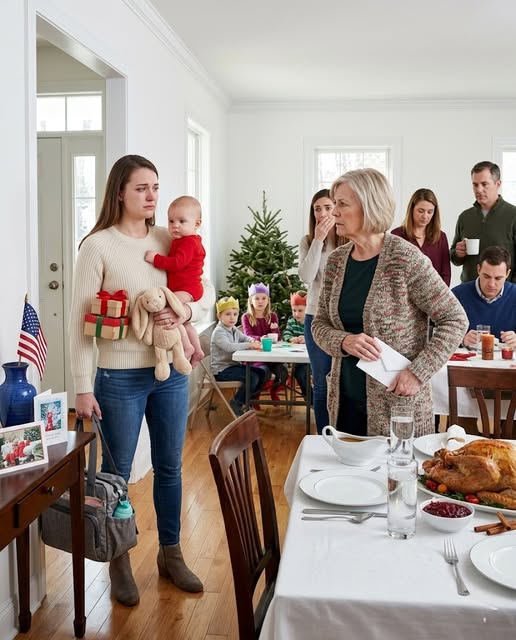
  • The CEO’s Daughter Fired Me Until The Client’s Lawyer Email

    That was 8:54 on a Monday morning, and I had already refilled my travel mug twice from the breakroom coffee that tasted, as it always did, like burnt regret. But sure. I could fix this too.

    I took a breath, pinched the bridge of my nose, and said the thing I always said when an entire corporation was about to slide sideways.

    “I’m on it.”

    That was what I did. For nine years, I had been the duct tape holding that company together, particularly the crown jewel: the $290 million account with Lander and Holt Energy. A beast of a client. Interstate power grid investments, federal oversight, EPA clauses, DOE compliance, vendor chains that had to match contract language down to the comma. Somehow I made all of it run like a well-calibrated clock. Quiet, reliable, taken for granted.

    I did not need applause. I did not need my name on plaques or a title that had been invented at an airport lounge. I wanted my work respected.

    And it was.

    Until Madison Ree decided she wanted my desk.

    Madison was the CEO’s daughter, recently self-declared EVP of Strategy, a role that had materialized the way roles do when the person granting them cannot say no at Sunday brunch. Her previous strategy work had involved posting inspirational quotes over stock photos of cornfields on the corporate Instagram account. She came to my desk that Monday with her matcha in one hand and a smile that had never survived a hard question.

    “Hey, Jules,” she said. “We should really talk about modernizing your role.”

    My spine itched immediately. Modernize is corporate language for we are about to push you out and then act like you should thank us for the opportunity.

    Madison had that dangerous combination of ignorance and authority that arrives right before a company makes a decision it cannot afford. She had not been promoted because she had earned it. She had been promoted because her father could say no to department heads but not to his daughter. Now she was circling my clients. She sat in meetings uninvited. She interrupted calls with suggestions like “What if we rebrand compliance as the client happiness unit?”

    The first time she tried to insert herself into my Lander and Holt account, she asked their general counsel whether the power plants came with free car washes.

    I am not exaggerating.

    Naen Carson had blinked once, very slowly, and asked if we could reschedule with the correct team.

    I smoothed it over. Again.

    So when Madison settled into the chair across from my desk that Monday morning, tapping my contract tracker as if it had personally offended her, I understood exactly what was coming and I smiled like I did not.

    “I think we can optimize this process,” she said. “You do a lot of hands-on communication. Have you considered automating it?”

    “With what?” I asked. “A Google form?”

    She beamed. “Exactly.”

    Somewhere inside Lander and Holt’s operations hub, a nuclear compliance officer probably felt a chill and did not know why.

    The rest of the week blurred into the usual controlled chaos. A vendor discrepancy. A missing invoice clause that I located immediately because I kept everything with timestamps. Madison disappeared into back-to-back visioning workshops with the marketing intern she had started calling her right hand. By Thursday I had slept maybe nine hours total, but the project approval was signed, the compliance report submitted, and the client sent a thank-you email addressed directly to me.

    At 4:52 in the afternoon I was still quietly pleased about it when my calendar pinged.

    Meeting. 5:00 p.m. HR Room 4B.

    No sender. No subject. Just that.

    My whole body went cold before my mind caught up.

    When you have worked long enough in any office your instincts sharpen until you can smell a layoff the way you can smell a storm before the sky changes. I grabbed the folder I always carried to client-facing meetings, more by habit than by any conscious decision, and walked down the beige hallway toward Room 4B.

    Madison was already seated when I entered, positioned like a queen awaiting tribute. Carla from HR sat beside her looking like someone caught between a live wire and a child holding a match. Madison did not glance up from her phone until I shut the door.

    “Julie,” she said, all soft authority. “Thanks for coming on short notice.”

    I sat down without answering.

    Years of being the adult in every room teach you that silence can be a scalpel. Let them talk. Let them make the first cut.

    Madison laced her fingers together and cleared her throat. “This isn’t easy,” she began. “But after careful review of departmental synergies and strategic redundancy, we’ve decided your role is no longer aligned with our forward-facing initiatives.”

    I looked at Carla. Her eyes moved away from mine.

    “You’re firing me,” I said.

    A pause, just long enough for her discomfort to become visible.

    “It’s not about you, per se,” Madison said, smiling in the way of someone who thinks they have invented empathy. “We’ll be handling the clients ourselves now.”

    There it was. The knife dressed as progress.

    Carla slid a manila envelope across the table without speaking. Severance package. NDA clause likely in bold. Same old script.

    “Do you have any questions?” Madison asked, already looking at her phone again. “We’re giving you until end of day to pack up.”

    The clock on the wall said 5:07.

    I opened the envelope, scanned it. Then I laughed. Not loud, not bitter. A quiet, almost amused breath of the kind that says, oh honey, you just struck a match beside something you did not understand.

    “No questions,” I said.

    I stood, straightened my blazer, and slid the envelope back across the table like a receipt for a meal I had not ordered.

    Then I walked out.

    I did not cry. I did not make a scene, which probably disappointed Madison. People like her expect the quiet ones to fall apart. They want your fury because it validates what they did. They want the exit to look messy so the decision looks clean.

    I went back to my desk instead.

    My corner desk. The one with the skyline view I had earned through late nights, weekend calls, and more client rescues than I could count. I sat down and logged in. No file deletions, no angry farewell email, no dramatic performance.

    Just one folder left open on the screen.

    Client contracts. Active plus renewals. Clearly labeled, clearly timestamped, clearly untouched.

    I closed everything else. I took the flash drive from my purse, slid it in, and copied one file. Not for revenge. For protocol. I shut down the computer and took the framed photo of my mother from the desk. She always said, “Don’t let pretty shoes take your dignity, baby.” I put the frame in my tote and left the pens, the mug, and everything else.

    On my way out I passed Madison laughing with someone from Finance. She did not notice me.

    Perfect.

    Because what came next, she never saw coming.

    Outside, the sky was heavy and electric. I stood there one second longer than necessary, breathing that charged air.

    Then I walked away, silent and steady.

    By the time I got home I had peeled off my blazer and the betrayal both. I poured a glass of wine, not in celebration but as ritual, and opened my laptop.

    I am not the kind of woman who goes quietly. I am the kind who reads contracts. All of them. The kind who remembers every clause, every conditional amendment, every footnote filed after a client meltdown. The kind who writes the memo after every handshake.

    Six months earlier, after a multi-agency compliance audit nearly derailed the Lander and Holt account, I had pushed through a renewal clause naming me personally as the mandatory liaison of record for that client. Not ego. Continuity. Naen Carson, their general counsel, had requested it directly.

    “We cannot afford another shuffle,” she had said. “Put it in writing.”

    So we did.

    Amendment 9C. Section 14C. Tied to Contract 3B290. Executed, timestamped, signed, active, and binding. Violated the moment Madison said “We’ll handle the clients ourselves.”

    I opened Outlook and drafted one email. Short. Clinical. No adjectives, no flair, no embedded plea for recognition or fairness.

    Subject: Continuity Clause, Lander and Holt Contract 3B290.

    Per the attached executed amendment dated April 4, I am formally flagging a potential compliance breach related to service continuity for Lander and Holt Energy. Please confirm receipt.

    Attached: the full contract PDF and Amendment 9C, both properly labeled.

    CC: Internal Legal Counsel. External Compliance.

    BCC: Naen Carson, General Counsel, Lander and Holt Energy.

    I clicked send. Sat completely still for thirty seconds. Wine untouched, pulse steady.

    This was not revenge. Revenge is an emotional transaction. This was documentation, which is simply what you do when you have been paying careful attention for nine years and someone has finally given you a reason to act on it.

    I opened the contract one more time to confirm what I already knew was there, because I had drafted every word of it.

    Section 14C: In the event that the assigned liaison, Ms. Julie M. Rainer, is terminated, transitioned, or removed from active participation in the project without written consent from Lander and Holt Energy, said removal shall be considered material breach of contract and grounds for immediate reevaluation of terms up to and including termination with cause.

    Signed by Madison L. Ree, EVP Strategy.

    I closed the file.

    I scheduled a backup email for 7:45 the next morning: same document, same clarity, wider distribution. The CFO. The VP of Client Services. My former manager, the one who once told me I was too thorough and that clients did not care about footnotes.

    He cared about footnotes now.

    I shut the laptop, drank my wine, let the dog out, and took the trash to the curb like any other evening. But the air had a different quality to it. Not fear. Not triumph, not yet. Clarity. The kind that arrives after you have already acted and the only thing left to do is wait.

    At 8:17 the next morning, Grant Ree opened his inbox.

    Subject: Service Termination, Immediate Risk Flag, Contract 3B290.

    The message was from Naen Carson. Five lines. No greeting.

    This correspondence is to confirm we have received documentation suggesting a breach of our service continuity agreement under Contract 3B290. Termination of Ms. Julie M. Rainer without prior client consultation may constitute a violation of Clause 14C. Per Section 6, this may be considered grounds for immediate contract reevaluation and default termination with cause. Please advise.

    Grant read it. Stopped. Read it again.

    He stood slowly, crossed the executive suite, and appeared in Madison’s doorway. He set the printout on her keyboard and said, barely above a whisper: “Tell me you didn’t terminate her while the contract was active.”

    Madison blinked. “What?”

    She read the first line. Scrolled down. Scrolled back up. Then came the particular flutter of panic that arrives when someone realizes they stepped on a tripwire they had mistaken for a speed bump.

    “I didn’t know about Clause 14-whatever,” she said. “Nobody told me.”

    “It was added after you authorized the amendment,” Grant said, voice low. “You signed it. April 4.”

    “Nobody flagged it.”

    “Julie didn’t need to flag it,” he said, something unraveling in his voice. “Julie wrote it.”

    His phone was already lighting up with missed calls. Internal Counsel. Client Services. The executive liaison. One. Two. Three. He watched through the glass as the floor below began to change in the silent way that crisis moves: shoulders tensing, people walking faster, calendars pinging like smoke alarms.

    The weekly standing call with Lander and Holt was missed that Thursday for the first time in its history. Not during server blackouts. Not during wildfires. Not even the week Naen took the call from the backseat of a tow truck after her husband totaled their car.

    That silence was the loudest thing in the building.

    Grant called a meeting. No calendar invite, no prep documents. Just four names and a room number on the whiteboard. CEO. Legal. Finance. Madison.

    The conference room shades were pulled tight. Inside, Legal opened without ceremony. No successor liaison had been designated. No client communication issued post-termination. No evidence of client consent prior to removal. No transition grace period.

    Every time someone said no, Madison’s crossed arms tightened.

    “I don’t see what the big deal is,” she finally said. “It’s not like we fired Naen. Julie was just the liaison.”

    “That name was the compliance linchpin,” Cheryl from Finance said. “Not just the role.”

    “But we’re the vendor. We decide the roles.”

    “Not,” said Internal Counsel, adjusting her glasses with slow, exhausted precision, “when the client mandates specific personnel in a binding contract. That is not a suggestion. That is enforceable.”

    “Why didn’t anyone flag this earlier?”

    Grant stopped pacing. Everyone froze.

    “You signed it,” he said. “You were the executive sponsor on the amendment. You pushed for control of all client-facing operations. Julie routed the final draft to you. You signed it without reading it.”

    “I thought she handled all that legal stuff,” Madison said.

    “She was the legal stuff,” Cheryl said.

    No one laughed.

    Grant turned and stared at the wall. He stood there with his hands on his hips trying to breathe through the pressure in his chest.

    “Give me a number,” he said finally. “What is the damage if they walk?”

    Cheryl turned her tablet around.

    Projected Q4 revenue loss: $61.2 million. Contingency impact: secondary accounts tied to the Lander and Holt audit trail. Vendor rating downgrade. DECA red-flag risk. Deferred federal subcontractor payments. Estimated recovery time: eighteen months.

    The silence that followed was not dead. It was undead. It settled into the walls and the air vents and every throat in the room.

    Madison spoke into it.

    “Okay. We rebuild trust. I’ll fly out. Take muffins. Do a video, make it warm, like a documentary.”

    Cheryl looked up from her screen. “Muffins?”

    Grant picked up a pen, clicked it three times, and snapped it in half without looking down.

    No one flinched.

    It was shortly after this that someone in Compliance unearthed a 2021 nepotism policy addendum, buried in the filing archives after a PR intern had once complained about being asked to pick up dry cleaning as a professional growth opportunity. The addendum established that protected liaisons could only be removed through a co-sign process involving two non-family executives.

    No one had remembered it existed.

    Until now.

    A second client emailed that afternoon. Not Naen, a smaller account from a renewable energy vendor in Phoenix, but still valuable. The subject line was polite. The body was not.

    In light of recent staffing changes and the lack of formal communication, we are placing all Q4 initiatives on temporary hold until we can verify alignment with original personnel agreements.

    Cheryl stood up from her desk and said, loud enough for the intern next to her to jump, “You have got to be kidding me.”

    By three in the afternoon Madison had been pacing barefoot in her office for an hour, her heels abandoned under the desk, her phone pressed to her ear trying to reach me. Each call went to voicemail. Her voice, on the third attempt, had begun to show the strain beneath the performance.

    “Julie, hey. Just wanted to check in, see how you’re doing. We’re working through a few hiccups and I think it would be really helpful to maybe reconnect, you know, for continuity. No pressure.”

    I did not call back.

    At that moment I was sitting on a sun-warmed patio downtown, sipping a cortado across from Dana Lee, senior partner at Preston Marks Consulting and one of Naen Carson’s old law school friends. She smiled at me over her glasses.

    “So let me guess,” she said. “They terminated you mid-contract without client sign-off, breached a continuity clause, and now they’re losing accounts by the hour.”

    I raised my coffee.

    “Something like that.”

    Dana laughed, the quiet laugh of someone who has seen professional disasters as art forms.

    “Julie, I’ve seen bad strategy. I’ve seen foolish strategy. But this?” She leaned back. “This is gourmet.”

    “It’s not my mess anymore,” I said.

    She tilted her head. “Want it to be?”

    I did not answer right away. The city moved around us, indifferent and unbothered.

    The board held a special session at six that evening. No calendar notes, just a red meeting block stamped onto six calendars simultaneously and a line that read: No Delegates. Attendance: CEO, CFO, GC, Board Members Only. No Daughter.

    The floor had been moving in that particular silent way for most of the afternoon. People walking a little faster. Conversations in smaller groups. Emails answered too quickly or not at all. The kind of institutional anxiety that has no single source and no single expression, just a general tightening of the air that everyone pretends not to notice.

    By the time Grant walked into the dim conference room, Cheryl had already set up. The projector was running. Bottled waters nobody was going to touch sat in a row down the center of the table. Grant did not sit at the head. He sat two chairs down. Everyone registered it without commenting on it.

    Cheryl did not bother with the slide-by-slide approach. She gave it flat, the way that genuinely bad news should be given.

    “If Lander and Holt withdraws, Q4 does not take a hit. It collapses. That account props up three satellite contracts, two joint ventures, and our DECA compliance baseline. If we are flagged for breach, our vendor rating drops and the pipeline dries up.”

    She swiped once.

    Projected loss: $61.2 million immediate. Secondary impact: $142 million. Recovery timeline: eighteen to twenty-two months, assuming federal reintegration proceeded cleanly.

    No one spoke.

    Then the general counsel opened her folder. “I’d like to read Clause 14C into the record.”

    She read it completely. The room absorbed it. When she finished, she turned the page and noted that Amendment 9C had been executed on April 4 with Madison Ree’s signature, auto-renewing for twelve months, with no written revocation notice filed.

    The chairman spoke carefully. “Not only did she fire the key liaison mid-contract without client approval. She violated a clause that had automatically renewed without anyone checking.”

    “That is correct.”

    “This was the CEO’s daughter.”

    Grant’s jaw moved once. “Yes.”

    “Promoted against committee recommendation?”

    A pause. “Yes.”

    “And oversight protocols?”

    He stared ahead. His voice was very quiet. “Yes.”

    “Then you are also responsible for this breach, Mr. Ree. Legally and operationally.”

    That sentence did not need to be repeated. It landed where it needed to land and it stayed there.

    Cheryl added one more item before the session ended: Lander and Holt had revoked admin access to the procurement portal. They were locked out of the account they had managed for nine years.

    The chairman closed his folder with a sound that was much too soft for the consequences it represented.

    “All contact goes through Legal. No communications from your daughter. No outreach, no position papers.” He met Grant’s eyes. “And the board will be holding a separate review session. Your presence will be requested, not required.”

    The translation did not require a footnote.

    That night, as the board session ended and the building emptied floor by floor, the document sat in front of Grant in the quiet room. The projector had powered down. The bars of light through the blinds had shifted with the hour. Amendment 9C, Clause 14C, my name above Madison’s, both signatures exactly where they had been all along.

    He read it one more time.

    I had spent nine years making things run without expecting recognition for the running. I had built the compliance structure, the client relationship, the amendment language, the documentation systems. I had been the institutional knowledge the company operated on without ever quite admitting it depended on it. And when Madison decided she wanted the corner office and the corner account, the one thing nobody thought to check was whether I had left any paperwork.

    I had left all the paperwork.

    The reply came at 7:12 the following morning.

    The reply came at 7:12 the following morning.

    No subject line. Just a short message that appeared in six inboxes simultaneously, showing up as a preview that stopped people’s scrolling immediately.

    We will now be working through Ms. Julie M. Rainer’s independent consultancy. She understands our needs. All future correspondence should be directed to her firm.

    Naen Carson, General Counsel, Lander and Holt Energy.

    Cheryl saw it first. She sat at her desk for a full ten seconds before opening it, index finger hovering over the mouse in the particular way of someone touching something that might be hot.

    By 7:18, the procurement portal had updated its vendor listing.

    Vendor: JR Stratline Advisory LLC. Primary Liaison: Julie M. Rainer.

    The reaction was quiet in the specific way that genuinely decisive things tend to be quiet. An analyst in Business Operations stopped mid-sentence and went still. Someone in Facilities dropped their coffee, which clattered against the breakroom floor and nobody came to check on it. The IT specialist who always had music running through his speakers let the current track end without starting another and sat there in the silence.

    In the conference room, Cheryl read the email aloud. Once. Then again, more slowly, because the first reading felt like something her ears might have gotten wrong.

    The second time, no one moved.

    Grant sat with his mouth slightly open, the posture of a man who has just watched a document he signed six months ago reveal the full shape of what it meant.

    Madison was already on her feet. She had not waited for context or a spin strategy. She threw her folder across the table with a snap and said, “You all wanted her gone.”

    “No,” Cheryl said, voice entirely level. “You wanted her gone. We tolerated you.”

    Madison spun toward Legal. “Are you seriously letting this happen?”

    Legal held up the contract packet and tapped the corner of the page bearing Madison’s signature.

    “You happened,” she said.

    Madison grabbed her phone, said something none of them could quite make out, and walked out. Her heels struck the hallway floor with a regularity that sounded, to everyone watching through the glass, like a countdown.

    No one followed.

    The room sat in the particular stillness of aftermath. The projector had been off for an hour. The bottled waters were untouched. Grant’s phone buzzed against the table in small irregular pulses, press inquiries probably, maybe shareholders, possibly his wife, and he did not look at it.

    He looked at the document.

    I had spent nine years building a system that ran so smoothly nobody thought to ask who was running it. I had kept records with the thoroughness of someone who understood that the only person who would ever be responsible for proving what I had done was me. I had negotiated the amendment, drafted the language, routed the signature, and filed it, and I had done all of it within the normal course of my work because that was how I worked, carefully and completely, without announcement.

    And then I had walked out of the building with my mother’s photograph and left every piece of it exactly where it was.

    Grant leaned back in his chair and finally said what no one else in the room was going to say.

    “She didn’t burn the bridge.”

    He looked at my name on the document one more time.

    “She owned it.”

    The board had already acted. No rehire offer, no bridge contract, no public apology. That door had closed, which was the correct outcome. My firm would be paid, not from generosity or guilt but from the same simple commercial logic that had always governed that account: the work still needed doing, the compliance requirements were still active, the clause was still binding, and I was the only person who understood it well enough to keep it from falling apart. Preston Marks confirmed the subcontractor approval before noon. Cheryl handled the purchase order. The retainer was in motion by afternoon.

    Across town, I opened my first brief of the morning at my new desk with light coming through the window at an angle I had not had before. My phone was quiet. My inbox was clean. I did not post anything. I did not send any messages to people who had watched the Monday meeting and said nothing. I did not need the story to travel because the story had already moved through the right channels in the only language that mattered.

    Contracts. Amendments. Vendor codes. Retainer agreements.

    Fact.

    I had updated my LinkedIn with two lines the morning after the email landed: Principal Consultant at JR Stratline Advisory, specializing in high-risk account recovery and strategic continuity. No announcement paragraph, no expression of humility about the journey ahead, no photograph change. Just the professional facts, which were all any of it had ever needed to be.

    I was not angry.

    I was not even particularly satisfied, in the way that revenge is supposed to feel satisfying. What I felt was something more durable than that. Something that does not require an audience or a soundtrack or anyone else acknowledging that it happened.

    I opened my first client brief of the morning, smoothed the page flat on my desk, and picked up my pen.

    Nine years I had been the person who made everything run without being the person with the title on the door. I had kept my head down and my records impeccable and my language precise because I believed that good work, documented thoroughly, would eventually speak for itself.

    It turned out to be true.

    Just not in the building where I expected it.

    The contract was still active.

    My name was still on the paperwork.

    My rates were locked.

    And I was not the duct tape holding someone else’s company together anymore.

    I was the structure.

    Still and absolutely unshaken.